7 Jun
2012
Music at the Church of Our Saviour, New York
Published in Events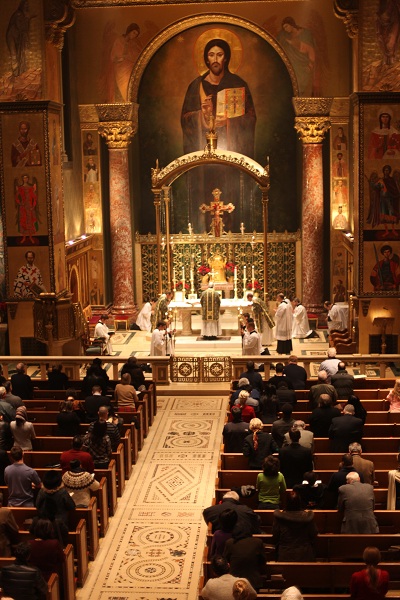
On Thursday, June 14th at 5:30 PM in the Church of Our Saviour, New York
City Mr. Robert Prior will conduct a concert of music for organ, trumpets and
violins. Included in the program will be the Concerto for Two Violins by J.S.
Bach and a Concerto for Two Trumpets by Giuseppe Torrelli. The concert
is free and open to the public.
4 Jun
2012
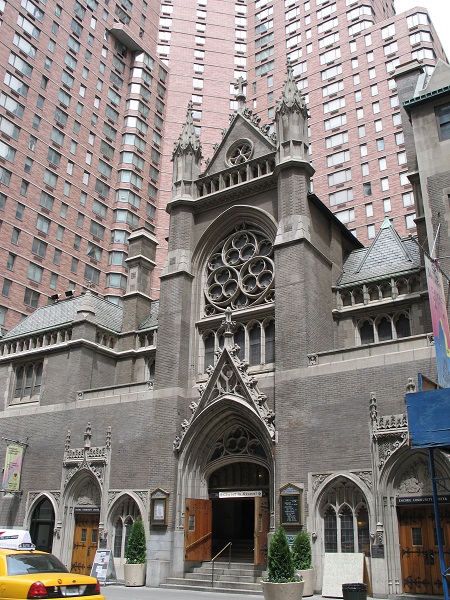
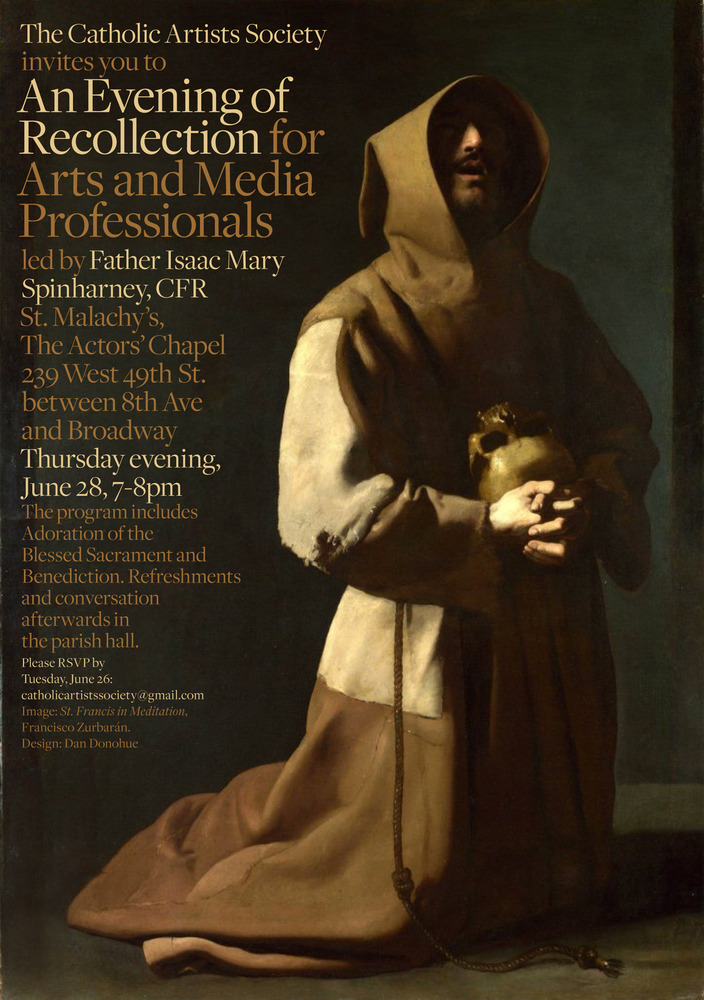
The next Catholic Artists Society evening of recollection will be held on Thursday, 28th June at 7 pm at St. Malachy’s, “the Actors’ Chapel”, 239 W. 49th Street, in New York City.
Father Isaac Spinharney, CFR will lead the recollection and will offer a meditation on themes related to the work and spiritual life of the artist. There will be opportunity for confession and silent adoration of the Blessed Sacrament, followed by Solemn Benediction and a reception afterwards.
St. Malachy’s, long known as “The Actors’ Chapel”, has a long history of outreach to artists working in the theatrical and cinematic arts. That work continues today, under the leadership of Father Richard Baker, pastor of St. Malachy’s. The church itself is a historic building featuring many notable works of sacred art. We are grateful to Father Richard Baker and members of the St. Malachy’s arts community for welcoming us to their parish for this next meeting!
4 Jun
2012
Traditional Masses: Feast of Corpus Christi
Published in Events, Masses, Uncategorized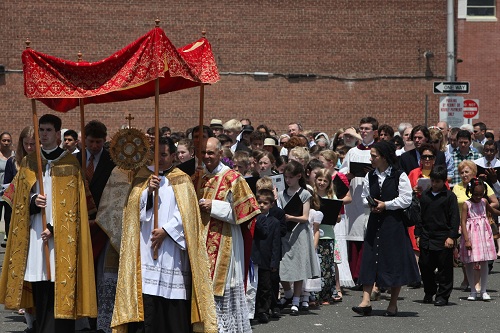
Thursday, June 7
St. Gabriel Church, Stamford, CT will be offering a Missa Cantata for the Feast of Corpus Christi on Thursday, June 7th at 7:30 PM. A Eucharistic Procession and Benediction will follow. The music will be Byrd’s Mass for Three voices and the Gregorian Propers. Reverend John A. Perricone will be the guest homilist.
Church of the Holy Innocents, Manhattan, Solemn Mass followed by an Outdoor Procession on Thursday, June 7, 2012, at 6:00 PM.
Sunday, June 10
St. Mary Church, Norwalk, CT will observe the Feast of Corpus Christi on Sunday, June 10 with a Solemn Mass at 9:30 am. A Eucharistic Procession through the neighborhood and Benediction will follow. Afterwards, a festive coffee hour take place in the church hall.
Immaculate Conception Church, Sleepy Hollow, NY, will observe the Feast of Corpus Christi on Sunday, June 10 with a Missa Cantata at 3PM. A Eucharistic Procession and Benediction will follow.
There will be a Solemn High Mass with a Eucharistic Procession on Sunday, June 10 at 9:30 AM for the feast of Corpus Christi in the Church of Our Lady of Peace in Brooklyn, N.Y
The photo was taken at the Corpus Christi procession at St. Mary’s Church last year.
1 Jun
2012
The 2012 Chartres Pilgrimage – Conclusion
Published in Chartres pIlgrimage, Events, Photos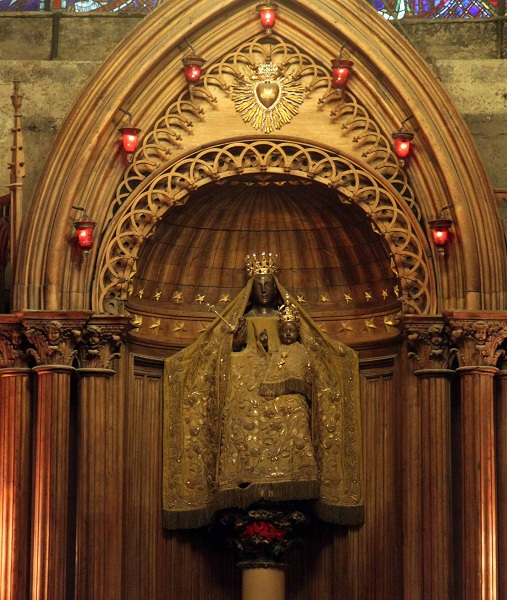
The Black Madonna or Notre Dame de Pilier.
So the 2012 pilgrimage has come to an end. Once again thanks are due to Michael Matt and the Remnant for organizing the American chapter and taking them sucessfully through all obstacles. And even greater thanks are due to the organization of Notre Dame de Chrétienté which has carried out the immense logistical work of this pilgrimage for many years now. Thanks to their work, the Chartres pilgimage maintains its status as the preeeminent Traditional Catholic celebation worldwide.
In what does this uniqueness consist? The Chartres pilgrimage is primarily a collective experience: that of withdrawing from the outside world and of marching, worshipping and resting as an organized group. And the form of worship is only what is now called the “Extraordinary Form.” It is a concrete demonstration that one does not stand alone as a Traditional Catholic, that there are other people – and other countries – sharing the same beliefs. Other pilgrimages – more “individualistic” or small group, such as the Camino – are more conducive to personal spiritual development. Such was the old students’ pilgrimage to Chartres, which Peguy began before the First World War and which died out after the Council. For, as a participant in those days – later a very senior executive at a major French enterprise – told me, the pilgrims would take a week, not 2 ½ days, to get to Chartres from Paris, and each evening would be spent in quiet conversation. Such experiences are possible but rare on the pilgrimage of Notre Dame de Chrétienté. The overall impression – other than that of one’s own fatigue – is rather that of the marching, singing and praying pilgrim community.
Over the last 20 years there has been remarkable continuity in the organization, the pilgrimage route, the location of the encampments, the divine services, the banners, the logos and even certain of the individual participants. Yet there have been shifts of emphasis. In the early 90’s the “sponsorship” of the pilgrimage was in the hands of a foundation of a more militantly counterrevolutionary and nationalist persuasion. It was at this time the pilgrimage began to attract the attention of outsiders like Gary Potter, Michael Davies and their successors, attracted to the unashamed celebration of Christendom only possible in the French counterrevolutionary tradition. By 1995 there seems to have been a distinct change of management with an increasing tendency to tone down the political edge and to pursue of greater accommodation with “Frenchchurch” and its hierarchy. Around the edges of the pilgrimage crept intrusions from the “ordinary,” “orthodox” Catholic world – pictures of John Paul II became ubiquitous, the EU was celebrated and who could forget the “singing bishop” one year trying to warm up the weary pilgrims just arrived in Chartres prior to the mass? Thankfully such excesses have disappeared in their turn. And the concept of Christendom – the union of faith, nation and political action – remains alive in the Chartres pilgrimage. Yet, for a pilgrimage having for its theme “The Family – the Cradle of Christendom” (itself a less challenging motto than those of the past!), the actions on “life issues” currently proposed by the new French government and the individuals behind them drew much less specific and forceful criticism in the sermons than they would have 20 years ago.
As for the physical pilgrimage itself and the American chapter I felt that things went smoother than ever before. After the first day the pace was reasonable, the chapter hung together and there was much more opportunity to participate in common prayer, meditation and song than in the past. And when one had to fall back one could always keep up with the energetic French groups who seem to be constantly singing. We laggards never fell too far behind. Similarly, thanks to Michael Matt’s good planning and the fair weather, the situation at the encampments was far less challenging than usual. There is always a flip side to success, however – the interaction with individuals from the various foreign countries, a main attraction of the Chartres pilgrimage, was much more limited than it had been on earlier pilgrimages. Indeed, I heard the new (to me) notion that contact with other chapters was officially “frowned upon.”
Liturgically speaking, the pilgrimage has also been remarkably consistent over the years. There have been changes of course: as Episcopal support has gradually grown, the role of the bishops has gradually increased. And this year we had a first: the mass for Saturday took place in Notre Dame itself, at the start of the pilgrimage! Yet the liturgical and musical aspects of the Pentecost Pilgrimage have remained static, while the liturgical understanding of the broader outside traditional world has come far indeed especially since Summorum Pontificum. The Pilgrimage liturgies seemed like a revelation 20 years ago to those of us who had hardly ever experienced a Solemn mass. They now, however, appear complete and correct but hardly liturgically rich or inspiring. Indeed, in many cases one now wonders about various liturgical idiosyncrasies (like the singing of a motet immediately after the consecration): are they local French traditions or more recent developments?
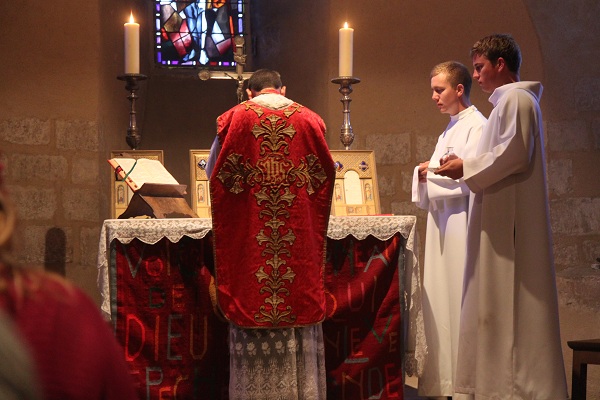
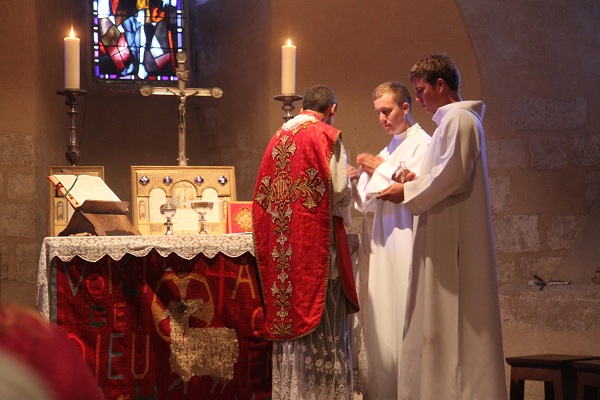
A final low mass in the Crypt of the Cathedral Tuesday for the American chapter forms a fitting end to the pilgrimage.
1 Jun
2012
The 2012 Chartres Pilgrimage – Day 3
Published in Chartres pIlgrimage, Events, Photos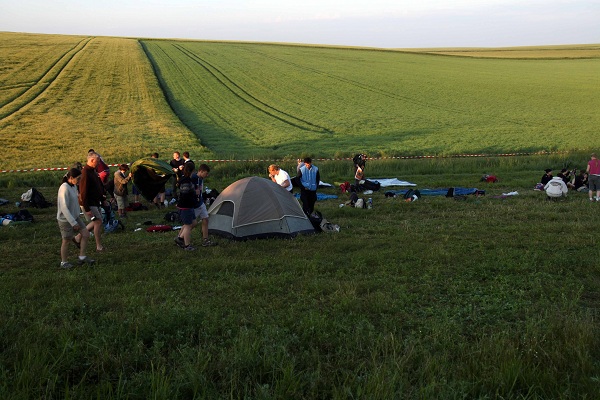
Early Monday.
The Third Day of the Pilgrimage – Pentecost Monday.
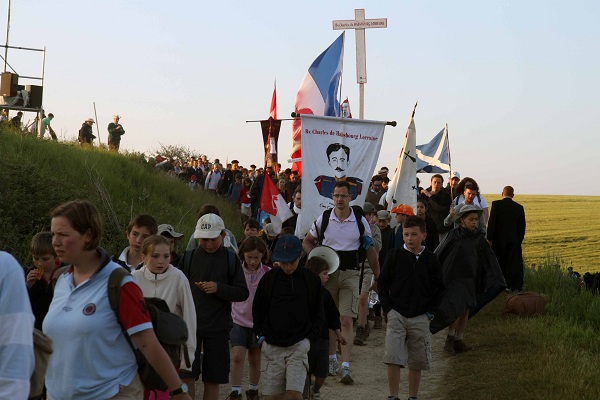
The chapter of Blessed Karl of Hapsburg -Lorraine (nice of the French – he was on the other side in the Great War).
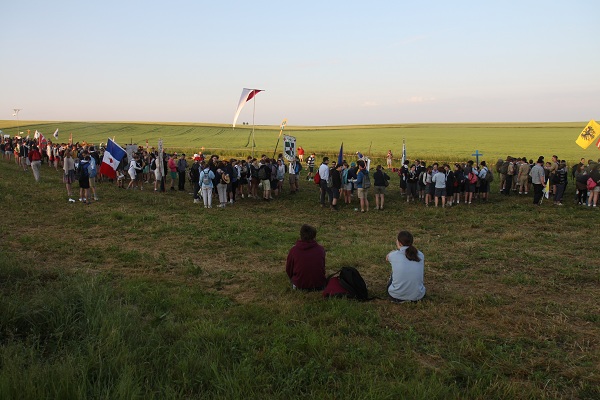
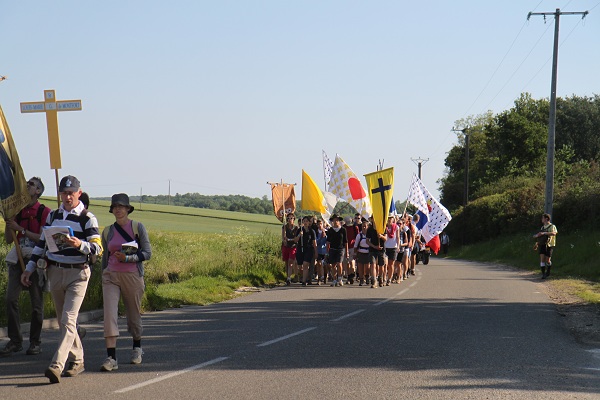
The pilgrims assemble. On the third day many families have joined the march. It is claimed that the overall number of pilgims swelled to 10,000-15,000 on this day.
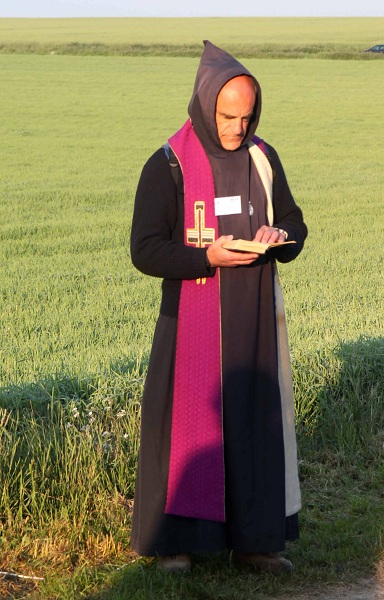
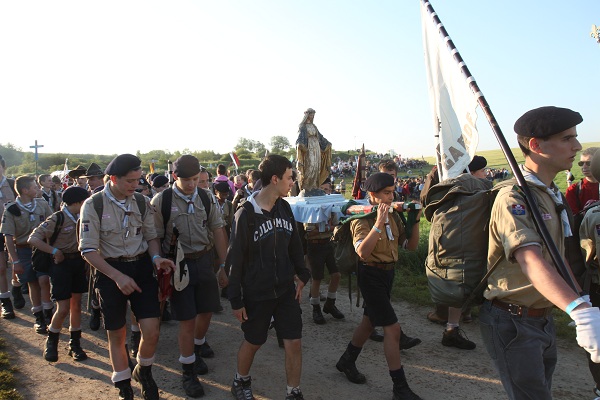
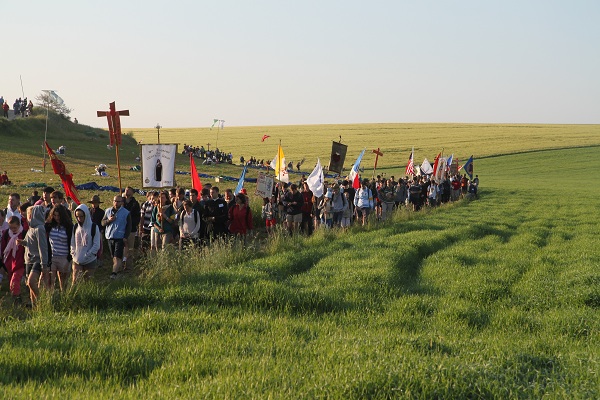
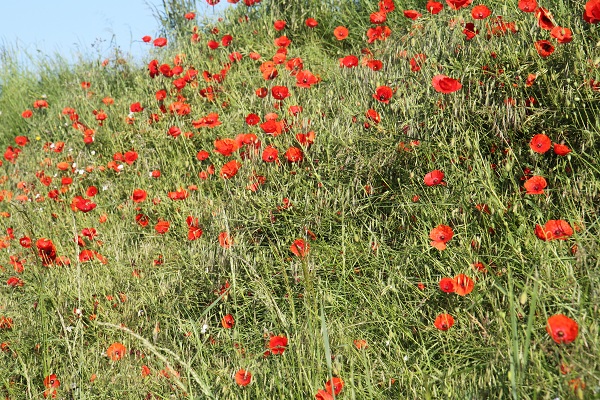
The pigrimage route crosses fields filled with flowers.
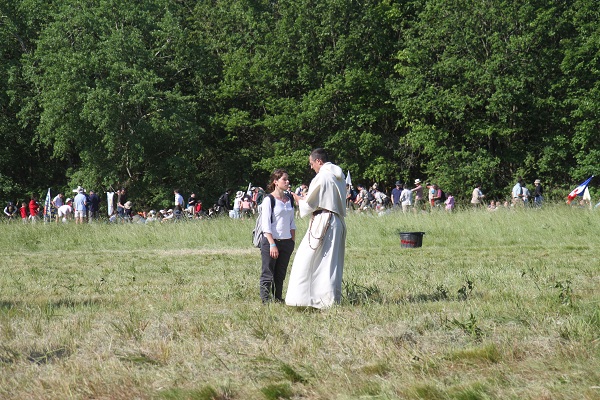
Confession in the fields during a pause in the pilgrimage.
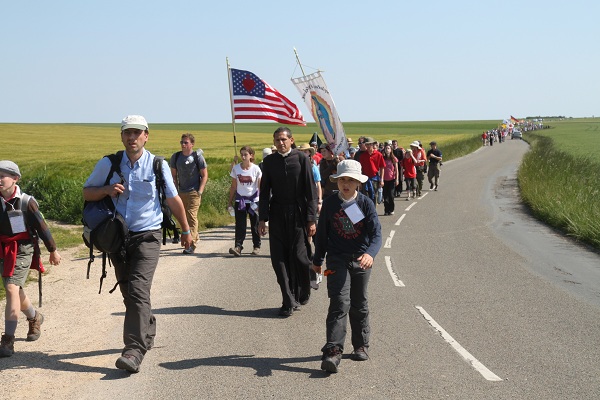
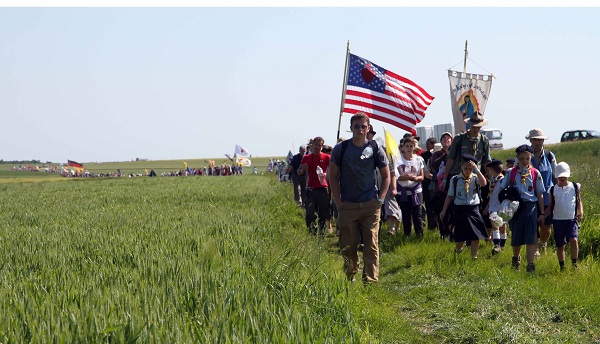
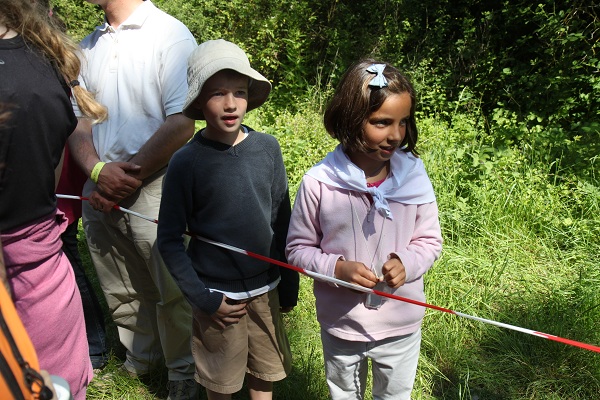
The pilgrims are often greeted by appreciative spectators on the last day.
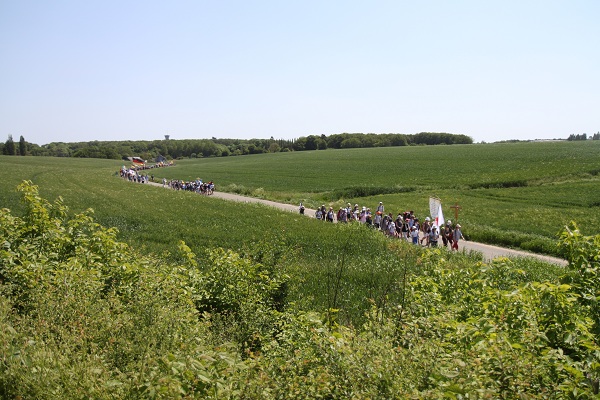
Because of the open and gently rolling terrain crossed on Monday a pilgrim can finally get an idea of the sheer number of participants.

It is the third day of marching in the heat and the last leg of the pilgrimage begins to take a toll.
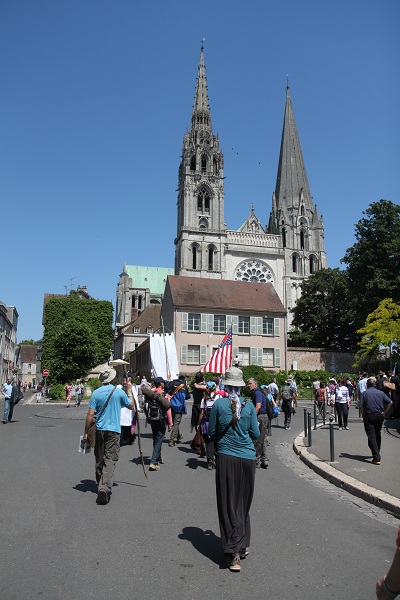
Chartres!
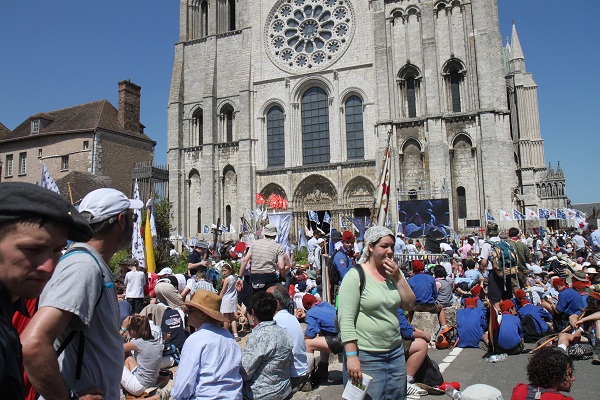
Misfortune for the Americans – just as in 2010 they must sit outside in the blazing sun. ( There is a rotation of chapters who enter the cathedral each year since the cathedral cannot accomodate all the pilgrims.)
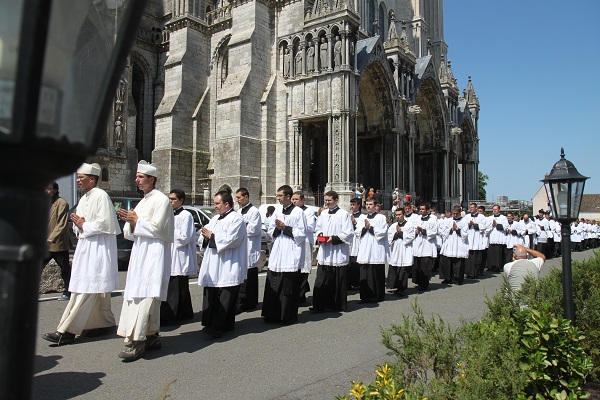
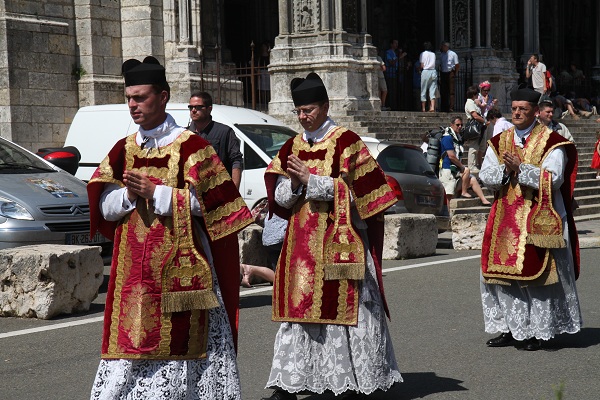
The procession to the Mass.
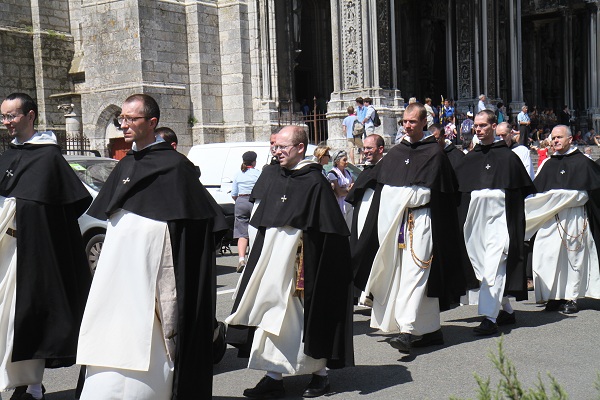
Dominicans
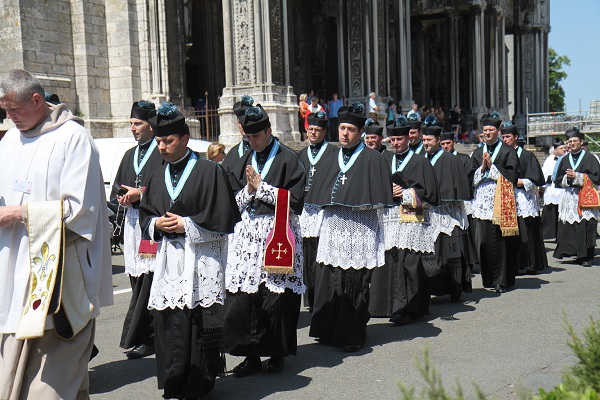
The Institute of Christ the King
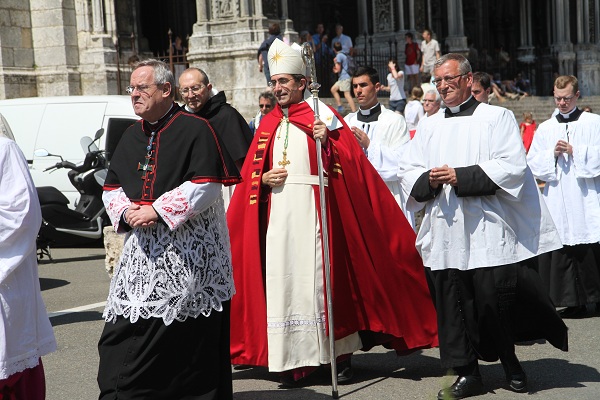
His Excellency.
31 May
2012
The 2012 Chartres Pilgrimage – Day 2
Published in Chartres pIlgrimage, Events, Photos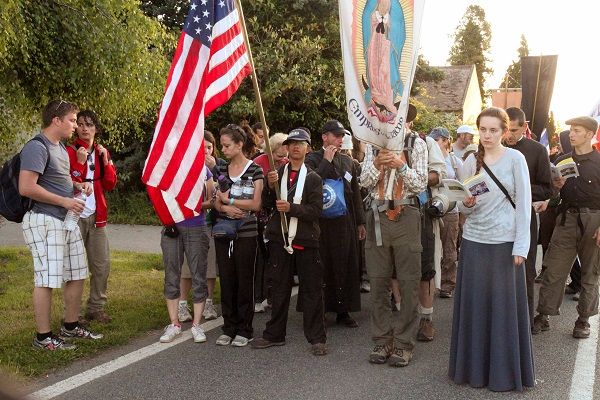
A weary American chapter forms for the next day’s march.
The second day is Pentecost Sunday.
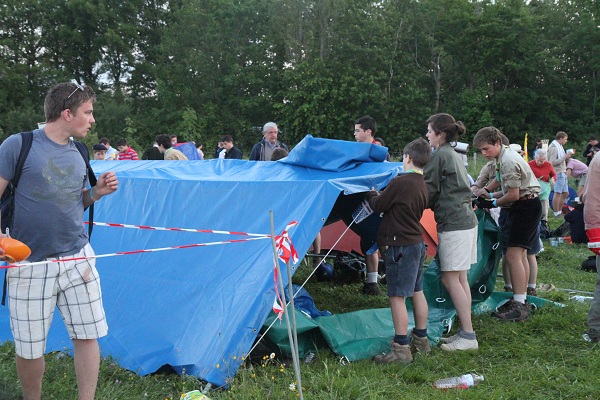
The tents are dissasembed by volunteers.
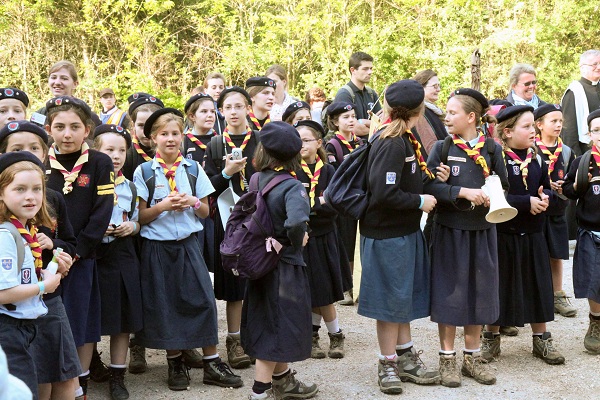
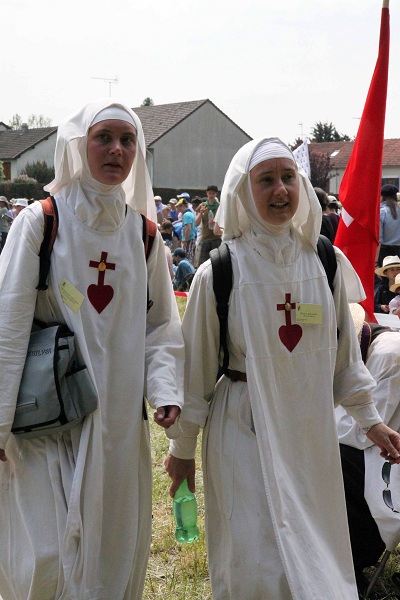
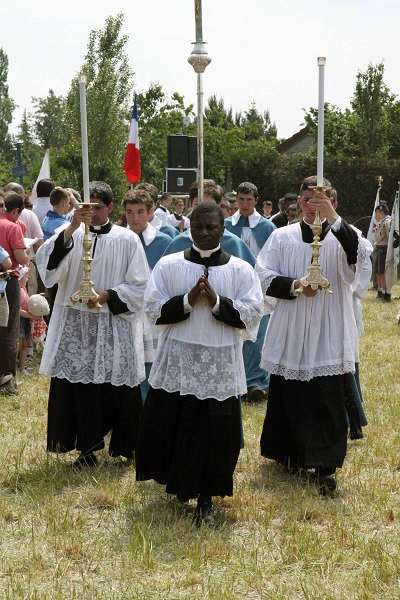
The procession to the altar on Pentecost Sunday.

Transalpine Redemptorists.
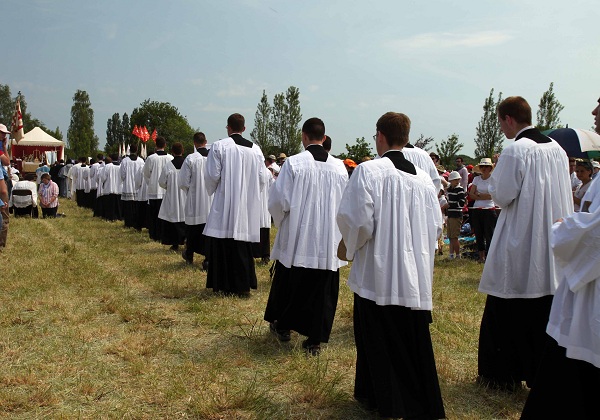
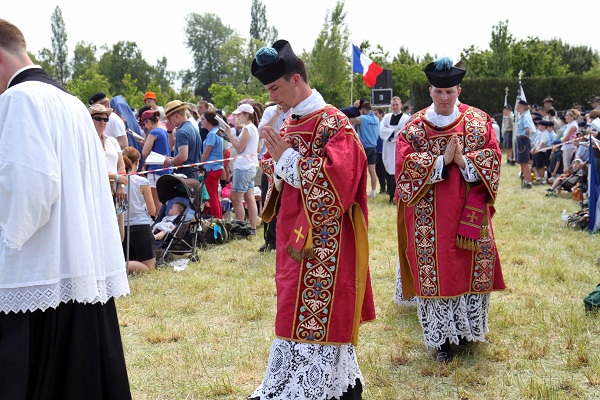
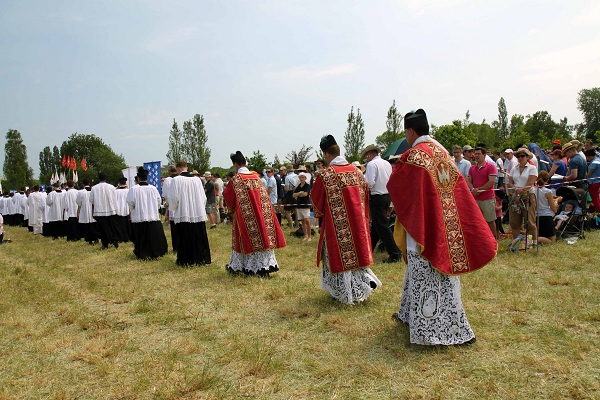
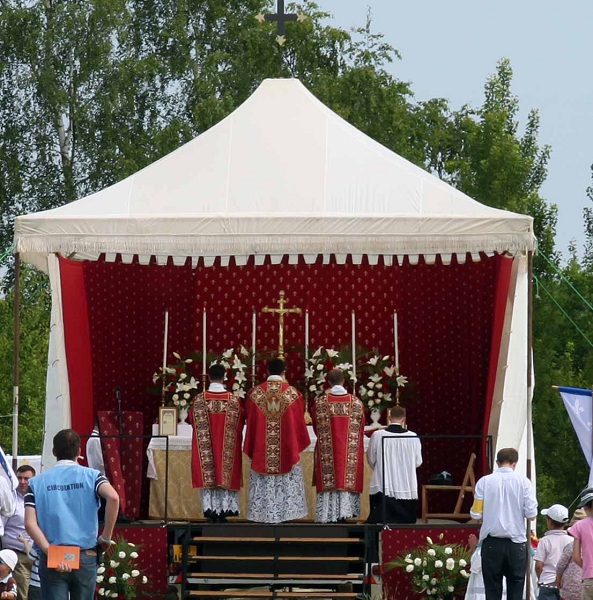

Surrounded by the scouts’ ensigns and the banners of the pilgrimage.
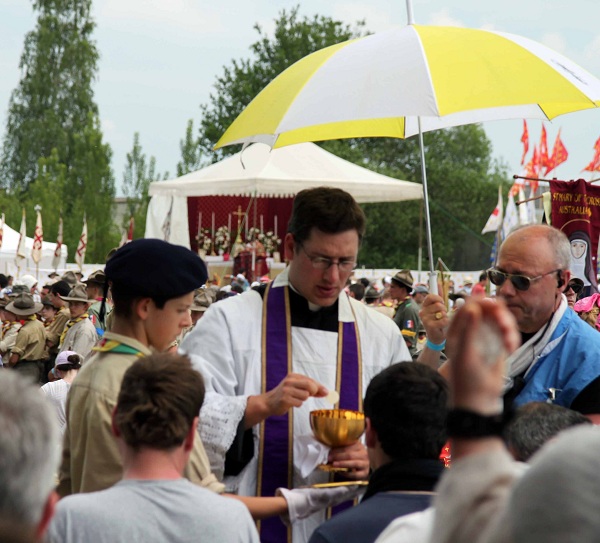
Communion is distributed under brilliant sunshine and in sweltering heat.
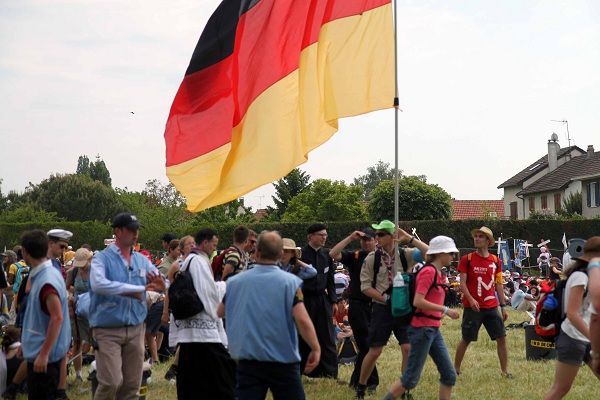
Germany – the biggest banner of all!
31 May
2012
The 2012 Chartres Pilgrimage – Day 1
Published in Chartres pIlgrimage, Events, Photos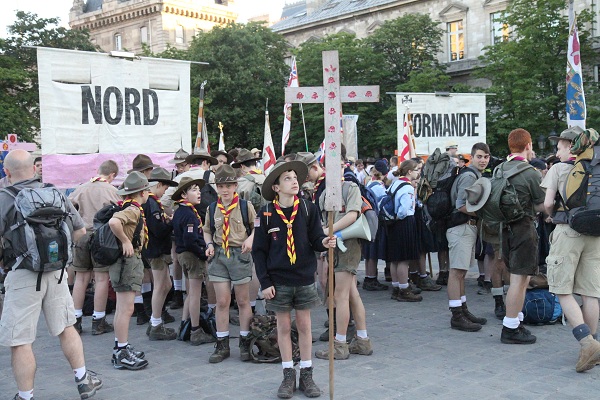
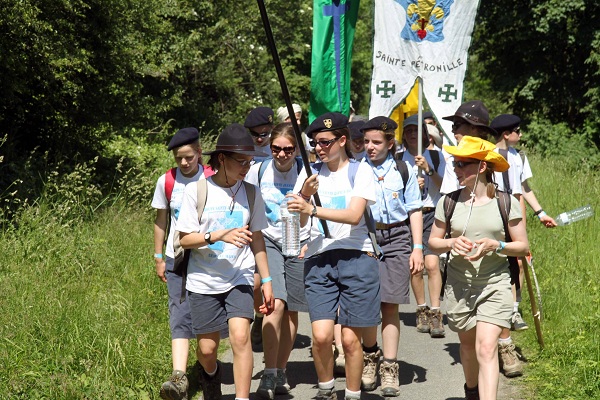
There will be many reports and many photographs of the 2012 Paris to Chartres pilgrimage – including those of the official site. Instead of offering an additional chronicle of the three days, however, I only wish to show a few aspects of each day’s events.
After 5 in the morning on Saturday the pilgrims gathered before Notre Dame in Paris. The next three days would be very warm (85 degrees Fahrenheit) and dry.
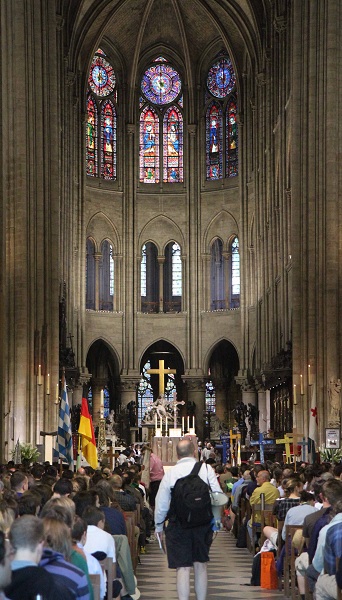
The pilgrims assembled in their chapters in the cathedral and (generally) sit on the floor.
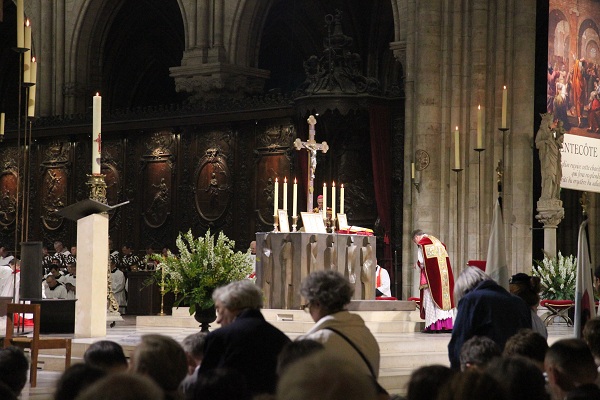
In a first, the pilgrimage begins with a Missa Cantata in Notre Dame. It is further alleged that this is the first Traditional Mass in Notre Dame since the 1960’s – can this be correct? The epistle and gospel are read in French. But the hymns always sound great when intoned by thousands.
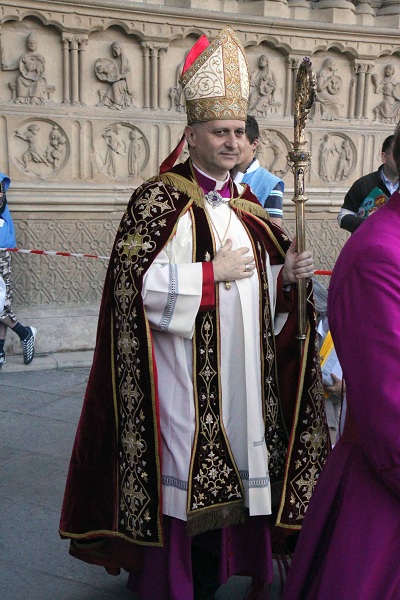
In contrast to an earlier era, episcopal approval is evident.
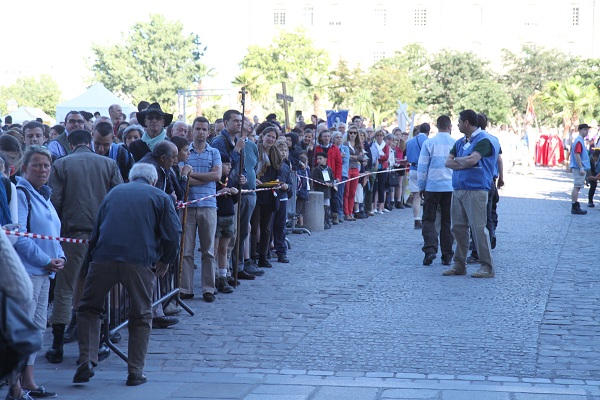
A crowd awaits the emergence of the pilgrims from Notre Dame.
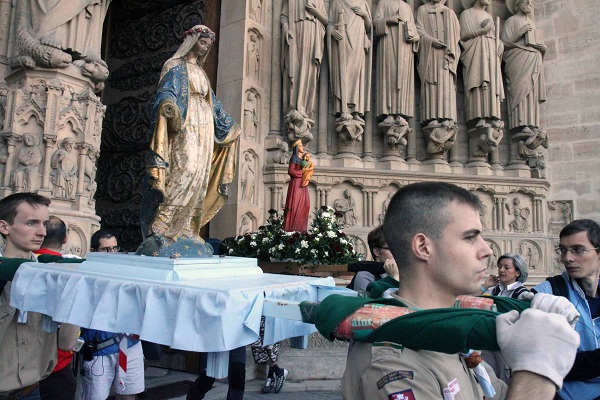
The pilgrim Virgins will be borne before the pilgrims the next three days.
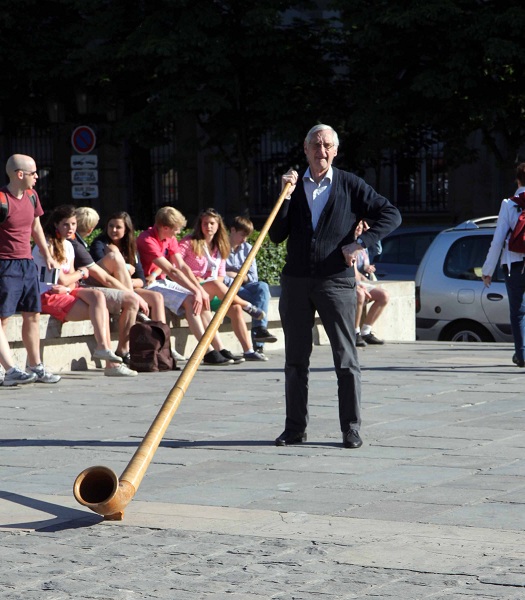
Musical accompaniment for the Swiss – an Alpenhorn.
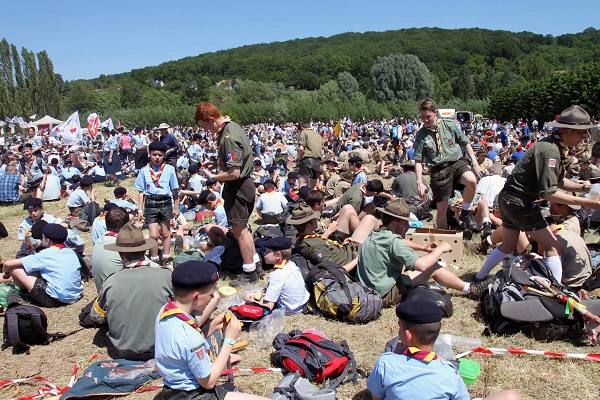
One of the first rest stops after leaving Paris. The preponderance among the pilgrims at this stage of French Boy Scouts and Guides is evident.
28 May
2012
David Hughes to Perform in Organ Recital
Published in Events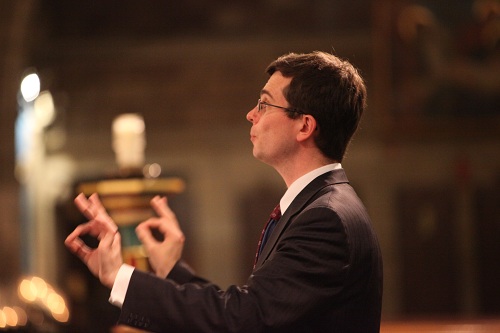 \
\
David J. Hughes, organist and choirmaster of St. Mary’s Church, Norwalk, CT will perform an organ recital at St. Mary’s Church, Norwalk on Friday, June 8 at 7:30 pm. The suggested donation is $15.
On the program:
Johann Sebastian Bach:
Schmücke dich, o liebe Seele (BWV 654)
Trio super Allein Gott in der Höh sei her (BWV 664)
An Wasserflüssen Babylon (BWV 653)
Paul Hindemith:
Ludus Tonalis
transcription for organ by David Hughes
28 May
2012
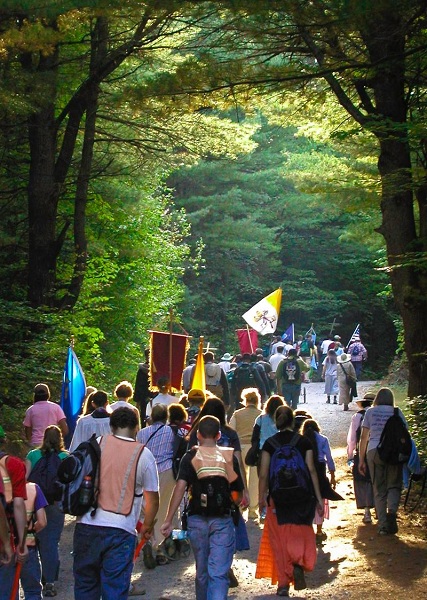
The 17th annual Pilgrimage for Restoration, sponsored by the National Coalition of Clergy and Laity, is scheduled for Friday-Sunday, September 28-30, 2012.
Join fellow pilgrims in penance & in hope on the way to Our Lady’s Shrine of the North American Martyrs, Auriesville NY. All liturgical rites are in the extraordinary form. Come for one day or 3, walk 6 miles or 60. Transportation for weary pilgrims provided every step of the way … through the scenic, autumn Adirondacks region. Also, a ‘Modified Pilgrimage’ for parents with young children, and for seniors.
For more info, or to register: link Register by June 1 and receive a deep discount.
See our reports posted on this blog of the pilgrimage in previous years: 2010, 2009, 2008
Pilgrimage for Restoration
National Coalition of Clergy & Laity
621 Jordan Circle, Whitehall PA 18052-7119 USA
610/435-2634
Churches of New York
Holy Roman Empire
Website Highlights
Archives
[powr-hit-counter label="2775648"]