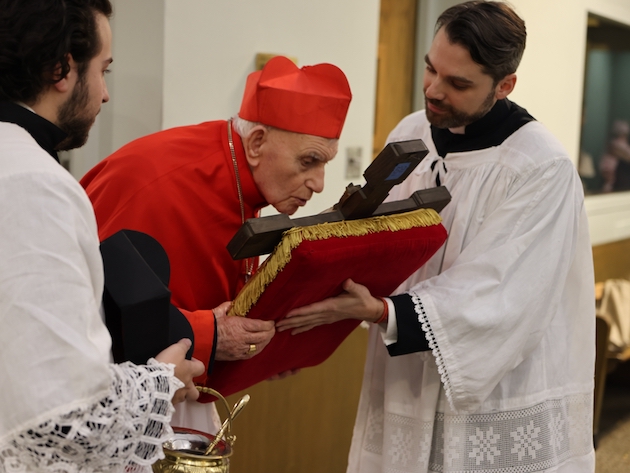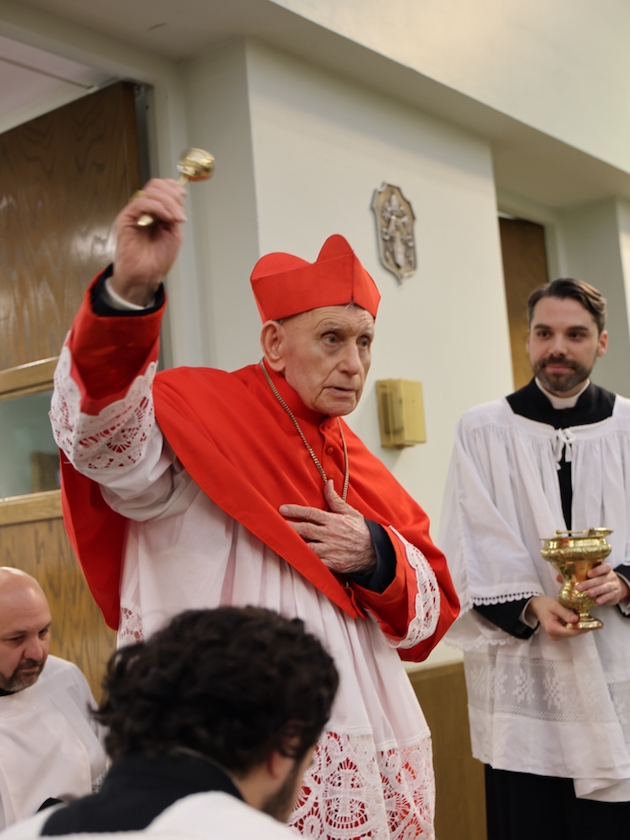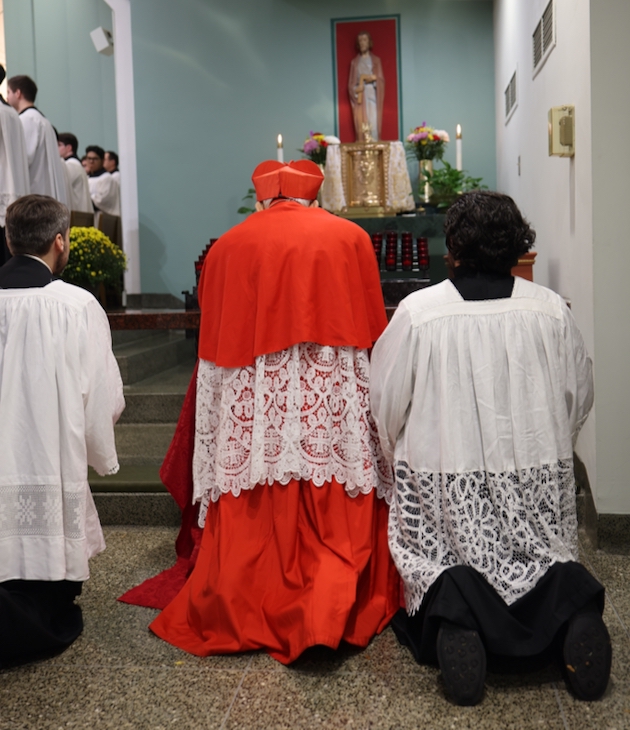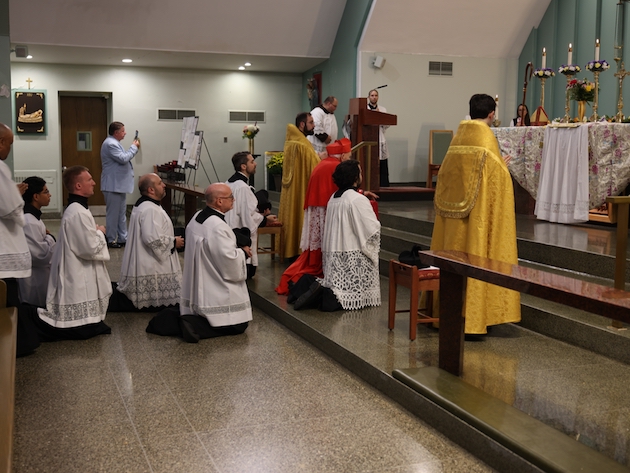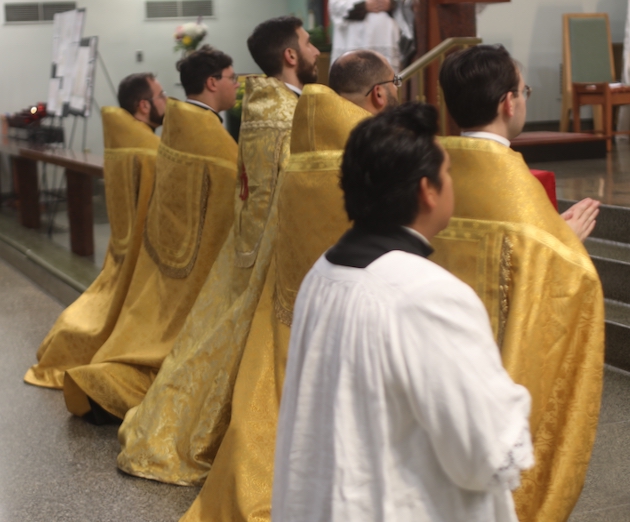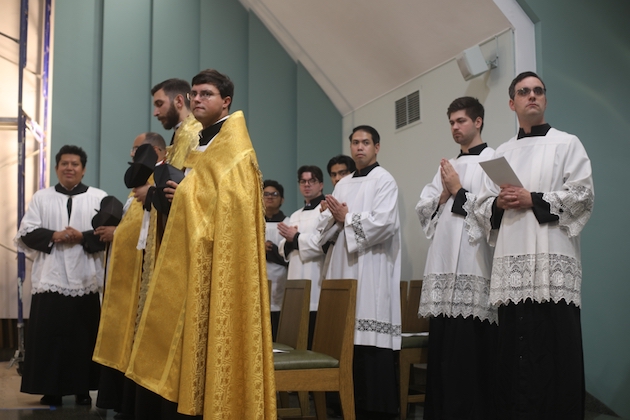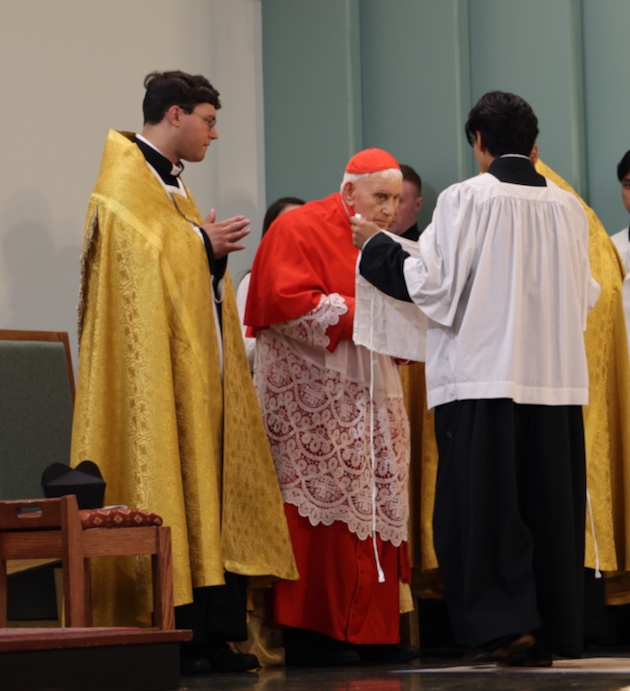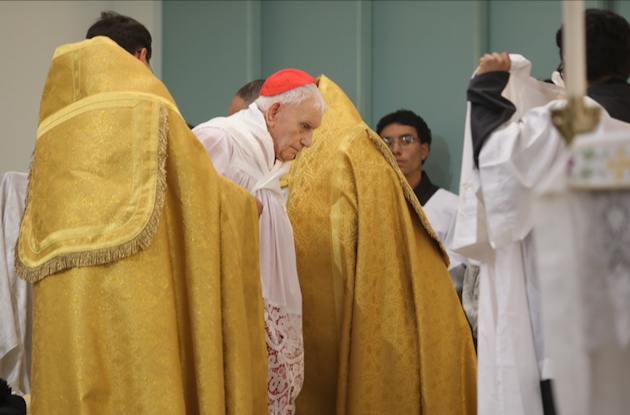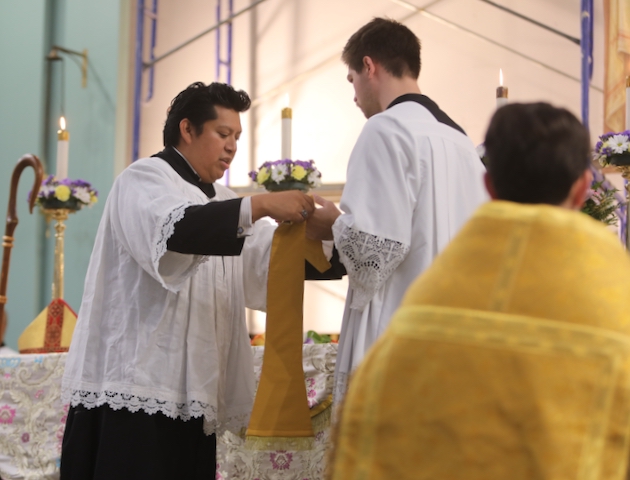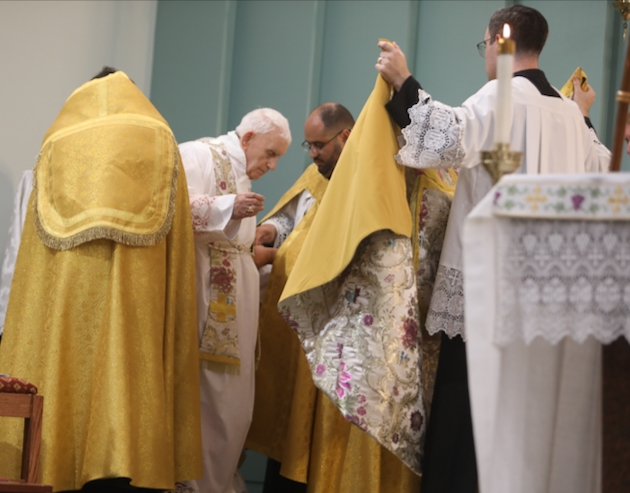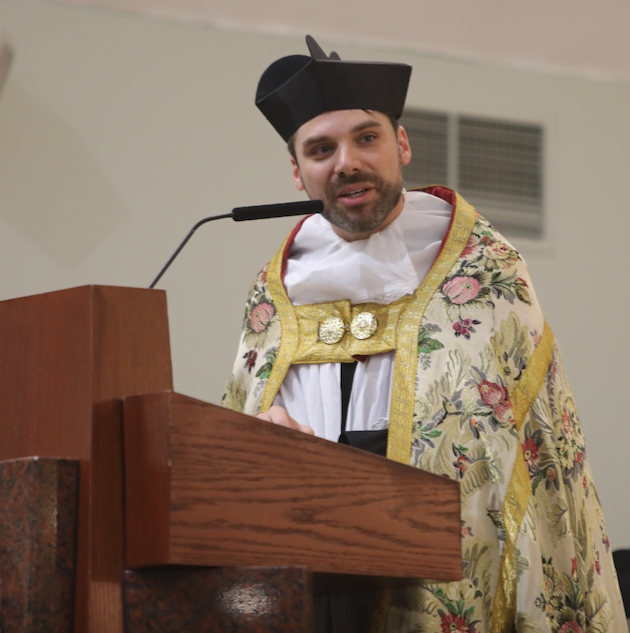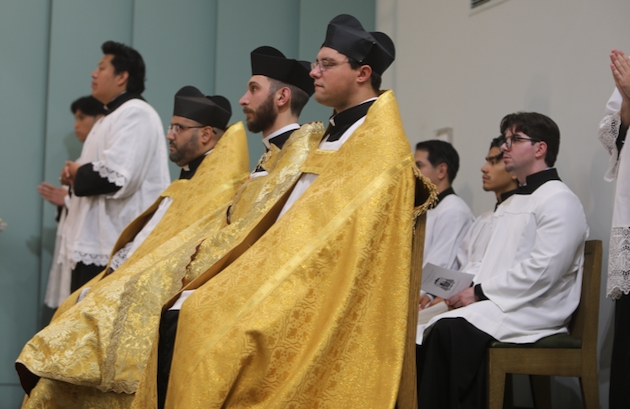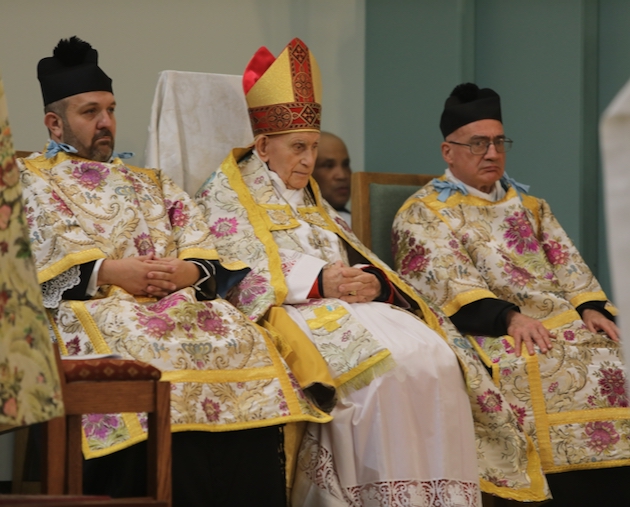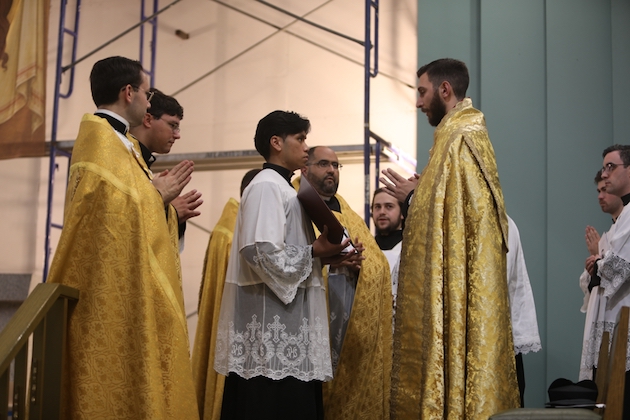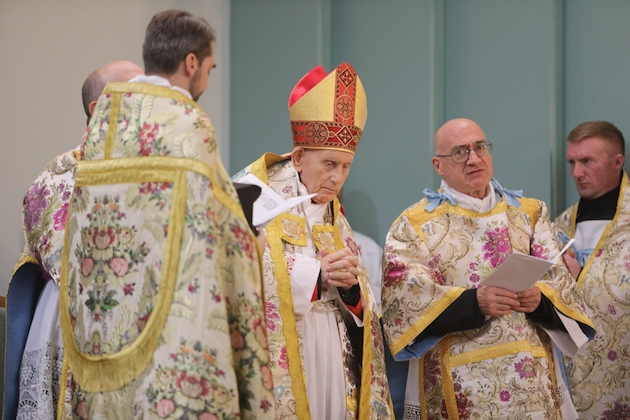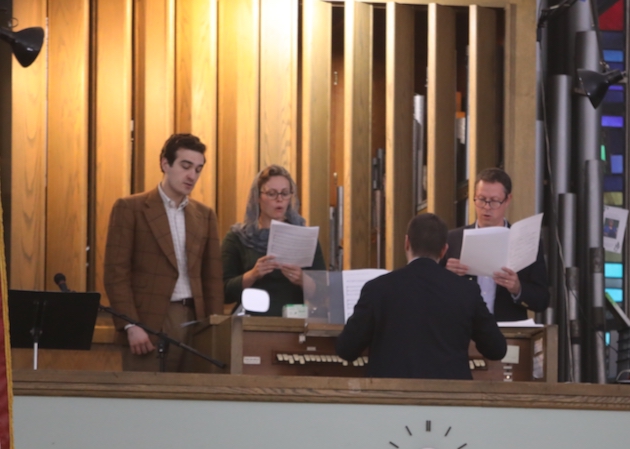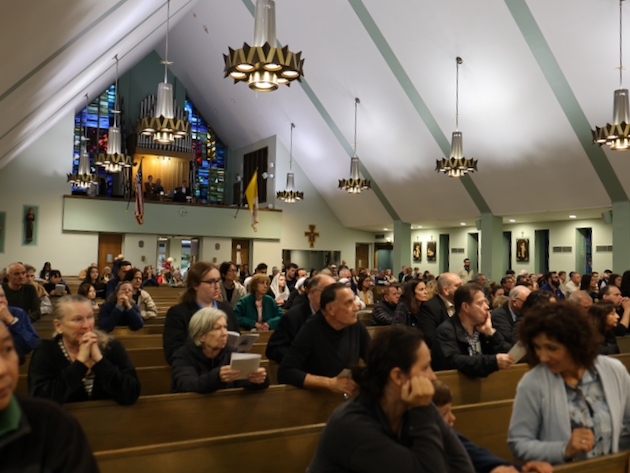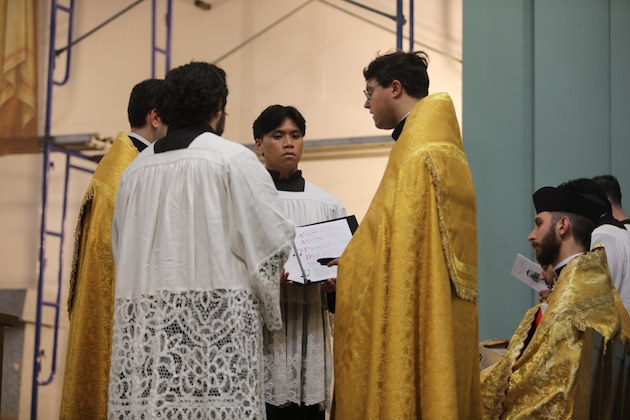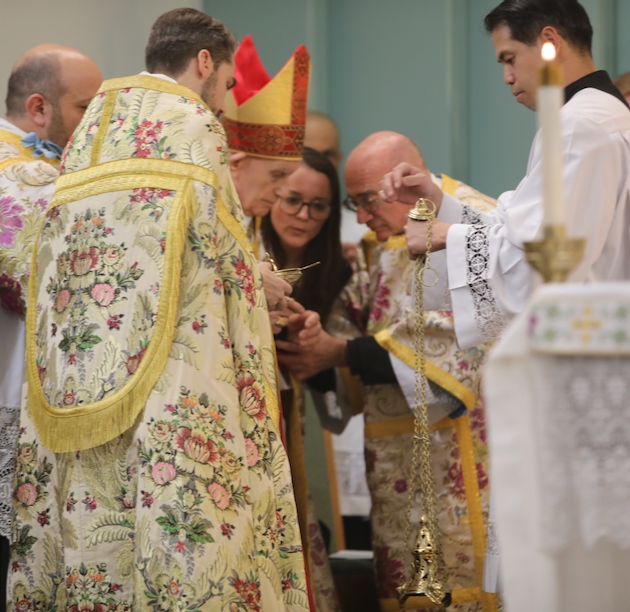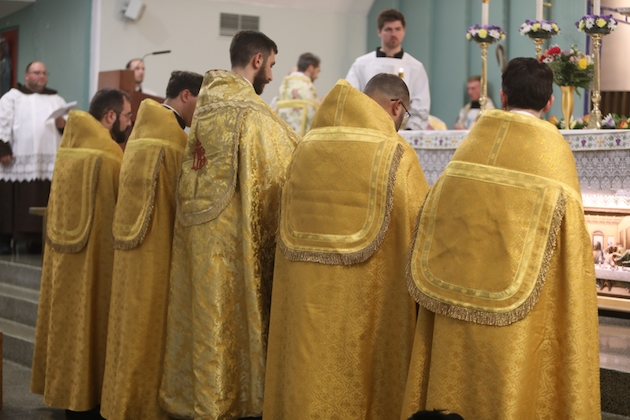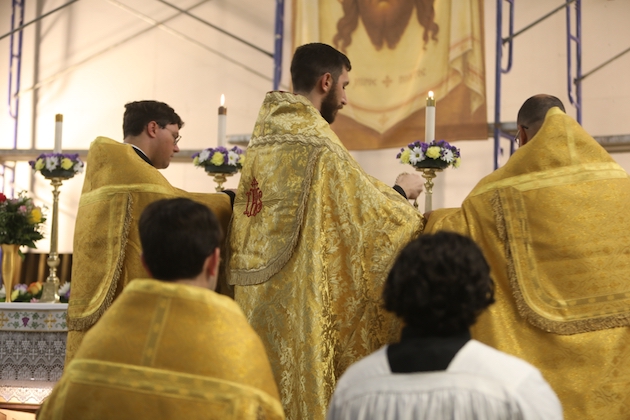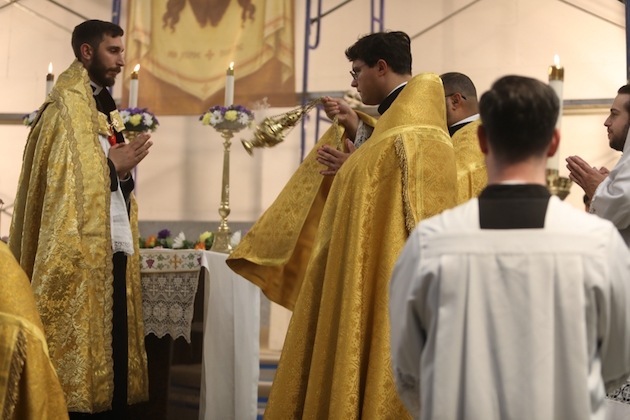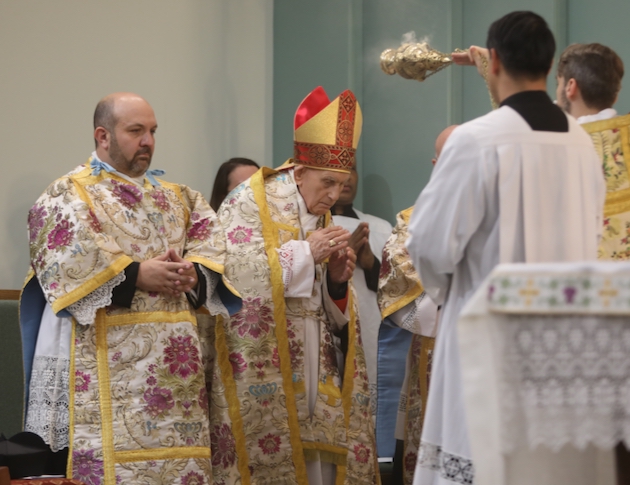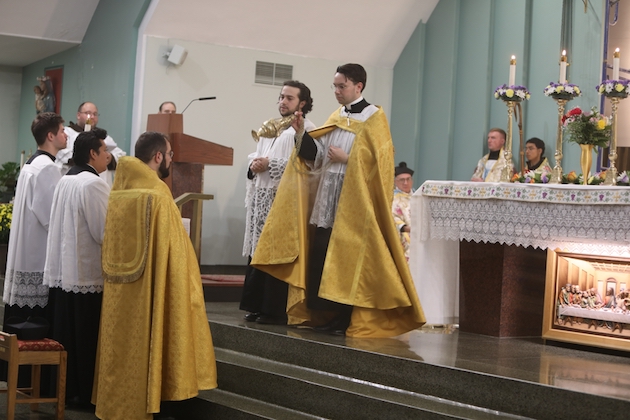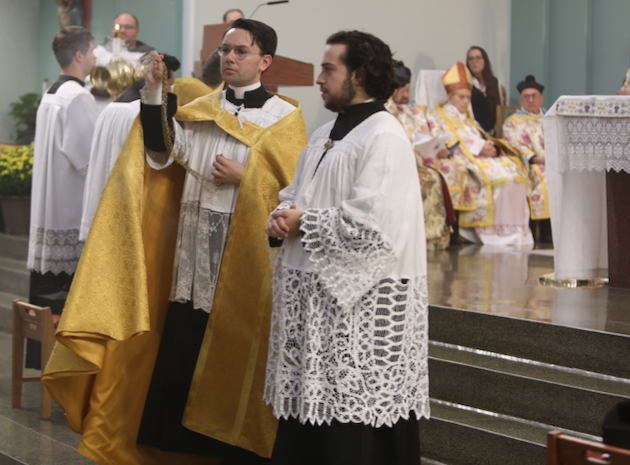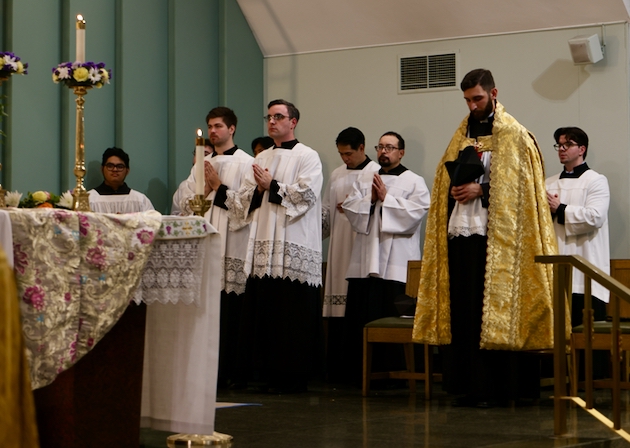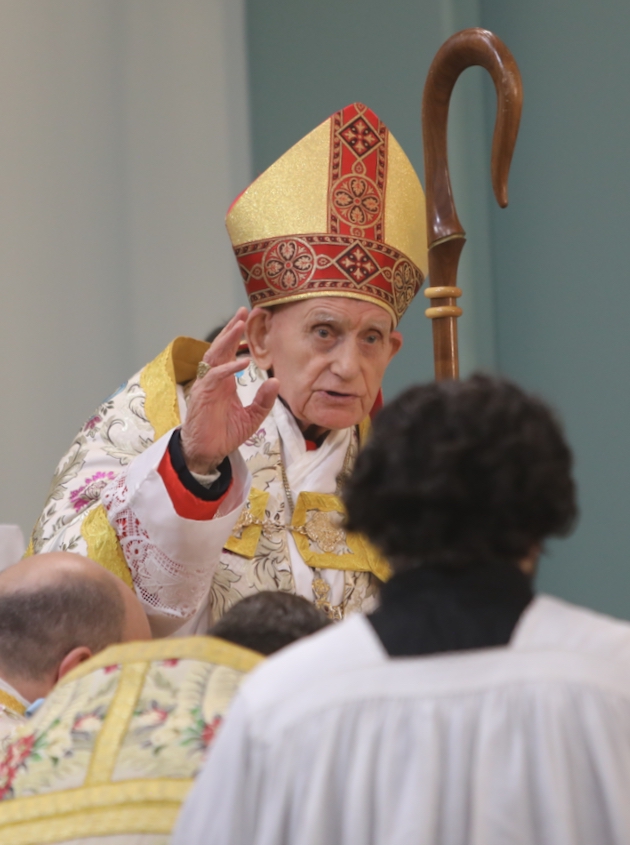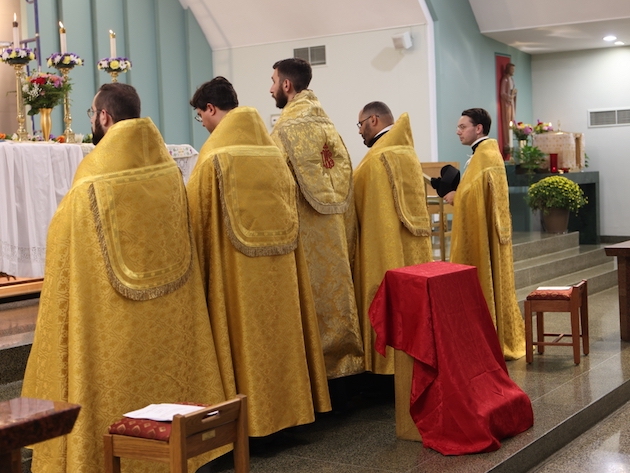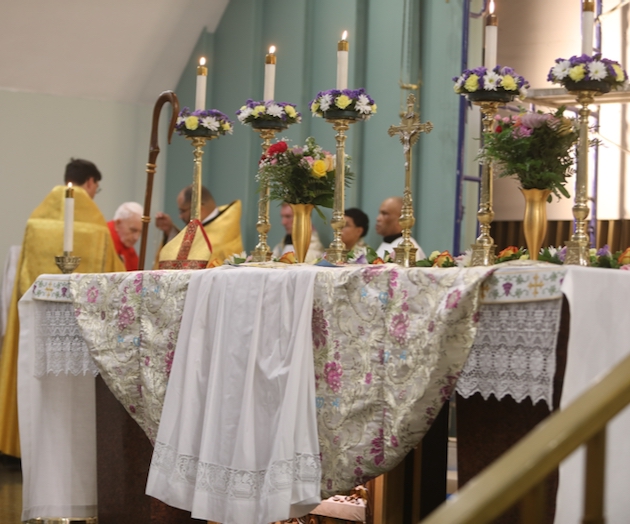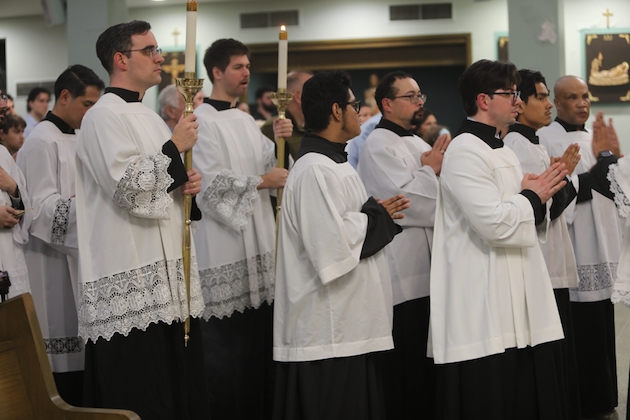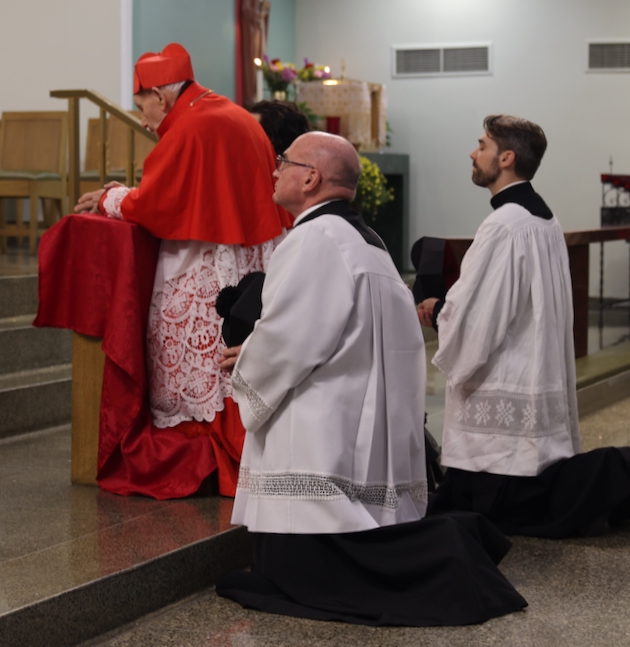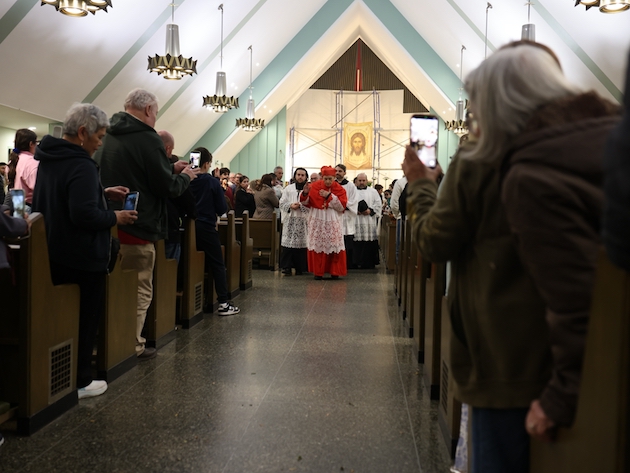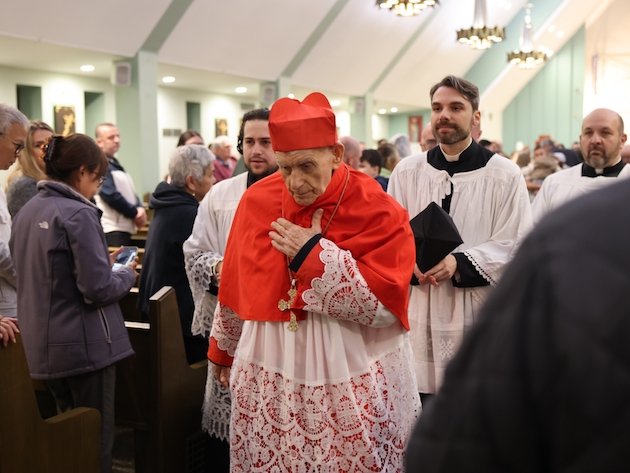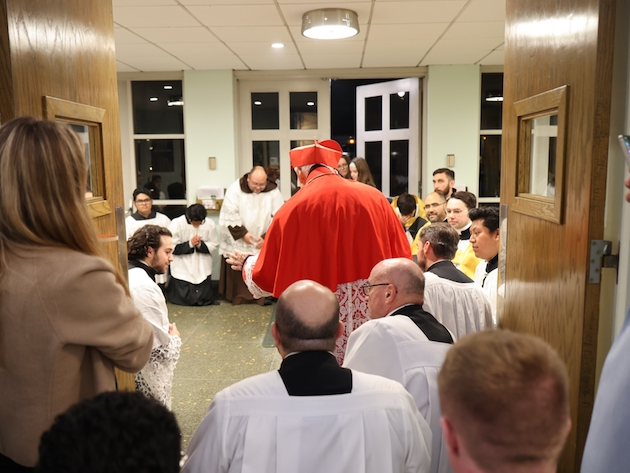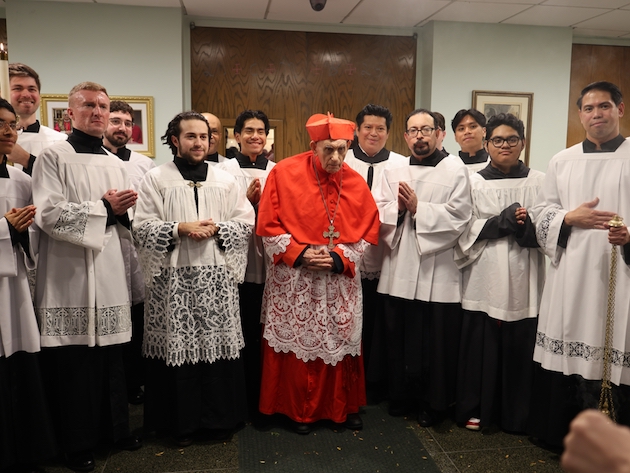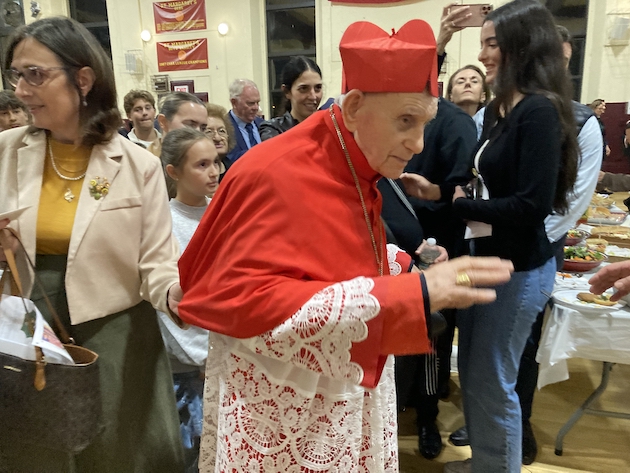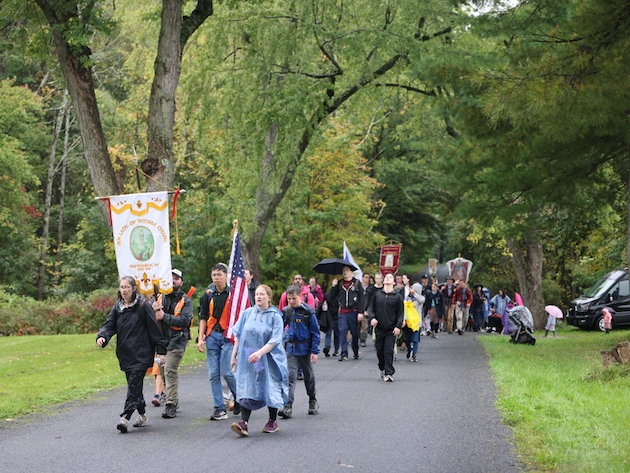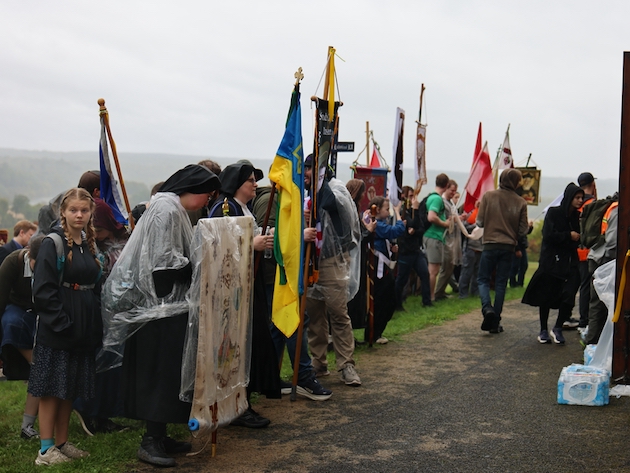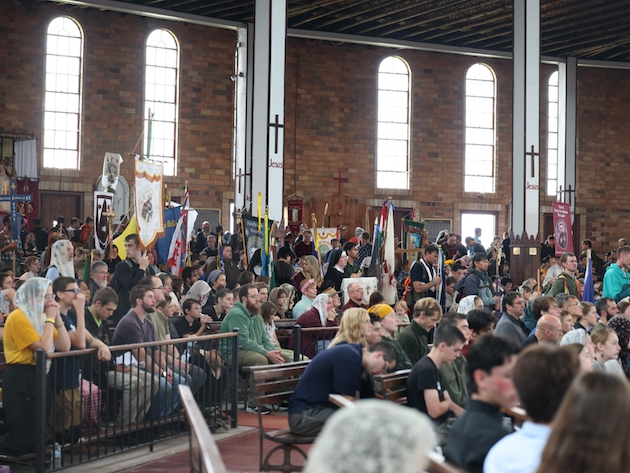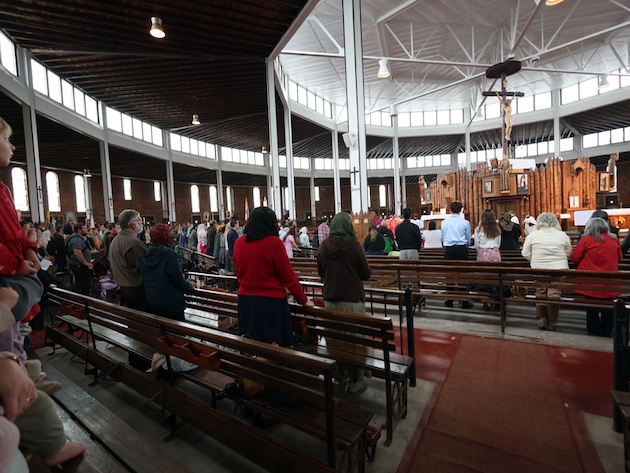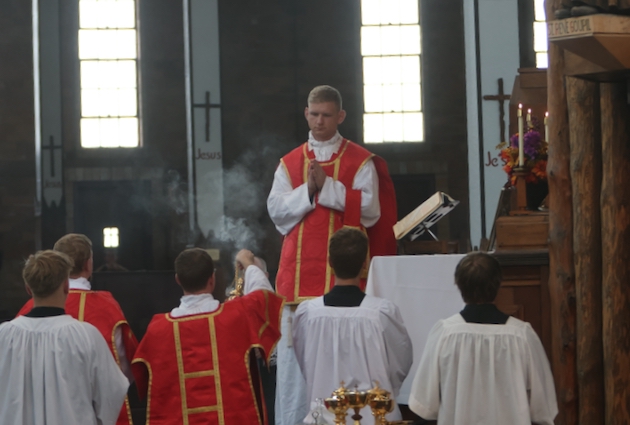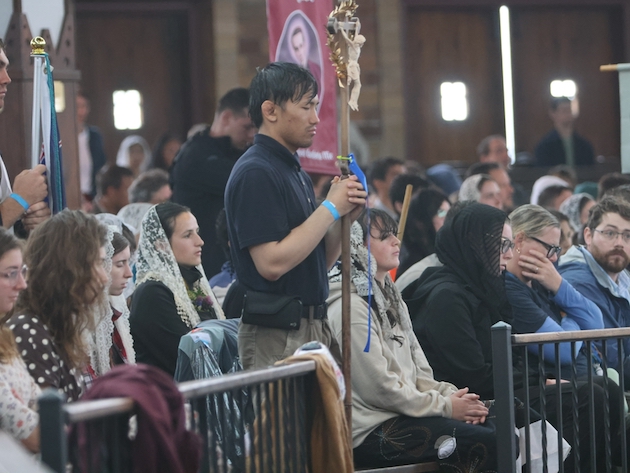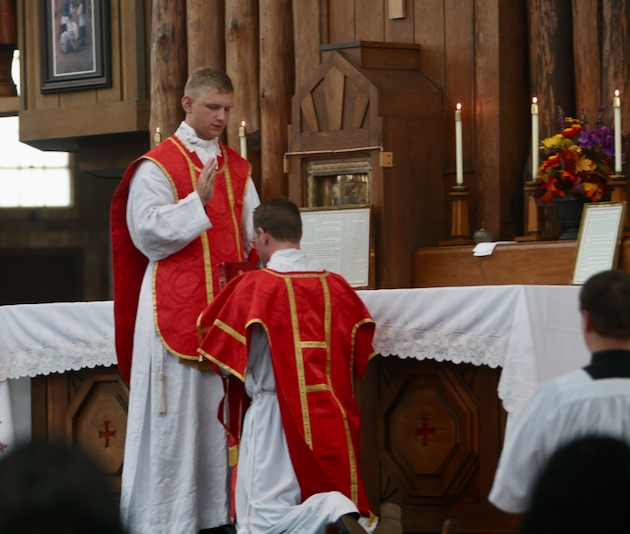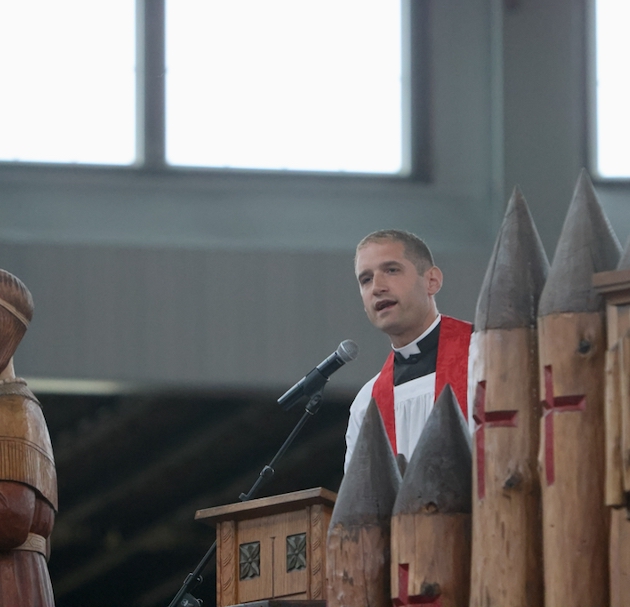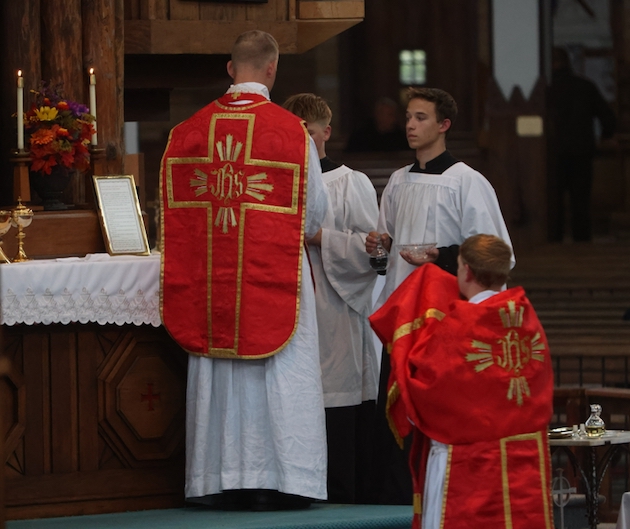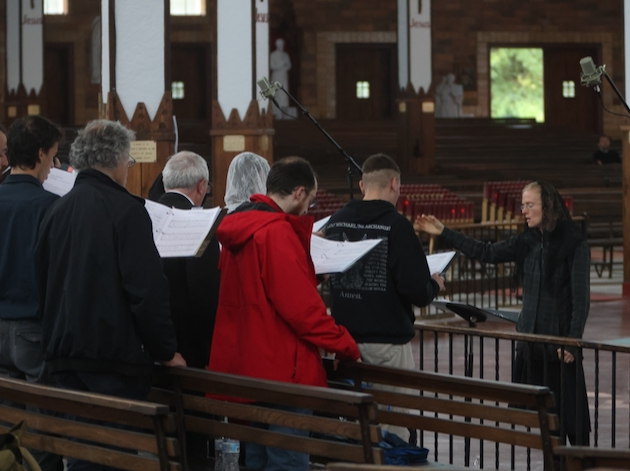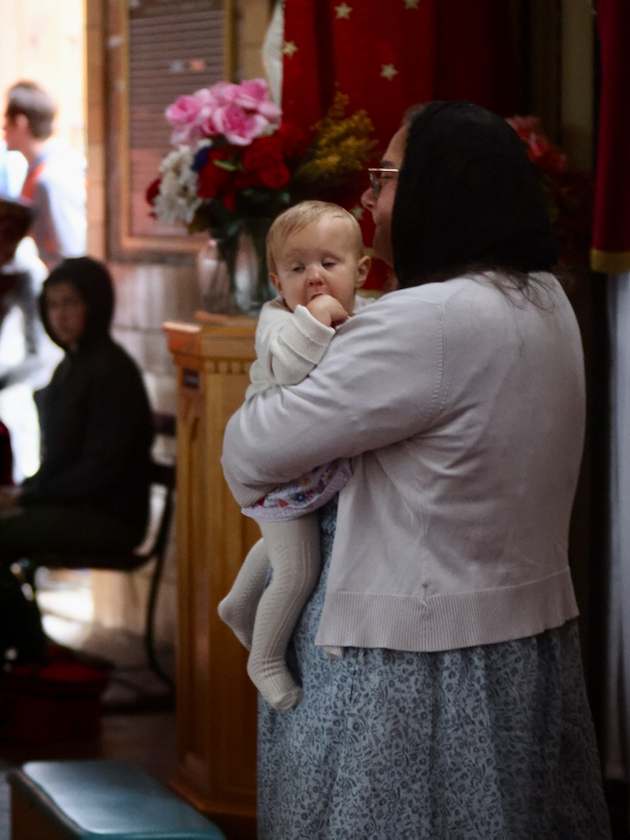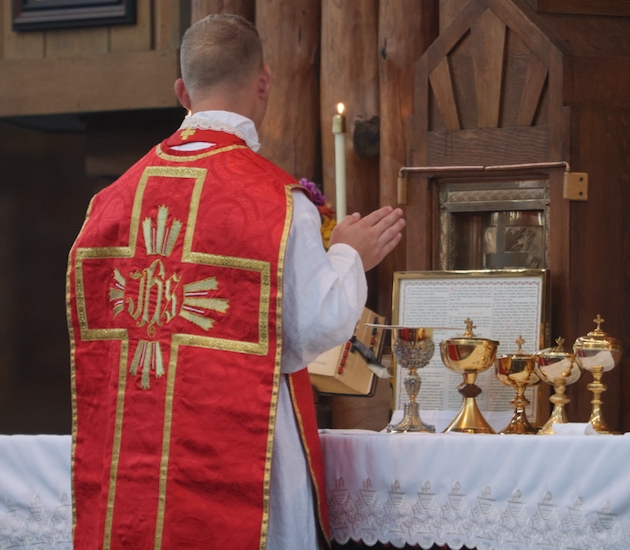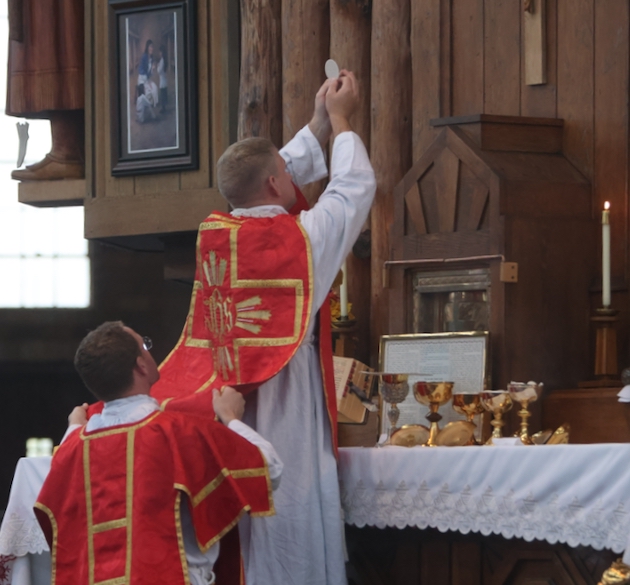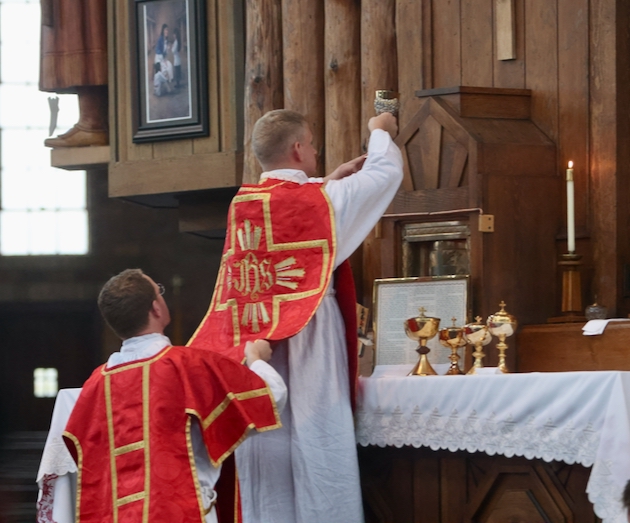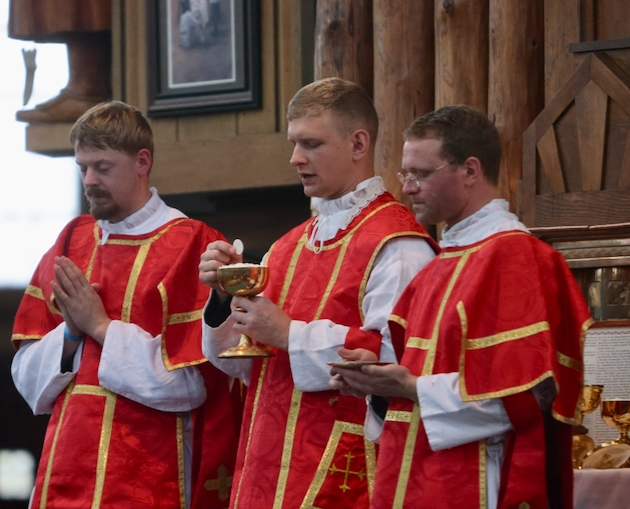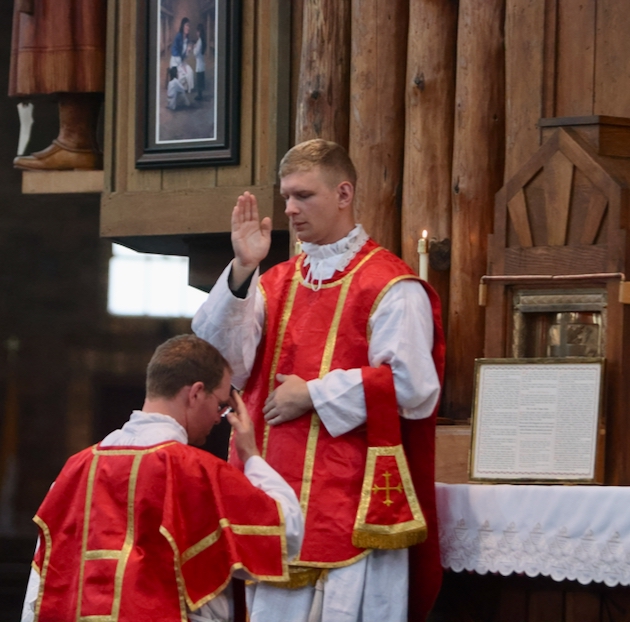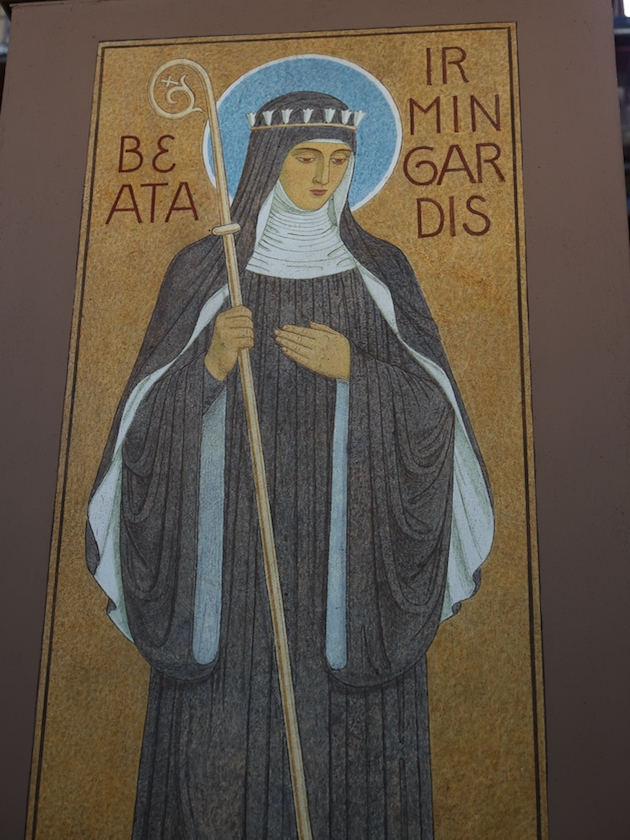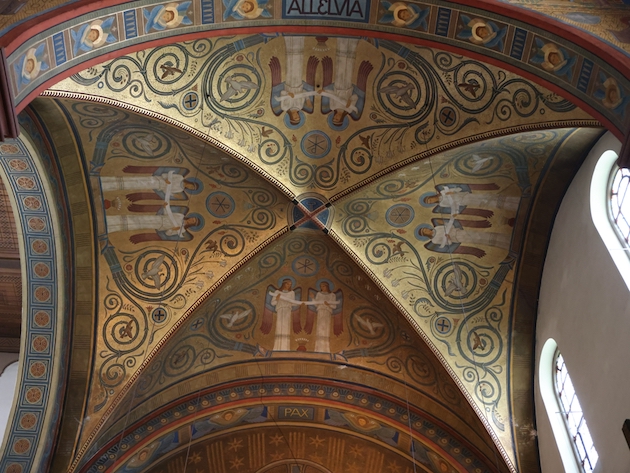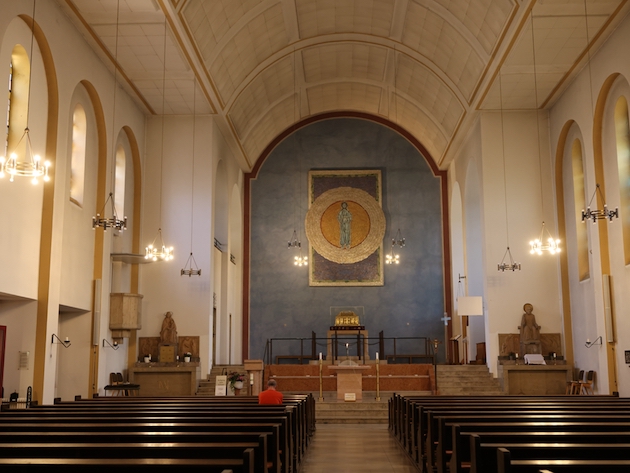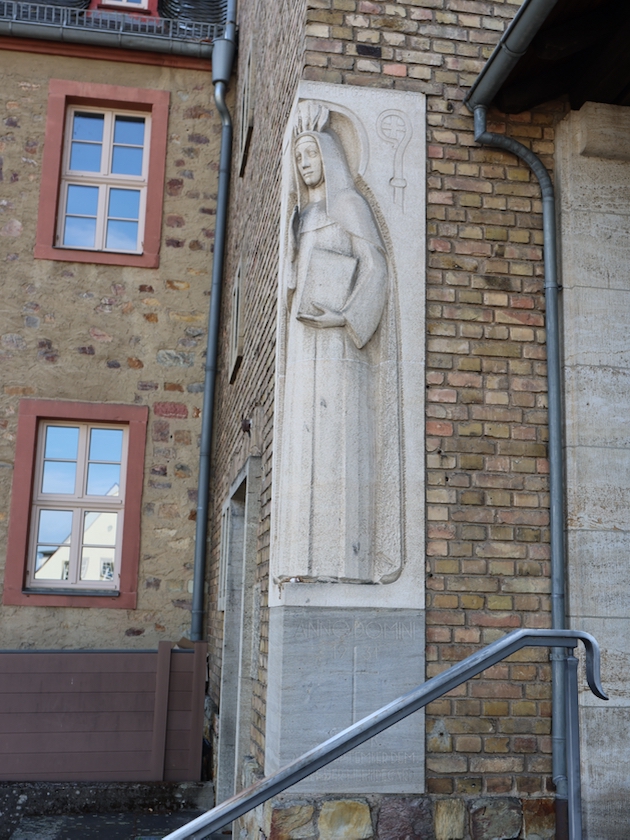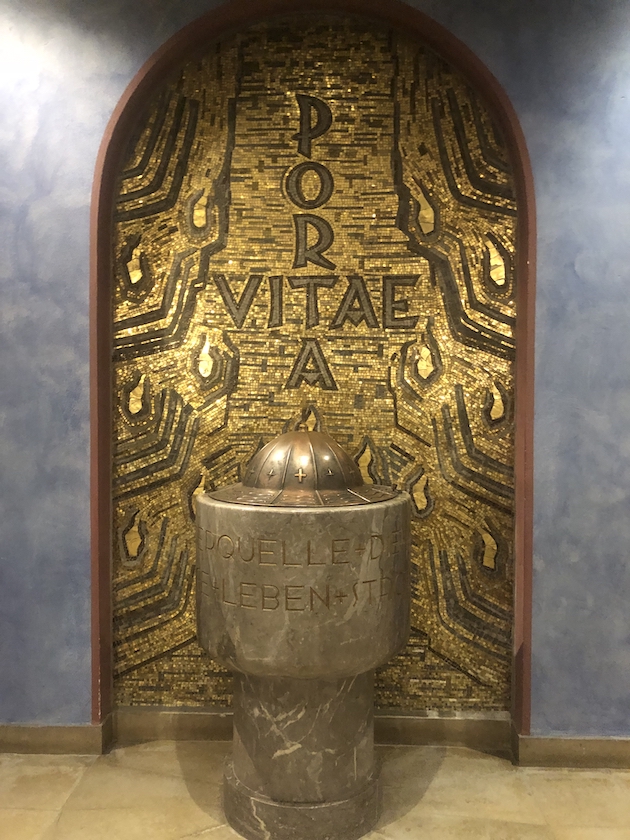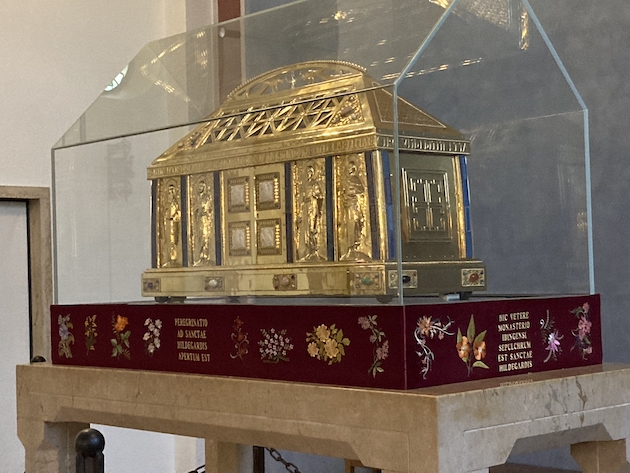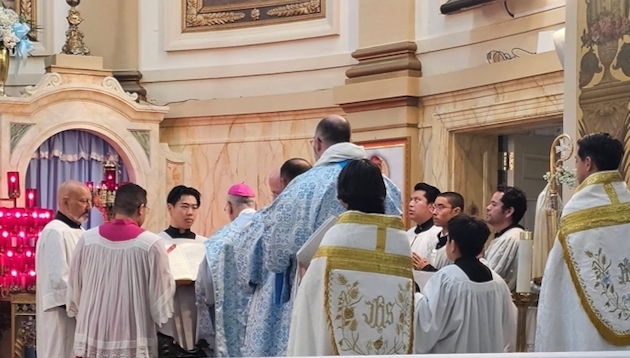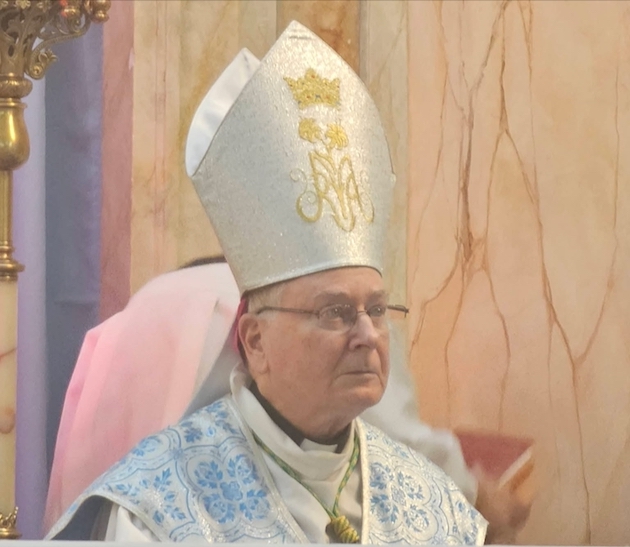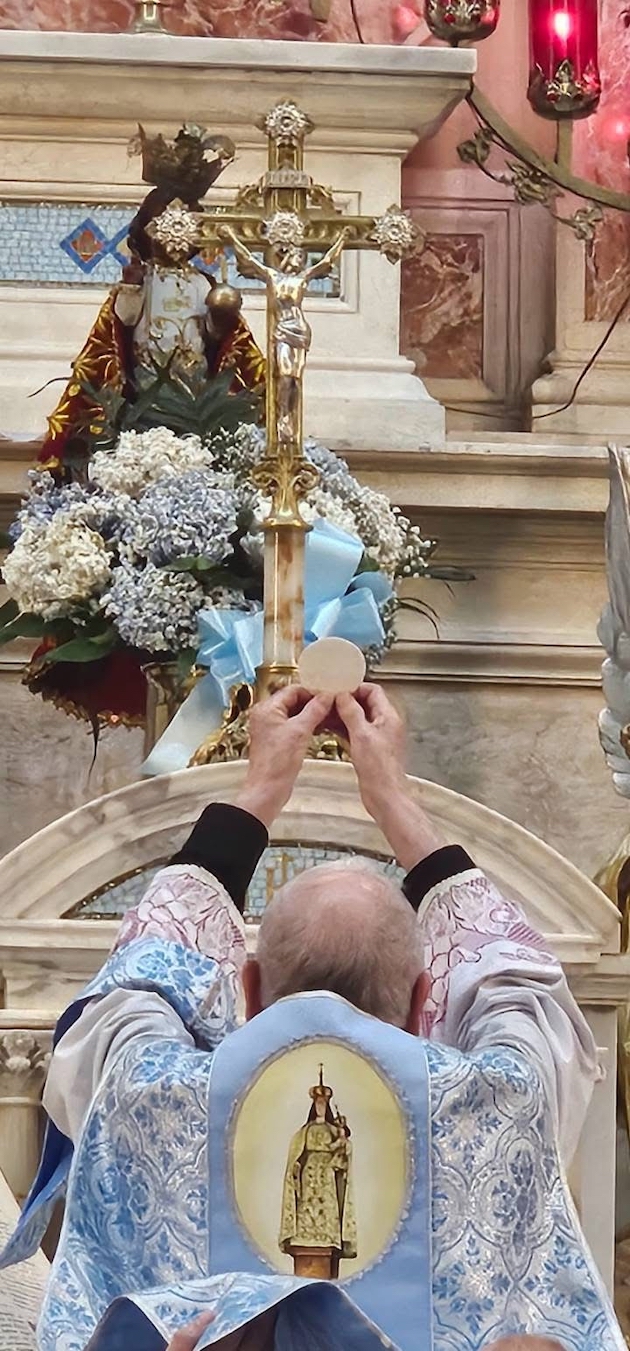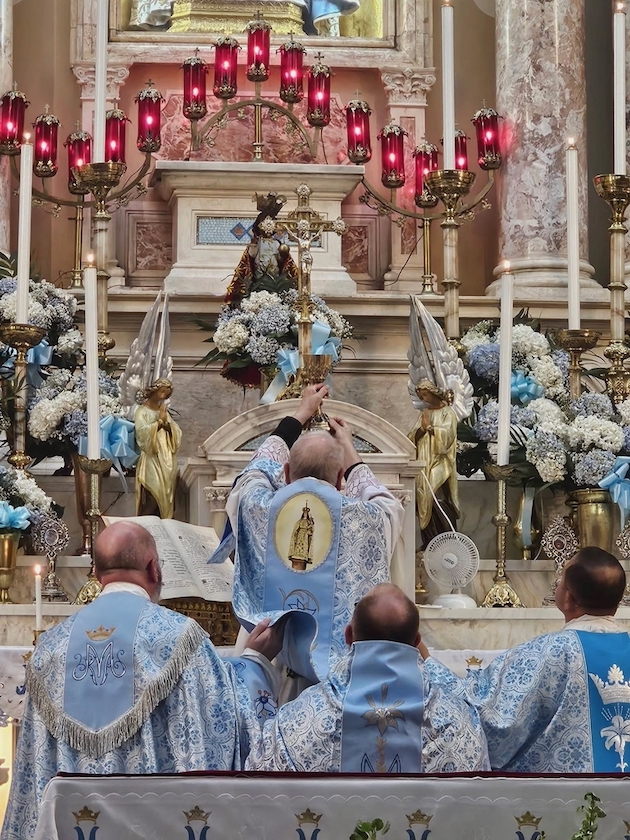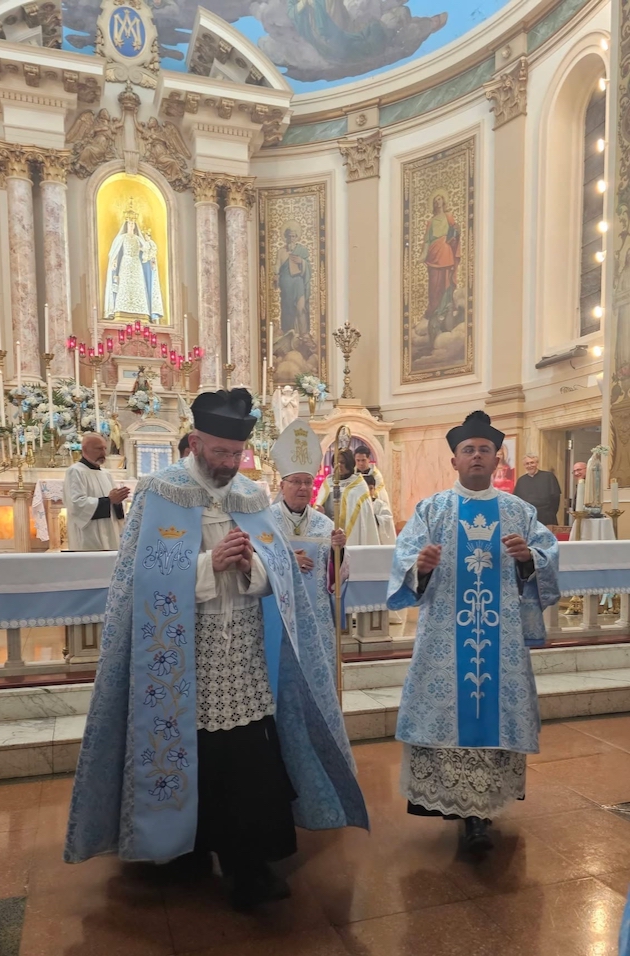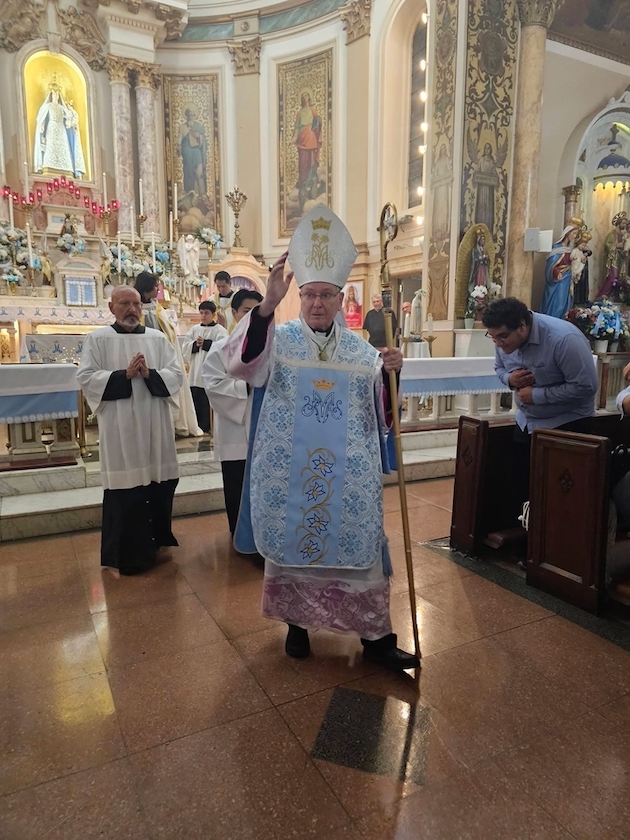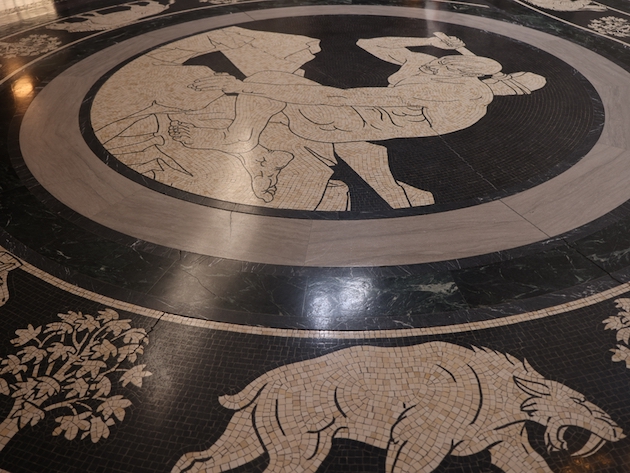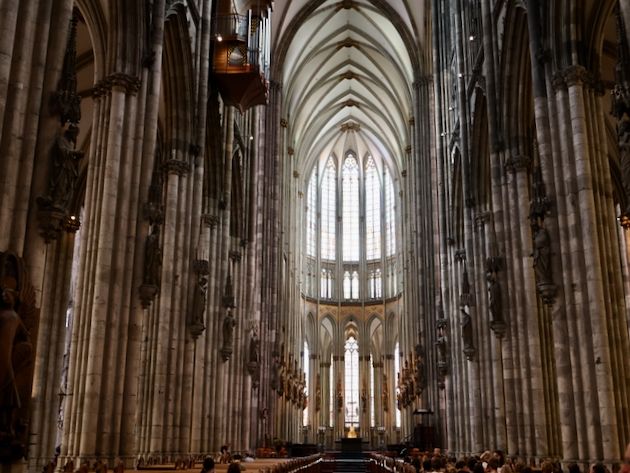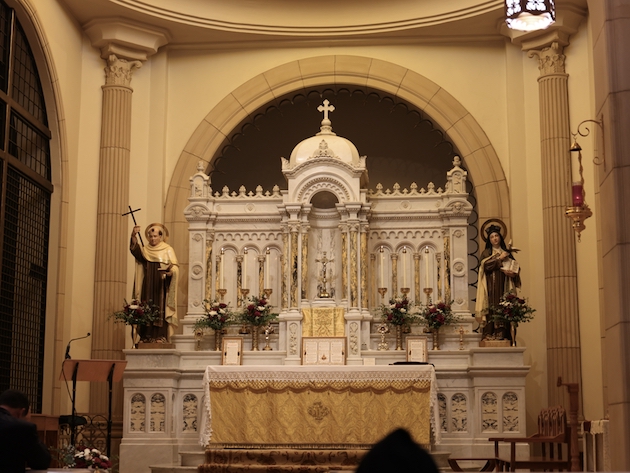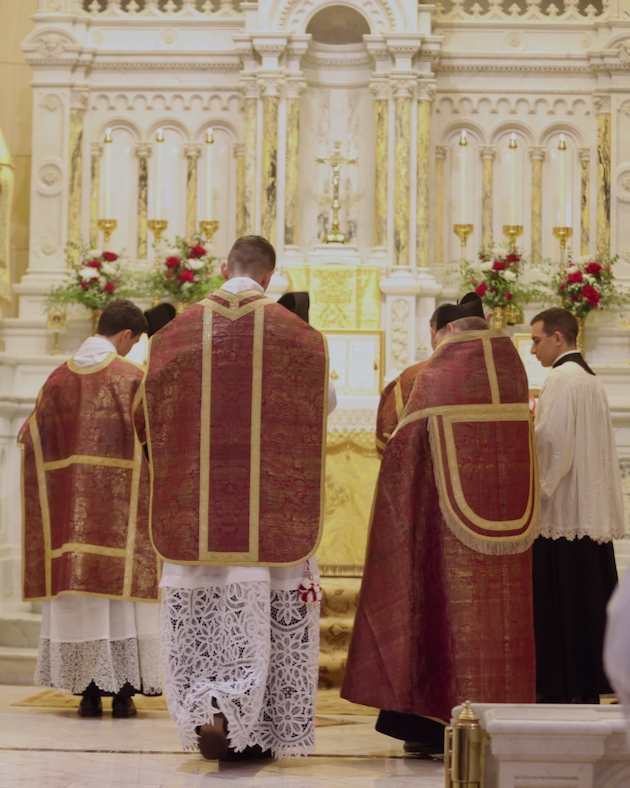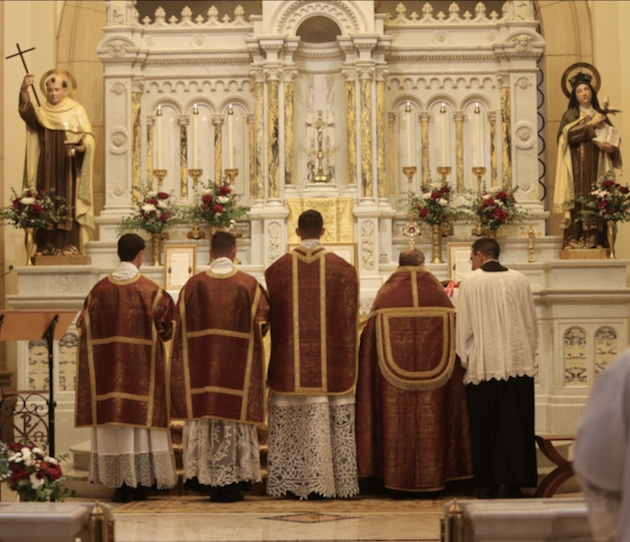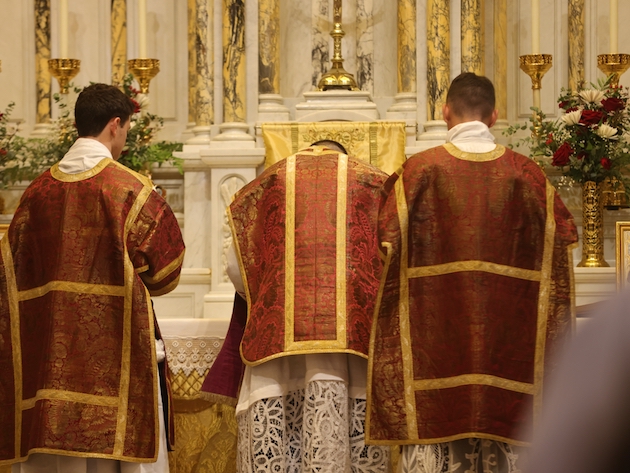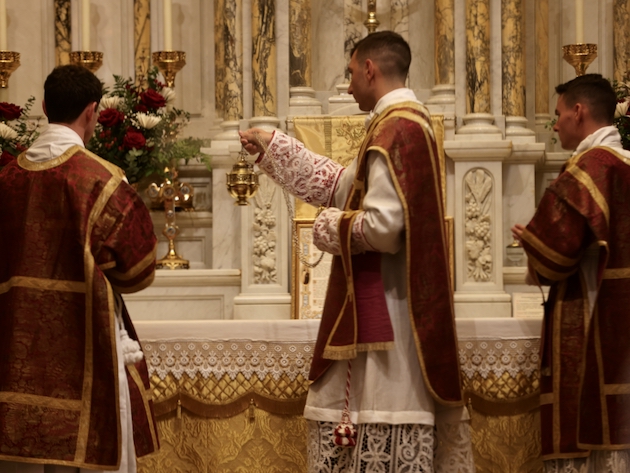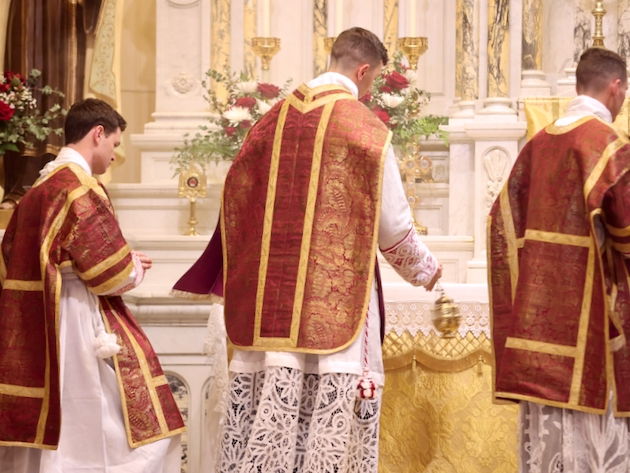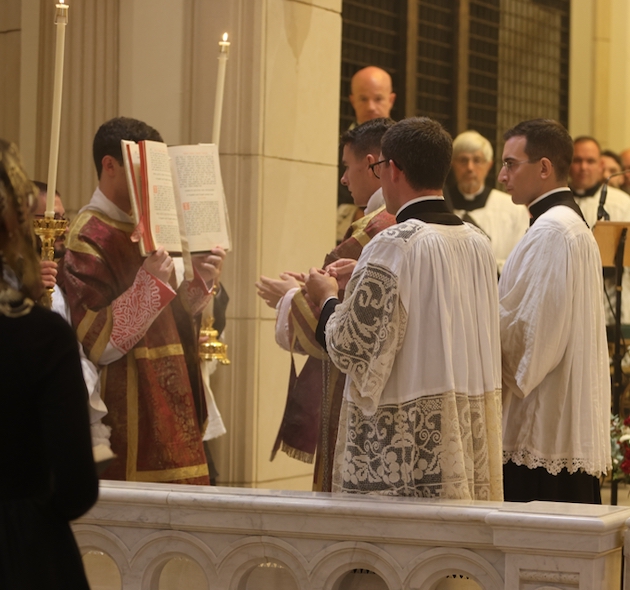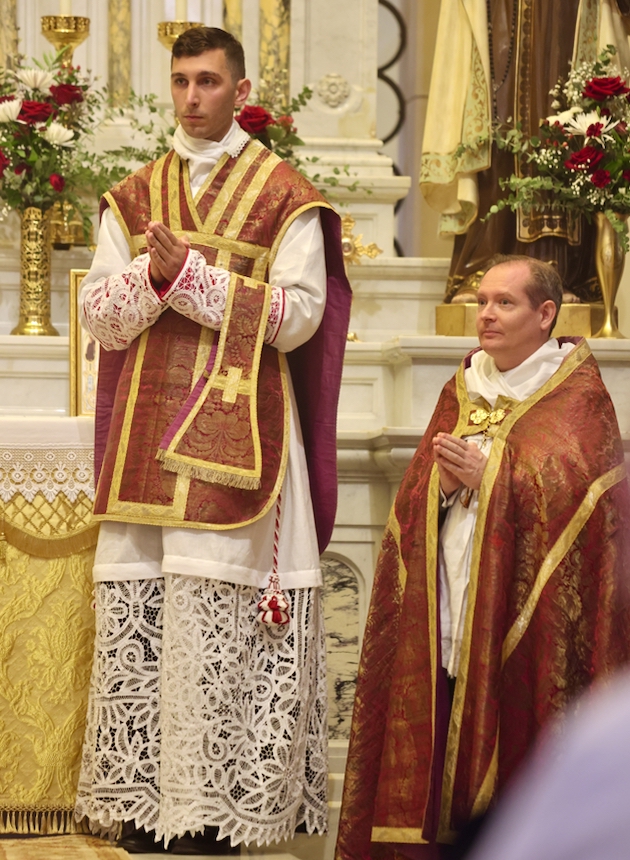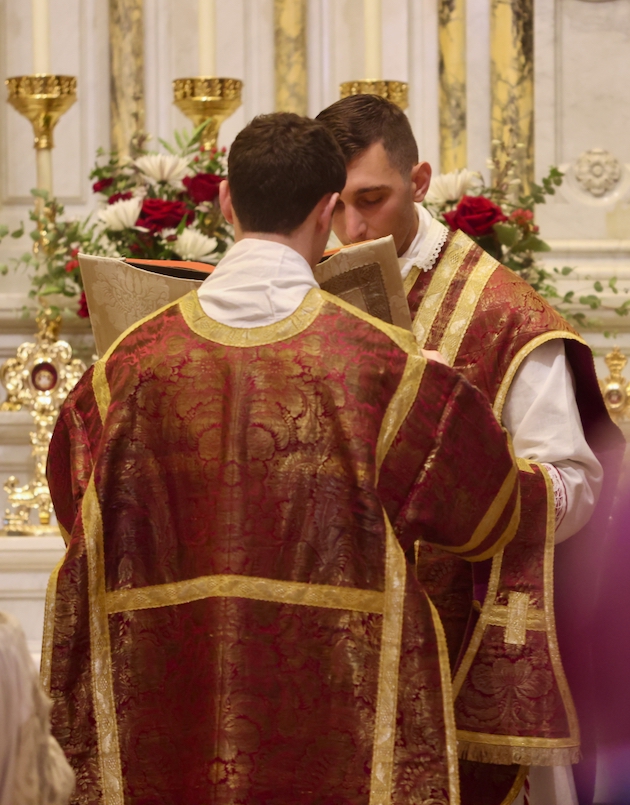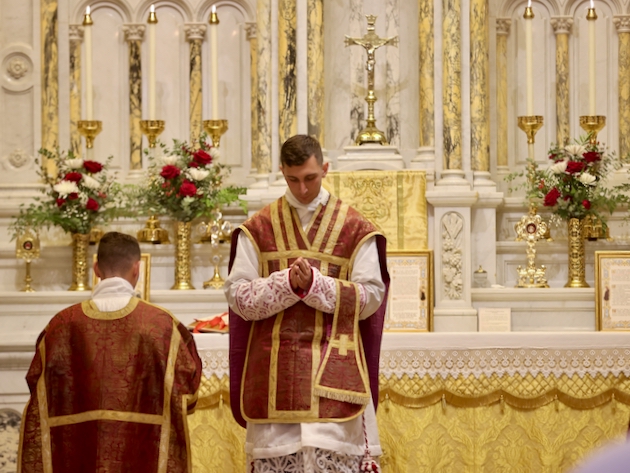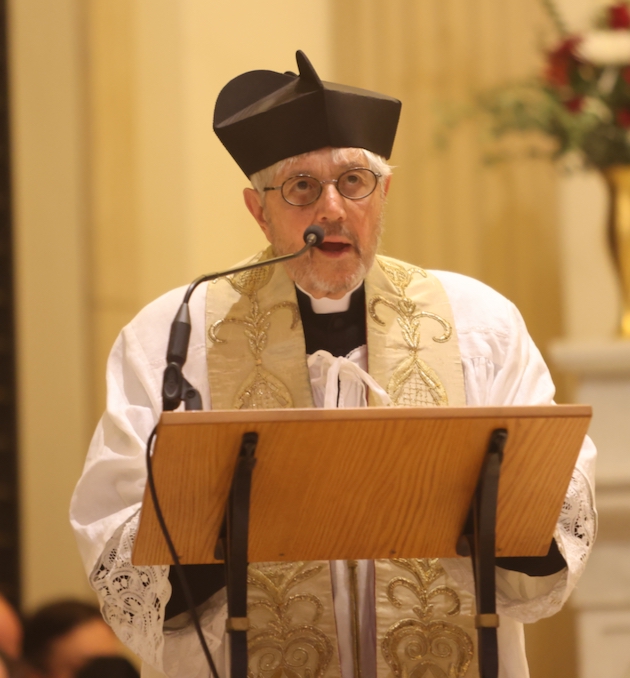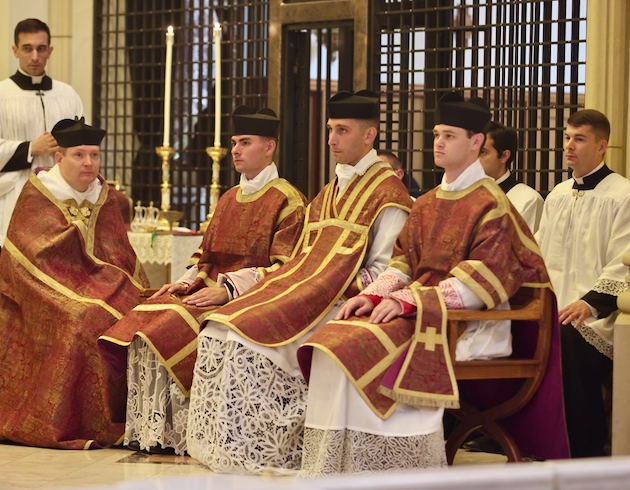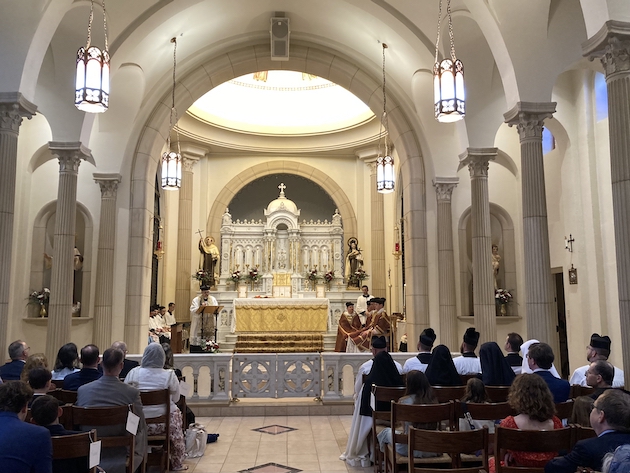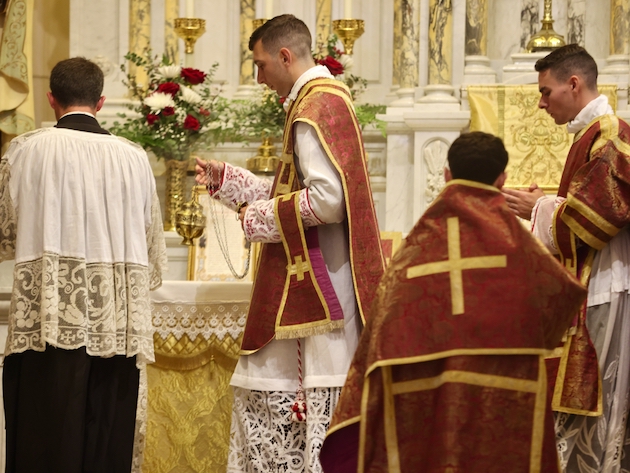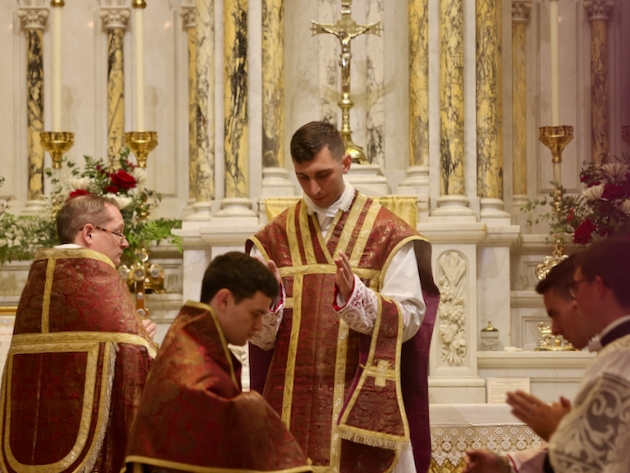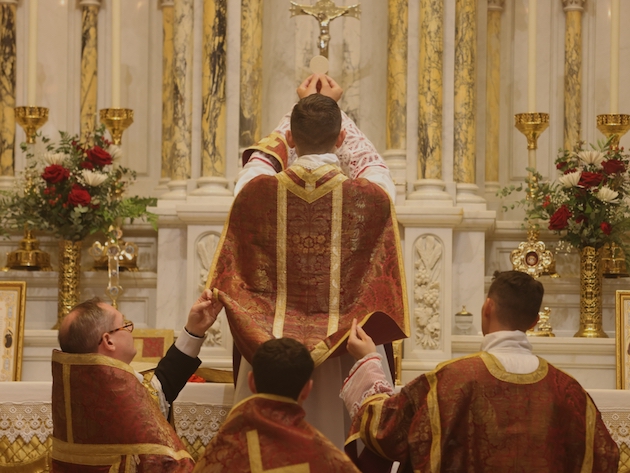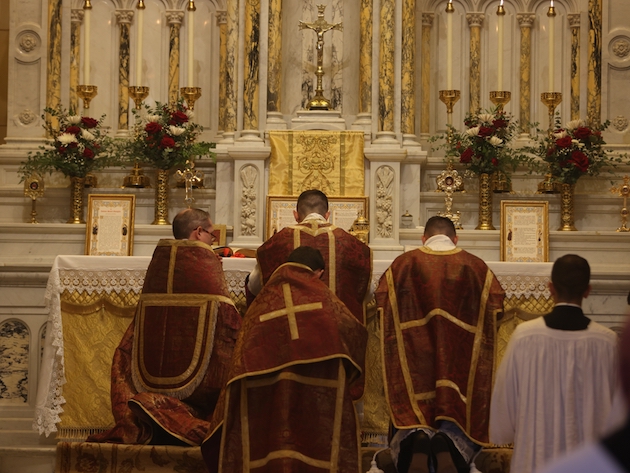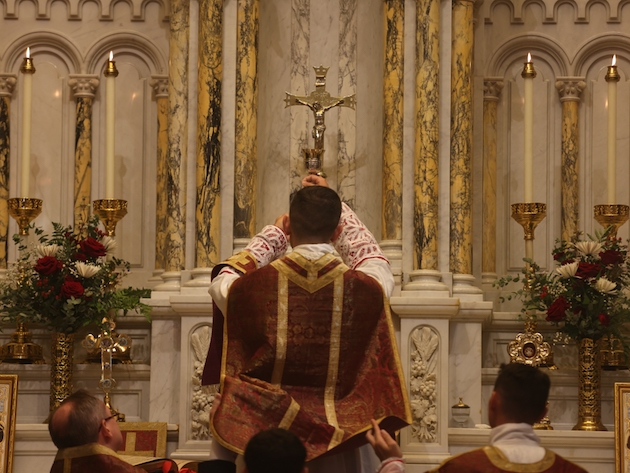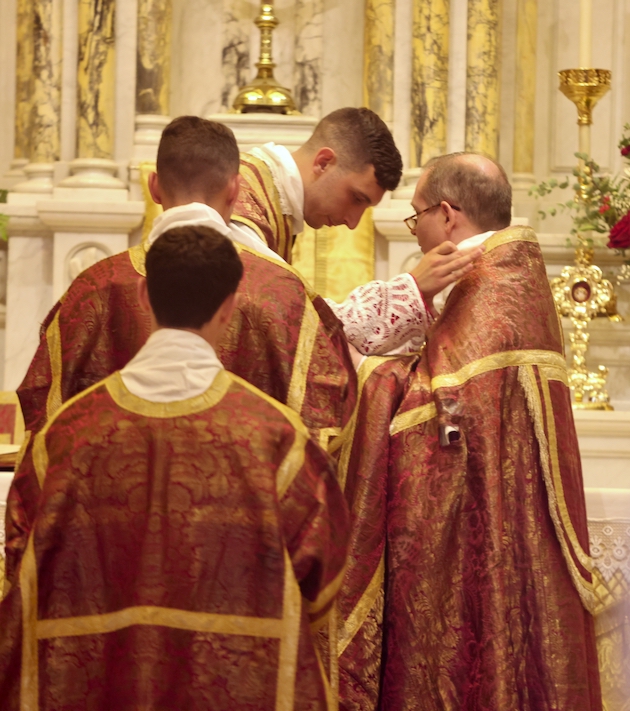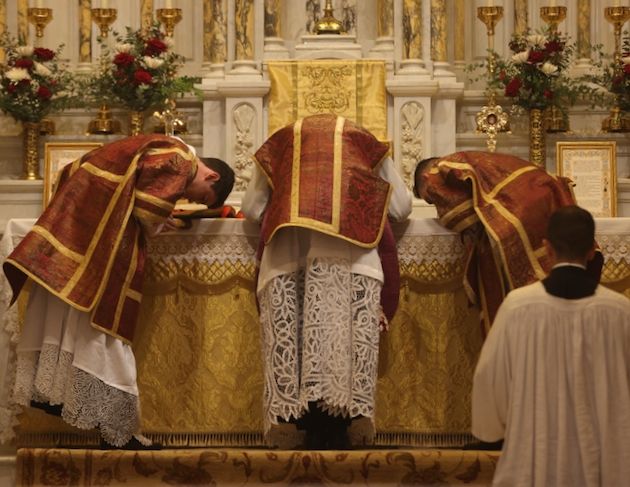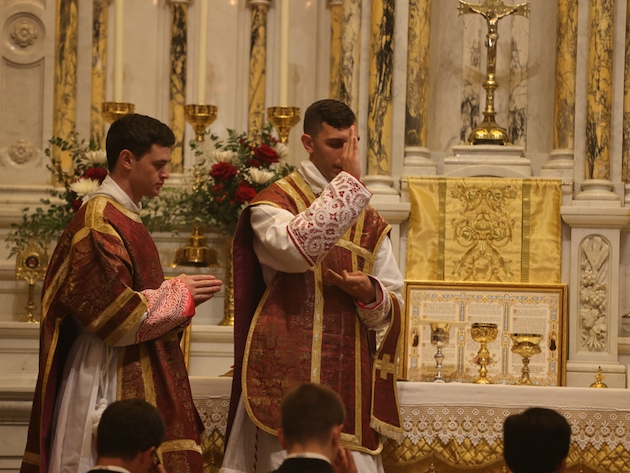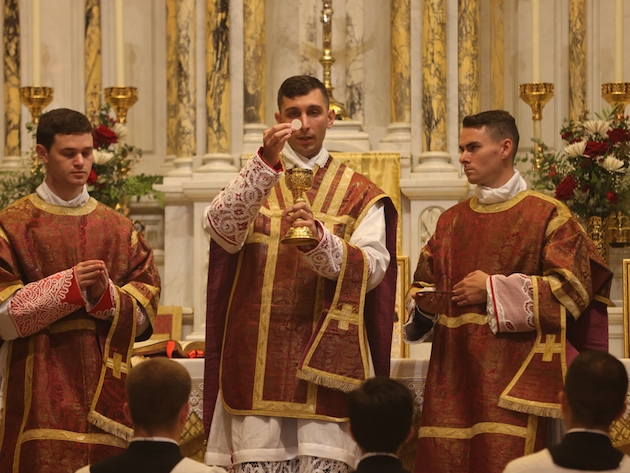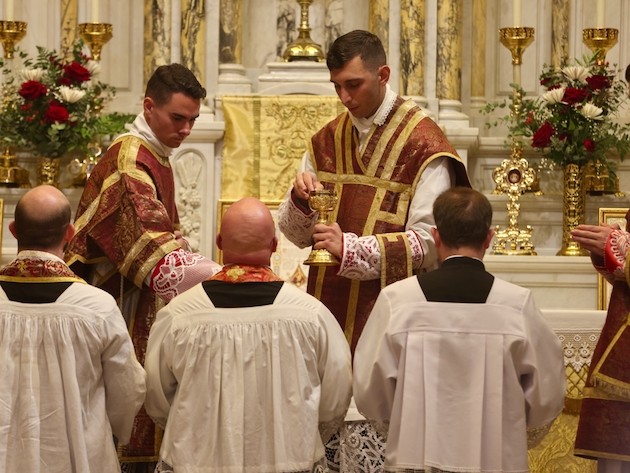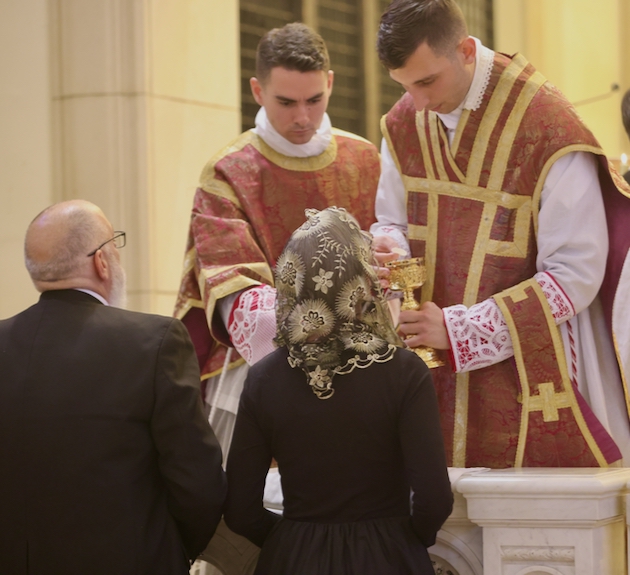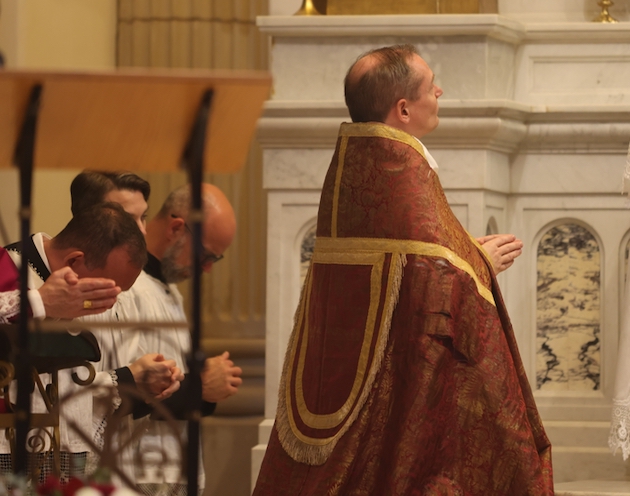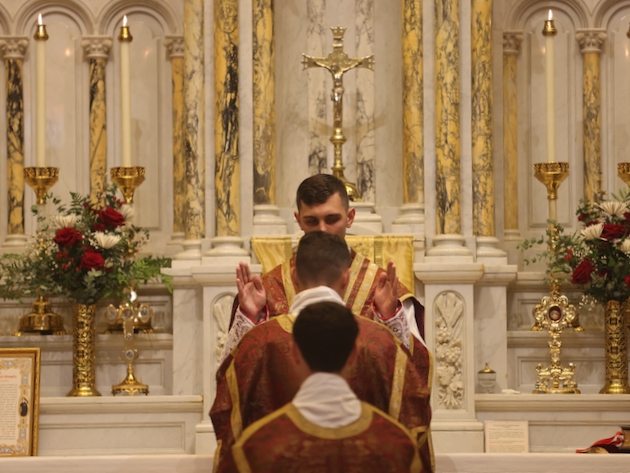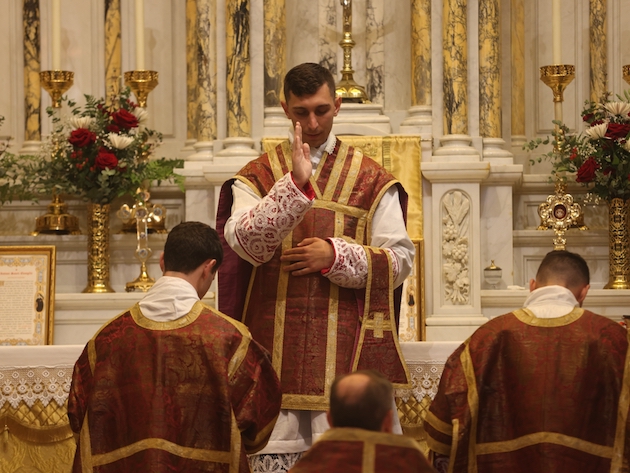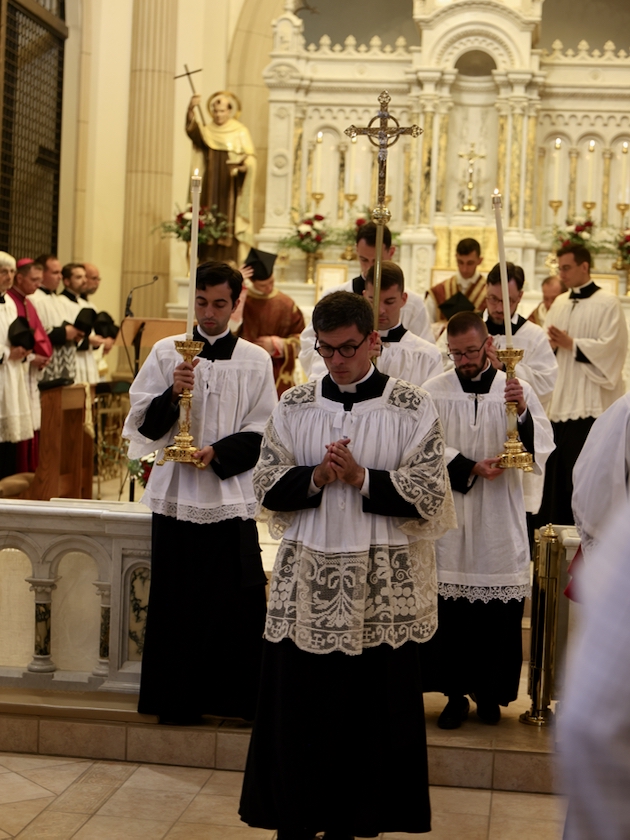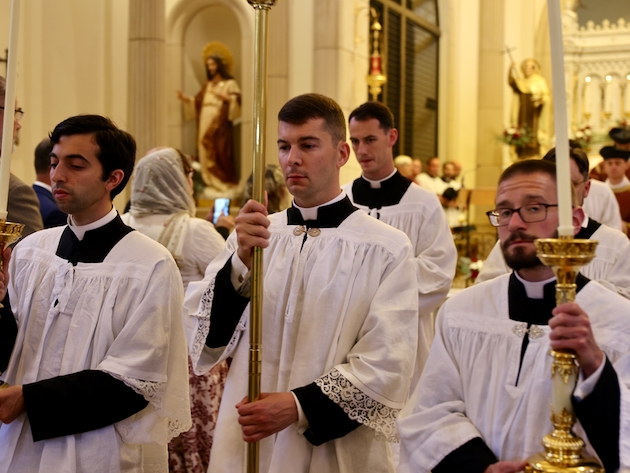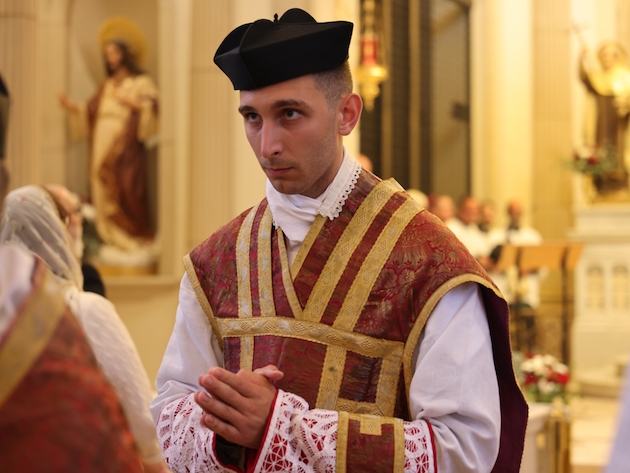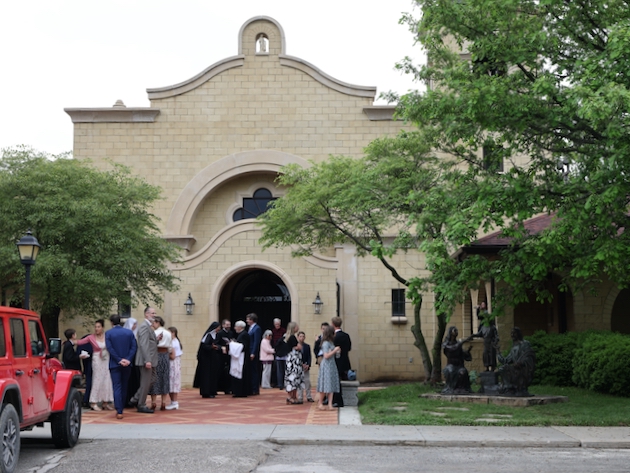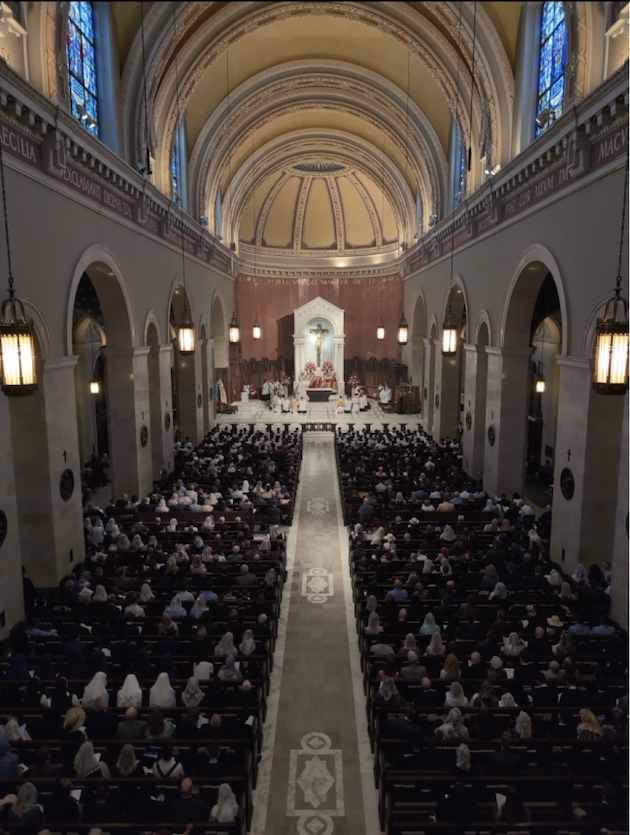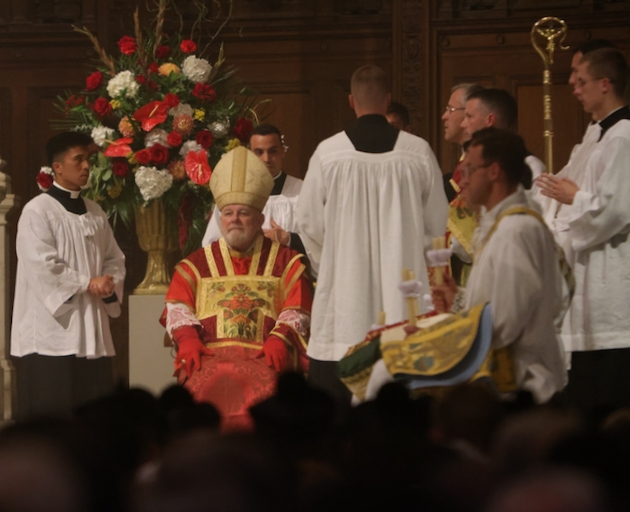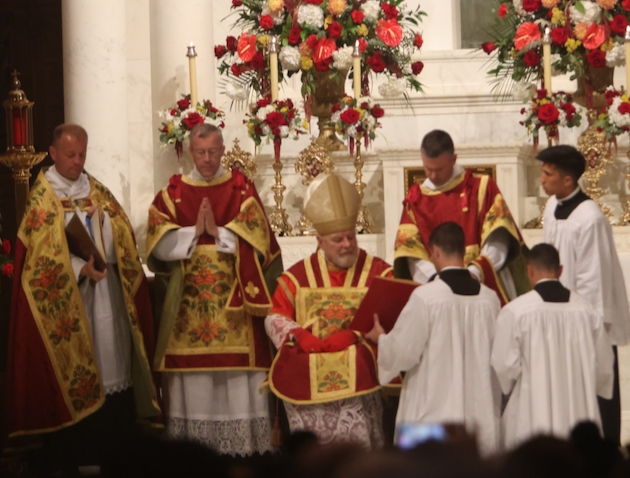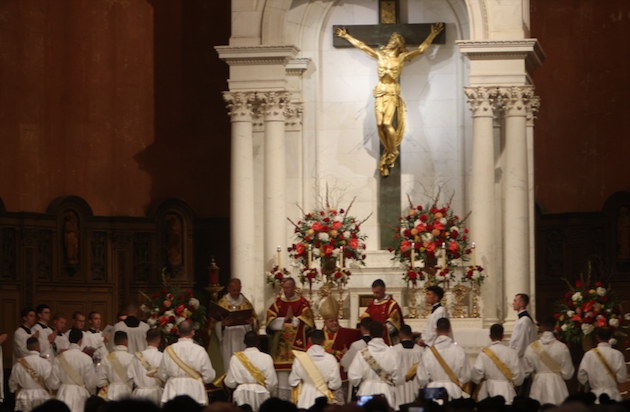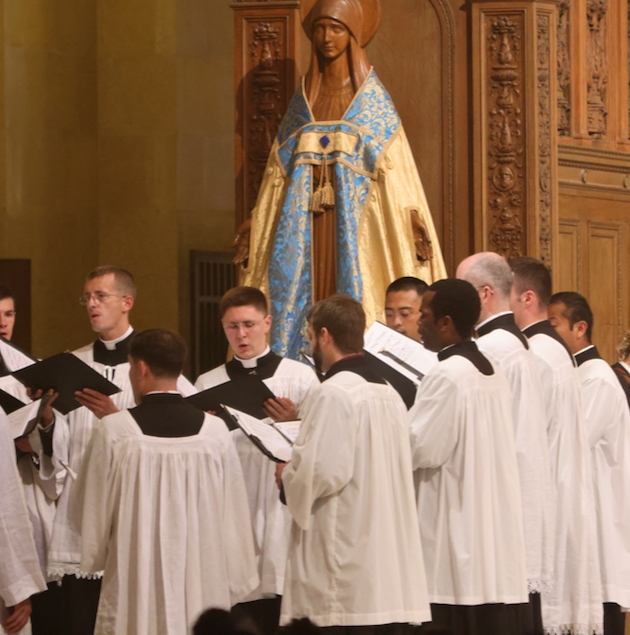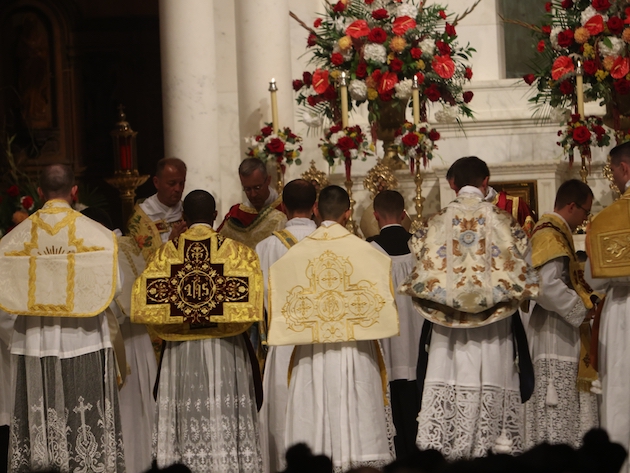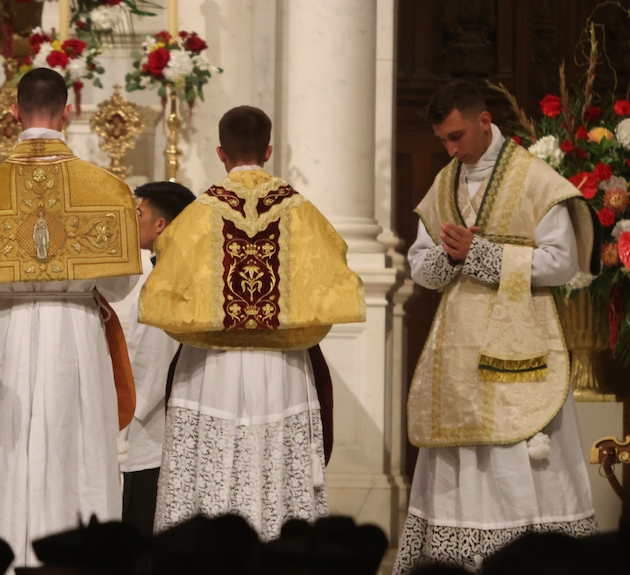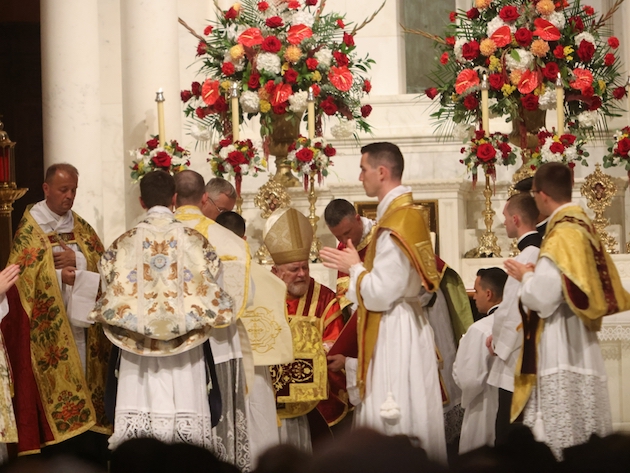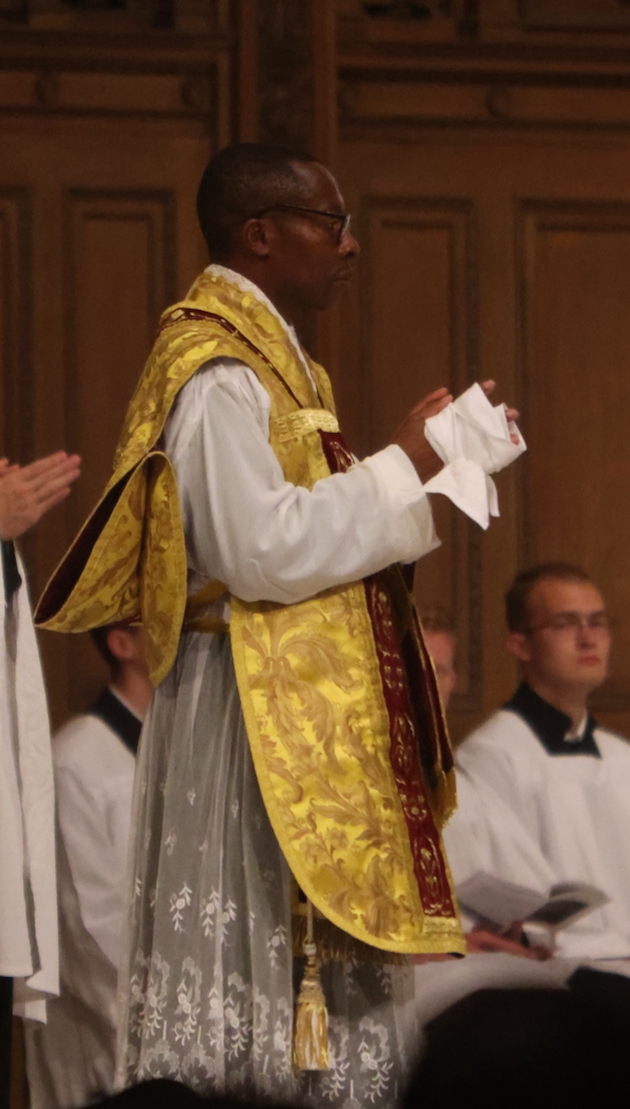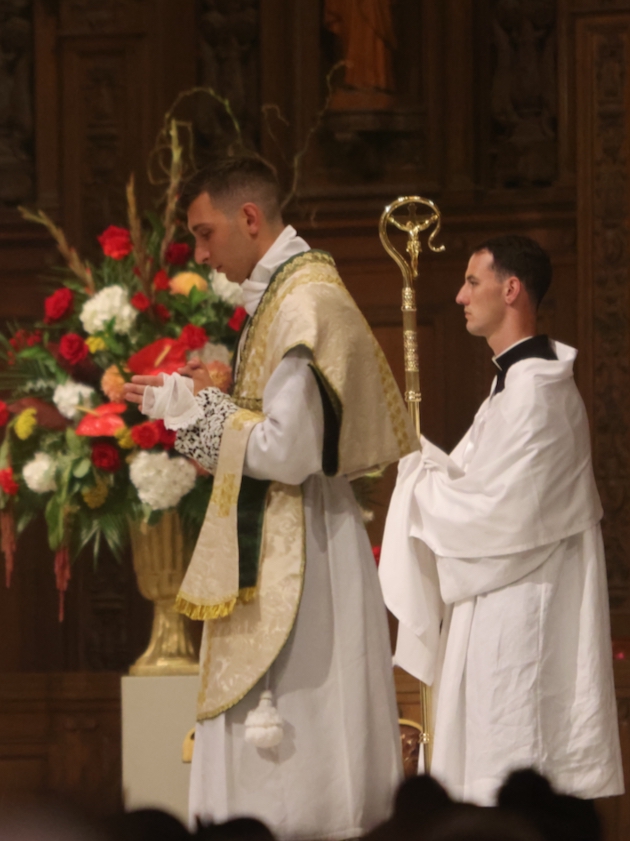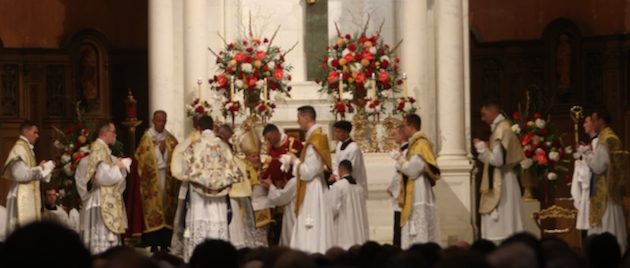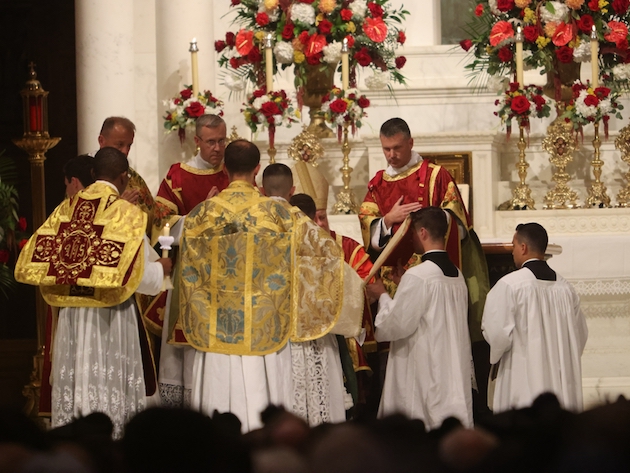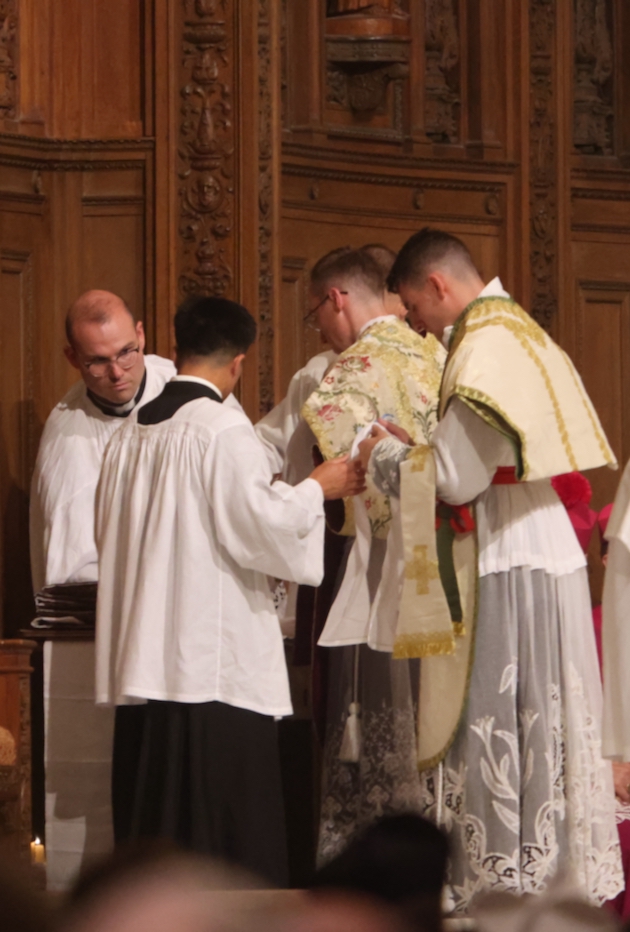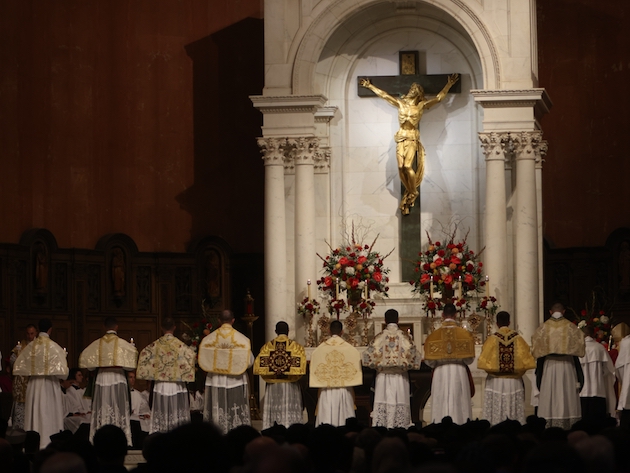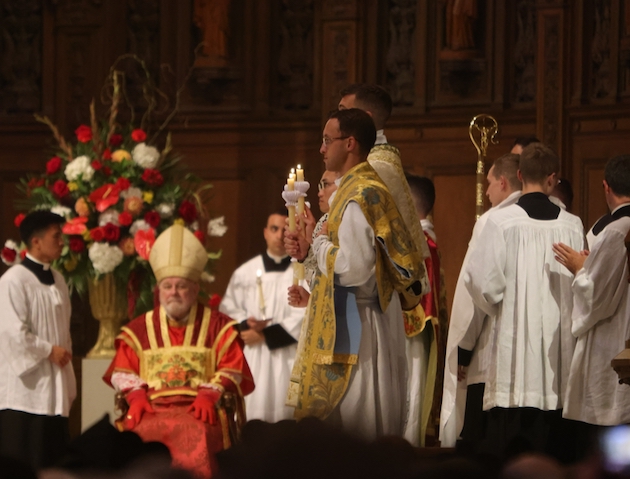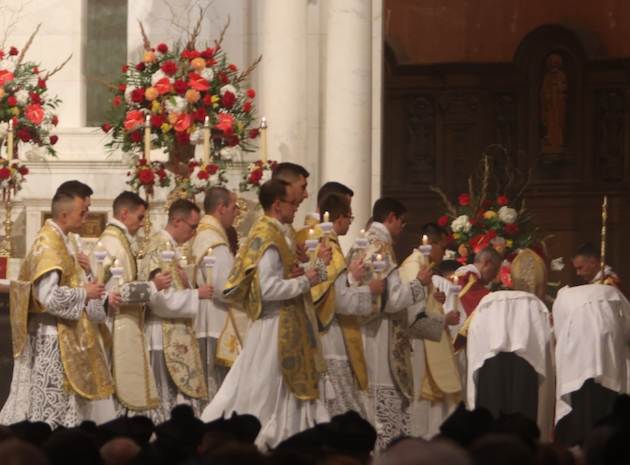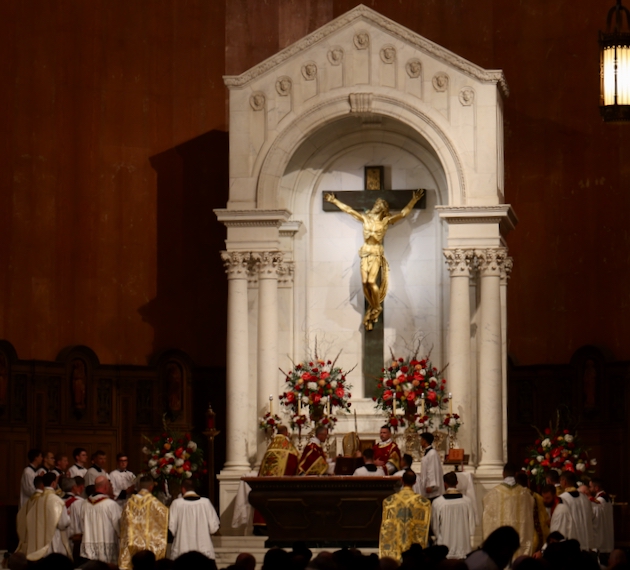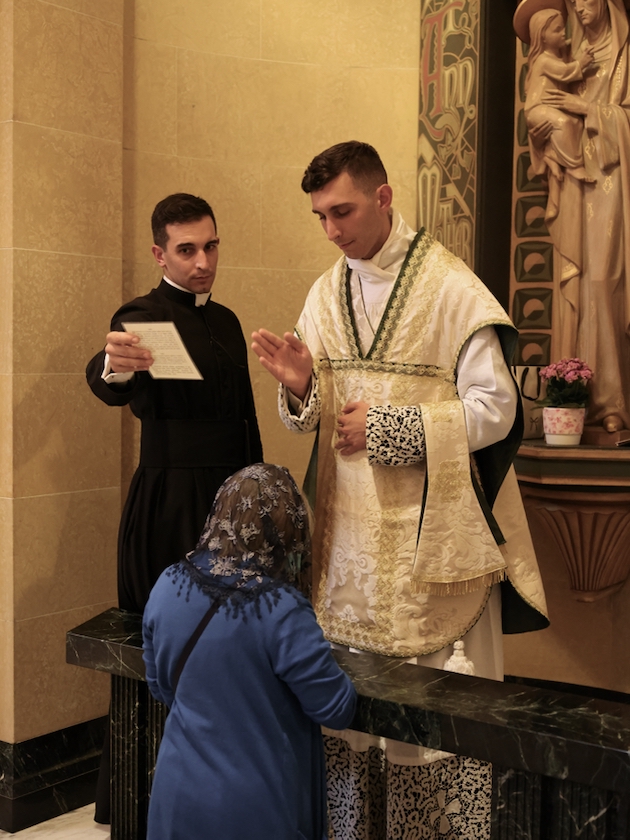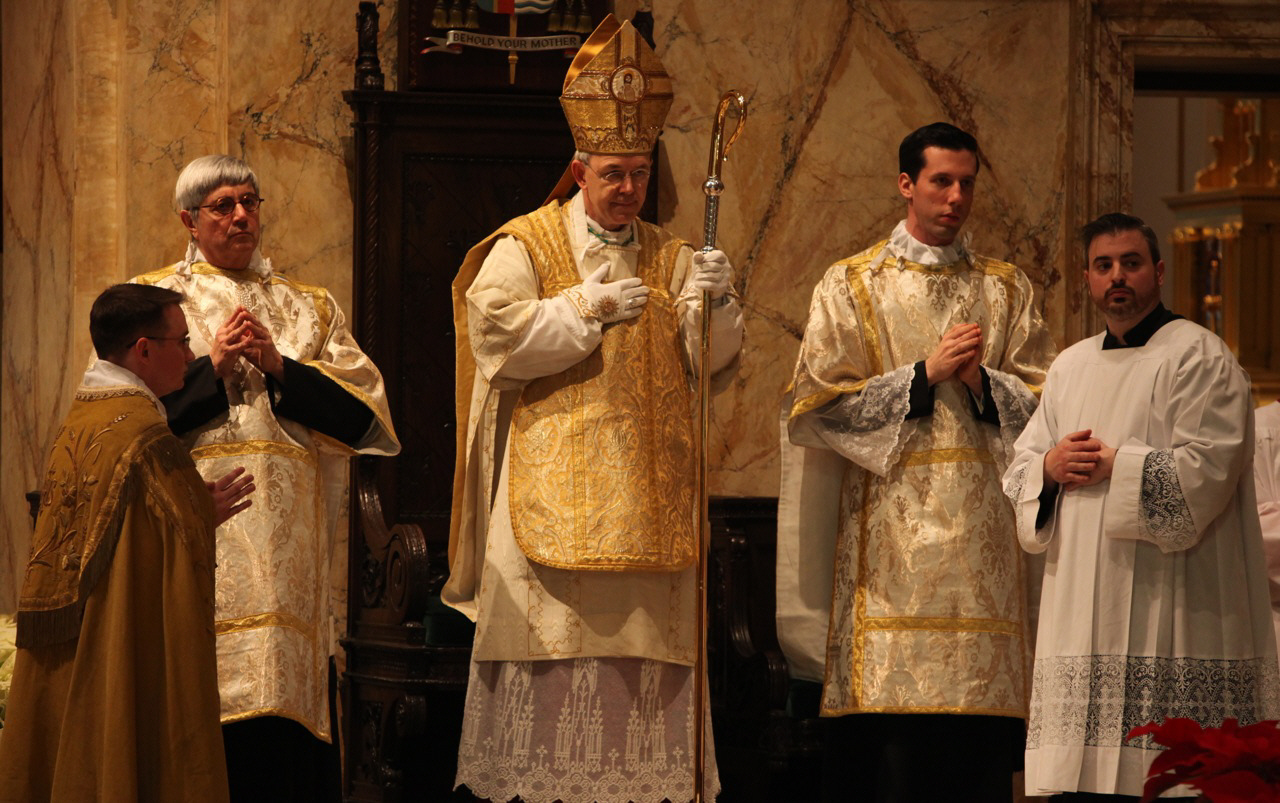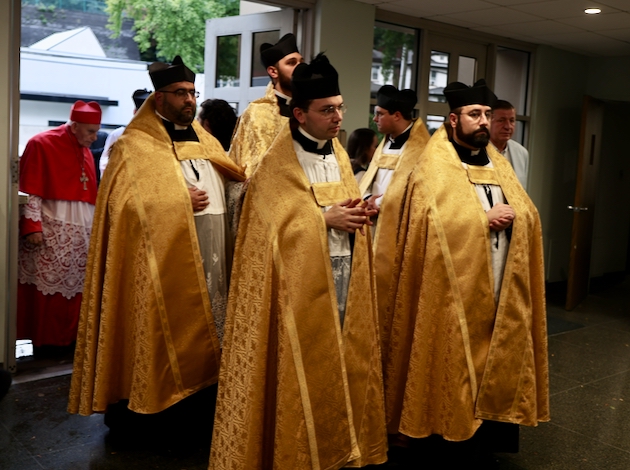
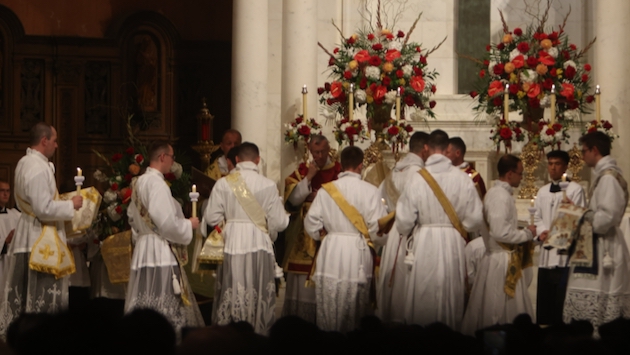
Some photos of the Mass at Our Lady of Mount Carmel in East Harlem on July18, courtesy of Mr. Brendan Young. He reports that “the bishop was overjoyed and there were about 200-250 faithful.”


6 Aug
2026

Some photos of the Mass at Our Lady of Mount Carmel in East Harlem on July18, courtesy of Mr. Brendan Young. He reports that “the bishop was overjoyed and there were about 200-250 faithful.”


31 Jul
2026

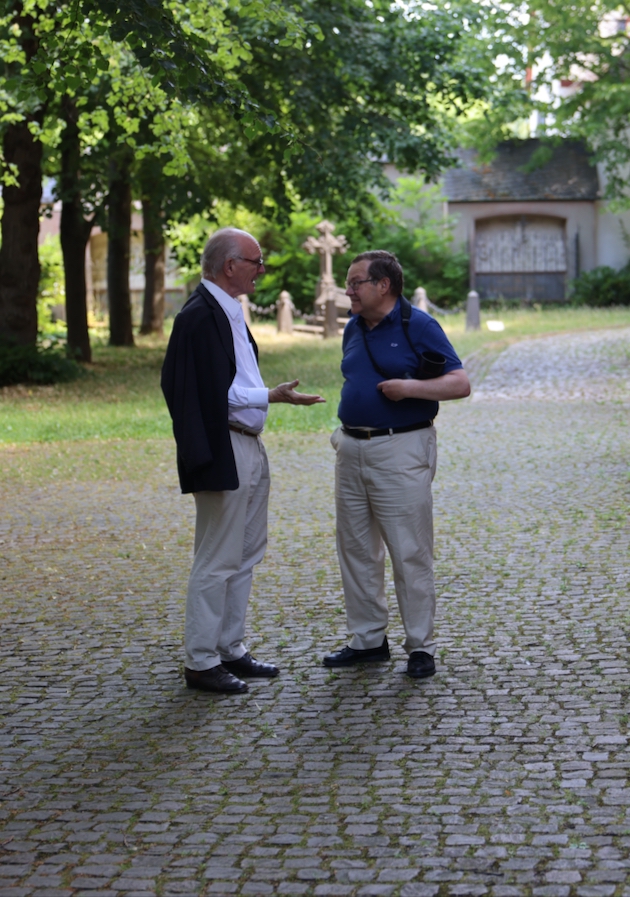
(Above) Martin Mosebach explaining things to an American visitor a few weeks ago in Kiedrich, near his home town of Frankfurt.
Today, Martin Mosebach celebrates his 75th birthday. The online publication of the German Catholic Church, oddly enough, commemorates the occasion by publishing an article from the Katholischen Nachrichten-Agentur (KNA). The interviewer characterizes Mosebach as a provokateur (an enfant terrible or, putting it more pejoratively, an “extremist”) yet acknowledges that he “speaks up, as always, forcefully and eloquently.” But then katholisch.de has never been as one-sidedly propagandistic as the corresponding establishment Catholic media at the Vatican, in France, the UK or the United States.
Demuth, Norbert, „Der Literat und katholische Provokateur Martin Mosebach wird 75,“ katholisch.de (7/31/2026)
Below are excerpts from the article. In quotation marks are statements the interviewer directly attributes to Mosebach.
Regarding the liturgy, Mosebach is clear. In his view, the Church at the end of the 1960s divested itself of its substance by rejecting the old form of worship. What Paul VI initiated through the reform of the liturgy ”in reality weakened to an appalling extent – or even brought to a standstill – the transmission of the faith.”
….
Above all, Mosebach is disturbed by the practical implementation of the reform of the liturgical life of the Catholic Church. “The few Catholics that still go to Mass on Sunday have largely lost the knowledge of what the Eucharistic sacrifice is.” “Through the reform of the liturgy (the Church) has been grievously wounded in her appearance and in her substance.”
….
Regarding Pope Leo, Mosebach is clear: “I urgently hope that Pope Leo will do away with Pope Francis’s new methods of ‘decision-making.’ Especially with ‘synods’ which break with the entire synodal tradition of Church history.” Leo, however, wants to avoid a sharp break with the pontificate of his predecessor and “has apparently resolved for the time being to more or less freeze the status quo.”
…..
In today’s Catholic Church traditionalist thought is in a difficult situation. That’s demonstrated by the action taken by Pope Leo against the FSSPX….
“I am unhappy regarding these excommunications, for they approach the great problem of the Church’s liturgy on a lower, disciplinary level instead of attempting to fundamentally remedy the damage that has arisen in a spiritual and theological manner.” A state of total disorder “cannot be healed by such administrative acts. ”

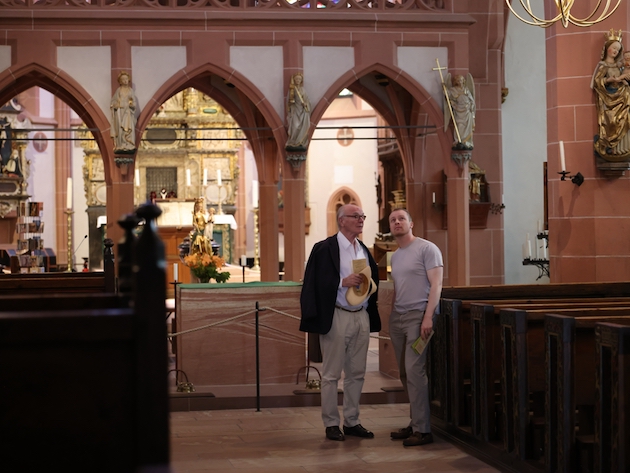
(Above ) Guiding a visitor though the extraordinary medieval parish church of Kiedrich.

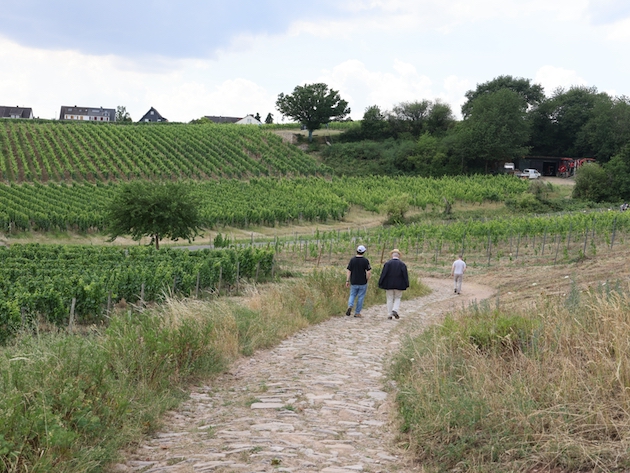
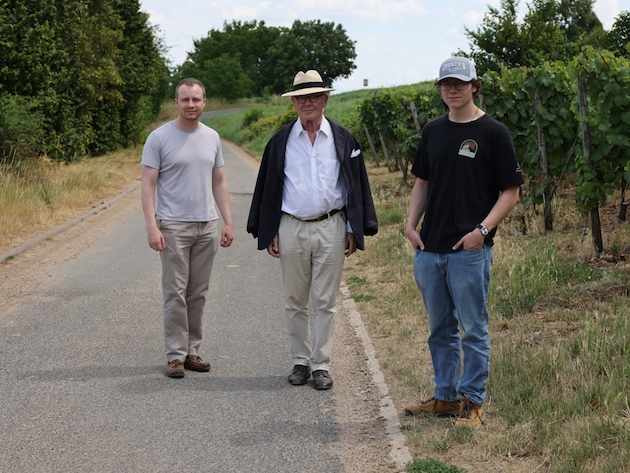
(Above and below) A hike led by Martin Mosebach among the vineyards and estates of the Rheingau, source of some of the best German wine.

24 Jul
2026

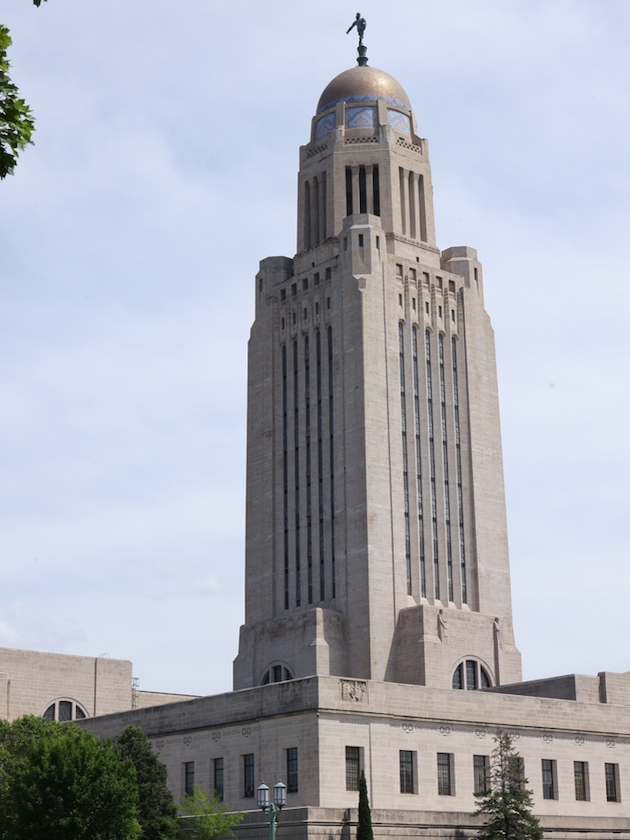
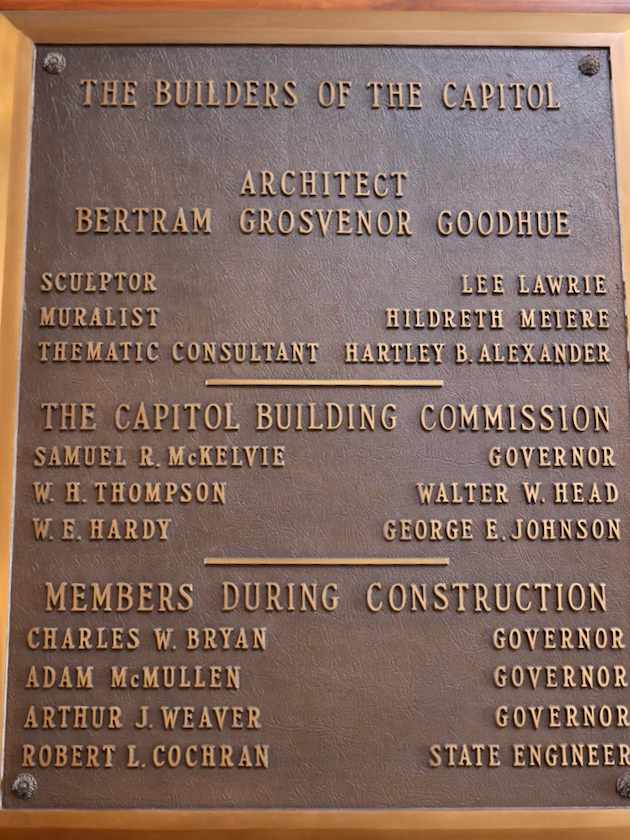
We encounter the art of Hildreth Meiere (1892-1961), the “mistress of Art Deco,” all over New York City: at Rockefeller Center, at St Bartholomew’s, at Fordham University Chapel – among many other sites. But her most elabotrate work is far away in Lincoln, Nebraska, For it was here, in partnership with architect Bertram Goodhue (St.Vincent Ferrer, St. Thomas Fifth Avenue (the latter with Ralph Adams Cram)) and sculptor Lew Laurie (St. Vincent Ferrer, Rockefeller Center) that she helped create one of the first and most amazing Art Deco buldings: the Nebraska State Capitol. It is only matched in its decorative fullness and complexity by the later and larger Rockefeller Center.

The somewhat incongruous skyscraper of the Nebraska Capitol makes even today an amazing impression. Bertram Goodhue died in 1924 and did not live to see its completion.

The artistic “dream team” come all the way from New York City. The “thematic consultant” Hartley B. Alexander (a professor of philosophy)is responsible for the fantastically elaborate iconography of the Capitol, uniting everything from Classical antiquity to American Indian art, from planetary images to dinosaur fossils, all setting forth the history and ideals of Nebraska.

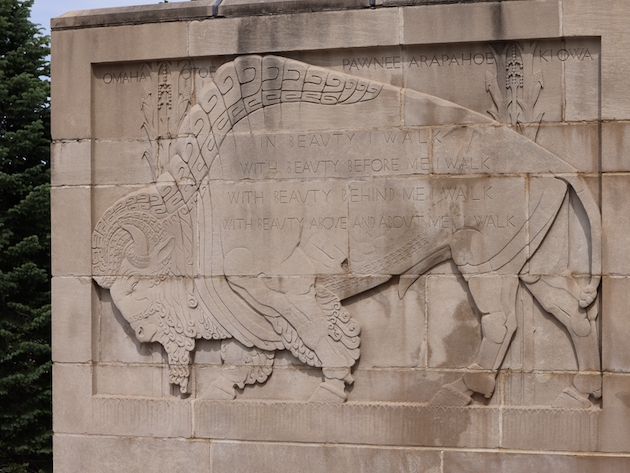
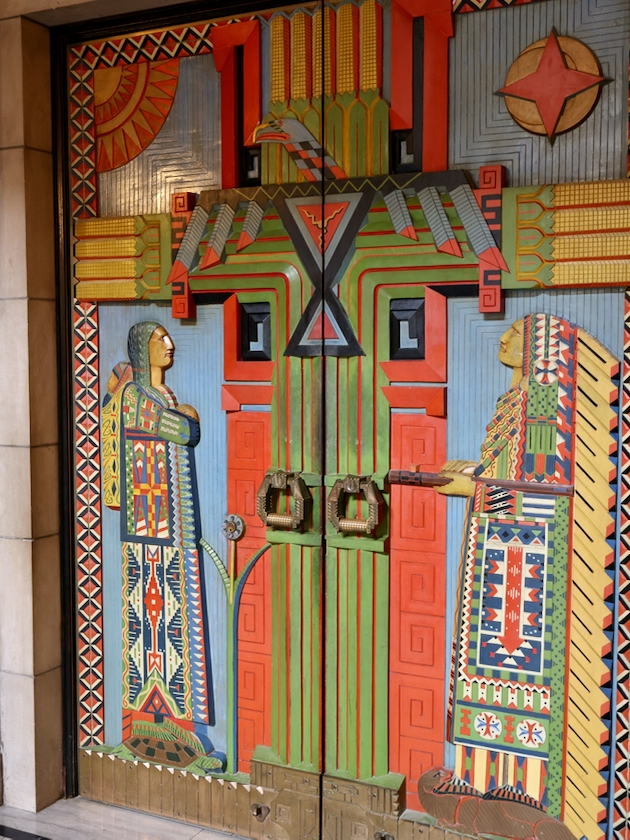
Lew Laurie is ressonsible for the sculptural decoration of the Capitol both on the exterior (above) and in the interior ( below – the decoration of a door).

(Below) Hildreth Meiere designed ceiling roundels in ceramic tile showing various historical aspects of Man’s economic life.

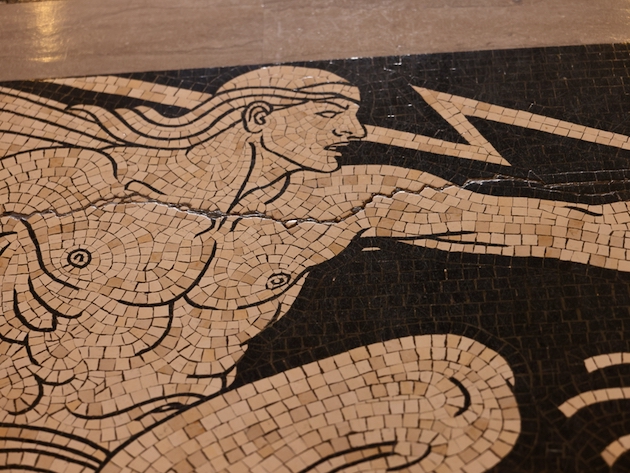
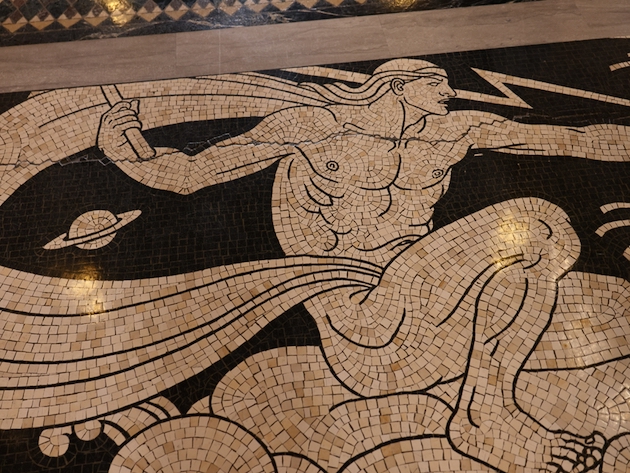
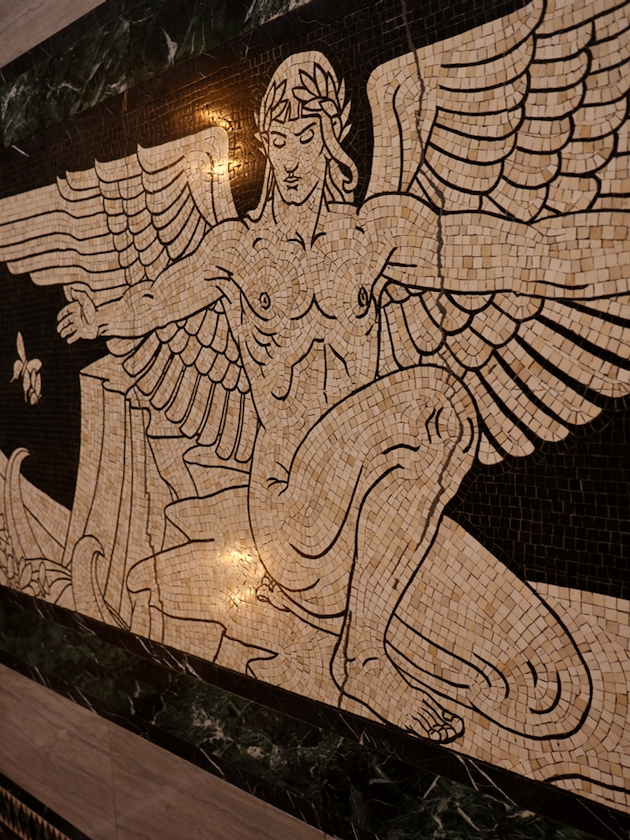
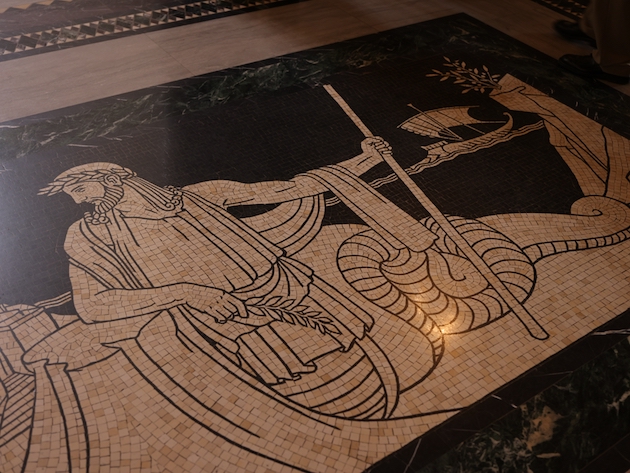
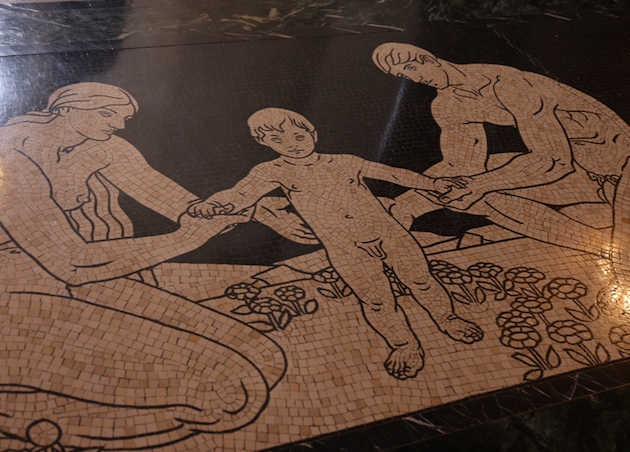
Hilderth Meiere’s main contribution to the Capitol was a vast sequence of floor mosaics such as (below) the “Genius of Creative Energy.”


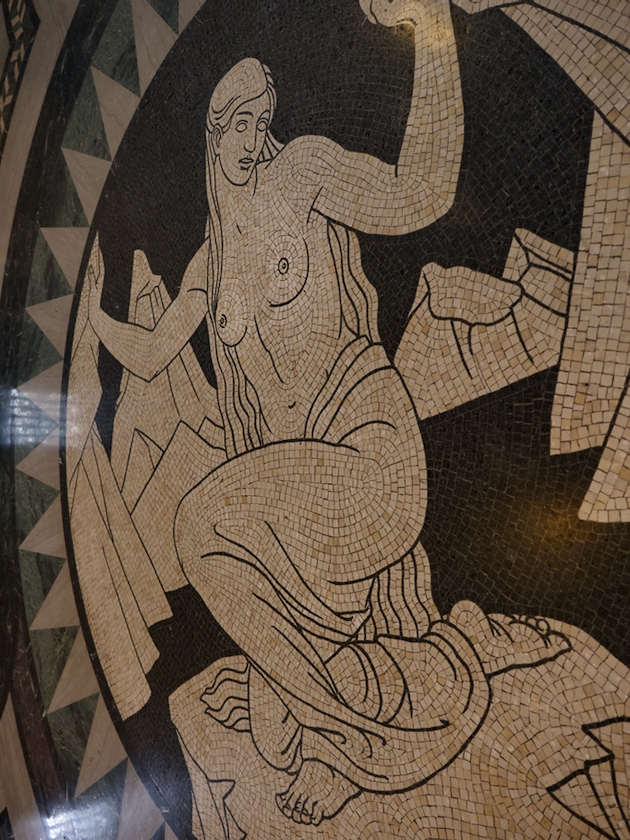
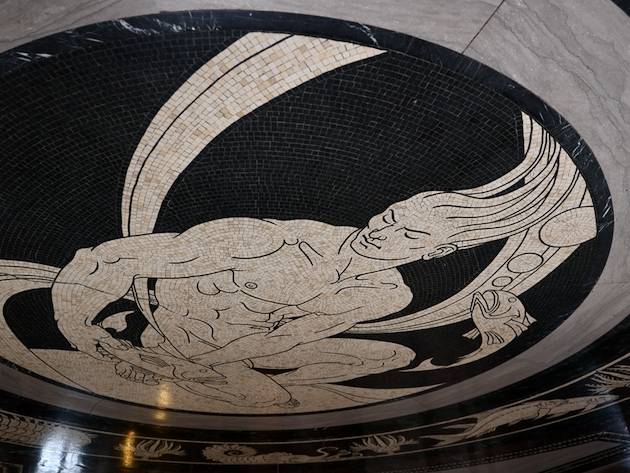
(Above) The “Spirit of the Soil.”

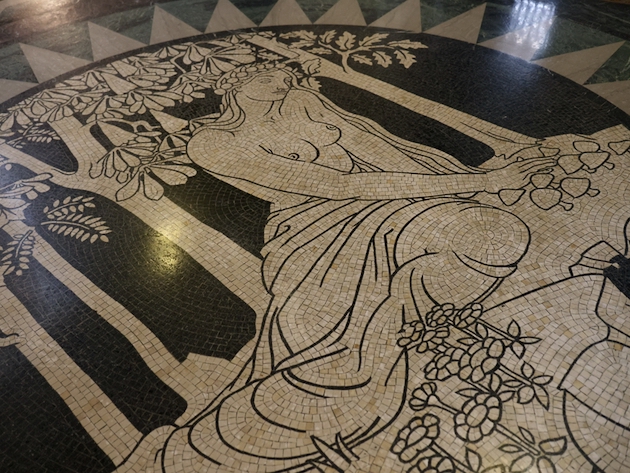
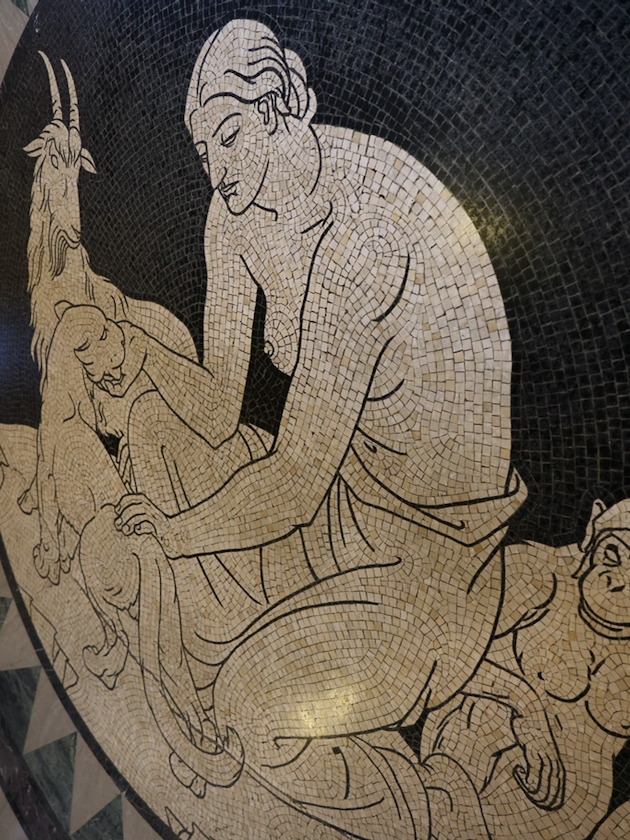
(Above) The “Spirit of Vegetation.” (Below) The “Spirit of Animal Life.”


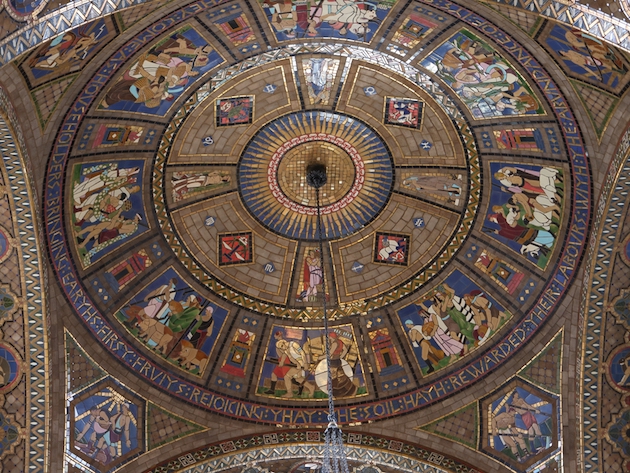
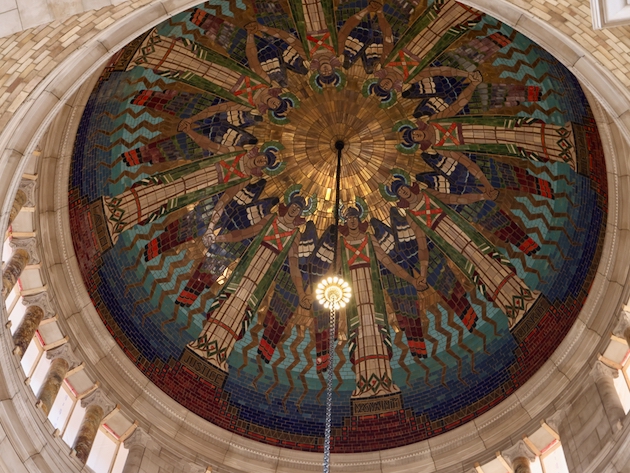
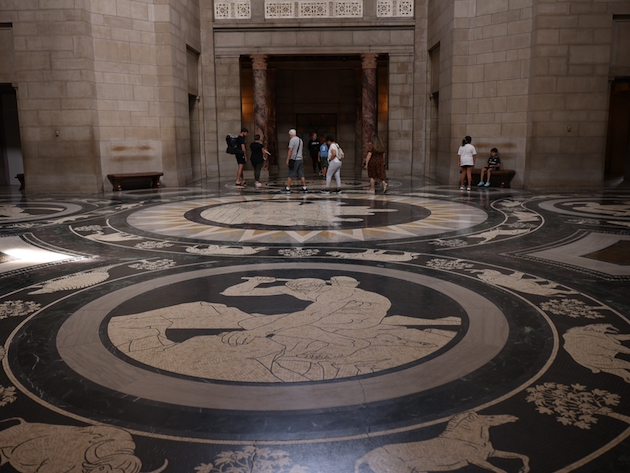
(Above) For the main rotunda Meiere executed these images of the “virtues” in glazed ceramic tile. (Below) The largest expanse of floor mosaics is below this dome.


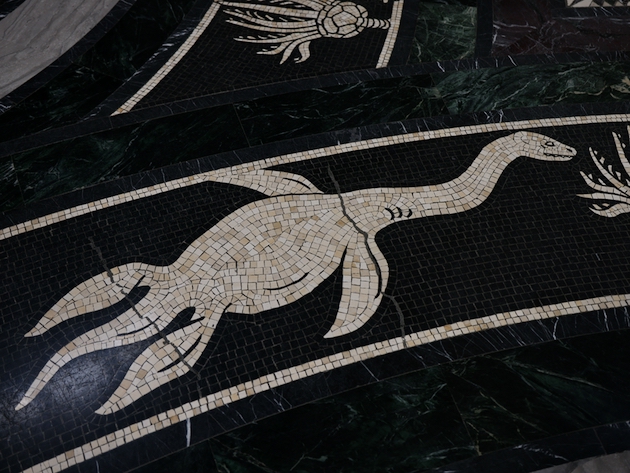
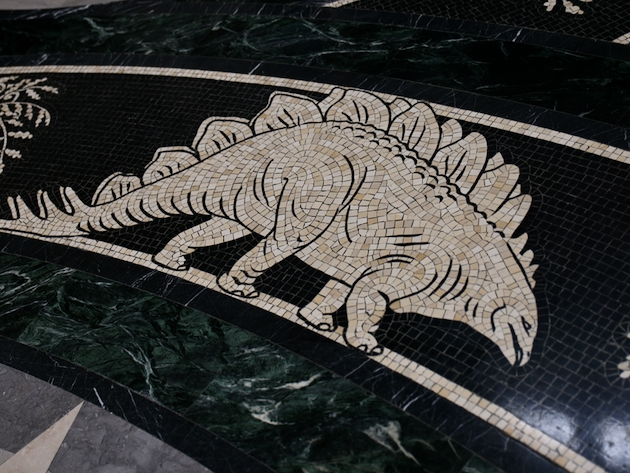
Surounding the central figures is an amazing collection of images of prehistoric creatures based on fossils found in the American Midwest and West.


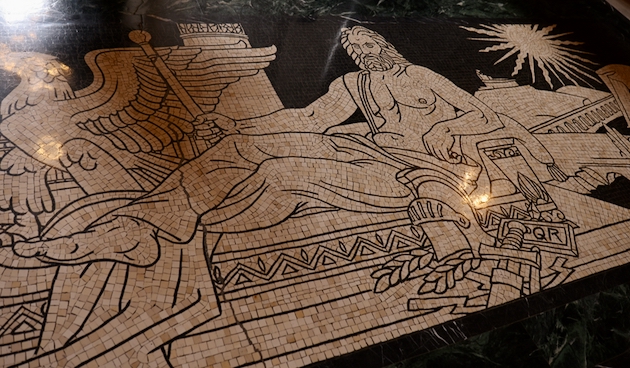
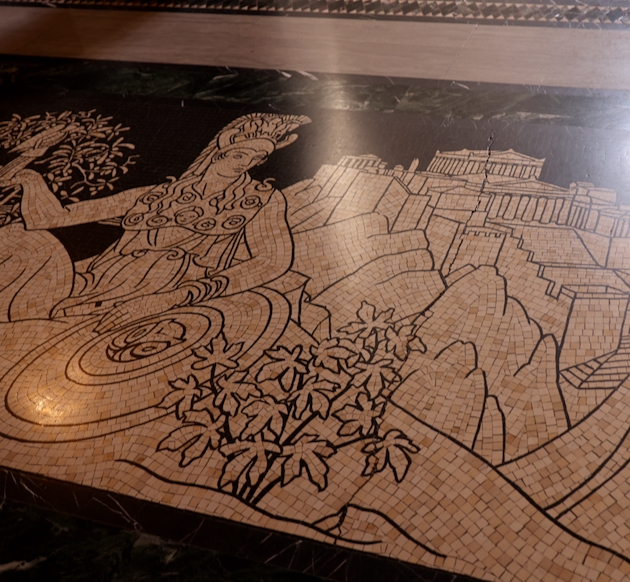
Completing the program, images of classical Athens and Rome serve as salutary examples for the Nebraska government and legislature.

(Above) Rome ( with the god Jupiter).

(above and below) Athens (Athena and Cecrops).


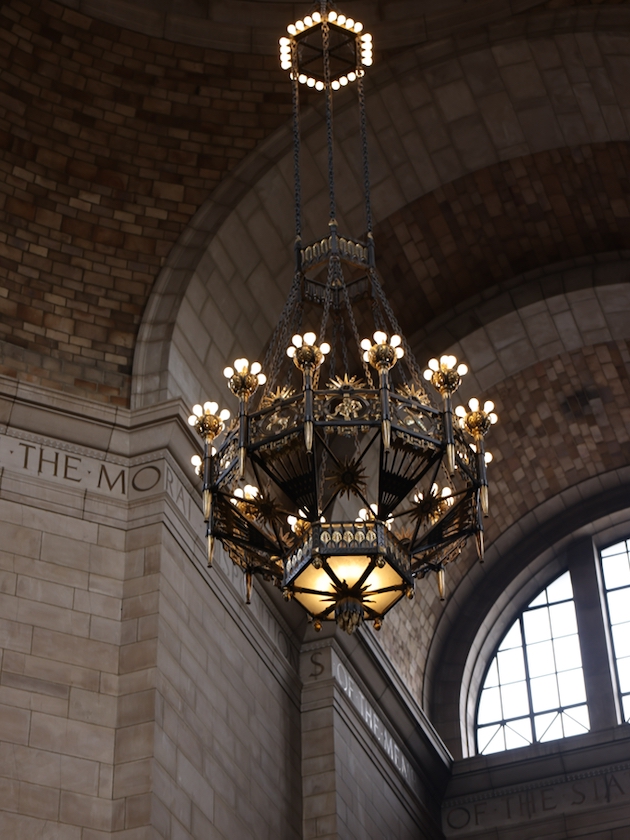
(Above) Nothing was spared on the other elements of the decoration.

The Nebraska Capitol Art Experience site provides exhaustive descriptions of all these works. For Hildreth Meiere see hildrethmeiere.org or for a briefer account focusing on her Catholic works, “Hildreth Meiere: Mistress of Art Deco,” The Society of St. Hugh of Cluny (3/3/2010)
24 Jul
2026

Cologne Cathedral (and tourists). To see this view an admission ticket is now required.
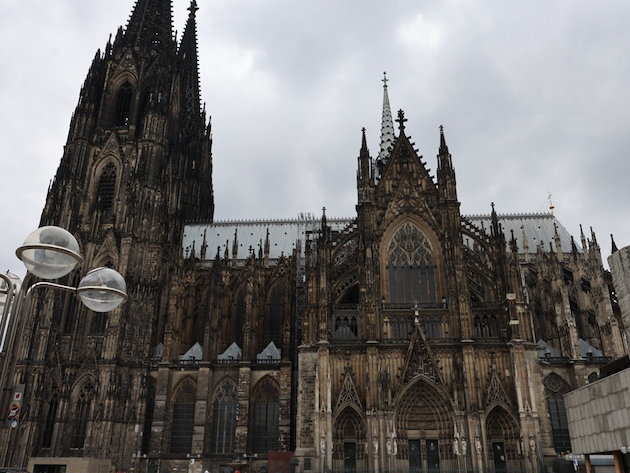
You may have heard that Cologne cathedral, the largest and most prominent Catholic church in Germany, has introduced an admission charge as of July 1. Despite the funding available to the German Catholic Church, the cathedral has been running an increasing deficit in recent years. As the provost of the cathedral is reprted to have candidly admitted, 99% of the visitors to the cathedral today are tourists. 1)
We recently had a chance to experience the new system at work. The admission fee, at 12 euros (approximately $13.64 as of 7/24/2026), is not insignificant. Payment of the fee is necessary to see almost all of the cathedral interior. Moreover, supplementary charges apply for tours of the chancel and other restricted parts of the building. Entry for ticketed holders is through the main (western) portal of the cathedral
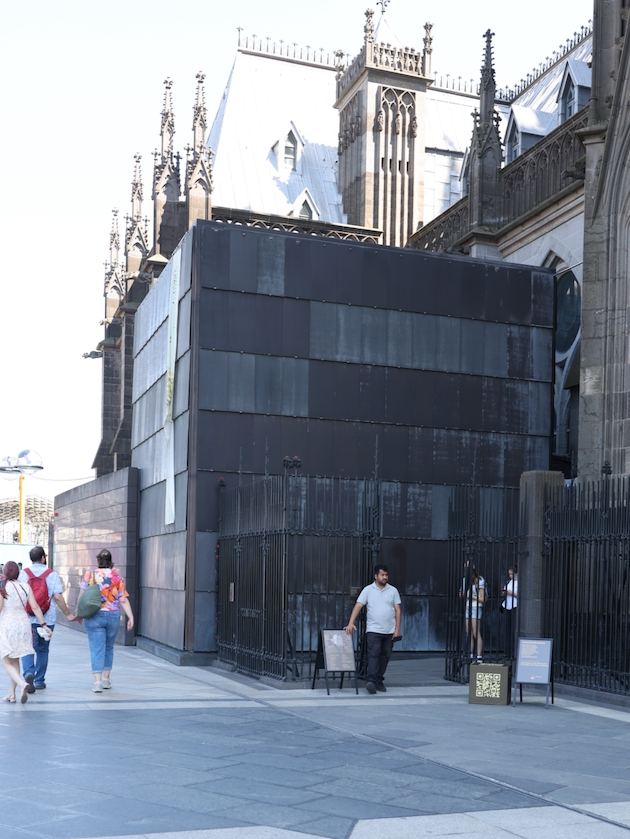
But what if one wishes to visit the cathedral for prayer? In that case, a visitor has to enter through a separate entrance ( the north portal) leading to a side chapel within the cathedral featuring a statue of the Virgin Mary and some banks of votive candles. This space, however, does not extend very far into the cathedral and is carefully blocked off from the rest of the interior. If a not very honest person enters this chapel not to pray but to get a glimpse of the cathedral interior, he will be very disappointed: visibility is exceedingly limited and there is no access from the side chapel to the rest of the cathedral.

(Above) The “hidden” entrance to the Blessed Sacrament chapel on the cathedral’s north side. This is advertised as the entrance to the cathedral treasury.
But what if our visitor wants to spend some time before the Blessed Sacrament? (“Eucharistic adoration” is treated by the cathedral staff as distinct from “prayer.”) Such a visitor has to use a separate, inconspicuous entrance, also on the north side of the cathedral. This primary purpose of this entrance is to give access to the cathedral treasury and, at least as of now, a visit to the Blessed Sacrament may require a discussion with the cathedral staff. After the visitor enters, an attendant unlocks a door which springs open like an airlock. Inside a chapel, the Blessed Sacrament is exposed in a monstrance. I believe this used to be the place of reservation of the Blessed Sacrament for the entire cathedral but now the nave is neither visible nor accesible from this chapel. Thus, the Blessed Sacrament is effectively reserved outside the cathedral proper. 2)
We saw relatively few people praying before the Madonna in that section of the cathedral reserved for “prayer.” Far fewer were kneeling before the Blessed Sacrament. “Admission” both for prayer and for visiting the Blessed Sacrament is free of charge. There are also services in the morning and evening – outside of normal “visiting hours” – for which free access is presumably available.
We might add that charging an admission fee is of course not at all unique to Cologne cathedral. Well known examples in the Catholic world include the cathedrals of Seville and Milan. And in the Church of England, substantial admission fees are assessed in almost all the great cathedrals and churches.

The official site of Cologne cathedral states that:
This cathedral was built to the glory of God and is to this day, above all, a house of prayer and worship. 3)
As of today, the financial policies of the cathedral directly contradict this assertion. Prayer and worship are limited to specific times and restricted spaces. In their defense, the cathedral authorities speak of most visitors being tourists and of the problems and additional costs they create. The underlying, unmentioned issue, however, is that very few Catholics in Germany practice their religion. This has been true for decades. That is why almost all the visitors to the cathedral are tourists.
Furthermore, the Catholic Church of Germany shows a complete misunderstanding of the purpose of buildings such as Cologne cathedral. Medieval cathedrals are not utilitarian “worship spaces,” the seat of a bureaucratic clerical authority, or museums. As Marcel Proust remarked, the great cathedrals are “sermons in stone.” Yes, many, even most, visitors come as tourists. But a minority of these will be touched by what they see (or hear in the case of music) and be led to God. Charging admission deadens and distorts the voice of this preaching.
Does not JD Vance in his recent book Communion speak of an “epiphany” upon finding himself, seemingly alone, in a great French cathedral? Of experiencing both the beauty of the architecture and stained-glass windows and the sense of Europe’s cultural decline, seeing that cathedral deserted by the faithful. Yet that cathedral had endured through the ages – and Vance found that one other person – a worshipper – had indeed been present in a chapel all along. For him it was a revelation leading to his baptism. Like this unnamed cathedral in France, Cologne cathedral today illustrates both the spiritual legacy of the Church and its current desolate condition.
(All accessed 7/24/2026)
31 May
2026

The Rev. Joseph Falciano, who was ordained a priest for the FSSP on May 28, offered his First Mass the next day at the Carmel of Jesus, Mary and Joseph in Valparaiso, Nebraska. The cloistered Carmelite nuns chanted the ordinaries and propers from behind the grill.


The parents of Fr. Falciano receive Holy Communion from the hands of their son.


31 May
2026

During a Solemn Pontifical Mass, twelve men were ordained to the priesthood for the Priestly Fraternity of St. Peter this past Thursday, May 28 in the Cathedral of St. Cecilia in Omaha. His Excellency the Most Reverend Tomas Wenski, the archbishop of Miami, was the celebrant. Over 100 priests were in attendance and laid hands on the ordinands.


22 Mar
2026

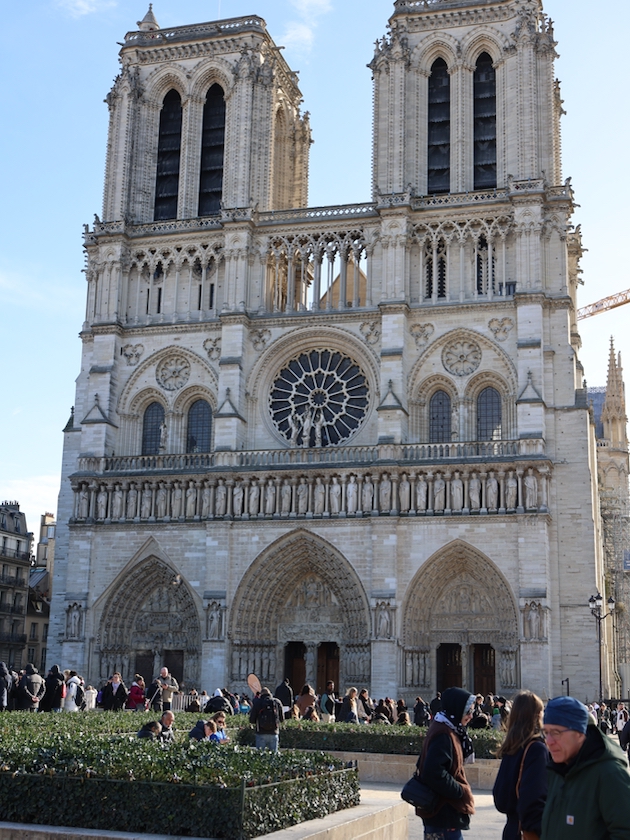
The Facade of Notre Dame seen later in the morning, after our visit.
How has the restoration of the cathedral of Notre Dame de Paris fared? In February we made a visit to find out. By arriving at opening time, we mostly avoided standing in line. Just an hour or so later, a queue wound endlessly all around the square in front of the cathedral. Certainly, touristic interest is there!
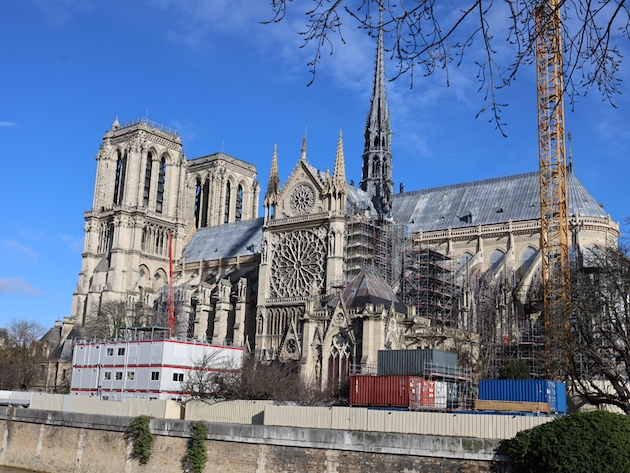
Outside, the cathedral has been beautifully restored. The facades are in the best condition I have ever seen. The famous spire has returned to its place. A substantial amount of work on the exterior still needs to be completed.
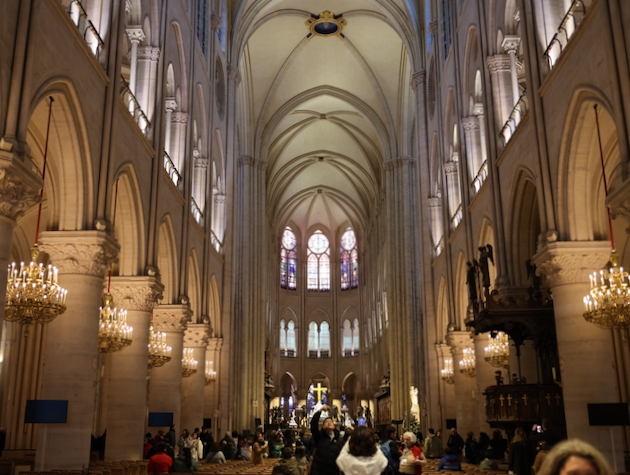
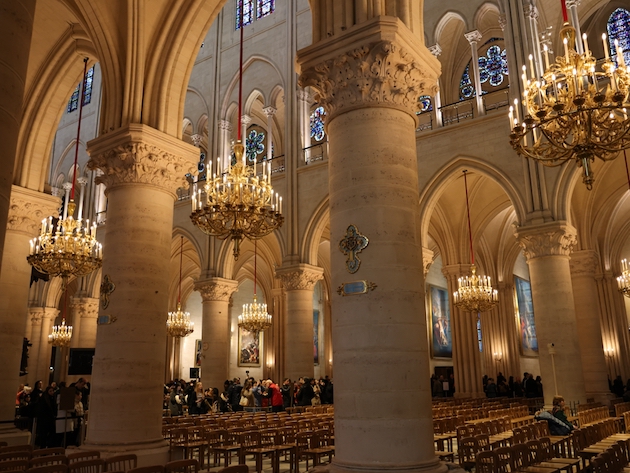
Inside, the restoration after the 2019 fire has given the interior a bright, almost whitewashed look. I suppose this is intended to recreate the appearance of the cathedral in the 12th and 13th centuries – at the time of its construction. The problem is that many centuries have elapsed since then! And the effects are magnified by the bright lighting installed now. (We have earlier discussed similar restoration initiatives – or deformations – in New York at St. Patrick’s cathedral.
Masses of tourists proceed through the aisles; one is forced to move in one direction. The noise level is deafening. The cathedral tries ineffectually to combat this by broadcasting now and then a recording starting with ”shhhhh….”. This only seems to elevate the noise level. Of all these visitors, we could see no more than a handful who actually prayed.
It is all quite disconcerting. By way of comparison, the much smaller basilica of Sacre Coeur on Montmartre is also attracting hordes of tourists nowadays, yet a substantial number of people are at prayer, and that helps to restrain the noise level and preserves some sense of the sacred.
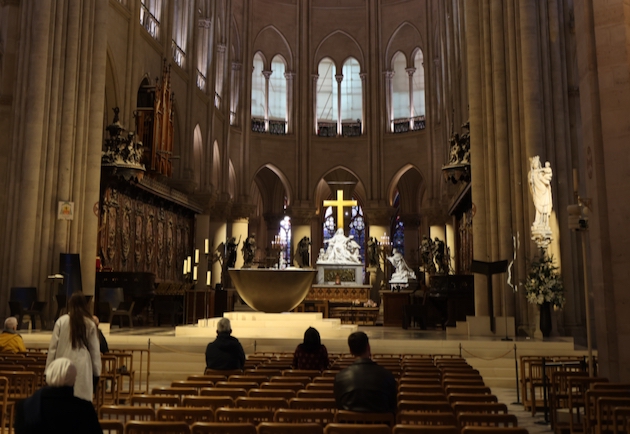
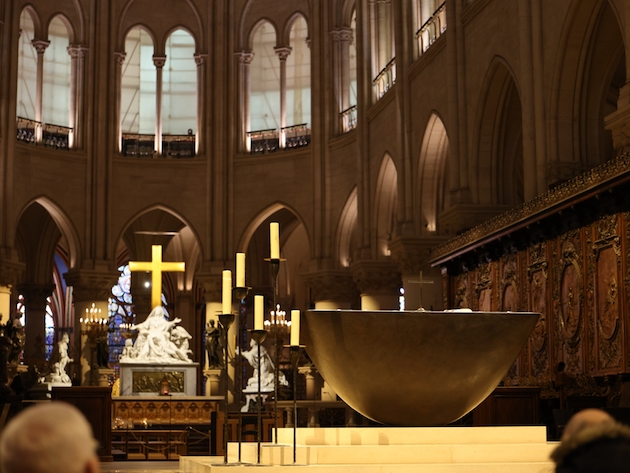
The choir of Nore Dame has been restored with new, modernistic furnishings. By “modernistic” I mean a style that could have been employed around 1970. From it one gets the sense that the Catholic Church is an institution that has run out of ideas, that it can only repeat the formulas of fifty or sixty years ago.
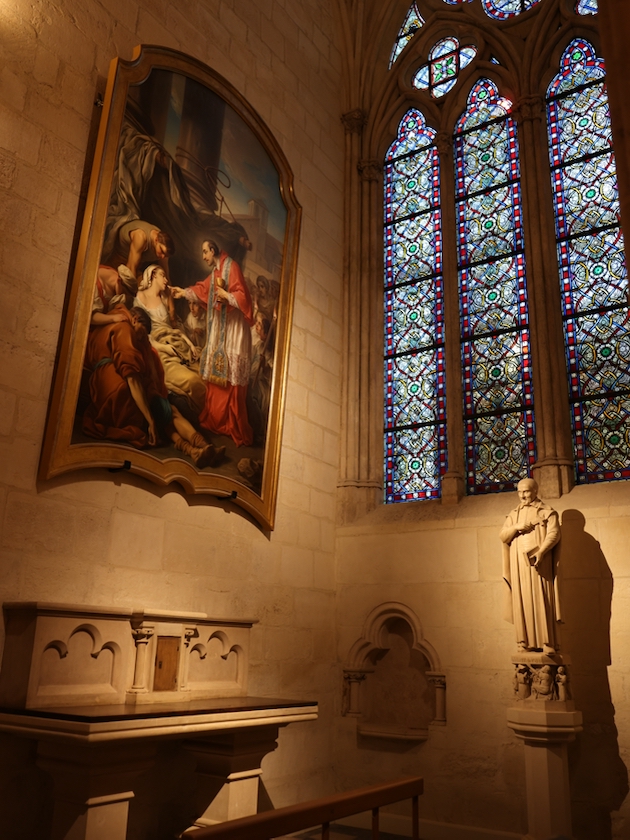
The side chapels have lost their status as places for the celebration of the mass. The altars are bare. Along the nave, the chapels have been renamed according to a new, specific program: one side has the names of Old Testament prophets, Of course, like all ideological projects of the Conciliar Church, this revision of the chapels ignores the context. For nobody in the hordes pressing through can stop to absorb the new theological program. In some chapels baroque paintings – historically associated with Notre Dame but not necessarily of the highest quality – are on display with museum-like lighting and settings.
At least for us, a visit to Notre Dame, because of the lighting, the effects of the cleaning, the noise, the turbulence and the exclusive focus on tourism – is no longer a religious event. The contrast with the cathedral even in 2017 – about the time of my last visit to Notre Dame – is striking. For prayer and to reflect on the spirit of Gothic architecture, the visitor should consider other cathedrals in France.


(Above) The new arrangement of the choir;(below) the new altar. In the distance one perceives a red sanctuary light on top of the old high altar (now serving as a place for reserving the Blessed Sacrament?)


(Above) More tourists than faithful are here. The sculptural group is from the the time of Louis XIV.

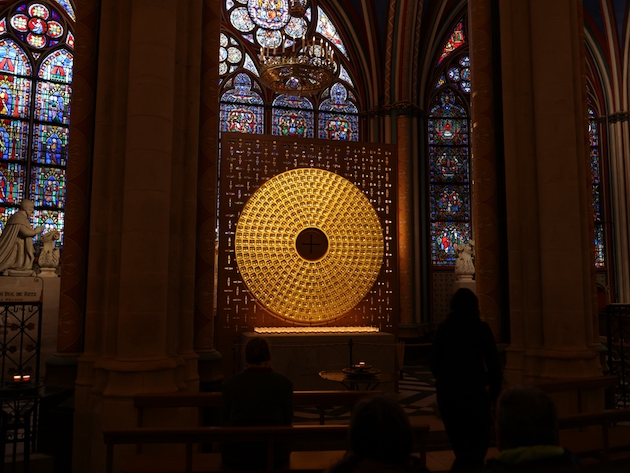
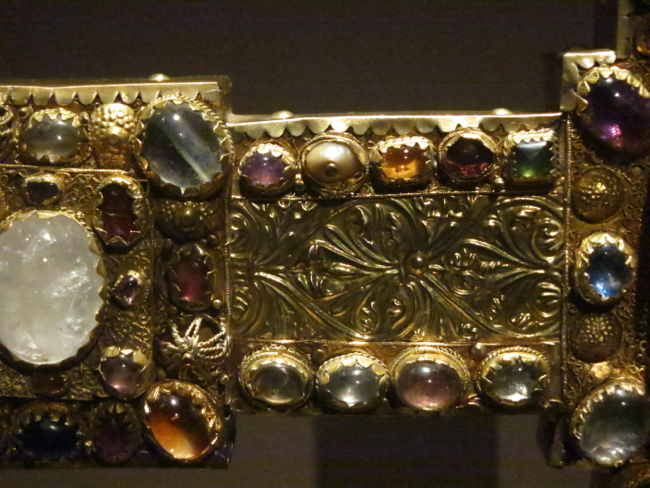
In the ambulatory. (Above) The “space-age” reliquary of the Crown of Thorns, brought to Paris by St. Louis. (We could not see the relic.) (Below) A favorite habit of the “Conciliar Church”: a museum-like display of Eastern icons. Those praying in these chapels, however, were few and far between.


(Above) The cleaned walls and columns are now brightly illuminated.

(Above) The side chapels are no longer used as such. The former altars are bare. In some of them, baroque paintings are displayed which were gifts of Parisian guilds in the 17th and 18th centuries. All is brightly illuminated as if in a museum.

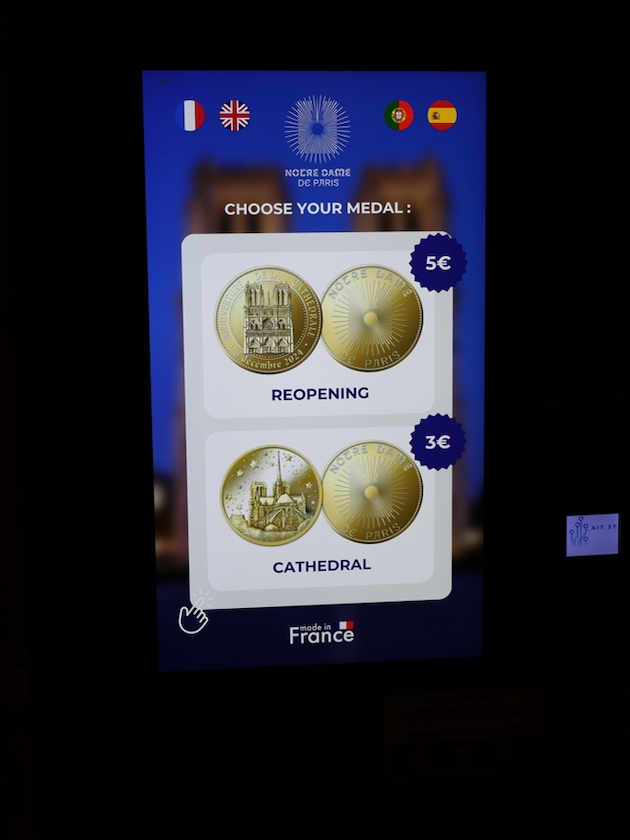
Tourism is big business here! (One sees similar machines inside St. Patrick’s, NY.)

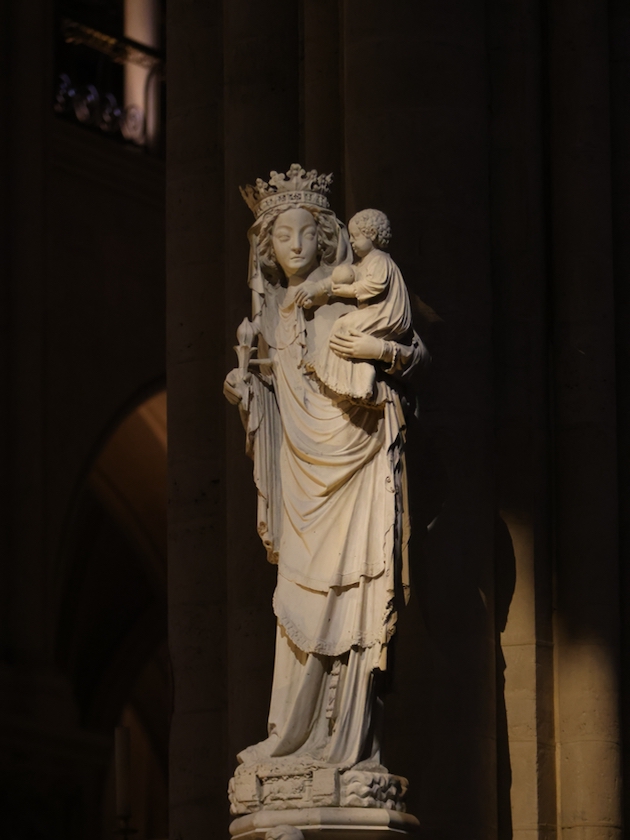
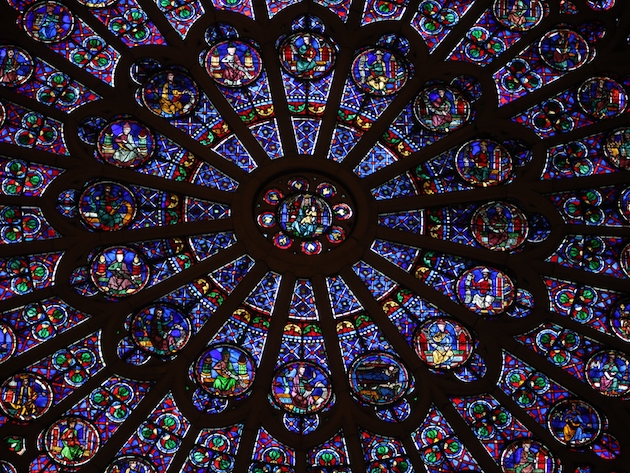
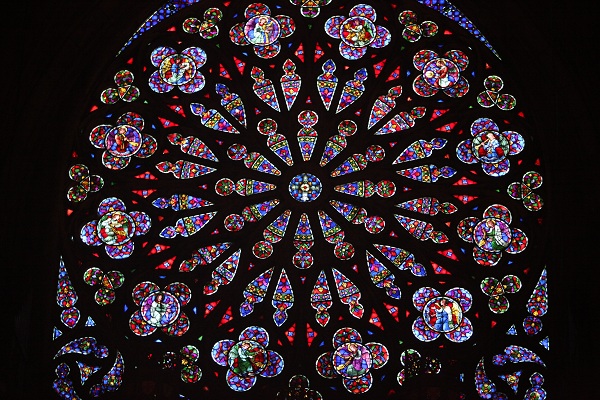
Some things are unchanged or have been expertly restored. (Above) A mid-14th century Madonna. A sign reads “placed in front of this pillar in 1855 and since prayed as ‘Notre Dame de Paris’ “(sic). (Below) one of the great rose windows dating to the reign of St. Louis.


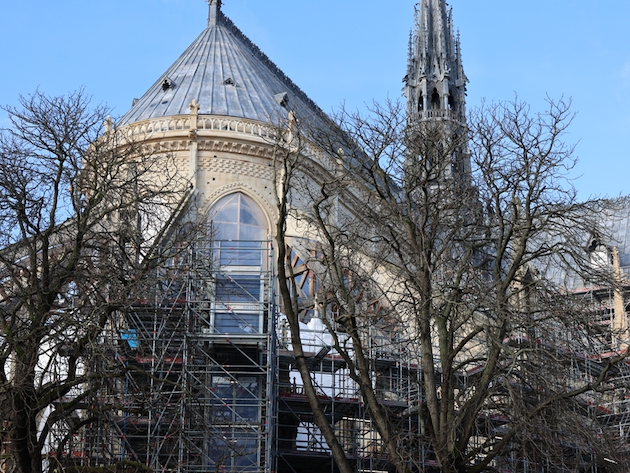
(Above and below) Significant work on the exterior is still going on.

14 Dec
2025