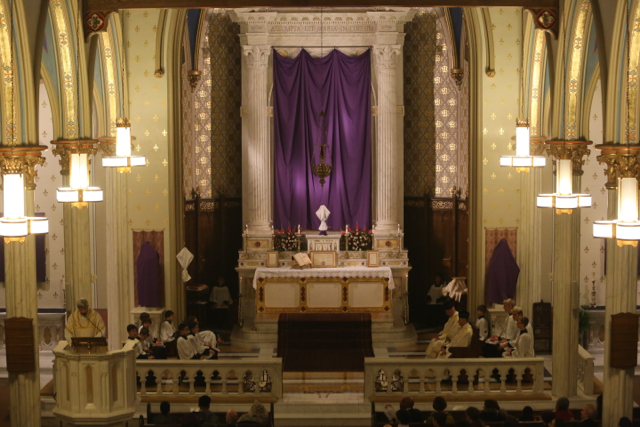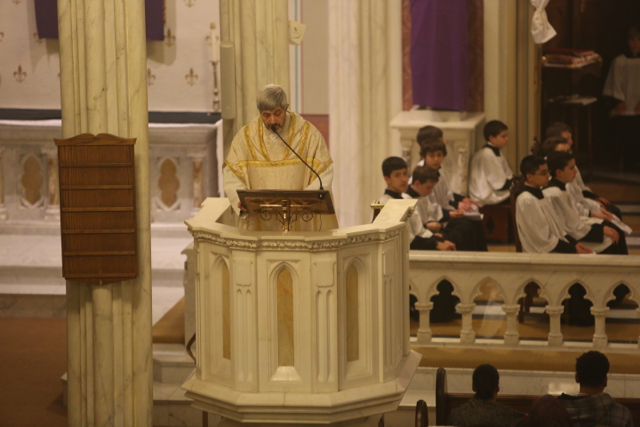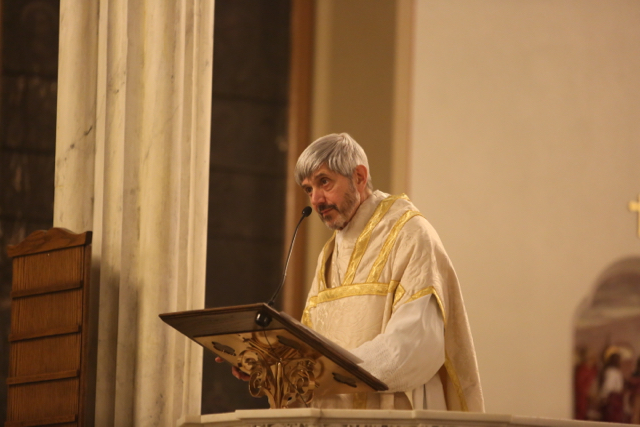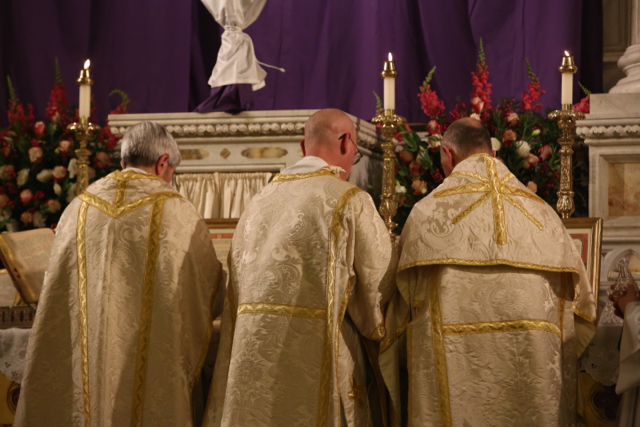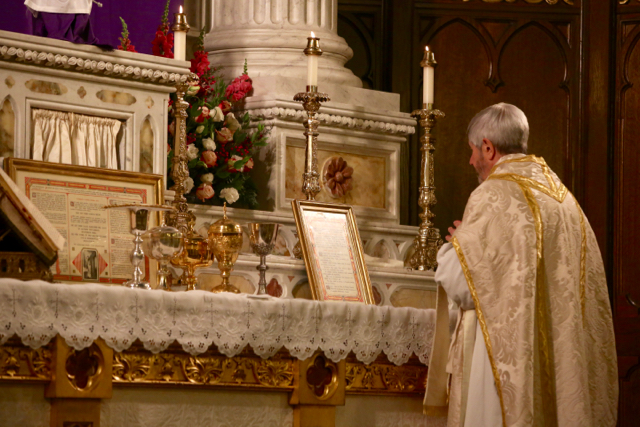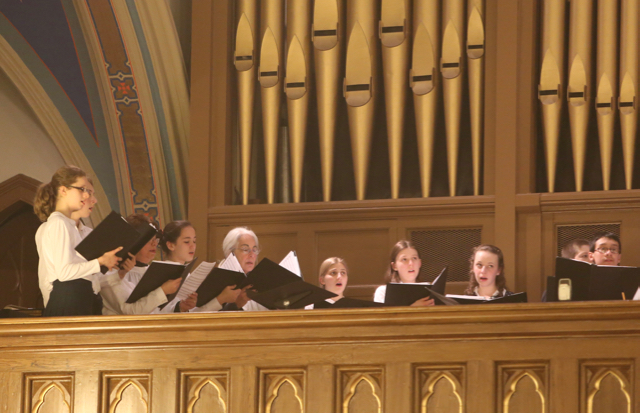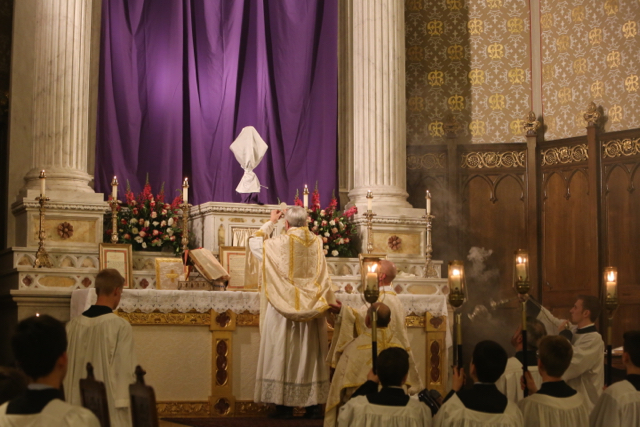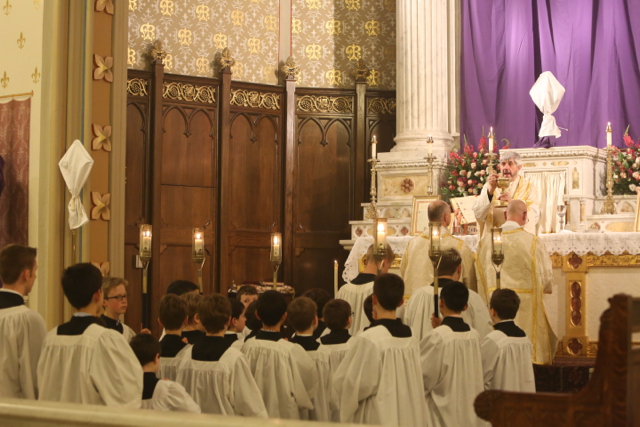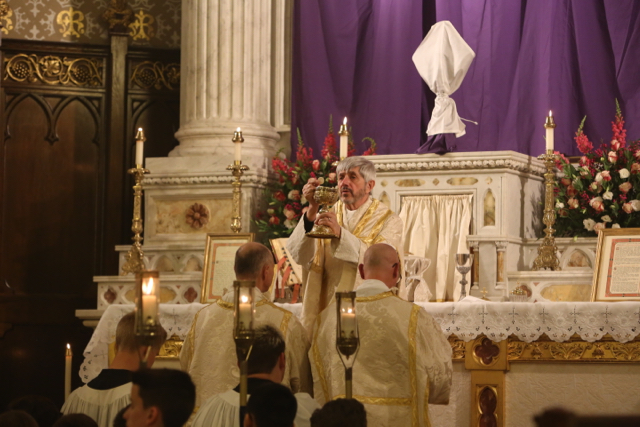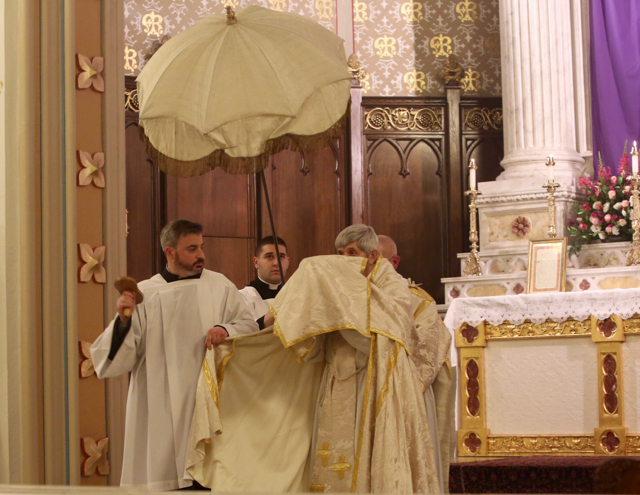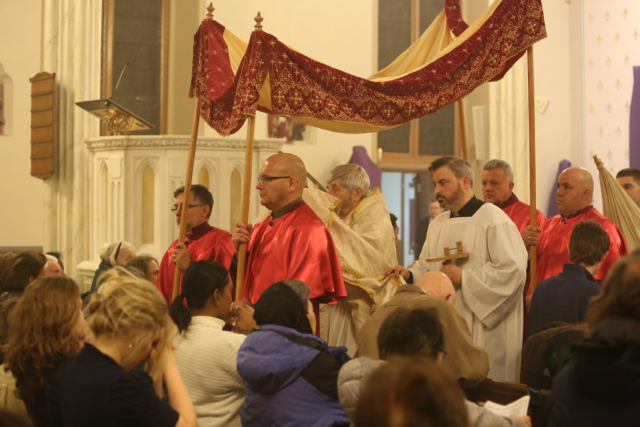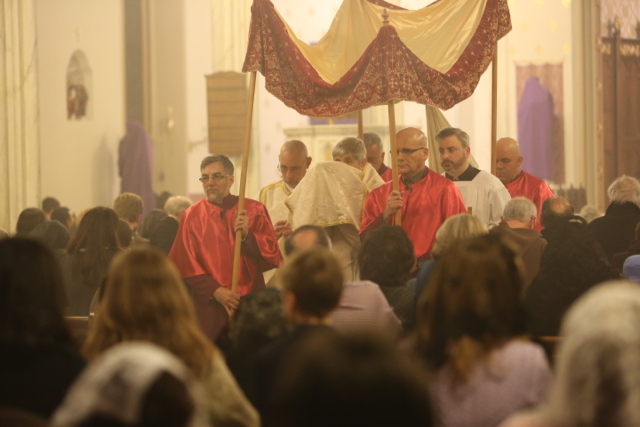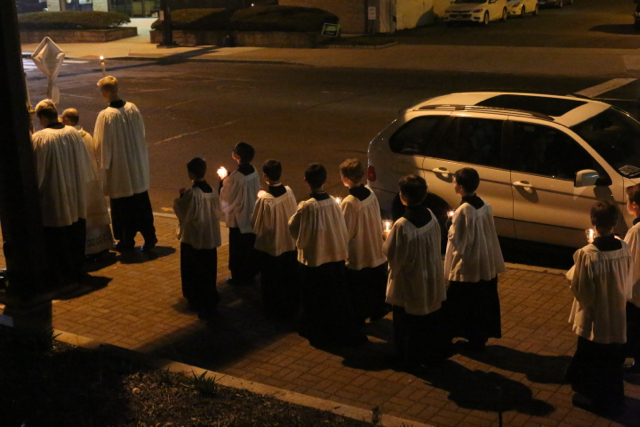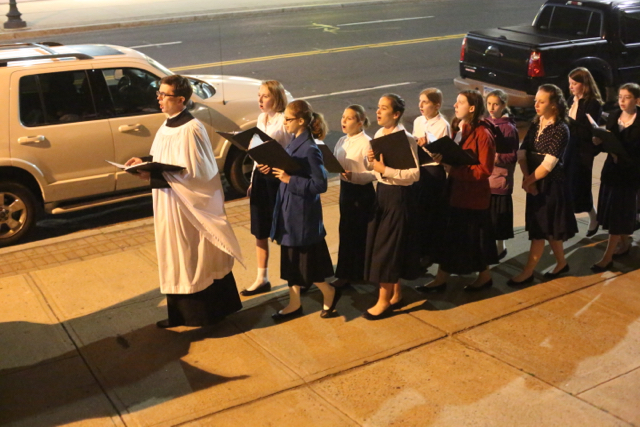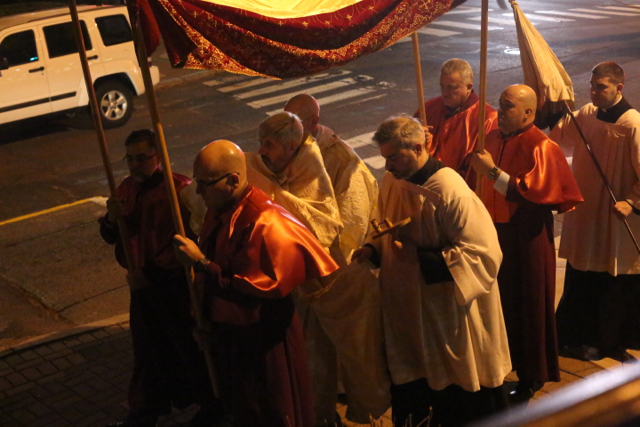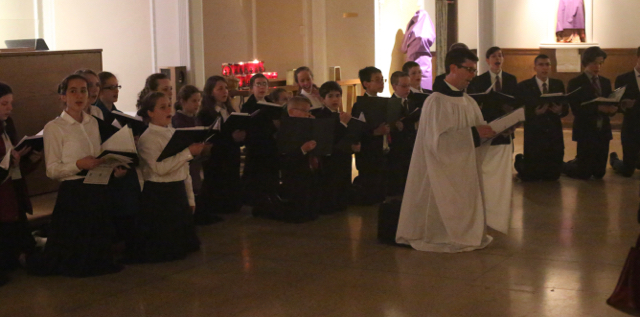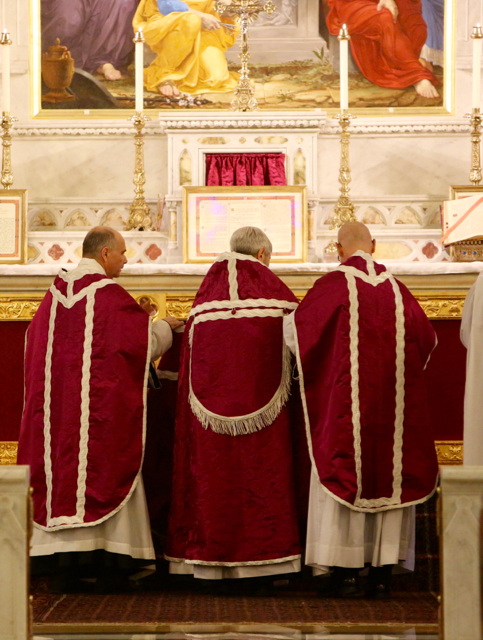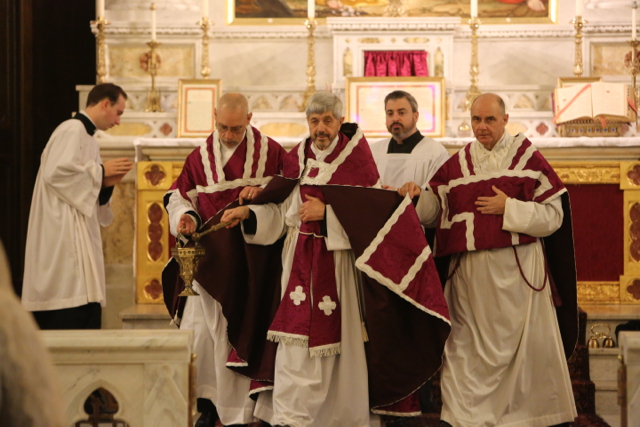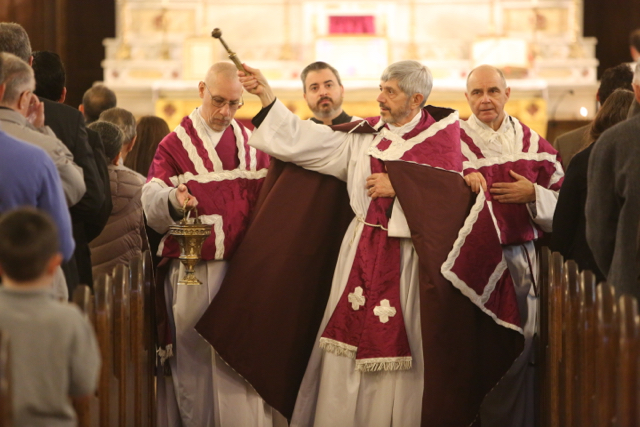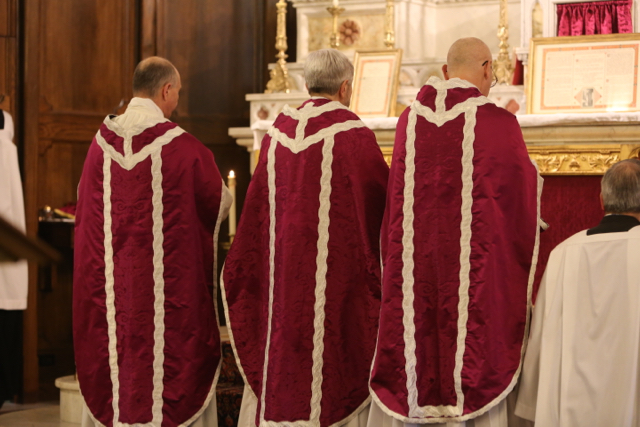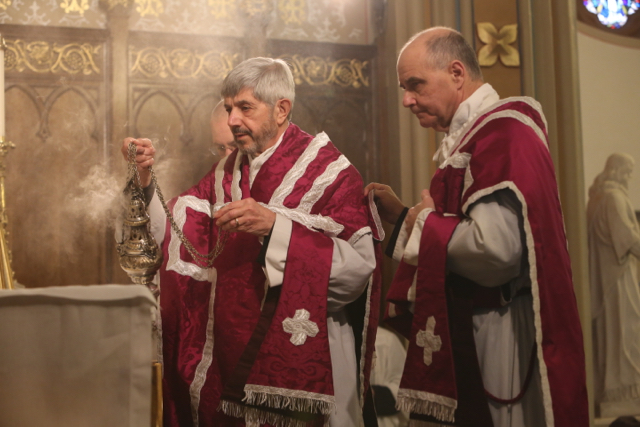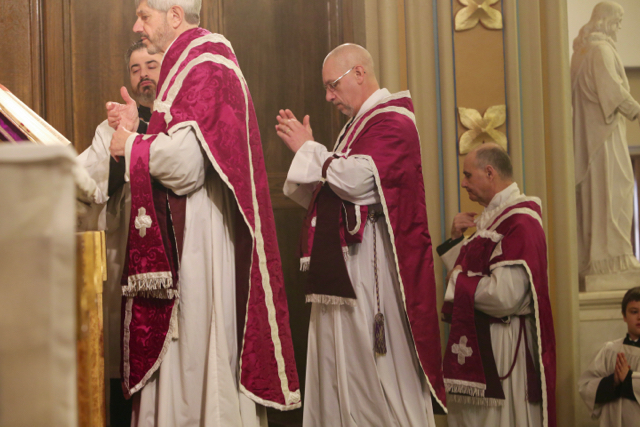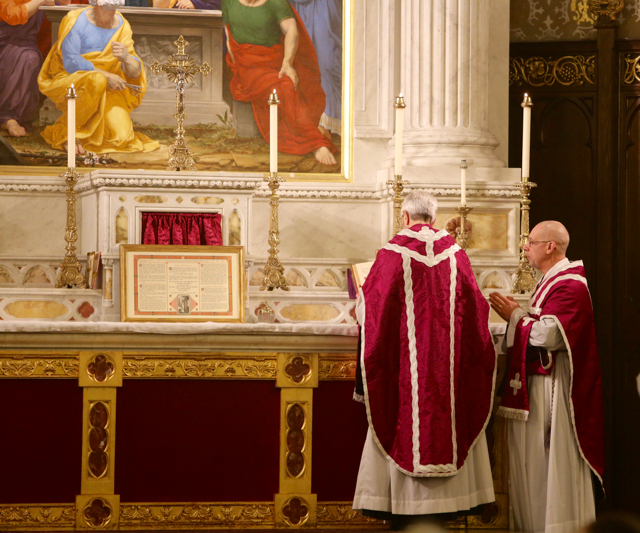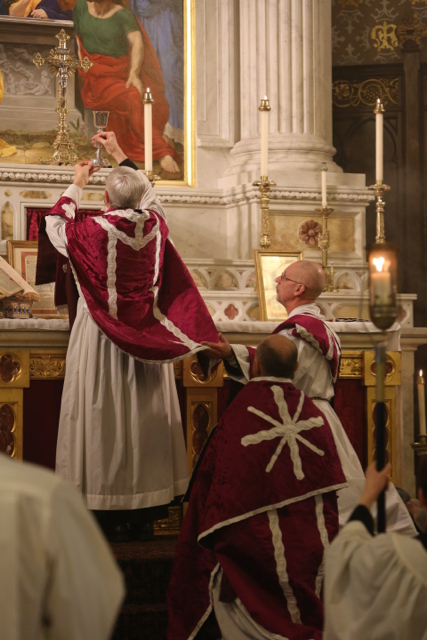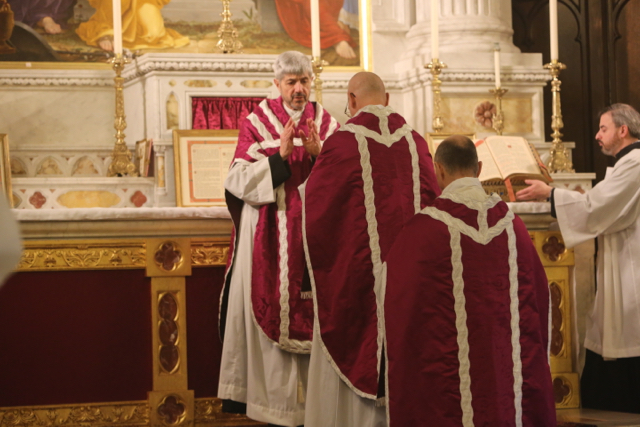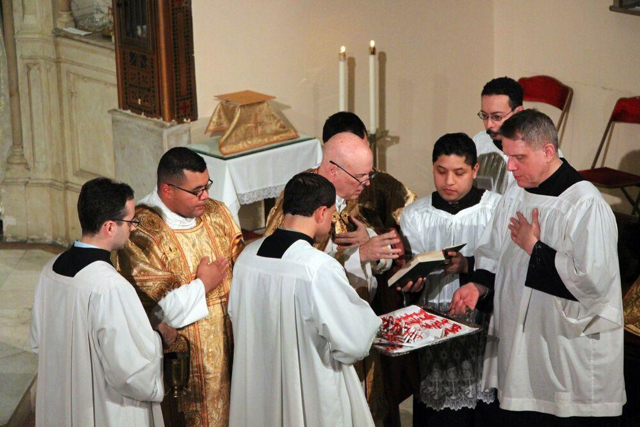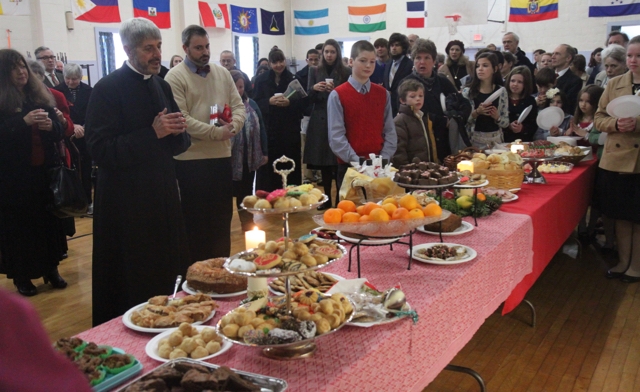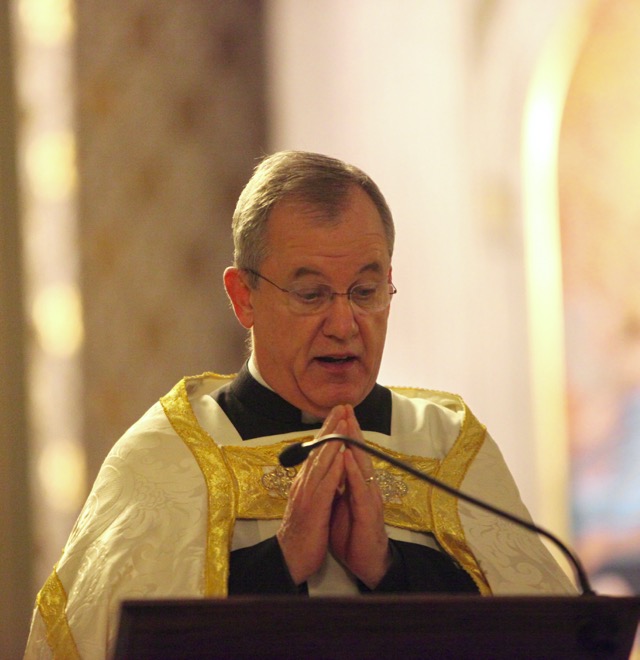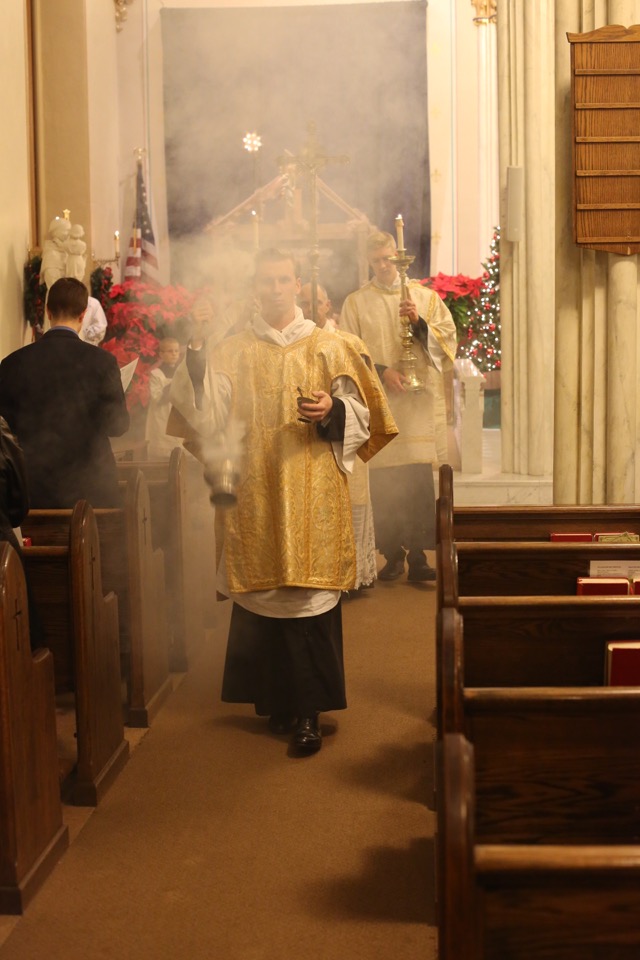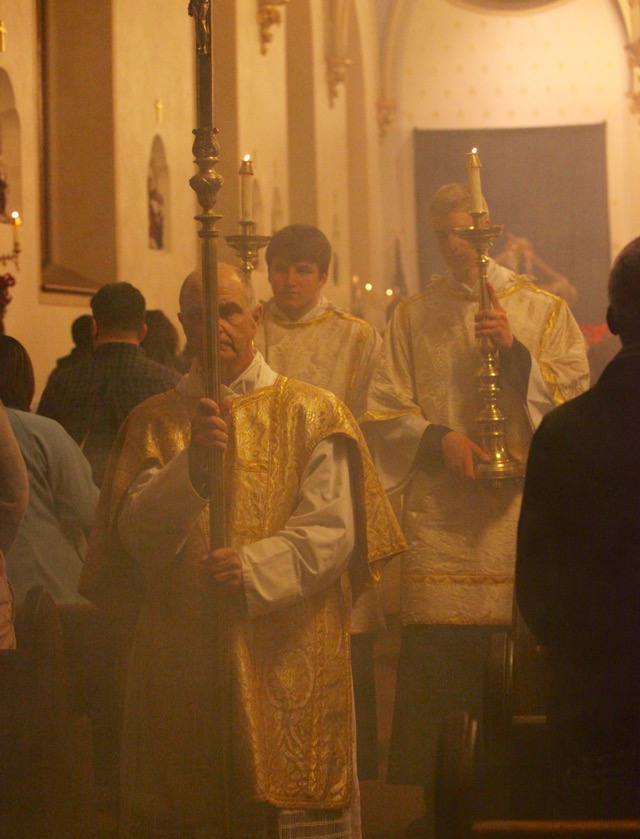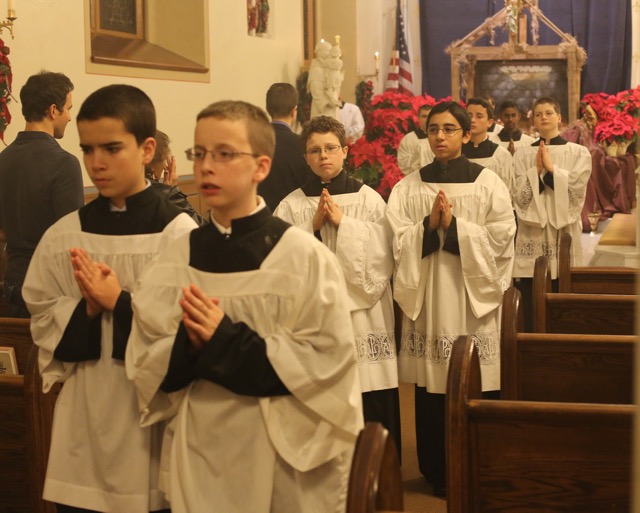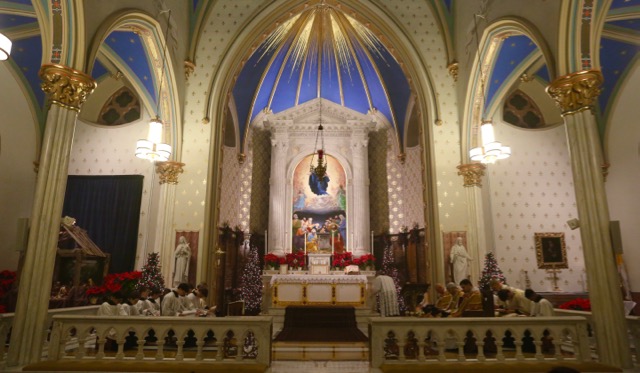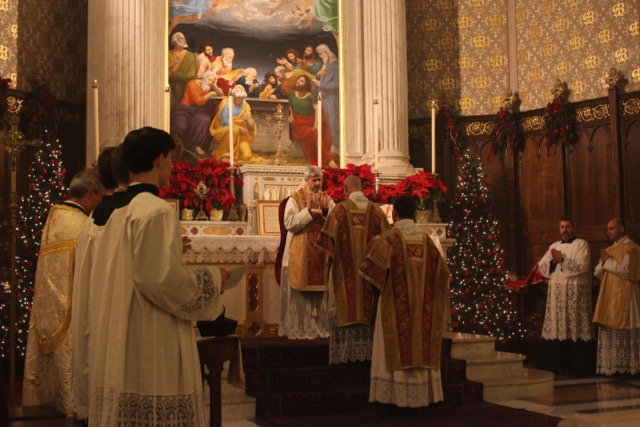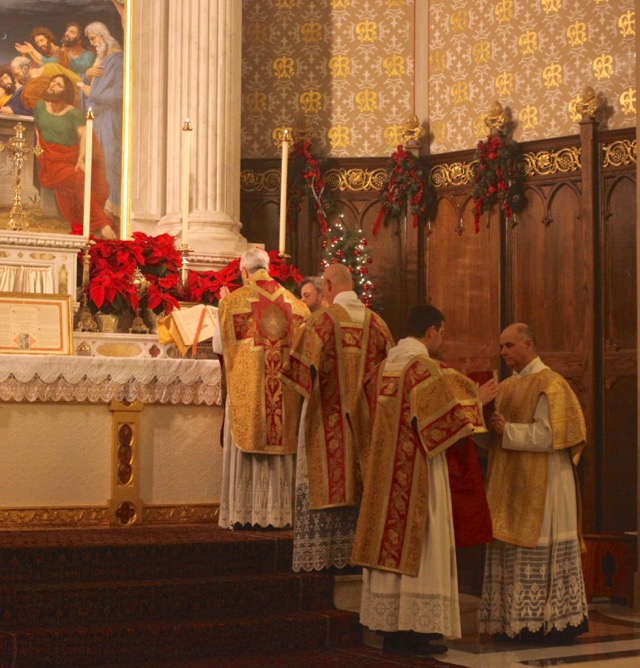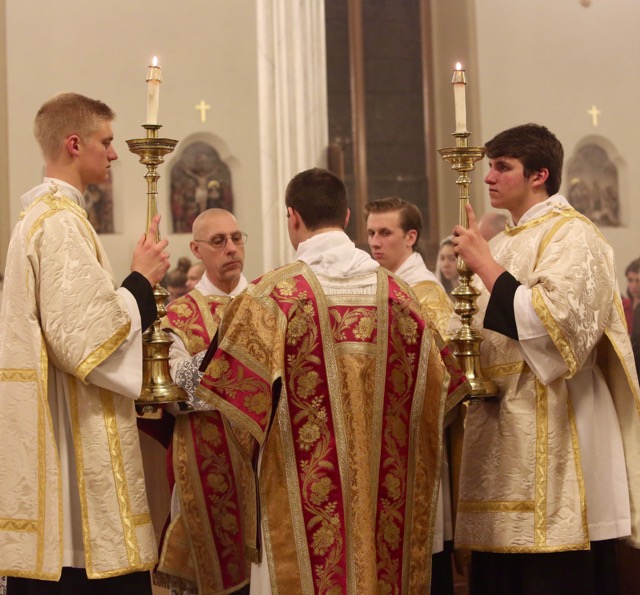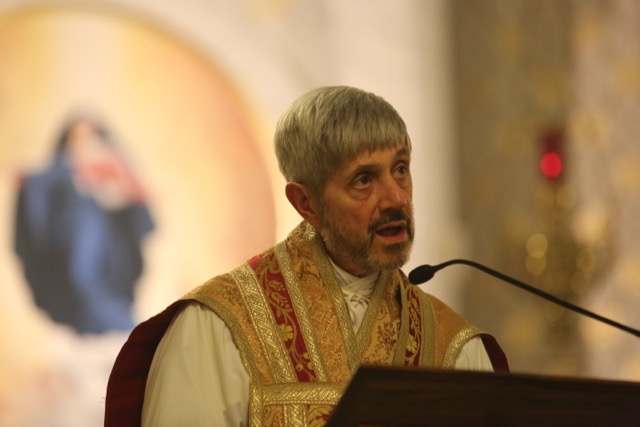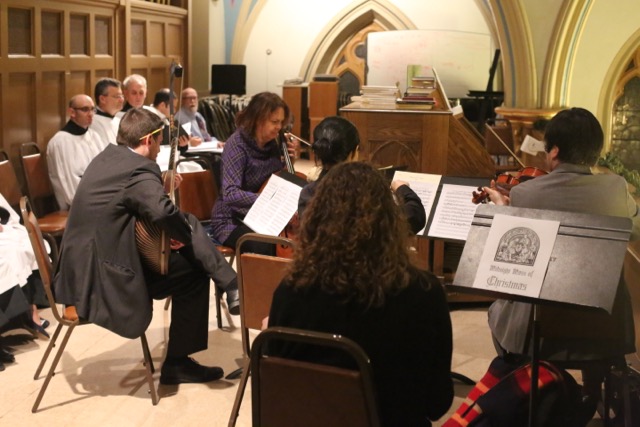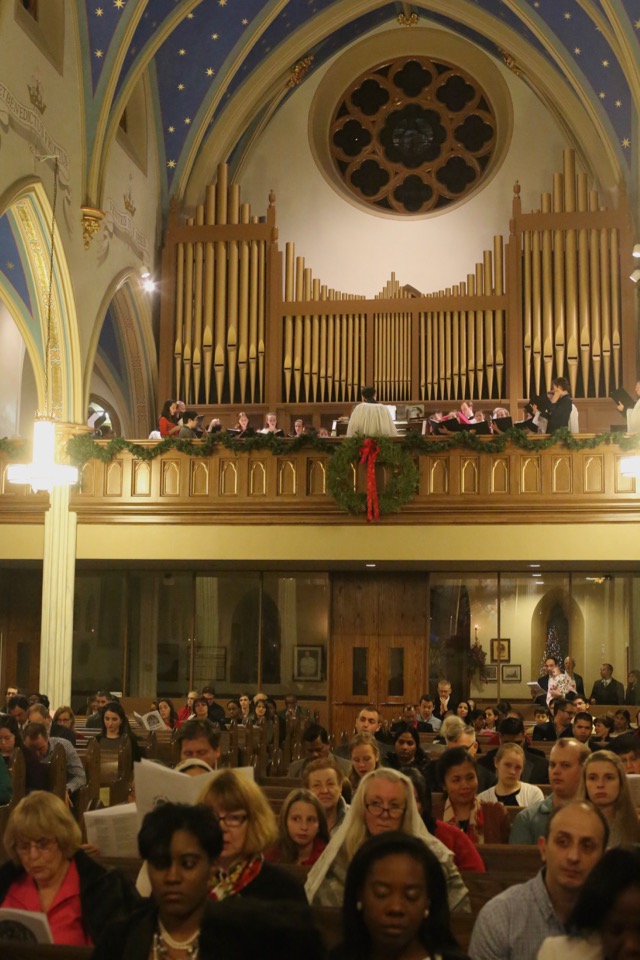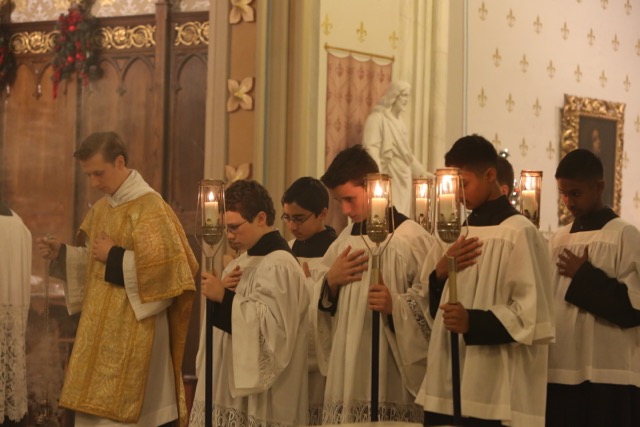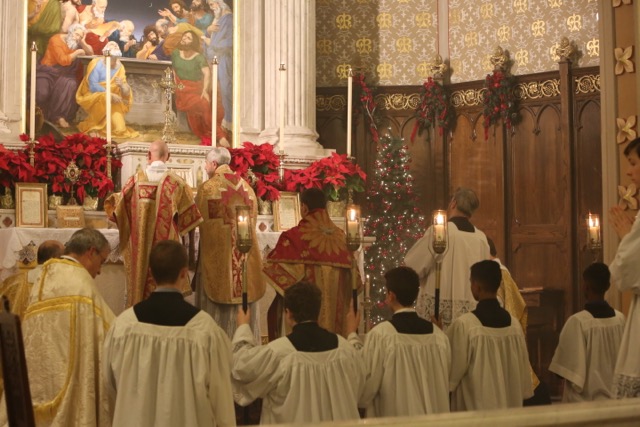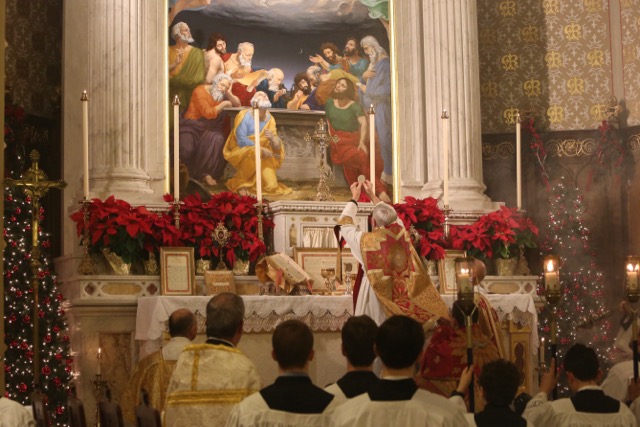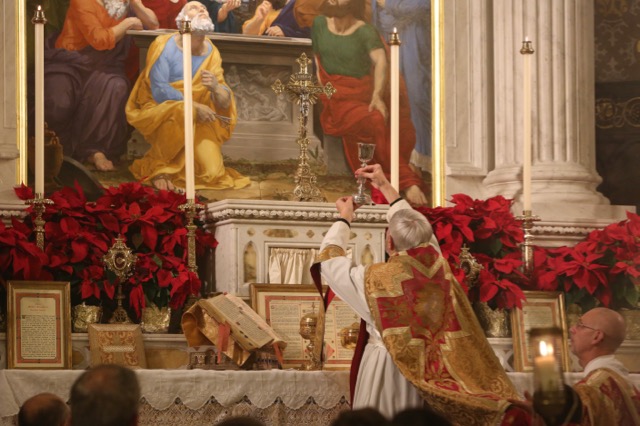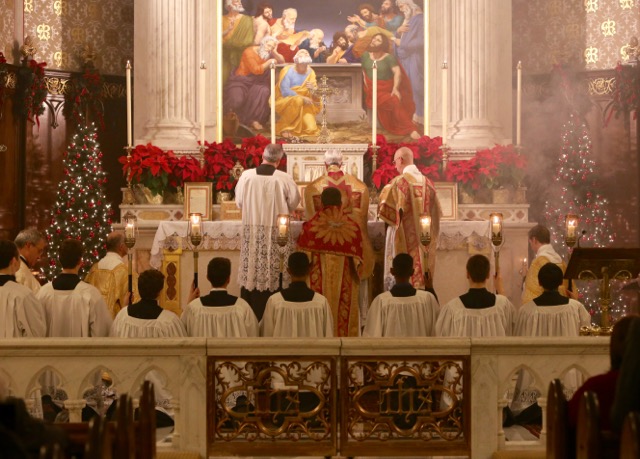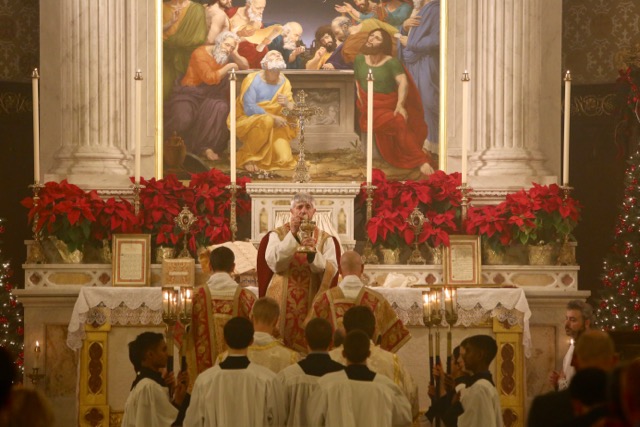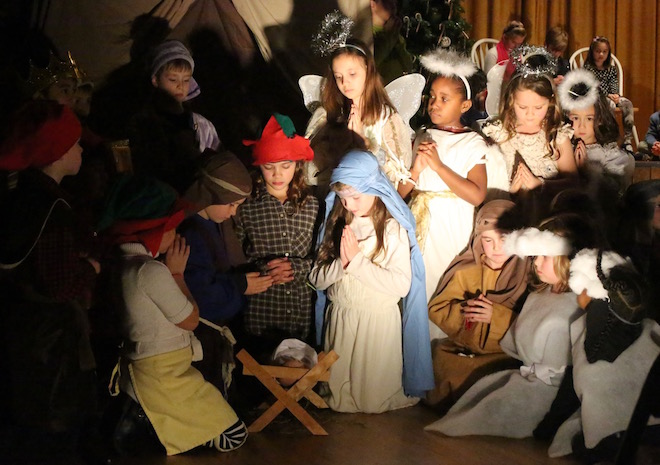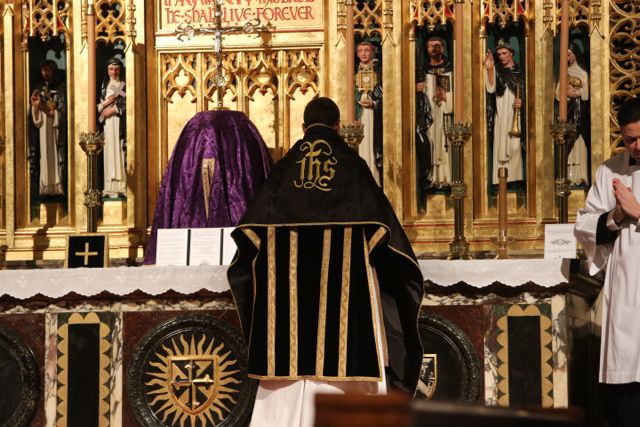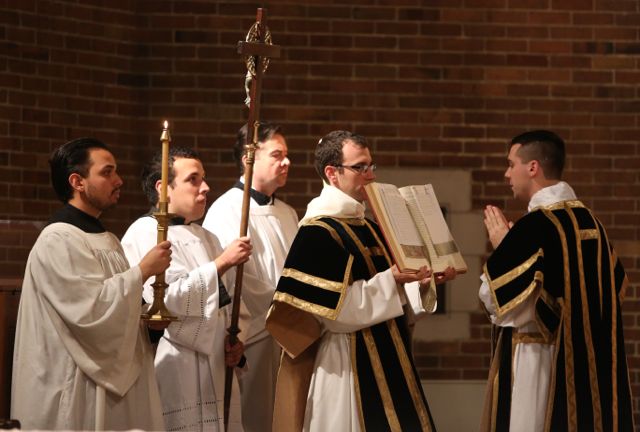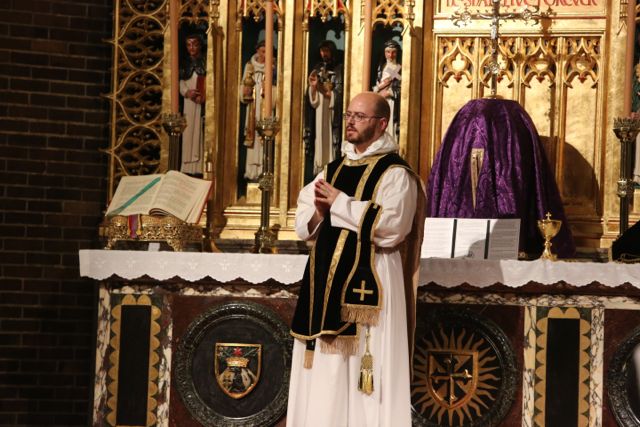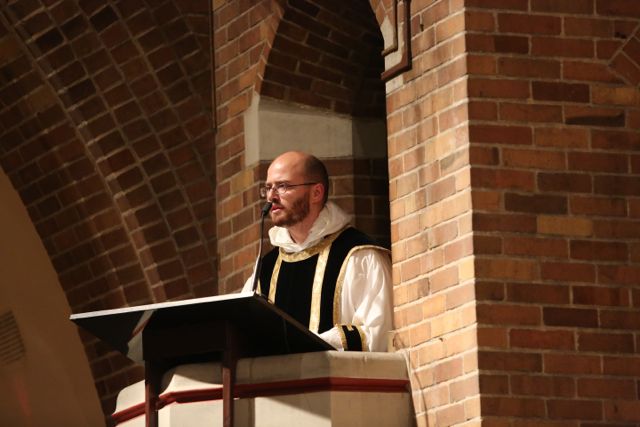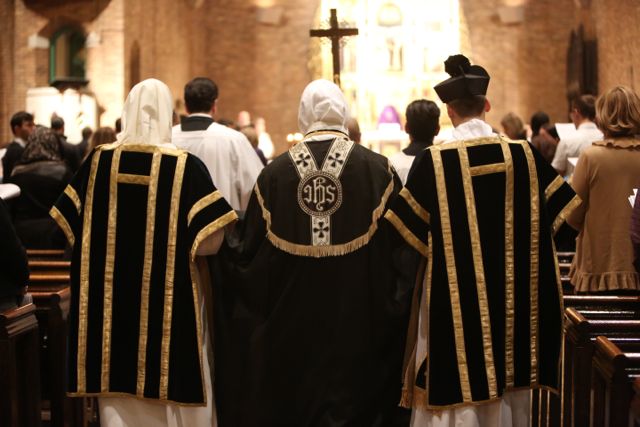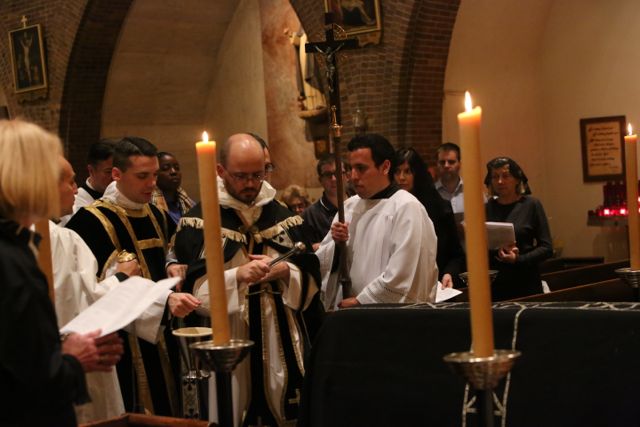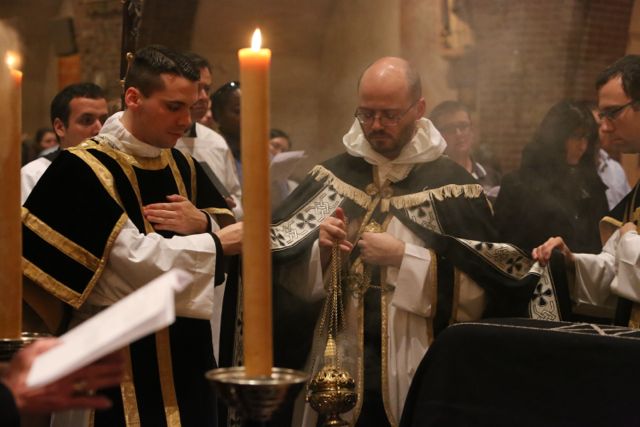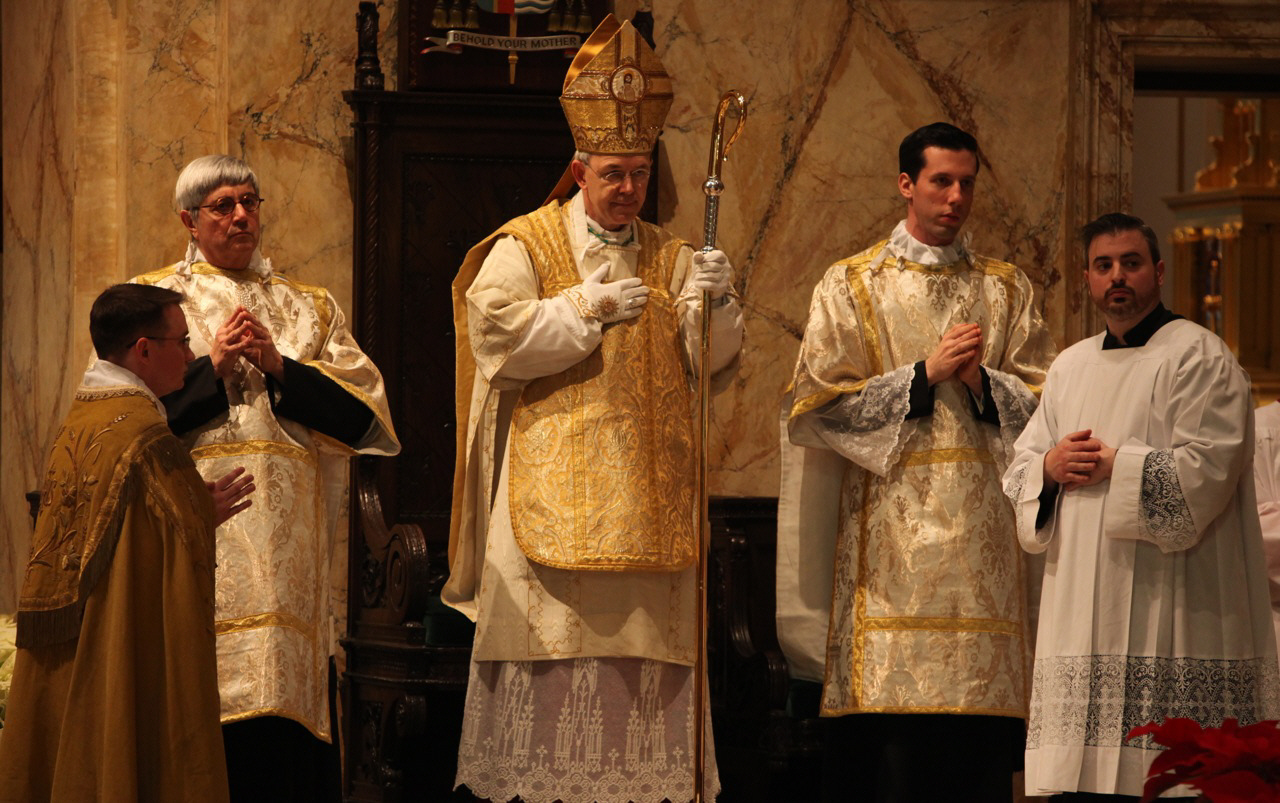
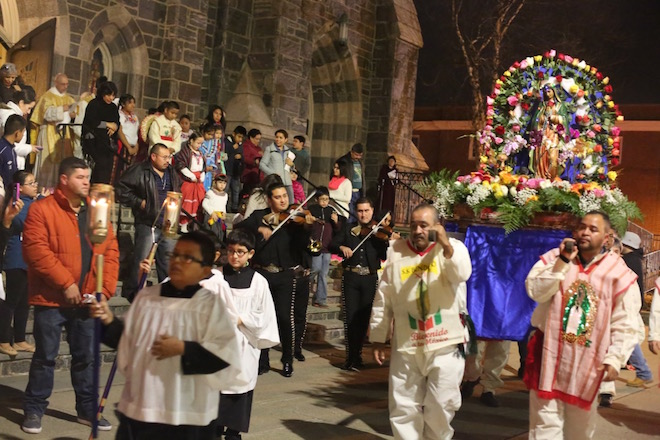
The Feast of Our Lady of Guadalupe was observed this evening at St. Mary’s Church Norwalk with an outdoor procession with mariachi band and a banquet.
12 Dec
2015
The Feast of Our Lady of Guadalupe was observed this evening at St. Mary’s Church Norwalk with an outdoor procession with mariachi band and a banquet.
7 Dec
2015
The following report is by Eddy Toribio. The photos are thanks to Mr. Anthony Dacosta and Ms. Cecilia Tan.
As we all know, there is something always going on at Holy Innocents (NYC) – the very active and vibrant parish that rarely sleeps!
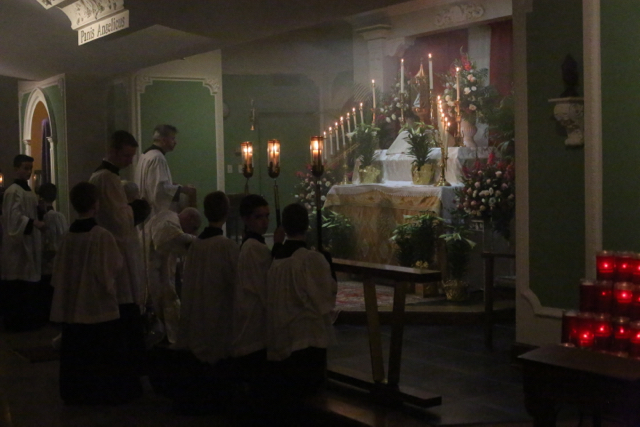
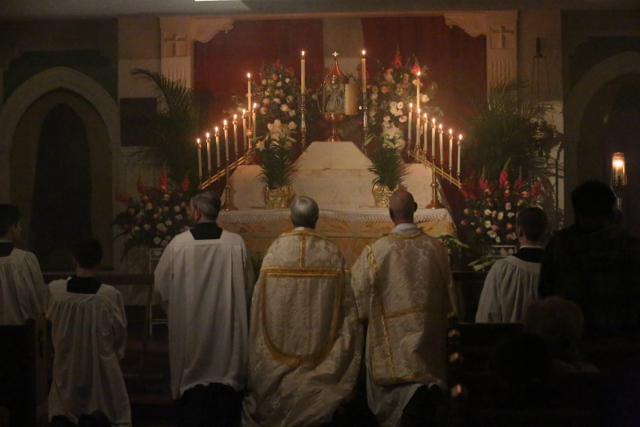
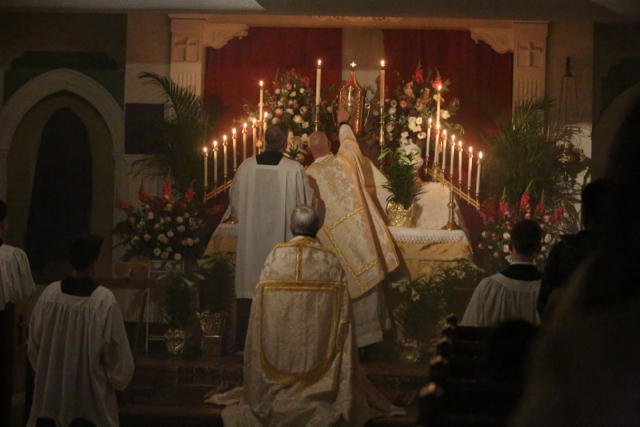
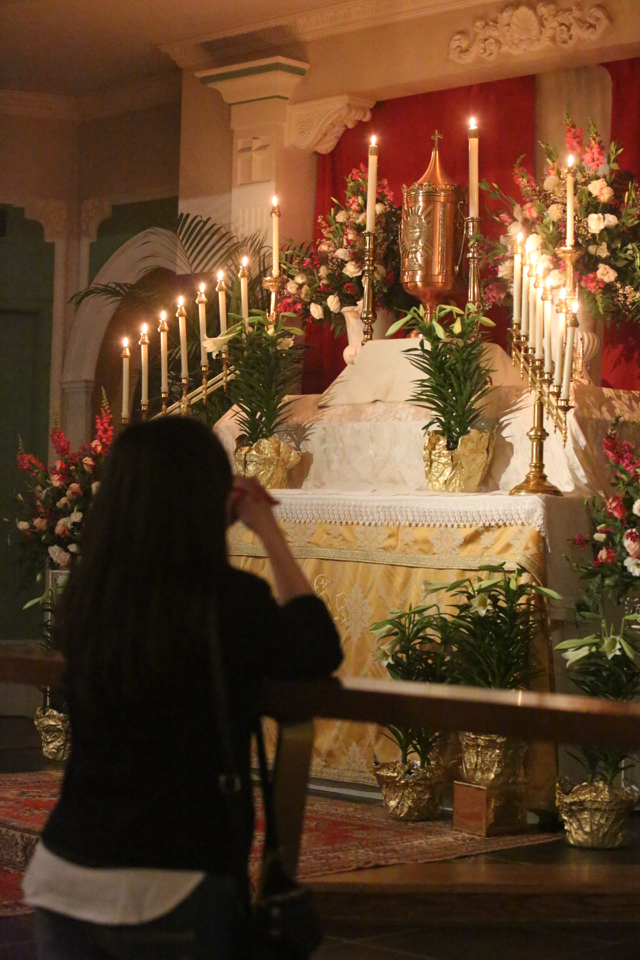
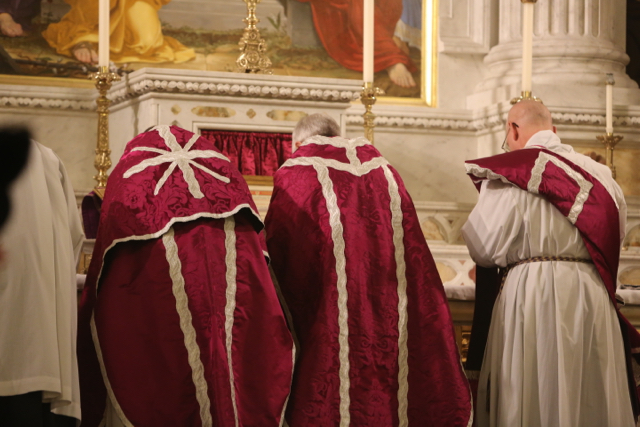
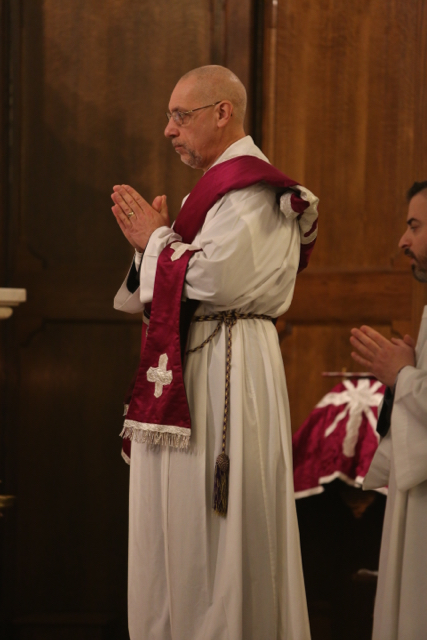
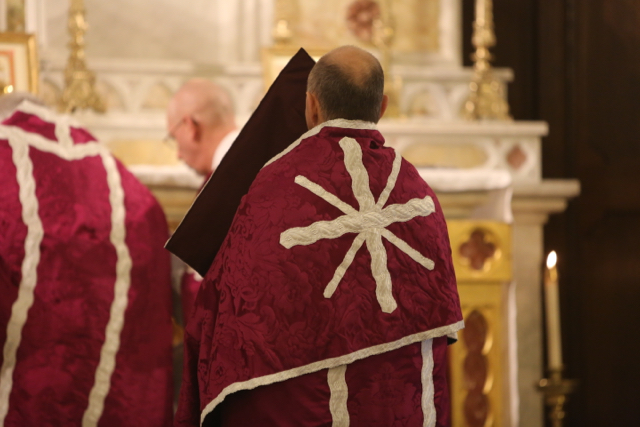
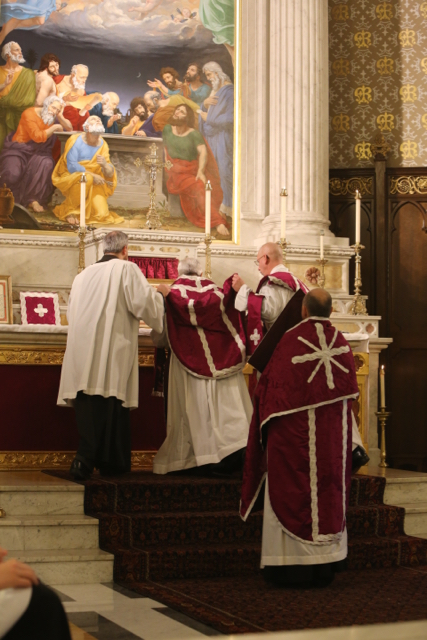
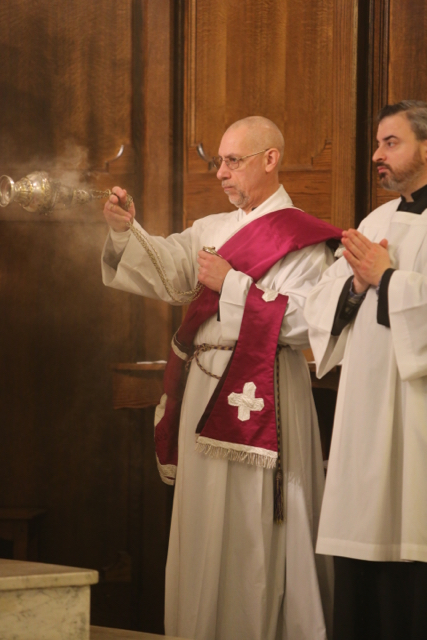
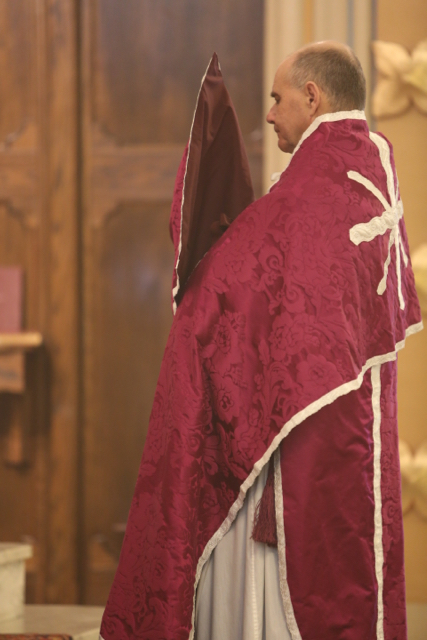
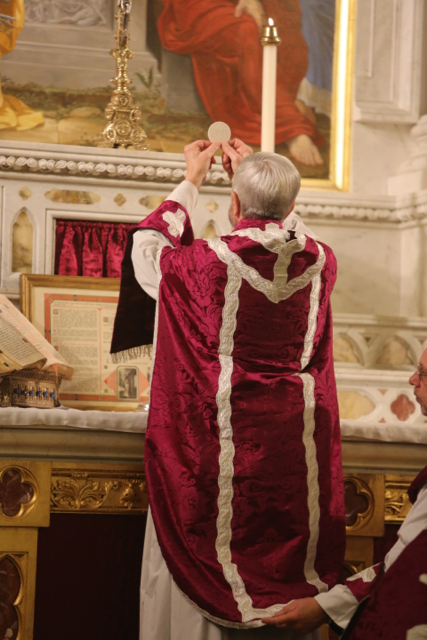
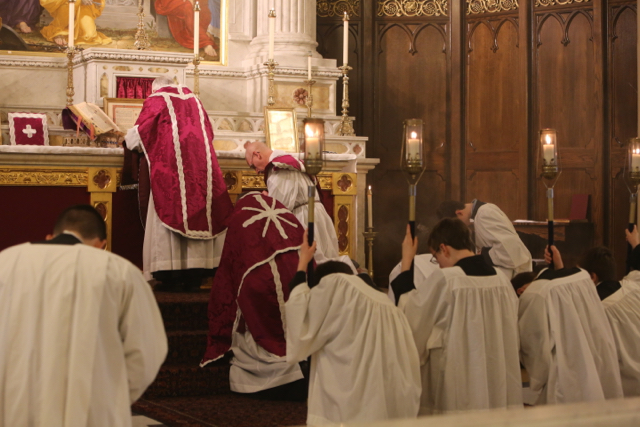
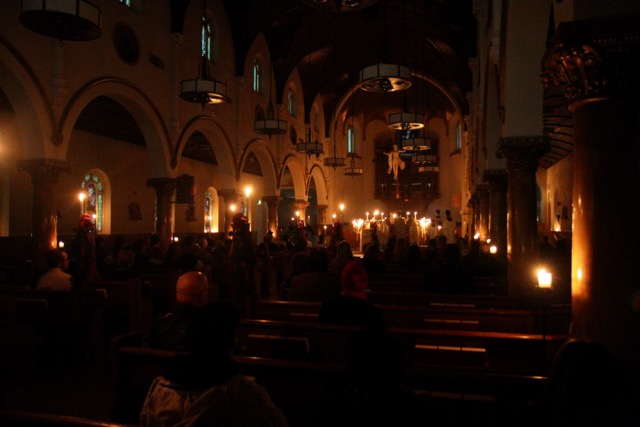
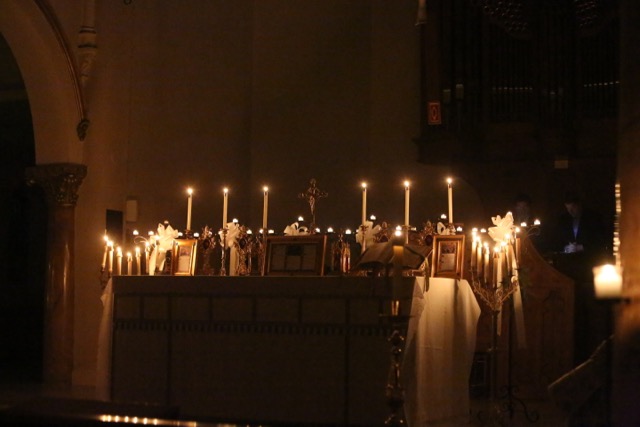
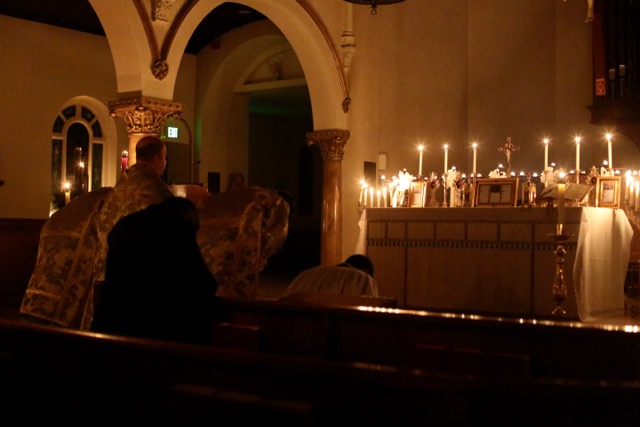
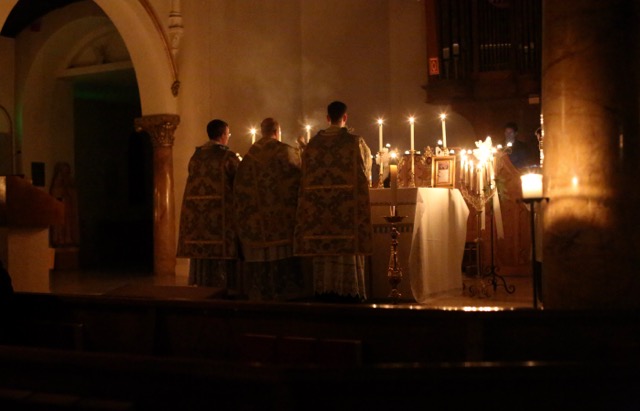
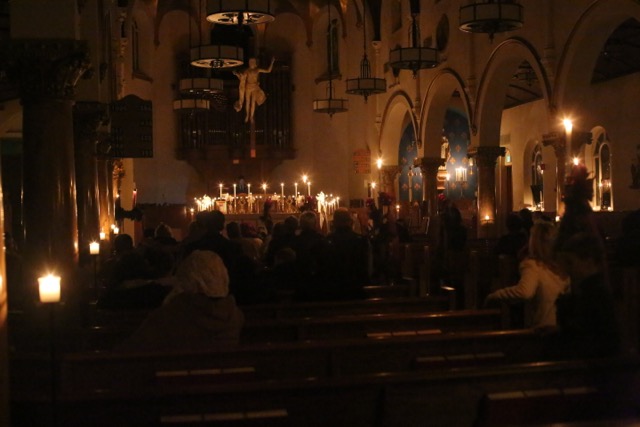
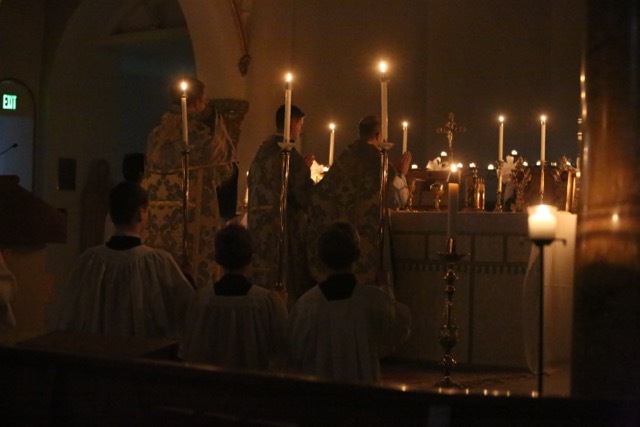
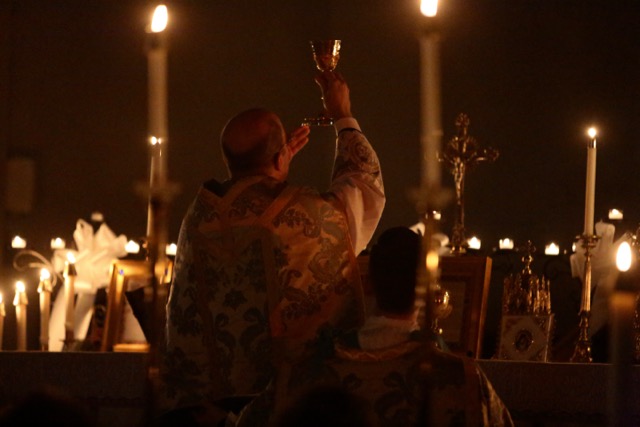
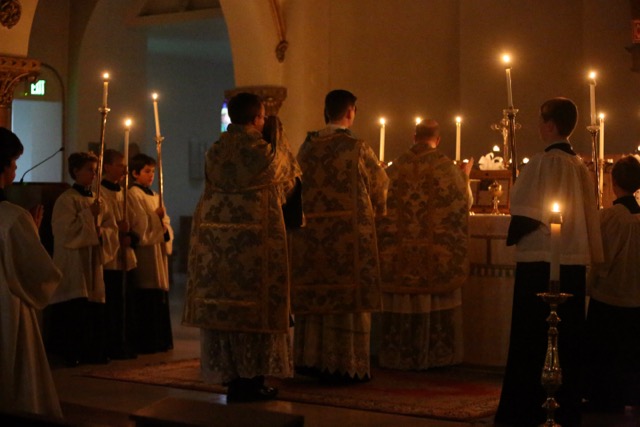
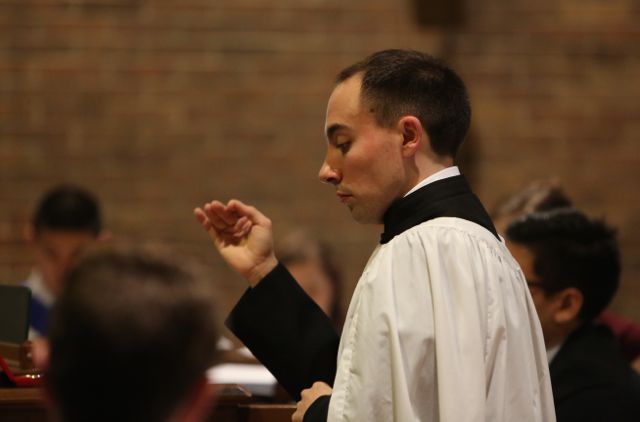
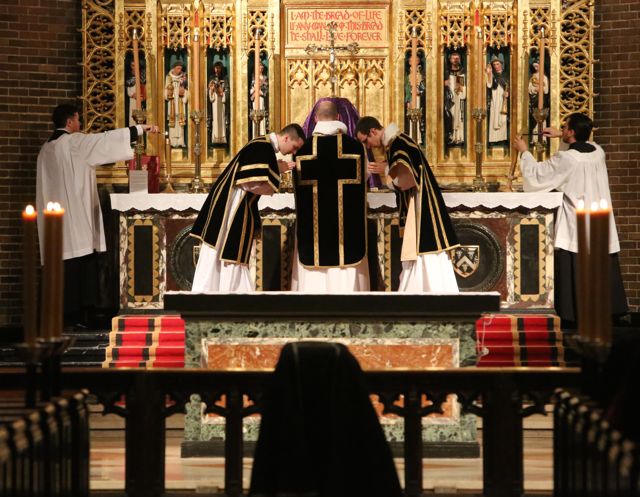
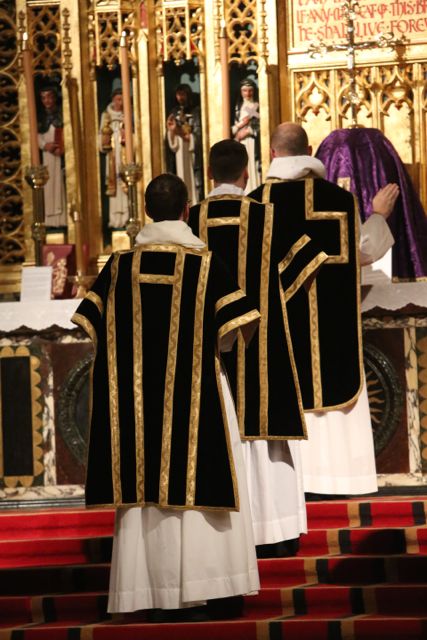
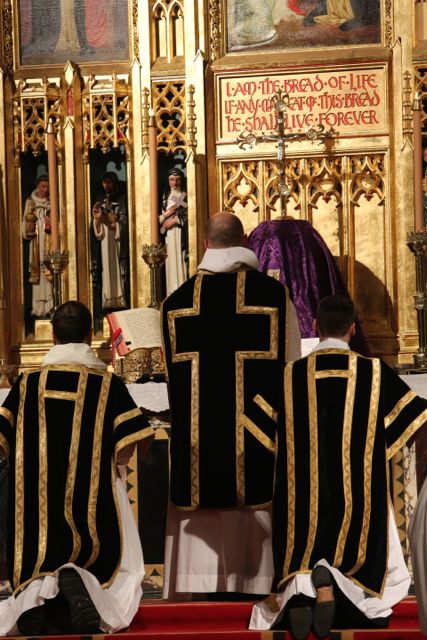
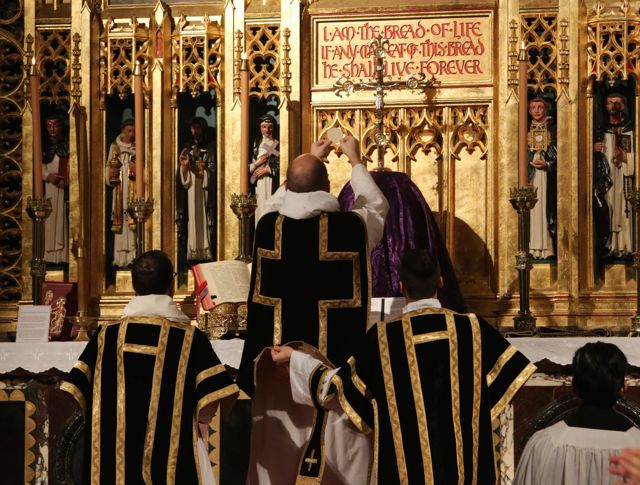
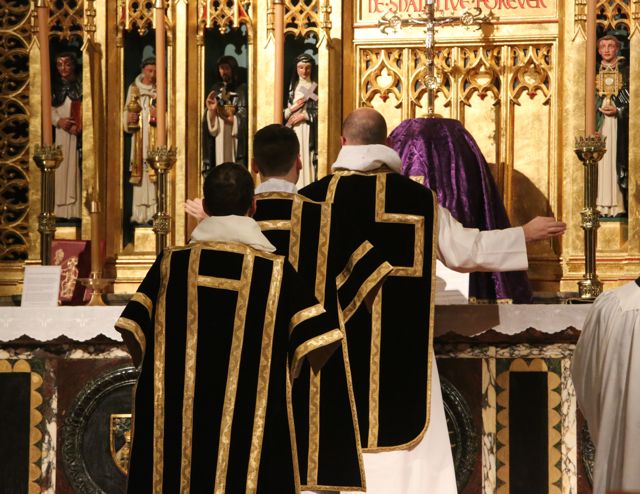
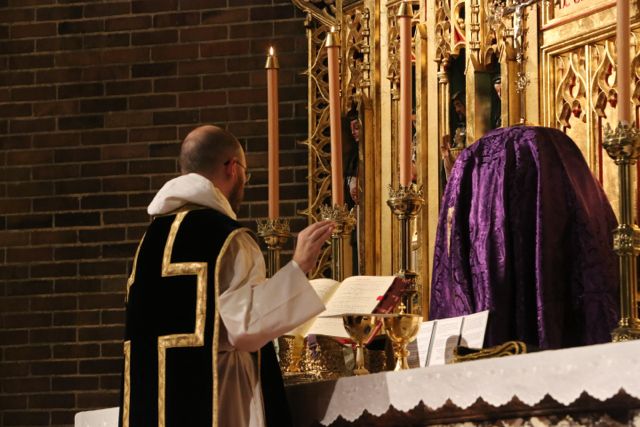
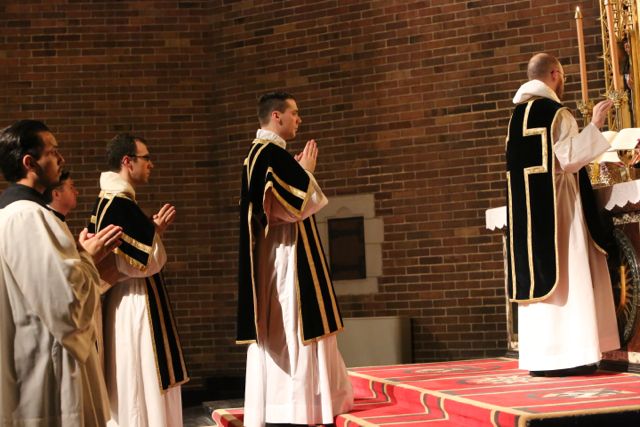
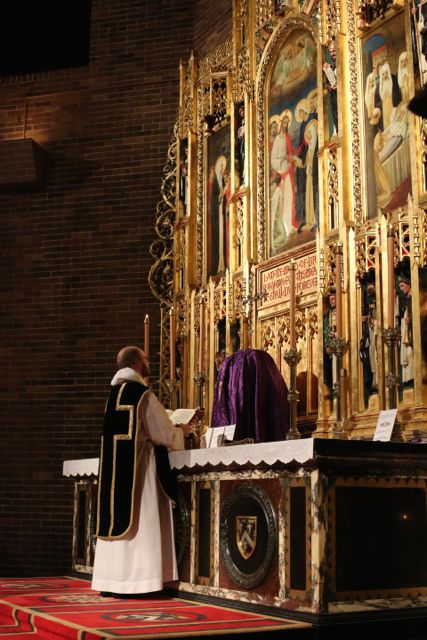
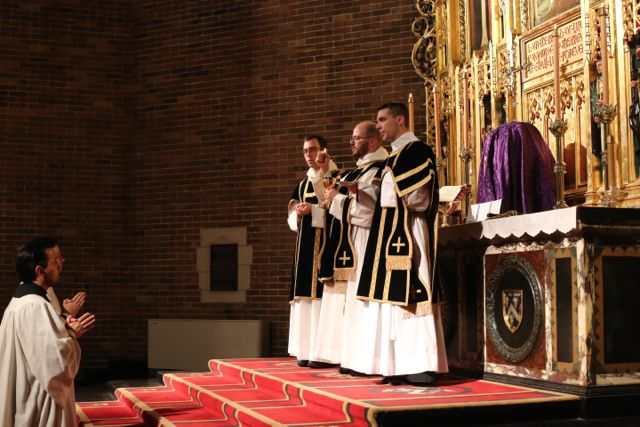
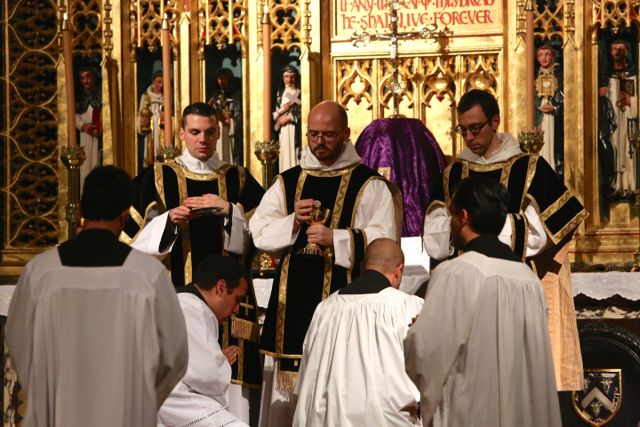
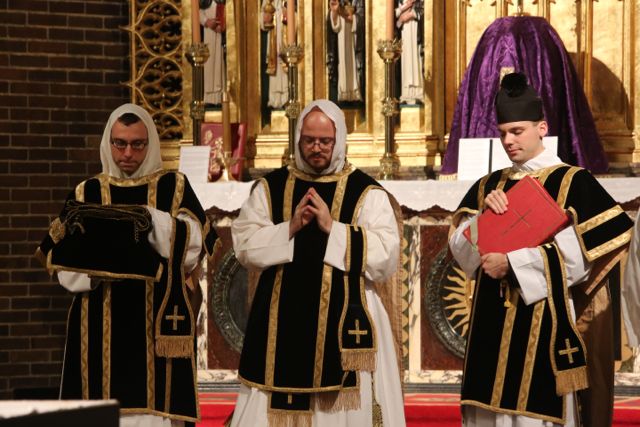
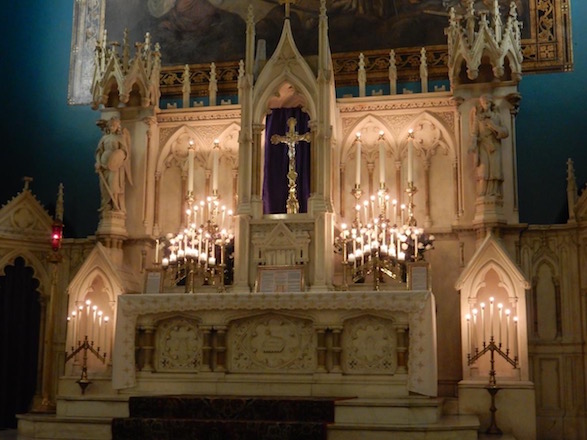
This past Saturday, December 6th, 2015, as part (and conclusion) of the monthly first Friday all night vigil (with devotions to the Sacred Heart of Jesus and the Immaculate Heart of Mary), the parish had its first Rorate Mass in honor of Our Lady in candlelight (no electric lights were used at all).
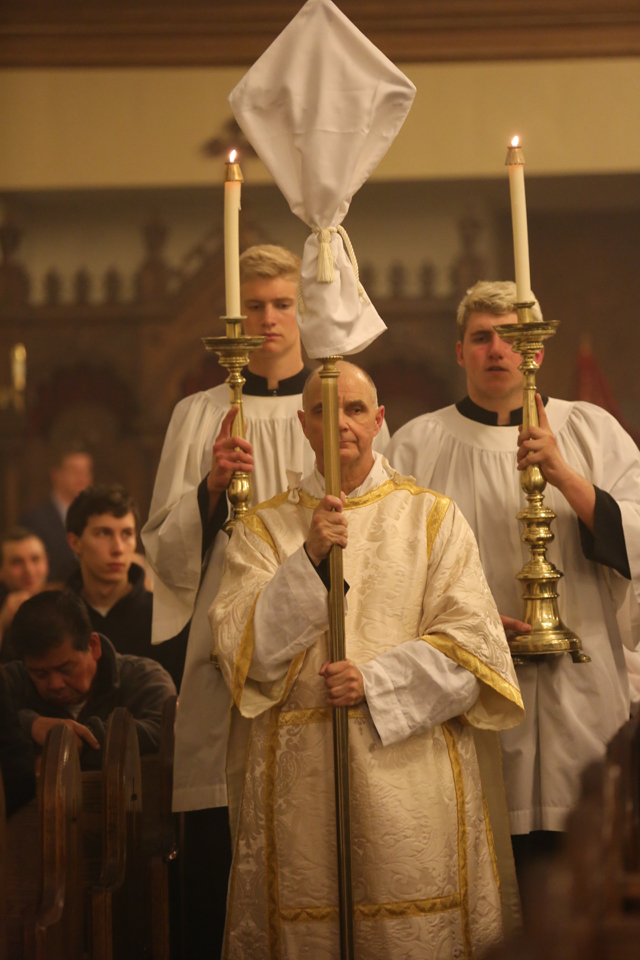
The Mass was a Solemn Mass at 5 AM with beautiful Gregorian Chant and the help of a good number of servers for five in the morning! Additionally, and as always, the faithful and committed parishioners responded very positively. There were 95 people in attendance for this very beautiful traditional Mass – again, at five in the morning!
n.b. For residents of Connecticut and Westchester: You will have a chance to attend a Rorate Mass on December 19 at St. Mary Church, Greenwich at 6:30 am.
17 Nov
2015
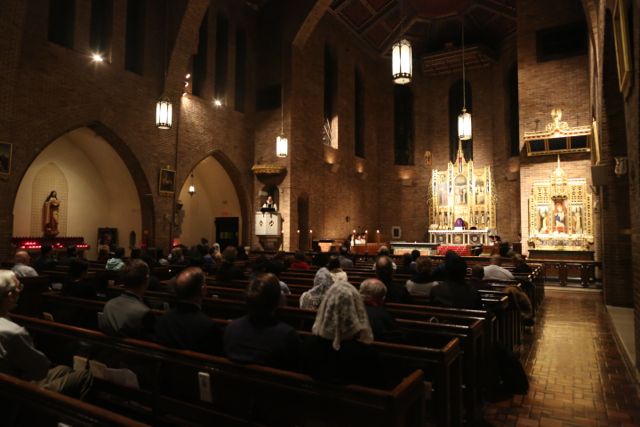
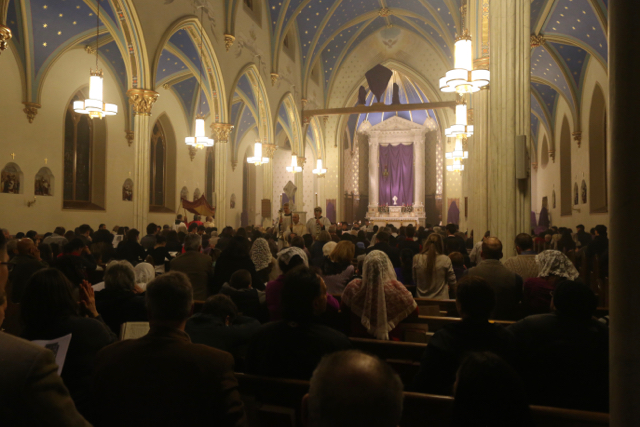
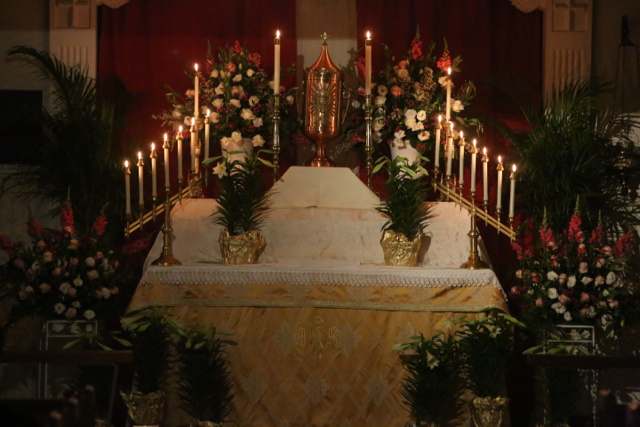
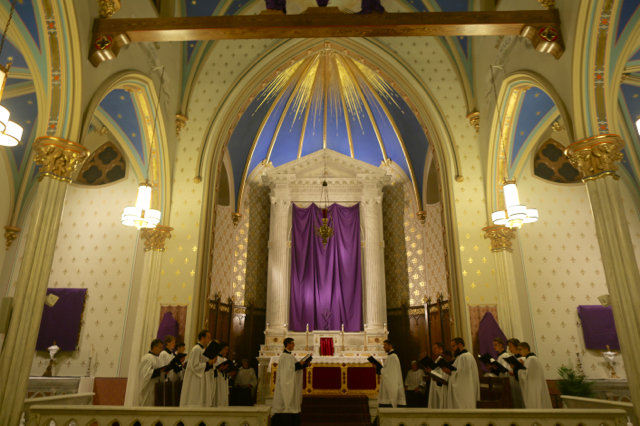
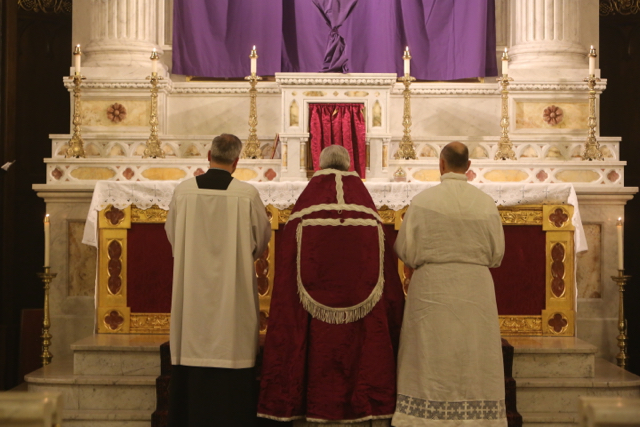
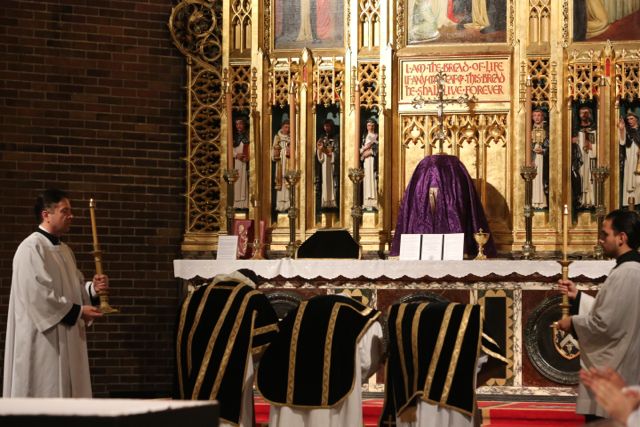
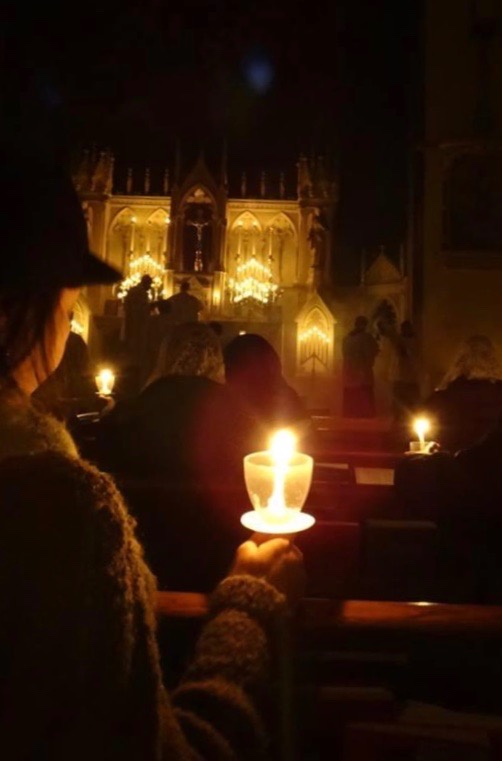
Last night the annual requiem mass sponsored by the Catholic Artists Society, the New York Purgatorial Society, the Society of St Hugh of Cluny and the Roman Forum was celebrated in the impressive surroundings of the Dominican Church of St Catherine of Siena. This year the solemn requiem mass was celebrated in the Dominican rite. Alas, St Catherine’s – architecturally one of the most extraordinary churches on the island of Manhattan – is from this year onward no longer an independent parish.
This Requiem mass, celebrated in the middle of November – a more sombre time of the year conducive to reflection and recollection – was an extraordinary spiritual and musical experience. The solemn ceremony perfectly expressed our awareness of our own mortality while interceding for the souls of those departed before us.
The Durufle requiem of 1947, performed so wonderfully last night, is one of the most marvelous settings of the requiem mass. Its character is uniquely elegiac, coming as it did just after the last World War and the “suicide of the West.” This mass is one last great summary of the entire history of Western music: based on chant but reflecting influences of Faure and Wagner. But, even in 1947, who could have imagined that within 25 years one of the greatest artifacts – viewed purely aesthetically – of that Western culture, this very requiem mass and its music, would be repudiated by the Church. Or so it seemed – but as the congregation was able to experience last night, in the wake of Summorum Pontificum, the Traditional Requiem is very much still with us.
It was heartening to see such a large congregation fill the vast space of this church.
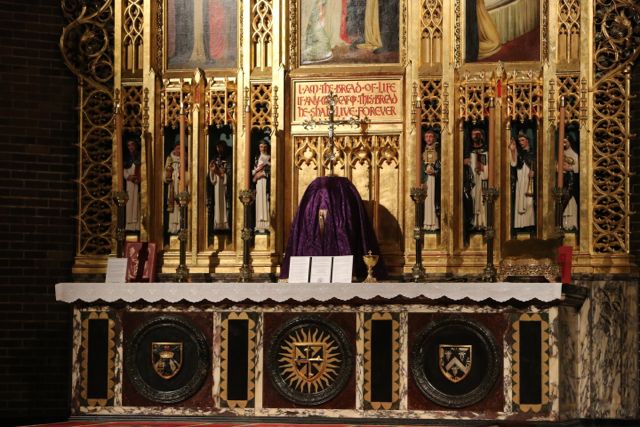
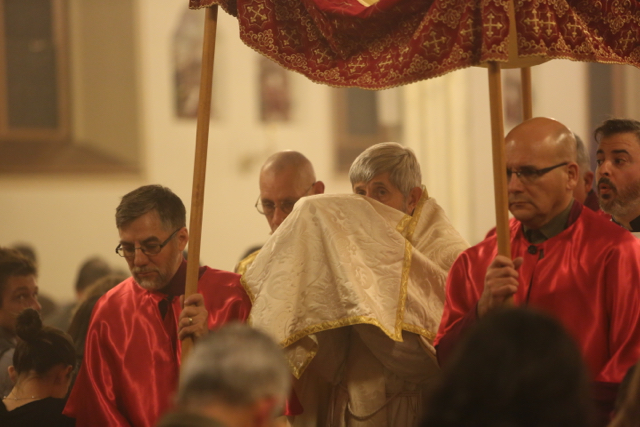
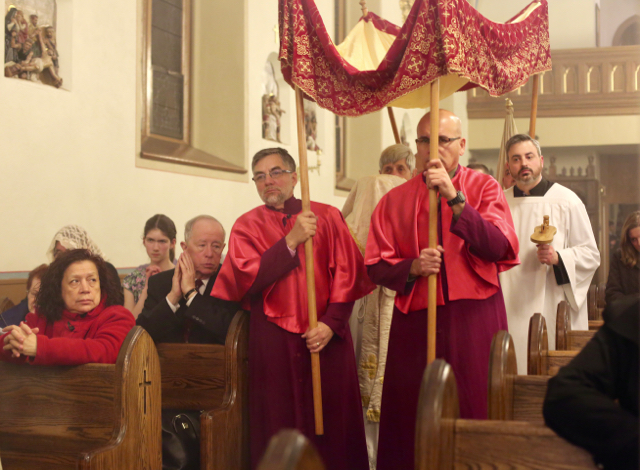
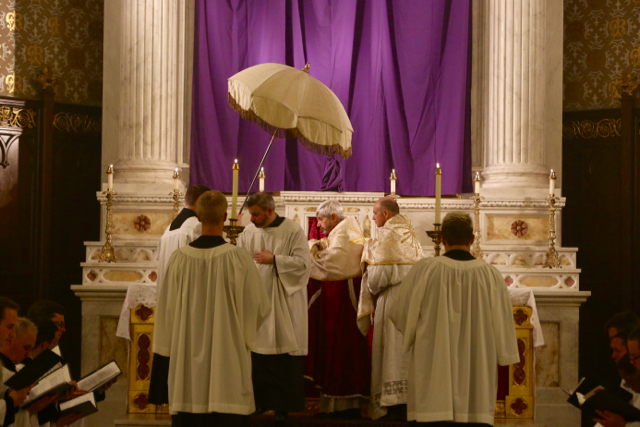
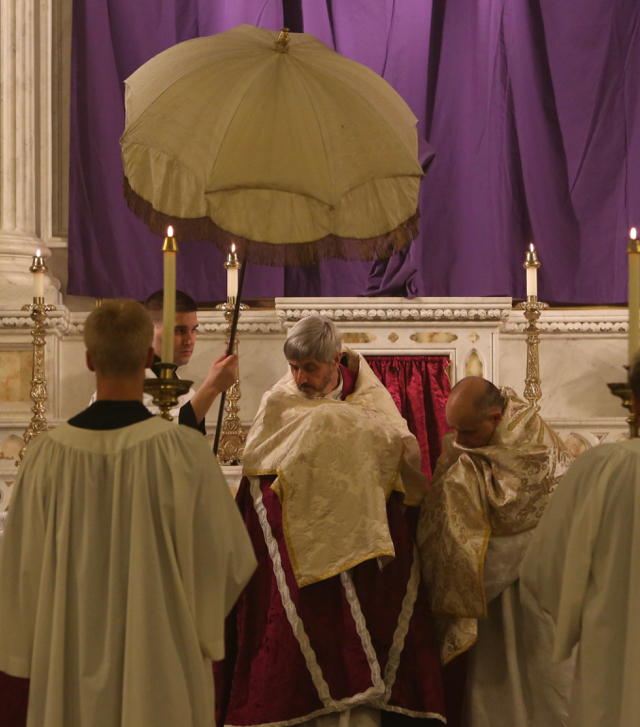
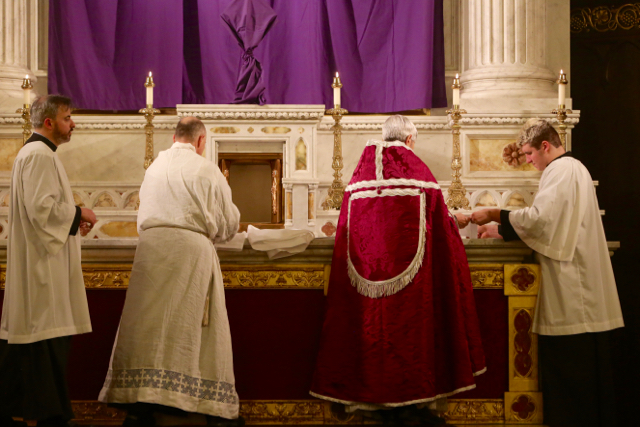
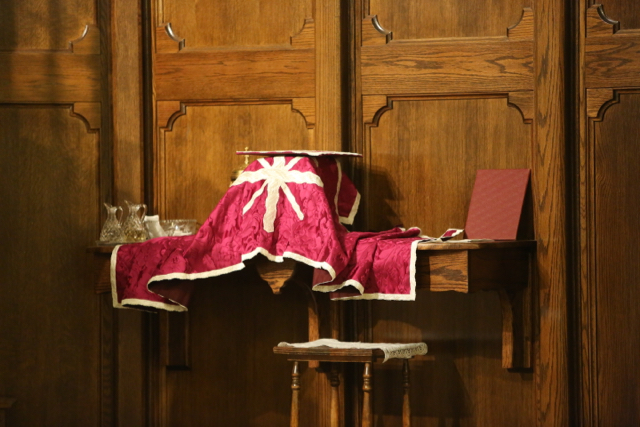
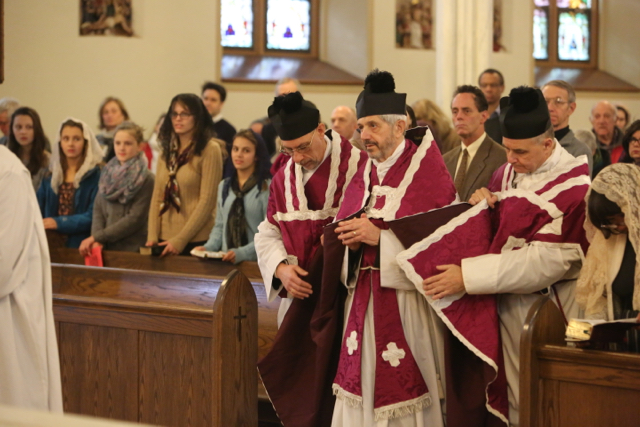
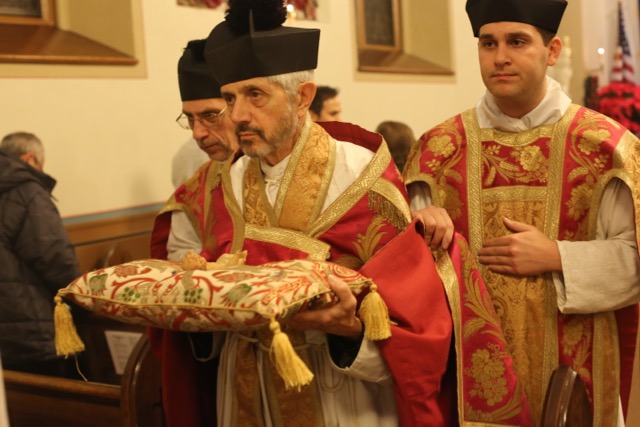
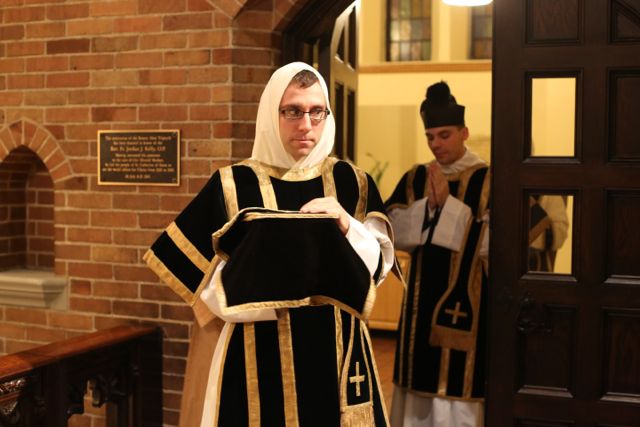
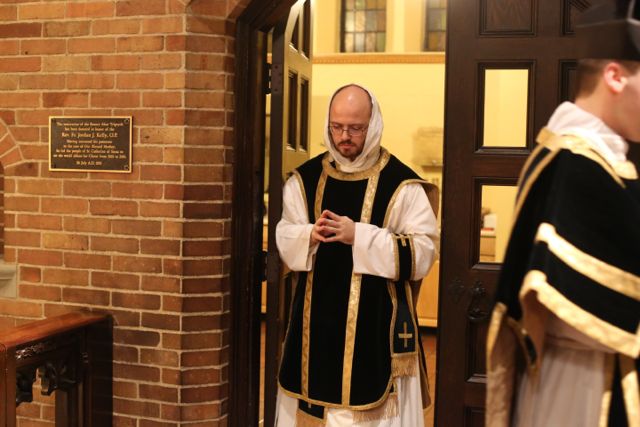
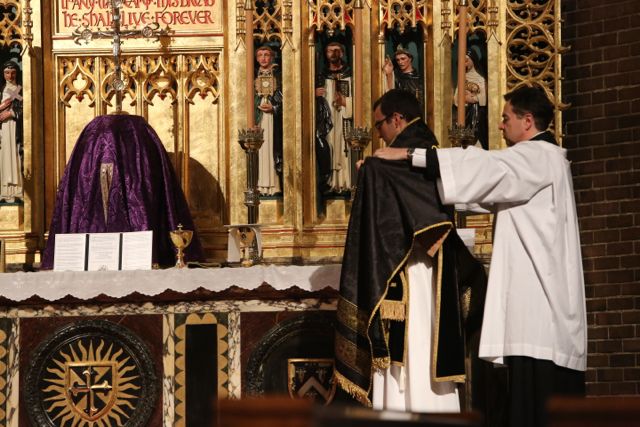
The Dominican Rite: Procession with the chalice to the celebrant employing the humeral veil – before the Gospel.
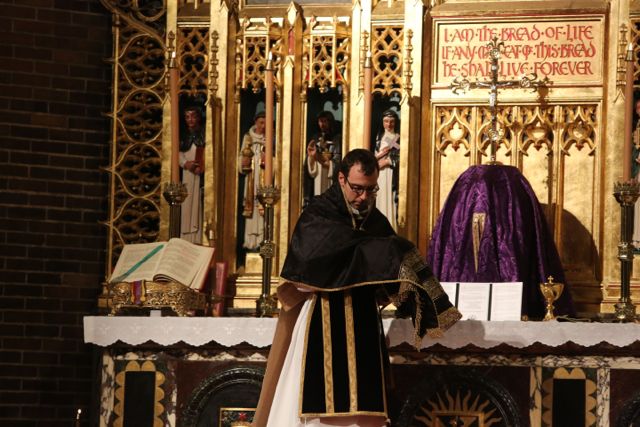
(Above) Mr James Wetzel, Choirmaster
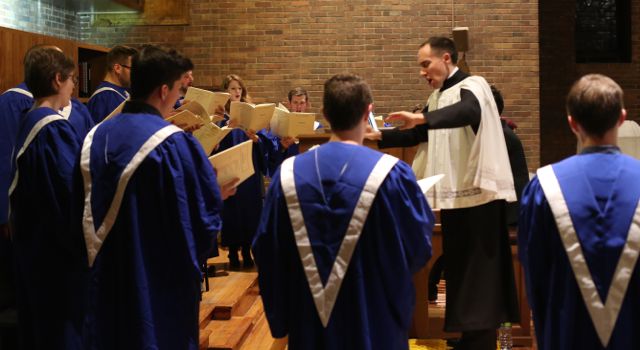
(Above) The Schola Dominicana of St. Catherine
(Above) Mr Michael Hey, organist.
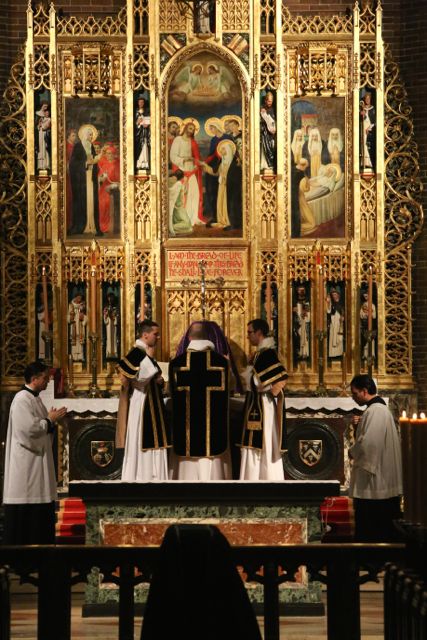
The Very Reverend Walter C. Wagner, OP, Pastor of the Parish of St. Vincent Ferrer and St. Catherine of Siena
The Reverend Innocent Smith OP, Celebrant and Homilist
The Reverend Sean Connolly, Deacon
Mr. Steven Pack, Head of altar Servers
The Schola Dominicana of St. Catherine
Miss Elisa Sutherland and Mr. Dominic Inferrera, soloists
Mr. Michael Hey, Organist
Mr. James D. Wetzel, Choirmaster
Mr. Donald Cherry, Vestments and poster.
2 Nov
2015
Yesterday evening Vespers and Benediction for the Feast of All Saints Day were offered at St. Mary Church Norwalk. Father George Rutler preached a sermon. Vespers are now scheduled for every first Sunday of the month at St. Mary’s.
30 Oct
2015
8 Oct
2015
Pictures from St. Mary’s Church, Greenwich of last night’s Eucharistic Procession on Greenwich Avenue for the Feast of Our Lady of the Rosary. (photos courtesy of Father Cyprian La Pastina)
22 Aug
2015
We have seen how, in the latter part of the 19th century, grand edifices for Catholic worship were being erected in New York. But, at the same time, on “the far side of the world” in Hawaii much more modest but equally impressive churches were being built. For Hawaii, like the Canadian maritime provinces, is a small treasury of church architecture – executed primarily in wood.

The Church of Maria Lanakila (= “Our Lady of Victory”) is the main church of Lahaina, Maui. The parish was founded in 1846 but the present church dates to 1873. It has been restored several times since then but the airy open architecture of the interior has been preserved.
(Above) It may interest our readers to know that the Traditional Mass is regularly celebrated at Maria Lanakila and at Paia also on Maui (see below) – alas, not during the week we visited! SEE the website of the Maui Latin Mass organization. (the organization’s Facebook page, however, seems to indicate they are currently – hopefully temporarily – down to one mass at Maria Lanakila on the first Sunday of the month.)
The stations of the cross have local scenes in the background—here the highest mountain on Maui, Mt. Haleakala.
(Above) Cemetery of Maria Lanakila Church, Lahaina. This atmospheric cemetery is perhaps more impressive than the church today. (Below) The grave of a daughter of a Hawaiian chief.
Above: the most unusual octagonal Holy Ghost Church, Waiakola, Maui. It was built in 1894-95 by a German missionary priest, Fr. James Beissel, for his Portuguese congregation. Father Beissel was both architect and contractor. The altar and stations of the cross – also from the 1890’s – are the work of the famous artist and woodcarver Ferdinand Stuflesser of the Tirol (then in Austria). His firm is still in existence! They were brought around the coast of Africa to Hawaii by ship and to the church by oxcart.

(Above) The centralized plan of this church is most unusual in the Western Church.
(Above and Below) This altar would seem more at home in Germany than Hawaii! Today it is a revered local treasure.

(Above) The Portuguese inscriptions on the Stations of the Cross. At this time large numbers of Portuguese immigrants from Madeira and the Azores were coming to Hawaii. Along with other Catholic immigrants they greatly increased the presence of the Church in the islands.
Below are two simple churches built by St. Damien on the island of Molokai. The leper colony, where St. Damien was assigned, was on a peninsula isolated from the rest of the island by a steep cliff. Aside from his demanding work with lepers, Fr. Damien found time to leave the colony to minister to Catholics on the rest of the island, where he built four churches. And he literally built them – he was skilled as a carpenter.
(Above and below), St. Joseph Church, built by St. Damien in 1876
(Above and below), Our Lady of Sorrows Church, built by St. Damien in 1874, rebuilt in 1966.
(Above and below) although the damaged church had to be rebuilt in the 1960’s, much of the original interior and its decorations remain. A plaster statue (such as Catholics of the 20th century were taught to despise) was in 1874 a very welcome guest if it had to be transported from Europe halfway around the globe. Here the Madonna of Lourdes is adorned with a lei and St Joseph with a necklace of shells.
(Below) The Stations of the cross – a series of prints we were told were donated to this church around Fr. Damien’s time by admirers of his work.
On the “Big Island” of Hawaii, Father John Berchmans Velghe, who, like Father Damien, was Belgian and a priest of the “Picpus Fathers” (the Society of the Sacred Hearts of Jesus and Mary), built in 1899 the tiny Victorian church of St.Benedict. He himself painted an extraordinary cycle of paintings in the years 1900-04 covering the entire church. For his congregation – at that time Hawaiian – Father Velghe transformed the ceiling of the nave into a forest and the sanctuary into a vast cathedral ambulatory. Yet his most interesting works are the paintings on the walls of the nave. For there, in stark contrast to today’s “soft” pastoral approach, Father Velghe created unusual, dramatic or ecstatic images: Belshazzar’s feast, St. Francis receiving the Stigmata, Eve weeping over the dead Abel, the soul at the moment of death and, finally, a horrifying if sadly damaged rendering of hell. The Hawaiian inscriptions on the columns accord well with the striking pictures.
St Benedict’s Church enjoys a location of unmatched splendor high above Kealakekua bay.
A Lourdes Madonna bedecked with leis before the church.
(above) The soul at the moment of death; (below) Belshazzar, Daniel and the handwriting on the wall.
Great care has been taken in recent years to restore these churches. I hear that even the cathedral of Honolulu, subject of disastrous renovations after the Council – and not very professional ones before it – is also the object of grand renovation plan; one of the objectives being to restore it to how it would have looked in the 19th century – Fr. Damien’s time. It seems quite a change for a diocese which had a distinctly progressive reputation! And quite a contrast to New York where the artistic and historical legacy continues to be obliterated.

(Above) Lourdes Grotto made of coral – Kona, island of Hawaii.
16 Aug
2015
Parishioners packed St. Mary’s Church, Norwalk for a Solemn Mass and benediction yesterday evening for the Feast of the Assumption. Afterwards at an Italian Festa on the lawn and in the church hall, diners were entertained by Father Cipolla singing “That’s Amore.”
12 Jul
2015
(Above: The finished restoration. Photo courtesy of Tim Lykins)
We have received and pass on to you the following message from St. Michael’s parish, West 34th Street and Ninth Avenue, New York:
“Two years ago, Father George Rutler, formerly pastor of the Church of Our Saviour, was assigned as pastor of the Church of St Michael in the “Hell’s Kitchen” neighborhood of Manhattan, as well as Administrator the Church of the Holy Innocents in the “Garment District,” which was slated for sale. Since then, Holy Innocents has been saved and is able now to have its own full-time priest. St. Michael’s also remains, although the archdiocese is “seriously considering” replacing it with a new church close by. The once derelict and crime-ridden area is undergoing the biggest real development in the nation and the property is immensely valuable. The historic parish was founded in 1857 and moved to make way for the original Pennsylvania Station by McKim, Meade and White. While at this time, no capital improvements are being done, interior devotional art is being restored.
The large unfinished reredos behind the High Altar has been polychromed with the donated 800 man-hours of labor by young parishioners whom Father Rutler trained in the art of gold-leafing. It was a hobby of his father who had taught him. Assisting were Ken Jan Woo and his wife Camille whom Father Rutler baptized and married. Woo did the major work on the famous icons in the Church of Our Saviour. Other volunteers represented many ethnic backgrounds, and a Jewish friend also assisted. One young parishioner with a construction company provided the scaffolding. There is an altar erected in the nave crossing in 1997 but it is hoped that the High Altar will be more frequently used.
Father Rutler thought that this critical time in our culture was appropriate to begin a revival of liturgical art in “Hell’s Kitchen. “ He cited an inscription on the wall of the Holy Trinity Church, Staunton Harold, in North West Leicestershire, England:
“In the year 1653 when all things sacred were throughout the nation either demolished or profaned, Sir Robert Shirley, Baronet founded this church; whose singular praise it is to have done the best things in the worst times and hoped them in the most calamitous. The righteous shall be had in everlasting remembrance.”
(Holy Trinity is one of the few churches erected during the time of Oliver Cromwell and the Puritans. In this period of English history the monarchy was abolished and many churches destroyed. Sir Robert Shirley did more than just hope against a powerful, divisive and destructive government. He did “the best things in the worst times.” Founding Holy Trinity was a courageous act of defiance and witness by this young man who later died at age 27, after being imprisoned in the Tower of London.)”
(Above: the reredos in March 2012)
(Above: Members of the restoration team; Below: A detail of the gilding. These two photographs courtesy of Tim Lykins)
For more on St. Michael’s church see HERE.
8 Jul
2015
Fr. Sean Connolly offering the Traditional Mass with Saint Jean Marie Vianney’s very own chalice at the altar of his relic. Fr. Connolly, who was ordained only a few weeks ago for the Archdiocese of New York, is currently on pilgrimage in Ars, asking the holy Curé’s intercession for his priestly ministry.