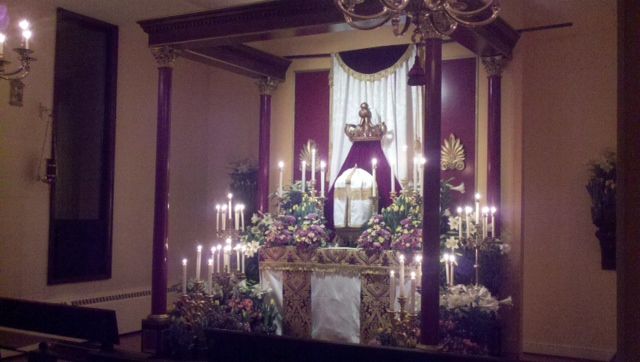
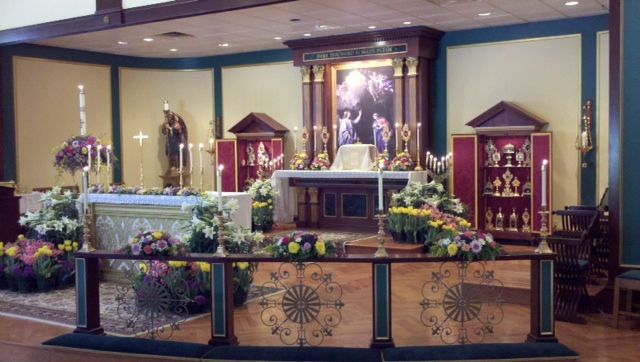
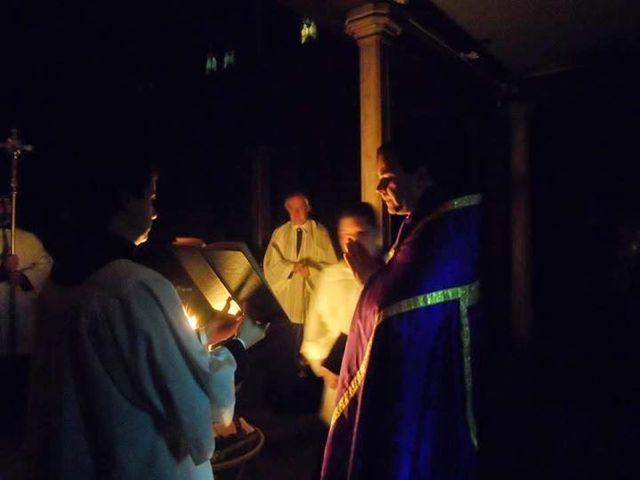
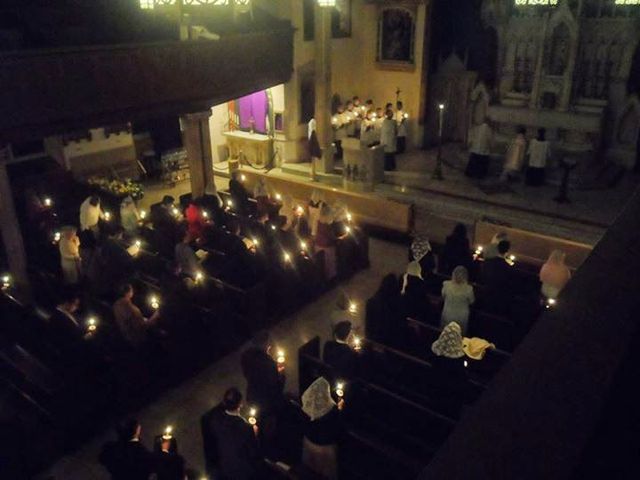
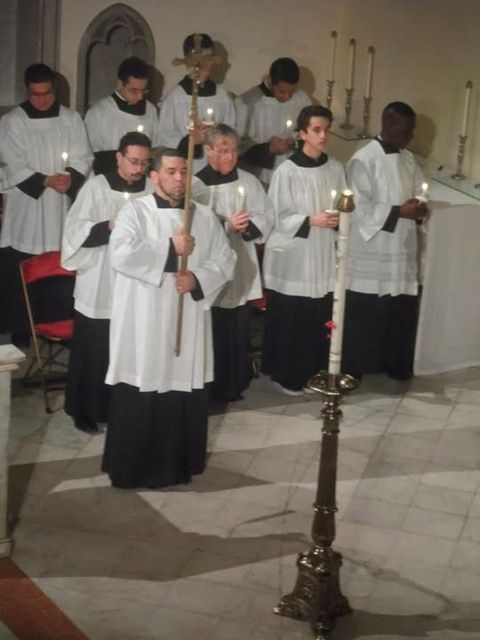
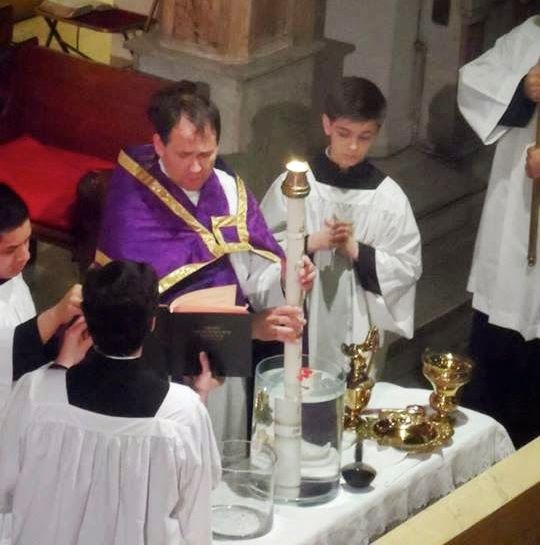
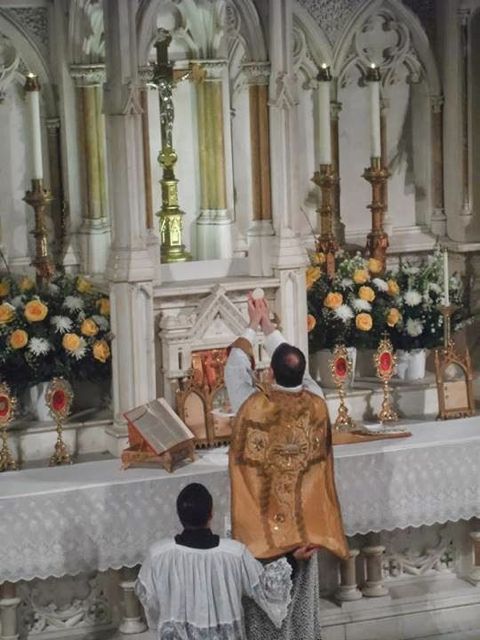
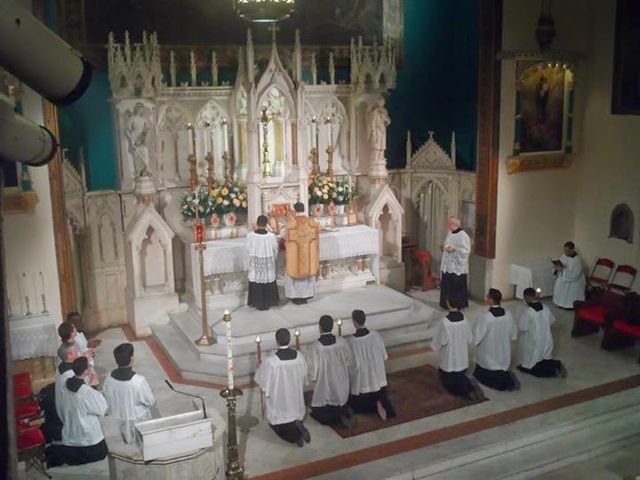
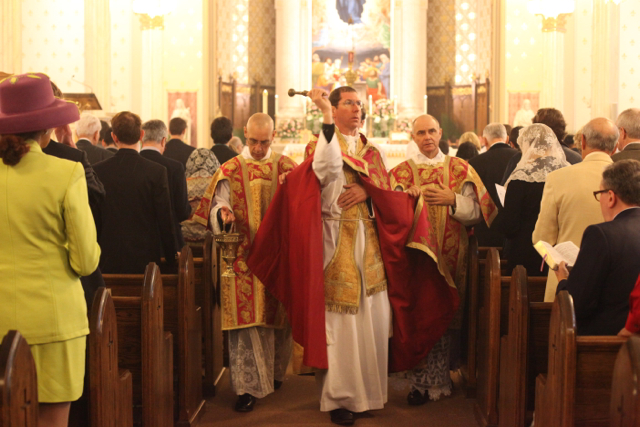
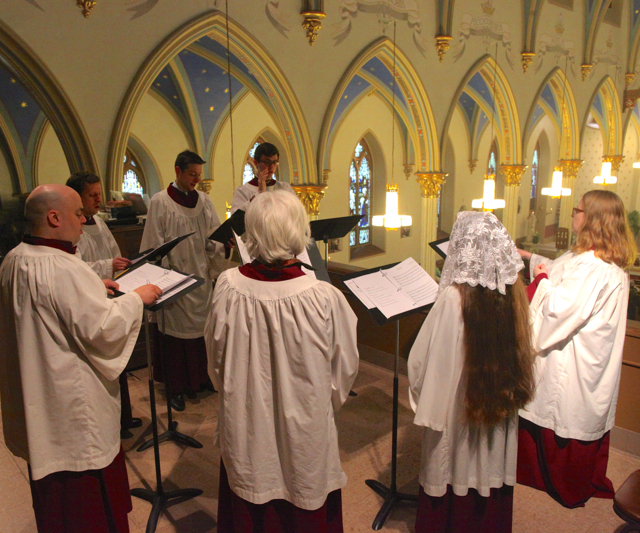
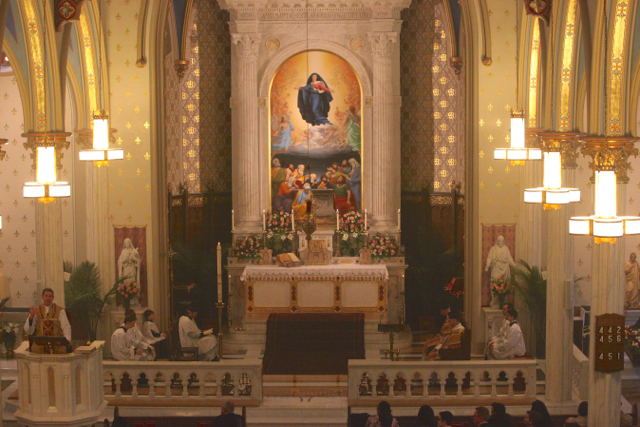
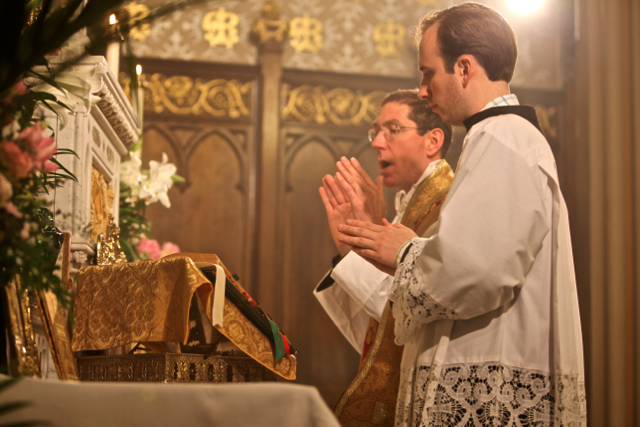
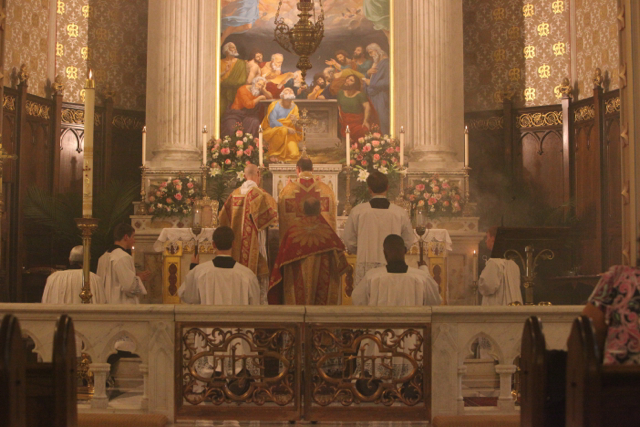
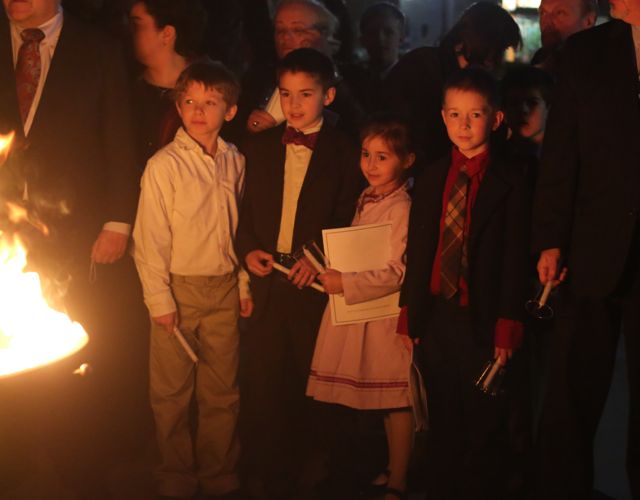
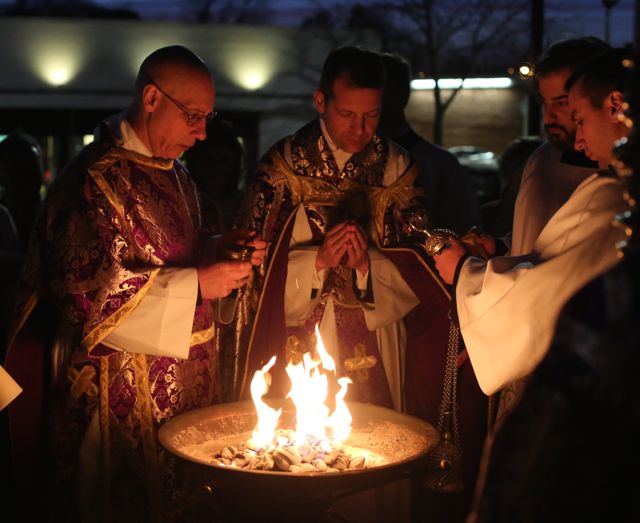
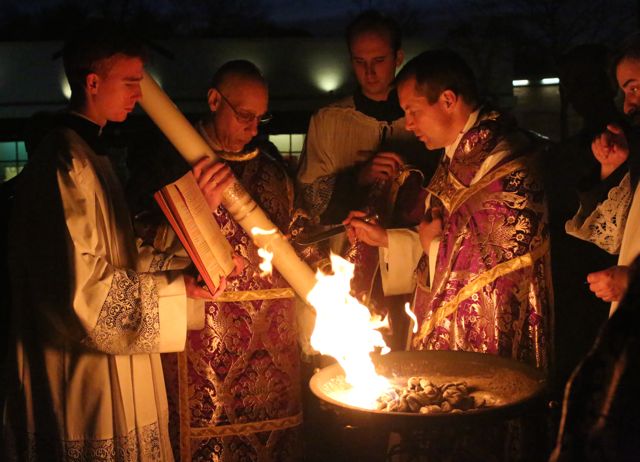
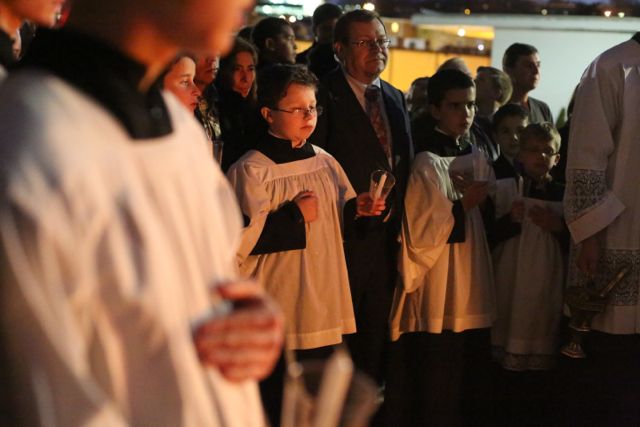
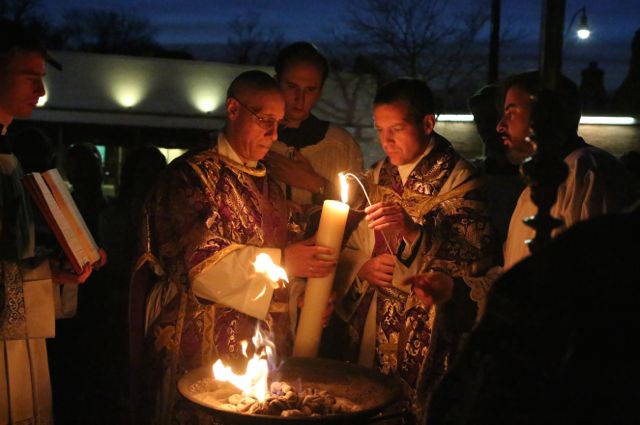
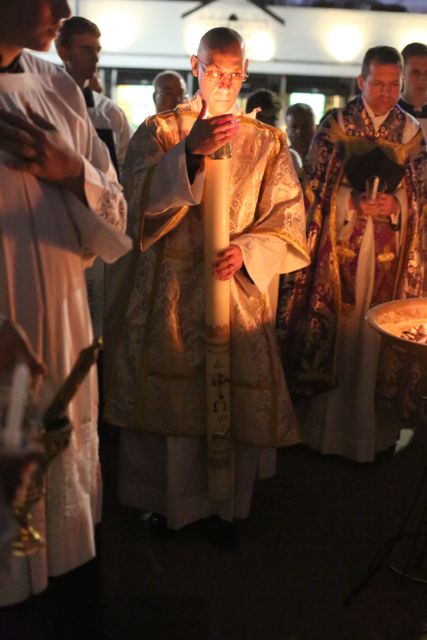
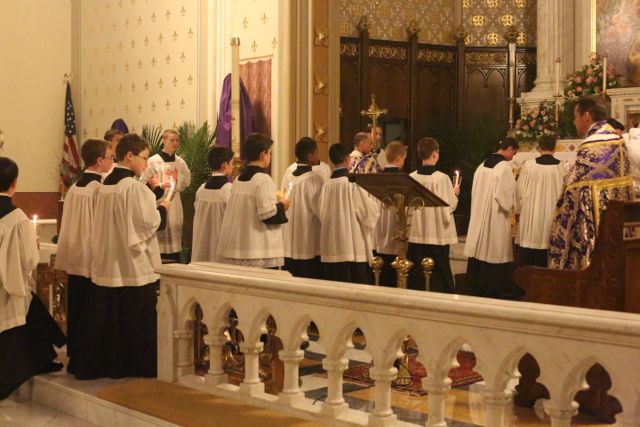
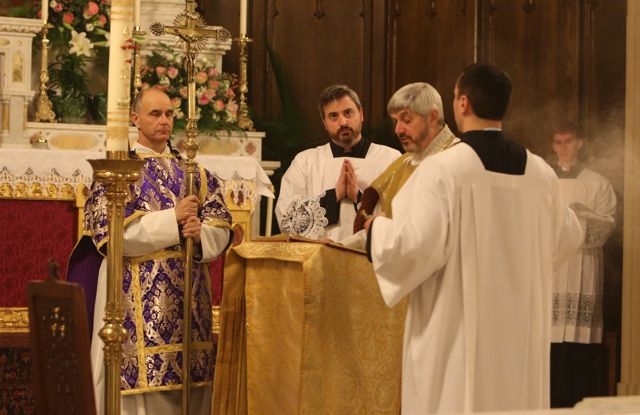
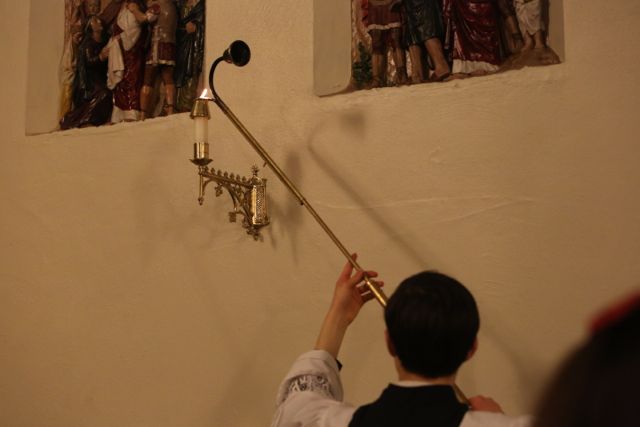
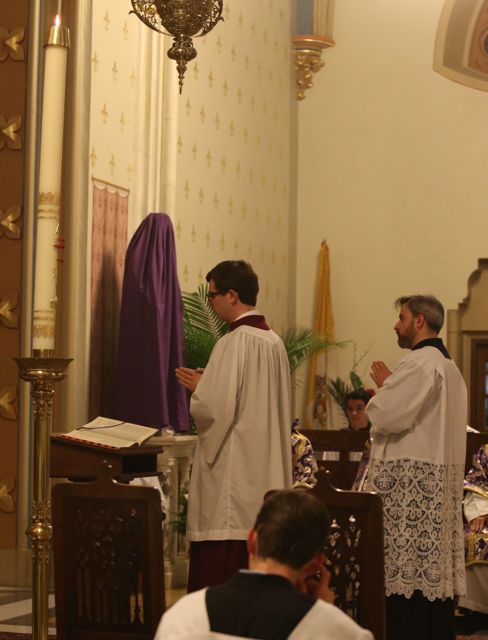
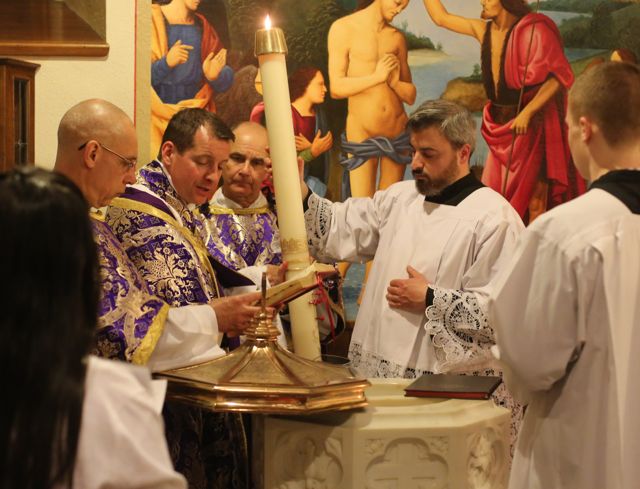
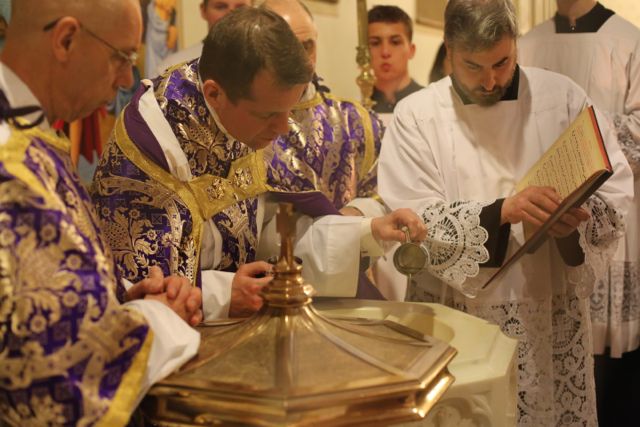
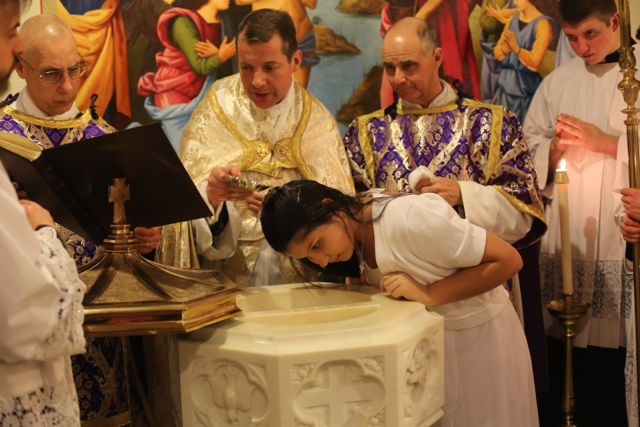
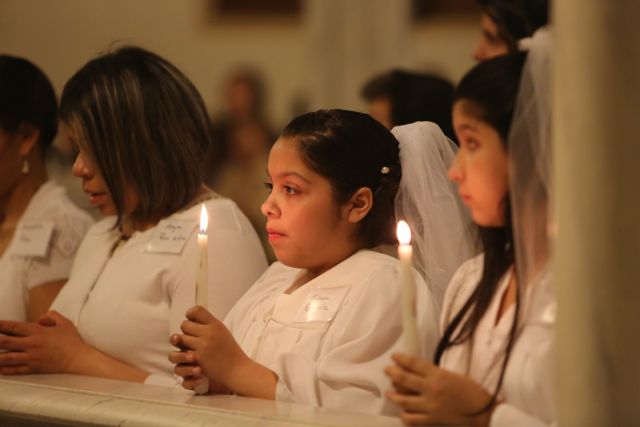
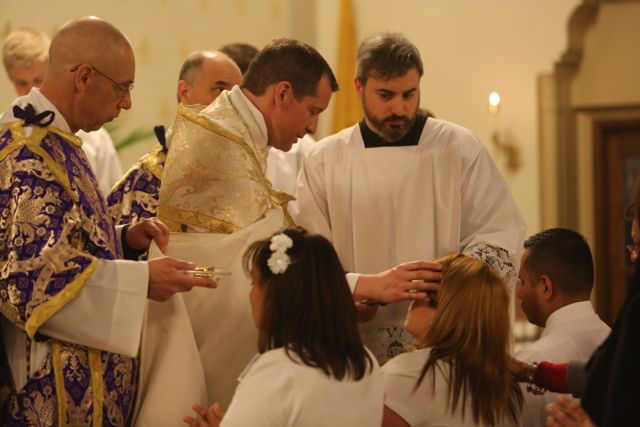
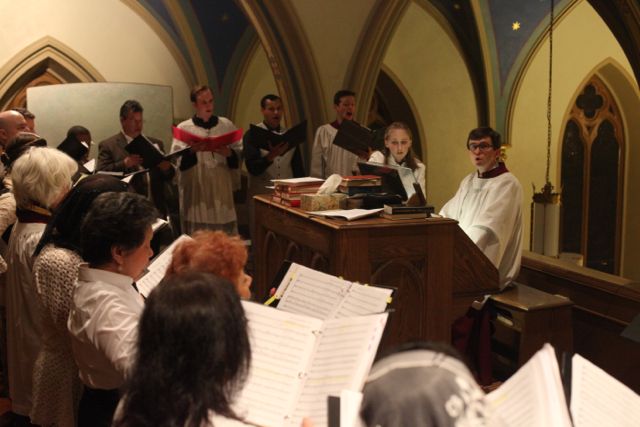
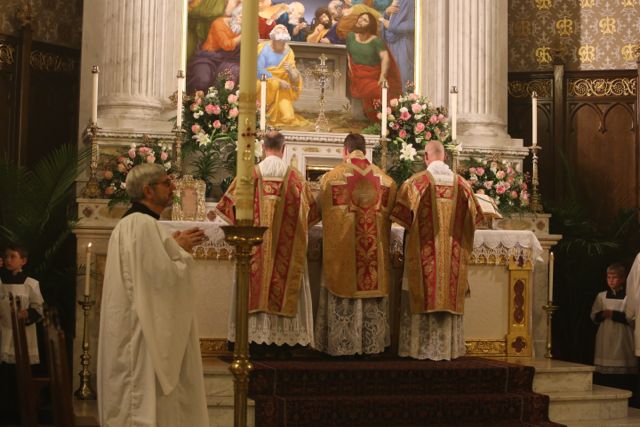
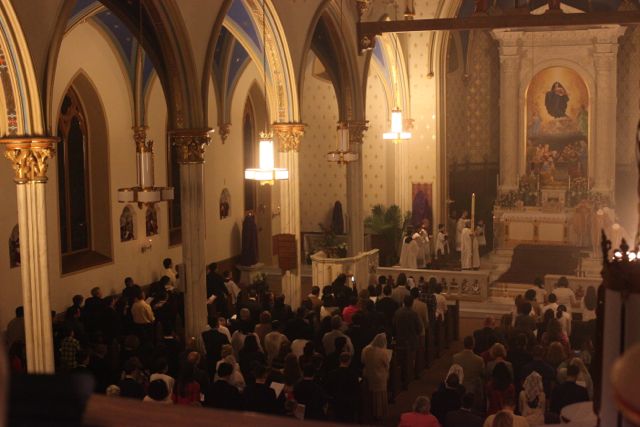
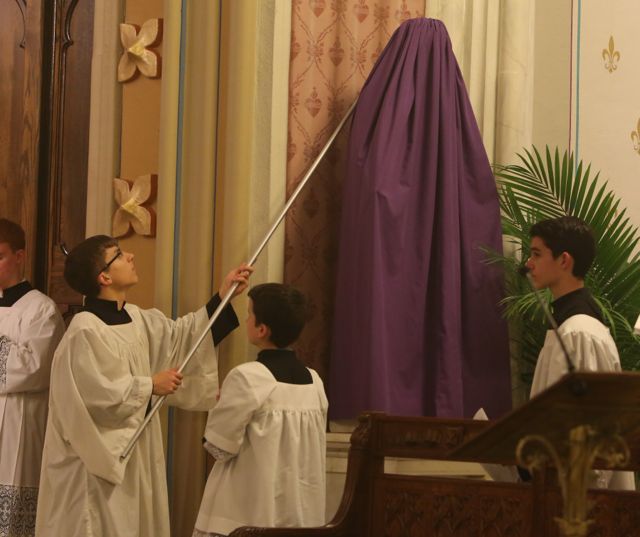
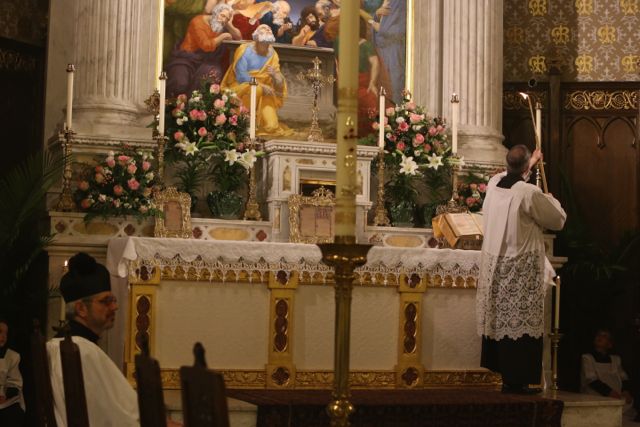
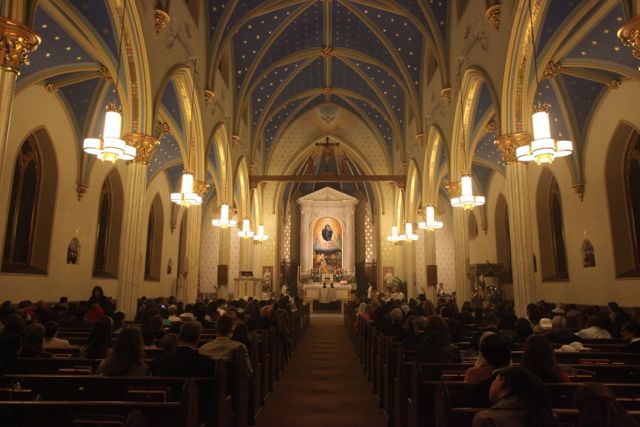
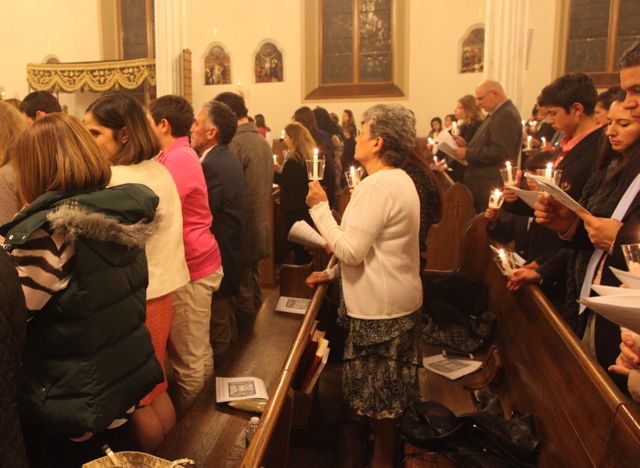
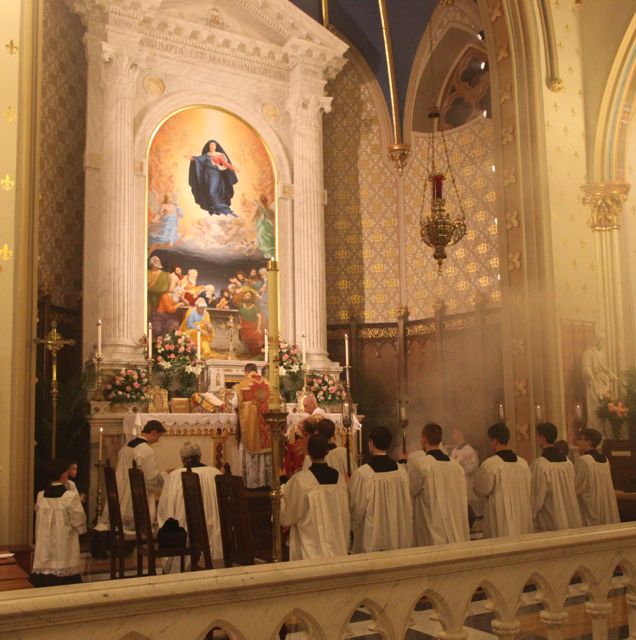
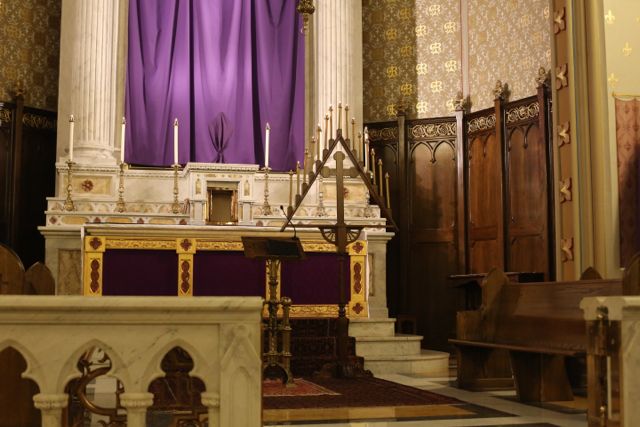
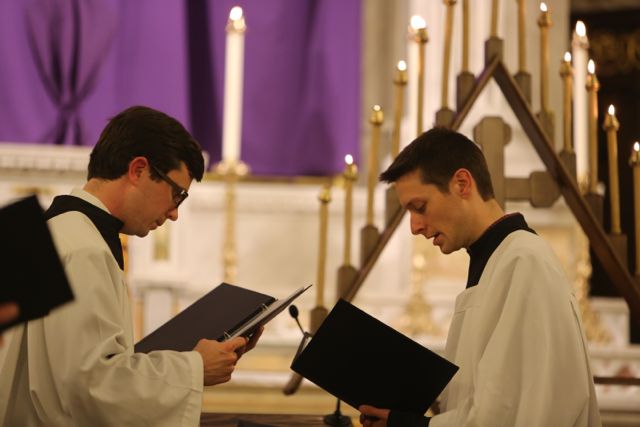
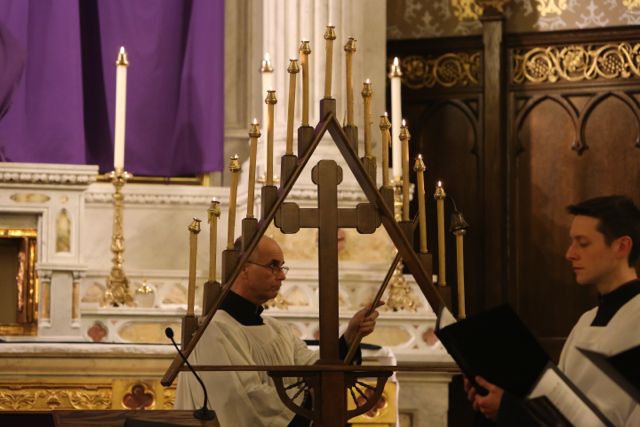
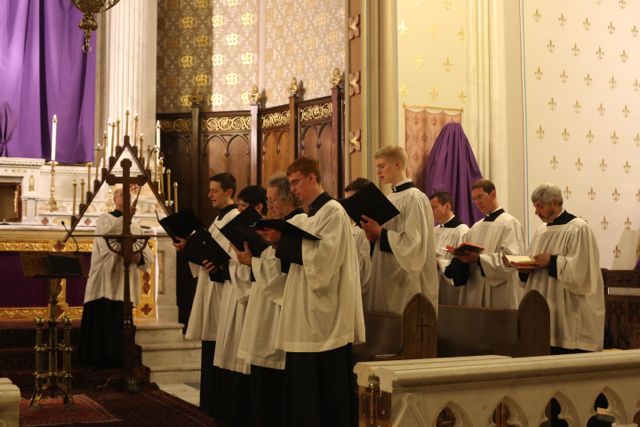
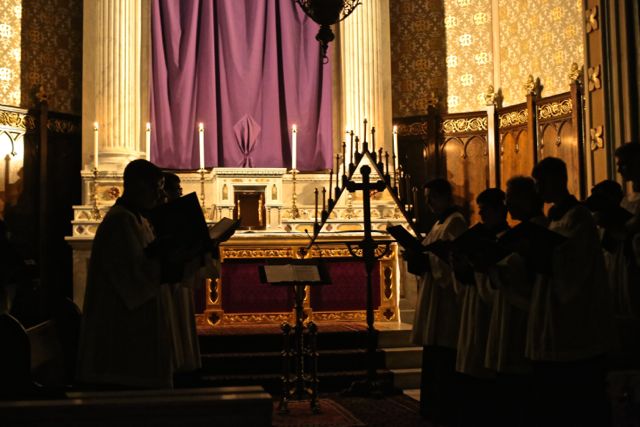
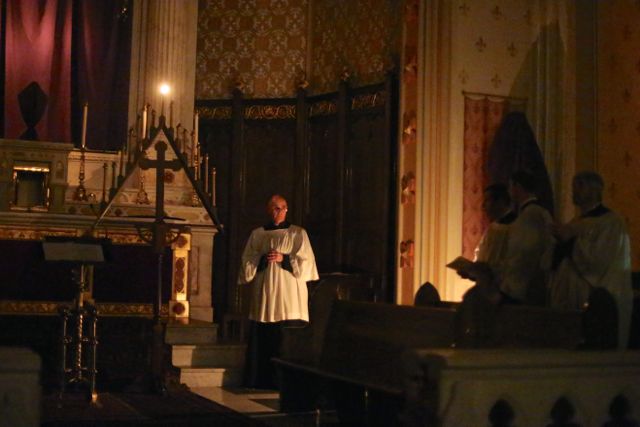
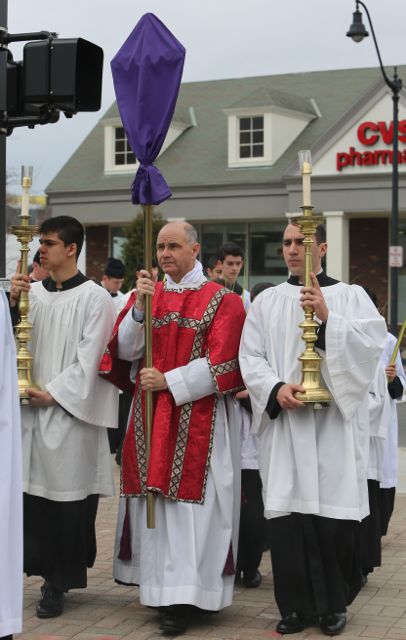
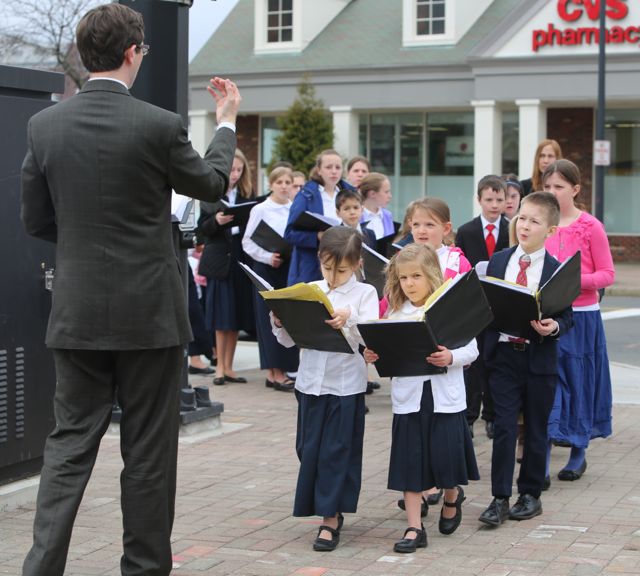
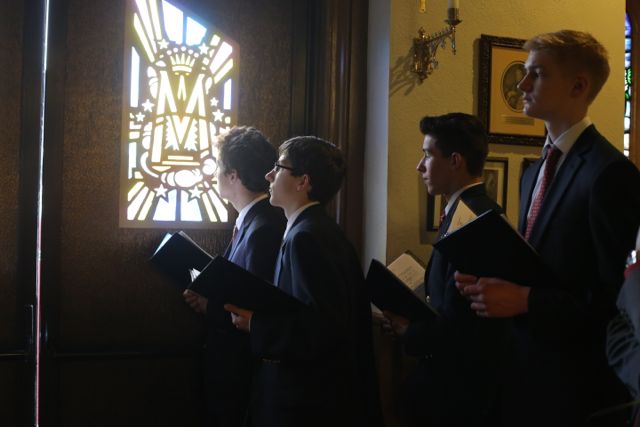
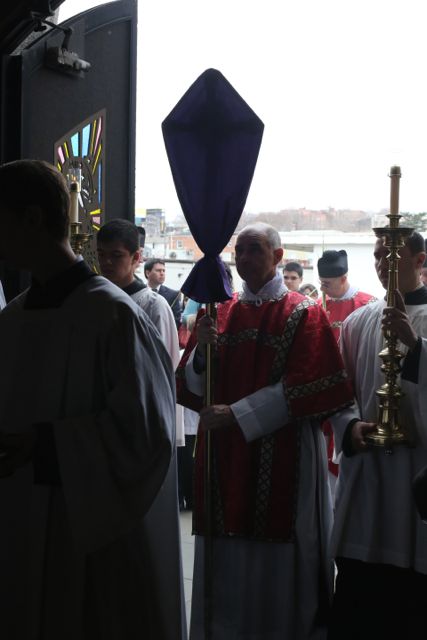
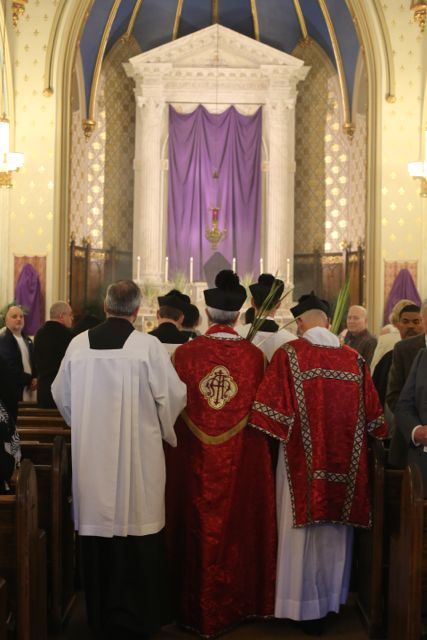
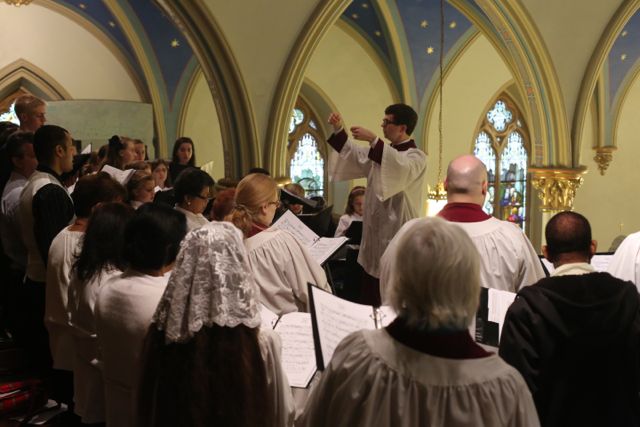
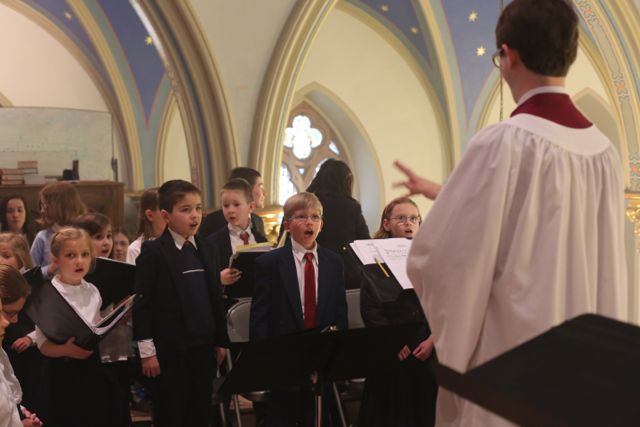
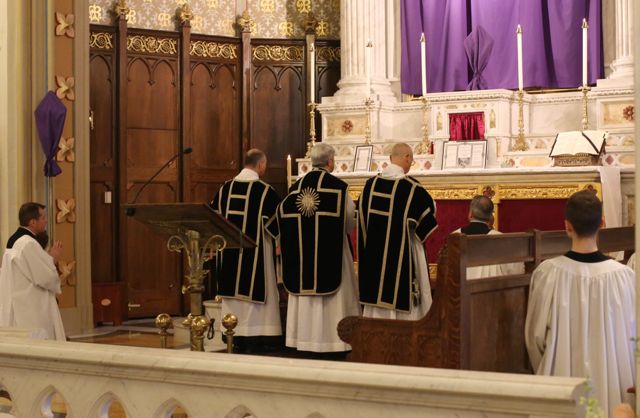
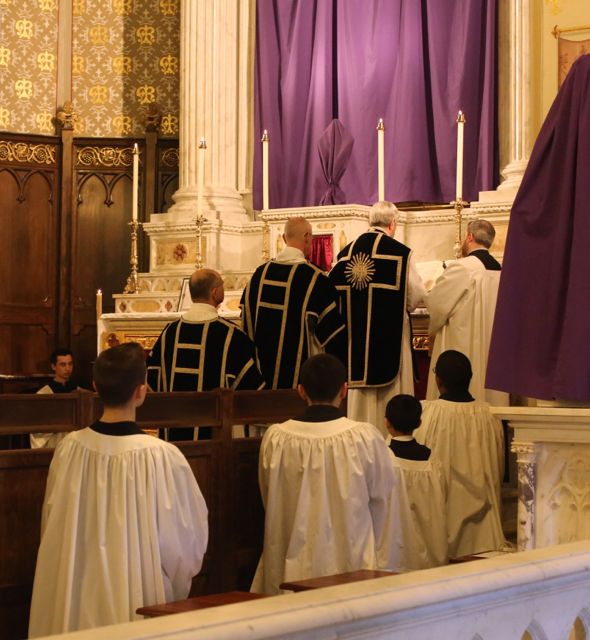
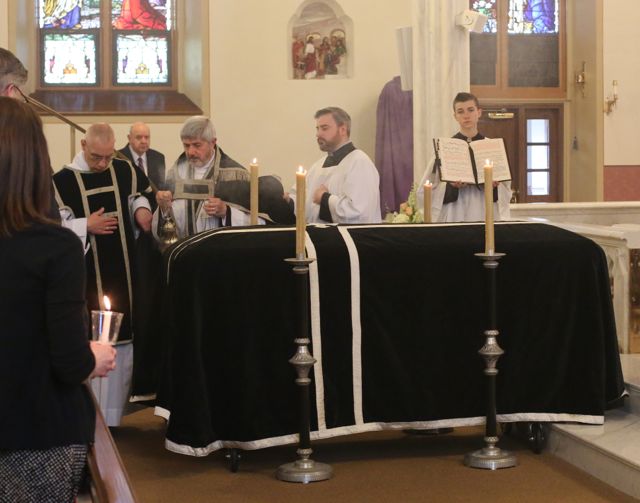
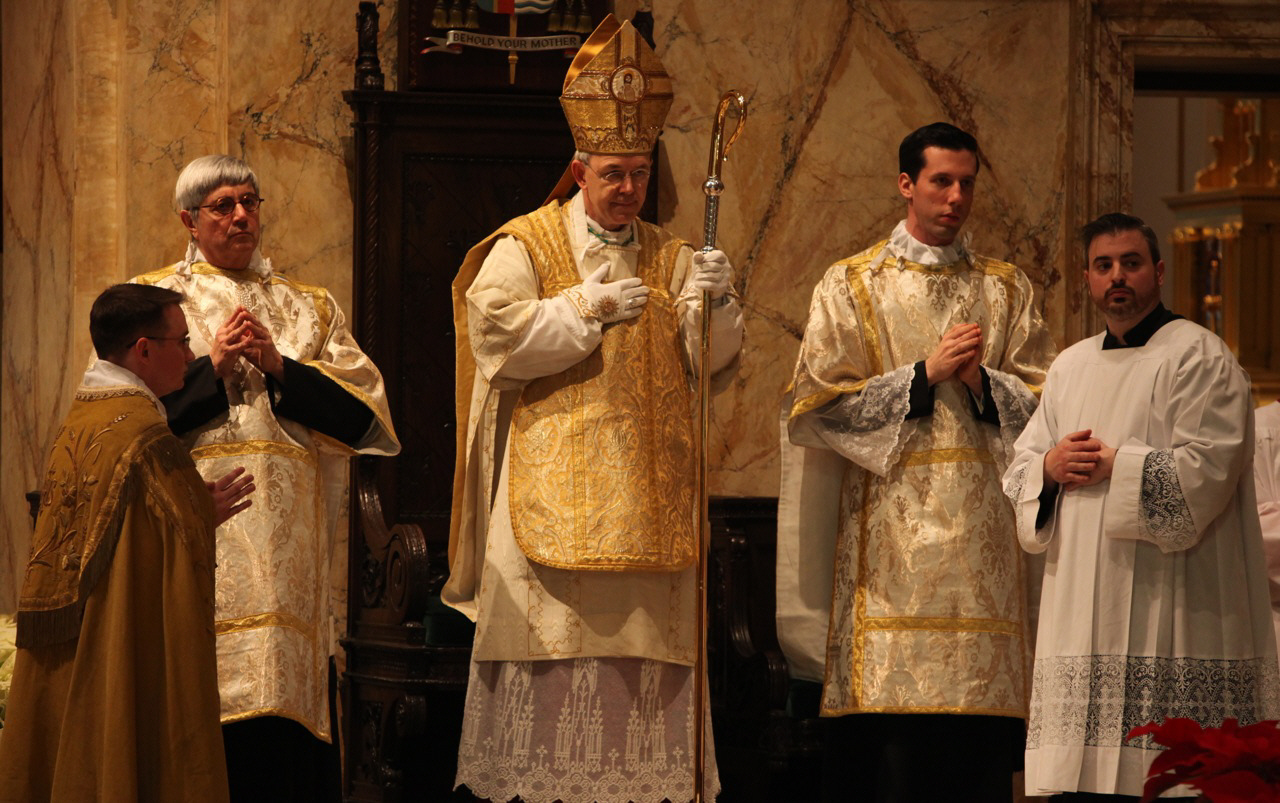
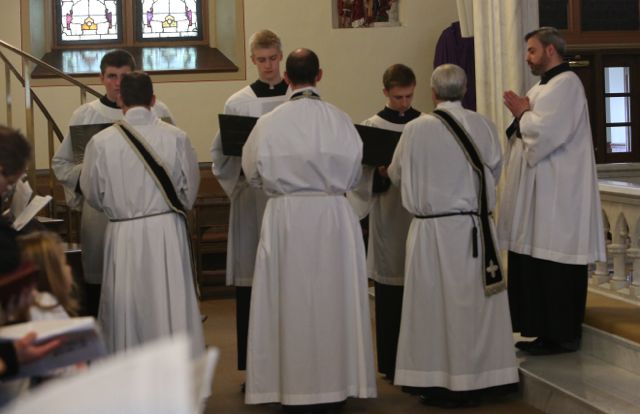
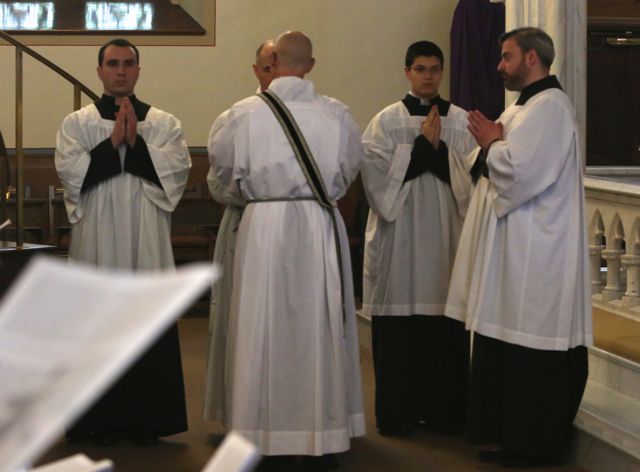
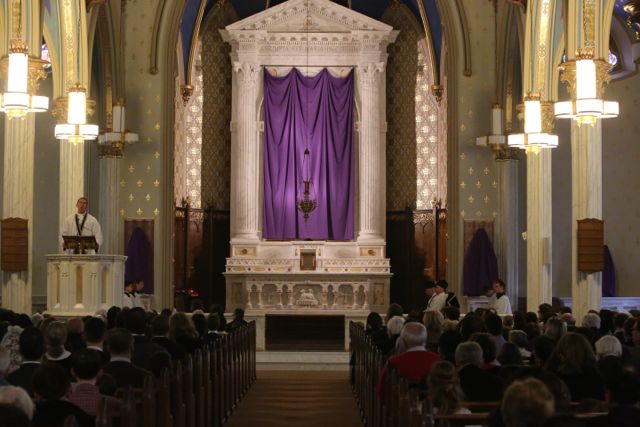
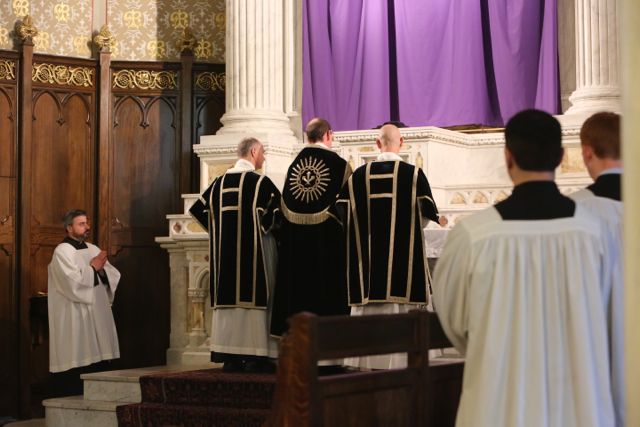
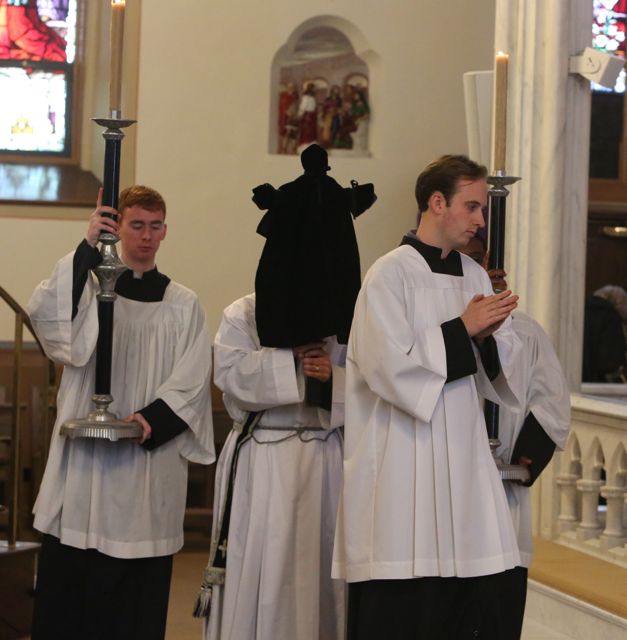
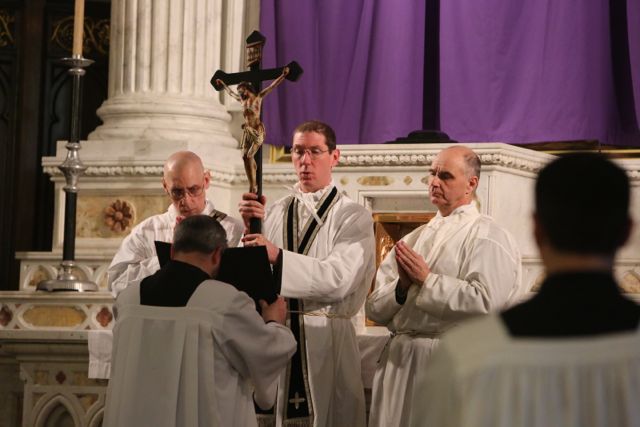
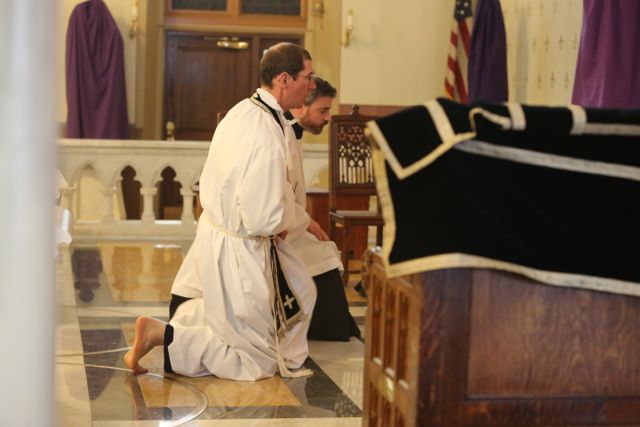
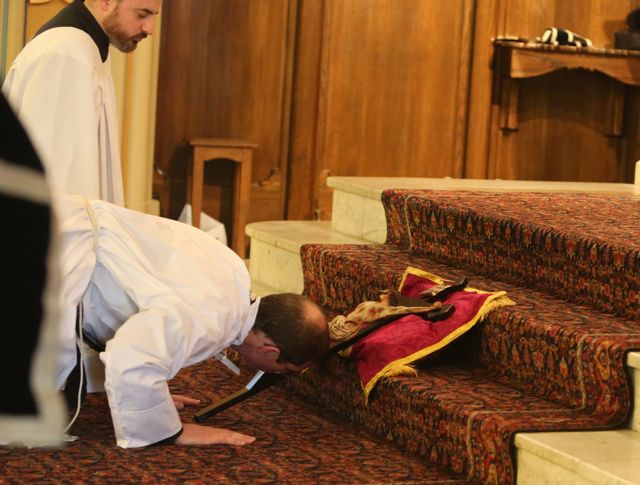
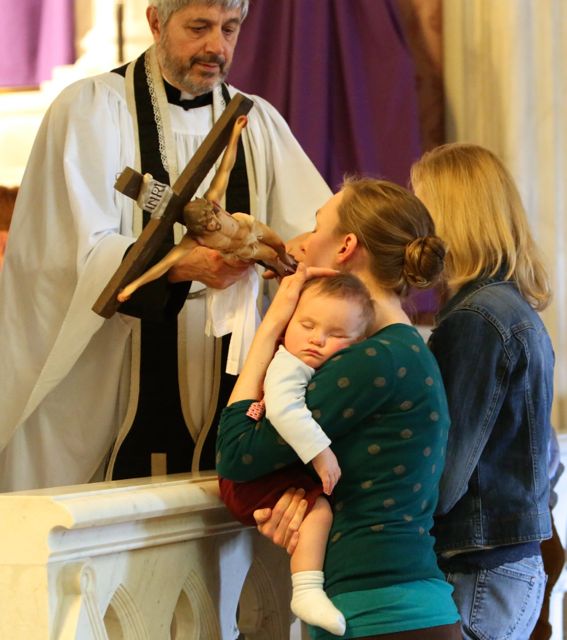
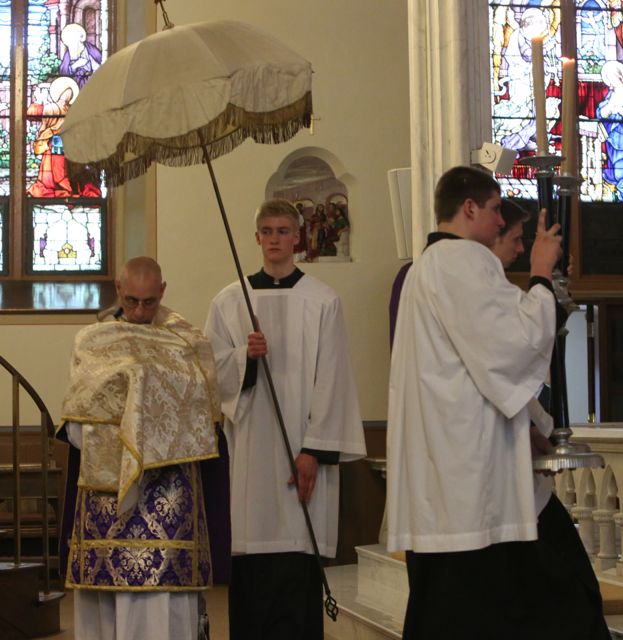
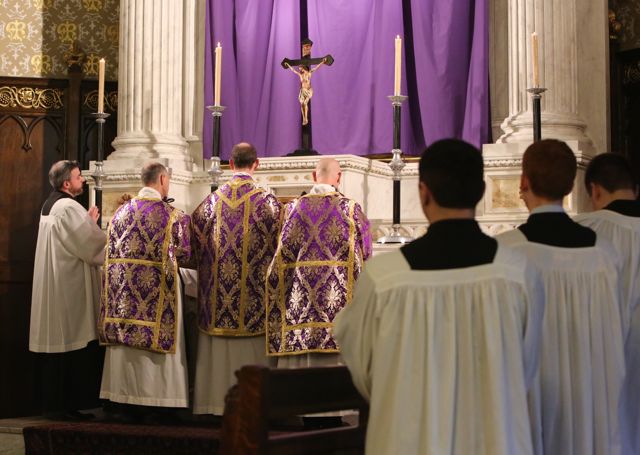
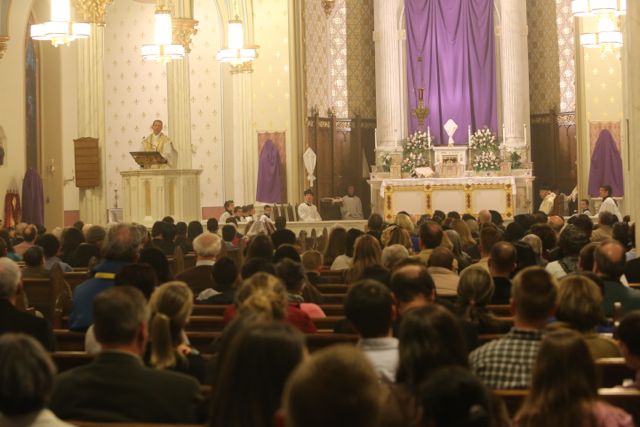
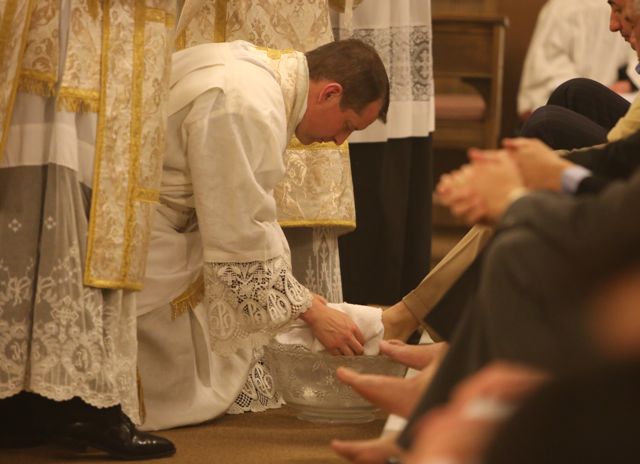
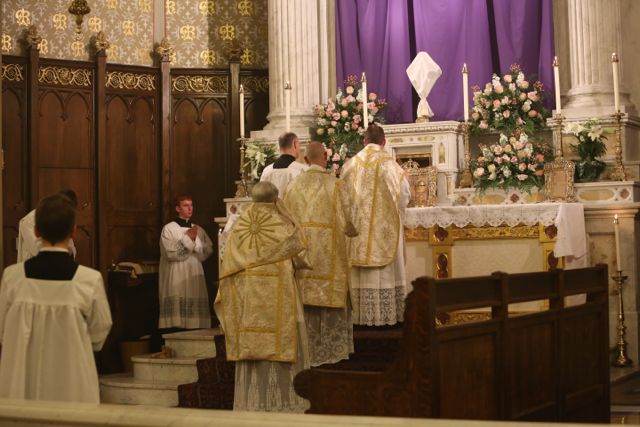
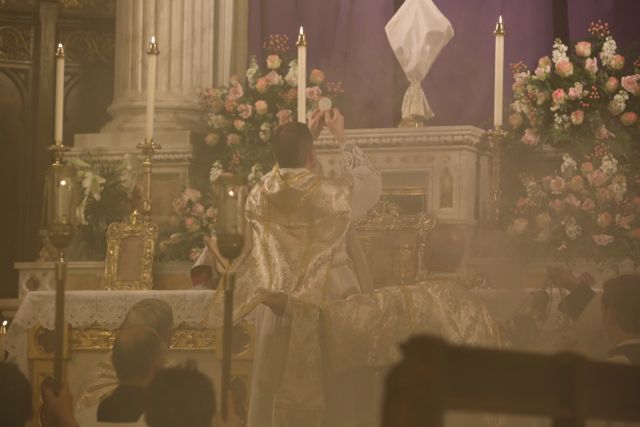
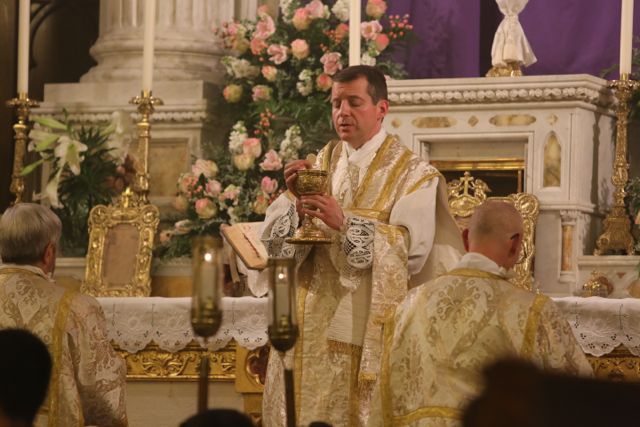
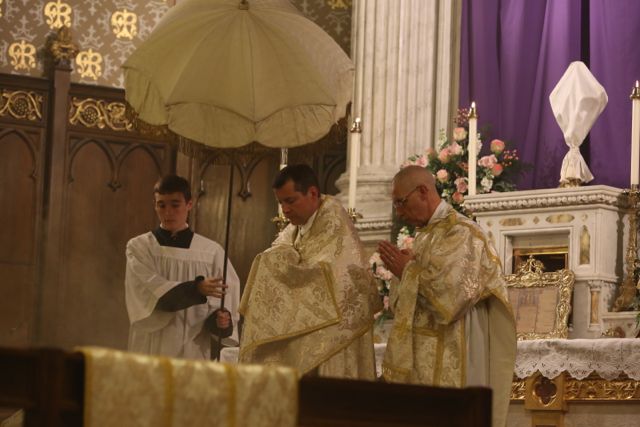
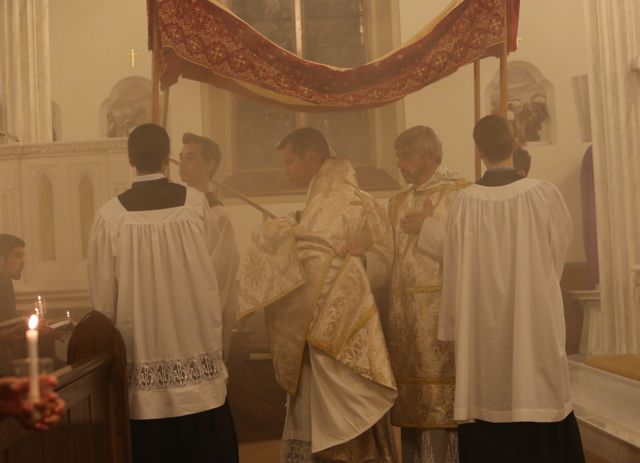
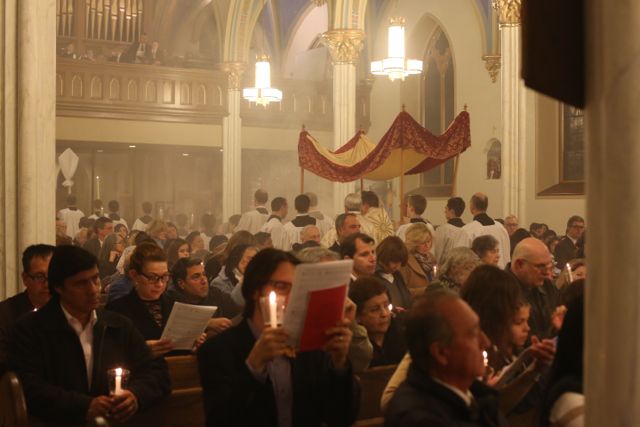
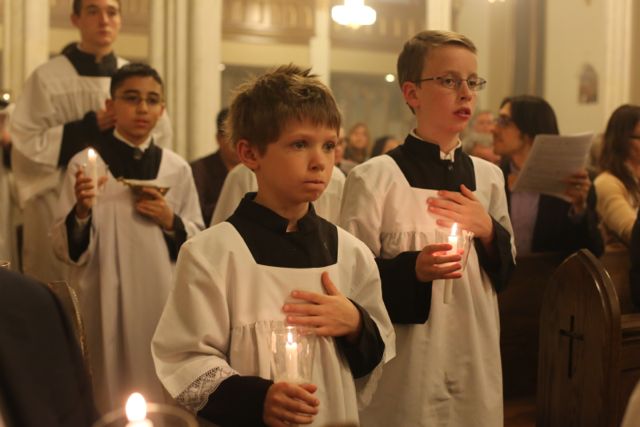
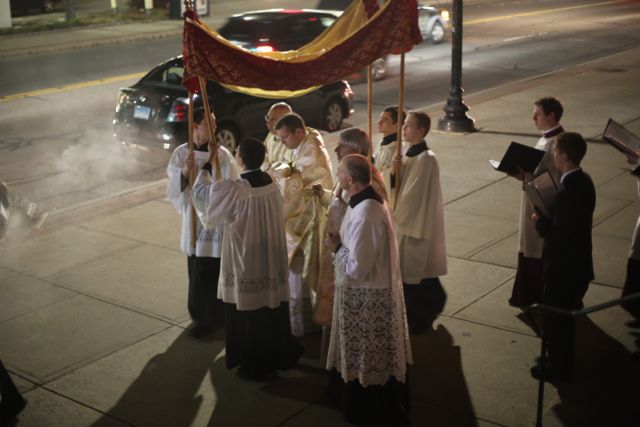
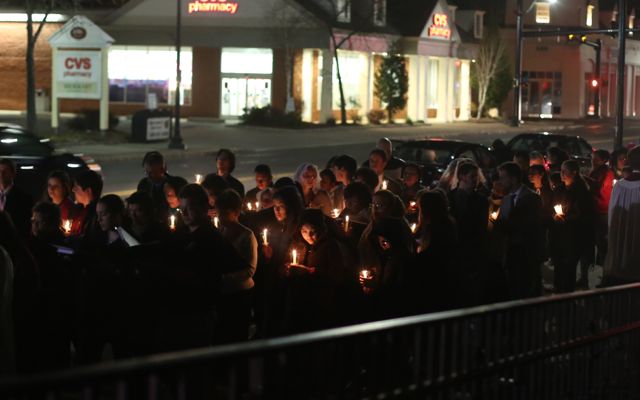
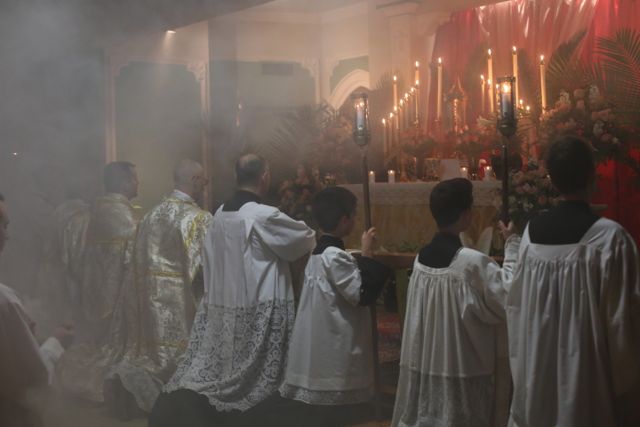
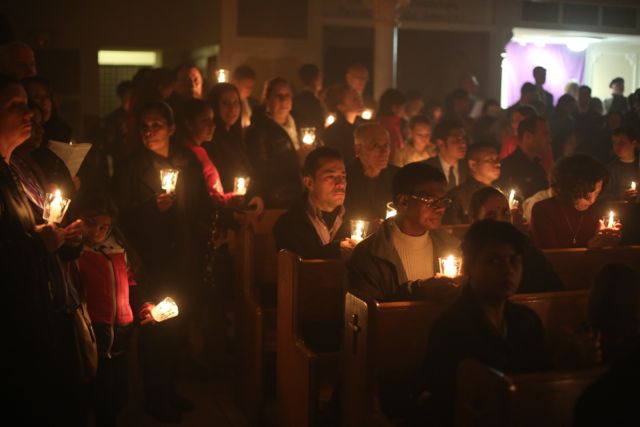
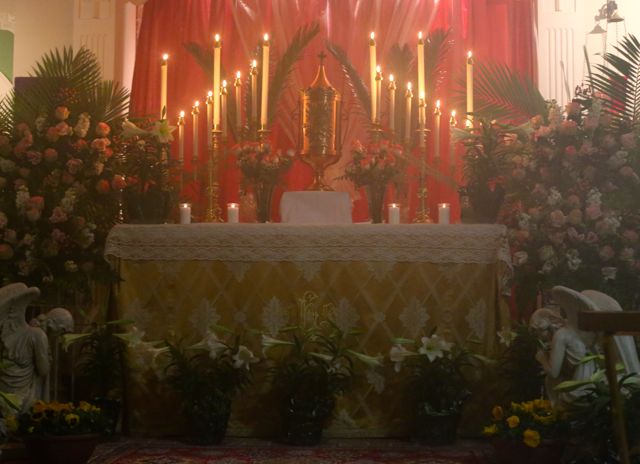
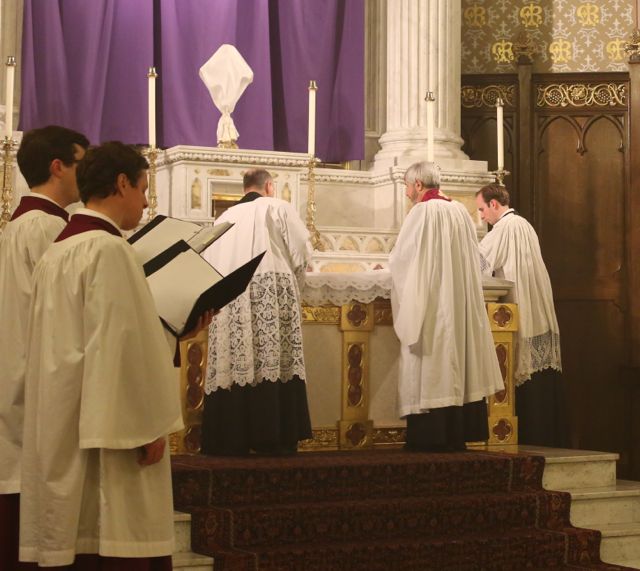
Yesterday evening at St. Mary Church, Norwalk, CT, Fr. Richard Cipolla celebrated a Requiem Mass in the Extraordinary Form for Mario Palmaro.
19 Mar
2014
Yesterday evening at St. Mary Church, Norwalk, CT, Fr. Richard Cipolla celebrated a Requiem Mass in the Extraordinary Form for Mario Palmaro.
12 Feb
2014

Last night the Church of St. Gabriel in Stamford was the scene of a very special observance of the Feast of Our Lady of Lourdes. Solemn Mass was celebrated in the presence of His Excellency Bishop Frank Caggiano. The Schola sang the Missa Surge Propera by Tomas Luis de Victoria. Father Cyprian La Pastina, pastor of St. Gabriel’s was the celebrant. Fr. Brandon O’Brien was deacon. Fr. Daniel Champioli was subdeacon. MC was Paul Reilly. Bishop Caggiano preached the sermon. After Mass was a procession to the altar of Our Lady and recitation of the Litany of the Blessed Virgin Mary. A reception followed the Mass.
2 Feb
2014
On Wednesday January 22, a Solemn High Mass was celebrated at the Shrine Church of Our Lady of Mount Carmel in Manhattan, NY for the feast of Saint Vincent Pallotti, founder of the Pallottine Congregation which has ministered at this church since the parish’s founding. Following Mass, the relic of St. Vincent Pallotti was solemnly venerated by the faithful. Photographs courtesy of Joy P. Fajarda and Terry Barboza T..

26 Jan
2014
At St. Mary’s Norwalk…
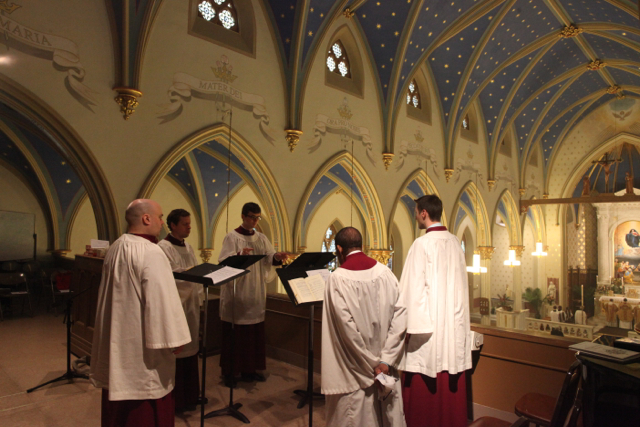
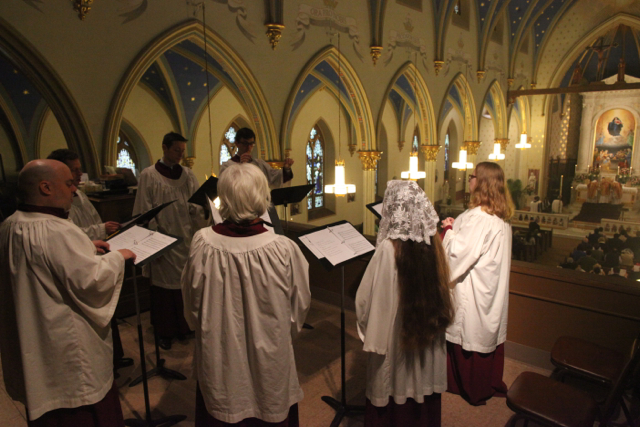
The music, directed by Mr. David Hughes, included an improvisation on a theme of Mahler, the Missa in Illo Tempore by Claudio Monteverdi and two motets also by Monteverdi.
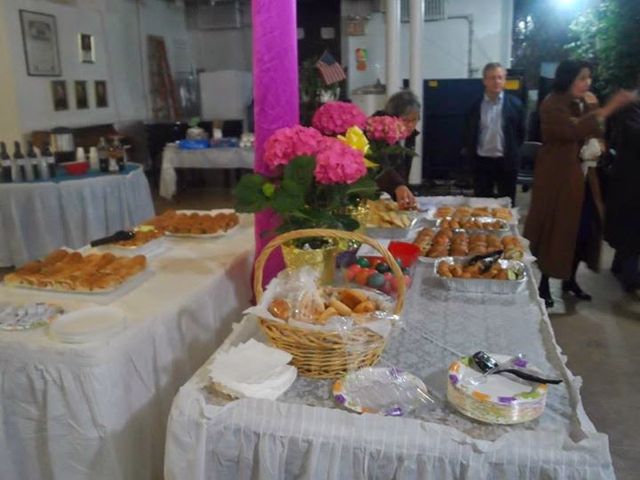
The reception afterwards – after a festive toast:
But th’ holy men of God such vessels are,
As serve him up, who all the world commands:
When God vouchsafeth to become our fare,
Their hands convey him, who conveys their hands.
O what pure things, most pure must those things be,
Who bring my God to me!
Wherefore I dare not, I, put forth my hand
To hold the Ark, although it seems to shake
Through th’old sinnes and new doctrines of our land
Onely, since God doth often vessels make
of lowly matter for high uses meet,
I throw me at his feet.
George Herbert
5 Jan
2014
In the presence of Bishop Frank J.Caggiano. The bishop of Bridgeport blessed the new altar, crucifix and baptistry of St. Mary’s. This mass represented the splendid conclusion of the major part of the restoration of the church. Need we add that this mass was standing-room-only? A festive reception followed immediately afterwards.
2 Jan
2014
Photos of New Years Day Mass in the Extraordinary Form at St. Agnes Church in Manhattan,
Father Joseph Koterski, SJ – celebrant. Photos by Arrys Ortanez.
25 Dec
2013
The Midnight Mass of Christmas…in the newly redecorated church of St. Mary, Norwalk.
Mr David Hughes directed the music – including the “Messe Solennelle” of Louis Vierne.
Fr. Greg Markey, pastor of St. Mary’s, was the celebrant. Mr. Steve Genovese was deacon: Fr. Richard Cipolla was subdeacon.
At 9:30 in the morning, the third mass for Christmas (below).
“In Principio erat Verbum…” Steve Genovese was deacon, Bill Riccio subdeacon. FR. Richard Cipolla was celebrant.
Music, performed the schola of St. Mary’s, included the Missa O Magnum Mysterium by Palestrina and the motet Verbum Caro Factum est by John Sheppard.
25 Nov
2013
The Catholic Artists Society has posted sound recordings from the recent Solemn Requiem Mass at St. Agnes Church. You’ll hear Mozart’s Requiem sung beautifully, in its liturgical context, by the Schola Cantorum of St. Agnes.
24 Nov
2013
In the Rue Goujon – strangely isolated, yet in immediate proximity to the Avenue Montaigne, Paris’ top shopping street – stands a curious monument to a tragedy of history. It is the chapel of Notre-Dame de Consolation/Monument to the Victims of the Fire of the Charity Bazaar. in 1897 an association of Catholic charities organized a charity bazaar on this location. Ladies of high society took a leading role in organizing the event – women are so eager to participate in such initiatives! A high point of the fair was to be a demonstration of the newly invented motion pictures. Tragically, on May 4, 1897, the primitive projection equipment caught fire and the entire structure housing the bazaar quickly went up in flames. Over 125 died in horrible circumstances – mostly women and children. Leading the list of the deceased was Sophie Charlotte, Duchess of Alencon of the German Wittelsbach family – the sister of the Empress of Austria, “Sissi,” and who had beed betrothed for a time to Ludwig II of Bavaria. The shocking event was reflected in the writings of Catholic authors of the period like Joris-Karl Huysmans and Leon Bloy (the latter producing some extraordinarily uncharitable remarks).
Almost immediately a plan was drawn up to construct a chapel to the memory of the deceased on the very site of the tragedy. By 1901 it stood finished. The facade is remarkable evocation of Berniniesque Baroque on French soil. The domed interior is an incredibly lavish recreation of 17th century baroque, employing painting, sculpture, metalwork, marble and stained glass. Crowning the whole and completely in the style of the late baroque era, a painting in the cupola illuminated by unseen windows shows Our Lady leading the victims of the fire to paradise. If a little extravagant in its decoration, the chapel Notre-Dame de Consolation does achieve an effect of grandeur far in excess of the actual dimensions of the church. In the rear of the chapel proper is a kind of cloister, infrequently open. Its walls are lined with memorials to the victims of the fire.

Crowning the dome is a statue of Our Lady.

Commemorating the young mothers who were victims of the fire.
The main altar today (above). The sanctuary as it looked in early 2011 – with the “people’s altar” and the communion rail removed (below)
Now the chapel from its beginnings has remained the property of an association of family members and descendants of the victims of the fire. For many years it was put at the disposal (appropriately enough) of the “Society of the Helpers of the Holy Souls,” since 1953 it had accommodated the mission to the Italian Catholics of Paris (conducted by the Scalabrini Fathers). Now additional repairs were becoming necessary that that order was in no position to finance. So the association of descendants of the victims of the fire – still the proprietor – had to look for a new “tenant.” That the Archdiocese of Paris or one of the regular religious orders could undertake this task was out of the question – like their colleagues in the US, they are seeking ways to reduce their existing commitments, not undertake new ones. Only the growing forces of Tradition under the leadership of the FSSPX, were both interested in this task and capable of carrying in out. For the FSSPX had been seeking for a long time a proper home for its community of Sainte Germaine. The FSSPX was undoubtedly also aware of the significance of acquiring a very impressive and historic church in the vicinity of some of the most exclusive areas of Paris. So a long term lease was arranged, the Italian community moved to the nearby church of St. Pierre de Chaillot, and since early this year the chapel of the victims of the charity Bazaar has been in the hands of the FSSPX.1) The reaction of the Archdiocese of Paris was confined to a few venomous comments on their website. Similar sentiments were expressed by La Croix.
The FSSPX has undertaken a formidable task of restoration of this church. The happy results can already be seen in the sanctuary – but much remains to be done. I attended Low Mass here late Saturday morning. This workday mass – a kind of “dialogue mass” with readings also given in French – was conducted by the young priest with great dignity and reverence. The contrast with the average “noonday masses” in NYC could not be greater. It appeared to me that quite a few of the congregation seemed completely unfamiliar with the rules for standing, kneeling or sitting at a Low Mass. That’s a a good sign – the chapel may be attracting people totally outside the insular “traditionalist” world.
So a historic Catholic church in a major world city is saved as palace of worship – even if against the will of the local “official” church – by confiding it to the more vital forces of Tradition. Could not the same remedy be applied elsewhere? After all, the same solution has been practiced in Chicago for many years – think of St. John Cantius. And the Archdiocese of New York has gone on record claiming that they aways consider first a religious use for a closed church. Now the FSSPX may be far too radical a step – but I am sure the Fraternity of St. Peter or the Institute of Christ the King, to name couple of examples, wouldn’t be averse to exploring setting up shop in Gotham City…
(Above) A memorial to one of the victims. They will definitely benefit by the substitution in this chapel of the Requiem Mass for the “Mass of Christian Burial.” (Below) Not all American innovations are bad – even for the FSSPX. Addressing a problem usually not encountered in the dying churches of Western Europe.
1) Celier, Fr. Gregoire, De Sainte Germaine a Notre-Dame de Consolation. (Address given on March 16, 2013). This address is itself worthy of translation. From it we learn that the community of Sainte Germaine predates the FSSPX. It owes its existence to a remarkable priest, Msgr. Ducaud-Bourget: writer, poet and figure of the Resistance. From the very beginning – in the 1960’s – he had resolutely continued to celebrate the Traditional Mass – first at a hospital chapel (to the care of which he had been demoted), then at the new Traditional community of Sainte Germaine. Later, he was involved in the “takeover” of St. Nicolas-du-Chardonnet. It was only in the 1990’s, under Msgr. Ducaud-Bourget’s successor (who was himself approaching retirement), that his original community of Sainte Germaine formally became an FSSPX apostolate.
17 Nov
2013
After so many decades, the Traditional mass returns to the magnificent high altar of our Lady of Esperanza, the second (1912) Spanish-speaking parish in New York City. The congregation was appreciative; the music, as always, outstanding.
Afterwards, we visited the Hispanic Society of America next door. There was an outstanding tour through the collection.
Above, a polychromed angel from Mexico. Below, the indoor courtyard.