1 Jul
2020

29 Jun
2020

25th Pilgrimage for Restoration in the footsteps of the martyrs to Our Blessed Lady’s Shrine at Auriesville, NY, 25-27 September — Friday to Sunday!
Journey through majestic Adirondack forests sanctified by the blood of martyrs. Traditional Roman Liturgy every day. Confession, counsel and teaching from priests of solid faith. Fellowship & fun. Shuttles & TLC for the weary. Organized by NCCL
Register by July 1 to receive a discount.
For more information and to register, go to https://pilgrimage-for-restoration.org
28 Jun
2020
The results are in for Germanchurch, 2019: 400,000 fewer Catholics than in the previous year – 270,000 of that number represented those who offcially declared themselves no longer Catholic. It’s the worst result ever, a new low point after years of disastrous decline. Except for an increase of 8 permanent deacons, all other statistics are equally bad – the number of baptisms, first communions, marriages and even funerals is sinking too. 9.1% of German Catholics now attend Mass on Sunday. And all this after 55 years of Vatican II, 7 years of the “Francis Effect” and 1 year of the “Synodal Path.”
This time the German clerical establishment couldn’t conceal its shock. This time there was no scapegoat to blame. Until some very recent setbacks, hadn’t they been having things their own way under Francis – the Synodal Path, the Amazonian Synod, the takeover of the Knights of Malta? For the time being, of course, the German bishops’ only answer to the crisis is to “stay the course” of the Synodal Path: more agitation for married priests, women clergy, homosexual blessings and marriages and so on.
A more perceptive commentary in katholisch.de, the internet presence of the “German Catholic Church.” touches on more significant issues and problems. For example, that in the Coronavirus panic ( an event subsequent to the period covered by these reports), the popular perception was that the Church could be neither seen nor heard, even though those in the Church business thought they were doing a lot. And no more fantasies that downsizing is leaving a smaller but more healthy core – church atendance is declining among those who stay too. Those working in the German Church (mostly lay nowadays) describe losses not just at the edges, but in the center.
[P]erhaps the (Synodal Path) is only the latest edition (after the Council, Würzburg Synod, “discussion forums” and innumerable diocesan synods and dialogue processes) of the self-assuring of that small remnant for which the Church still matters.
27 Jun
2020
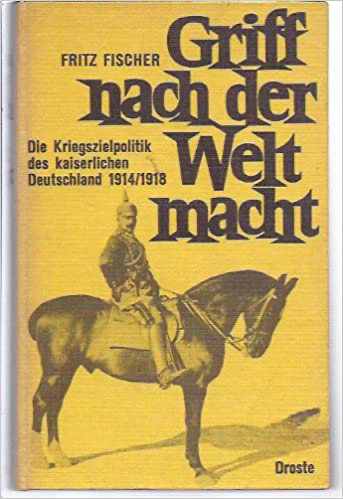
“I’ve read a lot of history in my life, and I think that aside from St. Paul, Jesus and the great religious prophets, Woodrow Wilson was the most admirable character I’ve ever encountered in history.“
So spoke Arthur Link, dedicated biographer of Wilson, according to Link’s NYT obituary. Professor Link’s work reflected a shift in the establishment American evaluation of Wilson from the initial harsh criticism of his “war to end war” in Europe to hagiography by 1975. For hadn’t Wilson been the quintessential American interventionsist – leading the campaign against Germany, the source of all evil, and “medieval” Catholic Austria, the “prison of nations,” as well? And wasn’t he the pure ideologue, the prophet of a new world order with America at its center, a John the Baptist to FDR’s Jesus Christ? The crowning glory was the naming of the Woodrow Wilson school at Princeton – although in retrospect it seems strange to name a school dealing with “public and international affairs” after someone who had, much to the applause of his new admirers, so utterly rejected traditional experience in these areas.
But alas! Princeton has now disowned its favorite son. For the great Wilson turns out to have been a racist!
Wilson’s segregationist policies make him an especially inappropriate namesake for a public policy school. When a university names a school of public policy for a political leader, it inevitably suggests that the honoree is a model for students who study at the school. This searing moment in American history has made clear that Wilson’s racism disqualifies him from that role. In a nation that continues to struggle with racism, this University and its school of public and international affairs must stand clearly and firmly for equality and justice. The School will now be known as “The Princeton School of Public and International Affairs.” Christopher L. Eisgruber, President of Princeton University (June 27, 2020)
So the patron saint of American interventionism is now an “unperson”; his statue figuratively tossed on the junk heap. But I find it so fitting that the great secular crusader now is anathematized by the warriors of a new cultural war. For is there not great continuity between his ideology and theirs?
26 Jun
2020


Under the prior management of St Mary’s parish, a Columbus day procession to this nearby statue was an annual event. Above is a set of pictures from the 2009 procession. It features several prominent former members of the parish, living and deceased, clerical and lay (including the current pastor and his two predecessors).
Now the statue is summarily removed. The current pastor of St Mary’s says nothing. The bishop of Bridegeport says nothing. And the Knights of Columbus (will they be changing their name soon, along with their uniform?) say nothing as well. Even though they have all the big mouths of Cruxnow on their retainer.
Will Catholics finally wake up? Does this not tell you what the American establishment (of which the mayor of Norwalk, CT is a petty peon) actually thinks of you? You should have learned that lesson a long time ago – by 1973 (Roe v. Wade) at the latest. And the lessons about the “American Catholic Church” are too obvious to require commentary.
UPDATE:
A measure to protect the statue? Iconoclasts had that strategem figured out 1200 years ago when initiating an iconoclastic revival:
…(The emperor) Leo (V) determined to act on his own account, but he did so in a typically tortuous and underhand way. The scene chosen was the Chalke Gate of the palace where, eighty-eight years before, Leo III had pulled down the picture of the Saviour. This picture had been restored by Irene, but was now to be desecrated once more. On secret orders of the emperor, some guardsmen gathered at the porch and began to throw stones and mud at the image, uttering the most fearful imprecations. Out came the emperor: “We had better take that down,” he said, “lest the soldiery dishonor it.” And down it came.
Jenkins, Romilly, Byzantium: the Imperial Centuries A.D. 610-1071 at 134-135 (Random House, New York, 1966)
20 Jun
2020
On the teaching of Latin at the Academy of St. Gregory the Great in Pennsylvania, a traditional Catholic high school:
In the same way, the Latin course at St. Gregory’s was taught according to the Direct or Nature Method. Here, as with the natural world, the object of study was approached with respect for what it truly is, rather than with an eye to its seeming mastery by confining it within the limits of a predatory rationality. Thus, since Latin is a language, and language is first a spoken and heard phenomenon that is assimilated as it unfolds within the dramatic story of our lives, Latin was presented to the students in that way. Contrasted to this is the standard, although not traditional, method of Latin instruction in which the language is reduced to the spatial world of a text, and the text presented for decoding with aid of a dictionary.
20 Jun
2020
at direction of our media, other statues are rising:
After months of discussions, Trier (in Germany -SC)city council voted on Monday in favor of accepting a 6.3-meter (21-foot) bronze representation of the revolutionary socialist thinker Karl Marx. Council members in the southern western German town voted by a majority of 42 to 11.
The debate over the gift began last year when China announced that on the occasion of Marx’s 200th birthday on May 5, Beijing would present the economist’s hometown with a bronze statue.
“Trier accepts controversial Karl Marx statue from China”
There the statue of the “economist” has stood since 2018. in an allegedly “Catholic” region of Germany.

7 Jun
2020

Eike Schmidt, the director of the Uffizi gallery in Florence, told the press on 27 May that he thought many religious works of art currently in Italy’s museums and stores should be returned to the churches from which they came. He went on to suggest that one of the most famous early medieval works in his gallery, the Rucellai Madonna by Duccio, painted around 1275, should go back to its original home, the Florentine church of Santa Maria Novella, from which it was removed in 1948.
… [T]he Rucellai Madonna’s absence from Santa Maria Novella takes away an essential part of its history and meaning.
“Devotional art was not born as a work of art but for a religious purpose, usually in a religious setting”, he told The Art Newspaper. He went on to say that, returned to the building for which it was created, it would be seen in the right historical and artistic space and the viewer would potentially be led to recognise its spiritual origins.
SOURCE: The Art Newspaper (Thanks for the reference to The American Conservative)
Strange: writers, critics and philosophers of various schools have been making the same points for years. Indeed, it is a sure sign of a society’s decadence when its art – preeminently religious art – is removed from life and enclosed in museums. Of course, according to The Art Newspaper, representatives of the Catholic Church had doubts about Schmidt’s idea….
15 May
2020
…will be very much like the old one. From Amy Welborn:
There is wisdom in tradition.
Traditional practices grew out of human experience — human experiences of joy, sorrow, difficulty and challenge. Human experiences of trying to obey Christ, bring his presence into the world as it is — in peace, war, plenty, famine, health and disease. I wrote a bit about this earlier here. Yes, tradition and traditional practices are always subject to reform and development. But it helps if, as we reform, we keep the wisdom of the tradition in mind and are realistic about life in this world as well.
Short version: Maybe they knew what they were doing, after all.
11 May
2020
From the bishop’s guidelines:
Reception of Holy Communion on the tongue remains permissible, as required by the liturgical law of the Church, with the admonition that the faithful should be reminded of the unique risks posed by receiving the Eucharist in this manner. They should be strongly encouraged to receive Communion in the hand for the duration of the pandemic.
b. Distribution of Holy Communion on the tongue:
i. Before Communion begins
a. When a face shield is used, it must be removed properly after the distribution of Holy Communion is complete, placed in a designated place and must be properly sanitized after Mass.
3. The use of gloves by each minister is strongly encouraged.
ii. During the distribution of Communion
1. The minister is required to disinfect his or her hands after
each communicant who receives on the tongue.
a. The hand used to distribute Holy Communion must be
sanitized in between each communicant.
3
b. For such sanitization to be possible, a table with hand sanitizer or a bowl containing a solution of 70% alcohol and a towel should be placed in proximity to the minister who is distributing Communion.
i. If alcohol is used, it must be poured down the sacrarium after the conclusion of Mass.
c. The procedure is the same whether the minister wear a glove or not.
iii. After distributing Communion:
a. The gloves should be burned after Mass.
c. After the conclusion of Mass:
i. All vessels and face shields must be purified and sanitized
“Guidelines for the Reception of Communion” (Published May 11, 2020)
See also:
Guidelines for the Resumption of Public Mass
Guidelines for the Celebration of Mass Outdooors