A blessed and merry Christmas to all of our friends, benefactors and readers!
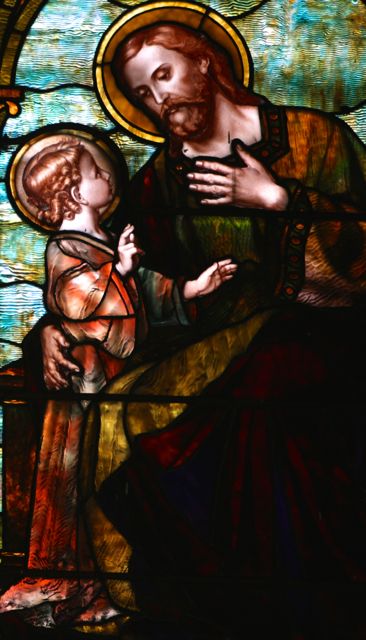
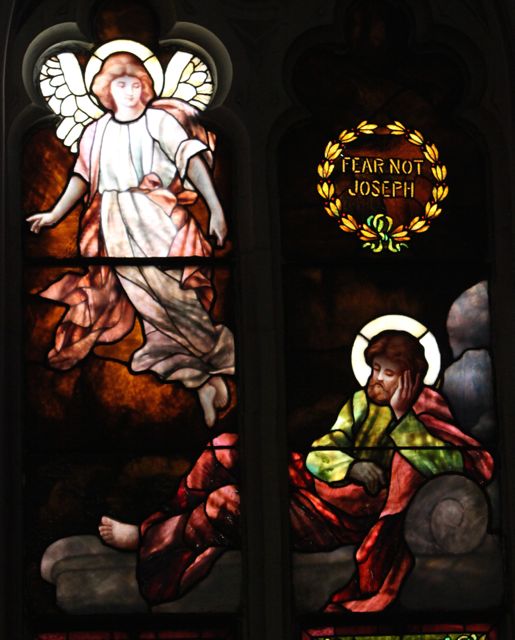
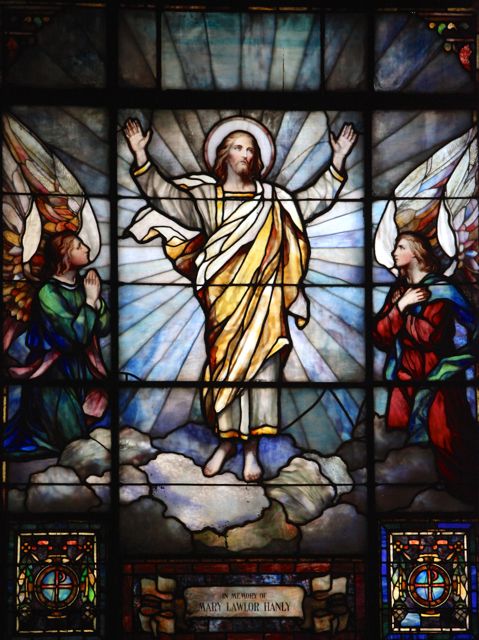
(Above: The window of the Nativity in St. Thomas More Church, New York. The parish is scheduled by the Archdiocese to close in August 2015)
24 Dec
2014
A blessed and merry Christmas to all of our friends, benefactors and readers!
(Above: The window of the Nativity in St. Thomas More Church, New York. The parish is scheduled by the Archdiocese to close in August 2015)
15 Dec
2014

“The observance of Ember days is the cherished tradition in the Roman Church. Four times a year, at the turn of the seasons, it was the custom to devote 3 days of the week, Wednesday, Friday, and Saturdayt o prayer and fasting, so as to implore God’s blessing on the new season and on the ordinations which took place during the vigil on the Saturday-Sunday night. Advent, which is a later institution, has imbued the December Ember days with the distinctive note of expectation and preparation for Christmas.” (St Andrew Daily Missal)
13 Dec
2014
Anyone who regularly attends the 9:30 Solemn Mass at St. Mary’s will be familiar with the Schola Cantorum, which sings at that Mass each week. But this evening’s Lessons and Carols service featured the other choirs of St. Mary’s Church—all of which are themselves strong choirs.The depth and quality of the choir program at St. Mary’s is indeed impressive. On the program were the St. Mary’s Choir (which sings weekly at the 11 am Mass), El Coro Hispano de Santa Maria under the direction of Welder Gomez (which sings at the 1:15 Spanish Mass), the St. Mary’s Student Schola, and the Regina Pacis Academy Schola. Musical selections for Advent alternated with scriptural readings, and the evening closed with Adoration and Benediction.

David Hughes rehearsing the two student scholae before the start of the program.
Charles Weaver, Student Schola Assistant Director, accompanies on the mandolin.
The St. Mary’s Choir
El Coro Hispano de Santa Maria
10 Dec
2014
Thursday, December 11, 7 pm, Advent Evening of Recollection, featuring Rev. John Perricone, St. Anthony of Padua Church, Monmouth St., Betweeon 6th and 7th, Jersey City, NJ.
Friday December 12, 7 pm, Advent Lessons and Carols, St. Mary Church, Norwalk
The St. Mary’s Choir, El Coro Hispano de Santa María, The St. Mary’s Student Schola,The Regina Pacis Academy Schola.
Chants of Advent, choral motets, & congregational hymns will culminate in Adoration Benediction of Our Lord in the Most Blessed Sacrament. A festive reception will follow.
Saturday December 13, 6:30 am, Rorate Mass, St. Mary Church, Greenwich, information
Saturday, December 13,10 am, Chapel of Santa Febronia at 557 5th Street, Hoboken, N.J., Sung Mass in honor of St. Lucy, information
Sunday, December 14, 3:30 pm, Vox in Rama, A Program of Sacred Christmas Music, Church of Holy Innocents, New York, NY, Solemn Vespers and Benediction, Sacred Music from Around the World
Thursday, December 18, 7 pm, Advent Evening of Recollection, Catholic Artists Society, The Catholic Center at NYU, 238 Thompson Street, New York
5 Dec
2014
The Sisters of the Divine Compassion suddenly have put their White Plains campus – on the National Registrar of Historic Places – on the market. Endangered are an elementary school, a high school and the beautiful Chapel of Divine Compassion. In the chapel is the tomb of the founder of this order, Msgr. Thomas Preston, a priest of the Archdiocese of New York. His famous parish in New York, St. Ann’s, has already been destroyed – will he now lose the chapel that was his final resting place as well? The foundreess is buried in the chapel as well.
Alumnae and others are organizing to save as much as they can. They have the benefit of a video, prepared by the Sisters of the Divine Compassion themselves last year to assist in fundraising!
For more information on the – so far unavailing – campaign to save the Good Counsel Academy (the high school) and chapel see HERE.
4 Dec
2014
It’s official – from Radio Vatican.
UPDATE:
Since the post on the Vatican Radio site seems to have disappeared, here is the post from Abuse Tracker:
Schweiz: Kein „Franziskus-Effekt“
SCHWEIZ
Radio Vatikan
[The numbers of Catholics in Switzerland who left the church increased slightly in most cantons during 2013.]
Die Zahl der Kirchenaustritte ist 2013 in den meisten Kantonen wieder leicht angestiegen. Das zeigt sich beim Blick auf neue Daten des Schweizerischen Pastoralsoziologischen Instituts (SPI). Es könne also nicht von einem „Franziskus-Effekt“ gesprochen werden, vielmehr belegten die neuesten Zahlen das Gegenteil, schreibt das Institut in einer Medienmitteilung. Sowohl die Kircheneintritte als auch die Kirchenaustritte weisen laut SPI „keine ‘positive’ Tendenz“ im Sinne eines starken Rückgangs bei den Austritten und einer starken Zunahme bei den Eintritten auf. Im Gegenteil sei etwa seit den letzten fünf Jahren eine Zunahme der Austritte feststellbar. Betroffen von einer stetig wachsenden Zahl von Mitgliederaustritten sind sowohl die römisch-katholische als auch die evangelisch-reformierte Kirche.
(It never existed except in the reports of Western news media – SC)
(Thanks to “Abuse Tracker“)
2 Dec
2014
From First Things.
Plus some of the craziest comments in history.
28 Nov
2014
As “Making all Things New” continues its course, one decisive fact has emerged. The New York Times (of course) first highlighted it. It has been long known to every Catholic here remotely in touch with reality. Now Cardinal Dolan restates it in his inimitable way:
However, a perceptive journalist laser-beamed the real shortage: “Seems like you have a shortage of people!” Bingo!
She was right! Simply put, our people aren’t coming anymore. True, some of the shortage in older parishes is due to the fact that our folks have moved. The people that do come are as committed as ever. But, we still have to admit our numbers of committed, consistent churchgoers are down…. Still, though, we have to admit, our people aren’t coming anymore. On any given Sunday, the stats tell us that only somewhere between 15 and 28% of our folks show up!1)
That indeed is the problem. If only 15% of the Catholics regularly practice their religion, the financial resources contributed to the Archdiocese will shrink: everything from the Cardinal’s Appeal to the Sunday collection to two dollars in the box for a votive light. The number of vocations to the priesthood will correspondingly suffer. As time goes on, parishes will see fewer weddings, baptisms and funerals as well. And this decline has been going on for decades.
The Cardinal now concedes that the New York Archdiocese, taken as whole, has NOT suffered a crisis of “demographic change” – at least in the normal sense of that term. New York is no Buffalo or even Boston. The number of Catholics in the Archdiocese has even risen over the years. New York City remains the economic center of the country, even of the world. The crisis of the Archdiocese is not the result of impersonal forces over which the clergy could not be expected to have any control. Indeed, the Cardinal asks:
So, now our sacred responsibility is to win our people back! That’s what Pope Saint John Paul II called the new evangelization! That means asking why they no longer come, how we can attract them back, and what we’ve done wrong, a strategy Pope Francis is encouraging.
As one savvy priest remarked, “Let’s stop closing parishes and start filling them up!” 1)
Regrettably, this candid diagnosis does not appear to raise any questions in the Cardinal’s mind concerning the current policies of the Archdiocese. So, the Cardinal explains that 220 Parochial schools were reduced to 160 because 70% of Catholic parents “chose not to send their children to our excellent schools.” Were these parents asked their views of the “excellent” schools? A parish scheduled to be closed under Making All Things New (probably Our Lady of Peace) had a petition signed by 3,000 supporting keeping the parish open, yet only 500 people attended mass each Sunday. If 1,500 had attended, according to the Cardinal, the decision to close “would not have been foreseen“ (=taken?). Thus, the decision to close appears as a punishment for the failure of the parishioners to participate. And, at the end of the day, the Cardinal offers once again only the existing, materialistic solution of downsizing:
“fewer, but now stronger, fuller, more vibrant parishes, better served by more available priests, in new communities no longer straitjacketed by demands of maintenance of huge, half-empty, in-need-of-repairs buildings….” 2)
For a second view of the situation, we have Father George Rutler, Pastor of two churches originally scheduled for closure that have survived the cut (for now). He identifies much more frankly and precisely the nature of the problems:
I think there’s a great deal of dishonesty and denial on the part of some people who engaged in the fantasy that we were entering a new springtime of the faith. The aggiornamento of Vatican II was supposed to bring in tons more people; it did just the opposite. So long as people refuse to admit there were mistakes made a generation ago — in catechesis, liturgy, addressing the real problems of secularism — they’re never going to make any real reform.
The primary fact is that most Catholics aren’t practicing the faith. Mass attendance in New York is about 12%. You’ve had about a 50% drop since the Second Vatican Council. Nobody will address that. They’ll acknowledge the fact, but they will not address the fact that there were some serious mistakes made in the last generation.
And solutions?
The first thing is to be realistic, to address the real problems in our society, secularity, instead of trying to be everything to everyone. It’s a great danger just to want to be friendly and liked instead of challenging in a prophetic way the errors of society and caving into them. St. Paul said to Timothy, “Do not be a man-pleaser.” This doesn’t mean going around and hitting people over the heads with bibles, but it does mean being Catholic, right across the board…. We’ve had a secularization of religious life. Women’s religious orders are collapsing, have collapsed. Nothing was done a generation ago to discipline the orders, and to truly reform them. The ones that are growing are the ones who are faithful to their founders’ charisms.
And a primary evangelical tool of the Church is the liturgy, and wherever the liturgy is banal, you will not have vocations. In many places it’s not a problem of heresy, it’s just a matter of sloth. People are just stuck in the 1970s. Young people don’t want to go to a church where there’s a septuagenarian playing very bad Jesuit hymns from the 1960s. 3)
I hesitate to criticize a priest who has made such unique contributions to Catholic life here over the last decades, but I cannot follow Fr. Rutler’s further observations:
I think there’s a real problem of reaction from evangelization, a real problem of nostalgia rather than tradition on the part of many people as far as the Extraordinary Form is concerned…
The priest facing the people (in the ordinary Form – SC) becomes a kind of circular community lacking in transcendence. But a lot of people who embrace the Extraordinary Form run that risk too. They become ghettoized. It’s rather significant that in so many cases — I can’t cite numbers — but usually it’s been my experience that where the Extraordinary Form is, usually you have a static group of people, and you don’t have outreach for bringing others in.
So just using the Extraordinary Form is not the solution.4)
I would agree that JUST using the Extraordinary Form is not the solution. But clearly, given the average age of the current EF congregations, how can there be nowadays any question of “nostalgia?” Furthermore, it does seem a little peculiar for Fr. Rutler to talk about a lack of “outreach for bringing others in” when a Traditionalist community under his administration (Holy Innocents) just concluded a highly successful world-wide “outreach” campaign. A community, I should add, that has only been in existence since the end of 2007 as a predominately lay apostolate.
So the critical fact of Catholicism in this region – that only some 15% of Catholics regularly practice their faith – is finally being admitted. Both our writers agree that some questions may legitimately be asked of the current practices of the Archdiocese. We certainly welcome that! And Fr. Rutler identifies that a critical review of the policies and program of “Vatican II” must play a role in any real revival of Catholicism. Yet even he hesitates at the “Traditionalist” component of the solution. It seems it will take more patient work – or “outreach,” to use that term of Catholicspeak – on the part of Traditionalists before their indispensable contribution to the recovery can be more widely acknowledged even by those who should be our allies.
1) Cardinal Timothy Dolan, The Best Is Yet to Come (November 11, 2014) http://cardinaldolan.org/index.php/the-best-is-yet-to-come/
2) http://cardinaldolan.org/index.php/the-best-is-yet-to-come/
3) Burger, John; Beyond the New York Church Closings, Alateia (November 3, 2014) http://www.aleteia.org/en/religion/article/behind-the-new-york-church-closings-5852002303082496?page=1
4) http://www.aleteia.org/en/religion/article/behind-the-new-york-church-closings-5852002303082496?page=2
25 Nov
2014
Report: Fr.Leonard Villa assigned there!
Confirmed!
17 Nov
2014
From First Things. Wherein we hear where the founder has gone… and some of the costs of the enterprise.