
Published in Uncategorized | no comment
See earlier posts of the Summorum Pontificum Pilgrimage
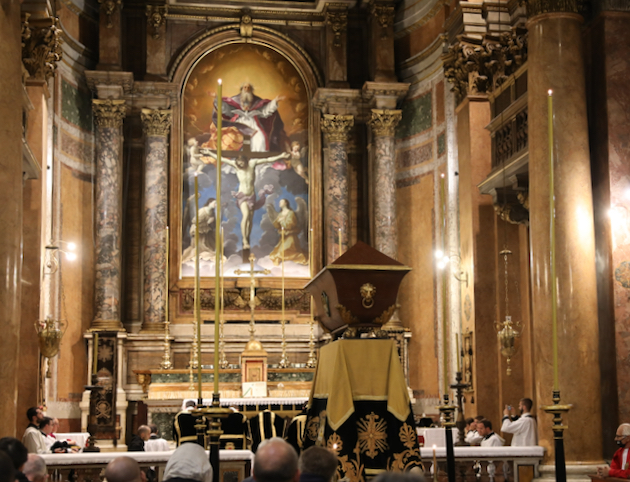
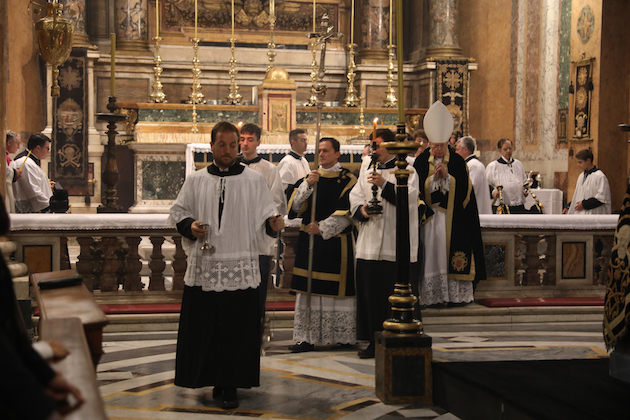
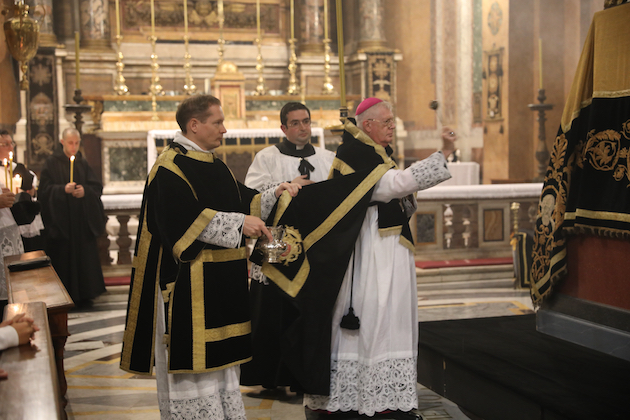
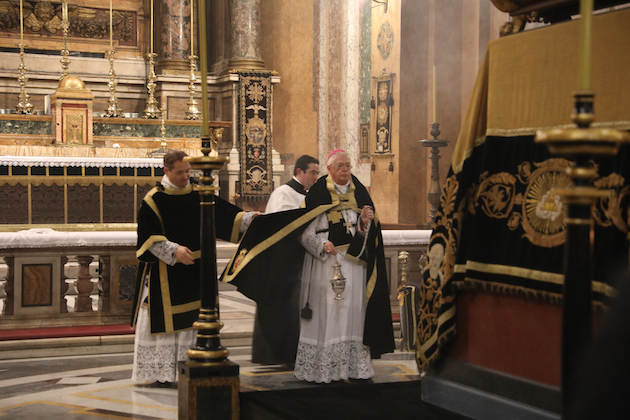
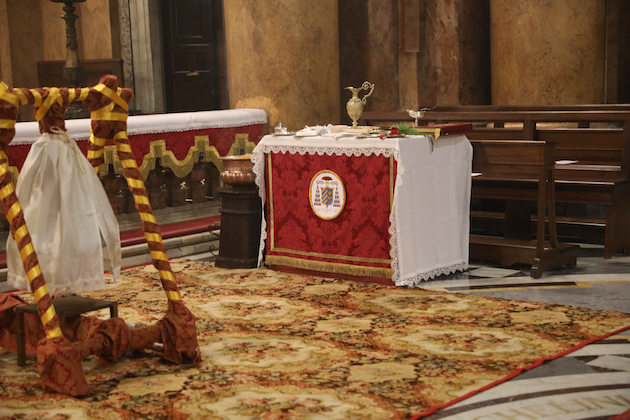
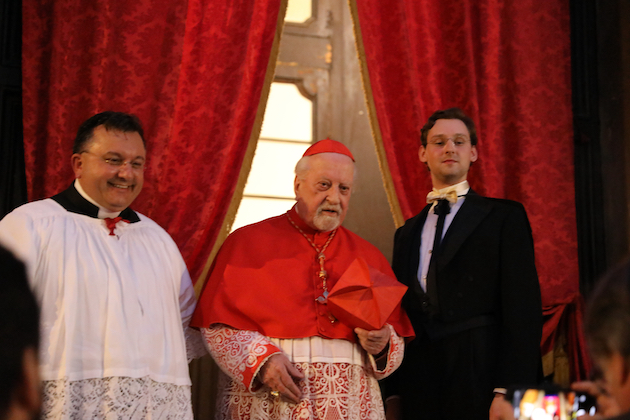
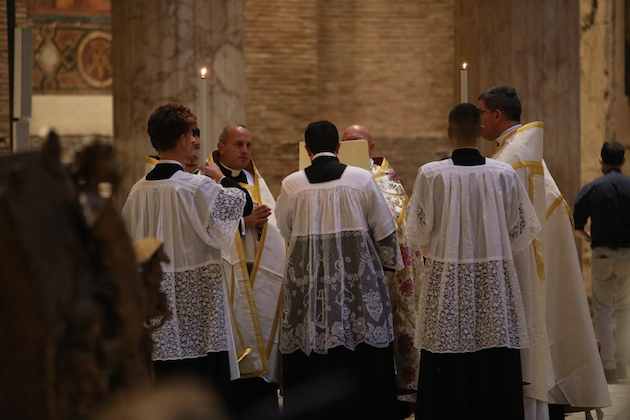
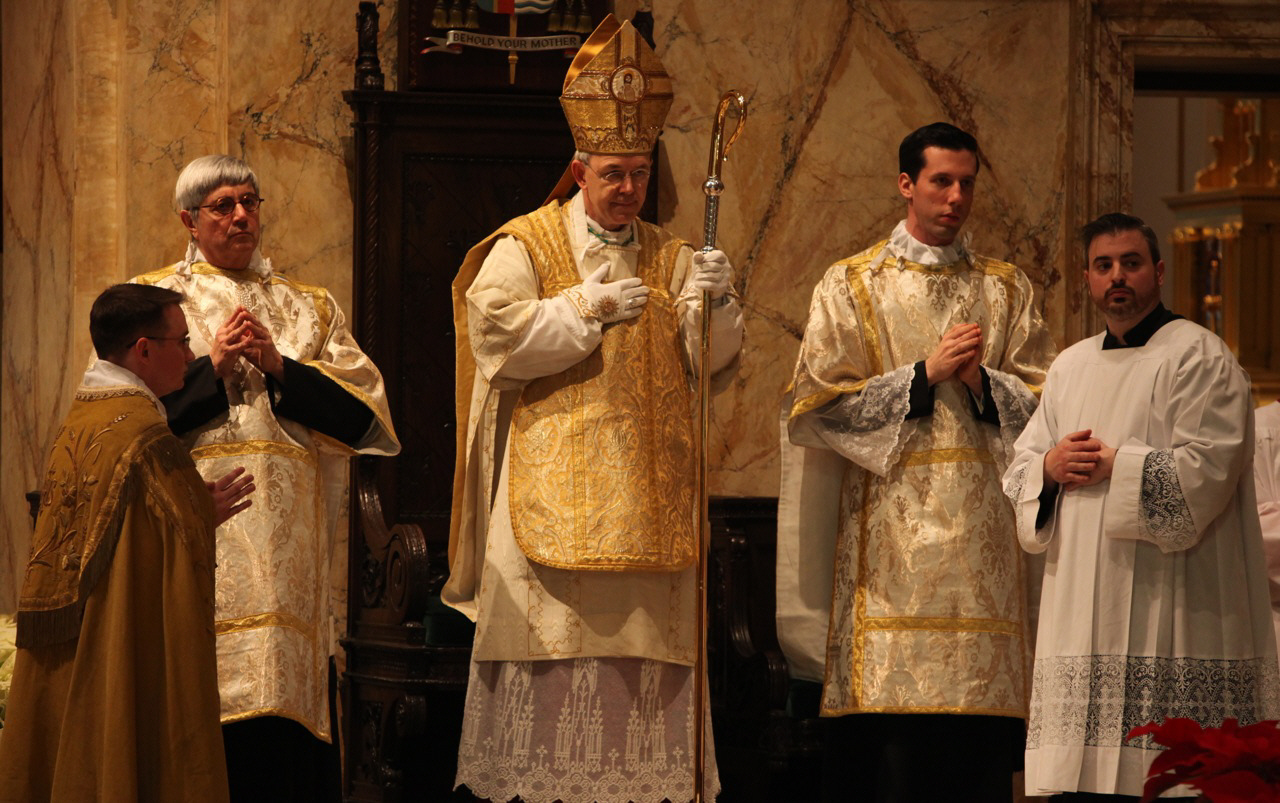
We returned to Most Holy Trinity of the Pilgrims for All Souls Day on Tuesday evening (on All Saints Day we had attended Mass at Sts. Celsus and Julianus (ICRSS)). It was an appropriately somber and reflective conclusion to the liturgical events surrounding the pilgrimage. The celebrant was once familiar to Traditionalists: Archbishop Guido Pozzo, former secretary of the now-suppressed Ecclesia Dei Commission.
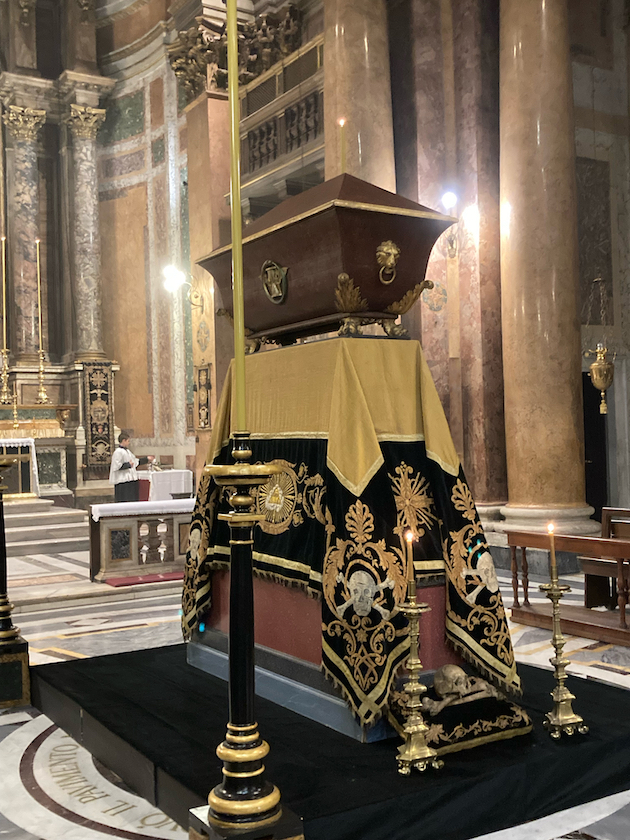
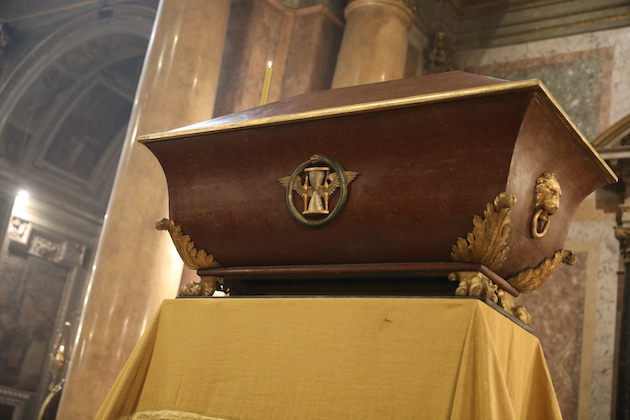
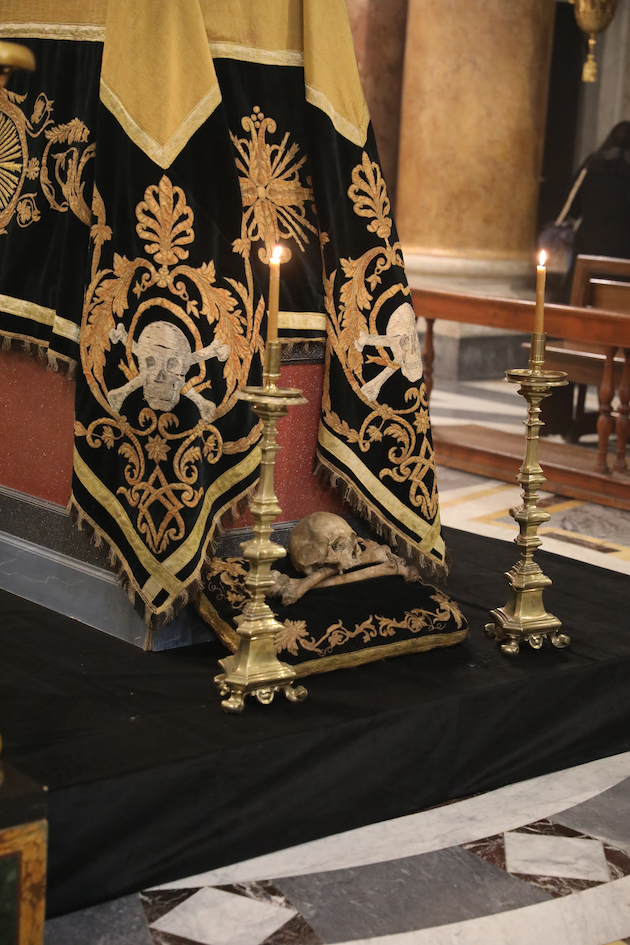
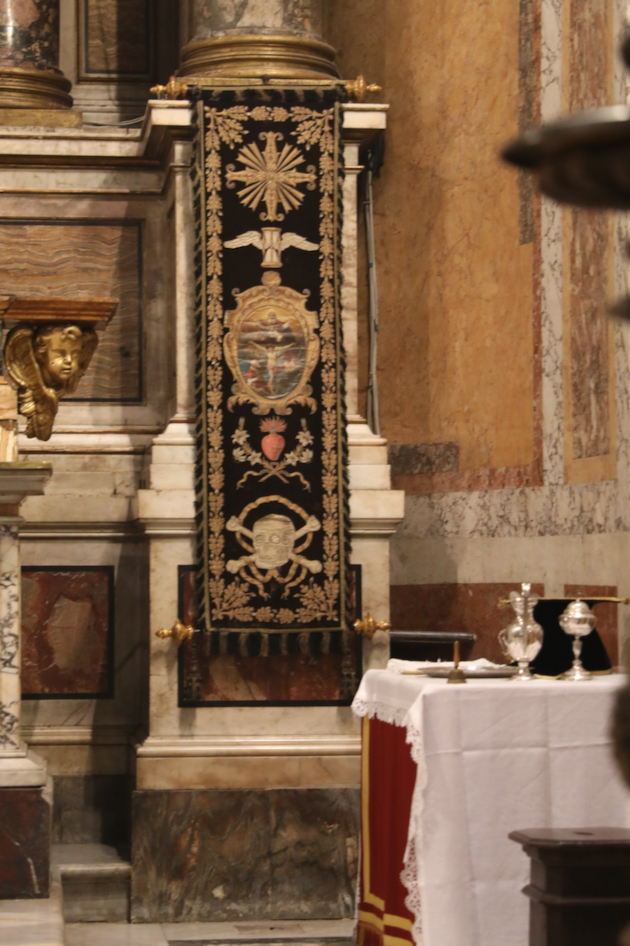
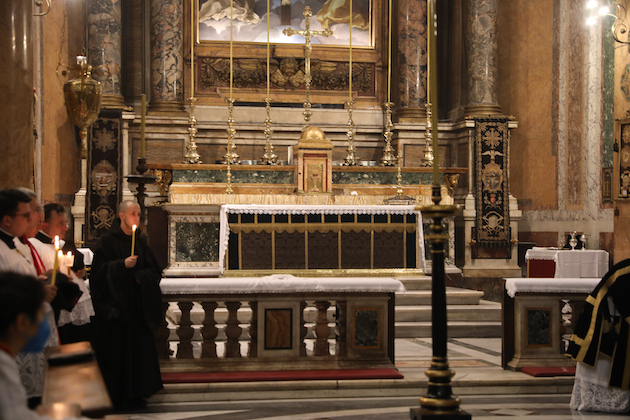
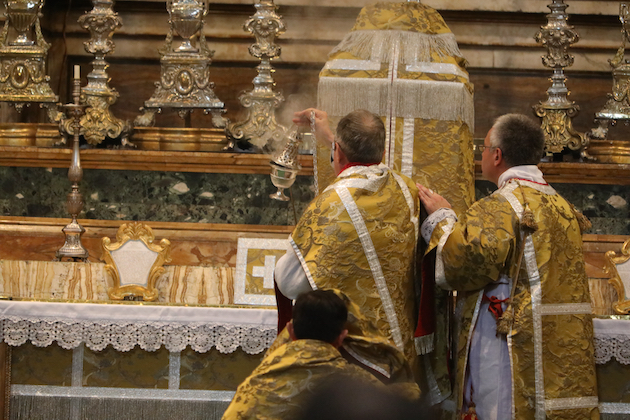
(Below) Absolution at the catafalque.


Published in Pilgrimage Summorum Pontificum 2021 | 1 comment
See earlier posts of the Summorum Pontificum Pilgrimage
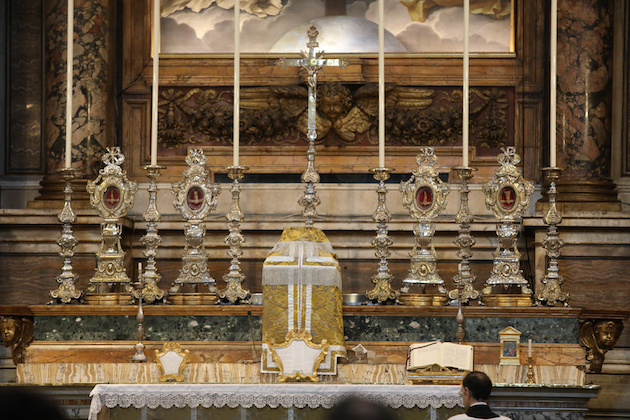
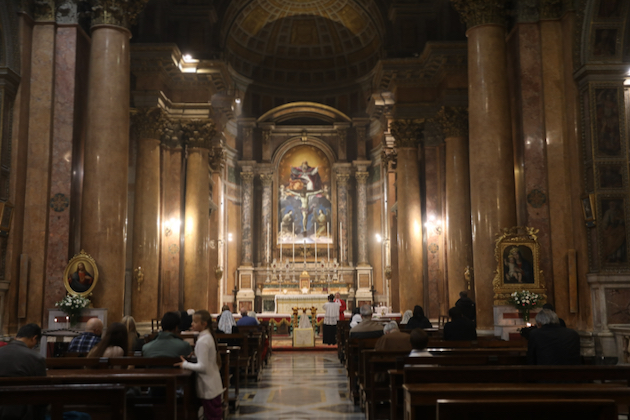
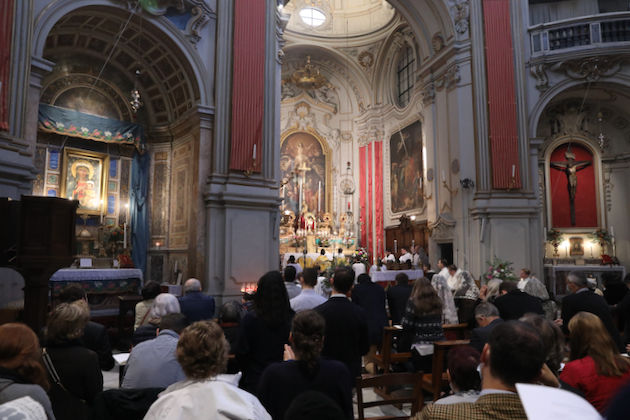
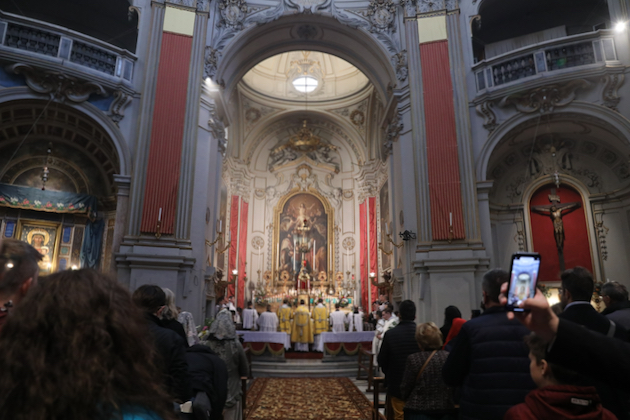
The 2021 pilgrimage of the people of Summorum Pontificum ended on Sunday, October 31, the eve of All Saints, with Solemn High Mass at the church of the Most Holy Trinity of the pilgrims (Santissima Trinità dei Pellegrini) – the home of the FSSP in Rome. This church, with its grand late Rennaissance/early Baroque interior, was nevertheless barely adequate to contain the congregation.
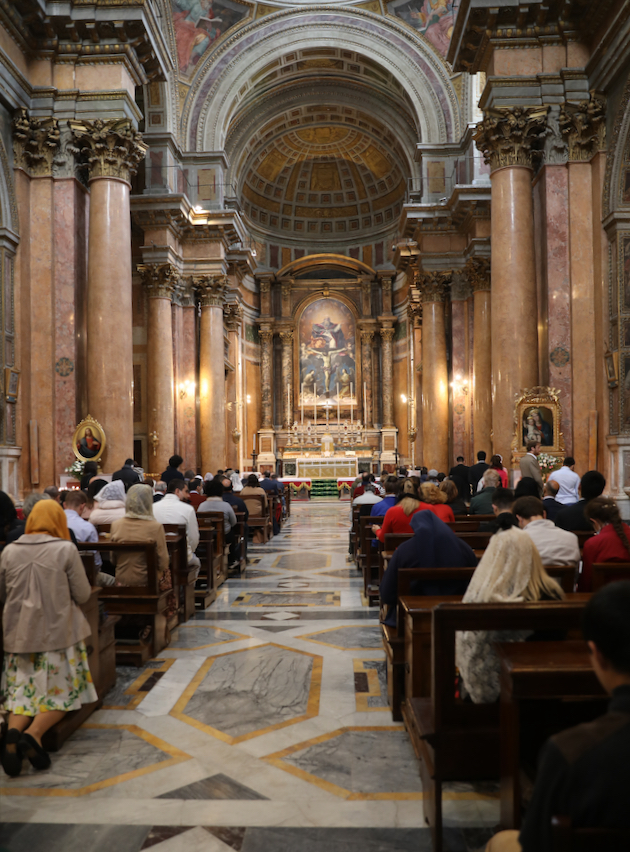
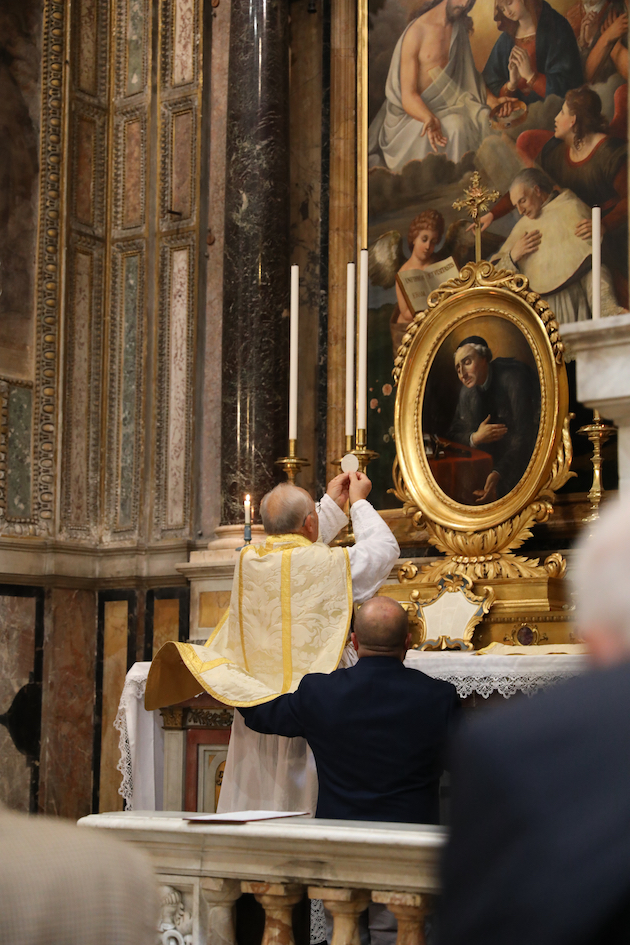
While the people were assembling for the grand Mass, a low Mass was being celebrated at a side altar. The priest was attended by one server – and those in the pews or standing in the immediate vicinity of this liturgy. It reminded me of a story I had read in a parochial school reader years ago, of a boy who had lived through the siege of Vienna in 1683. The day after the siege was lifted, a grand mass of thanksgiving was celebrated at the Cathedral of St. Stephens. But, this boy did not see that magnificent ceremony, for he was serving as the sole acolyte at the requiem Mass for his parish priest who had died the day of the victory.
The unique dignity and beauty of the traditional Mass never fails to amaze me – regardless of the number of clegry and ministers, the size of the congregation, the quality of the music, the splendor of the vestments, the architecture of the church etc. And it was heartening to see the side altars being used for their intended purpose.



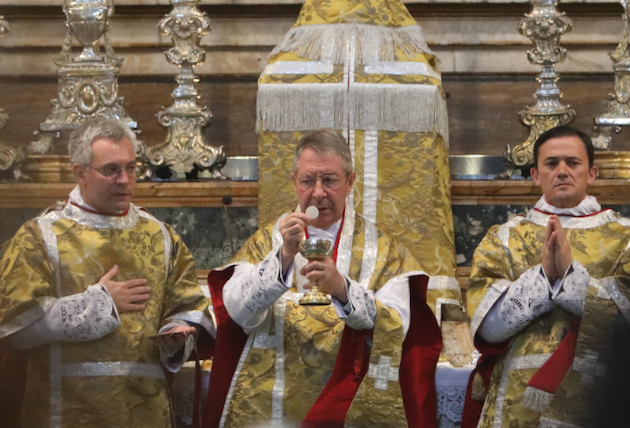
The rousing homily formed a fitting conclusion to the pilgrimage. It was a celebration of the traditional liturgy and the role it must play it in the “apocalyptic” situation we live in today. It is a Mass that indeed represents the grandeur of the Christian ages, when Christ’s kingship was most widely acknowledged by men. Yet it also best expresses the deepest needs of the soul in the midst of the complete denial of that kingship by the present “apostate” age. It is our “imperative obligation to ensure the transmission of what we have received to the generation to come.”
…It is important to remember that this Mass was formed at the same time the West was constituting itself as Christian….The Roman Mass was fully constituted when the ideal of Christendom received its maturity. It is the Mass of Christendom.
Of course it is not enough to celebrate Mass as if we wish to lay a stone enabling the reconstruction of Christendom. Other struggles are necessary. But the anti-modern character of our liturgy, in contrast to a liturgy thst imitates profane fashions and language, helps us powerfully to put the priestly and royal mark of Christ on the whole of our personal, family and public life.
“Jesus,” said the good thief, “remember Me when you come into your Kingdom.” In other words, while Peter had denied Him and all the apostles except for Saint John had gone into hiding, it is this dying man who makes the most formidable confession of Christ’s kingship, thus becoming the first Christian saint. “This very night you will be with me in paradise.” Let this confession be ours. “The Lamb ,who was slain, is worthy ,” says the Apocalypse in the passage that serves as an introduction to this Mass, “to receive power and divinity and wisdom and strength and honor; to Him be glory and power forever and ever.”
( Excerpts from the homily of Fr. Claude Barthe – I have slightly amended the English translation.)
Continue to Part VI: All Souls Day
Published in Pilgrimage Summorum Pontificum 2021 | no comment
See earlier posts of the Summorum Pontificum Pilgrimage
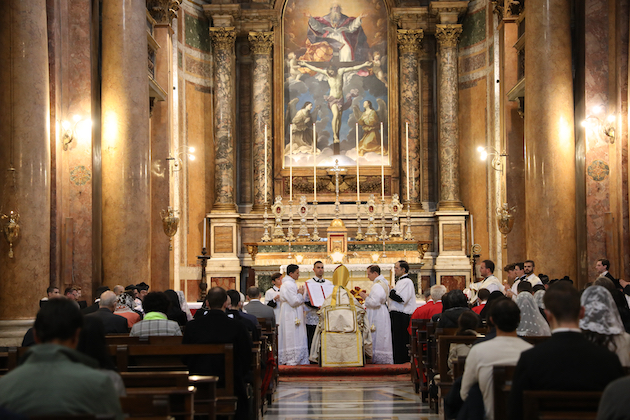
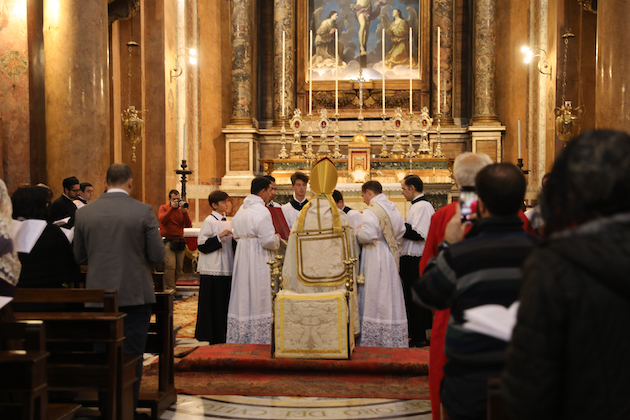
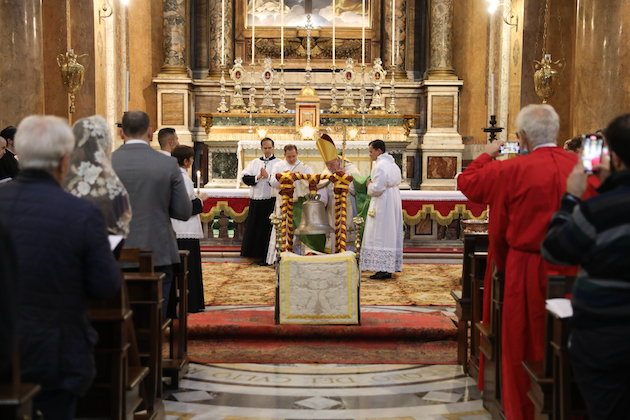
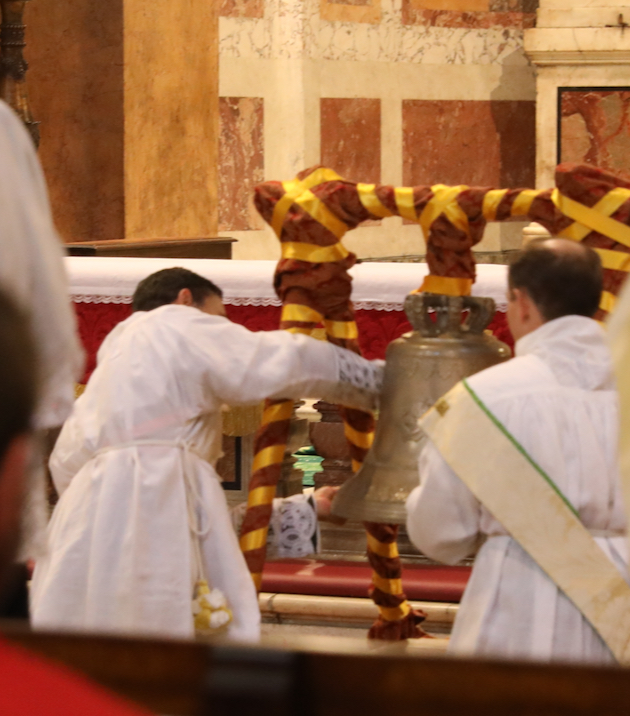
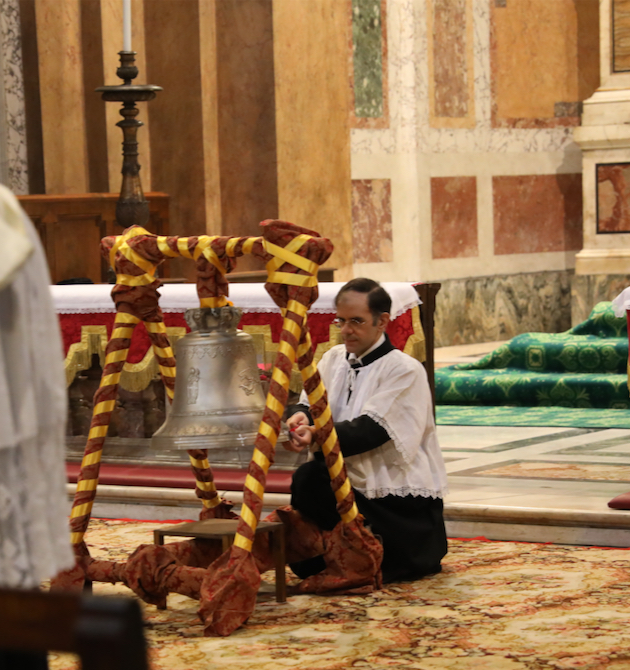
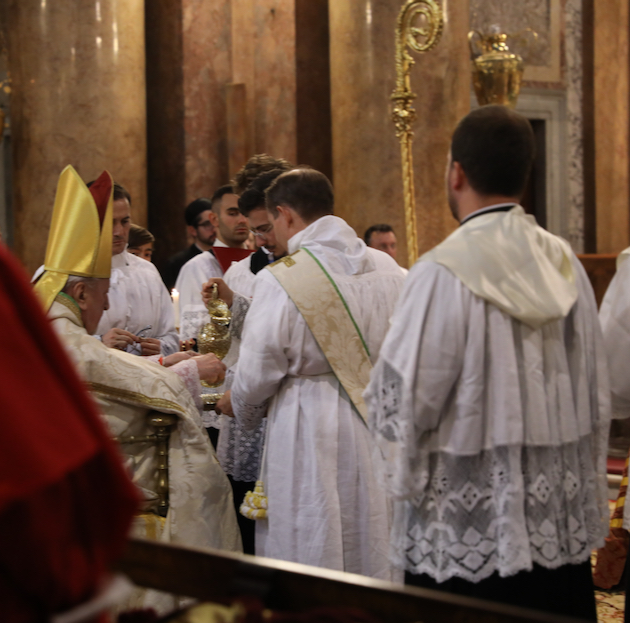
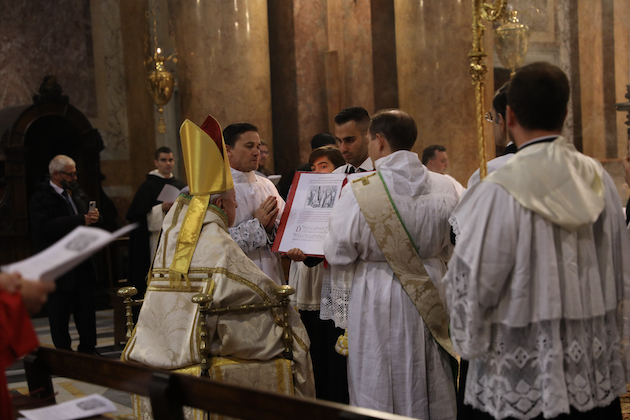
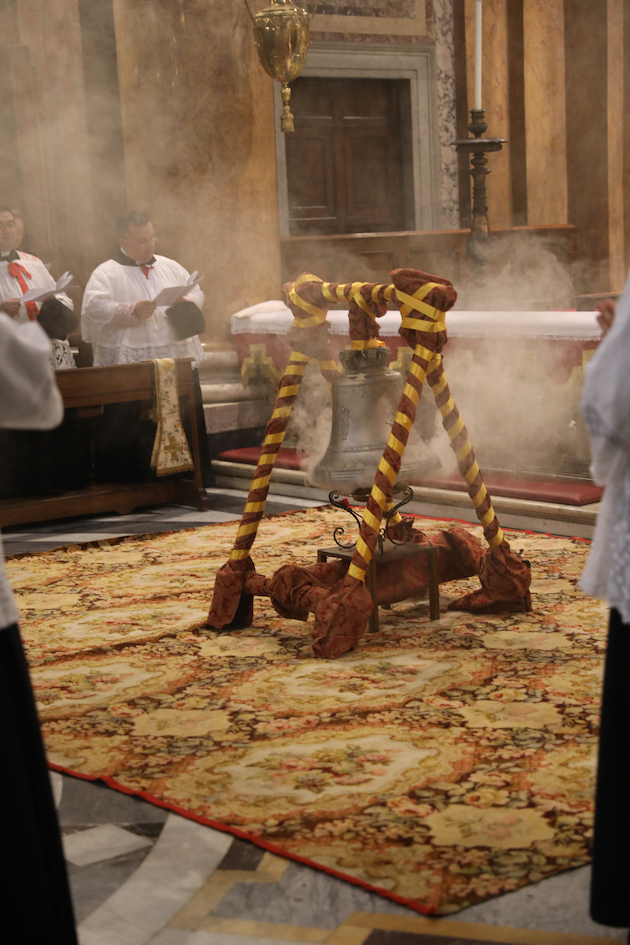
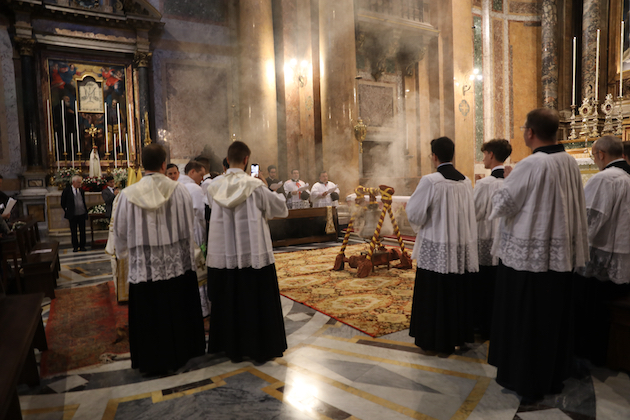
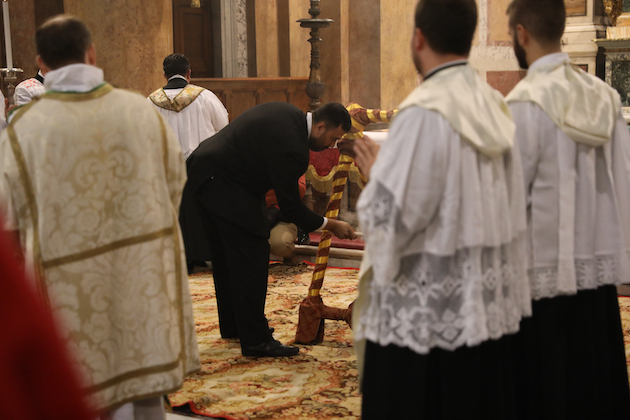
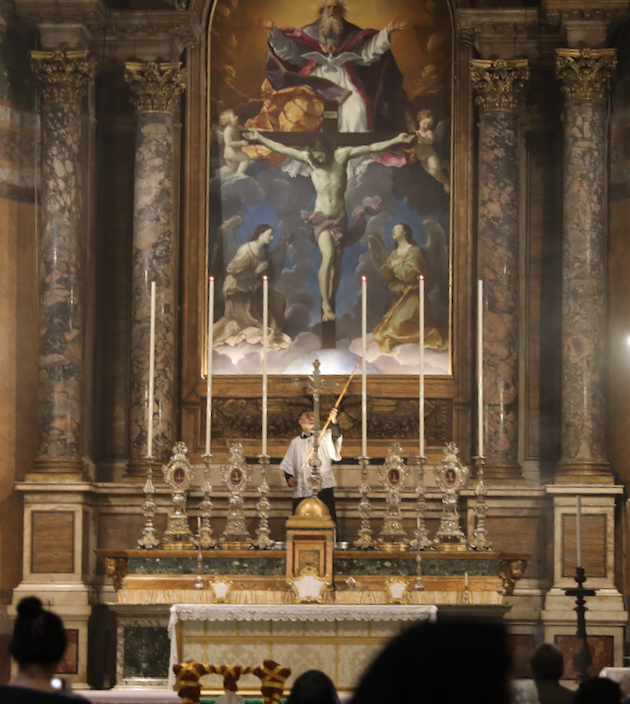
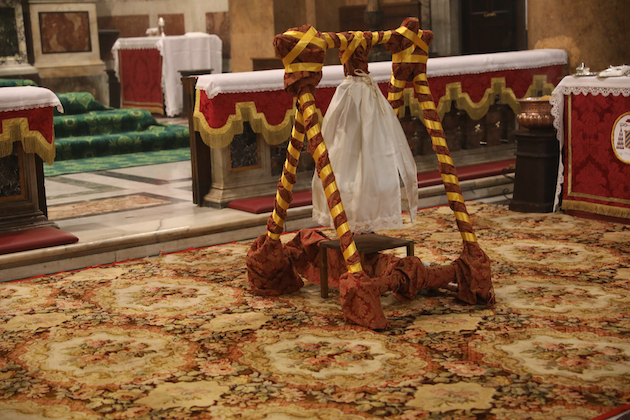
Separate from the pilgrimage was the fascinating and unusual ceremony of the Blessing of a Bell. It took place on late Saturday afternoon in the church of the Most Holy Trinity of the Pilgrims (Santissima Trinità dei Pellegrini ) This parish is in the care of the Fraternity of St. Peter (FSSP).
This ceremony is a perfect example of the power of Catholic tradition. It communicates the significance of the church bell and of its consecration to God through a series of gestures and actions. These are not “didactic” but, nevertheless, by symbol and analogy, convey meaning more profoundly taan any pedagogical lecture could accomplish. Consider how these ceremonies in several respects parallel the baptismal rite.
In the course of the ceremony of blessing the bishop recites a series of magnificent exorcisms, prayers and blessings. One example:
Bless O Lord, this water with a heavenly benediction, and may the power of the Holy Ghost come upon it, so that when this vessel, prepared to call together the children of Holy Church, has been washed with it, there may be kept far away from wheresoever this bell may sound, the power of those lying in wait, the shadow of spectres, the ravages of whirlwinds, the stroke of lightning, the damage of thunder, the disaster of tempests, and every breath of storm; and when the sons of Christians hear its ringing, may their devotion increase so that, hastening to the bosom of their mother the Church, they may sing to Thee in the Church of the Saints a new canticle….



Published in Pilgrimage Summorum Pontificum 2021 | no comment

Published in Uncategorized | no comment
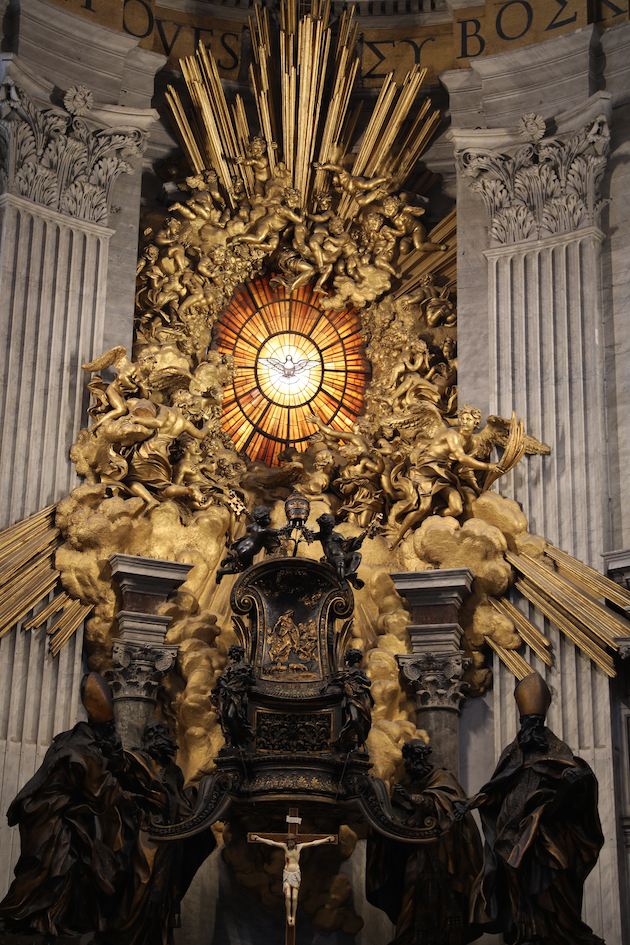
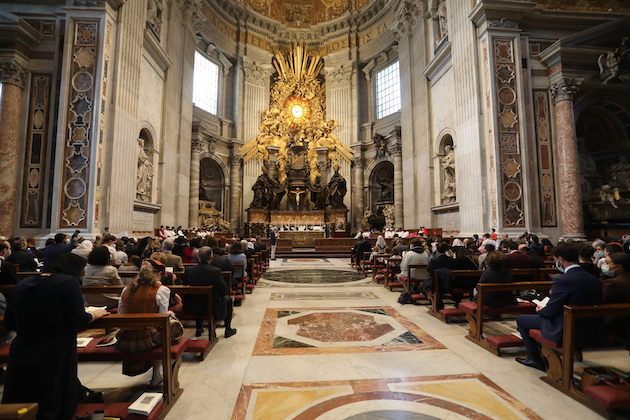
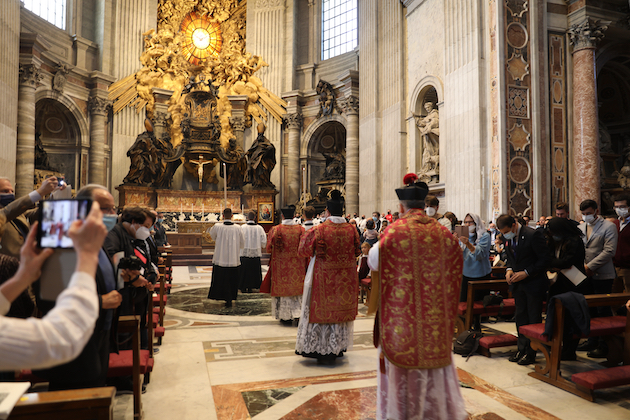
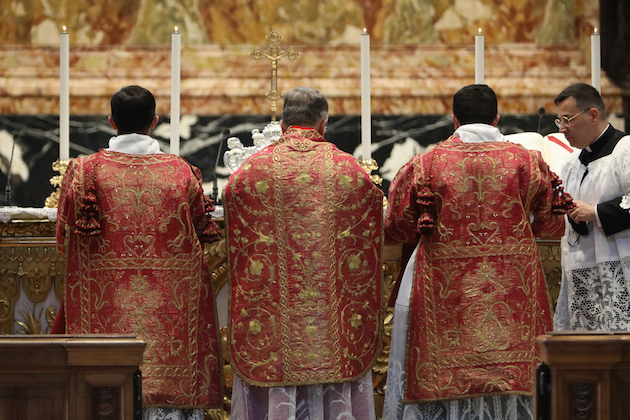
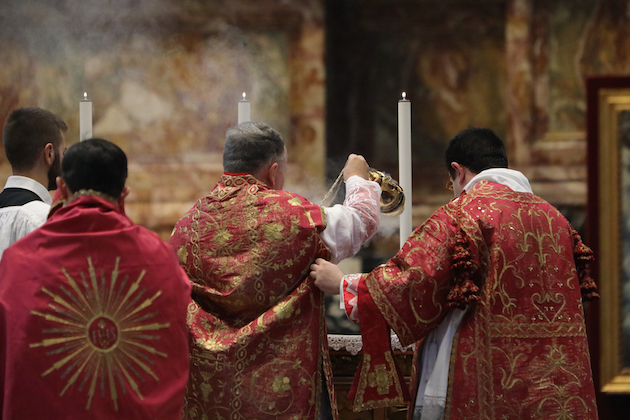
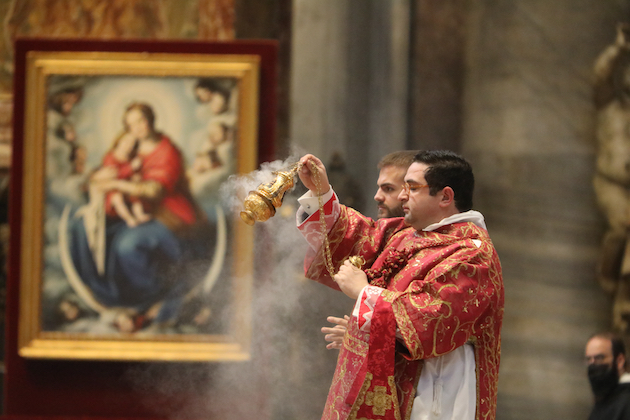
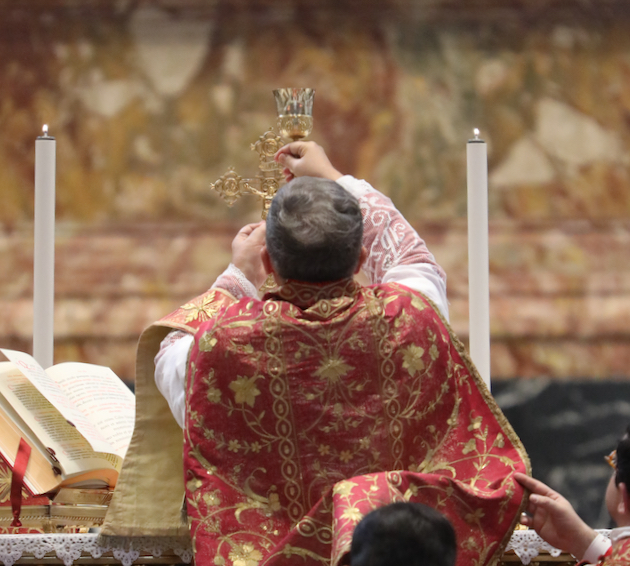
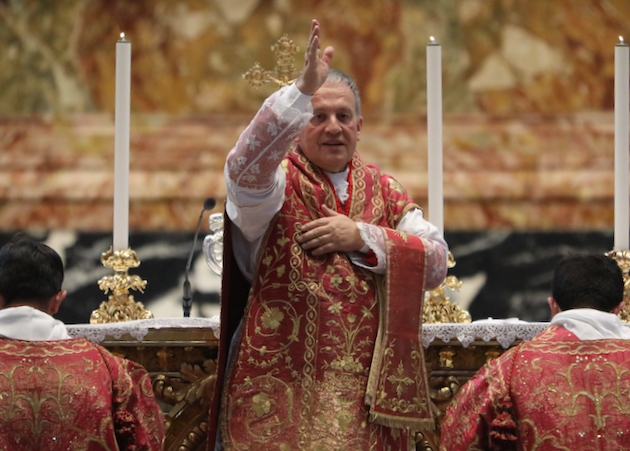
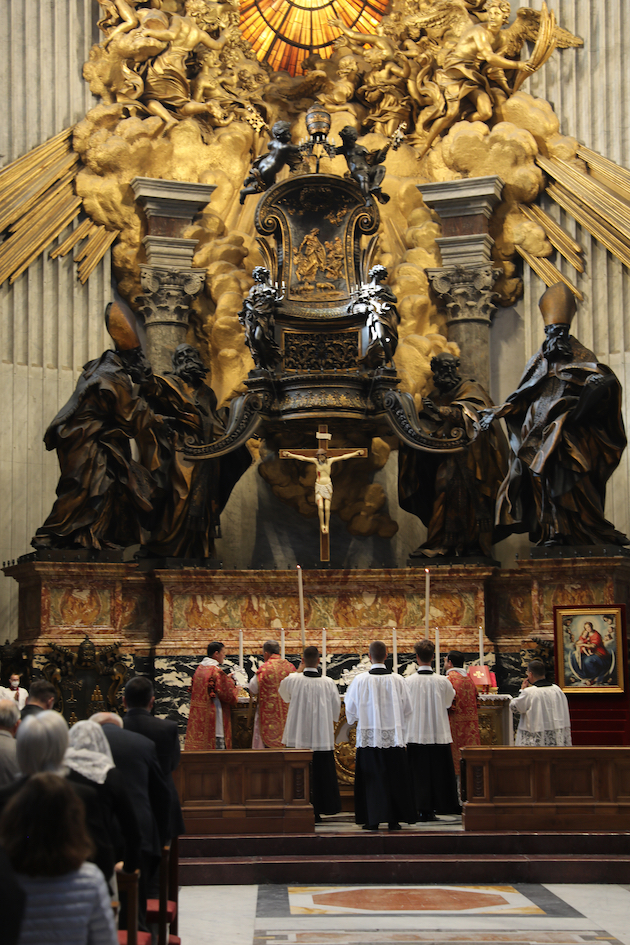
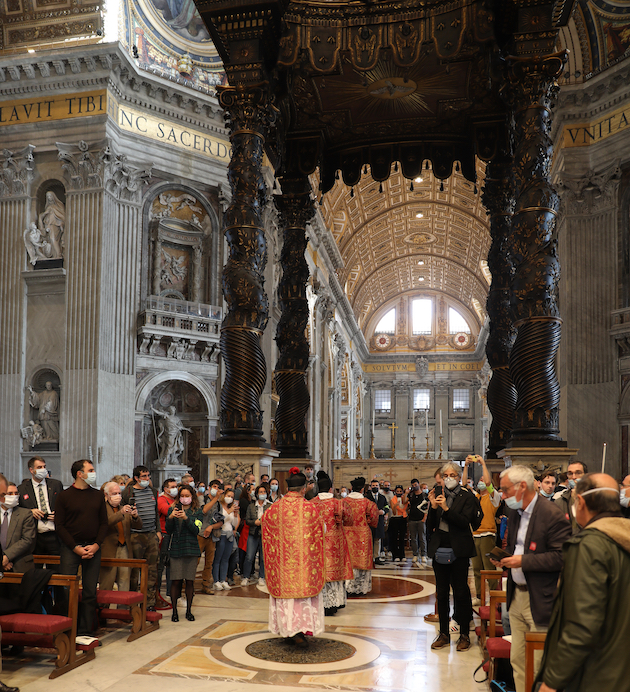
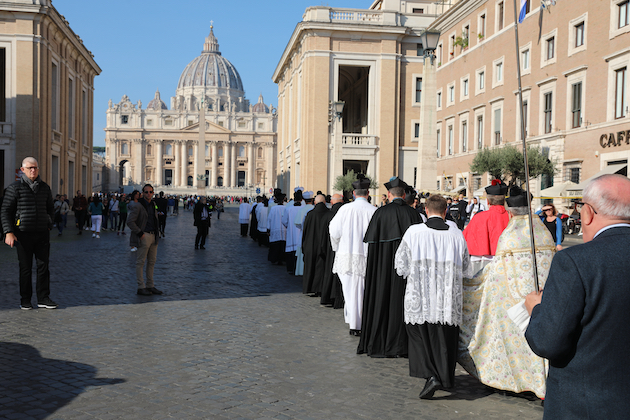
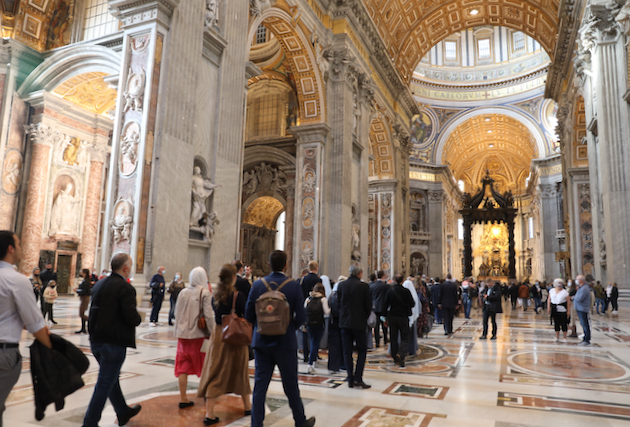
The pilgrims processed to the apse of the basilica of St. Peter’s, where the Solemn Mass would be celebrated at the Altar of the Chair of St. Peter. The space initially reserved was quickly filled, and, just as in the Pantheon, a stream of new arrivals continued to swell the the congregation. At the end quite a number were left standing ouside the barriers the authorities of the basilica had set up.
The Mass was a votive mass of Sts. Peter and Paul. I should say that the particpants kept closely monitoring the news to make sure the events of the pilgrimage would take place at all. A pontifical liturgy had been scheduled for Saturday, but at the last minute the Archbishop in question had to withdraw. An official of the curia, Msgr. Patrick Descourtieux, stepped in to celebrate the liturgy – which accordingly took place as scheduled. (Msgr. Descourtieux in 2019 had assumed an office in the Congregation for the Doctrine of the Faith which had been given the functions of the abolished Ecclesia Dei commission). I understand that in the past masses of this pilgrimage had been celebrated by a bishop or Cardinal.
The celebrant gave his homily alternating beween various languages – something I confess that appears a little strange to me, especially since the program set out the full text of the homily in French and four other languages. The content was a non-controversial, non-specific but perhaps politically astute reflection on Sts Peter and Paul. As at the vespers of the previous evening, music was again provided by the Cappella Musicale di Santa Maria in Campitelli, directed by Vincenzo Di Betta.



Published in Pilgrimage Summorum Pontificum 2021 | no comment

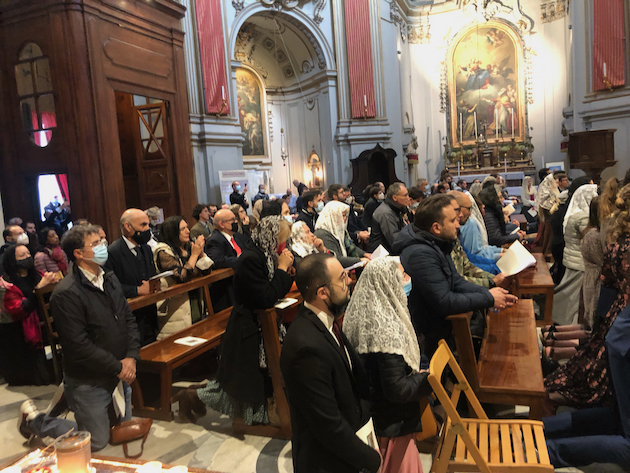
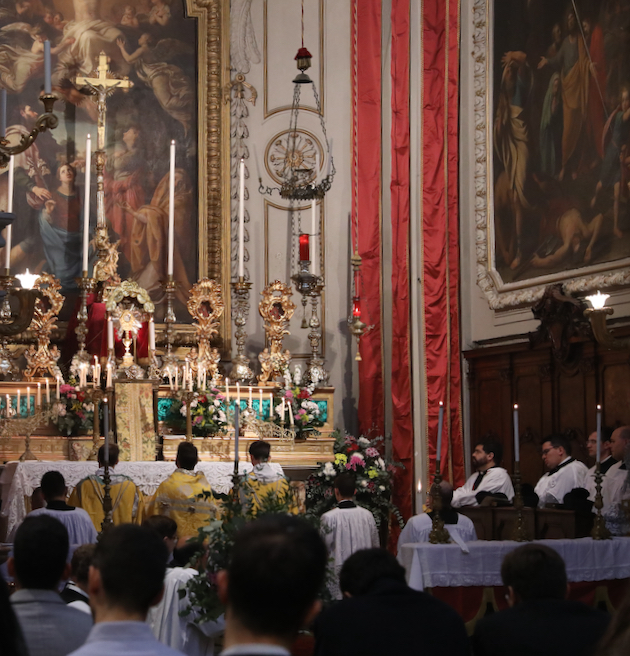
On Saturday morning, the pilgrims gathered at the Church of Sts. Celsus and Julianus (Santi Celso e Giuliano). A pretty 18th century baroque stucture, this church is currently the home of the Institute of Christ the King. But it was totally inadequate for the numbers of people who thronged it that morning. The rosary was recited, followed by Benediction. The Institute led the proceedings.
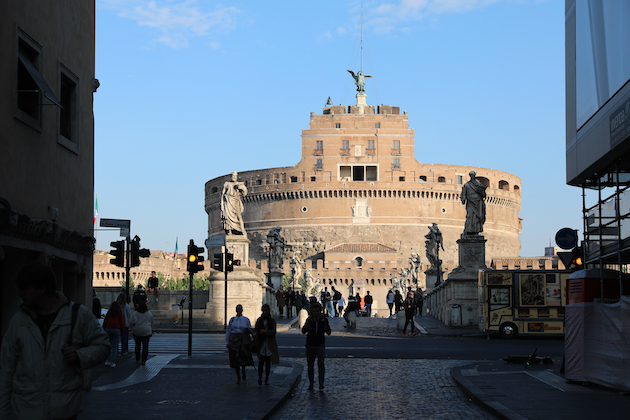

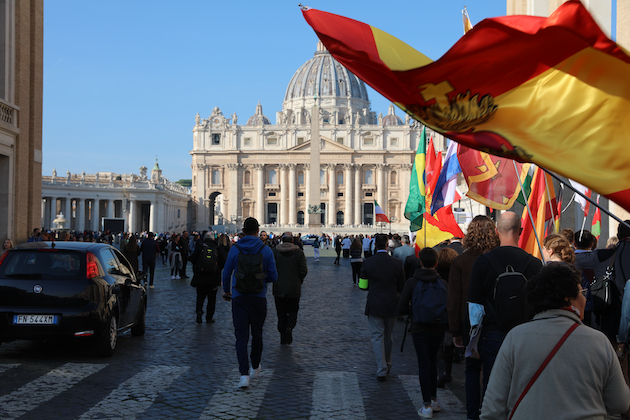
From here the procession set out for St. Peter’s. Flags were provided for the pilgrims – not including that of the United States. Saturday, fortunately, was a beautiful day.
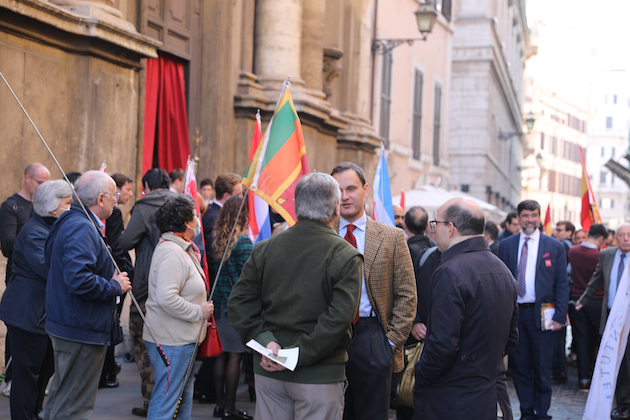
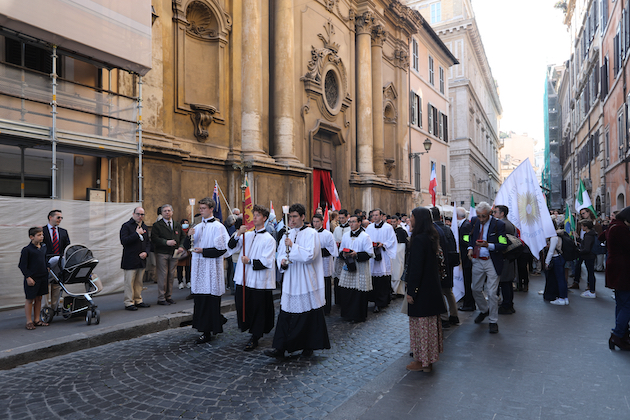
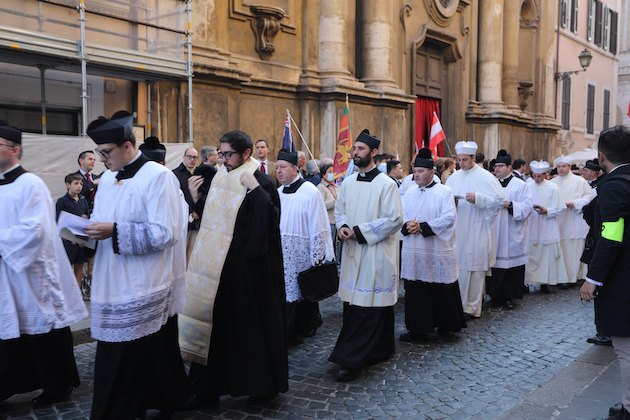
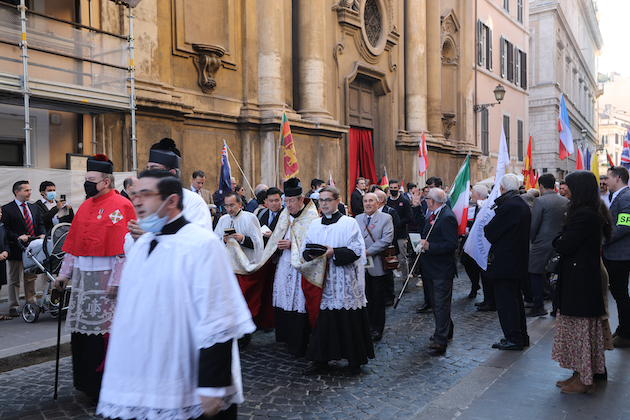
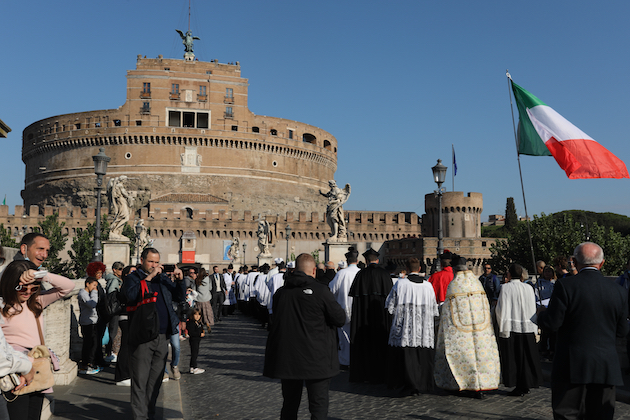
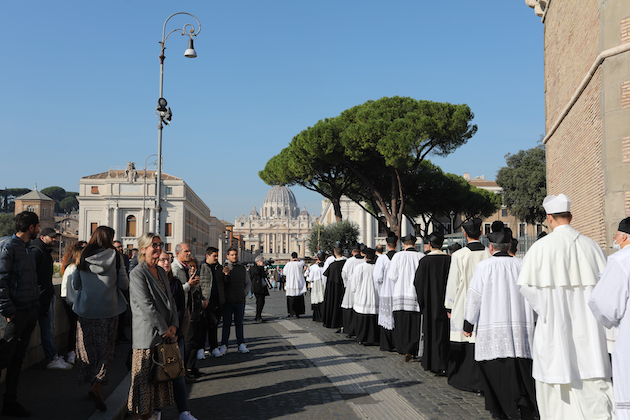
The pilgrimage continued on its way, singing. Often it was the familiar Christus Vincit.


Published in Pilgrimage Summorum Pontificum 2021 | no comment
I wanted to share some reflections on the recent Pilgrimage to Rome (“Peligrinatio ad Petri Sedem”) by traditionalist Catholics. The liturgical celebrations of the pilgrimage took place from Friday, Ocober 29 to Sunday, October 31. I also add to this set the Mass of All Souls Day, November 2.
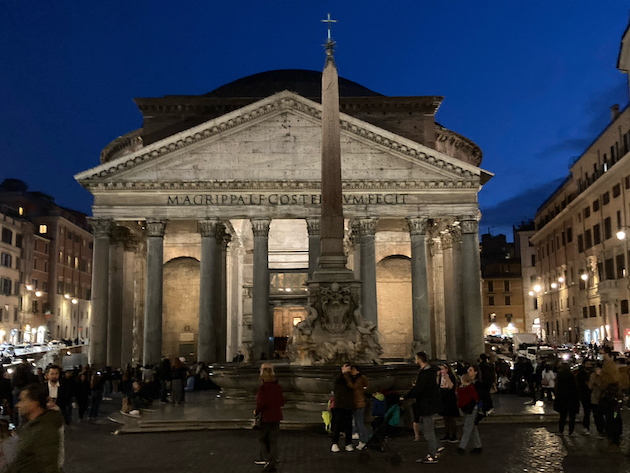
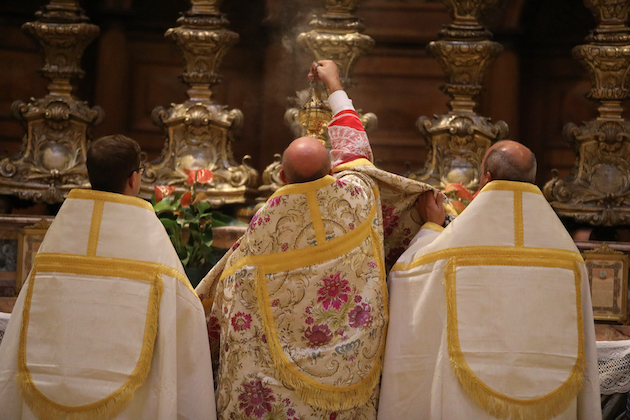
The pilgrimage began with Solemn Vespers in honor of the Blessed Virgin Mary in the august surroundings of the Basilica St. Maria ad Martyres – the Pantheon. This is appropriate, because, at least in the United States, the celebration of vespers has experienced a renaissance in traditionalist groups after having almost disappeared from parish life. And of course, All Saints Day, which we would celebrate on the following Monday, traces its origin to the consecration of the Pantheon to Our Lady and all the Martyrs in 609 or 610. (The date of this feast was moved to November 1 in the 8th century)
As was the case for all the events of this pilgrimage, attendance was impressive and row after row of chairs had to be added. This, despite travel restrictions still in effect in many places due to Covid. The organization of the weekend’s events was effective here and subsequently thoughout the pilgrimage.
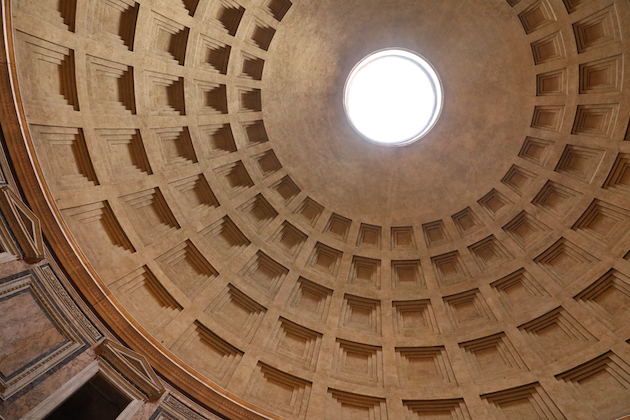
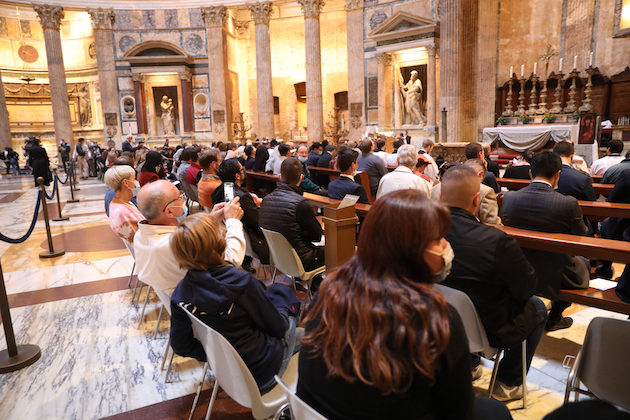
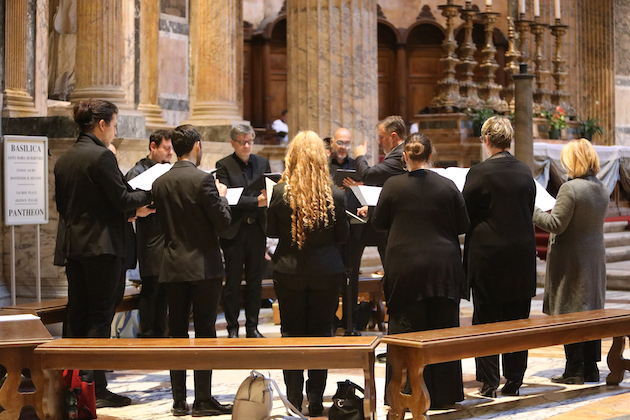
The music was outstanding, reinforced by the wonderful acoustics of the Pantheon. The schola was the Cappella Musicale di Santa Maria in Campitelli of Rome, directed by Vincenzo Di Betta.
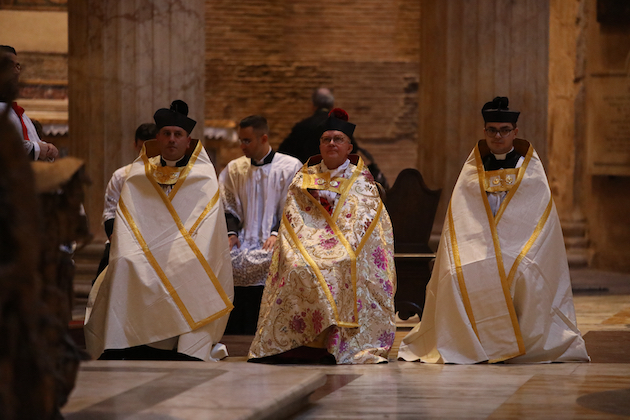
The celebration of Vespers was in the hands of the Institute of the Good Shepherd.
Published in Pilgrimage Summorum Pontificum 2021 | no comment
Churches of New York
Holy Roman Empire
Website Highlights
Archives
[powr-hit-counter label="2775648"]