14
Mar
12
Mar

You’ll be glad to know Martin Mosebach has been hard at work. He has written a new novel and his published statements continue to generate controversy and even hysteria in a Catholic Germany slouching towards apocalypse along the Synodal Path. Let’s look at Mosebach’s recent reflections on “Catholic literature,” taken from a lengthy interview in the Süddeutsche Zeitung Magazin. Invigorating and certainly controversial, these remarks are, by the way, entirely consistent with his previous writings on the subject.
Interviewer: You are a Catholic, and in your essays battle against the modernization of the rites of the Church. You like to formulate slogans like: “We believe with our knees or we don’t believe at all.” Did you ever have an experience of spiritual enlightenment in your life?
Mosebach: No, my religious roots were never that deep, although they always existed. The connection with the Catholic religion began to grow only after I was thirty.
Interviewer: Your novels take place in religiously indifferent milieus. To struggle with faith, to experience a conversion, to suffer martyrdom, to be shattered by guilt, to receive absolution from a mortal sin: why doesn’t any of this appear in your works?
Mosebach: I’m not a friend of what is called “Catholic literature.” Propagating religion in the form of a novel seems to me to be a dangerous undertaking. Allow me a perhaps mildly scandalous comparison. Just as in pornography an image of sexuality is created, projected by the lustful imagination and omitting anything that could disturb it, likewise “Catholic Literature” is in great danger of adjusting the world to Catholic doctrine. My nightmare image of such literature is the death of Lord Marchmain in Brideshead Revisited: the old sinner who nevertheless crosses himself as he breathes his last. I find something like this absolutely tasteless.
Interviewer: Why do you consider humor “a sign of the Catholic world view”?
Mosebach: A sense for the comic presupposes a pessimistic image of man and history. Because an optimist aims at the perfection of the good, he can be neither absurd nor cynical nor playful. His expectations, projected into the future, are more important to him than the understanding of present reality, which can captivate despite its frailty. The foundation of the Catholic world view is the conviction of the irreformable imperfection of the fallen world of original sin, in which every kind of grand and lofty endeavor at some point fails miserably. T.S. Eliot called the Catholic religion the “philosophy of disillusion” – not to expect from the world that which the world cannot give. Thus, comedy is the really Catholic form of literature.
Interviewer: Why then is the clergy united in its lack of interest in fiction?
Mosebach: Literature has tasks different from those of theology. It lives from contradictions, imagination, invention, and suggestions. Theology must keep all this at a distance – which it regrettably doesn’t always do.
“I like attacks better than boredom…Moreover, there is no right to be read.” Interview with Sven Michaelsen, Süddeutsche Zeitung Magazin p. 8-15 (March 5, 2021). Translation – SC.
11
Mar


What can we say about evangelization today? What should the Church do in a time of apostasy and decline? And what is the relation of the Traditionalist movement to all this? Two noted apologists of the establishment – defenders of the Faith – recently wrote on the interaction of Evangelization, Traditionalism and Christendom.
In From Christendom Times to Apostolic Times, George Weigel tells us in First Things that:
Look around you and recognize that ours are apostolic times, not Christendom times. Christendom, as Fulton Sheen said in 1974, is over.
“Christendom” connotes a situation in which society’s cultural codes and the manner of life they endorse help transmit “the faith once delivered to the saints” (Jude 1:3). Places like that existed within living memory; I grew up in the last, fleeting moments of one, in the urban Catholic culture of 1950s Baltimore. That form of “Christendom” is now long gone. Throughout the Western world today, the cultural air we breathe neither transmits the faith nor is neutral about the faith; the cultural air is hostile to the faith. And when that hostility captures the commanding heights of politics, it aggressively seeks to marginalize the faith.
In Christendom times, a “missionary” is someone who leaves a cultural comfort zone and goes to proclaim the Gospel where it’s not been heard before. In apostolic times, Redemptoris Missio (John Paul II’s encyclical on the missions -SC)teaches, every Catholic is a missionary who has been given the mandate to “go, make disciples of all nations” (Matthew 28:19). In apostolic times, “mission territory” is not an exotic travel destination; it’s everywhere. Mission territory is the kitchen table, the neighborhood, and the workplace; the mission extends into our lives as consumers and citizens.
Now I fully agree with Mr. Weigel that ours is a culture hostile to the faith – that Christendom is no more. After all, apologists both Catholic and friendly to Catholicism have been making that point since at least – well, Novalis’ Christendom or Europe (1801). I should mention, however, that his characterization of today’s culture does conflict sharply not only with the rapturous embrace of modernity by the Second Vatican Council as well as recent popes and bishops but also with the de facto “neutral” assessment of the Opus Dei movement. Does not Redemptoris Missio, Weigel’s “blueprint” for mission, also, here and there, still reflect this optimism?
It’s also undeniable that every Catholic needs to be a missionary today and his mission territory is all around him. But after making this most valid observation, Mr. Weigel then draws a contrast between such an “apostolic age” and the “comfort zone” of Christendom. Our author has indeed often critiqued in the past the alleged inadequacy of Christendom and its pre-Conciliar pockets and successors. The source of such views is of course the ferment leading up to the last Council with its attacks on the “Catholic Ghetto,” and the ”Constantinian Church.”
Internal and external mission, however, was always integral to Christendom. Now by this term I mean a society where the religion of the Gospel is made the defining constitutional element of state and society. In such a society, the Catholic, Orthodox religion gradually informs all aspects of life: the social structure, the arts, the economy, the laws, the cuisine, the technology, the dress of the people – nothing was exempt from Christian influence. It resulted in a transformation that took generations, even centuries. A new Christendom cannot be recreated or restored by our efforts in our own days – after all, it took over 700 years to form the first one. And the task is never complete – total conformity of the World to the gospel is never achieved – not even in the 13th century Europe, not even in the baroque age of Italy and Germany. Christendom is inherently never static and is always in need of renewal. Catholic culture, however marvelous, of itself is insufficient: Prague is one of the most perfectly Catholic cities in the world yet it is now inhabited by a people largely atheistic.
A brief review of history bears this out. It was, after all, from Christendom, both East and West, that the territories and peoples outside the Roman empire were converted – starting with Ireland in the West, then Anglo-Saxon England, then Germany, the Slavic and Hungarian peoples and, by 1050, Scandinavia as far as Greenland. During and after the crisis of the Protestant Reformation, new missionaries – Jesuits and others – converted many in Asia and in the new world – concluding with the California missions of the second half of the 18th century. And after the intervening chaos of the French revolution, after which Christendom was, so to speak, on life support, we encounter the great missionary revival of the 19thcentury.
The external activity was matched by internal evangelization. The Benedictine monks of the 7th century were eventually succeeded by Cluny and the Cistercians – all three representing not withdrawal from the world but the launching of mighty spiritual movements within it. In the 13th century, the friars of the new mendicant orders evangelized the rapidly growing cities – and advanced as far as China. Later, the Jesuits acted not just as apostles to the heathen – an even greater focus of their efforts was education and internal mission in Europe. These missionary endeavors left a stamp on many landscapes of Europe that lasted even until the Second Vatican Council. Even in 19th century New York City – increasingly remote from Christendom – we read of the many missions preached by the Paulists and the Redemptorists in the city’s parishes. Finally, the catalogue of the saints and blesseds of Christendom shows that internal evangelization was not just the province of monks or priests but was shared by the laity: kings and servant girls, high court officials and peasants.

The contrast to the evangelization required of us today is not Christendom, but various abuses that developed after it fell. There was, for example, the ultramontane emphasis on a centralizing clerical culture. And then came the “Conciliar Church”: the average US parish that is its product is hardly evangelical. That John Paul II had to devote paragraphs of Redemptoris Missio to defending the very concept of mission only demonstrates its perilous state by 1990. And what are we to make of the repeated utterences of the current bishop of Rome against “proselytizing”?
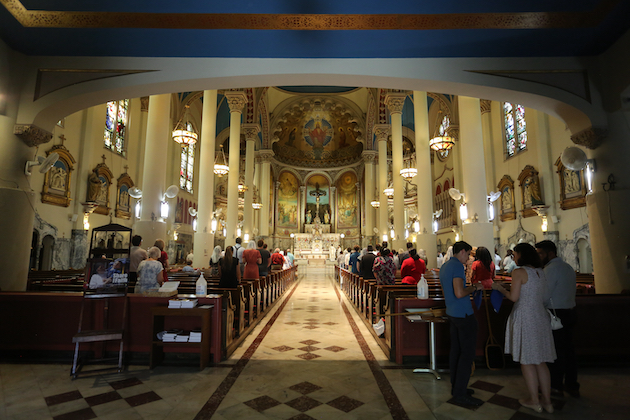
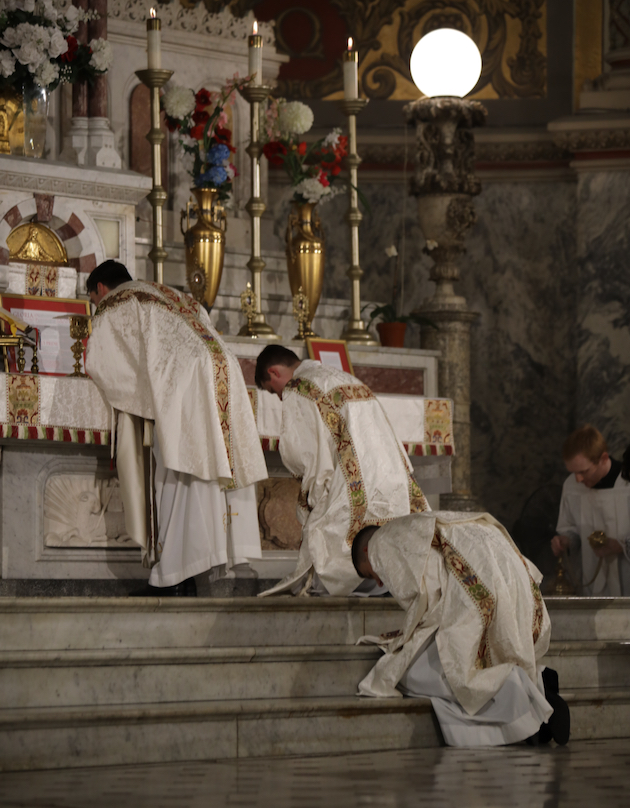
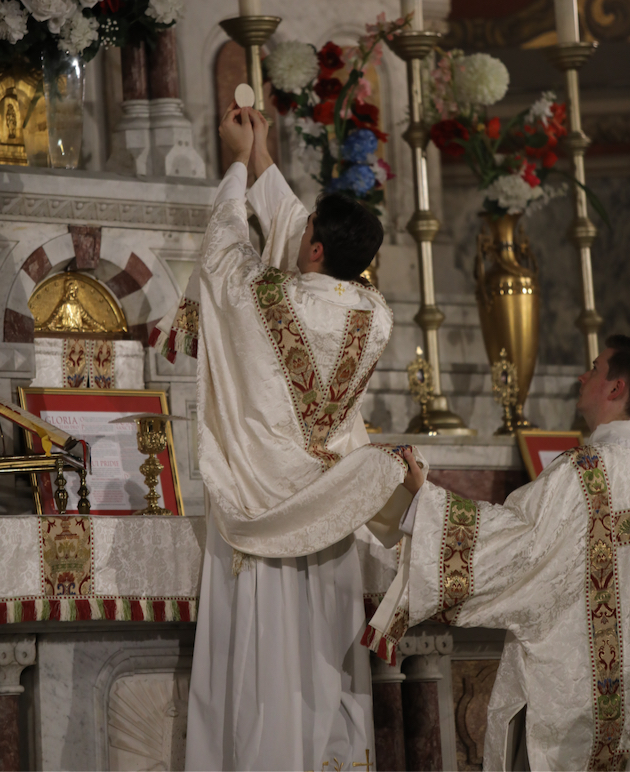
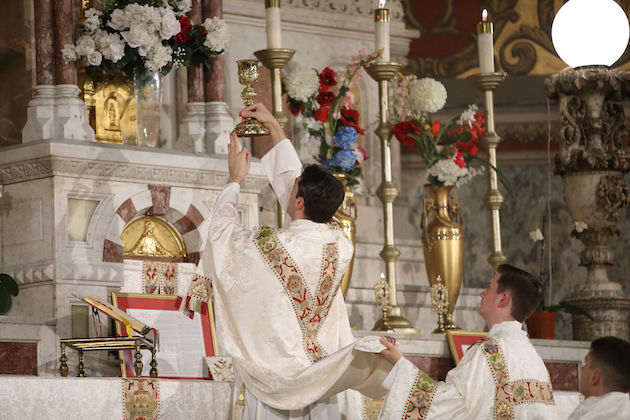
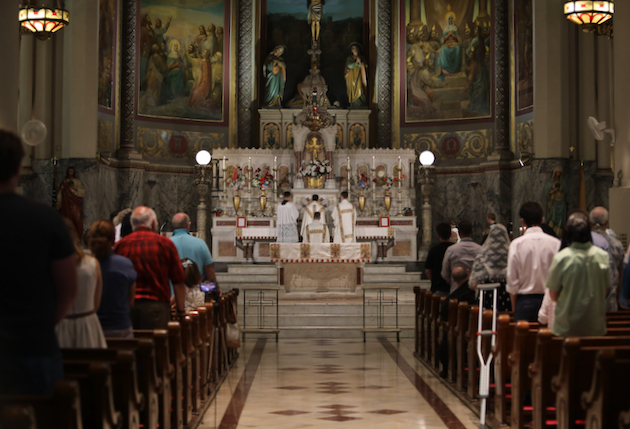
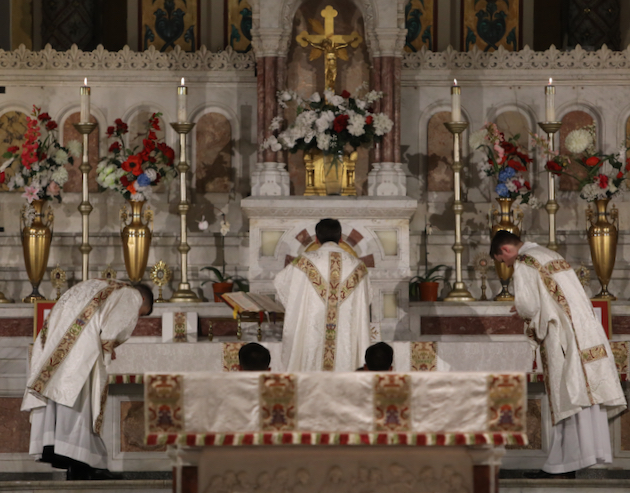
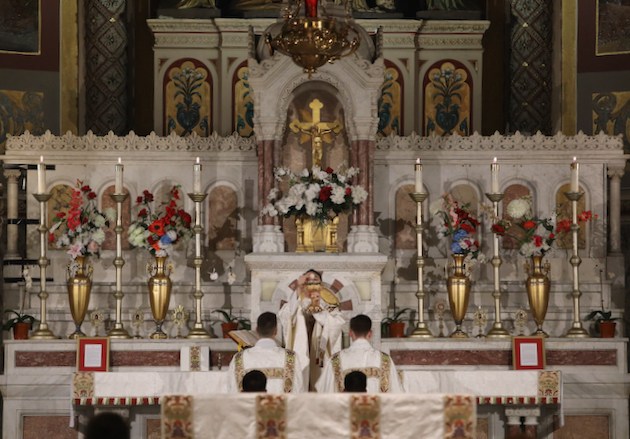
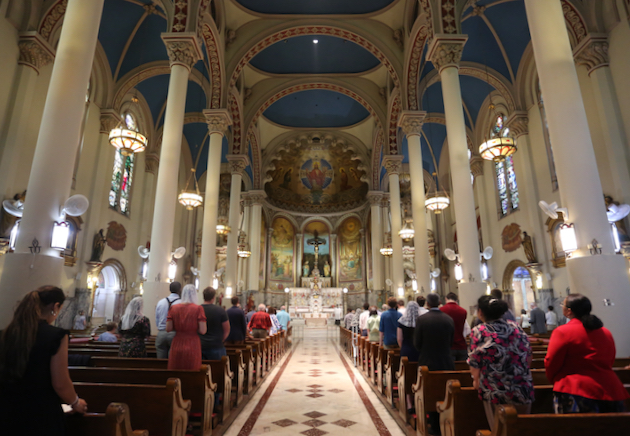
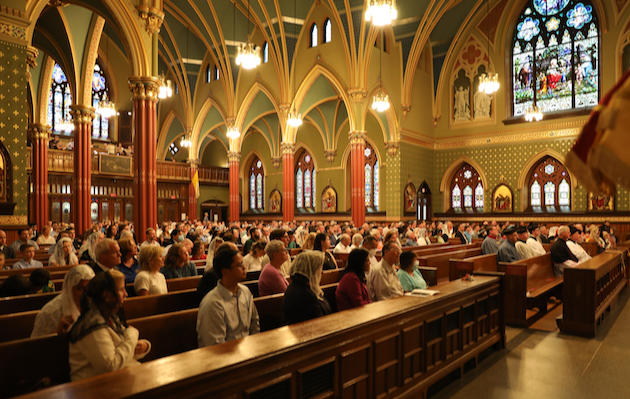
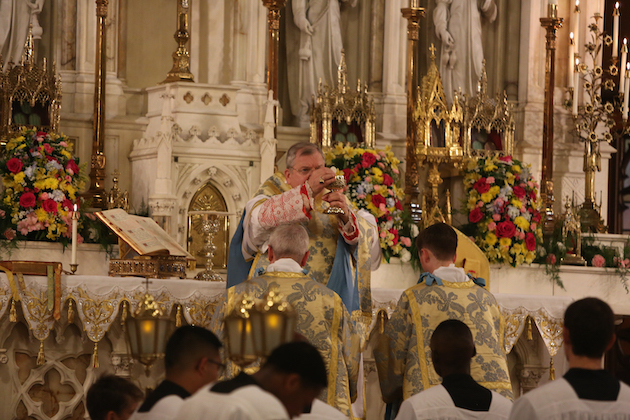
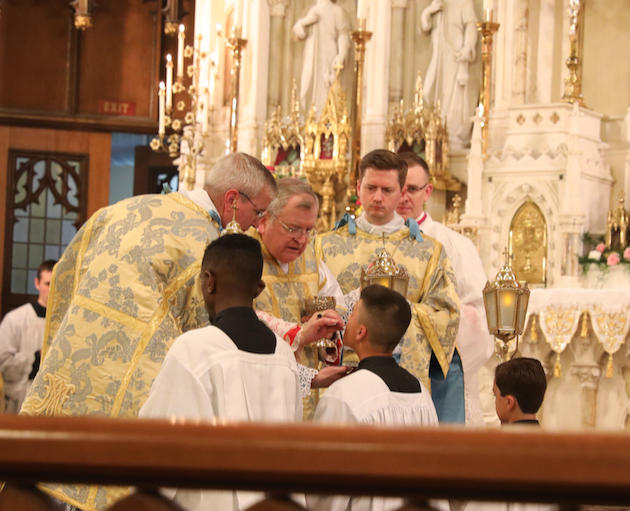
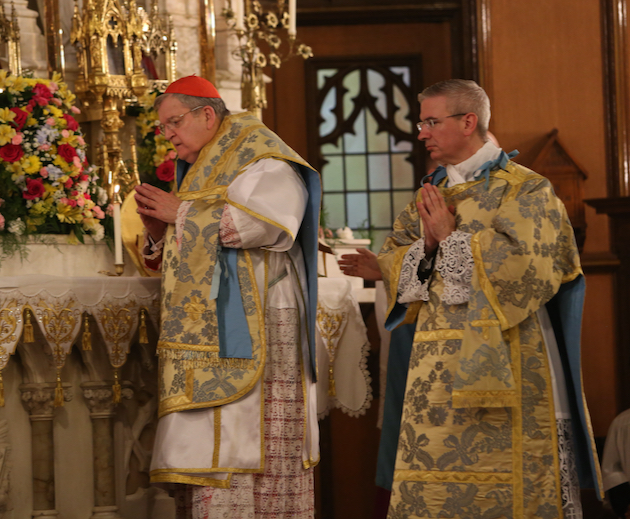
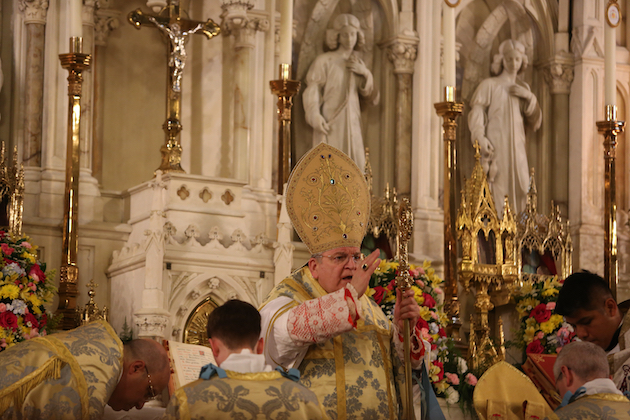
Actually, in recent years it has been the growing Traditionalist movement that has displayed the greatest initiative in evangelizing those both inside and outside the Church. It has done this primarily by involving Catholics in the liturgy in one way or another. In doing so, it has revived and employed cultural achievements inherited from Christendom: the music, the vestments, the philosophy and the art (insofar as that is possible today ). None of these are ends in themselves but are means to revive the faith of Catholics and lead others to it. The effect is to activate those organizing these liturgies – and then to attract others won over by what they have seen or heard.
As an example, we have these testimonies from the diocese of Brooklyn in the Brooklyn Tablet:
“Our congregation is made up of many professionals, young people. A great number of young families come with their children. I would say that almost every year we’ve had one or two children wanting to make their communions in the old rite. Also, we have at least maybe two or three baptisms during the year. I’m surprised to see, almost every Sunday, we have new faces here. You know, and those new faces are young people,” Cardillo explained.
……
Bongiorni, 28, has been serving on the altar for ten years. He’s part of a close group of about two dozen young Catholics who met at the Traditional Latin Masses and started the Latin Mass program at St. Finbar Church, Bath Beach, along with Father Michael Gelfant, then the pastor, last year.
What is the reaction of the professional evangelizers of the establishment to this? For that, we turn to auxiliary bishop Robert Barron – a would-be modern-day Fulton Sheen. Now Bishop Barron has little use for Traditionalists. Last year he hosted a closed door meeting with “Catholic media professionals” – one wonders who they were – on, among other things, the dangers of “Radical Traditionalism.” Just recently Bishop Barron wrote in his blog on The Evangelical Path of Word on Fire:
(Speaking of the late Cardinal George) Thoroughly imbued with the missionary spirit of Vatican II, the Cardinal knew that a hyper-valorization of any particular period of Church history, be it the American Catholicism of the 1950s or the European Catholicism of the thirteenth century, would seriously undermine the Church’s present capacity to engage the culture in which it finds itself.
In recent years, a fiercely traditionalist movement has emerged within American Catholicism,… In their anger and frustration, some of it justified, these arch-traditionalist Catholics have become nostalgic for the Church of the pre-conciliar period and antipathetic toward the Second Vatican Council itself, Pope John XXIII, Pope Paul VI, Pope John Paul II, and particularly our present Holy Father.
I have argued that the extreme traditionalist Catholicism of the present day is self-consuming, for it attacks the very foundations of Catholicism itself. If both of these characterizations are true, then these two critical movements are essentially moribund. I have tried to situate Word on Fire on the path of an evangelical Catholicism, the Catholicism of the saintly popes associated with Vatican II, a living Catholicism.
So the real problem for evangelization is a “fiercely” “extreme” “radically” Traditionalist movement? Obviously this movement, that Bishop Barron calls “essentially moribund,” is in fact gathering steam, otherwise he would not be writing a diatribe against it.
But how is one to respond to a document like this? To point out the fallacy of a “missionary spirit of Vatican II“? – by the establishment’s own statistics, mission, both internal and external, is in a crisis. That to talk about “the Church’s present capacity to engage the culture in which it finds itself” verges on the ludicrous, given the total alienation of Christianity from the present lords of the media and academia? That the frequent references to the alleged “anger” and “frustration” of the “spitting-mad” Traditionalists is obviously a copy of the rhetoric of the last few years directed against supporters of Donald Trump?
Of course, these same Traditionalists are described as “nostalgic” for things that, given the age of the great majority, they never could have experienced (including the 13th century!). Examining the list of authorities to whom Bishop Barron pledges allegiance, one would never guess that among them exist drastic, unacknowledged differences (e.g. Cardinal George – or Bishop Barron’s’ own ordinary Archbishop Gomez – and Pope Francis). These same greats are all post-Conciliar, demonstrating that Bishop Barron has now adopted the progressive “hermeneutic of rupture” (using Benedict XVI’s terminology) as his own.
Strangest of all from the perspective of evangelization is for Bishop Barron to imply that “the authority of the pope and … the legitimacy of an ecumenical council” are “the very foundations of Catholicism itself” – the most ultramontane, institutional formulation imaginable. This kind of rhetoric is only geared to a closed, internal audience. I can’t see positions like this serving as the basis for evangelizing anyone.
It is disheartening that this post of Bishop Barron – like the recent alleged summary by the French bishops of the responses to the Summorum Pontificum questionnaire – could have been written, but for the references to the internet, 40 years ago. And Bishop Barron is not just speaking for himself. For Traditionalists, the only path is to carry on as before, trusting that divine providence will continue to foster their increasingly thriving communiites. In so doing they are truly accomplishing a great contemporary work of evangelization.
11
Mar
10
Mar
A Missa Cantata for the Feast of St. Joseph is scheduled at St. Barnabas Church in Bellmore, NY (Long Island) on March 19 at 7 pm. The celebrant is Father Jeff Yildirmaz, the pastor of St. Barnabas.

9
Mar


By Father Richard Gennaro Cipolla
I have written many Letters to the Editor in my lifetime to the New York Times and to the Wall Street Journal—bona fide credentials of my moderate and centrist persona—and now I feel compelled to write this letter to you to respond to your recent article called “The Evangelical Path of Word on Fire”. I am a Catholic priest, soon to be an octogenarian. It would seem more prudent at this time in my life to lay aside those things that threaten the peace and equanimity that one should strive for at this stage of my life. But alas, my Southern Italian genetic makeup does not make it easy to live a laid- back life at this time when I should give oneself over to contemplation and remembrance of things past.
I have followed your career in the Church for some years now, with a good deal of admiration for your stand against what you call liberal Catholicism. St. John Henry Newman, that great opponent of liberalism in religion, would approve of your battle against “beige Catholicism”. Your many instructional DVDs show clearly that you understand the important role of Beauty in the Catholic faith. You are obviously of man of real faith who loves the Church.
Your brief article refers to two types of Catholics that manifest themselves at this time and that you consider to be aberrant, for very different reasons, from your understanding of Catholicism , which you speak about as Evangelical Catholicism. The first is “liberal Catholicism”, which has predominated since the years after the Second Vatican Council. You describe this type of Catholicism as “culturally accommodating…unsure of itself..a Church that had allowed its distinctive colors to be muted and its sharp edges to be dulled.” You agree that, in the words of Cardinal George, that liberal Catholicism is “a spent project”.
You go on to criticize what Cardinal George called “Conservative Catholicism” that “takes refuge in earlier cultural forms of faith expression and absolutizes them for all times and all places”. But the main part of your article deals with a movement that has arisen in the past several years.
“In recent years, a fiercely traditionalist movement has emerged within American Catholicism, finding a home particularly in the social media space. It has come about partly, as a reaction to the same beige Catholicism that I have criticized, but its ferocity is due to the scandals that have shaken that Church the past thirty years, especially the McCarrick situation. In their anger and frustration, some of it justified, these arch-traditionalists Catholics have become nostalgic for the Church of the pre-conciliar period and antipathetic toward the Second Vatican Council itself, Pope John XXIII, Pope Paul VI, Pope John Paul II, and particularly our present Holy Father.”
You conclude that the attitude of these radical Traditionalists are leading to their “stepping outside the confines of the Church”. You characterize this type of Catholicism as “self-devouring”, the manifestation of which is their constant anger at anyone who dares to challenge them.
I think that you see yourself as a Via Media between Conservative and Liberal Catholics. But I must caution you about espousing any Via Media, as Cardinal Newman himself would caution you from his own experience with this way of thinking. The problem is not your espousal of a vigorous Evangelical Catholicism. The problem is that you are a child not merely of the aftermath of the Second Vatican Council, but also and more importantly you are a product of the Novus Ordo world. Your understanding of the Liturgy, “the summit toward which the activity of the church is directed”is based on a form of the Mass that is both a radical break with the Tradition and also a product of the 1960s, a form that has relevance now only to the two generations that followed the Council. Surely one of the reasons for the precipitous decline in regular Mass attendance—in some diocese less that 15%–is that for those young men and women growing up now the Novus Ordo Mass has no relevance to what they are seeking spiritually. They are seeking the Bread and Wine of heaven, not the product of a blender that looks and tastes like baby food.
You are too young to have had any experience of the Church before the Second Vatican Council. You were six years old when the Council ended. You were a small child when the constant liturgical changes were shaking the Church, and you were only 11 when the Novus Ordo Missal of St. Paul VI was promulgated and the Traditional Roman Mass of at least 1500 years was suppressed. What little you heard about the Traditional Mass was highly filtered by those who welcomed the suppression of the Traditional Mass and the imposition of a liturgical form never seen before in the Catholic Church. I remember quite well CCD teachers who thought it their duty to suppress all reference to the Traditional Mass and to a belief in the Real Presence of Christ in the Eucharist and to deny that the Mass is a true and real Sacrifice.
Yours is the generation for which the Traditional Liturgy was “canceled”. Cancel culture, so au courant right now, was anticipated years ago in the immediate post-Conciliar age with regard to the liturgical life of the Church. But “cancellation” cannot work in a Church that is connected to eternity and the Eternal God. My own discovery of the Traditional Roman Mass was a shattering spiritual experience in my life as a priest that bore much good fruit in my ministry and that filled me with a joy that nothing can take away. The many seminarians and young priests who are attracted by the Traditional Mass are fortunate in that they are of a generation for whom the Traditional Mass was un-cancelled by authority. These men, and many women, both religious and lay, have found a pearl of great price and that makes them very happy, spiritually happy, indeed.
I deplore the negativity of so many who call themselves Traditional Catholics. Your understanding of Traditional Catholics at least in part from those whose rantings you often see on social media who seem to be living in an alternative universe and are angry at the Church and angry about everything that makes up this post-modern world in which we live. But I would suggest that these malcontents are not Traditional Catholics at all but what I call Rad-Trads. They confuse adherence to the Traditional Roman Mass with a blanket condemnation of the present parlous condition of our society and, sadly, a condemnation of all who lead the Catholic Church today. You are right in saying that these Catholics—who yet are not to be condemned but prayed for within the charity of our Lord—are often not interested in Evangelization, which is a fundamental imperative for the Church given to her by our Lord.
But you must see—and here again your sitz im leben puts you at a real disadvantage—that much of their angst is due to the turmoil within the Church and society of the past fifty years. You did not experience, as did I, the collapse of religious education in the post-Conciliar period, the collapse of the Religious Orders, and the near collapse of the priesthood. The bringing to light—that light fought against by those chosen by Christ to lead his Church—of the gross and systemic sexual corruption of the clergy confirmed for many Catholics that something had gone terribly wrong in the years after the Second Vatican Council. In this way the distrust of the hierarchy and clergy by so many Catholics is manifest in a special way by those you call arch-traditionalist Catholics.
Yes, Evangelization is the central issue. But as Pope Benedict XVI knew, you cannot evangelize the world with a Novus Ordo Mass whose roots and rationale are locked in the 1960s. That is why he issued the Motu Proprio that un-cancelled the Traditional Roman Mass. It is indeed ironic that you who understand so well the role of beauty in the Christian faith, you who understand that one of the names of God is Beauty, refuse to acknowledge that the very heart of the Church’s liturgical life has been emptied out by the disastrous reforms after the Council that had little to do with Sacrosanctum Concilium and everything to do with those with itching ears and a puffed up sense of their own intelligence and afflicted with the mid-century hatred of the past combined with a grossly sentimental understanding of the Christian faith ––they had never heard that Newman called sentimentality the acid of religion—-nearly destroyed the organic whole of the Liturgy of the Catholic Church.
Now when you read that last paragraph you will be tempted to write me off as another Rad-Trad. But I am not. I am a happy man who loves the Catholic Church and her Lord and Savior Jesus Christ. I rejoice that so many young seminarians and priest are discovering for themselves the beauty and depth of the Traditional Roman Mass. I rejoice that so many Catholic families have discovered what worship of God means as they experience it in the Traditional Roman Mass. And these people are truly evangelical. They do not take the attitude that “we have found what we like and what suits us and the rest of the Church can go to hell”. Not at all. They are joyous and welcoming, and they are evangelical in the truest sense. If you met them you would like them, and you would see that they want the same thing as you do: to spread the Good News of Jesus Christ throughout a world that so needs to hear this Good News.
In today’s New York Times there is an Op-Ed called “Influencers are the New Televangelists.”. It is written by a woman who describes what she and many others, especially women, have plugged into on the internet: a “gospel (that is) an accessible combination of self-care, activism and tongue in cheek Christianity (“Jesus loves me this I know, for he gave me Lexapro.”) The author describes her realization, strengthened by what she has been going through in the pandemic, how the pandemic “has opened inside me a profound yearning for reverence, humility and awe.” She ends her piece with these words: “Contrary to what you might have seen on Instagram, our purpose is not to optimize our one wild and precious life. It’s time to search for meaning beyond the electric church that keeps us addicted to our phones and alienated from our closest kin.” And she asks: “May we actually need to go to something like church?”
I would say to her that going to a typical Catholic parish Mass on Sunday is most probably not where you find reverence, humility and awe. There you will most probably see a man standing at table in funny clothes claiming to be speaking to God while facing the people to whom he is not speaking. You would find a layman or a laywoman doing readings that often mean very little to those listening. You would encounter music that is woefully mediocre and sentimental that could not possibly inspire reverence and awe. You would listen to a sermon that consists of an opening joke to get the people convinced that what else will be said is not serious, followed by a summary of the day’s gospel, and a conclusion that is summarized in “have a good day”. You would see people in the pews who are dressed not for an experience of awe and reverence but rather to go to an informal lunch after Mass. You would see little that could not be streamed and therefore has little to do with the terrible fact of reality.
Bishop Barron, I think you ought to write less and talk less and get out more and meet people. And by meeting people I do not mean leading conferences and giving important talks. I mean listening to not only your fans but to all sorts and conditions of men and women, and I would hope that you would venture even to sit “in choir” in a parish in your diocese that offers the Traditional Roman Mass and to see what you see and hear what you hear. But you must put aside your mid-century prejudices that you mistake for a new manifestation of Truth. The big advantage of the Traditional Roman Mass is that you can relax. You don’t have to be on stage. You don’t have to deliver a brilliant sermon. You don’t have make the Mass relevant to the congregation. You just have to be willing to “play in the fields of the Lord.
Oremus pro invicem.
Father Richard Gennaro Cipolla
8
Mar
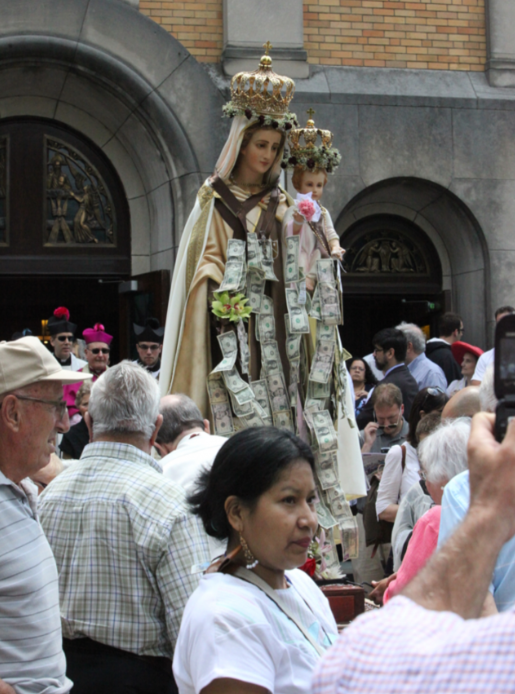
News from Our Lady of Mount Carmel in Newark: “Our New Administrator, Rev. Danny Dos Santos Rodrigues is pleased to continue the Latin Mass and other traditions established by Monsignor Ambrosio which makes the attendance and overall success of this event a living testament and legacy for the future events to come.”

8
Mar