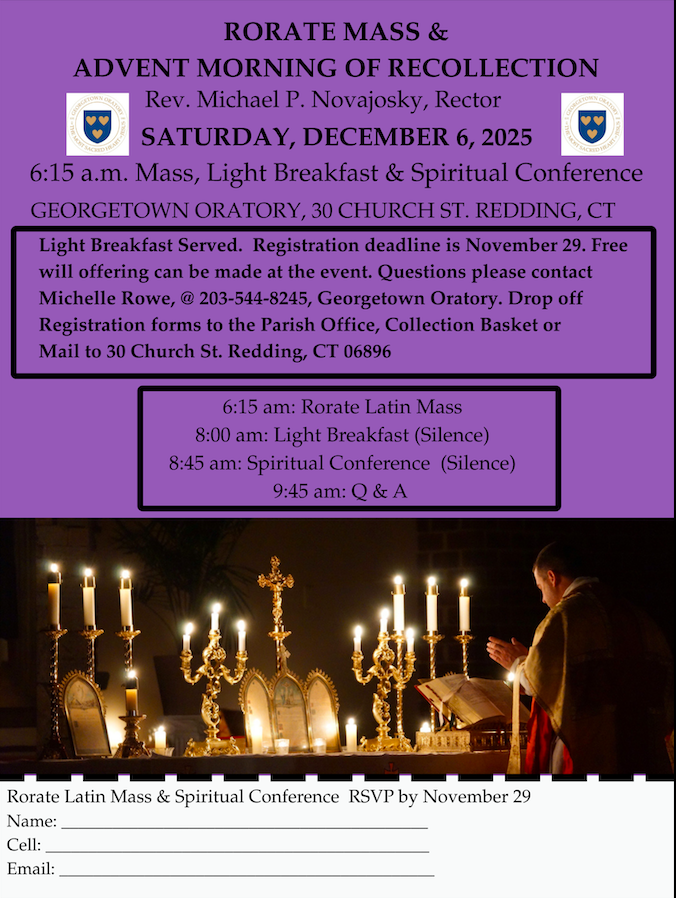
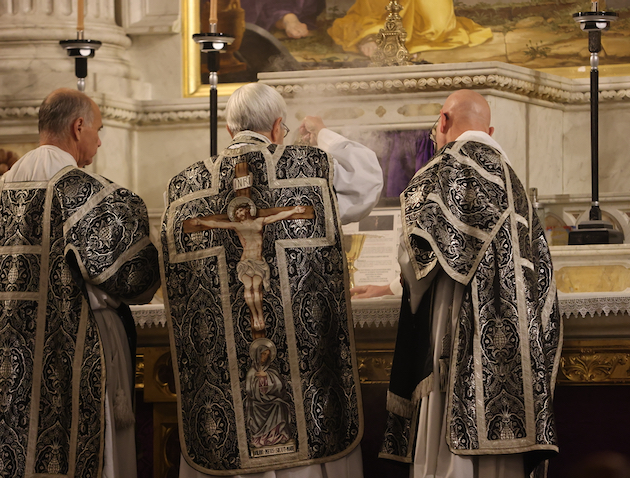
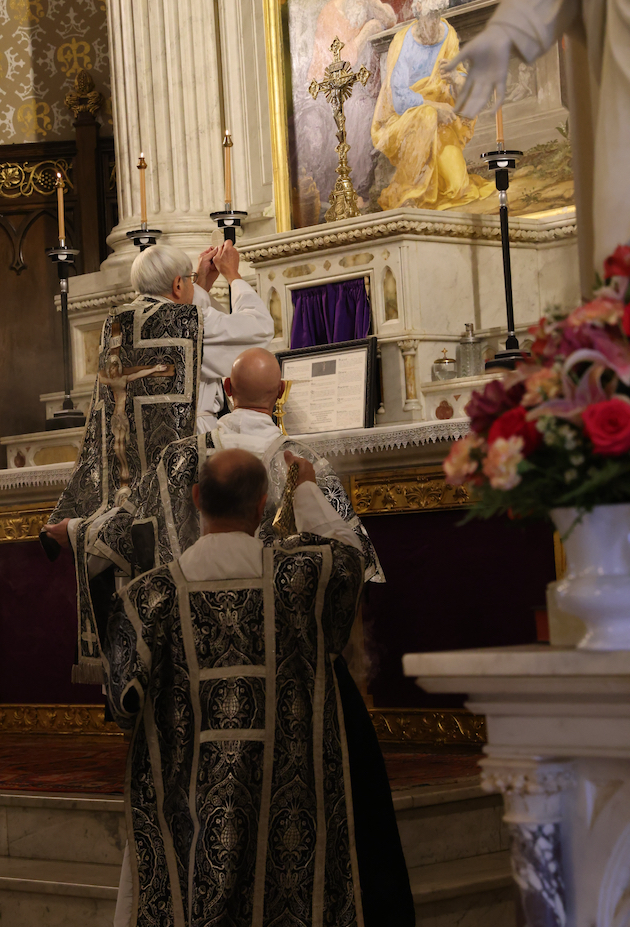
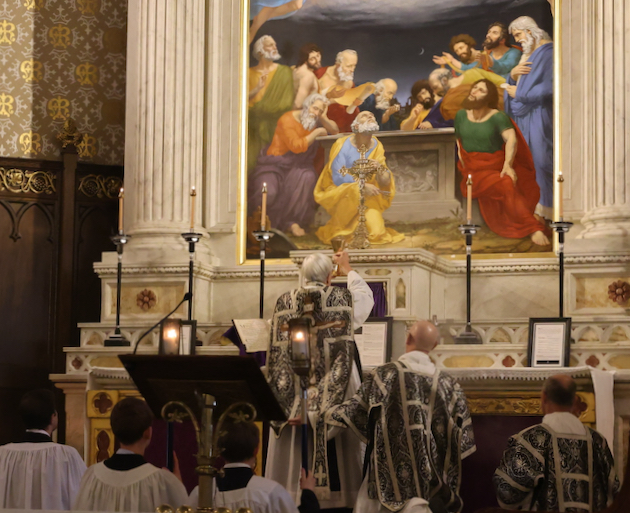
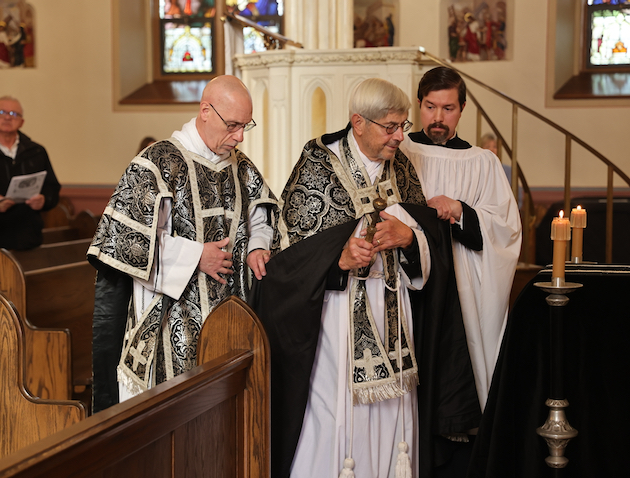
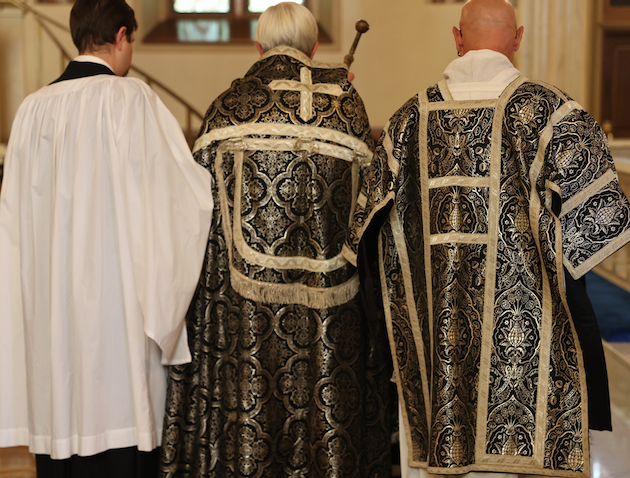
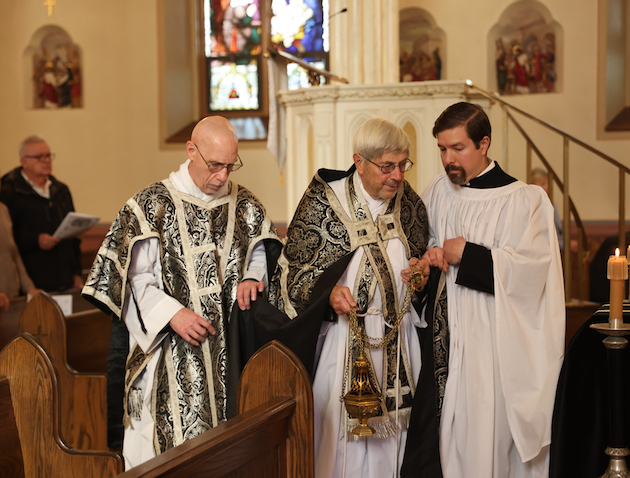
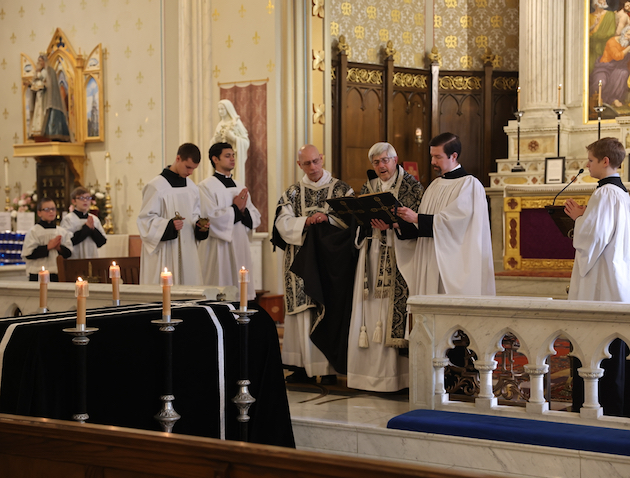
The Georgetown Oratory in Redding, CT will be offering a Sung Latin Mass on Thanksgiving Day at 9 AM. It will be a Votive Mass of the Holy Eucharist and will conclude with Benediction.
Published in Masses | no comment
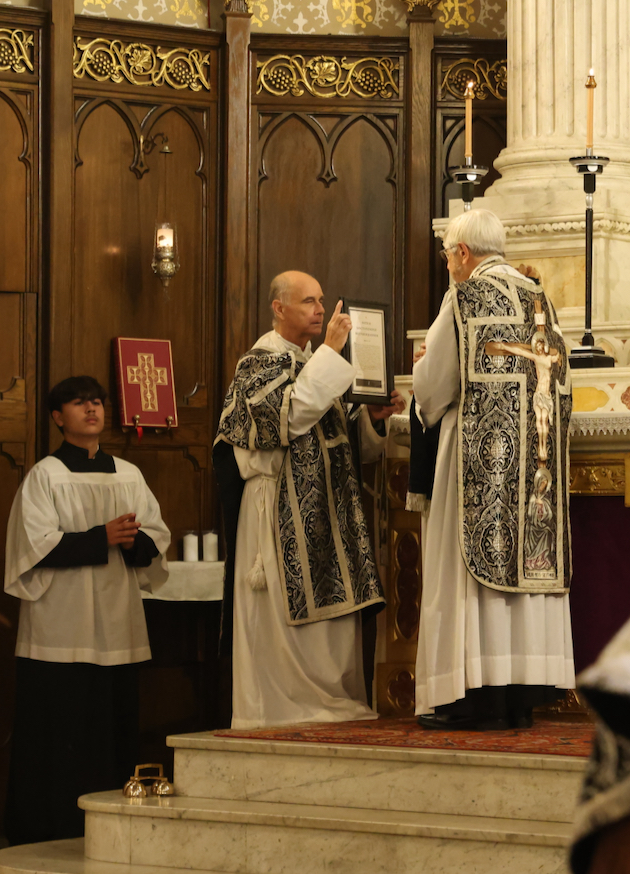
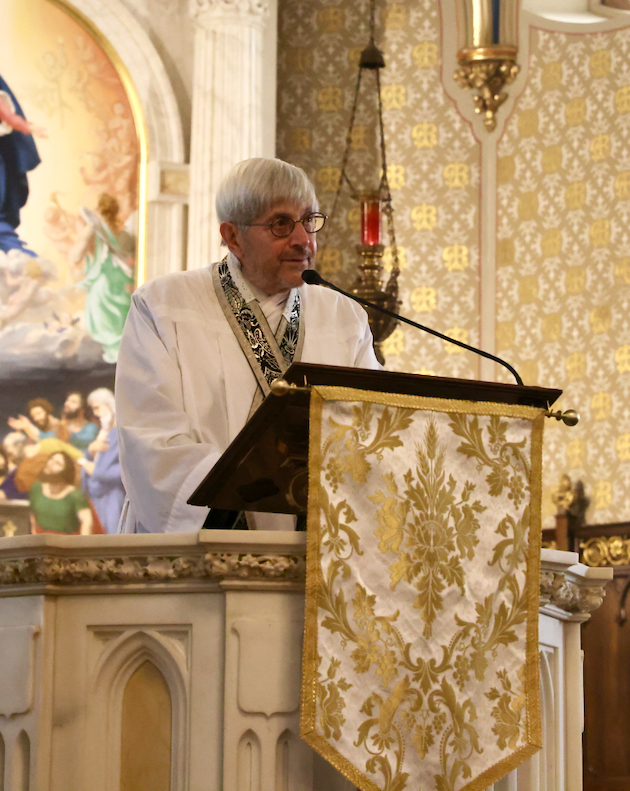
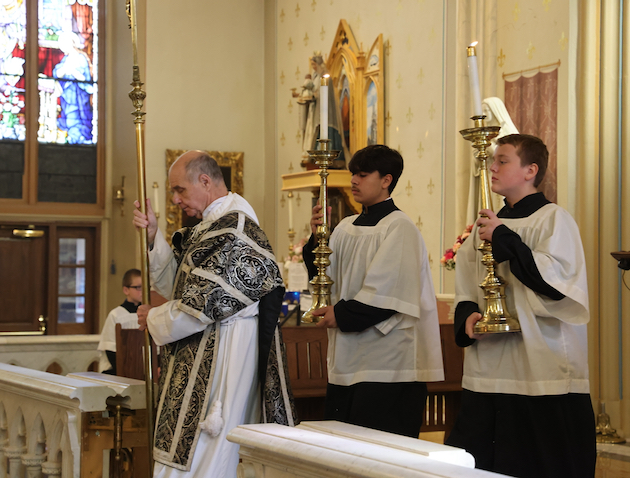
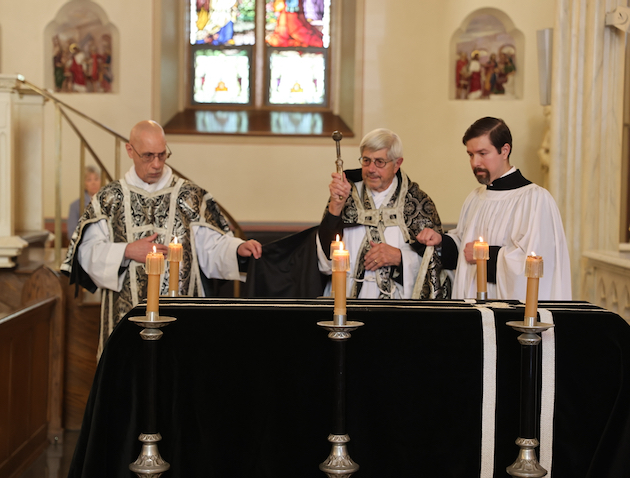
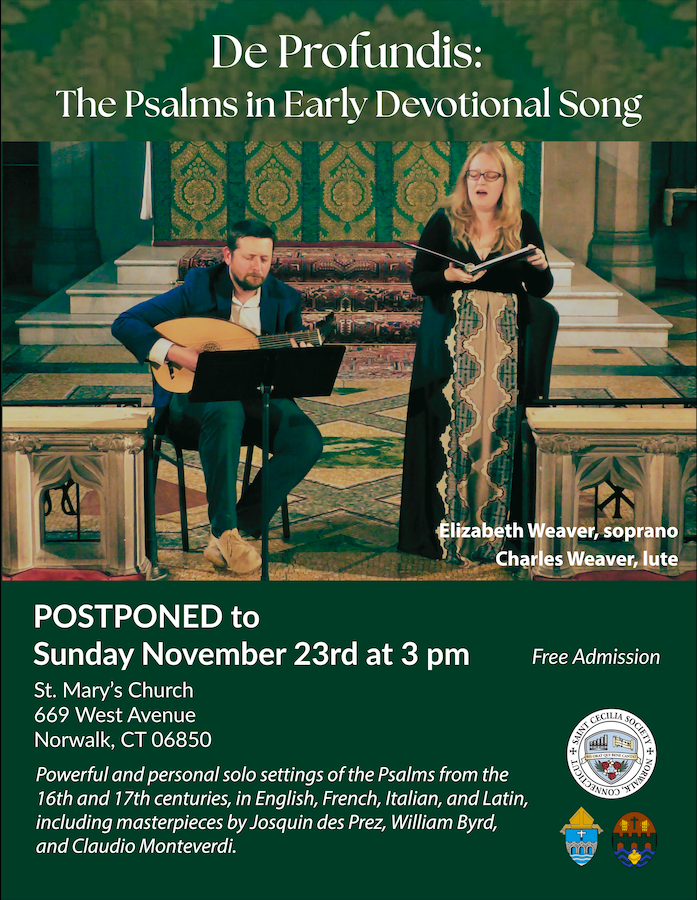
Please see this revised flyer:
Published in Uncategorized | no comment
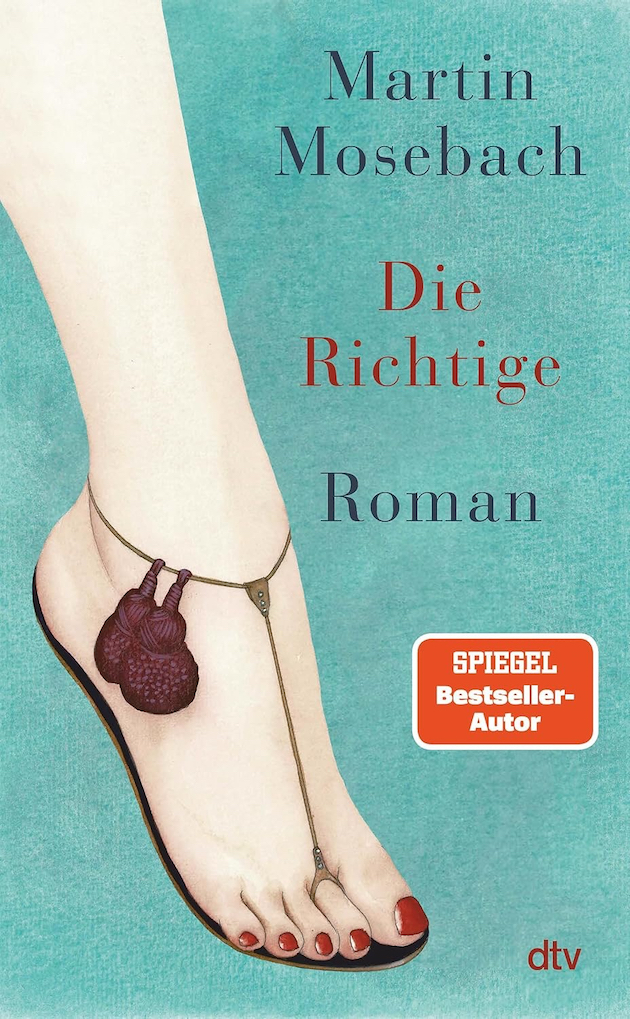
by Martin Mosebach
2025, dtv, Munich.
Martin Mosebach’s recent novels tend to revolve around an underlying “clash of civilizations.” The inhabitants of Western Europe and specifically Germany are characterized as one-dimensional, manipulative, materialistic, pleasure-loving, and scheming. The representatives of this European world encounter other regions, where there still exists awareness of the reality of life and death and of the spiritual realm, both in its good and evil aspects. Mosebach has shown us visions of this more elemental world in present day India, in Egypt and Morocco – but also even under the bright sunshine of Southern Italy. The spiritual forces encountered may be positive (Das Beben, 2005) but also indifferent to hostile (Krass, 2021) or even demonic (Mogador, 2016).
In Die Richtige, Mosebach relocates the conflict of these antagonistic realms within the confines of one European city of our day. For in this book the author returns to his hometown of Frankfurt to tell us the story of an artist. Louis Creutz is a critically acclaimed painter. He is surrounded by some well-to-do groupies who have followed and facilitated his career. Coming into this circle is Astrid, a woman of Swedish background – a kind of carefree, thirtysomething quasi-hippy. Creutz, whose artistic output so far has been an endless series of female nudes, seeks Astrid as his next model – and more besides. The plot of the novel revolves around this relationship. What starts as a series of leisurely discussions builds to an eventful, shattering climax.
Die Richtige is an excellent read. The action moves at a brisk pace and the transitions from one section of the novel to the next are creative and surprising. Compared to other works by Mosebach, the main characters have greater believability. The painter Creutz is early on identified as a somewhat sinister figure. There are, for example, repeated references to Mozart’s Don Giovanni in his regard. Yet Creutz has other sides to his character. In his appreciation of the effects of light in his studio or on a winter trip to Venice he reveals the sensitivity of a true artist. He comments on the marvelous patterns of a flock of pigeons in flight and discourses knowledgeably on the unique taste of fine aged Rhine wine. Similarly, Creutz’s entourage, including Astrid, are not (just) caricatures but real personalities. In contrast to the critical description of similar characters in Mosebach’s earlier novels they are portrayed as halfway sympathetic individuals.(At least with the exception of one academic biographer!)
Mosebach’s style is colorful and visual, full of striking images. The painter’s mysterious studio, described in language reminiscent of H.P. Lovecraft, occupies an isolated, rundown building surrounded by modern construction. We witness a dramatic wild boar hunt in the mountains near the city. A strangely dressed madwoman wanders about the town and intervenes at critical moments in the plot. A miscarriage is described in excruciating detail. The parks and gardens of this city become at night sinister locations where youths prowl who victimize the unwary – sometimes in ghastly ways.
Die Richtige, however, also has its satirical elements. An example it contains of the preposterous writing of an art critic is precious. We learn that the life of a German entrepreneur in 2025 is that of a man constantly out of the country in order to run his business – for his company’s workforce is largely in China. Above all, Mosebach describes the incompetence and indifference of the “guardians of order” in today’s surveillance and therapeutic state. A character under investigation for murder escapes easily from the law enforcement authorities by giving a simple alibi. A team of three men – they need that many today? – chasing fare beaters on streetcars picks up a mentally ill woman who then is promptly dumped back on the street by the incompetent system. A woman suffering a miscarriage endures horrors under the care of supposed specialists. In Mosebach’s eyes, the Germany of 2025 is no longer an exemplar of competence – to put it mildly.
Need we mention that Christianity plays no role in this story? The most we can say is that Creutz eventually receives a lavish commission by a super wealthy private donor to paint a chapel in France. Characters comment on this strangeness of such a subject given what they – and we – know about the artist. But have we not read allegations of circumstances even stranger than those of this novel involving a certain church-approved artist in Italy?
But what then does Mosebach’s novel have to say about today’s world to the readers of a traditionalist blog? What is the “moral” of the story? Die Richtige is certainly not a didactic text. For Mosebach is of the opinion that the role of the Catholic novelist is not to preach or conjure up edifying Catholic “role models” but to bring a Catholic sensibility to the description of the world as it is. Indeed, it is Catholicism – or better, Catholic culture – that gives the novelist the capacity to apprehend and depict this reality.
Accepting that definition, Die Richtige portrays a fearsome picture of Europe in 2025, both physically and spiritually. A society on the verge of collapse is held together by incompetent administrative, legal and medical bureaucracies. A world that is inhabited by pleasant, “nice” but superficial characters who are trying to find a way out of their tedium. The bureaucrats and businessman of modern society are attracted to a cult of the artistic creator who resides far above the gray life of the secular city. But as this novel shows, the world of spirit and of creativity also has its malevolent side. Dark forces lurk and make their presence felt. Above all to people – like the ladies and gentlemen of the upper middle class depicted in this novel – who resolutely refuse to acknowledge their existence.
It is a pity that, as far as I am aware, only one of Martin Mosebach’s many novels (What was before, 2014) has been translated into English!
Published in Book Reviews, Martin Mosebach | no comment
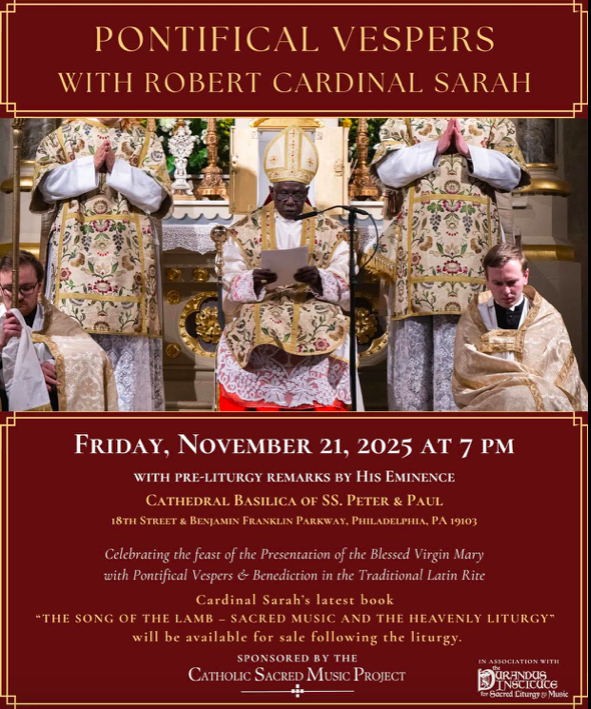
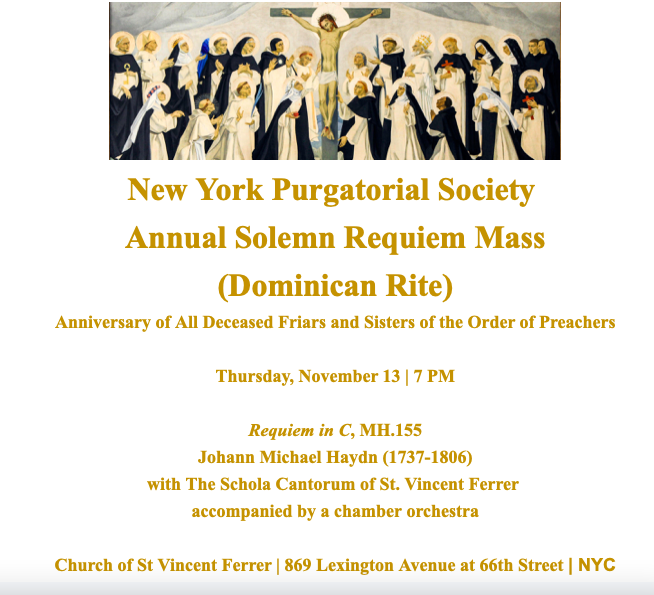
Published in Masses | no comment
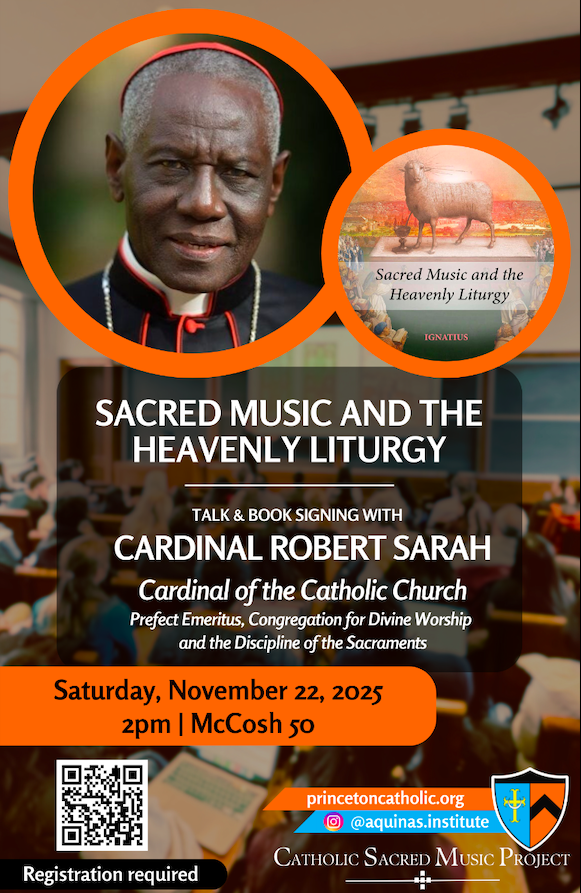
The Aquinas Institute, the Catholic chaplaincy at Princeton, is sponsoring an event with Cardinal Robert Sarah upon the release of his book, The Song of the Lamb: Sacred Music and Heavenly Liturgy (November 2025, Ignatius Press), in conversation with Peter Carter.
Cardinal Robert Sarah of Guinea is the former Prefect of the Congregation for Divine Worship and author of numerous books including The Power of Silence: Against the Dictatorship of Noise, God or Nothing: A Conversation on Faith, and The Day is Now Far Spent.
Peter Carter is the Founder and Director of the Catholic Sacred Music Project and Director of Sacred Music at the Aquinas Institute.
You must register to attend this event (either live or on-line): https://princetoncatholic.org/lecture/lecture-sacred-music-and-the-heavenly-liturgy/
Published in Uncategorized | no comment
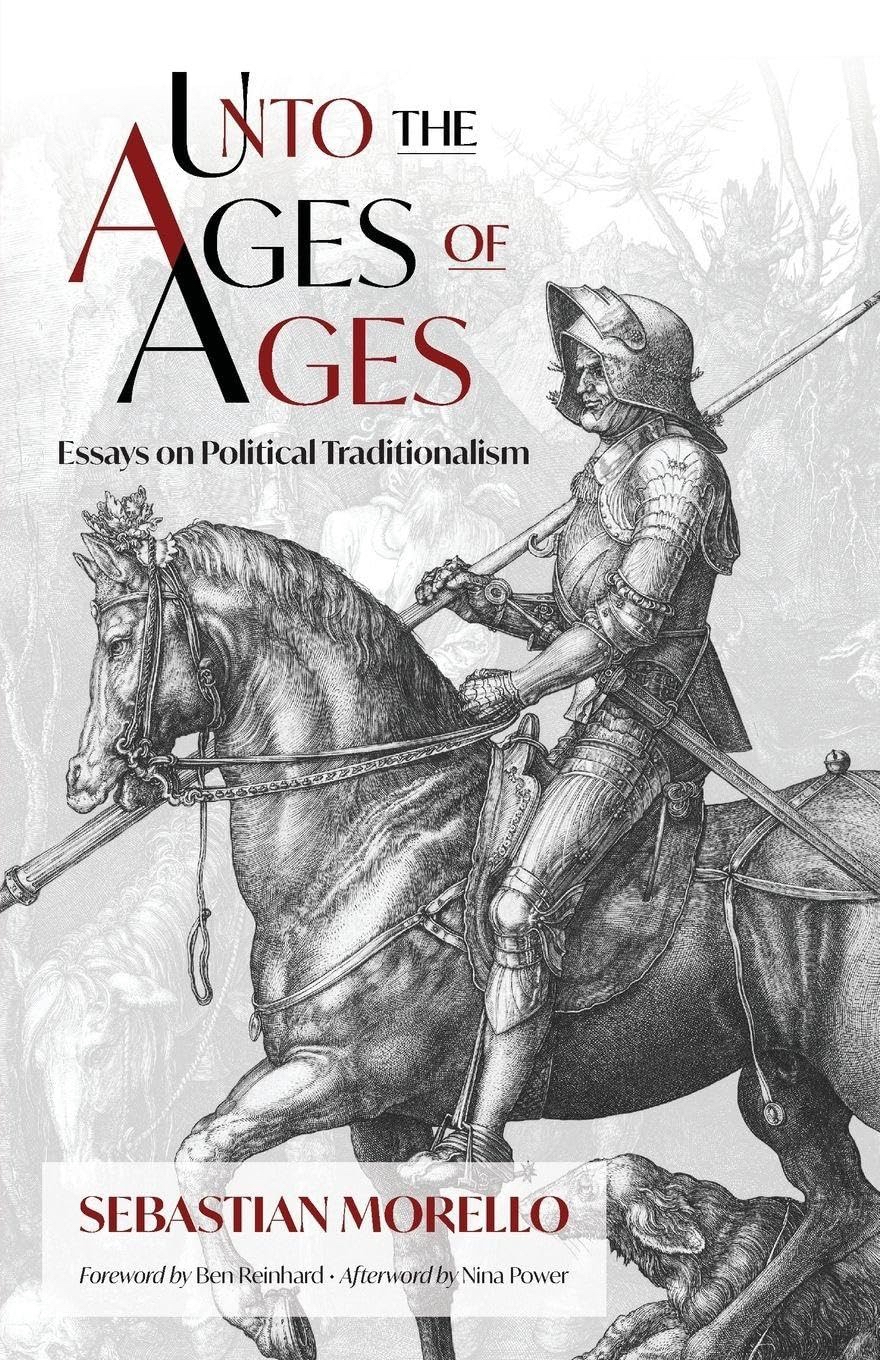
by Sebastian Morello
Arouca Press, Waterloo ON, 2025
I had no sooner reviewed earlier this year a book by Sebastian Morello- Mysticism, Magic and Monasteries – than the author published a new volume: Unto the Ages of Ages: Essays on Political Traditionalism. His purpose in this new book is to lay out a positive response of traditionalism to the crisis of today. For Morello states that on the right, there is much criticism of modernity, but not much articulation of a positive alternative to the world of today. To do so, Morello returns to Burke, de Maistre and other “first responders” to the crisis of modernity as it emerged in the French revolution.
Unto the Ages of Ages collects essays published in the European Conservative. The political focus – or awareness – of Unto the Ages of Ages is reminiscent of the writers of Triumph magazine in the United States (1966-74). This is in contrast to those authors who restrict themselves more to liturgical, cultural or religious issues. But Morello would argue that the Catholic faith has an inherently political aspect. Christianity should not set out to accommodate itself to the “secular age” but:
{R]eject it outright and undergo the hard slog of retrieving a pre-modern mind and heart. (p.xxii)
For Christ’s admonition to “give to Caesar what is Caesar’s” did not at all support the existence of a separate, autonomous secular “city.” For ultimately everything belongs to God and whatever Caesar has is by delegation.
It is unsurprising that in this book the hierarchy of the Catholic Church plays a minor role. Morello does believe in the importance of truth and that the Catholic Church is the bearer of truth; indeed, he was active for years in catechetical programs of the ”institutional Church.” But gradually he realized how different his beliefs were from those of many of his co-religionists – because “the Catholic Church is largely run by progressive activists.”
Morello opposes the leveling and globalist policies of the present ruling powers of the West. So, for example, he argues against mass immigration and for patriotism. He denounces modern Western entertainment culture as found in music, movies and television (compare the remarks on this subject of Solzhenitsyn!). Morello argues for the concrete, the organic, the traditional (in the best sense of the word). He sees these as inherent features of English culture as embodied in the landscape of England, the customs of England, the institution of the British monarchy, etc.
We see the influence of the late Roger Scruton, but also of Chesterton. For example, reading this book I recalled Roger Scruton’s book on wine culture: I drink therefore I am in which he identifies as the unique, defining aspect of wine the specificity of the vineyard’s location and the individuality of the producer. And did not Chesterton’s The Rolling English Road make a point like Morello’s in 1913? Morello too uses a similar image – whether it is totally accurate I cannot say – contrasting the appearance of the “rationalistic” agricultural landscape of France with the irregular, organically developed fields of England.
Yet, the United Kingdom today is also one of the most modernistic societies on the planet – a true surveillance state. And political “conservatives” – which in the United Kingdom is, after all, even the name of a political party – have been instrumental in creating and perfecting this regime. Again and again in this book, Morello returns to the topic of “conservatism.“ Inherently problematic, conservatism as practiced in recent decades has often been a vehicle for imposing, modernistic, and anti-traditional policies on the peoples of the West. That is because, in most cases, the conservatives fundamentally do not disagree with the ideology of the global liberal society.
There are some gems in Unto the Ages of Ages that should delight the liturgical traditionalist. Morello makes the case for the elaborate Sarum rite – the predominant pre-Reformation use of the Roman rite. Morello considers the Anglican “Ordinariate” within the Roman Catholic Church as a potential champion for restoring the Sarum rite. This may be unrealistic – but have we not seen at least one recent instance – in Princeton, N.J. – of Sarum Rite Vespers being splendidly celebrated with the participation of the Ordinariate? Morello acclaims as a counter-revolutionary deed the building of the basilica of Sacre Coeur in Paris after the tragedies of France’s defeat in the Franco-Prussian war and the civil war of the Commune (1870-71). It was a bold reassertion of Catholicism on one of the most prominent sites in Paris. Furthermore, the devotion of the Sacred Heart has always had a specifically counter-revolutionary aspect going back to the wars of the Vendee. The new church was a celebration of the Catholic identity of France – not in triumph, but in penance after the horrors the nation had just lived through. And it has been successful – Sacre Coeur has remained an “iconic” image of Paris ever since.
Morello also gives tips on how a traditionalist revival can begin at home – for example, by exposing our children to traditional folk music. For it is highly unlikely that someone raised on the pop music of today, which Morello calls demonic, can ever have any appreciation of classical Western music. But openness to classical music can be made possible if in the family a foundation is laid through listening to – and performing – the folk music of the past. Morello tells us how the slovenly or even obscene dress of today conveys a powerful anti-Christan message. With a little imagination, however, one can work against this force. Morello gives hints on how with, the aid of consignment and secondhand stores, any one of us can vastly improve his or her appearance.
These ideas of Morello ideas resemble those we have already heard, and, in the case of some of us, already practiced. But it is still instructive to find an author who systematically unites these themes and integrates them into a whole. And what Morello argues for is not just an alternative, private, lifestyle but the beginnings of a political recovery. For Christianity was not meant to be lived as a separate cult, but of necessity must permeate the whole culture, society and politics. Morillo is arguing for such a political movement. But should we call this “conservative” anymore? According to the author:
Perhaps in decades past, the conservative cause looked like an attempt to direct people back into a cage at the very moment they felt themselves emancipated. Now, however, people are crying out to be liberated from the fetters of self-indulgence and reclaim their “roots”. They want to engage in a “meaning-based” discourse, and it is in such a discourse that the conservative tradition can shine like a great beacon leading people into the calm harbor of sanity. This then, is an important moment for a true conservative revival, but conservatives – calling themselves “conservatives” – will need to wake up and seize it. (p. 135)
Sebastian Morello, based on Solovyov’s Tale of the Antichrist, even hopes for a “right-wing ecumenism” of Catholicism, Orthodoxy and Protestantism based not on submergence in some kind of uniform, undogmatic liberalism but upon the shared truths of Christianity. Truths that increasingly face the opposition – and downright hatred – of the despotic society of modernity.
Is Morello’s political initiative unrealistic? Perhaps! But we are seeing today, both in and outside of the Church, in religion, art, politics and family life, movements underway to return to a sane world. Can this undercurrent eventually prevail against the asphyxiating grip of the current culture? Ultimately, yes, but we should not be surprised if that eventually requires martyrdom. For the price of returning to traditional Christian culture in the face of the all-engulfing control exercised today by the masters of our society may well be a high one.
Published in Book Reviews | no comment
Churches of New York
Holy Roman Empire
Website Highlights
Archives
[powr-hit-counter label="2775648"]