31
Mar
31
Mar
30
Mar

The altar of repose in readiness.
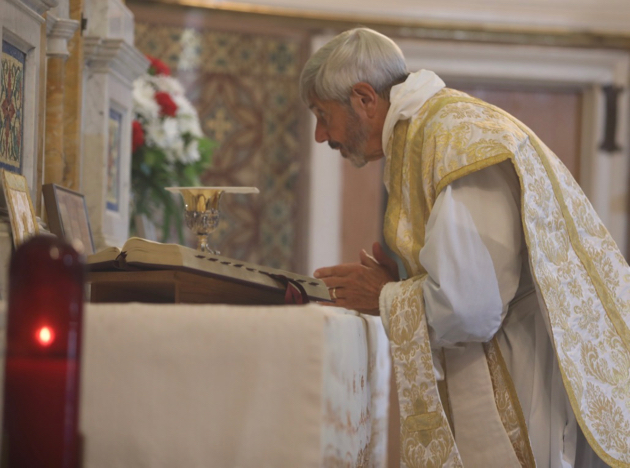
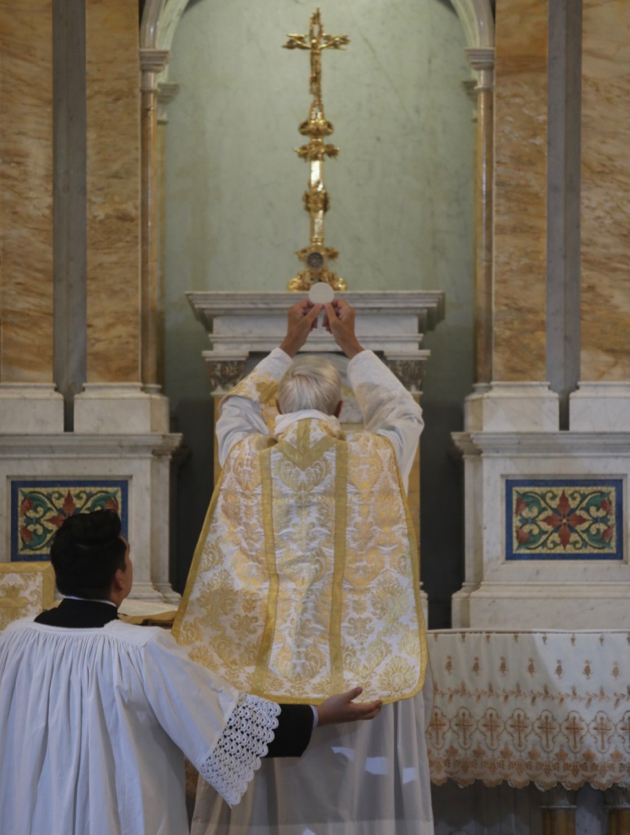
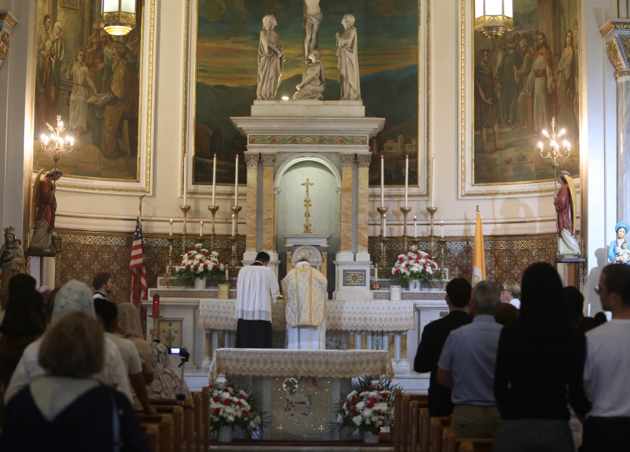
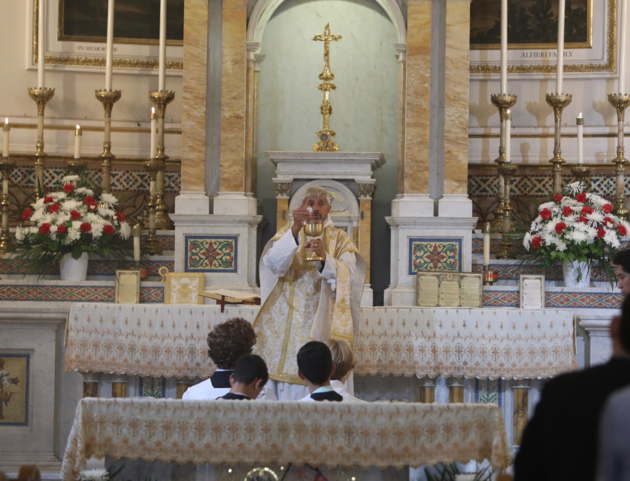
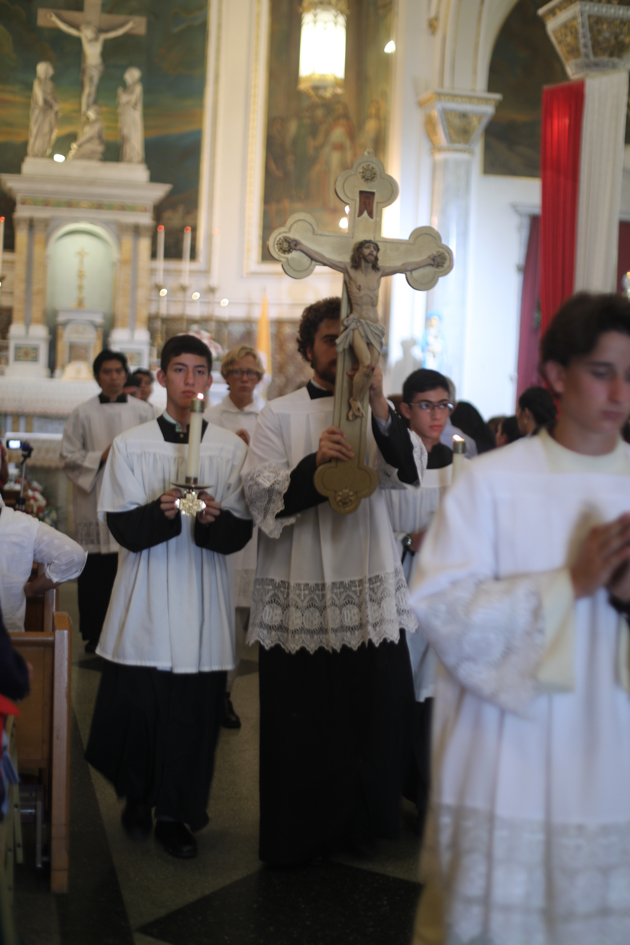
After the Holy Thursday Mass, the procession to the altar of repose at the parish of St. Mary, Norwalk, CT.
30
Mar
29
Mar
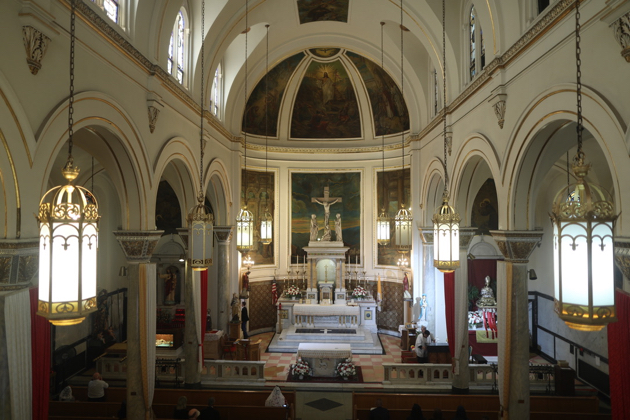
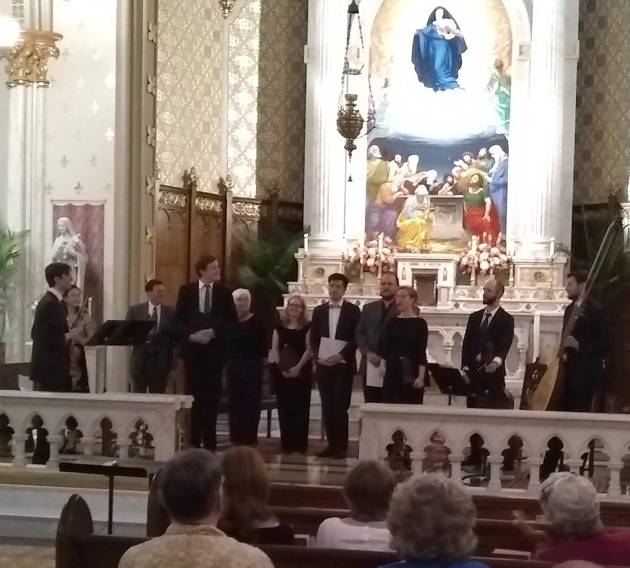
Yesterday evening a very beauiful Office of Tenebrae was sung at St. Mary’s Church, Norwalk, CT. The psalms were chanted in the front by a men’s choir. The St. Mary’s Schola Cantorum sang the Lamentations of the Prophet Jeremiah and the responsories in polyphony in the choirloft. The liturgy ended in complete darkness with a polyphonic setting of the Miserere. The clergy, choirs and congregation departed in silence.
25
Mar
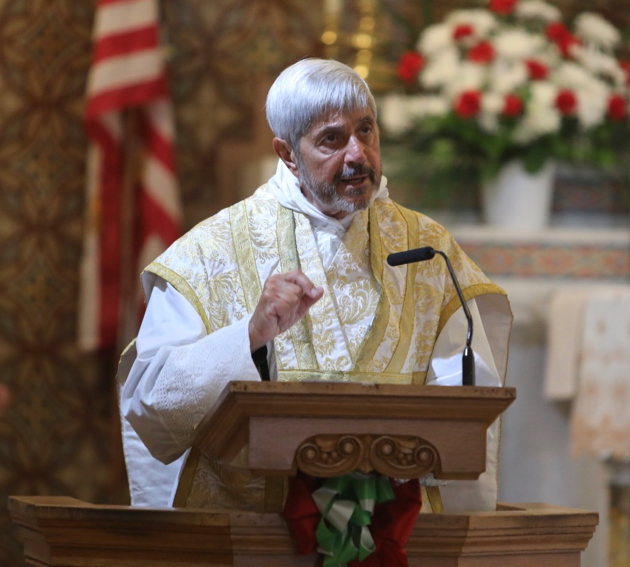
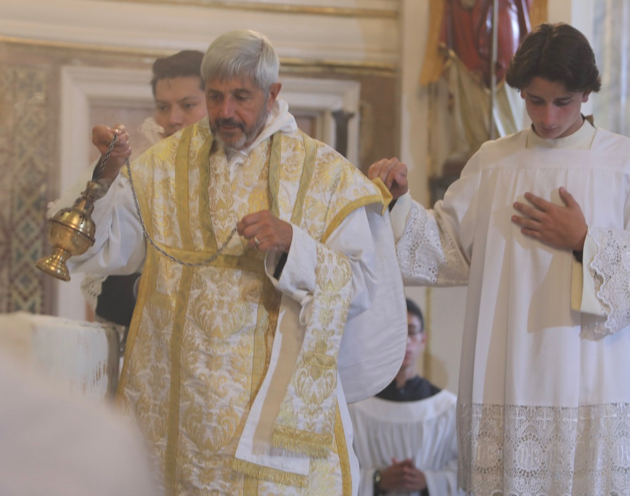
Palm Sunday 2018 at St. Mary’s Church, Norwalk CT. Fr. Donald Kloster, celebrant.
The beginning of the Mass of the Palms.
The blessing of the palms.
Distribution of the Palms.
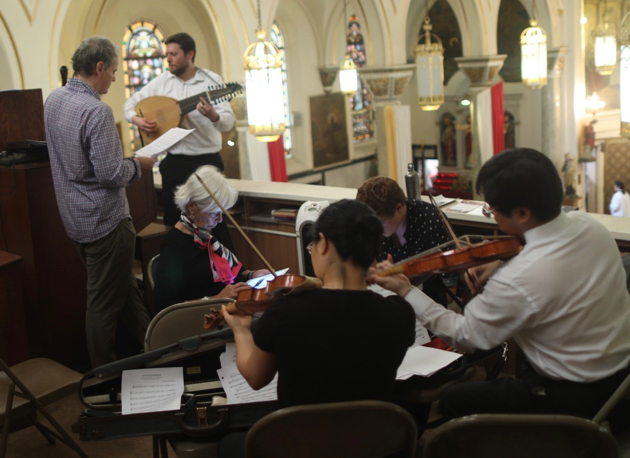
(Above and below) David Hughes, music director of St Mary’s, led the assembled musical forces of the parish:the schola cantorum, combined student scholae, the men’s chant choir and the parish adult choir. It is a most challenging day of the year in terms of musical complexity!
The procession through the streets of Norwalk on a chill early spring day.
The procession reaches the door of the church.
The cantors inside the church sing: Gloria, laus et honor tibi sit, Rex Christe Redemptor...
After the final repetition of the refrain, the subdeacon bangs three times on the doors with the foot of the cross. The door is then flung open.
The Mass of the Passion.
The Passion according to St. Matthew. The Passion is sung by three cantors; the choir provides the polyphonic responses of the crowd.
After the cantors of the Passion leave, the conclusion of the Passion is proclaimed by the deacon.

We end on a meditative note. The palm crosses from the day’s ceremonies left at the tomb of Fr. Ignacio Barreiro, curate of the parish, who died almost a year ago on Holy Thursday, April 13, 2017.
25
Mar
For a schedule of traditional liturgies during Holy Week in Connecticut, New York and New Jersey, go to Holy Week Schedule
(above: The reredos at Holy Redeemer Church, Manhattan)
24
Mar

(above) “Judah” by Francisco de Zurbarán.
A Haydn oratorio, a Bruckner symphony, the drawings of Michelangelo, baroque oratorios, a 16th century Aztec feather-work recreation of a Netherlands devotional print – these are objects and performances that you could have seen or heard in New York in just the last few months. But what do we know about the religious influences and the culture in which they arose? Certainly the local Catholic establishment is of no assistance in learning more ( even if it’s aware of these events in the first place). The secular authorities – the curators, the writers of program notes and the media – can, on occasion, be much more helpful in rediscovering these links. Yet their analysis all too often focusses on the personality of the artist, on narrow issues of history, technique or ideology or on the “general human.”
In this regard, I’d thought I’d mention a couple of small exhibitions at the Frick collection that a fan of “Catholic culture” might find interesting. In contrast to the crowded “blockbusters” found further north on Fifth Avenue, the exhibitions at the Frick generally show one or several selected paintings from places one would very likely never visit. For a hefty admission fee one can contemplate such works ideally displayed and in a peaceful environment.

(Above) “St Jerome” by Veronese.
Two exceptional works by Veronese have left Italy for the first time. They are from a rarely visited church in Murano. If you are like me, you may have visited this island’s tourist trap glass emporia but never ventured into the local churches or seen the art they contain. The subject of one painting is familiar – St. Jerome in the desert – that of the other less so(at least to me): St Agatha in prison visited by St Peter. The color is of course magnificent – and every detail isn’t just “decorative” but derives from the legend of these two saints. As the exhibition notes point out, it is testimony to the superabundance of creativity in late sixteenth century Venice that one of the the main artists of the period painted two such major works for a small chapel on an outlying island.
Also on display is a cycle of 17th century paintings of Jacob and his sons by Francisco de Zurbarán – reunited for the first time in ages. The artist has shows great familiarity with the e biblical texts describing the history and destiny of these brethren. Zurbarán has given each of them a distinctive identity with bizarre costumes and attributes. I frankly found these works less successful than many other works of this artist I have seen. I would guess that assistants had a large share in executing such a massive project. But what is indeed interesting is the subject matter. For, at that time, some were of the opinion that the American Indians were descendants of the lost tribes of Israel. Depictions of Jacob and his sons – perhaps this one too – were created for patrons in the New World. So let’s not laugh at the Mormons – others had strange ideas of pre-Colombian history several centuries before them!
Of course, if curators feel constrained in giving full credit to the Catholic Church, they are not so inhibited in repeating the platitudes of our currently reigning ideology. Based one one incident in the 18th century, the Zurbarán paintings – artwork commissioned in 17th century Spain – are “reimagined” as symbols of religious tolerance and diversity. That’s life….
For more on these exhibitions see HERE. You only have till tomorrow to see the Veronese paintings!
22
Mar