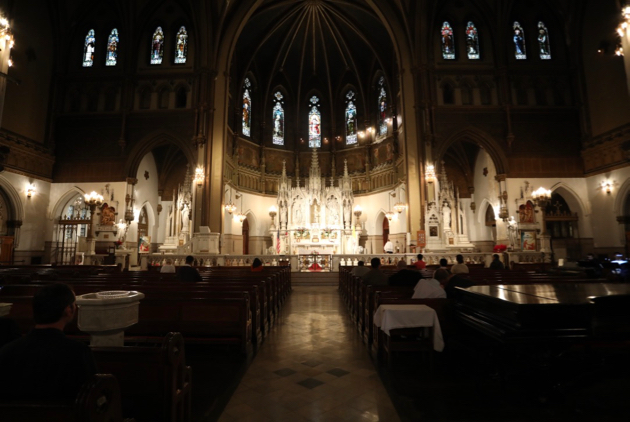
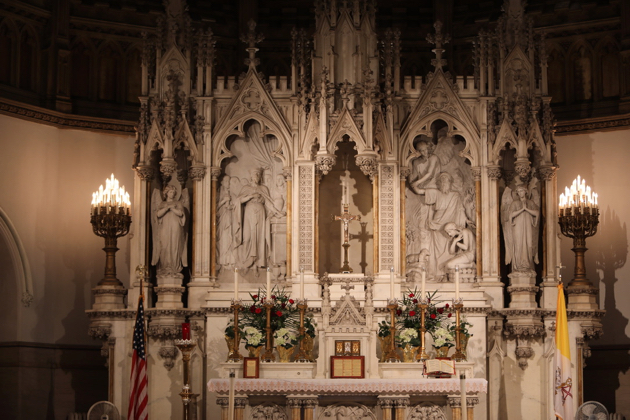
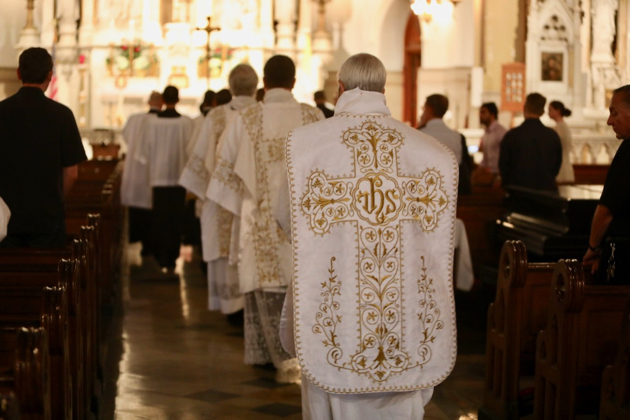
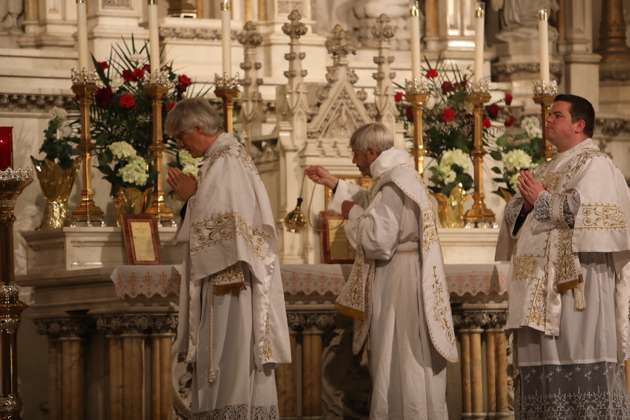
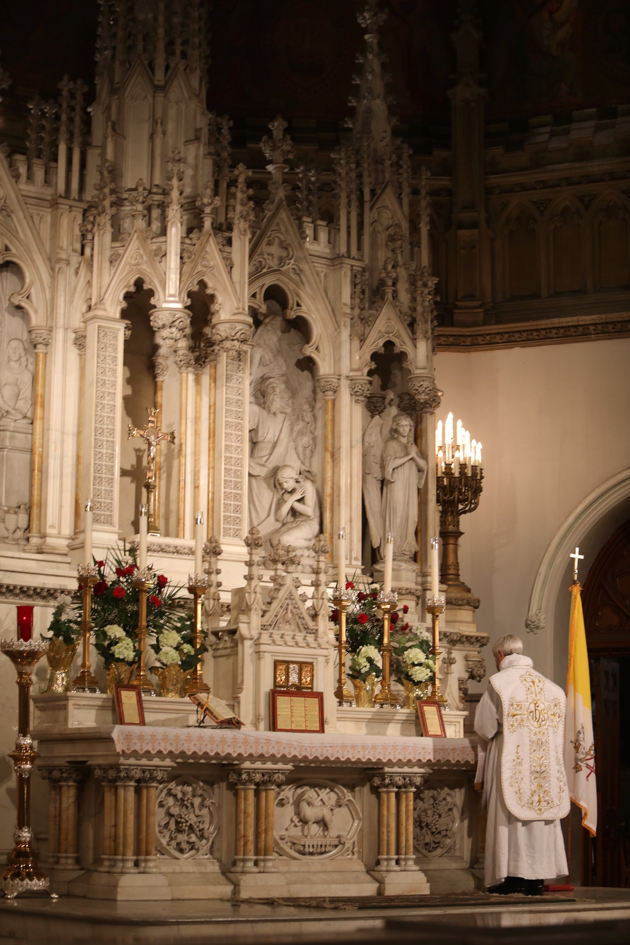
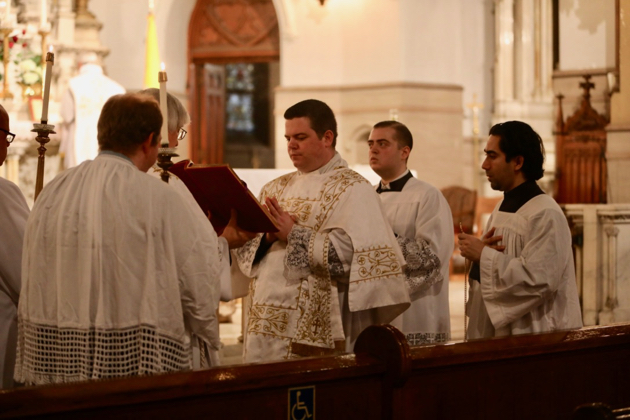
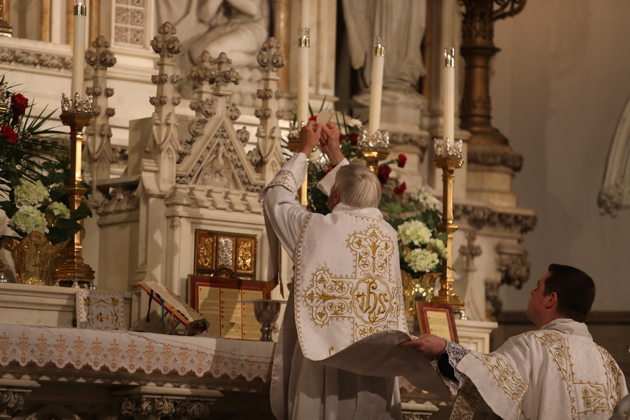
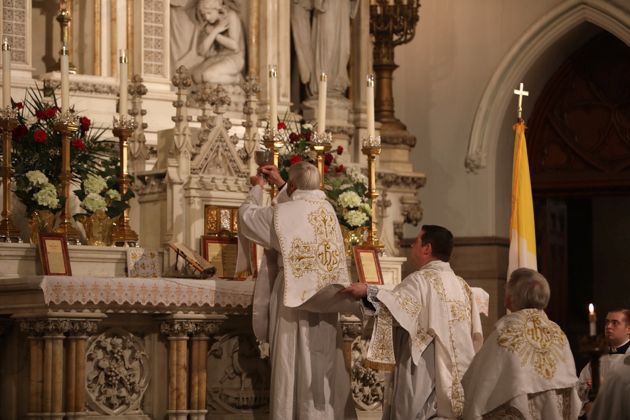
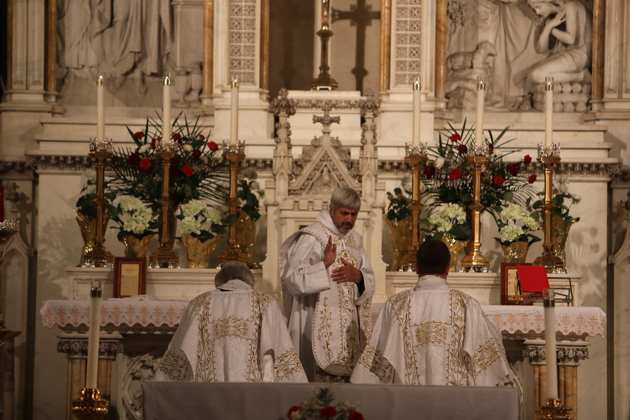
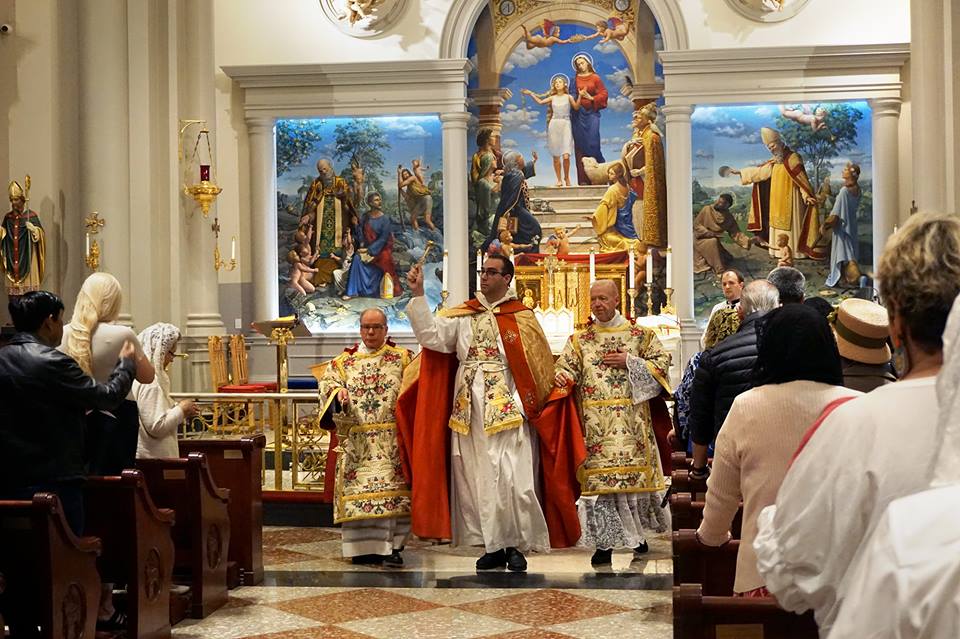
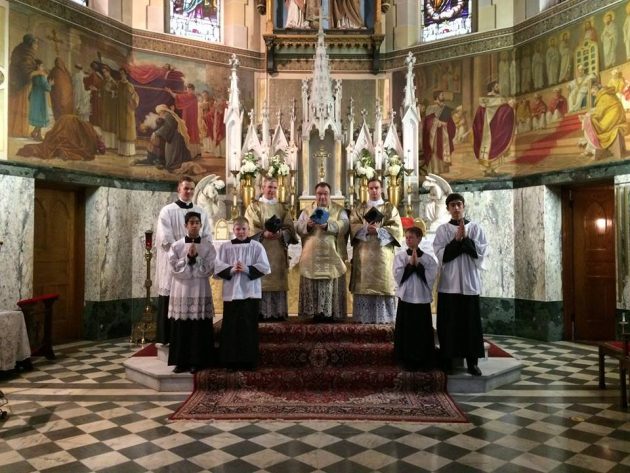
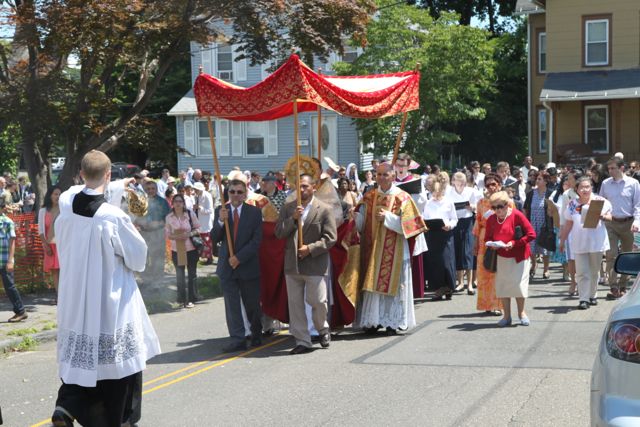
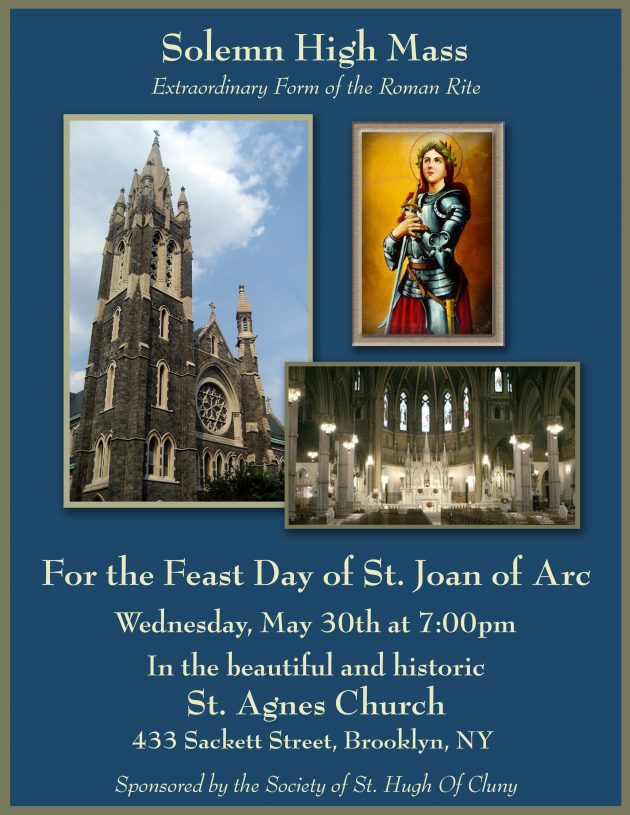
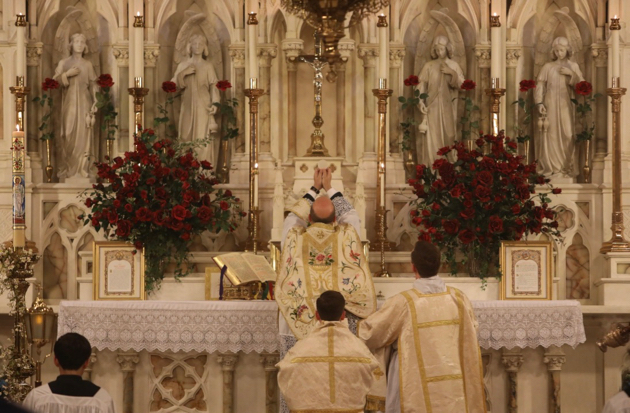
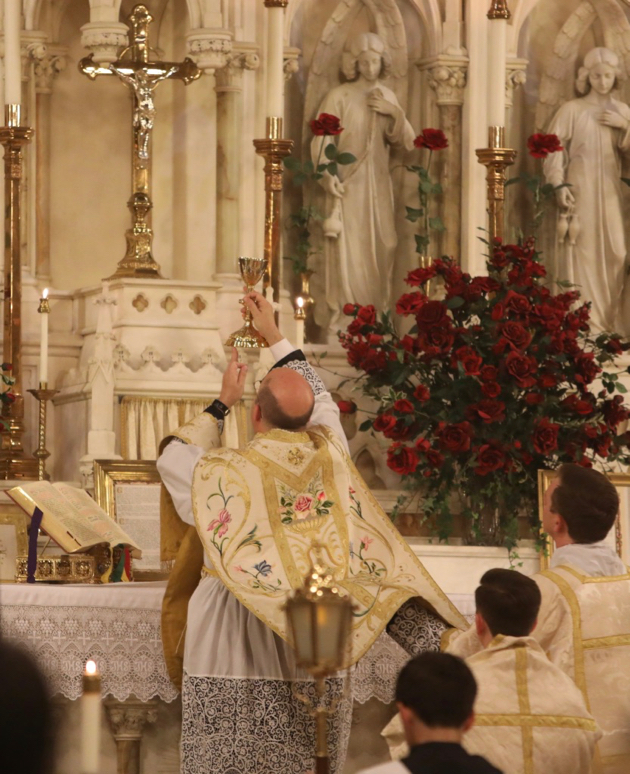
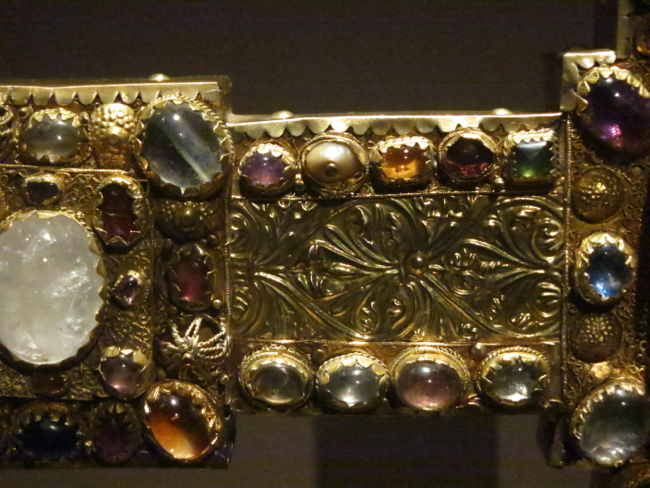
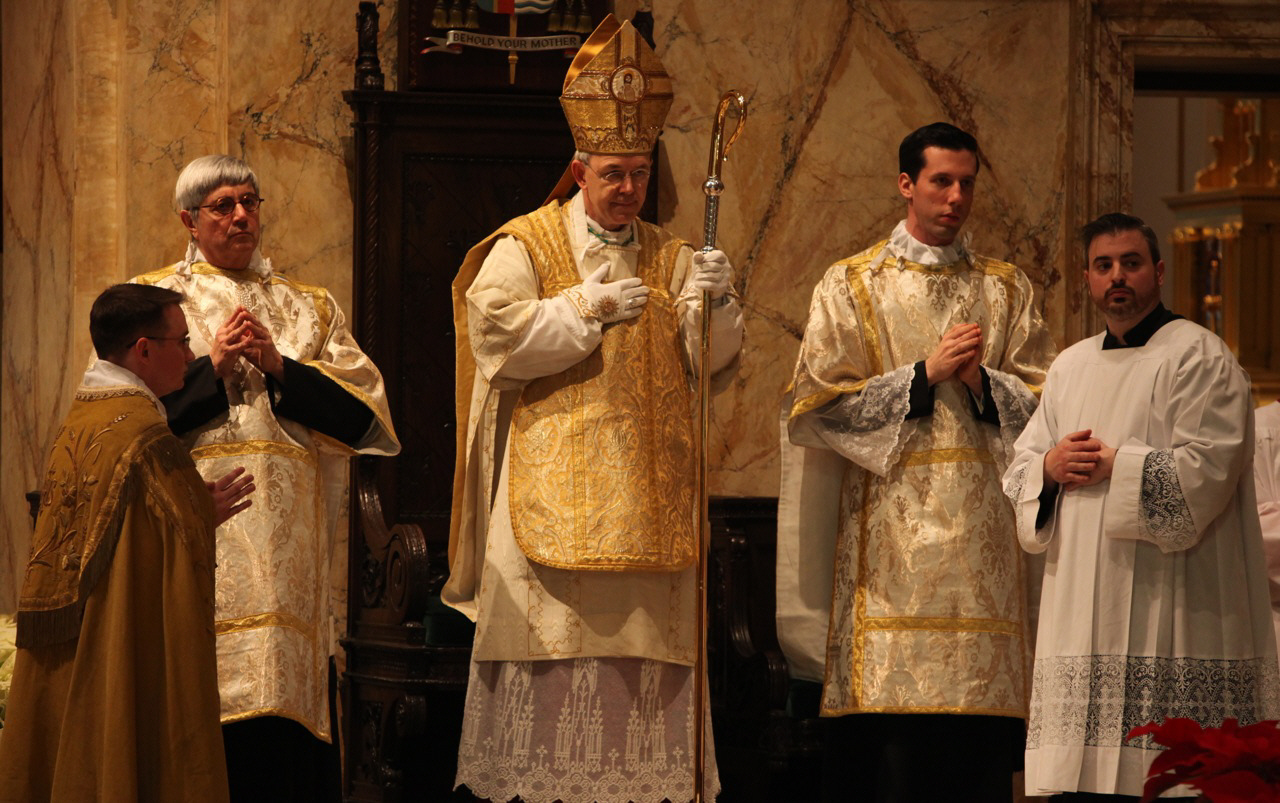
There will be an extraordinary form votive Mass of the Holy Cross on Friday, January 19th at 7:30 PM at St. Mary’s Church in Greenwich, CT
10
Jan
There will be an extraordinary form votive Mass of the Holy Cross on Friday, January 19th at 7:30 PM at St. Mary’s Church in Greenwich, CT
8
Jan
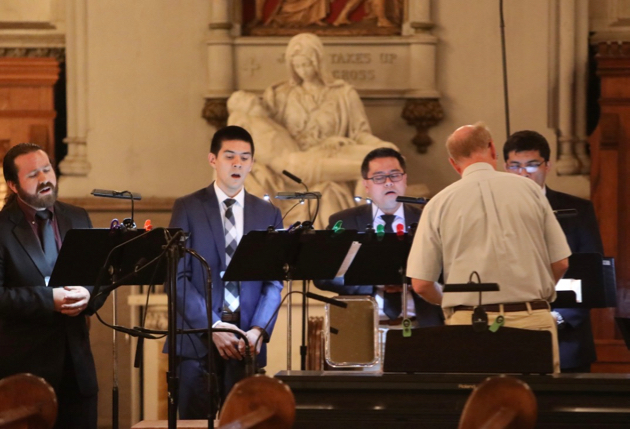
A Traditional Latin Missa cantata will be offered at the Church of Saint Agnes, 143 East 43rd Street, Manhattan
(near Grand Central Terminal), on Saturday, January 13 at 10:30 AM, for the commemoration of the Baptism of Our Lord.
Father Tomasz Szczepanczyk, Celebrant
Music provided by Mr. Heitor Caballero, Director of Sacred Music
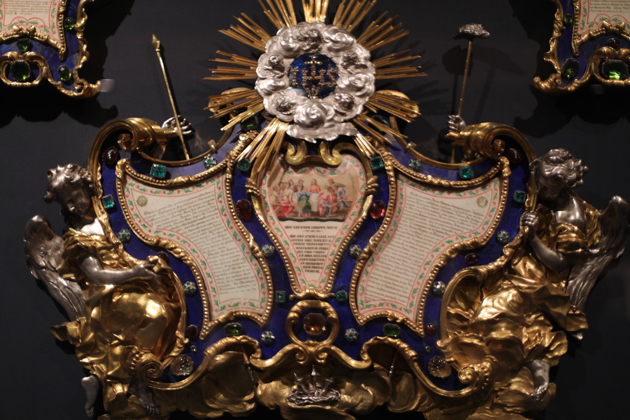
Wood relief, part of the high altar of St. Michael’s Church, Niederrotweil, Germany
7
Jan
(Above)The sanctuary of the Church of St Martha, Enfield. The Hartford Courant explains : “An altar rail is a hallmark of St. Martha church and is used by parishioners to receive communion during Latin Mass.” Photo by John Woike | jwoike@courant.com (John Woike / Hartford Courant)
We have rejoiced in the continued vitality of the Catholic Traditionalist movement, particularly in this corner of the world. That should not blind us, however, to the depth of the opposition that remains extremely active within the Church establishment. We have heard of recent incidents and indeed have experienced others ourselves – emanating primarily from the clergy but also from the “churchy” element of the laity who have absorbed the progressive clergy’s view of the world over the decades. A noteworthy recent published example comes to us from the Archdiocese of Hartford.
St. Martha is a parish in Enfield ( a town the northern part of the state of Connecticut), which, as you know if you have been following our listings of announced Holy Day masses, regularly offers the traditional liturgy. Not too long ago it was merged with two other parishes in the course of the Archdiocese of Hartford’s current course of drastic downsizing. Now that merger has been undone. The cause? Although there seem to be other issues for the split, including control of the school, the discussion focuses on the fact that St. Martha’s celebrates the traditional mass. This was unacceptable to the congregations of the other two merged parishes .
“Clash of culture leads to failed Parish Merger in Enfield” Article in the Hartford Courant (November 19, 2017)by Jordan Otero Sisson.
“Parishioners and archdiocesan leaders agreed that a difference in culture was a major point of contention when the parishes were merged. St. Martha is a more traditional church, while St. Patrick and St. Adalbert, considered more contemporary, with strong social justice ministries and outreach efforts, and that clash caused some tensions, they said.”
Walter Wojciehowski, the former parish council president at St. Adalbert, and Tim Fiore, the former St. Patrick parish council president, said … many parishioners felt as though the culture of St. Martha was transplanted to the new parish without consultation of the other communities, creating what Wojciehowski described as a “toxic atmosphere.”
The Courant adds: “One of the main points of contention was where the new parish would offer a traditional Latin Mass, which had been celebrated at St. Martha.” For the traditional mass was now proposed to be celebrated in St Adalbert – the more “traditional” venue among the three churches of the merged parish, at least in terms of architecture.
The Hartford Courant reporter then helpfully explains some differences between the Traditional Mass and the “Norvus Ordo” (sic) (His explanation is actually quite fair.)
The opposition of the leaders of the two other parishes to the traditional mass was militant:
“This was a case of the church having moved beyond this in the ’60s, so why are we going back and why are you dragging us back?” Fiore asked. “We have no interest in going back. We were afraid the whole Latin Mass culture would seep its way into the modern Mass church.”
The solution of the Archdiocese? Aside from the usual response (blaming the laity), it has undone the merger, at least for the time being. Not a word is uttered against the outrageous statements against Catholic traditionalism set forth in the above article. And why should there be? The Archdiocese of Hartford emerged early on as a progressive leader; it is now reaping the fruits of decades of progressive dysfunction.
As the parish leader of St Adalbert puts it, employing media buzzwords:
“I think there is enough room for all, but the main issue here has to be to be inclusive and to respect the feelings and the culture of the other parties involved,” he said. “If that doesn’t happen … I don’t see how that could be successful.” (After he himself has showed no respect for the “culture of St Martha.”)
3
Jan
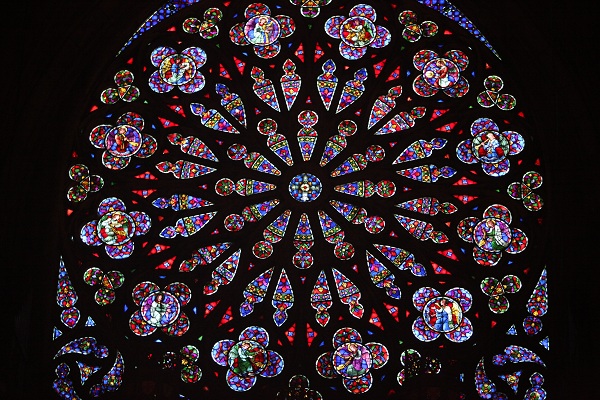
(From Notre Dame Cathedral, Chartres)
The following churches will offer the Traditional Mass for the Feast of Epiphany on Saturday, January 6.
St. Mary Church, Norwalk, CT, Solemn High Mass, 9 am.
Sts. Cyril and Methodius Oratory, Bridgeport, CT
Solemn High Mass, 9:00 am. On the Eve of the Epiphany, January 5th, there will be the blessing of the Epiphany Water after the evening Mass. In addition to the water blessing, chalk and incense will be blessed. If you have incense or chalk which you would like to be blessed, please bring it before Mass.
St. Martha Church, Enfield, CT, 9 am.
Church of the Holy Innocents, New York
Epiphany Water and chalk will be blessed following the 6:00 p.m. Mass on FRIDAY, JANUARY 5. All-night vigil of prayer and reparation will take place this Friday, January 5 beginning at 8:00 p.m. with exposition of the Most Blessed Sacrament and the praying of Vespers and Compline at 9:00 p.m. The night of prayer will conclude on Saturday, January 6 with a Eucharistic Procession at 4:30 a.m. and the celebration of a Low Latin Tridentine Mass at 5:00 a.m. A Missa Cantata will be offered on Jan. 6 at 1 pm.
Pontifical Shrine of Our Lady of Mount Carmel, New York, Low Mass, 9 am; Solemn Mass, 6:30, procession with the Christ Child and blessing of gold, frankincense, myrhh and chalk.
St. Anthony of Padua Oratory, West Orange, NJ, 9 am.
Our Lady of Fatima Chapel, Pequannock, NJ, 9 am
2
Jan
On New Year’s Eve, St. Mary’s Church in Greenwich had Benediction of the Most Blessed Sacrament and the singing of the Te Deum. Photos courtesy of Fr. Cyprian La Pastina.
1
Jan
The Dictator Pope
By “Marcantonio Colonna”
The Dictator Pope hit our Kindles (it’s not yet in hard copy) just in time for Christmas. I can tell you, after a quick read, that it’s the best Vatican expose since 1999’s Gone with the Wind in the Vatican by “I Millenari” (indeed, some of the targets in the curia seem to be the same in both these works). But the focus of the Dictator Pope greatly differs from that work. It concentrates not so much on inside “revelations” but on the career, background and circumstances on one individual – namely, Pope Francis. It seeks to deepen our understanding of what is already known, to provide background and to “connect the dots” among people and policies.
The Dictator Pope is streamlined, succinct and well written. Here and there (such as in his discussion of the situation of the Knights of Malta) our author – “Marcantonio Colonna” – does seem to display specific knowledge beyond what has been published previously. Yet, as I noted, this book does not emphasize journalistic “leaks.” We indeed are told Pope Francis directed the contribution of funds to the presidential campaign of Hillary Clinton. But does that supposed fact have any significance given what we already know about the media support, both direct and indirect, given to the Democratic Party by Francis – surely of incomparably greater value to Hillary than any money Francis could put on the table?
For several reasons the Dictator Pope strikes me as reliable. For one thing, Colonna’s description of Jorge Bergoglio’s style and modus operandi agrees very well with what I have been told by those with more direct knowledge than I possess of his doings in both Rome and Argentina. It also corresponds to certain reports that have appeared now and then in the European – never the English language – mainstream press. Curiously, some of these unflattering accounts are found in sources – like the German media – otherwise entirely aligned with Bergoglio.
Marcantonio Colonna shows the stuff of a true historian in creating a narrative of the Bergoglio years and offering his judgment on what he describes. Instead of nonsense about “God’s choice,” the colorful account of the Dictator Pope has the ring of truth: the relentless rise to the top of an ambitious and manipulative man, the making of strategic alliances and political concessions leading to the acquisition of the papacy and the imposition of the Pope’s personal agenda, the ruthless elimination of real or imaginary enemies, the advancement of unworthy and corrupt favorites. The Vatican as described in this work reminds us of the stories of the Renaissance papacy told in the great histories of Leopold von Ranke and Ludwig von Pastor. Indeed, Marcantonio Colonna himself draws comparisons between Pope Francis and certain ruthlessly ambitious, often megalomaniac and, in one or two cases, perhaps even insane popes of the 14th – 17th centuries, as so well described by his illustrious predecessors.
This portrait of Pope Francis outlined in the Dictator Pope, though, requires some qualification. For one thing, the popes of the past to whom Colonna compares Francis may have been lacking in one or more – or many – of the Christian virtues ( and often in sound judgment as well ) but they were strong characters who battled against and among other powerful rival families and factions within the Church and with the great secular kingdoms and principalities of their day. Francis only has to contend with the bureaucratic ninnies of the post – Vatican II Catholic hierarchy. Regarding today’s secular powers – like the news media – Francis pursues a policy of obsequious and abject submission. For, without exception, the policies of Francis are those of the Western secular establishment from whose support Francis derives all his power.
Furthermore, these notorious popes of the past showed rare taste in art and culture. I don’t know what the reign of Francis has to offer in comparison – a homoerotic nativity scene or one of Cardinal Ravasi’s exhibits? And whatever else they were doing, the popes of the Renaissance also devoted great personal attention to the liturgy – the celebration of the papal ceremonial was a major attraction of that period. Pope Francis either disregards the liturgy altogether or “repurposes” it for political statements.
I also must take issue with Colonna’s unduly restrictive characterization of significance of the papacy of Francis. For if Francis were simply one more unscrupulous, ambitious and opportunistic prelate – like Alexander VI – we could consider him simply a regrettable but ultimately remediable failure of the papal election process. But the added dimension of Francis’s papacy is his clear ideological commitment to Catholic progressivism. Whether that is simply a cynical means to the acquisition of power (as Colonna implies) or is a matter of personal conviction is irrelevant – it is by now an unalterable aspect of his character. Whatever the origin of his beliefs may be, Pope Francis is a man with a mission to “unleash” and “make irreversible” the Vatican II – to make permanent what has been done since 1962-65 and to implement further radical changes in Catholic liturgy, morality and theology. And the policies of Pope Francis are not a bolt from the blue, but the logical culmination of the disastrous trends in theology, morality, liturgy and government in the Catholic Church that have been allowed to develop and fester since 1962-65. Pope Francis’s progressive agenda involves not just the completion of a revolution within the Church but the final, absolute subjection of the Church to the dominant secular powers of 21st century.
Marcantonio Colonna’s narrative helps us to see the current situation in the Church more clearly. And a clear view of what’s going on is always a major first step forward towards reform. The response of the Vatican to this book, we hear, is a search for the author’s identity. For the rest of us, Dictator Pope is a challenge: to reflect, to pray and to take action.
30
Dec
Solemn Mass for the Feast of the Holy Innocents at Holy Innocents Church, New York on December 28. Photo courtesy of Diana Yuan.
28
Dec
26
Dec
In January 2015 (above) and December 26, 2017 (below) – after a restoration of the sanctuary directed by Fr. La Pastina, the pastor of St. Mary’s.
January 1st, Octave of Christmas Schedule of Traditional Masses
St. Mary Church, Norwalk, CT, 9 am.
Sts. Cyril and Methodius Oratory, Bridgeport, CT, Low Mass at 8:30 and a High Mass at 10:15 am.
St. Stanislaus Church, New Haven, low Mass, 2 pm.
Church of the Holy Innocents, New York,
Sunday, December 31 – New Year’s Eve, 9AM low Mass, 10:30 AM high Mass
Traditional Vespers: 2:30PM, preceded by the Rosary
After the 4PM until 11PM – Exposition of the Blessed Sacrament
11PM – Singing of the Te Deum followed by Benediction
11:30PM – Mass of Reparation (Traditional High Mass)
Monday, January 1, 2018, 9AM – (Low Mass), 10:30AM – ( High Mass)
Church of St. Agnes, New York, Missa Cantata, 10:30 am followed by the singing of Veni Creator Spiritus.
Pontifical Shrine of Our Lady of Mount Carmel, NY, Missa Cantata, 10:25 am
Immaculate Conception Church, Sleepy Hollow, NY, 3 pm low Mass.
St. Patrick Church, Newburgh, NY, 3 pm.
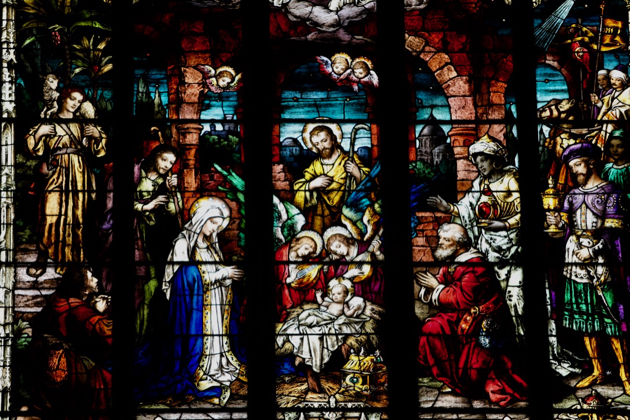
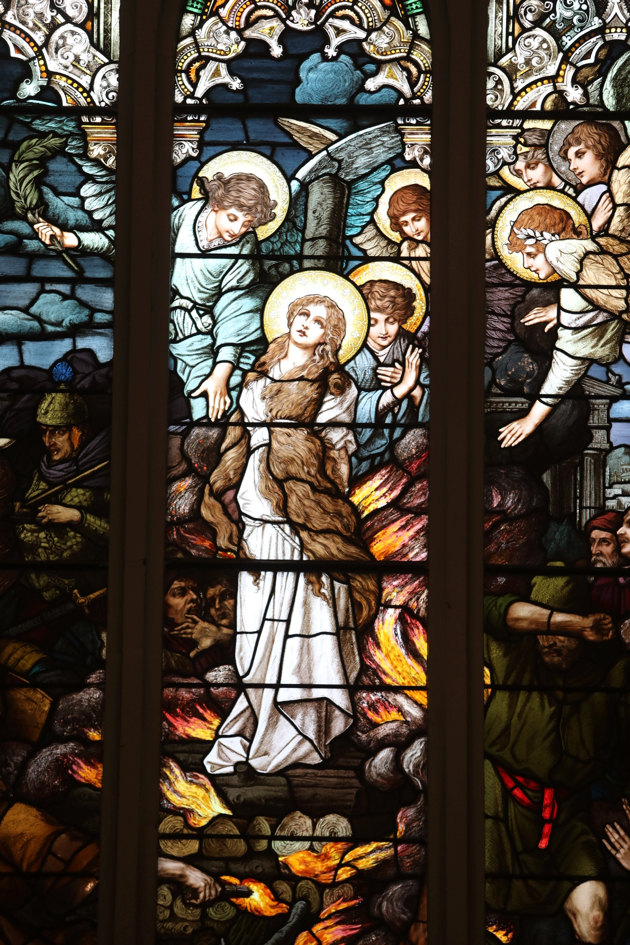
Stained glass window in Notre Dame Cathedral, Chartres.