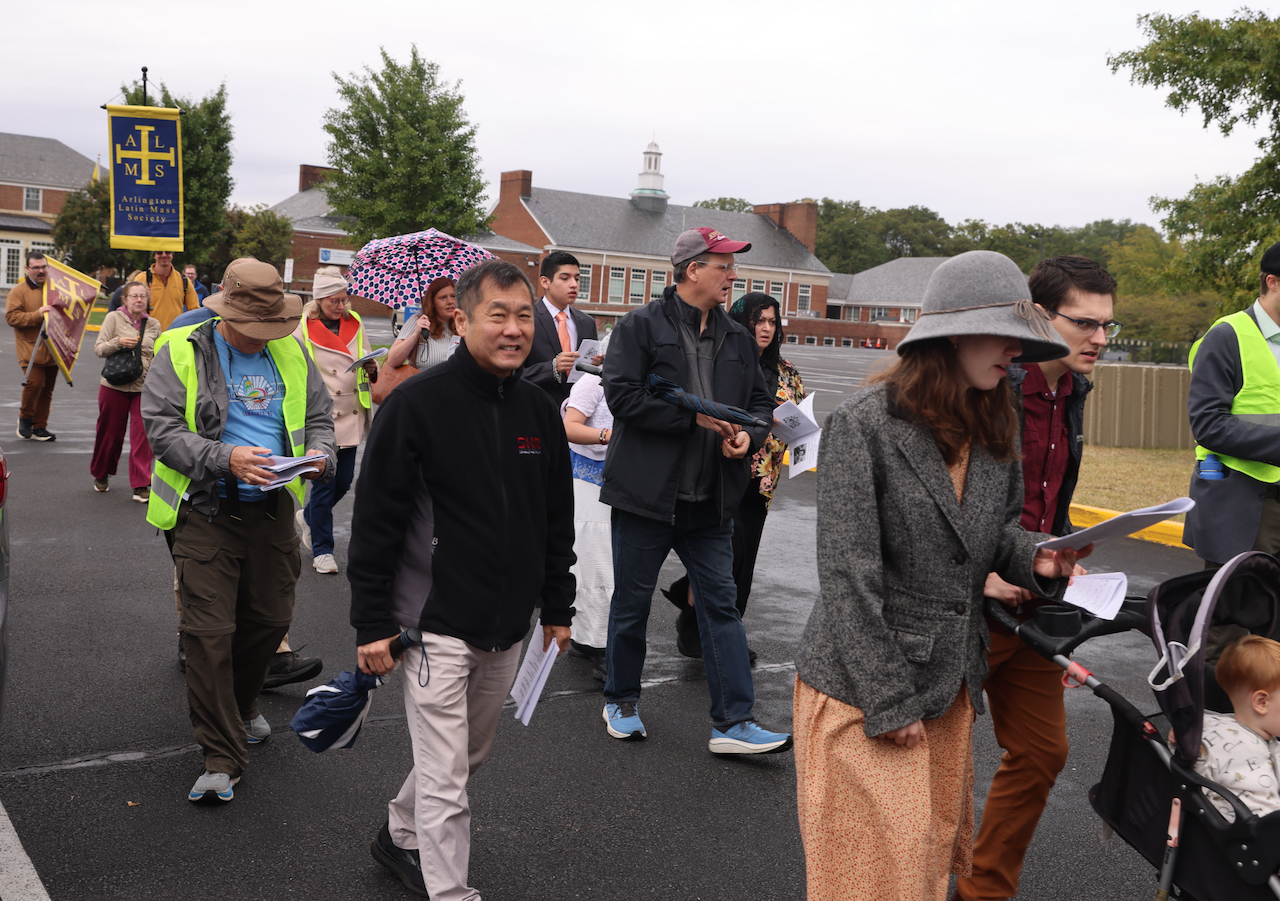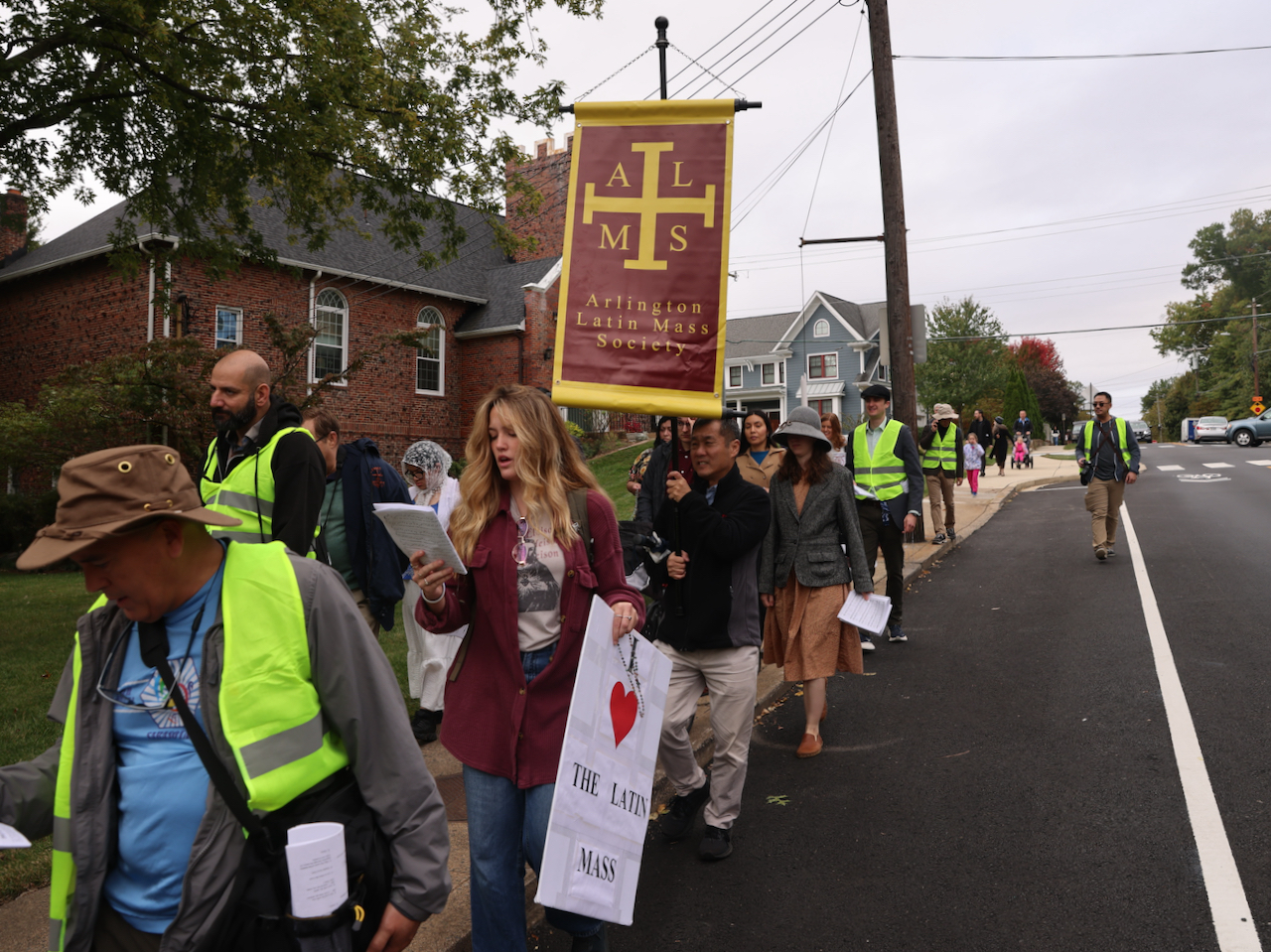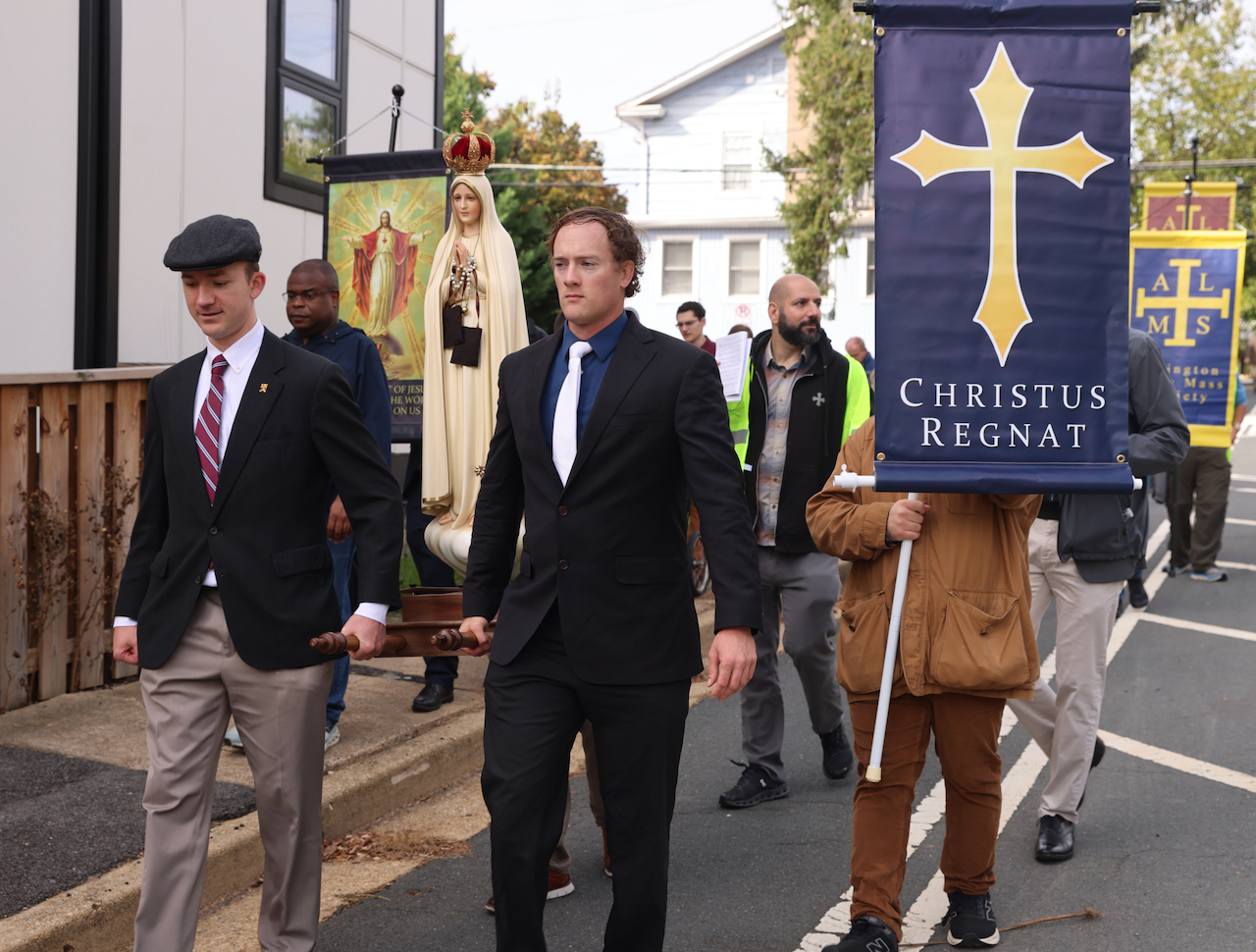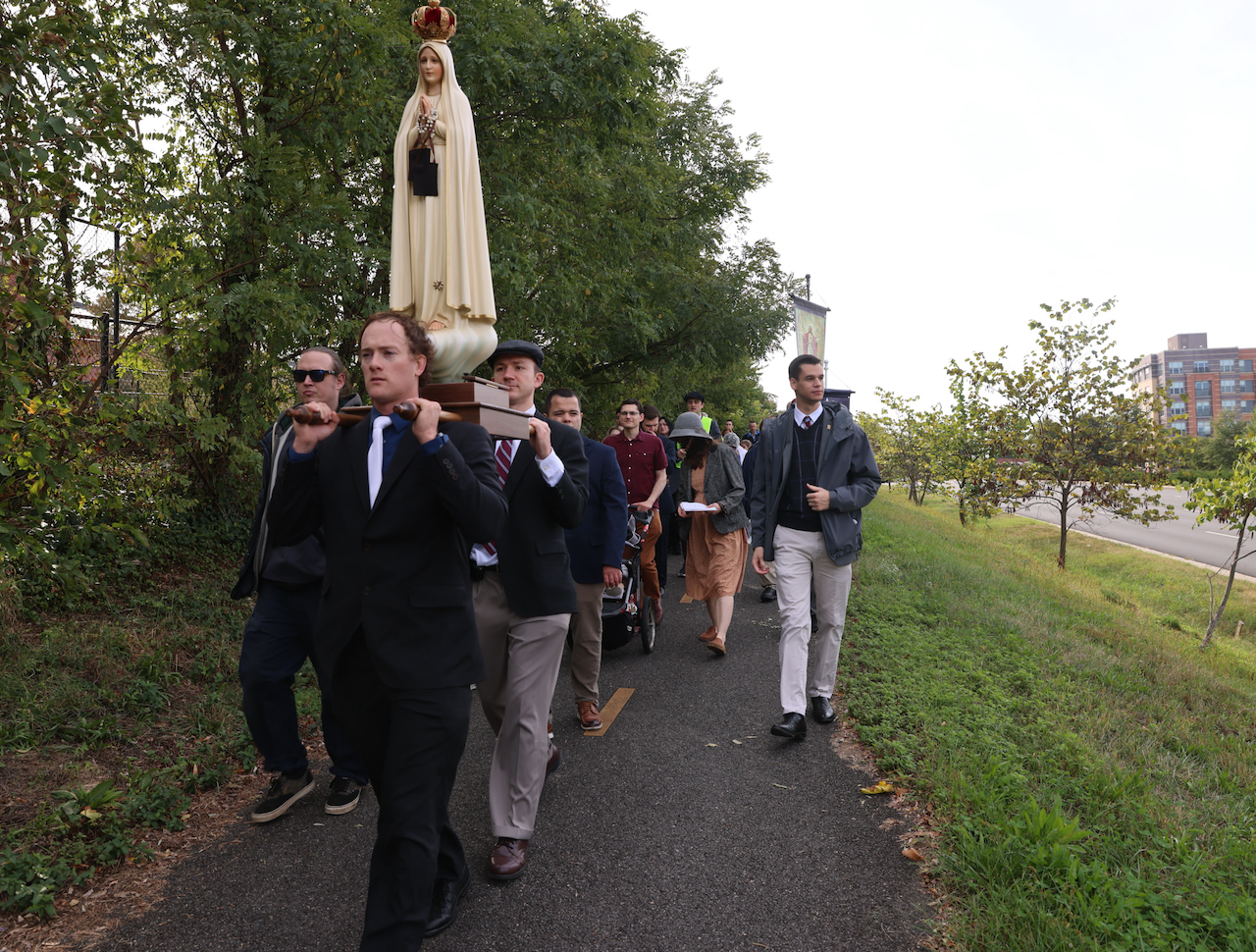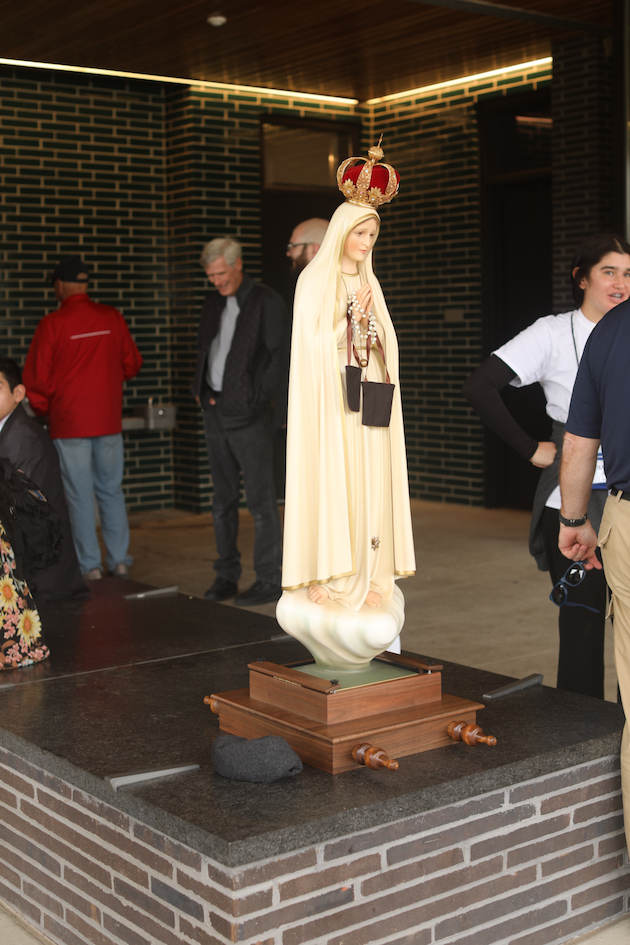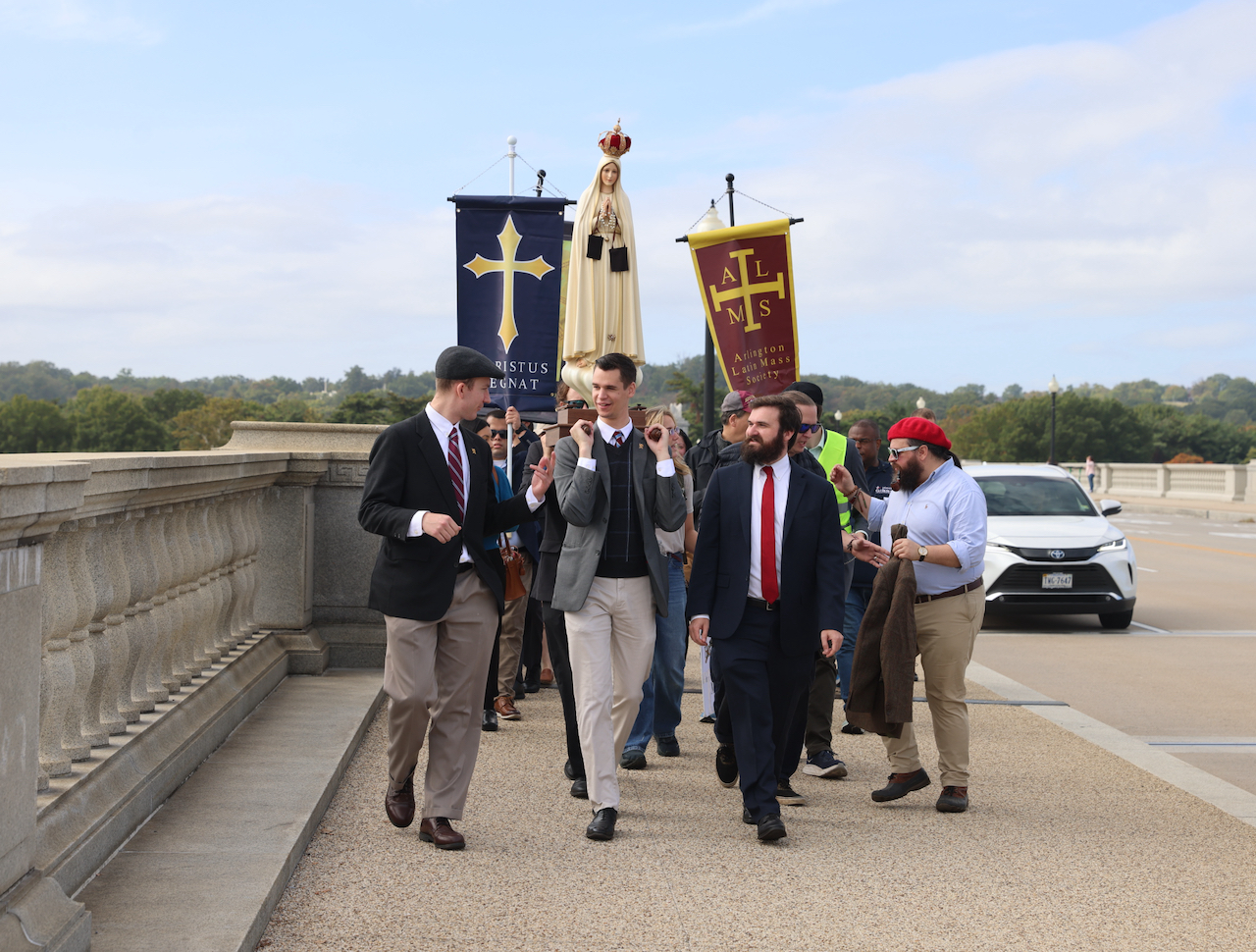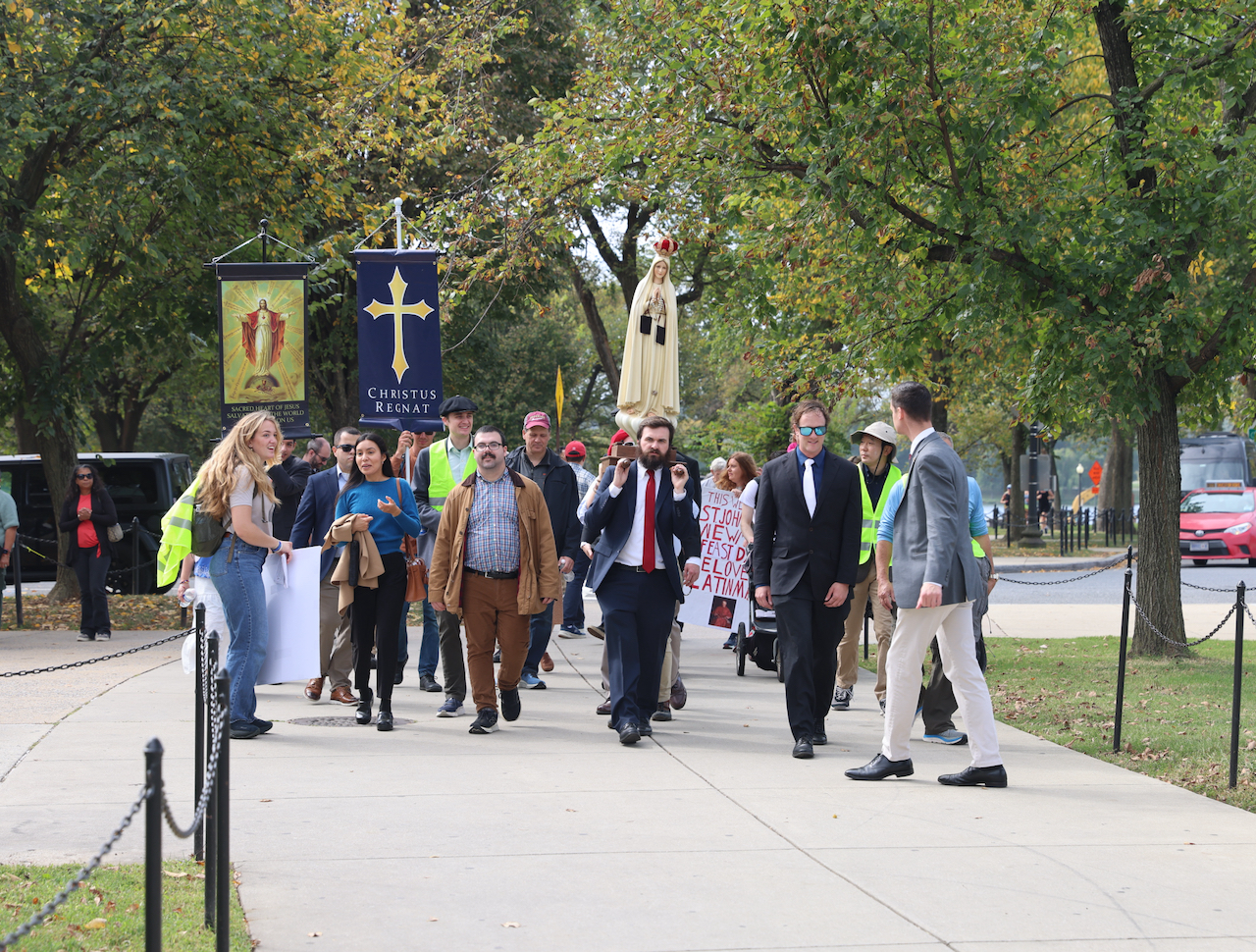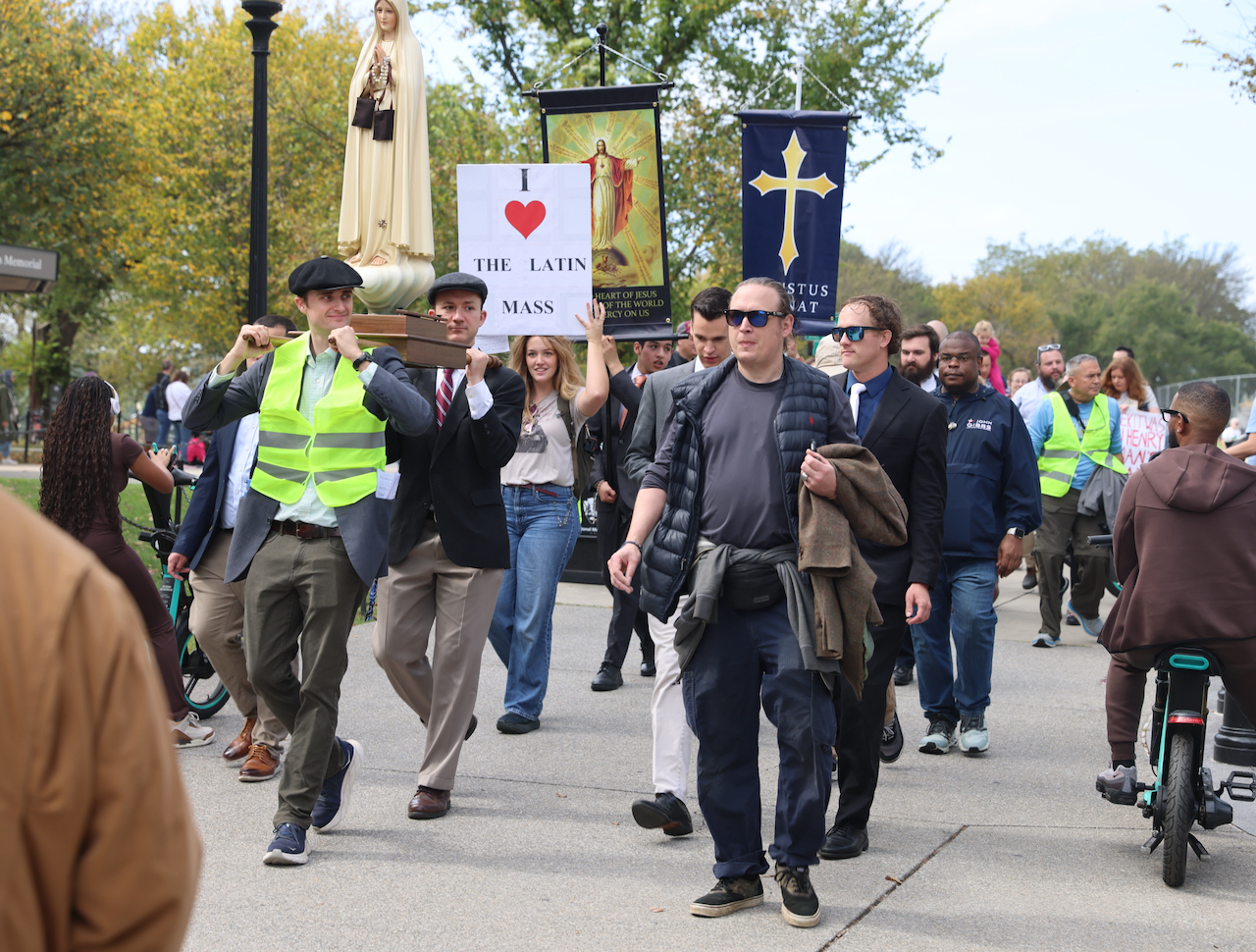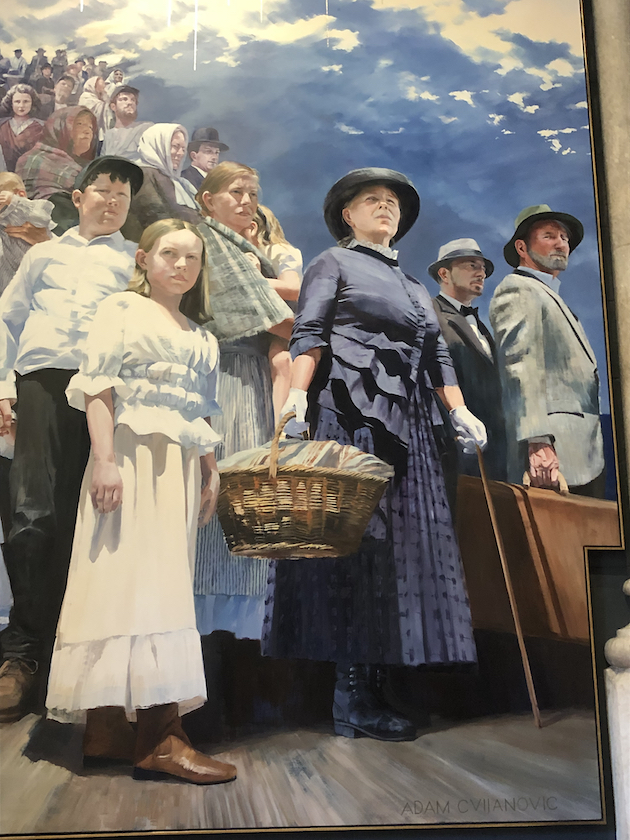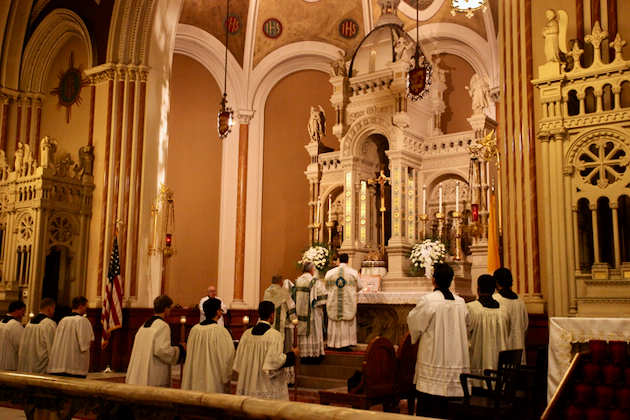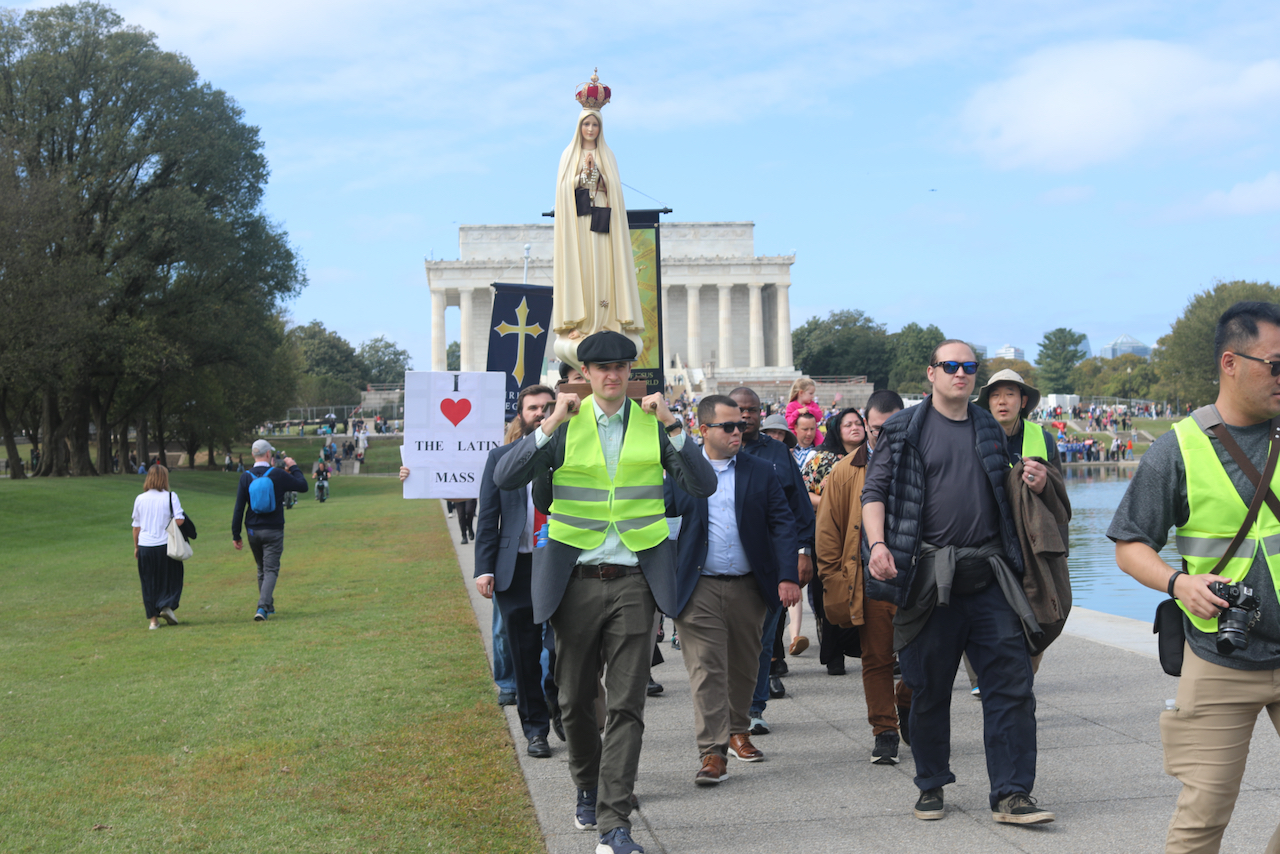
The Connecticut Right to Life Conference will take place on Sunday Sept. 29 at St. Patrick’s Oratory in Waterbury, following the 10:30 am Sung Traditional Mass.

17
Sep

by Ida Friederike Görres
Translated by Jennifer S. Bryson
Cluny Media LLC, Providence RI ( 2023)
Ida Friederike Görres, a German Catholic writer and apologist well known in her day, slipped into undeserved obscurity after her death in 1971. In recent years devoted followers of hers like Hanna-Barbara Gerl-Falkovitz and Jennifer S. Bryson have labored to rescue Görres from oblivion. Jennifer Bryson maintains a website that covers all things related to Görres, to which she has recently added a substack. Jennifer Bryson is also the translator of The Church in the Flesh (in other words, the Church incarnate, the “really existing” Church), a volume originally published in 1950.
Now The Church in the Flesh differs from two works of Görres I have previously reviewed, which, consisting of diary entries or letters, commented on a wide range of literature, personalities and current events. 1) The Church in the Flesh, in contrast, is a more integrated, theological presentation – an apologia of the Catholic Church as she concretely exists. But Görres seeks to link this description and defense of the Church to the subjective spiritual life of the believer. She employs more concrete, conversational, and emotional language then one would encounter in a neo-scholastic treatise on the subject. In a sense, The Church in the Flesh is also a work of Catholic spirituality
The Church in the Flesh takes the form of letters addressed to (fictitious?) correspondents. Görres’s dialogue partners present objections to – or at least raise doubts regarding – the Catholic Church to which Görres responds at length. The criticisms of her correspondents are not those of a theologian or philosopher but platitudes one commonly encounters in the news media or educational establishments in 1950 and today. So, for example, the chapter “The Nuisance of Morality” deals with the claim that the Church is reducible to a system of morality and, simultaneously, with the opposite position: that the Church has nothing to do with morality. Long ago I heard the first statement solemnly uttered by a representative of a much older generation; the second, of course, is something we hear now every day. So, the questions Görres addresses remain relevant.
Görres emphasizes that the Church is not a disembodied idea or “religious concept” but a concrete reality. “The Church has always understood herself to be historical, that is, to exist in time and space.” And that is because the Church is an extension of Christ, both God and Man. In the incarnation, God really entered our world. So we have to deal with Him here from now on:
with the traces and witnesses, the memories and attempts of this long-standing interaction with Him – you see, this life and its visible manifestation are what we call the Church. (p.15)
Thus, a believer’s relation to the Church is also his relationship with Christ.
The Church has not deviated from an allegedly perfect “Early Church” but has developed from it. Görres argues for the role of tradition, drawing heavily on Cardinal Newman’s thought on the development of doctrine. Tradition is a support for the believer – but it also includes development. And one cannot absolutize any given era in the Church’s history.
In the chapter “Church of the Saints “ Görres writes perhaps the most eloquent and passionate pages of this book. For hagiography was her profession. Why does she write books on the saints? They are not, after all, necessarily perfect.
Yes! For me, the saint is the most important person, not only in the Church. The saint is the most important person on the world because the saint is the decisive answer to the big riddle: What is a human being? … Humans are beings who can already partake of God’s holiness in this mammalian body, in this so widely explorable, transparent, predictable soul, in the midst of this world: visible, verifiable, real. The human is created and called to be perfected in such holiness and to exist in it for eternity. (p. 184)
Throughout this book Görres writes of “the Church” being this or “the Church” teaching that. The Church, in her institutions, practices and doctrine, appears as a uniform, coherent bloc. This is entirely typical of the self-understanding and self-presentation of the Church in that period. Today, of course, we can hardly think of any teaching or aspect of the Church that is not questioned or outright rejected by a party within the institutional Church itself. Today the Catholic can no longer state baldly “the Church” teaches or does this or that without specifying who in the Church teaches or does it.
Görres sets out an extremely “conservative” (in other words, limited) explanation of papal infallibility – quite different from ideas of some Church circles in that day or what is asserted now for Pope Francis. She indeed wishes to deemphasize the Catholic fixation on this doctrine. Instead, she speaks warmly of the infallible “ordinary magisterium” of the universal Church.(pp. 88-89)
Curiously, while emphasizing the living presence of Christ in the Church, Görres devotes relatively few pages to the liturgy. There are exceptions -such as the following eloquent passages on the witness of the liturgy to the reality and necessity of the personal spiritual struggle:
The liturgy is also full of evidence of this struggle(against the devil – SC). Every baptism begins with an exorcism. demands the solemn renunciation, of the Devil. his works, his splendor. …The Holy Mass , the memory of the Lord’s Death, brings before our eyes the terrible seriousness of this struggle, its final consequences, and the cost of this victory, and even over the coffin of a person we beseech God that it would please Him to deliver at the gates of hell the soul that He has recalled.
Have you ever taken part in the wonderful rite of the consecration of water [for the baptismal font] on Holy Saturday where the “water, a creature,” the eloquent symbol of everything elemental, unsubdued, of the netherworld in and outside of man, is taken into consideration and is called to be a means for his rebirth.
The cult of the martyrs, the oldest cult of saints in the Church, the veneration of the Holy Cross, the whole Good Friday liturgy, mean exactly the same thing as the sacrament of the Eucharist on every weekday: the Church knows that the victory of God in this world is only visible by exception; that it must time and time again take place the form of destruction, in the testimony of defeat.
(pp. 174-175. Of course, these examples are taken from the traditional liturgy!)
Towards the end of this book, Görres makes an extraordinarily perceptive observation in critiquing a somewhat esoteric spiritual temptation of some contemporary Catholic writers. Their characters refused the support and consolation of the spiritual treasures offered to them by the Church and elected to “go it alone” and rely on their own spiritual experience.
In his War Journals, Ernst Jünger makes this very fitting remark: “Property is considered suspect not only by outside observers, by the disinherited; it becomes suspect, even burdensome and boring, from within, for the owners themselves… Possessions require the strength to possess…. (p. 203) 2)
Görres applies this profound insight to a problem of personal spirituality, but does it not also perfectly describe one of the main (unspoken) psychological motivations of Vatican II and its aftermath? The mania for simplification in the liturgy, the abandonment of fasting and other ascetical practices, the jettisoning by the religious of their habits and rules, the scorning of traditional ecclesiastical art– had not all these spiritual “possessions” or “inherited wealth” (Görres’s phrase) become dubious – too burdensome, too boring, to hold on to – at least in the minds of the clergy and religious?
Yet Görres’s defense of the Church as she concretely exists is not at all unqualified. She writes of internal conflicts, of failings, even of spiritual decline. The criticisms of Görres have a certain vagueness and lack of specificity. Yet we can discern the beginnings of lines of thought that would later be used to justify radical change in the Church.3)
For example, at the very beginning of this book, Görres gives us a kind of “parable” which I quote at length:
[W]hen I ask converts what the first noticeable reason was for their turning to the Church, their answer almost always mentions one of the things that you summarized in exasperation (I already know what you meant!) under the word “knickknacks“: the impression from a Mass, the sight of penitents waiting in front of the confessional, a procession, the chance participation in a Catholic funeral, a Marian devotion in May, a stay in the hospital under the care of Catholic sisters, a visit to a monastery – in short, an encounter with precisely that visible, tangible element of the Church that so many of her own children call burdens and embarrassments and even view as objectionable. 4)
On the other hand, when I asked a French worker-priest from that bold vanguard of the Paris Mission what actually prevents the majority of workers from believing, whether it is the dogmas, the strictness of Catholic moral demands …. (He said) ”Oh no, that’s all too complicated, too fundamental; the external manifestation of the Church as she is, that is the big obstacle.” 5)
There is room for both statements; both concern us.“ (Pp. 3-4)
The author seems to regard this asserted dualism with a certain ambivalence. The external manifestations of if the Church are both an attraction – at least for outsiders – and a stumbling block for “so many of her own children.” But is not this comparison weighted? The layman (especially the convert!), captivated by so-called externals, is contrasted with the “bold” clergy who reject them in favor of direct communication and social action. In the 1960’s, of course, the clergy would wage war upon these “externals” and would feel empowered to forcefully enlighten the benighted laity attached to them. One is reminded of the insights of Fr. Bryan Houghton on this very subject.6)
In The Church in the Flesh Ida Görres undertook to justify the Church to “modern man” utilizing fresh language and concepts. As always, her work is studded with brilliant observations and beautiful passages. At the same time, we can discern ideas, if only in inchoate form, that later became the dogmas of a future Catholic revolution. Indeed, some of the criticisms Görres addressed in this book are today routinely restated by those holding the highest offices in the Church herself! But these were future developments which Görres herself would be unable to support. In dealing with “timeless” issues raised by the Church’s presence in the world, The Church in the Flesh remains a valuable resource – and also an intriguing witness to a particular moment in the history of the Church.
16
Sep

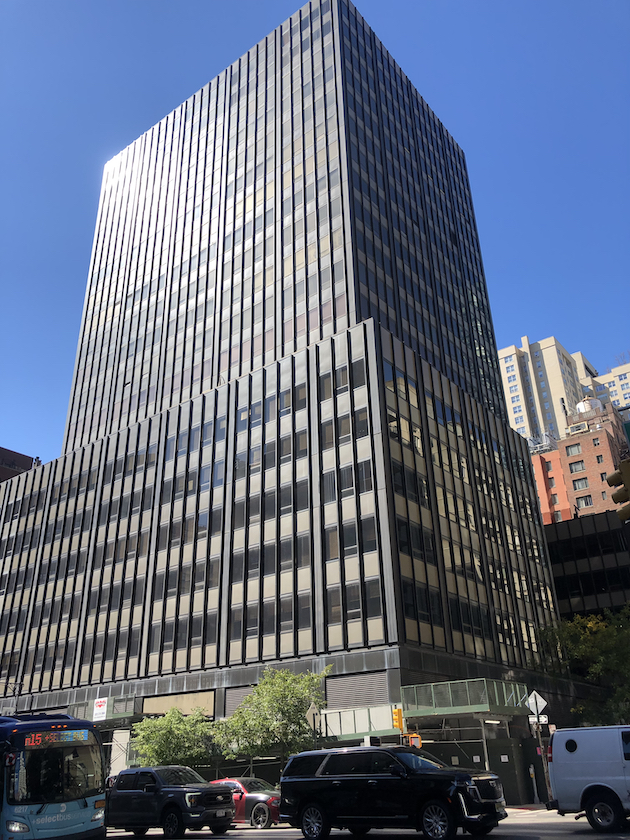
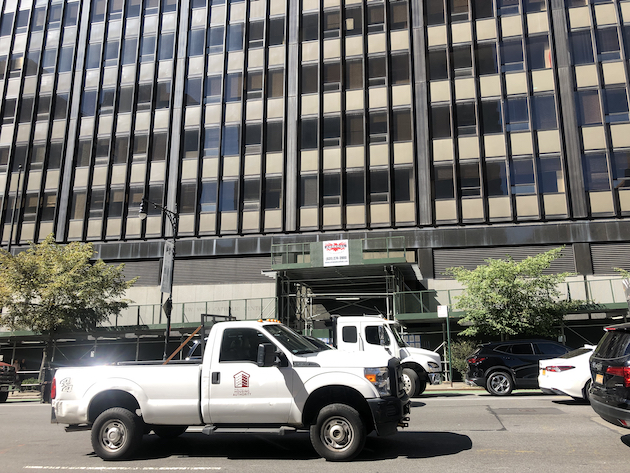
Compared to what we saw on our last visit in 2018, the shuttered church of St. Vincent de Paul has changed little. 1) Perhaps only the boards covering the windows have darkened – or have new ones been put up? The immediate neighborhood of the church on West 23rd Street seems ever more decrepit – is that what has slowed down demolition and new construction? Or is the developer only trying to assemble a larger plot?


What has happened is that the Jeanne D’Arc home, 253 West 24th Street – which until very recently still functioned as a a residence for women – has been shut down and sold:
The head of Red Apple Group scooped up 253 West 24th Street this week for $22.5 million after getting the go-ahead from the New York State Attorney General and long-time owner Jeanne D’arc Residence, which is tied to the Catholic Church.
“We got the approval of the cardinal, the pope, the attorney general,” Catsimatidis said.
“Does that make me eligible for sainthood?” he joked.
Red Apple needed the attorney general’s approval because the property was long-held by nonprofit the Jeanne D’Arc Residence, which was run by the Sisters of the Roman Catholic Congregation of Divine Providence. 2)
Now this residence was one of many institutions once affiliated with the parish of St. Vincent de Paul.
In 1896 Father Wucher (the pastor) established a home for French girls called the Jeanne d’Arc home …. The Jeanne d’Arc home, in charge of the Sisters of Divene Providence, has taken care of 12,487 immigrants, and 175 girls enjoy (1914) its hospitality. 3)
Today’s Catholics, with their notion of a “vibrant” conciliar parish, can hardly imagine the scale of the apostolates associated with a parish in 19th – early 20th century New York. In the case of St. Vincent de Paul, those included, in addition to the Jeanne d’Arc home, a “day nursery,” a parochial school, a childrens’ summer home on Staten island, a “home for destitute French women,” an academy, also on Staten Island, and a chapel on Washington Square South. The parish was also involved with the “French Hospital” on West 34th Street. 4)
So the Catholic parishes and institutions(schools, hospitals, residences etc.) once created for (and largely by) struggling immigrant populations are steadily disappearing from the face of New York City…..5)

15
Sep

A. OUR LADY OF VILNA
Recently, in writing an obituary for Fr. Nicholas Gregoris, Fr. Peter Stravinskas recalled:
On September 27, 1987, as I was vesting for the Sunday evening Latin Mass at Our Lady of Vilna Church downtown, a young fellow approached me, cassock and surplice slung over his arm, and asked, “Father, may I serve?” “It’s a Latin Mass,” I replied. “That’s why I’m here,” came the cheeky response. 1)
That “Latin Mass” of course was the Novus Ordo. For it was at Our Lady of Vilna that the “Latin Mass” – in this form – reappeared in New York City. Later, the parish was closed and the church demolished. We have covered these developments on this blog. 2)
“570 Broome” was built on the site of the church in 2016:
570 Broome is a collection of fifty-four contemporary residences located at 570 Broome Street, New York, NY 10013. Inspired by the history and style of West SoHo, these residences offer a modern and stylish living experience.
Asking prices for residences on the market range from $1.5M to $2.4M. 3)


B. OUR LADY OF PERPETUAL HELP (MANHATTAN)
The parish of our Lady of Perpetual Help was originally Czech and in the care of the Redemptorists. As a former parisioner recalled:
Being Roman Catholic, Ed Chlanda’s family attended a different house of worship in the area. “The Jan Hus Church is a Presbyterian church and many Czechs went here as their church. The other church would be Our Lady of Perpetual Help, down on 61st St., which has now been demolished. That was a Catholic church.
Were you family regular attendees at the Catholic Church?
“Yes, my mom attended the Catholic Church. My dad was not such a church-goer. “I was baptised at our Lady of Perpetual Help and continued going to Catholic churches as a teen.”
Were the services conducted in Czech?
“Some were. Later on in the ‘50s they weren’t, but some were at that time, yes.” 4)
By the time I got around to writing about this parish in 2010 the church had already been demolished (after 1998). (The site of the church was eventually sold for a reported $21M.)The rectory had been repurposed as a home for retired Redemptorist priests. 5) The rectory was demolished some years later. A complex of modern buildings were erected in 2017 (on the site of the church) and 2020 (on the site of the rectory) and all leased or purchased by the Sloane Kettering Cancer Center. (Only hospitals and universities can compete with developers of luxury condominiums for Manhattan real estate on which Catholic churches, schools, rectories and convents once stood.) 6)


C. ST. JOHN THE MARTYR (250 East 72nd Street)
When we last visited the vicinity in 2014, St. John the Martyr parish was still fearfully hanging on. Affiliated with the parish were two town houses on East 71st Street – one the rectory, the other a convent of the Sisters of Life. 7) As I anticipated, all were subsequently sold and demolished. Now the developer has acquired additional properties and demolished the structures on them. A luxury high rise is in the works. Coincidentally, the (formerly Catholic) college of Marymount Manhattan announced this year that it is merging with ( I suspect “being acquired by” might be more accurate) Northeastern University of Boston.


13
Sep
7
Sep
2
Sep
Below is a listing of churches in the area that offer Traditional Masses on First Friday and First Saturday. Please let us know about other churches to add to this schedule.
First Friday, September 6
St. Mary Church, Norwalk, CT, 8 am and 12:10 pm; Exposition of the Blessed Sacrament 9 am -11:15; 1-8 pm
Sacred Heart Oratory, Georgetown, CT, 8:30 am; Exposition of the Blessed Sacrament 9 am to 9 pm.
Sts. Cyrl and Methodius Oratory, Bridgeport, CT, 7:45 am
St. Patrick Oratory, Waterbury, CT, 6 pm. Adoration of the Most Blessed Sacrament at 5pm, Benediction at 5:45pm.
St. Martha Church, Enfield, CT, 7 pm
Holy Innocents Church, New York, NY, 6 pm
Our Lady of Mount Carmel, New York, NY, 7 am, 7:45 am; Adoration of the Blessed Sacrament 9:30 am to 6 pm
St. Josaphat, Bayside, Queens, NY, 7 am.
Corpus Christi Church, South River, NJ, 7 pm low Mass at St. Mark’s location. At Corpus Christi Church location: Confession 6 pm, Benediction 6:45 pm.
Oratory of Saint Anthony of Padua, West Orange NJ. 9:00AM
St. John the Baptist, Allentown, NJ, 8 am, 9 pm followed by adoration of Blessed Sacrament and Confessions; at midnight a low Mass will be offered in reparation to the Immaculate Heart of Mary.
Mt Carmel, Lyndhurst, NJ, 1st Friday Missa Cantata – Votive Mass of the Sacred Heart at 7pm.
First Saturday, September 7
St. Mary Church, Greenwich, CT, 8 am followed by the Holy Rosary, in downstairs chapel, entrance to left of the church.
Sacred Heart Oratory, Georgetown, CT, 8:30 am
Sts. Cyrl and Methodius Oratory, Bridgeport, CT, 8:30 am Votive Mass of the Immaculate Heart followed by Exposition of the Blessed Sacrament, Holy Rosary, 15 minutes of silent Adoration concluding with Benediction
St. Patrick Oratory, Waterbury, CT, 8 am. After Holy Mass, exposition of the Blessed Sacrament, Holy Rosary & Benediction
St. Martha Church, Enfield, CT, 9 am
Holy Innocents Church, New York, NY, 1 pm followed by First Saturday devotions.
Our Lady of Mount Carmel, New York, NY, 7:45 AM and 9:00 AM Masses; 10:00 AM Adoration, Rosary and Confessions, 12 Noon Benediction of the Blessed Sacrament
St. Margaret of Cortona, Riverdale, Bronx, NY, 12 pm
St. Josaphat, Bayside, Queens, NY,, 6:45 am Benediction; 7 am Mass; followed by an hour of reparation.
St. Paul the Apostle, Yonkers, NY, 12 noon
Shrine Chapel of the Blessed Sacrament, Raritan, NJ, 8:30 am Holy Rosary; 9 am Low Mass.
Oratory of Saint Anthony of Padua, West Orange, NJ 8:00AM
Corpus Christi Church, South River, NJ, First Saturday devotions at 11 am; low Mass at 12 noon. Convivium following Mass.
St. John the Baptist, Allentown, NJ, 12 midnight (from Friday to Saturday) low Mass offered in reparation to the Immaculate Heart of Mary

Parishioners at Most Precious Blood, a 120-year-old Church in Little Italy that is at the heart of the annual San Gennaro festival each September, were told they were going to be assigned a pastor that they will share with an East Village parish. The move comes after Cardinal Dolan rescinded its ten year merger with the Basilica of Old St. Patrick Cathedral on Jan. 1.
Parishioners of Most Precious Blood…. were told on Jan 14 that the church is not for sale presently and that a pastor from a church in the East Village will now jointly administer both parishes. ”The building is not for sale,” Joseph Zwilling, a spokesman for the Archdiocese said of the building on 113 Baxter St. which also has a door onto Mulberry St. 1)
Cardinal Dolan’s decree only mentions as supporting reasons an “evaluation” and the fact that Most Precious Blood and Old St. Patrick’s are “too different” to continue the merger. 2)
Most Precious Blood church is a veritable treasury of Italian statues and devotions. Indeed, recently new ones from other closed parishes have been added. The church has also been important to the New York Vietnamese community. The St. Hugh of Cluny Society has sponsored several masses there – in connection with the San Gennaro festival and otherwise. 3) We hope this historic church continues in existence and remains accessible – also outside festival times.


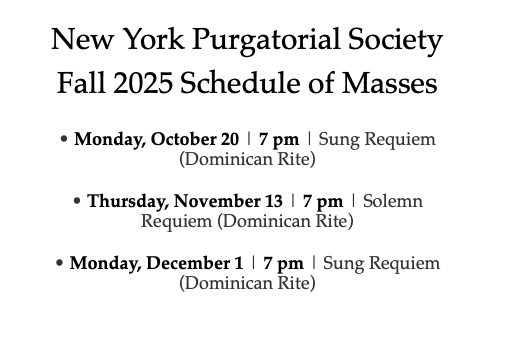
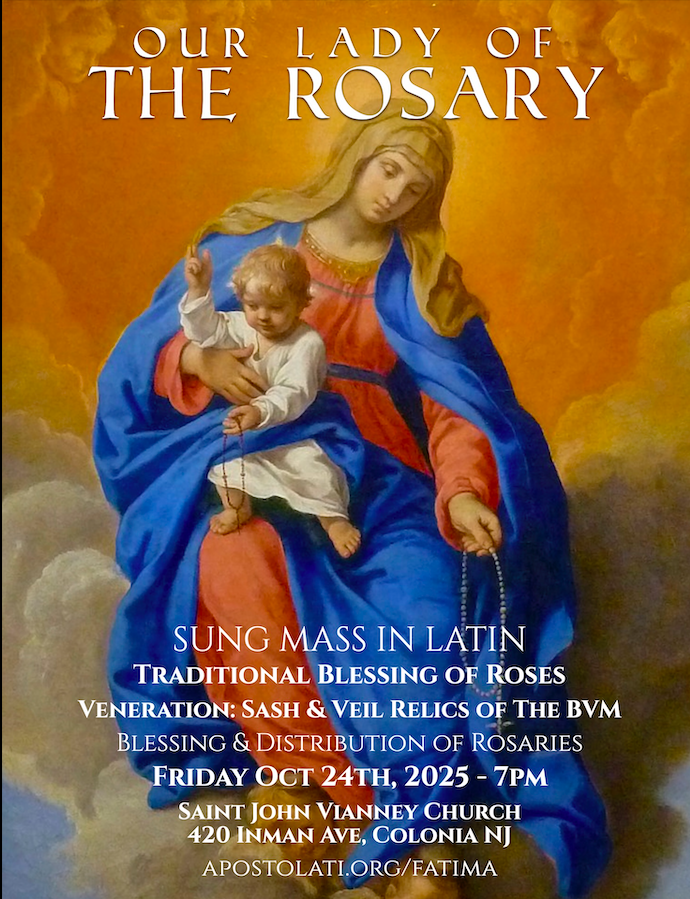
Here is the schedule for September 2024 TLMs at the Shrine Chapel of the Blessed Sacrament. Flyers below.
Additionally, a Sung TLM is celebrated every Sunday at 10:30am.Shrine Chapel of the Blessed Sacrament50 W. Somerset Street, Raritan, NJ More info: BlessedSacramentShrine.com