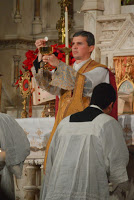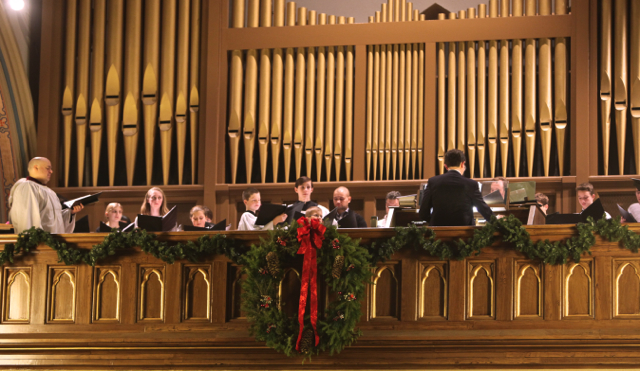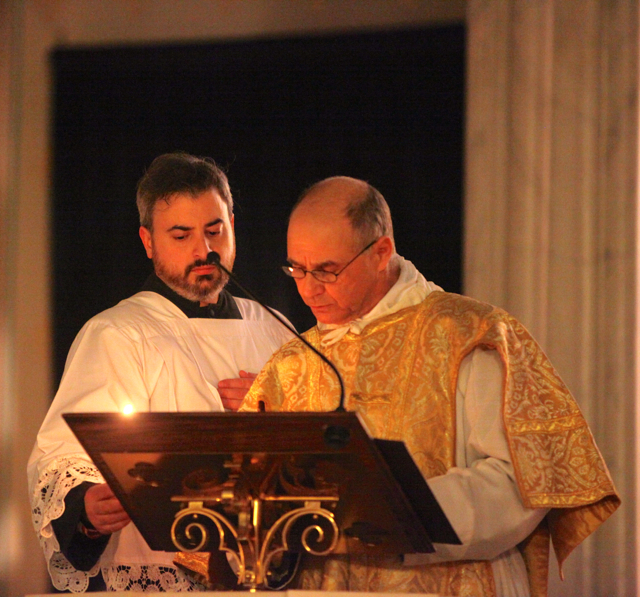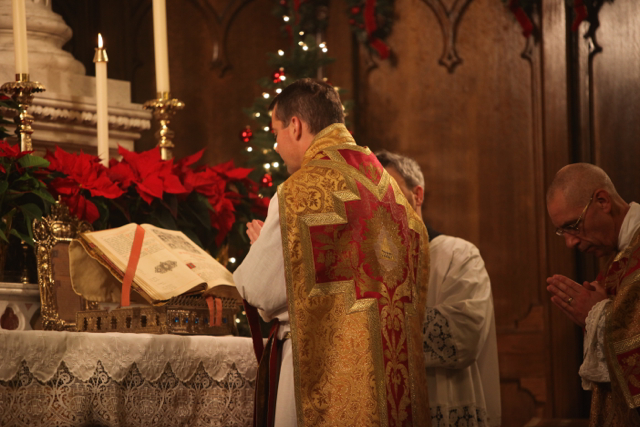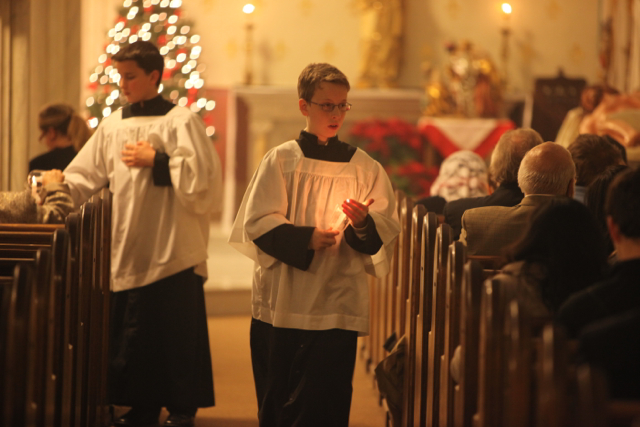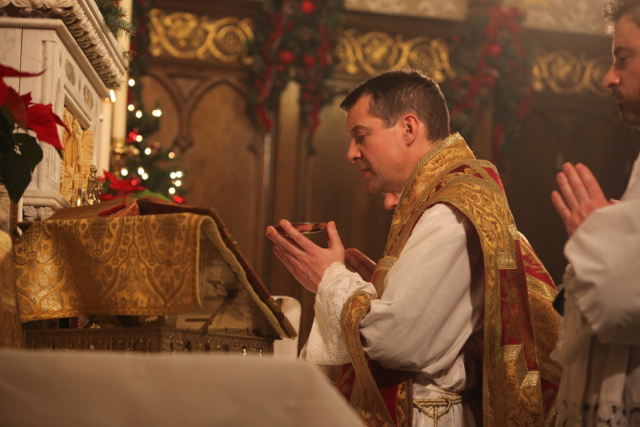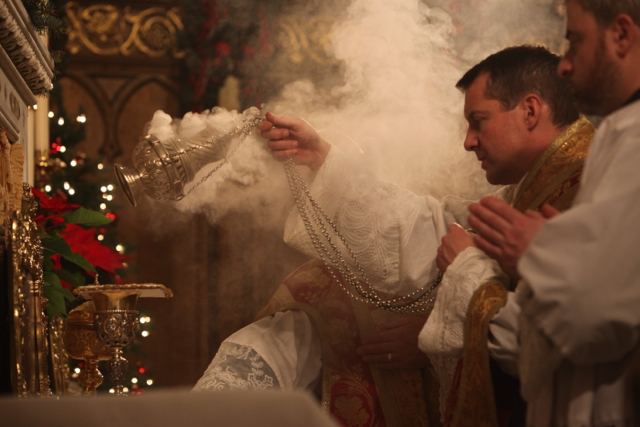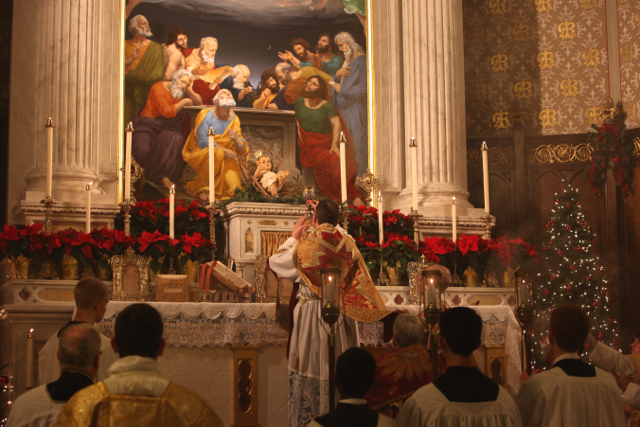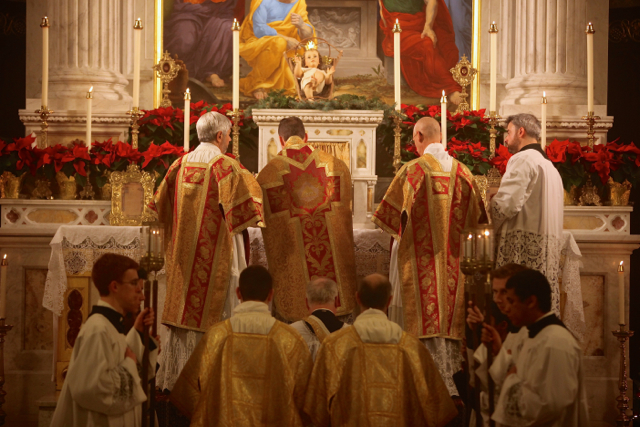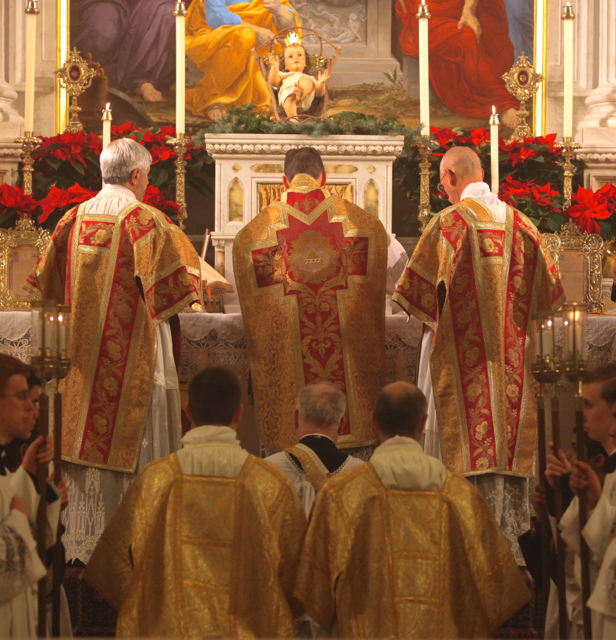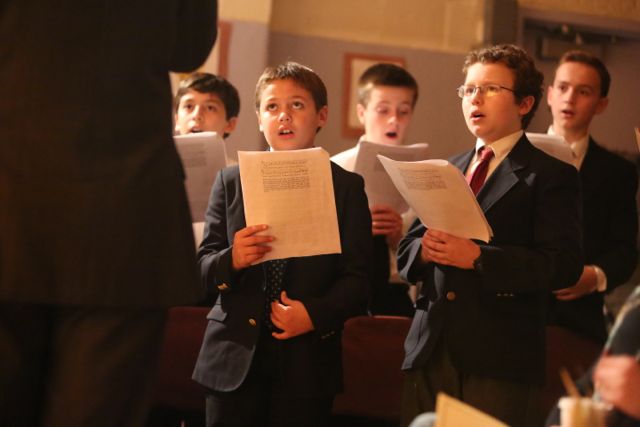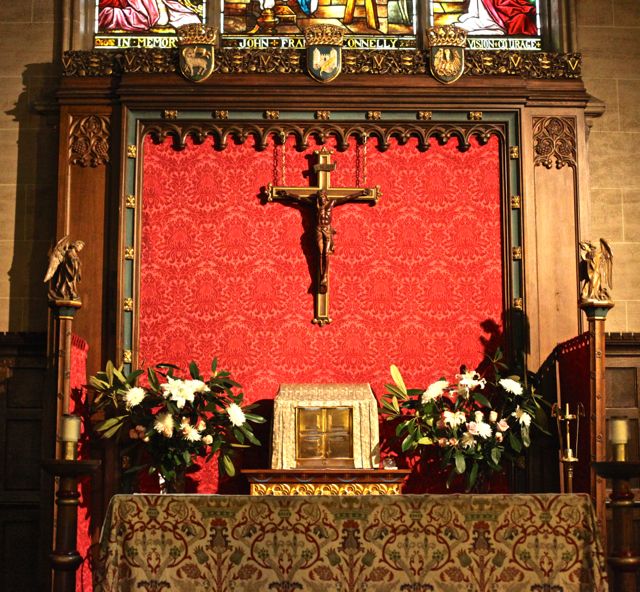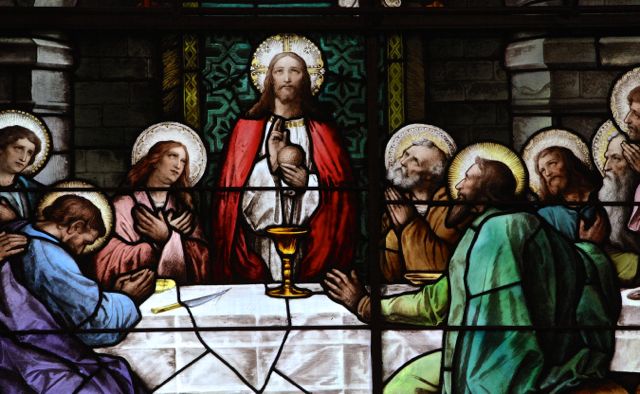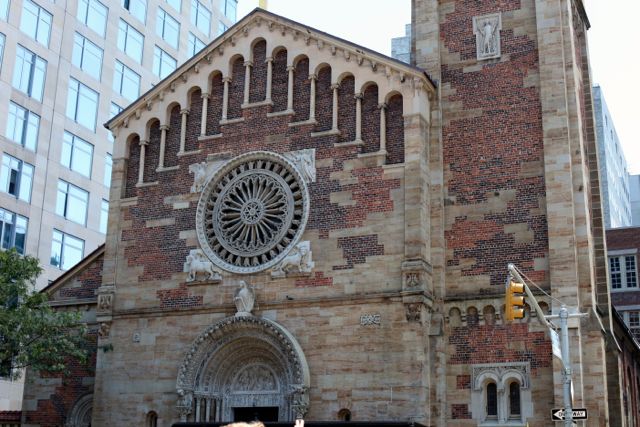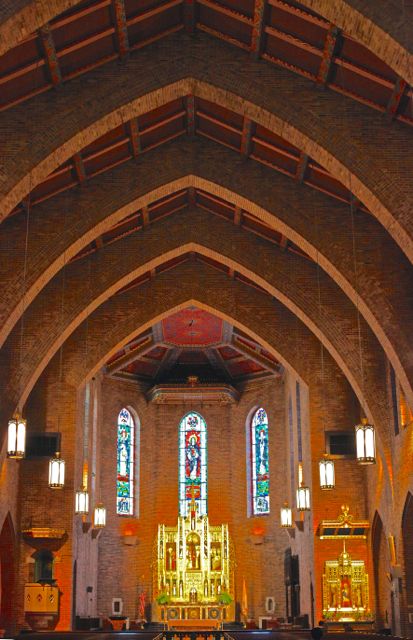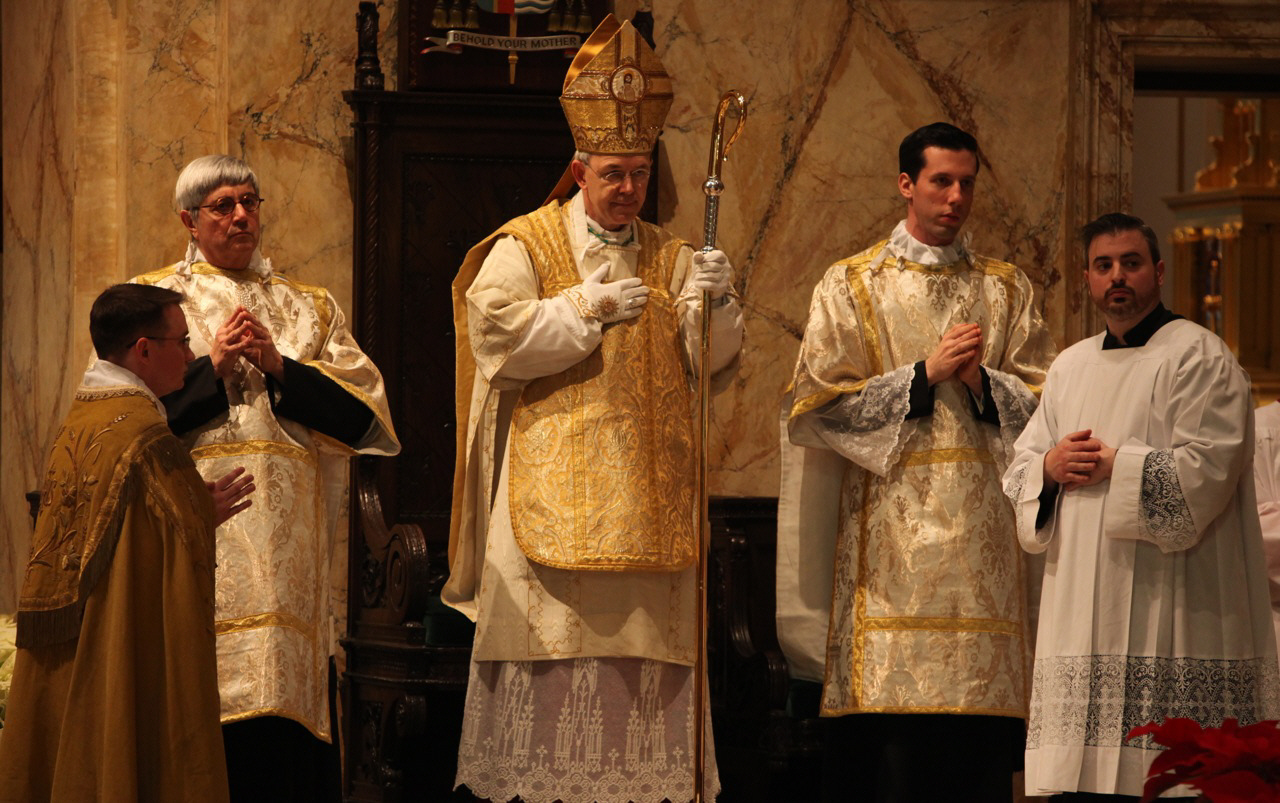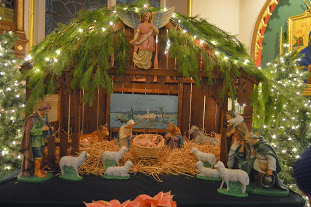
Lumen Dei Union celebrates High Mass on Christmas Day with The Church of the Holy Innocents in NYC.
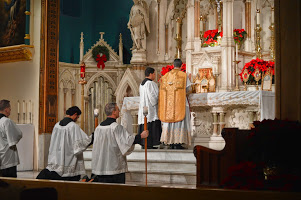
For more pictures see HERE.
(Photos by Arrys Ortanez. Thanks to Eddy Jose Toribio.)
26
Dec
Lumen Dei Union celebrates High Mass on Christmas Day with The Church of the Holy Innocents in NYC.
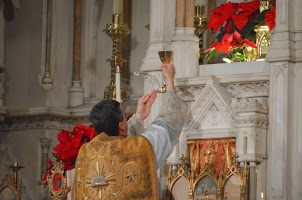
For more pictures see HERE.
(Photos by Arrys Ortanez. Thanks to Eddy Jose Toribio.)
25
Dec
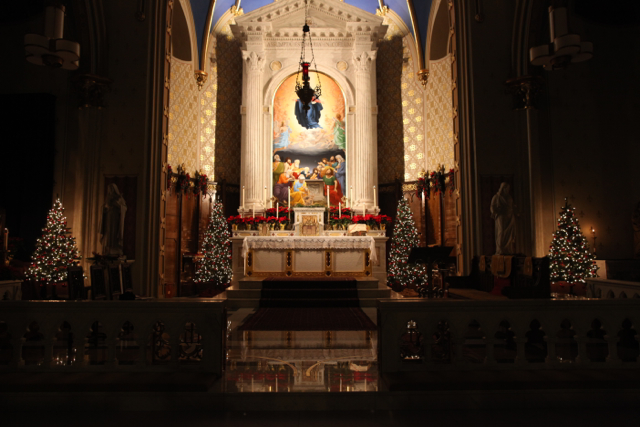
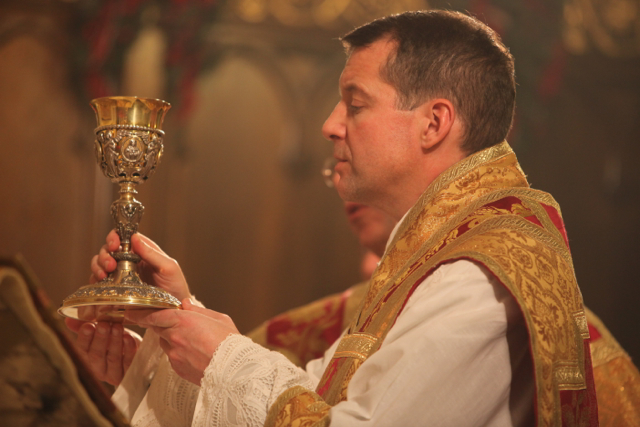
Midnight Mass at St. Mary’s, Norwalk. The celebrant was Fr. Greg Markey; Steve Genovese was the deacon and Fr. Richard Cipolla the subdeacon.
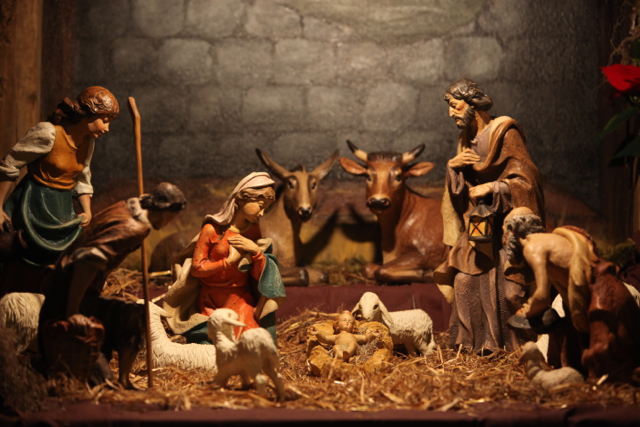
(Above and Below) Before the Mass and the singing of carols, Fr. Markey led the congregation in the recitation of the rosary before the manger scene.
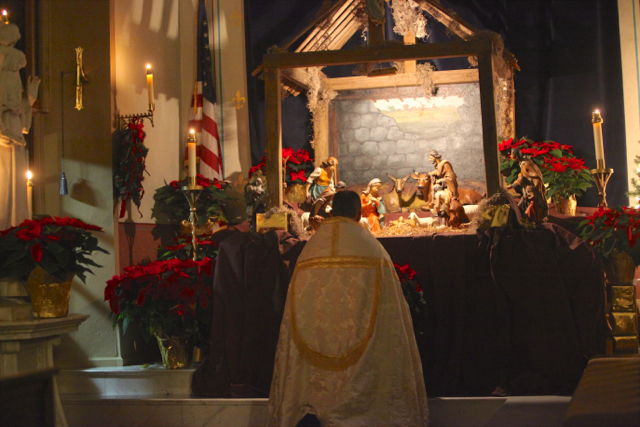
Mr David Hughes was the director of music. (Above) Carols were sung before the mass.
(Below) Lighting the candles.
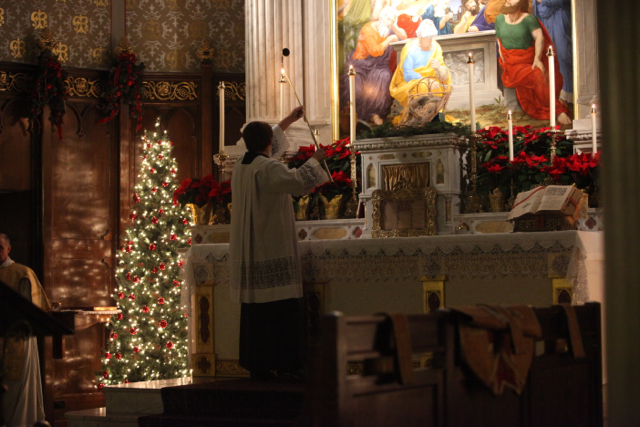
(Above) Reading by Mr. William Riccio of the Proclamation of the Birth of Christ.
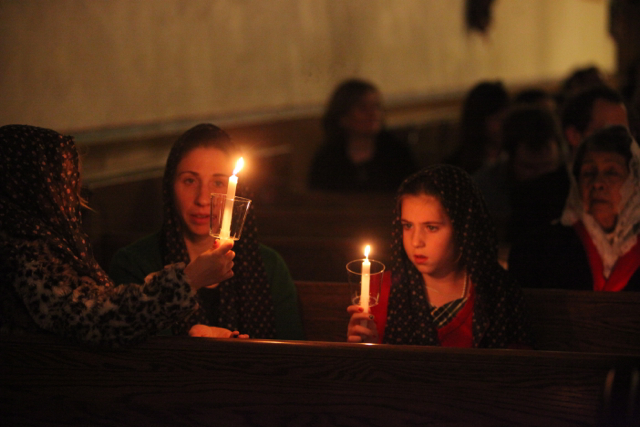
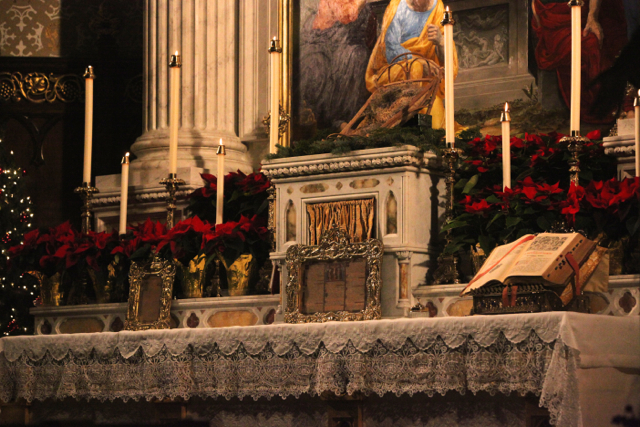
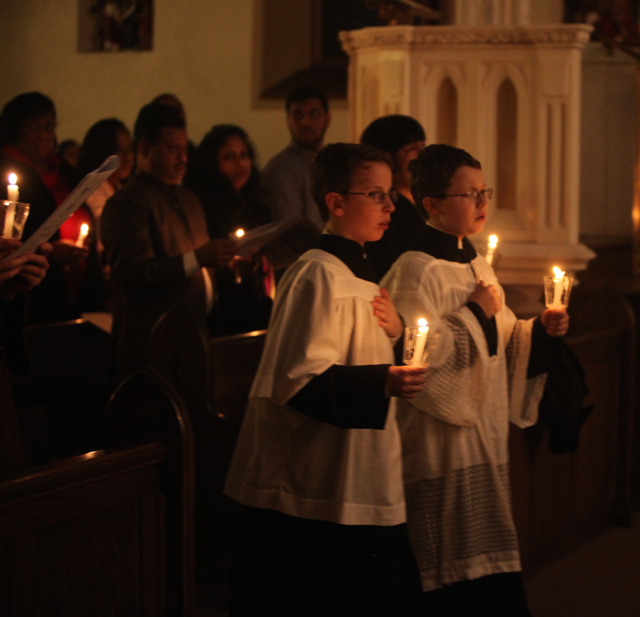
(Above and below) Candles at the entrance procession.
(Above) Placing the statue of the Christ Child in the manger.
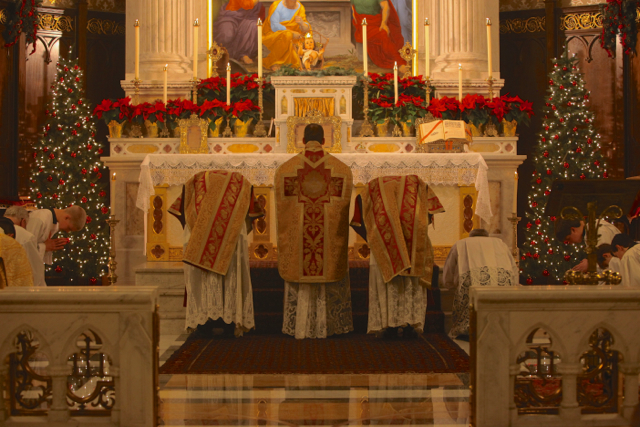
(Above and below) Lighting of candles at the Gospel.
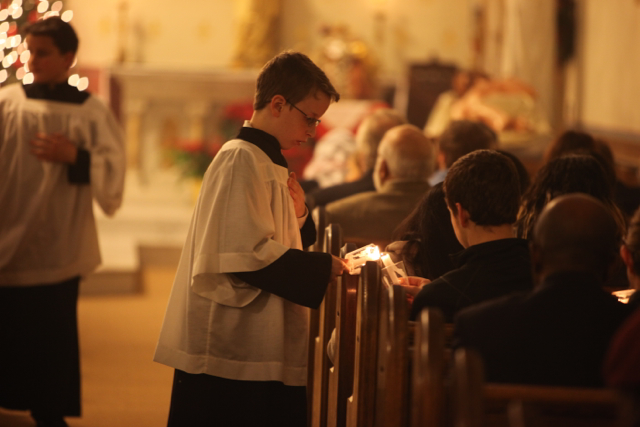
The offertory.
24
Dec
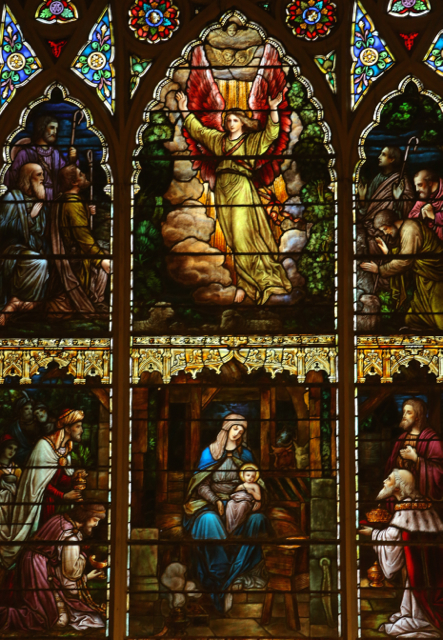
A blessed and merry Christmas to all of our friends, benefactors and readers!
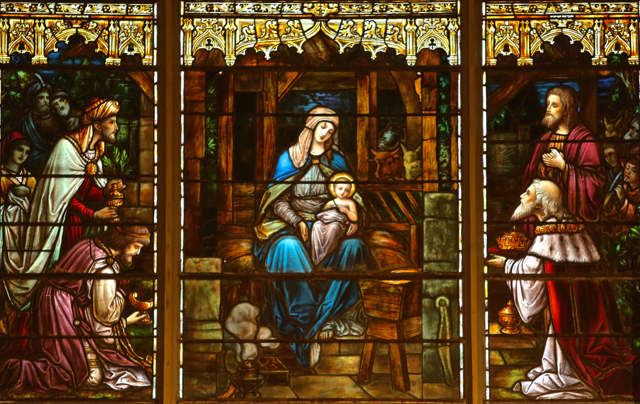
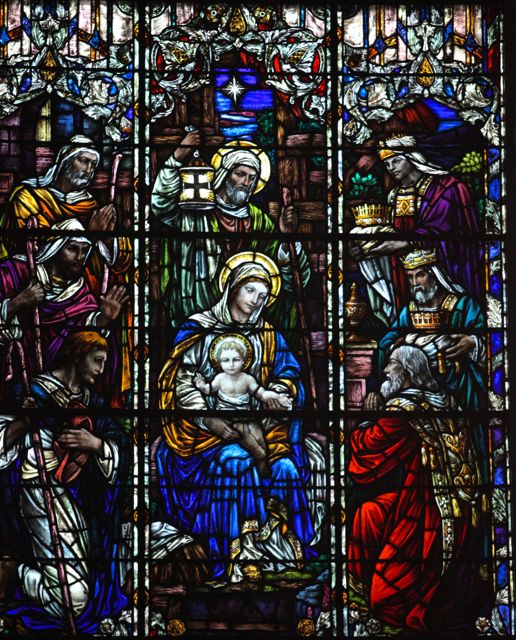
(Above: The window of the Nativity in St. Thomas More Church, New York. The parish is scheduled by the Archdiocese to close in August 2015)
22
Dec
21
Dec
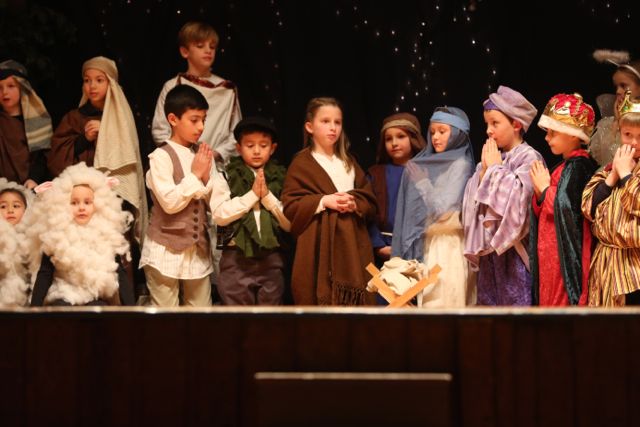
Some photos of the Regina Pacis Academy Christmas Pageant performed at St. Mary’s Church Hall, Norwalk, CT on December 18.
21
Dec
FROM THE PASTOR
As many of you were, I was shocked at the announcement of the closing of St. Stephen’s Church. The recommendation did not come from our cluster of parishes (St. Patrick’s Cathedral, Our Saviour, St. Agnes, St. Stephen/Our Lady of the Scapular, and the Chapel of the Sacred Hearts of Jesus and Mary), which is where such recommendations were supposed to emanate. After a month of trying to get an explanation, I received the following from Bishop John O’Hara who has the unenviable job of guiding “Making All Things New.” “The recommendation to merge St. Stephen with Our Saviour was made by the Archdiocesan Advisory Board on June 25. The action of the Advisory Board was accepted and ratified by the Priest Council in early July. As you know, Cardinal Dolan elected to accept the recommendation. ” As you may have seen in this past Monday’s New York Times, additional mergers and closures have been announced to be followed by a third group before next August. “In the new cases, however, the proposals came directly from Cardinal Dolan and other senior archdiocesan officials, who felt the advisory group had not gone far enough in recommending changes,” said Joseph Zwilling, the archdiocese’s spokesman.
Rev. Robert J. Robbins, K.C.H.S.
(From the December 21 Bulletin of The Church of Our Saviour)
What is at stake is the loss of one of the greatest Catholic churches on the island of Manhattan – with the architecture of Renwick, the murals of Brumidi, the Munich stained glass windows and intact sanctuary with its altars and statues…
And after the first two tranches there is now a potential “third group” of Making all Things New? Or is the formulation just a little unclear?
21
Dec
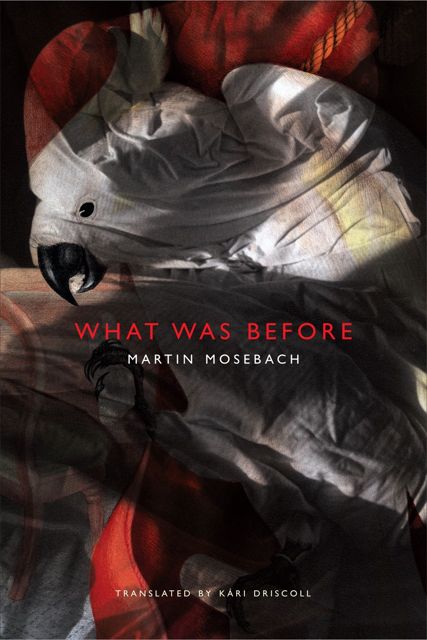
Martin Mosebach is known on these shores as a Catholic apologist and as the author of the Heresy of Formlessness. But in his own country he is above all a novelist. There has now appeared What was Before – to my knowledge the first translation of one of his novels (Was davor Geschah) into English. (Kari Driscoll, translator; Seagull Books, 2014). You can get it at Amazon.
Interview by Christoph Schmidt for the KNA (“Catholic News Agency”).
The author Martin Mosebach is one of the best-known conservative Catholic intellectuals in the German-speaking world. He emphatically greeted the restoration in 2007 by Pope Benedict XVI of the old rite of the mass. The author, who currently is living in Rome under a grant, reveals in an interview with the Catholic News Agency (“KNA”) what he thinks about the new style of Pope Francis.
KNA: Mr. Mosebach, Pope Francis appears to be striving for changes in the structure and in the pastoral practice of the Church. What does a conservative Catholic think in the midst of so much euphoric rhetoric?
Mosebach: Up till now no one can say what Francis really wants precisely. Public opinion tries to insinuate that he has intentions that fit in with the spirit of our age. It is possible that he wants to accomplish great reforms. It is also possible that he is being misjudged, and that he not so very interested in change. The people cheer him, but I do not know if they know whom they are exactly cheering. As approachable and warm as Francis appears he is also just as reserved. He doesn’t give anyone a peek into his hand of cards.
KNA: Francis himself has stoked these expectations.
Mosebach: …and that even among people who have nothing to do with the Catholic Church. They assess him as a new president who is proposing a new legislative package. Traditionally a pope does not act in this way. His office consists in continuity not in change. He does not have the mission to reinvent the church. From the very first second, however, Francis has chosen a symbolic language that serves the media public and is supposed to convey this: I will do everything differently. That was not very loyal towards his predecessor. From his “buona sera” instead of the priestly greeting “Praised be Jesus Christ,” to his rejection of papal garments to his move into the Vatican guesthouse. My feeling is that these externals have acquired an inappropriate importance.
KNA: You lack sympathy for the papal humility?
Mosebach: Ultimately that to me is not humility but a dimming down to a style of life coinciding with today’s secular power. Today billionaires wear T-shirts and sit in comfortable sofas instead of on hard Baroque furniture. Heavy brocaded vestments that represent the glory of the Christ who is to come again are very uncomfortable. The Bergoglio style should not be confused with asceticism. And even if Francis were an ascetic, I would not like at all to hear about it from the mass media. Asceticism has value above all when it is hidden.
KNA: Many conservative Catholics fear an attack on the doctrines of the church under Francis. The initiatives of the synod on the family in October for a new method of dealing with remarried divorced people and homosexuals were after all far reaching.
Mosebach: If the intense management of the synod originated with Francis, he at least received pushback. The interim report could not be successfully pushed through. The tempo disturbed me in all this. The church was always slow but that was good. Endless discussions reflected the spiritual development until at some point the papal decision was taken. In the end always that which had been proven was successful. That is the meaning of the image of the pilgrim Church throughout history. This path should be, as much as possible, without losses in substance. But as I have said, up to now it is totally unclear what Francis really thinks. We only know that he places great value on a merciful Church that stands on the side of the poor – which from the very beginning has been always natural for the Church.
KNA: Do you hope for anything then from Francis?
Mosebach: I hope from every pope that he strengthens Catholics in their faith and that, through him, the Church gains spiritual force so that she can maintain her faith against the spirit of the times. But this takes time. Scenes of cheering around the popemobile are not a standard for that. Only in a couple of years will one be able to see if the seminaries and the religious orders once again have more candidates and conversions increase; if there is therefore anything to Francis beyond that he’s nice and is able to communicate with the masses.
KNA: At the end of November, for example, the pope appealed before the EU Parliament in Strasbourg to Europe’s Christian identity. Did that impress you?
Mosebach: On the one hand it was good to remind secular politicians of that which they absolutely do not want to hear. Namely that everything which calls itself European is attributable to Christianity. Even the anti-Christian tendencies since the Enlightenment could never sever themselves from the debate with religion.
KNA: But on the other hand?
Mosebach: Such appearances are for me in the end just pious utterances, which go in one ear of the politicians and out the other. Really, these papal appeals don’t interest me at all. I would rather have a pope who never gives any speeches. I would like a pope who imposes his hands on the people, who blesses them, who absolves them from their sins and says the mass for them. A priest-pope, not a politician-pope.
KNA: That sounds to be sure a little unworldly and would deprive the Catholic Church of much of her effectiveness. What do you have against charismatic leaders on the papal throne?
Mosebach: I have nothing against charisma in the Church – quite the opposite. But from the beginning, the Church separated institution and charisma. It wasn’t Paul the charismatic theologian who became the first pope but Peter the fisherman, a priestly, blessing figure. St. Francis also did not become pope even though he filled the people of his time with the greatest enthusiasm. He didn’t even want to be a priest. The Church breathes with two lungs – with the institutional offices culminating in the papacy and with the enthusiasm for the faith of her charismatic individuals. Both should be kept separated. I consider it to be an error to canonize popes. They should be above all the guardians of continuity and of the sacraments.
KNA: Which, since the new regulation of Benedict XVI can be celebrated once more according to the old missal. At that time you were among its greatest supporters. Pope Francis appears to have less interest in this.
Mosebach: I think that he probably has no great interest either in the old or in the new rite – or in liturgy at all – which I myself take to be the heart of the Church. In this he is completely a Jesuit. In 2007, however, as the first archbishop of the world, he put a church at the service of the celebration of the old rite of mass in Buenos Aires. Obviously he has nothing against it. The celebration of the old rite had expanded worldwide under Benedict. In almost every larger German city you can celebrate it. Its presence is even stronger in France and strongest of all in the USA. With this action Benedict XVI reacted to a widespread need. For me that was his greatest achievement as pope.
KNA: But the discussions with the FSSPX are still stalled. How do you judge the prospects for an agreement between the Church and the traditionalists?
Mosebach: I have no prognosis in this regard but such an agreement would be very desirable. In the first place, the crucial thing is that the discussions are continuing at all – and they are. After Benedict’s resignation many said that the door has been finally slammed shut for the Fraternity of Pius X. But Francis has had basically even fewer problems with them than had his predecessor because he is interested far less in detailed questions of theology.
KNA: Do you miss Benedict XVI?
Mosebach: I regretted his resignation very much. He felt that he could no longer physically meet the demands of the office and felt that his remaining time in office was too short to allow it to be followed by a long phase of agony like that of John Paul II. One has to accept that. The shape of the new institution of the “pope emeritus” is for me still insufficiently clear. I hope that a new age of popes that have resigned does not lie before us. In any case Benedict XVI was a great pope but no ruler. In contrast Francis is a ruler and an autocrat. Whether he is also a great pope still has to be seen.
(By kind permission of Martin Mosebach. Translator: Stuart Chessman)
16
Dec

Window in Our Lady of Guadalupe/St. Bernard church, New York
Connecticut:
Sts. Cyril and Methodius, Bridgeport
Christmas Day: 10:15 AM
St. Martha, Enfield
Christmas Day: Mass, 12:00 PM
St. Mary Church, Norwalk
Christmas Eve: 11:00 PM, Rosary at the Creche
11:30 PM, Christmas Carols and Organ Music:
Prelude: Es is ein’ Ros’ entsprungen (Johannes Brahms, 1833-1897)
Hymn: Once In Royal David’s City (Irby)
Hymn: A La Nanita Nana (anon. Spanish, XVIII C.)
Carol: It Came Upon the Midnight Clear (Carol)
Hymn: Joys Seven (arr. Hughes)
Carol: Il est né, le Divin Enfant (arr. Gabriel Fauré, 1845-1924)
Hymn: Riu riu chiu (Mateo Flecha el Viejo, 1481-1553)
Carol: Tu scendi dalle stelle (St. Alfonso Maria de’ Liguori, 1696-1787)
Motet: There Is No Rose (anon. English, XV C.)
Carol: Silent Night (Stille Nacht)
Prelude: Desseins éternels (from La Nativité du Seigneur) (Olivier Messiaen, 1908-1992)
12:00 AM Solemn Midnight Mass:
Hymn at the Procession: Adeste Fideles (John Francis Wade, arr. Willcocks)
Messe solennelle (Louis Vierne, 1870-1937)
Gregorian Mass of Christmas Midnight: Dominus dixit
Motet at the Offertory: Verbum caro factum est (Orlando di Lasso, c.1532-1594)
Motet at the Communion: Quem vidistis pastores (Cipriano de Rore, 1515-1565)
Motet at the Communion: O magnum mysterium (Tomás Luis de Victoria, 1548-1611)
Postlude: In dulci jubilo (BWV 729) Johann Sebastian Bach, 1685-1750)
Christmas Day: 9:30 AM, Solemn Mass:
Prelude: Von Himmel hoch, da komm ich her (BWV 700) (Johann Sebastian Bach, 1685-1750)
Missa Dies sanctificatus (Giovanni Pierluigi da Palestrina, c.1525-1594)
Gregorian Mass of Christmas Day: Puer natus est
Gradual: Viderunt omnes (Pérotin, fl. c. 1200)
Motet at the Offertory: Puer natus est (William Byrd, 1540-1623)
Motet at the Communion: Viderunt omnes (Byrd)
Motet at the Communion: Dies sanctificatus (Palestrina)
Postlude: In dulci jubilo (BWV 729) (Bach)
Postlude: Final from Symphony No. 1 (Louis Vierne, 1870-1937)
St. Peter’s Church, 160 Main Street, Hartford
Christmas Eve: Midnight Mass
St. Stanislaus, New Haven
Christmas Day: High Mass 2:00 PM (St. Gregory Society)
New Jersey:
Mater Ecclesiae,261 Cross Keys Road, Berlin
Christmas Eve: 10:30 PM Christmas Carols
10:50 PM Blessing of Manger and Christmas Proclamation
11:00 PM Midnight Choral Mass
Christmas Day:
8:30 AM Low Mass
11:00 AM High Mass
Our Lady of Mount Carmel, Newark,
Christmas Eve: Midnight, Missa Cantata
Our Lady of Fatima,32 West Franklin Avenue, Pequannock
Christmas Eve:
11:00 PM Christmas carols
Midnight: Missa Cantata
Christmas Day:
7:00 AM Mass at Dawn
9:00 AM Mass of Christmas Day
11:00 AM Mass of Christmas Day
Our Lady of Victories, Harrington Park
Christmas Eve: High Mass 9:00 PM
St. Anthony’s, Monmouth St. between 6th and 7th St.; Jersey City
Christmas Eve: 8:30 PM Concert of Seasonal Sacred Music; 9:00 PM High Mass (with music including the “Spatzenmesse” of Mozart)
St. Anthony of Padua Oratory, West Orange
Christmas Eve:
5:00 PM Confessions
5:30 PM First Mass of Christmas (fulfills the Christmas obligation)
9:30 PM Confessions
10:30 PM Traditional Christmas Carols
11:00 PM Solemn High Midnight Mass (First Mass of Christmas)
Christmas Day:
7:30 AM Low Mass (Second Mass of Christmas)
9:00 AM Low Mass (Second Mass of Christmas)
11:00 AM High Mass (Third Mass of Christmas)
St. Catherine Laboure, 110 Bray Avenue (off of Route 36);Middletown
Christmas Day: Solemn High Mass 8:45AM
New York:
Holy Innocents, New York
Christmas Eve: 7-8 PM – Christmas Carols; Church doors open at 11PM for Carols in preparation for the Midnight Mass; 12:01 AM, Christmas Midnight Mass
Christmas Day: Mass, 10:30 AM
Immaculate Conception, Sleepy Hollow
Christmas Day: Missa Cantata, 3 PM
Our Lady of Mount Carmel Church, 448 East 116th Street, New York
Christmas Day: Sung Mass, 10:00 AM
Our Lady of Peace Church, Carroll Street, Brooklyn, New York
Christmas Day: Missa Cantata, 9:30 AM ( Fr. Joseph Koterski, SJ, celebrant)
St. Agnes, New York
Christmas Day: High Mass, 11:00 AM (with Schola Cantorum)
St. Anthony’s Church, Bronx, New York
Christmas Day: 8:30 AM
St. Ladislaus Church,18 Richardson Place,Hempstead (Nassau County, LI)
Christmas Day: 9:00 AM
St. Matthew,35 North Service Road, Dix Hills, New York
Christmas Day: 12:30 PM (in the chapel)
15
Dec

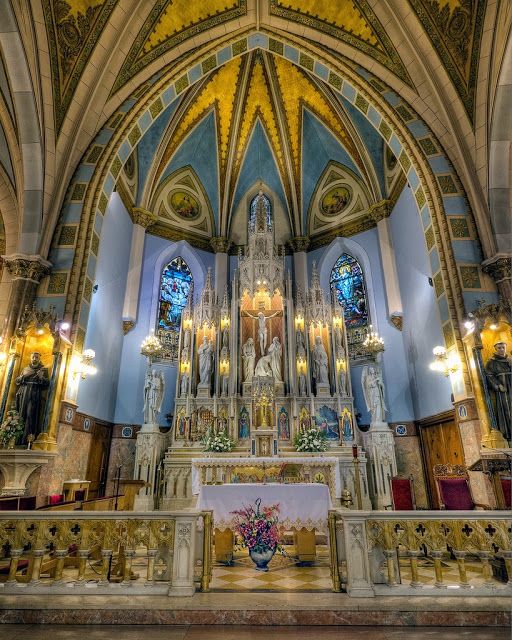
The severe altar of St. Thomas More: a legacy of the Liturgical Movement and Cardinal Spellman.
As we had told you, the grand Archdiocesan announcement of November 2 was only the beginning of the “Making all Things New” saga. The New York Times now makes us aware of a second wave of proposed mergers and closings. The Archdiocese had stated in the first announcement that “there are a small number of new proposals for parish mergers that have arisen as a result of the cardinal’s own reflection on those proposals presented to him, as well as from his discussions with key advisors.” In fact, there are more than 30 in the new wave – 11 of them involving not just merger but effectively the permanent closing of a parish.
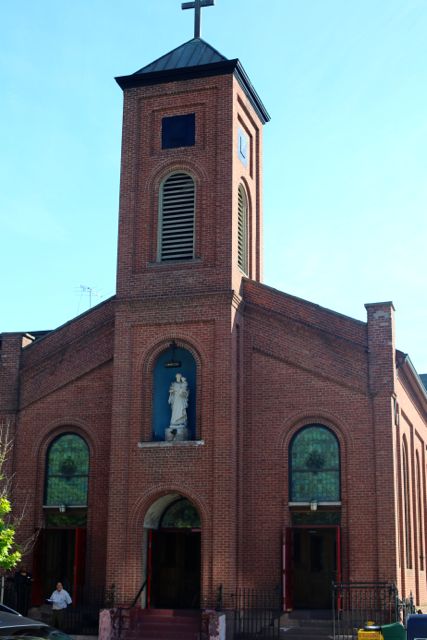
The pre-civil war church of St. Joseph “of the Holy Family” – scheduled to be merged.
According to the New York Times: “The earlier round of mergers and closings followed more than a year of discussions between parishes and an advisory panel, which was charged with presenting recommendations about parish consolidations to Cardinal Dolan. In the new cases, however, the proposals came directly from Cardinal Dolan and other senior archdiocesan officials, who felt the advisory group had not gone far enough in recommending changes, said Joseph Zwilling, the archdiocese’s spokesman.” In other words, after conducting the much ballyhooed allegedly “participative” process of “Making all Things New” as established by its consultants, the Archdiocese itself immediately overruled its recommendations (which it had already published). It is eloquent testimony of the true nature of “Making all Things New.” What advantage the Archdiocese sees in this “death by a thousand cuts” approach is a mystery to me.
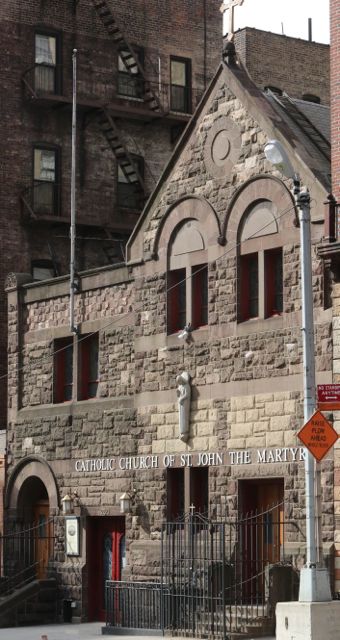
Clearly, going forward no parish can feel entirely secure, regardless of its “vibrancy” or any prior assurances it may have received. Of the proposed permanent closures in Manhattan, the region with which I am familiar, that of St Thomas More has already attracted wide notice. Equally astonishing – even though it is supposed to be only a merger – is the combination of St. Catherine of Siena with St. Vincent Ferrer. For both St.Thomas More and St. Catherine of Siena would seem to be flourishing parishes. The closing of St. John the Martyr parish, however, had been widely expected but for some reason had not been included in the first “tranche” of closings. St. Gregory the Great – the parish without a church – also might seem to be “low-hanging fruit” to the Archdiocese – although its parochial school will continue?
Window in the church of St. Gregory the Great.
Some of these mergers would endanger some of the city’s most beautiful churches: St. Catherine of Siena and St. John Nepomucene (even though both are supposed to stay open).