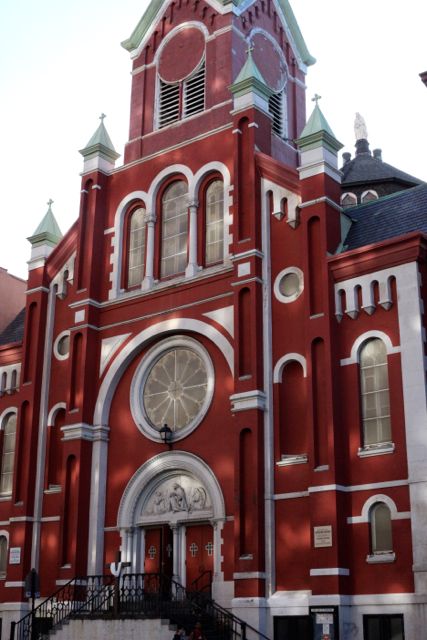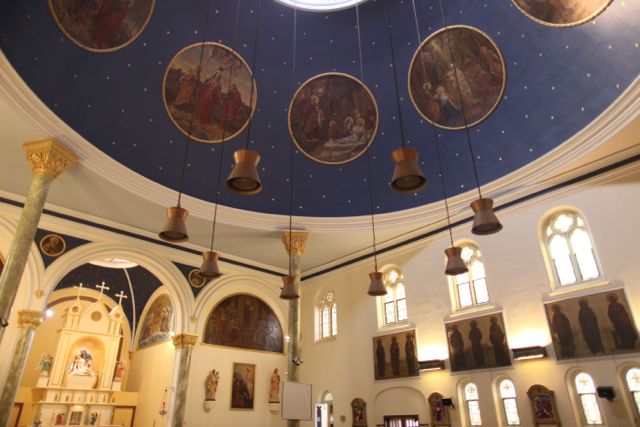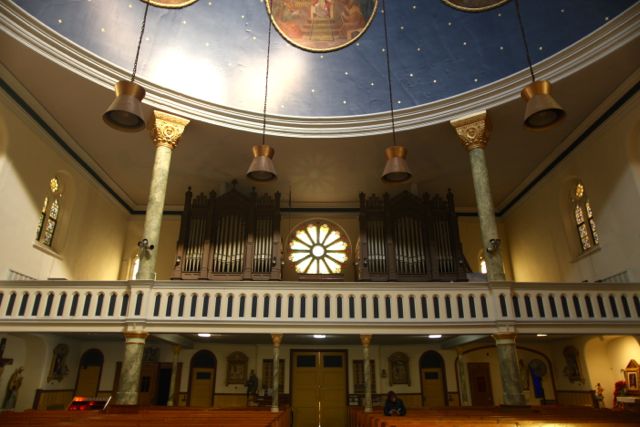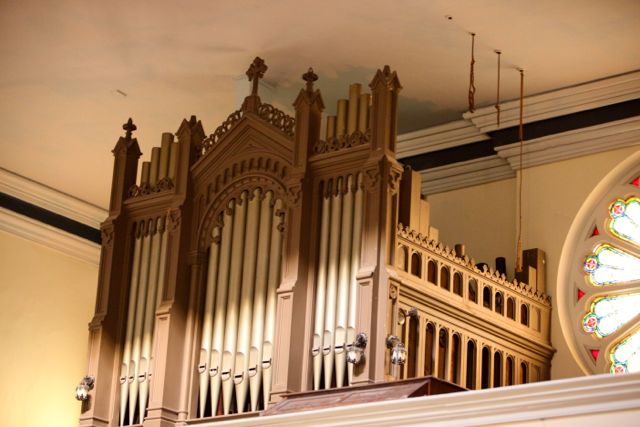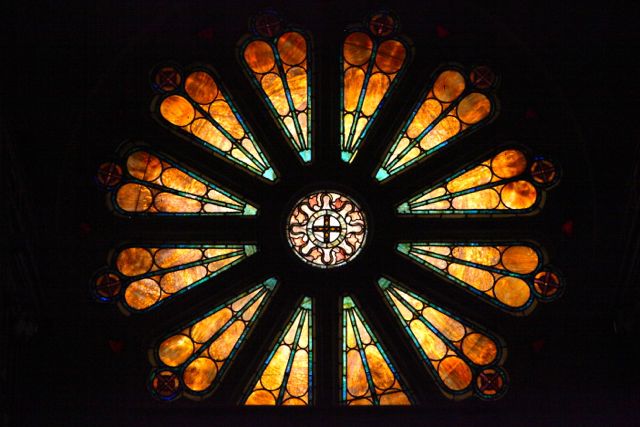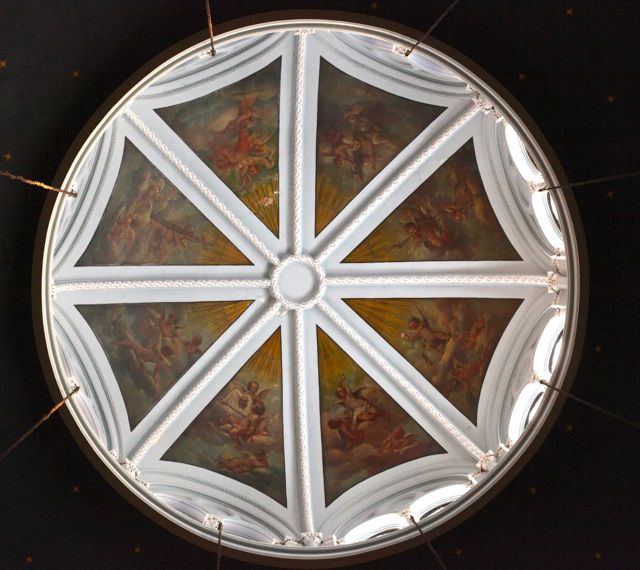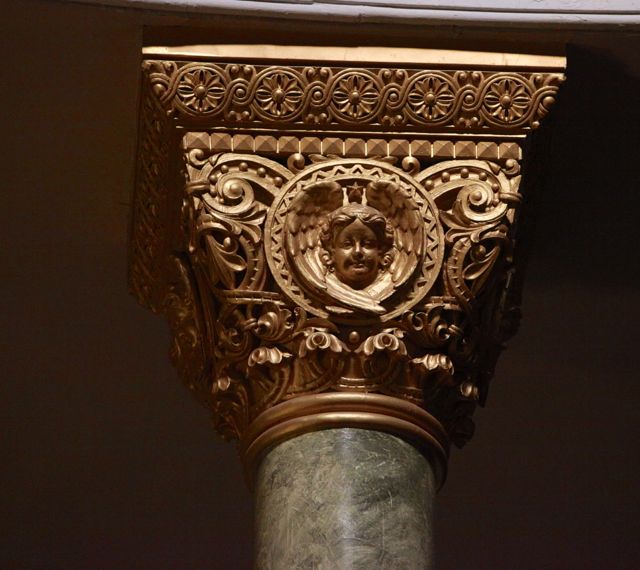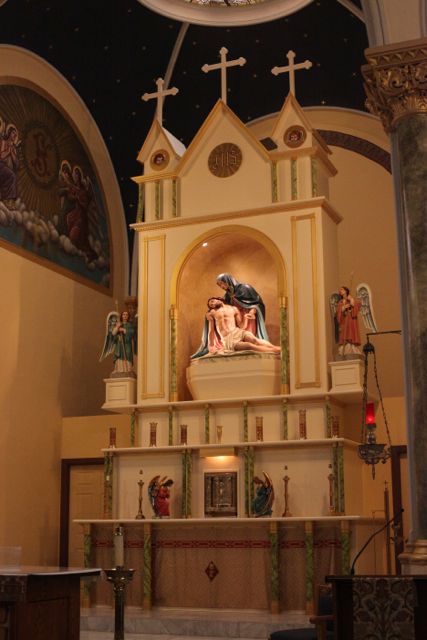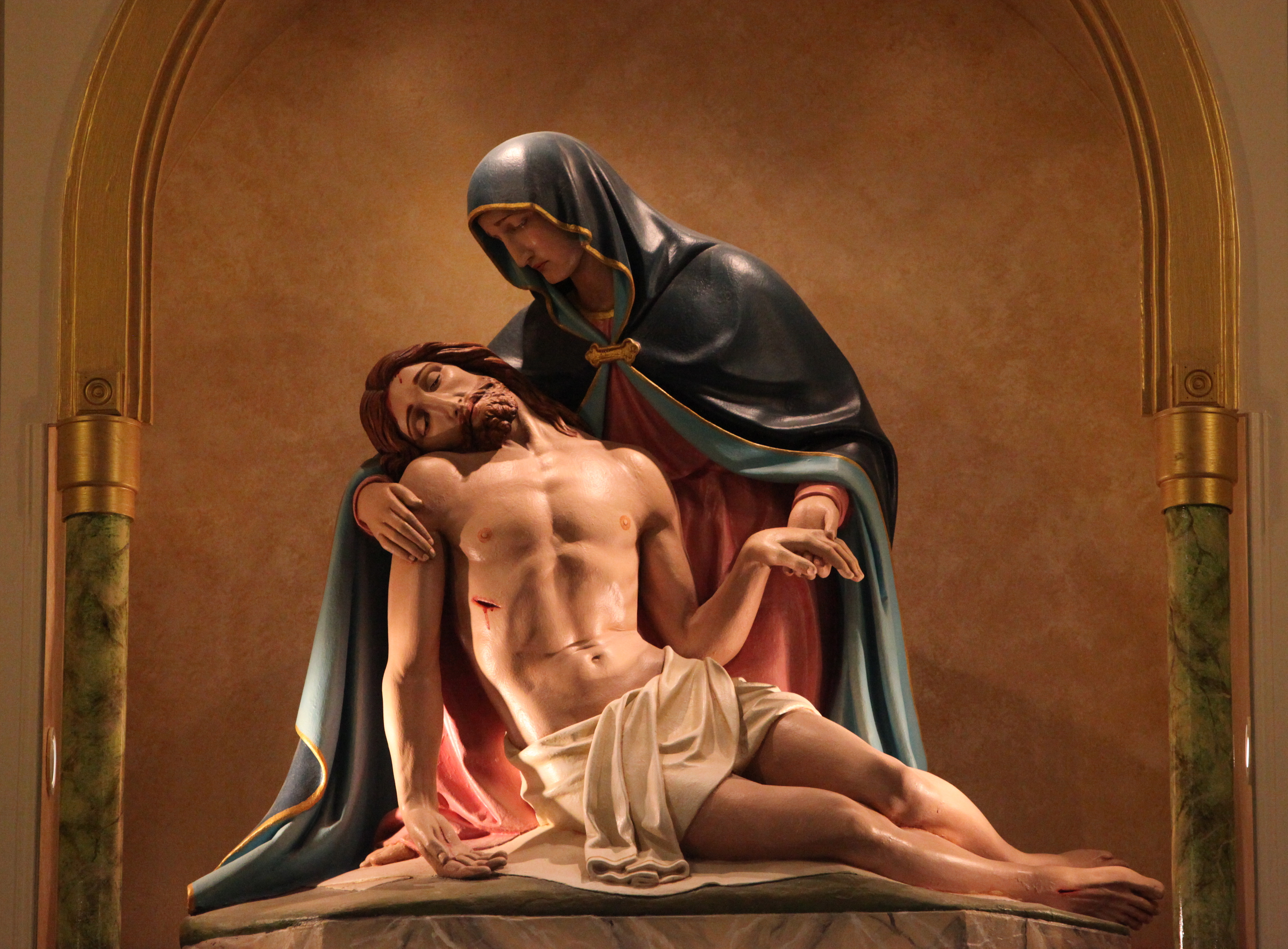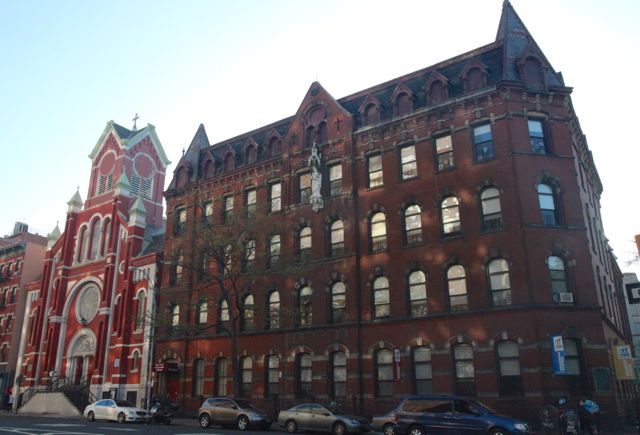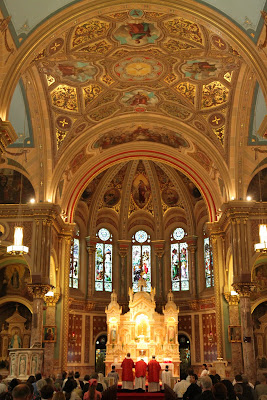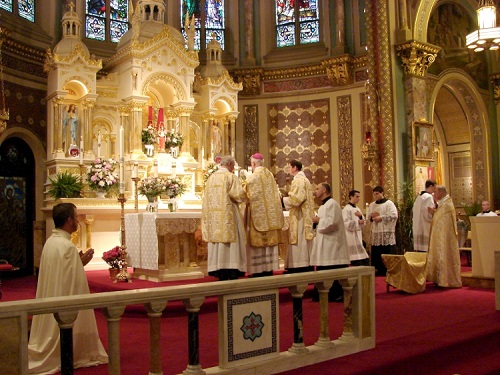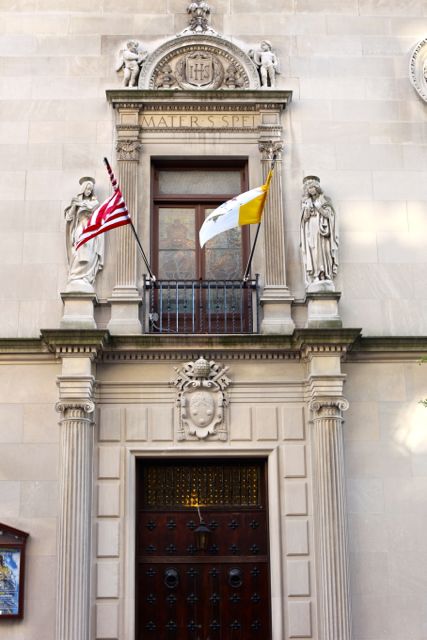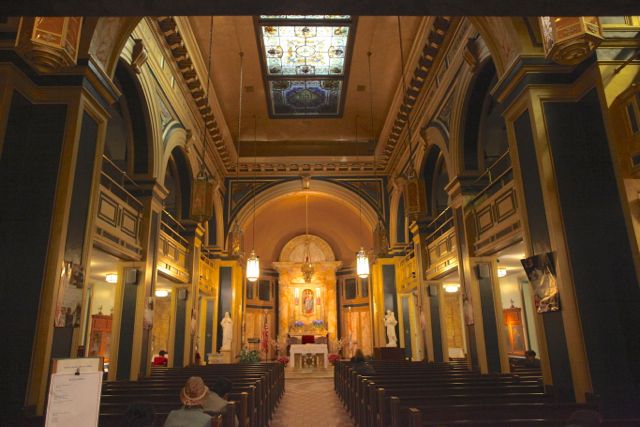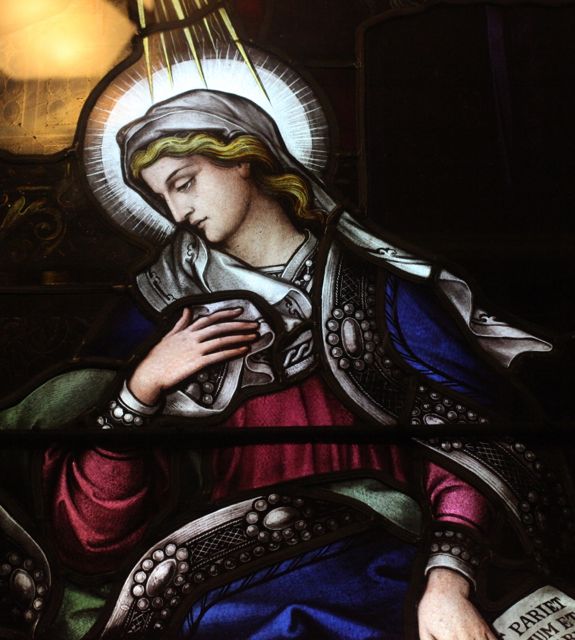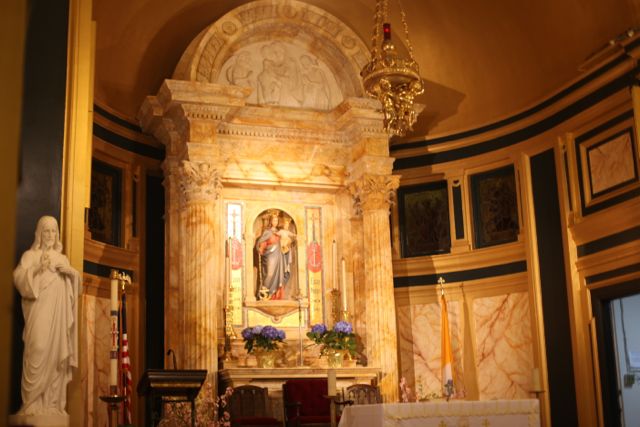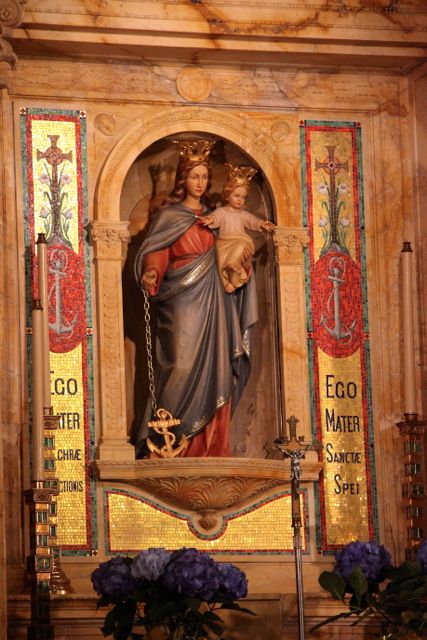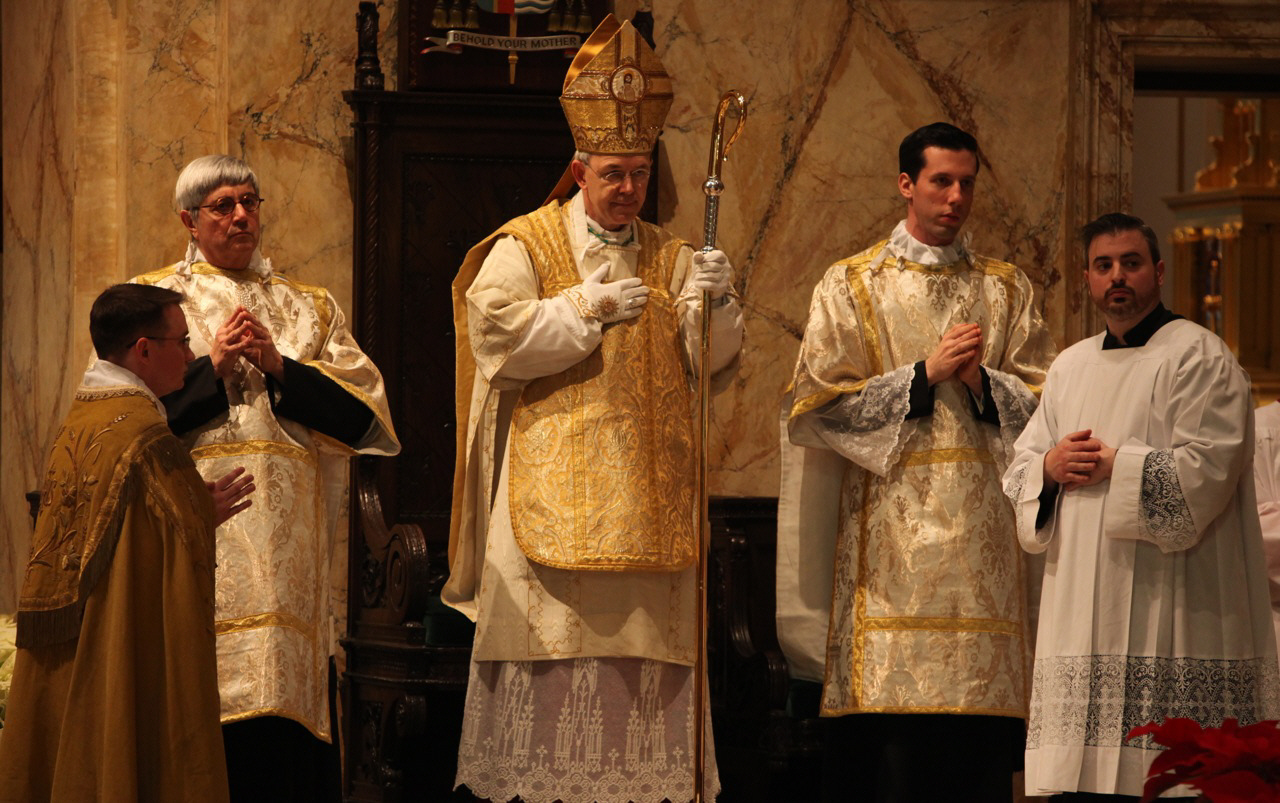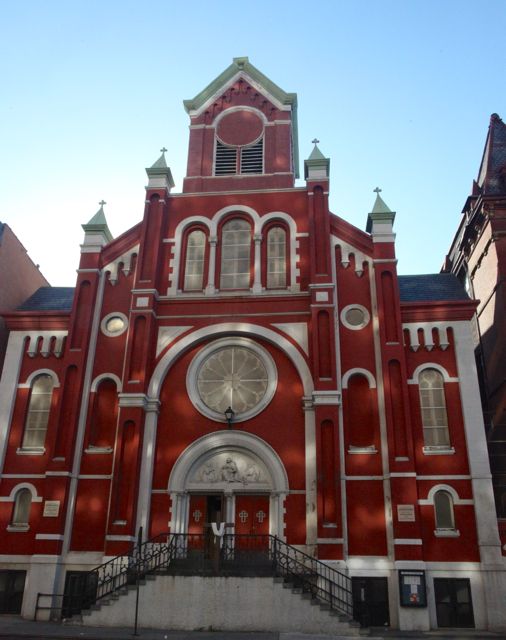
St. Gabriel Church in Stamford, CT will offer a Solemn Mass for the Feast of the Chair of St. Peter on Friday, February 22 at 7:30 pm. Refreshments will follow in the parish meeting room.
18
Feb
St. Gabriel Church in Stamford, CT will offer a Solemn Mass for the Feast of the Chair of St. Peter on Friday, February 22 at 7:30 pm. Refreshments will follow in the parish meeting room.
15
Feb
What follows is the first chapter from an account of the life of St. Isaac Jogues, published in 1657, just eleven years after the saint’s martyrdom. This account has been translated from the Latin for the first time by Society member Nicholas Salazar.
Mr. Salazar’s introduction:
“Recently I was looking at a book on the North American Martyrs and one of the entries in the bibliography for St. Isaac Jogues had the very intriguing title Mortes illustres et gesta eorum de Societate Iesu…, published at Rome in 1657.
Thanks to the miracle of Google Books, I was able to track down this volume, the full title of which is rather remarkable:
Mortes illustres et gesta eorum de Societate Iesu qui in odium fidei, pietatis, aut cuiuscunque virtutis, occasione missionum, sacramentorum administratorum, fidei, aut virtutis propugnatae ab ethnicis, haereticis, vel aliis veneno, igne, ferro, aut morte alia necati aerumnisve confecti sunt
Which means:
The Illustrious Deaths and Deeds of Those of the Society of Jesus Who on the Occasion of Missions, the Administration of the Sacraments, the Faith, or the Defense of Virtue Either Were Killed by Poison, Fire, the Sword, or Another Death by Natives, Heretics, or Others or Were Exhausted by Toils for Hatred Toward the Faith, Piety, or Whatsoever Virtue
From this lengthy tome (a quarto or small folio of 700+ pages) I was able to extract the life of St. Isaac Jogues.
Following is the translation of the first chapter of the life of St. Isaac.
Father Isaac Jogues
Born in Orleans in France. Killed in Canada. Among the Mohawks. 18 October 1646.
Father Isaac Jogues was born in France, in the noble city of Orleans, to distinguished as well as pious parents. When he was scarcely an adolescent, he was so inflamed by a desire to devote himself and his life to procuring the salvation of infidels that, because of this one hope of traveling to the farthest peoples, he enrolled in the Society of Jesus. It was the twenty-fourth year of this century; he was eighteen years old. He spent the two years of his novitiate in Rouen; during this time he not only energetically applied himself to the pursuit of all the virtues but also especially to arousing in himself day by day a greater zeal for helping souls, so that Father Louis Lallemant, whom he then had as spiritual director, did not hesitate to tell him frequently and emphatically that he would meet his death in no place but Canada. In those days at any rate Isaac’s wishes tended elsewhere, since the crop of Christianity was scarcely yet sprouting during that time in Canada; those wishes seemed to be growing white-hot for the harvest in Ethiopia. In that field he was itching to exercise his industry as quickly as possible. While he happened to be devoting attention to philosophy in the College of La Flèche [editor’s note: Rene Descartes’s alma mater], he was also impatient with the delay, and because of it he set about moving his superiors to action by letter and God and the saints by the most ardent and constant prayers and very harsh afflictions of the body. But when all hope of the Ethiopian expedition was snatched from him, he turned his zeal and his thinking to Canada and, in it, to the Huron Mission: he thought continually about leading the Hurons to the faith; he spoke with his companions about the character of that people; this was, in fact, his favorite topic; it was his only pleasure.
While he was turning these plans over in his heart, messages very appropriately came concerning the Japanese’ cruel persecution of the Christians and in particular the noble death of Father Charles Spinola, which he had pursued there. This affair further inflamed a heart already enkindled with a desire for martyrdom; he began to hold that fortunate hero in such veneration that he everywhere carried around in his bosom an image of the martyr, bound to the stake in the middle of the pyre, looking up to heaven; throughout the day he continually entrusted his prayers and sighs to this image. Through these and other such lofty proofs of great virtue, and since he displayed both a talent and a will ever equal to handling the highest and most difficult affairs, when the third year of his theological course was ending (which was the thirty-sixth of the current century) and his superiors at last gave their approval, he set out from Paris. He crossed over into Canada with an astonishing eagerness of spirit to employ his diligence there in training the undeveloped natures of the barbarians for civil and Christian culture; and in proportion to the abundance of the region he satisfied that profound desire, with which he had long been occupied, of doing and suffering many things for Christ.
Now, this is that part of America which is called Canada and is situated to the north. It is populated by undeveloped, rustic mortals. Since it was first visited by the French, it is also called New France. It is a diverse nation: all the inhabitants are barbaric in culture, and are quite poor as far as the necessities of life go. They survive by hunting, mostly, and fishing, and raising unproductive crops from the soil. The settlements are separated by the intervals of rivers and mountains. At tribal borders each nation defends itself with arms against the attacks of another. They fight light battles, with only a few combatants, but with such dire and immense hatred, that against those captured in war they give vent to their anger more savagely than any beast; and when they have had their fill of brutality, with horrendous gluttony in turn they devour the flesh of their enemies. This “rich fare” is practically the only fruit of making war. Upon entering the region the Hurons are the first tribe that one encounters. They have already been softened by social intercourse with the French. They are capable of a pacified speech, temperament, and culture. They are now, whether because of fear, or because of duty, friendly to those born in our country; they live near our fixed settlements and are submissive to authority.
At the beginning of July, having crossed the ocean under favorable conditions, Father Isaac made it to the region. After a few days, although he had not yet recovered from seasickness, he directed his course to the Hurons, about to set out upon a journey far more dangerous than he had hitherto made (he made the trip in their bark “canoes” or boats). A ten- year-old boy was entrusted to him to be taken inland. When, not long afterwards, a bad reaction to the unaccustomed food had made this boy sick, Father Isaac had not a little opportunity to exercise the virtue of charity and to put to the test his tolerance for evils for Christ, especially as he had already been weakened by his labors and fatigued by fasting. No doubt the boy was unable to undertake the journey on foot because of both his age and lack of strength. Moreover, the barbarians refused to allow him to climb onto their shoulders. Father Isaac took the burden onto himself, but really it was extraordinarily dangerous for himself and for the boy: there were rushing waterfalls, jagged hills, and huge rocks to traverse, and if you wavered in your step, your life was in danger. And so, with what skill he had in communicating by nod and gesture, he pointed out to the barbarians the jeopardy to each of them and to the boy. They gestured back with an offer he accepted: he himself would carry their packs on his shoulders, and they would keep the boy safe.
It was a journey of twenty days. The equipment which he had to carry was mostly of iron; his strength was not at all equal to the burden; and it had already been weakened before. But charity urged him on, as did the boy’s need. Therefore with an eagerness of spirit incapable of being satisfied fully, remembering the cross of Christ, he managed his insane labor, and he rendered the barbarians hard service for so many days. In the meanwhile he endured hunger with a moderate quantity of Indian flour scarcely once a day, he slaked his thirst with cold water, and he slept on hard ground or sharp rocks. These first lessons in apostolic warfare were followed by an illness of about forty days, which almost brought him to his end; during this time, when none of those conveniences which are abundant in Europe was available, he displayed patience, and obedience, and a will congruent to the Divine judgment. Content with little broths of rustic herbs, seasoned by the charity of his companions, and with straw for a bed, he did not seek the aid of physicians, or the delight of food; he did not desire linens or blankets, nor a mattress or any other soft bedding, with which he might pamper his sick body.
14
Feb
Msgr. Di Giovanni, pastor of the Basilica of St John the Evangelist in Stamford, has informed us today that the Symposium and Pontifical Mass with Cardinal Burke scheduled for this April has been cancelled.
In light of the recent resignation of Pope Benedict and the upcoming Conclave the Cardinal has cancelled many of his engagements including his visit to Stamford Connecticut.
Msgr. Di Giovanni hopes to invite Cardinal Burke to the Basilica again sometime in the future.
11
Feb
The following churches will offer Traditional Masses for Ash Wednesday, February 13.
St. Mary Church, Norwalk, CT, Missa Solemnis, 5:30 pm
St. Stanislaus Church, New Haven, CT, 5:30 pm
Immaculate Conception Church, Sleepy Hollow, NY, low Mass, 5 pm
Holy Rosary Church , 344 Sixth Street Jersey City, NJ 07302 Missa cantata at 5:30 p.m.
St. Anthony of Padua Oratory 1360 Pleasant Valley Way West Orange, NJ 07052 9:00 a.m. 12:10 p.m. 7:00 p.m.
5
Feb
Marian Devotions for the Feast of Our Lady of Lourdes
at St. Gabriel Church in Stamford
Monday, Feb 11th at 7:30 PM
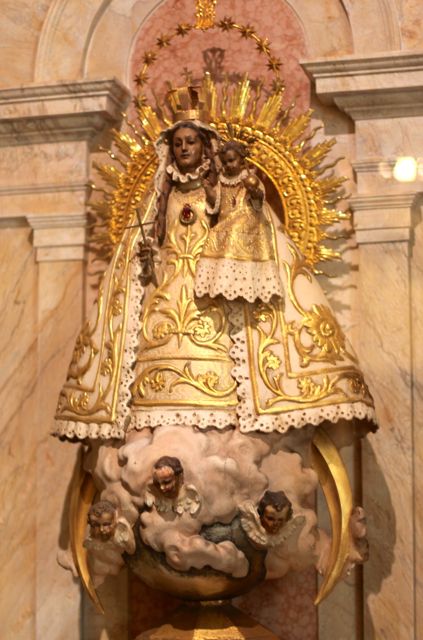
Exposition of the Blessed Sacrament with Rosary and Homily. Followed by Eucharistic Procession to the new Altar of Our Lady during which the Litany of Loreto will be sung in Latin according the text of the Liber. This will be following by Benediction of the Blessed Sacrament and the singing of the Ave Regina Caelorum.
All are welcome to join us as we honor Our Lady.
2
Feb
Please note that as of February 14, this event has been cancelled.
IN HOC SIGNO VINCES
“In this Sign you shall Conquer”
A symposium marking the 1,700th anniversary of the Edict of Milan in 313 A.D. that granted liberty to the Church.
April 6-7, 2013, the Basilica of St. John The Evangelist, Stamford CT.
The speakers will include:
HIS EMINENCE,
RAYMOND LEO CARDINAL BURKE
Prefect of the Apostolic Signatura
CARDINAL BURKE WILL ALSO CELEBRATE
A PONTIFICAL HIGH MASS AT THE THRONE IN THE EXTRAORDINARY FORM
ARCHBISHOP TIMOTHY BROGLIO
Archdiocese of Military Services U.S.A.
DR. ELIZABETH LEV
Art Historian and Author, University of St. Thomas
Catholic Studies Rome Program
PROFESSOR GEORGE WEIGEL
Distinguished Senior Fellow, Ethics & Public Policy Center, Washington, DC.
SYMPOSIUM TICKETS:
$50, includes all lectures & lunch.
Seating limited! For more information & Tickets,
visit www.stjohnsstamford.

St. Michael’s
414 West 34th Street
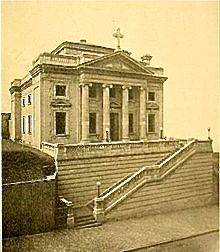
Since the 1970’s the deteriorating spiritual and physical condition of the Archdiocese – and, in more recent years, the improving values of Manhattan real estate – have posed an increasing danger to the existence of New York City’s Catholic Churches. But from 1900 up to about 1960 the greatest menace was the frantic growth of the transportation network of the city: the roads, railways, bridges and tunnels that led in and out of the city and eventually surrounded it on all sides. Some parishes were engulfed by the approaches to new bridges or tunnels, and left cut off from their formerly residential surroundings: e.g. Our Lady of Vilna (the Holland Tunnel); Our Lady of Perpetual Help (the Queensboro bridge); St. Raphael (now Saints Cyril and Methodius – the Lincoln Tunnel). Others were razed outright (e.g. St Clare’s near the Lincoln Tunnel; St. Gabriel’s near the Midtown Tunnel). In St. Michael’s parish we have a church that definitely found itself in 1907 “on the wrong side of the tracks” – directly in the path of the construction of the new Pennsylvania Station and its tunnels. Yet, instead of disappearing, St. Michael’s acquired an entirely new complex of church, schools and rectory!
St. Michael’s parish was founded in 1857 as a small chapel, the first pastor, Fr. Arthur Donnelly, was a remarkable man who by the time of his death had served as vicar general of the Archdiocese. He finished the parish church in 1868. Struck by the small number of children who showed up in church, the pastor launched a mass for children and then an ambitious catholic school construction program. by 1874 there were separate schools for boy and girls (the latter in the hands of the Presentation sisters. Indeed, early illustrations and descriptions of St Michael’s focus more on the imposing complex of school buildings and convent than on the parish church. 1) Subsequently, around 1925, St. Michael’s Academy, a girls high school was added. The schools of St Michael’s parish shared the fate of so many other Catholic institutions after 1960. The parochial school – which has become coed at some point – closed around 1968. St Michael’s Academy closed in June 2010. 2) Why Catholic schools cannot survive in an economically expanding borough crying out for good, affordable education is one more mystery of the Conciliar era…
Fr. John A. Gleeson, who became pastor in 1890 after Msgr. Donnelly’s death, would face great challenges indeed – challenges he surmounted with amazing success. The church was destroyed by a fire in 1892. By 1894 it was rebuilt and rededicated, But then, in 1907 St Michael’s found itself directly in the path of the construction of Penn Station and the tunnels leading to it. In a creative deal, the Pennsylvania Railroad paid for the move of the parish and its schools to a new site purchased by the railroad where new buildings: church, schools rectory and convent – were erected, also at the expense of the railroad. The LeBrun firm – run by the sons of that remarkable architect Napoleon LeBrun – was the architect. 3) David W. Dunlap makes the extraordinary claim that the old church, finished in 1894, had been disassembled brick by brick, moved to the new location and re-erected there. 4) The contemporary sources I have been able to check make no mention of this but treat the present complex on West 34th Street as a new creation. 5) It is highly likely, however, that various elements of the furnishings and decoration were brought over from the old church.

The rough hewn exterior – which David Dunlop describes as “Romanesque Revival” – leads to a spacious, open, brightly lit nave. A simple vault covers the vaguely renaissance interior, which reflects the influence of beaux-arts classicism. The unmistakably Catholic decoration comprises a wondrous collection of white marble statues, large paintings of the stations of the cross, stained glass, and reredoses – all in different styles. It is much more like the artwork accumulated in one of the old Victorian churches of Manhattan rather than the carefully selected decorative programs of the newer New York churches contemporary with St. Michael’s. All is maintained in very fine condition and numerous stands for votive candles are available – and are used.


The splendid high altar and reredos.


A fine window in the style of around 1907.

A strongly Catholic greeting to the outside world – seen from inside the vestibule.


Confessionals converted into shrines – a common sight in older New York churches.

He’s already made it to the collection of statues!
The surroundings of St Michael were traditionally a rather rough, commercial/industrial area – now the neighborhood is up and developing like almost everywhere else in Manhattan. What was once part of Hell’s Kitchen now claims to be the northern border of Chelsea! Over the years, St Michael’s has made efforts to expand its “outreach,” to use a dreaded conciliar platitude. Fr John Harvey OSFS, who died in 2010, ran Courage – the ministry to homosexuals – out of this parish in the 1980’s. More recently, the parish has made great efforts to reinvigorate its musical program and restore its organ. 6)
Even though it was very much “on the wrong side of the tracks” St Michael’s parish in its long history survived fire, condemnation, and, in the 1960’s, societal and ecomomic decline. We hope the new found prosperity of the present age can be surmounted as successfully – and that in these changed surroundings this parish can reassume the leadership role it once held.

1) Shea, John Gilmary, The Catholic Churches of New York City at 514- 519 (Lawrence G. Goulding & Co, New York, 1878)
2) http://en.wikipedia.org/wiki/St._Michael_Academy_(New_York_City); Retrieved January 28, 2013
3)The Catholic Church in the United States of America Vol. III at 350 (Catholic Editing Company, New York 1914)
4)Dunlap, David W., From Abyssinian to Zion; A Guide to Manhattan’s Houses of Worship at 231 ( Columbia University Press, New York, 2004)
5) Transactions of the American Society of Civil Engineers, vol. LXVIII, Sept. 1910 The New York Tunnel Extension of the Pennsylvania Railroad The Terminal Station – West by Benjamin Franklin Cresson. (“the (old) buildings of the church of St Michael were torn down between June and August, 1907”)
6)http://www.van.org/articles/ChurchofSaintMichael20080919.htm (retrieved January 28. 2013)
29
Jan
The following churches will be offering the Traditional Mass on the Feast of the Purification, Saturday,February 2. If you know of any others, please let us know and we will post the information.
St. Mary Church, Norwalk, CT, Missa Cantata, 9 am
Prelude: Prélude à l’Introït pour la Purification de la Vierge (from L’Orgue Mystique) (Charles Tournemire, 1870-1939)
At the blessing of candles: Lumen ad revelationem gentium (plainsong, mode viii)
At the procession: Adorna thalamum (plainsong, mode vi), etc.
Missa de Beata Virgine (Cristóbal de Morales, c.1500-1553)
Gregorian Mass of Candlemas: Suscepimus, Deus
Motet at the Offertory: Intemerata Dei mater (Johannes Ockeghem, c.1410-1497)
Motet at the Communion: Beata es Virgo Maria (Philippe Verdelot, c.1480-c.1532)
Postlude: Diptyque pour la Purification de la Vierge (from L’Orgue Mystique) (Tournemire)
Church of the Holy Innocents, New York, NY
February 2 at 1:00 PM – Solemn Mass for the Feast of the Purification with Blessing of Candles and Procession.
This Mass is part of a Forty Hours Devotion. For information and the complete schedule: link
Holy Apostles College and Seminary, Cromwell, CT Saturday 8:30 am
St. Stanislaus Church, New Haven, CT celebrated on Sunday, Feb. 3, 2 pm, including blessing of the candles and procession.
29
Jan

The Church of the Holy Innocents in Manhattan will celebrate the restoration of its monumental mural of the Crucifixion by Constantino Brumidi with the first traditional Forty Hours’ devotion in the Archdiocese of New York since the Second Vatican Council.
The Forty Hours devotion will take place over the first weekend of February and conclude with a Pontifical Mass at the Faldstool on Sunday, February 3rd at 10 a.m. coram sanctissimo (in the presence of the Blessed Sacrament). There will be sign-up sheets at the back of the Church of the Holy Innocents for those who would like to commit to adoring the Blessed Sacrament in the church during the periods of exposition. The main sign-up periods for adoration are from (1) 4:00 a.m. (Saturday) to 12:00 noon (Saturday) and (2) 6:00 p.m. (Saturday) to 10:00 a.m. (Sunday).
The Forty Hours devotion begins on First Friday, February 1st, at 6:00 p.m. with a Solemn Votive Mass of the Blessed Sacrament (in the extraordinary form ). This Mass concludes with the exposition and procession of the Blessed Sacrament. The First Friday all night vigil begins after this Mass and will continue until 4:00 a.m.
The Forty Hours continues on First Saturday, February 2nd, at 1:00 p.m. with a Solemn Mass for the Feast of the Purification of the Blessed Virgin Mary, Candlemas (in the extraordinary form). This Mass will include the blessing of candles and procession.
The Forty Hours devotion concludes on Sunday, February 3rd, at 10:00 a.m. with a Solemn Pontifical Mass at the Faldstool coram sanctissimo for the Feast of the Dedication of the Church celebrated by His Excellency, James C. Timlin, Bishop Emeritus of Scranton. This Mass concludes with the procession of the Blessed Sacrament and reposition.
29
Jan
By Father Greg Markey
From the Bulletin of St. Mary Church, Norwalk, CT, January 27, 2013
When a young man receives the mysterious call to become a priest, there is a sense of being complete, of having found what he is looking for, and the conviction, like the early apostles, that it is worth leaving all to follow Christ. The priesthood is the greatest of all vocations. He is the most intimate friend of God. Having power to consecrate the Body and Blood of Christ, the Lord has raised him higher than all the kings of the earth, and above the angels of heaven. Similar to the beginning of marriage, he is excited for the future that the Lord has planned for his life, but never really knows what kind of challenges he will have to overcome. Now he must spend the rest of his life being faithful to his vocation.
Catholics have a right to expect holiness from their priests, that their priest would live a life of integrity, offer the Sacraments with reverence, and preach the Gospel with fidelity. However, it is healthy to remember the human potential for sin: no priest has ever been immaculately conceived. When some friars once publicly praised St. Francis of Assisi, he told them, “I may yet have sons and daughters; you cannot safely praise me. No man is to be praised whose end is uncertain.” Although he remained a deacon his whole life, St. Francis was a man who understood the uncertain outcome of this spiritual warfare.
The Lord knew that one of His own priests, Judas Iscariot, would betray his vocation, and Jesus warned the people about the danger of becoming overly attached to individual priests, “Call no man your father on earth, for you have one Father, who is in heaven” (Matthew 23:9).
The priest is involved in the most intense form of spiritual combat simply because he has made the decision to put on the collar and work for the salvation of souls. “Be attentive, dearly beloved priests, for the devils tempt one priest more than a hundred laymen; because a priest that is lost brings with him many people to hell,” says the Doctor of the Church, St. Alphonsus Ligouri. It is only common sense that the enemy will work most diligently to kill the commander because of the damage it causes to the whole company of soldiers. The priest is a shepherd leading the flock to heaven, and is engaged in spiritual battle of the most serious kind because the stakes are nothing less than eternal life and eternal damnation. The devils hate the priest for the number of souls he has freed from their grasp and they pursue him with a vigor that can only be born in hell.
There is nothing more painful and dramatic than a priest who falls from grace, causing all of the Church to suffer. Yet for the intensity of the battle, the priest’s culpability in mortal sin is similar to that of the angels who rebelled. St. Bernard of Clairvaux writes, “The priest having become an angel of the Lord, must expect either the reward or the reprobation of the angels.” Because of his formation, the books he has read, the many instructions he has received and sermons he has heard, he has become like the angels themselves in their great capacity to understand right and wrong. St. Alphonsus says that if the priest commits mortal sin, “he cannot allege ignorance, for he knows the great evil of mortal sin; he cannot plead weakness, because he knows the means by which, if he wishes, he can acquire strength; if he is unwilling to adopt the means, the fault is entirely his own.”
The saints warn that a priest who sins gravely is particularly susceptible to growing indifferent to the gravity of his crime. Because the priest enters the Holy of Holies each day and handles the Sacred Mysteries, he has the temptation of losing the sense of awe before God. The exhortations about hell and all that is terrible in God’s just judgment have lost their power and no longer fill him with terror. He has heard it all before and now they are just words. St. Jerome writes, “There is not in the whole world a monster to be compared with a priest in the state of sin, for the unfortunate man will not bear with correction.” The guilty often responds to accusations by belittling their accusers or intimidating them, but this only postpones the inevitable shame.
Finally, the obstinate sinful priest is the most delicious of all souls in hell. “Oh! How great the rejoicing of the devils when a priest enters hell,” writes St. Alphonsus Ligouri, “All of hell is in confusion to meet the priest who comes.”
Some of the well-meaning faithful will reply to the news of a priest scandal by saying, “There but for the grace of God go I”. While it is a compassionate statement, it is also an inadequate understanding of the human person. Both free will and grace are at work in the human act, and the soul has many chances to turn back before the full horror of mortal sin comes to fruition.
St. Alphonsus tells us, “When you hear of the fall of a spiritual soul, do not imagine that the devil has suddenly precipitated her into sin; for he first brought her into tepidity, and then has cast her into the precipice of enmity with God.” In the spiritual life, mortal sin is never a single moment of weakness when the soul made a bad decision. Rather, mortal sin is a gradual process by which the soul grows tepid, repeatedly consents to small temptations, step by step, through door after door, until the grave monster of darkness has enveloped her. There are many “yes’s” to small temptations before the final consent to the mortal sin. “Deliberate and unrepented venial sin disposes us little by little to commit mortal sin” (Catechism, 1863). This not only shows how merciful the Lord is in giving the soul numerous opportunities to recognize that there is still time to turn back, but also how the soul is then fully culpable if the act comes to fruition.
To become a good priest is no easy matter. It is not simply avoiding mortal sin to save his soul. It is to walk the narrow path of perfection, to deal with the spiritual warfare day in and day out with often no one but the Lord and his guardian angel keeping tabs on his progress. This is why regular Confession and a spiritual director are especially necessary for priests.
In the old form of the Rite of Ordination, the bishop gave an exhortation to the deacons about to be elevated as priests and finished with these words: “May you thus build up, by preaching and example, the house, that is, the family of God, so that your promotion may not be a cause of damnation for me, nor by the reception of so great an office, for you.” This kind of exhortation is no longer used in the ordination rite today but one can see the wisdom of reminding the newly ordained priests of the serious nature of what he about to undertake.
The lay people should love their priests, pray for their priests, and thank God for their priests, recognizing the hidden spiritual warfare he undergoes all for their salvation. The priest has “put on the breastplate of righteousness”, “the shield of faith”, “the helmet of salvation”, and the “sword of the Spirit” (Ephesians 6:14-17). The battle is raging and no one’s salvation is assured until the last breath.