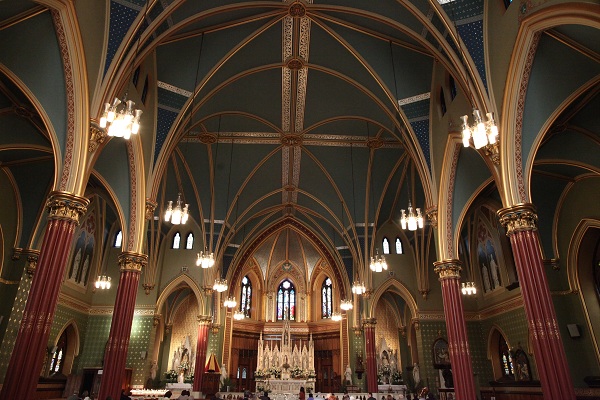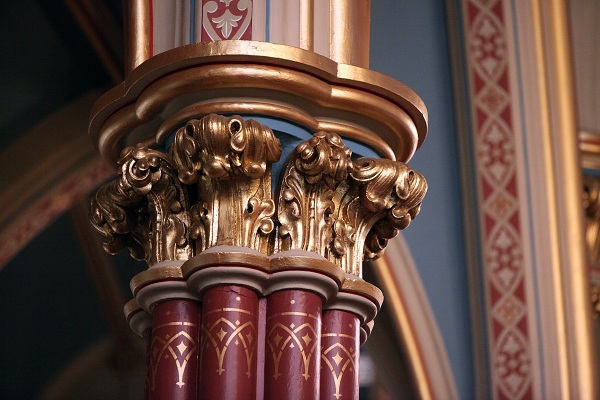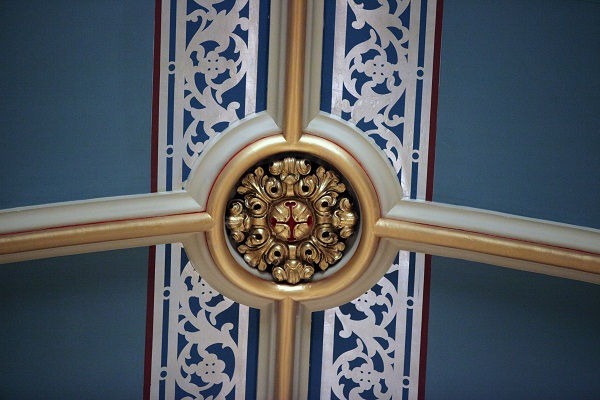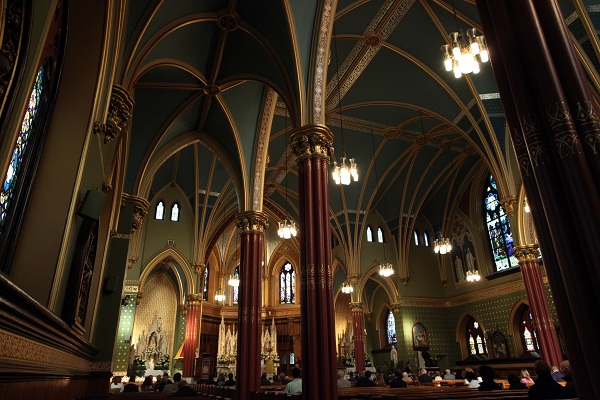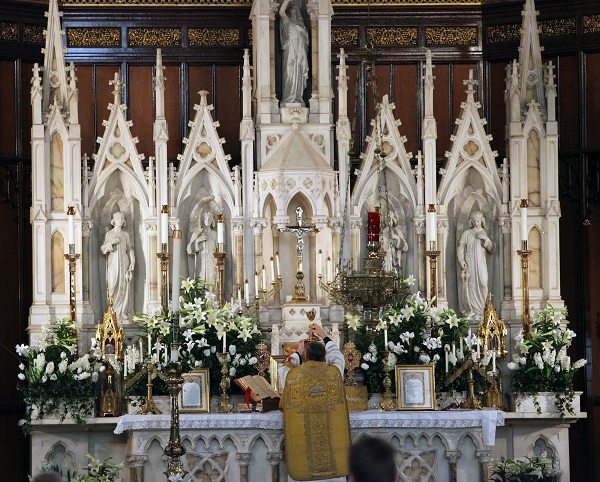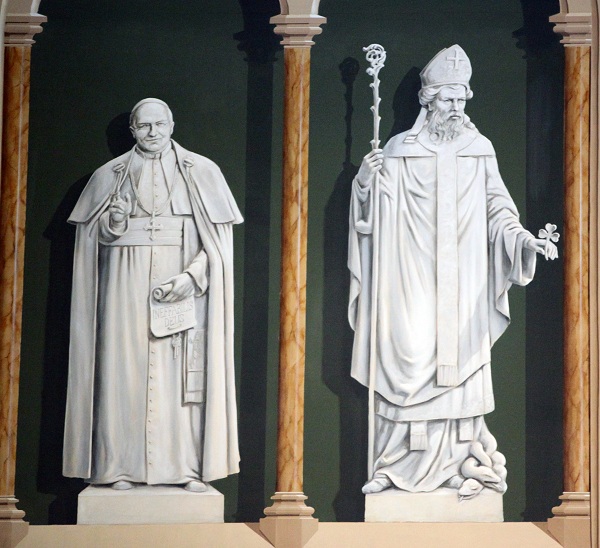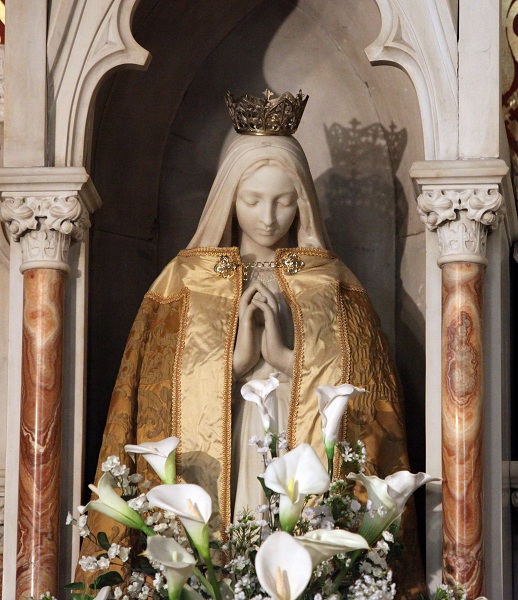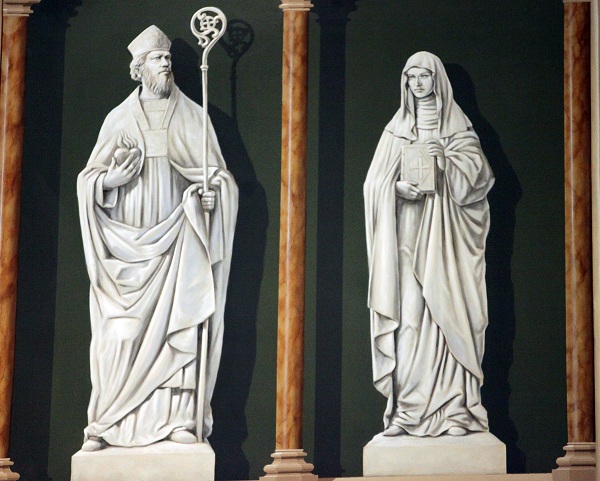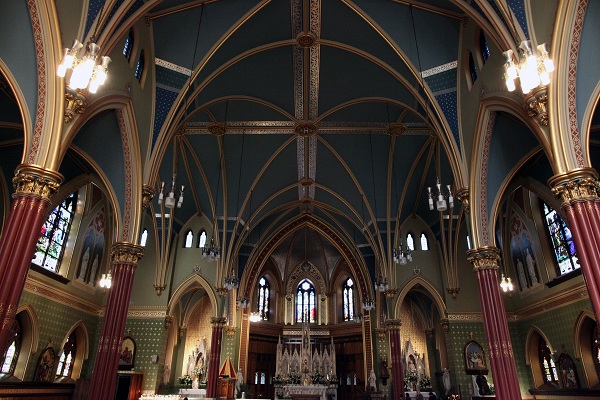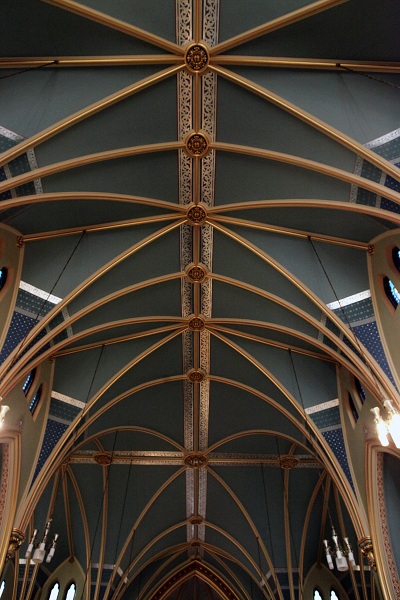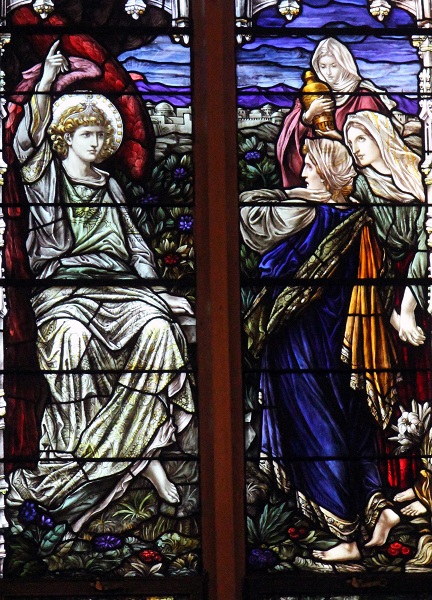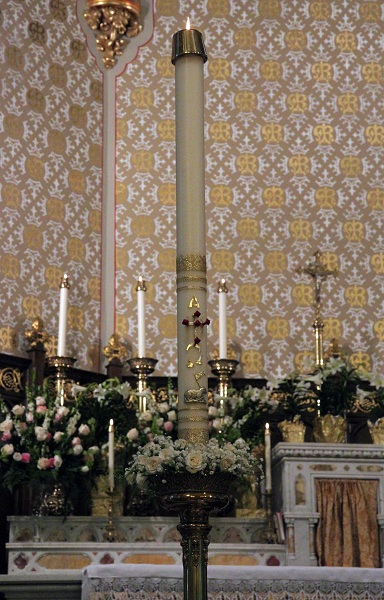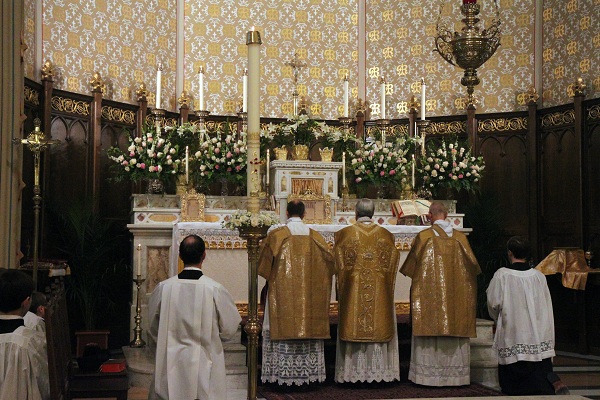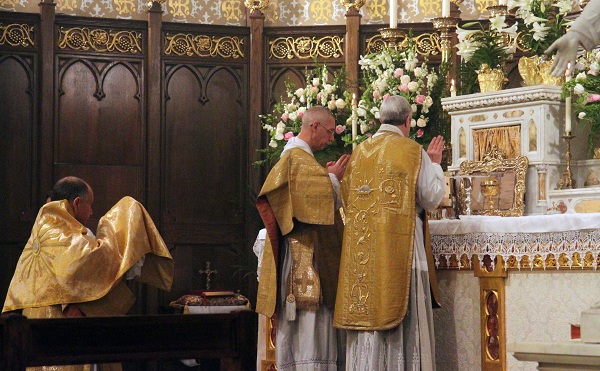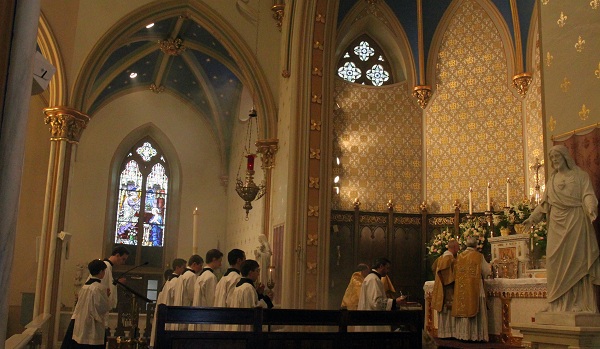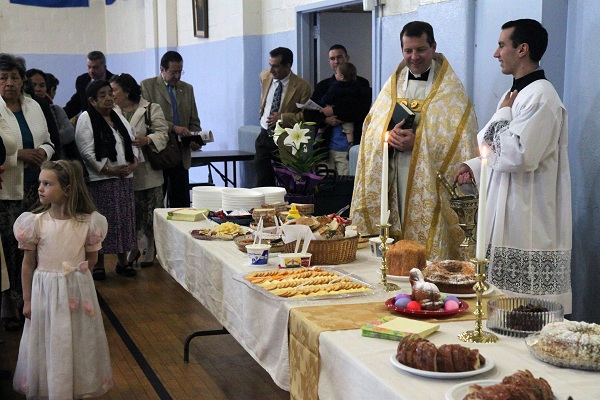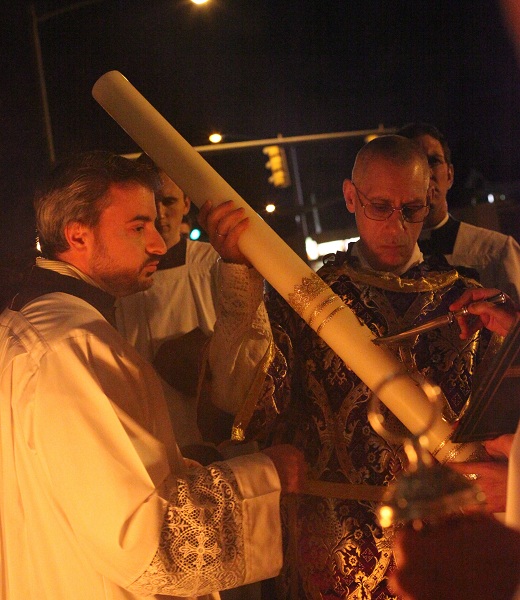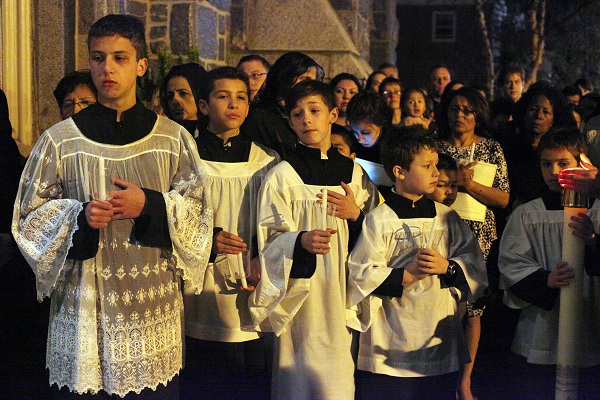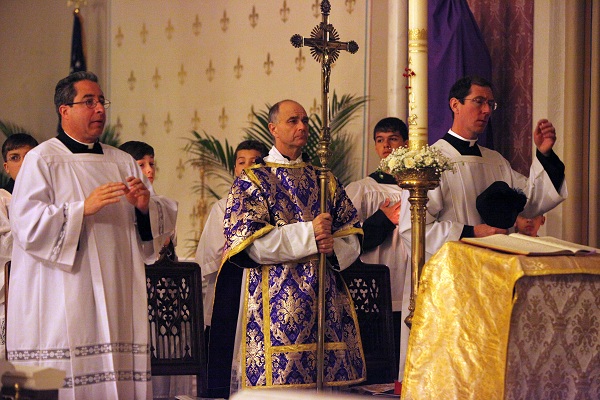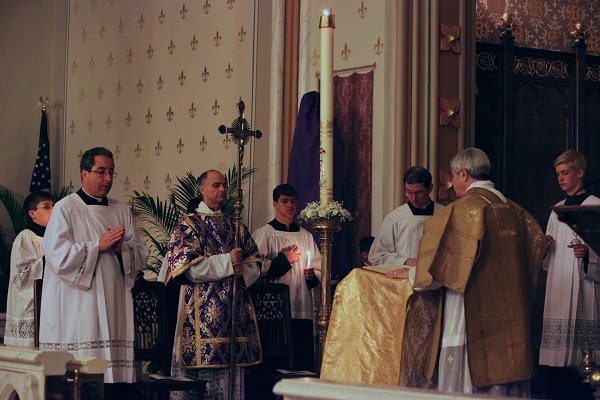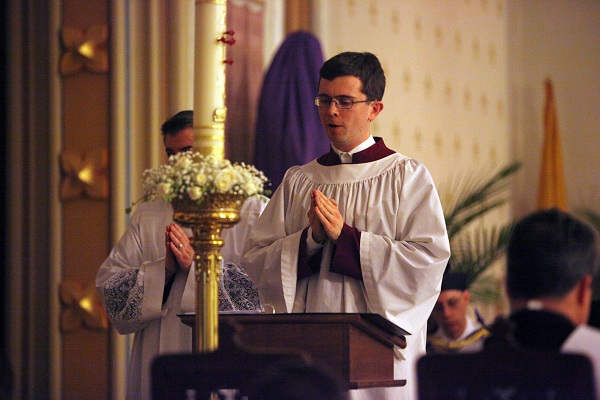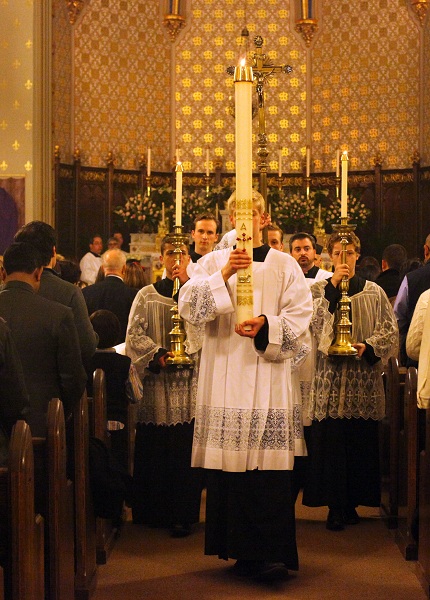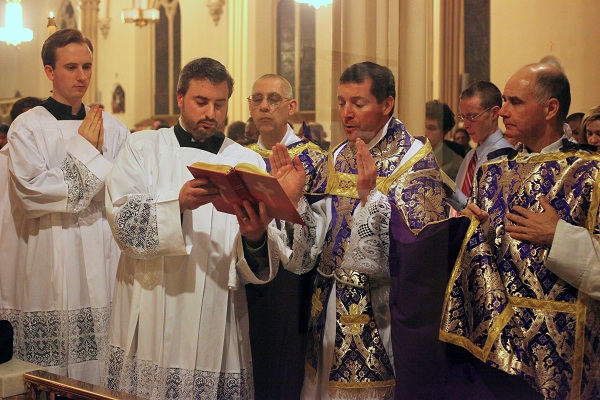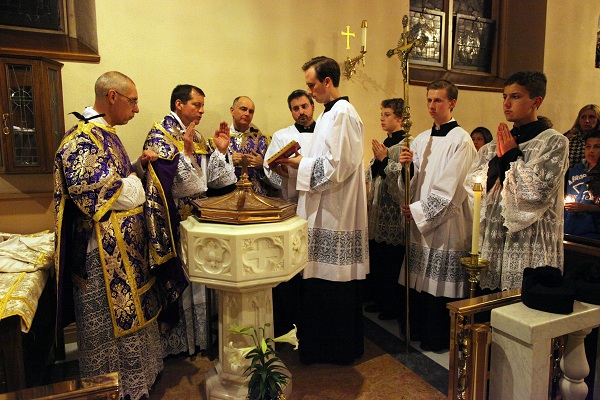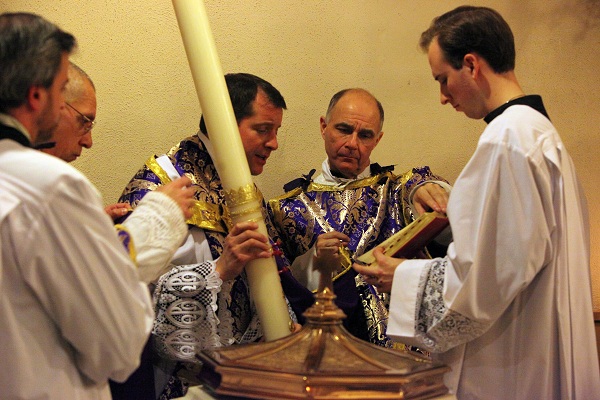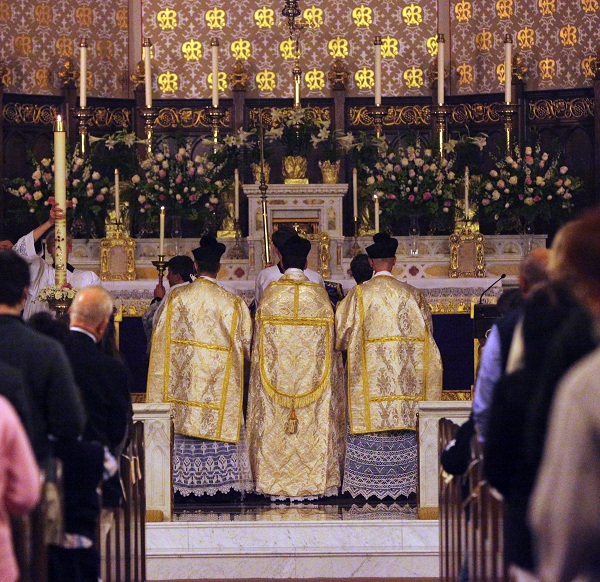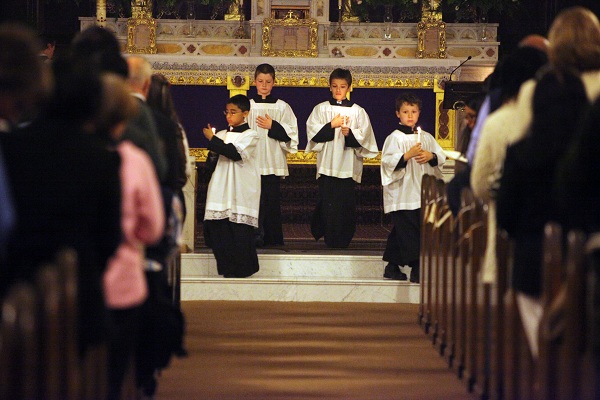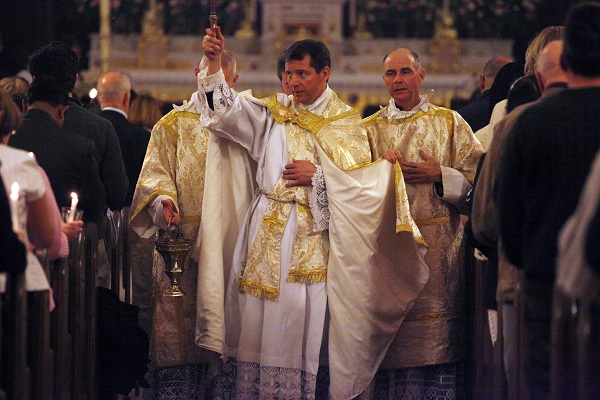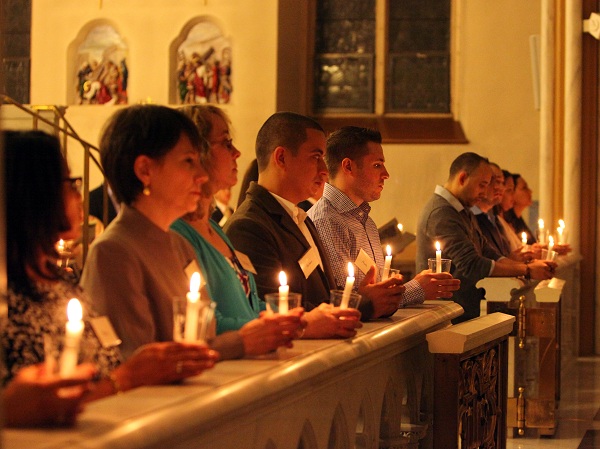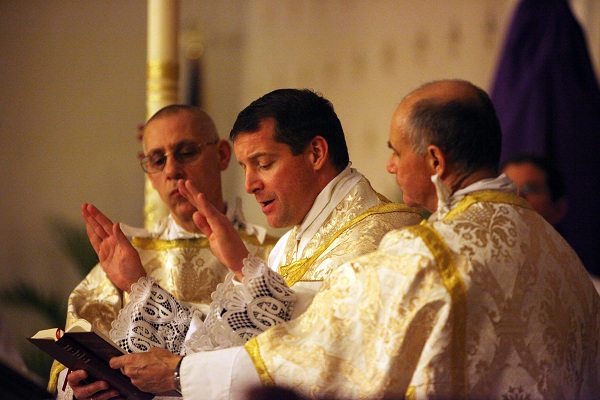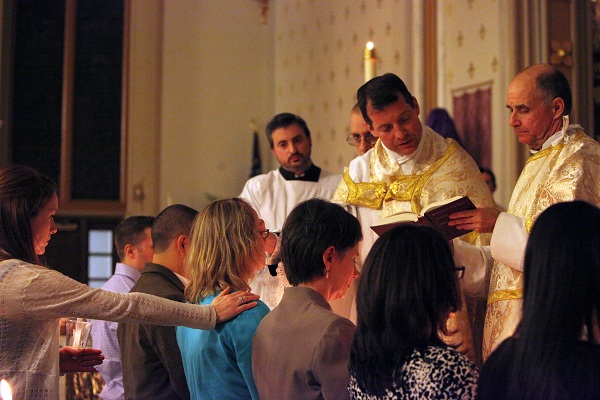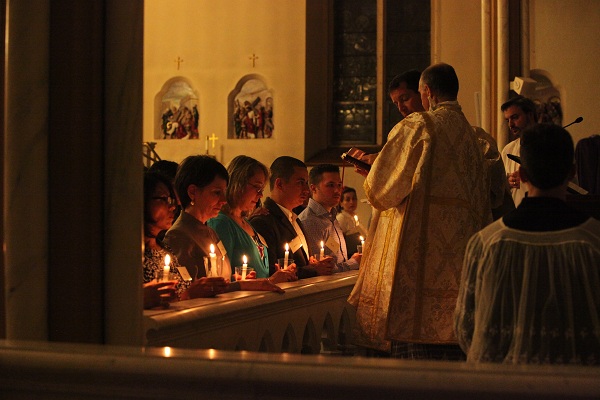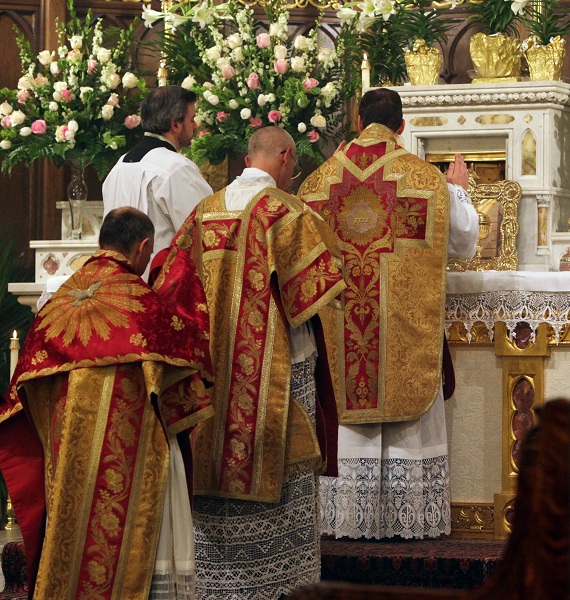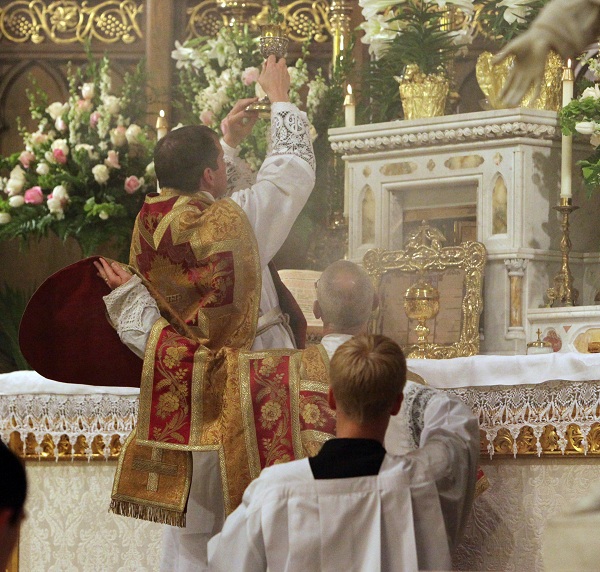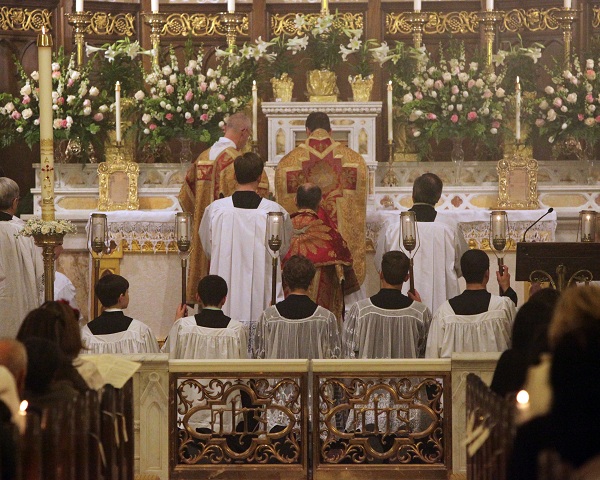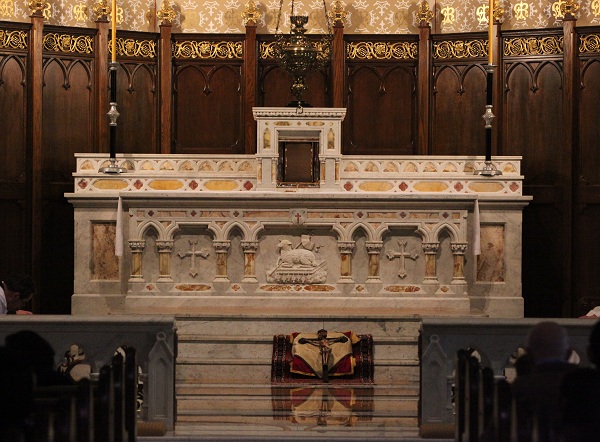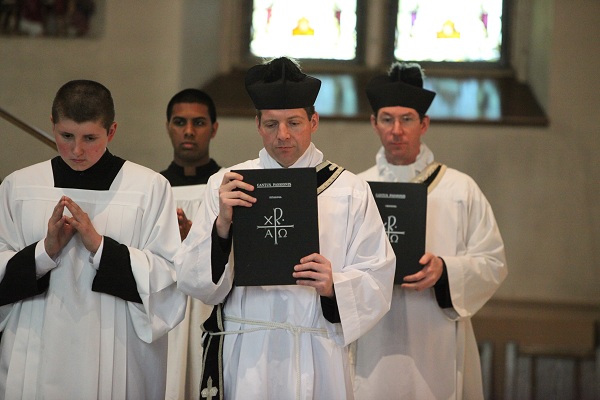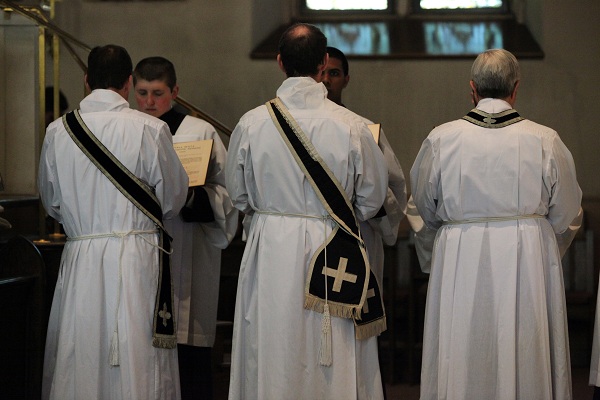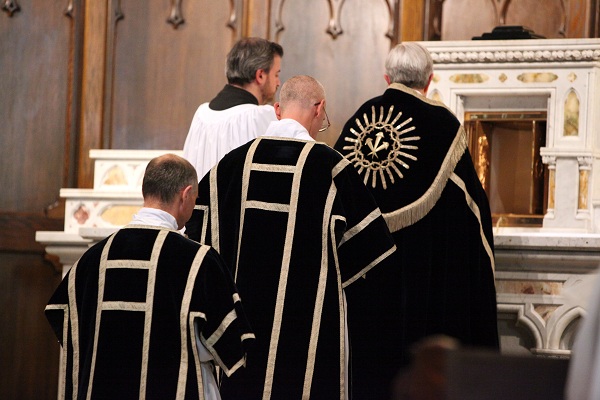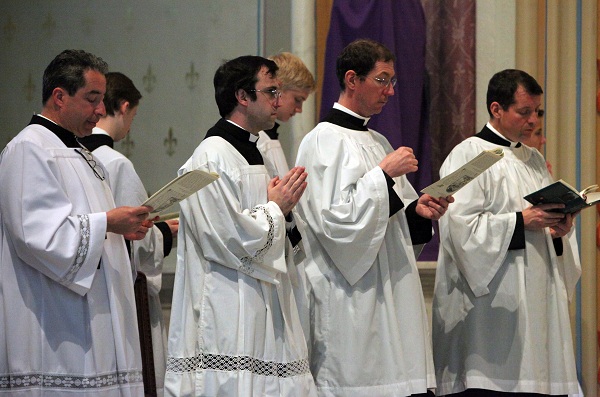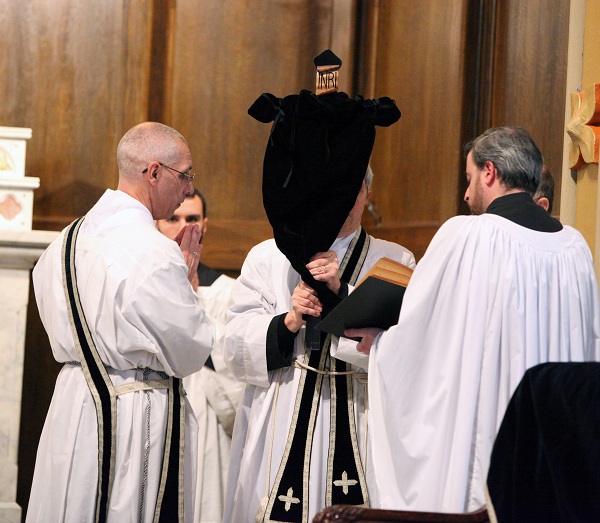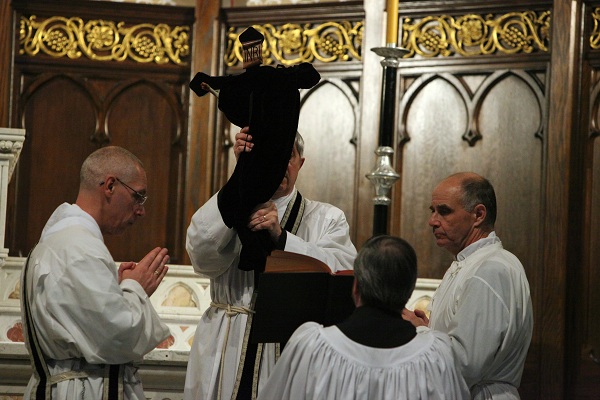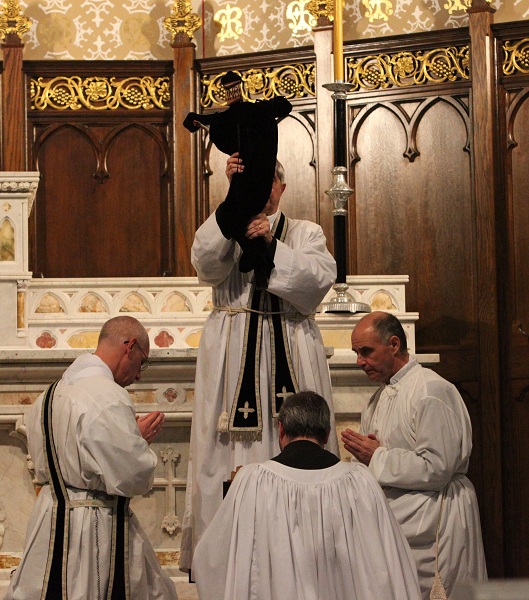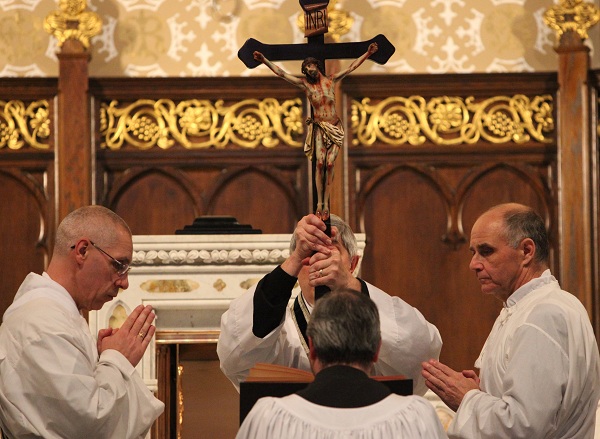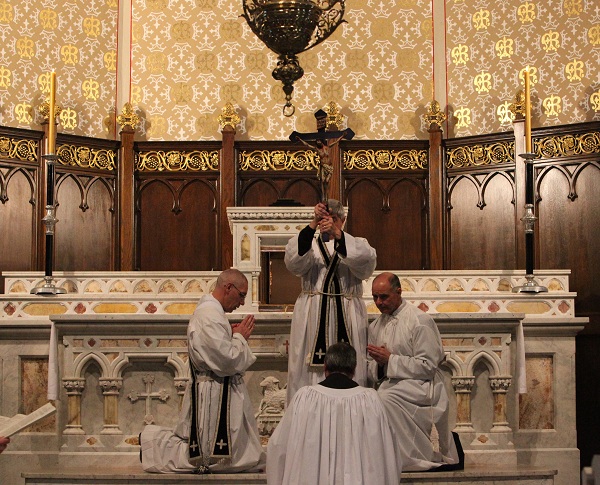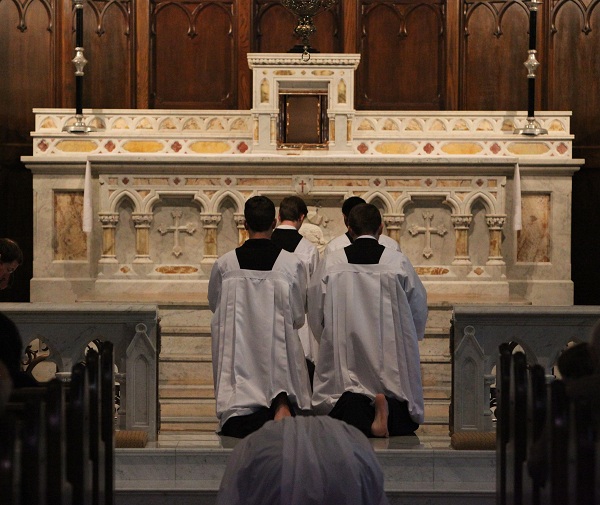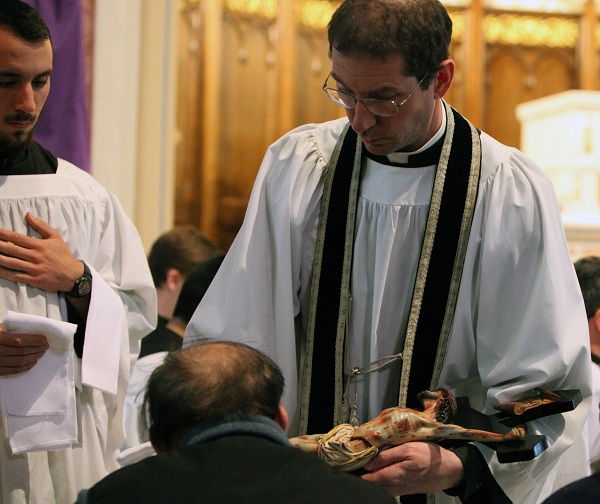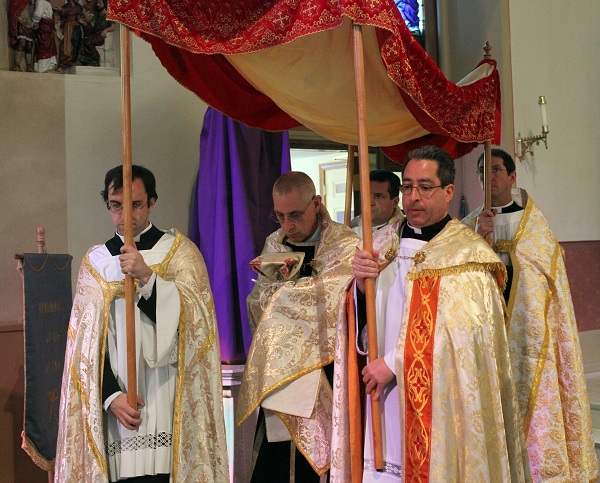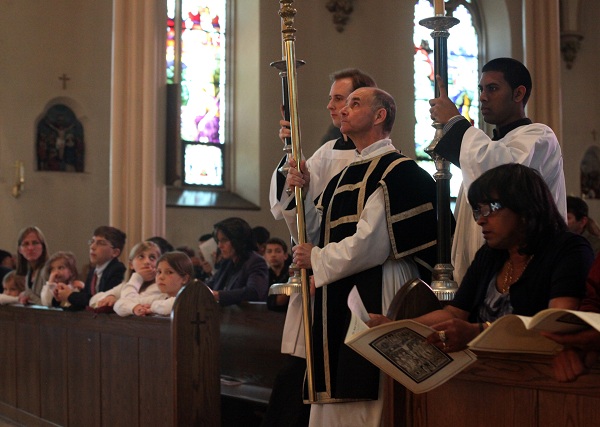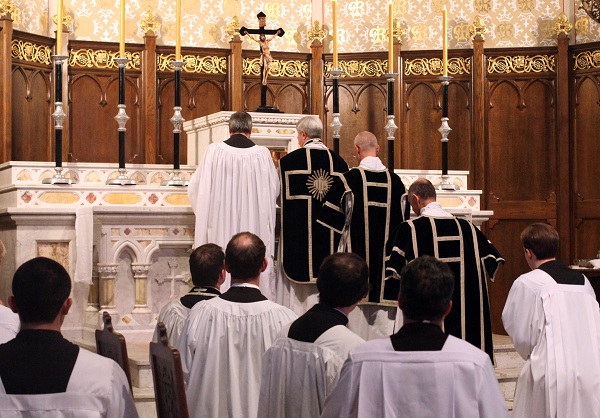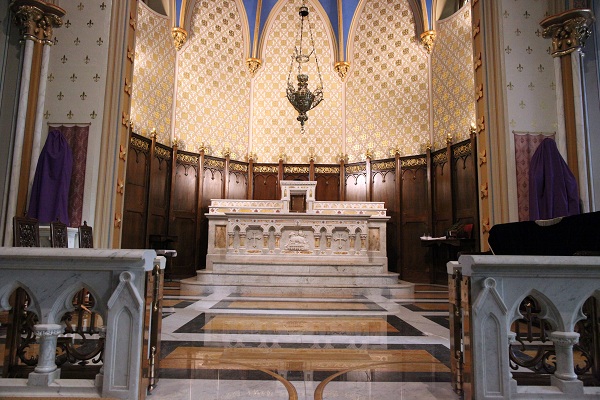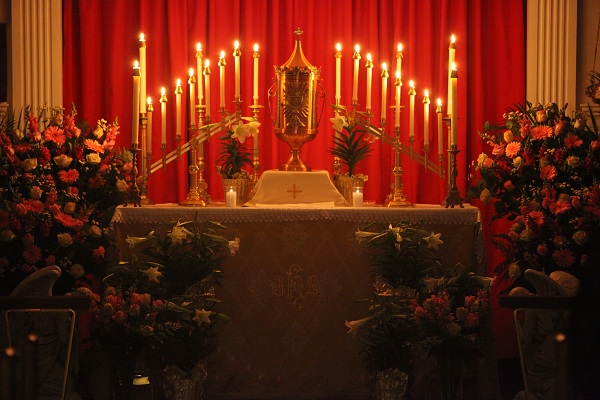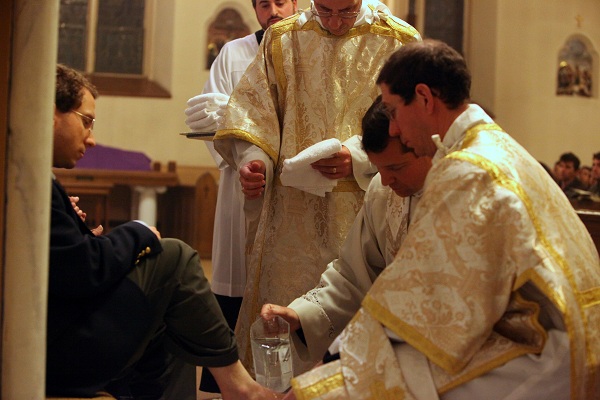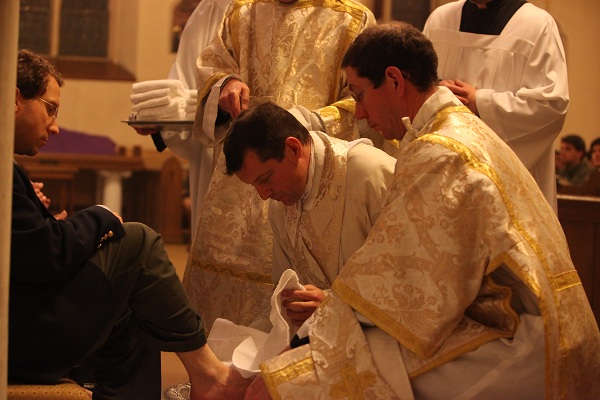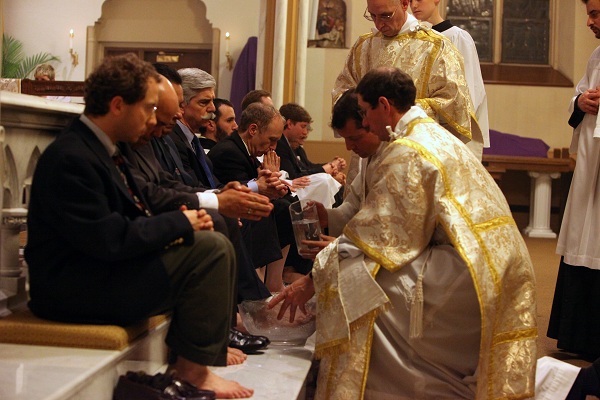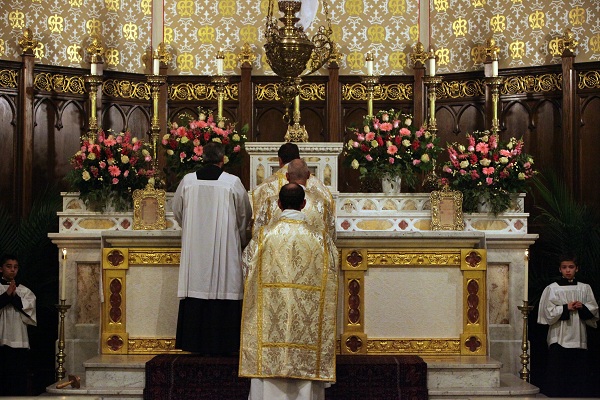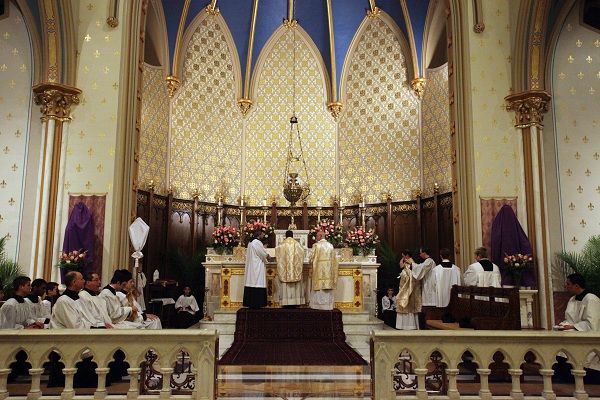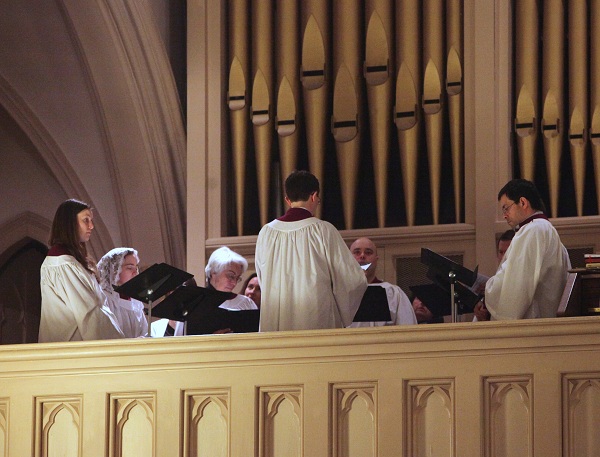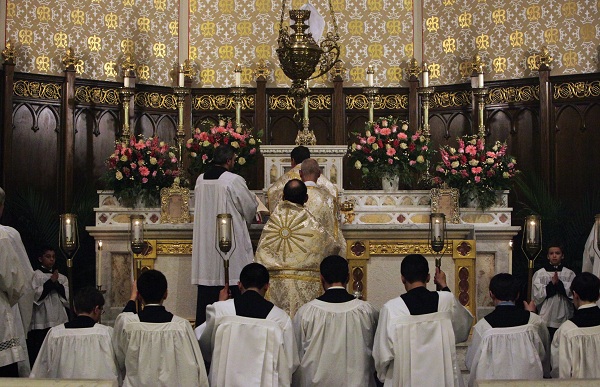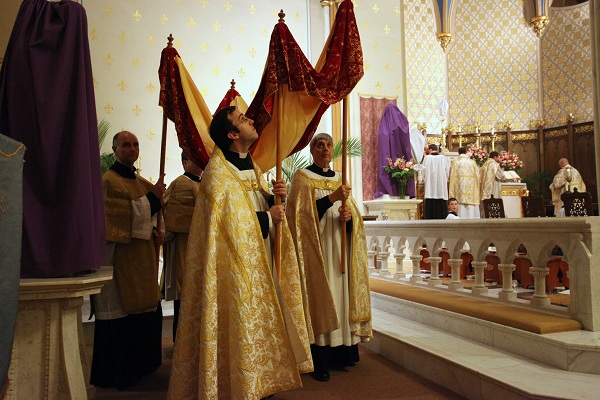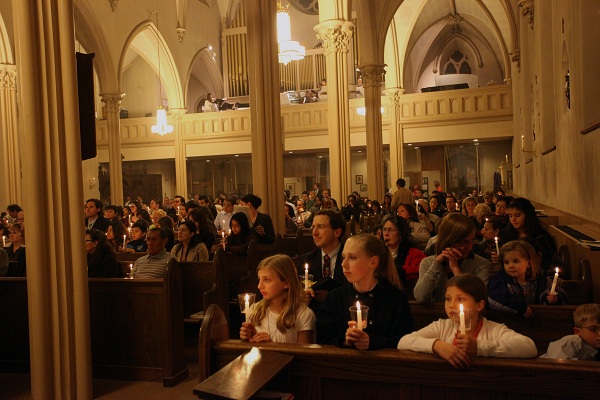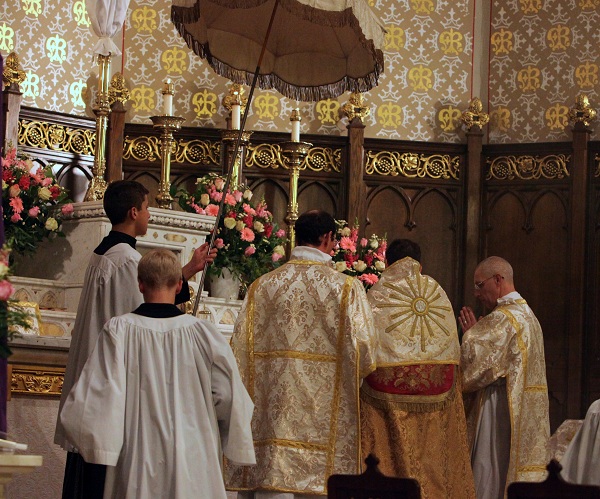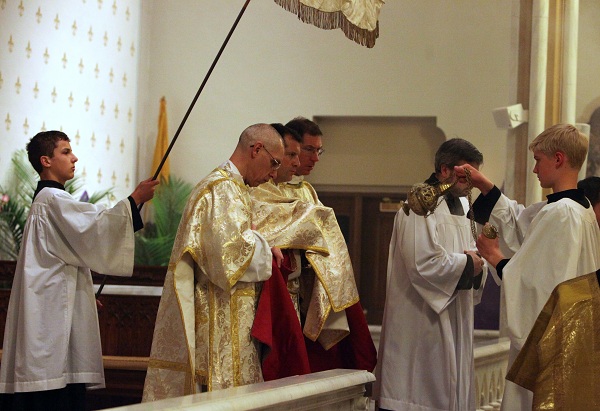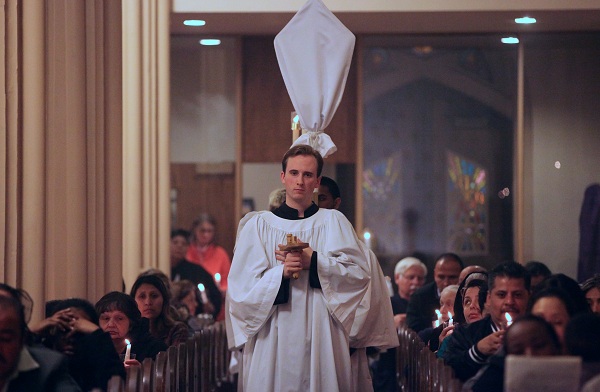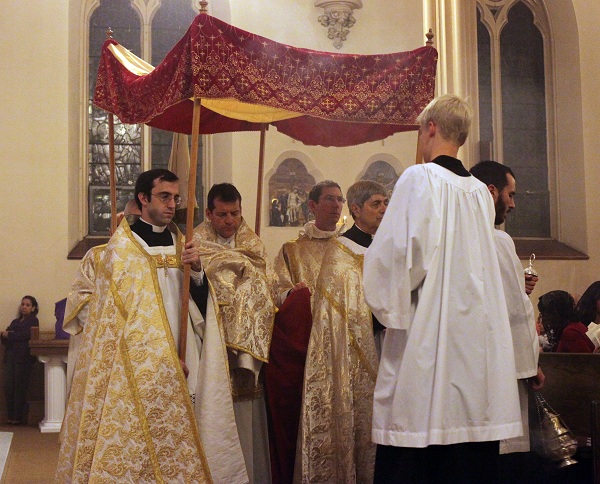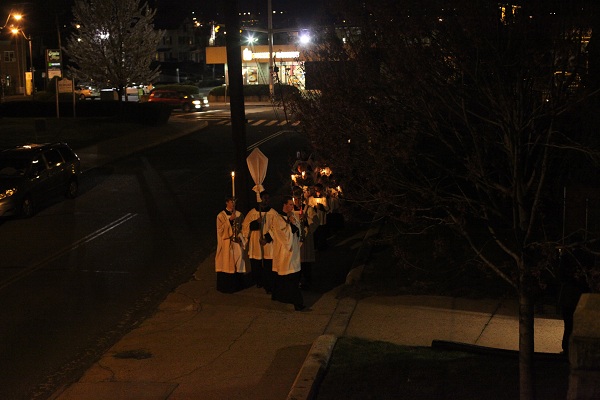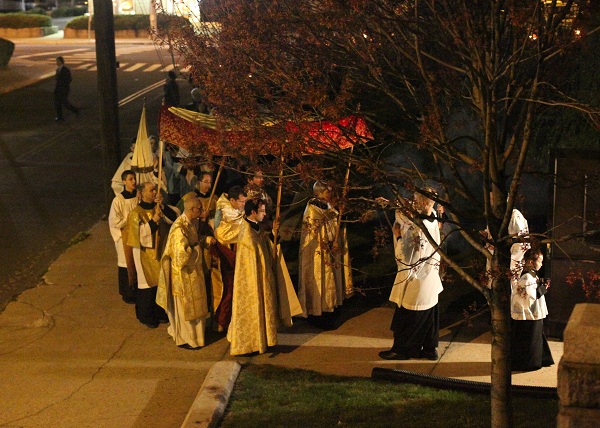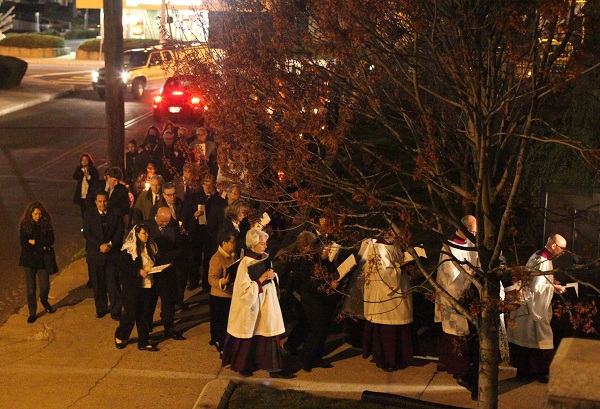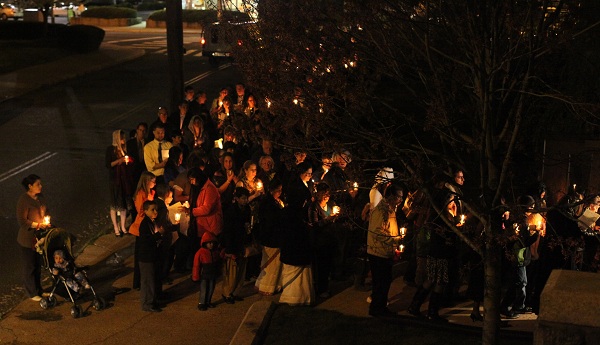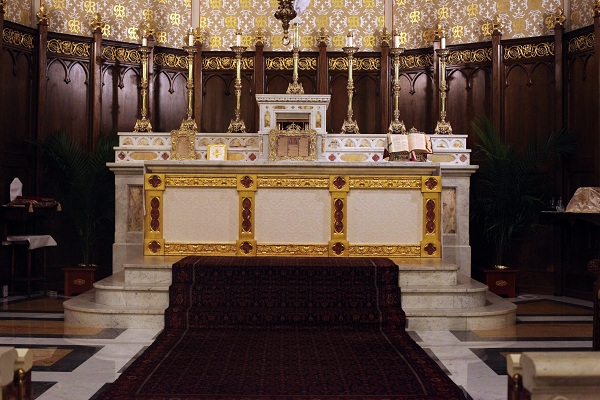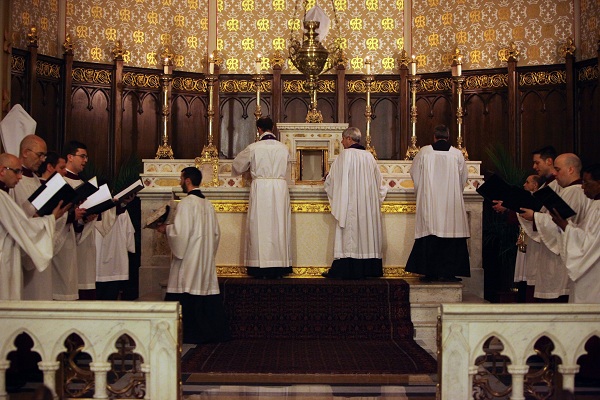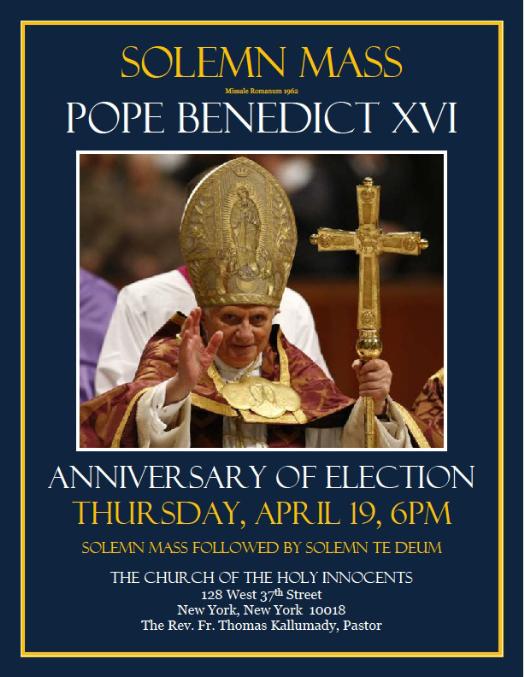
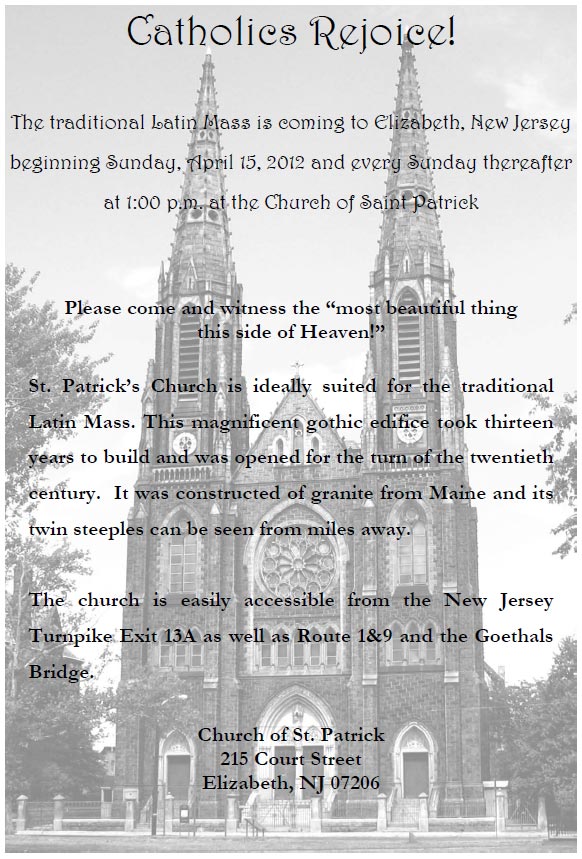
St. Fidelis Church offers the Traditional Mass every first and third Friday of the month at 7 am. The next Masses are Friday August 5 and 19. The church’s address is 123-06 14th Avenue, College Point, NY.
1
Aug
St. Fidelis Church offers the Traditional Mass every first and third Friday of the month at 7 am. The next Masses are Friday August 5 and 19. The church’s address is 123-06 14th Avenue, College Point, NY.
27
Jul
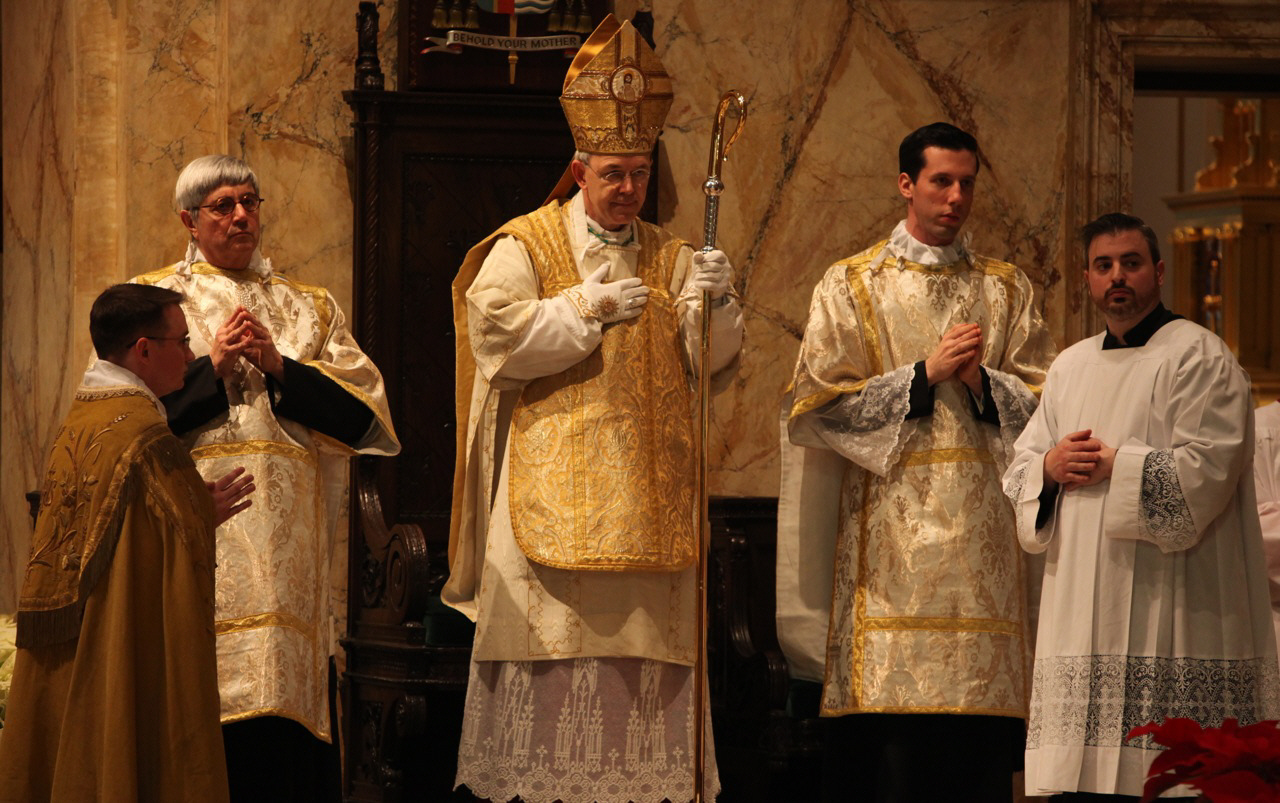
After 45 years, the Traditional Mass returned on Monday, July 25 to the Cathedral of St. James in Brooklyn. Thanks to the kind invitation of Msgr. John Strynkowski, rector of the Cathedral, and of Bishop Nicholas DiMarzio a splendid liturgy commemorated the patronal feast of the Cathedral. The celebrant was Fr. Richard Cipolla, the deacon, Rev. Mr. Steve Genovese, and the subdeacon Fr. Daniel Champoli of the diocese of Brooklyn. Msgr. Strynkowski preached. David Hughes led the music and Bill Riccio was the master of ceremonies. Needless to say they did their usual outstanding job. A dedicated team of altar servers from St. Mary’s parish, Norwalk, CT came down to assist. I will allow the celebrant, Fr. Cipolla, to describe that evening:
“It was so clear to me on Monday evening, 25 July, how important the Society of St Hugh of Cluny is to the Church at this time. As chaplain of the Society, I offer spiritual support to our members and to our raison d’etre: to actively encourage the celebration of the Extraordinary Form of the Roman rite in the Catholic Church today. On the feast of St James the Apostle, we celebrated Solemn Mass in the Cathedral of St James in Brooklyn. The preacher was the Rector of the Cathedral, Msgr. John Strynkowski. His sermon was a clear and evangelical preaching of the Word. He spoke about the four notes of the Church and the importance of the presence of the Extraordinary Form of the Roman rite as necessary and salutary for the true diversity within unity of the Catholic Church. The music of the Mass, under the direction of David Hughes, was exemplary of the music written for the Traditional Mass: Missa Iste Sanctus by Guerrero, and motets by Victoria and Morales. To be able to celebrate this Mass we packed our cars with altar cards, vestments, candlesticks, all from St Mary’s in Norwalk. One of our MCs, Bill Riccio came with us, and four of our servers. Because of weather and accidents on the road, it took us three and a half hours to get down to Brooklyn from Norwalk, a trip that should have taken just over an hour. Needless to say: it was a real effort on our part.
The Mass was glorious. There were a goodly number of people there. The comments of the people were all positive. I cannot help but be reminded that ours is a missionary effort, to bring wherever we can, the glory of the Traditional Roman rite of the Mass. When we read with open minds and open hearts the Holy Father’s Motu Proprio, Summorum Pontificum, and the recent instruction Universae Ecclesiae, there is no doubt that this Pope believes that the widespread celebration of the Extraordinary Form in the Church today is the antidote to the terrible problems facing the Church. It is not only, in the negative sense, the antidote to the poison of secularism and individualism: it is, in the positive sense, the real presence of the Tradition of the Church that is an inestimable source of grace in these perilous times.
Many thanks to all who make our missionary effort possible. Please consider joining the Society of St Hugh of Cluny and make a worthy contribution to the joyful missionary effort that lies at the very heart of what we are and do.”
St. James is the first Catholic church built on Long Island and the third Catholic church built within the present borders of New York City. For many years it was the “pro-Cathedral” of the Brooklyn Diocese – but no cathedral was eventually built in the wake of the union of the once independent city of Brooklyn with New York City. The diocese of Brooklyn continued, however, and is one of the largest dioceses by population in the United States. The Cathedral owes its present appearance to a rebuilding after a disastrous 1889 fire.
Msgr. Strynkowski preached on the “one, holy, catholic and apostolic Church.”
The Master of Ceremonies, Bill Riccio.
25
Jul
Professor Michael P. Foley will deliver a talk entitled, “Mystic Meanings: Unlocking the Secrets of the Traditional Latin Mass” on Sunday, July 31 at St. Mary Church, Norwalk, CT. Rosary and Benediction will take place at 4:30 pm, followed by Professor Foley’s talk at 5:00 pm. Michael P. Foley holds a doctorate in Catholic systematic theology and is associate professor if Patristics in the Great Texts Program at Baylor University in Texas. Before coming to Baylor, he taught at Boston College and the University of Notre Dame. He has published widely on a variety of subjects, including the well-know book Why Do Catholics Eat Fish on Friday? The Catholic Origin of Just About Everything (Palgrave Macmillan, 2005). One of the leading young American Catholic intellectuals of today, Foley is also a noted public speaker, with an uncommon ability to translate complicated ideas into a language that ordinary Catholics can understand.
The event is co-sponsored by St. Mary Church and the Society of St. Hugh of Cluny.
24
Jul
By Dr. Alexander Kissler
(We would like to bring to the attention of the English-speaking public some of the works of Dr. Alexander Kissler, a prominent German journalist and cultural critic).
Weilheim is located in the “Pfaffenwinkel” (the “Priests Corner”: a region of Bavaria where innumerable monasteries were located up to 1803 – Trans.). Not far away, Lake Starnberg whispers softly to itself; the Grosse Ostersee and the Ammersee also entice the visitor. A dip in the road follows every rise, and from every meadow the guest sees an onion-shaped tower, a bell-tower, a church tower. It smells of grass and earth – and now and then of battle. For up for discussion this evening in Weilheim, Upper Bavaria, is nothing less than “the Church between Tradition and the Future.”
The author Martin Mosebach was invited under this rubric for the conclusion of the first “ Weilheim Questions of Faith.” Did he eventually regret the long journey from Frankfurt? Two hours in the “Meeting-House” became an illuminating but not amusing blueprint for the future. A future that is in the process of becoming reality and which restores passion, conflict and drastic frankness to the ecclesiastical realm. The era of compromises and “double bind” substitutes for communication is over.
To start off, Martin Mosebach read from the first chapter of his “Heresy of Formlessness.” It is the history of a man who grew from a forced consumer of Gregorian chant to be a participating apologist of the Gregorian mass. It is the history of a liberation that in 2007 broadened in scope to a Church-wide renaissance when Benedict XVI confirmed with legislative authority the equality of the old Gregorian and the new reformed Mass.
For many of those present just the reading from the book itself was difficult to endure. There was muttering every time Mosebach contrasted the organic character of the older from of the mass, whose beginnings “are lost in the obscurity of history” with the constructed character of the 1970 work of reform. But in the discussion opinions completely split. Little groups left the hall, some quietly and some slamming the doors. At the end maybe 100 to 120 people remained. To judge from the applause, the friends of the Latin Mass obtained a narrow victory.
In his argumentation Mosebach was clear as crystal, not conciliatory. Enraged, many men and three women – “children of 1968 like all of us” (Mosebach) – contradicted him. The man who spoke up first was so agitated that he wanted to storm out of the hall after delivering his accusatory staccato. Mosebach urged him to at least listen out his answer. Wrapped up in this questioner’s chopped phrases was a statement that the prayerful gathering of the community is that which is decisively Christian in the liturgy – not its form. Mosebach, however, informed his discussion partner that precisely that view is a caricature of the 19th century. Christ becomes present in worship, not in the community.
More and more forcefully Mosebach affirmed and completed and intensified his positions. The Mass is no mere recollection of the Last Supper but “epiphany” – the passing by of God. The first mass of all took place not in the room of the Last Supper but on Golgotha. Christians know their faith and don’t need to hear it in the mass, so verbose didactics are out of place here. No more refined statements regarding God can be found than in the texts of the Old Mass – and only those of the old Mass. The devastating years after the Second Vatican Council, with the collapse of the faith, have spoken the worst possible judgment on the Council – even though there is not an iota to criticize in the texts themselves. Rather it was the German bishops, in open opposition to the council who imposed communion in the hand and celebration of the mass versus populum. Pope Paul VI, who gave his approval to the postconciliar reform of the liturgy, regretfully has to be called a tyrant in the specific Greek sense of a disruptor of tradition.
Martin Mosebach is the prototype of a committed layman, who with his scholarly rage exposes the normal colorlessness of this cheap label. Usually the “committed layman” is a half-educated critic of the institution. His involvement aims at expanding and therefore perfecting the dominion of the political in the Church. The “committed layman” as a rule desires more of himself, and the World even more so. Martin Mosebach wants the opposite. Concentration instead of diffusion, sacraments instead of politics, hierarchy instead of pluralism.
Bewildered, a lady at last declared that she wondered whether there wasn’t more to say on the occasion of the evening than this or that liturgical observation – whether Mosebach had no other theme. Martin Mosebach answered tersely: “No! – first of all, for me there is no topic other than the Mass.” For it can be said that everything, literally everything in the present world and in future generations will be decided by whether, for one last time, the Christian faith is stabilized in its worship.
May 30, 2011.
Translated by Stuart Chessman: translation by kind permission of Dr. Alexander Kissler. See the original on his website.
20
Jul
This sermon was delivered by Fr. Paul N. Check at St. Mary Church, Norwalk on July 2, 2011. Father Check is the national director of Courage, a Catholic apostolate that ministers to those with same-sex attractions and their loved ones. He is also priest in residence at St. Mary Church.
From today’s epistle: “May Christ find a dwelling place…in your hearts…may your lives be rooted in love, founded on love.” (Eph 3:17)
Sodom and Gomorrah are synonymous with fire and brimstone because that was the fate of the two cites, according to the Book of Genesis (19:24): a severe punishment for behavior gravely at variance with God’s will and with human nature. As Abraham surveyed the scene, “the smoke of the land went up like the smoke of a furnace,” in the words of the sacred writer. (Gen 19:28) We find references to this episode later in Deuteronomy, Isaiah, and Jeremiah…plain reminders and warnings, for those who have eyes that can see.
In three places in the New Testament, Our Blessed Lord compares the punishment that Sodom and Gomorrah received to the day of judgment, which He indicates will be worse:
1. About those who refuse the preaching of the Apostles (and by extension, their successors), He said, “Truly, I say to you, it shall be more tolerable on the day of judgment for the land of Sodom and Gomorrah than for that town.” (Mt 10:15)
2. About Capernaum, a city that refused to repent, Jesus said: “But I tell you that it shall be more tolerable on the day of judgment for the land of Sodom than for you.” (Mt 11:24)
3. And finally, the Lord said, “But on the day Lot went out from Sodom fire and sulphur rained from heaven and destroyed them all, so will it be when the Son of man is revealed.” (Lk 17:29, 30)
These words fall heavily, painfully, upon us, and that, of course, is the intention. Every parent knows there come times when only a sharp reminder of punishment will rouse the child…and parents also know such messages do not always achieve their purpose. Such is the proof of our willfulness.
At the opening of his Confessions, St Augustine writes, “What am I to Thee that Thou demand my love, and unless I give it Thee art angry, and threaten me with great sorrows?” (1,1.5) Augustine seeks on our behalf to understand the cause of Divine anger, the reason behind the Divine threats…“What am I to you, Lord? Why do you threaten?” Perhaps, dear people, we find the answer in today’s Gospel for this Feast of the Sacred Heart: “But one of the soldiers pierced His side with a spear, and at once there came out blood and water.” (Jn 19:34) The humble Heart of Christ has opened itself to us in generosity and love, in sacrifice and self-forgetfulness, and now, it has been opened by a lance, and nothing—nothing—is withheld. At Calvary do we best see—if we are there, if we are sincere—the quality of Divine love…and this helps us to better understand the character of Divine justice. From a familiar Lenten hymn: “Love so amazing, so divine, demands my soul, my life, my all.”
In raising the names of Sodom and Gomorrah, and in particular Our Lord’s references to them, I want to make very clear that I am not drawing a direct line to events of the NY state government a week ago, nor to people who have same-sex attraction, and so somehow predicting any consequences in either case. But I am using the change in NY law to make a couple of points that I hope will be of benefit to you, to the people who are attending this Mass. Our fallen nature is such that we may first apply the warnings of Sacred Scripture to “them,” to others, and not first to ourselves. This, my brothers and sisters in Christ, is not the way of the Gospel. What happened in NY is but one tragic, albeit very perverse expression of a wider and deeper malady to which we are all vulnerable. I will return to this in a moment.
First, I do agree completely with the Holy Father, when he said, “Very soon it will not be possible to state that homosexuality, as the Catholic Church teaches, is an objective disorder in the structuring of human existence.” Paradoxically, those who seek tolerance will inevitably become less and less tolerant themselves, and more severe in disallowing any dissent.
Second, and more importantly for all of us, especially given today’s feast, I want to offer some fruits of my priestly experience and an idea of the source of the underlying problem that afflicts all us in some measure because of concupiscence and our own personal sins…and the blindness that can follow.
I have been teaching sexual ethics to our men in formation for Holy Orders and for the permanent diaconate, and to Mother Teresa’s nuns, for almost all 14 years of my priesthood. This was the purpose for the professional degree, the license in moral theology, that Bishop Egan sent me to Rome to obtain many years ago: to understand better the nature of human intimacy and to share that understanding with others. Many of you are familiar with my current assignment. My other experience includes hearing hundreds of confessions of Catholic high school students during a two year assignment at Notre Dame in Fairfield and six years of daily—seven days a week—confessional practice at St. John’s in Stamford. I would say (and I mean this without boasting) that in my first eight years of service to the diocese, I had as much confessional experience as any priest in Bridgeport…and please remember that what I share with you comes in part from what I have learned by people who are earnestly seeking to live the teachings of Christ and His Holy Church, as established by their presence in Confession.
Here are some of my conclusions that I will not attempt to prove this morning; you may do with them what you will. I offer them without any spirit of condemnation, and only out of priestly and fraternal charity.
The steady erosion of our sense of purity is something we probably don’t recognize as clearly as we might, because we are living in the midst of it all the time. One can tell a lot about a culture, for instance, by what it considers “funny,” from its humor…much of ours is what used to be called, “off-color.” TV shows—and I realize that that these are mild by comparison—like Friends and Seinfeld are not entertainment for the friends of Christ.
Fashion, and even that embraced by some Catholic women who regularly attend Mass, often presents a grave danger to the purity of men who see them, because objective standards of modesty (and they do exist…) are routinely violated. My opinion is that much of this is traceable to thoughtlessness or vanity, not from an intention to seduce.
There are many men who will go to Church today and who regularly, perhaps habitually, view pornography, and worse, who may not consider what they are doing to be contrary to their marriage vows.
If parents use contraception in their marriage, then they have every reason to expect that their children will use it outside of marriage. If we deliberately dissociate procreation from marriage, we will soon disassociate sexual relations from marriage.
It is a naive mistake to think that modern music, especially the video that often accompanies it, does not affect our relationships and how we view others.
Parents who allow their children—especially their boys—to have the internet in their own room (and even worse with the door closed) are putting a stumbling block in the path of those they should be protecting.
Now please let me be clear again: this is not a call to become the “Catholic Amish,” which is a tendency to which I think some who attend this Mass in particular are sometimes inclined, as a solution to the problems I have just numbered. The evangelical imperative of the Gospel, to be salt and light in a fallen world, remains, and parents and priests must prepare children to live in the world, while not falling prey to the world…a most demanding challenge today, I grant you.
The other day, the Holy Father said this, “The real question is this: Is what we believe true or not?” And he suggested that “custom” (again I refer to the examples I have given) is something very different than a “love of the truth”…and in saying this, he connected the two great faculties or powers of the human person: the capacity to love and the capacity to know the truth. Pope Benedict went on to say: “Love wants to know better the one it loves. Love, true love, does not make one blind but seeing. Part of it is a thirst for knowledge, true knowledge of the other.”
And so to conclude, dear people, I come back to the malady to which we can all succumb: that our search for love can easily become misdirected, and we can settle for a counterfeit instead: self-satisfaction…the very opposite of what see at Calvary, where the Sacred Heart, self-forgetful and self-giving, pours out blood and water, grace and mercy, from the Cross.
As the Pope suggests, we will only be interested in truth if we are striving to love after the example of the Heart of Jesus. Said another way, a lack of love precedes a loss of desire for the truth about our human condition and the gracious and free initiative of the Good God to rescue us from sin and selfishness. The only solution to the tangle of the human heart is the Sacred Heart of Christ, who loved us boldly to the end, and who invites us, begs us, even with strong words, to love Him boldly in return.
19
Jul
St Catherine of Siena
East 68th Street
There aren’t many New York Catholics aware of the Archdiocese’s heritage of history and art who haven’t heard of St. Vincent Ferrer – widely considered the finest example of Catholic Church architecture in New York City. But few know that a few blocks to the East is a second Dominican church – and a fascinating masterpiece in its own right. The parish of St Catherine of Siena was “hived off” from the parish of St Vincent Ferrer in 1896: the new parish included all the territory east of Second Avenue between 60th and 72nd streets. Care of the parish from the beginning has remained with the Dominican order. St. Catherine of Siena resembled most parishes of that era: a large population, many organizations and a school. What seems unusual is that the parish became split almost equally between “English” (probably almost all Irish) and Italian members. A 1914 source records 140 “English” and 389 “Italian” baptisms in 1913.
What is the greatest interest for us was the rebuilding of the church that took place in 1930 in a unique Gothic “Arts and Crafts” idiom. The architect was Wilfred E. Anthony. The exterior facade entirely in red brick with white stone borders and limited but select statuary hardly gives an indication of the scale of the church within – the church extends through the entire block. The apse on 69th streets follows the same style as the façade but is more impressive. The church is otherwise concealed in by larger buildings on either side.
Inside, we pass through a narthex into a single vast open space dominated by a series of powerful arches – all in the same red brick as the exterior. Nestled within the niches formed by the arches are a series of chapels containing shrines and altars. It is all an extraordinary union of New York’s favorite style of church architecture – the Gothic – with English arts and crafts principles and even hints of the contemporary Art Deco “skyscraper style.” Moreover, since the patron was the Dominican order, this architecture also looks back to the great medieval churches of the orders of friars in Venice and Siena (the parish history itself claims affinity with St. Maria sopra Minerva in Rome).
Like its predecessor St Vincent Ferrer, this church has a custom built program of furnishings (altars and statuary) of a very high order of quality. Perhaps, best of all is the often overlooked magnificent ceiling.

Unlike St Vincent Ferrer, though, where the furnishings and windows are equal partners with the architecture, in St Catherine of Siena the architecture completely dominates. Moreover, a number of the shrines consist only of high quality but otherwise ordinary plaster statues. Perhaps the funds necessary to create original pieces for every chapel were no longer available in the wake of the Great Depression.

The “moderne” stained glass, too, is adequate, not extraordinary. Only the often highly unusual pictorial program (the temptation of Christ by Satan, the Samaritan woman at the well, the exorcising of a child etc.) is memorable. The stained glass is actually most effective when, gazing up the nave from the rear; the visitor sees only the colors of the concealed windows playing upon the brick of the arches and walls.
Gradually this parish became dominated by hospital construction on the East River. The area took on a less residential and more institutional character, and eventually the parish school closed. St. Catherine of Siena began to assume the primary function of a medical “commuter church” for visitors, staff and patients. There are always souls praying here – the church’s popular shrine of St. Jude seems particularly appropriate to the neighborhood. A number of years ago the auxiliary buildings of the parish (like the school) were torn down. One hopes this parish thereby obtained sufficient funds to maintain itself into the future. In any case, some disfiguring changes that had been made to the church (like the conversion of half the narthex into a reception room!) have since been removed.
If anyone thinks that “preconciliar” art was “out of touch” with contemporary art, he needs to visit this church. Regrettably, it had no imitators: Wilfred E. Anthony’s next New York project was the handsome but conventional neo- Georgian Corpus Christi church. St Catherine of Siena remains a unique example of a creative Catholic architecture successfully balancing both tradition and modernity.
14
Jul
Church of the Nativity
44 Second Avenue between 2nd and 3rd streets.
It is startling sight when, after darkness has fallen, you suddenly notice a polychrome statue – now illuminated – of the Madonna set in a nondescript façade of a building on Second Avenue. For the Virgin Mary stands imprisoned behind bars and Plexiglas. Probably the builders of this edifice feared – with good reason – that the local residents would otherwise swipe the devotional image. For this is a church – built in a very difficult time in what had become a very “dodgy” part of the city. The architecture, moreover, reveals that the crisis of the economy and security in 1970’s New York was accompanied by an equally severe spiritual crisis in the Catholic Church. For the statue behind bars is about the only memorable feature – even if unintentionally so – of this church.
It is hard to believe, when contemplating the current structure, that Nativity parish was once one of most significant parishes in the city. That intrepid 19th century historian of Catholicism, John Gilmary Shea, narrates a colorful tale of the founding pastor, Rev. Andrew Byrne, establishing this parish in the midst of a wave of anti-Catholic rage. It was erected in a part of the city without a Catholic church, in a “district (that) was buried in darkness and the shadow of death.” At that time this was the entire East Side up to St John the Evangelist! That same year a Presbyterian church that had been built in 1832 was acquired. It seems to have been splendid – old photographs show a neoclassical façade strongly resembling that of the Catholic church of St James but more elaborate (twin Ionic instead of Doric columns; six instead of four pilasters). Also like St. James, the church originally had a tower (gone by 1914) and a partially stone façade over a brick structure. Shea informs us that:
A very neat and chaste altar, with rich gilt candlesticks, a painting of the crucifixion as an altar-piece, with paintings of the Annunciation and the Assumption of our Lady at the sides, showed that the edifice was to be used for a purer and holier faith.
(Shea, John Gilmary, The Catholic Churches of New York City at 527-29 (New York, Lawrence G. Goulding & co, 1878))
Bishop Hughes dedicated the church that same year (1842) before an impressive crowd – many of whom were not Catholic.

(Above) Church of the Nativity in 1878.
A fire destroyed much of the interior of this church in 1912; a thorough renovation had been completed by 1913.
(Above) The old church of the Nativity in 1915. Note the drastically reduced steeple. (Below) The interior – the galleries were subsequently removed in 1942(the distortion is from the source: a Facebook copy of a photo from a 1970 commemorative book on this parish.)
Yet as time went on this parish fell on hard times. Already in 1914 the congregation, if still solid, was small compared to some sister parishes and diminishing. In 1917 Nativity parish was entrusted to the Jesuit order, which was already established in the nearby parish of Our Lady of Loretto (another church of the poor). In 1966, the old church was closed, when a dangerous condition involving the roof was identified. Alleged “structural and financial” considerations made creation of a new roof impossible. In 1968 the magnificent old church was razed. But a new church was built to continue the parish and opened in 1969. The organization and apparently the funding of the project of building the new church seem to have been the responsibility of the laity of the parish. In this not at all wealthy neighborhood the congregation’s zeal and drive to keep their parish alive remained vital even at that time of decline of the Church and the City!
But what arose in place of the neoclassical temple is shocking evidence of the downward spiral of Catholic church architecture in the wake of the Second Vatican Council. The low modern façade is an incoherent jumble of elements. The one-story structure cannot hold its own even among this block’s undistinguished buildings. As one commentator on Google puts it, approvingly: ”you may not even realize it to be a church but for the cross on top!”
Inside it is even worse. For Nativity church is nothing but a cinderblock gymnasium, with built-in structures (also in cinderblock) that serve as a sacristy, confessional etc. The furnishings, scattered about this space, range from the merely adequate to the awful. The architecture does not focus on the “sanctuary”, which is just stuck against one side of this room. There is nothing but bright artificial light – the “windows” seem to be merely decorative.
Once again we observe that, in the Conciliar era, the Church adopts a new architecture that consciously seeks to make an anonymous impression on the streetscape. (The equivalent in “suburbia” is to move the church from town center to its outer edges – removed from sight but with easier parking). The style of these ecclesiastical structures would be equally conducive to industrial or institutional functions. The interior of a church like Nativity, for example, could easily serve with very little change as a warehouse, an automobile repair shop or, as already noted, a gym. Compared to this, the original Presbyterian temple was the essence of Christian art.
Nativity parish undoubtedly had limited financial means in 1969, but even the poor deserve much better than this. What a contrast with the achievements of the parish priest who founded Nativity in 1842 – he assuredly also presided over a mostly impecunious flock. And at that time there was no vast Archdiocesan structure for support!
Now the most recent claim to fame of Nativity was the requiem mass for Dorothy Day held here in 1980, attended by the entire Catholic radical crowd. One of her foundations, Maryhouse, is around the corner from this church and she also had worshipped here. Were she and her Catholic worker associates aware that to inflict architecture like that of Nativity on the poor – to deprive them of beauty – is perhaps just as great a scandal as economic oppression? I do not know – but I have my doubts. As one admiring biographer of Day, describing her Requiem Mass at Nativity, puts it: “The church’s interior was fittingly modest, with linoleum floors, unpainted cement block walls and watermarks on the ceiling.” (Roberts, Nancy L., Dorothy Day and the Catholic Worker, at 169 (SUNY Press, 1985)). The misguided logic of Catholic aesthetic progessivism couldn’t be more clearly stated.
Nor do we know how long Nativity may survive. In the last Archdiocesan “realignment” it was demoted – after 165 years – from its status as a parish. Certainly, if further cuts have to be made, there are vastly more important edifices to save in the immediate vicinity – like Most Holy Redeemer! Yet it is a tragedy to lose even the least significant church in the city. Upon a recent Ash Wednesday, a congregation of perhaps fifty was present: families and not a few younger people (students at NYU?). They heard a liturgy that was sincere but revealed very little of the richness and beauty of Catholic Tradition. The spiritual need of these parishioners is clear as is their willingness to make sacrifices for their religion. But do the Catholics of New York – clergy and laity – still realize the necessity of making available to them the spiritual and artistic treasures of the faith – as did the valiant founder of this church and his congregation in 1842?
UPDATE: Nativity parish has been closed. The statue of the Madonna described above (called the “Madonna of the Streets”) is now in Most Holy Redeemer church (as is the Nativity scene pictured above).
See generally: Church of the Nativity: New York City ( 1970)
14
Jul
The St. Mary’s Schola Cantorum
David J. Hughes, Organist & Choirmaster
14
Jul
On Thursday, July 21 at 6 pm there will be a sung Requiem Mass according to the Extraordinary Form at St. Mary Church, Norwalk, to commemorate the third anniversary of the death of Fr.Kevin Fitzpatrick.
14
Jul
The Student Schola of St. Mary Church, Norwalk is scheduled to sing in Masses in Madrid this August for World Youth Day. The schola together with the Sisters of Life Scholawill be performing in a benefit concert at the church under the direction of David Hughes on Friday, July 22 at 7:30 pm to raise the funds needed to travel to Madrid. Advance tickets are $20 per person/ $40 per family, at the door $25 per person/ $50 per family. Clergy and religious are admitted for free. To purchase tickets in advance, please visit the website www.chantwith.us. or purchase them after Masses at St. Mary’s this coming weekend. CDs of the schola are also available.