We have a video of the beginning of the Wednesday Traditional Tenebrae service at St. Mary’s on Youtube. The installments are:
Tenebrae I
Tenebrae II
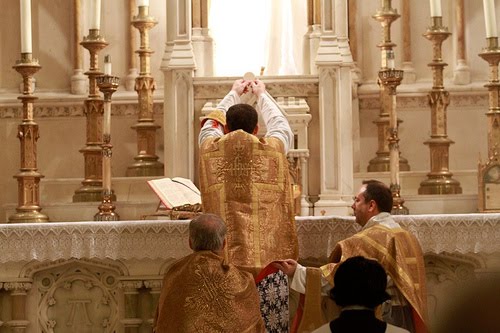
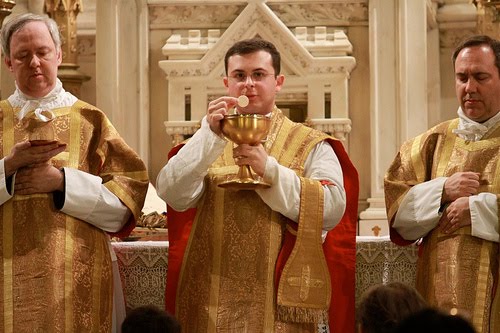
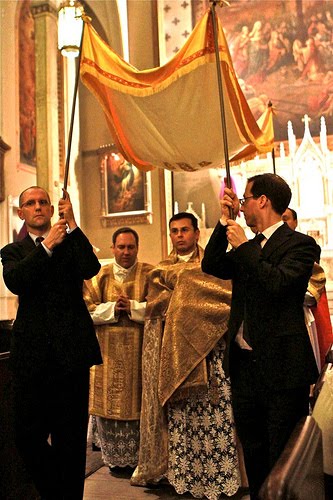
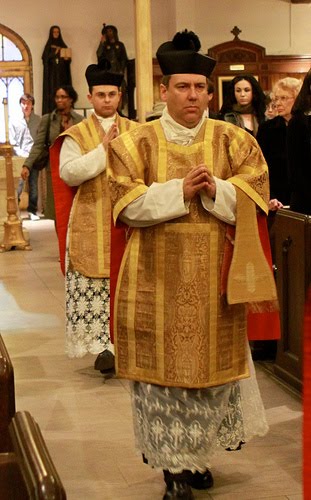
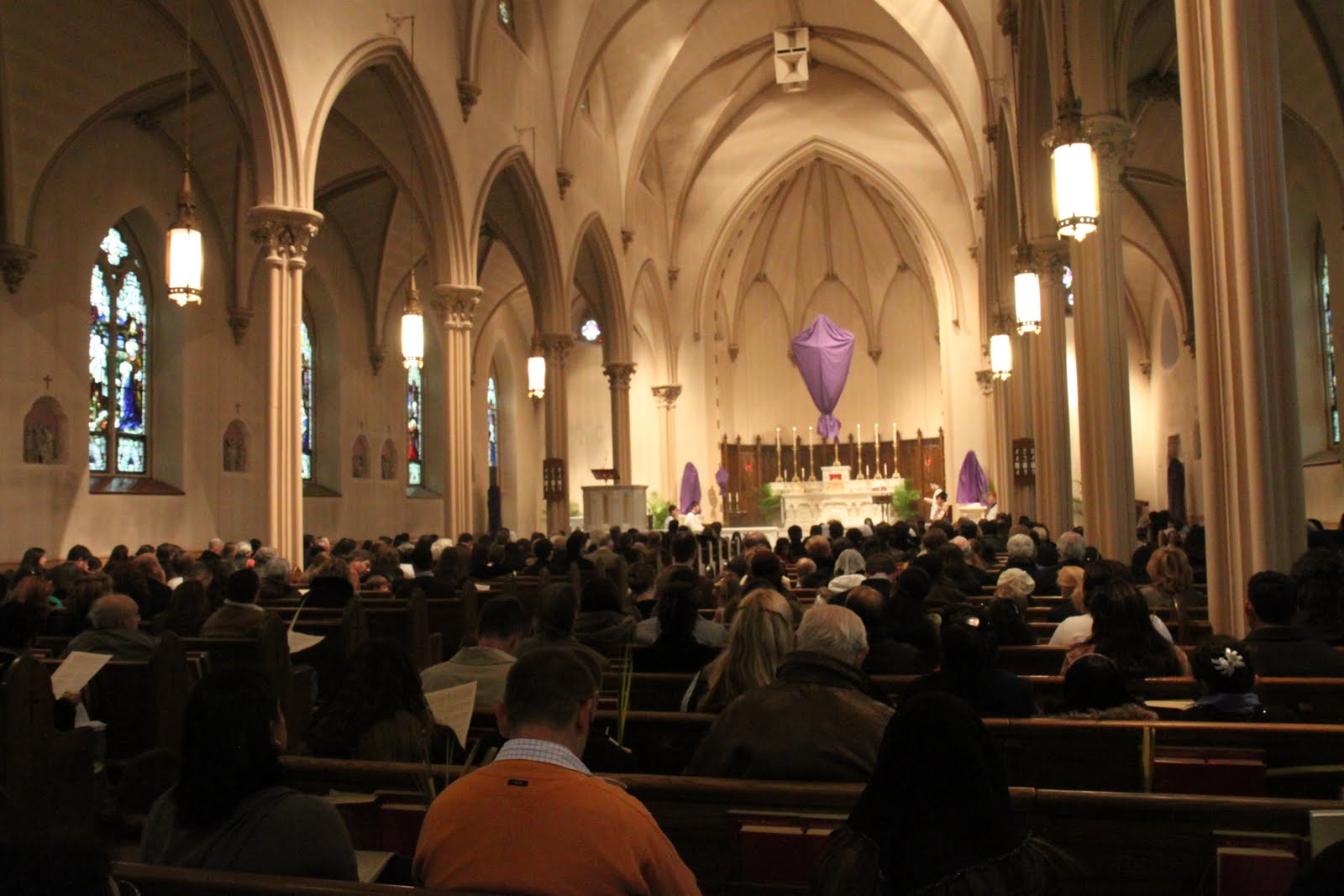
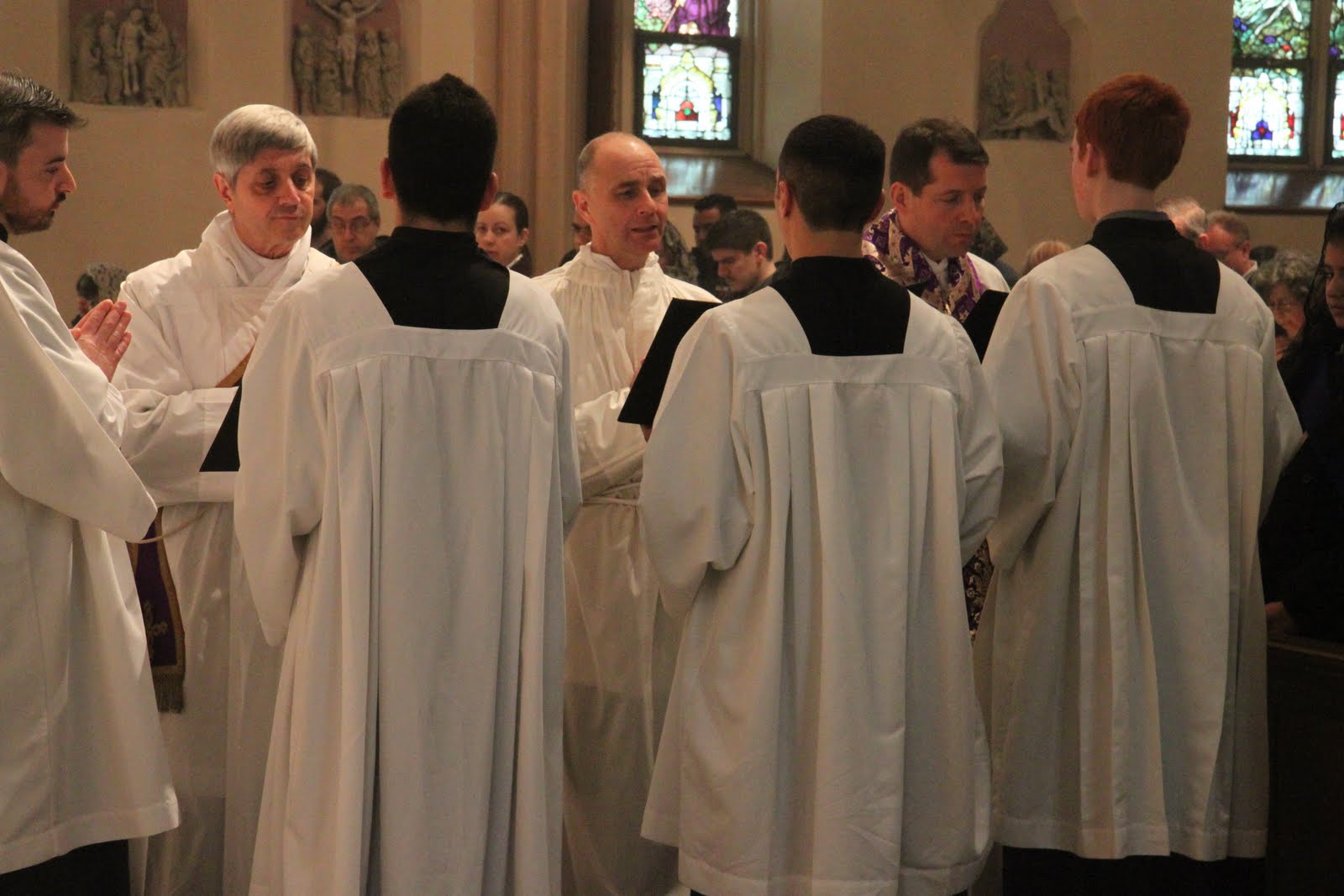
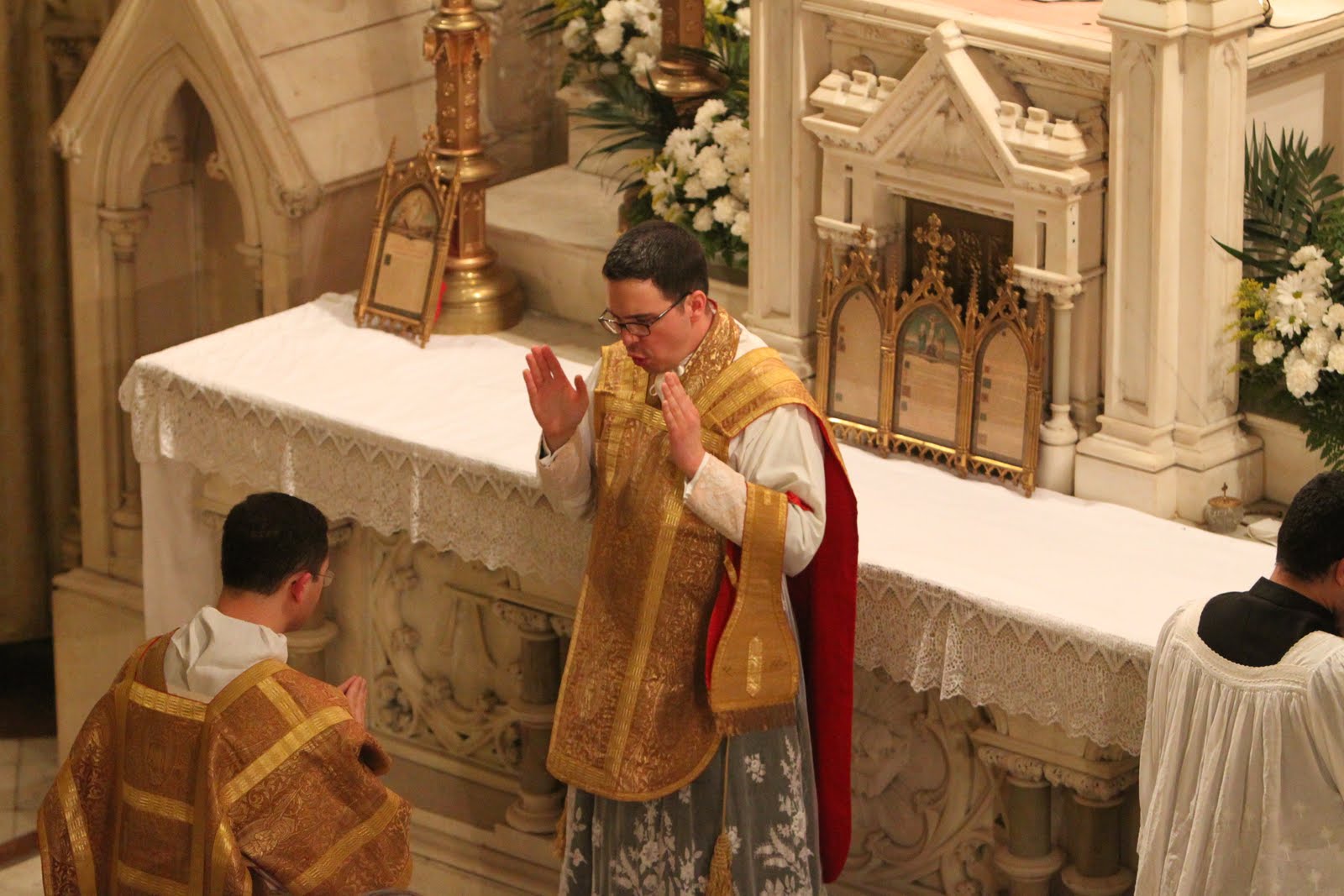
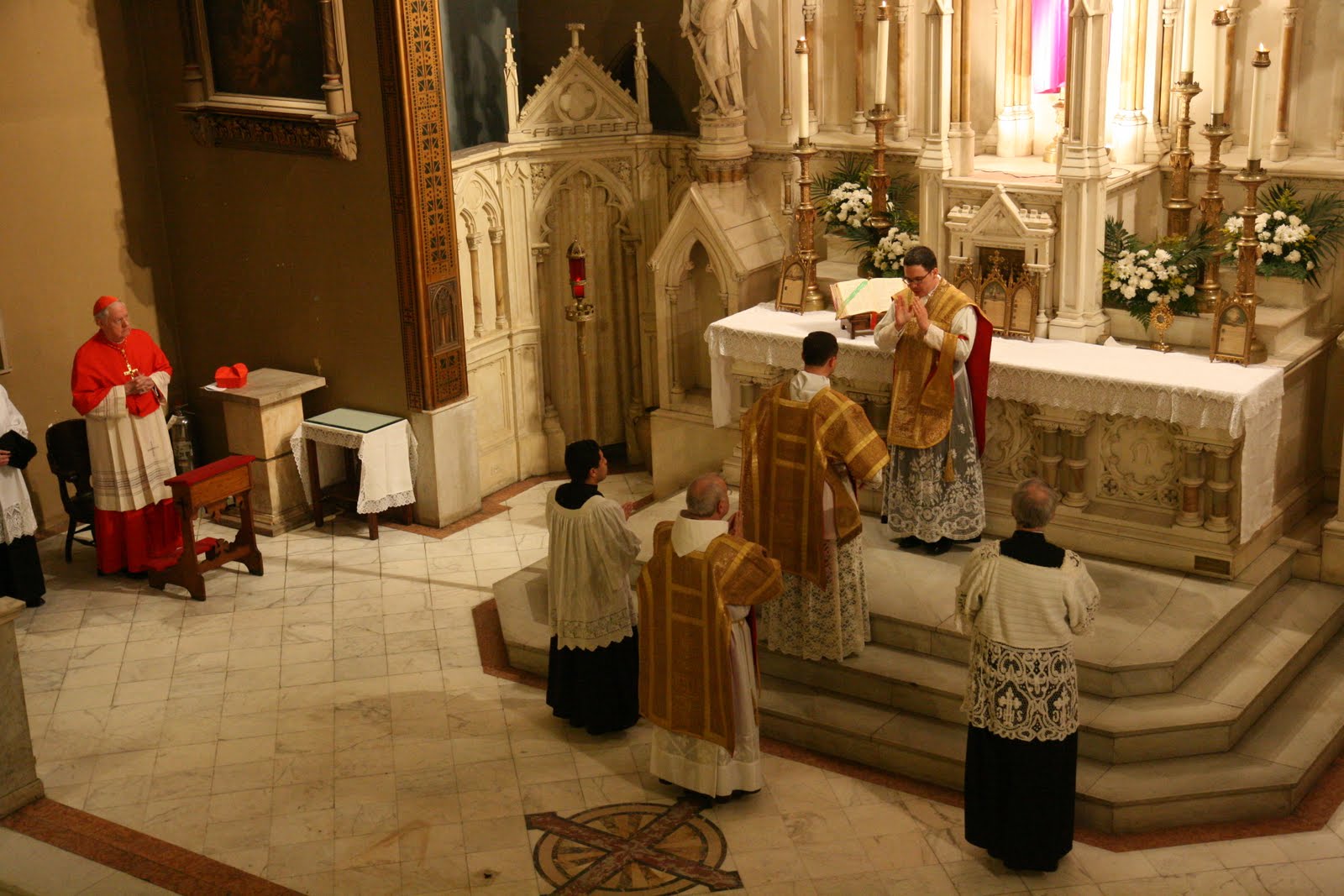
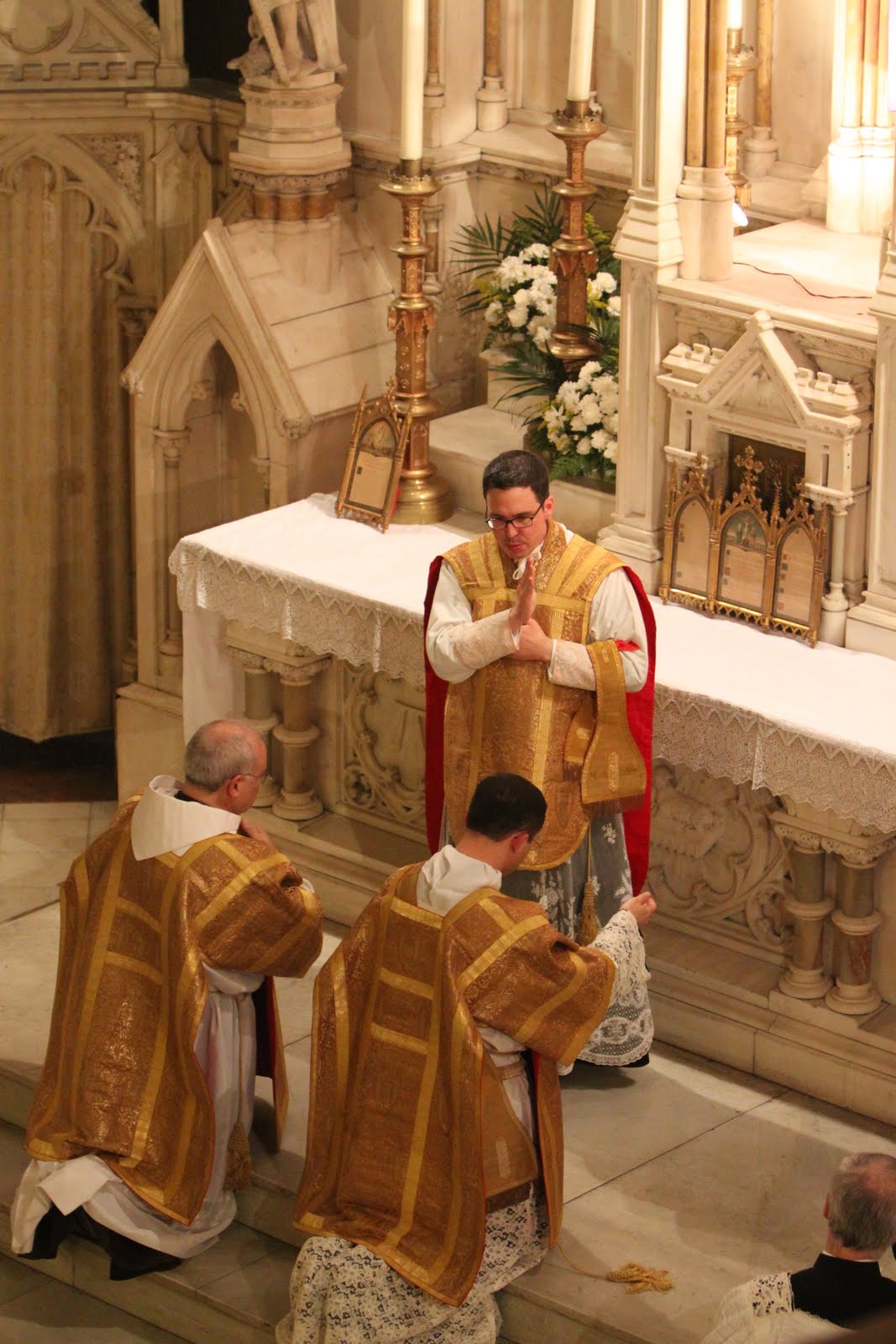
These beautiful photos were taken at Holy Innocents Church, Manhattan at the Holy Thursday Mass according to the 1962 missal. The photos are courtesy of Craig Duff from http://www.flickr.com/photos/11374846@N05/.
Here’s a link to the homily by Father Michael Barone from Holy Thursday Mass. http://www.youtube.com/watch?v=S1zvLKX06xQ


Published in Uncategorized | no comment
31
Mar
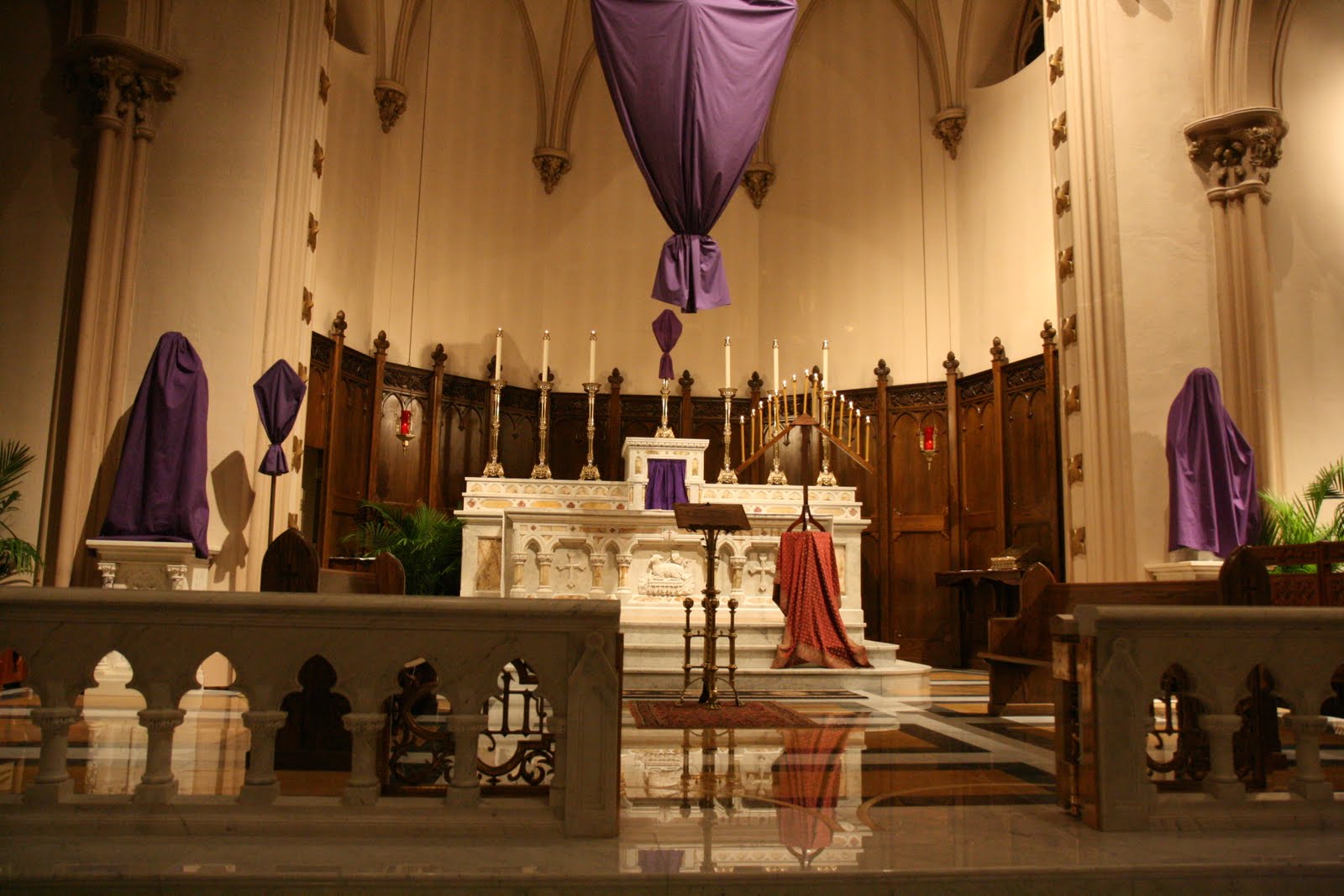
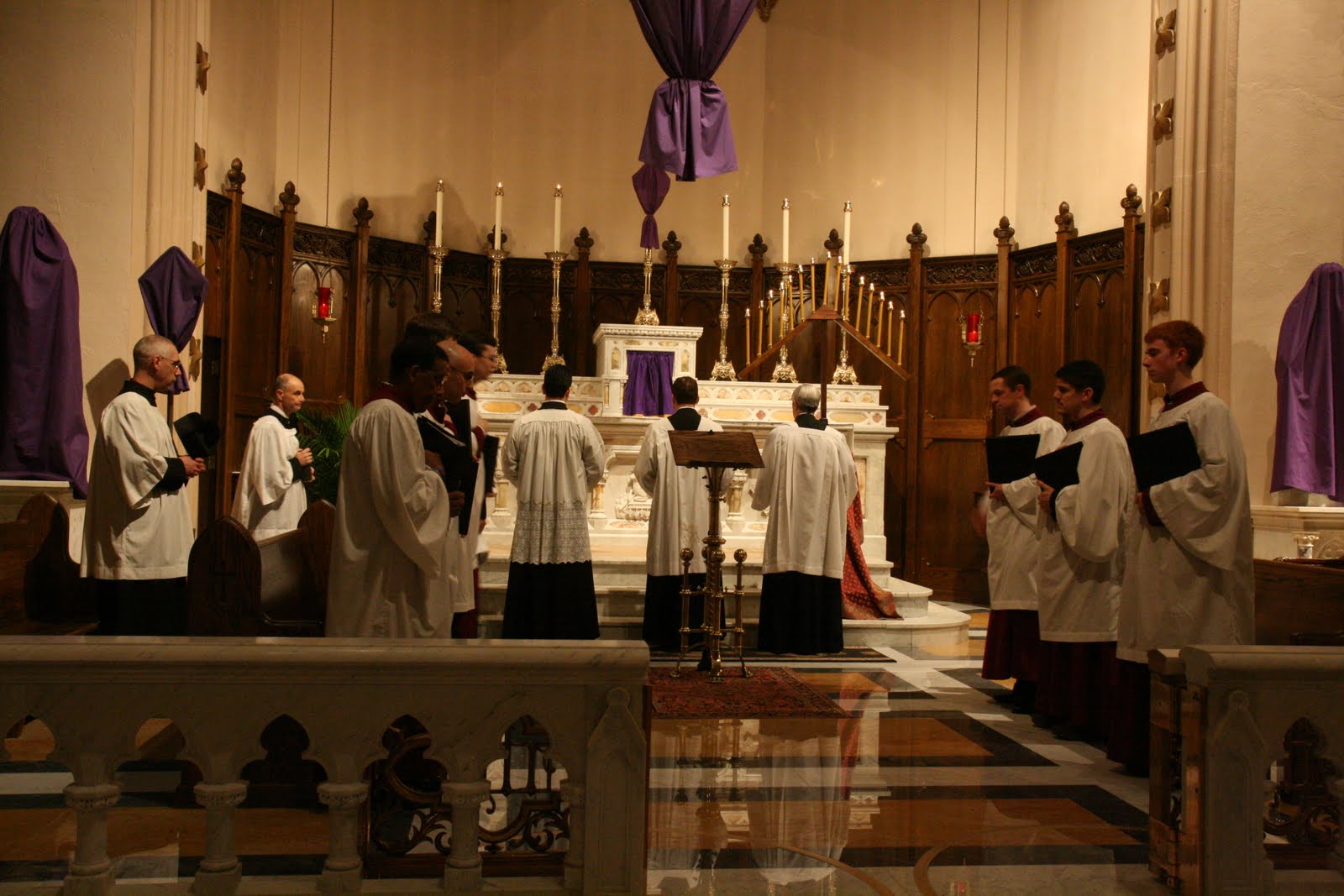
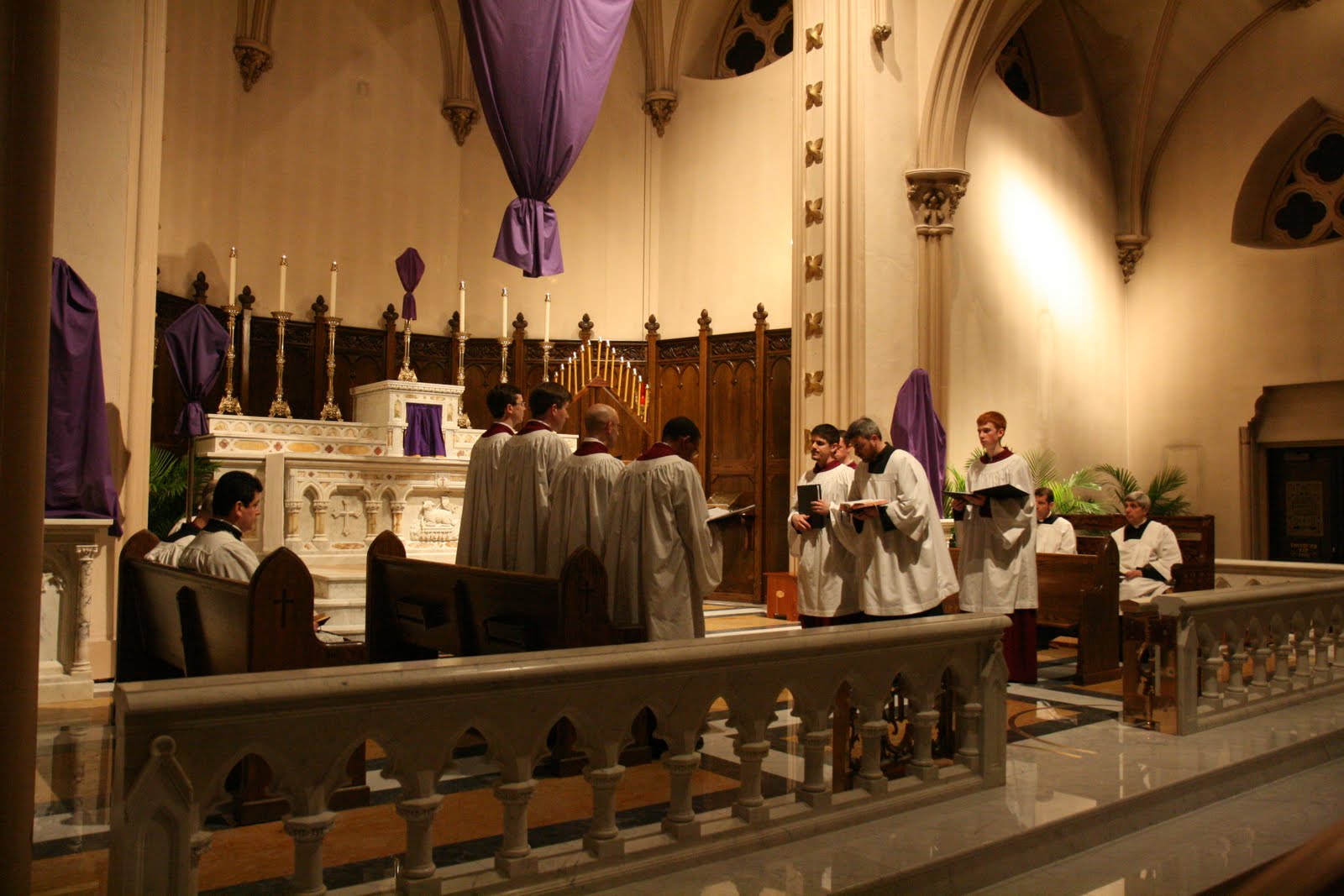
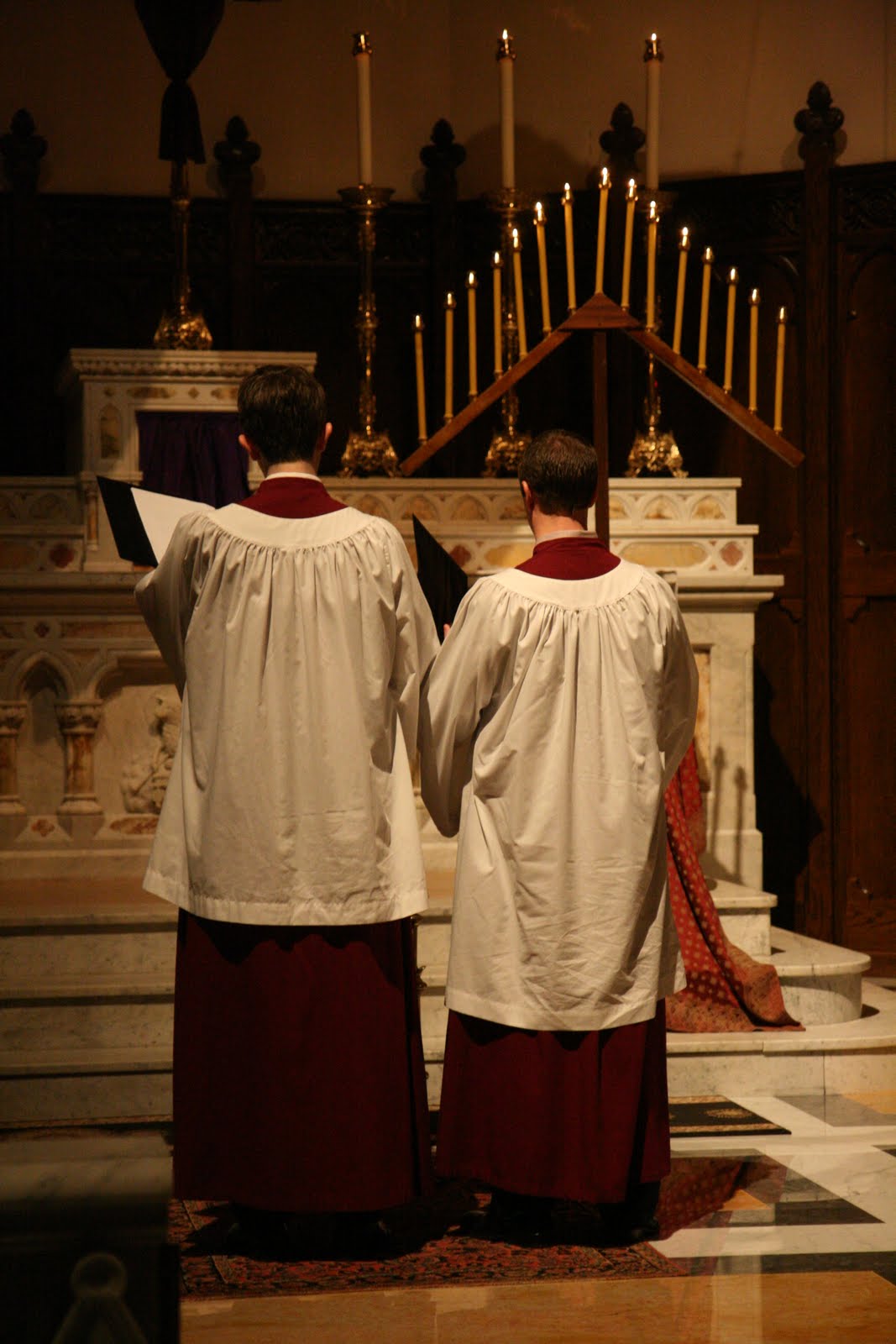
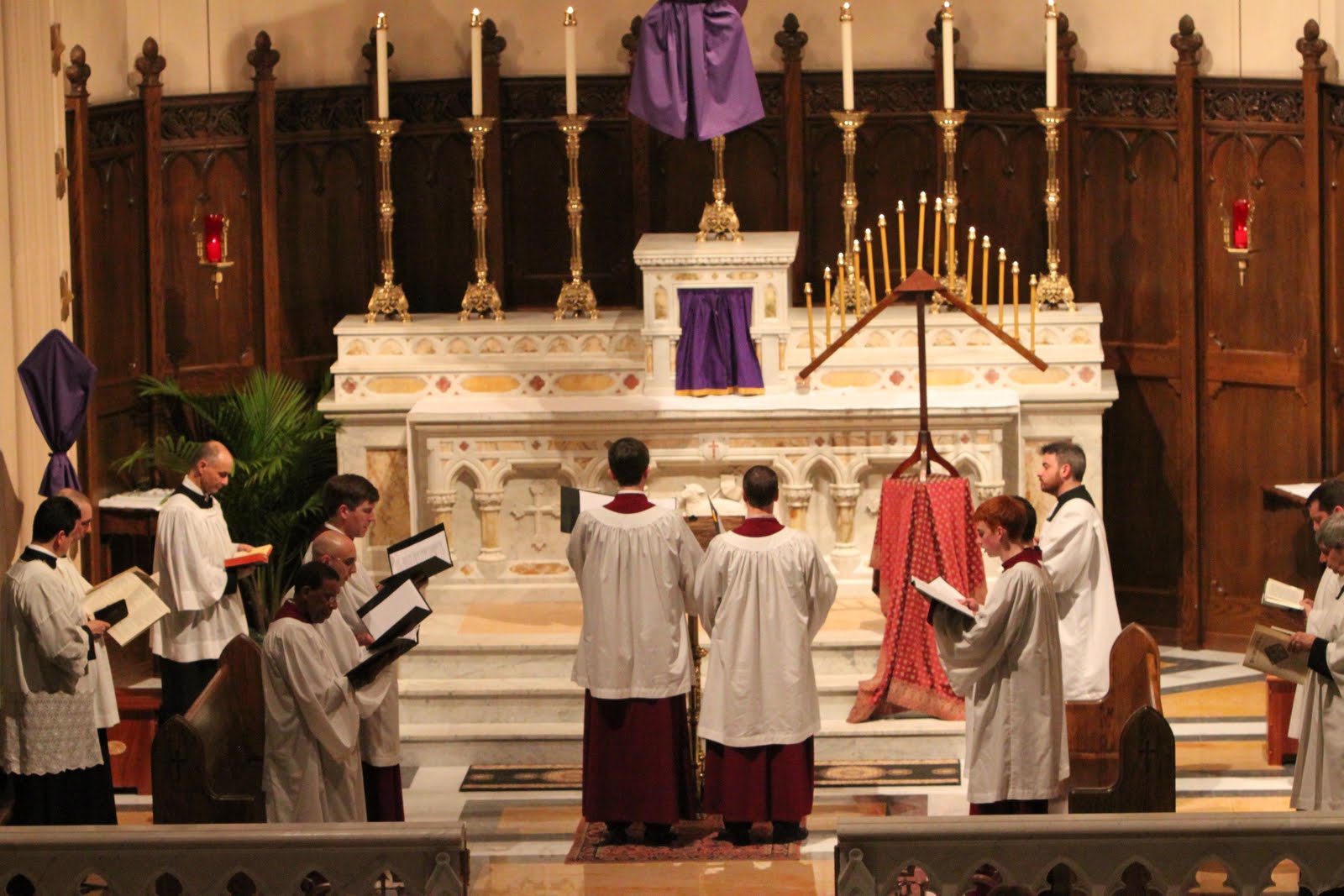
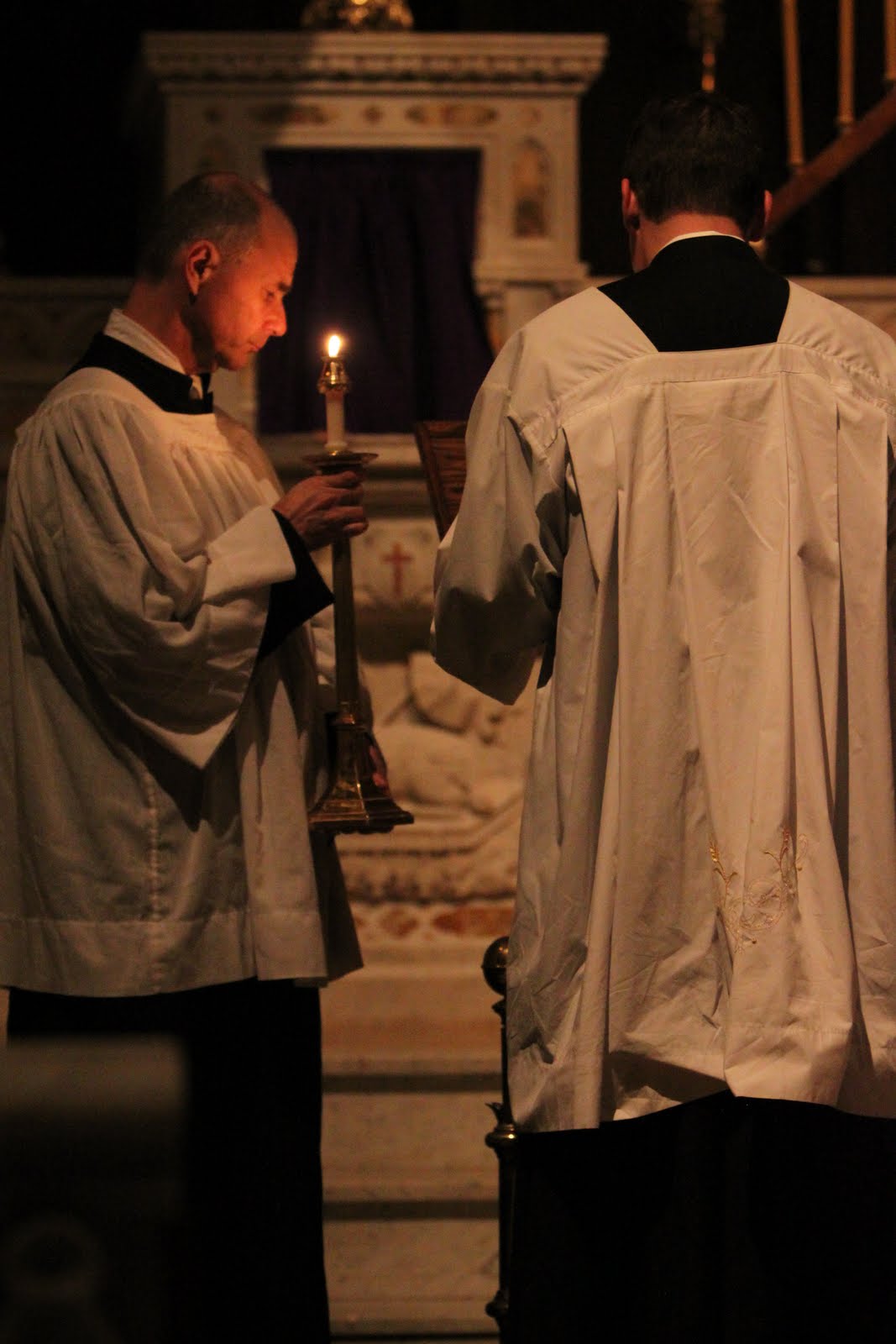
A not insignificant congregation at St. Mary’s, Norwalk, CT, experienced the transcendent beauty of the Tenebrae service (Holy Thursday Matins and Lauds) this evening.The service lasted some 2 1/2 hours.



Published in Uncategorized | 3 comments

A modern German Tenebrae Hearse. Photo:Bautsch
Office of Tenebrae to be sung at St. Mary’s Church, Norwalk, this Wednesday, March 31 at 8pm, preceded by Mass according to the Extraordinary Form, 7 pm.
Tenebrae, the Office of Darkness, is the early morning offices of Matins
and Lauds anticipated the evening before during the Sacred Triduum. This
somber yet moving service consists of a series of psalms and readings,
including the stirring performance of the Lamentations of the Prophet
Jeremiah on Israel’s desolation. As the psalms are completed, the
candles and lights in the church are gradually extinguished, until all
are left in darkness awaiting the returning light of the resurrected Christ.
Music: Fifteen psalms and their antiphons, lessons for each of the three
nocturns (Lamentations of Jeremiah, St. Augustine, and St. Paul), and
responsories chanted according to the ancient Gregorian melodies;
William Byrd’s “Miserere mei”.
Published in Uncategorized | no comment

St. Mary’s parish, Norwalk, CT, began Holy Week by celebrating Palm Sunday in the beautifully restored surroundings of the restored sanctuary. In addition, a new pulpit, baptistery and confessional have been installed. The ensemble was designed by Duncan Stroik and makes use of furnishings acquired from many other churches. The work on this Phase I of the restoration was (mostly) complete by today. Further phases include the painting of the church interior and exterior and the acquisition of a reredos for the high altar.
The Palm Sunday liturgy began outside with the blessing and distribution of palms. The procession, featuring the children’s choir, followed. A congregation of over 400 attended the liturgy which lasted some 2 1/2 hours (including the procession). The reading of the Passion, involving three cantors and the schola, was particularly memorable.
Channel 12 news covered the story:
http://www.news12.com/index.jsp
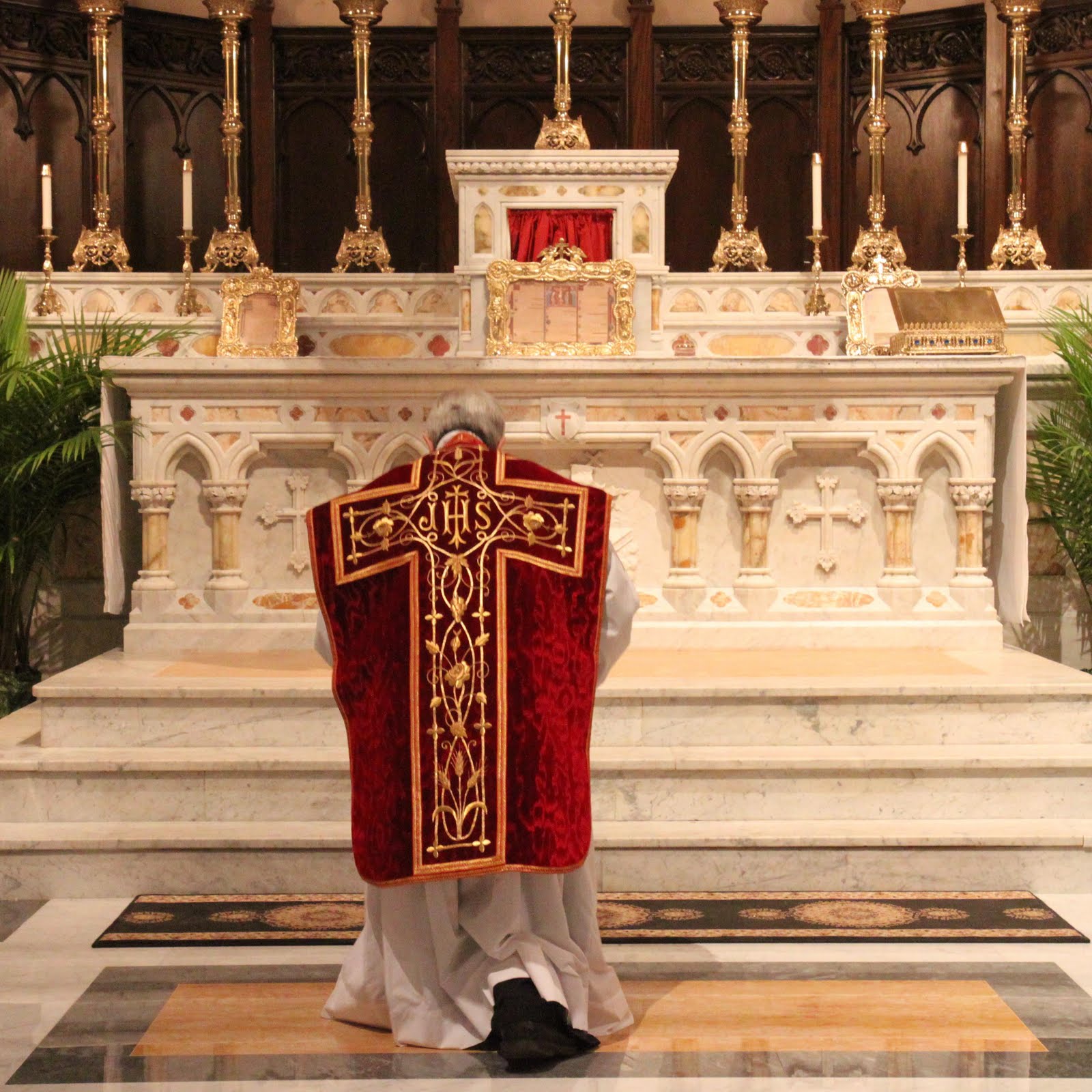

After the preceding Novus Ordo liturgy. The new sanctuary can be used for both forms of the Roman Rite.


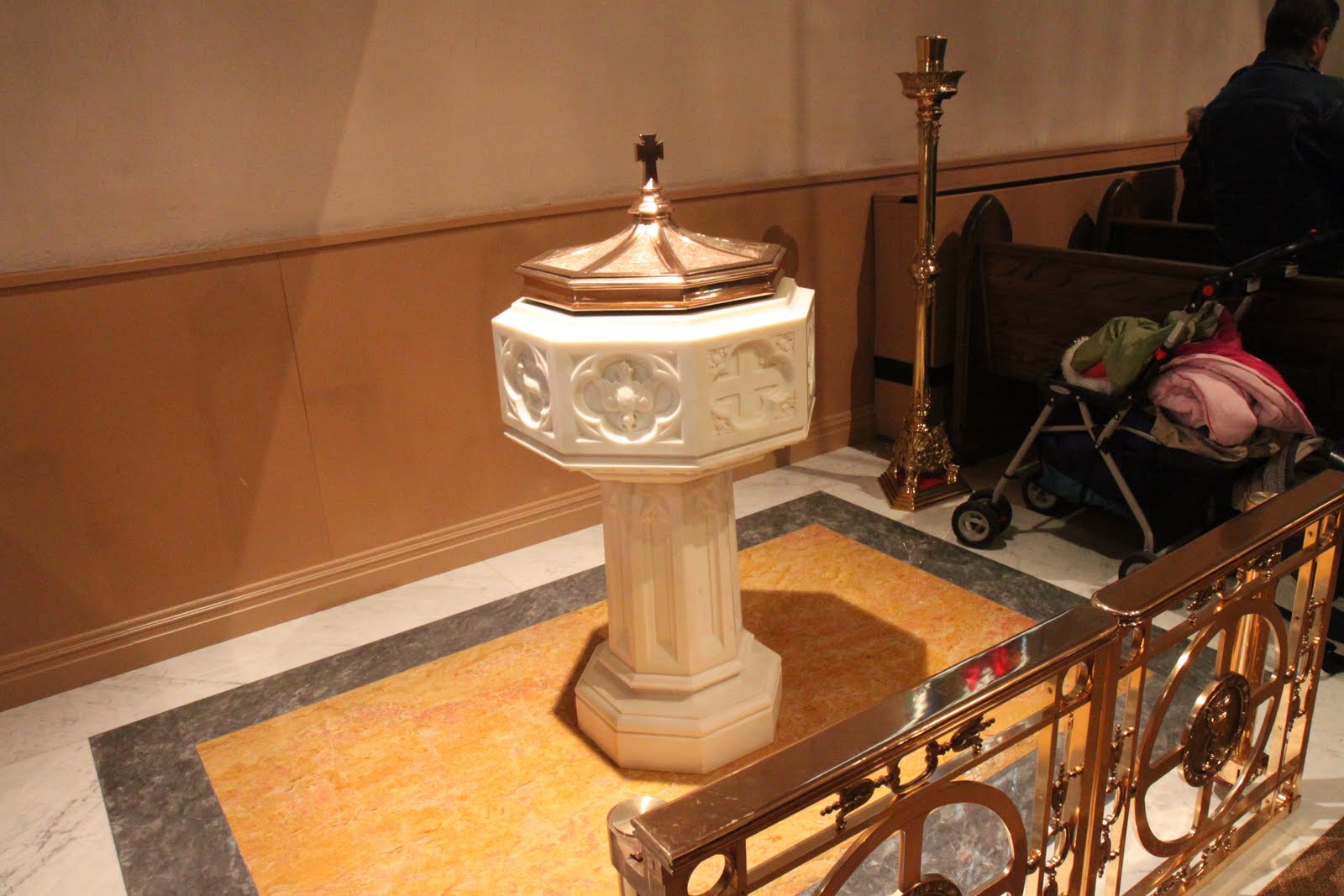
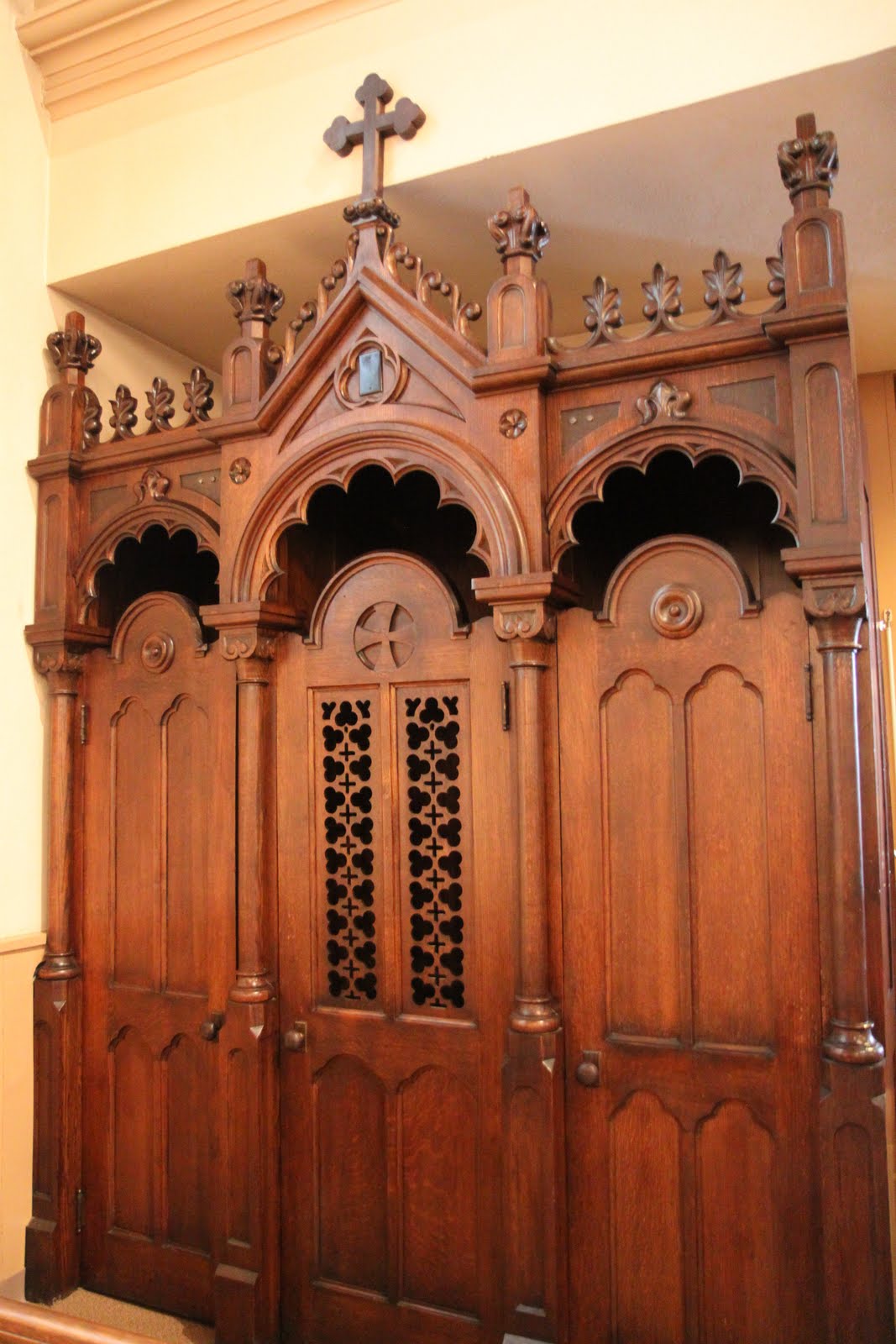
The confessional and the baptistery.

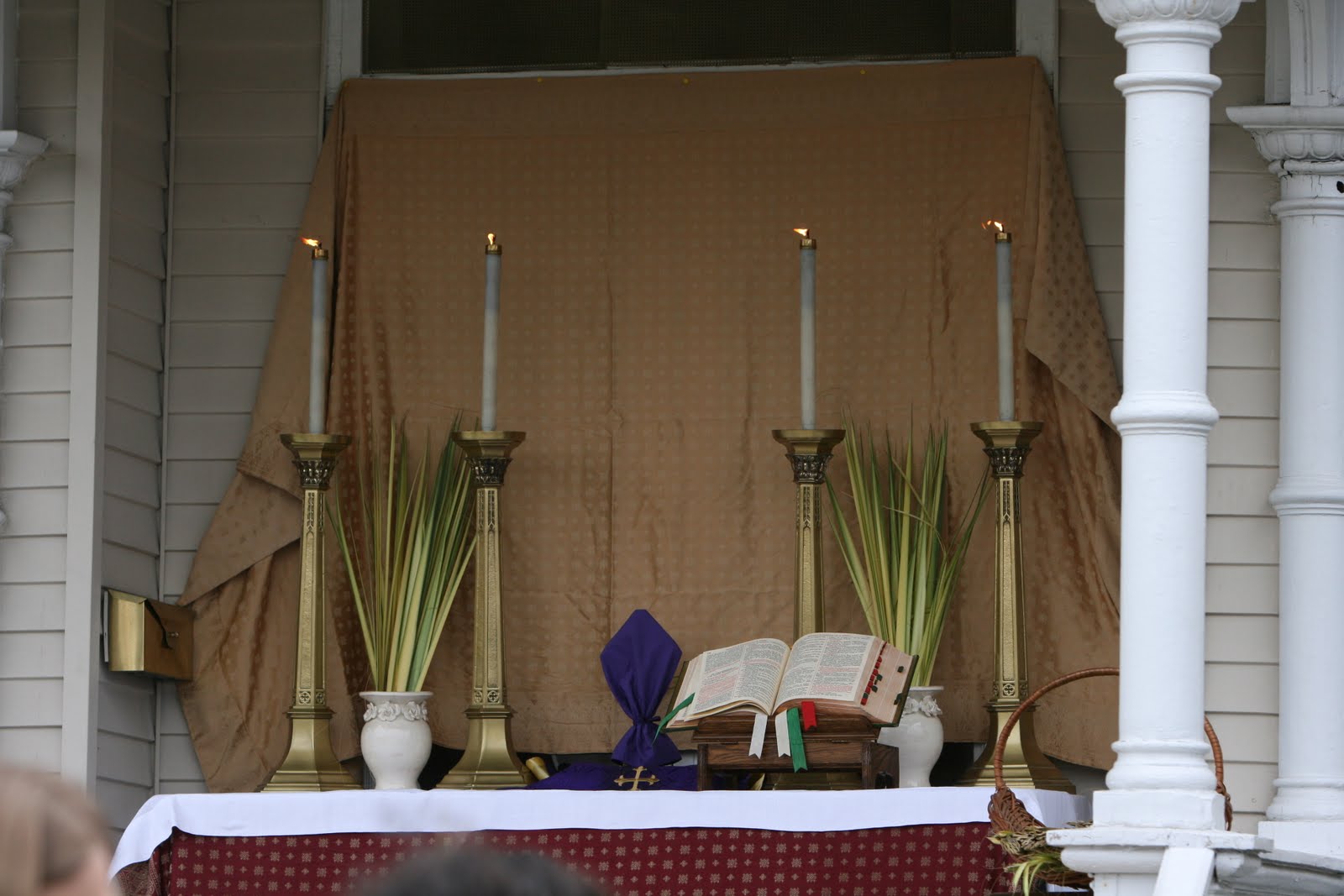
Outdoor altar
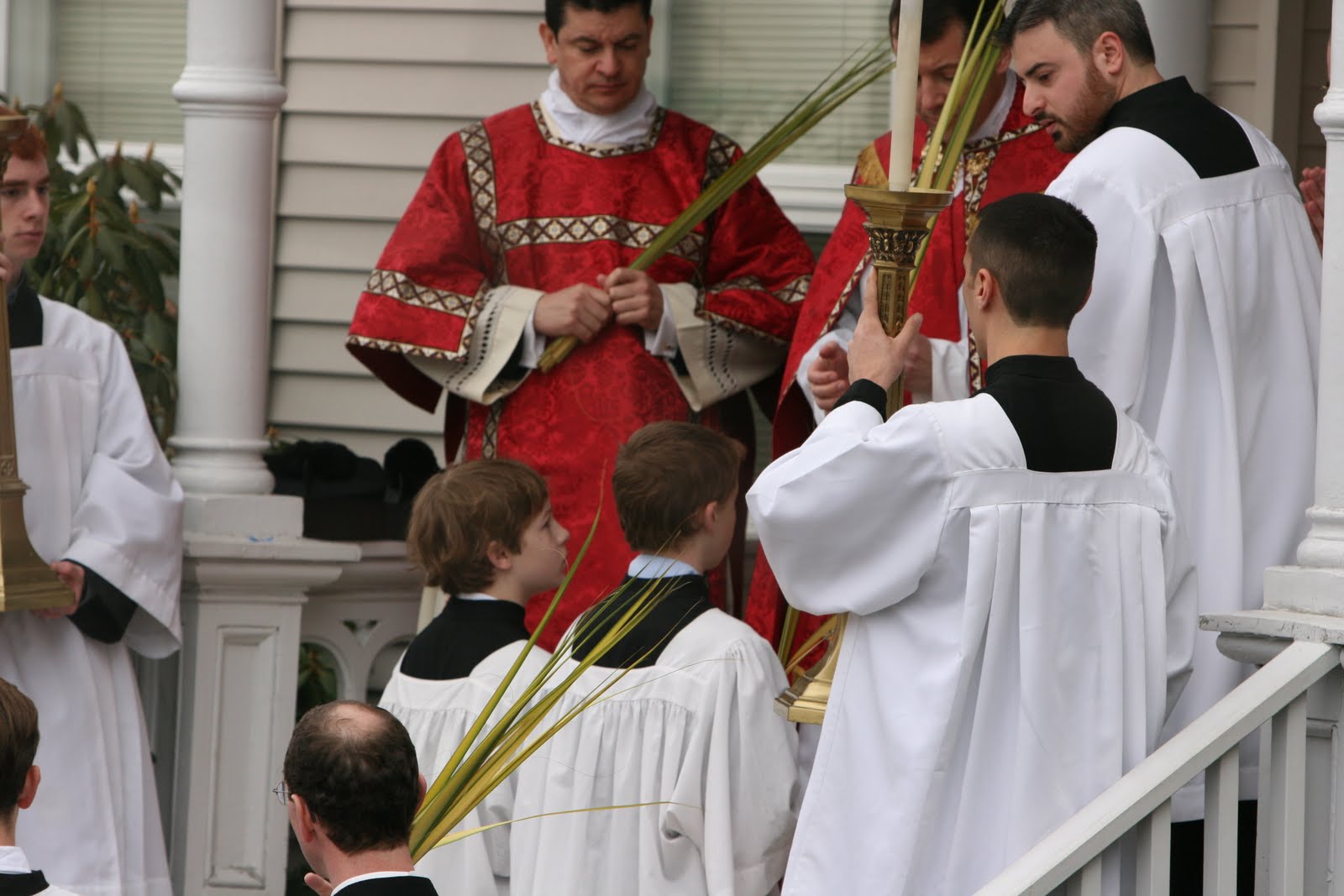

The blessing of palms

The procession
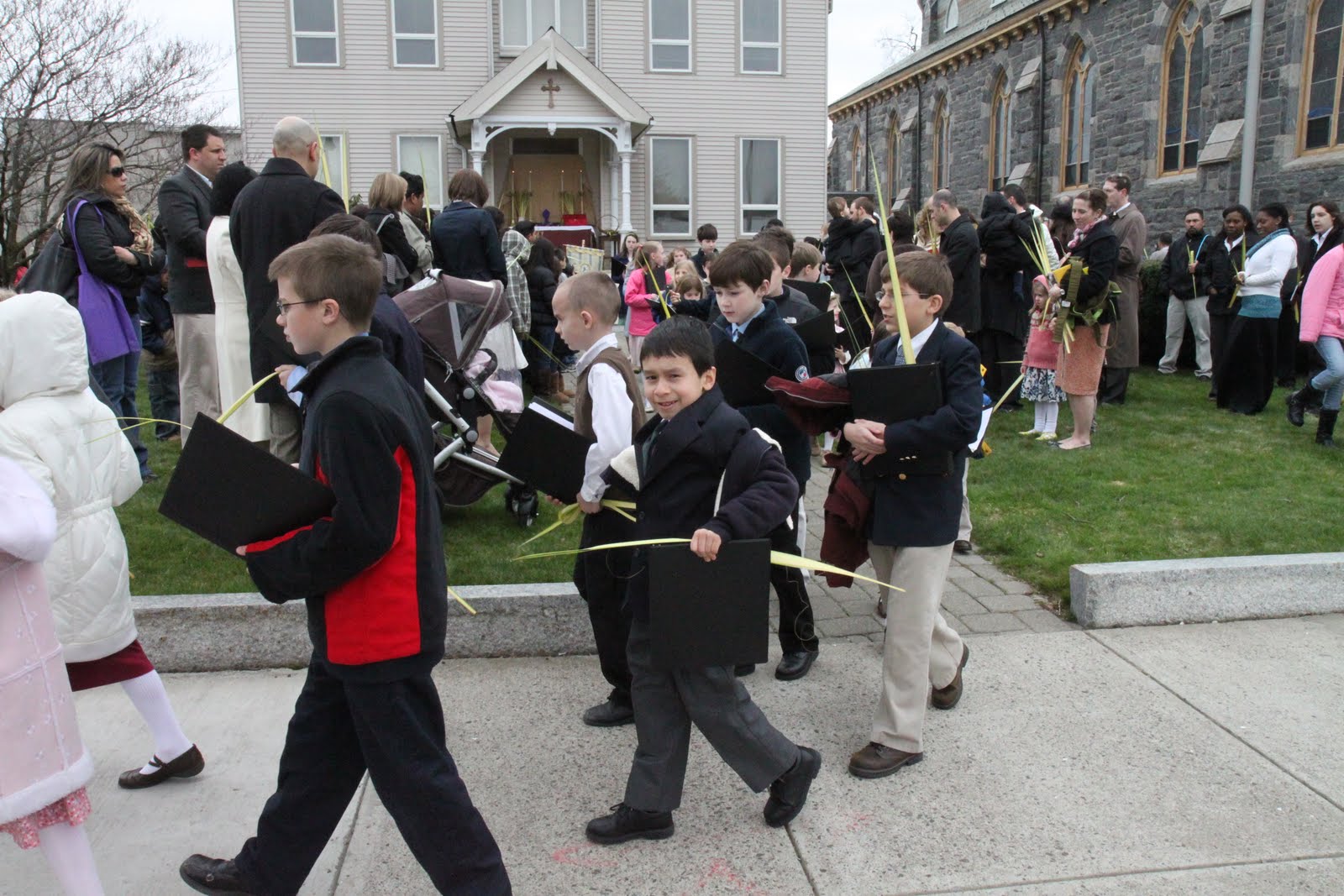

The entry of the procession through the main doors of the church.



The reading of the Passion.
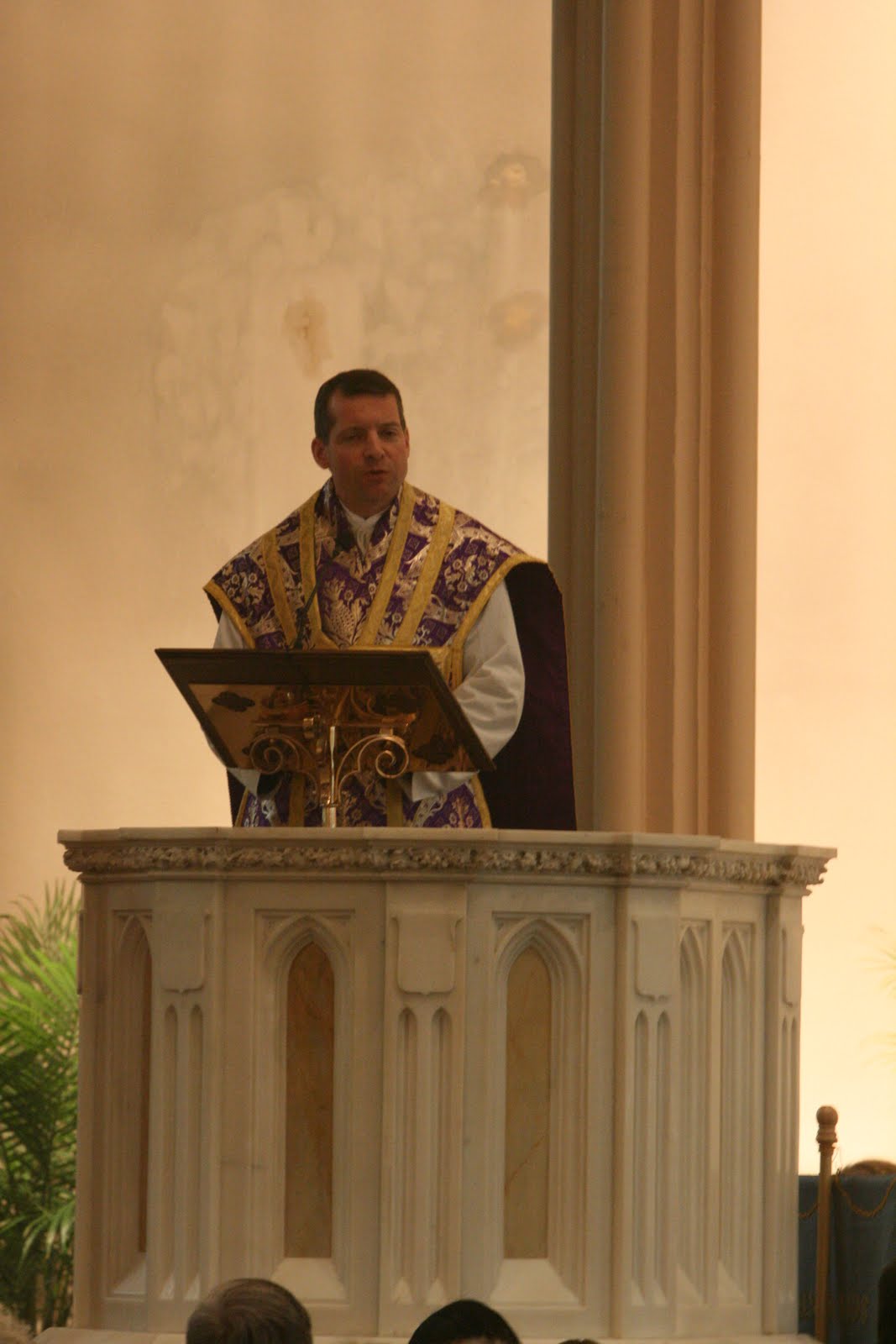
The new pulpit.

Published in Uncategorized | 6 comments
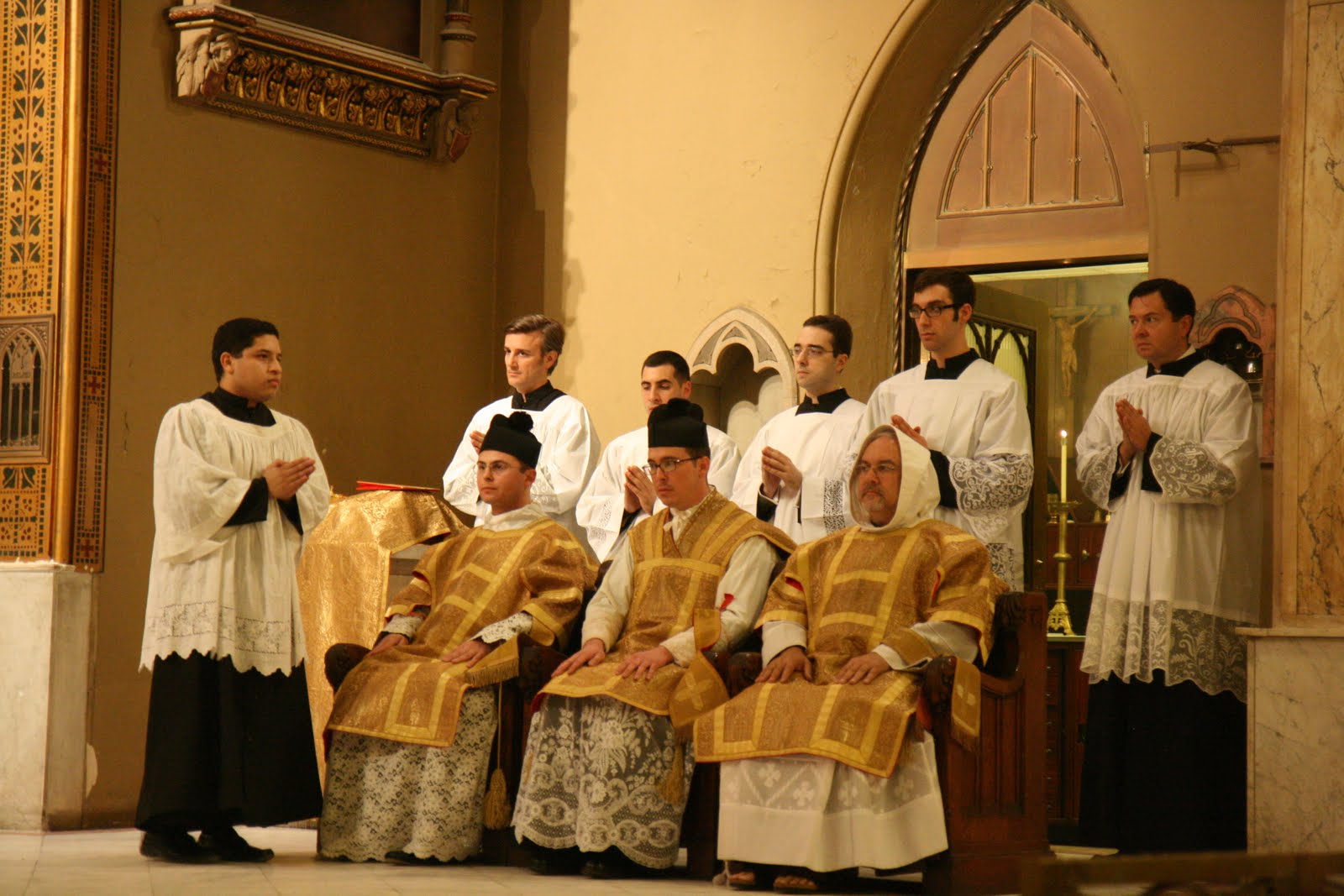
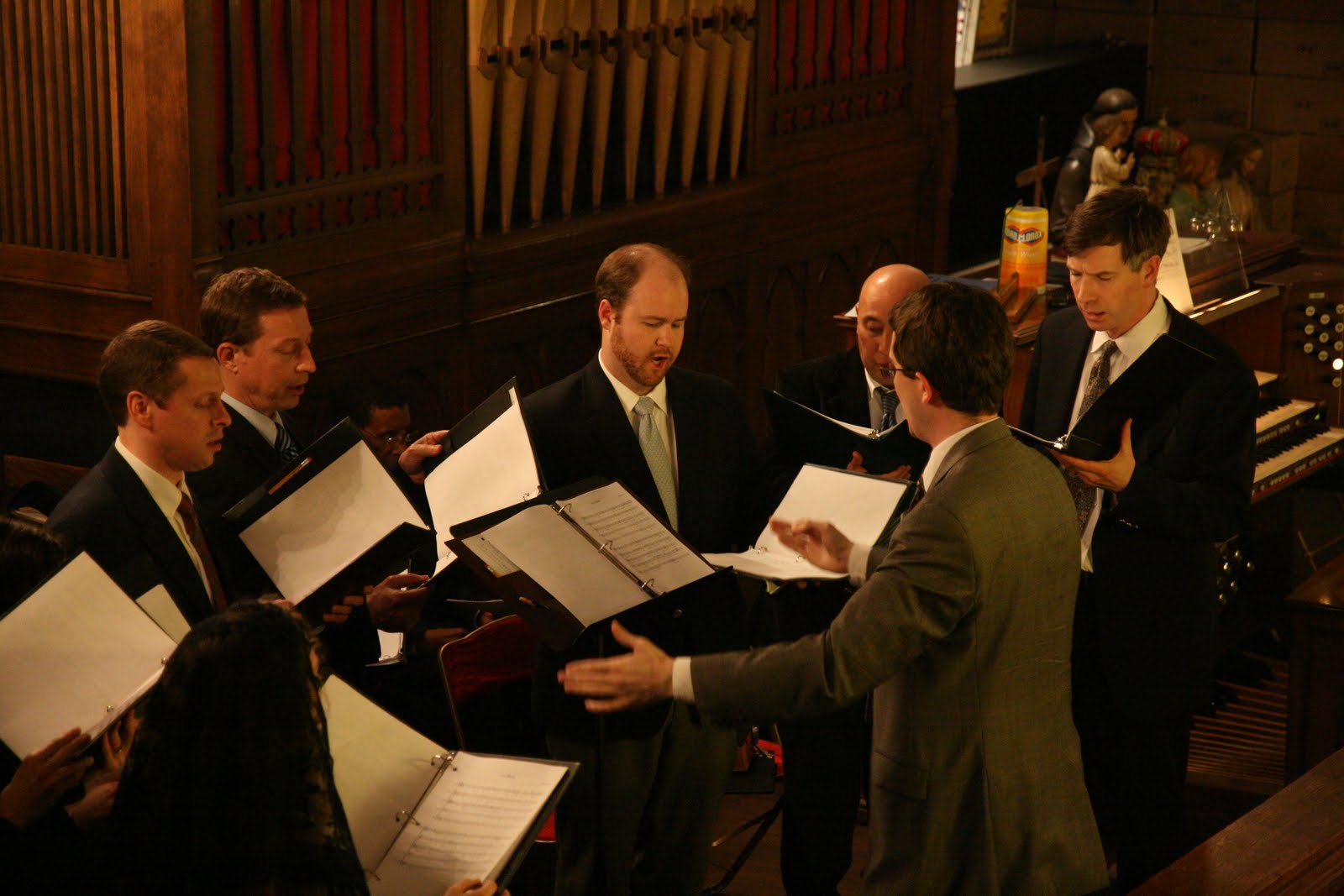
A solemn mass was celebrated this Thursday at Holy Innocents parish for the Feast of the Annunciation sponsored by the Agnus Dei council of the Knights of Columbus. The church was full -even the galleries were used – with some of the congregation arriving in buses. Cardinal Egan attended and preached. David Hughes led the choir/schola.
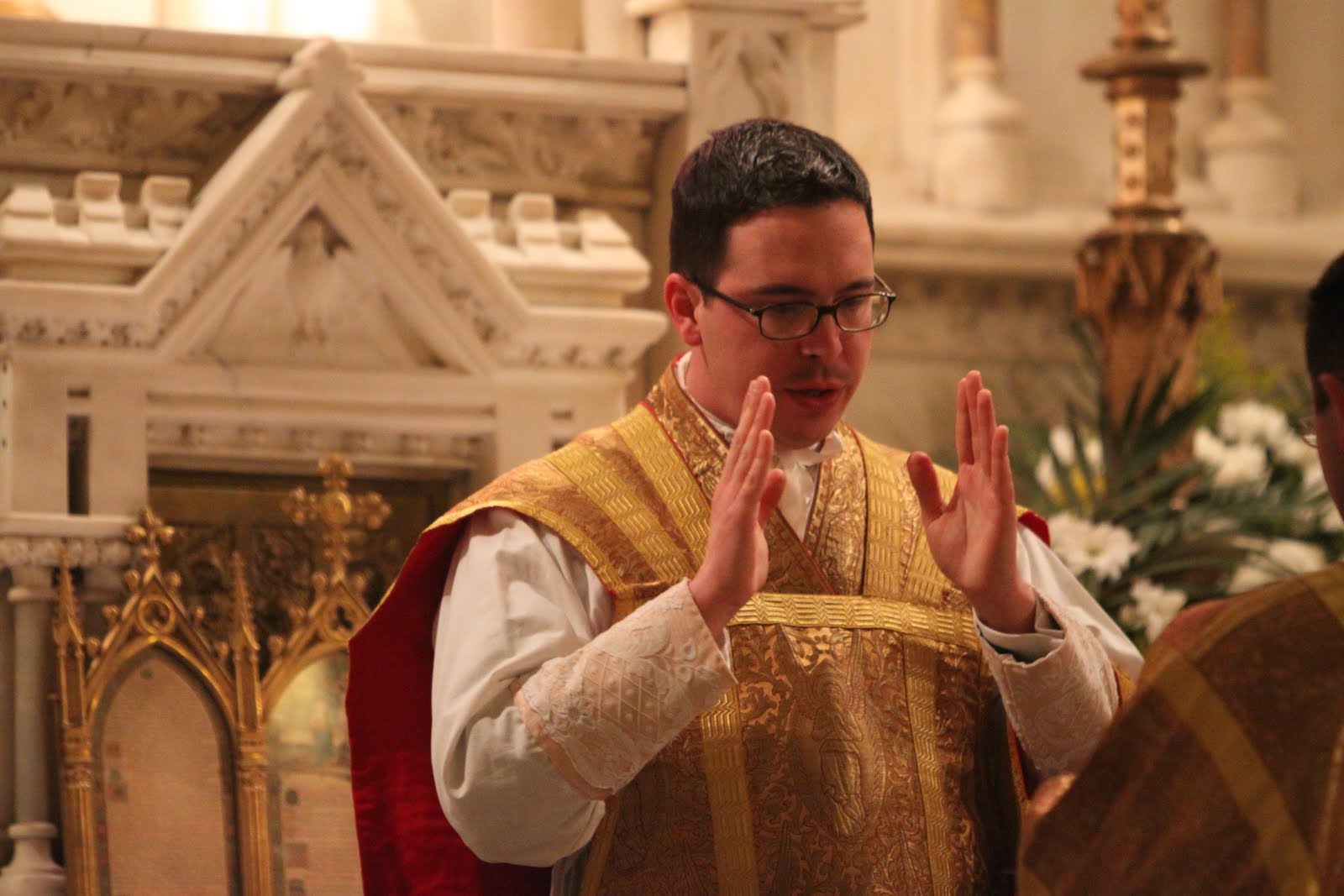
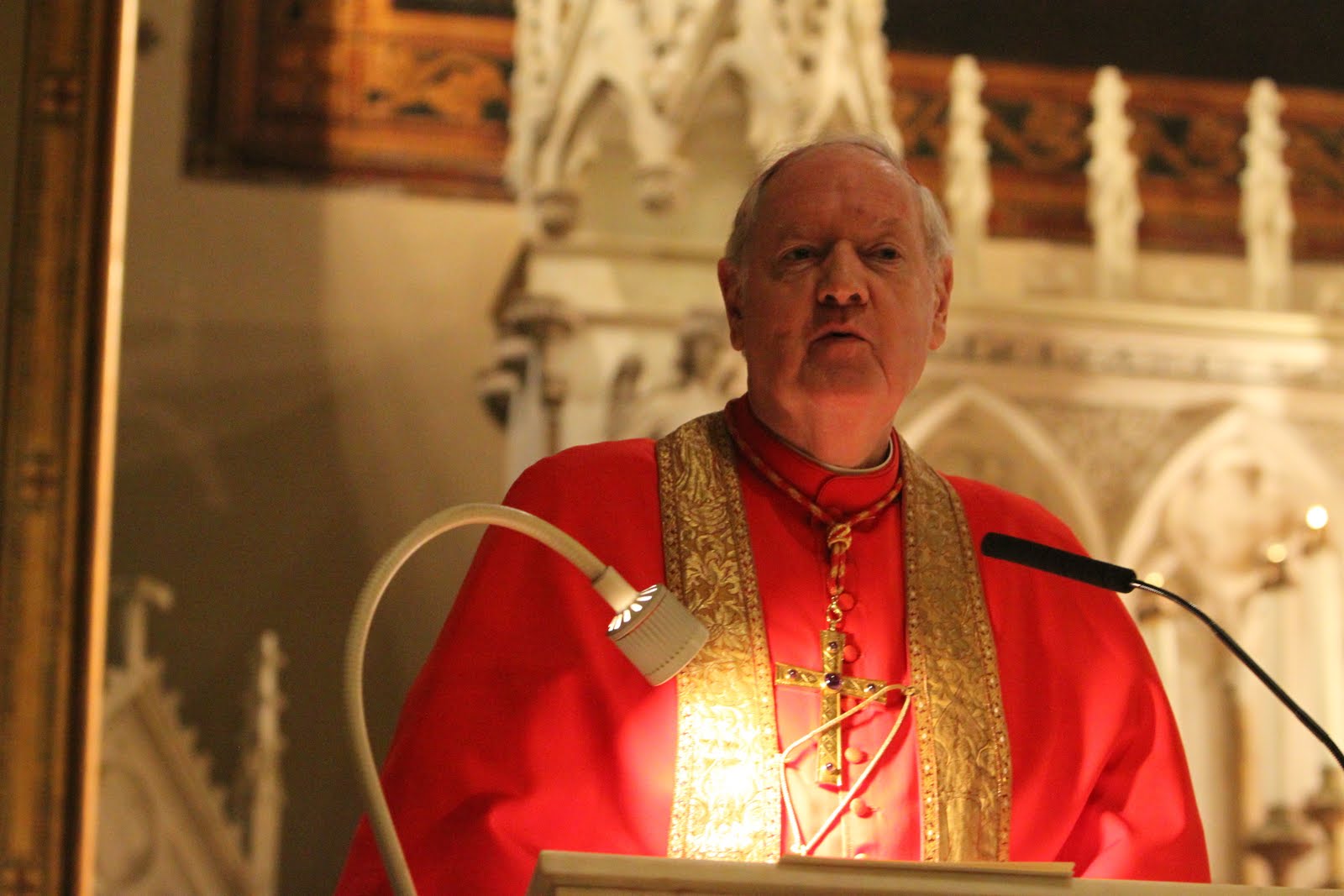
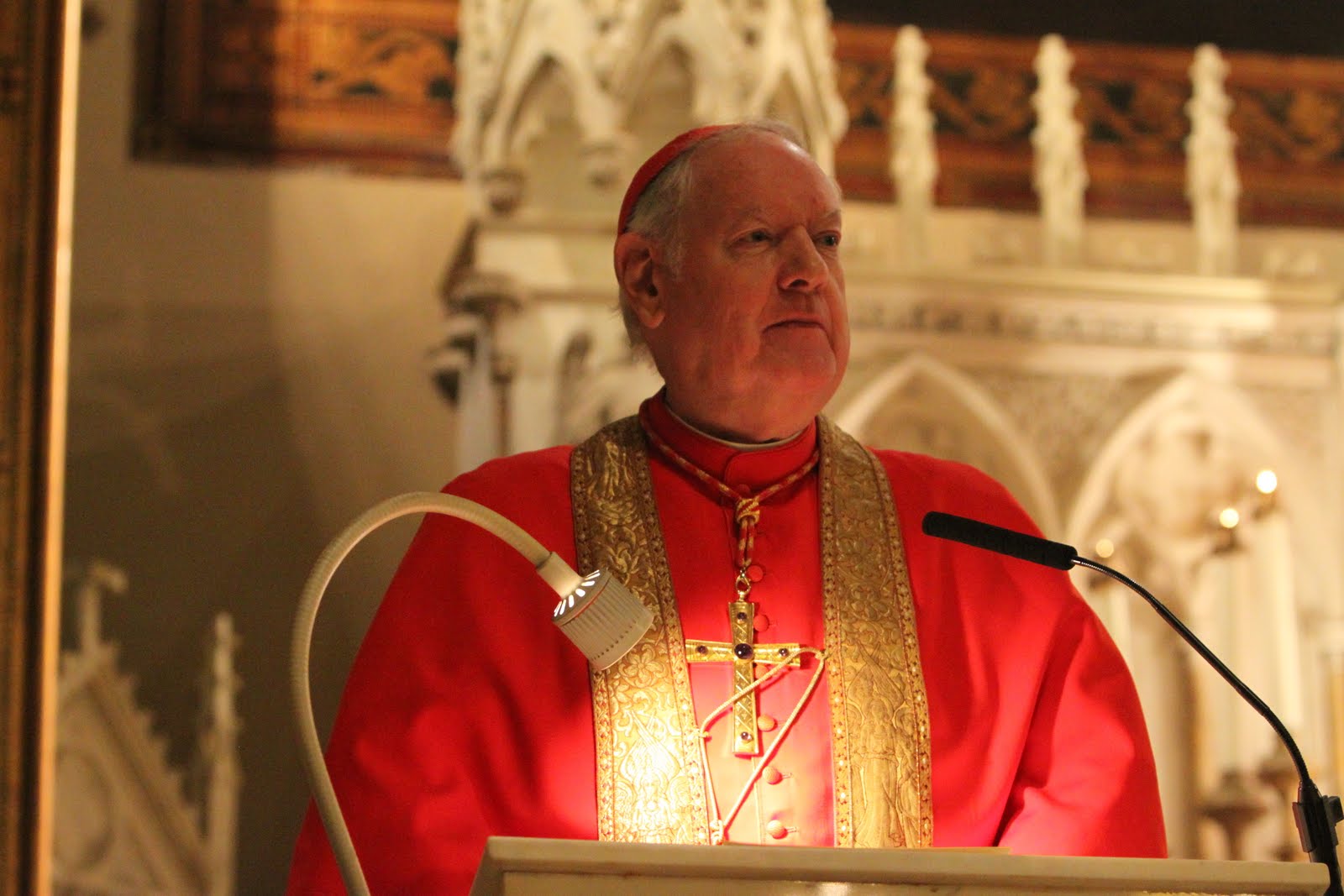
Cardinal Egan preaching.
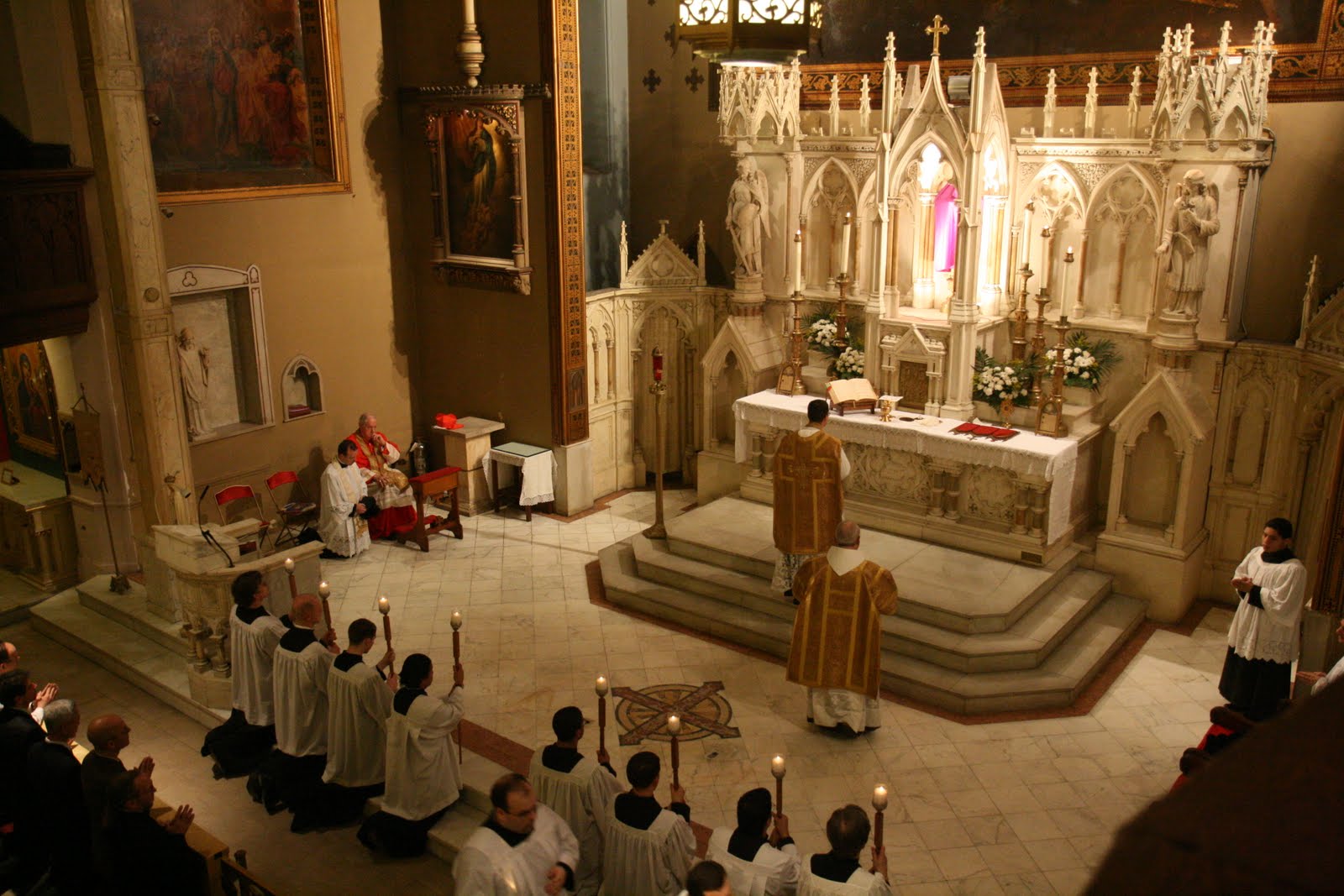
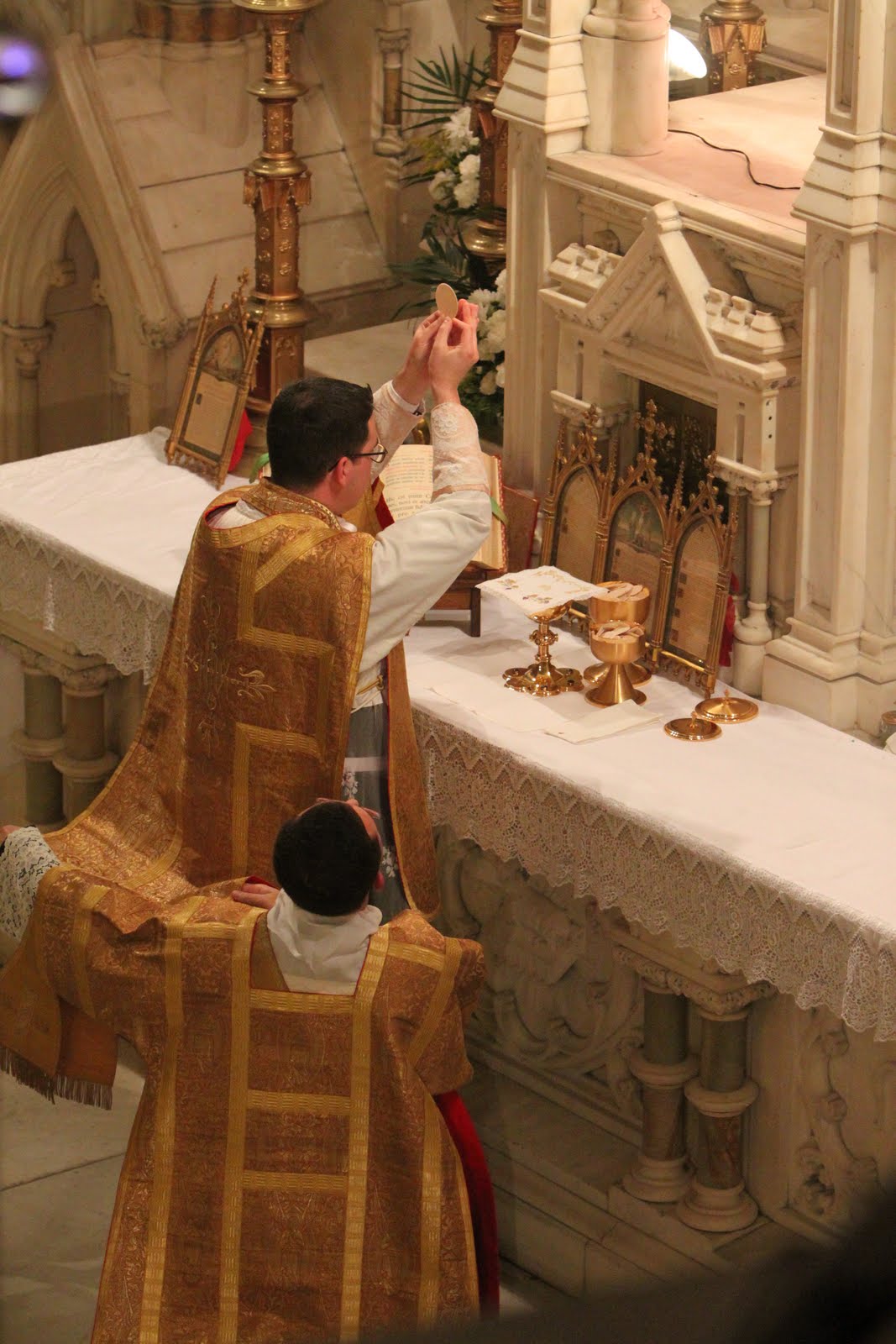
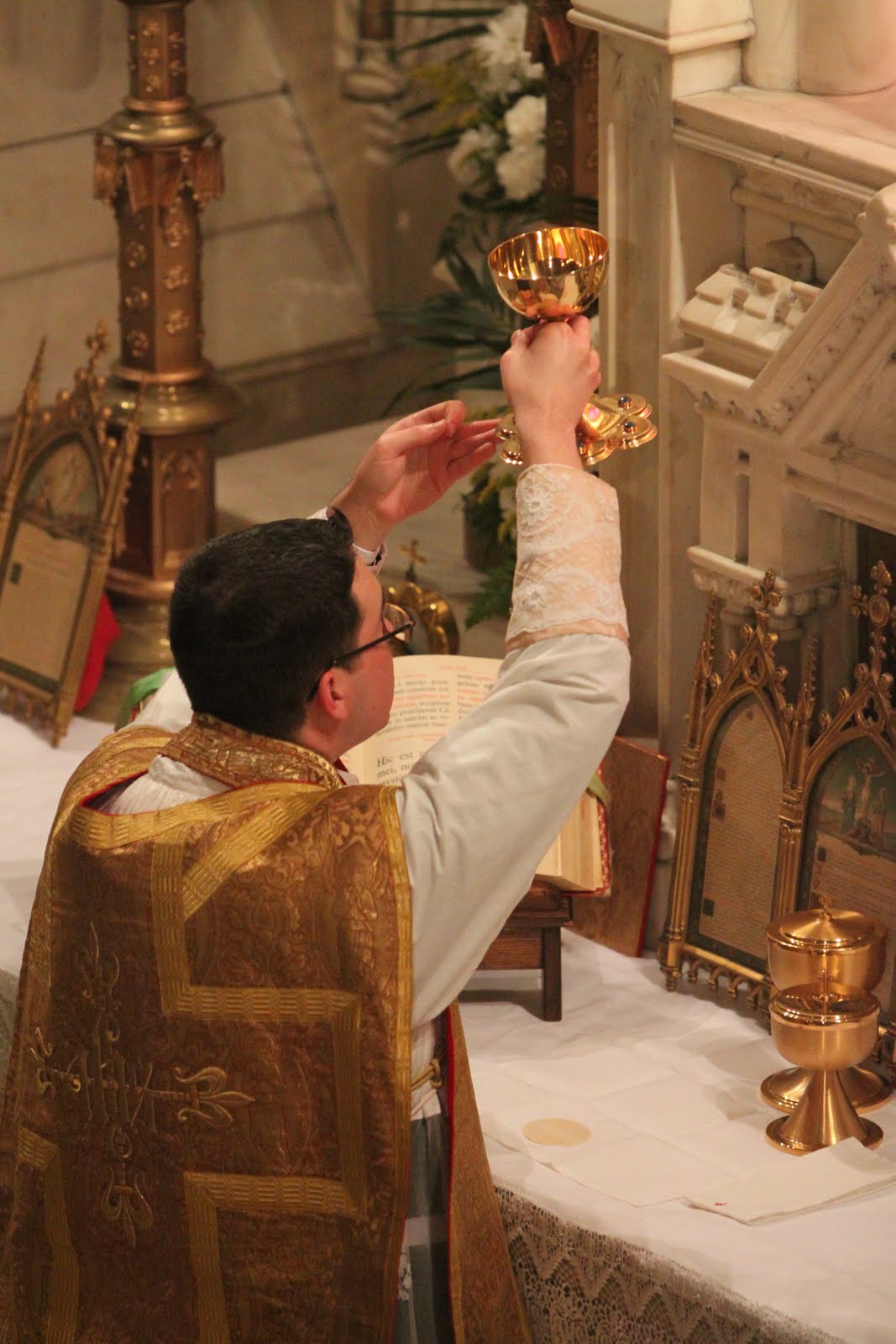
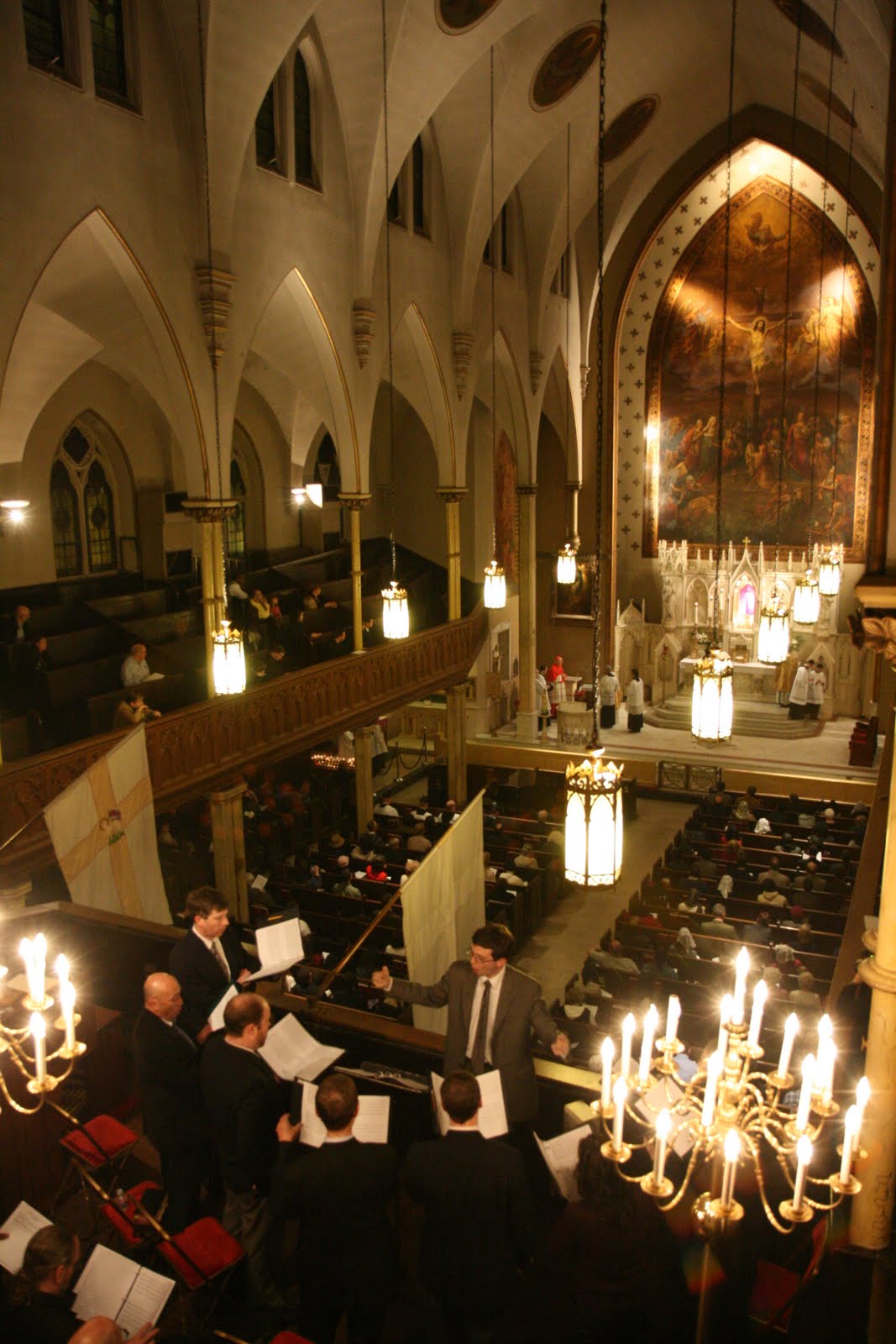
In the foreground the schola with David Hughes.
Published in Uncategorized | 15 comments

A triumphant El Cid in the courtyard of the Hispanic Society Museum at West 155th Street.
Last Saturday, in almost perfect weather, saw the launch of the first “pilgrimage of New York.” It took the form of a 13.6 mile hike from one end of Manhattan to the other; from the shrine of Mother Cabrini to that of Elizabeth Ann Seton. On the way the pilgrims visited the historic churches of St Patrick’s cathedral, Old St. Patrick’s and St Peter’s. This reporter admittedly followed a different itinerary between the two shrines in order to visit some of the lesser known ‘sacred havens” of New York.
The pilgrimage was organized by a number of parish “youth” ministries in New York. The pilgrims, however, included representatives from many other dioceses. There were about 100 or so pilgrims; mostly “young adults.” Their enthusiastic spirituality seamed to tend towards the charismatic. Their physical condition was also remarkable. They had completed the pilgrimage in very good shape apparently without any casualties from blisters, exhaustion etc. The comparison with, say, the first day of the Chartres pilgrimage (admittedly about a third longer) was remarkable in this regard. The diocesan press presence was also noteworthy; I contrast this media attention with the rigorous disregard of much better attended Traditionalist “events” in both the Archdiocese of New York and the diocese of Bridgeport on the part of the Catholic press.
The Traditionalist can only commend this new initiative. For here the Archdiocese of New York is recalling its own past – a topic which had been studiously avoided in recent decades. It may be news to younger Catholics, for example, to learn of the presence of two canonized saints in the city. They may be shocked to see the evidence of the vital activity of Catholicism in this city going back to the first parish of St. Peter’s founded after the American revolution. In Archbishop Hughes they will encounter a prelate with an entirely different approach from that of his successors since 1967. And they may reflect on the liturgy that gave all these figures strength.
The website of the pilgrimage is here. A repeat pilgrimage is promised for next year.


The start of the pilgrimage was the Mother Cabrini shrine on West 190th Street where the saint lies buried. In a structure (circa 1960) of almost unimaginable ineptitude in architecture and decoration there is preserved the relics and a wax effigy of the saint. The colorful Catholic atmosphere transcends the artistic shortcomings. In this almost untouched sanctuary the visitor can get a real taste of the Catholic Church just before the Council.


Some other ecclesiastical sights on the long journey downtown (including unauthorized deviations from the pilgrimage route): the “cloister” of the Anglican Church of the Intercession; the extraordinary Church of Our Lady of Lourdes (assembled in part of spolia from other mansions and churches); the tiny and charming St. Mary’s Church (Anglican) and Renwick’s masterpiece of Grace Church (Anglican)


The final destination: the Shrine of Elizabeth Seton/Church of Our Lady of the Most Holy Rosary. It may come as a surprise that the chapel dates from 1964 – in other words, it is later than the Mother Cabrini shrine. The adjoining building of the Shrine dates from 1793! One of the most beautiful buildings in New York, it was unfortunately covered by scaffolding this year.

The pilgrimage was able to fill the chapel for the final service.
Published in Uncategorized | no comment
Churches of New York
Holy Roman Empire
Website Highlights
Archives
[powr-hit-counter label="2775648"]