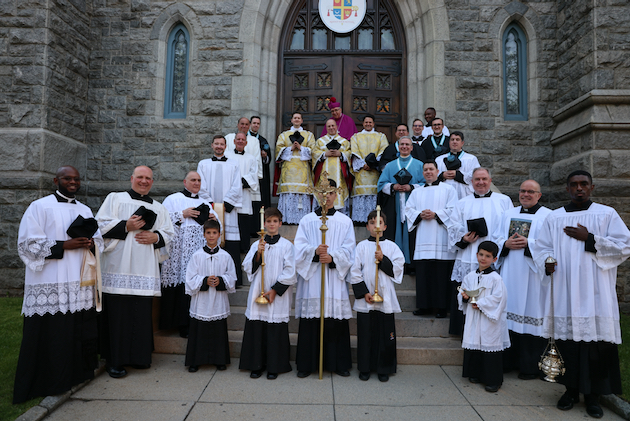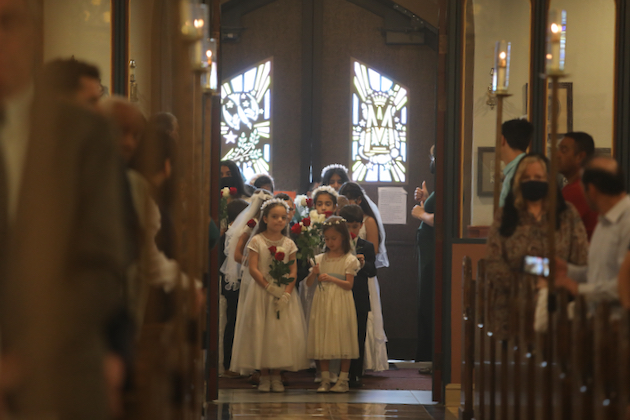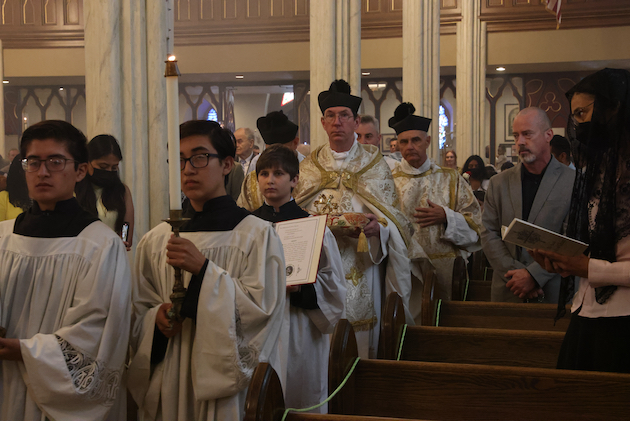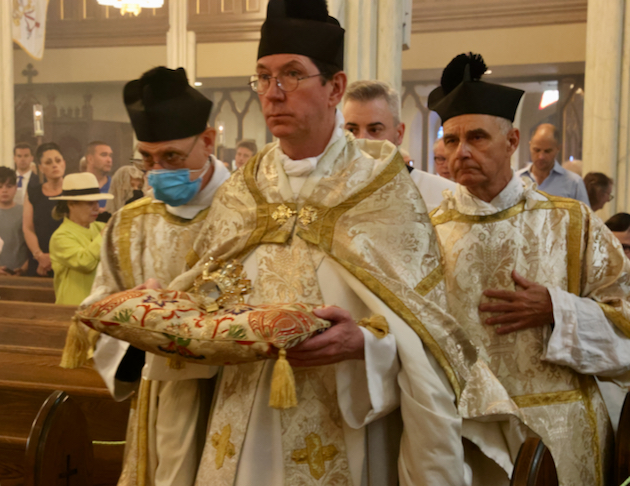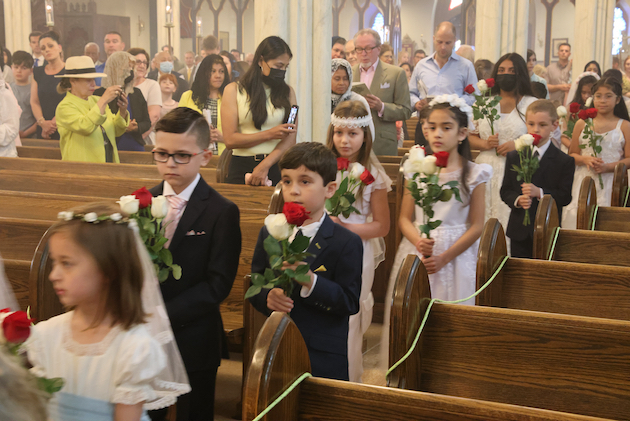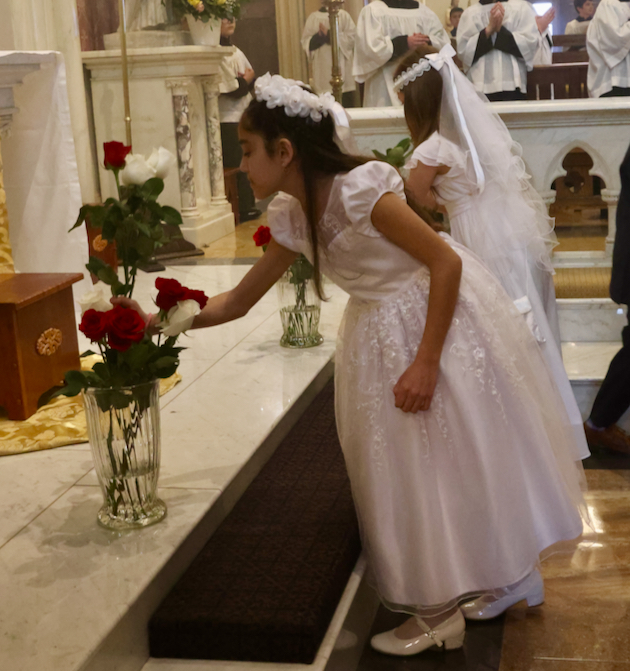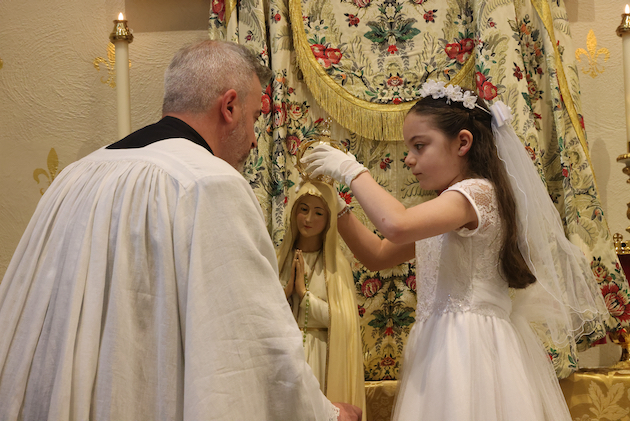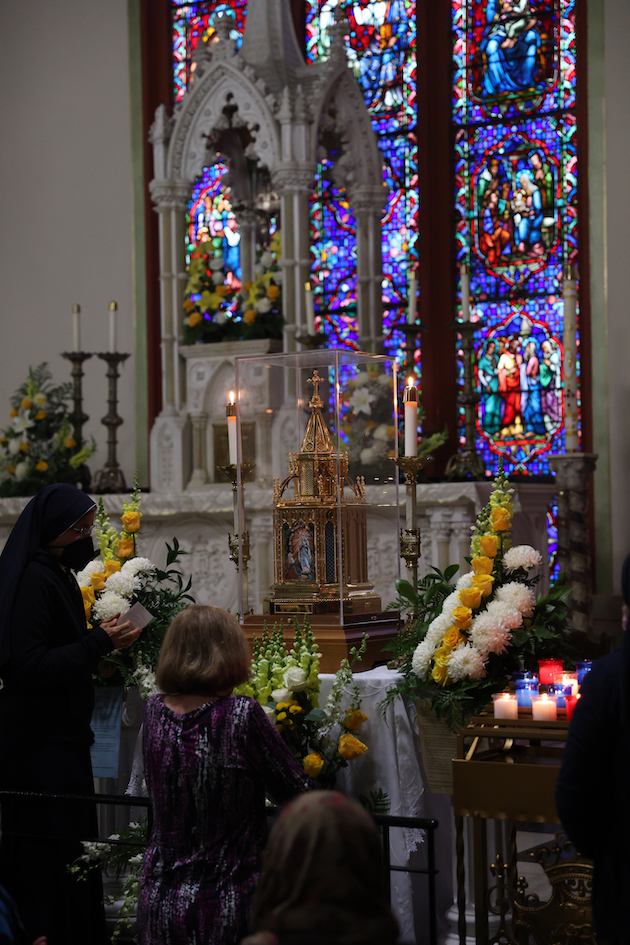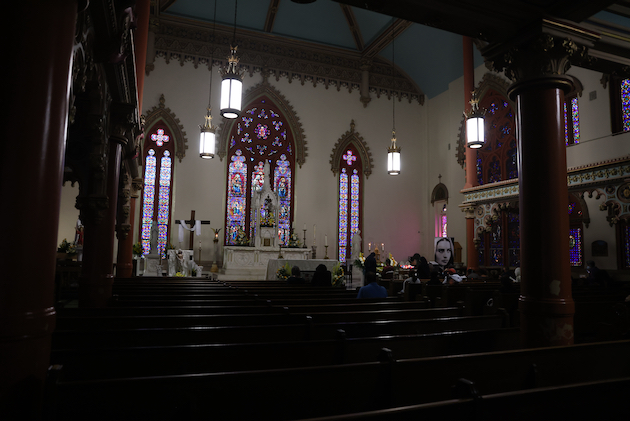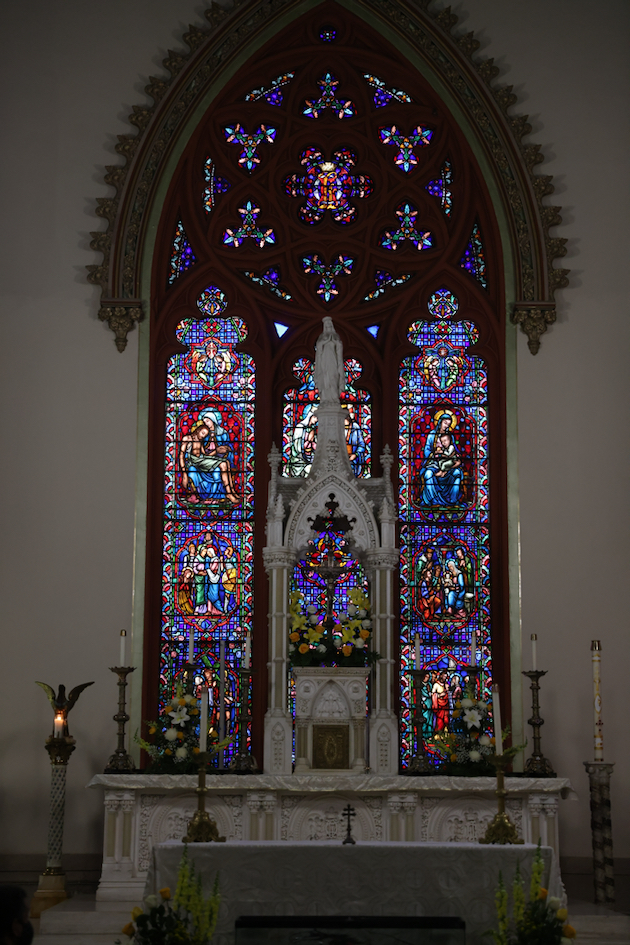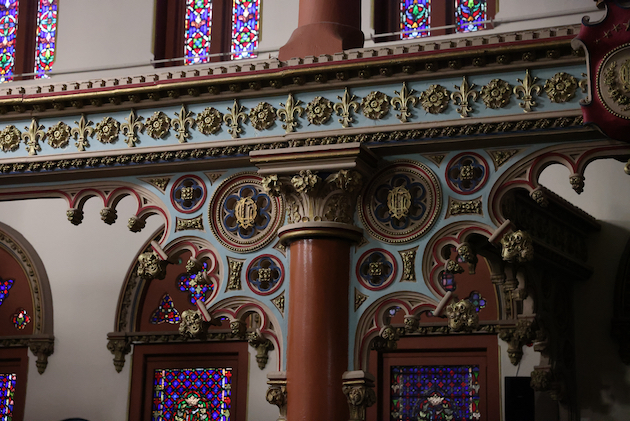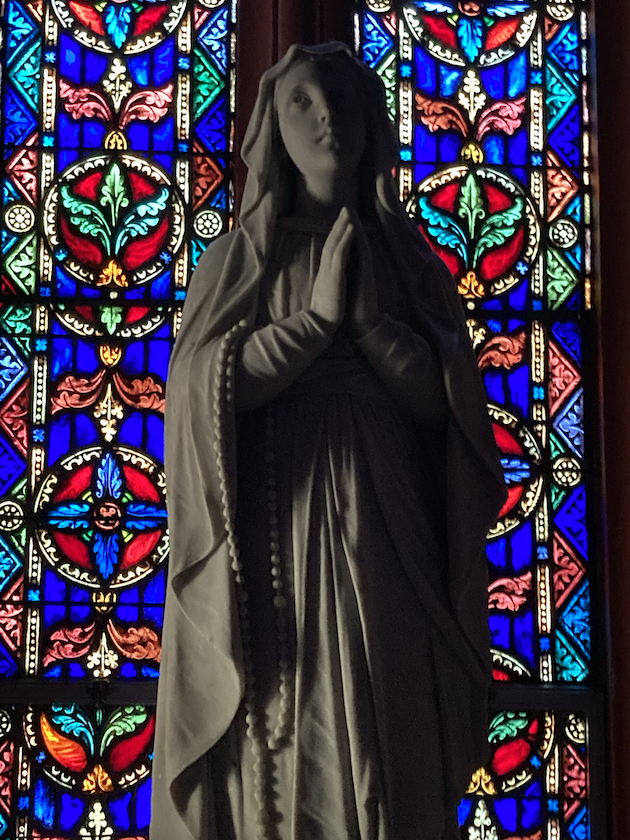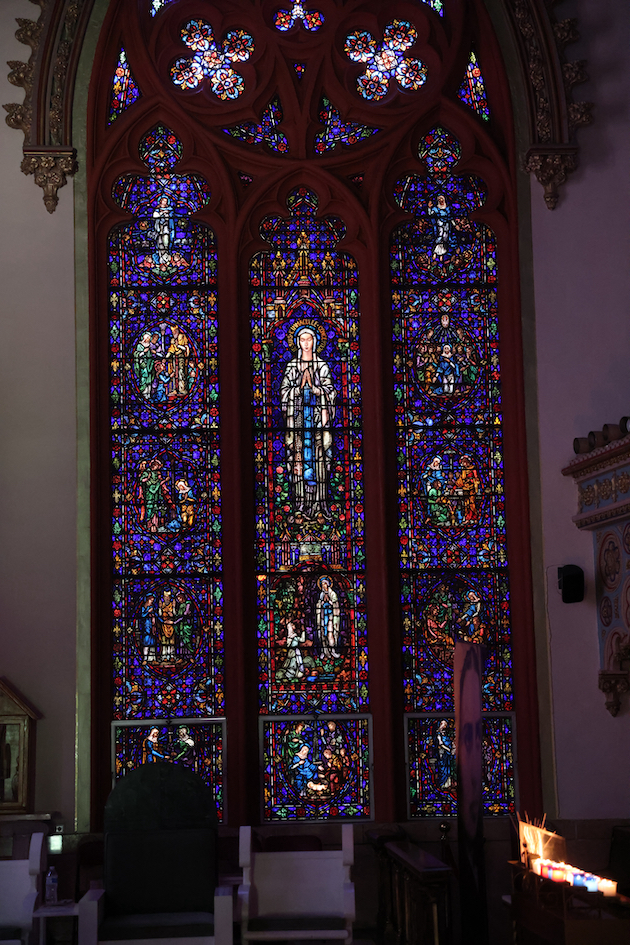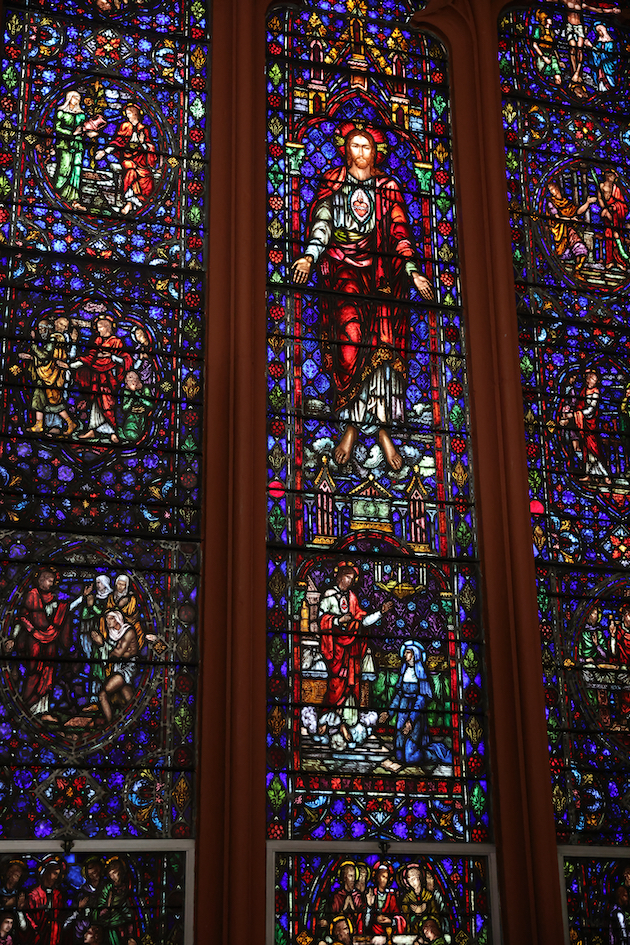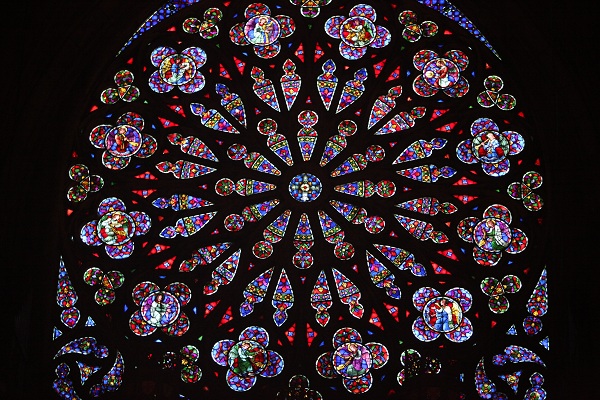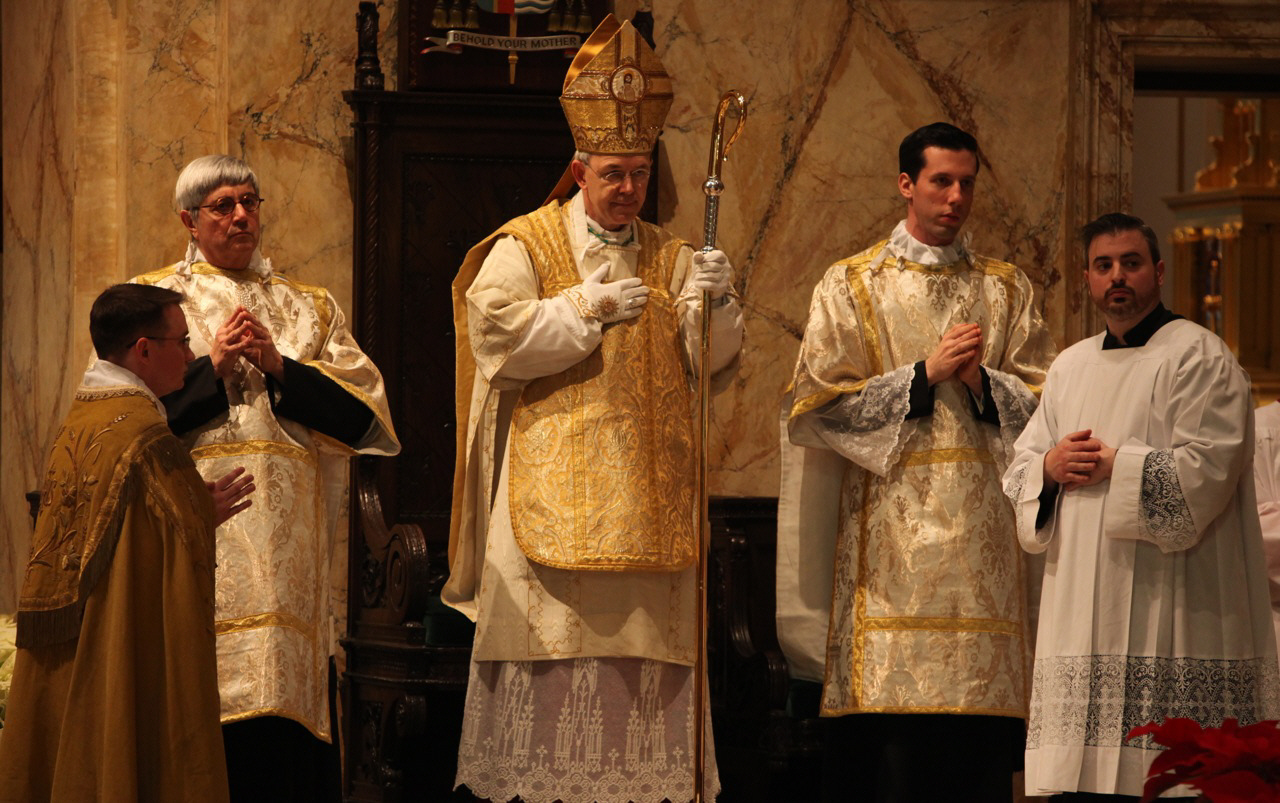
Solemn Mass yesterday evening at St. Mary Church in Norwalk, CT for the Feast of the Epiphany.


6
Jan
Blessing the Epiphany Water yesterday evening at Holy Innocents Church, New York (photo courtesy of Arrys Ortanez)

4
Jan

Important! Pray for the continuation of the Traditional Mass in the Diocese of Bridgeport. Bishop Caggiano is meeting on Thursday by Zoom with priest who celebrate the Traditional Mass to discuss the latest directives from the Vatican.
DATE: January 6, the Feast of the Epiphany
PLACE: St. Mary of Norwalk ~ St. Patrick’s Chapel (downstairs)
TIME: 1pm (immediately following 12:10pm Mass)
WHO: Everyone who loves the traditional Roman Mass and liturgies.
The Rosary will be prayed while the meeting with our bishop takes place, begging the intercession of our most powerful advocate, Mary, the Mother of God. PLEASE! This Rosary is requested by the priests who are directly affected by Traditiones Custodis and the recent “answers” to the supposed dubia as published by Abp. Roche. SUPPORT OUR CLERGY and get the word out. St. Mary’s is located at 669 West Avenue in Norwalk, CT.
4
Jan
4
Jan
3
Jan

St. Patrick’s, in the old mill town of Norwich in Eastern Connecticut, was completed in 1879. It was “the finest parish church in New England” – at least until Immaculate Conception church in Waterbury was built in the 1920’s. 1) At the time both cities were part of the Hartford diocese. In 1953 St. Patrick’s became the cathedral of the new diocese of Norwich. The city of Norwich subsequently has shared in the drastic decline of manufacturing in Connecticut. And in June 2021 the diocese entered chapter 11 bankruptcy proceedings, overwhelmed by sexual abuse claims, many relating to the diocese-affiliated Mount Saint John Academy between 1990 and 2002. 2)

St Patrick’s offers to the visitor an austere stone exterior. The sucession of spires and gables on the facade is, however, fascinating. James Murphy of Providence, the architect, was responsible for many churches throughout New England. He had been the apprentice and then the partner of Patrick Keely, an even more prolific builder of Catholic churches – and married Keely’s sister-in-law! 3)
The interior produces an entirely contrasting impression: a riot of color! Warm tones of red/violet, green/blue and yellow dominate along with the wood of the pews. This appearance is due to a restoration, completed in 2013, which, based on an analysis of the original paint, recreated the Victorian-era color scheme. In addition, new murals were painted throughout the church. The contractor was John Canning & Co. 4) Their work is familar to those in Fairfield county, CT, who have visited the Basilica of St John, Stamford or St. Mary’s, Norwalk. Shawn Tribe has written a detailed description of the restoration.5) As can be seen in a photograph included in Tribe’s article, St Patrick’s, like so many other Victorian churches, had previously suffered from unimaginative, monochromatic painting.


After the magnificent nave, the sanctuary or chancel is somewhat of a disappointment. Judging from photographs, prior renovations from the 1950’s onward have here been especially invasive. The restorers tried to reemphasize the sanctuary by creating an odd, pseudo-stained glass painting on the flat back wall. Althought by no means as extreme, St. Patrick’s resembles in this regard the church of St. Francis Xavier in New York City: a splendid restoration of the nave and transepts leads to a sanctuary – after all, the focal point of a Catholic church – which reflects, partially or totally, other aesthetic and liturgical principles.

(Above) The Cathedral before restoration. (Below) St. Patrick’s church (before it acquired cathedral status) in an earlier photograph. Both from The Liturgical Arts Journal. 6)


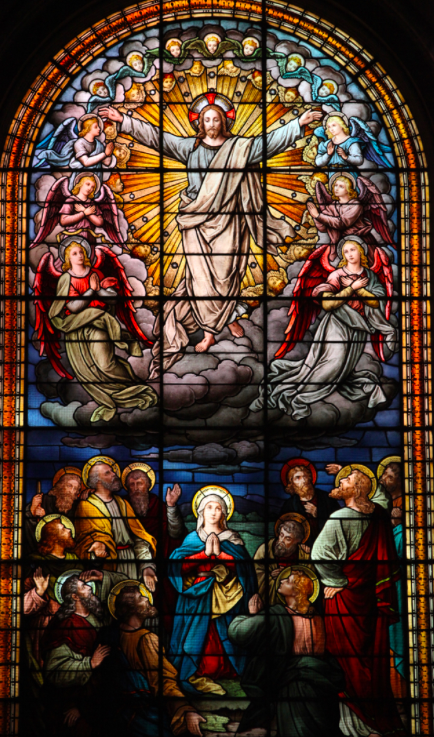
A number of magnificent stained glass windows adorn St. Patrick’s, likely contemporary with the church’s construction. Their style closely resembles that of the early windows in St. Patrick’s, New York City. In both cases, a powerful, splendid effect is achieved, even if the craftsmen cannot be said to have exactly recaptured the true spirit of medieval glass. That would take many more decades of artistic effort!

I am glad for such such a splended restoration, which reinforces the status of this church as the true center of its diocese. It demonstrates what careful attention to the interaction of the architecture and the original decorative scheme can achieve. I only regret that, in New York City, churches of even greater artistic, historical and architectural significance – such as St. Thomas, All Saints or St. Stephen’s – are closed, sold off and desecrated.
3
Jan

From Benedict’s Peace to Francis’s War: Catholics respond to the Motu Proprio Traditionis Custodes on the Latin Mass
Peter A. Kwasniewski, Editor.
Angelico Press, Brooklyn, 2021
Since July 16, 2021, a cultural war has exploded in the Church. On that day Pope Francis declared his intent to eliminate the Catholic Tradionalist movement. This was the latest step, moreover, in an assault on the principles of Catholic identity in liturgy, morality and ecclesiastical organization that has been proceeding for eight years now under this pontificate. One immediate consequence of this unprecedented papal action was an outpouring of critical commentary. Except for sources controlled by the Vatican or directly or indirectly in the pay of the Roman Catholic Church, the authors were largely sympathetic or favorable to the traditionalists – or at least unconvinced by Pope Francis’s assertions.
Peter Kwasniewski, perhaps the most tireless literary advocate of traditionalism today, has gathered up and published in From Benedict’s Peace to Francis’s War a selection of these first responses. This book includes 69 contributions and concludes with a “public statement” – an international open letter in support of the Traditional Mass.
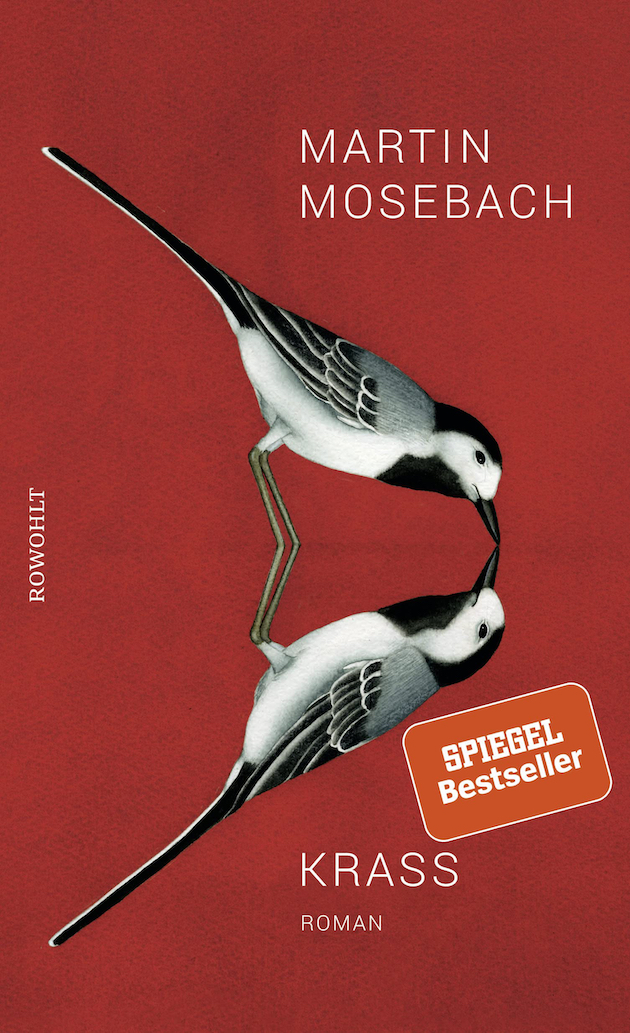
The contributors represent a broad spectrum of opinion. The dedicated traditionalists are to be found, of course: Fr. Claude Barthe, Martin Mosebach, Dom Alcuin Reid – Peter Kwasniewski himself contributes a preface and five articles. But there are also “conservatives,” cultural pundits and those who previously viewed themselves as occupying a position in the middle of the road, liturgically speaking. Fr. Hunwicke is a member of the Ordinariate. And there are writers who are not Catholic at all. Dr. Kwasniewski subtitles this collection Catholics respond to the Motu Proprio but I doubt that anyone would consider Michel Onfray a Catholic (as he himself points out in the first sentence of the essay reproduced in this volume). But the presence of such a thinker is of the greatest significance: Traditionis Custodes is a direct challenge not just to a parochial religious rite but to human culture in general.
These essays were first published not just on the internet but also on major mainstream media throughout the world: Le Figaro (France), The New York Times, ABC (Spain). Among the contributors are noted authors and intellectuals. I also note with pleasure the presence among the contributors of priests, bishops and cardinals: e.g., Cardinals Sarah, Müller, Burke, Brandmüller and Zen. I regret to say, however, that subsequently certain of these clerical authors either complained about their presentation in this volume (Cardinal Sarah) or relativized their views (Cardinal Brandmüller). This demonstrates the grip that ultramontane discipline still holds on the (conservative) Catholic clergy and the continuing inability of most of the Catholic leadership to accept open discussion or diversity of views. (Conspicuously absent from this volume – except for one anonymous priest from an anonymous institute – are contributions from the “Ecclesia Dei” institutes.).
The essays of this volume address Traditionis Custodes from many different angles. Some discuss its legality and focus on specific language. Others take a more principled, philosophical approach, trying to discern what, in substance, is going on. Ross Douthat seeks broad historical parallels. But this collection is not at all a mere critique of, and response to, Traditionis Custodes. Rather, it is a summary of the arguments for traditionalism, a kind of miniature encyclopedia of what traditionalist Catholic and their supporters actually believe. 1) Pope Francis might have been hoping to elevate Vatican II and the new mass rite beyond all rational analysis and inquiry but, as many the essays of this book show, he is having exactly the opposite effect.
The same is true for this book’s recurring theme of the relation of papal infallibility and papal governance to Catholic tradition. For with Traditionis Custodes – as with Amoris Laetitia – Francis has radically put in issue the scope of his own authority. Regardless of Francis’s purported revocation of Summorum Pontificum, the pope’s authority to abolish the Traditional rite has been squarely raised (and denied (Mosebach)).
Many of these early reactions have a refreshing, fiery immediacy. In the face of papal legislative aggression, couched in language even more hostile and extreme, it’s no time to hold back. At decisive points in history one has to show one’s colors. As the old song goes:
Praise the Lord and swing into position,
Can’t afford to be a politician,
Praise the Lord, we’re all between perdition and the deep blue sea. 2)
The need of the day to formulate and express deep convictions clearly and directly, combined with the participation of several renowned authors, raises the level of this book far above that of the usual Catholic prose. One can discover throughout pages of great power and conviction – at times this book makes for great reading!
At this moment we should be rallying all forces in defense of tradition, regardless of our prior differences. I nevertheless feel compelled to comment critically on aspects of certain contributions which, I think, reflect attitudes which I would have hoped to have disappeared after the impact of Traditionis Custodes. For example, here and there are traces of Roman Catholic servility – certain contributors feel obliged to balance their criticisms with praise for the pope’s other initiatives or to express understanding for the provocations he has allegedly endured from Traditionalists. One piece, by Christophe Geffroy and Fr. Christian Gouyaud, even spends paragraphs ranking and attacking traditionalists! (Another essay, Traditionis Custodes: Divide and Conquer? by Jean-Pierre Maugendre directly responds to this article’s assertions). Another contributor, like pre–1917 Russian peasants, writes of Francis being misled by his advisors. Indeed, contrary to the more forthright views I previously described, the hope is expressed by some that somehow the furor around Traditionis Custodes will die down, that some kind of equilibrium will reassert itself.
This latter interpretation (or rather wishful thinking) has been put to an early test. The preface to this volume is dated October 7, 2021. Since then we have seen the instruction of the Vicariate of Rome (signed October 7, 2021!), the “Responses to the Dubia” of Archbishop Roche and the implementation decree of the Archbishop of Chicago, Cardinal Cupich. All of these documents emanate from close allies of Pope Francis and are obviously coordinated with him and with each other. These measures confirm that, as far as Francis is concerned, there will be no truce or slacking off but only a fanatical fight to the death with Catholic traditionalism.
Yet, on the other hand, since October 7 the flood of essays, articles and posts defending the Latin Mass has also not let up. It seems Traditionis Custodes has triggered a long dormant urge for traditionalists to proclaim their beliefs to the world. This literature, taken together, is a grand “apology” – in the original sense of the word, an explanation and defense – of the traditional Catholic faith. I would hope Peter Kwasniewski will set to work soon on From Benedict’s Peace – Volume II!
2
Jan
2
Jan
Sermon for the Feast of the Holy Name of Jesus 2022
by Father Richard Gennaro Cipolla
Some years ago a novel was published to great acclaim despite the difficulty of its thought and despite its taking place in a medieval monastery. The novel is The Name of the Rose by Umberto Eco. Its most famous line is the last line in the novel: Stat rosa pristina nomine, nomina nuda tenemus. The translation of this line is somewhat difficult, but it means something like this: “Yesterday’s rose stands only in name, we hold only empty names”. What this means is that there is no real connection between the name, the word we use, and what we are trying to refer to by that name. Names are in the end empty words. This is a terrible and false understanding of reality itself, and, tragically, is an understanding of reality that is all too common in our culture.
When we think of proper names, names of people, we associate that name with specific people we know. And we do not think in terms of that particular name having any significance beyond the particular person who bears that name. My parents debated what to name me at my birth. My father wanted to name me Gennaro in homage to my grandfather, Gennaro. My mother strongly resisted this on the grounds that I should have a “normal” American name so that I would fit in more with the American culture. My mother won that battle, and I was named Richard. There was no particular reason why she chose Richard. She just liked it.
Today’s feast of the Holy Name of Jesus has nothing to do with naming as an aesthetic or family choice. The name of the Child born in a stable in Bethlehem was named by God through a message of an angel to the Child’s mother nine months before his birth. Mary’s Fiat at the Annunciation embraced not only her willingness to do the Will of God in this most amazing and perplexing way. Her Fiat also embraced who this Child would be. The name of the Child and his very being were bound together in the reality of the Child’s very being—who He was and was to be as a child born into this world.
The name, “Jesus”, is the English equivalent of the Latin “Jesu”, which came from the Greek “Iēsous” a transliteration of the Hebrew “Yeshua”, an ancient Jewish name which means “Yahweh saves” or “is salvation”. We see in this the significance of the bestowal of the name Jesus on the Child born in Bethlehem. His name and who He is are inseparable. St. Paul writes in his Epistle to the Philippians: “that at the name of Jesus every knee should bow, of those in heaven, and of those on earth, and of those under the earth, and that every tongue should confess that Jesus Christ is Lord, to the glory of God the Father.” And ever since then the very name of Jesus has been understood and practiced as a form of prayer, so that the very sounding of his Holy Name invokes not only the power of God but most importantly the love of God for each of us and for all of mankind. So many saints have understood the power of the Holy Name of Jesus. Those that immediately come to mind are St. Bernard of Clairvaux, St. Bernadine of Siena, and St. Ignatius of Loyola.
We are still in Christmastide. Let us use this time to deepen our understanding of that Person who lies at the heart of our faith whose name is Jesus. In a few days we will celebrate the great feast of the Epiphany. The three Magi did not know the Child’s name whom they had traveled so long to see. But they knew who He was by the light of a star, and they knew that they were in the presence of the source of that Light, and in faith they prostrated themselves before the Child, because they knew by a miracle of faith that He came as the Savior of the world: He who saves—Jesus.
I close with an English translation of St Bernard of Clairvaux’s hymn, Jesu dulcis memoria, a most fitting meditation for the beginning of the year of our Lord Jesus, 2022.
Jesu, the very thought of Thee
With sweetness fills the breast;
But sweeter far Thy face to see,
And in Thy presence rest.
Nor voice can sing, nor heart can frame,
Nor can the mem’ry find
A sweeter sound than Thy blest name.
O Savior of mankind!
O hope of every contrite heart,
O joy of all the meek,
To those who fall how kind Thou art!
How good to those who seek.
All those who find Thee find a bliss
Nor tongue nor pen can show;
The love of Jesus, what it is,
None but His loved ones know.
Jesus, our only joy be Thou,
As Thou our prize will be:
Jesus, be Thou our glory now,
And through eternity.
Father Richard Gennaro Cipolla, Ph.D., D.Phil.(Oxon)
2
Jan

St. Mary’s Church, Nowalk, held its annual festive Christmas Coffee Hour after the 10 am traditional Mass today, including Christmas caroling.