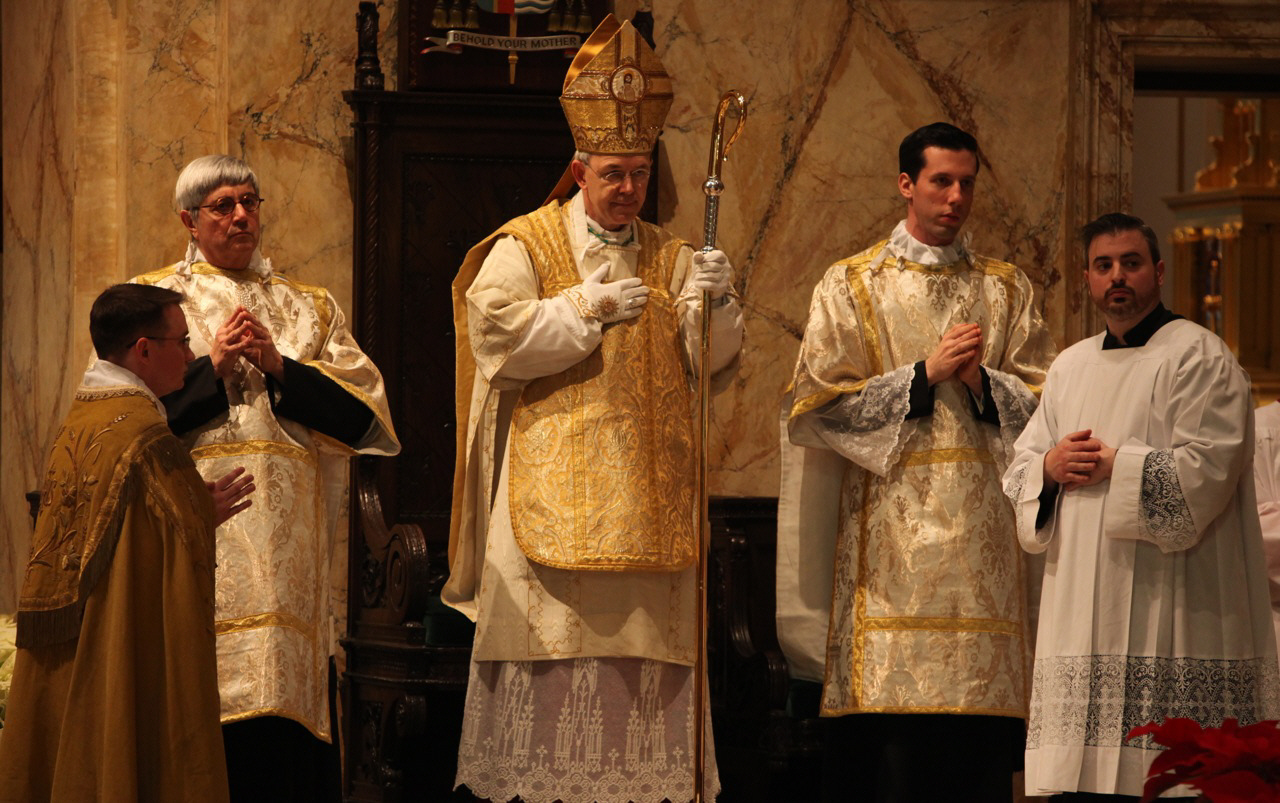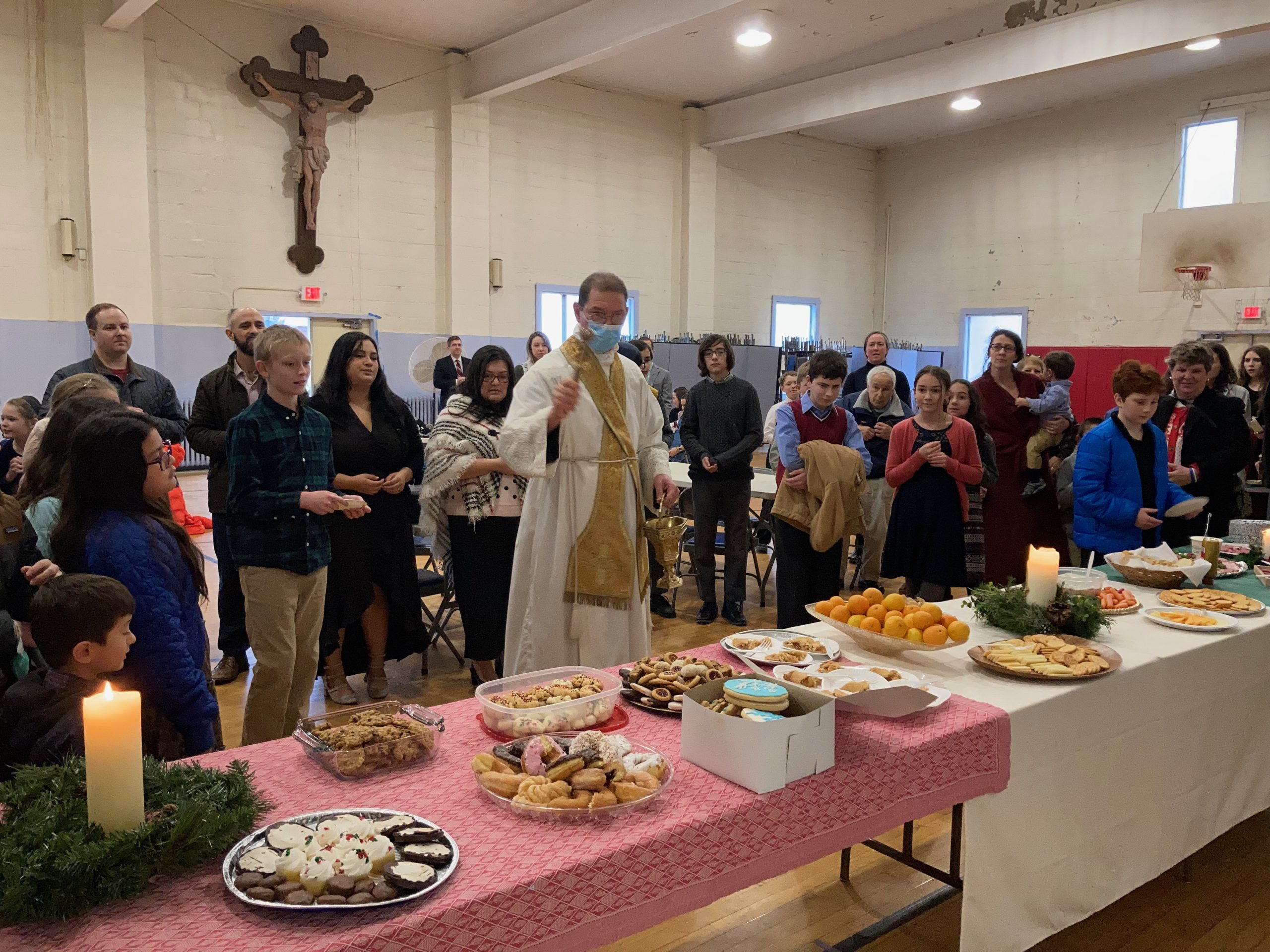
St. Mary’s Church, Nowalk, held its annual festive Christmas Coffee Hour after the 10 am traditional Mass today, including Christmas caroling.
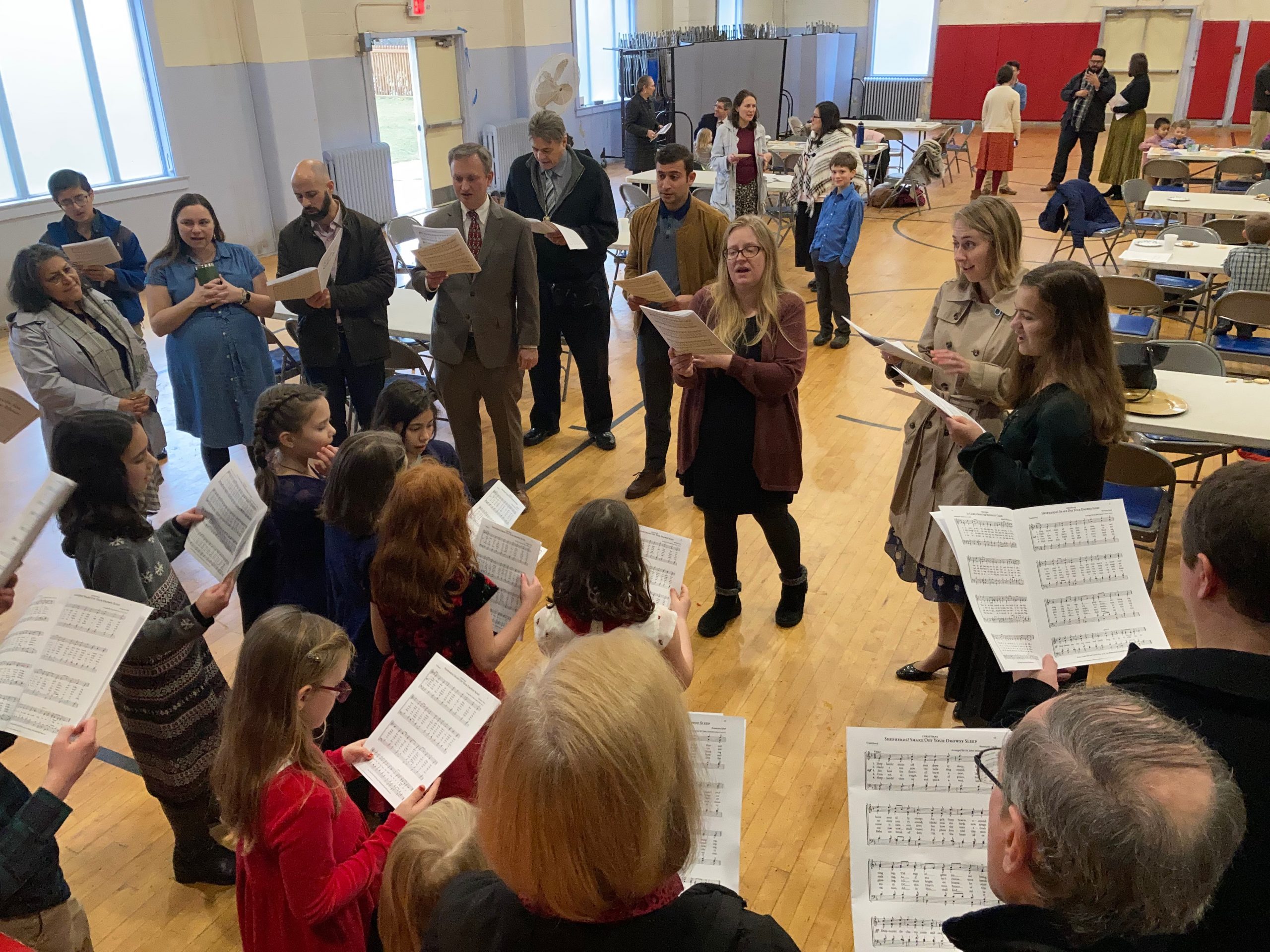
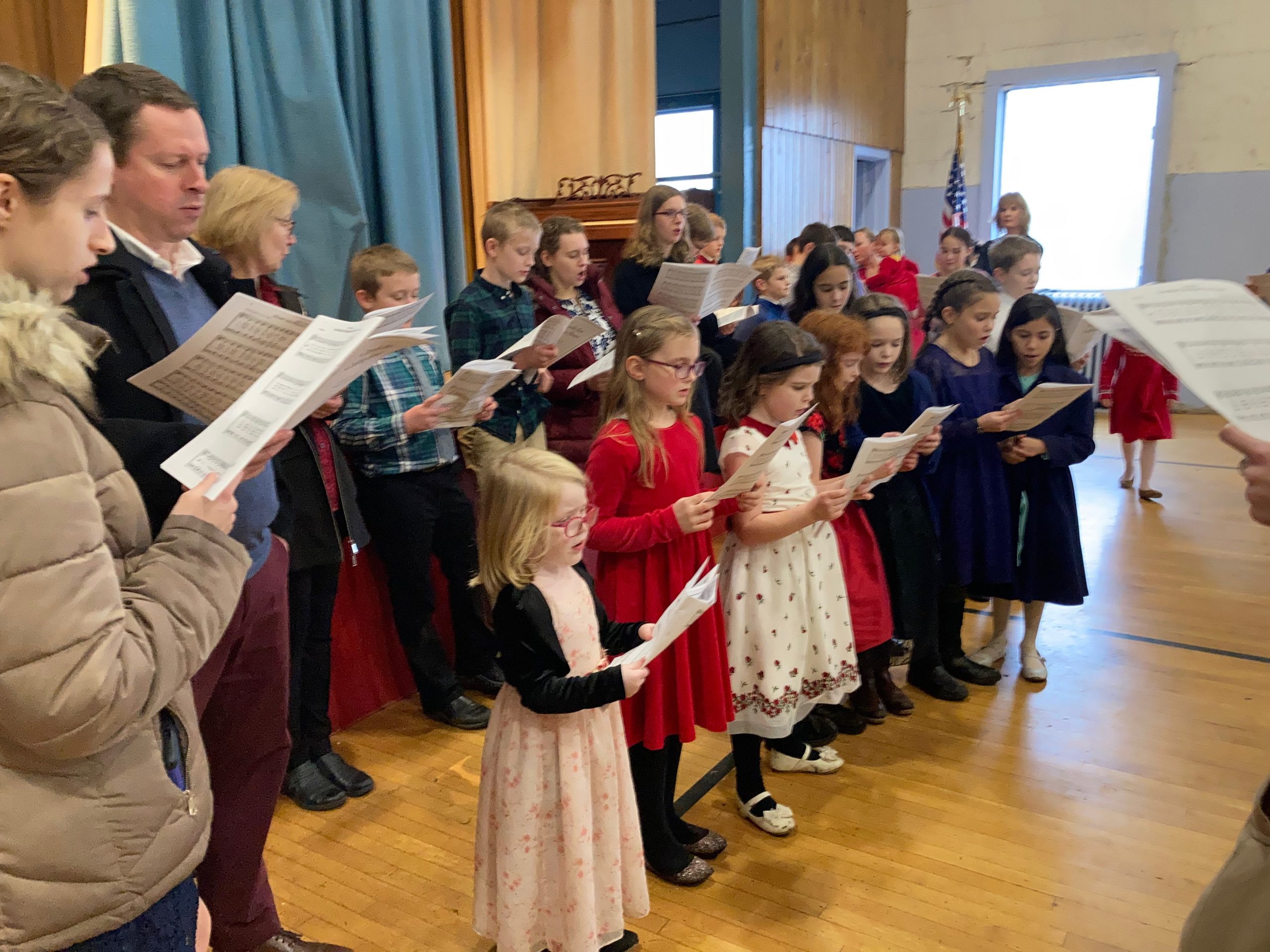
St. Mary’s Church, Nowalk, held its annual festive Christmas Coffee Hour after the 10 am traditional Mass today, including Christmas caroling.
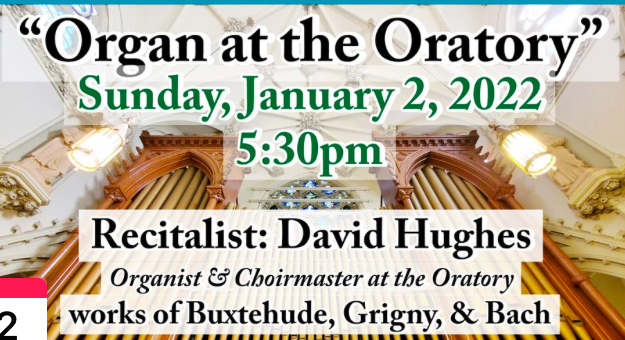
“Please join us tomorrow, January 2nd, at 5:30 P.M. for our inaugural installment of ORGAN AT THE ORATORY. On the first Sunday of each month, a guest organist will offer a recital prior to Vespers. The first recitalist will be David Hughes, Organist & Choirmaster at St. Patrick’s Oratory. He will play a program of festive Christmas music by the great Johann Sebastian Bach; Bach’s mentor Dietrich Buxtehude, who was for many years the organist in Lübeck; and some colorful versets by the notable French classical composer Nicolas de Grigny. Vespers will be followed immediately at 6:00 P.M. by sung Vespers & Benediction for the Feast of the Most Holy Name of Jesus. The recital and Vespers are of course free and open to the public. Please invite your family and friends; this is a wonderful way to introduce them to the Church’s rich liturgical and musical patrimony, which we are so grateful has a home at St. Patrick’s.”
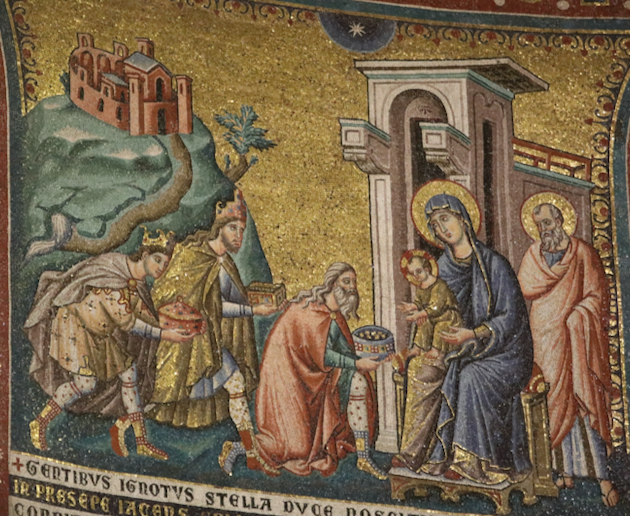
The following churches will celebrate the traditional Mass for the Feast of the Epiphany on Thursday, January 6. Please inform us of Masses that are not on our schedule.
Connecticut
St. Mary Church, Norwalk, Low Mass 8 am; Solemn Mass 7 pm (Solemn Mass with the Proclamation of the Moveable Feasts of the Year, and Blessing of Chalk)
St. Pius X, Fairfield, Missa Cantata 5 pm
St. Emery Church, Fairfield, Solemn Mass 6 pm followed by blessing and distribution of chalk. (Wed. Jan 5 at 6 pm: Missa Cantata followed by blessing of Epiphny Water)
Sts. Cyril and Methodius Oratory, Bridgeport, Low Mass 7:45 am; Missa Cantata 6 pm followed by blessing of the chalk.
St. Patrick Oratory, Waterbury, Low Mass 8 am, High Mass 6 pm (Wed. Jan. 5 at 6 pm solemn blessing of the Epiphany Water)
St. Martha Church, Enfield, 7 pm (Wed. Jan 5 at 7 pm, blessing of the Epiphany Water)
New York
Church of the Holy Innocents, New York, Missa Cantata 6 pm (Wed. Jan. 5: Blessing of Epiphany Water follows the 6 pm Mass)
St. Vincent Ferrer, New York, Solemn Mass in the Dominican Rite, 7 pm
Church and Shrine of Our Lady of Mount Carmel, New York, NY, Solemn Mass 7 pm, distribution of Epiphany chalk following Mass.
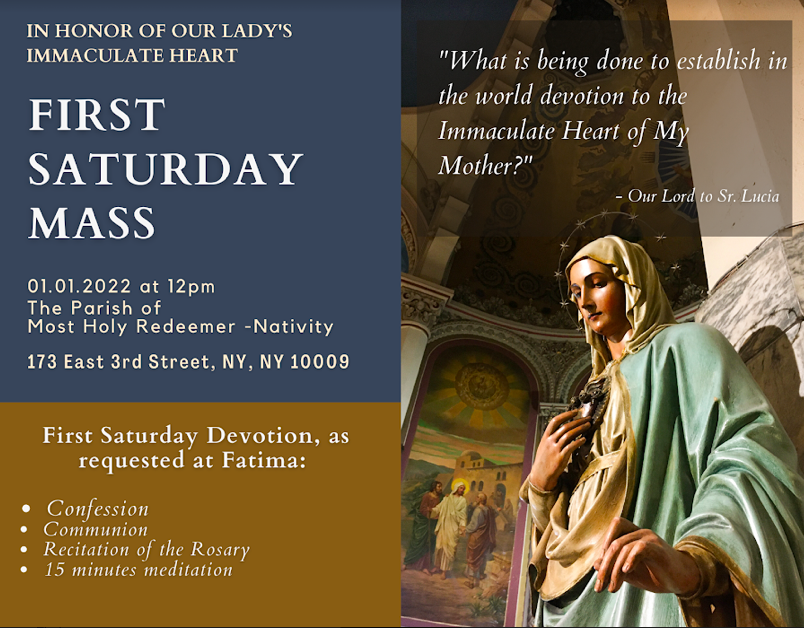
Most Holy Redeemer, New York, Solemn Mass 7 pm, including blessing and distribution of chalk (Wed. Jan 5, blessing of Epiphany Water 6 pm)
St. Josaphat, Bayside, Queens, 7 pm
St. Paul the Apostle, Yonkers, 12 noon.
Annunciation Church, Crestwood, Missa Cantata 7 pm (On Wednesday Jan. 5 at 7 pm there will be the blessing of Epiphany water, chalk and incense)
Immaculate Conception, Sleepy Hollow, 7 pm
St. Rocco, Glen Cove, Long Island, Missa Cantata 7 pm
New Jersey
Our Lady of Sorrows, Jersey City, 5 pm
Shrine Chapel of the Blessed Sacrament, Raritan, Missa Cantata, 7 pm
St. Catherine Laboure, Middletown, 12 noon.
St. John the Baptist Church, Allentown, Solemn Mass 7:00p.m., blessing of chalk and Epiphany Water
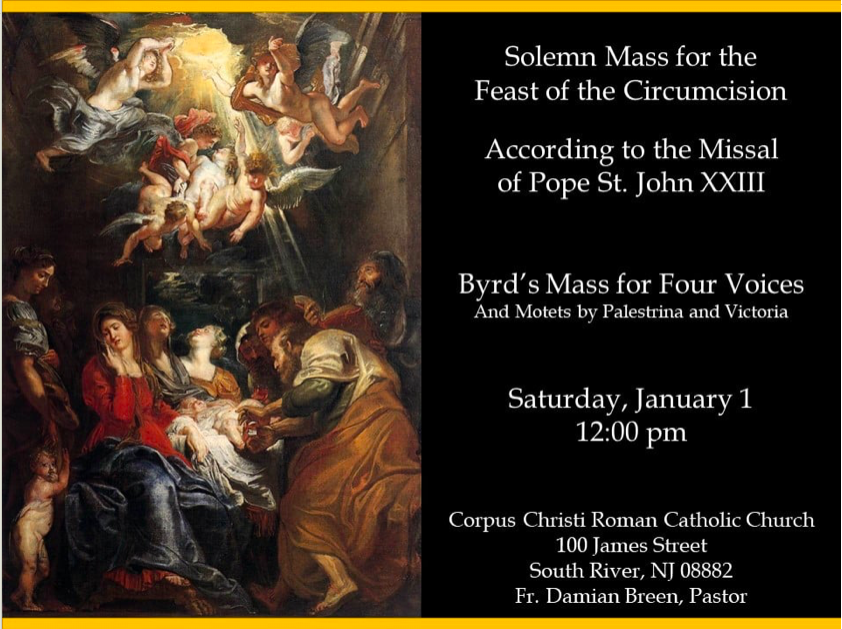
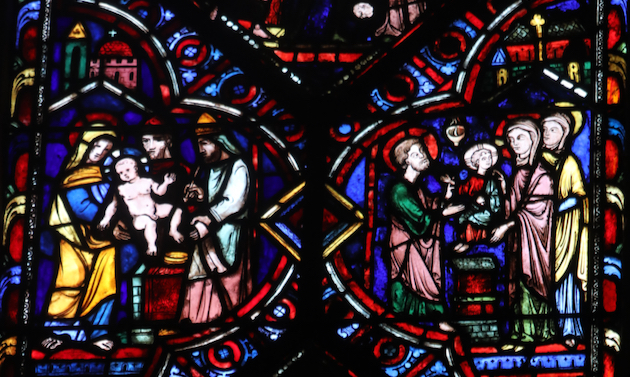
The following churches have scheduled Traditional Masses on January 1 to celebrate the Octave of Christmas, the Circumcision of Our Lord. Please contact us with information about traditional Masses that are not on this schedule.
Connecticut
St. Mary Church, Norwalk, Solemn Mass 9 am.
St. Roch Church, Greenwich, 8 am.
Sts. Cyril and Methodius Oratory, Bridgeport, Low Mass 8:30 am; High Mass 10:15 am.
St. Stanislaus, New Haven, 2 pm
St. Patrick Church, Waterbury, Low Mass 8:30 am; HIgh Mass and Benediction, 10:30 am.
St. Marguerite Bourgeoys, Brookfield, Missa Canata, 12:30 pm
Christ the King Church, Ridgefield (SSPX), 8am low mass, 10am low mass
St. Martha Church, Enfield, 9 am
New York
Church of the Holy Innocents, New York, New Years Eve: Eucharistic Vigil of Reparation: Following the 4:00 P.M (Novus Ordo) Mass, the Most Blessed Sacrament will be exposed for adoration until 11:00 p.m. at which time the Te Deum will be sung in order to gain the plenary indulgence followed by Benediction, High Mass at 11:30 pm. New Years Day: Low Mass 9 am; High Mass 10:30 am.
Most Holy Redeemer, New York, 12 noon.
Church and Shrine of Our Lady of Mount Carmel, New York, NY, Missa Cantata 10:30 am
St. Agnes Church, New York, 10:00 am
Monastery of Our Lady of Mount Carmel and St. Joseph, Brooklyn, (Discalced Carmelite Nuns), 7 am.
St. Josaphat Church, Bayside, Queens, 10:30 am
St. Paul the Apostle, Yonkers, 12 noon
Annunciation Church, Crestwood, 11:15 am
Immaculate Conception, Sleepy Hollow, 2 pm
Holy Trinity, Poughkeepsie, 10:30 am
Sacred Heart, Esopus, 11 am
St Michael the Archangel Church, Farmingville (Long Island) (SSPX), 7am low mass, 9am high mass
New Jersey
Our Lady of Sorrows, Jersey City, 11 am.
Our Lady of Victories, Harrington Park, 9 am
St. Anthony of Padua Oratory, 1360 Pleasant Valley Way, W. Orange, 9 am, 11 am.
Our Lady of Fatima, Pequannock, 7 am, 9 am, 11 am, 1:30 pm
Corpus Christi Church, South Rivier, Solemn Mass, 12 pm
St. John the Baptist, Allentown, Solemn Mass 11 am
Blue Army Shrine, Asbury, “Join us Friday, Dec. 31 at 11 pm – Deo Gratias Service (Holy Hour), followed by midnight Mass (Jan. 1) in the Extraordinary Form, in honor of the Solemnity of Mary, Mother of God.”

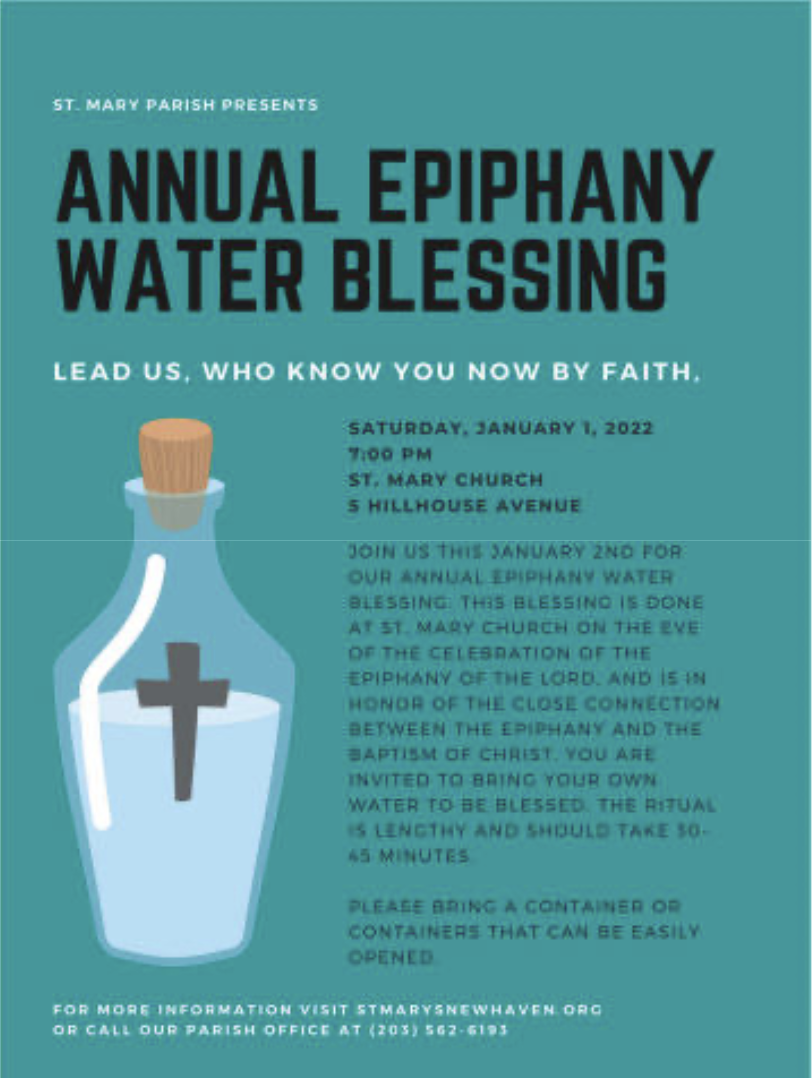
Below is the notice of the ritual in the current parish bulletin. N.B.: St. Mary’s, New Haven is NOT traditionalist.
By 2013 – the year of Pope Benedict’s resignation – the stalemate that has arisen at the end of the 1960’s had lasted for 45 years. The popes had not dared to force a showdown with the progressive forces on a significant issue. That would have called into question the Council. But neither would they adopt the progressive demands to explicitly adapt Catholic theology and morality to the dictates of the modern world, which would render dubious the Church’s claims of continuity with its perennial traditions. The result was that the Vatican’s authority declined to a merely administrative role, while the pressure of secular society on the Church steadily increased. The Church disguised this through the activity of John Paul II’s papacy and otherwise strove to maintain an image of infallibility, omnipotence, harmony of past and present, and agreement among all elements of the Church. The result was best described as “managed decline.”
Pope Francis’s election brought a recommitment to the progressive agenda of the 1960’s along with a radical revival of ultramontane authoritarianism. Thus, his regime strongly resembles the reign of Paul VI – at least as it existed up to 1970. In one extreme recent example, if Paul VI had imposed on the entire Church radical changes in liturgy, so Pope Francis has now undertaken to compel the traditionalist Catholics to adopt the Novus Ordo. An entire population of Catholics – priests, religious orders, monasteries schools and laity – previously in official good standing with the Church, have been reduced overnight to outcasts. Prior papal legislation, commitments and agreements to the contrary – such as the regimes established for the Ecclesia Dei communities – have been revoked. The Vatican has published a set of implementation measures that have centralized authority to an unheard-of degree – regulating even the content of parish bulletins!
And this anti-Traditionalist “crusade” is but one example among many. From the first day of his pontificate, Pope Francis rejected the application to himself of any of the customs, laws and rules of the church. He routinely disregards the rulings and statements of his own Vatican officials. A whole series of Catholic congregations and orders (like the Order of Malta) have been placed under the rule of papal commissioners. The same is now true of the entire Italian church in regard to Francis’s legislation on divorce. The pope has received the resignation of one entire country’s episcopate (Chile) and later of individual bishops in other countries (Germany and France). A class of bishop emerged that, after proferred resignation, continues in office only at the discretion of the pope. The Vatican has asserted centralized control over contemplative religious monasteries and orders, on the establishment of any new religious congregation and, most recently, on the term of office of the leadership of the so-called movements. In the United States, Francis has intervened directly and repeatedly in the affairs of the national bishops’ conference and even in American domestic politics. (e.g., the management of USCCB meetings, the status of politicians who promote abortion, the recognition of New Ways Ministry)
Pope Francis has added to his 1960’s progressivism publicity techniques borrowed from the repertoire of John Paul II. Gigantic papal events and voyages continue. Papal statements, interviews and books proliferate. A vast papal public relations apparatus has come into being at the Vatican and beyond – often in league with the secular press. (e.g., Vatican Insider, Crux, Rome Reports) Francis has progressively refined this system over the years to focus it ever more closely on its designated role as a vehicle for propagating his image and thoughts.
The centralizing tidal wave at the Vatican has been reproduced down to the lowest level of the Church. The existence of Catholic Church’s traditional organizational form at the base – the parish – was increasingly called into question. The Archbishop of New York has openly speculated about a reorganization in which all Church property would be vested in the Archdiocese – a step that would, when combined with the current term limits on pastors, effectively transform all New York parishes into chapels. In dioceses in Germany and in the United States (such as the Cincinnati and Hartford Archdioceses) plans are being implemented that provide for radical reductions in the number of parishes. In response, the Vatican has feebly tried to uphold parish rights under canon law.
The changes in rhetoric and style are as significant as the concrete measures. The pope has divided the Church into friends and enemies. For example, in the American context, the pope has made absolutely clear what he thinks the role of Catholic media should be – by singling out for praise the eminently conformist Catholic News Service while accusing its competitor, the “conservative” EWTN, of doing the work of the devil. His publicists carry on this campaign further, denouncing those who “criticize the pope” and, in the last month or two, speculating on how Francis can neutralize “rogue” prelates (his critics in the hierarchy ). They also explain that Francis really shouldn’t care about those in the Church he hurts or “leaves by the wayside.”
The pope often employs against his conservative opponents the language and techniques of ultramontanism. In Traditionis Custodes, for example, the pope sets up Church unity and the inviolability of the Council as absolute values. Indeed, the Second Vatican Council (and its implementing decrees) are described as “dictated by the Holy Spirit.” The pope has canonized representatives of Catholic modernity ( like Pope Paul VI!) thereby seeking to invest their polices with an aura of infallibility. Pope Francis himself claims to teach “with magisterial authority.” One often gets the sense Francis is mocking the legalistic and traditional diction of certain of his enemies, as when he titles his motu proprio seeking to abolish traditionalism Traditionis Custodes (“Guardians of Tradition”!)
The culture of the Catholic Church under Francis has been rightly described as Orwellian. The great advocate of dialogue never communicates with those who question his policies or who are the recipient of his attacks. Effeminate rhetoric (tenderness; accompaniment) contrasts with brusque commands and coarse denunciations. Advocacy of a “synodal” church proceeds hand-in-hand with extreme centralization. The apostle of unity within the Church excludes whole sections of believers without a second thought. Truly the regime of Francis can be called totalitarian ultramontanism!
Yet the pope’s totalitarian ultramontanism has a radically limited scope. The most obvious constraint on Francis is the power of the Catholic progressives, the media, and the institutions of Western civil society. Francis is absolutely dependent on their support. But their backing is not at all unconditional but depends on the pope continuing to advance their agenda. Whenever Francis’s Vatican has been perceived as wavering in this mission, the progressive powers, like the German church, have summarily rejected its (and his) authority. Just recently, Francis and the leadership of his upcoming conference on synodality have had to abjectly apologize to the progressive New Ways Ministry in the US.
In his direct interactions with the institutions governing the Western world, the pope pursues policies that are both totally secular and largely identical with the positions advocated by the media. So, Pope Francis has precisely implemented the dictates of the establishment regarding suspension of religious services because of Covid. I should add that the relationship – often scandalous – between the Vatican and the Western financial powers has never been closer.
Resistance within the Church to Pope Francis has, however, also emerged from the other end of the spectrum, even if it is, in contrast to the progressive challenges, most often not publicly disclosed. Only a few prelates from this quarter – generally retired or previously removed from their positions – criticize the pope openly. Nevertheless, the publication of a book by the “pope emeritus” and Cardinal Sarah helped to derail Francis’s push for a married clergy. The pope’s acceptance of divorce in Amoris Laetitia and his accompanying measures have by no means been received enthusiastically everywhere. Indeed, it took blatant manipulation by the Vatican to obtain in the first place from the synods on the subject something that Francis could call approval of his marriage policies. Francis has had to publicly employ strong-arm tactics with the American hierarchy to block their policies on opposition to abortion. Finally, bishops throughout the world generally have been slow in signing on to Francis’s war against traditionalists.
Thus, certainly in the opinion of certain progressives, the organizational deadlock that existed prior to Francis’s papacy has reemerged. The tug-of-war continues between the advocates of radical change and the upholders of some form of Catholic tradition. The debate on synodality in Rome and in Germany – which really often is about other substantive issues such as married and female priests – may well bring this conflict to a head.
What a strange fate for ultramontanism! A set of policies that was supposed to secure the doctrine of the Church from internal enemies and preserve her independence from secular control has instead facilitated the greatest crisis of belief in the Church’s history along with her most abject subjection to the “temporal power” – not that of monarchs as in the past, but of the media, banks, NGOs, universities and, increasingly, “democratic” governments (including China!). The most extreme assertions of ultramontanism (such as those by Pope Francis) coincide with today’s total humiliation of the Church. Is it a failure of trying to achieve spiritual objectives through the application of organizational techniques? In any case, the need for evangelizing the world that arose after the religious collapse of the French Revolution remains unmet even today, as a whole, by the institutional Church.
24
Dec
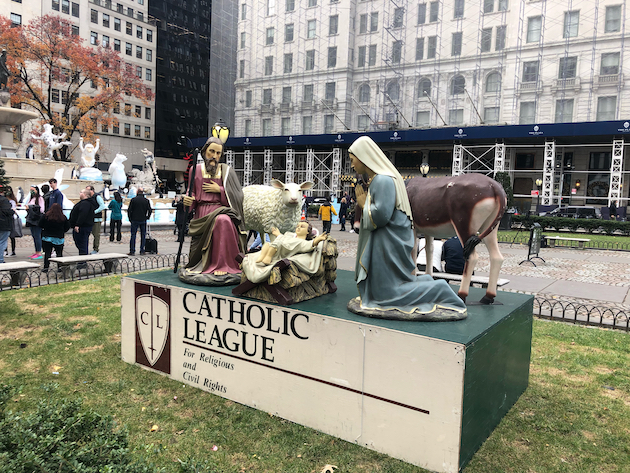
Amid the surrounding unbelief, the lonely Holy Family. Courtesy of “The Catholic League for Religious and Civil Rights.” Even if the Christ Child appeared some ten days before Christmas Day….