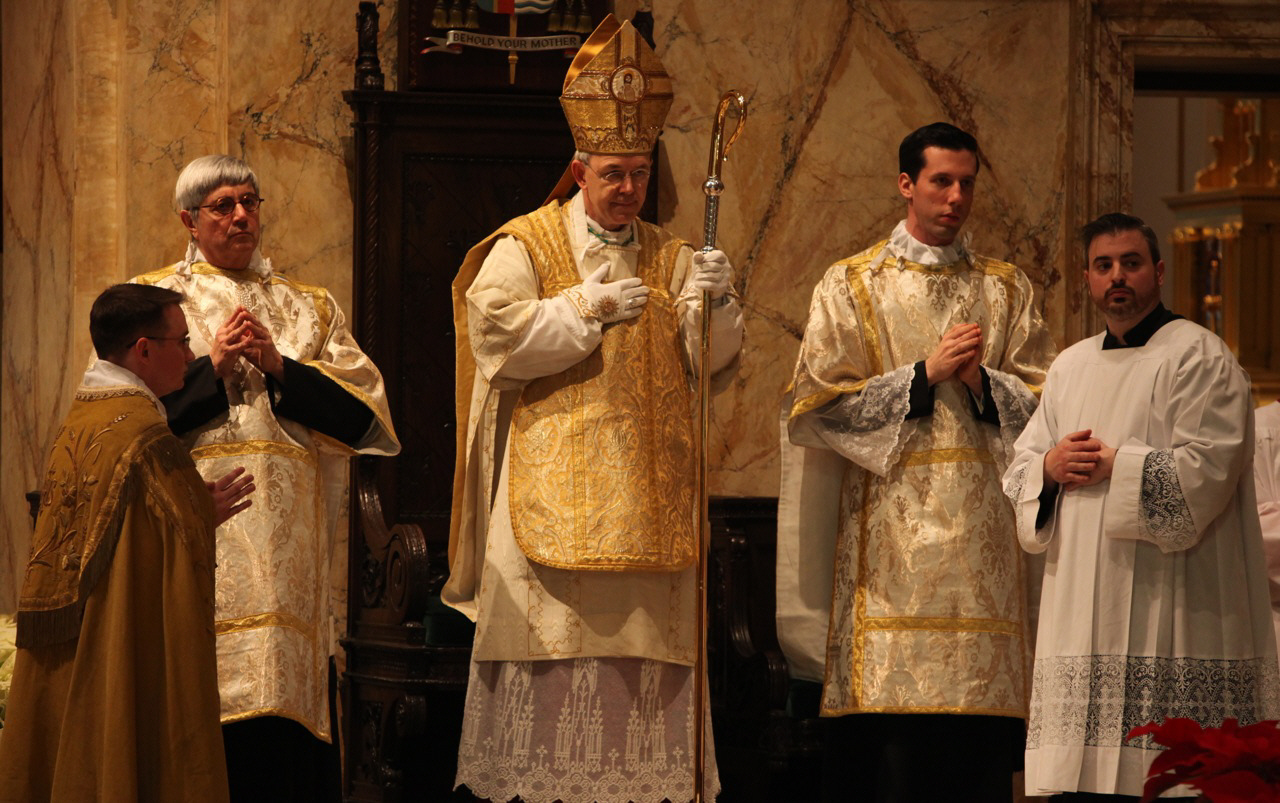
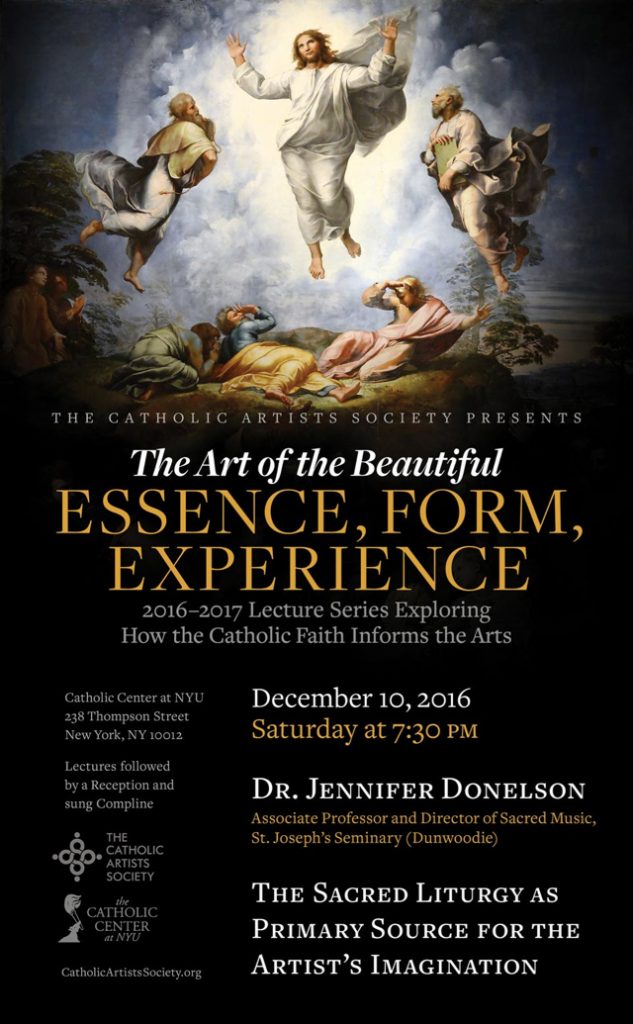
His Eminence, Raymond Cardinal Burke, will celebrate at Saint Mary in Greenwich a Solemn Pontifical Mass at the Throne for the Feast of the Annunciation on Saturday, March 25th at 11 o’clock in the morning.
(courtesy of Fr. C. La Pastina)
25 Feb
2017
His Eminence, Raymond Cardinal Burke, will celebrate at Saint Mary in Greenwich a Solemn Pontifical Mass at the Throne for the Feast of the Annunciation on Saturday, March 25th at 11 o’clock in the morning.
(courtesy of Fr. C. La Pastina)
8 Feb
2017
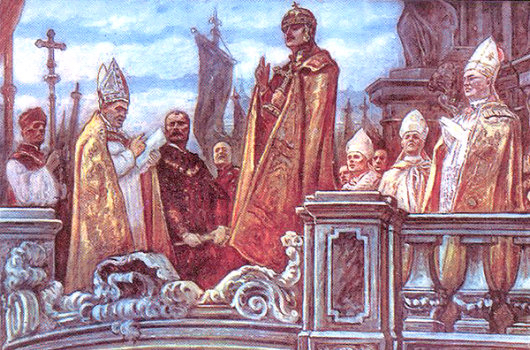
(Above) The Coronation of Charles as Apostolic King of Hungary.(Image Source -Andrew Cusack)
Traditional Latin High Mass
95th Anniversary of the Death of
Blessed Karl of Austria
With Veneration of First Class Relic
Saturday, 1 April 2017, 1:00 PM
Fourth Saturday of Lent
(Holy Rosary & Confessions begin at 12:30 PM)
St. Titus Church
952 Franklin Avenue, Aliquippa PA 15001
Celebrant: A Priest of the
Institute of Christ the King Sovereign Priest
Featuring the Duquesne University
Schola Cantorum Gregorianum
Under the Direction of Maura Goodwin
Blessed Karl of Austria died on Saturday, 1 April 1922, the Fourth Saturday of Lent and the day before Passion Sunday. The 95th anniversary of his death, 1 April 2017, falls on the Fourth Saturday of Lent and the day before Passion Sunday. Join us to commemorate this special anniversary.
Luncheon & Conference Immediately after Mass
In the Church Hall
(Reservations required for luncheon & conference.)
Featured Speakers: Gabor and Terez Laszlo
Topic: The Legacy of Blessed Karl in Modern Hungary:
The Social Reign of Christ the King
Luncheon Cost: $30/Person
$20/Student
For Luncheon Reservation Make Check Payable and Mail to:
Knights of Columbus 2161
2335 Concord Street, Aliquippa PA 15001
Deadline for Paid Luncheon Reservations: 25 March 2017
Sponsored By:
Knights of Columbus Woodlawn Council 2161
Traditional Latin Mass Guild
30 Jan
2017
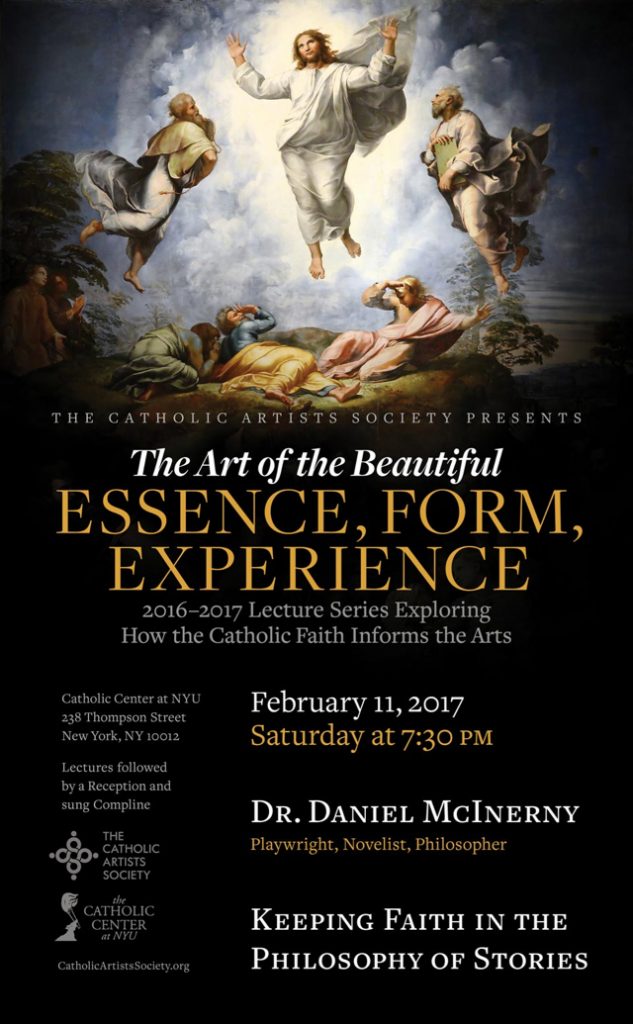
Daniel McInerny is a playwright, novelist, screenwriter, and philosopher. After receiving his doctorate in philosophy from The Catholic University of America in Washington, D.C., he spent some sixteen years in academia, teaching and working at various universities in the United States, including the University of St. Thomas (Houston), the University of Notre Dame, and Baylor University. He is the author of the play, The Actor, about the young Karol Wojtyla’s transformation from aspiring actor to seminarian during the crucible of the Nazi occupation of Poland; as well as the play, Switcheroo, a farcical “heist plot of ideas.” His one-act play, Big Crush, was a finalist in the Arts Club of Washington’s 2015 One-Act Play Competition.
3 Jan
2017
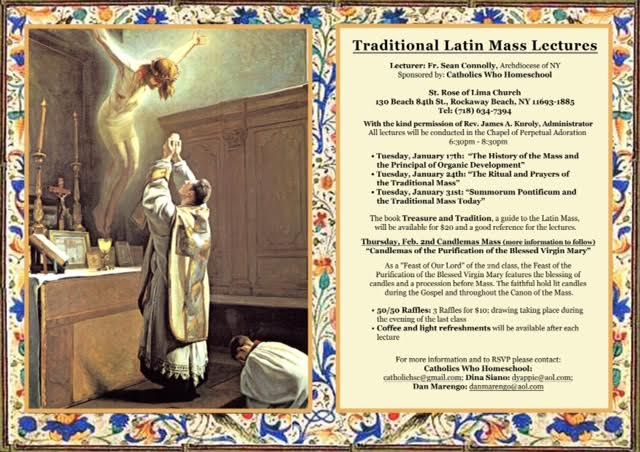
Traditional Latin Mass Lectures
Lecturer: Fr. Sean Connolly, archdiocese of NY
Sponsored by: Catholics Who Homeschool
St. Rose of Lima Church 130 Beach 84th St., Rockaway Beach, NY 11693-1885 Tel: (718) 634-7394
With the kind permission of Rev. James A. Kuroly, Administrator
All lectures will be conducted in the Chapel of Perpetual Adoration, 6:30pm – 8:30pm
Tuesday, January17 th: “The History of the Mass and the Principal of Organic Development”
Tuesday, January 24th : “The Ritual and Prayers of the Traditional Mass”
Tuesday, January 31st: “Summorum Pontificum and the Traditional Mass Today”
The book, Treasure and Tradition, a guide to the Latin Mass, will be available for $20 and a good reference for the lectures
Thursday, Feb. 2nd Candlemas Mass (more information to follow) “Candlemas of the Purification of the Blessed Virgin Mary”.
As a “Feast of Our Lord” of the 2nd class, the Feast of the Purification of the Blessed Virgin Mary features the blessing of candles and a procession before Mass. The faithful hold lit candles during the Gospel and throughout the Canon of the Mass.
50/50 Raffles: 3 Raffles for $10; Drawing taking place during the evening of the last class
Coffee and light refreshments will be available after each lecture
For more information and to RSVP please contact: Catholics Who Homeschool, catholichsc@gmail.com; Dina Siano: dyappie@aol.com; Dan Marengo danmarengo@aol.com
15 Dec
2016
15 Nov
2016
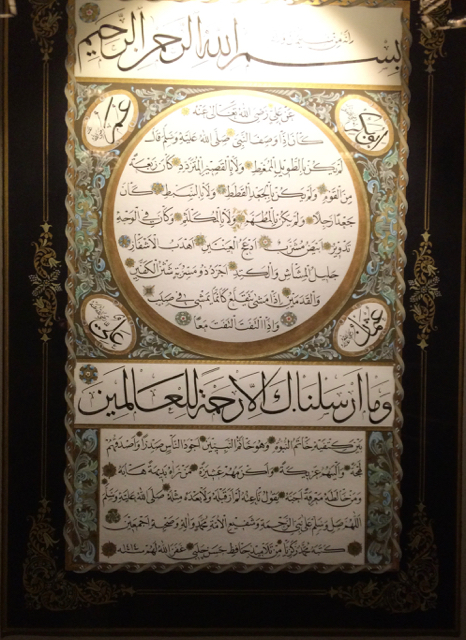
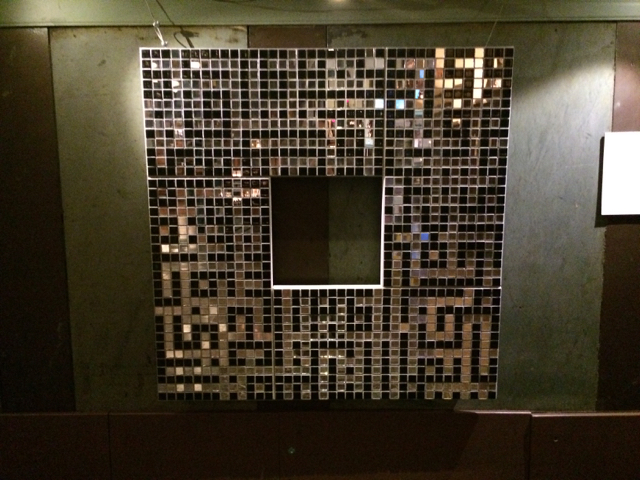
(Above) Examples of calligraphy in the exhibition correspond more closely to traditional “Islamic” art.
We have seen that the glorious heritage of Catholic religious art, music and architecture has largely fallen to the care of secular institutions: The Cloisters, the Metropolitan Museum of Art, The Frick collection, the Pierpont Morgan Library – to name just a few in the New York area. After the Second Vatican Council, the Church itself repudiated this heritage along with the Traditional liturgy. Indeed, generally speaking, Church patronage of the arts all but ceased. Yet, certain institutions of the Church continue involvement with the arts – but more in the sense of importing outside developments into the Church or at least maintaining contact with the “art” patronized by the secular establishment.
Such are the Paulists, “whose mission statement is in part to ‘build bridges of respect and collaboration with people of other world religions.’” They have organized “the first exhibition ever of contemporary Islamic Art in a Catholic place of worship” at St Paul the Apostle church in New York. The “Islamic” art ( a hodgepodge of traditional Islamic calligraphy and Western modern ideas)is interspersed among three side chapels dedicated to Our Lady, St. Theresa and St. Agnes. Verbose descriptions of the exhibits are provided. Never mind that some of this art, to the extent it attempts to formulate some kind of spiritual vision, directly contradicts Christianity. So we read that the first man may have been androgynous. The coran is quoted for the proposition that the birth of Jesus was painful. Or syncretistic links are attempted, such as between the worship of Krishna and of Allah, or where an Islamic gate is juxtaposed with a nearby statue of the Virgin Mary. Note that the Church of St Paul the Apostle is not just employed as a secular exhibition space (as is often the case, for example, with the Cathedral of St John the Divine) but “the Islamic work (is placed)side by side with the permanent Christian frescoes and statuary, creating extraordinary visual and ideological dialogs between the two traditions’ expressions of faith.”
And of course the secular political agenda of Pope Francis and progressive Catholicism is on display as well:
“This exhibit derives its title (“Brothers and Sisters: Islamic Art/Christian Space” – SC) from Pope Francis’s visit to war-torn parts of Africa in November 2015, in which he told the warring Christian and Islamic factions that “Christians and Muslims are brothers and sisters.” Seeing tensions in the U.S. (and Europe) being exacerbated by political voices eager to spread dissent and distrust, Openings (an “artists’ collective” supported by the Paulists that organized this exhibition – SC) makes a proud statement of peace and solidarity among Americans of different faiths and backgrounds with this timely exhibition this election season.”
It’s very clear at whom this is aimed!
Unfortunately (or fortunately?) today, November 15 was the last day of the exhibition.
Source for quotes:Brothers and Sisters: Islamic Art/Christian Space
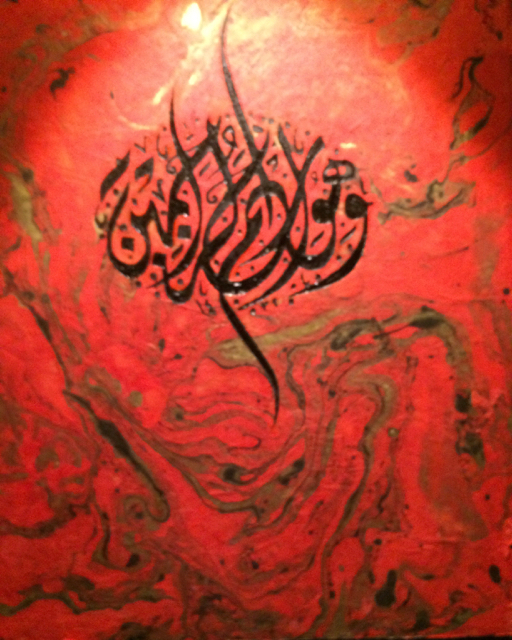
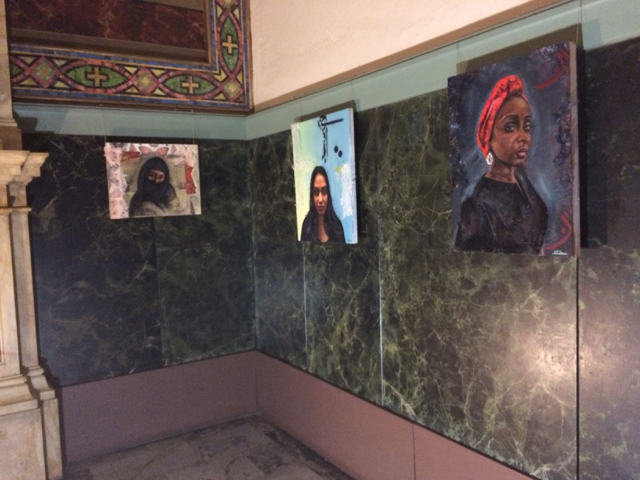
(Above and Below) Much of the art (including an “installation” – a video show) bears little or no resemblance to Moslem traditions. I am sure it would be well received in Saudi Arabia or Afghanistan.