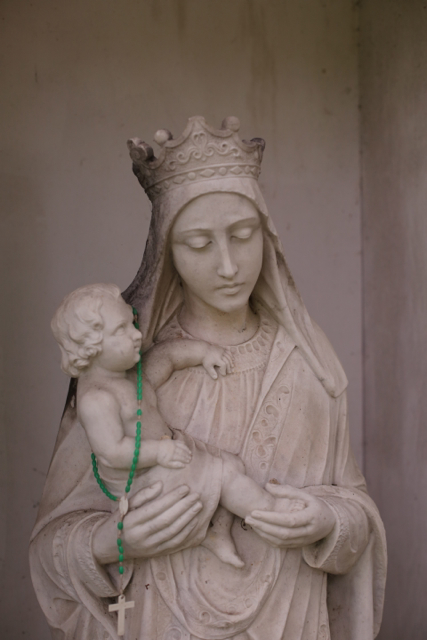
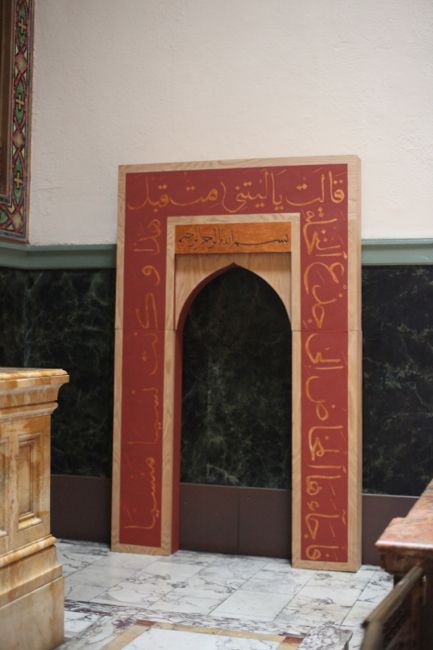
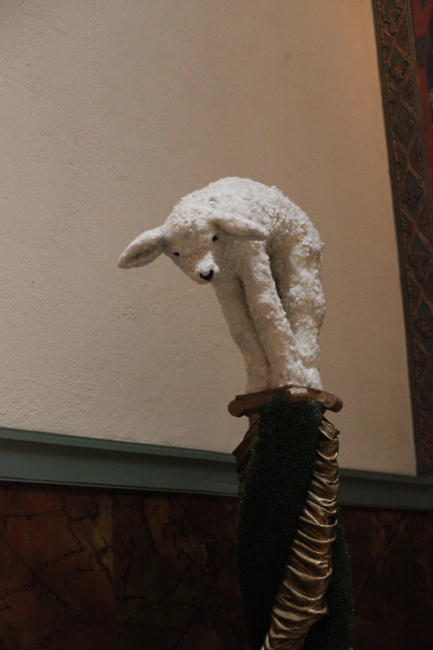
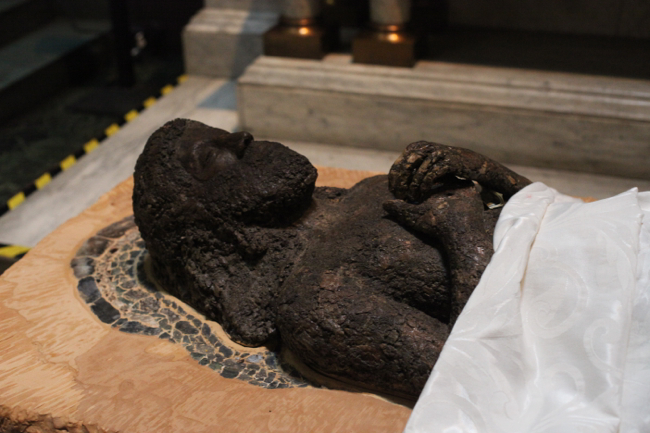
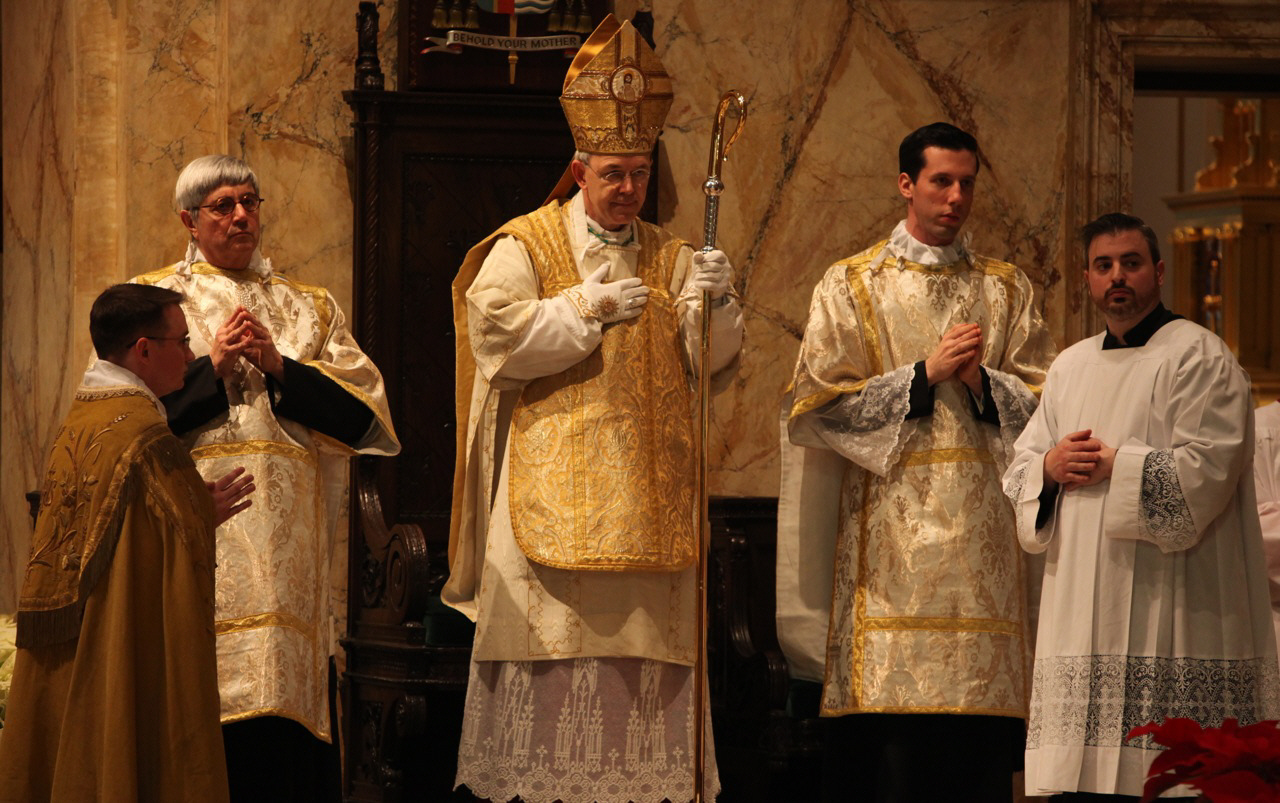
At NYU – it’s quite a change for a chaplaincy housed once upon a time in one of the earliest totally modern buildings in the Archdiocese – and one of the ugliest.
30 Jul
2013
At NYU – it’s quite a change for a chaplaincy housed once upon a time in one of the earliest totally modern buildings in the Archdiocese – and one of the ugliest.
18 Jul
2013

The Master of the Della Rovere Missals – Mass with a Pope in attendance (The Morgan Library)
Illuminating Faith: The Eucharist in Medieval Life and Art
Morgan Library and Museum
(Until September 2)
The Morgan library has unlocked many of the masterpieces from its store of illuminated manuscripts to tell for us the story of Eucharist: its origin in the New Testament, its role in liturgy and Christian piety and the growing development of Eucharistic devotions. Through a survey of a vast number of beautiful illustrations we learn the meaning of the Eucharist in theology and explore the vast number of Eucharistic symbols. Indeed the story begins before the New Testament, as many of the Old Testament parallels are depicted and explained.
My wife observed how much of the knowledge patiently set forth in the explanatory materials to this exhibition would have been known up to the end of the 1960’s by the average Catholic grammar school pupil. Only a minority of the images deal with esoteric subjects or strictly medieval practices. In that regard, the visitor unacquainted with medieval life and humor may be scandalized by some of the strange and even blasphemous images found in a few of these manuscripts…
The exhibition devotes much space to the practices surrounding the feast of Corpus Christi. For here we see that medieval Eucharistic devotion did not simply foster an individualistic piety – however laudable that certainly is – but developed into a feast that in so many locations is the greatest public manifestation of collective Catholic identity. Originating north of the Alps and gradually spreading, by the 1540’s it was celebrated in Rome with the almost endless papal procession shown on a manuscript in the exhibit.
The explanatory materials are ample and their tone is objective and straightforward. This is what was believed – and to some extent, the exhibition (Roger S. Wieck is the curator) takes care to point out, is believed still. There are only a few ”zingers” directed at the Church, such as where persecution of Jews is described as a “repercussion” of medieval Eucharistic piety – without any further qualification. (I can think of many more immediate causes such as fear of the Black death in 1348).
Now Holland Cotter in The New York Times (July 5, 2013) has written an extensive review of this exhibition. Building on elements of the descriptions accompanying the displays, he has refashioned the show into a tale of clerical oppression. The “consecrated bread” was “potent stuff” increasingly kept in the custody of the clergy, which had “come to be defined as a specialized professional class set apart from the larger community.” “The mass was performed by the priest standing with his back to the congregation…” “As if to compensate for lack of tangible access ( of the laity to communion), though, the host began to assume a growing visual presence…” It’s a story we have heard so many times from post-conciliar Catholic clergy. Eamon Duffy in several of his works (The Stripping of the Altars; Marking the Hours) has offered a major corrective to the views of the Times and, to some extent, of the exhibition. But at least The Times has devoted a long report to this excellent exhibition; as one might expect, its resonance in the Catholic world outside of a few individuals has been null.
All in all, this exhibition is highly recommended, although the price of admission to the Morgan nowadays certainly ain’t cheap. But for your money you can wander among the great rooms of the library and several distinguished exhibits often virtually alone – what a blessing in New York! For to appreciate works such as these illuminated manuscripts concentration and quiet study are required – the approach found in the blockbuster shows at the Met won’t work here….
In addition to The New York Times review, see the blog Ad Imaginem Dei for a detailed image by image review – in 6 installments!
29 Jun
2013

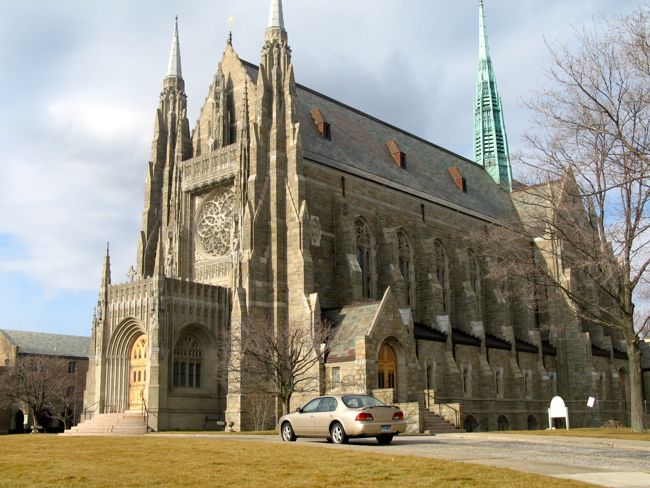
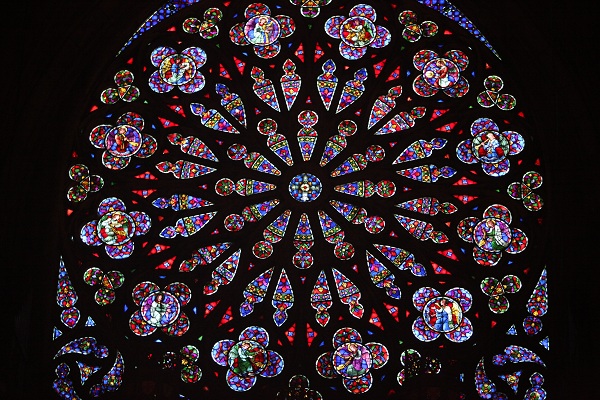
The Church of St. Peter in Danbury is worth a visit just for its stained glass (by F.X. Zettler in Munich)
Baroque Catholicism still flourished mightily worldwide in the 18th century. From White Russia to Portuguese India, in missions everywhere from the Philippines to Paraguay and New Mexico a Catholic culture had been established in architecture, painting, sculpture and music. Up till 1760 no order was more active in spreading this culture than the Jesuits. Indeed, the 19th century opponents of this civilization – and of Catholicism in general – would refer to baroque art as the Jesuitenstil – “Jesuit style!” So perhaps it should not overly surprise us that religious operas were created and performed in the midst of the Paraguayan jungle.
Last night St Peter’s parish, Danbury, sponsored the US premiere of such an opera, “San Ignacio” attributed to Domenico Zipoli. It is a short work, in a very contemporary ( for 1720) style. The main characters are St. Ignatius, St Francis Xavier and a Devil. In a series of arias we have meditations on life and death, a confrontation with the evil one and his empty promises, and the grand sending of of St Francis Xavier to the Asian missions. In a way it is more like a medieval mystery play – indeed it is believed it was meant for performance on the feast days of the two saints who appear in the opera. Yet despite having available very limited resources, the composer successfully attempts to humanize the characters, to differentiate their musical personalities and to create dramatic confrontations. It is, even if in miniature, a true opera or at least a dramatic oratorio!
Stephen Roberts led the exceptional performance from the organ. The singers were Steven Hoagland, Michael Trnik and Jeremy Moore. The small orchestra consisted of June Bender and Valeria Frege on the violin, Pablo Issa as cellist and Anthony Nunes on Trumpet.
The program tells us that 15,000 scores of previously unknown works from the Jesuit missions recently have been discovered. From that you can get an idea of the scale of musical life in this remote outpost of the Catholic world of that time. We must congratulate St Peter’s church in making this music available again to a Catholic audience in this country. Yet a style that everyone breathed and lived back then appears almost miraculous in comparison to the music of the average parish today. And is it not extraordinary that a Roman Catholic parish even would sponsor the concert performance of such music? Indeed, Pope Francis, in his words and actions, stands unambiguously for the dominant attitude of the clergy and people of the “Church in the Modern World” towards music. Concerts such as last evening’s event at St Peter’s hopefully will make at least some of us aware of what was done in the past and – who knows? – in some more favorable future may be accomplished again.
19 Jun
2013
16 Jun
2013
Fr. George Rutler has been transferred to St Michael’s parish on West 34th street. He will also become the “administrator” of Holy Innocents ( well known to the Manhattan Traditional Mass community). In turn the pastor of St Stephen’s church – Fr. Robert Robbins, who had only held that position since last October – will take over the pastorate of Our Saviour’s church – while remaining “administrator” of St Stephen’s. Obviously there is a story here – is this the prelude to further parish consolidation in the Murray hill area? Affected by this reshuffling of pastors are four of the most beautiful parish churches in New york.
See the Archdiocesan announcements.
See Father Rutler’s column in Our Saviour’s bulletin.
Fr Rutler has done magnificent work in the Archdiocese – and as pastor of Our Saviour’s during the last twelve years. He provided much needed support for Our Society’s initial efforts – who can forget the first Solemn high mass in New York pursuant to Summorum Pontificum celebrated at Our Saviour’s in 2007? We wish Fr. Rutler well in his new parish (both of them). I have a feeling many people will be making the pilgrimage to Hell’s Kitchen in the coming years….
13 Jun
2013
June 23-28 (Sun-Fri)
Five Days of Gregorian Chant & Liturgical Music
Ender’s Island Retreat House, Mystic, CT
Teacher: Dr. William Tortolano
Let the Chapel of Our Lady of the Assumption’s serene beauty infuse your spirit as you study Gregorian modes, neumes and more, plus the chant in English and chant’s role in Liturgy. We will explore a practical, worshipping approach to a singing church. Five days will give an in-depth study of the repertoire, music in Latin and English. A relaxed, spiritual, musical five days. If there are any questions, please call Dr. Tortolano (Home: 802-899-3564).
Fee: $699 Commuter Rates Available. Please Call Office For Details.
https://www.endersisland.com/sacred-art/five-days-gregorian-chant-liturgical-music
5 Jun
2013
June 5, 6:30-7:30pm (Wed) (all through June)
Free Gregorian Chant classes
Location: St. Peter’s Church, 160 Main Street, Hartford
Come learn the ancient chant of the Roman Church. The fundamentals of Gregorian Chant will be taught, Learn about the four lined staff, the different notes and how to sing them. Two brief pieces in Gregorian chant will be studied, learned and perfected. Good singing technique will also be emphasized with proper pronunciation of Latin.
25 May
2013
24 May
2013

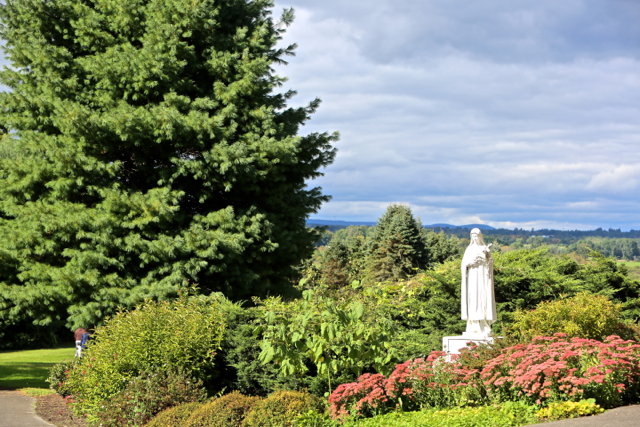
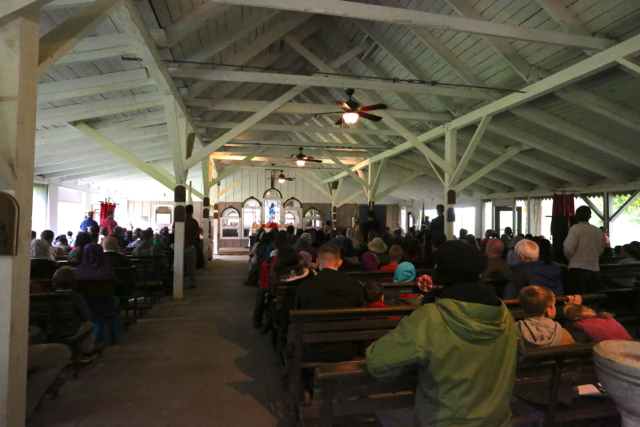
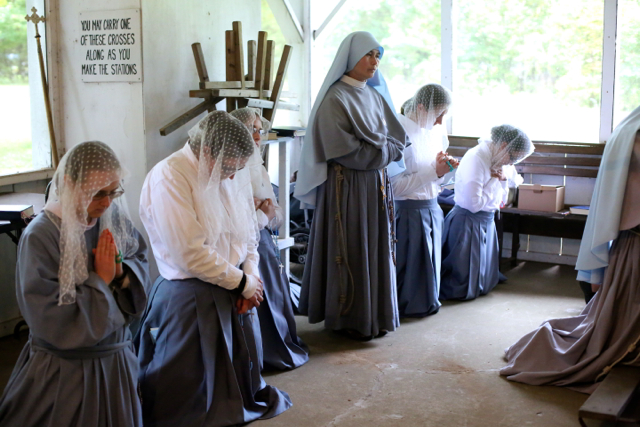
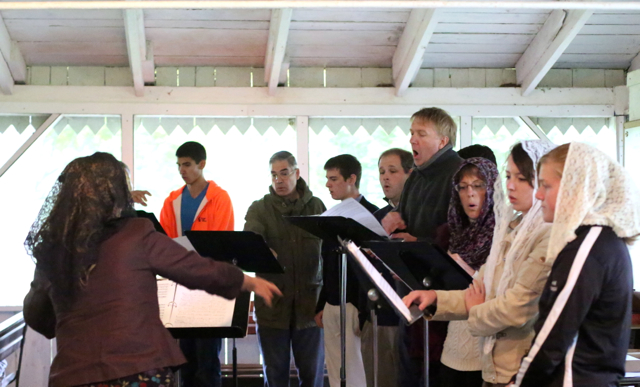
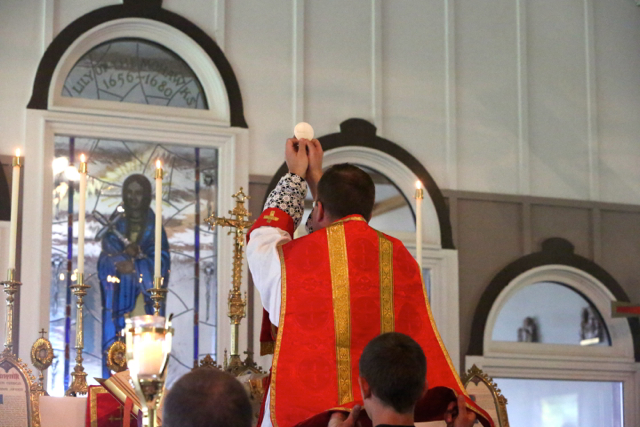
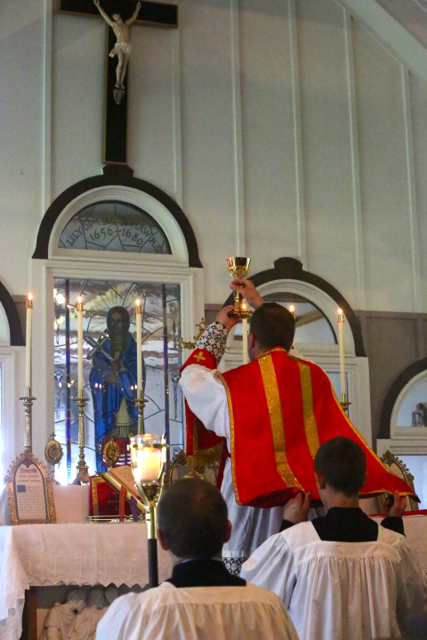
Due to the inclement weather tomorrow,the Mass and picnic at the Marian Shrine,Stony Point,N.Y. , scheduled for tomorrow, is cancelled. A rain date will be announced in the future. However it is not the end. Instead we will have the same Missa Cantata tomorrow at the Church Of The Holy Innocents at 1PM. That is Sat.May25th. Father Christopher J Salvatori,S.A.C. will be the celebrant.
Our photo shows the outdoor shrine dedicated to Mary Help of Christians, erected in 1954. The grounds also include splendid life-size statues depicting the 15 mysteries of the Rosary in Italian marble, outdoor Stations of the Cross, a replica of the boyhood home of St. John Bosco and a 48 foot tall statue of Our Lady of the Rosary.
20 May
2013
This Pentecost three “events” nicely illustrated the current state of affairs, spiritual and artistic, in the Church. First, the Vatican – under the leadership of Cardinal Gianfranco Ravasi – offers us a preview of its pavilion at the Venice Art Fair. Obviously concerns about the “poverty of the Church” do not affect such initiatives. The cost, however, has decreased to about $1,000,000 – well below earlier estimates. Moreover, the Vatican went out of its way to note that “sponsors” funded this amount. Obviously the criticism of the cost of the pavilion had stung. 1)
And what is the art to be exhibited? – it appears to be the usual collection of arbitrary, meaningless objects devoid of beauty, craftsmanship or any reference to the Church’s Tradition. There is talk (by Ravasi) of “creation” and even of “recreation.” And to whom is this exhibit addressed? This art obviously does not appeal to the overwhelming majority of the Catholic Laity. I very much doubt that the Catholic clergy would have any more interest in it. Whether the dominant forces of “modern art” in the West today will develop some new appreciation for the Catholic Church and its continued love affair with modernity is also very doubtful. They have gone on to bigger and better things!
Rather in such exhibits the higher clergy of the Catholic Church in Europe are primarily talking to themselves – trying to convince themselves that the supposed reconciliation between modernity and the church still lives. For those of us outside the Vatican and the Archiepiscopal sees of Europe, the important point is that this art – not any “reform of the reform” or “other modern” – is still the official artistic ideal of the Roman Catholic Church.
A second “show” this Pentecost weekend was the gathering of the lay “movements” in Rome. The spokesman for the event was another of the Vatican’s dialoguers with modernity, Archbishop Rino Fisichella. Supposedly 200,000 gathered in St. Peter’s square. Over 150 new “ecclesial realities “ – like the Neocats, Focolare, Communione & Liberazione, Sant’ Egidio etc., dispatched their foot soldiers to this event.
Now “movements” is an uncertain concept derived from the political sphere. it embraces all the new organizations that have developed over the last 60 years – although some date to the 19th century. They all are focused an the laity, usually are “creative” in theology and liturgy, and often have a strong charismatic or Pentecostal flavor. These, according to Archbishop Fisichella, are the “Fruits of Vatican II“ and the future of the Church. 2) While the first statement may be true – with some reservations – I very much doubt the second!
First, it seems odd that the paragon of such organizations – Opus Dei – does not want to be included under the ”movements” rubric. Second, the track record of such communities is anything but a record of unbroken success. For example, their typical organizational form – an absolute charismatic leader demanding blind obedience _ continues to facilitate an almost endless series of scandals.3) Third, the spread of the “lay movements,” which has taken place primarily in the Latin countries, has not arrested the decline of the Church there or elsewhere in the West – on the contrary!
For I believe that closer look would reveal whatever success the new “ecclesial realities “ have achieved has come largely at the expense of established parish structures and organizations. It is a case of “robbing Peter to pay Paul” – so bizarrely appropriate for groups that assembled this weekend in St. Peter’s Square! Indeed, the positive witness of these groups is a protest against the monotonous spiritual and liturgical void that is the life of the typical parish and religious order. Yet the hierarchy draws exactly the opposite conclusion. For the establishment, the “movements” are the last hope that the great experiment of the 1960’s continues, that despite all evidence to the contrary, the “new springtime” is still alive.
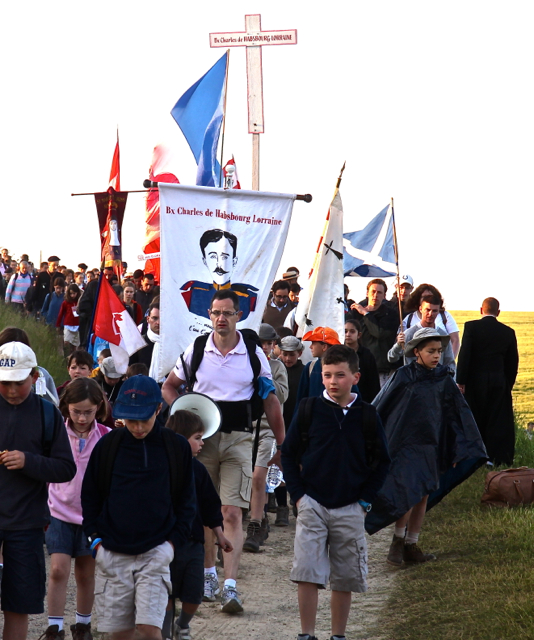
Yet there was a third event taking place this Pentecost. As always some 10,000 – 15,000 youthful pilgrims proceeded from Paris to Chartres – through, it seems, somewhat adverse weather this year. (Tragically, because of Church politics, a comparable if somewhat smaller number undertake this same weekend a pilgrimage in the opposite direction – Chartres to Paris.) The relationship with the local bishops has improved – the Paris to Chartres pilgrims are now welcomed by the local hierarchs and their representatives. Yet it would be far from the truth to say that the pilgrimage for Tradition is “sponsored “ by the French Church – let alone by the Vatican. These groups follow no charismatic leaders, do not seek new liturgies or theologies but rely entirely on the unbroken Tradition of the Church. No Cardinals or Archbishops hold laudatory news conferences. The secular world is indifferent or hostile. Yet is there a better example of the laity spontaneously and publicly giving witness in shared prayer and sacrifice? 4) A quiet , personal example that paradoxically is more in tune with the actual if largely unexpressed needs of modern man, more respectful of his dignity and intelligence, than the extravagant shows and media initiatives that have dominated evangelization in the Church for these last 30 years and more….
1)http://magister.blogautore.espresso.repubblica.it/2013/05/17/alla-biennale-di-venezia-anticipi-di-ricreazione/ ; http://fidesetforma.blogspot.com/2013/05/santa-sede-alla-biennale-confermate-le.html
2) http://www.catholicnewsagency.com/news/church-movements-bringing-50000-more-than-vatican-expected/
3) For example, see last week:http://www.lemonde.fr/societe/article/2013/05/18/operation-verite-pour-les-freres-de-saint-jean-eclabousses-par-les-scandales_3313590_3224.html ( Thanks to Jean Kinzler at le Forum Catholique)
4) http://www.nd-chretiente.com/dotclear/index.php?post/2013/05/20/Pe