6 Sep
2018
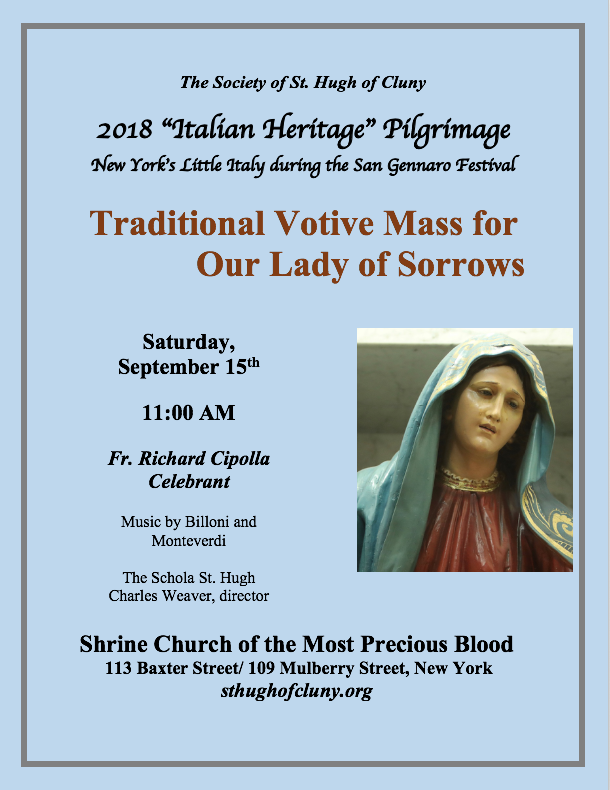
A number of churches in the area will offer special Masses for celebrate the Feast of the Exaltation of the Holy Cross on September 14.
St. Patrick Church, Bridgeport, CT, Solemn Mass, 7:30 pm.
St. Mary Church, Greenwich, CT, 7:30 pm
St. Stanislaus Church, New Haven, CT, on Sunday Sept. 16, 2 pm, Missa cantata, Fr. Peter Langevin, celebrant
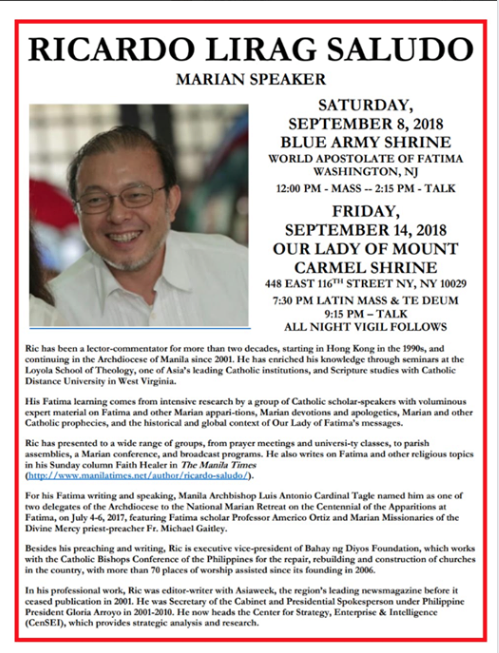
Pontifical Shrine of Our Lady of Mount Carmel, New York, 7:30, Missa Cantata and Te Deum followed by an all night vigil. Further information
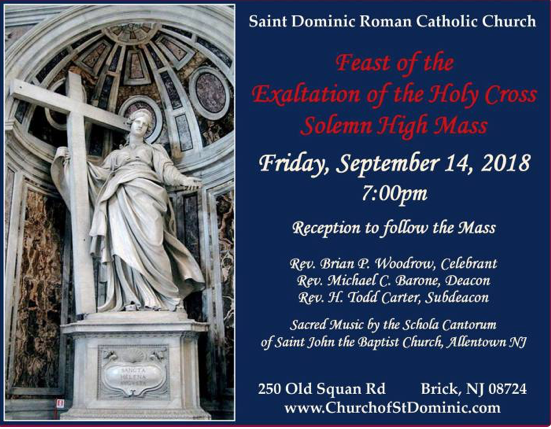
Holy Name of Jesus Church, Brooklyn, NY, Missa Cantata, 7 pm
St Anthony Church, 1776 Mansion St., Bronx, at 7 pm: Solemn Mass for reparation for the sins of the Church for the Feast of the Exaltation of the Cross.
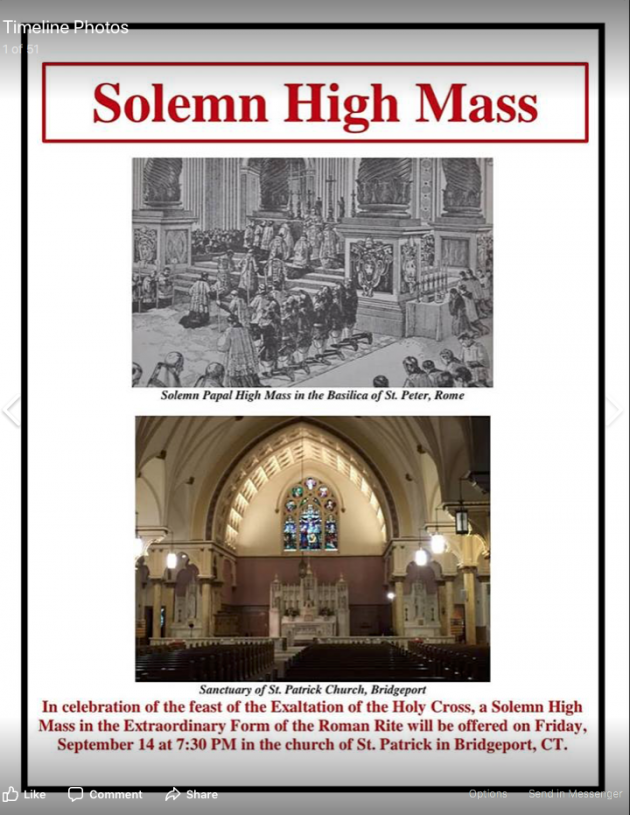
St. Dominic Church, Brick, NJ, Solemn Mass, 7 pm. Sacred Music by the Schola Cantorum of St. John the Baptist, Allentown, NJ. Reception to follow Mass.
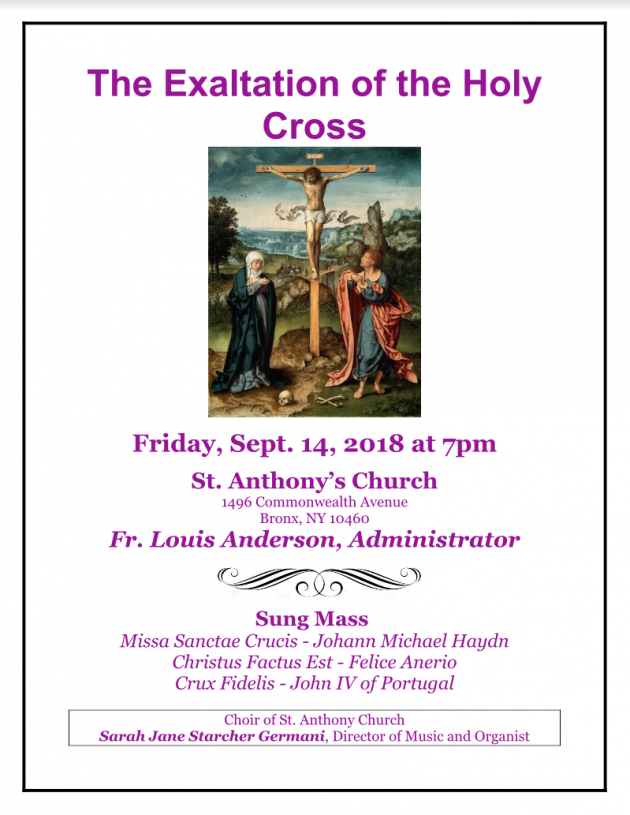
6 Sep
2018
All-Night Vigil at Our Lady of Mount Carmel, NY
Published in Events, MassesOn Friday, September 14, 2018 into Saturday, September 15, 2018, there will be an All Night Vigil of Adoration before the Most Blessed Sacrament Exposed.
Friday, September 14, 2018 – 7:30 PM – Sung Mass & Te Deum in Latin, 1962 MR-EF – Feast of the Exaltation of the Holy Cross
Saturday, September 15, 2018 – 5:00 AM – Sung Mass in Latin, 1962 MR-EF – Feast of the Seven Sorrows of the Blessed Virgin Mary
Preliminary Schedule
Friday, September 14, 2018
6:00 PM – Angelus
6:15 PM – Recitation of the Holy Rosary & Divine Mercy Chaplet
6:45 PM – Stations of the Cross and Confessions
7:30 PM – Sung Mass in Latin, 1962 MR-EF
8:30 PM – Chanting of the Te Deum
9:15 PM – Talk by Ricardo Saludo, Marian Speaker from the Archdiocese of Manila (see flyer below)
After the Talk, there will be moments of Silent Adoration and vocal prayers
Saturday, September 15, 2018
12 Midnight – Angelus and the Rosary of the Seven Sorrows of the Blessed Virgin Mary
12:45 AM – First Break, Silent Adoration
1:30 AM – Prayers to the Holy Black Nazarene and Our Lady of Caysaysay, followed by the Recitation of the Holy Rosary
2:00 AM – Silent Adoration
3:00 AM – Divine Mercy Chaplet
3:15 AM – Second Break, Silent Adoration
4:30 PM – Procession with and Benediction of the Most Blessed Sacrament
5:00 AM – Sung Mass in Latin, 1962 MR-EF
5 Sep
2018
Solemn Pontifical Mass in Paterson
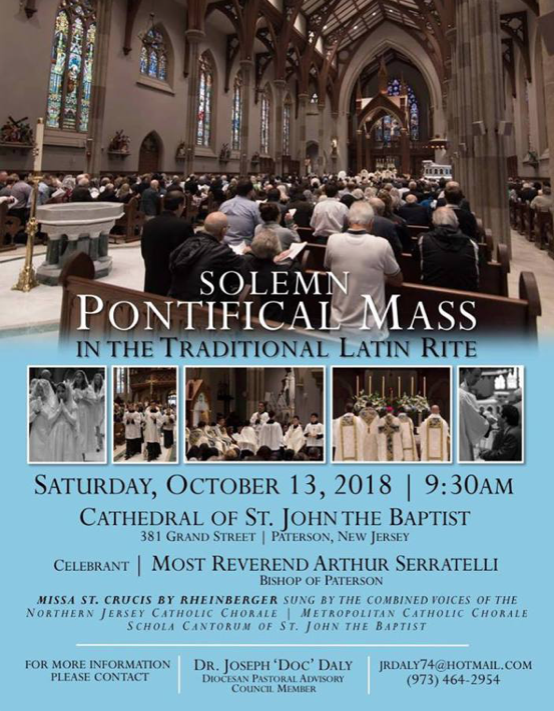
Published in MassesSATURDAY, OCTOBER 13, 2018 @ 9:30 AM, Cathedral of St. John the Baptist, 381 Grand Street, Paterson, NJ 07505: The Most Reverend Arthur Serratelli will offer a Solemn Pontifical Mass in the Extraordinary Form.
This Mass is sponsored by Sacred Heart Church, Clifton NJ, and Our Lady of Fatima Chapel of the FSSP, Pequannock, NJ.
There will be free parking at the County Parking Garage on the corner of Grand Street and Jackson Street.
The Mass will feature the combined voices of The Northern Jersey Catholic Chorale, the Metropolitan Catholic Chorale, and the Schola Cantorum of St. John the Baptist.
29 Aug
2018
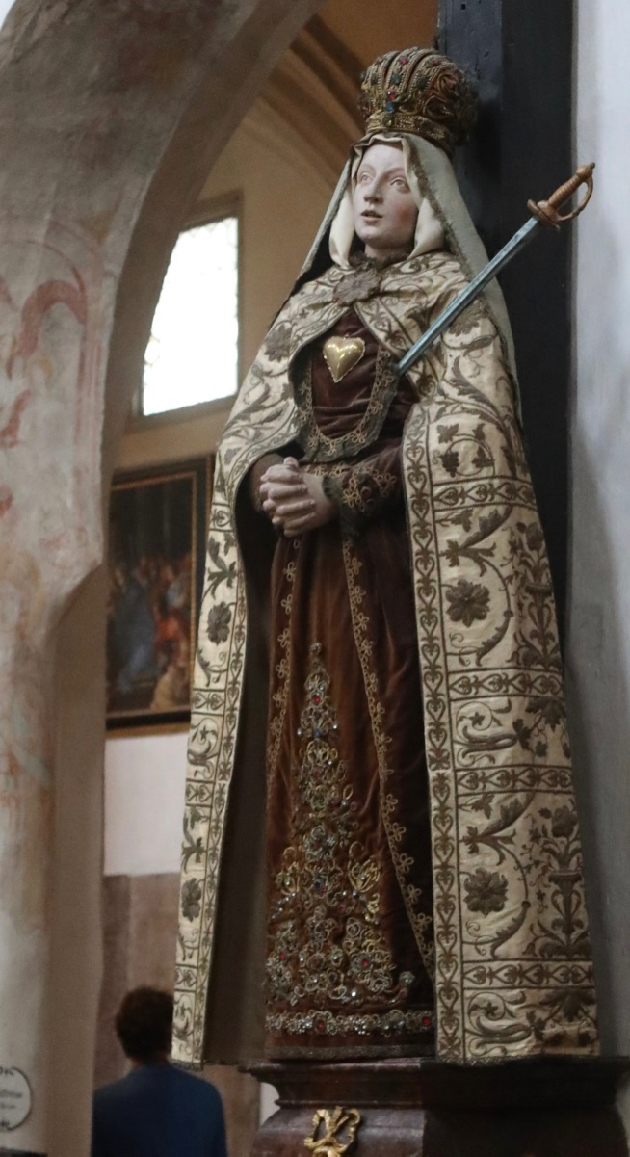
Our Lady of Sorrows in the 8th century Benedictine Abbey in Frauenchiemsee, Germany.
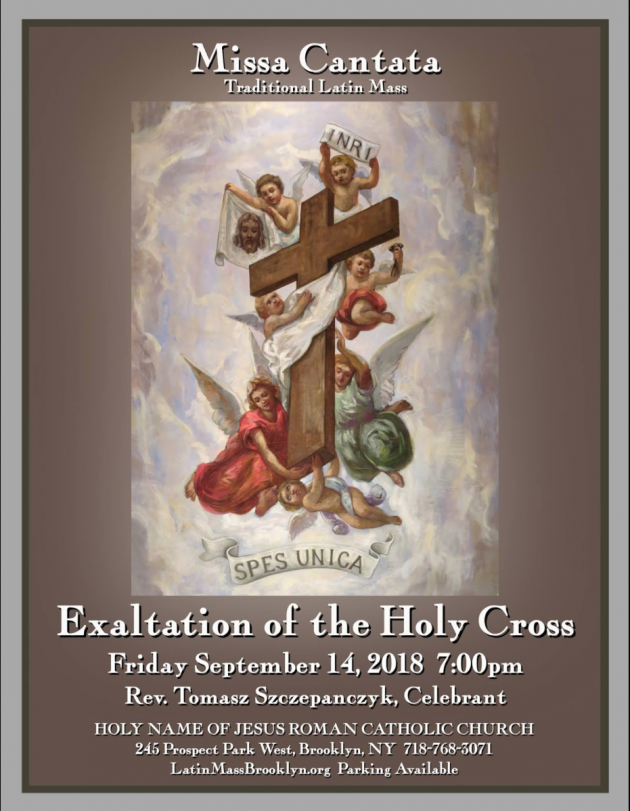
Once again the Society of Saint Hugh of Cluny returns to Most Precious Blood Church in Little Italy, New York for our annual Italian heritage pilgrimage. Once again we will sponsor a sung mass with orchestral accompaniment amid the noisy tumult of the San Gennaro Festival. This year however, in view of the dire straits of the Church, we will be celebrating the mass of the Feast of the day: Our Lady of Sorrows. The mass takes place on Saturday, September 15 at 11 AM. Hope to see many of you there!

Father Richard Gennaro Cipolla, shown here at last year’s Mass, will return as the celebrant.
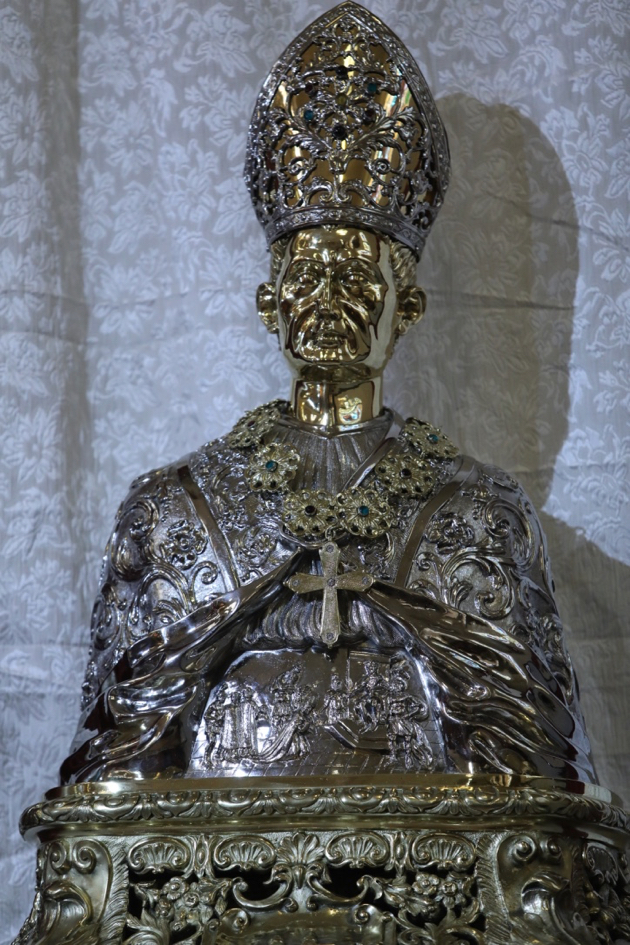
Reliquary of San Gennaro on display in the church during the San Gennaro Festival

Our Lady of Sorrows statue in the cathedral of Freising, Germany. Such an image is found in most baroque churches in Bavaria.
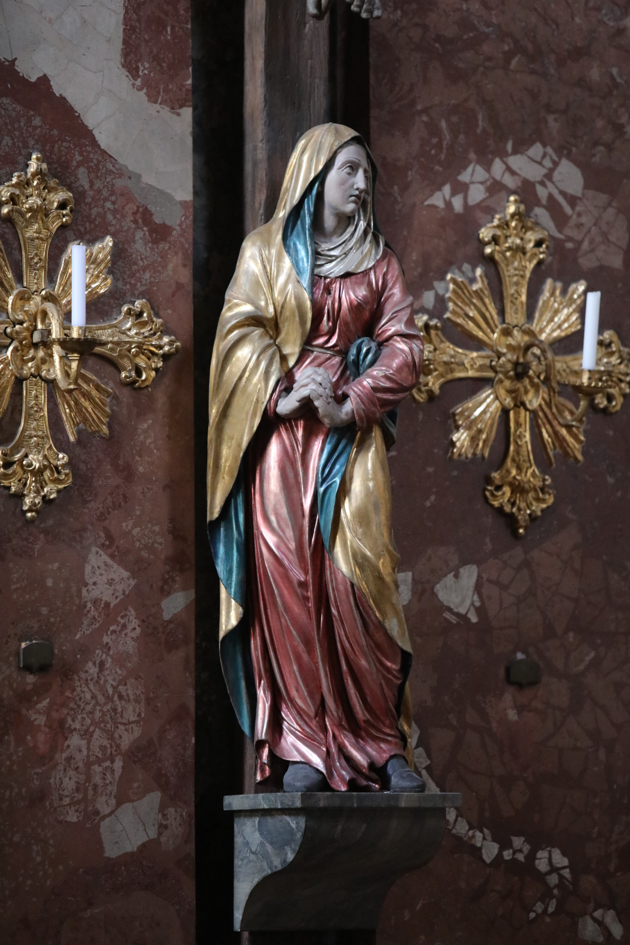
Image of Our Lady of Sorrows in the church of St Johann Nepomuk, Munich (better known as the “Asam Church”).
27 Aug
2018
New Daily Traditional Mass in Bridgeport
Published in MassesGood news: the Cathedral Parish of the Bridgeport Diocese now has a daily traditional Latin mass Monday-Friday at 7:00 am at St Patrick’s Church, 851 North Avenue in Bridgeport, CT. Most of the masses are low, but tomorrow (Aug 28) there will be a missa cantata for the Feast of St. Augustine.
27 Aug
2018
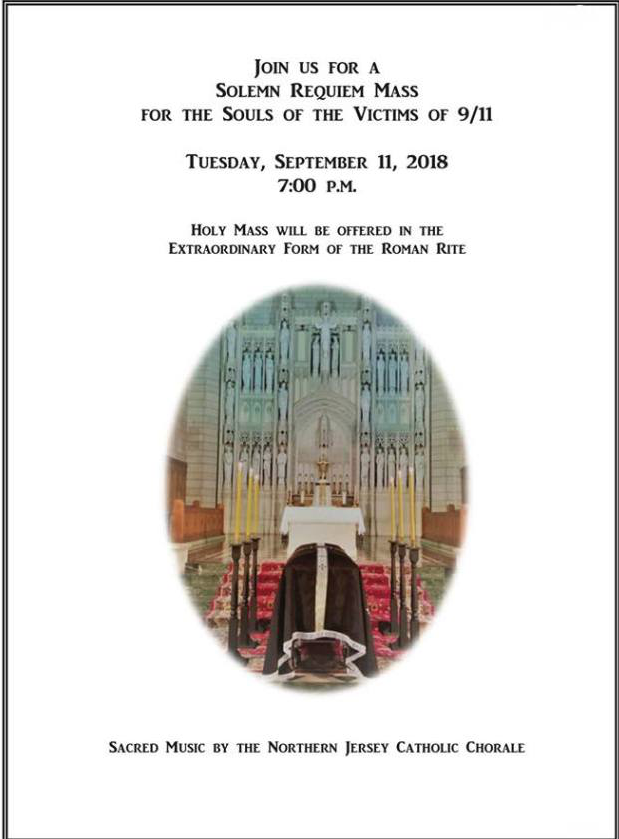
On Tuesday, Sept. 11, at 7 pm, St. Stephen’s Roman Catholic Church, 141 Washington Ave, Kearny, NJ will offer a sung Requiem Mass in the extraordinary form for the the repose of the victims of September 11, 2001. The Northern Jersey Catholic Chorale will sing.

16 Aug
2018
St. Mary Church, Norwalk, CT, will celebrate the Assumption of Mary this Saturday, August 18th at 4 pm with a solemn Mass, then a parish picnic immediately following Mass. The church will provide hamburgers and hot dogs. Please bring a dessert or side dish to share.
Churches of New York
Holy Roman Empire
Website Highlights
Archives
[powr-hit-counter label="2775648"]