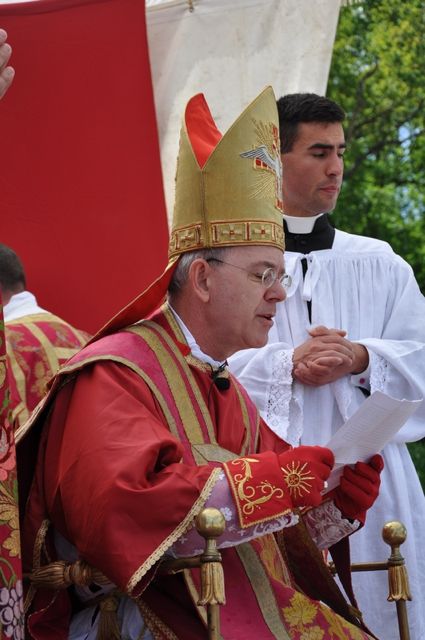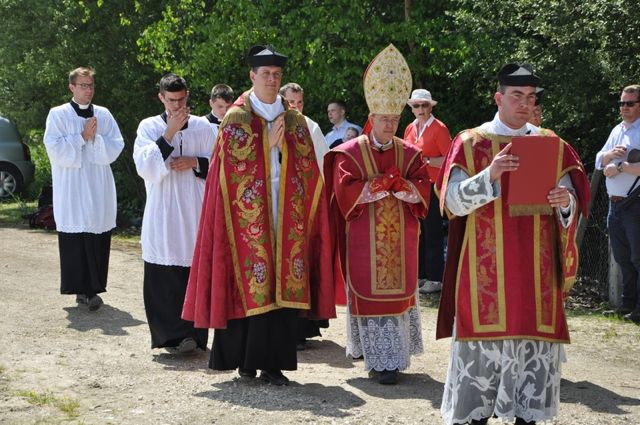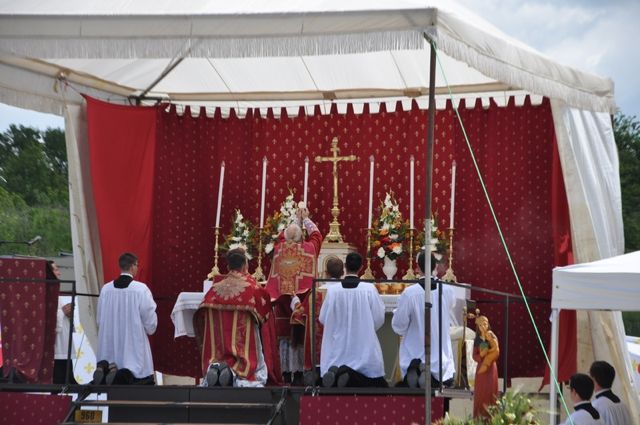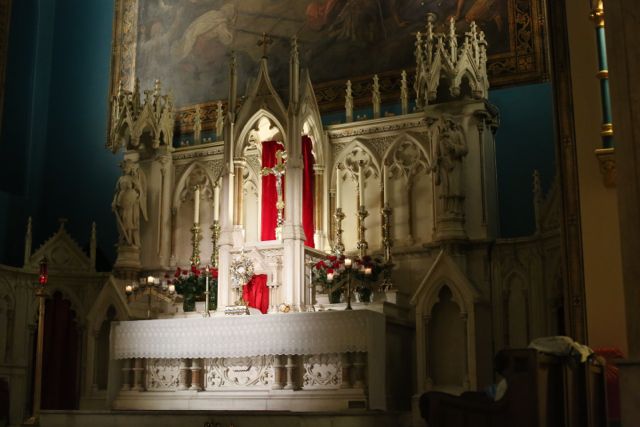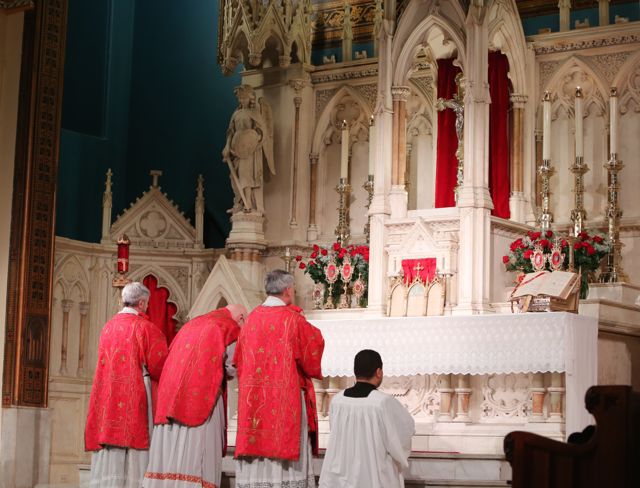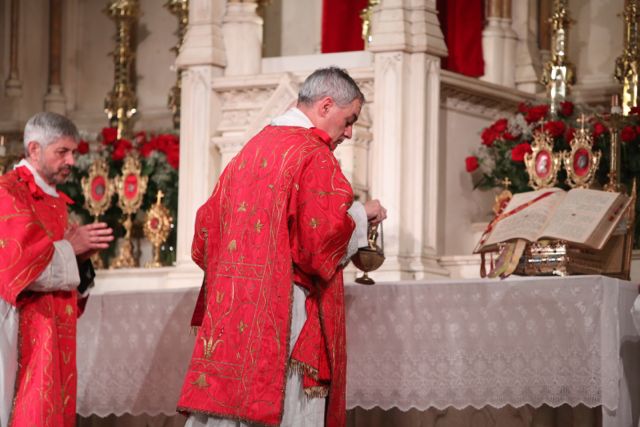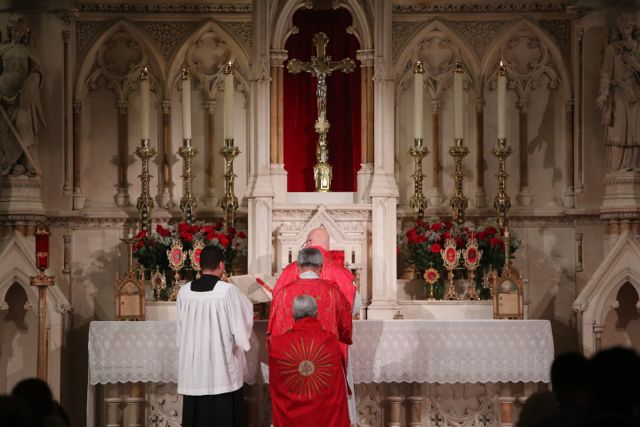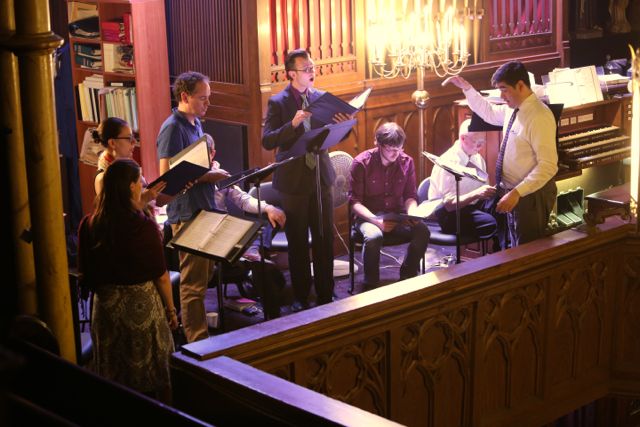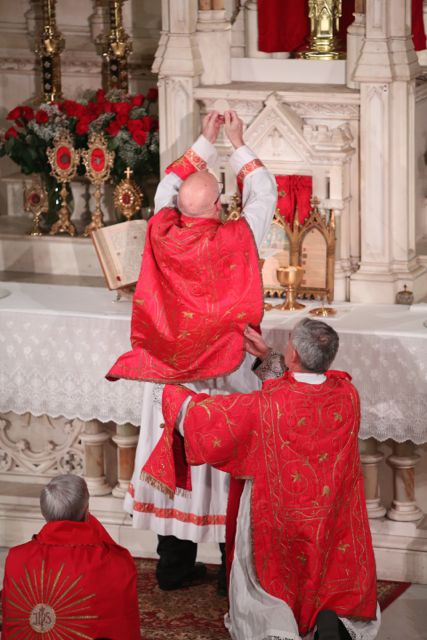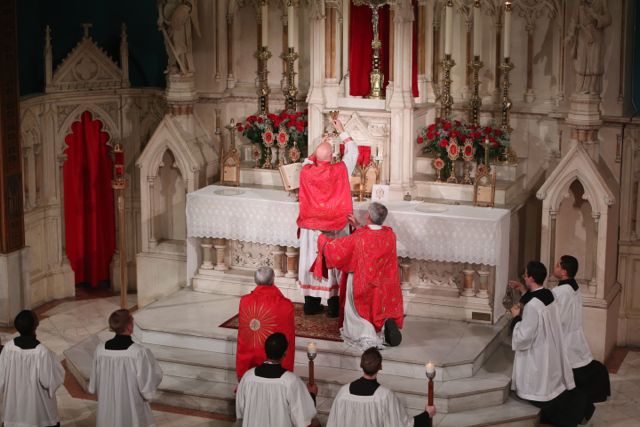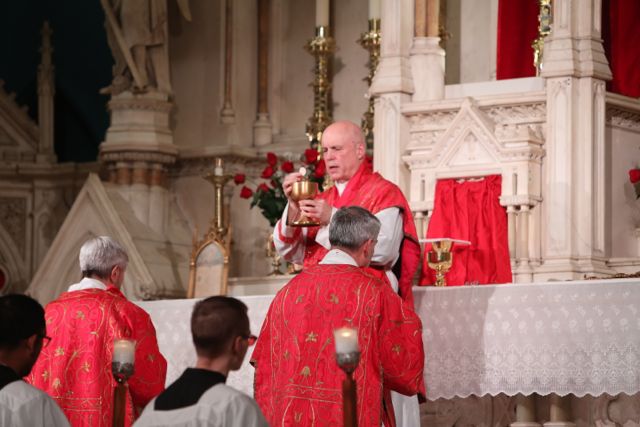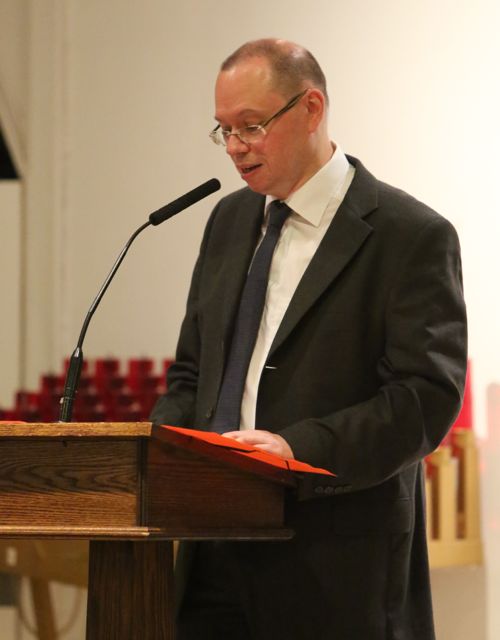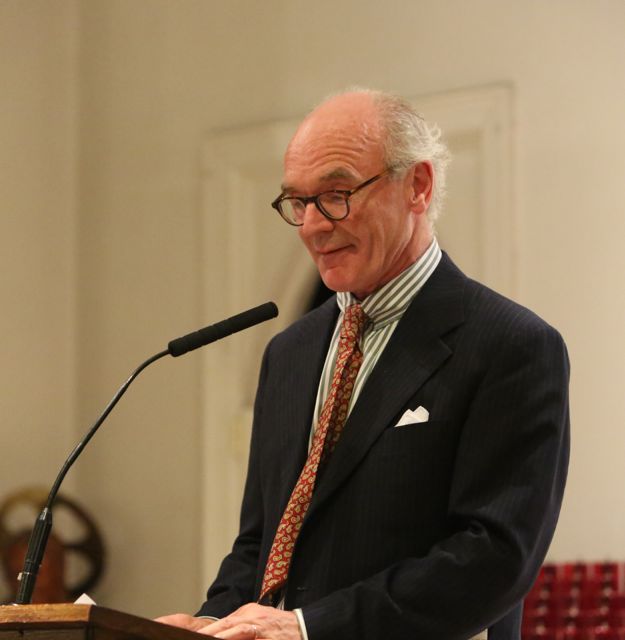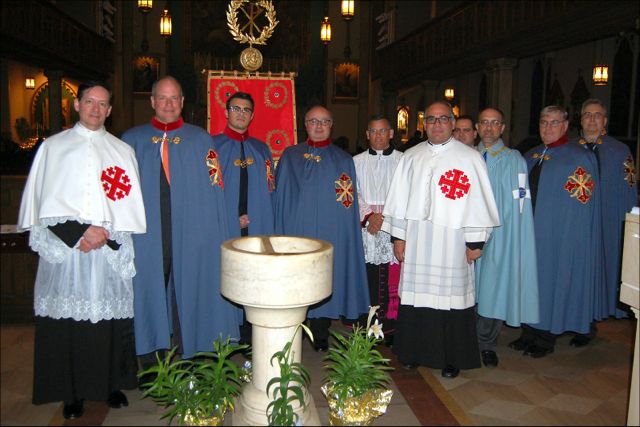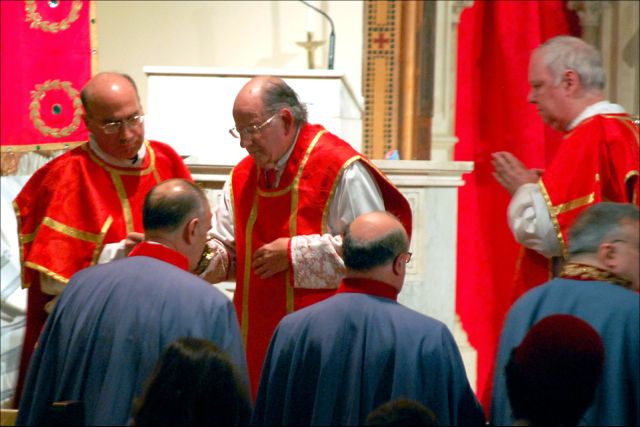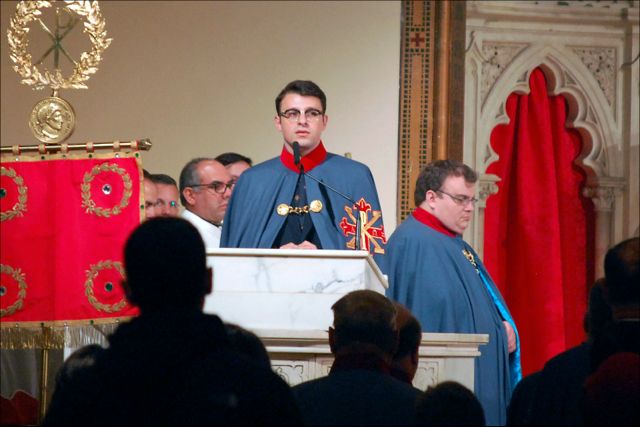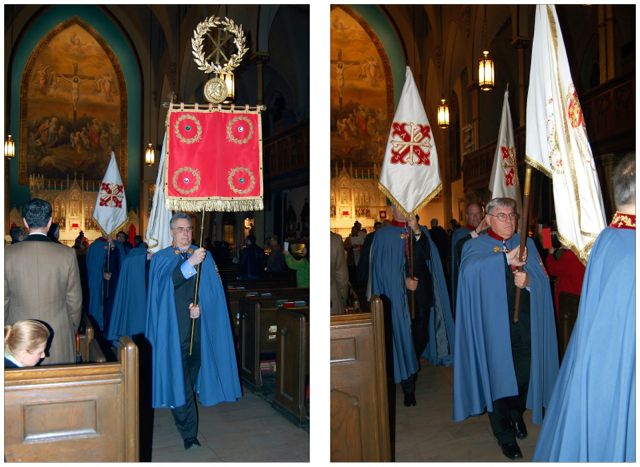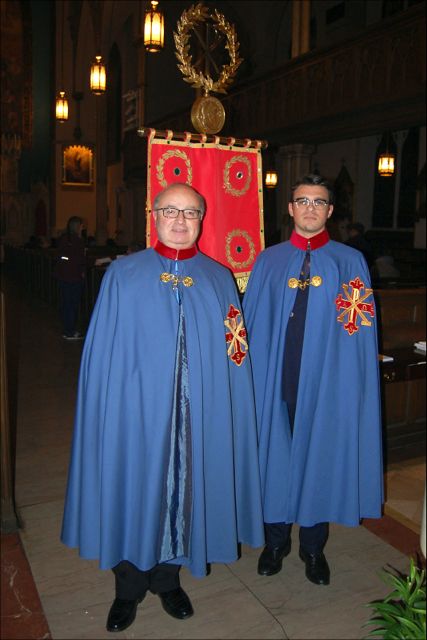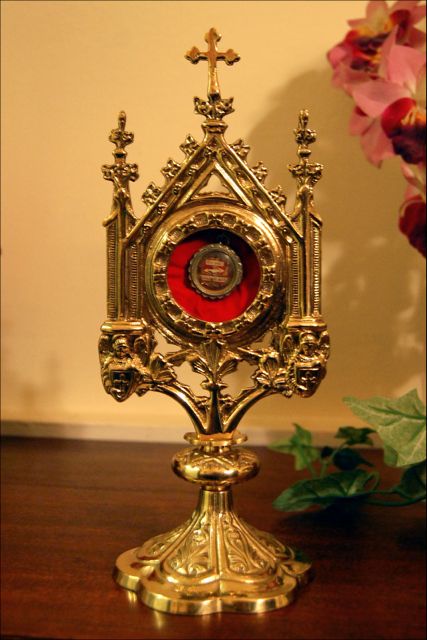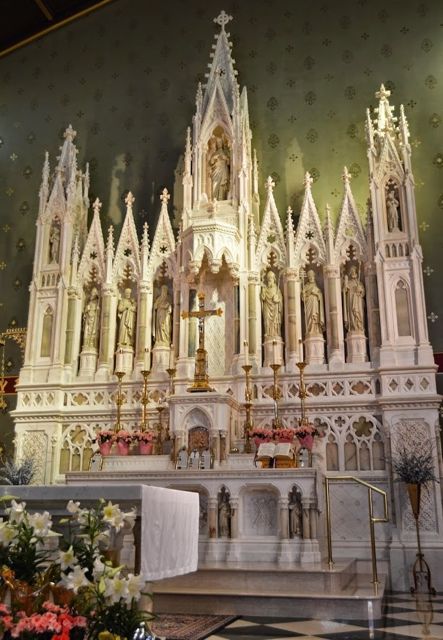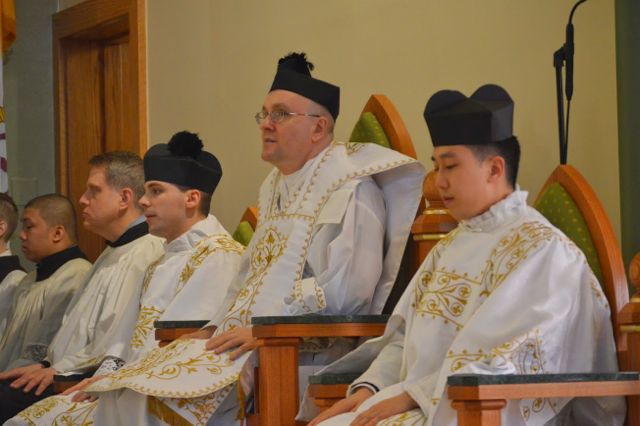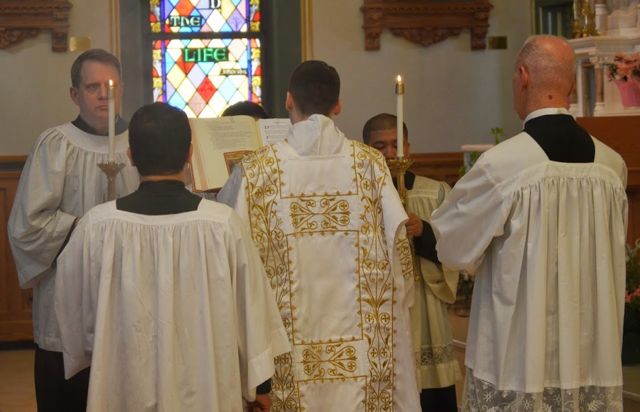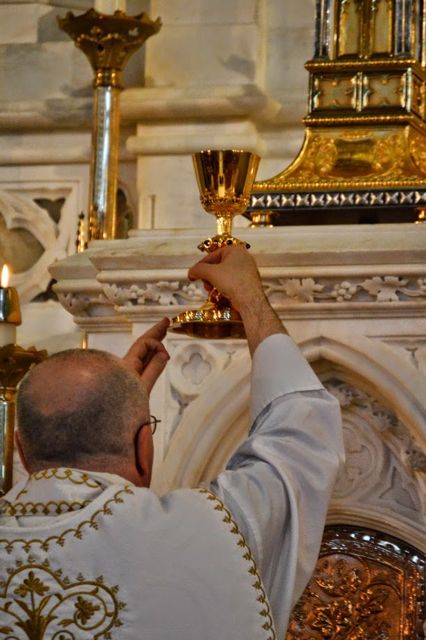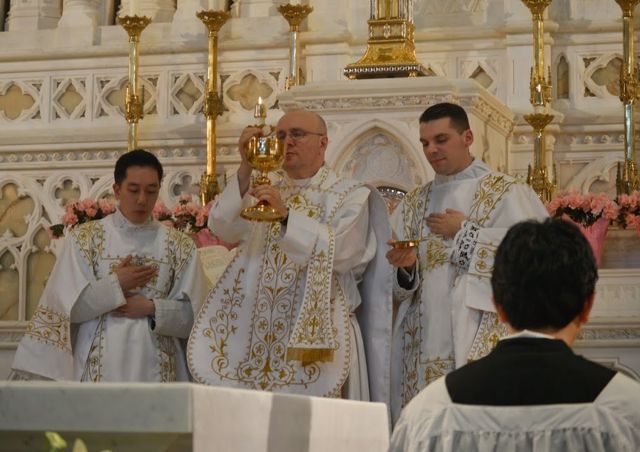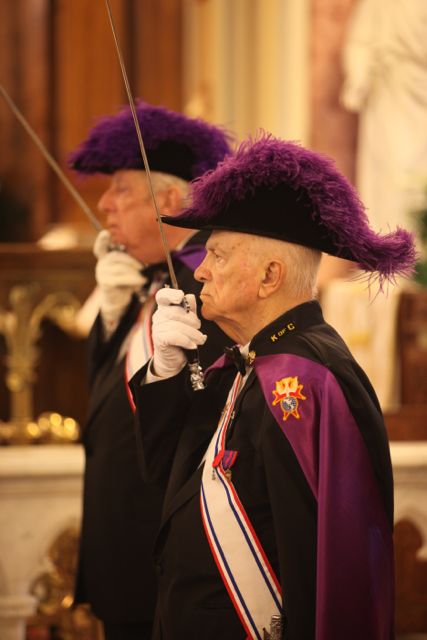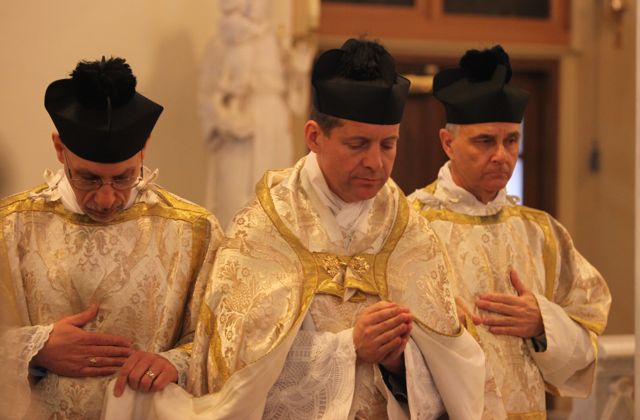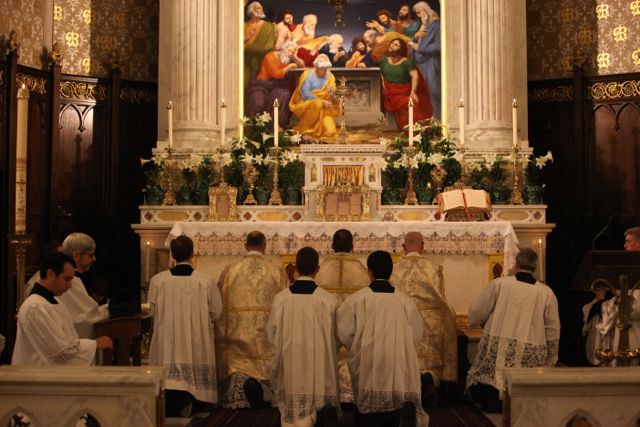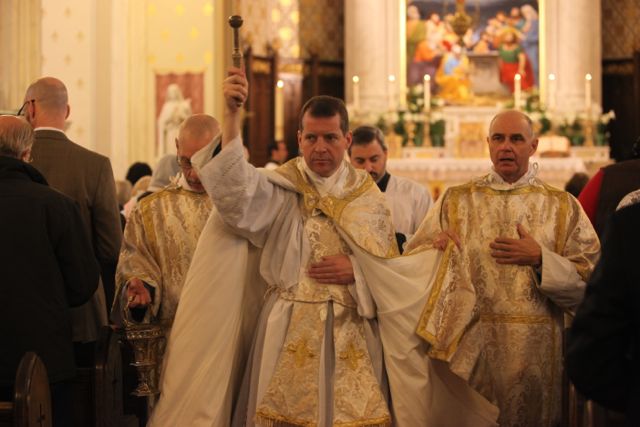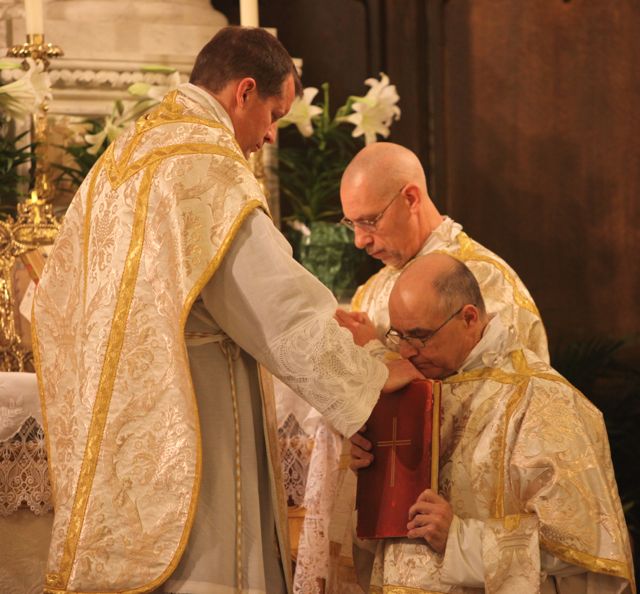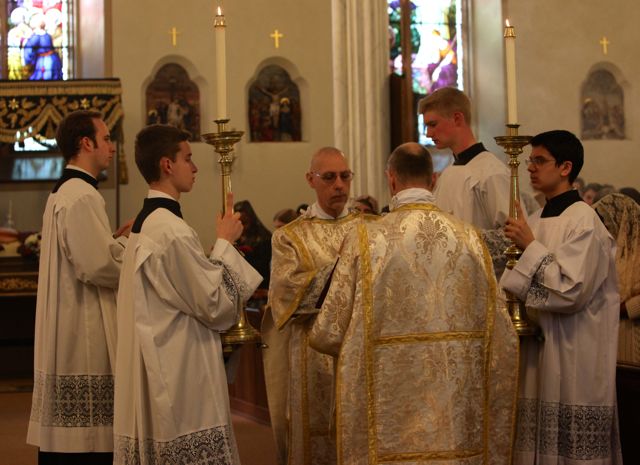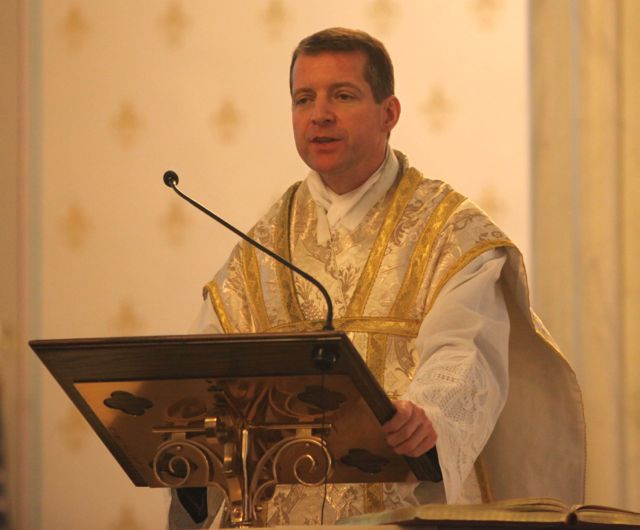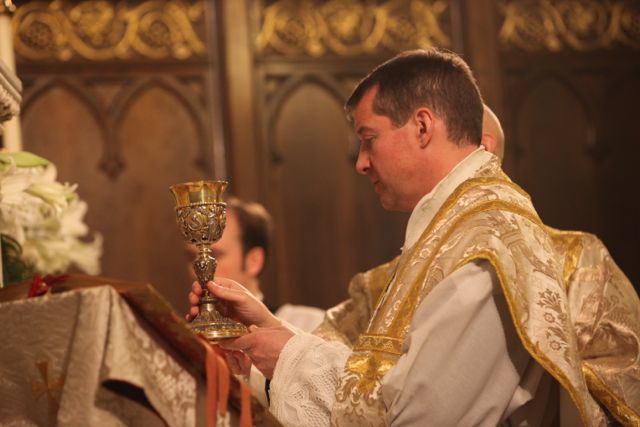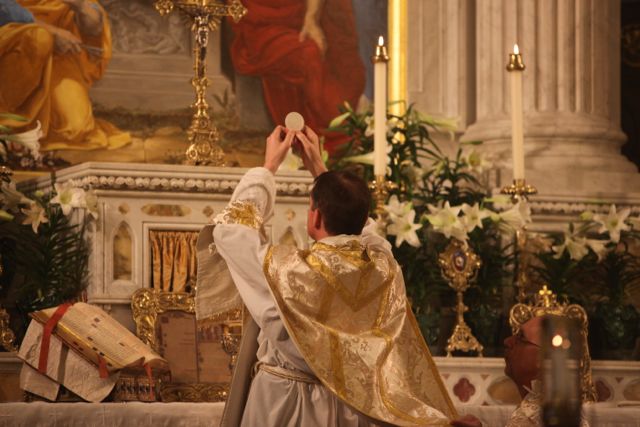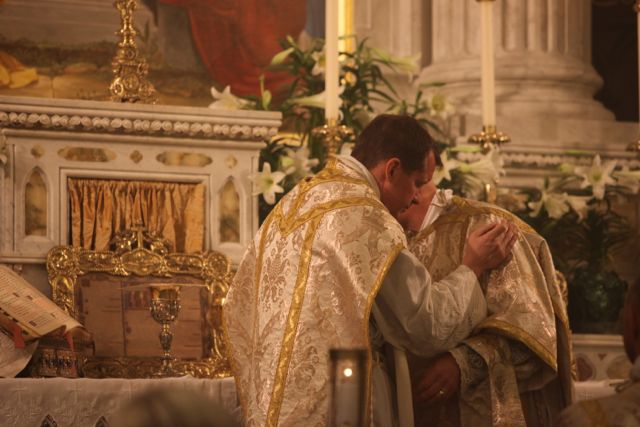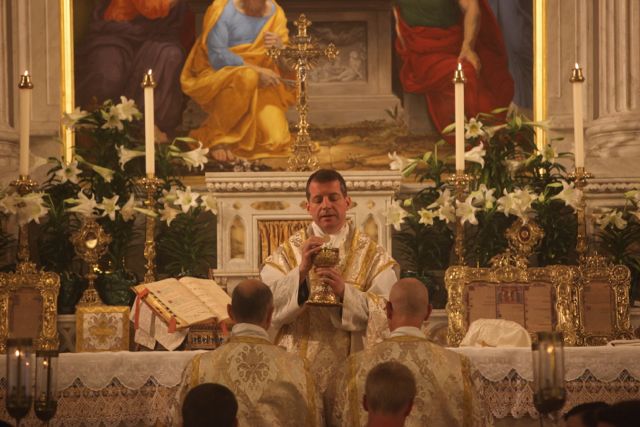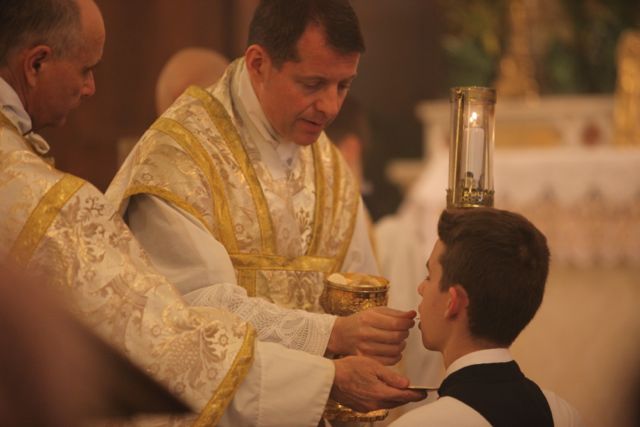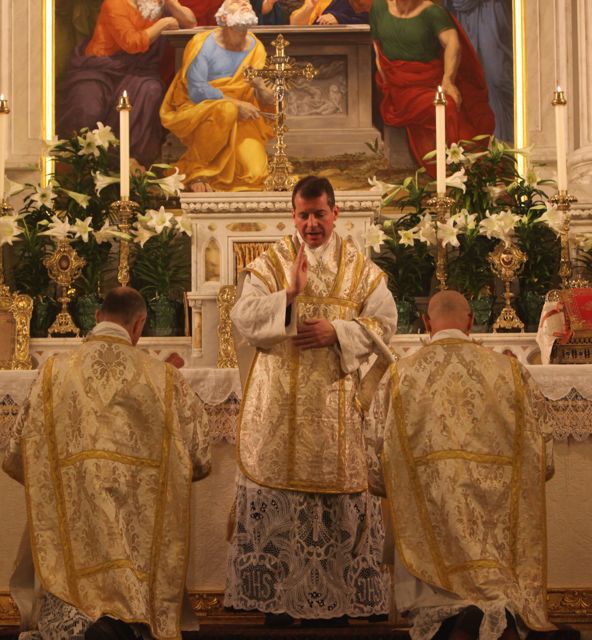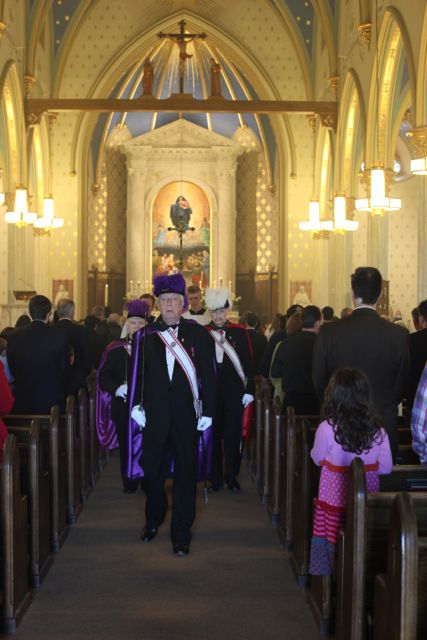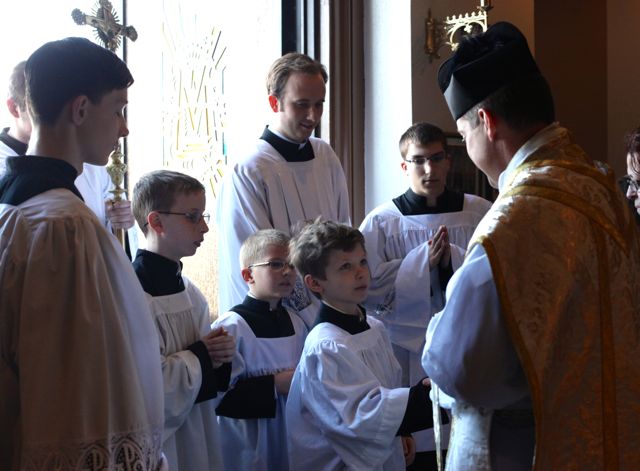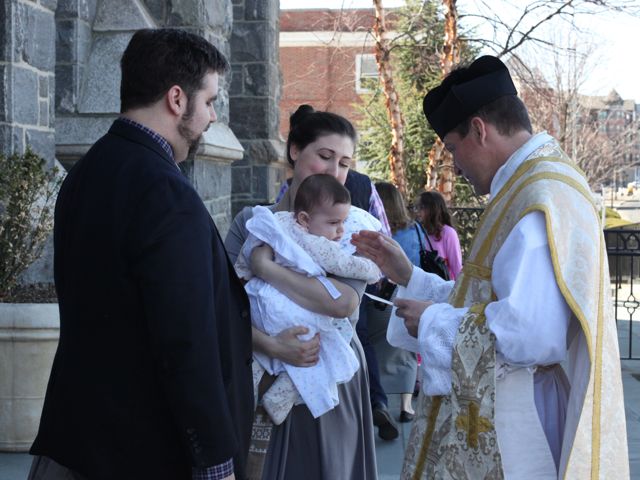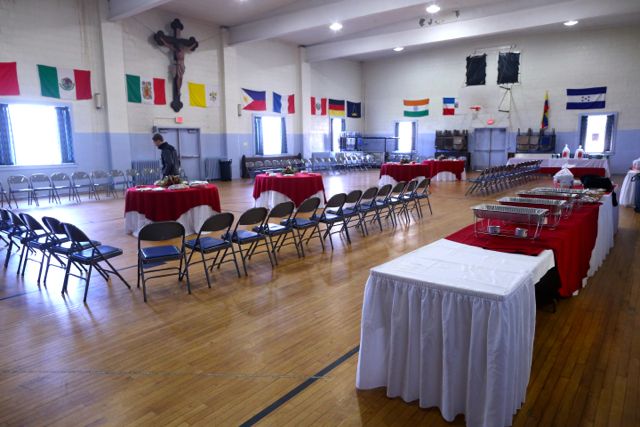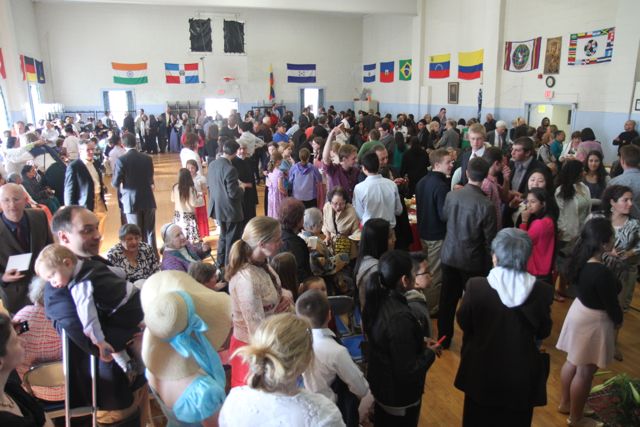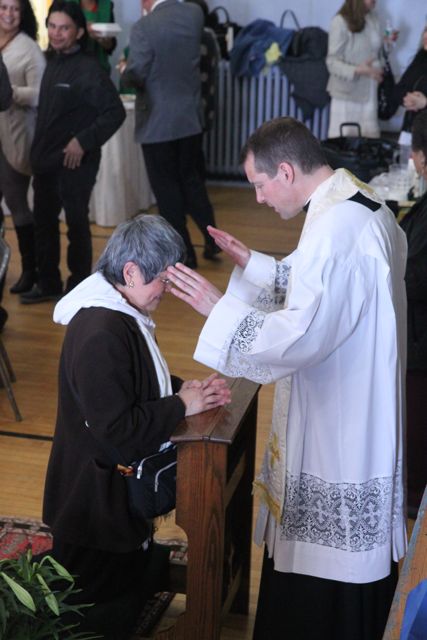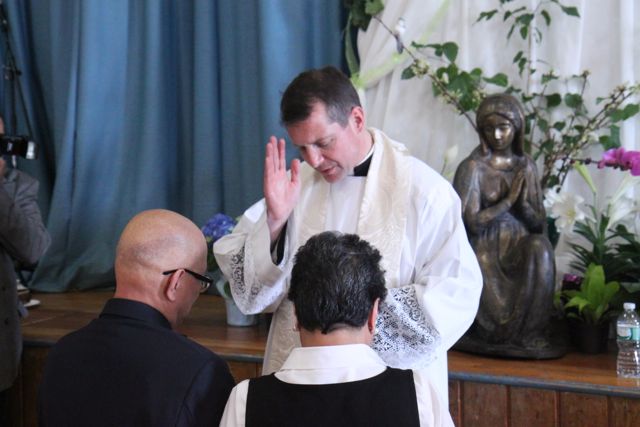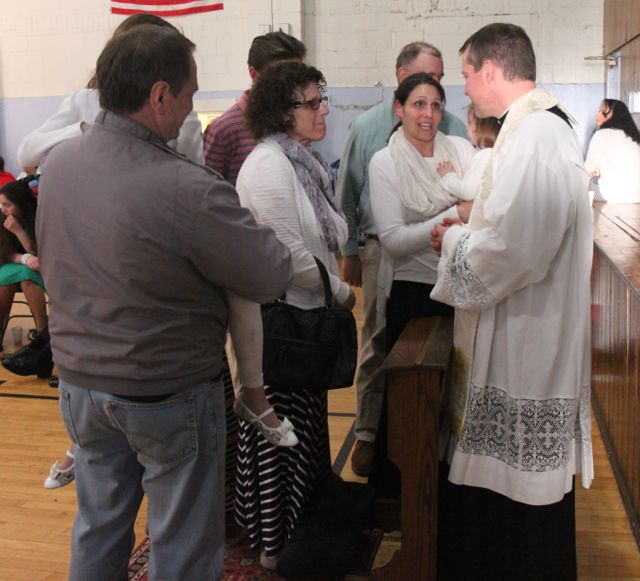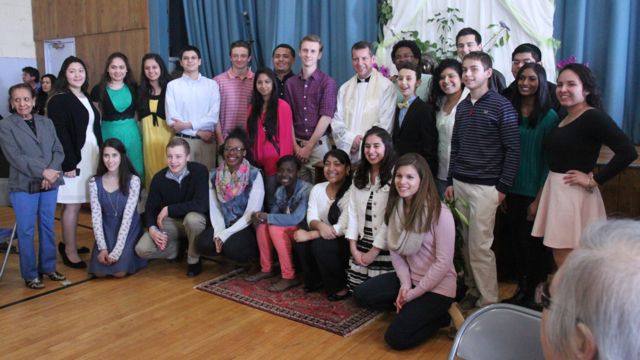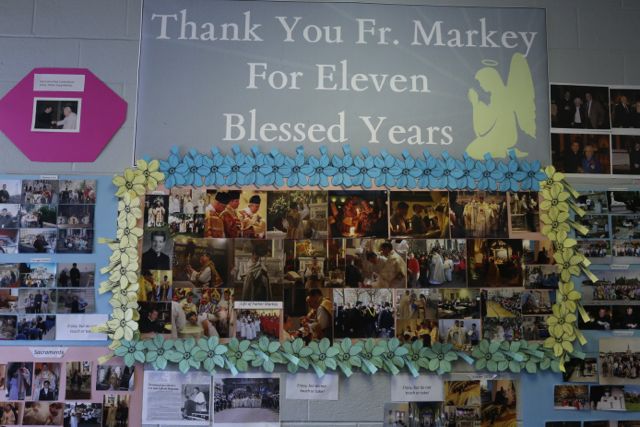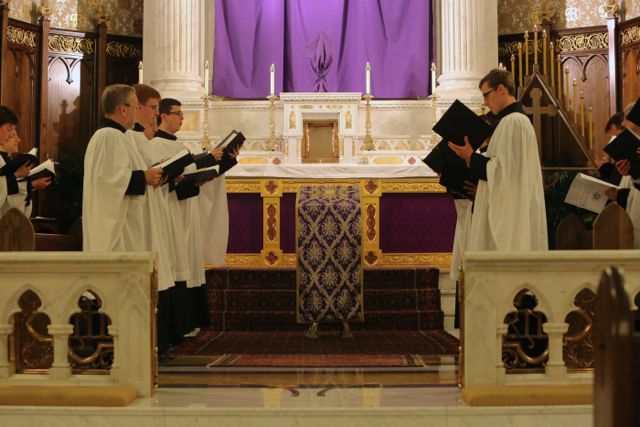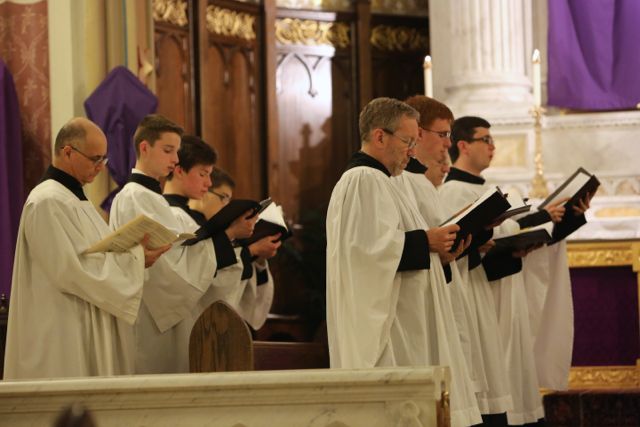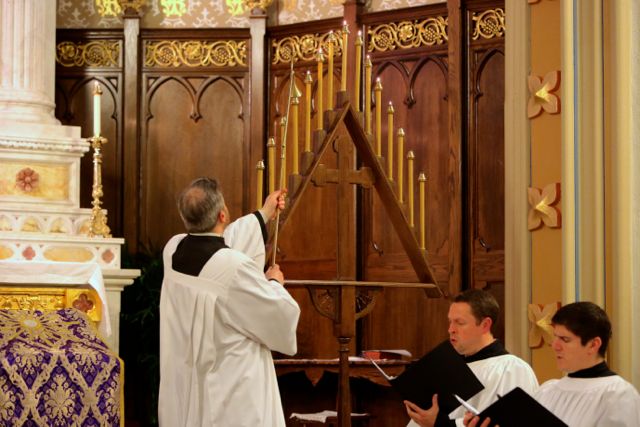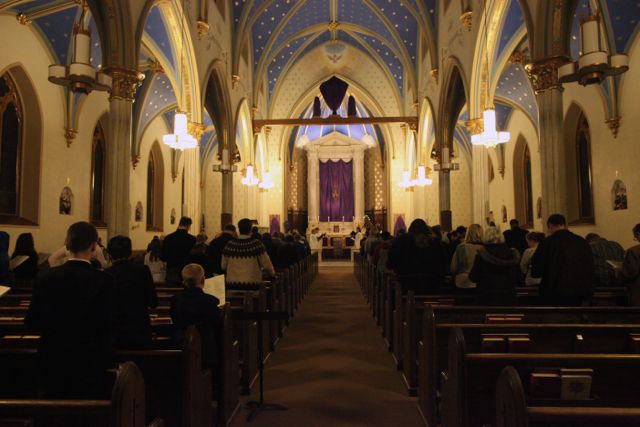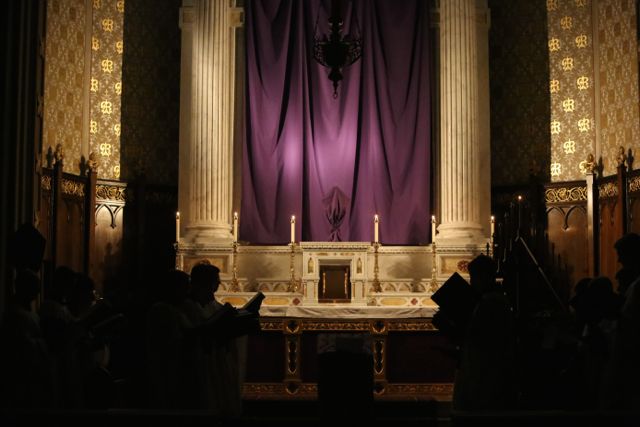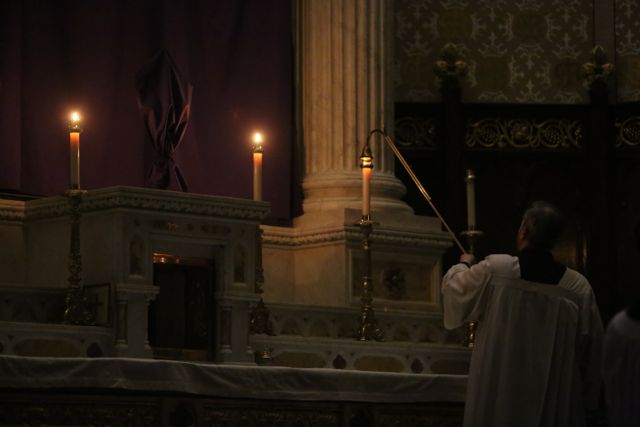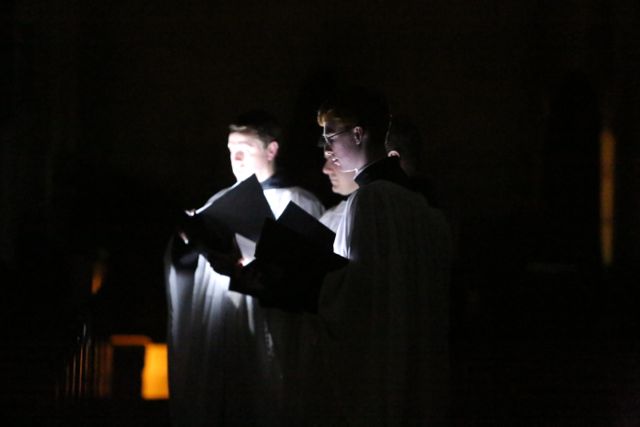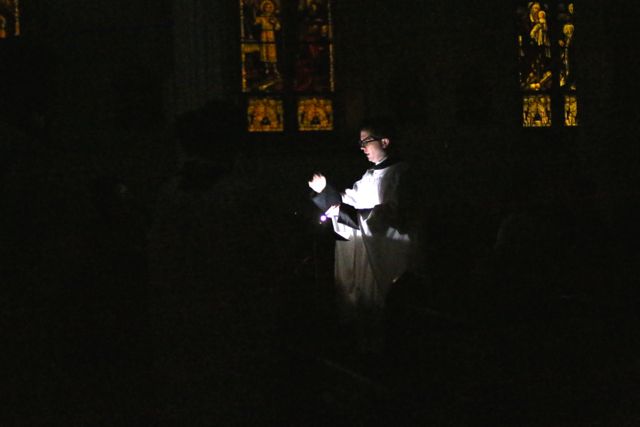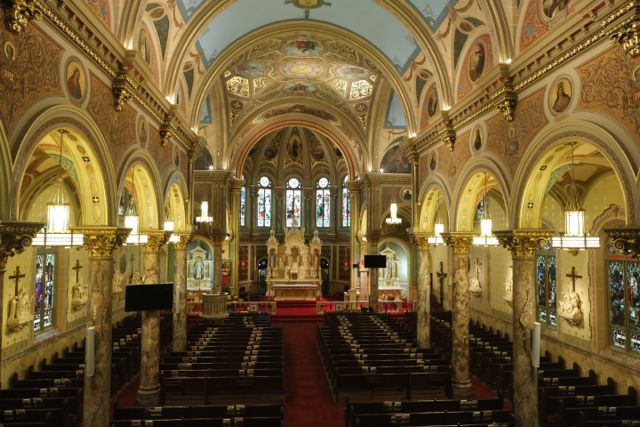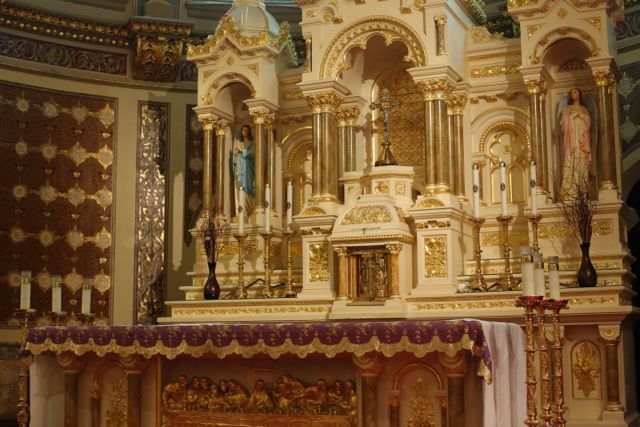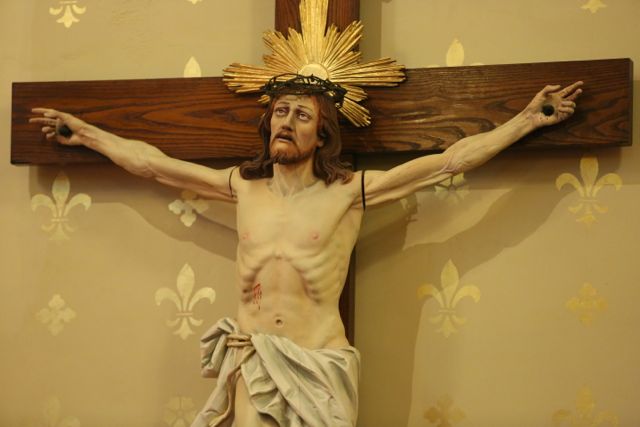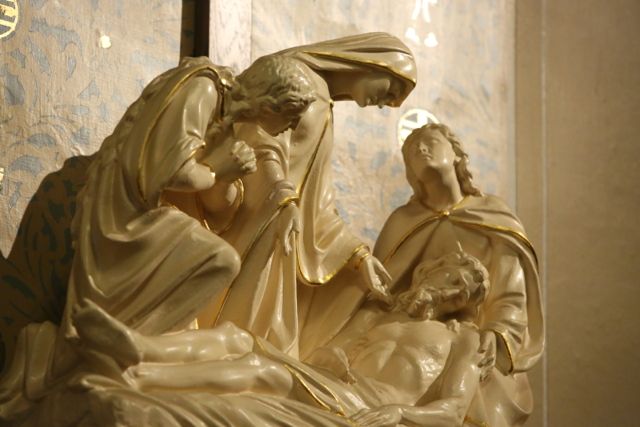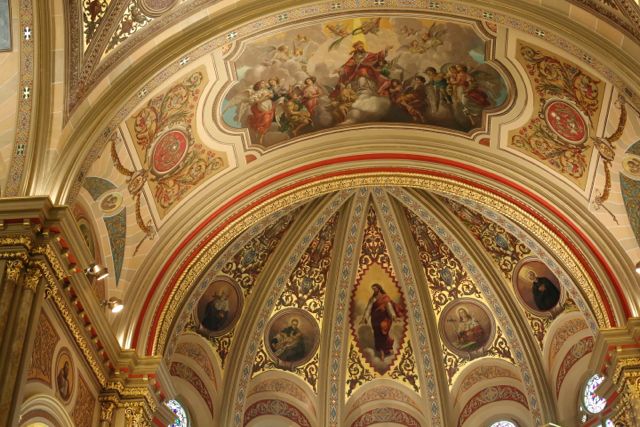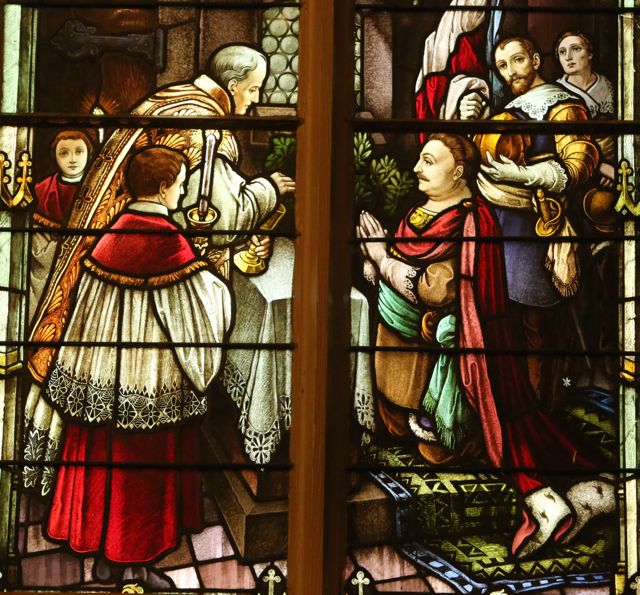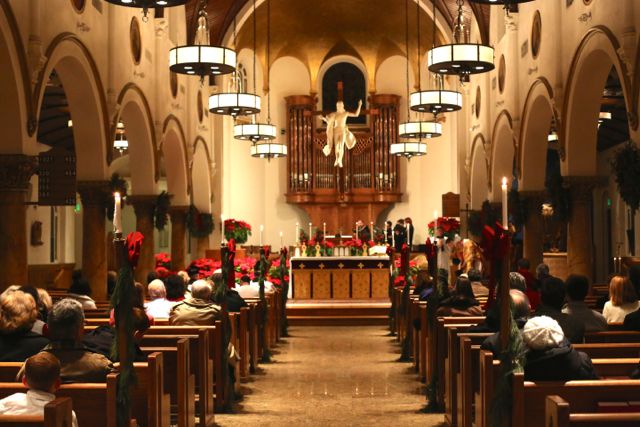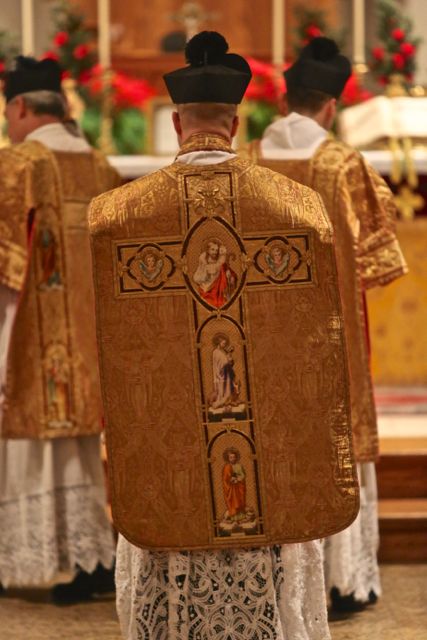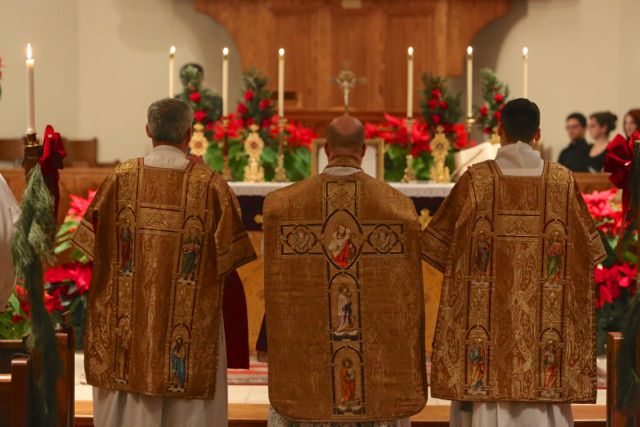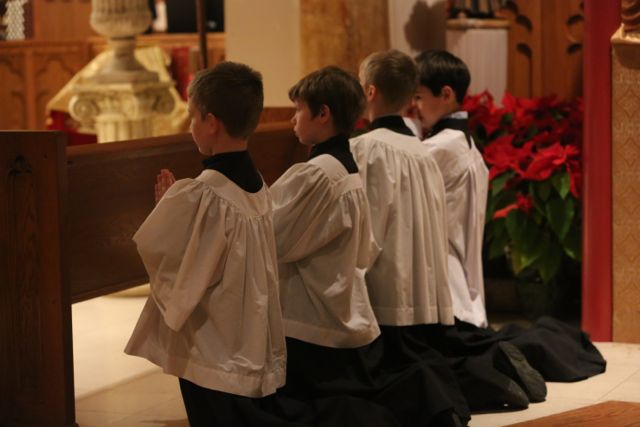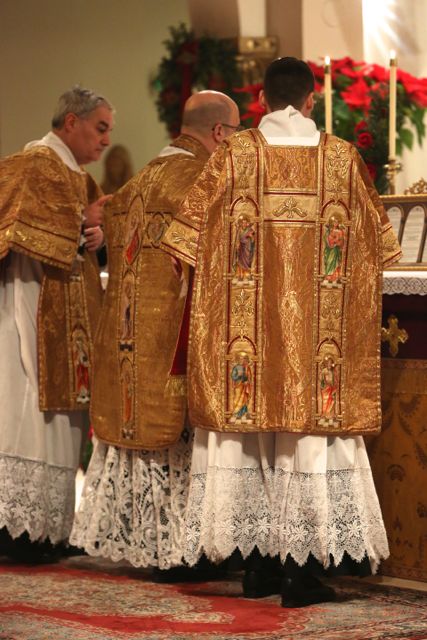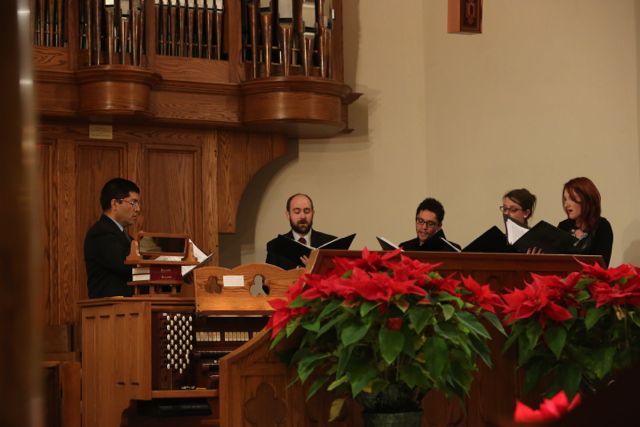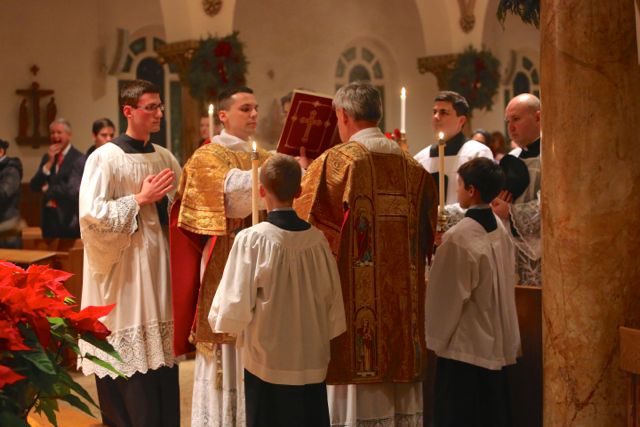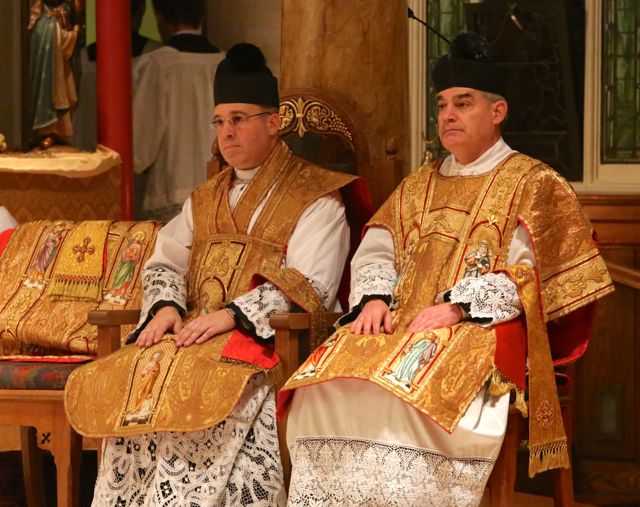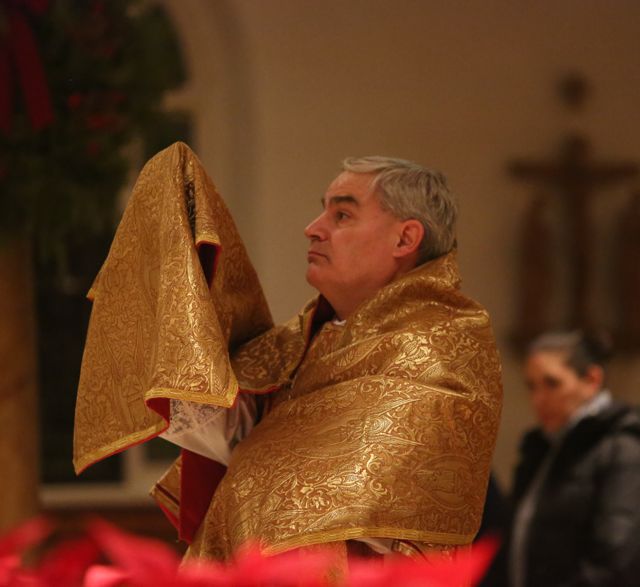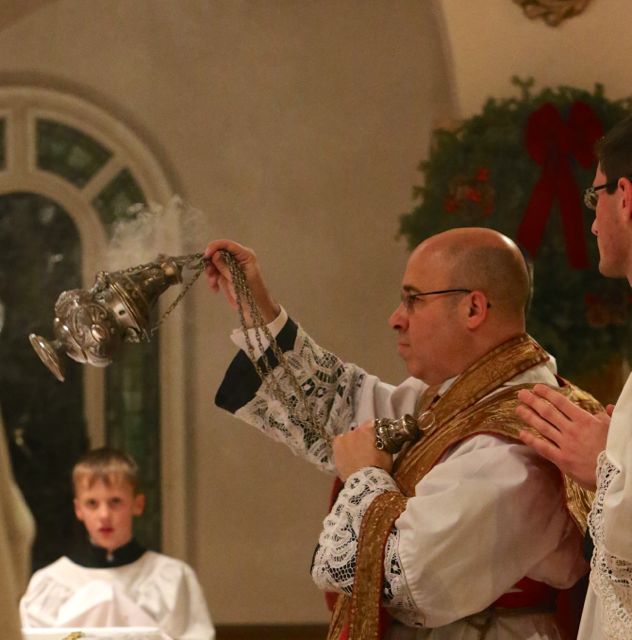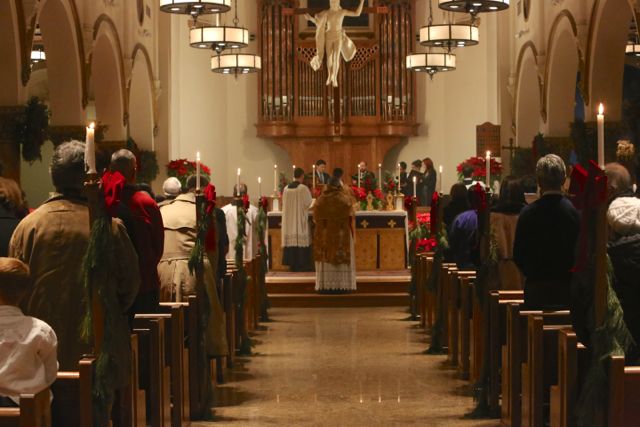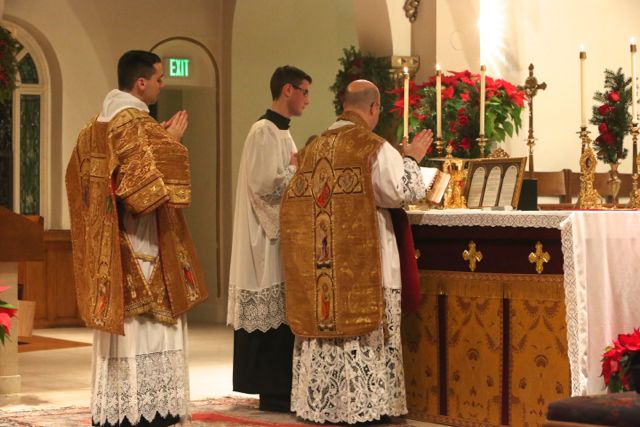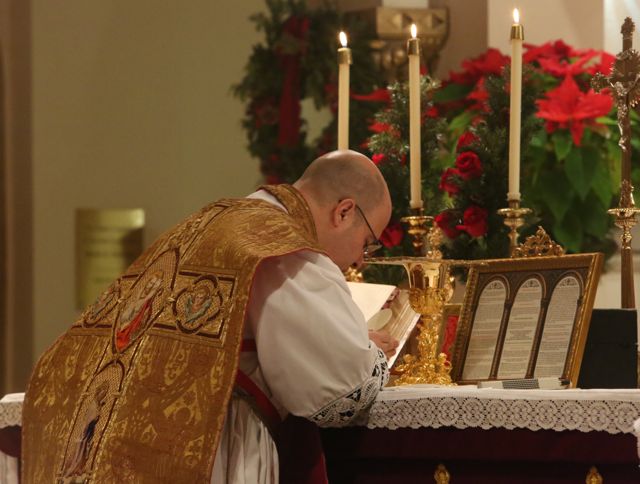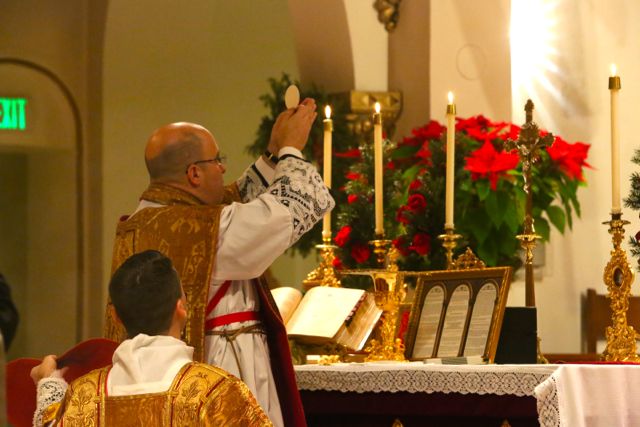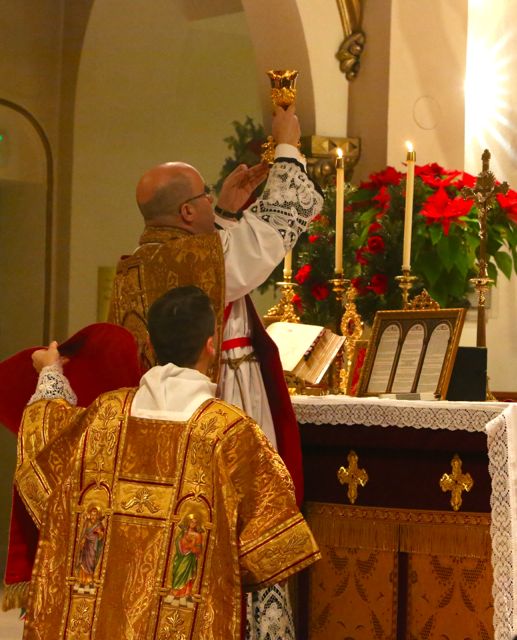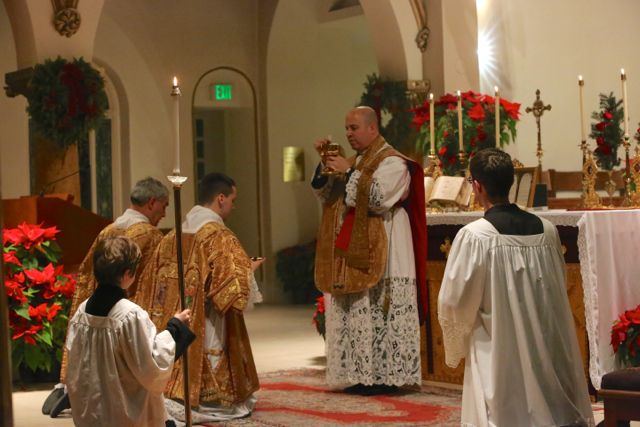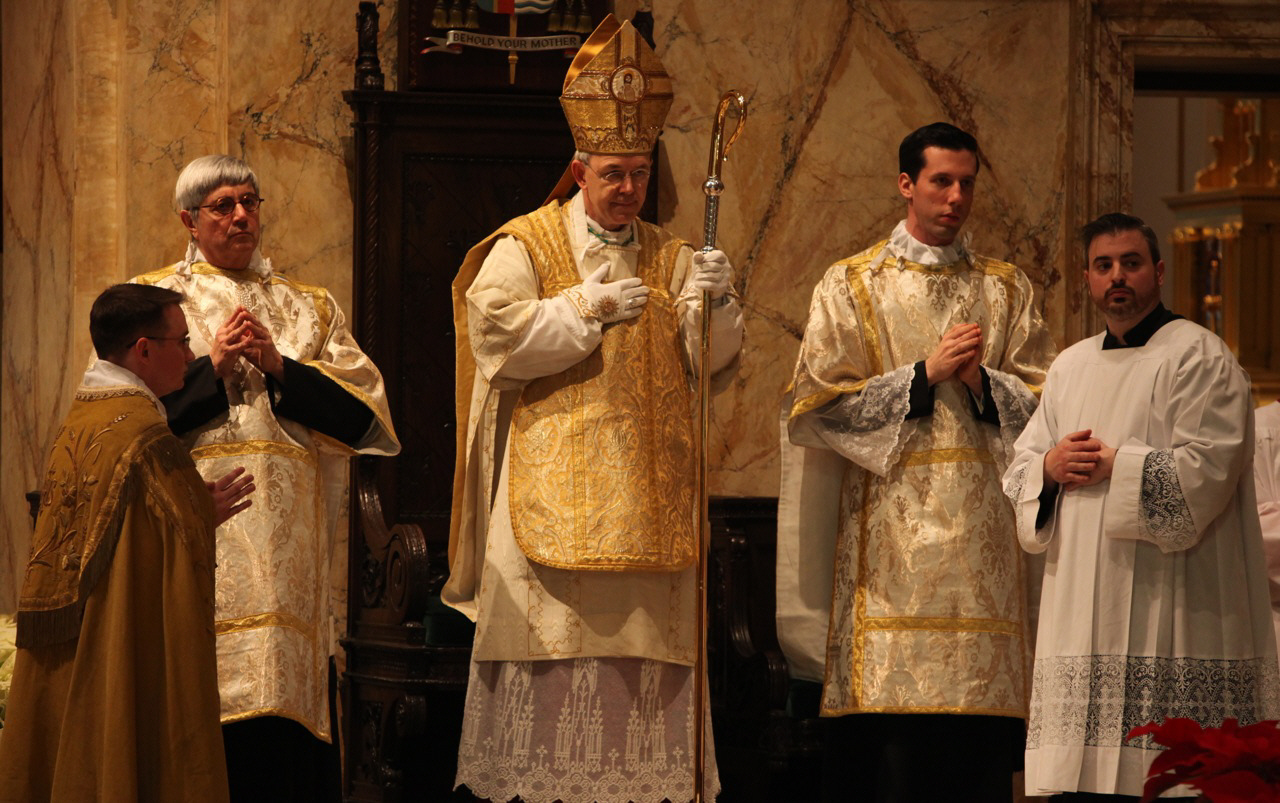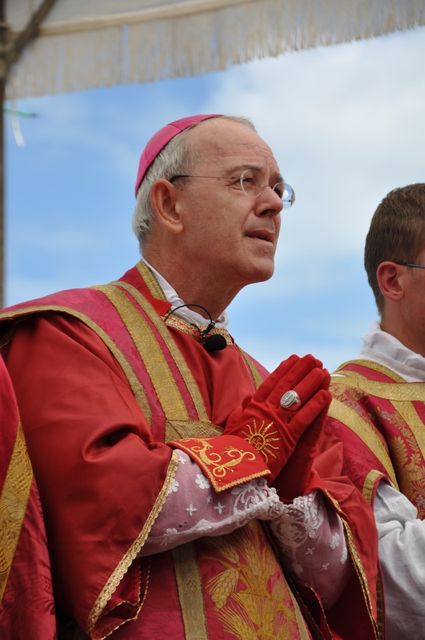
Solemn High Mass celebrated by Fr. Cyprian La Pastina, the pastor of St. Mary’s. The music included a mass setting by Michael Haydn.
7 Jan
2015
Solemn High Mass celebrated by Fr. Cyprian La Pastina, the pastor of St. Mary’s. The music included a mass setting by Michael Haydn.
1 Jan
2015
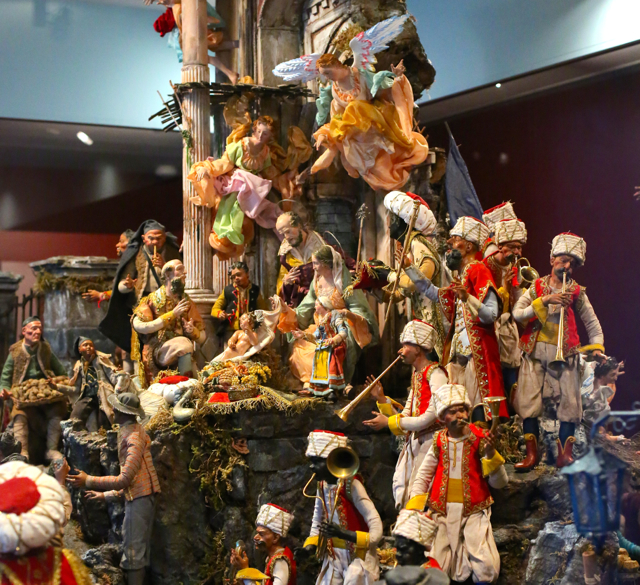
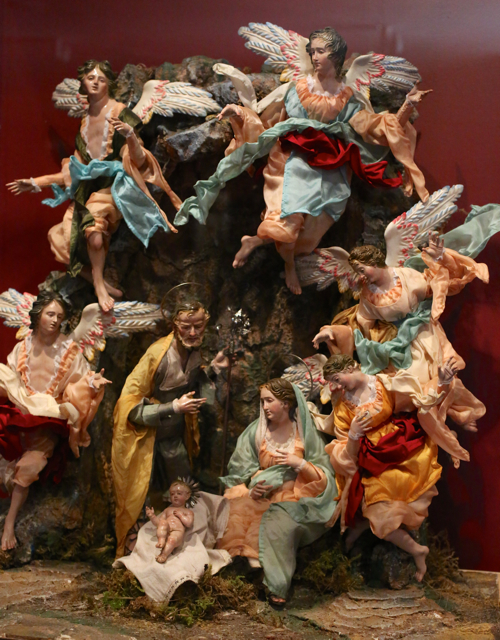
The Knights of Columbus Museum in New Haven has made in recent years a valuable contribution to the preservation and dissemination of the Catholic art of the Christmas season. The latest in their series of exhibits of Christmas creches deals with Italy – where the tradition was created by St Francis of Assisi and where it reached its most elaborate form.
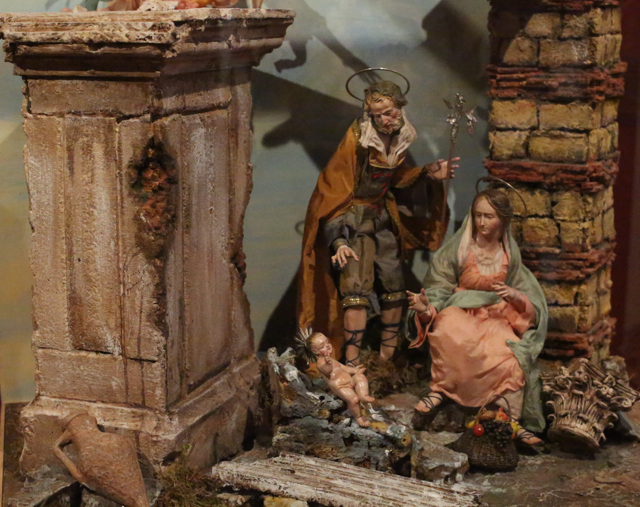
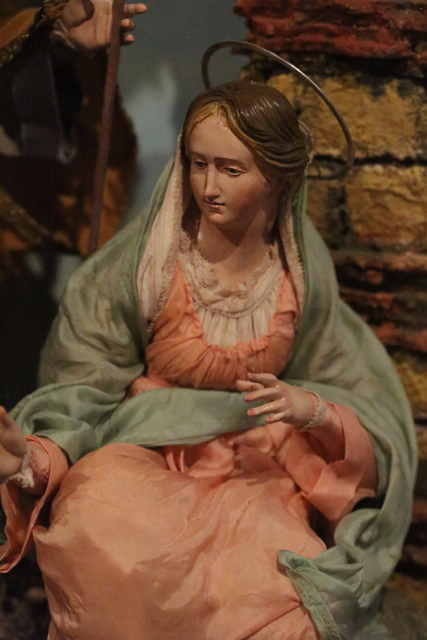
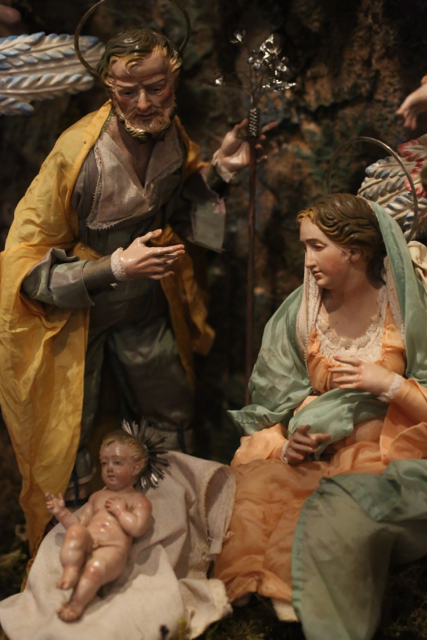
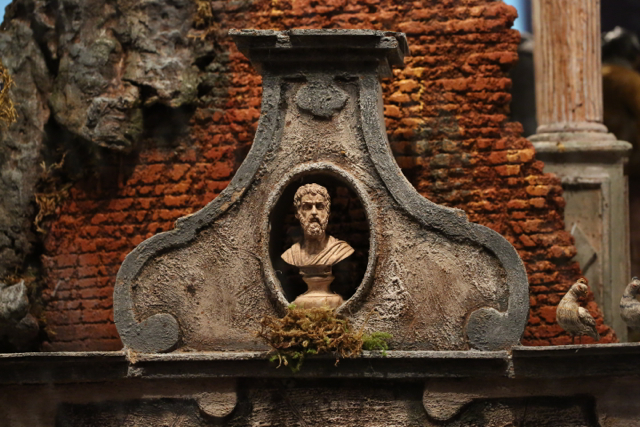
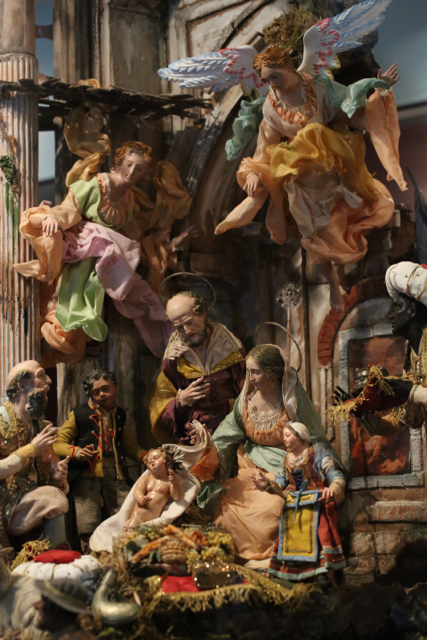
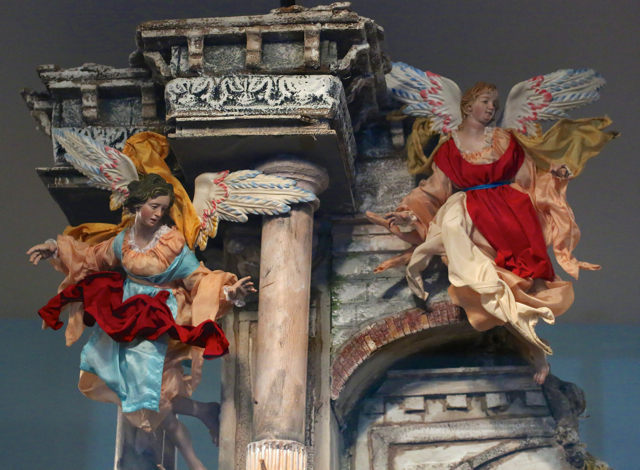
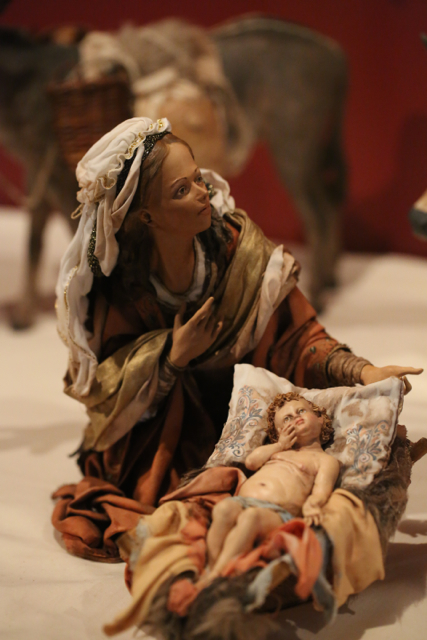
The focus of this exhibit is on the manger scenes of Naples – the most elaborate of all. Above, the Holy Family amidst the ruins of the pagan world.
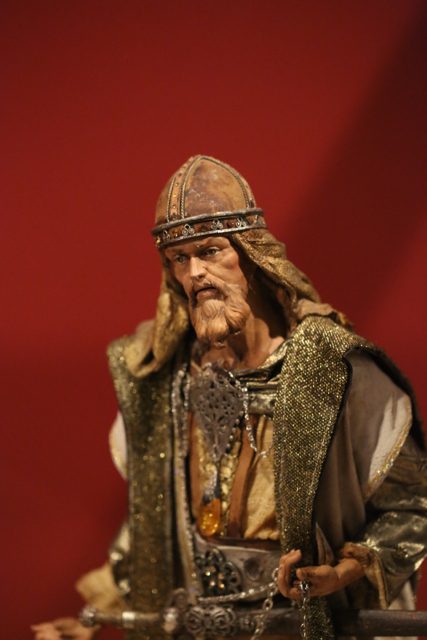
Most of the Neapolitan exhibits come from the firm of Bottega D’Arte Presepiale Cantone & Costabile, Naples, which works in the style of the 18th century. Antonio Cantone and his firm created the main creche on exhibit (photo at the beginning of this article)in about a year of work. He has a more ancient, even medieval, understanding of his work as an artist: “I am using art to express my religion.”
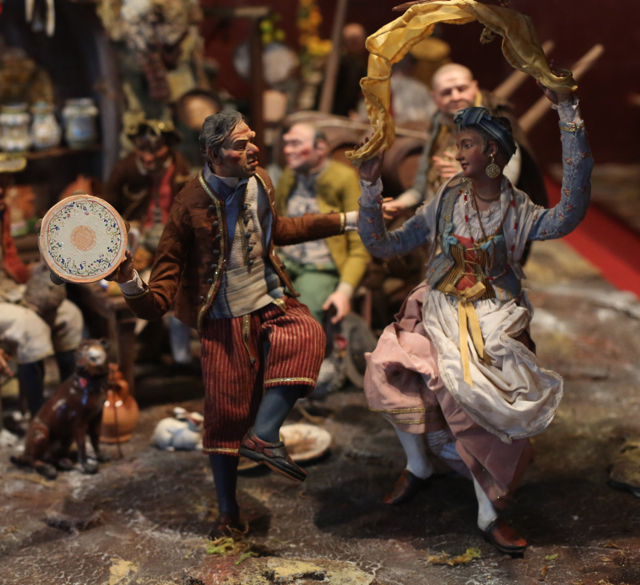
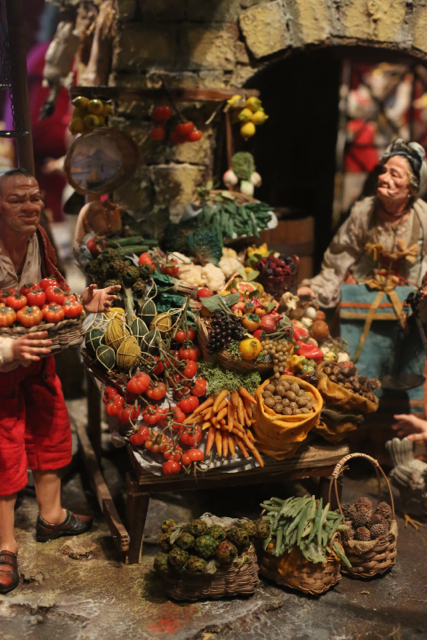
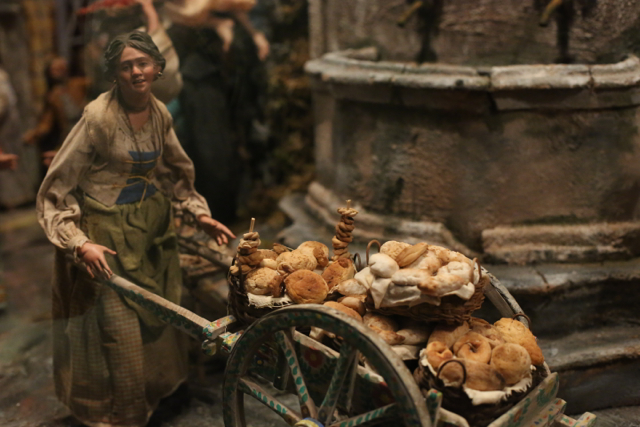
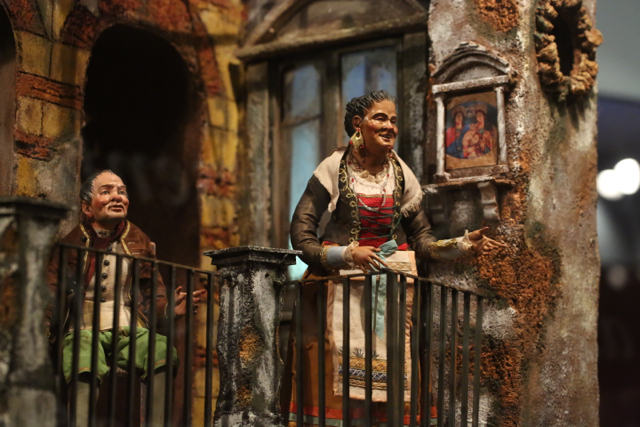
(Above and below) At its most elaborate the Neapolitan creche places the coming of Christ in a minute depiction of the world of the everyday life the people: their occupations, their pleasures, their food and their different social classes. As the Byzantine rite proclaims:”Christ is in our midst!”
The exuberance, naturalism and symbolic content of Baroque art – the last great manifestation of Christian art to succeed in shaping an entire culture and which survives even in our day in the Neapolitan creche- – seems at times to have perplexed whoever wrote the otherwise informative notes to this exhibit. We find there references to a supposed tension between the elaborate creche scenes and the simplicity of the Holy Family; the scenes of the people are supposedly not representative of the misery of the people of that time. As if that were the purpose of these figures! Ancient ruins are depicted in manger scenes, according to this source, because they lay about everywhere in Campania and, moreover, the 18th century craze for Pompeii and its art was getting underway.

(Above) The innkeepers who excluded the Holy Family (including an 18th century holy image on the wall!). (Below) Once again the theme of the supersession of the ancient pagan world by the coming of Christ.
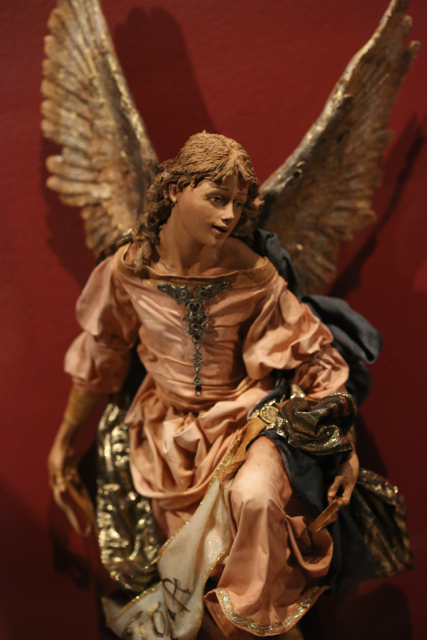
(Above and below) In contrast to the preceding genre scenes is the outpouring of the Divine encountered in the presence of the Holy Family and angels.

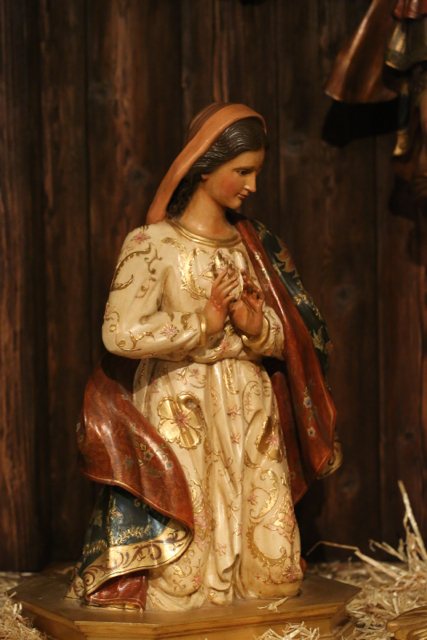
(Above) the Museum also is showed a selection of creches from other regions and cultures that take up the baroque theme. Here is a life size figure carved by Agustin Parra in Guadalajara, Mexico

(Above and below) Figures from a Nativity scene created by a Sicilian artist.
An exhibit at the Knights of Columbus Museum – 1 State Street, New Haven, Connecticut. Now throughout February 1! See HERE for further information and directions.
For the Firm of Arte Presepiale Cantone et Costabile see HERE.
25 Dec
2014
Midnight Mass at St. Mary’s, Norwalk. The celebrant was Fr. Greg Markey; Steve Genovese was the deacon and Fr. Richard Cipolla the subdeacon.
(Above and Below) Before the Mass and the singing of carols, Fr. Markey led the congregation in the recitation of the rosary before the manger scene.
Mr David Hughes was the director of music. (Above) Carols were sung before the mass.
(Below) Lighting the candles.

(Above) Reading by Mr. William Riccio of the Proclamation of the Birth of Christ.
(Above and below) Candles at the entrance procession.

(Above) Placing the statue of the Christ Child in the manger.
(Above and below) Lighting of candles at the Gospel.
The offertory.
9 Nov
2014

The Karlskirche – the masterpiece of Fischer von Erlach.
Last Tuesday Evening, November 4th, Cardinal Raymond Burke celebrated a solemn Pontifical Mass at the church of St. Charles Borromeo in Vienna, Austria – the Karlskirche. The organizer of the liturgy was Una Voce Austria. A standing room only congregation assisted at the splendid liturgy in which splendid music, beautiful vestments and precise and complete ceremonial combined for a magnificent statement of faith.
(above and below) The vesting.
(Above and below) The Karlskirche is one of the main masterpieces of that flowering of the baroque in the lands of the Holy Roman Empire – primarily Austria, Bohemia and Germany – after 1683. The architecture of this church contains numerous references to Rome – such as the two columns standing before the facade modelled on Trajan’s column.
(Above) Cardinal Burke preached in German on St. Charles Borromeo (below), whose feast day it was. He recalled the days of struggle against the “Protestant Revolution” and the role of St. Charles at the Council of Trent and as a reformer, first in Rome and then in Milan. Cardinal Burke made reference to the liturgical reforms of that time. He spoke of the necessity – then and now – of remaining faithful to all teachings of the Catholic faith.
The Karlskirche was completely filled for the liturgy. The congregation seemed like a recreation of old Austria – what with men in traditional uniforms – and families with infants and young children. The church is currently under restoration (see above and below, right) so space was at an even greater premium.
5 Oct
2014
At St. Theresa’s parish in Trumbull, Connecticut – the second Traditional Mass in just a few months. Fr. Brian Gannon, the pastor of st. Theresa’s was the celebrant; Fr. Shawn Cutler, parochial vicar at St. Theresa, was the deacon. Fr. Richard Cipolla, parochial vicar of St. Mary’s Norwalk, was the subdeacon. Mr. William Riccio was the Master of Ceremonies.

(above) St. Theresa’s is a 1961 structure of grand dimensions. It is one of the last great churches built before the fall – and much more successful than sister churches of that era. Mucb of the “pre-conciliar sanctuary survives. There is wood, there is stone and there is marble.The stained glass windows are not bad at all either!

The mass was for the Feast of Our Lady of the Rosary but the collect of the XVII Sunday after Pentecost was also read:
“Da, quaesumus, Domine, populo tuo diabolica vitare contagia……” How appropriate for these times!
A large congregation attended this liturgy.
Carolina Flores was choirmistress; Samuel Schmitt was the organist. The music included the “Missa de Beata Virgine” of Cristobal Morales and motets by Guerrero, Saint-Saens and Hassler. The gradual was a setting by William Byrd.
5 Oct
2014
I had the opportunity yesterday of returning to the “Shrine of Our Lady of Martyrs” in Auriesville, New York. Unlike all my recent experiences of the shrine, no pilgrimage or other event was occupying my attention. And the weather, in contrast to the glorious fall days both before and after that Saturday, was more typical of Upper New York State this time of year: overcast, chilly, and raining off and on into the evening. But this sombre and silent ambience had its own advantages. The weather and the stillness created a more reflective and prayerful mood. Without the distraction of crowds, we had the opportunity of exploring the grounds and the shrine buildings at our leisure. The main “guide” to the shrine today is a 1963 coloring book still reprinted and sold at the shrine book store.

Towards the Ravine – the most sacred part of the shrine. This is where St Rene Goupil was buried.

On the way – the Madonna della Strada.

The statue of Rene Goupil in the Ravine: A hushed stillness seems always to prevail here.

(Above) This shrine of the entombed Christ is said to be where St. Isaac Jogues buried St. Rene.
(Above) Mute testimony to the lack of pilgrims nowadays to the shrine. Only one tour bus from a school was visible that morning – besides a few other vehicles. The shrine has faced increased financial difficulty in recent years.
“(A)ttendance dropped by more than 50 percent during the shrine’s 2013 season. Collections brought in less than $100,000.” 1)
The Jesuit retreat house and about 90 acres of land were sold to the Buddhists a few years ago (the shrine grounds had over 600 acres). By 2013 the dilapidated state of the buildings was so dire that closing was talked of. The shrine launched a $1,000,000 fundraising drive which, I believe, has reached about half its goal. Repairs are already underway starting just now on the main shrine structure- the “coliseum.” The shrine management believes the threat of immediate closure has passed. They have even extended an invitation to Pope Francis to come to Auriesville on his 2015 American visit (Wishful thinking? But after all the shrine is administered by the Jesuits and see the altar below.) 2)

(above) Cardinal Cushing preaching in 1959 to a “full house” – the “Coliseum” can seat over 6000.

The centrally located sanctuary includes statues of the martyrs – Jogues, Lalande and Goupil – as well as of Kateri Tekakwitha who was born here in 1656 and grew up here and in nearby Fonda.

Recently some of the altars seem to have “repurposed” as displays for images and devotions. Most notably, images of John XXIII and John Paul II are now prominently on view.

The “Santo Subito” of John Paul II was nothing – Pope Francis has already been raised to the altars here!

Reliquaries and items associated with the saints are on view. (Above) A reliquary of Kateri Tekakwitha. (Below) A statue from a roadside shrine near the Jesuit novitiate in Rouen, France where three of the North American Martyrs studied: Sts Isaac Jogues, Jean de Brebeuf and Antoine Daniel. They may well have prayed before this Madonna.

The reliquary of the martyrs of Auriesville. It was fashioned by Fernand Py, an artist of the Catholic “other modern” (M. Alderman).

Statues abound on the grounds of the shrine of saints and devotions familiar and not-so-familiar. (Above) St. Theresa. (Below) The “Madonna della Libera.”
This sacred site has been attracting Traditional Catholics for many years now. For how many other places are there in the United States so closely linked with the foundation of Christianity in this region – and with martyrdom and the saints? To wander the grounds of the shrine is to discover a veritable encyclopedia of Traditional Catholic devotion – regardless of the current state of liturgical practice here. The “Pilgrimage for the Restoration” is now in its 19th year. The FSSPSX had been organizing a pilgrimage for just as long. We regret to say, however, that under its current management the shrine is not welcoming to traditionalists. (The same is true of the shrine to Kateri Tekakwitha in Fonda, but that is under different (Franciscan) direction.). The concluding mass for the “Pilgrimage of the Restoration” no longer takes place in the coliseum. As for the FSSPX pilgrimage, which now is substantially larger than the “Pilgrimage for the Restoration”, they had (always?) been excluded from the coliseum. In the last few years, however, they have been barred from the rest of shrine grounds as well. This year they were told they could not even park their cars at the shrine parting lot – creating quite an uproar, for at the head of the FSSPX pilgrimage was one Msgr Bernard Fellay….3)

An altarpiece of the North American Martyrs (from where?) on a wall of the coliseum.
To visit the shrine of the North American Martyrs is a journey well worth making. One need not travel to all kinds of pilgrimage sites all over Europe when such a holy place is on our own backyard. And despite the symptoms of the decline of the Church so evident at this shrine, we can only rejoice that such a precious heritage of earliest days of Catholicism in our land still is with us. The spirit of the martyrs still teaches us how to confront our own seemingly insurmountable difficulties.

(above) A thing now of the past? – Solemn High Mass at the Shrine in 2010.
The shrine WEBSITE.
1) “Auriesville Shrine tries to save Itself,” The Evangelist, 4/3/14 http://www.evangelist.org/main.asp?SectionID=3&SubSectionID=28&ArticleID=24493
2) Minor, Kerry, “Work Underway at the Shrine”,Leader Herald, 9/19/14 (at http://www.martyrshrine.org/?p=559
#) “Rome will hear of This,” SSPX.org, 6/13/14 http://sspx.org/en/news-events/news/auriesville-injustice-rome-will-hear-4213
13 Sep
2014
For the first time in decades the Traditional Mass returned to the “upper church” of St. Mary’s parish, Greenwich. (The Traditional Mass had already been recently celebrated in the “lower church” and in 2007-2008 as well – in fact this Society assisted at the latter liturgies). A not insignificant congregation was present Friday evening for a Solemn High Mass commemorating the Feast of the Holy Name of Mary – indeed, one reason for the move upstairs was to accomodate those who had expressed interest. As is evident from the above photograph, the sanctuary of St. Mary’s – a combination of circa-1970 “Conciliar renewal” and “Connecticut Yankee” Calvinism, with the tabernacle safely hidden away from view on the side – is not the most accommodating environment for the Traditional Mass. But yesterday evening the Extraordinary Form nevertheless triumphed. Fr. Cyprian La Pastina, the pastor Of St Mary’s, was the celebrant. The priest serving as Deacon was Fr. Stephen Giulietti from the Shrine Church of St. Bernadette; Diocese of Brooklyn. It would be nice to receive information on the other clergy, ministers and musicians (and music).
30 Jun
2014
The last Missa Cantata of Fr. Leonard Villa, pastor of St. Eugene’s parish in Yonkers, NY for the feast of St. Peter and Paul. He is being transferred to Goshen, NY to be pastor of St. John the Baptist parish as of July 1. Thank you to Joanne O’Beirne for sending the photo.
24 Jun
2014
The Corpus Christi Procession of the Church of the Holy Innocents took place last Thursday evening. Our thanks for Eddy Toribio for sending us the link to these photos on the website Traditional Catholicism.
24 Jun
2014
(above and below) Altars and decorations for the Corpus Christi procession of St. Stanislaus church (Polish). SOURCE
(Thanks to Manuel Albino)