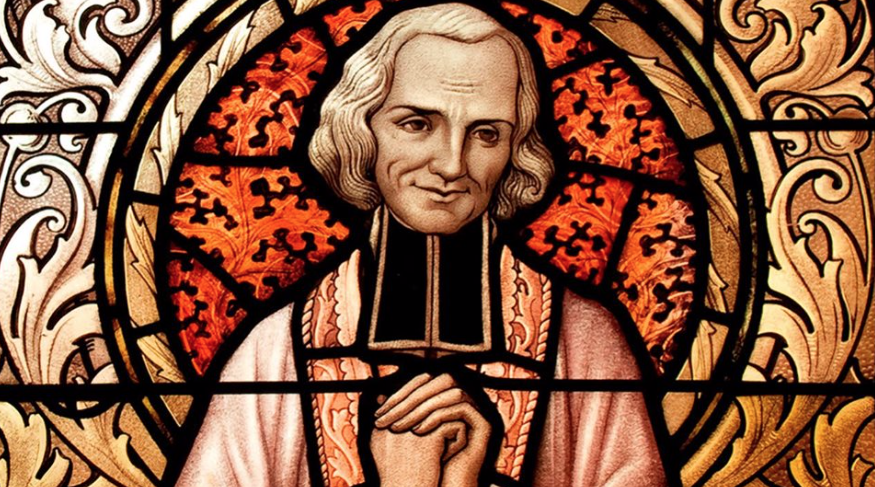
On Thursday, August 8th at 7:30, St. Mary Church, Greenwich, CT will offer a traditional Mass to celebrate the feast of Saint John Vianney, Patron Saint of Parish Priests. Please pray for priests on this special feast!
29 Jul
2019
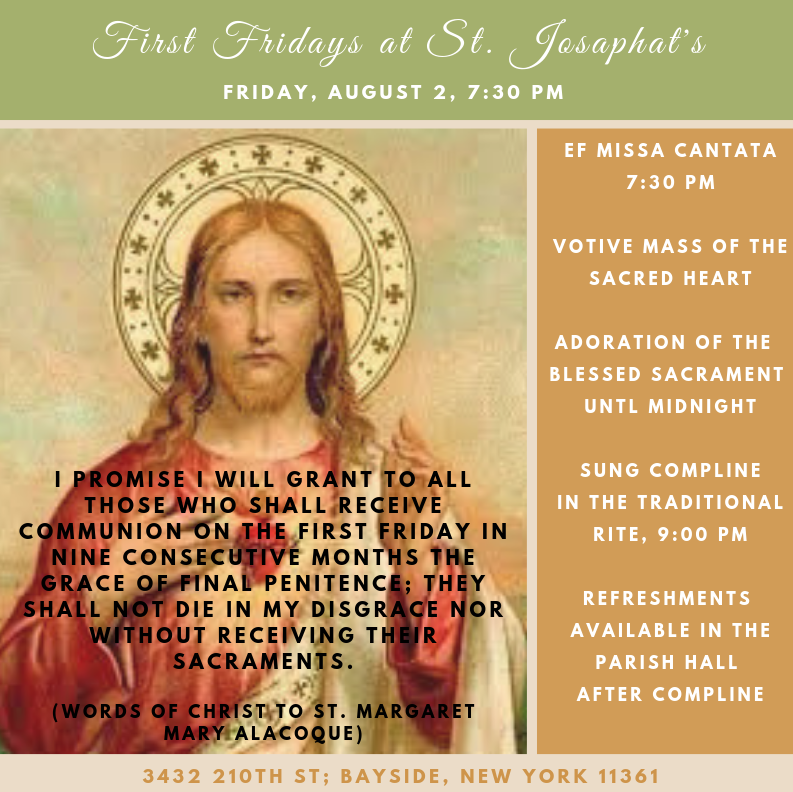
This Friday at St. Josaphat’s Church in Bayside, Queens, there will be a sung Votive Mass of the Sacred Heart at 7:30 P.M., followed by Sung Compline in the traditional rite at 9:00 P.M. and adoration of the Most Blessed Sacrament until midnight. Light refreshments will be available in the Parish Hall!
29 Jul
2019
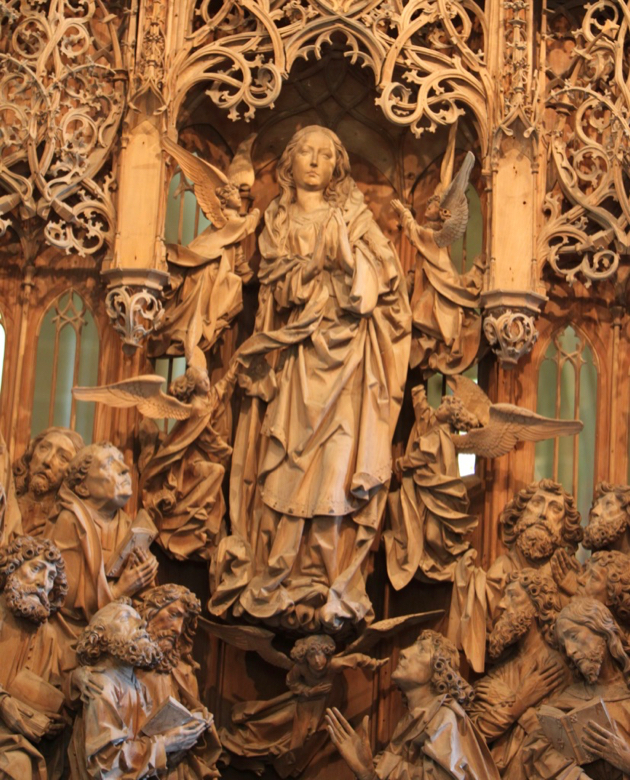
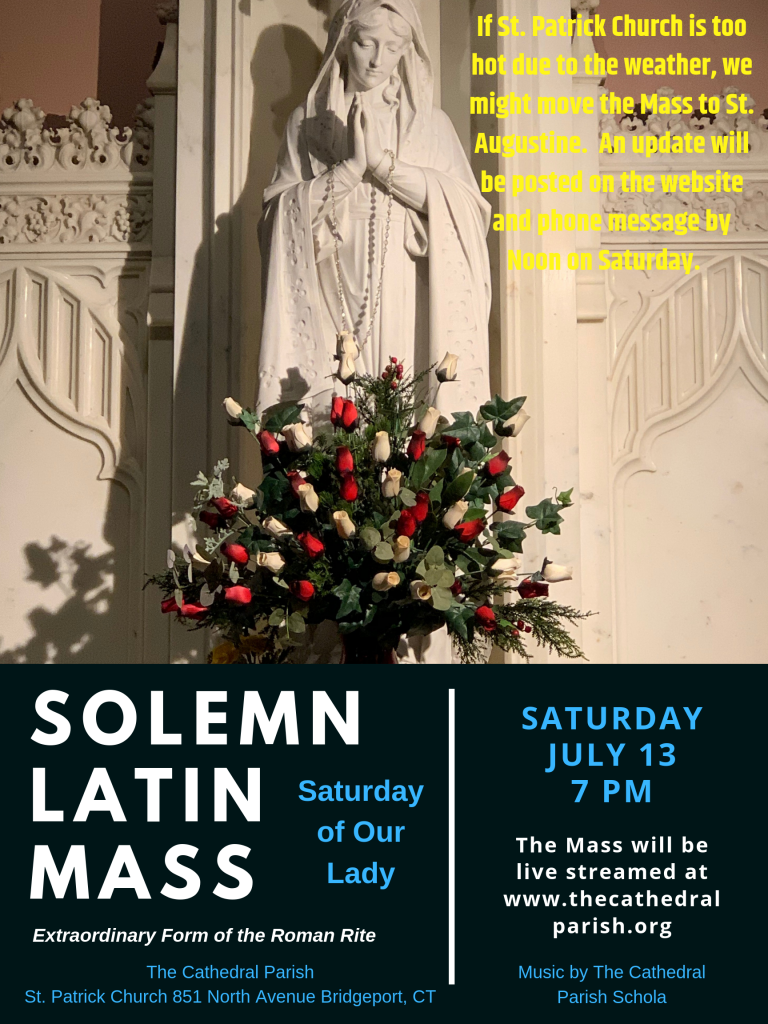
This Thursday, August 15, is the Solemnity of the Assumption of the Blessed Virgin Mary, a holy day of obligation. The following churches will offer traditional Masses:
St. Mary Church, Norwalk, CT, Solemn Mass, 6 pm, followed by a parish picnic. The church will provide hamburgers and hot dogs. Bring a dessert or side dish to share plus a drink of your choice.
St. Pius X Church, Fairfield, CT, 7:30 pm
St. Patrick Church, Bridgeport, CT, 7 am low Mass; 6 pm Missa Cantata
Sts. Cyril and Methodius Oratory, Bridgeport, CT, Missa Cantata, 6 pm
St. Stanislaus Church, New Haven, 5:30 pm low Mass
St. Francis Church, New Britain, CT, 7 pm
St. Martha Church, Enfield, CT, 7 pm
Holy Innocents, New York, 8 am and 6 pm
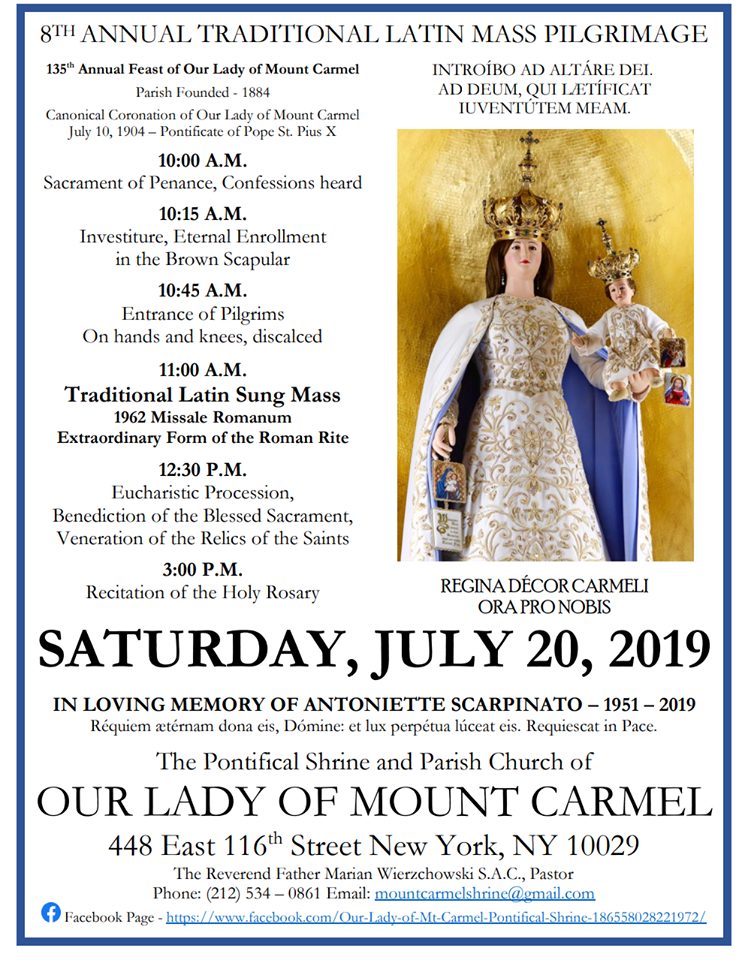
Our Lady of Mount Carmel, 448 E. 116th St., New York, Low Mass at 7:45 am; Missa Cantata at 7:30 pm; blessing of fruits, herbs and flowers at 8:30 pm.
St. Josaphat, Bayside, Queens, NY, 7:30 pm
Immaculate Conception, Sleepy Hollow, NY, 7 pm
St. Paul the Apostle, Yonkers, NY, 12 noon.
Our Lady of the Way Chapel at the Culinary Institute, Hyde Park NY at 12:00. Enter the campus at the north gate from Rt 9.
St. Joseph Church, Babylon, NY, Wednesday, August 14 (fulfills feast day obligation) 7:30 pm, Young Adult Mass and social
St. Matthew, Dix Hills, NY, 10:30 am
St. Rocco, Glen Cove, NY , 7:30 pm
Assumption Church, 344 Pacific Ave., Jersey City, 6 pm
St. Anthony of Padua Oratory, West Orange, NJ , 9 am, 7 pm Missa Cantata
Our Lady of Fatima Chapel, Pequannock, NJ, 7 am, 8 am, 12 noon, 7 pm
Corpus Christi Church, South River, NJ, 7 pm
Church of St. Catherine Laboure, 130 Bray Ave., Middletown, NJ, 9 am, Low Mass
Shrine of the Blessed Sacrament, Raritan, NJ, 5 pm
17 Jul
2019
12 Jul
2019
1 Jul
2019
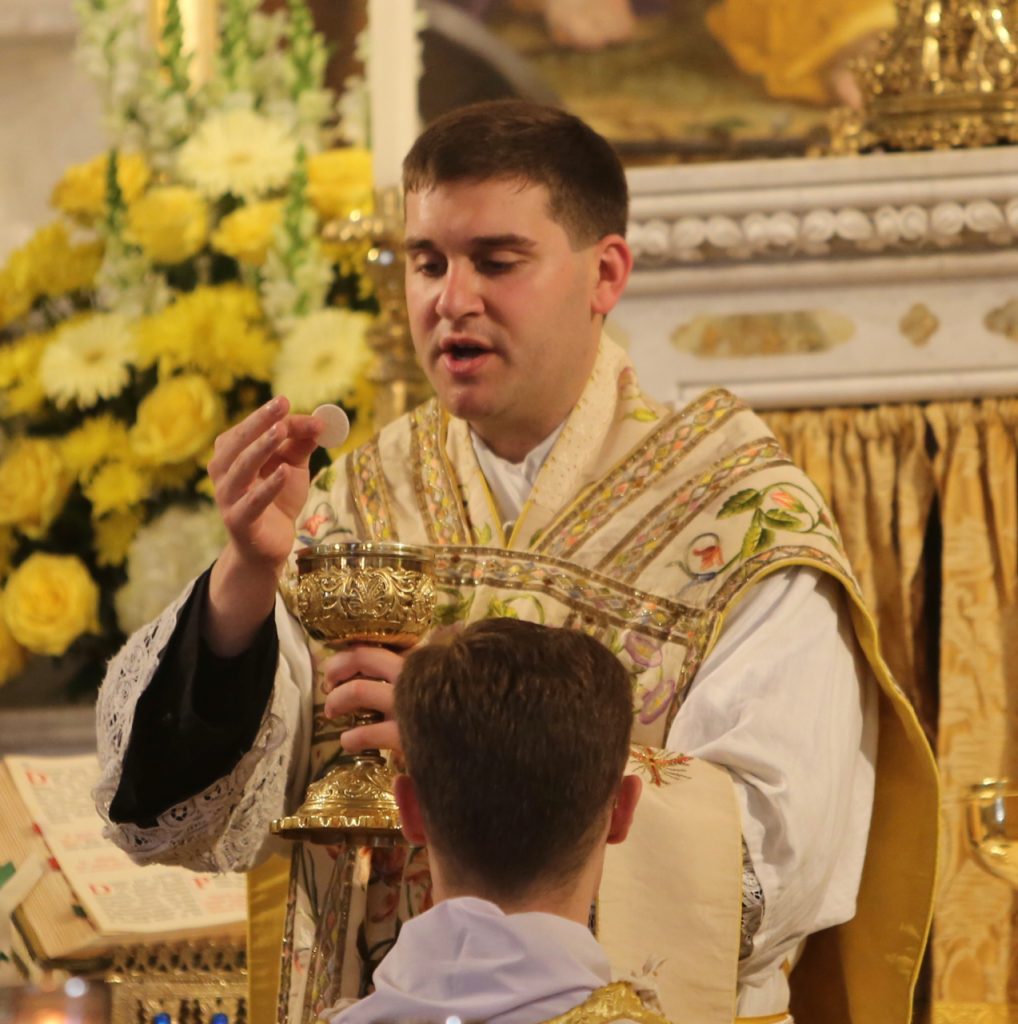
Two years ago, this blog featured pictures from the first Mass of Fr. Timothy Iannacone (see link), which was in the Extraordinary Form. We check in again with Fr. Tim, now parochial vicar of St. Pius X Church, in Fairfield, CT. The following is a letter that appears in this week’s bulletin of St. Pius X (reprinted by permission of Fr. Tim).
Dear Brothers and Sisters in Christ,
Fr. Sam is away with our youth group this week for the annual mission trip, and he’s asked me to take on the weekly bulletin column. I’d like to share with you a bit about the Extraordinary Form of the Roman Rite, the Traditional Latin Mass. Typically, the Latin Mass is offered here on Holy Days of Obligation and certain feast days throughout the year. As this form of the Mass is not commonly celebrated, I want to explain some of the reasons behind its use in our parish.
One of the primary reasons for my affi
nity for the Mass is deeply personal: I grew up with it! I get a good chuckle when older parishioners tell me that they served the Latin Mass when they were children and try to explain to me what it was like. What is more humorous is the look of shock on their faces when I tell them that I too served that Mass as a youngster. Invariably, they question how I could have served a Mass that went out of vogue nearly sixty years ago. The story is as simple as it is profound. My grandparents, one of whom was baptized there, returned to St. Mary’s Parish in Norwalk after it was announced the parish would be offering the Mass in Latin. They invited me to attend this Mass with them one day, and my first interaction with it might not be what you would expect. I found the ceremonial, the language, and the music bizarre at best, detestable at worst. I totally dismissed it as something that was not spiritually good for me. Time would show me just how wrong I was! Just because I didn’t understand something initially didn’t mean it was not good for me.
As I continued to attend this Mass each week, I noticed two things that stood out: beauty and youth. I began to hear the music as absolutely gorgeous, and understand the ornate vestments as befitting a God who created all things. Furthermore, the priests and deacons exuded reverence and awe, truly understanding the love of God poured out on the cross for you and me without reservation. Additionally, never in my life had I attended Mass where young people outnumbered any other age demographic. What was even more shocking was that many of my friends from school were serving this Mass. They invited me to serve with them. You will see quite a few of these “misfits” hanging around Pius from time to time. Some of them perform the music or serve with great compassion and diligence at our Masses. These friendships continue to blossom because of the Mass we love so much. I have never looked back after discovering the beauty of the Extraordinary Form. The Roman Catholic Church underwent a series of changes in the mid-1960s after the Second Vatican Council. For the ordinary individual, the most noticeable aspects were the changes in the celebration of the Mass. However, Pope Benedict XVI, through his Motu Proprio, Summorum Pontificum (2007), recognized the desire of many people to attend and celebrate the Mass in the traditional Latin form, and so has made it possible for the laity to attend the celebration of the Roman Rite according to the Missal of 1962 without restriction. It is our right as Catholics to have a well-prayed Mass, and it is the duty of priests to offer Mass worthily and well. We must never forget, the Mass is an invaluable gift given by Christ to His Church.
Through the Extraordinary Form, Catholics can come to see the beauty and love of Christ in the Holy Mass, which has organically developed over centuries. If more Catholics come to understand the Church, and more importantly the Traditional Mass, we will undoubtedly see the laity and clergy become champions of Truth; a Truth that ultimately is Jesus Christ. No longer ought we be discouraged by statistics showing decline in the practice of the faith, but instead we can be encouraged by this solid liturgical grounding to further conform our lives to Christ, Who offers Himself without reserve in the Holy Sacrifice of the Mass.
Fr. Sam has begun learning how to offer the Mass in the Extraordinary Form. Fr. Sam, like myself, has experienced the beauty of this Mass and realizes that this Form is not a detriment to the priest or the faithful, but another Form that mutually enriches our lives as Roman Catholics. History proves this point well; most of the Church’s Saints attended this Form of the Mass daily. I will never forget the look on Fr. Sam’s face when he attended my first Mass as a priest. The awe that he exhibited at this Mass could only mean one thing for me, that he didn’t quite understand what was going on, but that he loved it. The master of ceremonies leaned over to me after my first Mass and whispered, your pastor has been awakened. I am blessed that Fr. Sam has asked me to offer this Mass here at St. Pius and to share with you my story, because this Mass is a part of who I am.
I would like to invite and encourage you to attend a Mass in the Extraordinary Form if you see that one is on the schedule. It would be my joy to have you experience the beauty and love of God the way I have experienced it throughout my life because of this Mass. To quote C.S. Lewis, “You never know what you can do until you try, and very few try unless they have to.” Together, we can revive and promote the sense of the sacred in the Holy Mass through the aid of tradition and understand the Catholic faith in all its richness, diversity, and spiritual fruitfulness. Finally, persevere and pray earnestly for the faithful to embrace the liturgical traditions of our Church, as they ultimately offer us a freedom the world cannot give.
Yours in Christ,
Fr. Tim
25 Jun
2019
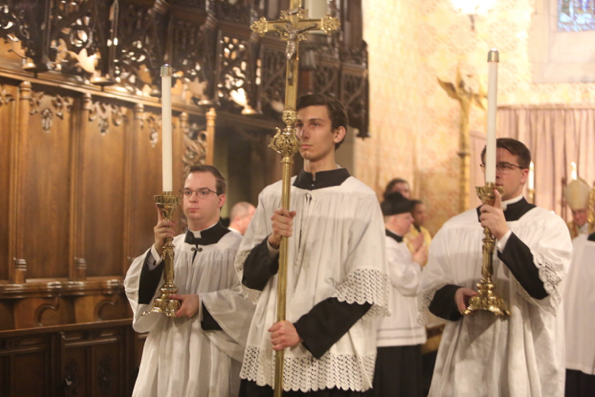
Joseph Falciano, one of the main organizers of the successful Lepanto conference series of the Society St. Hugh of Cluny, will begin seminary formation with the Priest Fraternity of St. Peter this fall at Our Lady of Guadalupe Seminary in Denton, Nebraska. The priests of the FSSP are dedicated to preserving, protecting, and promoting the liturgical and doctrinal traditions of the Holy Catholic Church.
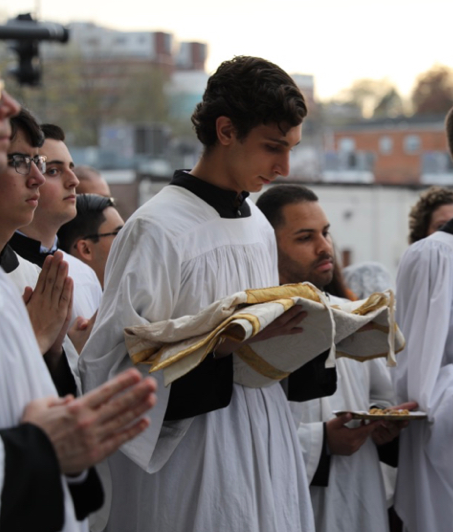
Joseph is a familiar face at St. Mary’s Church, Norwalk, CT, where he has been serving as an acolyte at the solemn traditional Mass.
Joseph is in need of financial assistance and prayers to begin his studies in the seminary. In your charity, please consider a contributing to fund his formation. A Go-fund-me page has been set up: https://www.gofundme.com/help-a-catholic-seminarian-pay-tuition
You may also send a check directly to the seminary. Please indicate that you are donating to the seminary “in honor of Joseph Falciano” via mail.
The address is “Our Lady of Guadalupe Seminary, 7880 W. Denton Rd., Denton, NE 68339
All donations will be applied solely to the necessary expenditures of seminary life (tuition, personal items, and regular airfare).
Finally Joseph asks for your prayers: “This is an arduous task, and I ask for your prayers that I may be able to persevere with them in emulating Christ in the Eucharist: broken and consumed by men for the glory of the Kingdom of Heaven. Rest assured that I will remember all my supporters in my daily Rosary and prayers.”
25 Jun
2019
A Report on St. Francis de Sales Parish, Benedict, Maryland, by Joseph Falciano
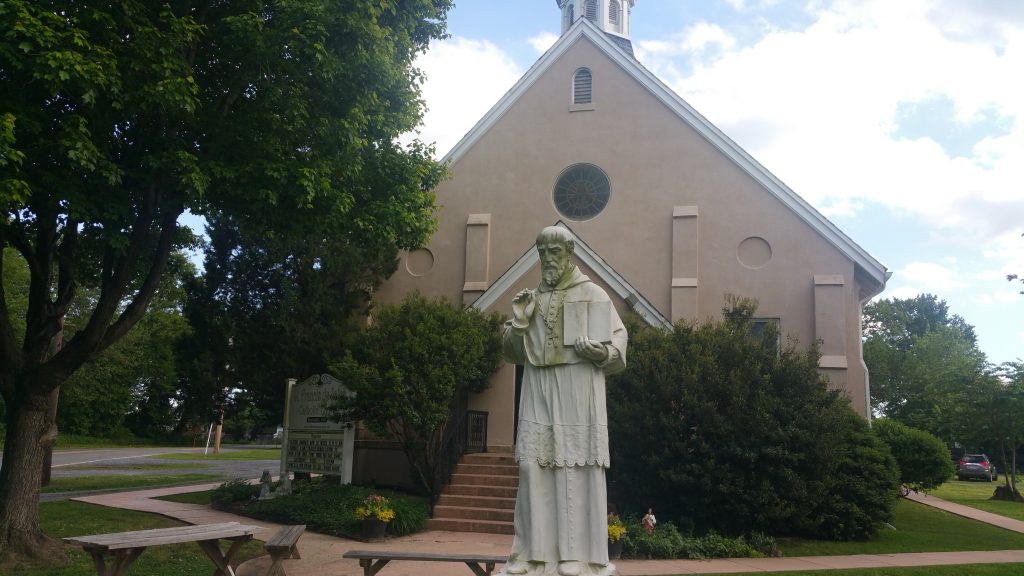
In the rural heart of southern Maryland, in the town of Benedict – located on the southeast shore of the state – is the parish of St. Francis de Sales, a parish engaged in the revival of the traditions of the Church.
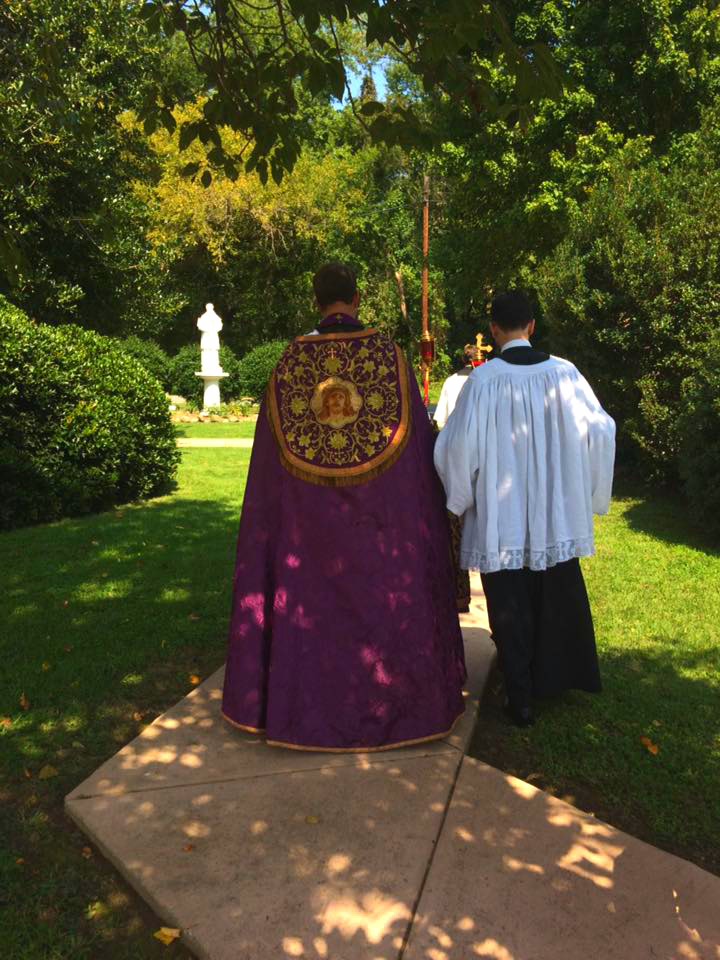
The tireless and holy cure d’Benedict is Fr. Kevin Cusick, LCDR (Ret.), a retired military chaplain and priest of the Archdiocese of Washington for 27 years.
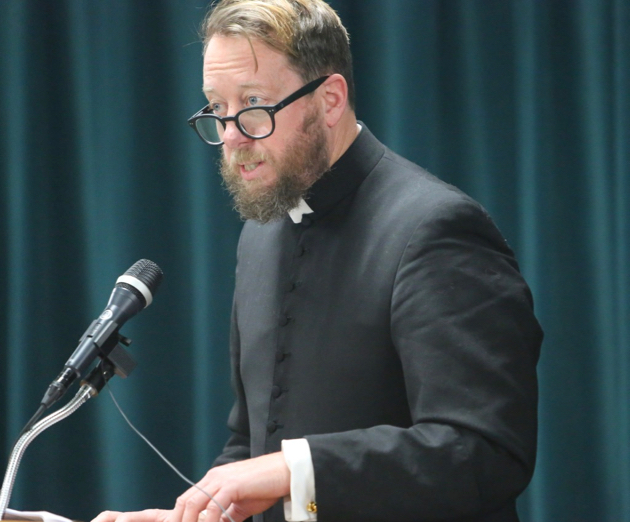
He assisted the Society of St. Hugh of Cluny in our 2019 Lepanto Conference and Mass as the MC of the conference.
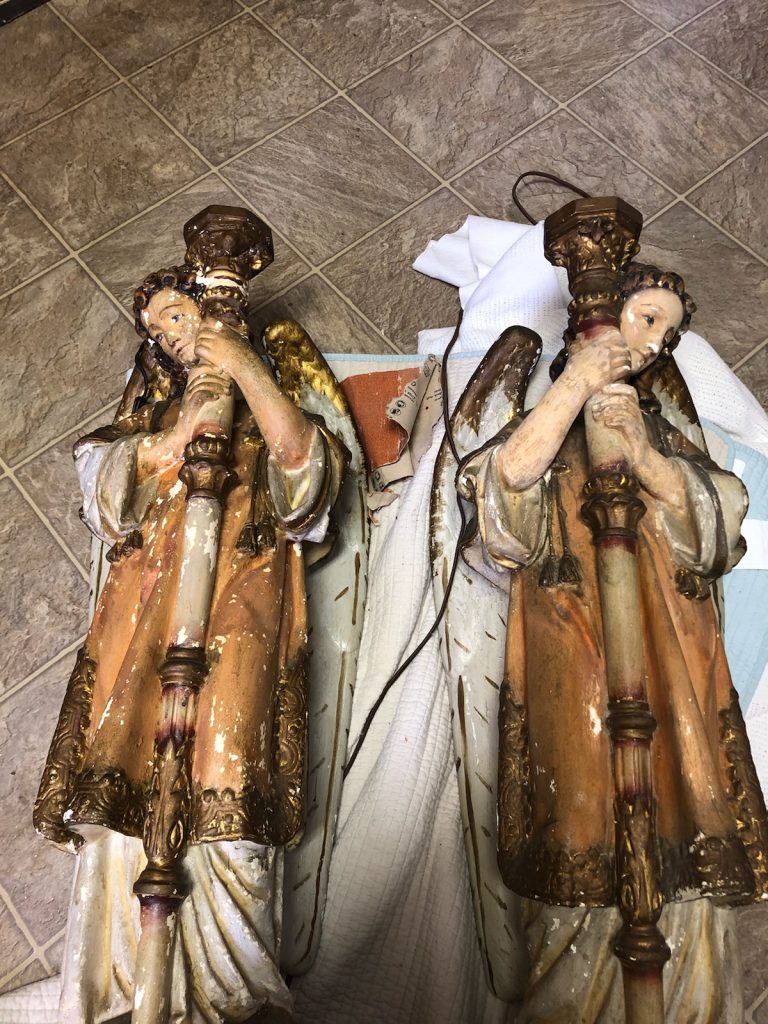
Despite being built in the typical 20th-century colonial style, S. Francis de Sales displays an excellent selection of some of the finest antique Baroque aesthetics in the state of Maryland. They aspire, as a parish, to style the church in what one could call ‘Confederate Baroque’ – where small town south meets Roman Basilica.
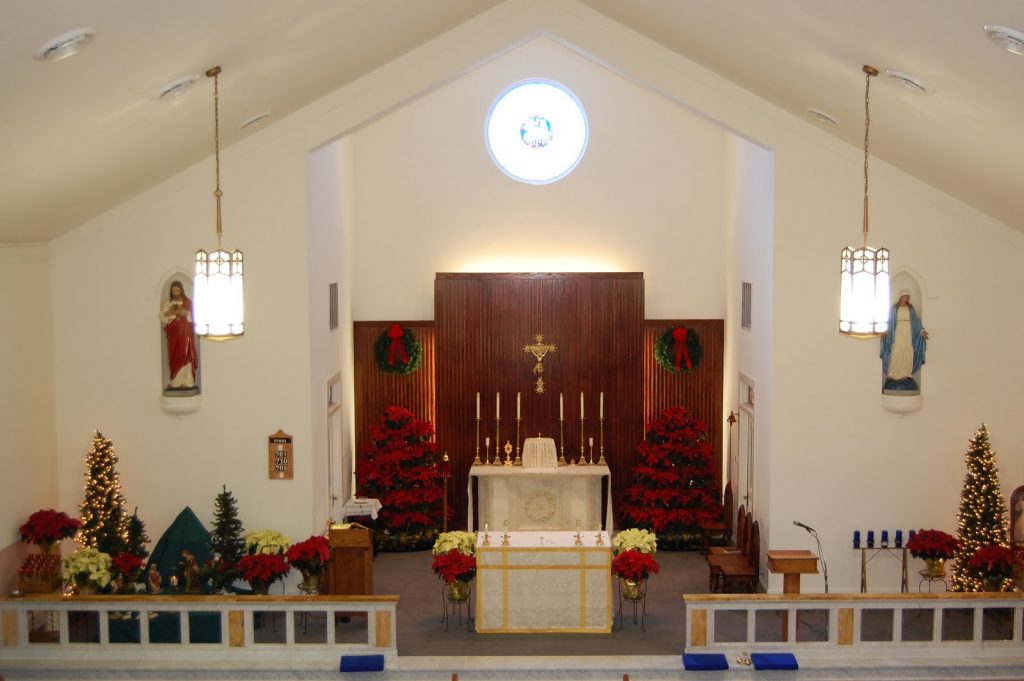
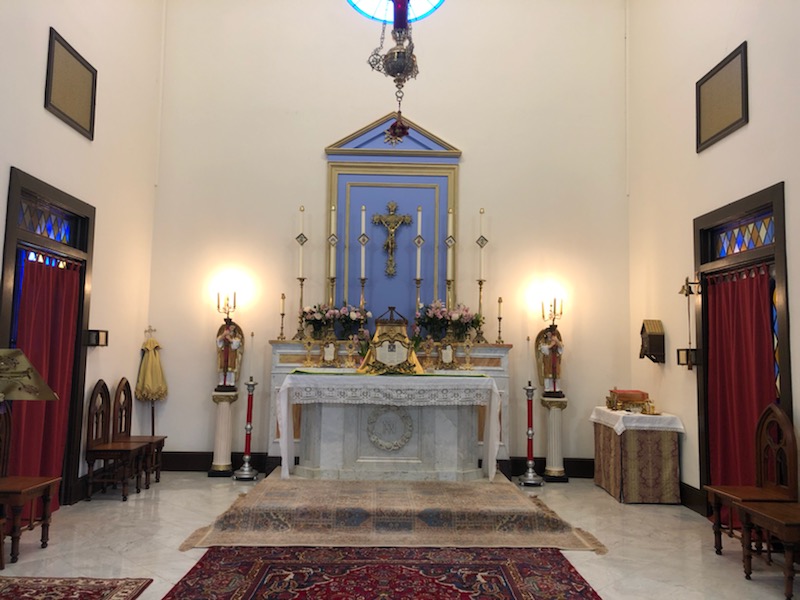
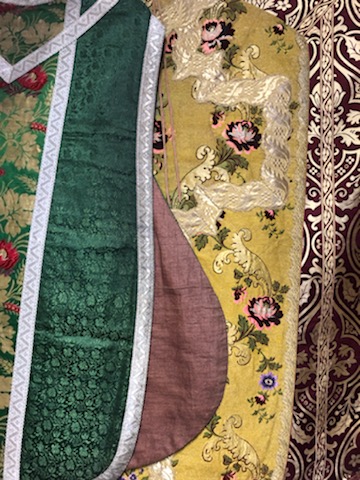
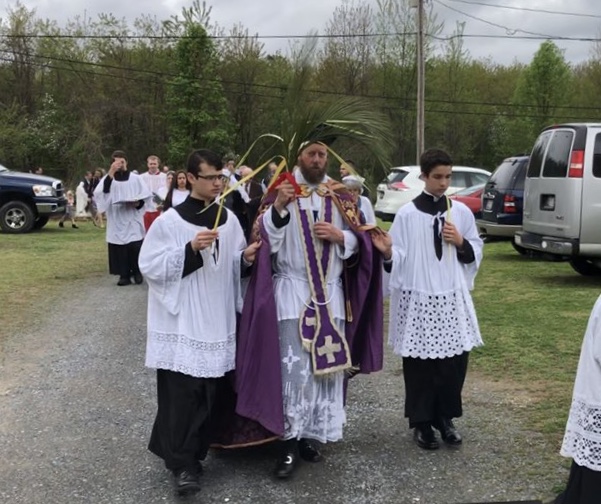
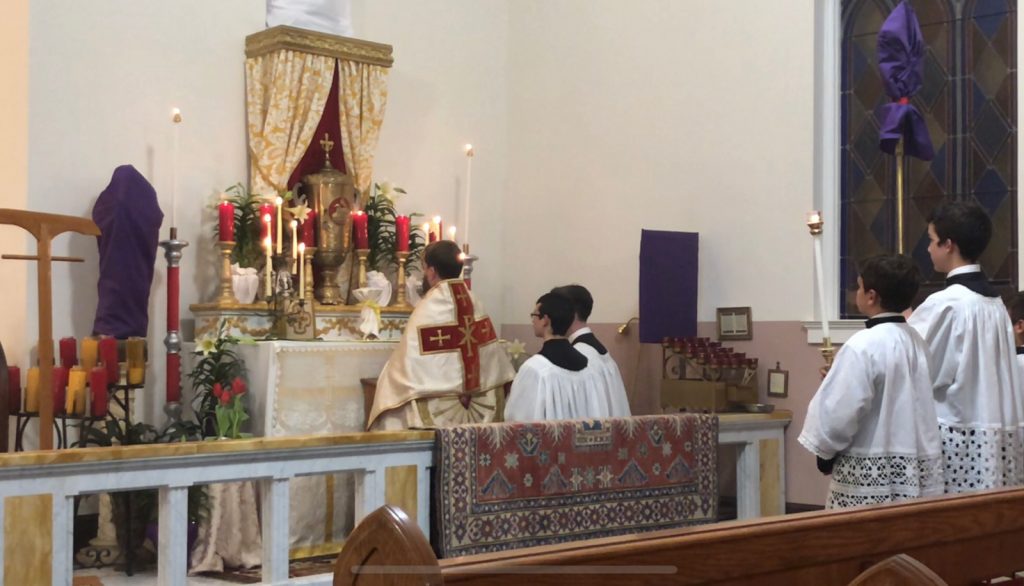
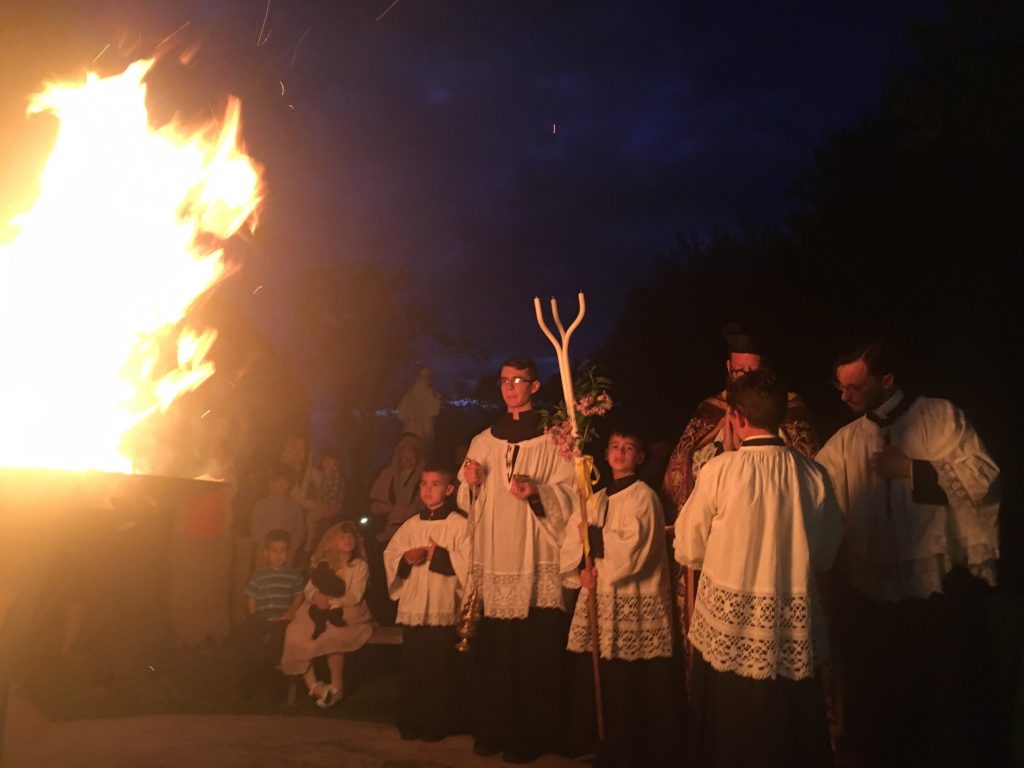
They have been conducting their Holy Week in accordance with the pre-1955 rites.
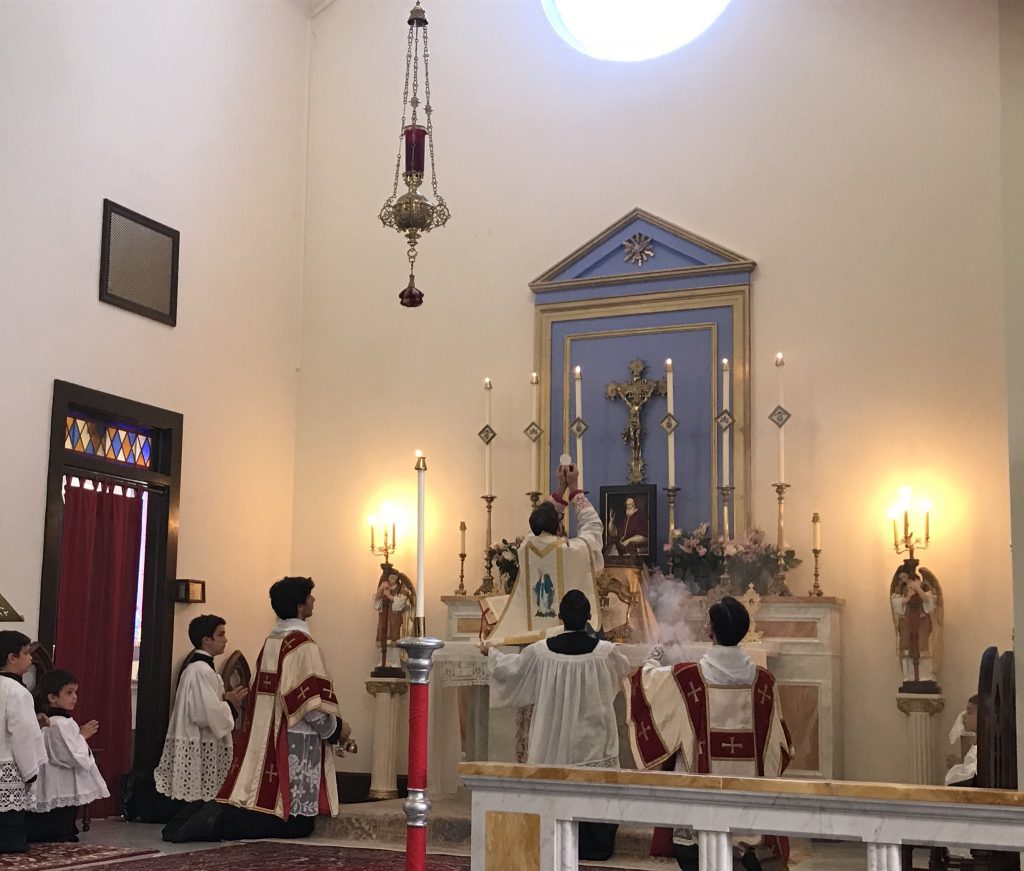
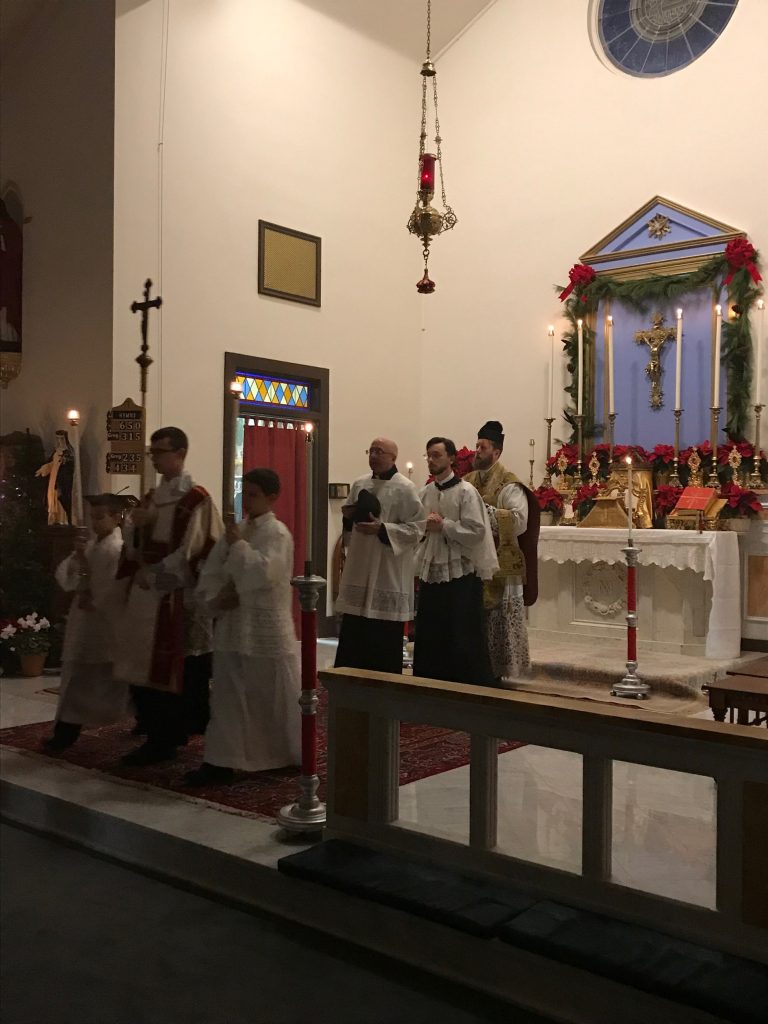
The parish has the only official daily traditional Mass in the entire Archdiocese of Washington.
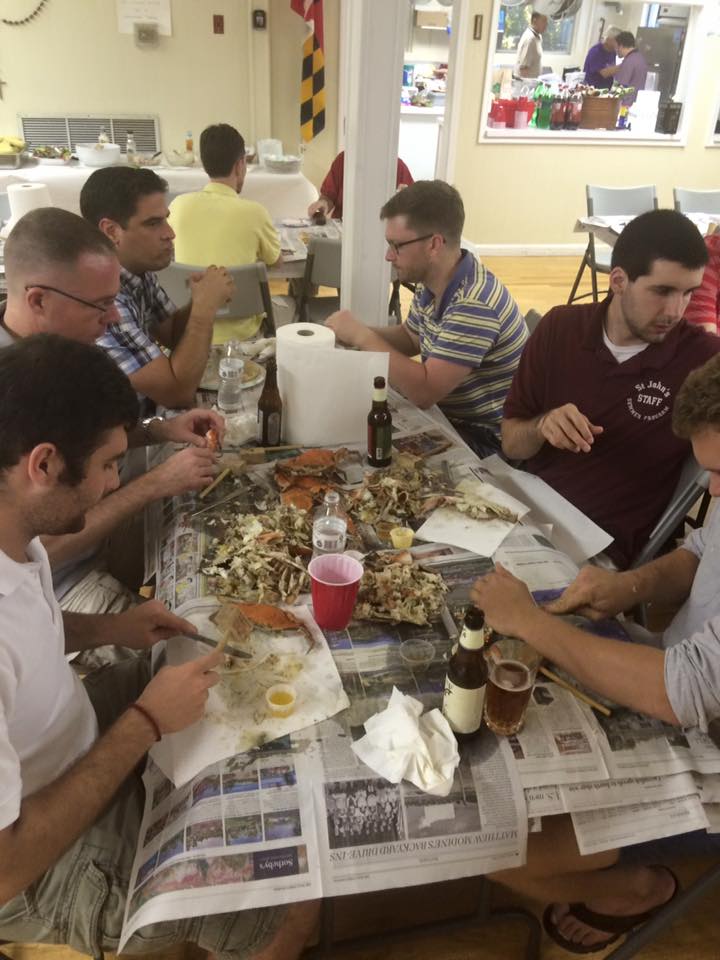
The parishioners are wonderful young men and women dedicated to keep the church beautiful and restore the traditional Mass. Many contribute from their own livelihoods to assist in acquiring antique or more expensive pieces for the church. On Sundays, the nave of the church is replete with young, growing families – something very common to traditional Mass attendees.
.
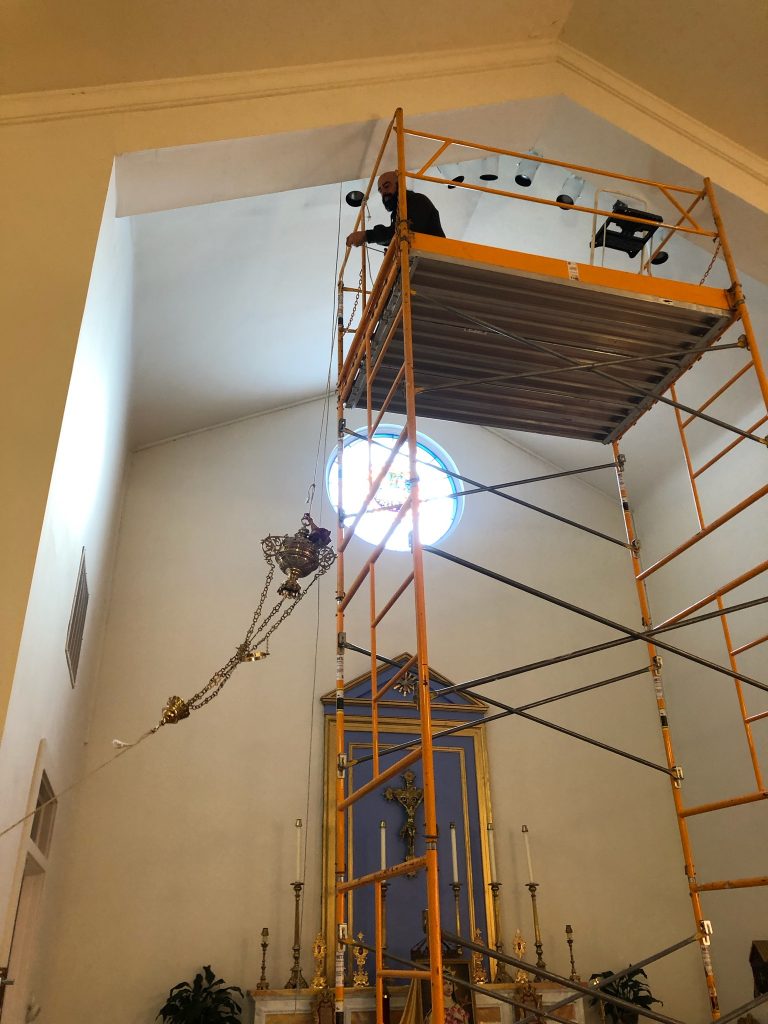
Fr. Cusick is hoping to continue the restoration of the parish by removing the carpet in the nave and replacing it with tile flooring, adding side altars, acquiring vestments for Solemn Mass, building a confessional, and painting the walls of the church in Baroque frescoes.