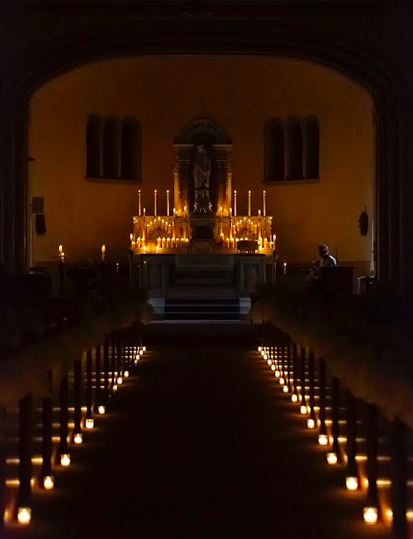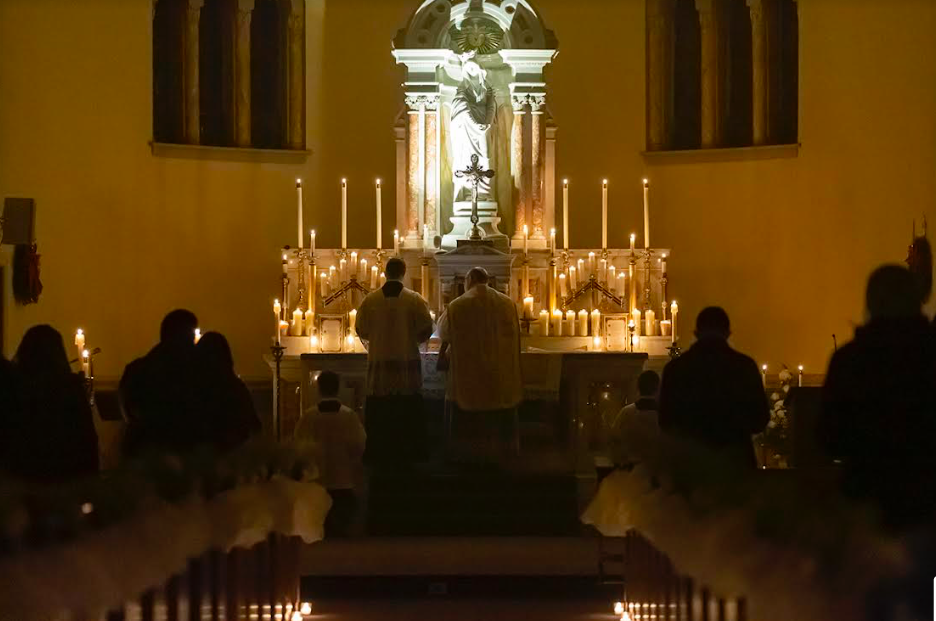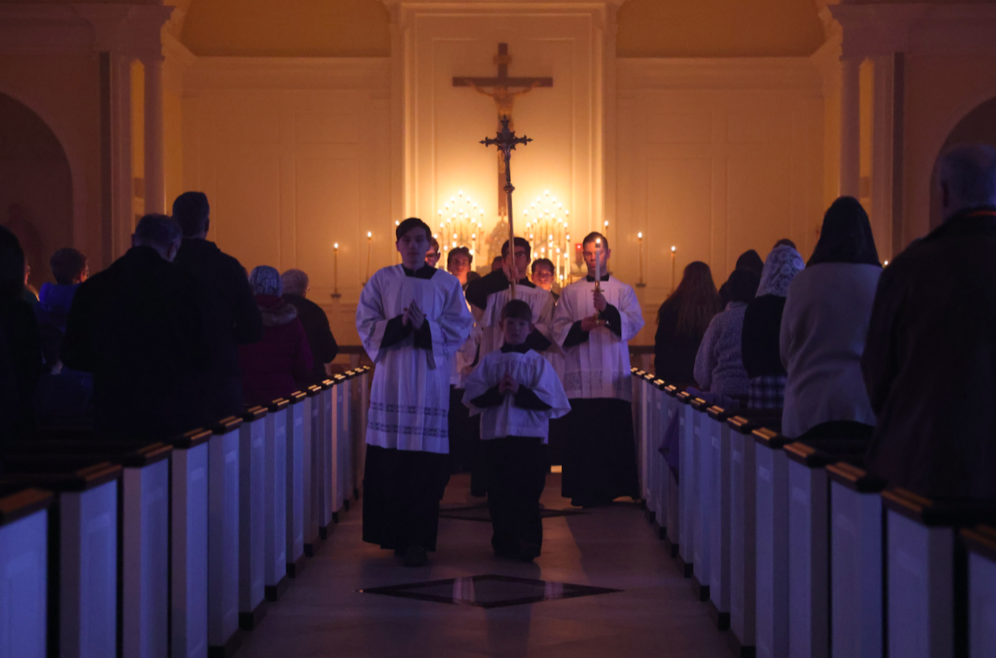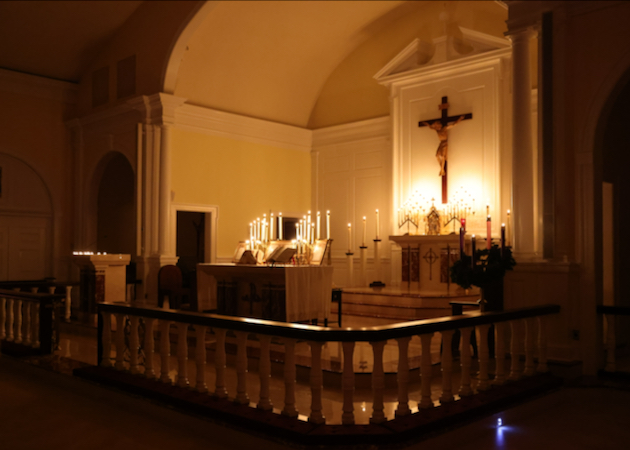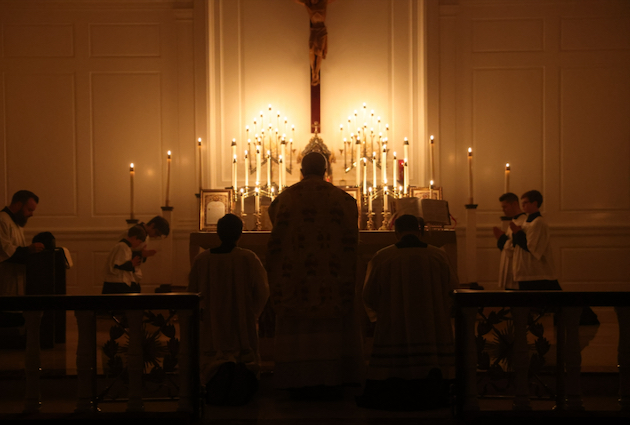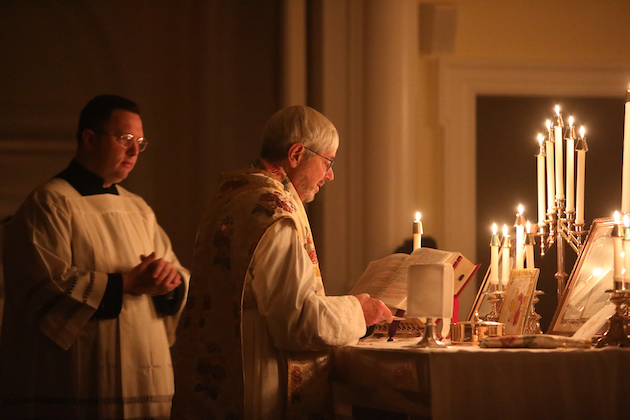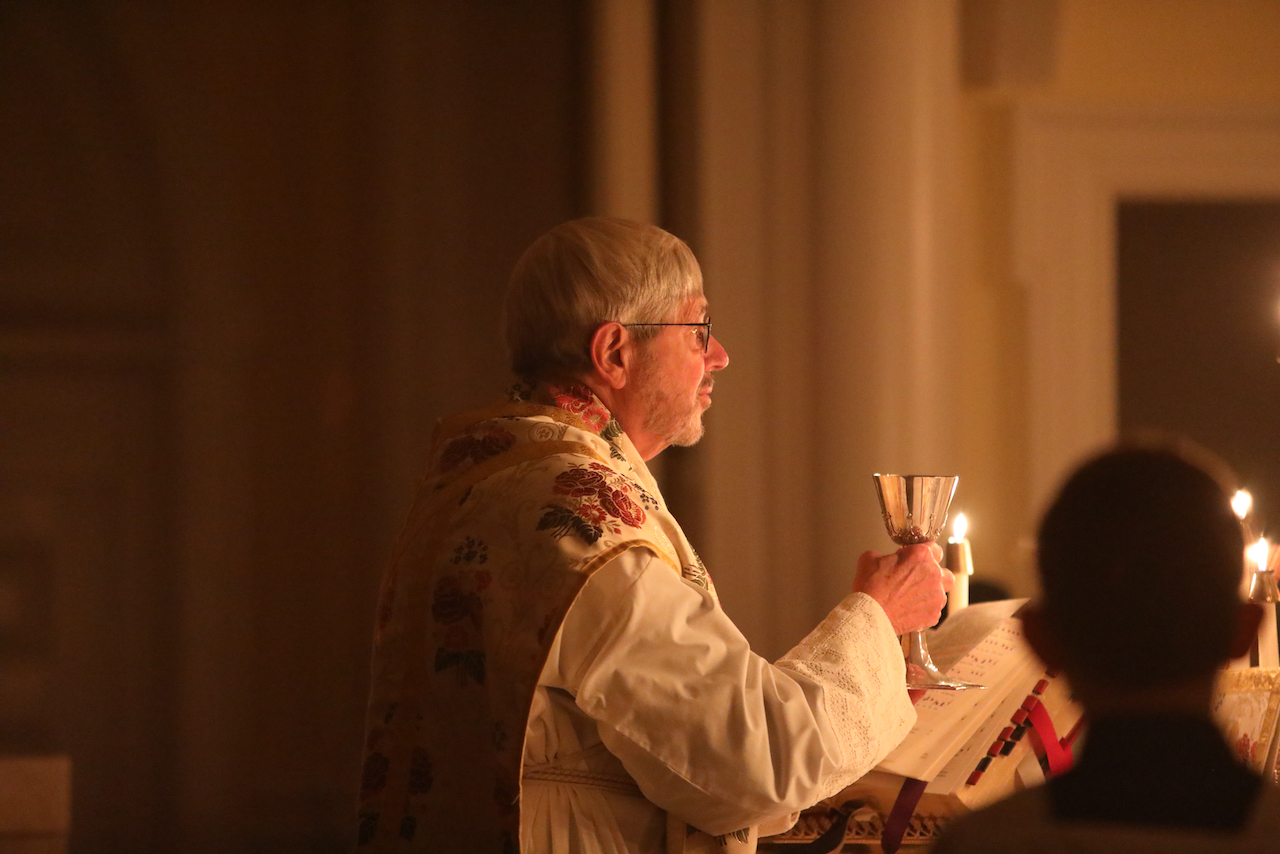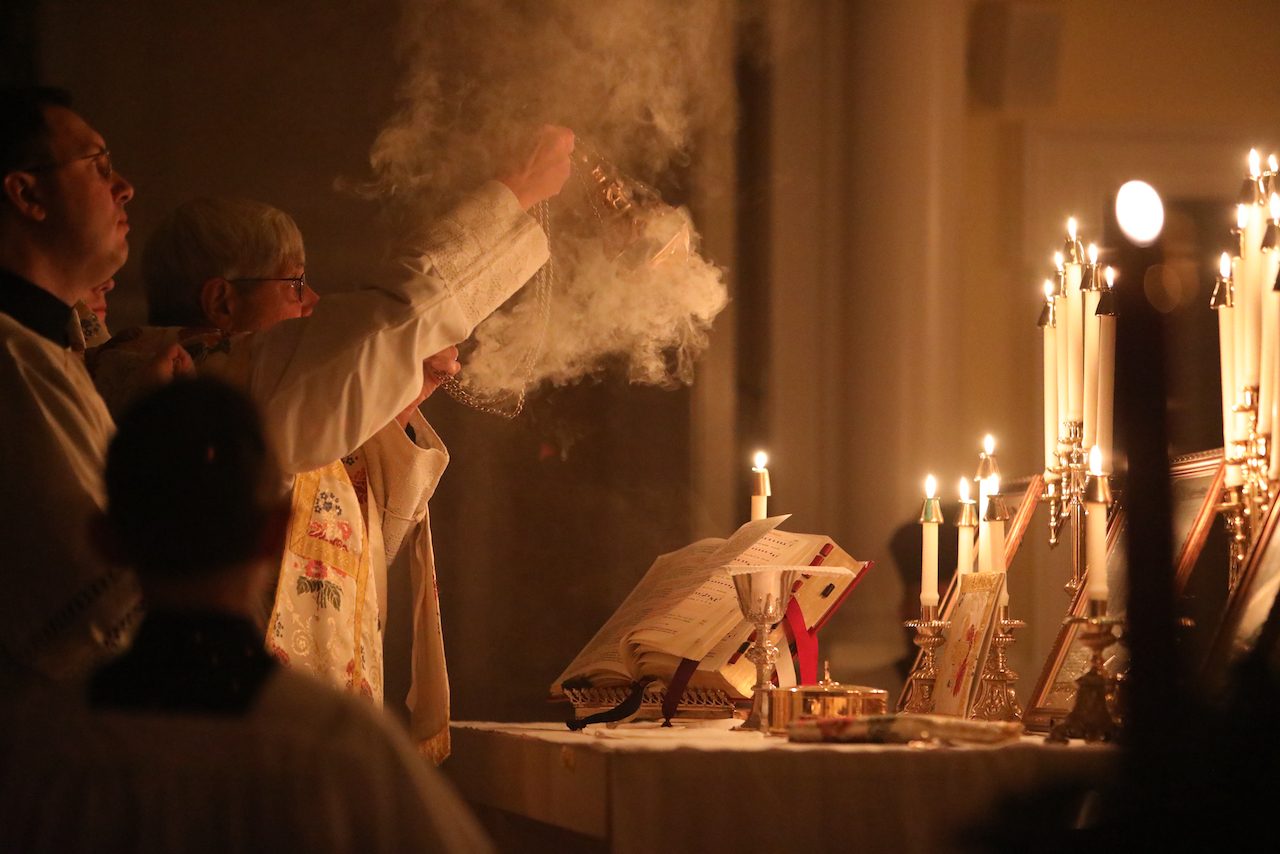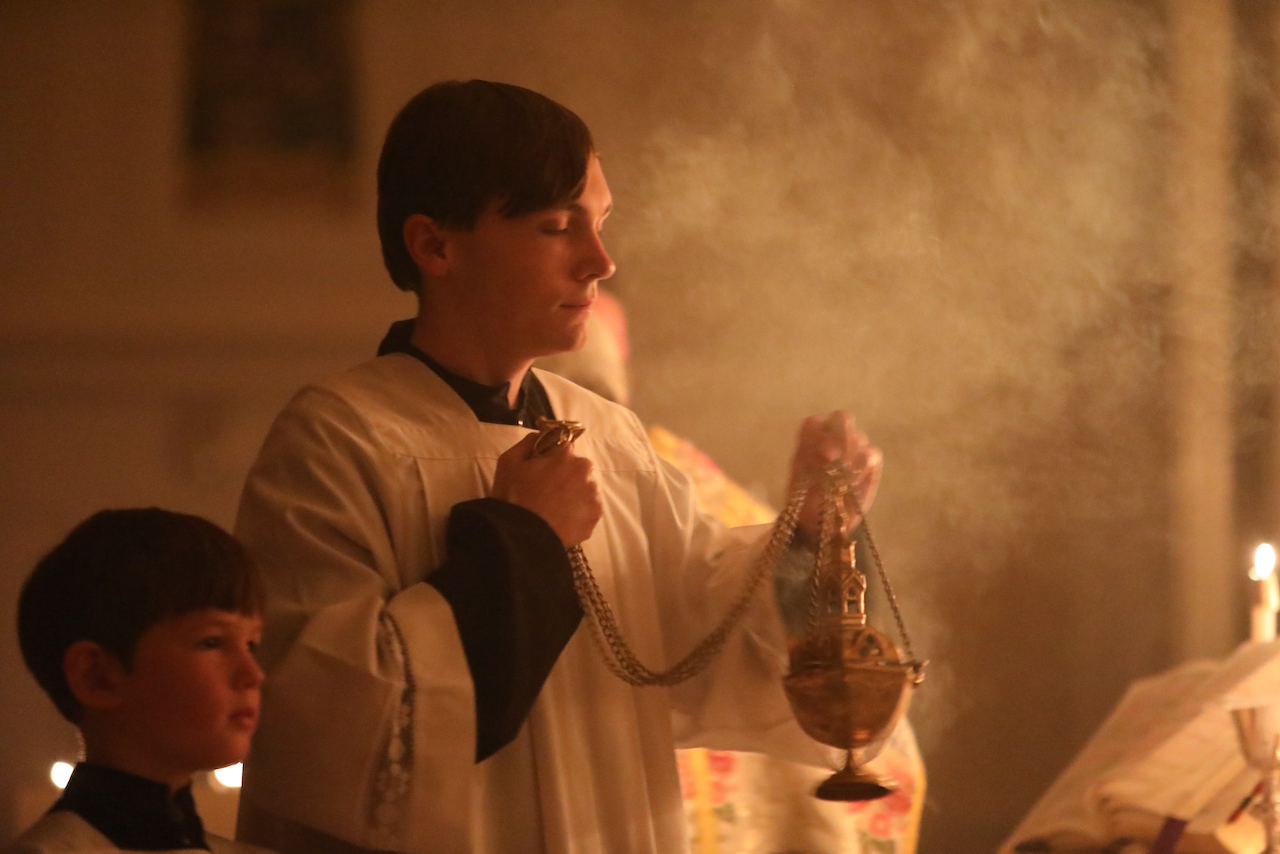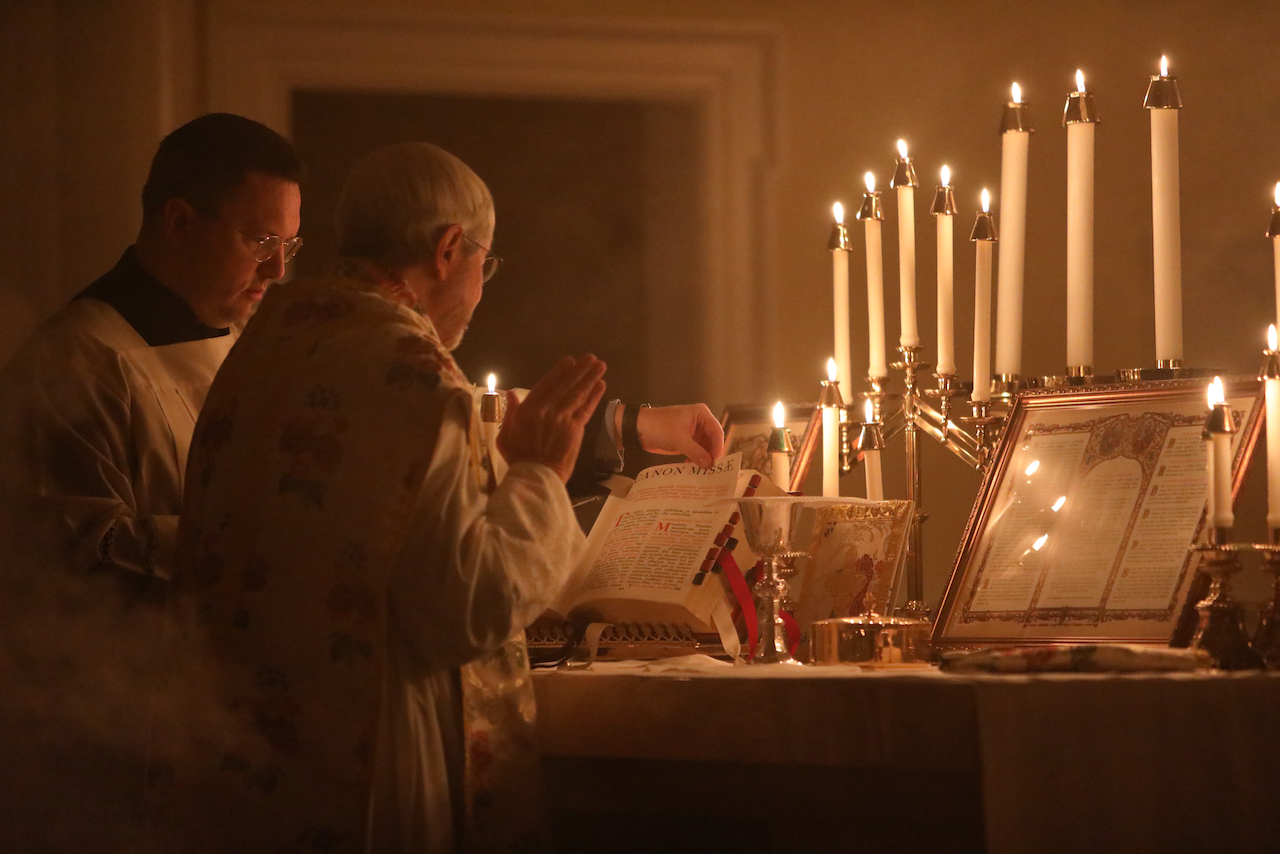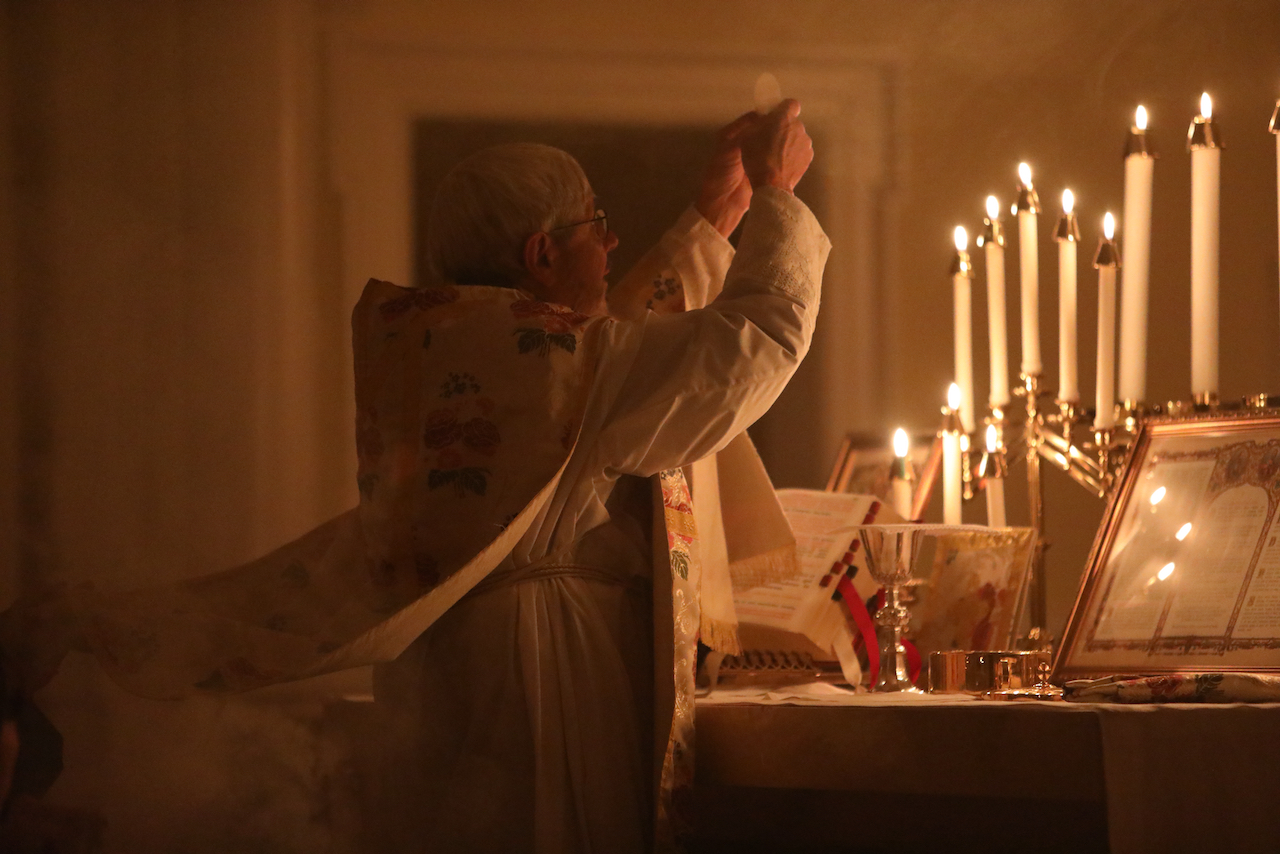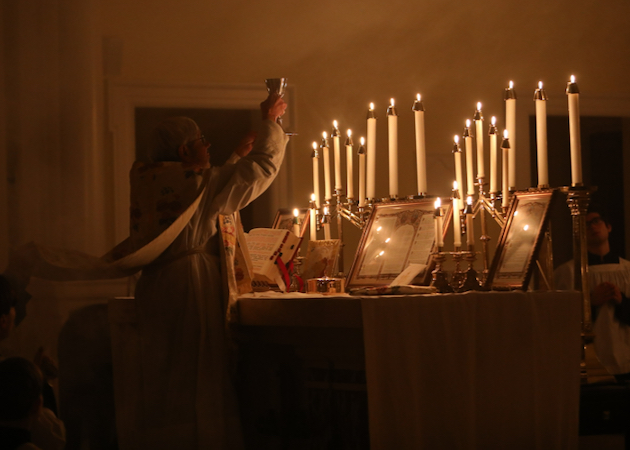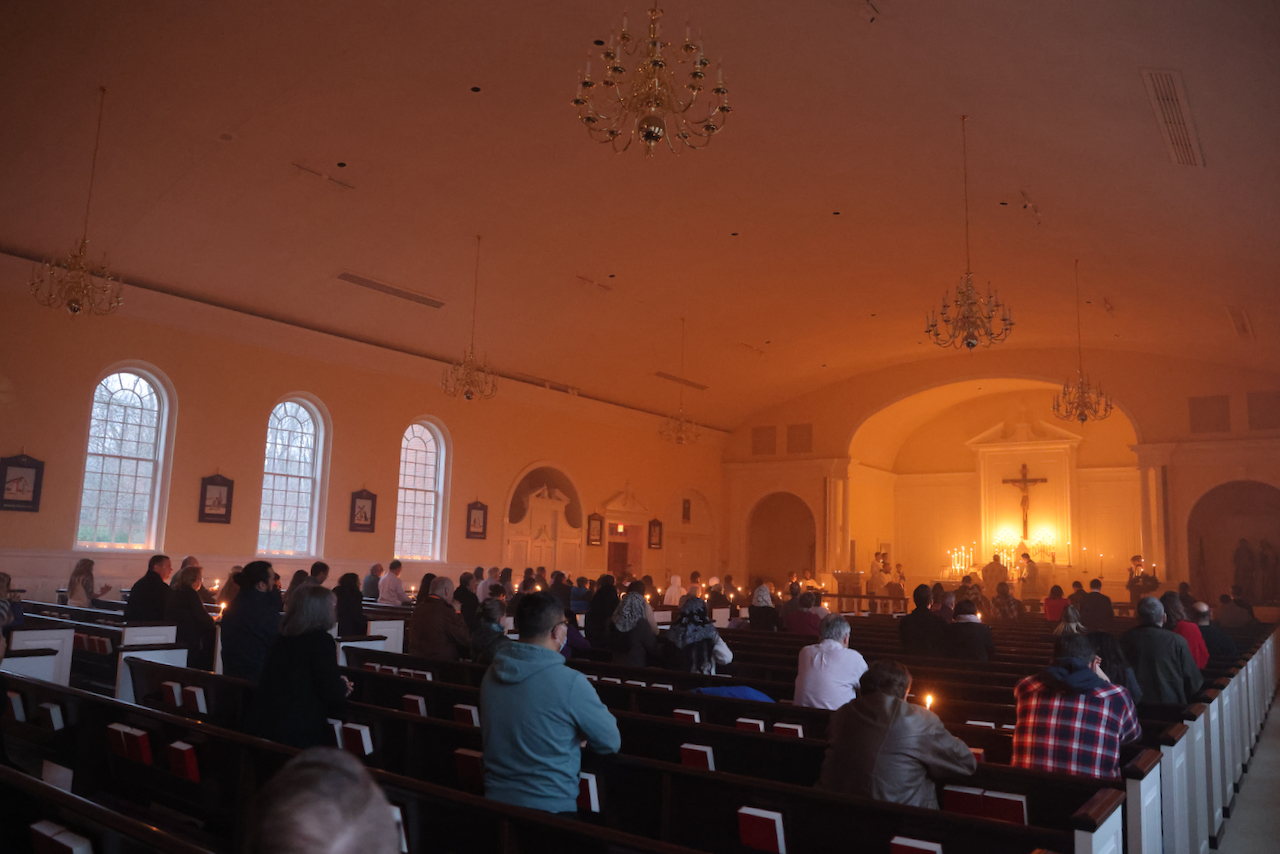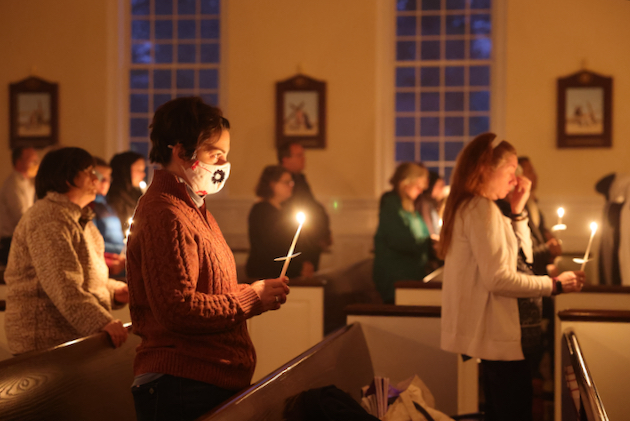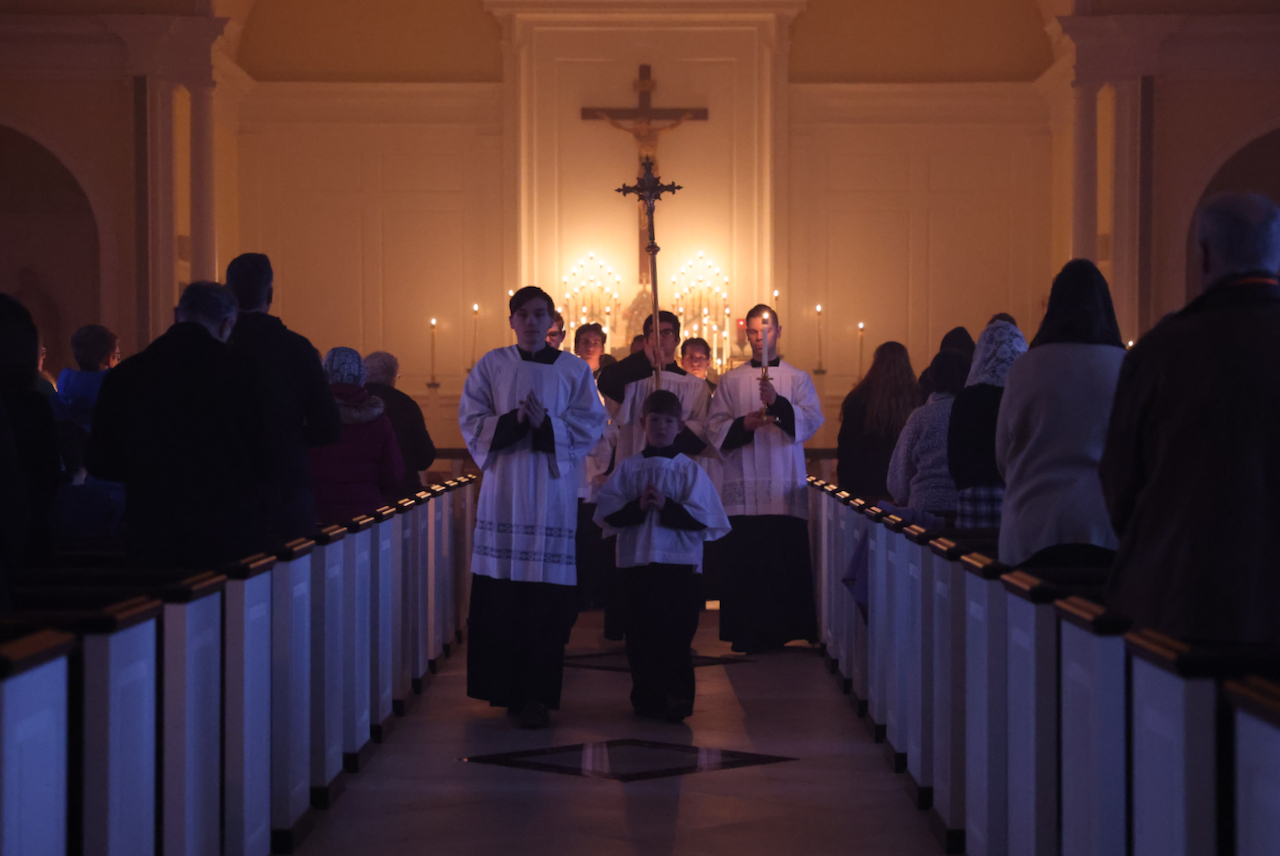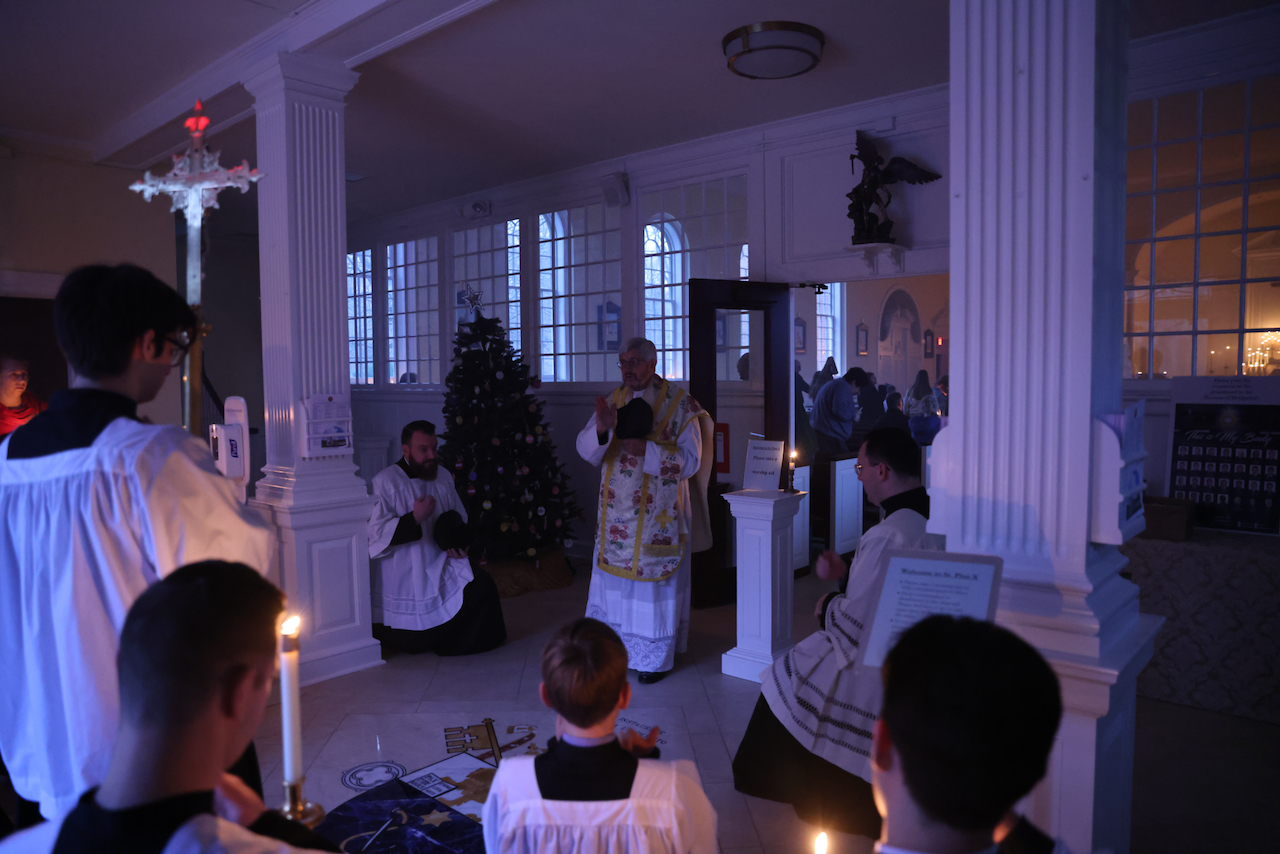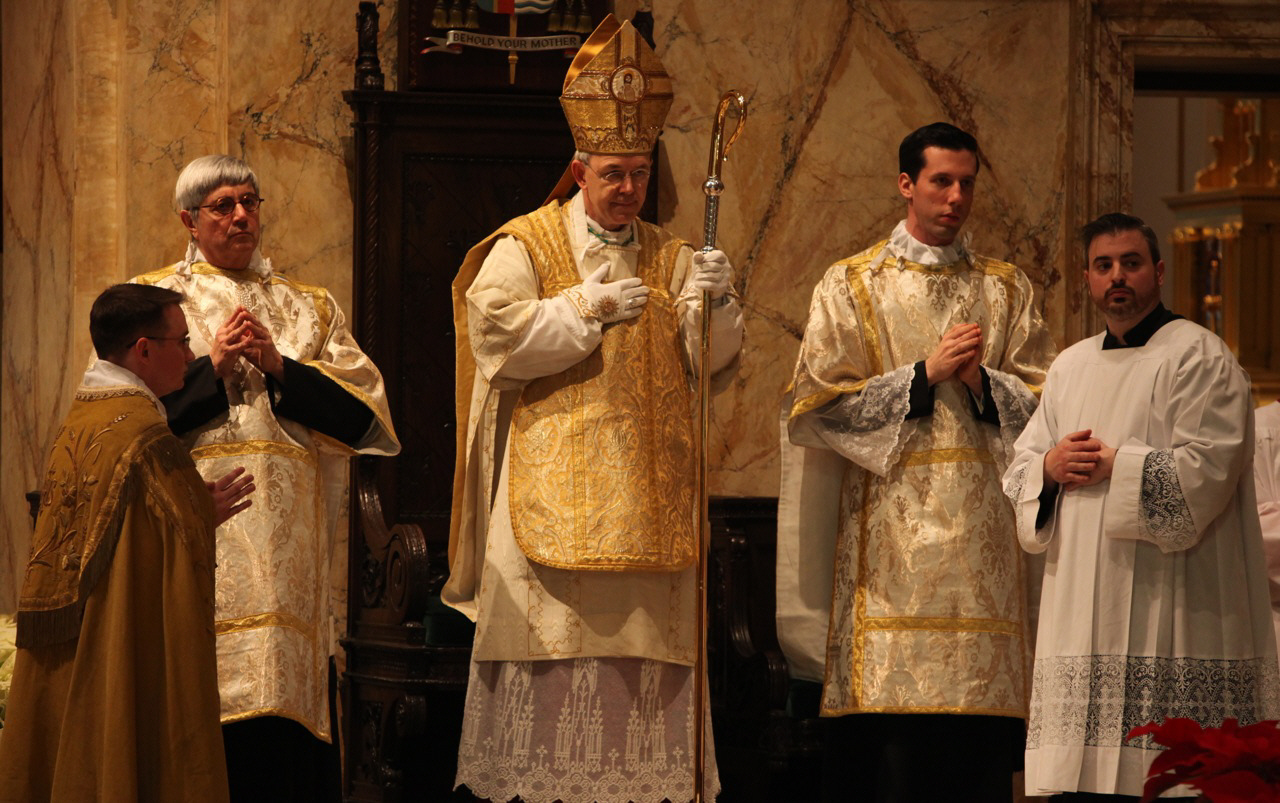
Solemn Mass will be celebrated on Thursday, August 5 at 7:30 pm at the Basilica of St. John the Evangelist in Stamford, CT, for the Feast of the Dedication of the Basilica of St. Mary Major.

22
Jul
You are invited to a new Young Adult Series on the Most Blessed Sacrament on Saturday, July 24th at the Shrine of Holy Innocents in New York City.
Join us for the Holy Sacrifice of the Mass, a Eucharistic talk, and young adult social with refreshments. Grow in faith in community with young Catholics (~18-40) from the New York area!
This event series is hosted by Juventutem NYC, a newly-formed official chapter of Fœderatio Internationalis Juventutem.
RSVP at Juventutem NYC Events.

19
Jul
Most Holy Redeemer Church in New York Celebrated its Patronal Feastday yesterday afternoon with a Solemn Mass, Father Sean Connolly, celebrant. A large crowd was in attendance.


His Excellencey, Bishop Frank Caggiano issued a letter today with interim guidance today concerning the Motu Proprio Traditiones Custodes. We reproduce the letter below.
From: Most Reverend Frank J. Caggiano
Re: Interim Guidance regarding Traditionis Custodes
Date: Monday, July 19, 2021
On July 16th, 2021, the Memorial of Our Lady of Mount Carmel, our Holy Father Pope Francis issued a motu proprio addressing the practice of celebrating Mass according to the Roman Missal edited by Pope Saint John XXIII in 1962. It is a liturgical practice that has steadily grown throughout certain parts of the Universal Church and in our Diocese. For my part, I believe that it is important that we retain the celebration of the Mass according to the Missal of 1962 in our Diocese, provided that our future practice is in conformity with the norms of Traditionis Custodes.
As you know, the norms contained in the new motu proprio significantly restrict the use of the Roman Missal of 1962. I will need time to consult, draft and promulgate permanent diocesan norms that will address both the pastoral needs of those who have received spiritual nourishment from attending such celebrations of the Mass, while at the same time remaining obedient to the requirements of the law and the wishes of our Holy Father.
The purpose of this memo is to provide you interim guidance regarding the first steps by which our Diocese will begin implementation of Traditionis Custodes.
More specifically, the procedure outlined at the end of this memo to request permission for the celebration of Mass according to the Roman Missal of 1962 applies to all such celebrations scheduled from Wednesday, July 21, 2021 until the Feast of the Archangels, September 29, 2021. It is my expectation that permanent norms will be ready for diocesan-wide implementation by the end of September 2021.
As we reflect upon how best to implement the motu proprio, it is important to consider key principles that are articulated in the document and must serve as guideposts for discerning an authentic manner by which its norms can be implemented. More specifically:
1. We remain committed to offer genuine pastoral service to the people entrusted to our care, allowing them a variety of legitimate liturgical expressions from which they can grow in their love of the Lord through right worship of Him.
2. We must try to implement the provisions of the new motu proprio in ways that will avoid exacerbating divisions that may already exist in our diocesan Church, all the while remaining obedient to what the document requires.
3. While the vast majority of those who attend the celebration of Mass according to the Missal of 1962 are committed to the Church and are faithful to all its teachings, there are
very few strident voices, both inside and outside of our Diocese, that have called into question the legitimacy of the Second Vatican Council, the legitimacy of the liturgical reform promulgated by Pope Saint Paul VI and the universal ecclesial authority of Pope Francis. Such positions must be refuted and corrected on every level of our ecclesial life.
During this interim period towards the permanent implementation of Traditionis Custodes, the following procedure will allow you to seek permission for the celebration of Mass according to the Missal of 1962 in the Diocese of Bridgeport:
1. All pastors, whose parishes already sponsor the celebration of Mass according to the 1962 Missal, whether on a weekly or periodic basis, are asked to write to me directly, asking permission for such celebrations to continue. The same is required for all priests who serve as chaplains or celebrate Mass according to the Missal of 1962 in a venue other than a parish Church. These requests can be sent as an email or by a formal letter. I will respond to each request individually in writing.
2. Any priest who wishes to celebrate Mass according to the Missal of 1962 privately, that is, a low Mass without the presence of a server or the faithful, should submit a letter requesting permission to do so directly to me. I will grant him faculty to do so through September 29, 2021, at which time the process to request a more permanent faculty will be in place.
3. Please include in your request the following information:
a. Date and time for the celebration(s). If done on a weekly basis, please indicate the day and time for the weekly celebration.
b. The celebrant of the Mass
c. The approximate number of those who will (or ordinarily) attend
d. If the Mass is a weekly celebration, please indicate when it began.
e. An explanation of the pastoral need that prompted you to offer the Mass
This information is needed to compile an accurate picture of the presence and pastoral need for the celebration of Mass according to the Missal of 1962 throughout our Diocese.
4. If your request is granted, the necessary faculty will also be granted to the priest celebrant. This is stipulated by the motu proprio. However, please be aware of the following:
a. Any faculty to celebrate the Mass of 1962 during the interim period does not extend beyond September 29, 2021. Rather a separate process will be created to seek permanent faculty to celebrate the Mass of 1962 that must be in conformity with Article 3.4 of Traditionis Custodes. This process will accompany the permanent norms.
b. If permission is not granted for the celebration of Mass according to the Missal of 1962, the priest will lack the faculty to celebrate that Mass.
Given the importance of this issue in the life of our parishioners, I wish to meet in person with those priests who have been celebrating the Mass using the Missal of 1962. I wish to hear your thoughts, suggestions and concerns as a first step in drafting permanent norms.
Let us continue to pray for one another as we move forward with this important pastoral and spiritual project.
17
Jul
17
Jul

His Emminence Cardinal Raymond Burke celebrated a Solemn Pontifical Mass yestereday evening at the Basilica of St. John the Evangelist in Stamford, CT for the feast of Our Lady of Mount Carmel. In this post we cover the first part of the ceremony, the vesting ceremony. In Part 2, we will cover the Mass itself.


Contine to Part 2
16
Jul
Today the Pope issued his Motu Proprio Traditionis Custodes (“TC”) (with an accompanying letter) on the Traditional liturgy. I think I owe you an initial reaction. After all, in 2007 this Society sponsored the first Mass in the New York Archdiocese pursuant to Summorum Pontificum (as opposed to the indult regime). I want to address general principles and leave up to others more qualified the discussion of the legalities (to the extent Canon Law can be said to exist anymore) or even the validity of aspects of this Motu Proprio.
The Motu Proprio TC abrogates Summorum Pontificum both in its theory and operative provisions. Insofar as diocesan clergy are concerned, it resurrects a regime similar to the 1984 Indult Quattor Adhinc Annos in its most restrictive interpretation. So, for example, the Traditional Mass is not supposed to be celebrated (in the future?) in parochial churches; new Traditionalist groups are not to be authorized and those that exist are to be examined whether they deny the “legitimacy” of the Novus Ordo, etc.
Noteworthy is the uniquely radical style of TC. Entirely absent is the nebulous and effusive verbiage that characterize Francis’s other documents (like Amoris Laetitia) with their endless talk of “accompaniment,” “mercy” and, of course, “tenderness.” In TC, the language is succinct, harsh and adversarial. The reasoning is often transparently dishonest. What are we to say, for example, of the passage in the Motu Proprio quoting St Augustine for the proposition that remaining in the Church “with the heart” is a “condition of salvation” – after the unrestricted ecumenism of the last 60 years? Or of Francis’s insistence on “unity” and “communion” as almost exclusive criteria of Catholicism, when every day the fundamental tenets of Catholic theology and morality are challenged – often with the express or implicit support of the Pope (e.g., the prohibitions of divorce, abortion, homosexual behavior)?
Clearly, Francis and his episcopal allies want a war in the Church. Considerations of the past – reintegrating the FSSPX, accommodating the just desires of certain of the faithful – don’t apply anymore. Traditionalists, as such, are declared to be enemies of the Church, who:
exploited (the indults and Summorum Pontificum) to widen the gaps, reinforce the divergences, and encourage disagreements that injure the Church, block her path, and expose her to the peril of division.
The ultimate goal is their annihilation:
It is up to you to proceed in such a way as to return to a unitary form of celebration, and to determine case by case the reality of the groups which celebrate with this Missale Romanum. ….
Indications about how to proceed in your dioceses are chiefly dictated by two principles: on the one hand, to provide for the good of those who are rooted in the previous form of celebration and need to return in due time to the Roman Rite promulgated by Saints Paul VI and John Paul II…
I could be mistaken, but I know of no recent instance where a whole, worldwide class of Catholics – including by 2021 Cardinals, bishops, priests, laity and religious orders – has been similarly publicly denounced and anathematized. The specific contempt for Pope Benedict is palpable – his motivation for promulgating Summorum Pontificum is misleadingly described in a way directly contradicting the previous pontiff’s repeated statements. Is this document in part personal revenge for the derailing of the “Amazonian” synod – and for the “Pope Emeritus“ and his allies acting as a brake for the last nine years?
Why is the Pope doing this? After all, Francis and his allies control the Vatican, the mainstream religious orders, the Catholic press and educational system worldwide and certainly the majority of most hierarchies? How could these nefarious “trads,” whatever they may be advocating, undermine this structure? How, given these disproportionate resources, can Traditionalists be jeopardizing the “unity” so desired by Francis?
I think the answer has nothing to do with supposed “divisive” activities and positions. The real problem is not traditionalism, but the manifest, catastrophic failures of the Vatican Council, the Novus Ordo and the ultramontanist organization of the Catholic Church. The sin of the Traditionalists is that, by their very existence and even more so by their success, they bear witness to the fact that (a)the current “Conciliar” regime is in discontinuity with its pre-Conciliar predecessor; and (b) this regime is in rapid disintegration.
The response of Francis is not to make the case once more for the Council and the Novus Ordo, but to declare them identical with the will of God. He does not attempt to convince the critics of their errors but uses coercive measures against them. In so doing he carries ultramontanist centralization to a new extreme: external unity is the absolute value, “groups” (of the laity) need to be supervised and vetted by bishops, priests need, indirectly, permission from the Vatican to celebrate the Traditional Mass…
I think the strong-arm measures of TC will only increase the focus on Traditionalists, while exposing even more the intellectual and spiritual bankruptcy the so-called Conciliar Church. As I have written before, there is, humanly speaking, a great benefit of these experiences: the truth. For I doubt anyone who reads TC and its accompanying letter can deny that a radical crisis has engulfed the Catholic Church.
I am truly sad for the overwhelming majority of Traditionalists – the families who over the years have found a sense of beauty in the liturgy and an environment conducive to raising their families, handing down the faith and even evangelizing those outside of the Church. If the reader examines our posts and our photographs over the last 14 years, he can get a sense of this vast new activity. These people know nothing of the alleged offenses of priests and agitators denounced by the Pope. It is indeed a great cross for these faithful Catholics to be subject to such reprehensible calumny by the leadership of the Church.
My advice to all Traditionalists would be to carry on as before. Pope Francis may have declared war, but there are many different ways to fight. After all, did not Archbishop Bergoglio and most of his episcopal colleagues, in their complete disregard of Summorum Pontificum over the last 14 years, give us the best example? If the Francis and his bishops want to create martyrs, close parishes and even excommunicate – let them take the initiative. At the St Hugh of Cluny Society we intend to continue and even redouble our support of the Traditionalist movement. Maybe it will take different forms – maybe we will have to shift once more to an underground form of organization. But the fight for the whole of Catholic Tradition – in Liturgy, theology and morality – will go on!
14
Jul
The entire Traditionalist world seems to be waiting with trepidation for whatever Pope Francis will be doing to Summorum Pontificum and the celebration of the Latin Mass worldwide. It’s noteworthy that the entire process has been conducted in secrecy by the Vatican and certain episcopal initiates. That those reported to be in the forefront of the anti-SP effort – such as Cardinal Parolin or, for that matter, the Pope himself – do not necessarily enjoy the best of reputations or authority at this very moment is no hindrance to their ability to initiate global liturgical changes. And on this issue, (as opposed to, let’s say, the German Synodal Path) papal power in the eyes of the European Church establishment is unlimited. Consider the statements of Professor Georg Bier in the online publication of the German Catholic Church :
As a matter of principle it is possible for the Pope to completely abolish again this form of the Mass ( the Traditional Mass -SC). The Pope as supreme legislator can always decree whatever he deems to be most beneficial for the Church... (According to the author, however, for tactical reasons abolition of the Traditional Mass is unlikely -SC). There will be at most moderate restrictions – but as a matter of principle the Pope has all possibilities. 1)
In Bier’s view, both Summorum Pontificum and the document Pope Francis is crafting are governed entirely by material and political considerations and tactical expediency. The passage in Summorum Pontificum which seems to expressly limit the authority of the Church to abolish the Traditional Mass is dismissed by Bier as a “dodge” or “trick” by Benedict to preserve continuity with his predecessor – no theological issue here.
Reading these words today, I was struck once again by the link between centralized ultramontane absolutism and liturgical, moral, and theological experimentation (the latter, of course, taking in 2021 a reactionary, defensive form!). The totally arbitrary and unlimited Papal authority described in the quote above contrasts with the historical role and self-understanding of the Papacy in the “greatest of centuries” (the 13th) or in the Counter-Reformation. In my view, the Catholic Church’s dysfunctional structures and organizational principles continue to exercise a highly negative influence, blocking true reform and spiritual development
Two recent articles, dealing with issues arising in unrelated contexts, have neatly identified this highly problematic situation for the Church. First, Joseph Shaw, the chairman of the Latin Mass Society, has this to say in his review of Una Voce: the History of the Foederatio Internationalis Una Voce 1964-2003 ( by Leo Darroch):
The first (episode Shaw considered – SC) is the interview and associated correspondence which took place between de Saventham (the head of Una Voce International – SC) and Archbishop (later, Cardinal) Giovanni Benelli, then Prefect of the Congregation for Divine Worship, in 1976…. . De Saventham summarised Benelli’s position in a letter to him following the meeting:
Your Excellency has urged us to espouse as a matter of conscience the new forms of the Church’s public cult… Although the character of irreformability only attaches to definitions, promulgated ex cathedra in matters of faith and morals, [you asserted that] the assent due to the acts of the Sovereign Pontiff ought equally to express itself in humble obedience to those of his acts which merely concern the discipline or other nondoctrinal aspects of the government of the Church. For there also, you said, it is the same one and indivisible charisma which guarantees that all these acts cannot but be ordered towards the true and certain good of the Church. Consequently, you could only consider as reckless and irreconcilable with a proper ecclesiology all demands or initiatives which implied that the utility of such and such an act of government duly promulgated by the reigning Pontiff or under his authority could be a subject of discussion or even contestation.
Cardinal Benelli did not dispute the accuracy of this summary. What it amounts to—as Dr de Savanthem goes on to explain at some length, though not in these terms—is an extreme Ultramontanism, the view that imbues the reigning Pope’s prudential decisions with something close to infallibility, and his wishes with a force approaching that of Divine Law.
The prevalence of such attitudes in a Rome is part of the explanation of why things were so difficult for Una Voce in the 1970s and later.
Second, Bronwen McShea considers a case of excessive Vatican intervention in local artistic issues in the 1920’s but draws broader conclusions ( “When Rome Policed Art,” First Things (August 2021):
(After the Council) [T]he new generation of churchmen, once in power, redirected the Church toward a warm embrace of the modern world. The irony is that in doing so, through the decrees of Vatican II and in the Council’s aftermath, they preserved and strengthened centralized mechanisms of ecclesiastical control, not just over doctrine and worship, but also over cultural judgments and sensibilities. Rome and the clerical hierarchy were suddenly airing out a Church that supposedly had been stifling and stale inside for many centuries. Now, “openness” was not optional: Dialogue became the order of the day. The modernized engines of ecclesiastical governance were revved up for aggiornamento, which the laity and lower clergy would get, whether they wanted it or not. Even Maritain, late in life in The Peasant of the Garonne, would rue this turnabout.
Much as they had with theology and the liturgical reform, the bishops oversaw a rushed, coordinated aesthetic revolution. Old-fashioned crucifixes, paintings, statues, stained-glass windows, and even sacred vessels were cast aside for modern ones—beautiful, well-crafted, and elegant in some cases, but ugly, kitschy, and blasphemous in countless others. Vatican-issued and chancery-stamped statements, more revisions of canon law, and conferences paved the way. Ordinary Catholics stood by—bewildered, often—as the styles of art that had been forcefully opposed by their mitered shepherds just a few years before were now promoted by them. All manner of Expressionist, Cubist, Fauvist, and Abstract works began to populate cathedrals and small-town churches. Sacred spaces were bulldozed, whitewashed, and reconstructed. And a great deal of fine artwork—crafted lovingly and donated by the laity of past eras—disappeared overnight.
….
In view of the complex history of which Servaes (the Belgian artist referenced by McShea’s article – SC) was a part, it is worth considering whether more mature modern approaches to sacred art would have developed organically, in creative dialogue with the wider culture and ancient traditions, had Vatican bureaucrats and their defenders in the early twentieth century behaved more, not less, like their Tridentine-era predecessors. Vatican I and Vatican II both effected highly centralized, Rome-driven reform. They may appear in some respects antithetical, but they ran on the same rails. The centralizing impulse of the age seduced Rome into censoring experimental artists in ways that Tridentine and medieval Church officials had not imagined necessary or even possible. Then, by the mid-twentieth century, mortified by the Church’s cultural marginalization, the hierarchy tried to reverse it with an even heavier hand—foisting a sloppy and destructive aesthetic revolution on the Church to accompany the dramatic liturgical and theological reorientations.
13
Jul