29
Jun
Full schedule of events(both ordinary and extraordinary forms) at the shrine of Our Lady of Mount Carmel, East 116th Street, New York, New York.
The Pontifical Shrine and Parish Church of Our Lady of Mount Carmel
448 East 116th Street New York, NY 10029
The Reverend Father Marian Wierzchowski S.A.C., Pastor; The Reverend Father Christopher Salvatori S.A.C., Associate Pastor
A Ministry of the Society of the Catholic Apostolate, the Pallottine Fathers, since 1882. Canonical Coronation of Our Lady of Mount Carmel – July 10, 1904 by Archbishop John Farley, Papal Legate of Pope St. Pius X.
Parking Available in Neighborhood and East River Plaza.
By Car: Northbound, Take Exit 14 from the FDR Drive for East 96th Street; Take 1st Avenue to East 116th Street. Southbound ,Take Exit 16 from the FDR Drive for East 116th Street.
By Subway: 6 Train to 116th Street – Walk 4 blocks east on 116th Street; 2,3 Trains to 116th Street, Transfer to M-116 Bus; Q Train to 96th Street; Transfer to M15 buses on 1st Avenue
By Bus: M-116, M-15 and SBS M-15 to East 116th Street and 1st Avenue
WELCOME TO THE PONTIFICAL SHRINE OF OUR LADY OF MOUNT CARMEL
In 1880, the first Italian migrants to this area, began to formulate a “Festa” or Feast to honor the southern Italian traditions of Marian Devotion. As many of them came from the territory of the Kingdom of the Two Sicilies, under the Marian protection of Our Lady of Mount Carmel, they dedicated themselves to this title of the Virgin Mary. In 1883, they purchased a Statue of Our Lady for veneration, the same statue which stands above our high altar. In 1884, working nights and days off, they built our current church themselves. Care of the faithful was given to the Pallottine Fathers. In 1904, following the investigations of the Vatican, the Statue of Our Lady of Mount Carmel was ordered solemnly crowned by the authority of the Pope. The Shrine was raised to the dignity of a Sanctuary to Our Lady for the Americas.
We Pallottine priests, and other religious priests, brothers and sisters who have had the privilege of serving at this Shrine remain in awe at the sense of prayer and peace here, even as thousands arrive each year. As time goes by, the faces of the pilgrims may have changed, yet still they come as faithfully as they did in 1884. Still the same questions, still the same entreaties, and still they have the same gratitude for their answered prayers. Again, the priests, religious and dedicated lay people of the Shrine honor you for loving Our Lady. I urge you to be steadfast in your devotion to Jesus through His Blessed Mother, under the title of Our Lady of Mount Carmel. Come and pray at our Novenas and Masses. Trust in Our Lady as always, to bring us to Jesus. May God through Our Lady of Mount Carmel, continue bless you always!
Father Marian Wierzchowski, S.A.C.
Dear Friends of Mount Carmel;
Many of you have come to our beautiful Shrine to Our Lady of Mount Carmel, to worship as your ancestors did for generations. Others have recently joined our congregation. There is a great spiritual peace here and Our Lady seems to smile benevolently upon us all. Surely this is a place of answered prayers and entreaties.
Time though, has not been completely kind to our building. Built in 1884, it is a basically solid structure. Yet there are several signs of age. There is also the need for improvements to our building as time dictates new designs. We need a more accessible church. Handicapped access must be provided for our elderly and infirm. Improvements continue to be needed to our Heating and Air Conditioning systems to provide year-round comfort for pilgrims, and parishioners alike. Care needs to be given to our basement Meeting Hall, and our rest room facilities.
For these reasons, we ask that you continue to be as generous, or if possible, more generous than you have been in the past. The Feast does not occur in a vacuum. Flowers for decorations in the church need to be purchased. We also need your help in maintaining traditions at the Shrine. We ask you to start by bringing your children with you. Let them see your love for the Blessed Mother and our glorious Shrine. We need physical workers, as prayer can be expressed in work.
Above all, we need your presence and your prayers. WHY MARIAN DEVOTION TO OUR LADY OF MOUNT CARMEL?
From the time of the Council of Ephesus, both the Western and Eastern branches of Catholicism recognized the importance of Marian devotion. The Blessed Mother was given the title of Theotokos, the Mother of God. She, as the bearer of the Lord, is an integral part of the plan of Redemption. This is scripturally born out in the Gospels with announcement of the Angel Gabriel,
“Hail Mary full of Grace, Blessed are you amongst women”, and the words of Elizabeth, the mother of John the Baptist, “Who am I that the Mother of Our Lord should come to me.?” Inherent here is the very easily understood idea of a mother and child. At the miracle of Cana, it is at the behest of His Mother, that Jesus works His first public miracle. For some, the concept of a lofty, spirit of God is difficult for our limited understanding to comprehend. Yet, we can all understand the idea of a Mother’s love for her child, and the child’s love for his mother. It is precisely for that reason that we pray for Mary to be our advocate, our lawyer, for our prayers to God. She in of Herself is a woman, but as the Mother of God, She is the closest to God, and the closest intercessor for our Prayers. Due to the many favors granted to Her by Jesus, verified by miracles and church investigation, we should continue to pray that She will bring us closer to God, and be our advocate to Him. The prophet Elias, in Old Testament times, before the times of the Christian Church, saw in the image of a little cloud rising from sea, a seed which grew to darken with rain to end a long drought in Israel and Samaria. Likewise, he foretold of the Virgin who would give a seed that would grow into the Redeemer of Mankind. All of this took place from his spiritual home of Mount Carmel. In medieval times the Lady of Mount Carmel gave St. Simon Stock Her Scapular as a defense against evil and help for those in Purgatory. She appeared at Fatima during the Miracle of the Sun, and at the still undecided apparition of Garabandel in Spain. Lastly, we count all the favors granted here, at our Pontifical Shrine. We are proud of Our devotion to Our Lady of Mount Carmel, and beg Her to continue to bring us closer to Jesus.
SCHEDULE of EVENTS
Special Schedule for 2021 * Year of Saint Joseph
Tridua of Novenas at 7:30PM
July 6, 7, 8 French/Creole
July 9, 10, 11 Spanish
July 12, 13, 14 English
July 15
Vigil Mass ……….….5:30 PM
Traditional Latin Vespers……….. …7:30 PM
of the Little Office of Our Lady
Candlelight Procession…………….….9:00 PM
*Permit granted by the City
ROSARY AND LITANY OF LORETO……………… 11:00 PM
Solemn Extraordinary Rite
Midnight Mass of Our Lady
(midnight between July 15 & 16)
July 16 FEAST DAY HOLY MASSES
8:00 am Spanish
10:00 am English
Procession
*Permit granted by the City
3:00 pm Creole/French
6:00 pm Latin
July 17
10th Annual Traditional Latin Pilgrimage Mass 11:00 am; 137th Annual Feast of Our Lady of Mount Carmel
July 6, 2021 – July 17, 2021 Year of Saint Joseph
Tuesday, July 6, 2021 – First (1st) Day of the Novena
Ordinary Form Calendar – Optional Memorial of Saint Maria Goretti, Virgin and Martyr; Extraordinary Form Calendar – Tuesday of the 6th Week after Pentecost
7:00 A.M. – Latin Low Mass 1962 Missal Extraordinary Form 7:45 A.M. – Latin Low Mass 1962 Missal Extraordinary Form; 9:00 A.M. – English Mass;
3:00 P.M. – Holy Rosary and Divine Mercy Chaplet
7:00 P.M. – Rosary and Confessions7:30 P.M. – Novena Mass – Ordinary Form – French and Creole (1)8:15 P.M. – Exposition of the Most Blessed Sacrament, Novena to Our Lady of Mount Carmel and Benediction
Wednesday, July 7, 2021 – Second (2nd) Day of the Novena
Ordinary Form Calendar – Wednesday of the 14th Week in Ordinary Time Extraordinary Form Calendar – Saints Cyril & Methodius
7:00 A.M. – Latin Low Mass 1962 Missal Extraordinary Form 7:45 A.M. – Latin Low Mass 1962 Missal Extraordinary Form 9:00 A.M. – English Mass
3:00 P.M. – Holy Rosary and Divine Mercy Chaplet
7:00 P.M. – Rosary and Confessions7:30 P.M. – Novena Mass – Ordinary Form – French and Creole (2)8:15 P.M. – Exposition of the Most Blessed Sacrament, Novena to Our Lady of Mount Carmel and Benediction
Thursday, July 8, 2021 – Third (3rd) Day of the Novena
Ordinary Form Calendar – Thursday of the 14th Week in Ordinary Time Extraordinary Form Calendar – Saint Elizabeth of Portugal
7:00 A.M. – Latin Low Mass 1962 Missal Extraordinary Form 7:45 A.M. – Latin Low Mass 1962 Missal Extraordinary Form 9:00 A.M. – English Mass
3:00 P.M. – Holy Rosary and Divine Mercy Chaplet
7:00 P.M. – Rosary and Confessions7:30 P.M. – Novena Mass – Ordinary Form – French and Creole (3)8:15 P.M. – Exposition of the Most Blessed Sacrament, Novena to Our Lady of Mount Carmel and Benediction
Friday, July 9, 2021 – Fourth (4th) Day of the Novena
Ordinary Form Calendar – Optional Memorial of Saint Augustine Zhao Rong, Priest, and Companions, Martyrs; Extraordinary Form Calendar – Friday of the 6th Week after Pentecost
7:00 A.M. – Latin Low Mass 1962 Missal Extraordinary Form 7:45 A.M. – Latin Low Mass 1962 Missal Extraordinary Form 9:00 A.M. – English Mass
3:00 P.M. – Holy Rosary and Divine Mercy Chaplet
7:00 P.M. – Rosary and Confessions7:30 P.M. – Novena Mass – Ordinary Form – Spanish (1)8:15 P.M. – Exposition of the Most Blessed Sacrament, Novena to Our Lady of Mount Carmel and Benediction
Saturday, July 10, 2021 – Fifth (5th) Day of the Novena
117th Anniversary of the Canonical Coronation of the Miraculous Image of Our Lady of Mount Carmel, Saturday, July 10, 1904
Ordinary Form Calendar – Saturday of the 14th Week in Ordinary Time Extraordinary Form Calendar – Seven Holy Brothers and Sts. Rufina & Secunda
7:45 A.M. – Latin Low Mass 1962 Missal Extraordinary Form; 9:00 A.M. – English Mass
3:00 P.M. – Holy Rosary and Divine Mercy Chaplet
4:00 P.M. – English Mass5:30 P.M. – Spanish Mass
7:00 P.M. – Rosary and Confessions7:30 P.M. – Novena Mass – Ordinary Form – Spanish (2)8:15 P.M. – Exposition of the Most Blessed Sacrament, Novena to Our Lady of Mount Carmel and Benediction
Sunday, July 11, 2021 – Sixth (6th) Day of the Novena
Ordinary Form Calendar – 15th Sunday in Ordinary TimeExtraordinary Form Calendar – 7th Sunday after Pentecost, Feast of Saint Benedict of Nursia
8:00 A.M. – Spanish Mass 9:15 A.M. – English Mass 10:25 A.M. – Procession to the Altar and Asperges, the Rite of sprinkling the Altar and Faithful with Holy Water 10:30 A.M. – Latin Missa Cantata 1962 Missal Extraordinary Form12:00 P.M. – Spanish Mass 1:00 P.M. – English Mass 2:30 P.M. – Polish Mass 4:30 P.M. – Solemn Vespers and Benediction of the Blessed Sacrament
7:00 P.M. – Rosary and Confessions7:30 P.M. – Novena Mass – Ordinary Form – Spanish (3)8:15 P.M. – Exposition of the Most Blessed Sacrament, Novena to Our Lady of Mount Carmel and Benediction
Monday, July 12, 2021 – Seventh (7th) Day of the Novena
Ordinary Form Calendar – Monday of the 15th week in Ordinary Time; Extraordinary Form Calendar – Saint John Gualbert
7:00 A.M. – Latin Low Mass 1962 Missal Extraordinary Form 7:45 A.M. – Latin Low Mass 1962 Missal Extraordinary Form 9:00 A.M. – English Mass
3:00 P.M. – Holy Rosary and Divine Mercy Chaplet
7:00 P.M. – Rosary and Confessions 7:30 P.M. – Novena Mass – Ordinary Form – English (1)8:15 P.M. – Exposition of the Most Blessed Sacrament, Novena to Our Lady of Mount Carmel and Benediction
Tuesday, July 13, 2021 – Eighth (8th) Day of the Novena
Ordinary Form Calendar – Optional Memorial of Saint Henry; Extraordinary Form Calendar – Tuesday of the 7th Week after Pentecost
104th Anniversary of the 3rd Apparition of Our Lady of Fatima in Portugal
7:00 A.M. – Latin Low Mass 1962 Missal Extraordinary Form; 7:45 A.M. – Latin Low Mass 1962 Missal Extraordinary Form; 9:00 A.M. – English Mass
3:00 P.M. – Holy Rosary and Divine Mercy Chaplet
7:00 P.M. – Rosary and Confessions 7:30 P.M. – Novena Mass – Ordinary Form – English (2)8:15 P.M. – Exposition of the Most Blessed Sacrament, Novena to Our Lady of Mount Carmel and Benediction
8:30 P.M. – Outdoor Candlelight Procession with the Statue of Our Lady of Fatima
Wednesday, July 14, 2021 – Ninth (9th) Day of the Novena
Ordinary Form Calendar – Saint Kateri Tekakwitha, Virgin; Extraordinary Form Calendar – St. Bonaventure
7:00 A.M. – Latin Low Mass 1962 Missal Extraordinary Form; 7:45 A.M. – Latin Low Mass 1962 Missal Extraordinary Form; 9:00 A.M. – English Mass
3:00 P.M. – Holy Rosary and Divine Mercy Chaplet
7:00 P.M. – Rosary and Confessions; 7:30 P.M. – Novena Mass – Ordinary Form – English (3) 8:15 P.M. – Exposition of the Most Blessed Sacrament, Novena to Our Lady of Mount Carmel and BenedictionPresentation and Indoor Procession with Banners
Thursday, July 15, 2021 – The Vigil
Ordinary Form Calendar – Saint Bonaventure, Bishop and Doctor of the ChurchExtraordinary Form Calendar – Saint Henry the Emperor
7:00 A.M. – Latin Low Mass 1962 Missal Extraordinary Form; 7:45 A.M. – Latin Low Mass 1962 Missal Extraordinary Form; 9:00 A.M. – English Mass;
3:00 P.M. – Holy Rosary and Divine Mercy Chaplet;
5:30 P.M. – Latin Low Mass 1962 Missal Extraordinary Form;
7:30 P.M. – First Solemn Vespers of Our Lady of Mount Carmel and Benediction;
9:00 P.M. – Candlelight Procession with the Statue of Our Lady of Mount Carmel *Permit granted by the City
11:00 P.M. – Multilingual Recitation of the Holy Rosary and Litany of Loreto
Friday, July 16, 2021 – The Feast of Our Lady of Mount Carmel
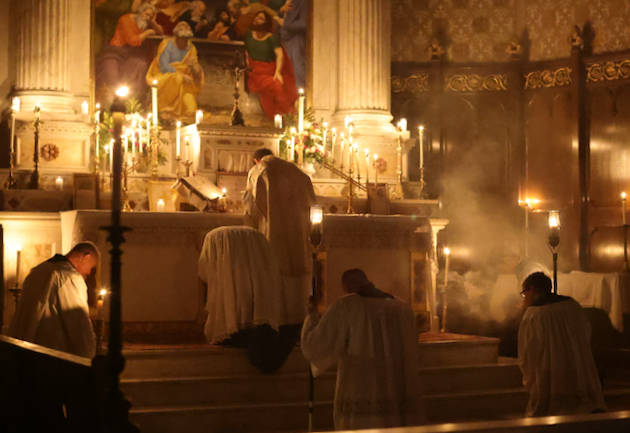
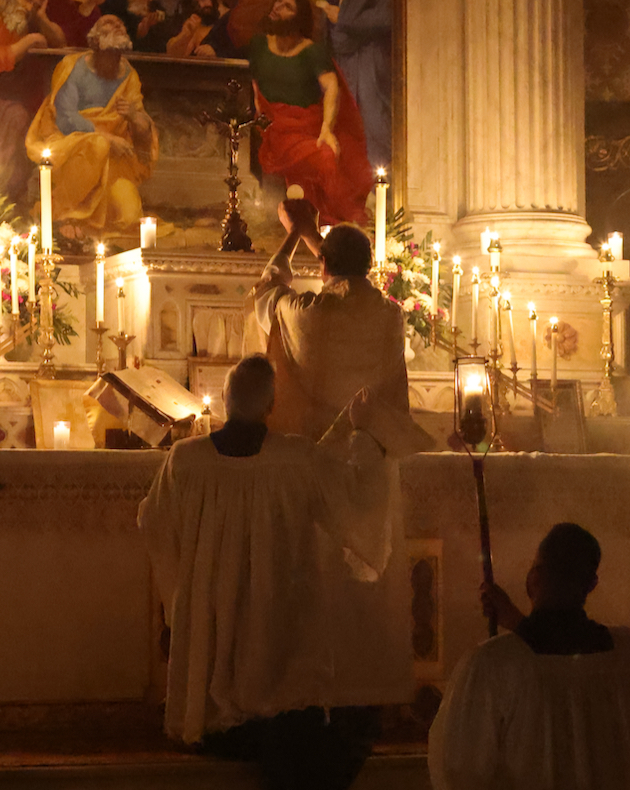
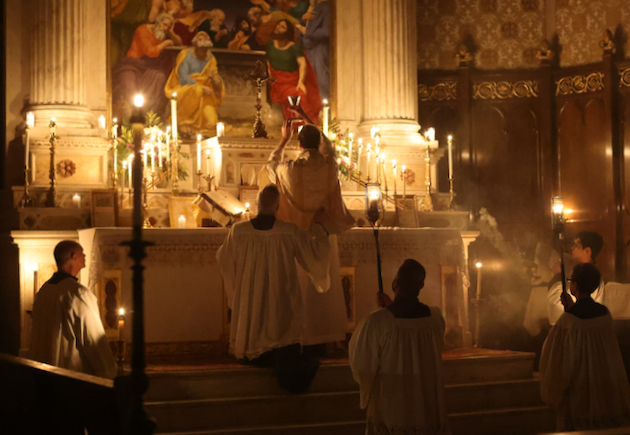
12:00 A.M. – Solemn Midnight Mass, Latin, 1962 Missal Extraordinary Form
Following Midnight Mass*, Total Consecration to Jesus through Mary by St. Louis Marie de Montfort
8:00 A.M. – Holy Mass – Spanish
10:00 A.M. – Solemn Feast Mass of the Day 11:15 A.M. – Grand Outdoor Procession with the Statue of Our Lady of Mount Carmel *Permit granted by the City
3:00 P.M. – Holy Mass – French and Creole
6:00 P.M. – Latin Missa Cantata, 1962 Missal, Exposition of the Blessed Sacrament and Benediction
Saturday, July 17, 2021 – 10th Annual Traditional Mass Pilgrimage
7:45 A.M. – Latin Low Mass 1962 Missal Extraordinary Form; 9:00 A.M. – Latin Low Mass 1962 Missal Extraordinary Form followed by Novena
*Side Altars to be prepared for Visiting Priests wishing to offer their Private Daily Mass
10:00 A.M. – Welcome of Pilgrims, Introduction and Recitation of the Holy Rosary
10:45 A.M. – Penitential Procession of Pilgrims
11:00 A.M. – Missa Solemnis, 1962 Missal
12:00 P.M. – Exposition of the Blessed Sacrament, Procession and Benediction
Investiture in the Brown Scapular, Farewell of Pilgrims
29
Jun
29
Jun
25
Jun
…of 60 Democratic Party politicians. By Archbishop Salvatore Cordileone. In First Things.
From the “Statement”: We are committed to making real the basic principles that are at the heart of Catholic social teaching: helping the poor, disadvantaged, and the oppressed, protecting the least among us and ensuring that all Americans of every faith are given meaningful opportunities to share in the blessings of this great country.
Archbishop Cordileone: One of the “basic principles” of Catholic belief is rather blunt and simple: Don’t intentionally kill, or collude in enabling others to kill, innocent human life. Catholic principles build systematically on one another. The protection of innocent, defenseless life is first and foundational.
25
Jun
I was just informed of the death of the notable classical architect Thomas Gordon Smith. Some excerpts from his obituary:
He was a loving father to … Rev. Innocent Smith, O.P. …. .
(Thomas)Smith led an independent architectural practice through 2015; major projects included Our Lady of Clear Creek Abbey (Hulbert, OK), the Classical Galleries in the American Wing at the Metropolitan Museum of Art (New York, NY), Our Lady of Guadalupe Seminary (Denton, NE)….
May he rest in peace!
22
Jun
Cardinal Burke will celebrate a Solemn Mass at the Basilica of St. John the Evangelisit in Stamford on July 16 at 6 pm for the Feast of Our Lady of Carmel. The Basilica’s schola will sing Mozart’s “Sparrow” Mass.

Also at the Basilica of St. John the Evangelist: Solemn Vespers for the Feast of Sts. Peter and Paul, Tuesday, June 29th at 6 pm.

At St. Martha Church, Enfield, CT, this Wednesday, June 23, a Traditional Mass for the Vigil of the Birth of St. John the Baptist will be celebrated at 7 pm, followed by a procession, bonfire and small reception (please bring a snack to share if possible). The church address is 214 Brainard Rd, Enfield.
St. Marth Church offers a high Mass every Sunday at 11 am and a low Mass every Wednesday at 7 pm. On holy days that fall on weekdays, there is a 7 pm Mass. On First Saturdays there is a 9 am Mass.

We have seen how the remarkable Asam Brothers – Egid Quirin and Cosmas Damian – collaborated to create St. John Nepomuk, a jewel-box of a church in Munich. It was an example of lay initiative surpassing the wildest dreams of our Vatican II reformers. For the two artist brothers themselves financed, built and decorated the church. St. John Nepomuk is a unified work of art in which architecture, sculpture, painting and stucco – among other disciplines – collaborate, resulting in one of the supreme masterpieces of the baroque age. And all this 125 years before Richard Wagner advocated similar ideals – but oriented around music. He too was active in Bavaria, by the way, but resided mostly in a Protestant region (Bayreuth) that had only come under the Bavarian crown in the 19th century.
The Asam brothers, however, enjoyed only a handful of opportunities like the church of St. John Nepomuk. More typically, they acted as restorers and decorators of stuctures either ancient or built by others. For by the 18th century, the ecclesiastics, religious communities and secular lords of the Catholic half of the Holy Roman Empire were eager to give their churches and palaces a contemporary, magnificent appearance. In such circumstances the brothers had to fit their own art into an existing framework of architecture and art. But in no way did the Asams simply throw a baroque overlay over whatever they found. Rather, they carefully worked to express the architecture and history of the site and as well as to coordinate with any art already in place.
Typical of these commissions was the major reconstruction undertaken between 1731 and 1733 of the monastery of St. Emmeram in Regensburg on which both Egid Quirin and Cosmas Damian worked. Now St. Emmeram was a prime example of the convoluted political and religious relationships of the 18th century German empire. It was located in Regensburg, an “imperial city,” meaning that it was subject to the emperor in Vienna, but was de facto autonomous. Since the 16th century its governing council had been Protestant. Yet the city was dominated by a whole series of politically independent Catholic institutions – the Cathedral, St. Emmeram, the “Ancient Chapel” (Stift unserer lieben Frau zur alten Kapelle), the Scottish monastery, etc. The Prince-Bishop of Regensburg was ruler of his own separate small principality. Finally, Regensburg was in turn surrounded by the domains of the much more powerful, arch-Catholic prince-elector of Bavaria.


St. Emmeram abbey dates back to the early days of Christianity in this part of Germany and to an early martyr, St. Emmeram. Charlemagne was a benefactor, elements of the original 8th century church are incorporated into the present building, and the monastery enjoyed further imperial favor in the 9th century. Although destroyed and rebuilt several times, the church of St. Emmeram in essence dates back to the 10th century. Numerous noteworthy people are buried here: St. Wolfgang, bishop of Regensburg (Wolfgang Amadeus Mozart!), Emma, Queen of the East Frankish kingdom, Arnulf, Holy Roman Emperor…. Again and again St. Emmeram’s abbey played a major role in the art and politics of Bavaria, the Holy Roman Empire and Germany between 750 and 1100.
In the middle ages the monastery became a free (autonomous) imperial abbey. And in the 18th century its abbot was raised to the dignity of prince-abbot. The redecoration of the church by the brothers Asam commemorates that achievement. In these last years of St. Emmeram’s abbey a great revival of learning and science also took place. A thousand years after its founding this monastery had rediscovered the Benedictine role of spiritual and culural leadership.


The Asam brothers present to us a vast panorama of the religious and political history of the monastery – from Imperial Roman times to the last decades of the Holy Roman Empire in the 18th century. Of course, the decorative program highlights the privileges, titles and benefactions received over the centuries from popes and secular rulers! For it goes without saying that in this world the sacred and the political realms interact in a climate of “mutual enrichment”; concepts like “separation of church and state” and “healthy secularism” are completely alien to the Holy Roman Empire. After all, at his coronation didn’t the emperor receive a kind of diaconal ordination?
Indeed, the brothers Asam at St. Emmeram go beyond the confines of the Holy Roman Empire, European history and even Christendom. For, as we so frequently encounter in the German baroque, the scope of the decoration expands to embrace all the world then known. The sanctuary fresco shows St. Benedict honored by the four continents (Africa, Asia, Europe and America). Benedictine missionaries arrive by ship in the New World. Elaborate stucco “Chinese” vases, issuing waterspouts, incense or simply functioning as planters, are set about the church.
St John Nepomuk is one of those planned, unified works of art where every part has been deployed as a facet of a larger whole. It represents to perfection one artisic will (even if, in this case, that of two brothers!) at one moment in time in one specific style. St Emmeram, however, has an entirely different charm. It recalls the older churches and basilicas of Rome, such as S. Clemente, Sta Maria Maggiore or Sta Maria in Trastevere, where the succession of ages and styles over the ages conveys to us a sense of the stability of Christendom throughout the flux of time. The diversity of styles at St. Emmeram, the visible ups and downs of the course of history, reveal a great underlying unity. The final contributors to this ensemble, the brothers Asam, were able to preserve and express the historic nature of St. Emmeram while synthesizing these disparate elements into one aesthetically pleasing whole.


The splendor of St. Emmeram’s did not last long. Despite the new renown it was winning in education and scholarship, St. Emmeram’s, like almost all its sister German monasteries, was secularized at the beginning of the 19th century as the Holy Roman Empire was liquidated. It fell into the hands of the Bavarian state. The monastic community was dispersed, many of the abbey’s treasures taken to Munich and the grand abbey of St. Emmeram became a simple parish church. The monastery buildings other than the church, however, became the main palace of the House of Thurn und Taxis. Now the connection of this princely house with Regensburg is itself a fascinating chapter in the story of the Holy Roman Empire – it relates to its involvement with the “perpetual diet”(parliament) of the empire which convened in this city since 1663. In any case, the Princes of Thurn und Taxis have remained resident at St Emmeram’s to the present day. And more recently, the supporters of Catholic Tradition have had reason to be grateful to Princess Gloria of Thurn und Taxis for her generous support. Dare we say that, in a sense, a new spiritual chapter is being written in the 1300-year history of St. Emmeram’s?

Sources: