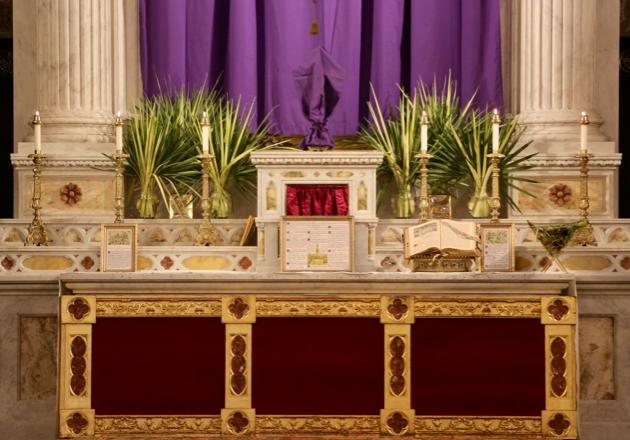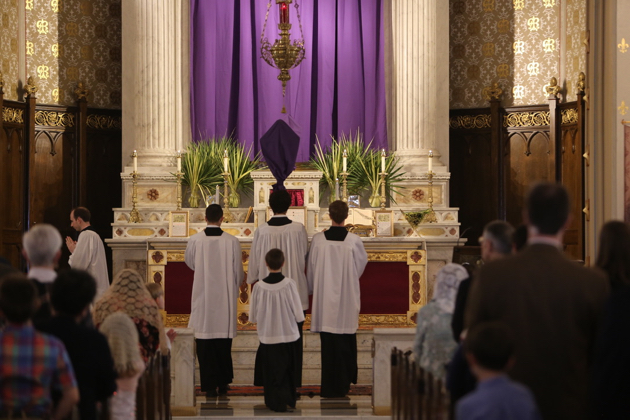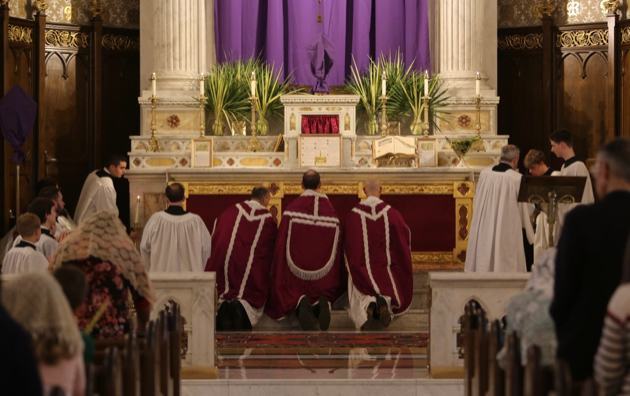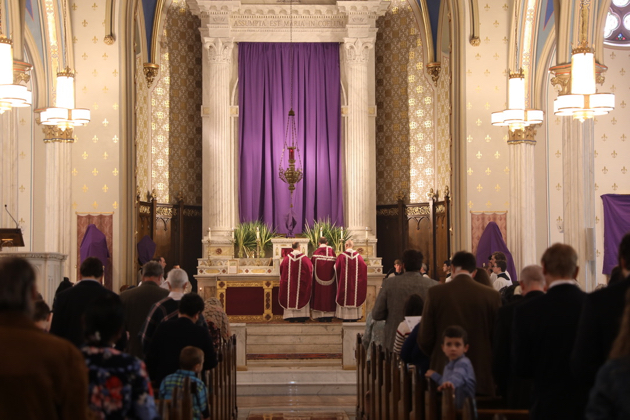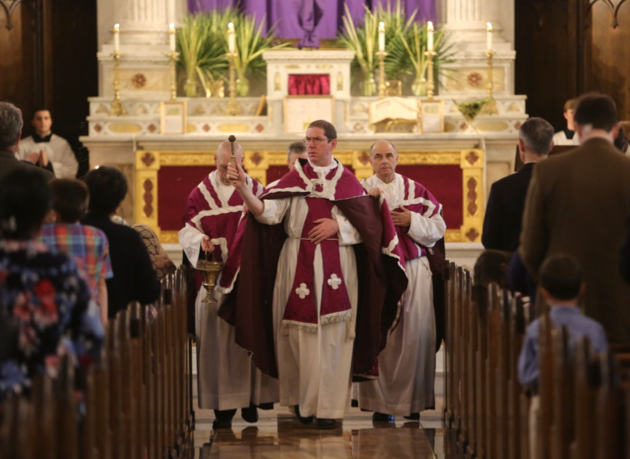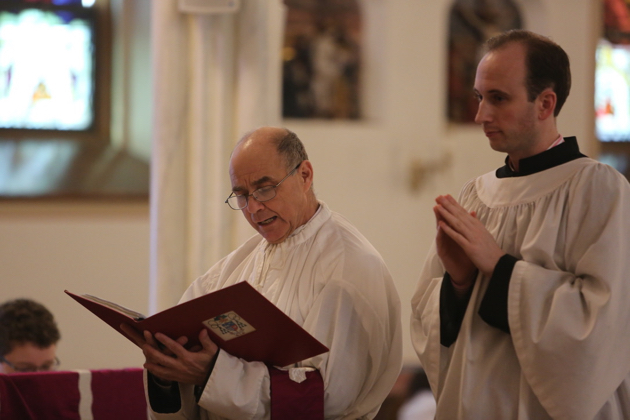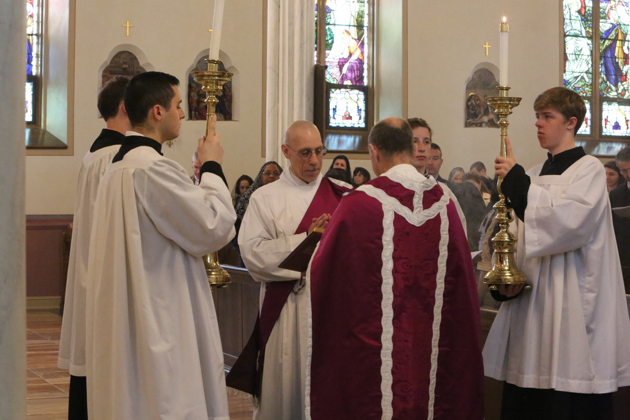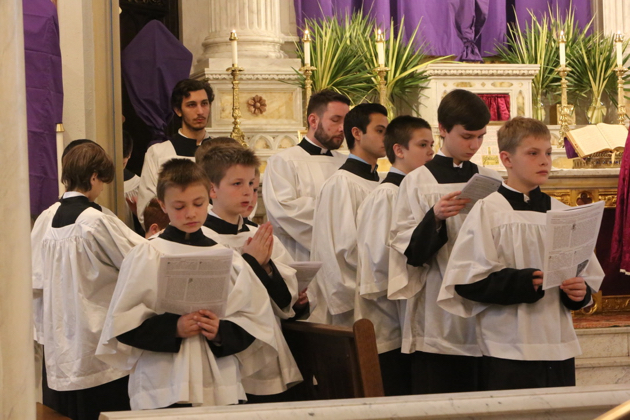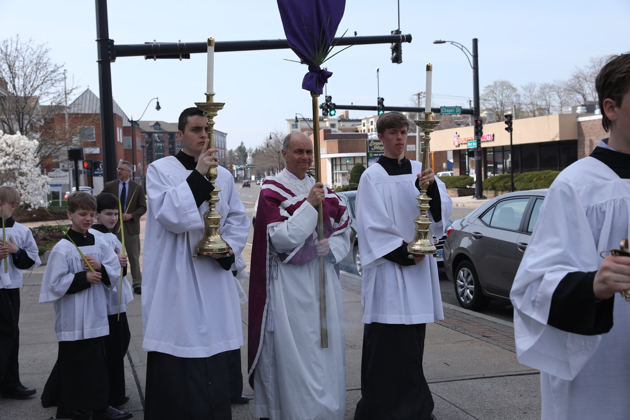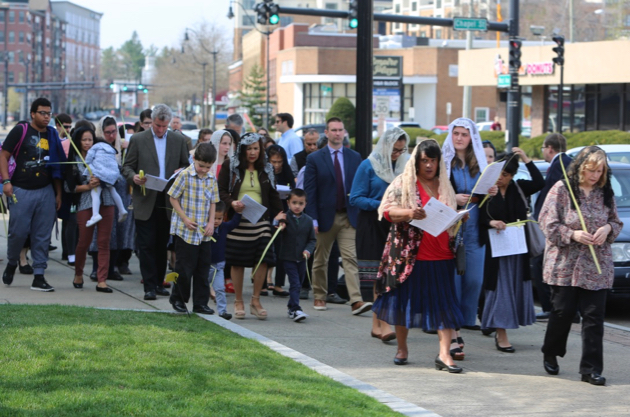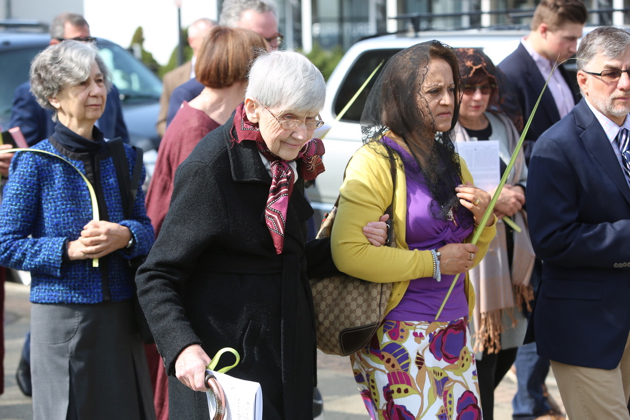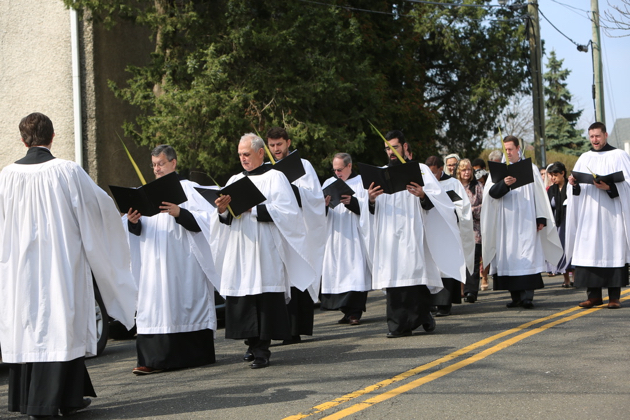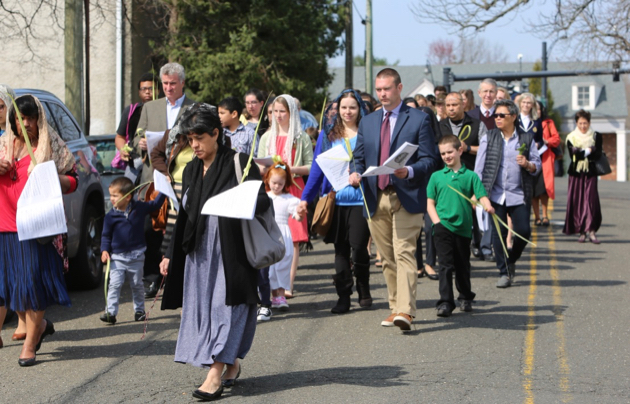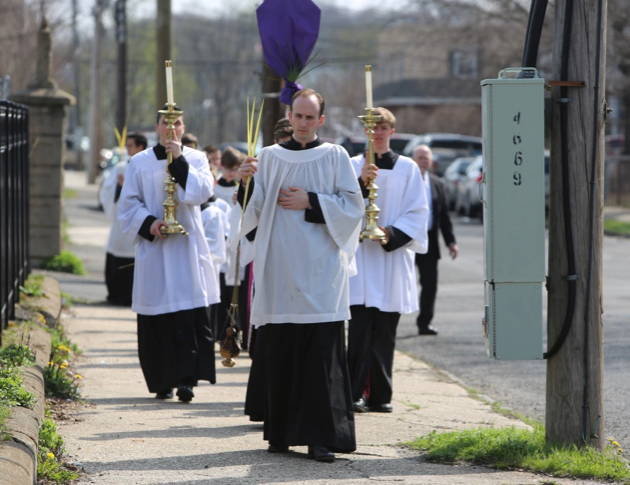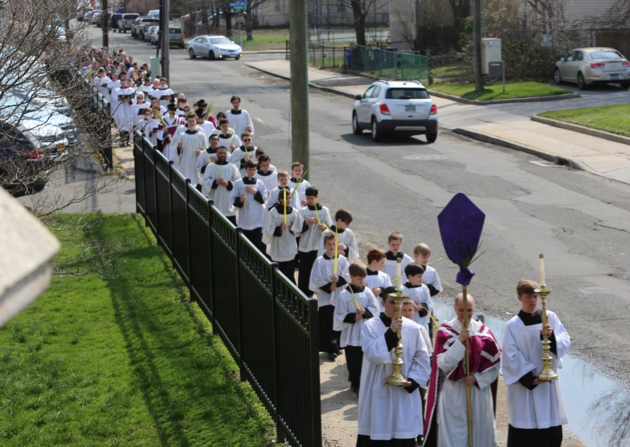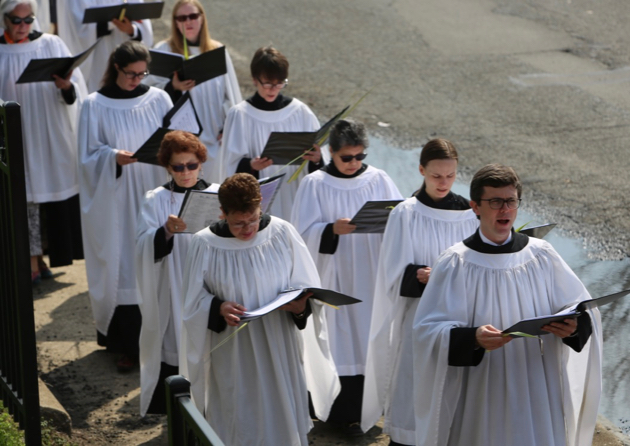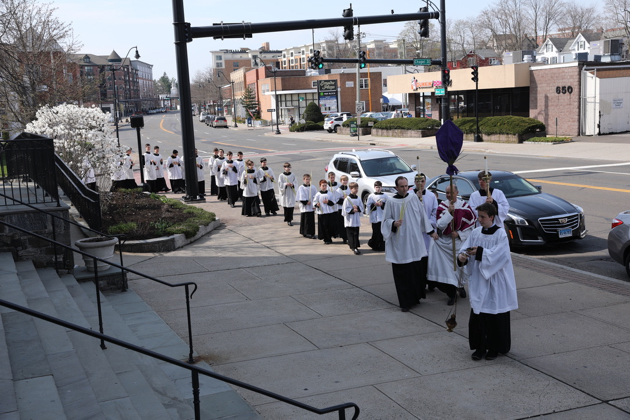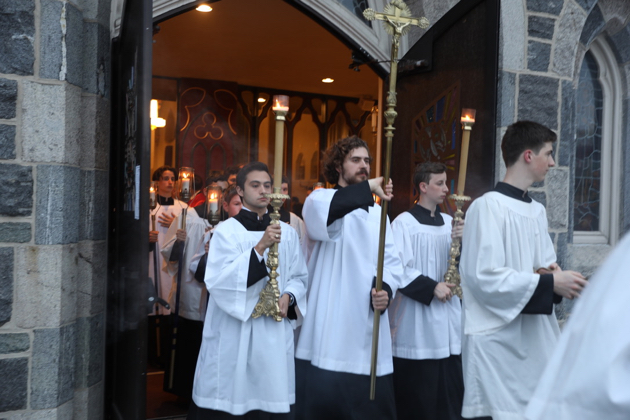
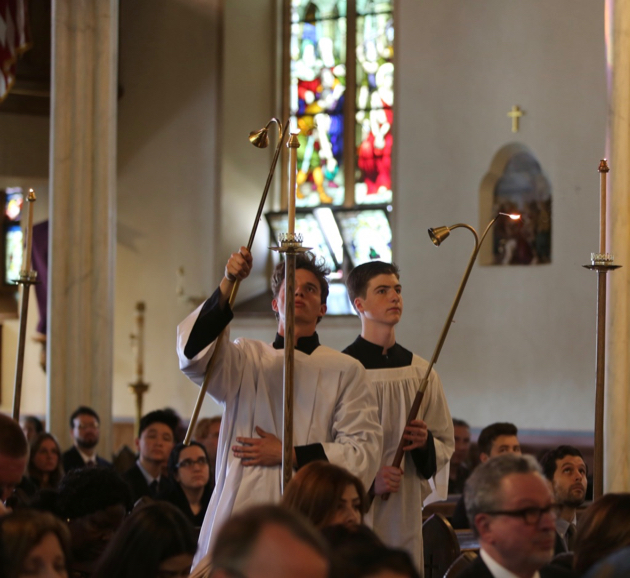
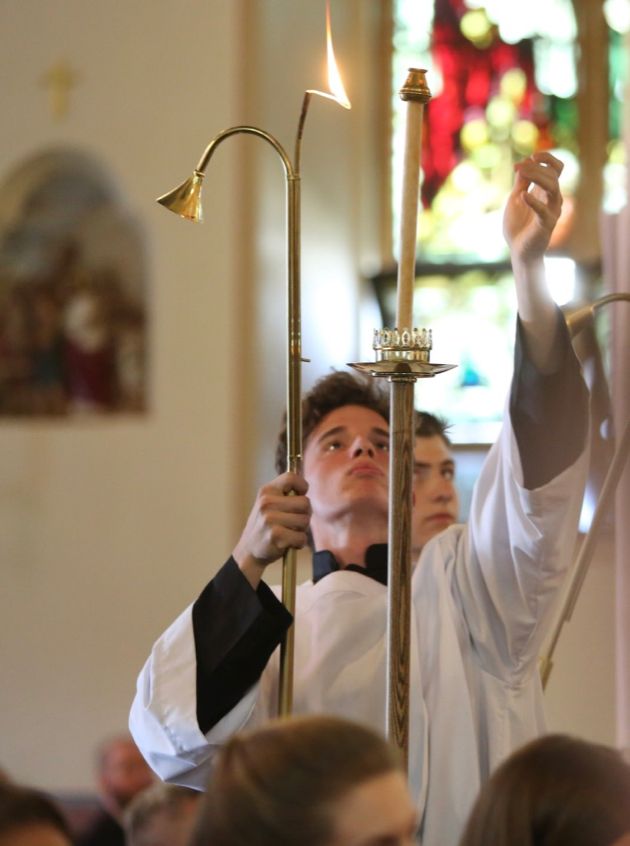
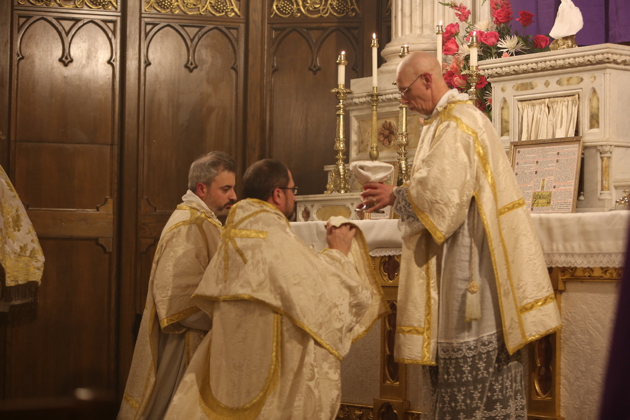
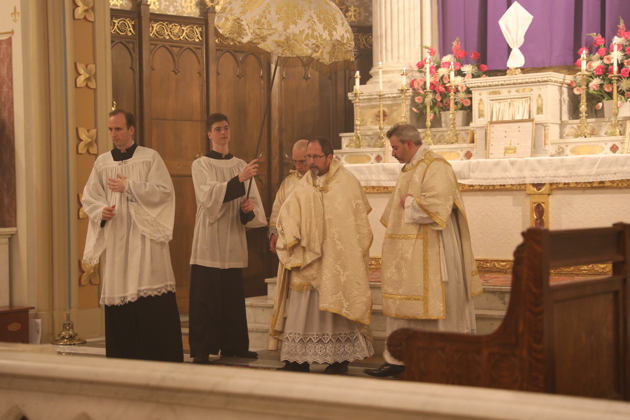
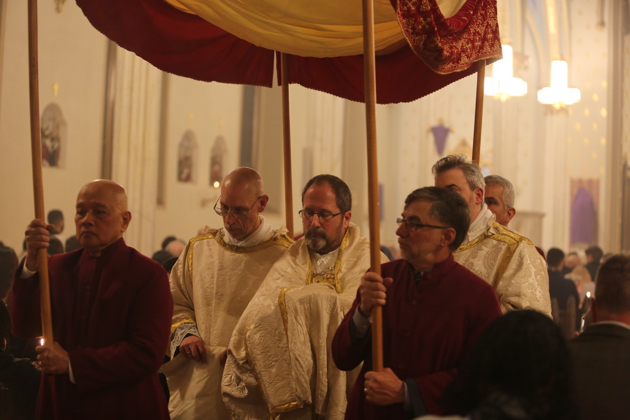
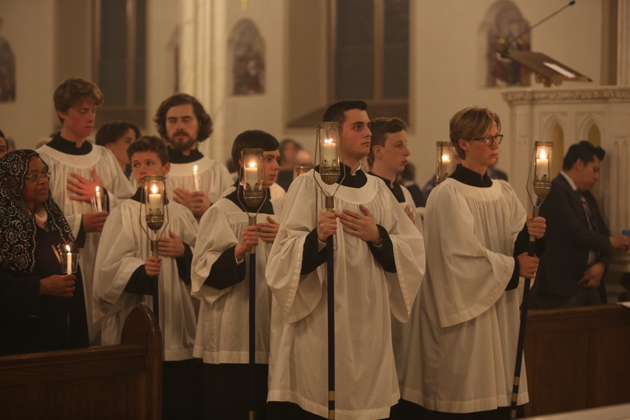
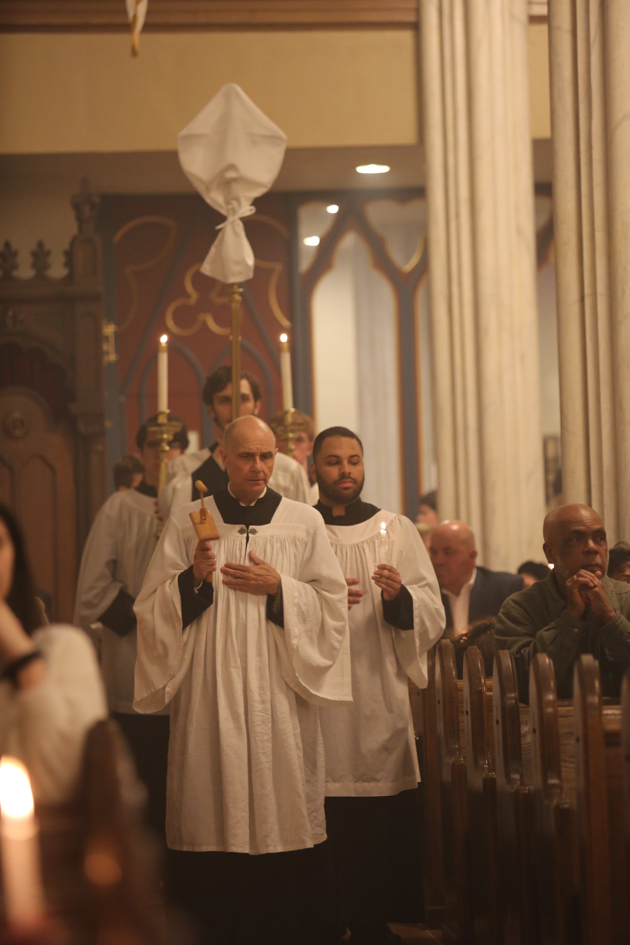
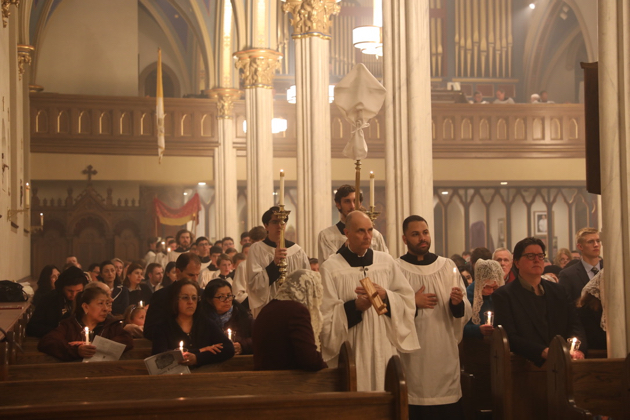
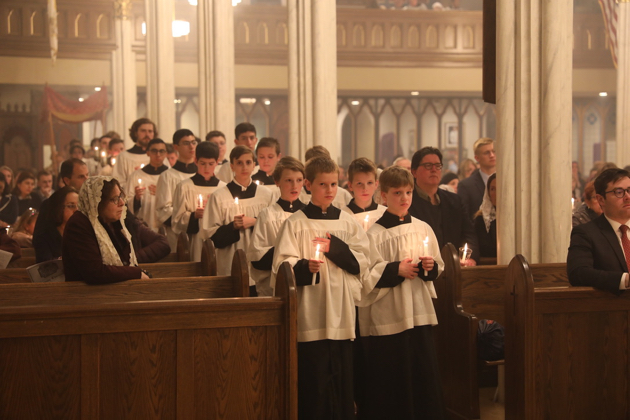
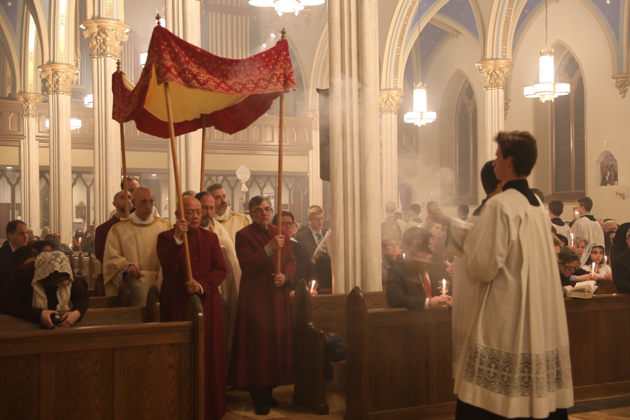
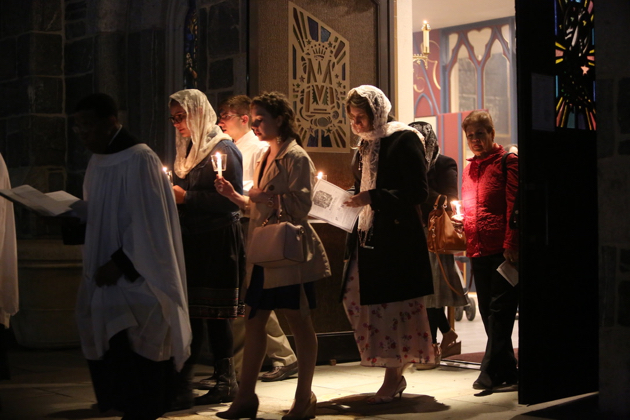
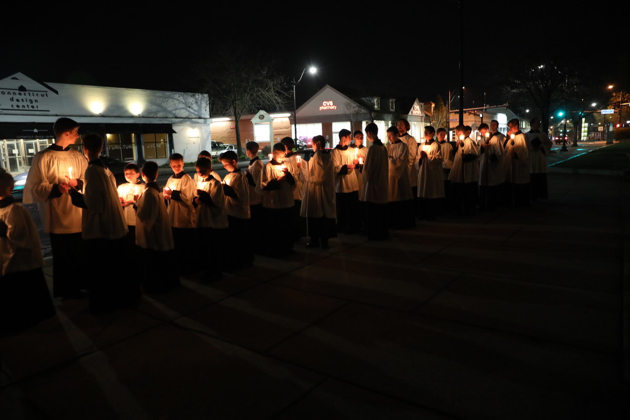
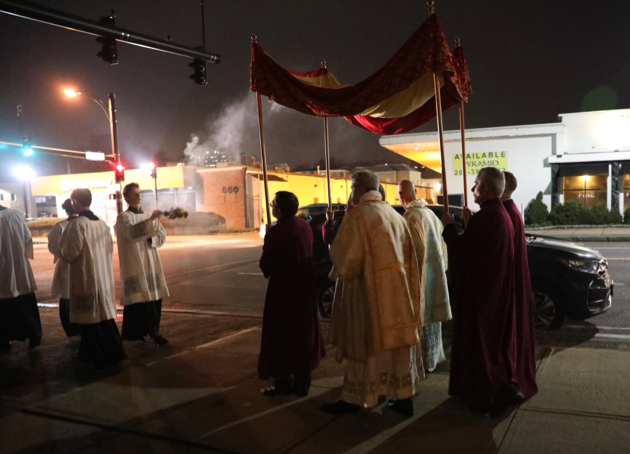
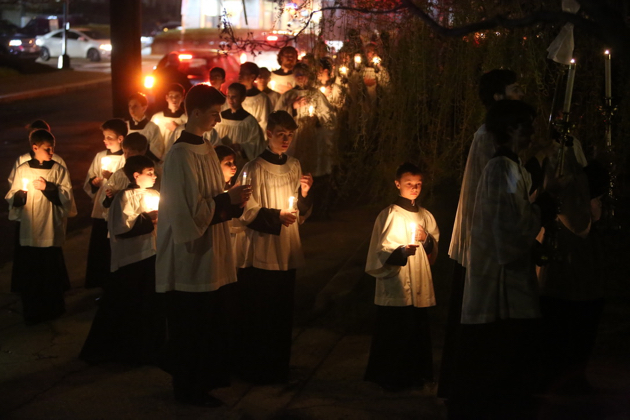
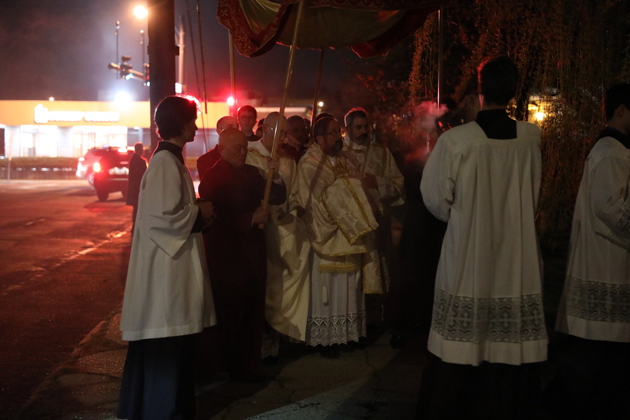
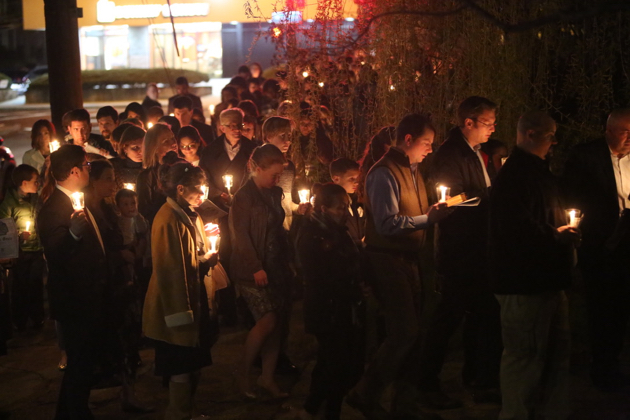
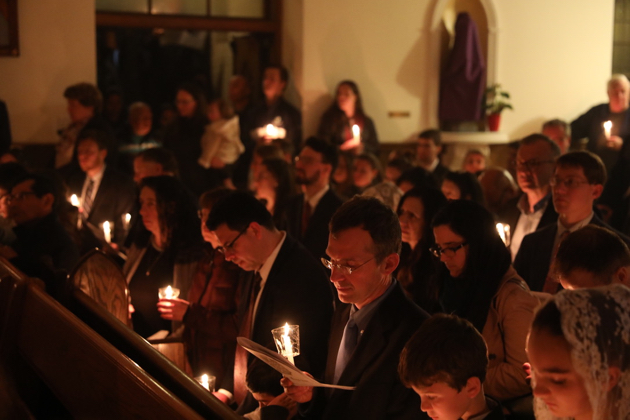
The procession of Cristo Muerte and Our Lady of Sorrows though the streets of Norwalk, Connecticut on Good Friday evening. This year, the procession was sponsored by the Norwalk parishes of St. Mary and St. Joseph.
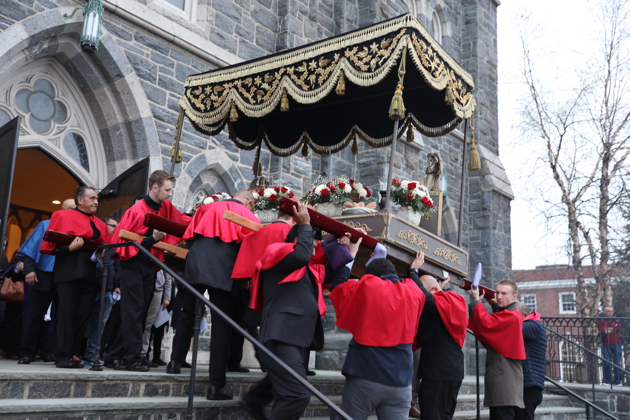
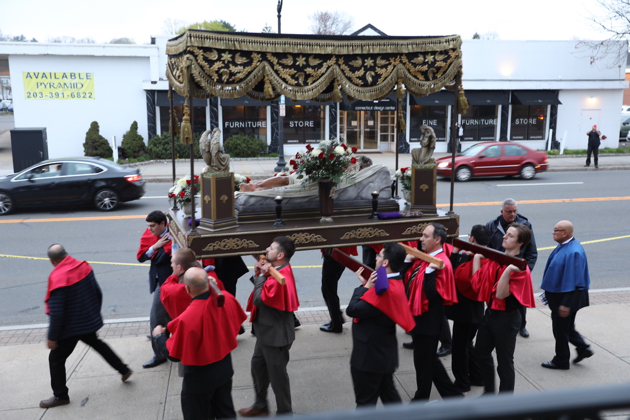
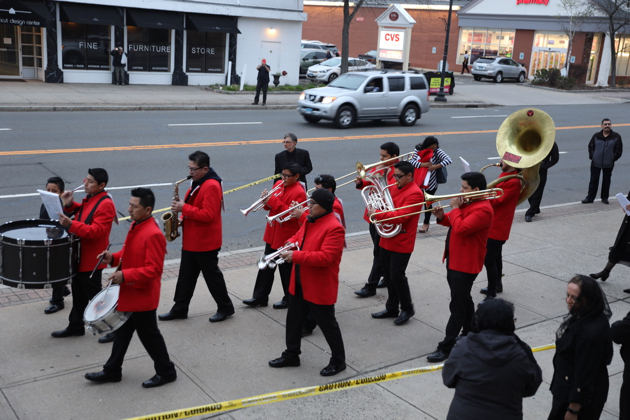

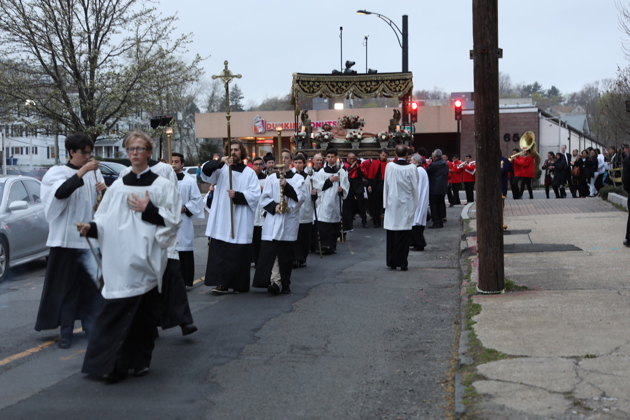
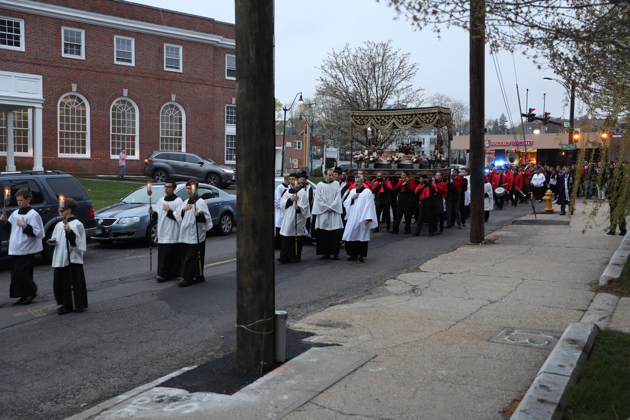
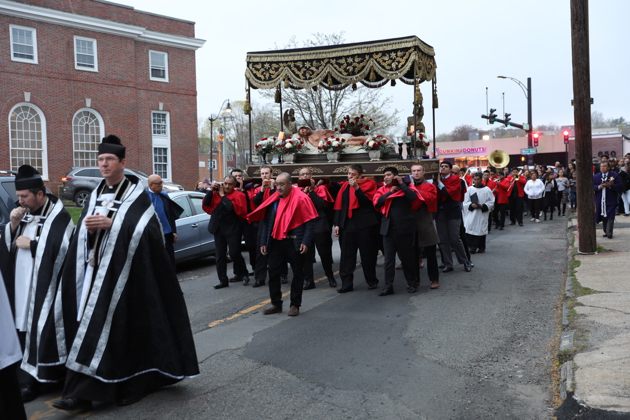
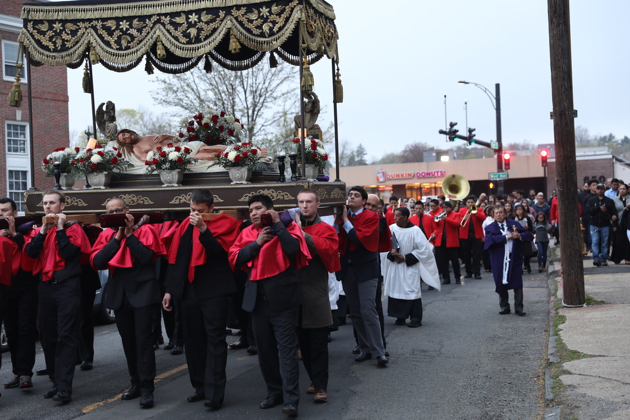
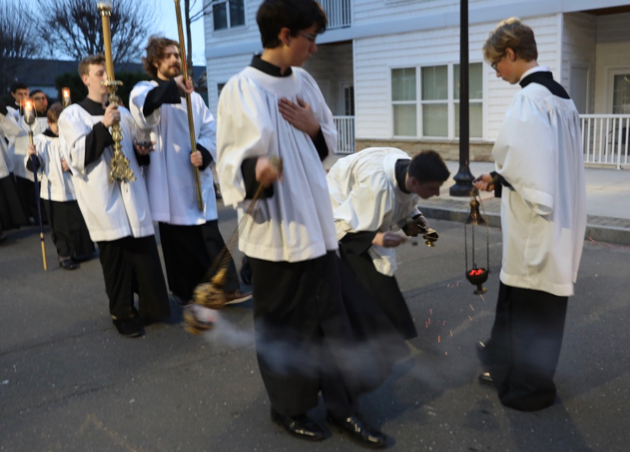
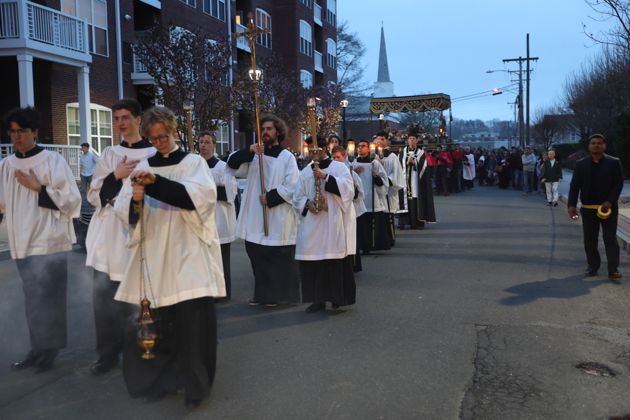
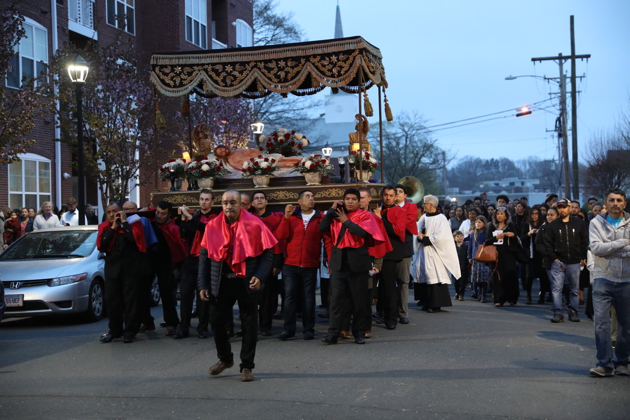
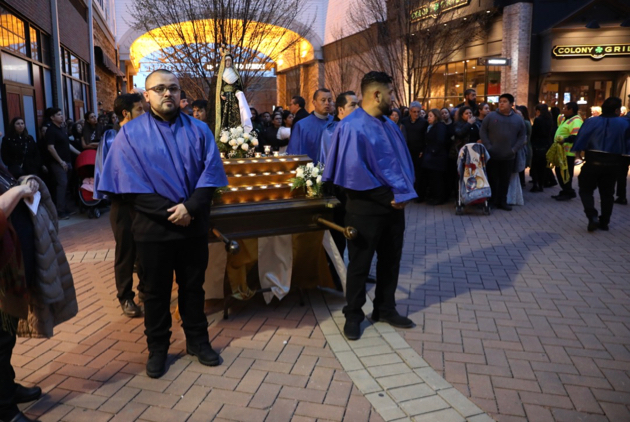
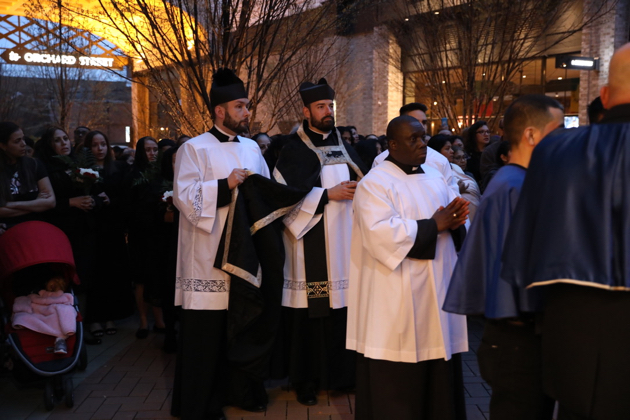
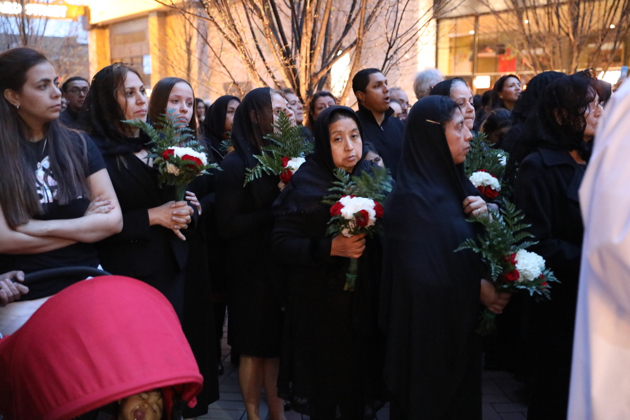
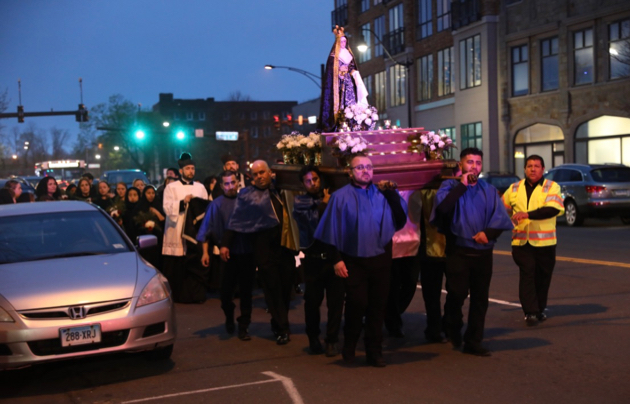
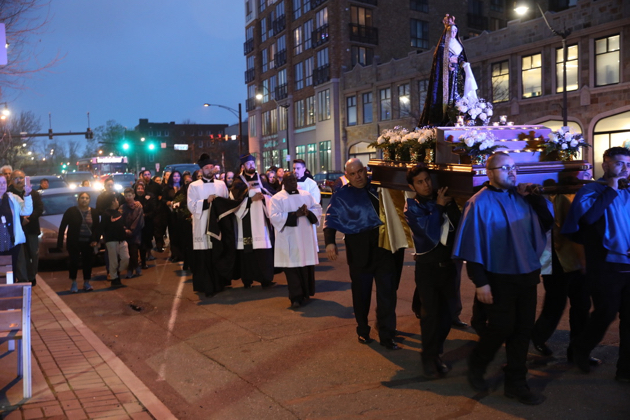
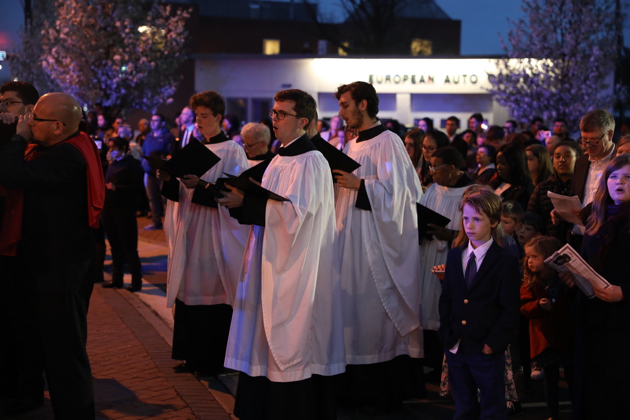
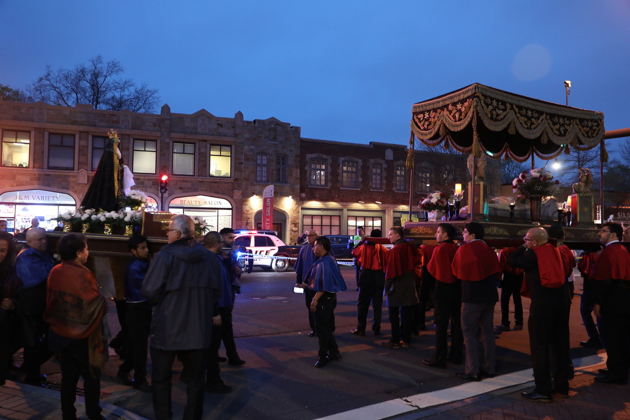
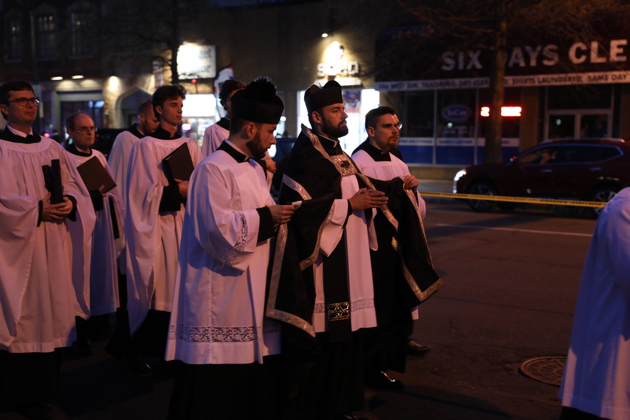
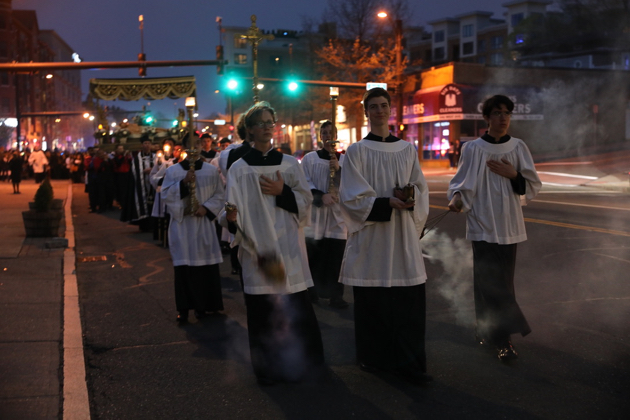
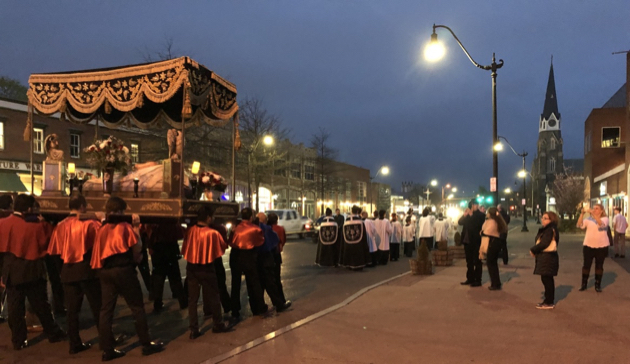
The procession of Cristo Muerte and Our Lady of Sorrows though the streets of Norwalk, Connecticut on Good Friday evening. This year, the procession was sponsored by the Norwalk parishes of St. Mary and St. Joseph.
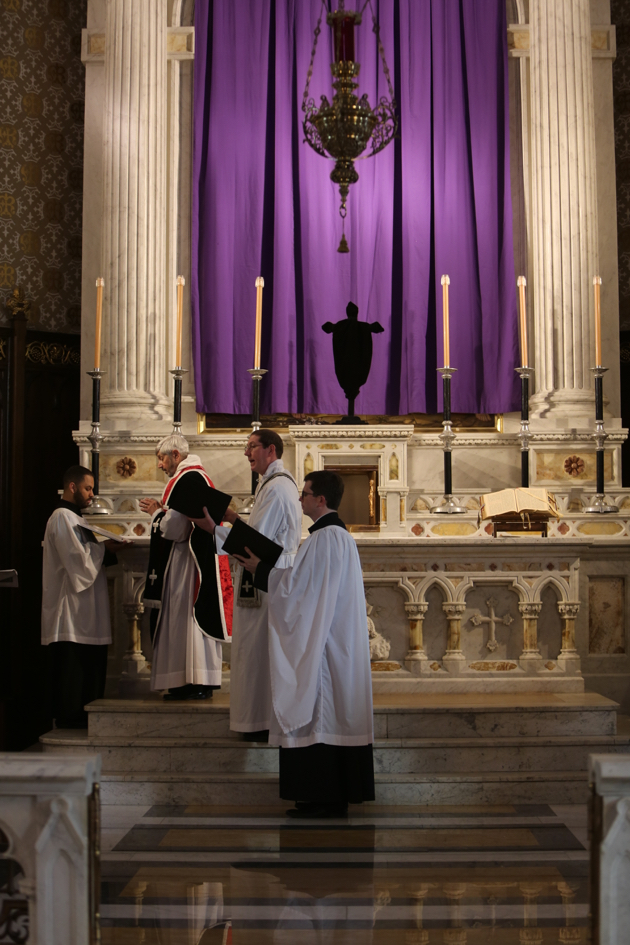
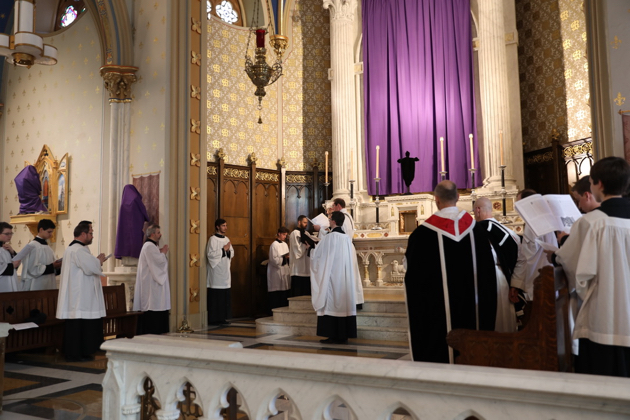
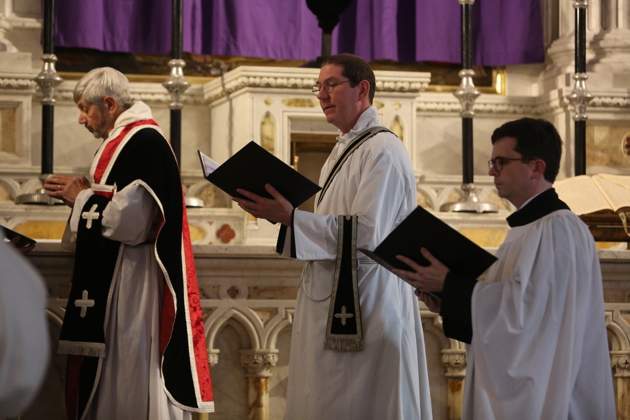
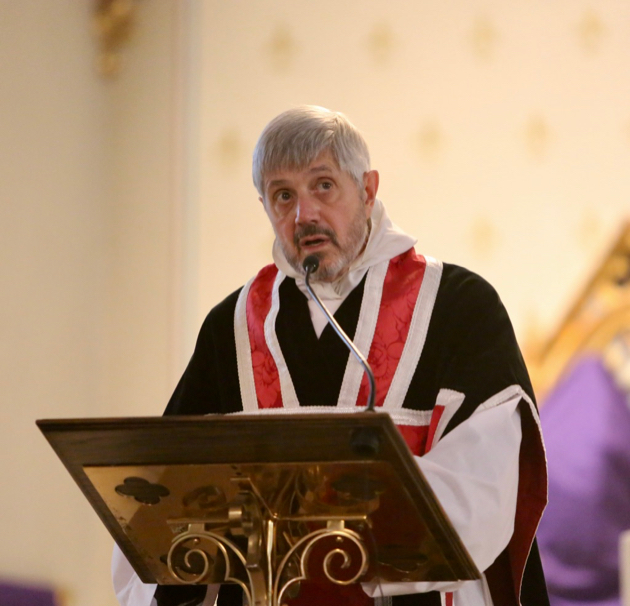
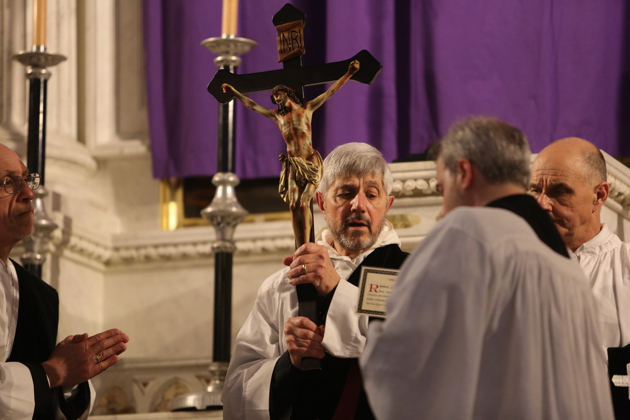
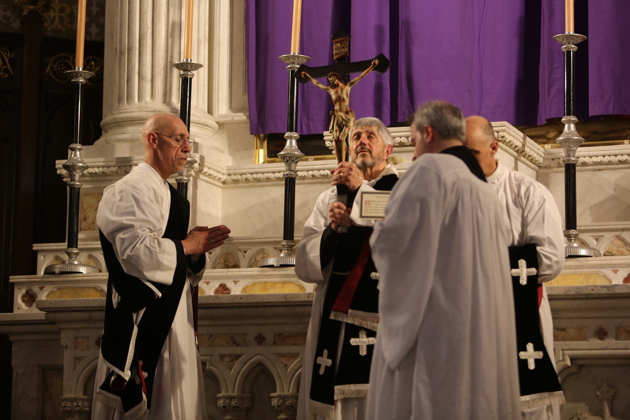
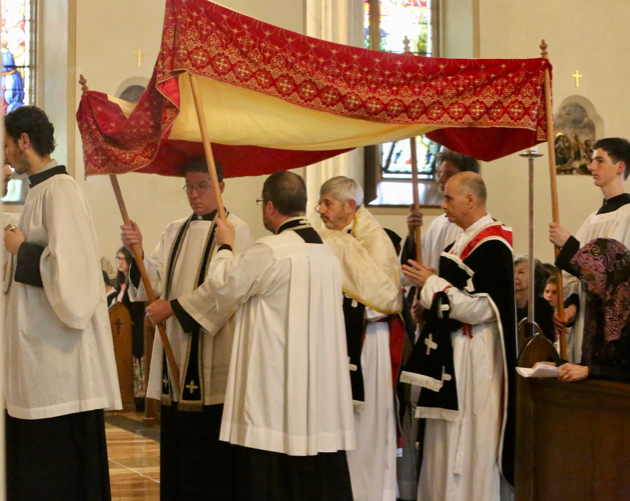
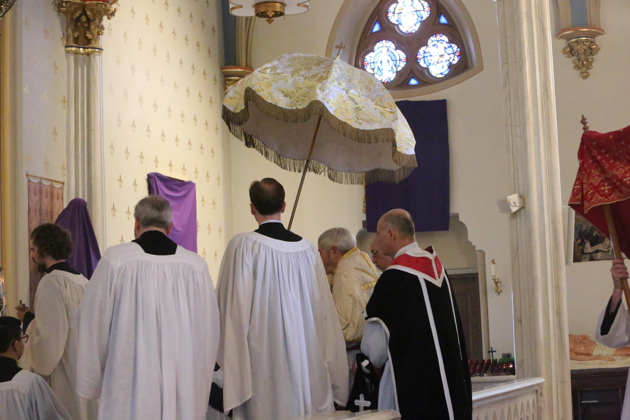
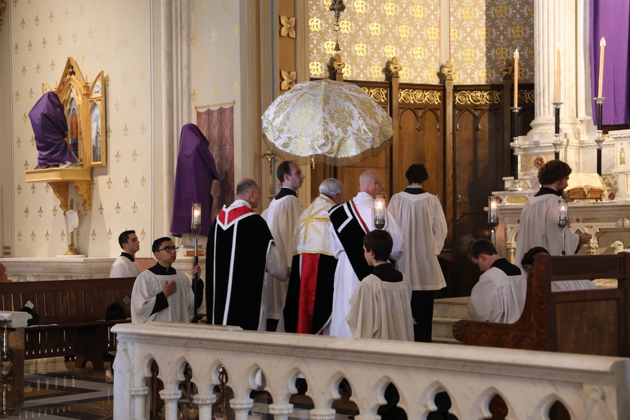
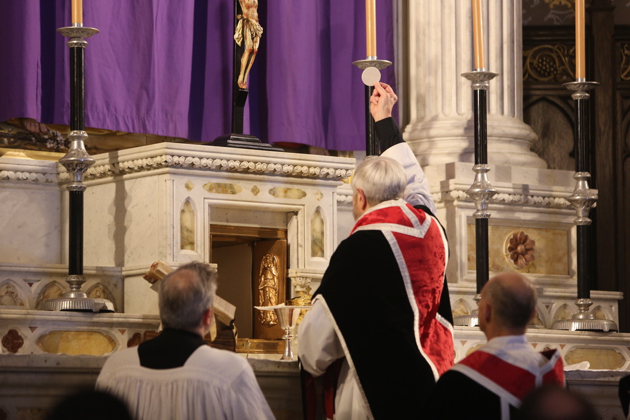
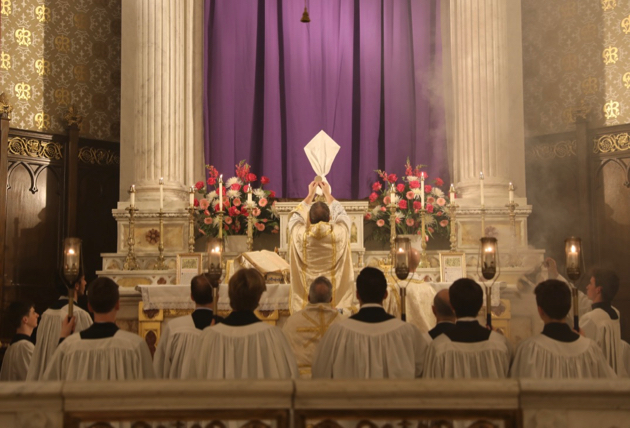
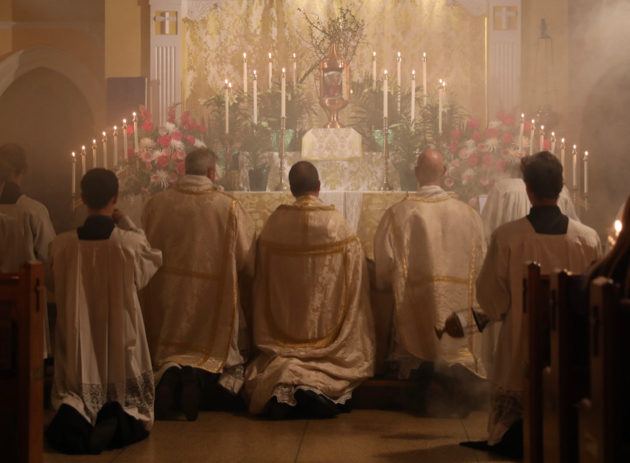
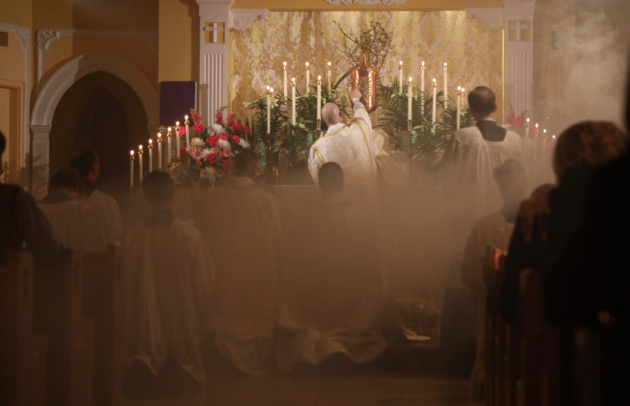
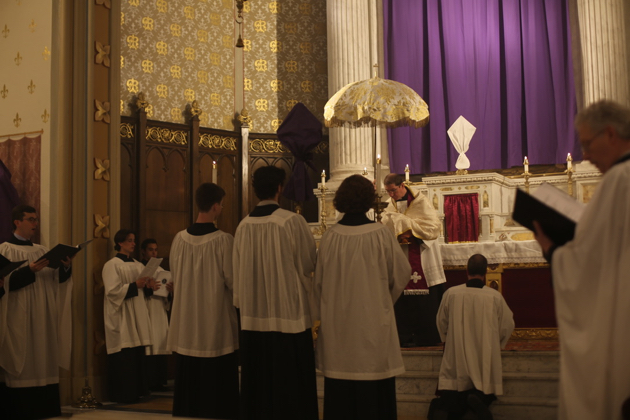
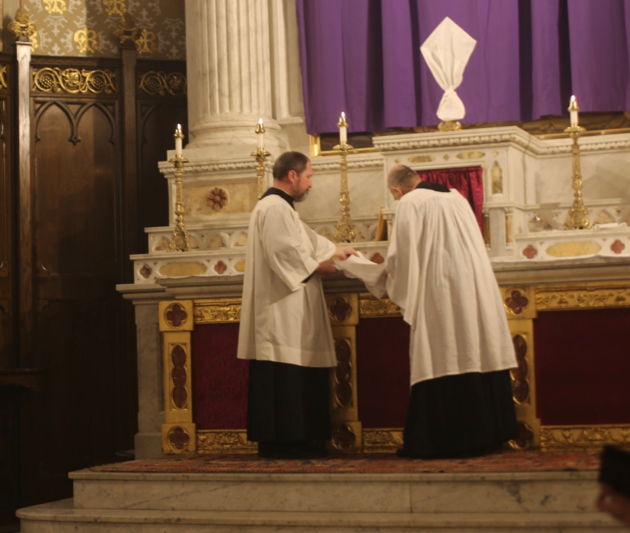
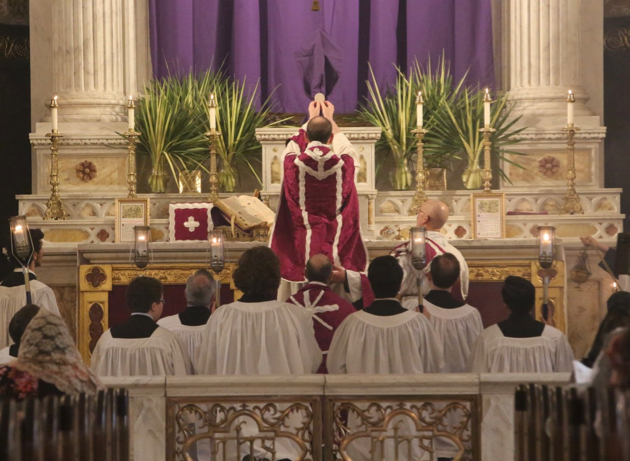
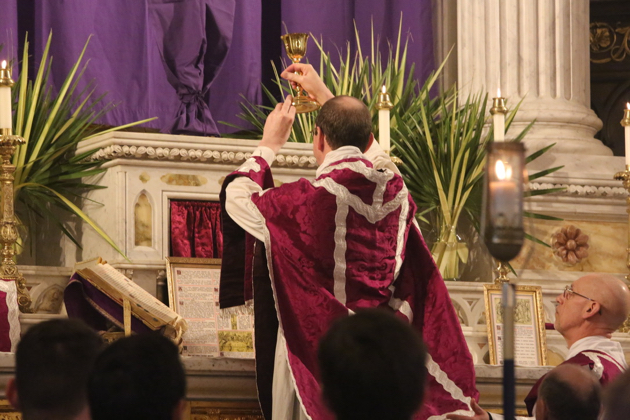
Why is the Sacred Host brought into the church in this solemn procession on this Good Friday? In order for the priest, on the one day that the Sacrifice of the Mass is not celebrated, to hold the Host on high for all to see on this day, to behold the Sacrament of the One who exploded the black hole of sin and death, the God who loved us so much that he gave his only begotten Son to die for us, and it is the priest, the one who offers sacrifice, who then consumes the Sacred Host not to offer the Sacrifice as he usually does at the Mass, but to show us what the absence of the Sacramental presence of Christ would mean, the void without hope. And with this gesture the priest shows us what this is all about, the will of God to become flesh and die a real death for you and me. He died a real human death, yes, without sin, but real, a death died not in some sort of smug way knowing the outcome, smug because of his Godhead, but rather like you and me, he died in faith that his Father would allow him to smash the terrible power of death and bring him once again to his bosom. He died really for you and me so that the reality of what he died for, the forgiveness of our sins, may become a reality in our space and time, for you and for me.
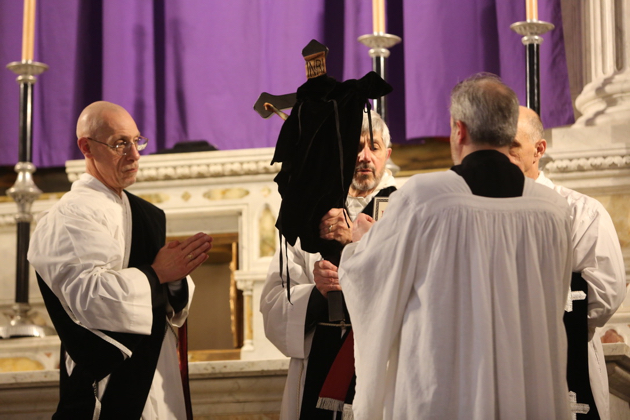
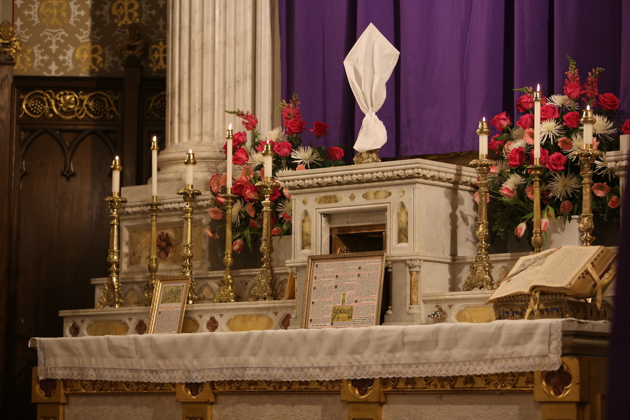
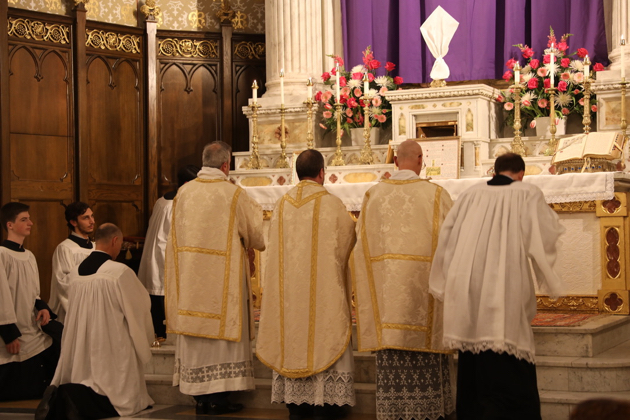
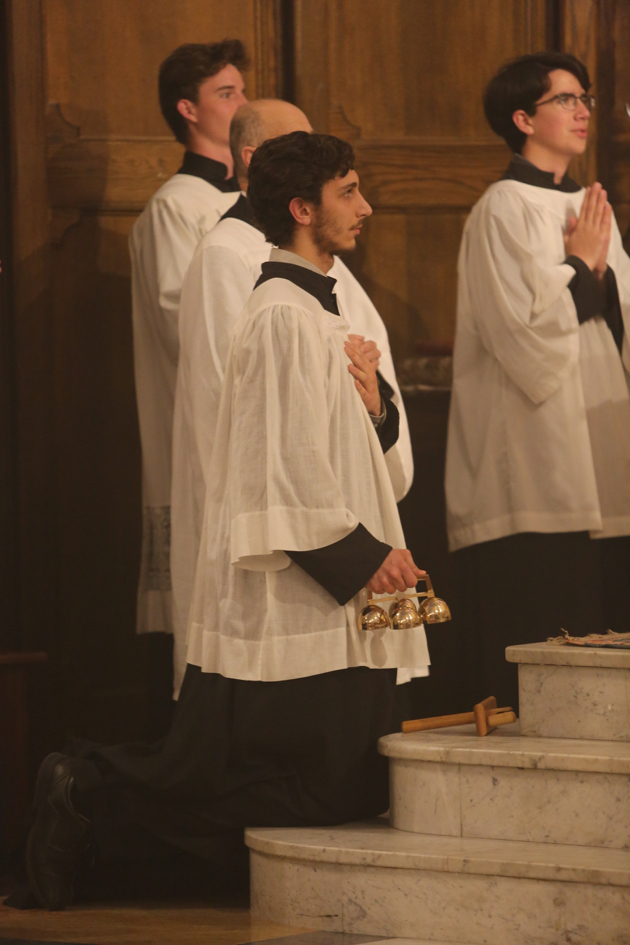
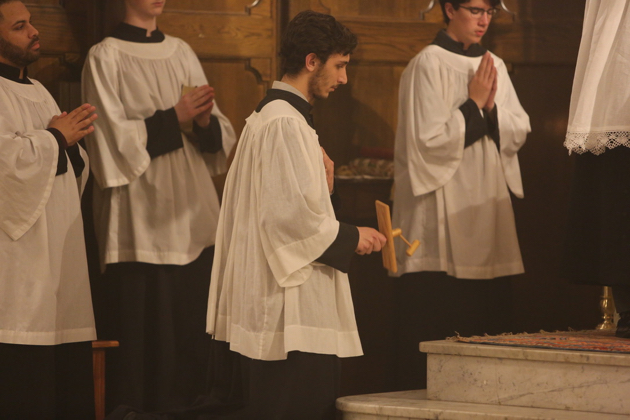
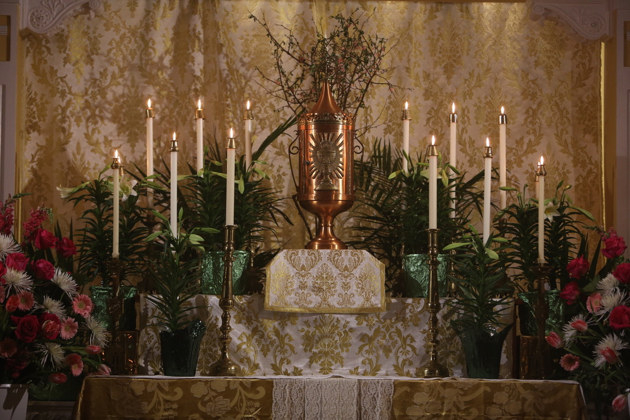
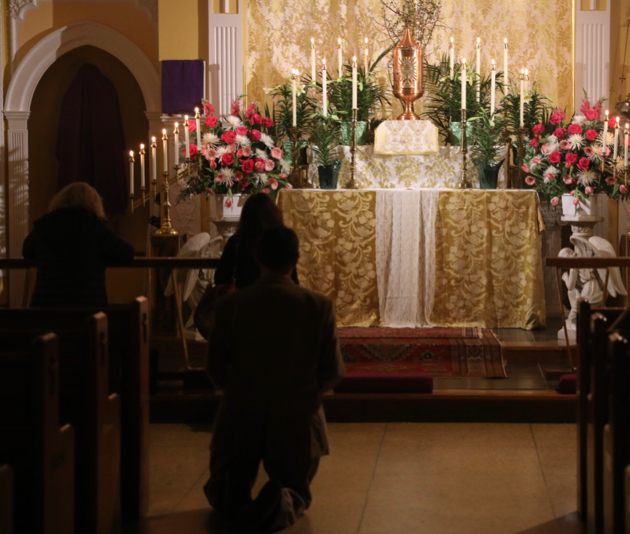
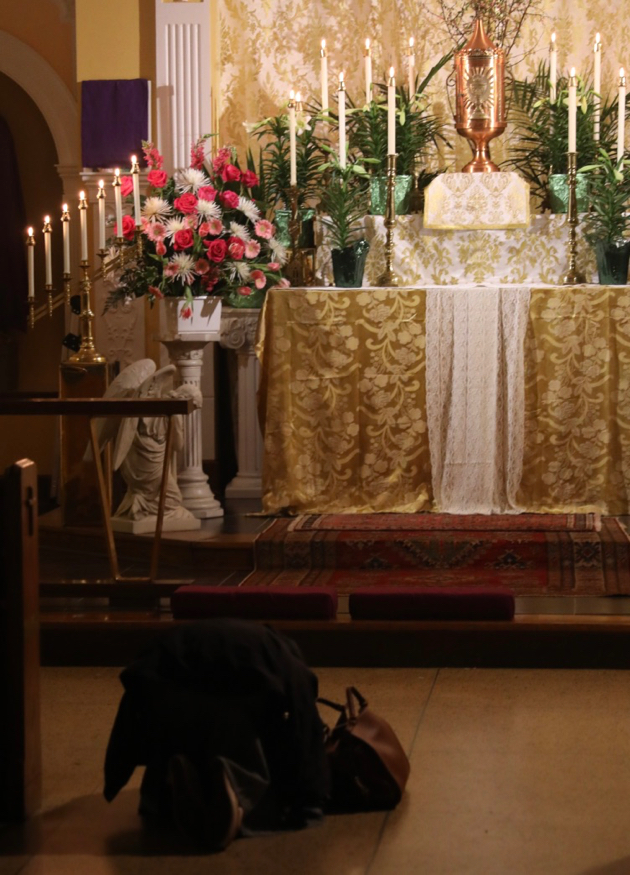
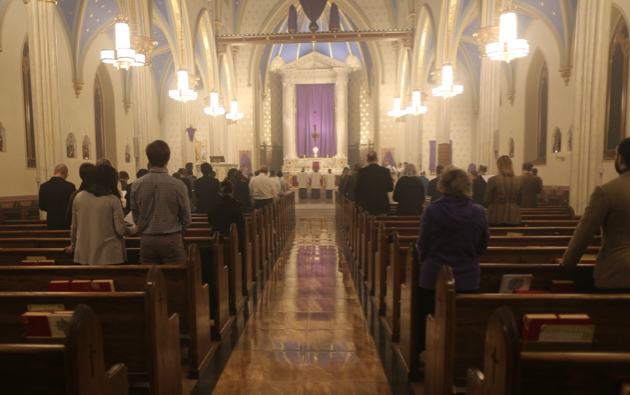
Sermon for Good Friday 2019
Fr. Richard Cipolla
My son sent me a text: Nôtre Dame is on fire. I was doing something else and did not immediately check on the news. Then I did. I watched what was happening in Paris, the flames, the silent observers, the media, commentators who had no idea of what Nôtre Dame means or what is its deep significance and who tried to fudge things with platitudes. I sat there mesmerized. And then an image I will never forget. The fleche, the spire of the cathedral, aflame, collapsed and fell out of sight. And the flames continued to roar. Suddenly the President of France, Emmanuel Macron, is seen arriving with an entourage. Next to him is a cleric in a grey shirt and plastic tab collar. They both look serious. Notre Dame is burning. But they do not join the hundreds of Catholic standing there singing hymns, most of them young people, singing, above all, the Salve Regina. The officials do not join in singing the Salve Regina, because Macron’s generation does not know how to sing the Salve Regina. And later Macron announces an international campaign to rebuild Notre Dame.
Listen to what he said while the cathedral was still burning: “Notre-Dame is our history, our literature, part of our psyche, the place of all our great events, our epidemics, our wars, our liberations, the epicenter of our lives,” “Notre-Dame is burning, and I know the sadness, and this tremor felt by so many fellow French people. But tonight, I’d like to speak of hope too,” he said, announcing the launch of and fundraising campaign. “Let’s be proud, because we built this cathedral more than 800 years ago, we’ve built it and, throughout the centuries, let it grow and improved it. So I solemnly say tonight: we will rebuild it together.”
What do you notice here? Not one word of the Christian faith, the Catholic faith that is at the root, the raison d’être, of this remarkable structure, which is not only a structure but a Catholic Church. Macron’s words are yet one more example of the black hole of post- modern sensibilities, where the Christian foundations of Western culture have been deliberately forgotten or twisted out of shape. Yes, these foundaations extend deep from the Classical era of Greece and Rome. But these pagan foundations were Christianized, however imperfectly, but still Christianized by faith in Jesus Christ, his person as God incarnate and his teaching founded on a love of infinite depth. And these foundations and the civilization that it produced has been the victim of the black hole of deliberate forgetfulness that has sucked out the Christian foundations of Western culture that produced our civilization, foundations that are now not only forgotten but denied. The black hole of the post -modern culture is that deliberate forgetfulness and an accompanying hatred of the very origins of our culture.
Do you know what a black hole is? You should. There was a color photograph of a black hole some ten days ago posted on the front page of the New York Times and many other national newspapers. The same photo was everywhere on the internet. Traditional Catholics ought to be au courant not only about religious matters but also all matters that pertain to the human condition. And black holes certainly pertain to the human condition. What is a black hole? It is the result of the death of a big star when it runs out of fuel. It explodes with a remarkable fire-works like display, after which it falls in on itself, and the mass of the dead star is so intense that its gravity is quasi-infinite, so that whatever is close to the dead star is sucked into it and cannot emerge out of it. And this is important. Even light cannot escape from it because of the intensity of its gravitational pull. Even light. Imagine.
Nothing can escape. Not even light. It is absolutely dark but almost infinitely powerful to suck anything that comes close into its inescapable darkness. And this physical phenomenon corresponds to the spiritual black hole of sin. We always think that we can skirt the pull of sin and the consequences of sin. That we can play with fire, that we can do our own thing in a culture that encourages us to do so without any moral reference, and we believe that what we do in this way is somehow immune to the pull of the black hole of annihilation, that we can approach the black hole of sin and then pull the throttles of the space ship named Ego and escape from the inevitable sucking force of the blackness of the spiritual black hole whose center is ice.
If Dante had known about black holes he would not have changed one line of the Divine Comedy, especially the Inferno. Hhe would have recognized the physical manifestation of hell in a black hole. Now if one objects to the imaginative coupling of the black hole of modern physics to hell on the basis of the sharp distinction between the physical and the spiritual, then one must remember Flannery O’Connor’s comment to the young priest after the Second Vatican Council, who was present at a soriée in Manhattan organized by that liberated Catholic Mary McCarthy. He was a cutting edge priest, who was advocating for a purely spiritual, that is, at least in his mind, symbolic, understanding of the Real Presence of Christ in the Eucharist: O’Connor replied to this avant garde, cutting edge priest, the darling of the post Vatican II salon liberals: if it’s only a symbol, to hell with it. And Flannery O’Connor was right, not merely about the theology of the matter but also in her using hell as an analogy to the denial of one of the fundamental Catholic understandings of the Eucharist, the Mass.
But yet we come here on this Good Friday, Good because it is good for you and me, not good for Christ, at least in the normal use of that word, but good for you and me. It is good, rather it is super good, it is remarkable beyond all measure, that because of Good Friday it is possible not to be sucked into the black hole of sin from which there is no return but rather through faith to allow death to lead us into eternal life, basking forever in the glorious light of the Son, not the sun in the sky, but rather the Son who is God of God, light of light, true God, consubstantial with the Father. We live in an age, abetted by nonsense spouted by bishops and priests, that confuses mercy with forgiveness, that refuses to talk about the objective reality of sin without which there can be no mercy. We live in an age that thinks that the terrible inevitability of sin leading us to the place in which there is no light and from which there is no escape, huis clos, can be changed, made null and void by the magic wand of mercy, of God’s mercy, without the radical turning around of the trajectory of our life that is going in the direction of the black hole of sin and death.
The mercy of God is not a warm fuzzy blanket that covers our sins. The mercy of God is not a wink that overlooks our sin. The mercy of God comes from that love of God that we cannot begin to understand, that mercy that embraces the prodigal son and kisses him even before the son confesses his sins to his father. But, but yet he returns, he returns, he understands what he has done, and he begs forgiveness for what he has done. There is no mercy without repentance, and repentance always demands that I understand that I deliberately flew very close to the black hole and wanted to be sucked into that place in which light itself cannot exist, and that I did not become a part of this horrible state is because of what we commemorate here today.
The Cross of Jesus Christ is not only the answer to the problem of evil. It is not merely part of a belief of Christians that somehow the death of this Jewish man over two thousand years ago, this death of terrible suffering– but others have suffered like-wise in many situations– but that this death, because of who died on that cross makes possible the negation of the inevitability of being sucked into the blackness of the black hole of nothingness after death, the terrible nothingness of eternity without the light of God. Oh, how this liturgical act is an antidote to the radical individualism of our society, an antidote also to a facile and rote version of the Catholic faith in which everyone goes to heaven and in which the existence of the black hole of sin and death is denied. Today is the commemoration of the death of God, the God who did not shrink from allowing himself to plunge into the black hole of death, but rather in human flesh willingly underwent the blackness of death in order to destroy the terrible absoluteness of death.
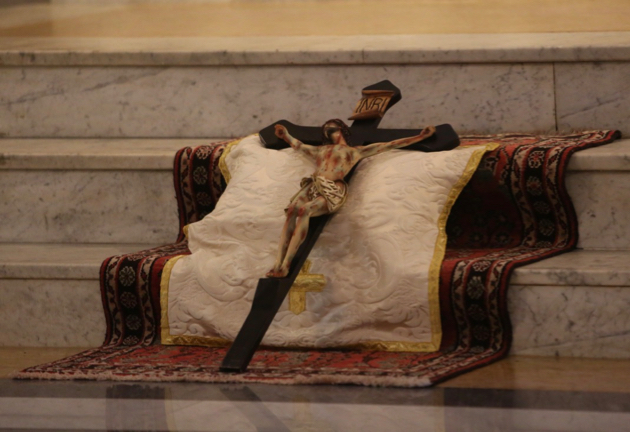
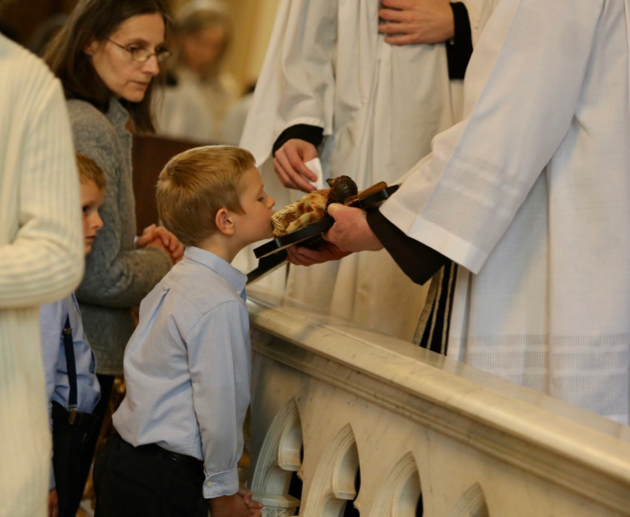
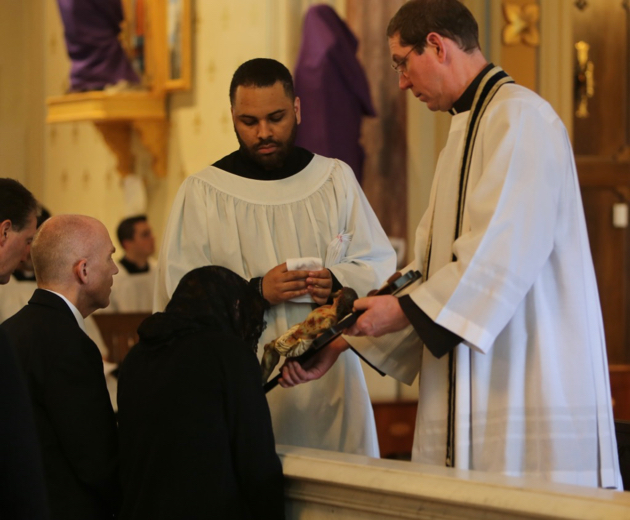
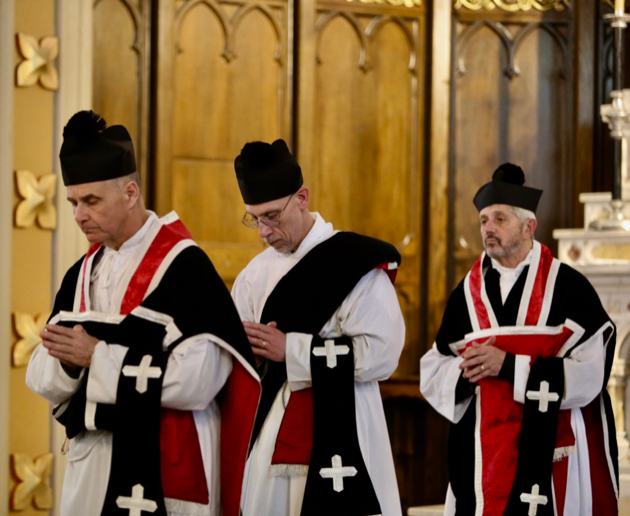
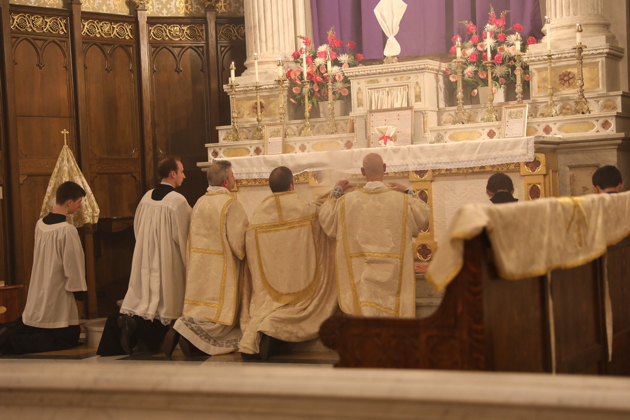
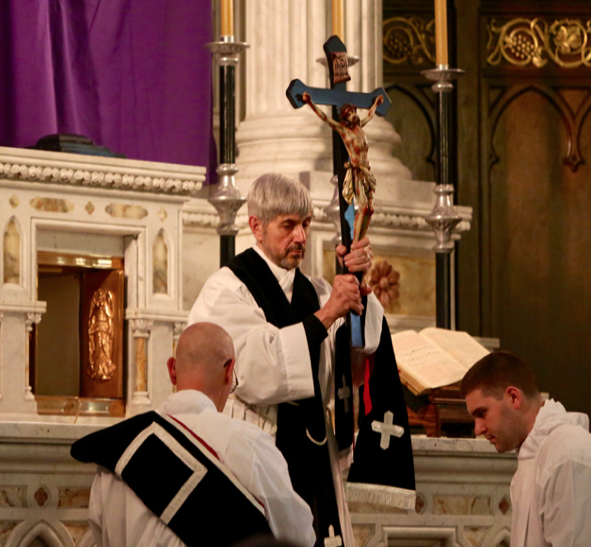
In a few minutes we will participate in the veneration of the Cross. The clergy and servers will take off their shoes in an act of humility, and in a ritual that speaks so much more than words they will kiss the feet of Christ on the cross. And so will you. You will kiss the feet of the Crucified Savior, and in so doing you will affirm that love is the real and total antidote to sin and death.
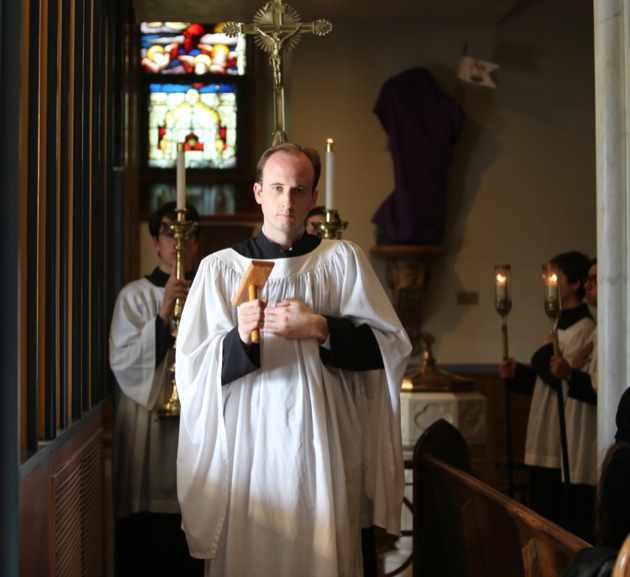
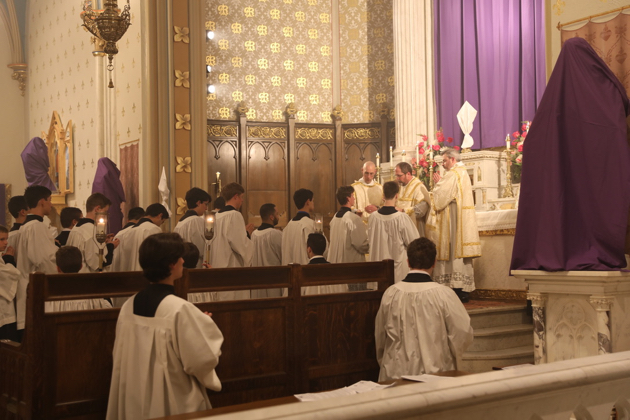
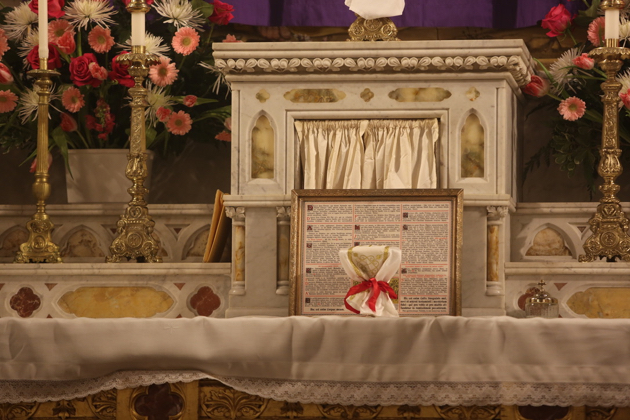
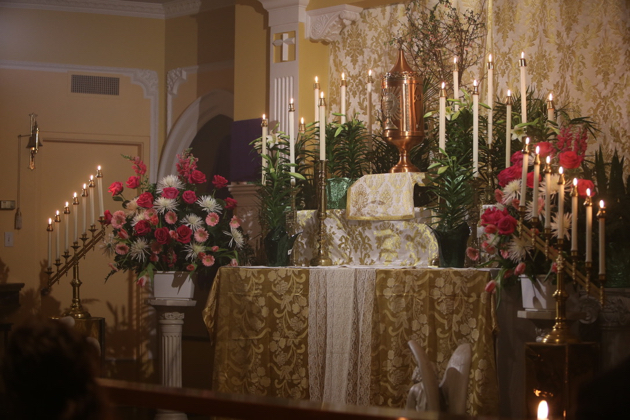
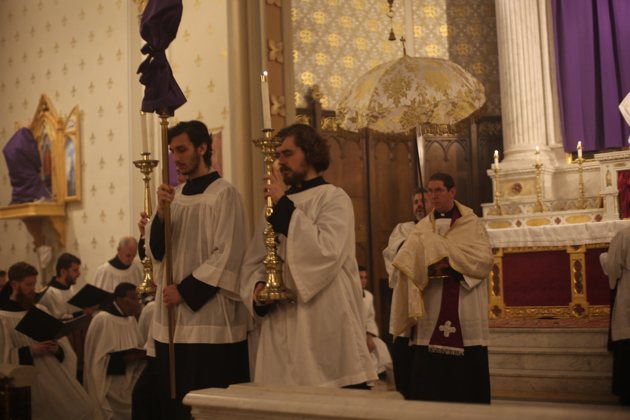
But there is more. The Blessed Sacrament will be taken from the Altar of Repose and brought into the church in solemn procession. When the Blessed Sacrament is carried into the church in procession, one of the greatest and loveliest hymns of the Church is sung. Listen to the words. Vexilla regis prodeunt…
The royal banners forward go,
The cross shines forth in mystic glow;
Where He in flesh, our flesh who made,
Our sentence bore, our ransom paid.
O tree of beauty, tree of light!
O tree with royal purple dight!
Elect on whose triumphal breast
Those holy limbs should find their rest.
O cross, our one reliance, hail!
Still may thy power with us avail
To give new virtue to the saint,
And pardon to the penitent.
Why is the Sacred Host brought into the church in this solemn procession on this Good Friday? In order for the priest, on the one day that the Sacrifice of the Mass is not celebrated, to hold the Host on high for all to see on this day, to behold the Sacrament of the One who exploded the black hole of sin and death, the God who loved us so much that he gave his only begotten Son to die for us, and it is the priest, the one who offers sacrifice, who then consumes the Sacred Host not to offer the Sacrifice as he usually does at the Mass, but to show us what the absence of the Sacramental presence of Christ would mean, the void without hope. And with this gesture the priest shows us what this is all about, the will of God to become flesh and die a real death for you and me. He died a real human death, yes, without sin, but real, a death died not in some sort of smug way knowing the outcome, smug because of his Godhead, but rather like you and me, he died in faith that his Father would allow him to smash the terrible power of death and bring him once again to his bosom. He died really for you and me so that the reality of what he died for, the forgiveness of our sins, may become a reality in our space and time, for you and for me.
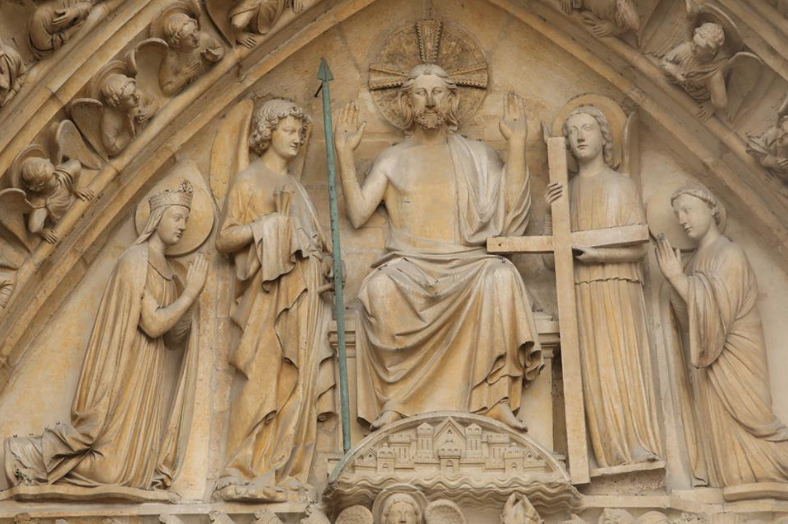
The fall of the fleche, the steeple of Nôtre Dame, was a terrible warning—not in the sense of God caused this in some sort of dark pseudo-pious way. But rather was a terrible warning for all to see the power of the black hole of sin and death to suck everything into its blackness and obliterate it, its power to make us forget who we are and where we came from. Enough. Ecce lignum crucis. Behold the wood of the Christ on which hung the salvation of the world. Come let us adore him.
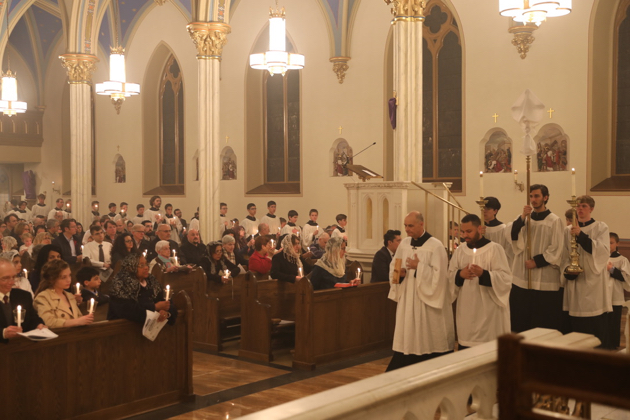
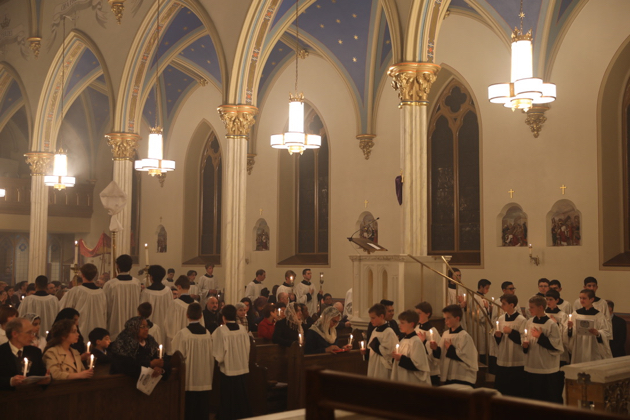
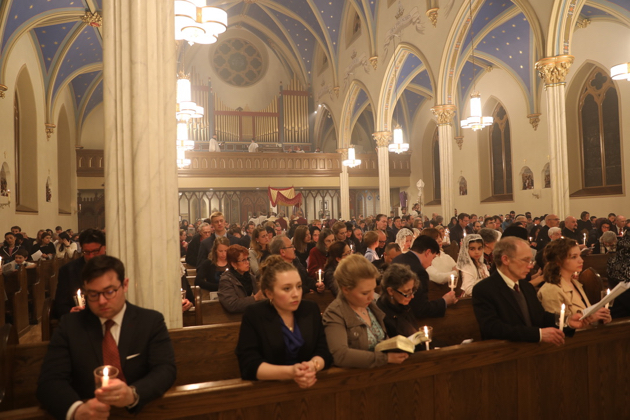
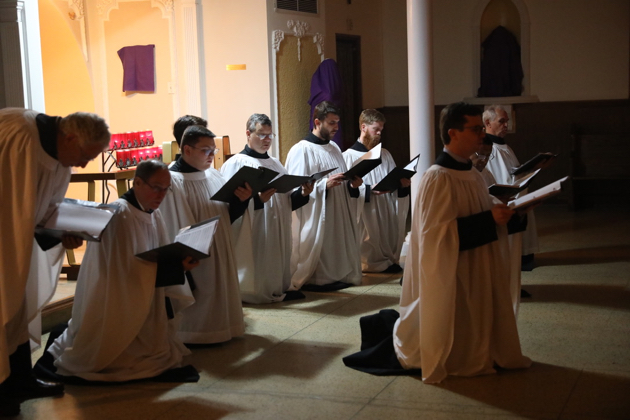
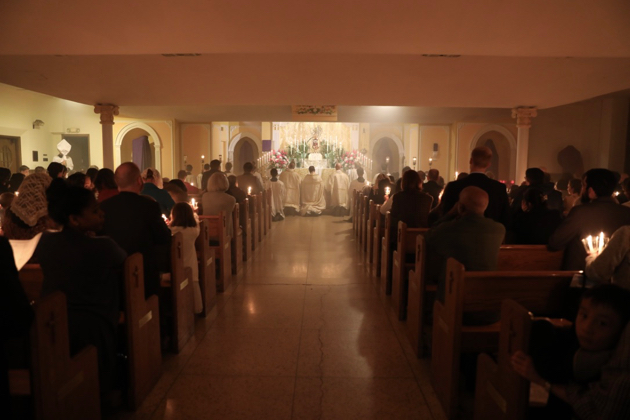
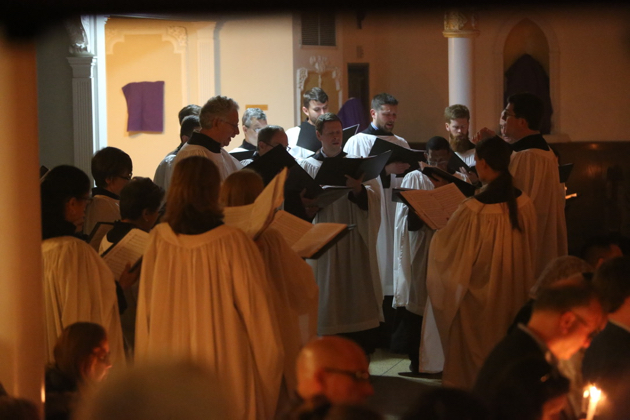
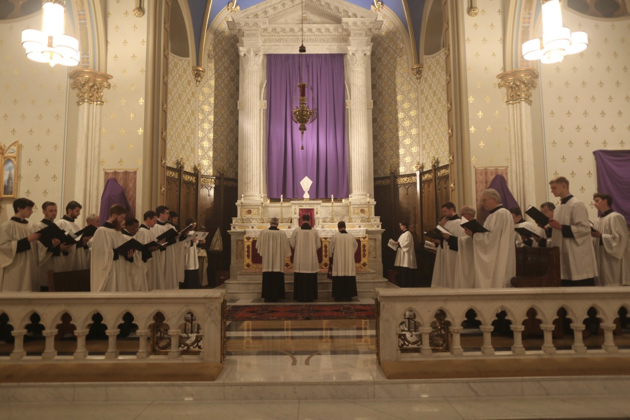
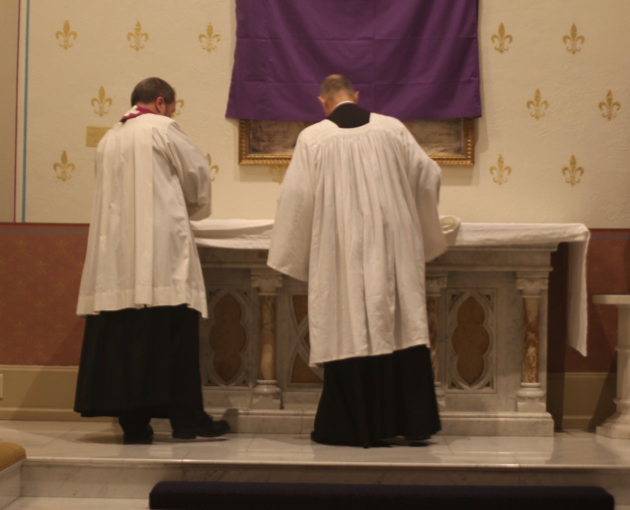
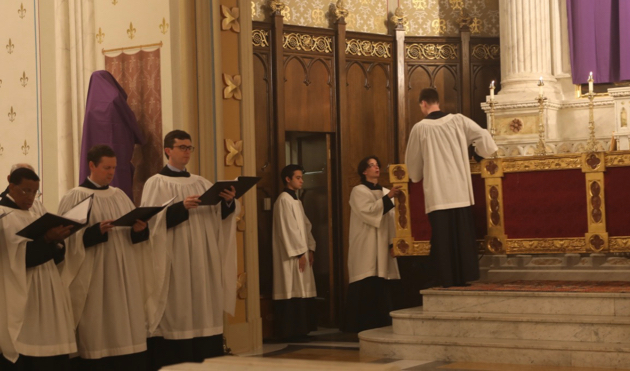
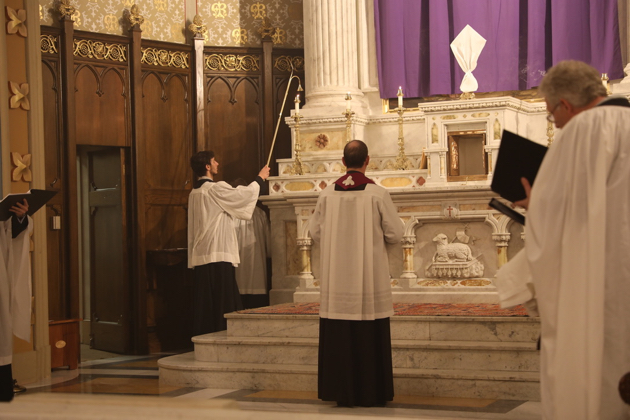
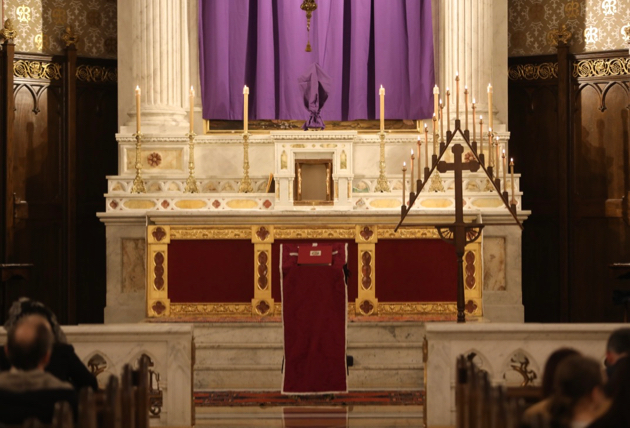
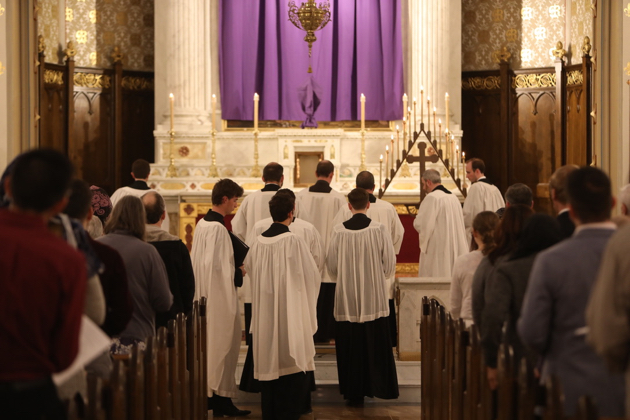
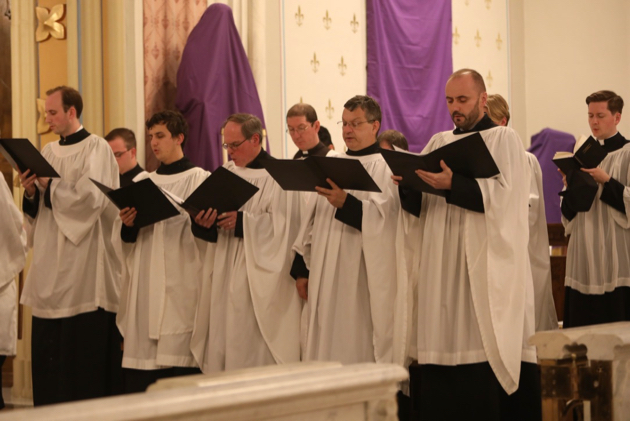
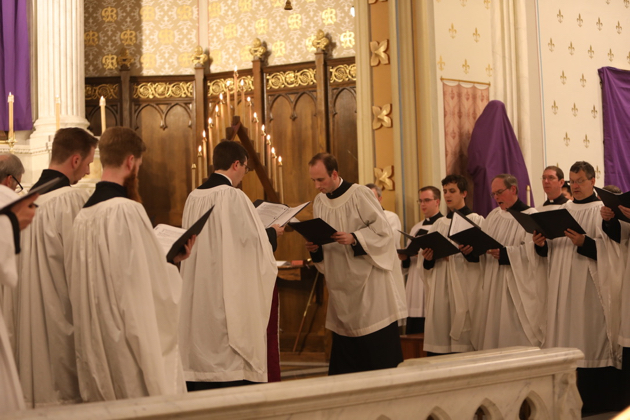
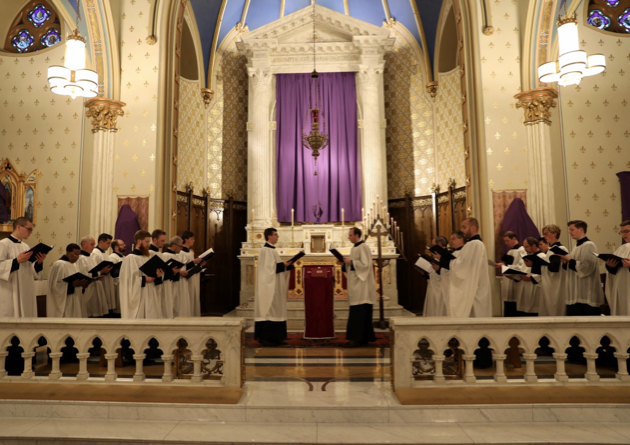
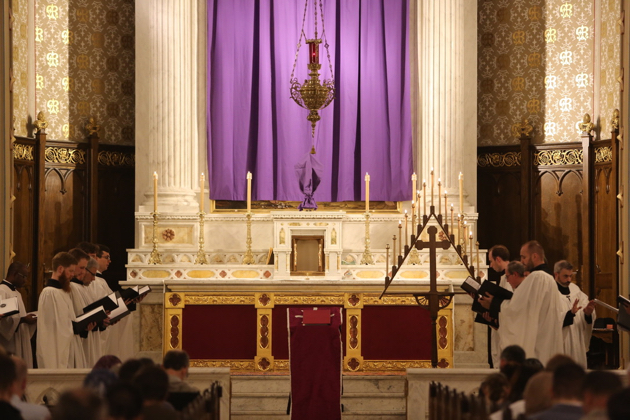
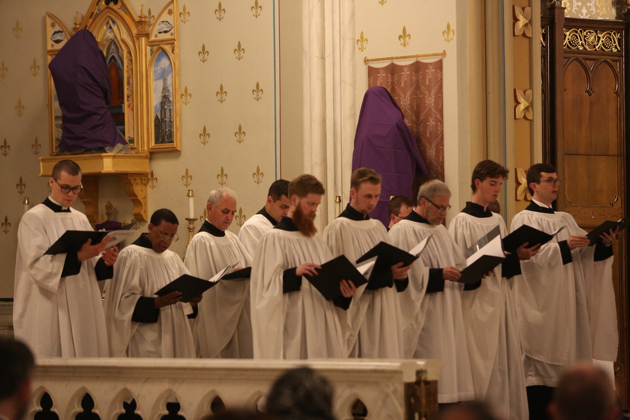
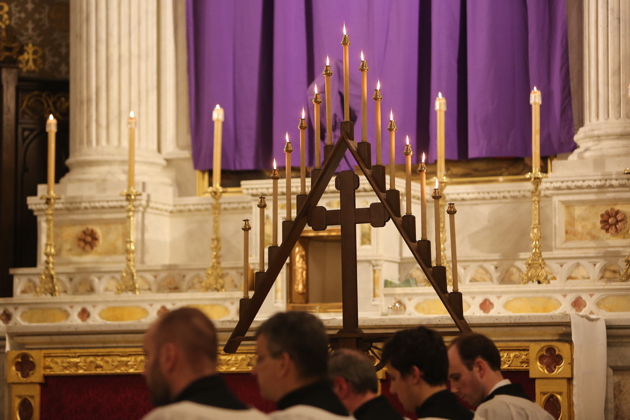
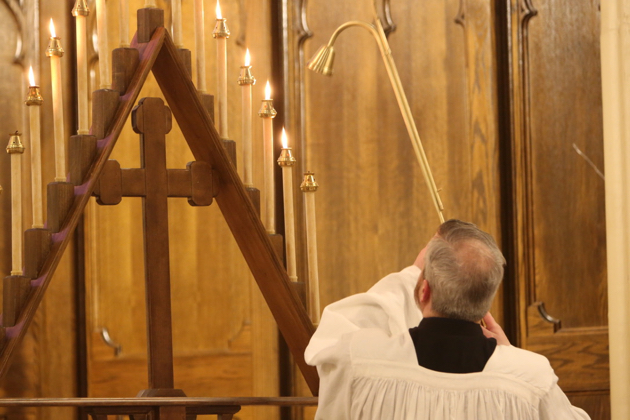
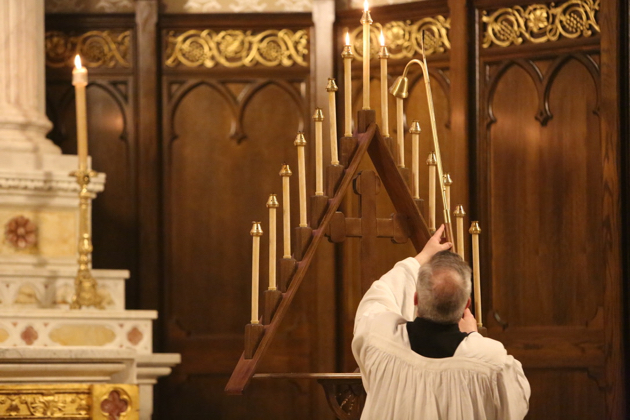
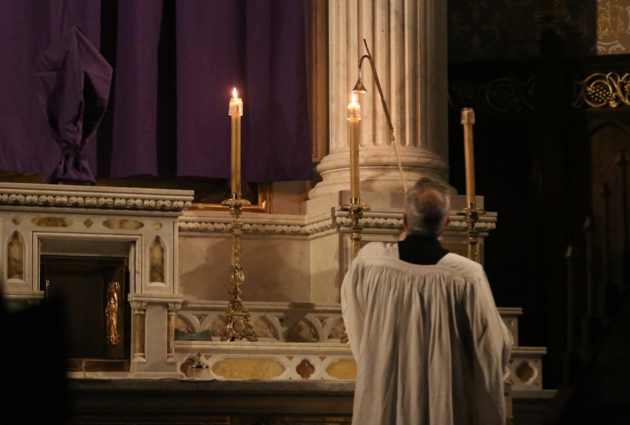
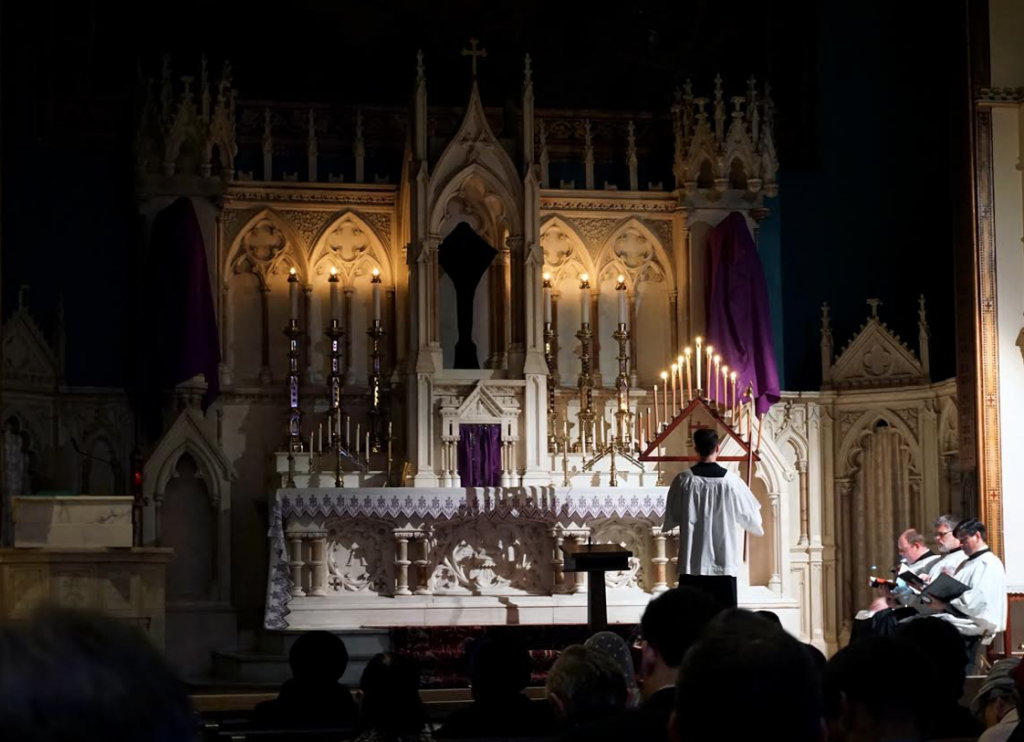
Yesterday evening, the Office of Tenebrae for Maundy Thursday was chanted at St. Mary’s Church, Norwalk, CT. The Viri Galilaei, augemented by many priests and seminarians, chanted in choir, while the St. Mary’s Schola Cantorum sang polyphonic settings in the choir loft.
17
Apr
17
Apr
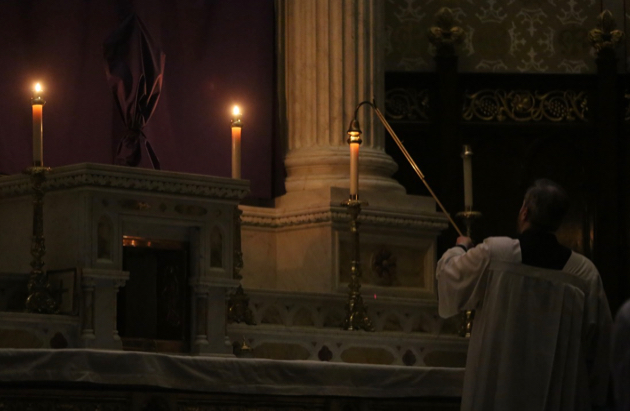
The office of Tenebrae will be sung this evening, Wednesday, April 17, at the following churches.
St. Mary Church, Norwalk, 7 pm (note: no 6 pm Traditional Mass is scheduled)
Church of the Holy Innocents, New York, 7 pm.
St. Josaphat, Bayside, Queens, 7 pm.
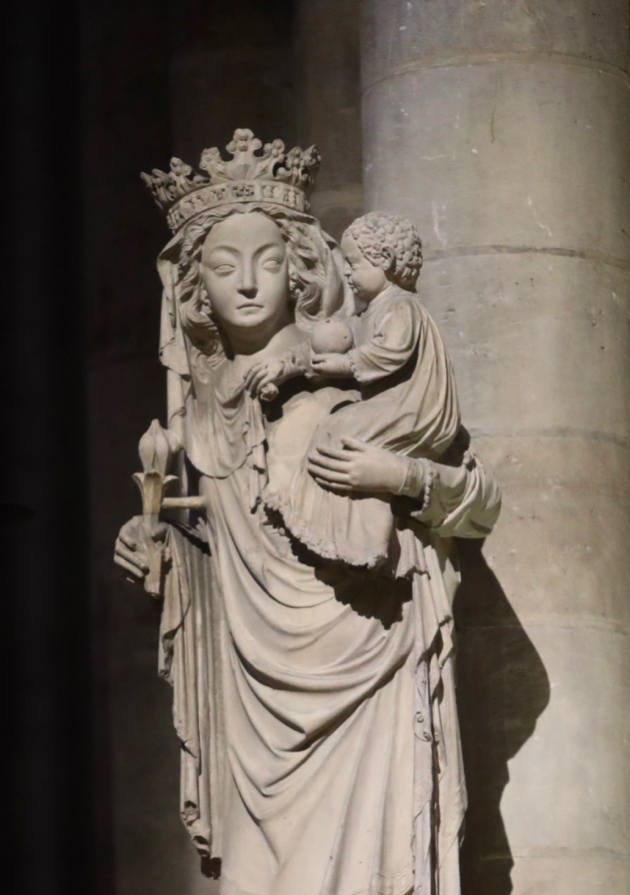
We have all seen the terrible images of yesterday’s tragedy. The destruction of the cathedral played out before the eyes of the whole world. What had seemed eternal and immovable came close to collapsing in a few hours.
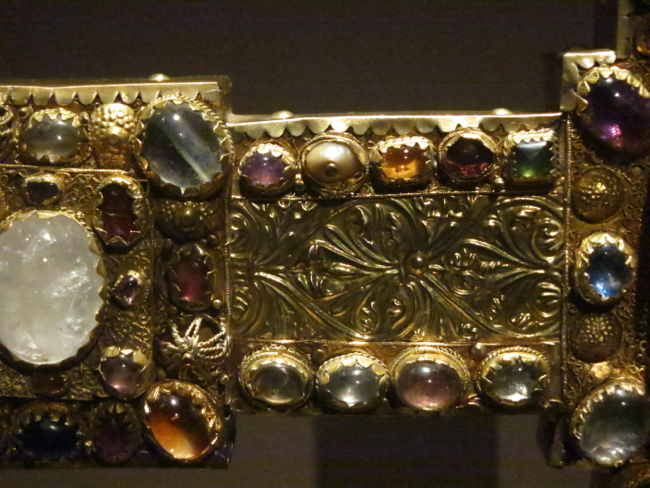
Yet, in the face of disaster, emotions and convictions long thought dead in the West reemerged. People gazing upon the awful scene prayed, knelt and chanted. Across the internet flew requests for prayers and solidarity with France. Commentators dwelt on the significance of the cathedral not just a historical monument, an inheritance from a bygone age, but as a still living and irreplaceable part of the nation. The international news media gave great prominence to the rescue from the blaze of the Crown of Thorns – by a “Tradi” priest no less! Suddenly the safety of this long-forgotten relic assumed the greatest importance. ( I have been visiting Note Dame Cathedral off and on since 1967 but had only very recently become aware of the continued presence there of the Crown of Thorns – such was the obscurity that now surrounded this relic, for which St. Louis had erected the jewel box of Sainte Chapelle.)
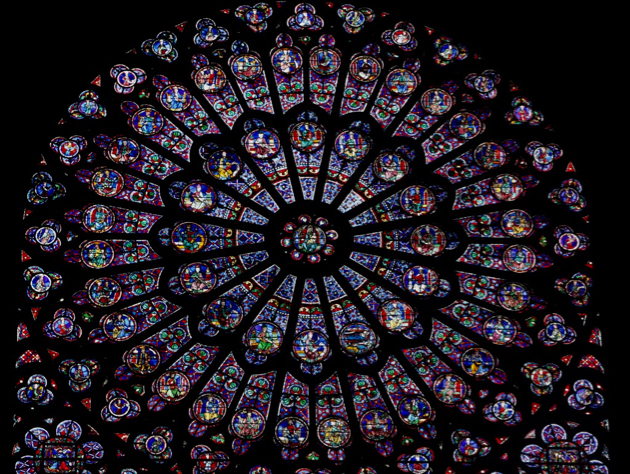
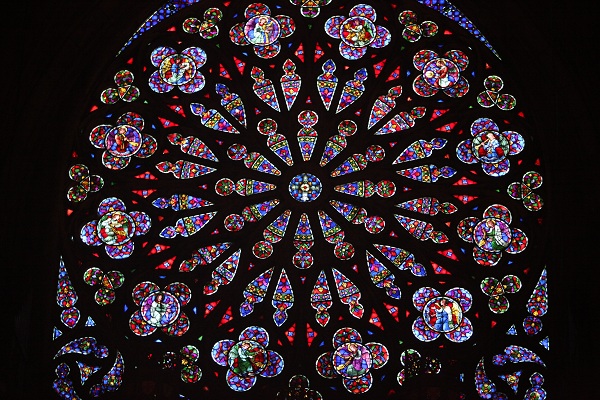
Yet it seems that, miraculously, the interior and most of the vaulting has survived – just as happened in Chartres and Vierzehnheiligen in the 19th century. If no further structural collapse occurs, the worst has been avoided. Early reports indicate that the organ – dear to the hearts of organists everywhere! – and most of the art has survived, including the incomparable rose windows of the transept:
The two roses are wheels of fire with amethyst hubs; wheels in which the violet of that gem, the symbol of innocence and humility, dominates… it’s enchanting when the sun penetrates… running along the gradually slimming rays of stone, setting alight between them clusters of flames, and dazzling like spectacular fireworks within the circle of the wheel’s rim. (Joris-Karl Huysmans, Le Quartier Notre-Dame, 1895)
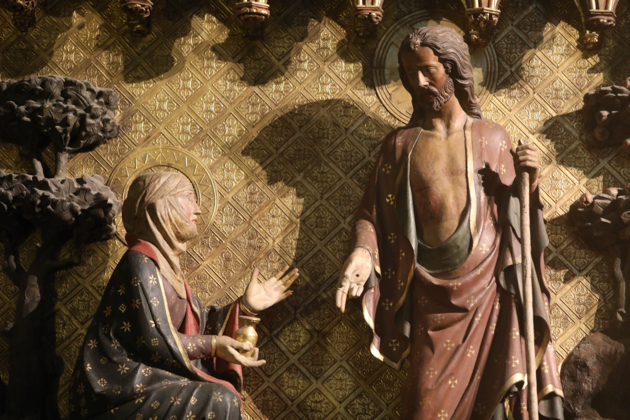
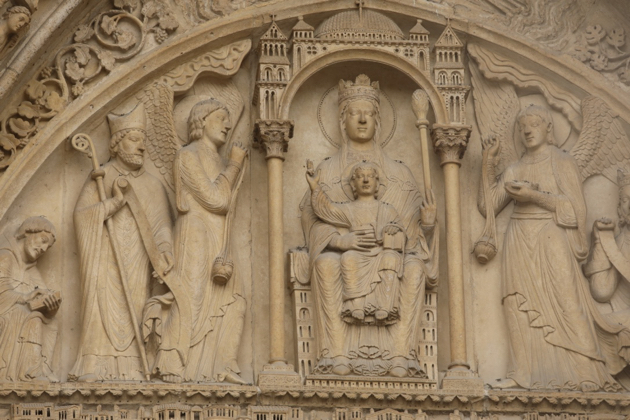
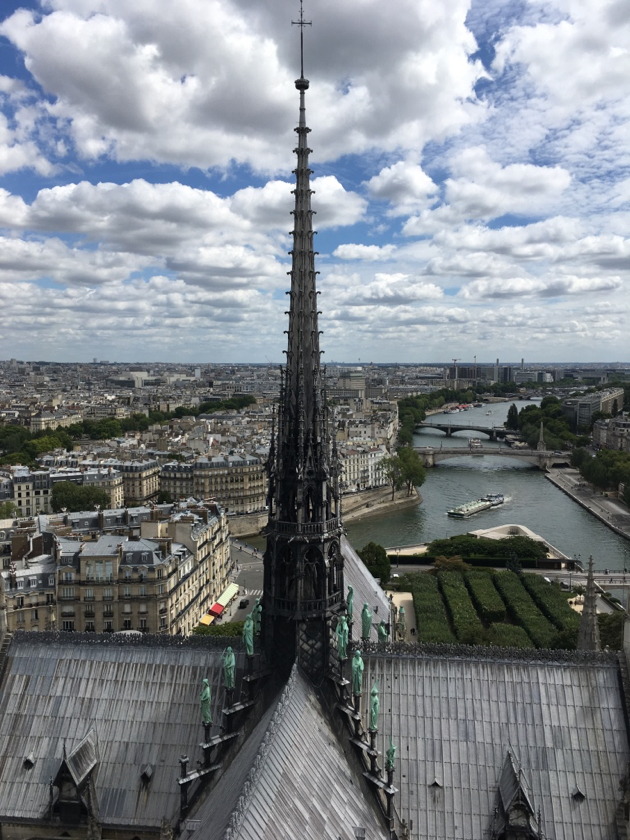
That this terrible event “coincidentally” occurred in Holy Week made the greatest impression on observers both Catholic and secular. So many commentators also compared the burning of the cathedral with the ongoing destruction of the Faith in France, Europe and in the entire West. Is it not an obvious divine admonition, a “sign of the times?” Are we not, like the citizens of Nineveh, being given a last chance to repent – before further and even more terrible divine chastisement befalls us? Indeed, Our Lady has sent a more specific message:
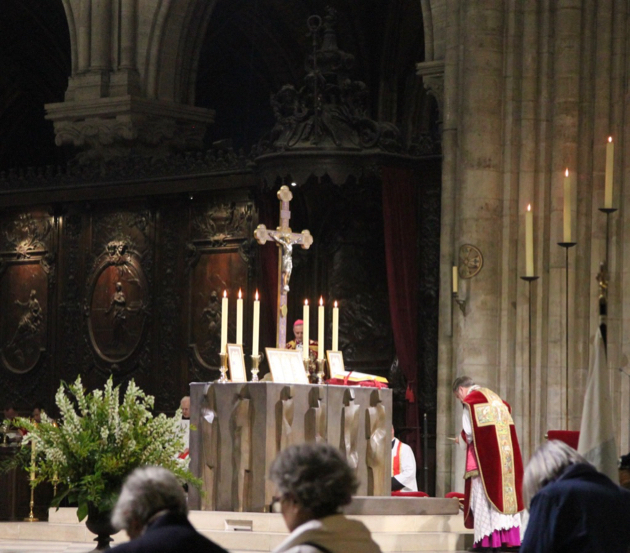
Much was saved in the interior too. The cathedral’s high altar, installed in 1989 under Cardinal Jean-Marie Lustiger, was the only major work damaged inside the building, hit when the spire collapsed, said Laurent Prades, heritage director for Notre Dame. 1.)
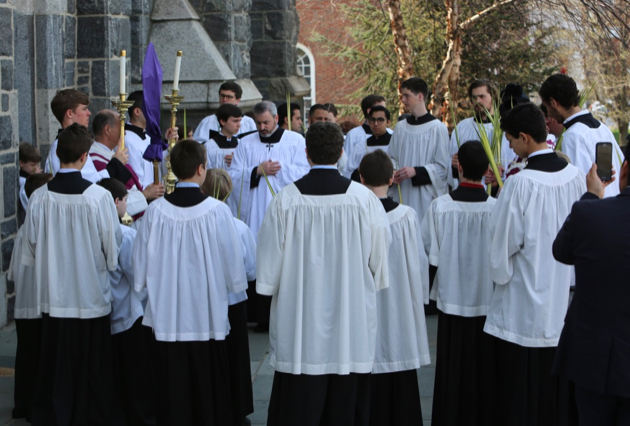
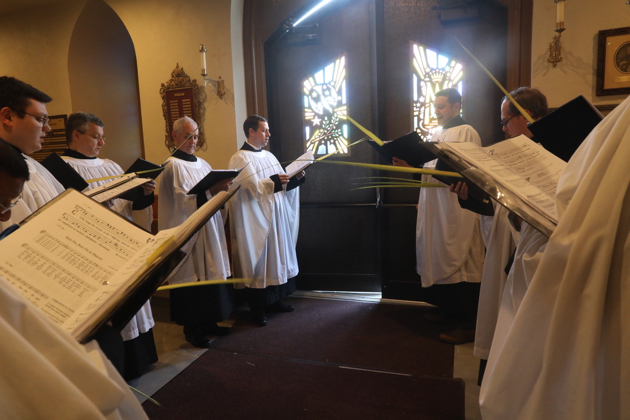
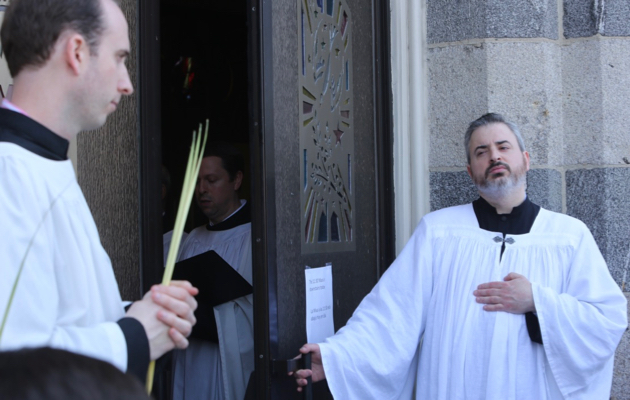
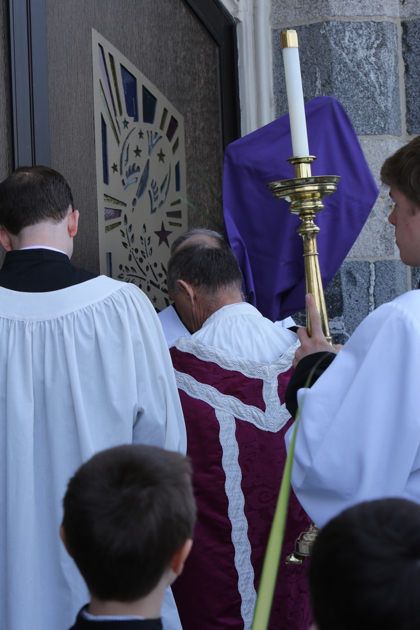
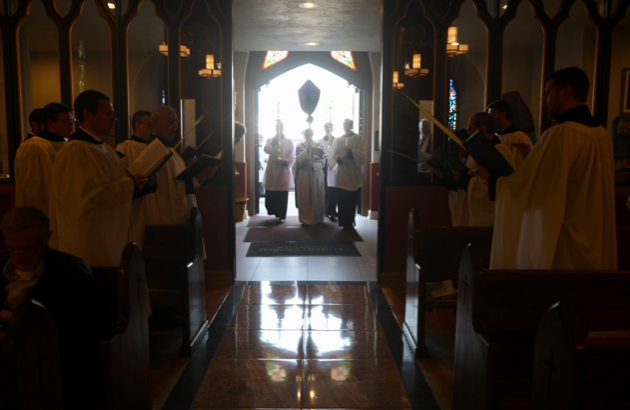
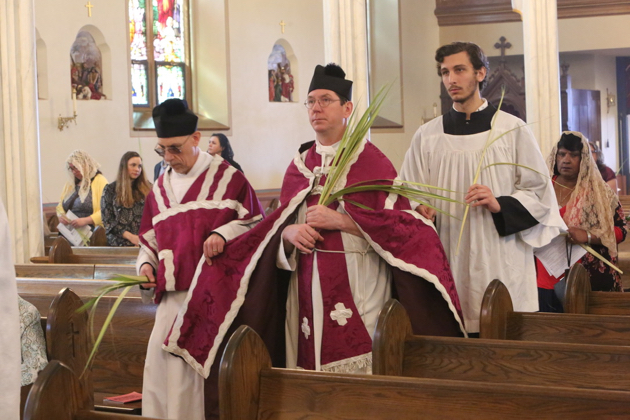
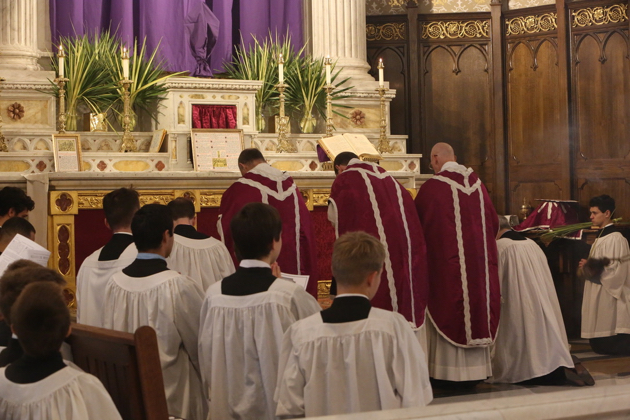

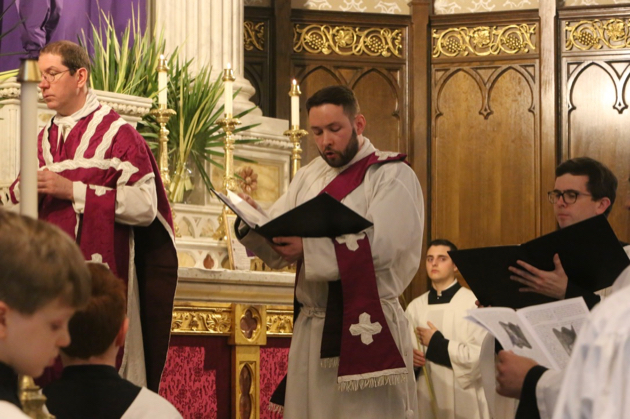
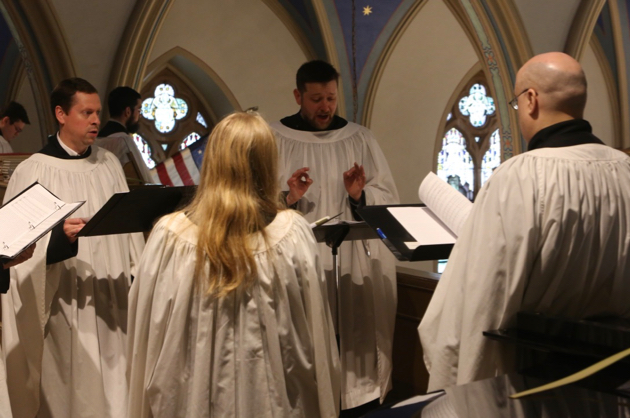
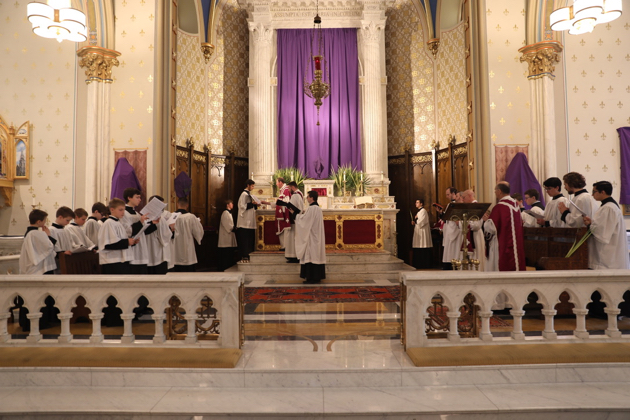
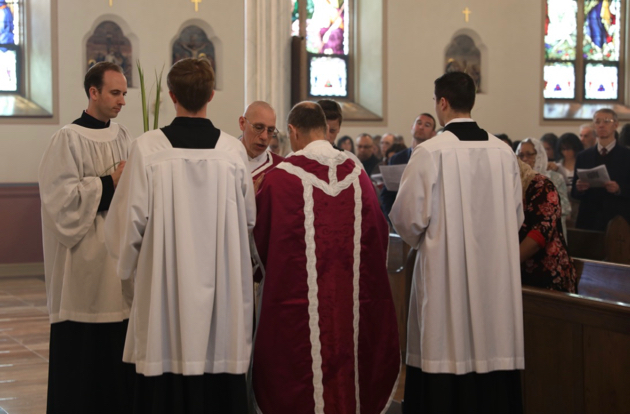
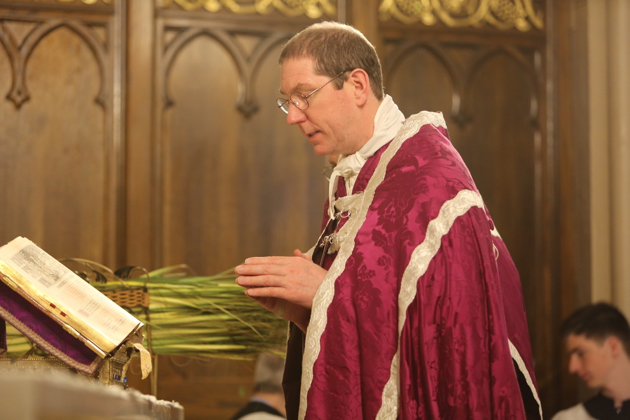
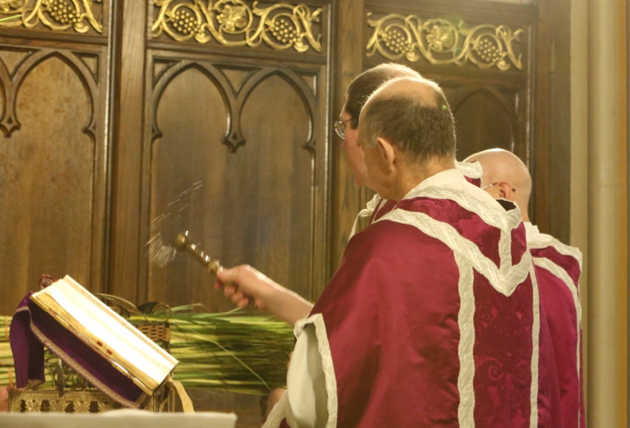
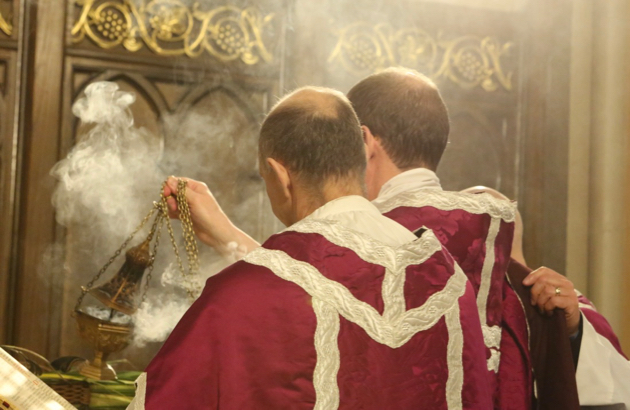
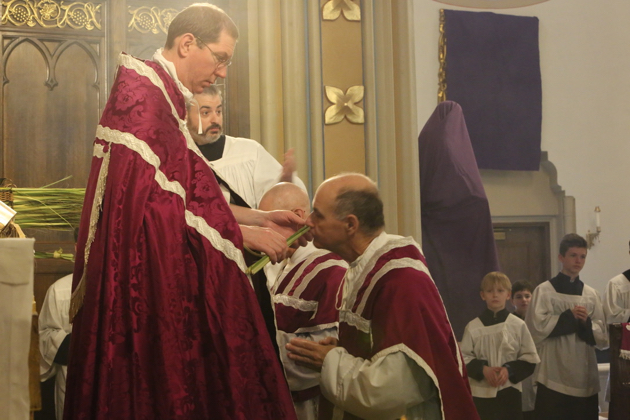
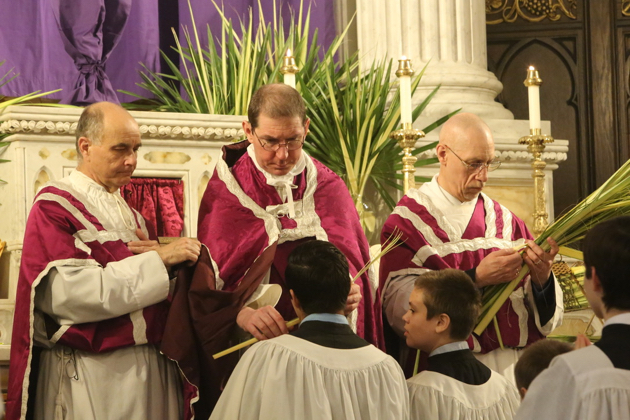
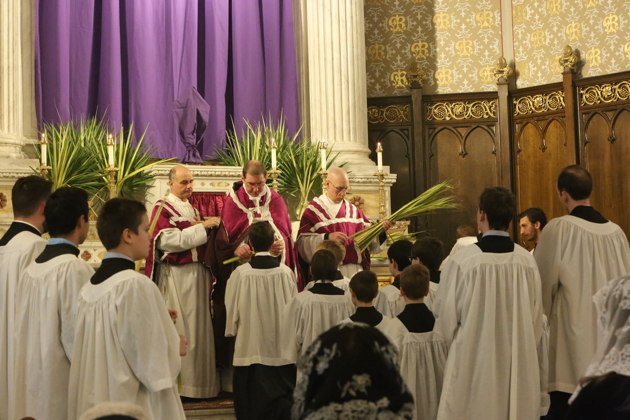
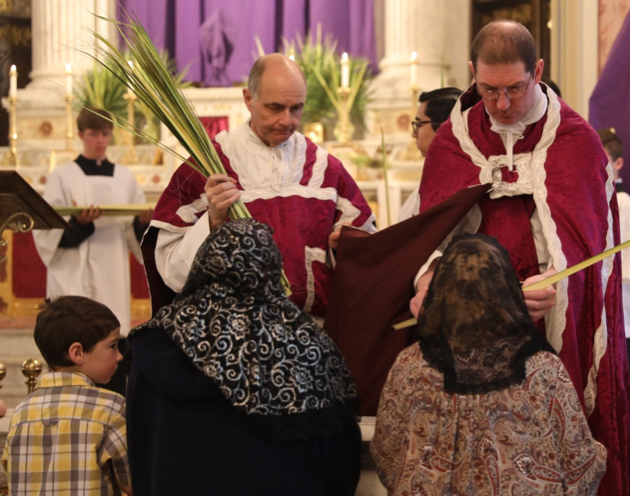
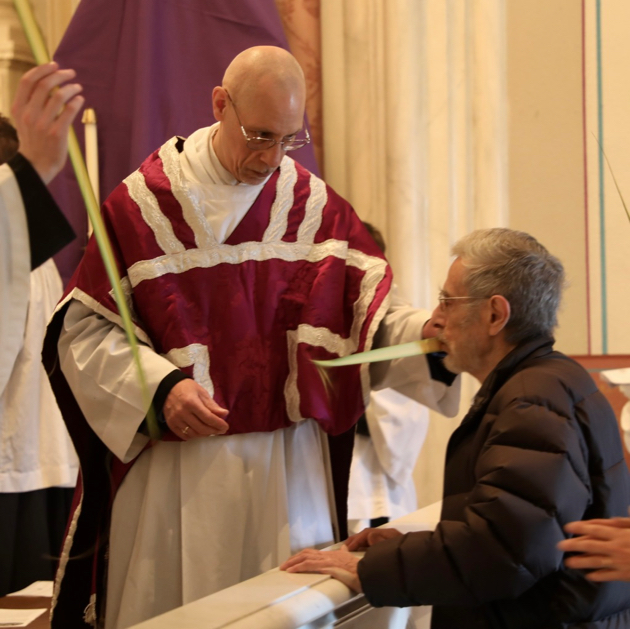
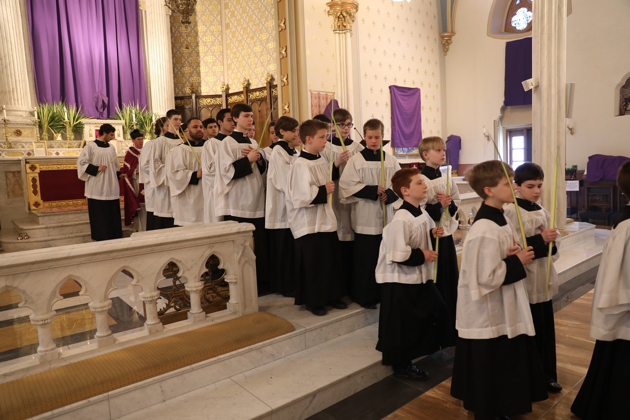
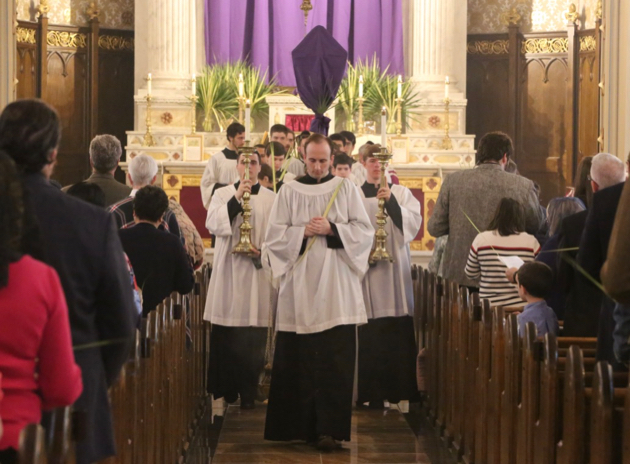
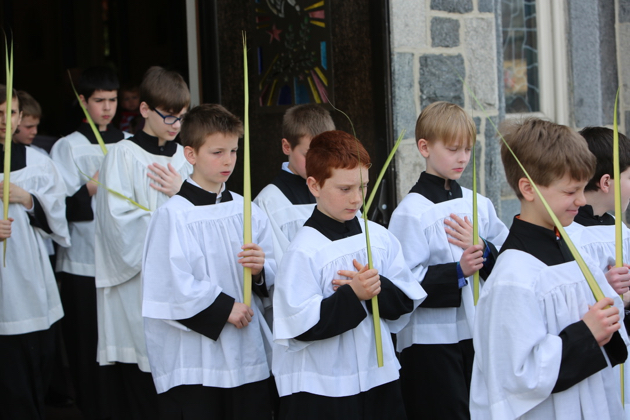
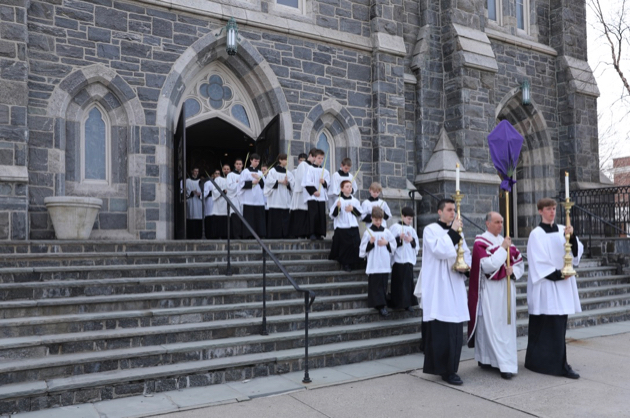
Mass of the Palms and the Procession
The full rite for the blessing of palms takes the form of a “Missa Sicca” (dry Mass) and follows the schema of the Mass, save that the blessing of palms replaces the consecration fo the Eucharist.