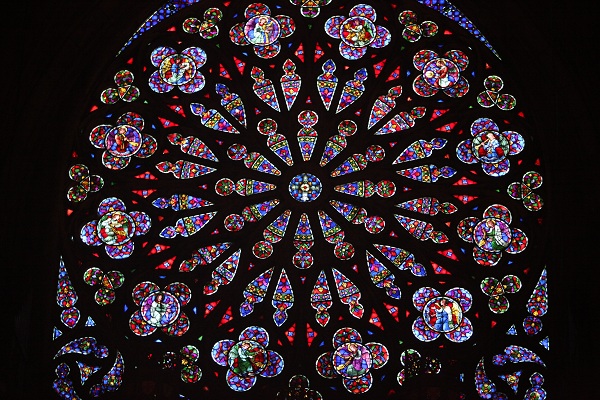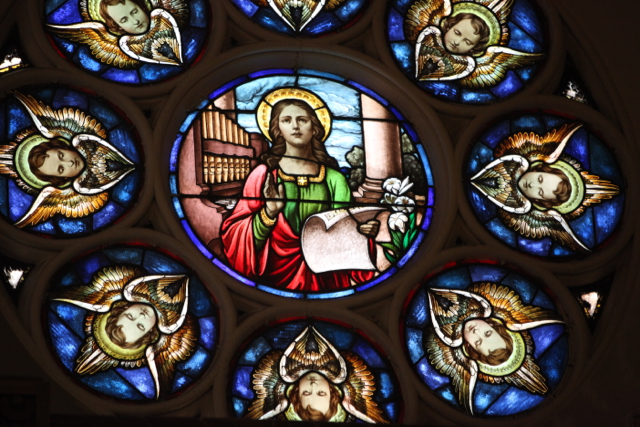
(above) Window in the church of St. Cecilia, East Harlem
On Tuesday, November 22, the parish of St. Mary, Greenwich will celebrate the feast of Saint Cecilia with a Sung Mass at 7:30 in the evening.
(above) Window in the church of St. Cecilia, East Harlem
On Tuesday, November 22, the parish of St. Mary, Greenwich will celebrate the feast of Saint Cecilia with a Sung Mass at 7:30 in the evening.
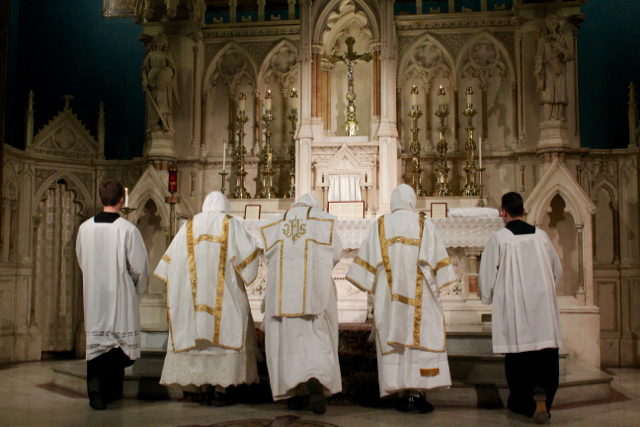
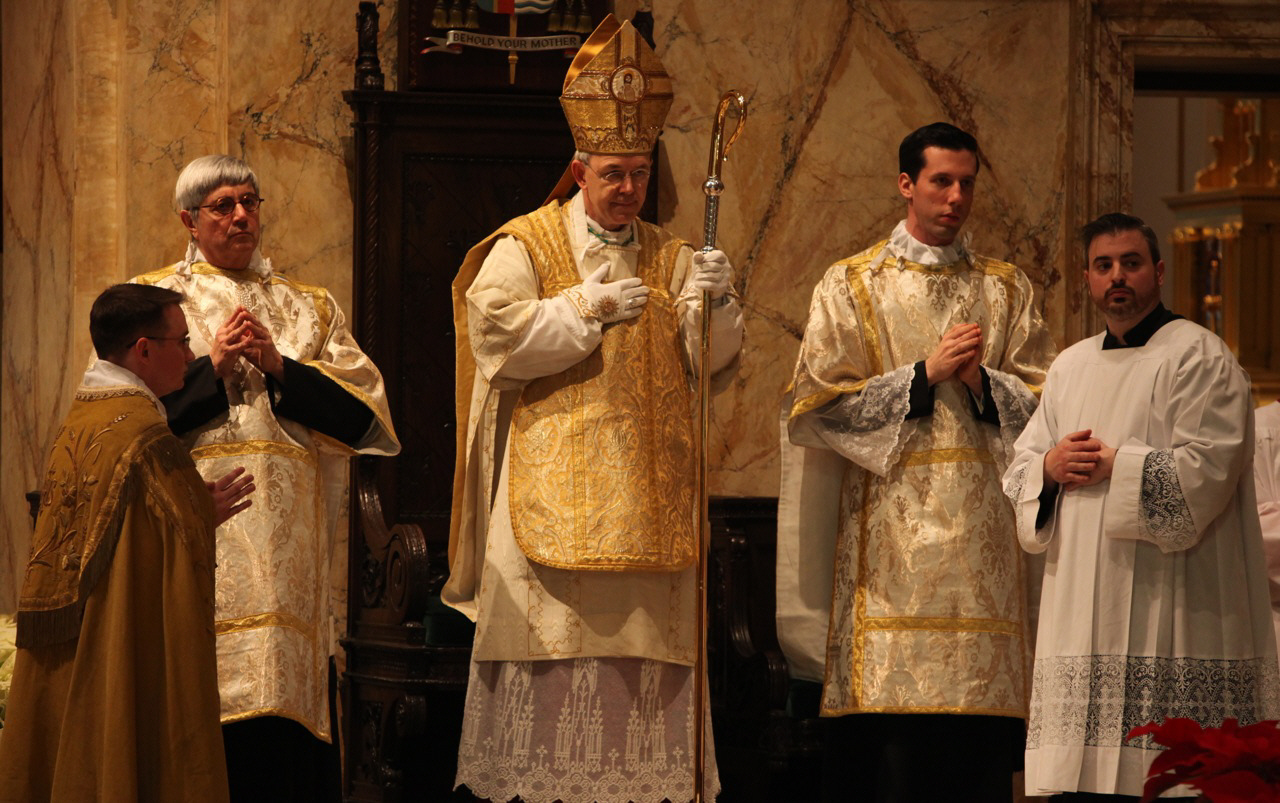
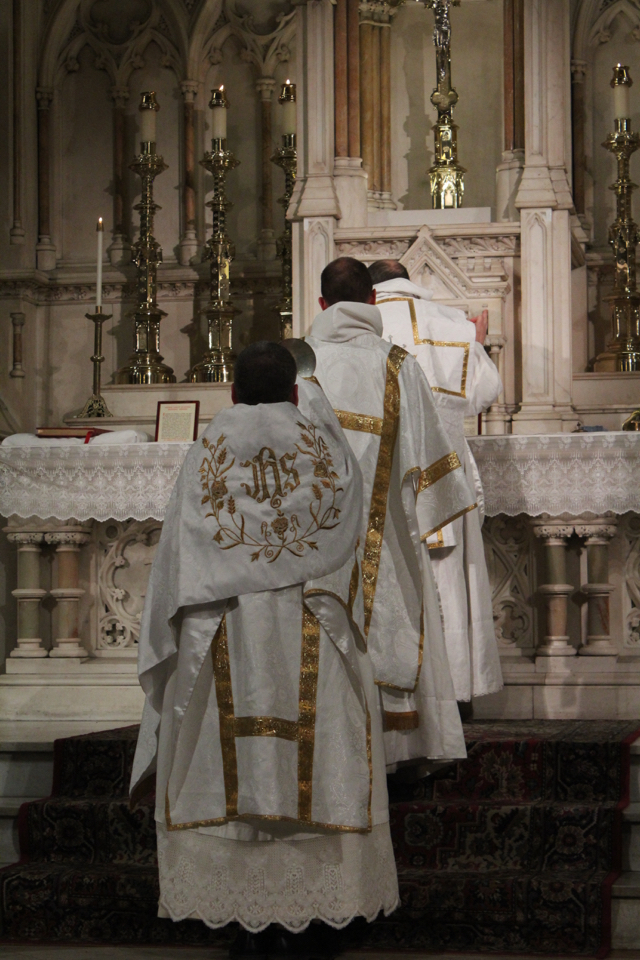
A solemn Dominican Rite mass was celebrated at Holy Innocents church yesterday evening. The sacred ministers are members of the Fraternity of St. Vincent Ferrer, who are visiting North America.
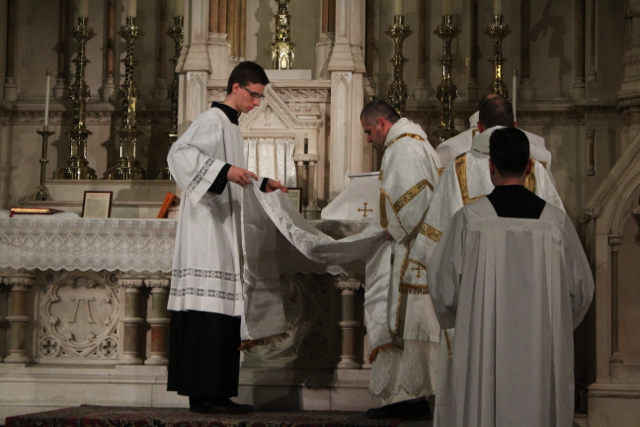
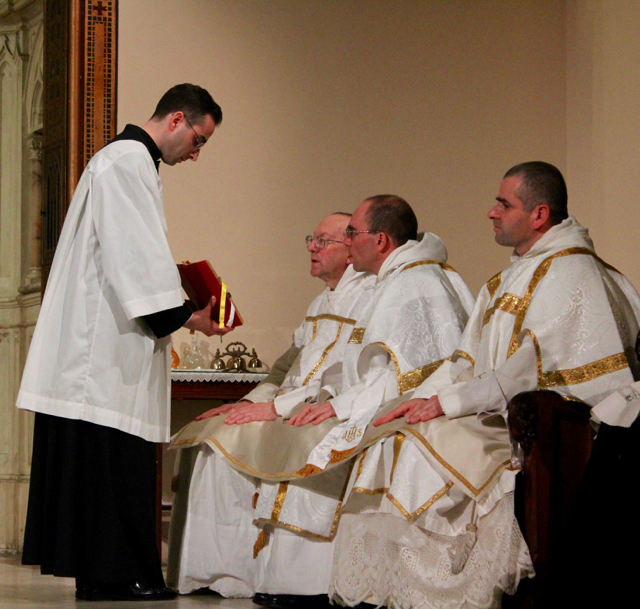
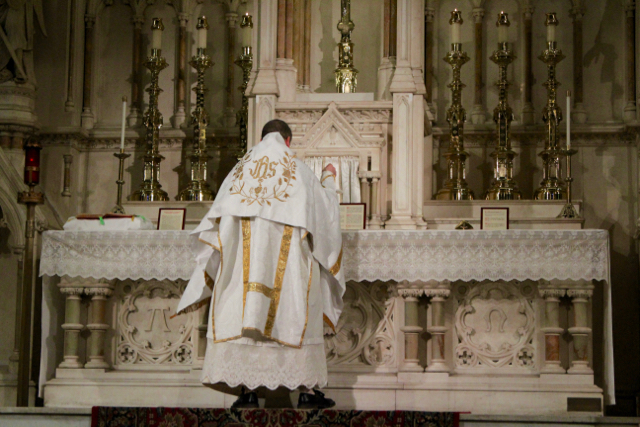
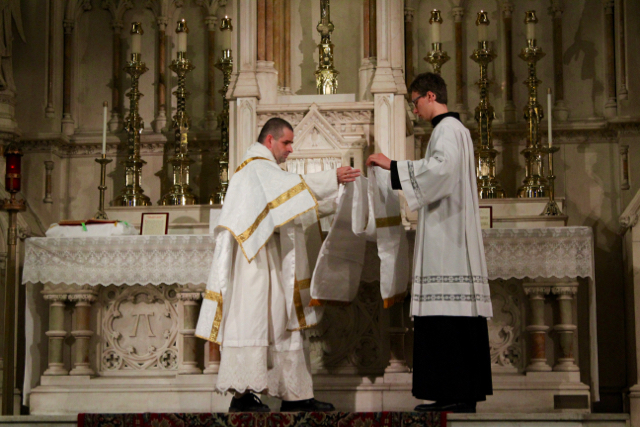
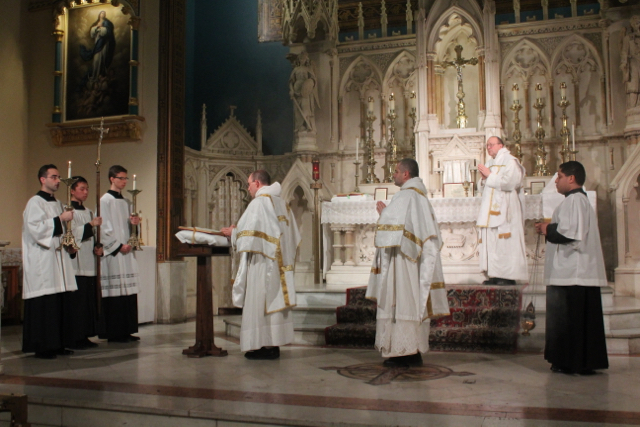
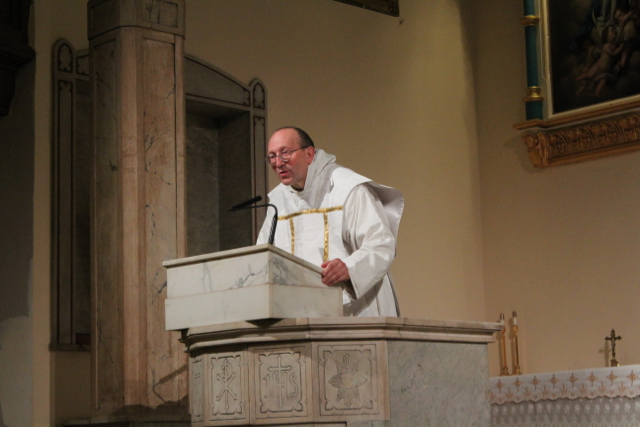
(Above) The founder of the Fraternity of Saint Vincent Ferrer, Fr Louis-Marie de Blignières, was the celebrant and preached at the mass. He focussed on St. Vincent Ferrer as very much a saint for our time – now, as then, a period of crisis for the Church. St Vincent practiced both contemplation and a preaching apostolate.
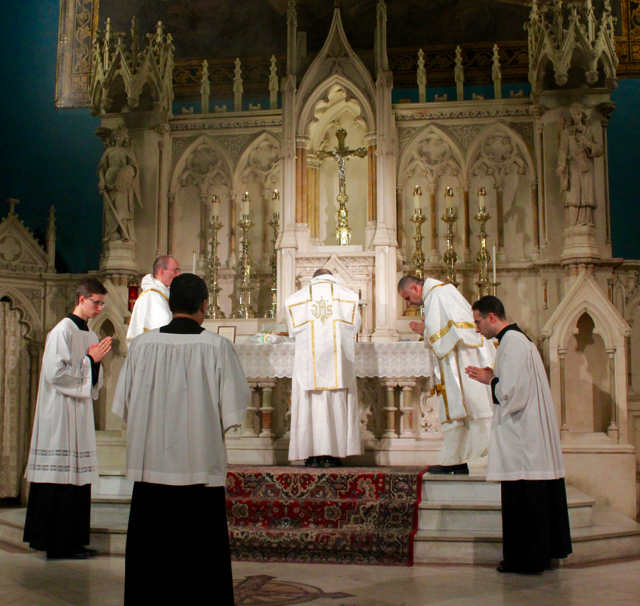
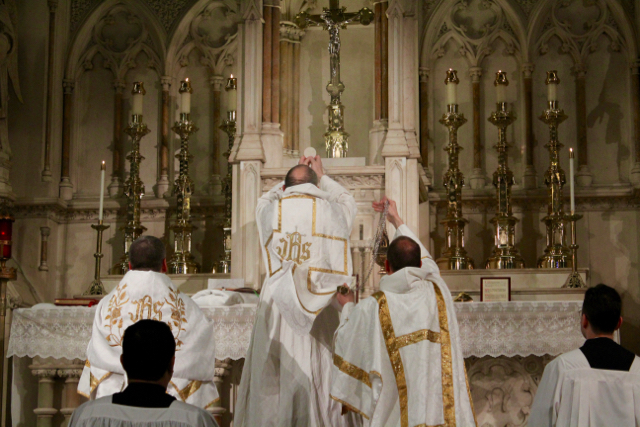

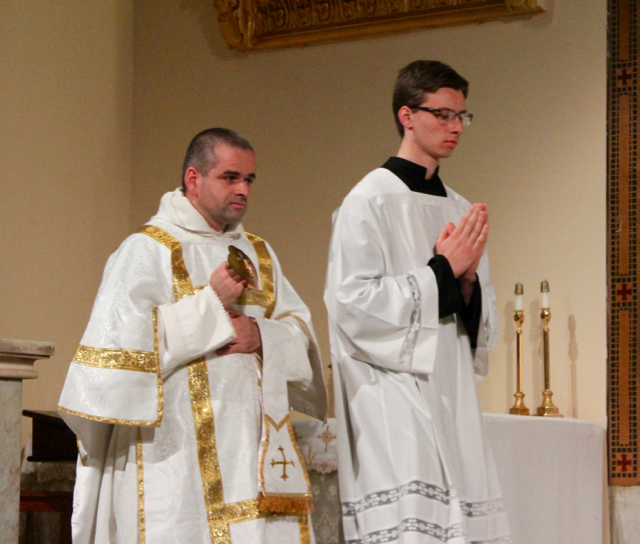
(Above) The “Pax Instrument” as used in the Dominican Rite.
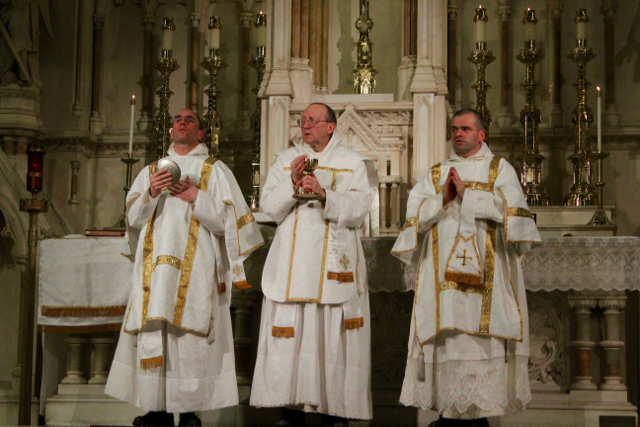
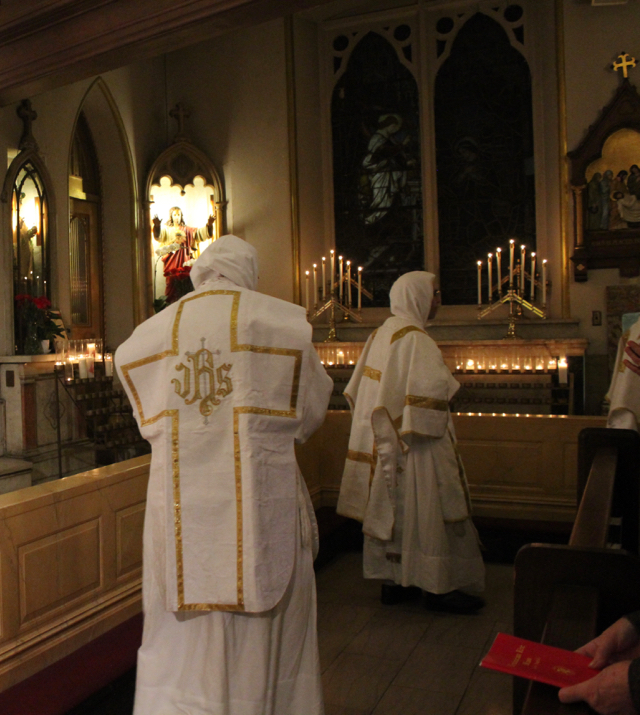
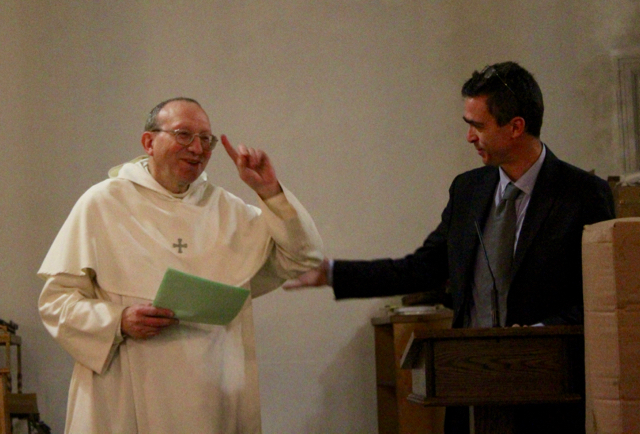
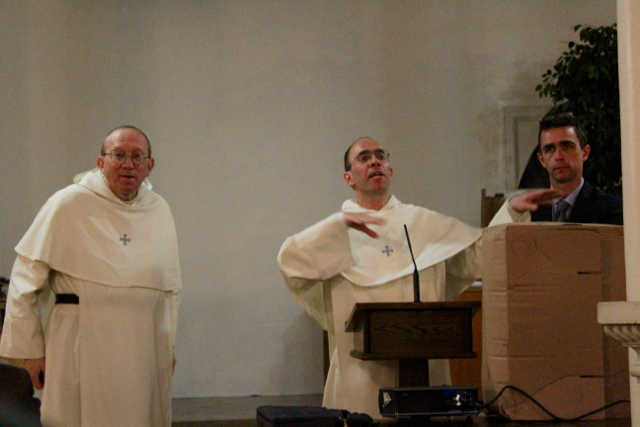
(Above and below) A lively presentation followed.
The Fraternity is dedicated to the Dominican way of life. What is emphasized is contemplation, the Traditional liturgy and Thomistic philosophy. Their house in France is unique fro these features – certainly among the various orders of friars today.
The fraternity, with 23 members and growing steadily, is building a large church and monastery complex in France and needs $370,000 to complete this work.
At its foundation in 1979 associated with Archbishop Lefebvre, since 1988 the Fraternity of St Vincent Ferrer has been recognized by the Vatican. It is separate from the Dominican order even if it maintains cordial relations with some Dominican Friars. This “regular” status does not at all preclude critical commentary of aspects of the Church today: liturgy, moral theology , ecumenism…..
16
Nov
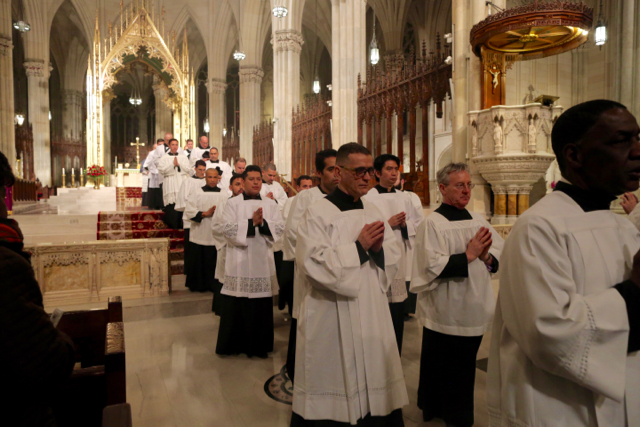
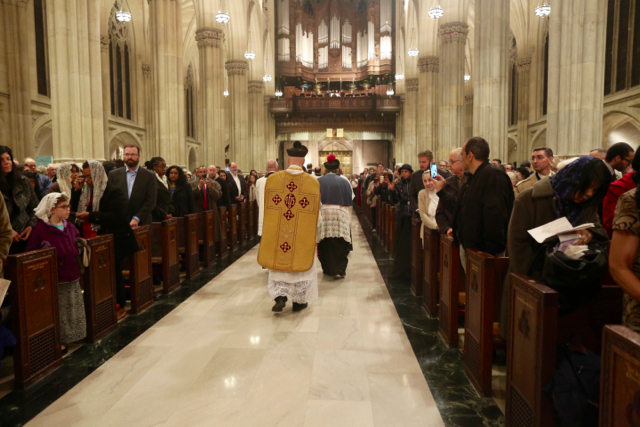
Attendance at Monday evening’s traditional Mass at St. Patrick’s Cathedral.
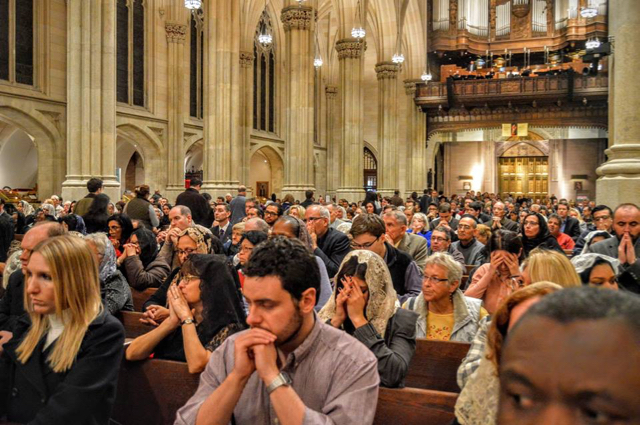
photo courtesy of Arrys Ortanez.
15
Nov
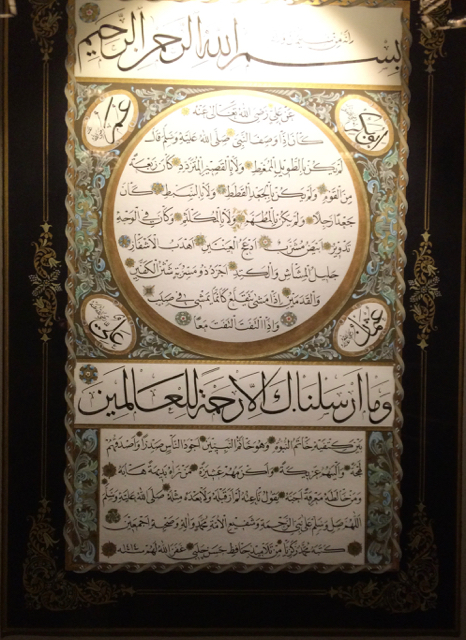
(Above) Examples of calligraphy in the exhibition correspond more closely to traditional “Islamic” art.
We have seen that the glorious heritage of Catholic religious art, music and architecture has largely fallen to the care of secular institutions: The Cloisters, the Metropolitan Museum of Art, The Frick collection, the Pierpont Morgan Library – to name just a few in the New York area. After the Second Vatican Council, the Church itself repudiated this heritage along with the Traditional liturgy. Indeed, generally speaking, Church patronage of the arts all but ceased. Yet, certain institutions of the Church continue involvement with the arts – but more in the sense of importing outside developments into the Church or at least maintaining contact with the “art” patronized by the secular establishment.
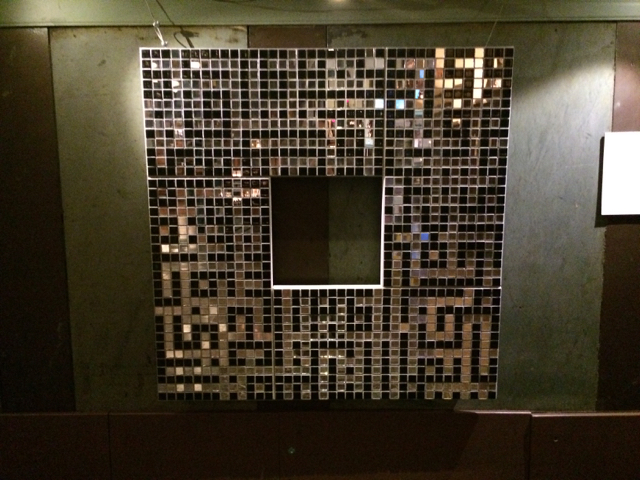
Such are the Paulists, “whose mission statement is in part to ‘build bridges of respect and collaboration with people of other world religions.’” They have organized “the first exhibition ever of contemporary Islamic Art in a Catholic place of worship” at St Paul the Apostle church in New York. The “Islamic” art ( a hodgepodge of traditional Islamic calligraphy and Western modern ideas)is interspersed among three side chapels dedicated to Our Lady, St. Theresa and St. Agnes. Verbose descriptions of the exhibits are provided. Never mind that some of this art, to the extent it attempts to formulate some kind of spiritual vision, directly contradicts Christianity. So we read that the first man may have been androgynous. The coran is quoted for the proposition that the birth of Jesus was painful. Or syncretistic links are attempted, such as between the worship of Krishna and of Allah, or where an Islamic gate is juxtaposed with a nearby statue of the Virgin Mary. Note that the Church of St Paul the Apostle is not just employed as a secular exhibition space (as is often the case, for example, with the Cathedral of St John the Divine) but “the Islamic work (is placed)side by side with the permanent Christian frescoes and statuary, creating extraordinary visual and ideological dialogs between the two traditions’ expressions of faith.”
And of course the secular political agenda of Pope Francis and progressive Catholicism is on display as well:
“This exhibit derives its title (“Brothers and Sisters: Islamic Art/Christian Space” – SC) from Pope Francis’s visit to war-torn parts of Africa in November 2015, in which he told the warring Christian and Islamic factions that “Christians and Muslims are brothers and sisters.” Seeing tensions in the U.S. (and Europe) being exacerbated by political voices eager to spread dissent and distrust, Openings (an “artists’ collective” supported by the Paulists that organized this exhibition – SC) makes a proud statement of peace and solidarity among Americans of different faiths and backgrounds with this timely exhibition this election season.”
It’s very clear at whom this is aimed!
Unfortunately (or fortunately?) today, November 15 was the last day of the exhibition.
Source for quotes:Brothers and Sisters: Islamic Art/Christian Space
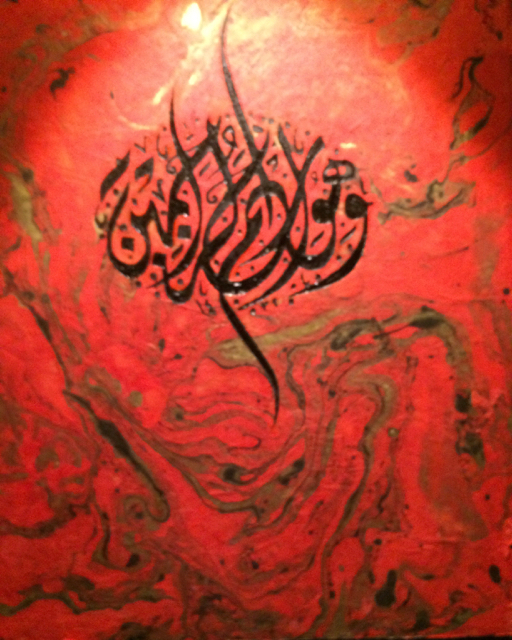
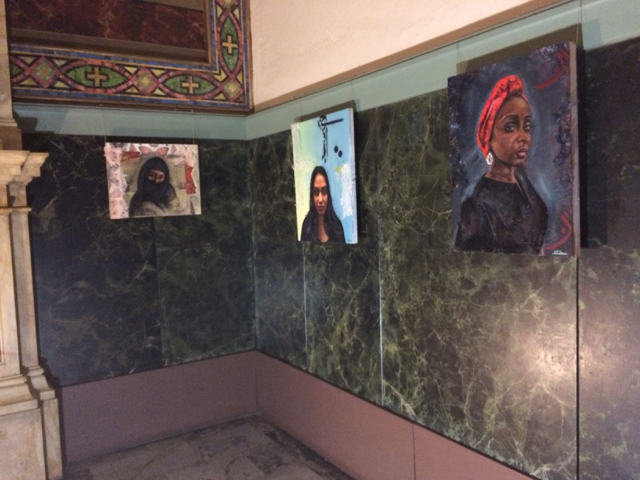
(Above and Below) Much of the art (including an “installation” – a video show) bears little or no resemblance to Moslem traditions. I am sure it would be well received in Saudi Arabia or Afghanistan.
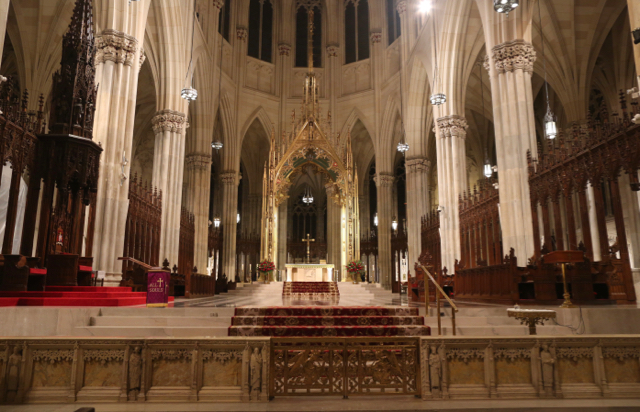
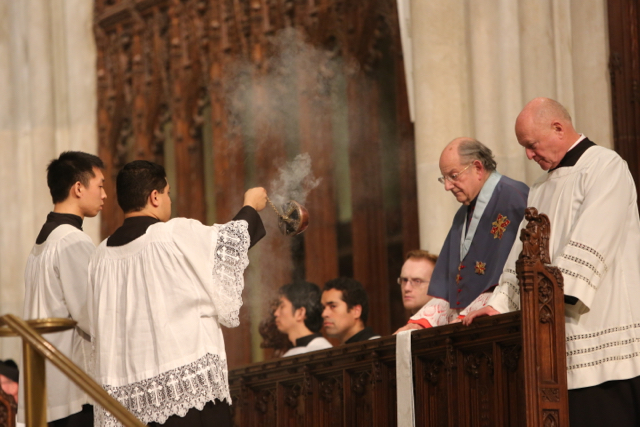
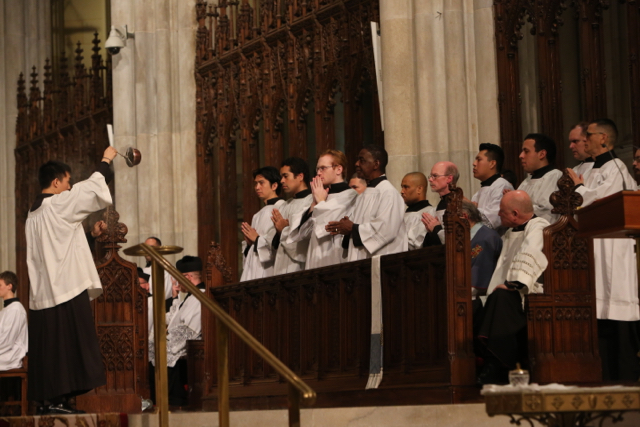
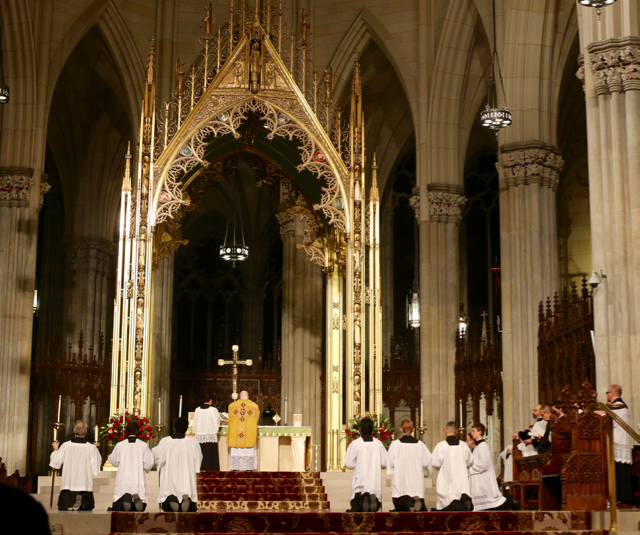
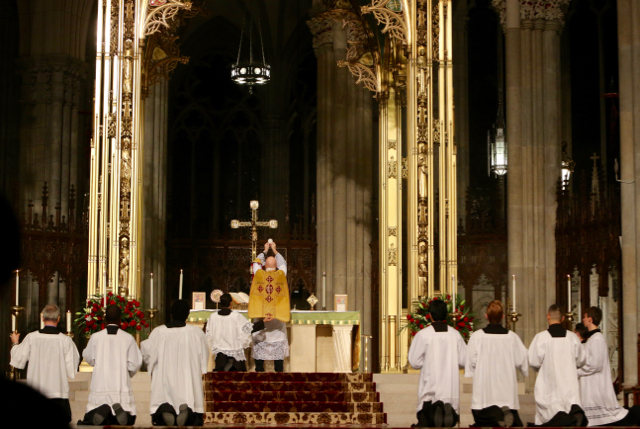
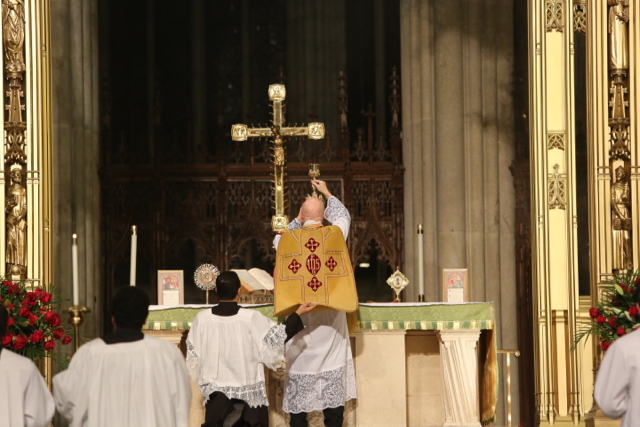
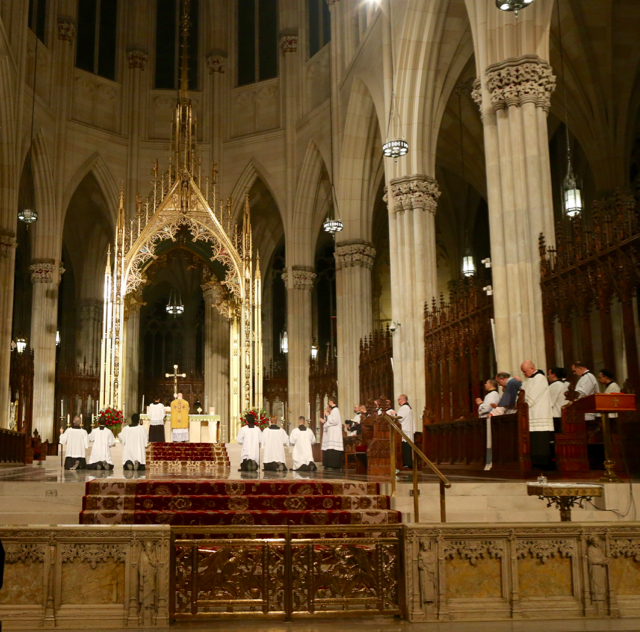
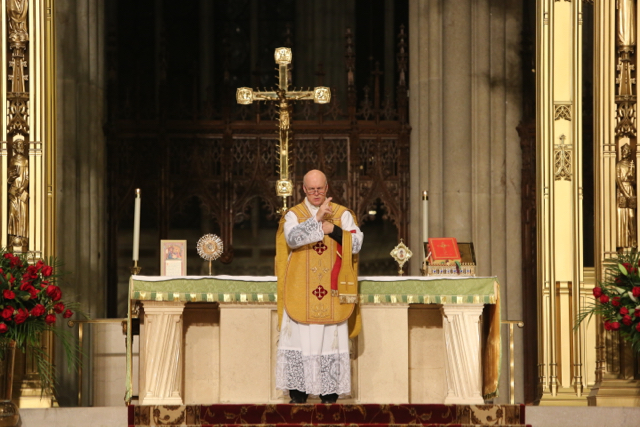
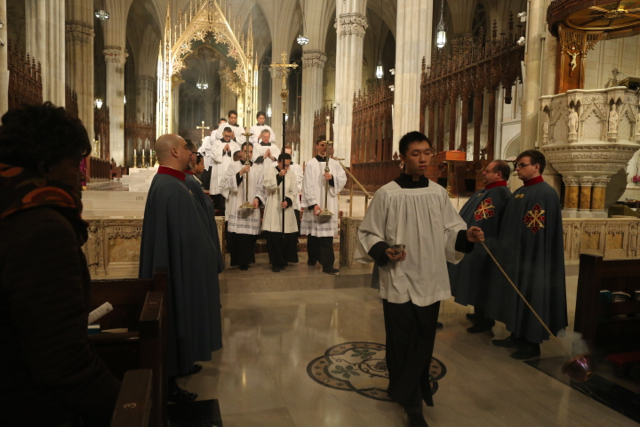
Missa cantata – votive Mass of Our Lady of Ransom (or Mercy) – Fr. Leonard Villa, celebrant.
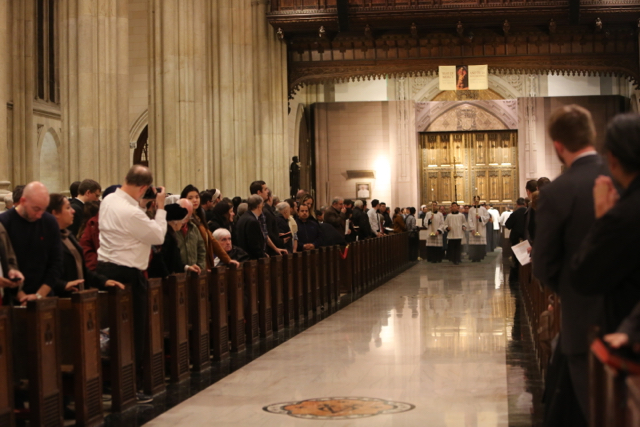
The congregation filled the cathedral.
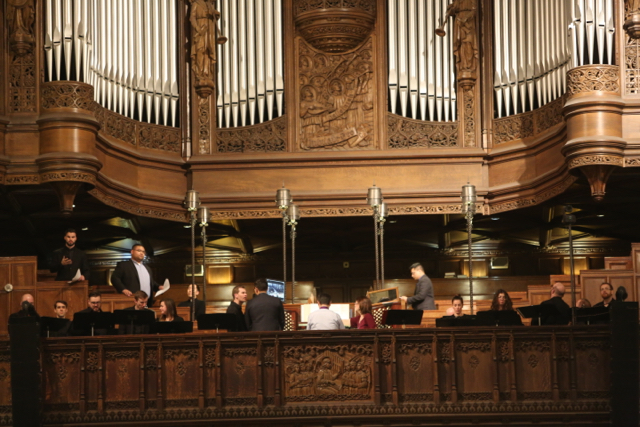
Mr Pedro D’Aquino, choirmaster and organist.
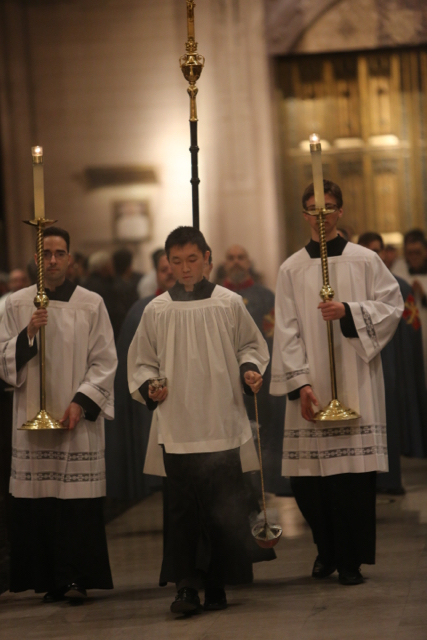
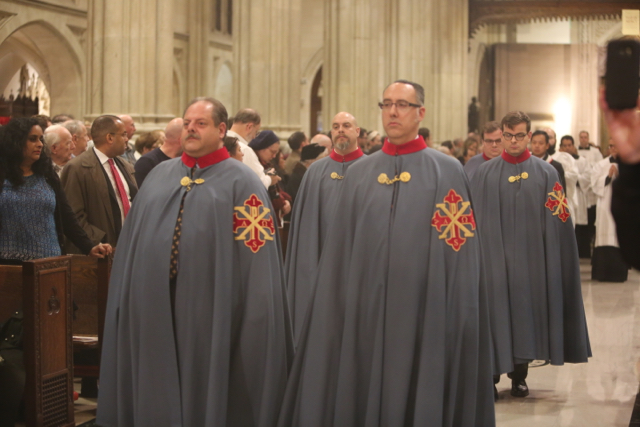
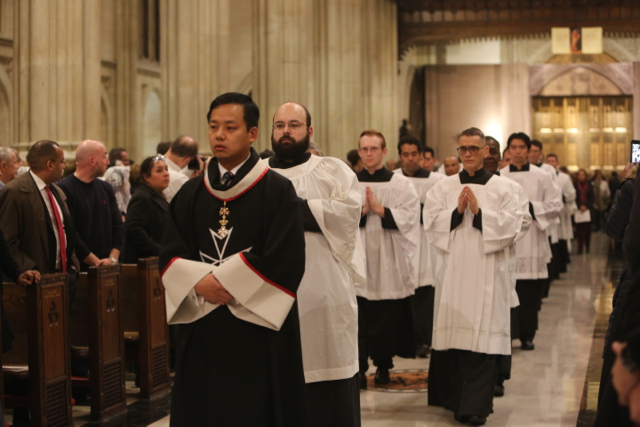
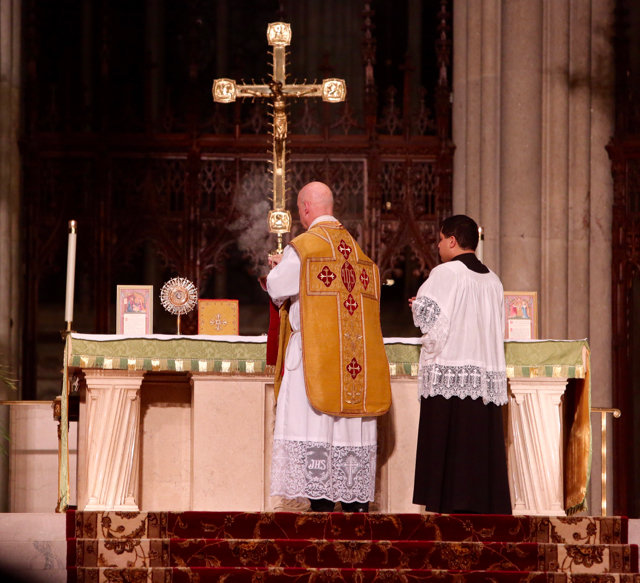
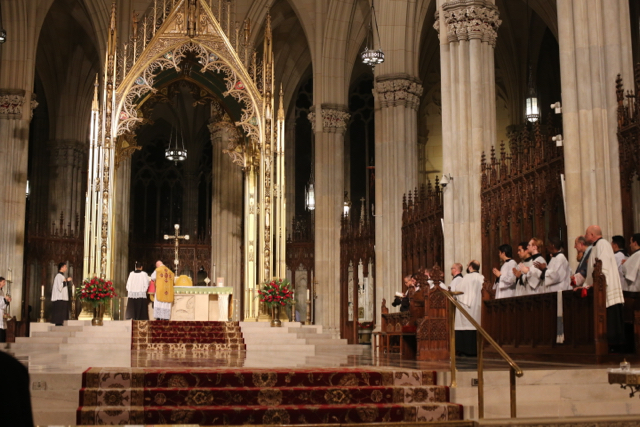
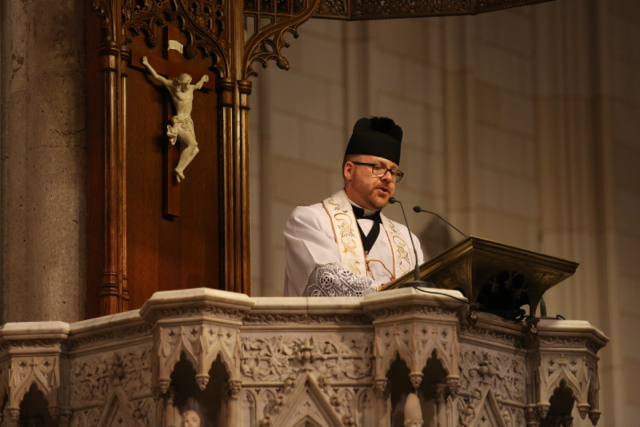
Fr. Stephen Saffron, Chaplain of the Regina Caeli council of the Knights of Columbus, homilist.
13
Nov
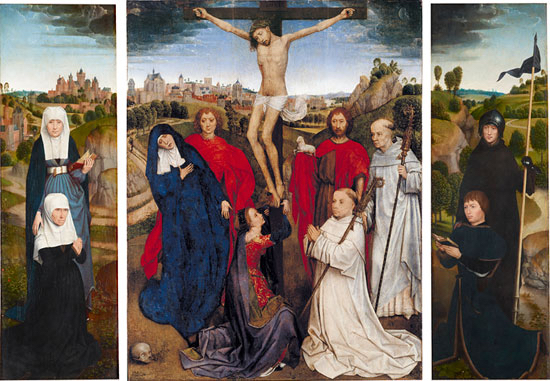
Three exhibitions in New York City, modest in scale yet artistically of the highest importance, illustrate the breadth of Catholic influence in the arts in different nations and ages – as well as showing the effects of opposing religious movements.
First, the Pierpont Morgan Library has dedicated an exhibition to the reunited panels of the Triptych of Jan Crabbe, a masterpiece by Hans Memling (above). The side panels have always been special treasures of the Morgan Library; the center panel of the Crucifixion and the the two rear images of the Annunciation (not shown here) come from museums in Italy and Belgium. The donor was the abbot of a Cistercian monastery near Bruges.
The crucifixion is situated against the backdrop of an extraordinary detailed land- and cityscape, overshadowed by a threatening sky. But what most attracts our attention are the depictions of the donors and their patrons. In keeping with late medieval mysticism, they directly participate in the drama of the passion. In particular the left panel is unforgettable. The aged Anna Willemzoon (the mother of abbot Jan Crabbe) is a marvelous depiction of old age; her patroness, St. Anne, places her hand on her shoulder and gazes forthrightly at the viewer. Yes, this painting is a triumph of close observation of reality, but at the same time is bathed in a mystical calm.
The exhibition also features other paintings and drawings of that era which provide a context to the Crabbe triptych. An excellent catalog (Editor, John Marciari) gives much additional information about the paintings, the artist and the practice of art in 15th century Bruges. The exhibit lasts until January 8, 2017.
PLEASE NOTE:
On Tuesday, November 15th, 7:00 pm at the Church of St. Thomas More (65 E 89th St.), Dutch scholar and curator at the Morgan Library & Museum, Ilona van Tuinen, will explore the hidden world revealed in this enchanting piece, as well as unravel the tangled tale of this sacred piece on the secular art market.(“Painted on the eve of the Reformation; dismembered and scattered on the art market: reunited in New York City”). Discussion will take place in the Rochester Room. For more information, see HERE.
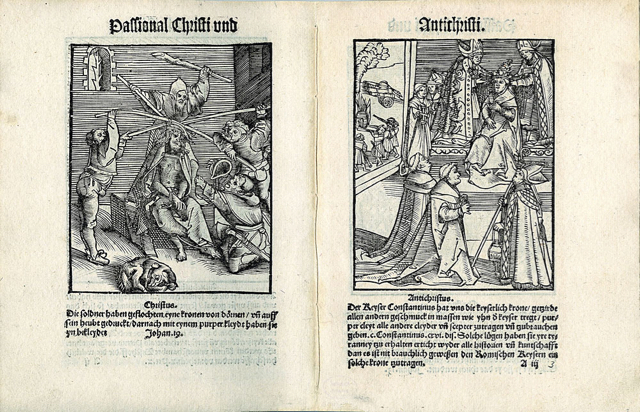
A second exhibition currently at the Morgan is dedicated to Martin Luther and the Reformation. All kinds of curious objects are included: Tetzel’s treasure box for his indulgence money, a chasuble allegedly worn by Luther (after his breach with Rome). but the heart of the exhibit consists of books, pamphlets and other original printed witnesses of the Reformation. These documents witness to the essential differences that quickly emerged between Luther and his followers and the Catholic Church. A development that almost immediately blossomed into fanatic hatred of the the papacy, the Catholic Church and the mass. Pope Francis and his entourage and the Swedish Lutheran church recently have found very little remaining that divides them, but we can take this as the harmonious encounter of two groups of modern unbelievers. To apply these conclusions to the 16th century is an insult both to the Catholics of that age and Martin Luther and the early Protestants. They deeply believed in the positions they so vehemently asserted! What also becomes clear from this exhibition is that the rapid spread of Protestantism was directly connected with availability of new printing technology.
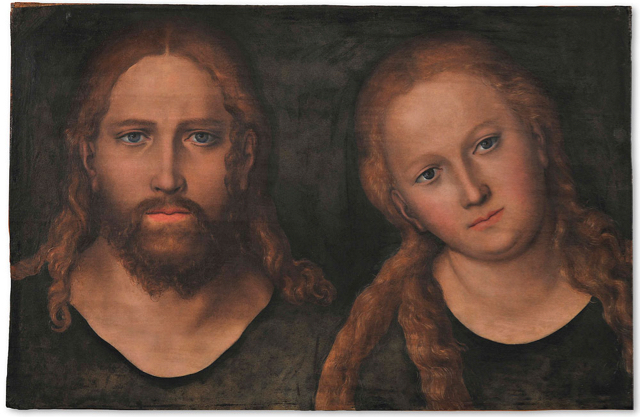
The exhibition also illustrates the impact of these titanic struggles on the arts. We discover some remarkable works created in the German Catholic world on the eve of the Reformation. A tender Madonna and child by Lucas Cranach – an image the artist repeated frequently for Catholic patrons even after he had become the main visual propagandist for Luther. Or the unique, extraordinary mystical image (above) of Christ and Mary ( The Virgin? Mary Magdalene?).
All this was to change in the Reformation. The exhibition claims that Luther was not personally opposed to the arts, but the spirit of the Reformation certainly called them into question. Art became increasing didactic in nature. There were widely circulated portraits of Luther and his wife – but they were also understood as statements again clerical celibacy. The attacks on the papal “Antichrist” in word and image grew wilder and wilder. (see below) The result was clear – Germany lost its formerly leading position in painting and sculpture for generations; only after 1600 did a modest revival commence. (Exhibit extends to January 22, 2017)
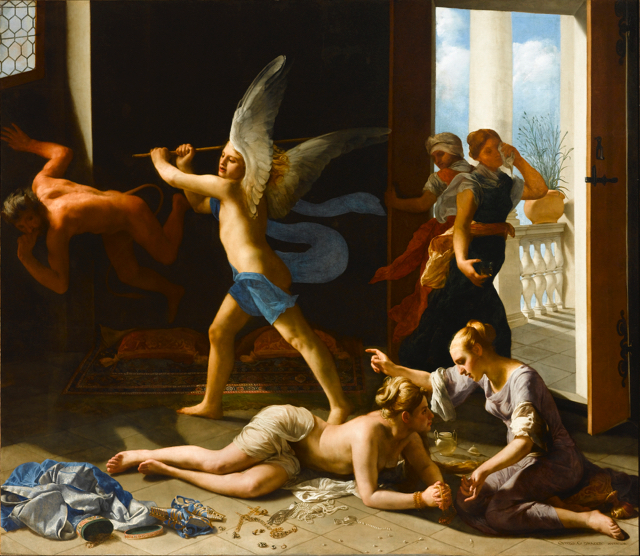
Finally, the Frick Museum is currently displaying an extraordinary example of Italian baroque art of around 1660: Guido Cagnacci’s Repentant Magdalene. (Above) Some aspects of Renaissance and baroque art are undoubtedly foreign to the Catholic “man in the street” of today: a voluptuous naked Magdalene, having cast off her meretricious finery, is directed by her sister Martha on the right path, while an angel drives out a demon and the courtesan’s servants flee in confusion. It all seems a mysterious, confusing tangle of bodies – dare we use the term “surreal?” Yet the Renaissance and Baroque ages loved such complex allegories. And this painting was not a fringe product but was commissioned in Vienna by the pious emperor Leopold of the German (Holy Roman) empire. Yes, Catholic religious art in its greatest ages had a most extraordinary range – perhaps too great for the sensibilities of modern piety! But in fact this painting reminded me of the efforts of certain modern artists who seek to revive “classical” and allegorical painting. (e.g. Leonard Porter, Michael Fuchs)
Description of the exhibit HERE. The painting will remain on display until January 22, 2017.

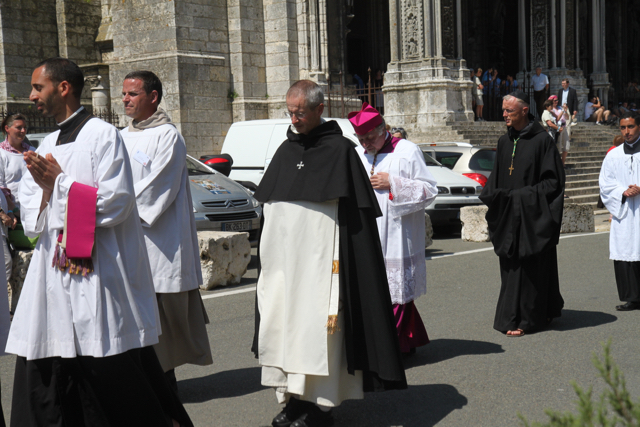
(Above and below) Friars of the Fraternity of St. Vincent Ferrer on the final day of the Chartres pilgrimage, May 28, 2012.
At Holy Innocents Church, New York:
“On Thursday, November 17 at 6:00 PM, a Dominican Solemn Mass for the Feast of St. Gregory Thaumaturgus will be celebrated by Fr. Louis-Marie de Blignières, founder of the traditional Dominican Fraternity of St. Vincent Ferrer in France. Fr. Innocent Smith (from St. Vincent Ferrer Church) will be the Subdeacon for this Mass.
After the Mass, there will be a talk/conference (“Saint Vincent Ferrer, a topical Saint for the bizarre times in which we live”) and a short presentation on the history of this traditional Dominican fraternity.
This community is exclusively traditional. It follows all the customs and practices the Dominican Order followed before the liturgical changes. Their conventual life is centred on the solemn celebration of the Divine Office and of the Holy Sacrifice of the Mass, which is its summit.
In 1982, the first friars erected their humble chapel out of an old barn. Today, this chapel is too small to accommodate the families and the faithful who flock to attend their offices, and the sanctuary has become too small to welcome new vocations. Each passing day, there is growing demand for retreats, and there is not enough space to welcome new postulants. Because of this, the friars have an urgent need to expand, which is why they are building a church and a guest-house, as well as completing the conventual cloister.
“Our convent is the point of departure for our apostolic work. It shines a ray of light on those sectors of society known to be in urgent need of assistance: by helping families, by deepening the relationship between faith and reason, and by welcoming and instructing Muslim converts through our ‘apostolats aux frontiers.’”
(Thanks to Eddy J. Toribio)
AND
At Our Lady of Fatima Chapel, Pequannock, NJ (FSSP)
“On Sunday, November 20, 2016, Our Lady of Fatima Chapel will be hosting members of the Fraternity of St Vincent Ferrer, including their founder and superior Fr. Louis-Marie de Blignières who will be preaching at the masses and giving a talk in the afternoon at the Knights of Columbus hall around the corner. The schedule for Sunday November 20 will be as follows:
11:00 AM Solemn High Mass in the Dominican Rite
1:00 PM Brunch at the KofC hall
2:00 PM Talk by Fr. Louis-Marie de Blignieres
The Fraternity of Saint Vincent Ferrer was founded by Fr. Louis-Marie de Blignières in 1979 and became a Religious institute of Pontifical Right on October 28, 1988. The Fraternity’s Priests use the Traditional Dominican Rite (XIII century) for celebrating Mass and for saying the hours of the Divine Office. The seat of the Fraternity is the Monastery of Saint Thomas Aquinas in Chémeréle-Roi, a village in northwest France. Following the ideals of their Father Saint Dominic, these religious work for the salvation of souls by contemplating, studying, and preaching the truth.”
(From the Bulletin of Our Lady of Fatima Chapel)
AND
At St. Vincent Ferrer church, New York:
“Solemn Dominican Rite Mass for the Feast of the Presentation of Mary
On Monday, November 21, 7:00 PM at St. Vincent Ferrer, a Solemn Dominican Rite Mass for the Feast of the Presentation of the Blessed Virgin Mary will be celebrated. The Mass will be celebrated by members of the Fraternity of St. Vincent Ferrer, a French religious order inspired by the Dominican charism. A reception will take place after Mass with a chance to learn more about the Fraternity.”
(From the bulletin of St. Vincent Ferrer parish.)