18
Oct
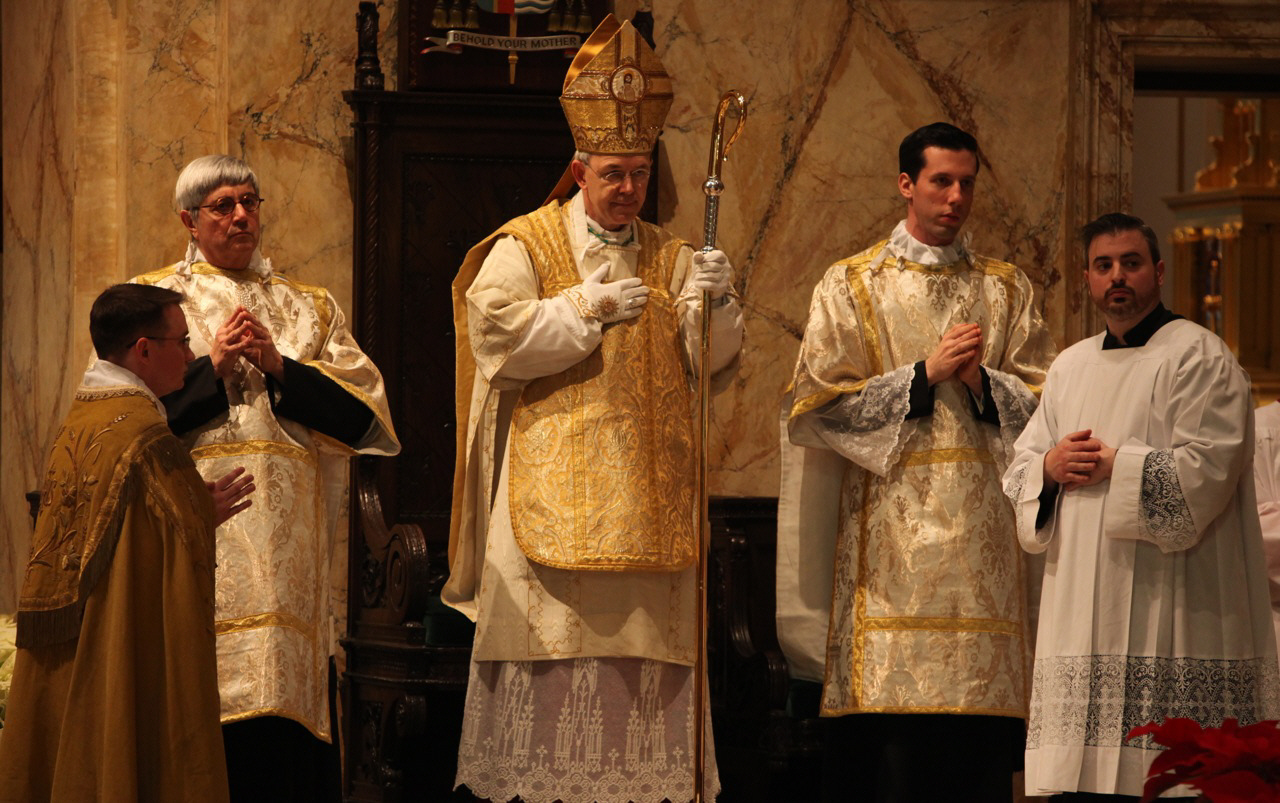
This Friday there are two masses in the area for the Feast of Blessed Karl of Austria, Rockville Center, NY and in Newark, NJ
Traditional Mass for Blessed Karl of Austria
Hosted by the Order of Malta
St. Agnes Cathedral
Rockville Centre, NY
[Just Across from Rockville Centre LIRR Train Station]
10/21 – Friday Evening @ 550 PM
16
Oct
(Above) Fr. Hunwicke preaching at St. Mary’s: Don John of Austria
has set his people free!
At 7:00 PM Fr. Hunwicke spoke on whether a pope can abolish the Extraordinary Form. Rest assured: he cannot. Why? Because the role of the papacy is essentially to defend what has been handed down, not to create new dogma or new truths. And the Traditional Roman Rite, like the list of canonical books of the bible or the early creeds, is part of the most ancient Tradition of the Church.
For those who could not attend Fr. Hunwicke’s talk tonight he will be speaking again in New York on Tuesday, October 18th at 7:00 PM at Old St Patrick’s Cathedral (downstairs in the vestibule to the catacombs).
11
Oct
The Chapel of St. Joseph
385 South End Avenue
The neighborhood of the new World Trade Center today is a forbidding, un-New York-like landscape. Isolated, gigantic office buildings surround the visitor; the ubiquitous, endless construction sites and the hordes of tourists make going difficult for the pedestrian. In the midst of all this there is supposed to be a Chapel of St. Joseph. The address is exceedingly difficult to find. And when one finally does get there, it’s hard to suppress one’s disappointment at the institutional entrance projecting from an apartment building.
Shrines do not only commemorate religious figures and devotions. They can serve as memorials to the tragedies of history. One thinks of the Church of Our Lady of Consolation in Paris – now administered by the FSSPX – erected to the memory of the victims of a disastrous 1897 fire at a bazaar for Catholic charities. Certainly there is no more tragic event in the history of New York than the destruction of the World Trade Center on September 11, 2001. Now the Archdiocese of New York saw fit shortly afterwards to create its own memorial to that event at the chapel of St Joseph. The interior of St. Joseph’s chapel, wrecked during the recovery work after the attack, offered an opportunity to house such a shrine in the immediate vicinity of the destroyed towers. Since 2005, St. Joseph is no longer just a “chapel of ease” for a once isolated residential area, but the official “Catholic Memorial at Ground Zero.”
The chapel of Saint Joseph, however, can look back on a lengthy and most curious history. In times gone by, this sliver of downtown, in the vicinity of Washington Street, was one of the most exotic neighborhoods of the city: Little Syria. Between 1890 and 1914 thousands of Arabs and other nationalities of the Near East came to live here. Most of them were from Syria in the Ottoman Empire; many of those from what is today Lebanon. Almost all of them were Christian: Maronites, Melkites, Antiochene Orthodox. St. Joseph was founded as the parish of the Maronites. 1)
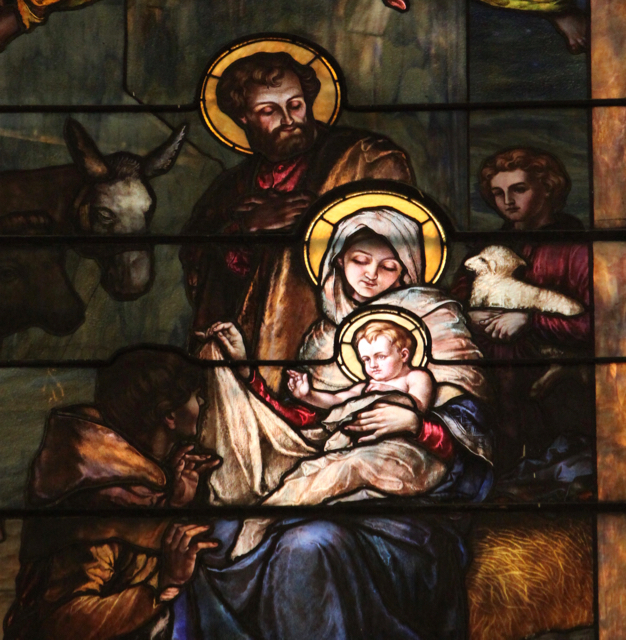
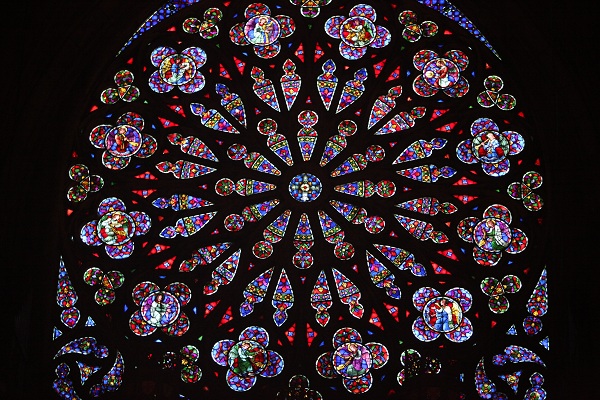
(Above) All that remains of the original Maronite parish are the stained glass windows.
(Above and Below) Vestiges of the original Congregation.
(Above) An artist’s conception of a Maronite Catholic service in Little Syria around 1900; (Below) The original cornerstone of St Joseph’s, found after the destruction of the World Trade Center. 2)
The Maronite religious community in New York dates to 1890 and began in a rented hall at 127 Washington Street, known as Saint Joseph’s Maronite Church. In the early days it apparently changed location several times – including a stay at nearby St. Peter’s church. Saint Joseph’s acquired a more permanent home by purchasing property at 57–59 Washington Street in 1910. But then in 1940 came the building of the Battery Tunnel – and the razing of most of Little Syria. The Arab population left. Saint Joseph’s parish lost its church and had to move to new quarters at 157 Cedar Street, which, opened in May 1949.
Saint Joseph’s Church property was sold to the Archdiocese of New York in April 1969, to serve as a Latin rite church for the office workers in the planned World Trade Center – after the Maronites were assured that their liturgy could always be celebrated there. However, soon thereafter, the property was taken again by eminent domain, this time for construction of the World Trade Center itself, and the church razed. The parish was relocated, for at least the third time, to its present site and since then has been administered as part of Saint Peter’s church on Barclay Street. And this church, now a chapel, was “repurposed” yet again – as the spiritual center for Catholics in the new residential area of Battery Park City. For, after generations of decline, residential life was starting to return to downtown New York. 3)
In its architecture, the new chapel of St. Joseph follows the template for the New York Conciliar parish exemplified by the 1973 church of St. John the Evangelist on East 55th Street: an anonymous space, invisible from the street, indistinguishable from a restaurant, hotel lobby, lecture hall or, (according to one story, in the case of St. Joseph’s) a store. In such a church, a remnant of believers gathers, having given up any attempt to visually “dialogue” with outside world – let alone lead or convert it. It’s a return, not dictated by poverty but by ideology, to the basement or townhouse chapels where so many old New York parishes – like the same St. Joseph’s – got their start in the poor immigrant days. Since “Making all Things New,” of course, the Archdiocese has retreated from this ideal: as resources, clergy and congregations dwindle the new emphasis is on fewer but larger churches…
And the “Catholic Memorial at Ground Zero?” It basically consists of an assembly of heterogeneous works of art distributed throughout the chapel. This artwork, reportedly costing $1.7 million, is a mixed bag: folk ceramics, Byzantine icons, abstract windows and bronze sculptures. The lack of any generally accepted artistic idiom or tradition in the Church of today is apparent. Each piece of art is accompanied by a full explanation of how it relates to 9/11; that’s necessary because in most cases the connection is not immediately apparent.
The centerpiece of the shrine is a set of four bronze statues, placed on the floor against a wall. They depict four saints – St. Joseph, St Mary Magdalene, St Florian and St. Michael – each commemorating a profession involved in 9/11 and its aftermath. So, St. Michael is the patron of police, St. Florian the patron of firemen, St. Mary Magdalene the patroness of nurses and St. Joseph the patron of construction workers. I cannot say that these figures – unsettling, even grotesque – are conducive to a prayerful or even contemplative atmosphere – especially given that they are simply set on the floor, at eye level with the visitor. The front windows, as viewed from the interior, make an even more startling impression. Flames as from a great explosion seem to leap up around the doors of the entrance.
( Above and Below) The devil crushed by St Michael.
The rebuilding of the Greek Orthodox church of St Nicholas, currently underway, follows a fundamentally different path. The tiny parish of St Nicholas had been the last surviving “native” house of worship of the “Levantine” Little Syria. It was totally destroyed on 9/11. After many disputes and false starts the church is being rebuilt. But the interior, the Orthodox Church has emphasized, will be that of a traditional Orthodox church (admittedly in a somewhat modernized idiom). And on the outside, the new St. Nicholas also will be recognizable as a Greek church – albeit one that glows in the dark! The new “St. Nicholas National Shrine”will be a strong public restatement of the Greek Orthodox Tradition in an utterly secular environment. 4)
1)On Little Syria, there was a recent exhibit at the Department of Records (or Surrogates Court)on Chambers Street. An expanded version of the exhibit has now reopened on Ellis island where it will stay until January 2017.
2) Both from the exhibit “Little Syria, NY: An Immigrant Community’s Life and Legacy”” at the New York City Department of Records (See footnote 1)
3) See generally “Our Lady of Lebanon Maronite Cathedral” http://ololc.org/about.html
4) See generally St. Nicholas National Shrine; Dunlap, David W., “Church, Rising at Trade Center Site, will Glow where Darkness Fell” (The New York Times, September 9, 2015).
8
Oct
PLEASE NOTE THAT THE LECTURE THIS EVENING, TUESDAY, OCTOBER 16TH AT 7:00 PM, WILL TAKE PLACE IN THE BASEMENT (UNDERCROFT) OF ST. PATRICK’S OLD CATHEDRAL. THE ENTRANCE IS AT 264 MULBERRY STREET.
7
Oct
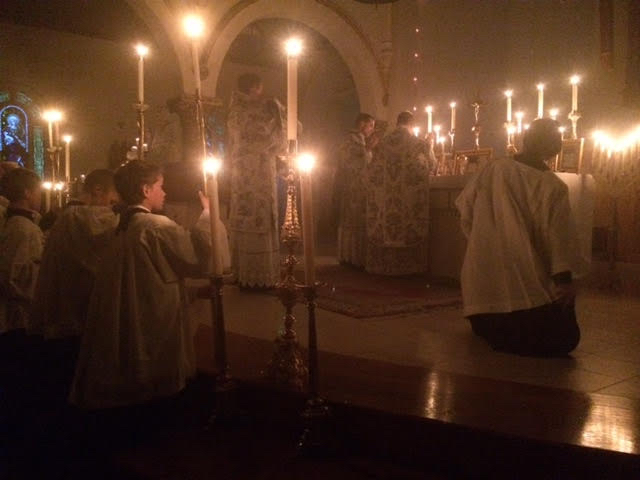
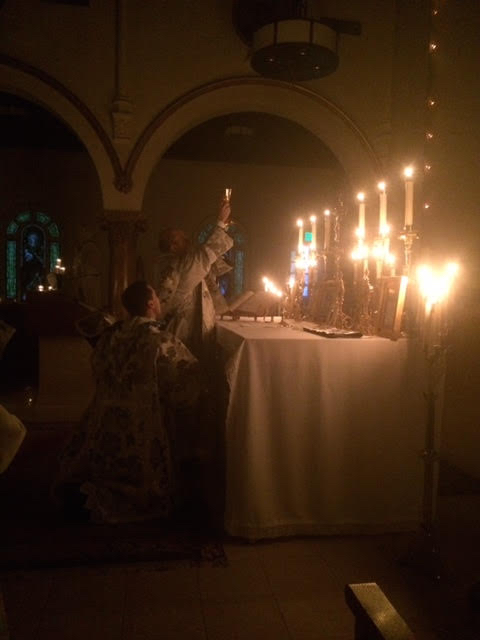
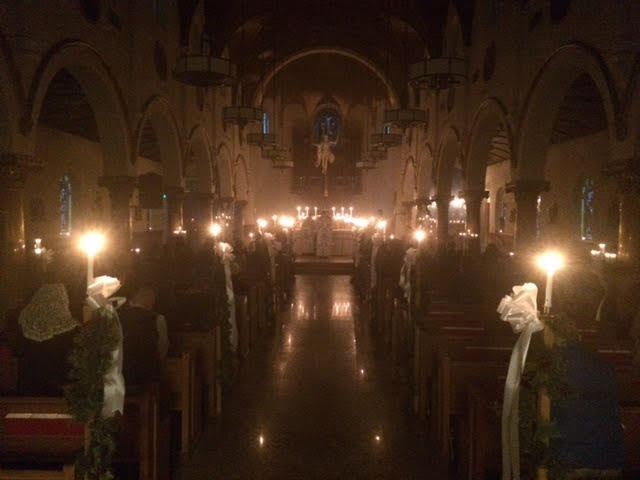
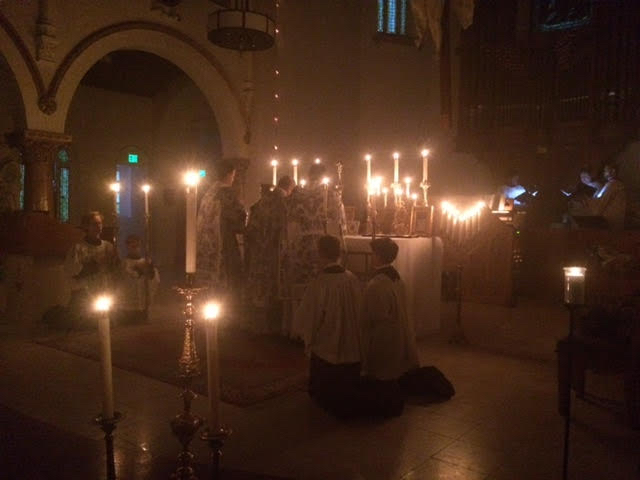
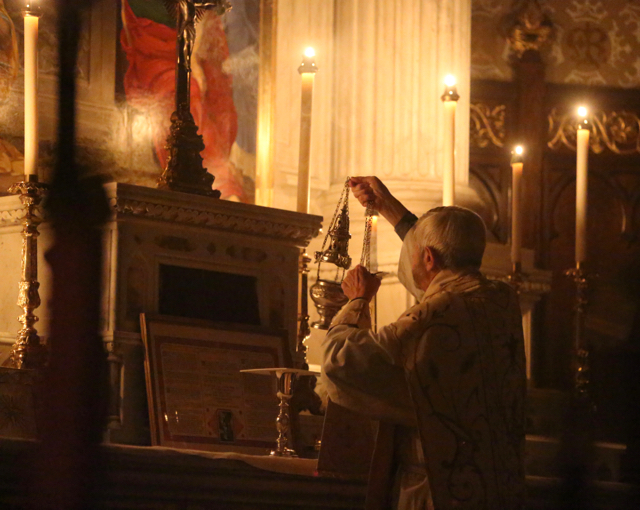
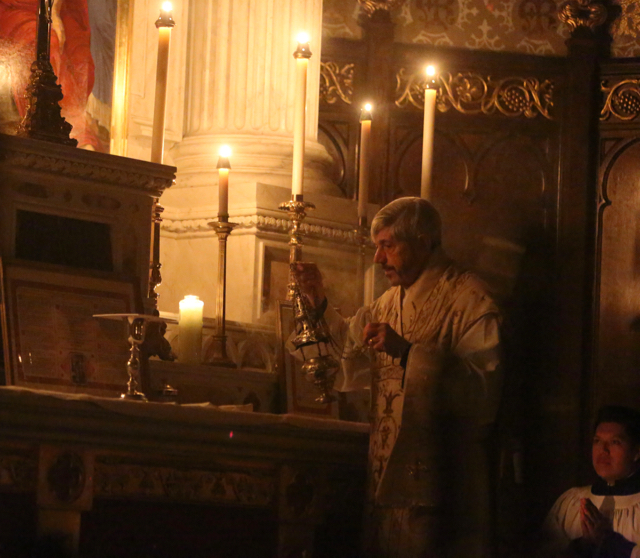
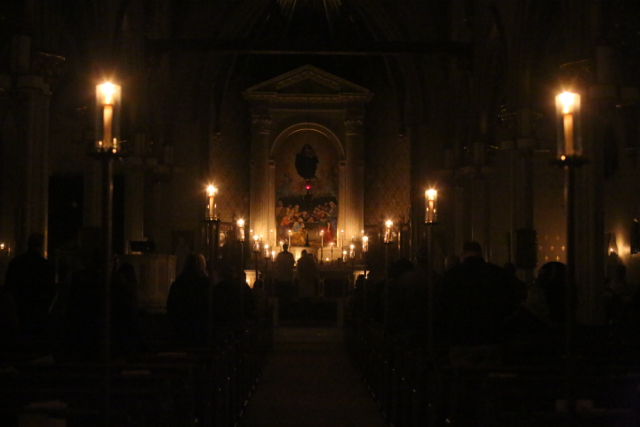
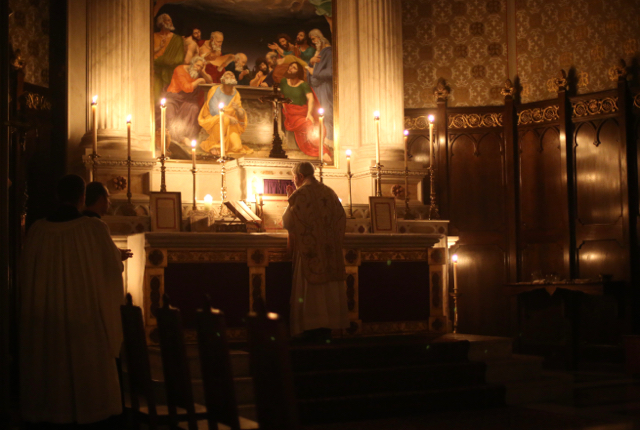
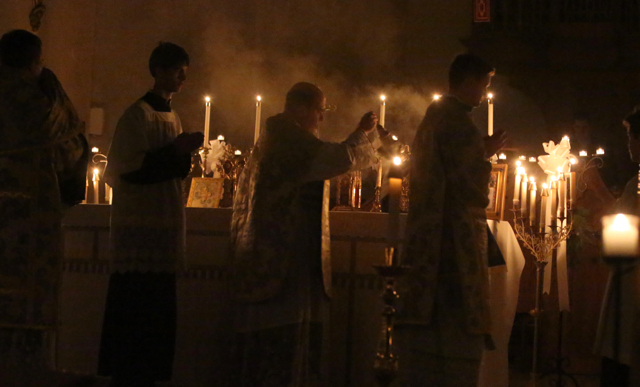
Pictures from this evening’s Solemn Mass celebrating the Feast of the Holy Rosary at St. Mary Church in Greenwich.
Bishop Scheider will visit other churches in the United States. Schedule
6
Oct
THE ENGLISH MARTYRS VIEWED FROM A CONTEMPORARY PERSPECTIVE
By Joanna Bogle
Where? Holy Innocents Church, Broadway and 37th Street, Manhattan
When? Monday, October 17, 7:00 p.m., following the 6:00 p.m. Mass
For whom? Open to the public.
The Presenter
Joanna Bogle is an author, journalist and broadcaster working in London. Her books include several historical biographies, and “A Book of Seasons and Celebrations” explaining the traditions and customs associated with the Church’s year. She leads Catholic History Walks around London, and lectures regularly to schools, colleges, historical societies and Catholic and community groups. A regular broadcaster with EWTN, she writes for a range of newspapers and magazines in Britain and elsewhere, and is chairman of Christian Projects, an ecumenical group organizing Scripture-based projects for schools across Britain. She lives in London with her husband, who is a barrister.
30
Sep
For the Solemn Requiem Mass at St. Vincent Ferrer on November 7th, the Schola Cantorum of Saint Vincent Ferrer will be joined by a band of Renaissance wind instruments: shawms, sackbuts, and dulcians. These instruments are the ancestors of the modern oboe, trombone, and bassoon. While this type of accompaniment was a frequent practice in the sixteenth and seventeenth centuries, it is seldom experienced today in liturgical use and will lend special solemnity to this occasion.
Manuel Cardoso (1566–1650), a Renaissance composer from the golden age of Portuguese polyphony, spent most of his life as a Carmelite in residence at the Convent of Our Lady of Mount Carmel in Lisbon. He published extensively, often with through the beneficence of his friend King John IV, although much of his music was lost in the Lisbon earthquake of 1755.
Cardoso’s Missa pro defunctis a 6 is a masterwork of technical precision and emotive power, with many stylistic similarities with his two older contemporaries, Victoria and Palestrina. Much more so than in the Roman tradition, Iberian polyphony was often accompanied by instruments, and records from Cardoso’s own convent indicate that this was the case there.