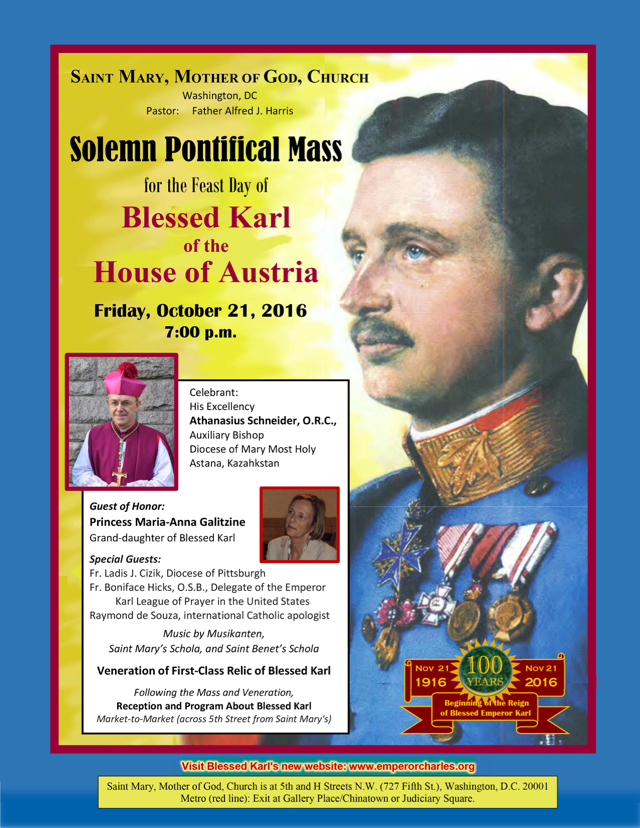
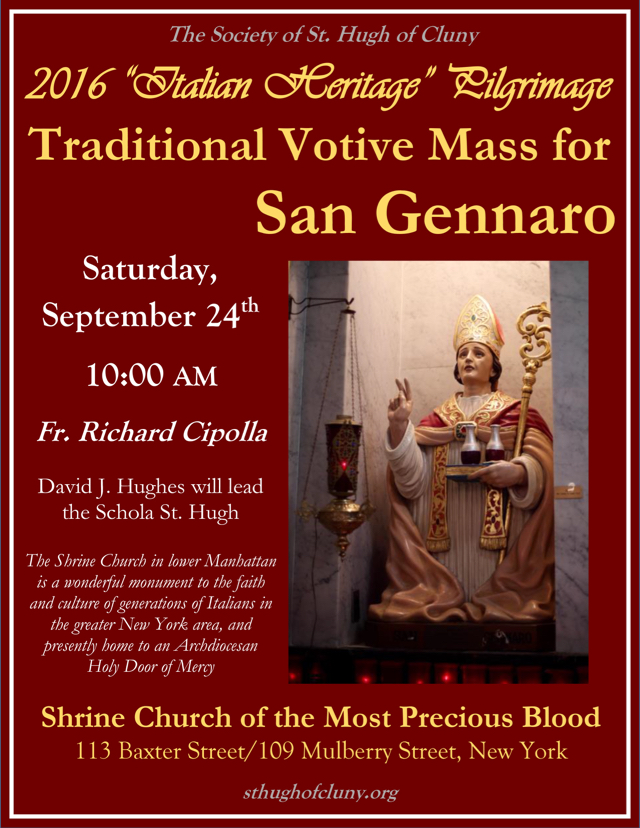
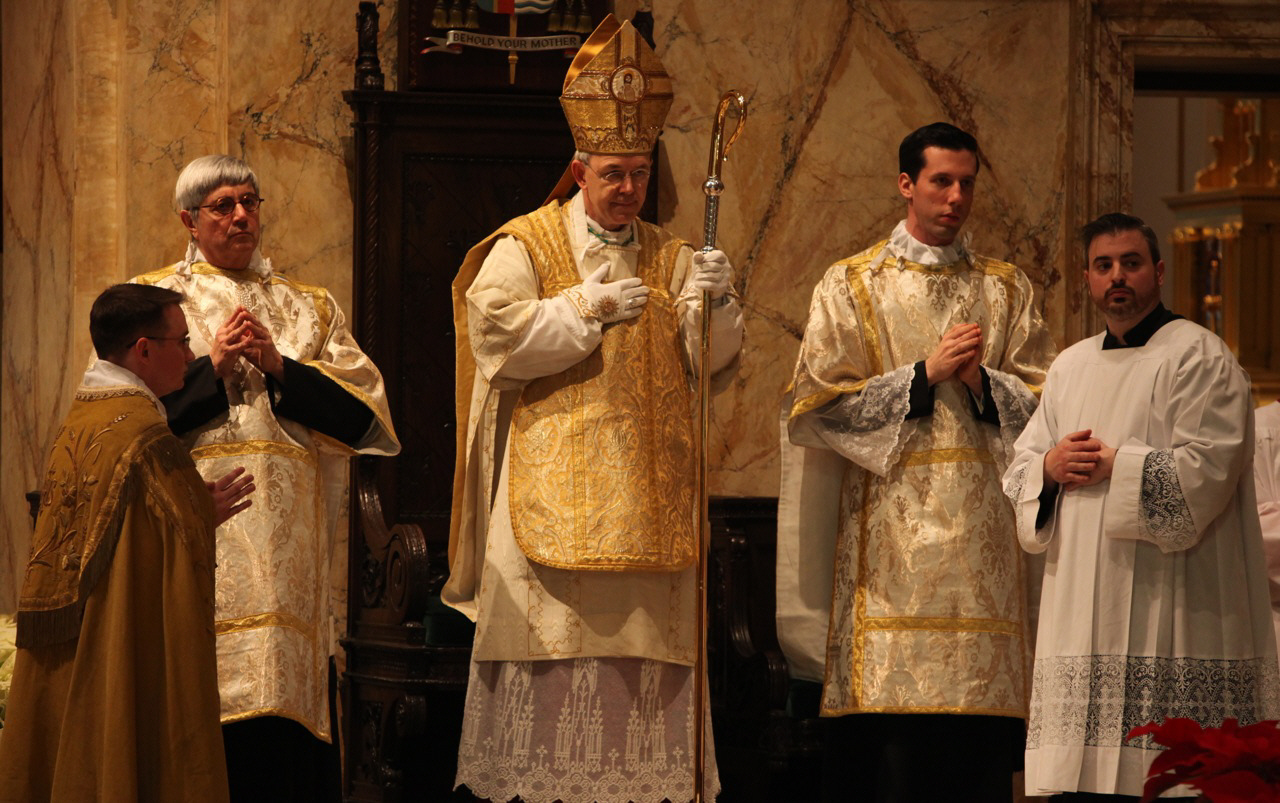
UPDATE: The music program of the mass.
Saturday, 24 September 2016
10:00 a.m.
Church of the Most Precious Blood, New York City
(National Shrine of San Gennaro)
Votive Mass of San Gennaro and Companions, Martyrs
Missale Romanum of 1962
Prelude: Sonata da chiesa in B-flat (K. 212) (Mozart)
Missa brevis in F (K. 192) (Mozart)
Gregorian Mass of Several Martyrs: Salus autem
Motet at the Offertory: Justorum animae (Palestrina)
Motet at the Communion: Venite populi (Mozart)
Postlude: Sonata da chiesa in F (K. 244) (Mozart)
Published in Masses | no comment
Published in Masses | no comment
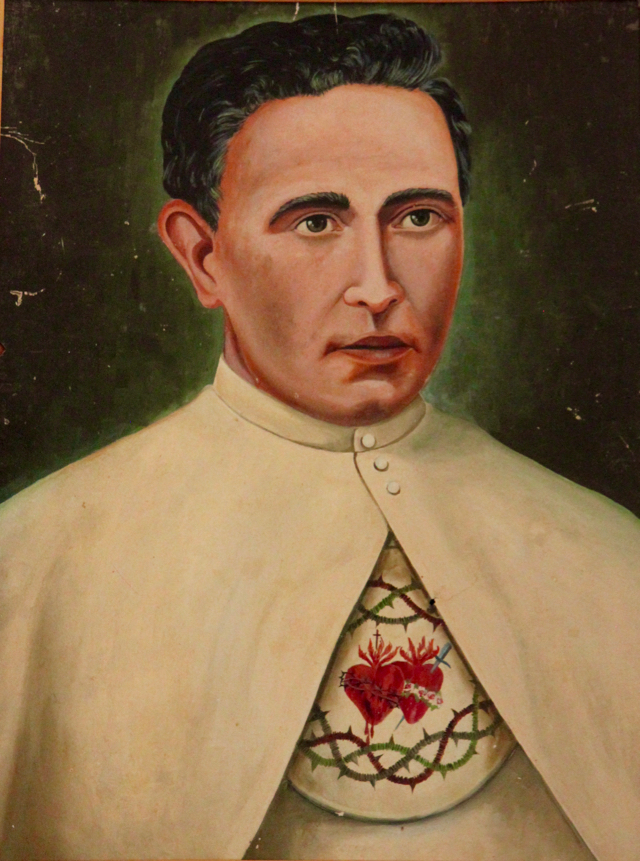
by Jill Chessman
There are few places to visit in the United States that are so closely associated with a canonized saint as the island of Molokai in Hawaii. Fr. Damien de Veuster, a priest of the Congregation of the Sacred Hearts of Jesus and Mary, came from Belgium to Hawaii as a missionary in the late 19th century. At the time, there was an outbreak of leprosy on the islands. People with leprosy were sent in quarantine to an isolated peninsula on the island of Molokai to live with neither medical nor spiritual assistance. In 1873, Fr. Damien volunteered to go to Molokai to be their priest with the understanding that he would have to spend the rest of his life there. He labored tirelessly for 16 years caring for the spiritual and physical needs of those in the leper colony before dying of leprosy himself. He was canonized in 2009.
Molokai is a beautiful island with stunning scenery—a well-kept secret. There are no resorts here, few tourists, traffic lights are unnecessary. The sign on the road leading from the tiny airport says it all. “Slow down, this is Molokai.” The only way to get from “topside” Molokai to the Kalaupapa peninsula, where Damien served his lepers (below), is by airplane or by a steep mule path down the cliff that separates Kalaupapa from the mainland.
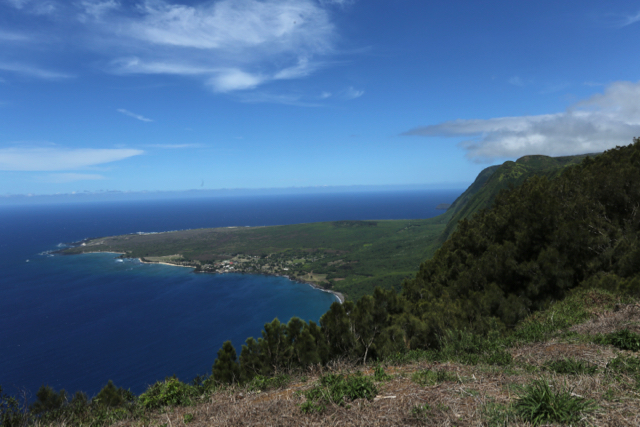
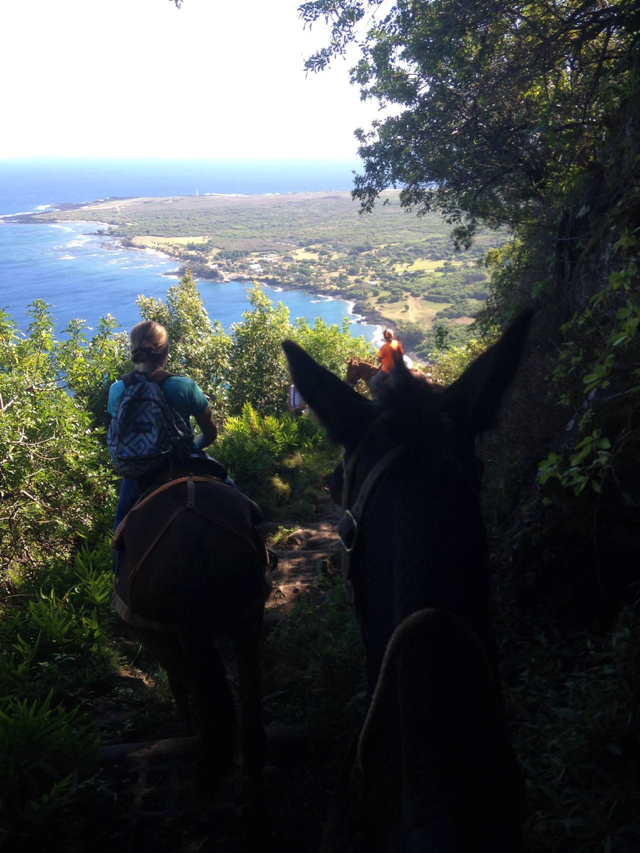
The mule-ride down to the Kalaupapa peninsula takes about an hour and a half.
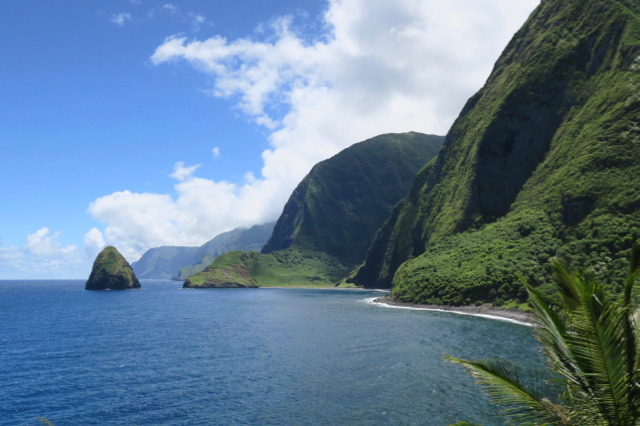
Stunning scenery. This was the spot where leprosy patients were forced off boats into exile or sometimes dumped in the water and forced to swim to shore.
As former leprosy patients still live on the peninsula, there are strict rules and restrictions about touring the peninsula. But the trouble is worth it, as you can visit the church, St. Philomena, where St. Damien said mass everyday, and venerate his tomb. Fr. Damien’s body was exhumed and returned to Belgium in 1936. The remains of his right hand were returned to the tomb in 1995.
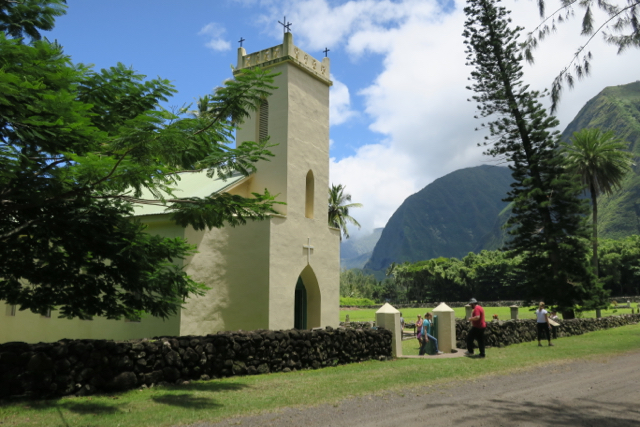
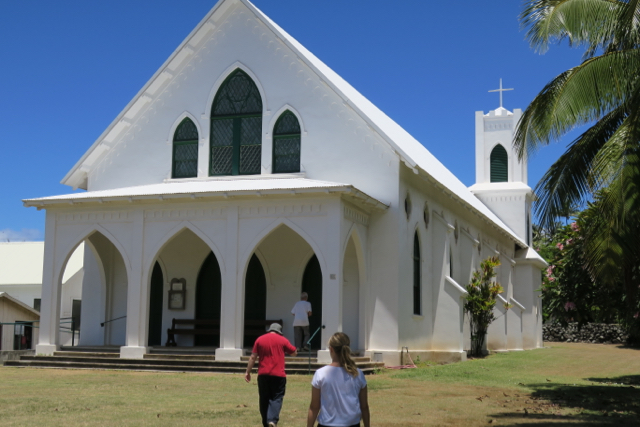
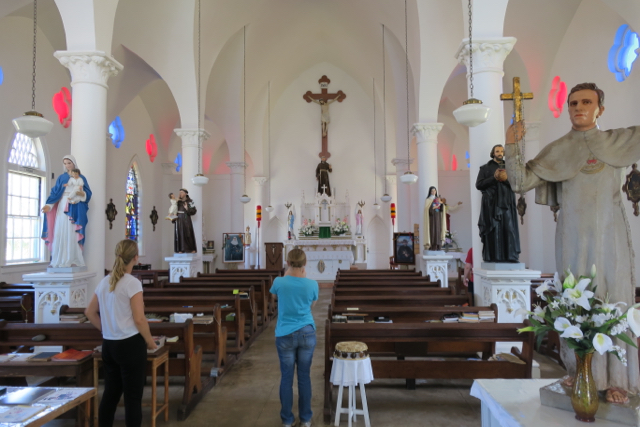
St. Philomena
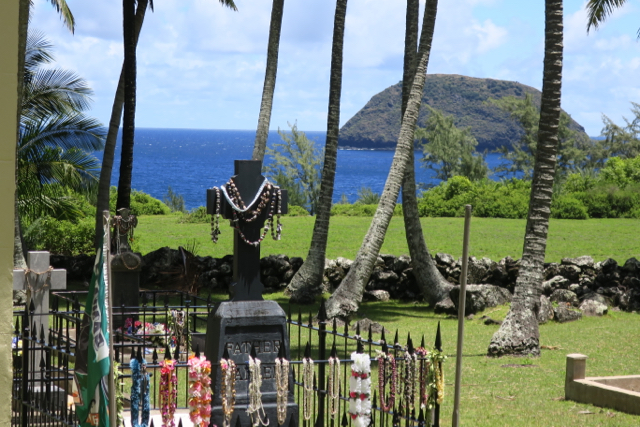
St. Damien’s tomb
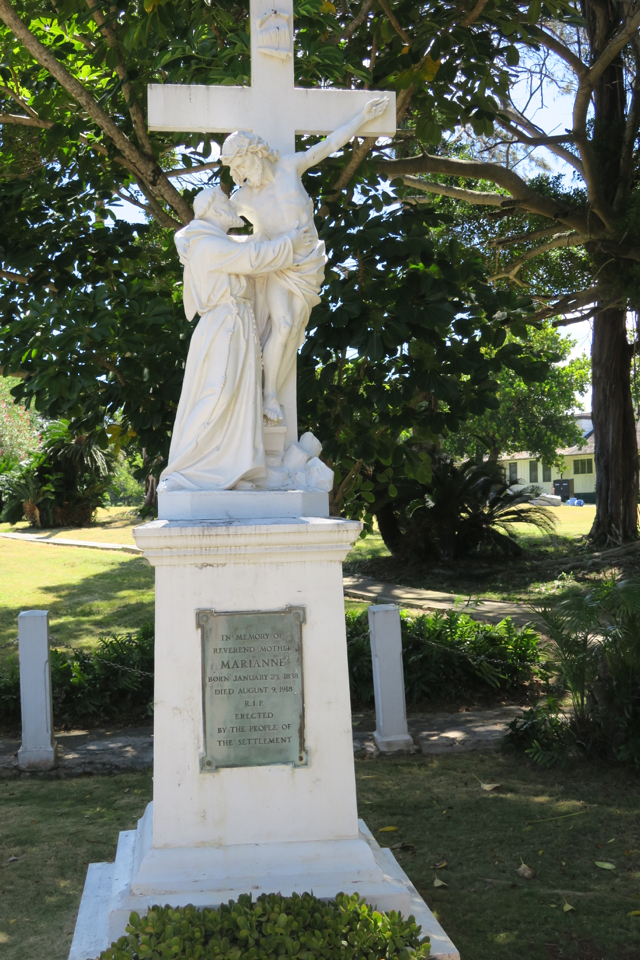
The former tomb of Mother Marianne Cope, also a canonized saint, who came to help in 1888 with four Franciscan Sisters. Her body had also been removed to her community’s headquarters in Syracuse, New York. When her order, like so many others, had to dispose of its property there, the diocese of Hawaii brought her body to the Cathedral in Honolulu 1n 2014.
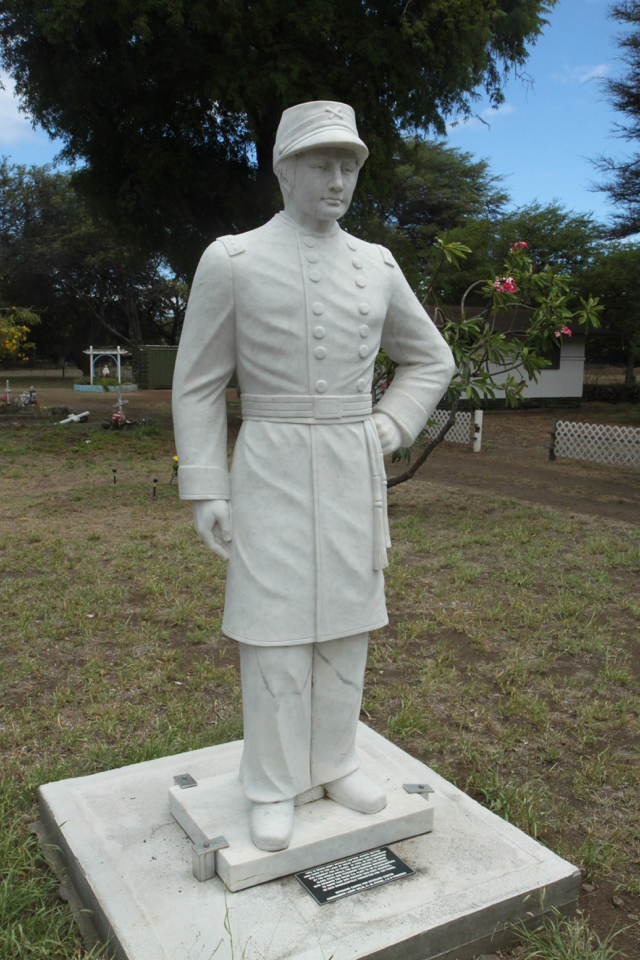
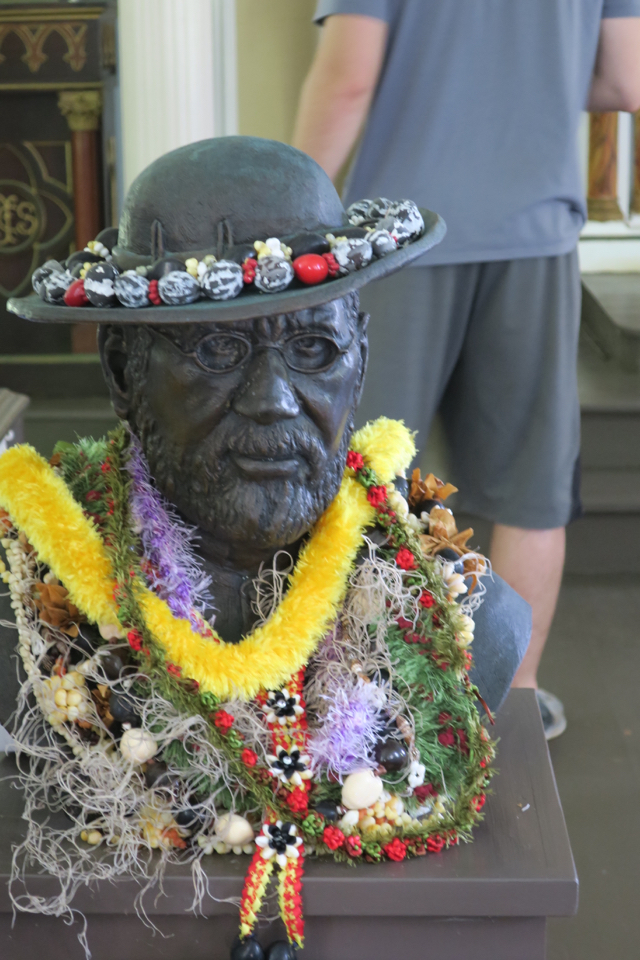
Brother Joseph Dutton, on the grounds of St. Joseph Church, Molokai
A third figure important to Molokai is Brother Joseph Dutton, a lay helper to Fr. Damien, whose cause is up for sainthood. He is buried near the tomb of Fr. Damien.
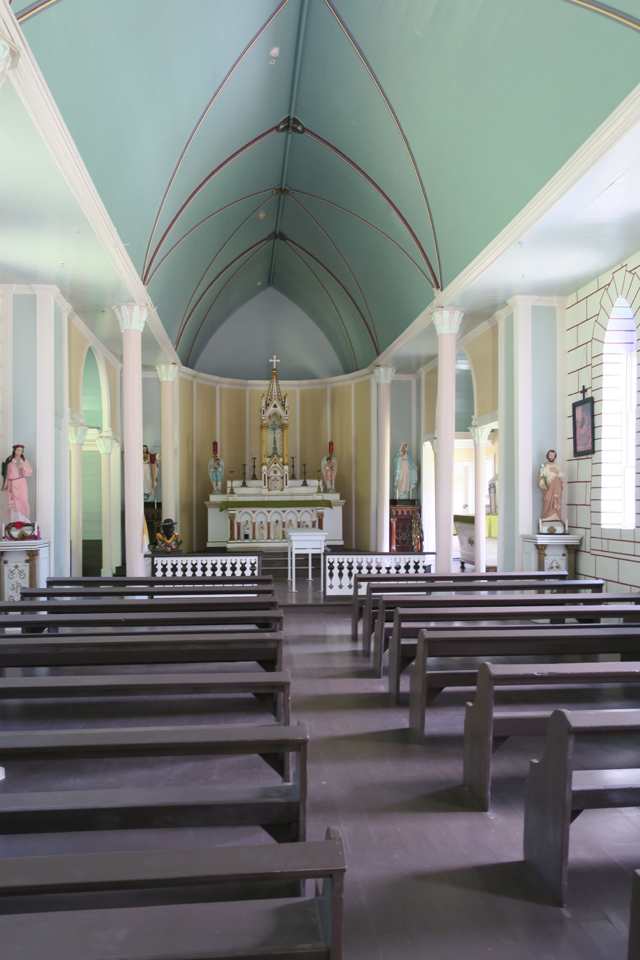
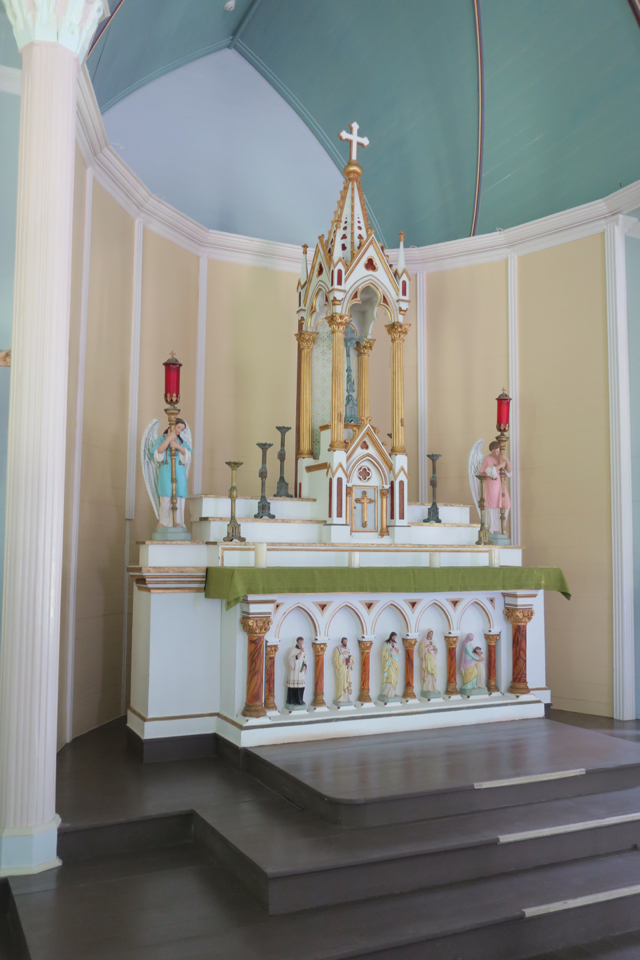
The churches on Molokai that Damien built with his own hands are perhaps the most moving sites to visit. When he arrived, there was a small church in a dilapidated state. Damien restored the church—St. Philomena—and enlarged it several times as his flock grew. For Damien, a well-appointed church where mass could be celebrated with dignity was central to his mission. A beautifully celebrated mass lifted his poor forsaken patients from their misery. He organized altar boy groups and choirs, requesting from the Bishop of Honolulu surplices and robes. With remarkable energy, Damien built a second church on the leper colony and four churches “topside” on the main island of Molokai. He called carpentry his only hobby—for the rare moments he had to himself.
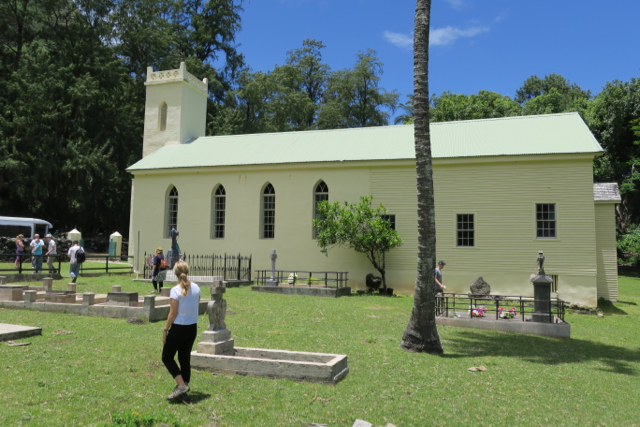
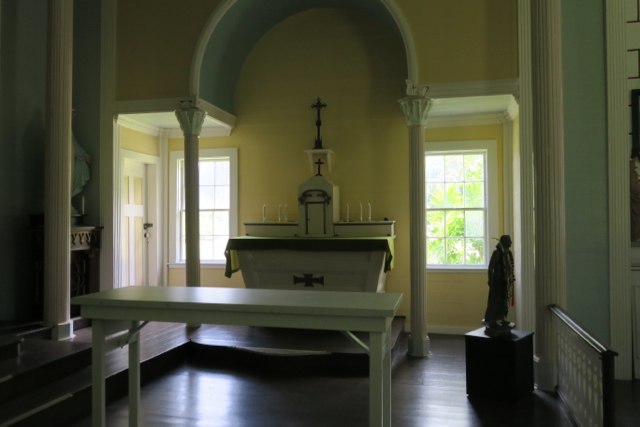
Fr. Damien enlarged St. Philomena several times, as can be seen from this side view. His final project was the stone front section and belfry. He embellished the interior as well. Below is the original altar. He later reoriented the church, creating a larger apse and nave, leaving the original altar as a side altar on the right. Notice in the foreground a “folding table” Vatican II altar, a make-shift addition that surely would have never suited Fr. Damien.
On the other side of the peninsula, Fr. Damien built a second church, which he called Our Lady Help of the Sick. The current church, St. Francis (below), was built next to it after his death and is the current parish church for the patients who remain on the peninsula.
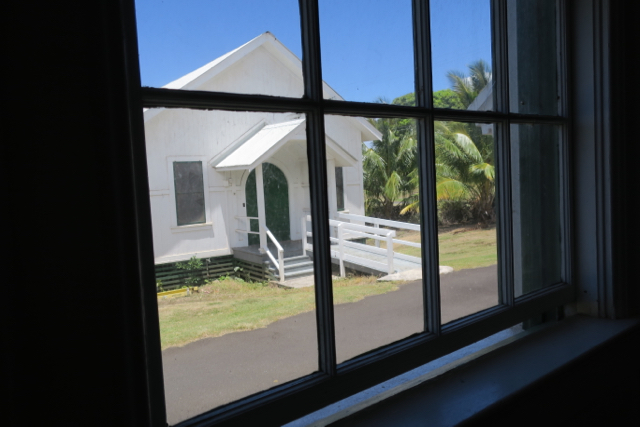
The church that St. Damien built can be seen through the window of St. Francis (below)
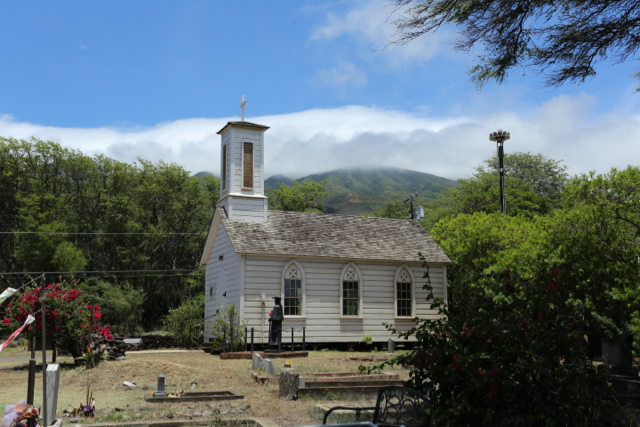
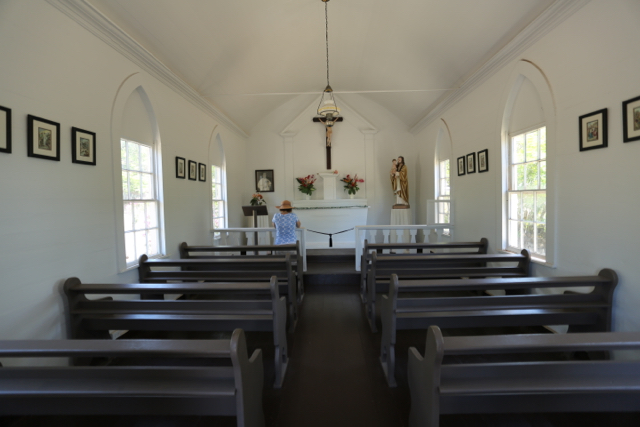
Two churches remain that St. Damien built on the “topside” of Molokai. St. Joseph Church (below), built in 1876, is said to be in its original condition. A wooden steeple, removed when the tower was repaired, has not yet been replaced.
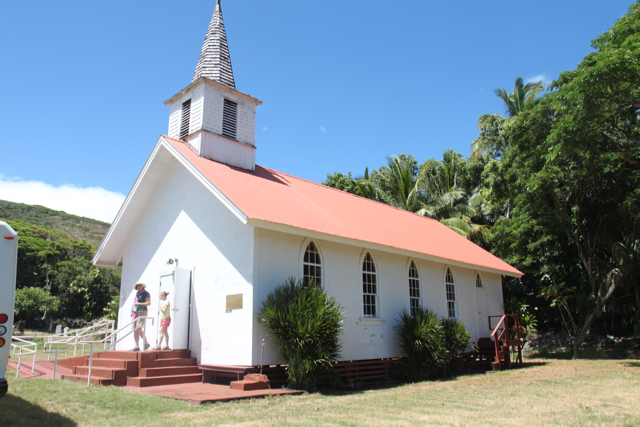
Our Lady of the Seven Sorrows Church (below) was built in 1874 and rebuilt in 1966 using original components and furnishings. Sunday Mass is still celebrated there.
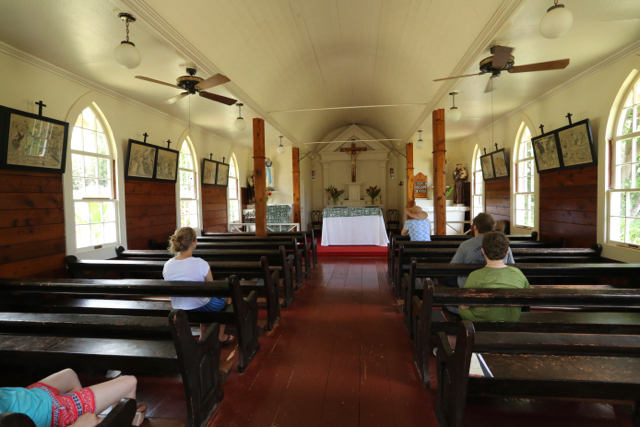
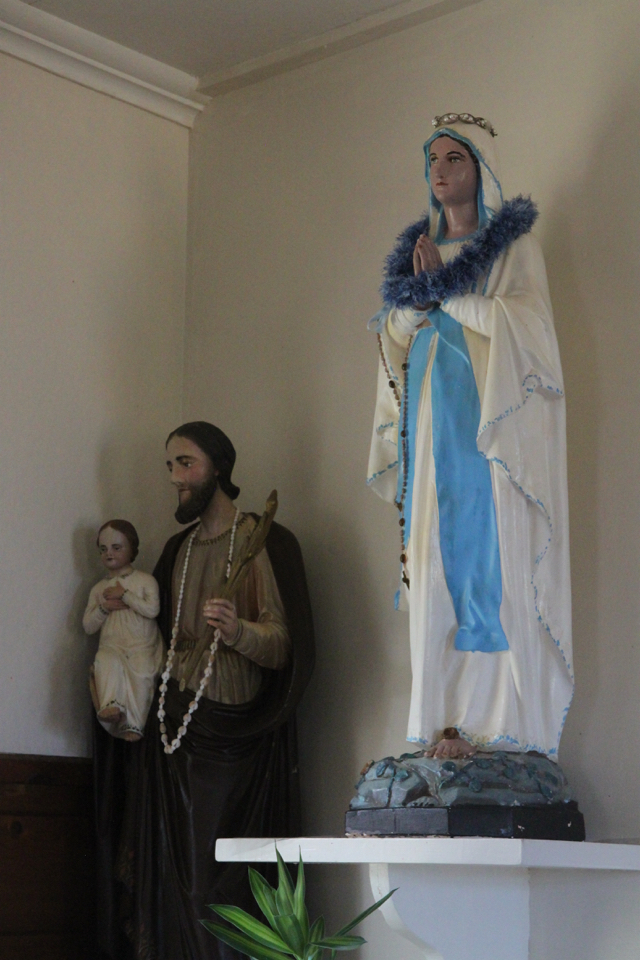
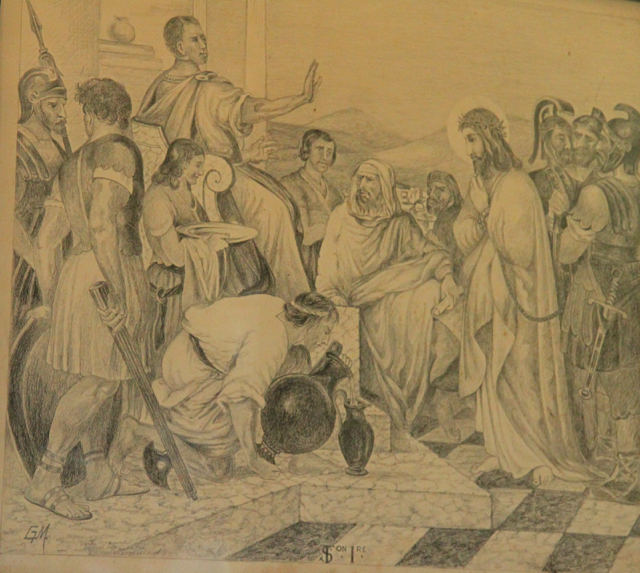
(Above) Our Lady of Lourdes with a lei.(Below) The Stations of the Cross – a series of prints which was donated to this church around Fr. Damien’s time by admirers of his work.
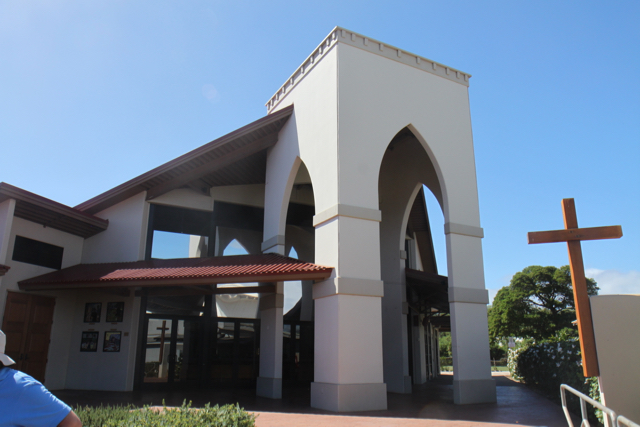
(Above and below). In 2010, St. Sophia, the Catholic church in Kaunakakai, the main town of Molokai, burned down. Its modernistic replacement, dedicated to St Damien, hardly reflects the simple yet beautiful traditions of the old Catholic churches of Molokai and Hawaii – and has left the parish saddled with a debt to the diocese of over a million dollars as well.
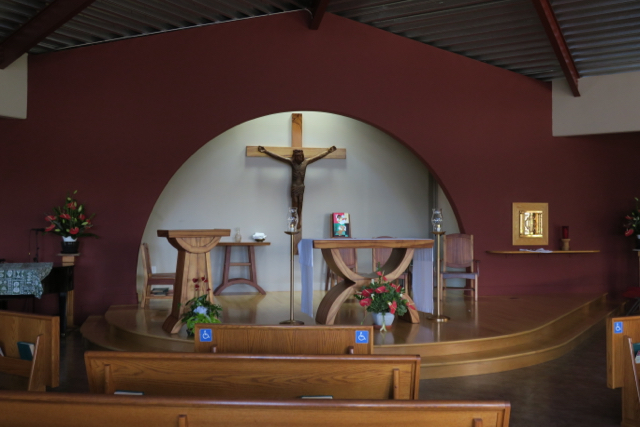
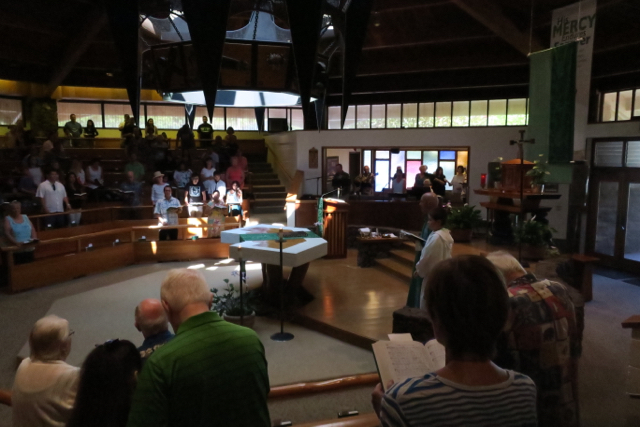
(Above and below) Before coming to Molokai, Fr. Damien was active on the island of Hawaii (the “Big Island”). We doubt he would recognize certain modern Catholic churches there. This chapel in Puaku resembles more a lecture hall than a church – if you look carefully you will notice behind the tabernacle, instead of a reredos, a banner with an image of Pope Francis….
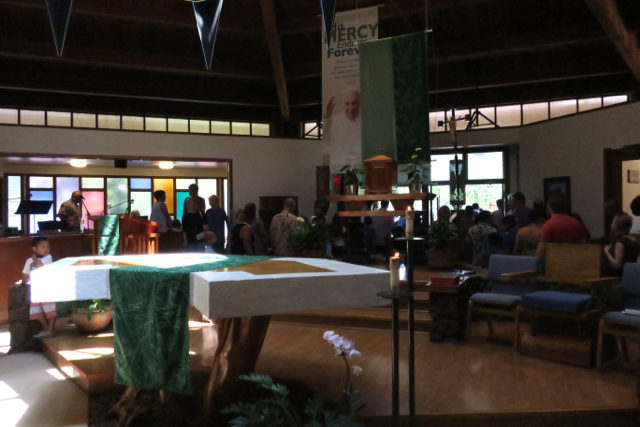
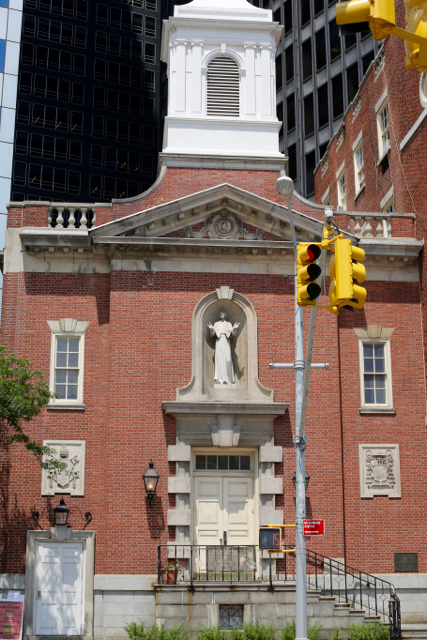
Our Lady of the Rosary (Shrine of St. Elizabeth Ann Seton)
7 State Street
In recent decades Catholics have shown little interest for their “shrines”: a church or chapel having a devotion of more than parochial interest – a pilgrimage destination. In Washington Heights, the shrine of St. Frances Cabrini (with her mortal remains) remains largely unvisited; the high school where it stands recently closed. How many know nowadays that the church of the Most Holy Redeemer is the shrine of Our Lady of Perpetual Help – a devotion of the Redemptorists – or that it houses the relics of a genuine Roman martyr, St. Datian? This indifference extends to the hierarchy. The status of the church of St. Ann as “National Shrine of St. Ann” didn’t prevent Cardinal Egan from having it razed and sold. Of the crop of more recent shrines, I don’t recall that the “Shrine of Padre Pio” at St. John’s church; the “Shrine to the Victims of Abortion” at Holy Innocents or the “Shrine to the Victims of Aids” at St Veronica’s being mentioned as influencing whether to consolidate or keep open any of these churches. Traveling further afield, just in the last year the “Shrine of the North American Martyrs ” in Auriesville, west of Albany, nearly closed after having been abandoned by the Jesuits. Only a concerted effort by the Diocese of Albany and local Catholics have kept it open – at least so it seems. 1)
On the other hand, the Shrine of Our Lady of Mount Carmel on East 114th Street has seen much more vigorous efforts lately “to make her known.” And more recently, Most Precious Blood Church in Little Italy has been transformed into a shrine. Of course, the devotions to Our Lady of Mount Carmel and to San Gennaro were not “home-grown” (or “home-created”) but brought over from the “old country.”
The shrine of St. Elizabeth Ann Seton, of course, has a very direct connection with Mother Seton. It is the site of the house in which she lived. That building has not survived. But the next door neighbor, 7 State St., most definitely has. It is an amazing example of the good taste and creativity of American architecture in the 1790s. The curved façade of the building derives from the curve of State Street. It was built by James Watson, an important merchant, in 1793-94. In its day it was one of a series of splendid mansions overlooking the waterfront. In 1805 Watson sold the building to Moses Rogers of an even more prominent and well connected family. Legend has it that number seven was the site of brilliant social functions. ElizabethAnn Seton and her family would have known it well. As the 19th century progressed, however, this neighborhood became commercial; most of the magnificent residences of that era fell into disrepair or disappeared entirely. 2)
We owe the origin of the parish of Our Lady of the Rosary, however – and the preservation of 7 State St. – to an entirely different development, unrelated ( except perhaps spiritually) to Mother Seton. By 1880 the tide of immigration from Europe was at its highest point. In particular the wave of immigrants from Ireland showed no sign of diminishing – in 1880 about 95,000 left from there for the United States. At the time, let us remember, the main place of entry into the United States was the so-called Castle Garden at the tip of Manhattan. Charlotte Grace O’Brien (1845-1909) after having personally investigated the distressing circumstances of the Irish immigrants – particularly the girls – started to organize to improve their condition. Thanks to the initiative of Charlotte Grace O’Brien, who actually only became a Catholic later, and Father John J. Riordan, the Catholic-sponsored “Mission for the Protection of Irish Immigrant Girls” was founded in 1883. 7 State St. was acquired for its use in 1885. In 1886 or 1887 the parish of Our Lady of the Rosary was founded there. There were only some 1500 resident parishioners – but the main purpose of the parish was to support the mission to the Irish immigrants. Up to 1924 over 120,000 Irish girls, both Protestant and Catholic, received assistance from this mission. Some were given shelter at 7 State Street; others were provided lodging elsewhere or money for further travel. Jobs and positions were located for the girls. And, of course and most importantly, the parish provided spiritual support. 3)
It seems that, in this era, even the smallest New York parishes undertook the most amazing evangelical activity – including both the corporal and spiritual works of mercy.
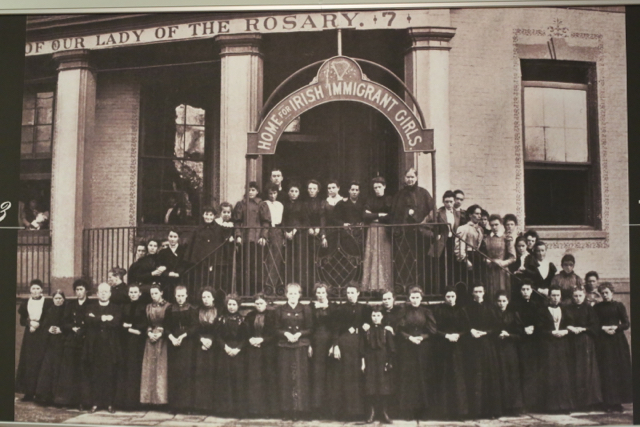
(Above) Image on display at the Seton Shrine Museum.
Later, in the 1920s, as the wave of immigration diminished, Our Lady of the Rosary seem to evolve more and more into a kind of commuter parish for an exclusively commercial neighborhood. The level of activity, however, was still extremely high. In the 1940’s two or more priests were usually needed at Our Lady of the Rosary; on holy days 22 masses would be celebrated, requiring seven extra priests. The number communicants at the mission was as high as or higher than the peak years of the Irish immigration. 4)
And then came the beatification of Mother Elizabeth Ann Seton in 1963 by Pope John XXIII. America now had its first native born beata. Cardinal Spellman seized the occasion to build a chapel on the site of the building where Mother Seton lived. 7 State St. was also entirely restored and reconditioned as a part of the new complex.
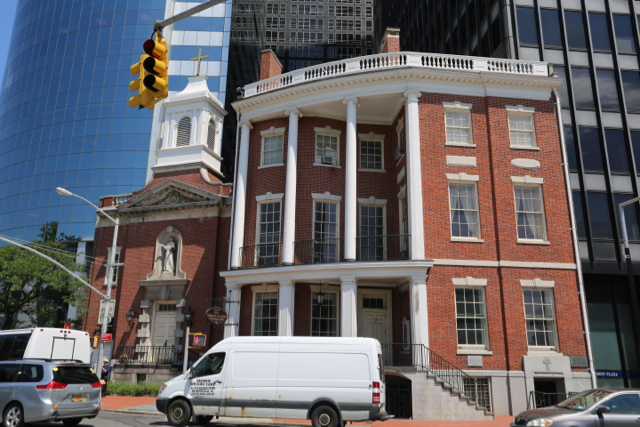
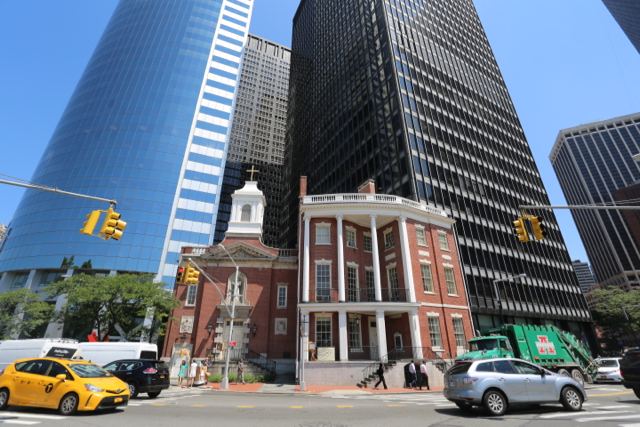
(Above) One of the most recently constructed Catholic churches on Manhattan Island is joined to one of the oldest and most interesting buildings in New York City. (Below) A glance upwards reveals the scale of the neighboring towers that overwhelm Our Lady of the Rosary.
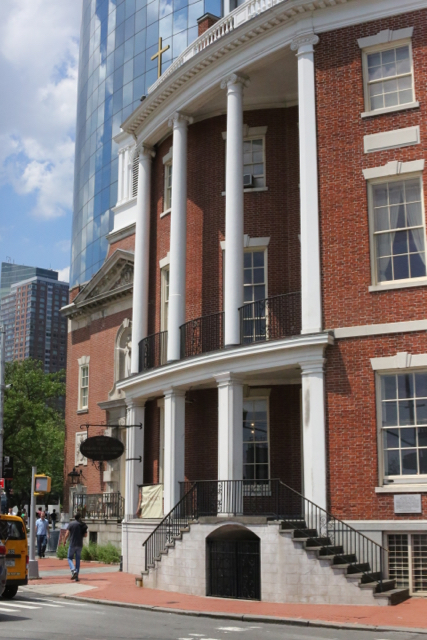
(Above) The columns of the facade of 7 Street Street are supposed to be made from the masts of ships. “There are, however, a few structures downtown – and only a few – about which the glamour of the past still lingers. One of these is No 7 State Street, equally well known as the Mission of Our Lady of the Rosary for the Protection of Irish Immigrant Girls…. Favorably situated, irregular in outline, quaintly designed and fashioned it seldom fails to draw the attention of the stranger passing by.” 5)
Regarding the 1965 chapel – what might appear to be a monument of the federal era is in fact one of the last parish churches to be built in New York City. Its architecture strikes me as a direct descendant of Corpus Christi parish built some 30 years earlier. As with that church, the adoption of a style associated with 18th century Protestantism does raise questions about the self-understanding of the Church. The interior, at least in its present appearance, is more relentlessly Protestant than its ancestor near Columbia University: no paintings in the style of the Early Italian Renaissance here! Despite the reliance on artificial light, we cannot deny a certain pleasing elegance. Most distinctive is the oval floor plan. It is stated that this was meant to evoke not just a meeting house, but a ball room of the 18th century – reflecting Mother Seton’s love of dancing. That seems improbable; however, doesn’t the fact that it is repeated show an emerging lack of seriousness about spiritual matters in the “American Catholic Church?” For a shrine, there are just a handful of images to recall to us Mother Seton or Our Lady of the Rosary. A statue of Mother Seton stands in the rear of the chapel ( in what once was a baptistery?); a picture of Our Lady of the Rosary is also somewhere back there on a wall. All in all, do we not see here, in Cardinal Spellman’s last Manhattan church, not just a copy of a historical style but a transitional form leading to the style of the Vatican II?
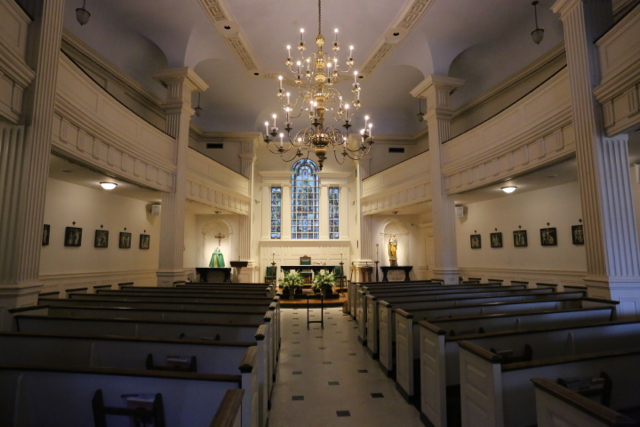
(Above) The shrine of Elizabeth Seton attempts to replicate the style of an 18th century American meeting house – without the clear light provided to such structures by numerous windows. (Below) The oval layout, however, is distinctive and unusual; it seems to respond to the curved facade of 7 State Street.
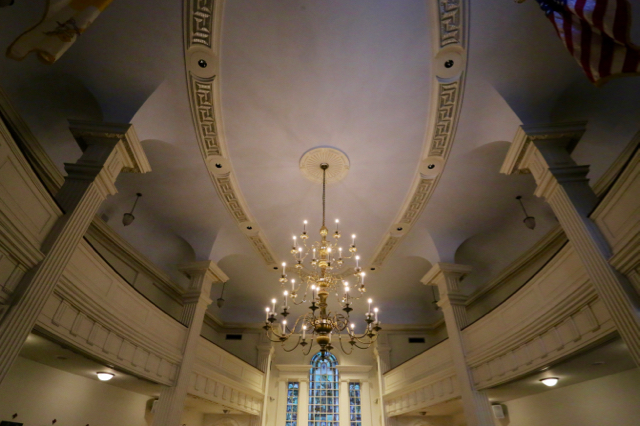
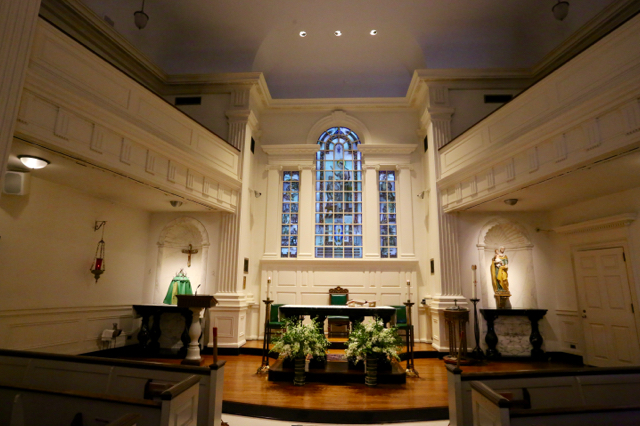
(Above and below) The central portion of the sanctuary – at least in its present form – would have undoubtedly pleased the Calvinist forbears of Elizabeth Seton.
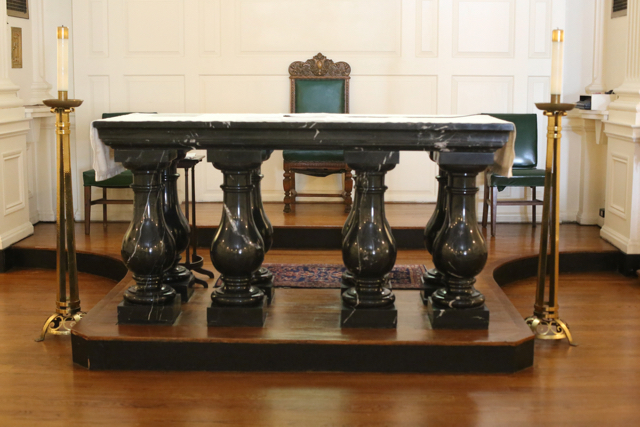
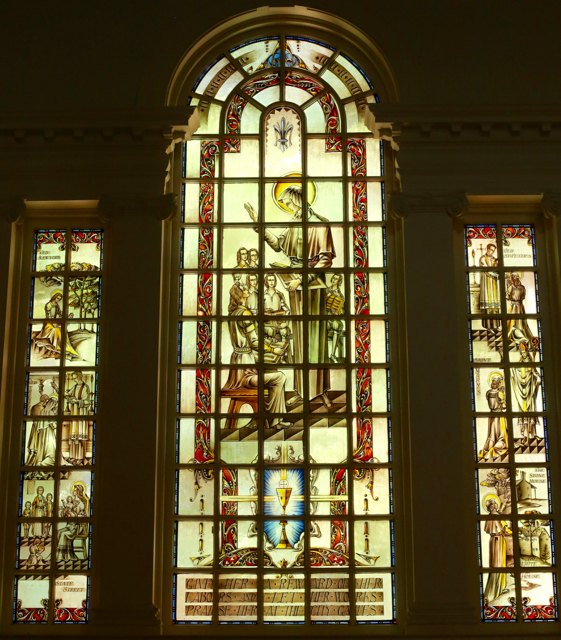
(Above) The middle panel on the left contains perhaps the only depiction of a Protestant religious service in a New York Catholic church (the marriage of Elizabeth Bayley in “Old New York.”)
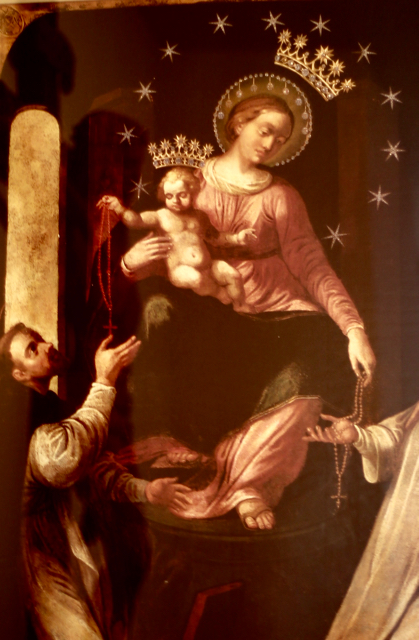
(Above) An old picture of Our Lady of the Rosary in the back of the church.
Of course, Elizabeth Ann Seton was later canonized in 1975. But by then, interest in such things was flagging. Then, in the last few decades, downtown New York reemerged a a residential area – an extraordinary turn of fortune for Our Lady of the Rosary. It looked like this parish finally might be on the road to a “normal” parish life. But, in 2015, the parish was nevertheless taken by surprise and merged into St. Peter’s (out of which it had been originally carved)in “Making all Things New.” We shall see how the shrine to New York’s first native born saint fares….
.
- http://www.ncregister.com/daily-news/saving-the-shrine-of-the-north-american-martyrs/
- McDonough, Patrick, Seven State Street, New York: A House with a History at 4-5.(1947; reprinted 2005)
- See generally: McDonough. Op. cit.; McDermott, Peter, “Living Landmark: Parish Preserves 7 State Street which served 120,000,” Irish Echo 2009; Our Lady of the Rosary Parish: Shrine of St. Elizabeth Ann Seton (parish guide). See also the website of the combined parish of St. Peter and Our Lady of the Rosary; Exhibit in the museum of the Shrine.
- McDonough, Op Cit. at 28.
- McDonough, Op Cit. at 1-2.
Published in The Churches of New York | 3 comments
Churches of New York
Holy Roman Empire
Website Highlights
Archives
[powr-hit-counter label="2775648"]