28
Dec
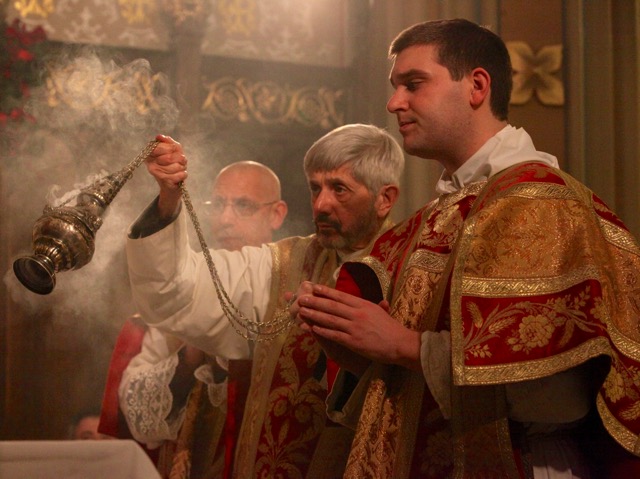
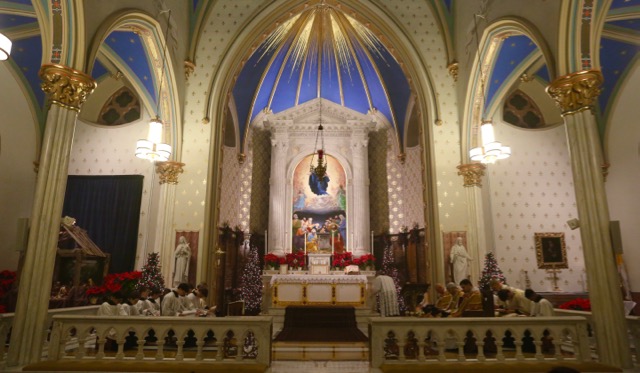
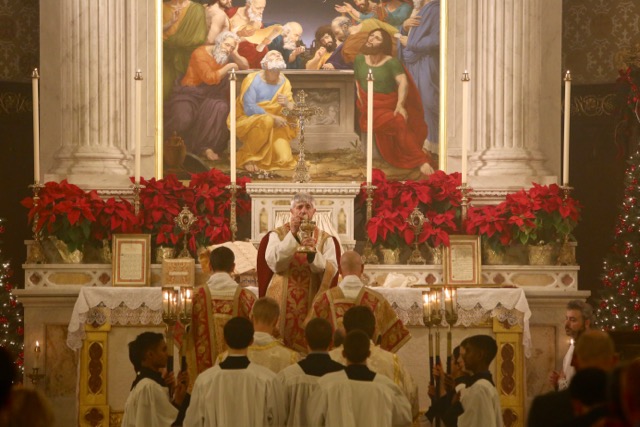
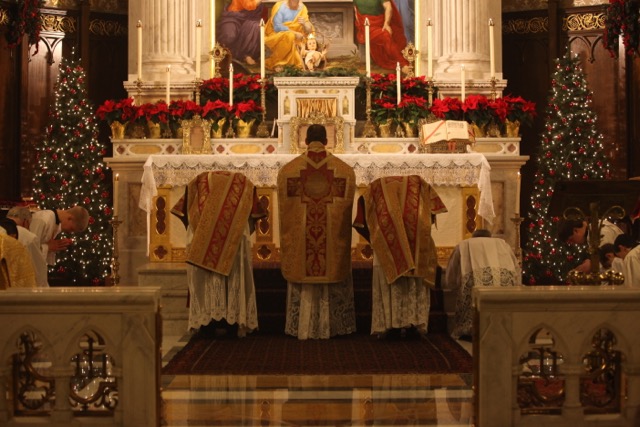
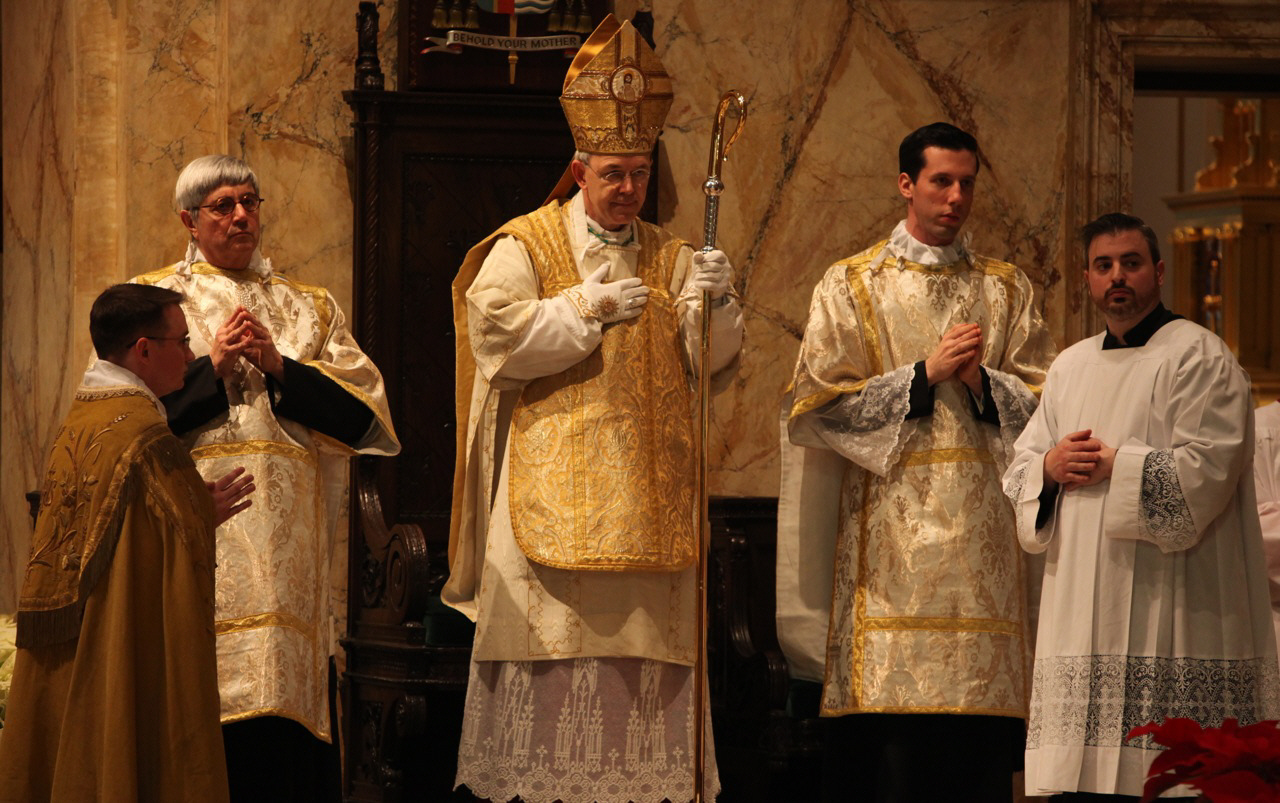
Bishop Caggiano will preach at Mass in the Extraordinary Form at St Mary Church in Greenwich on Sunday, January 10th at 2 in the afternoon.
28
Dec
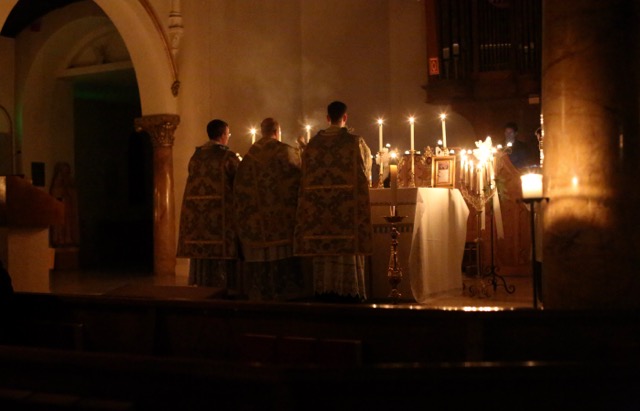
January 1 is a holy day of obligation. The following churches will be offering the traditional Mass.
St. Mary Church, Norwalk, CT
Jan. 1, Solemn Mass, 5:30 pm.
St. Stanislaus, New Haven, CT
Jan. 1, 2 pm, low Mass
St. Matthew’s, Dix Hills, NY
Jan. 1, 10:30 am (in the chapel)
Church of the Holy Innocents, New York, NY
Jan. 1, 1 pm
St. Agnes, New York, NY
Jan. 1, 11 am, high Mass
St. Anthony’s Church, Bronx, NY
Jan. 1, 8:30 am Low Mass
St. Patrick’s, Newburgh, NY
January 1, 3:00 pm.
Immaculate Conception Church, Sleepy Hollow, NY
Jan. 1, 3 pm, low Mass
St. Anthony of Padua, Jersey City, NJ
Jan. 1, 9am
Our Lady of Fatima Chapel, Pequannock, NJ
7:00 am, 9:00 am, 11:00 am, 5:00 pm
Oratory of St Anthony of Padua, West Orange, NJ
9:00 am, 11:00 am, 3:00 pm
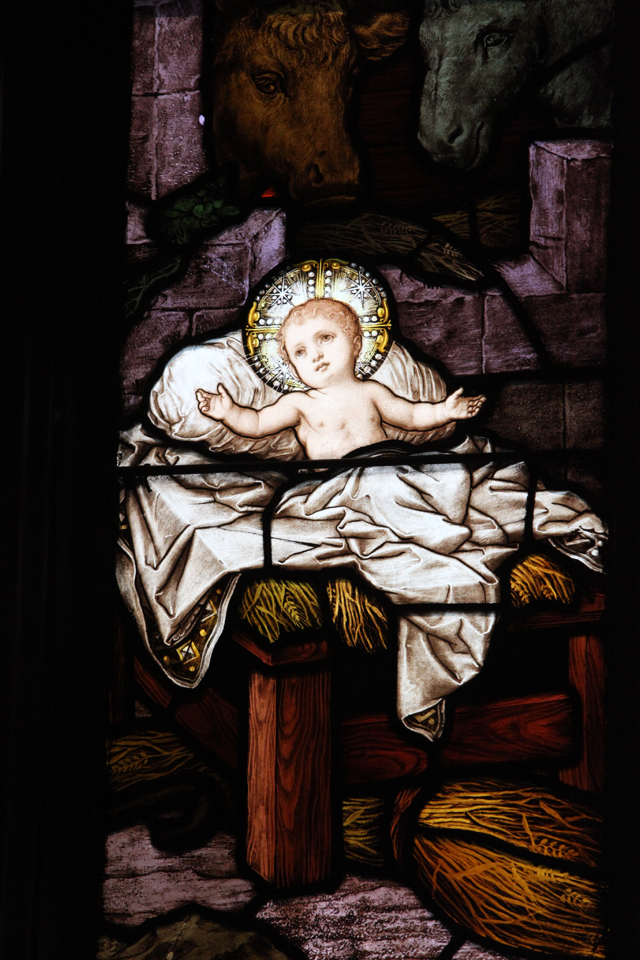
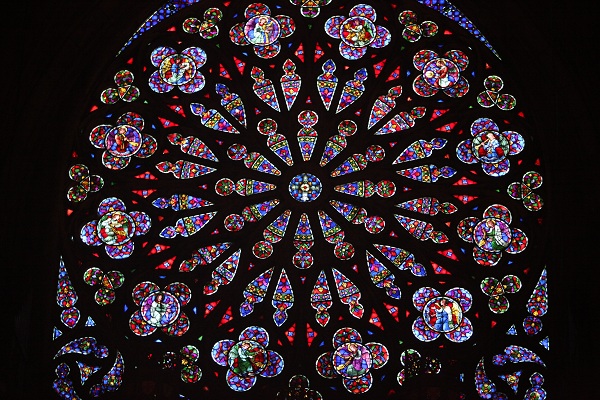
The stained glass window is in Holy Name of Jesus Church, New York, NY
28
Dec
28
Dec
( A video courtesy of Joe Giardina and Una Voce Westchester)
28
Dec
Some impressive photographs of New York churches from a somewhat unusual perspective. Including two Catholic Churches now closed: St. Stephen and St. Vincent de Paul.
(thanks to Save Saint Thomas More Church)
27
Dec
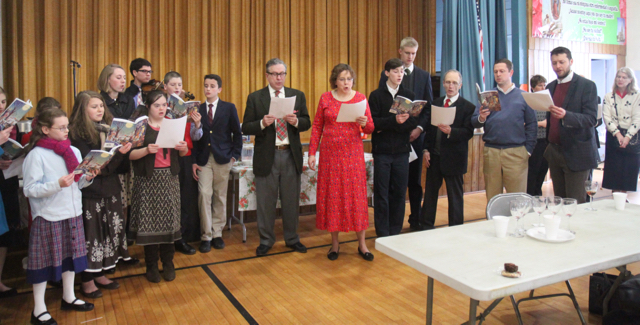
Today at St. Mary’s Church, Norwalk, after the 9:30 Solemn Mass, Fr. Cipolla blesses the Christmas coffee hour
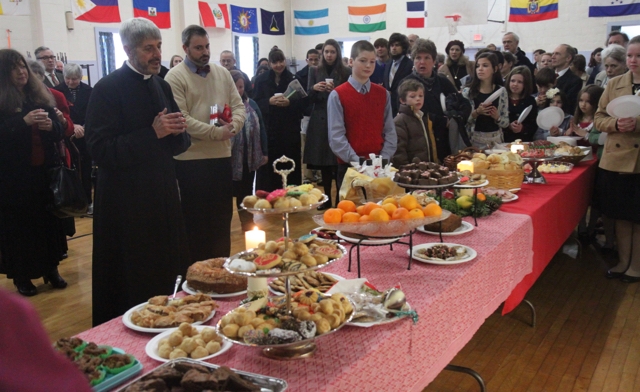
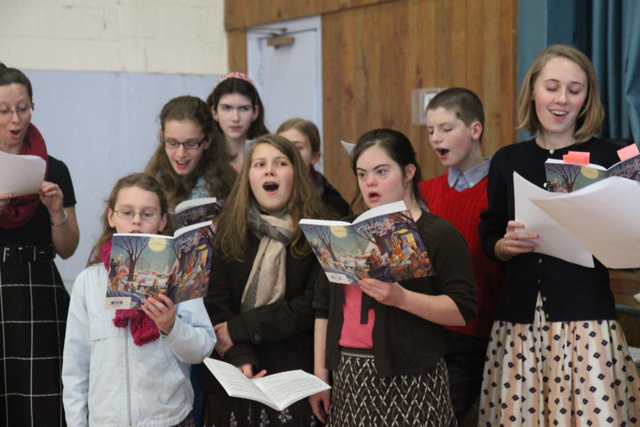
carolling
25
Dec
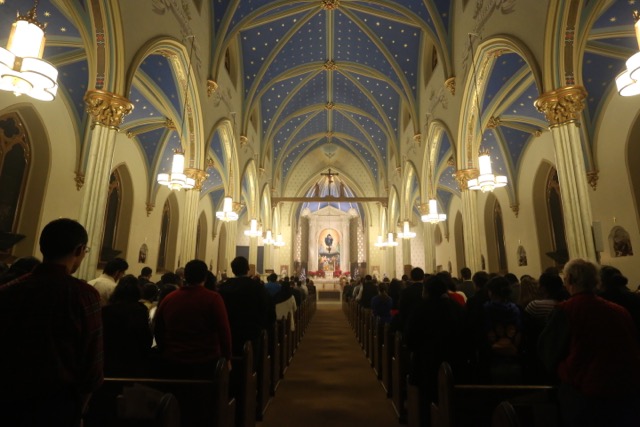
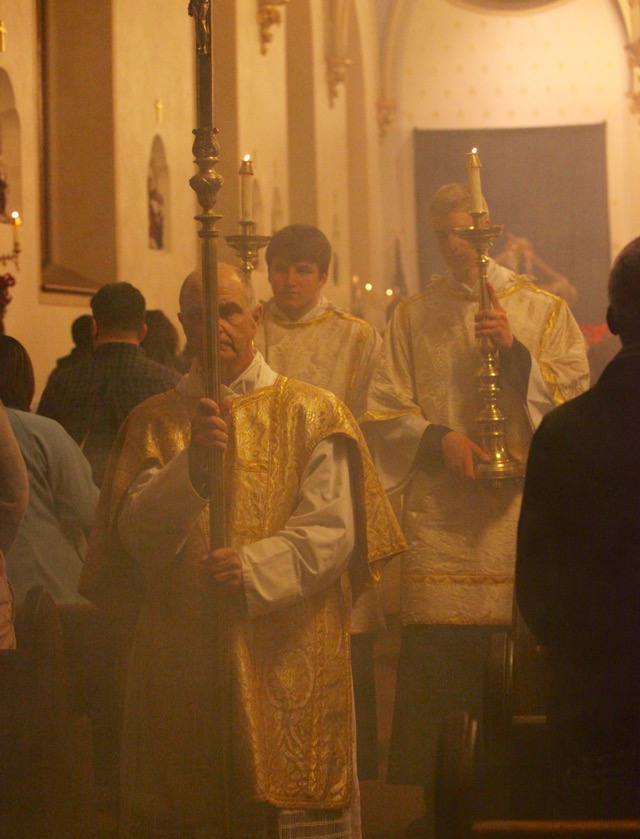
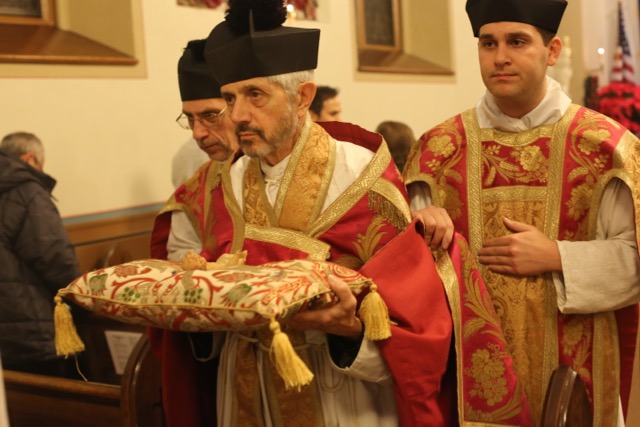
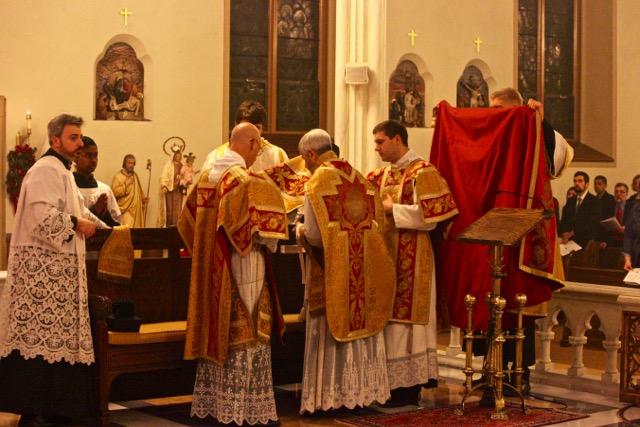
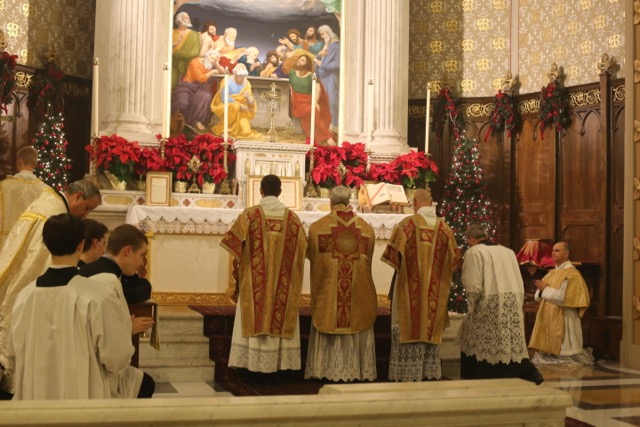
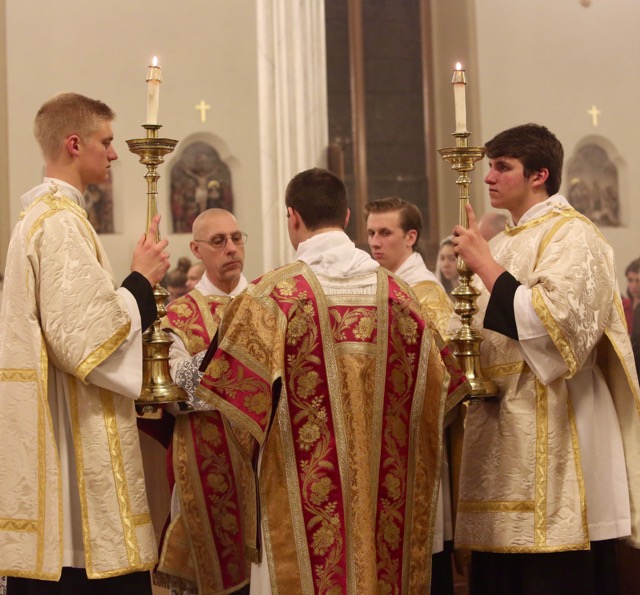
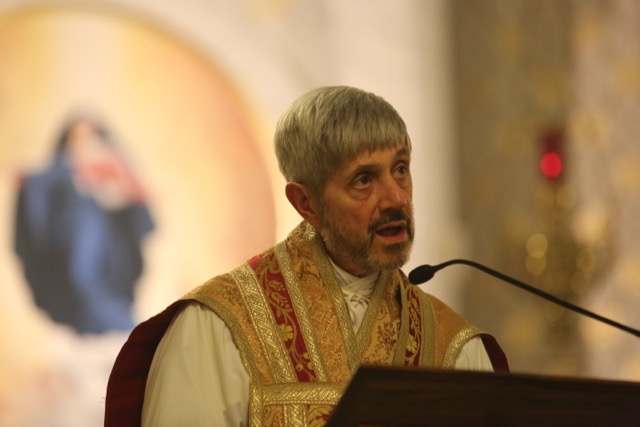
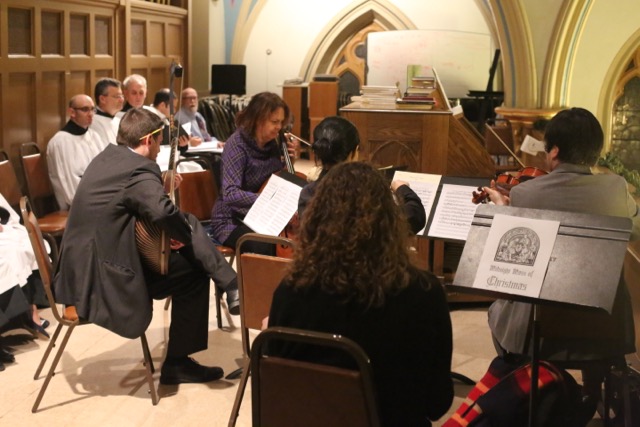
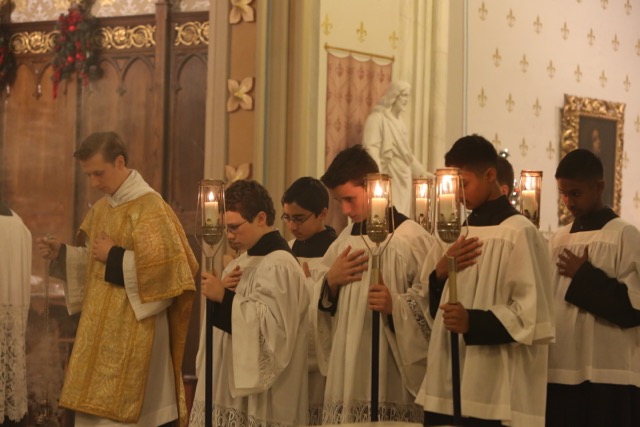
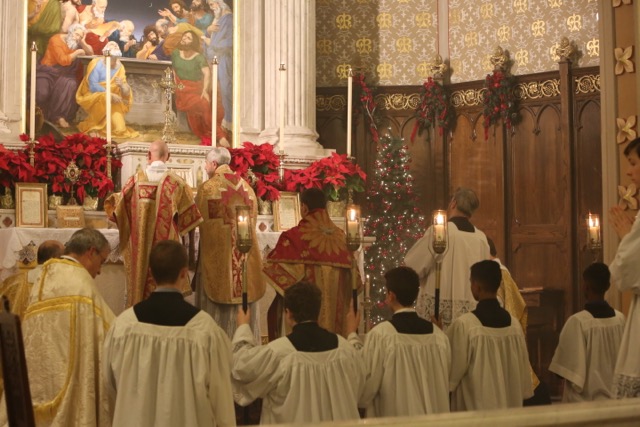
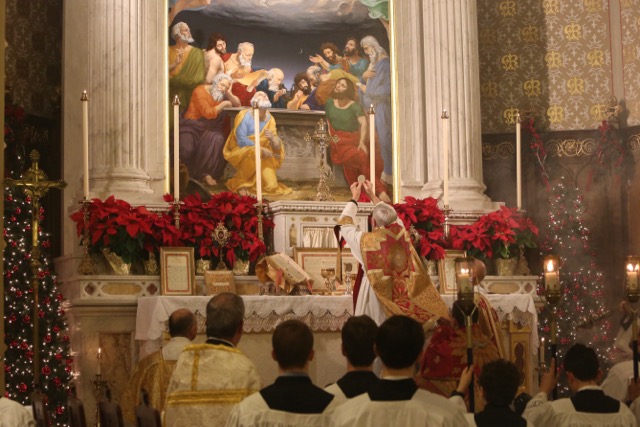
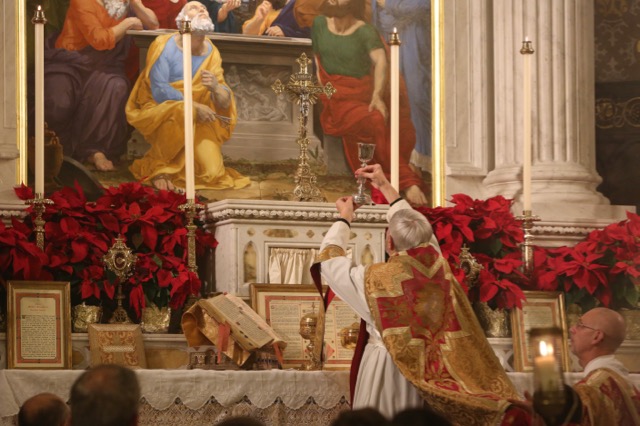
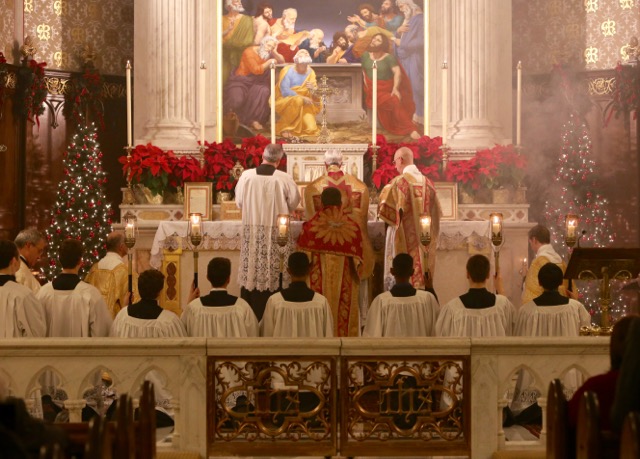
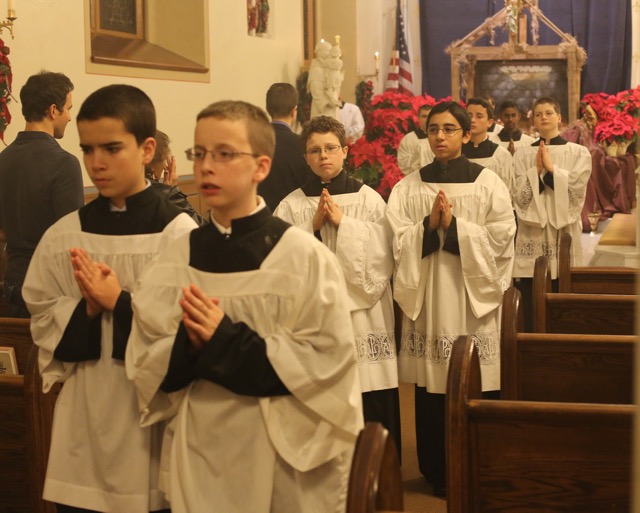
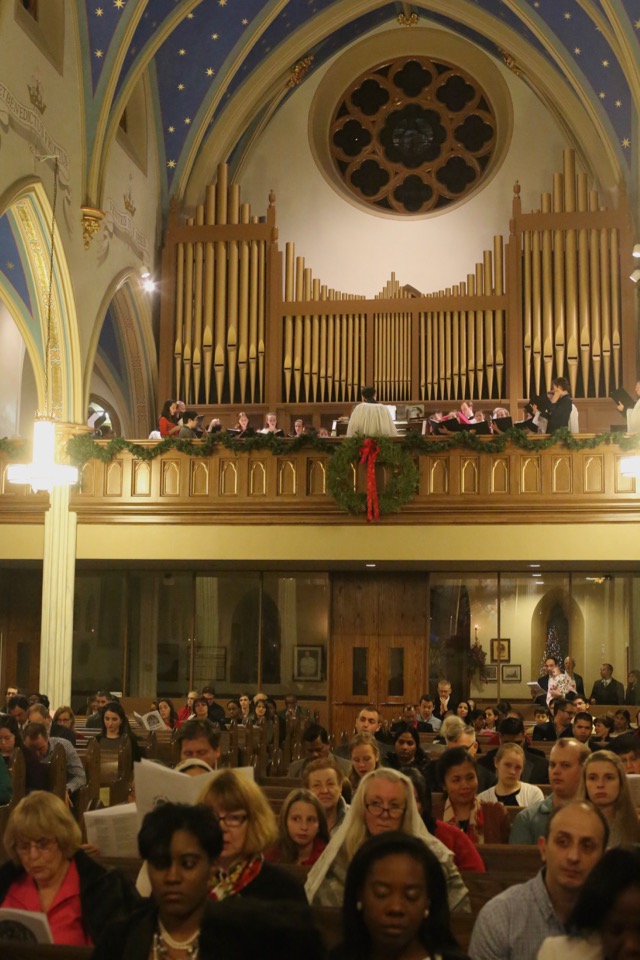
Some photographs of the Christmas Midnight mass of St. Mary’s Church, Norwalk, CT. Fr. Richard Cipolla was the celebrant. (Above) The church was filled near to capacity for the occasion.
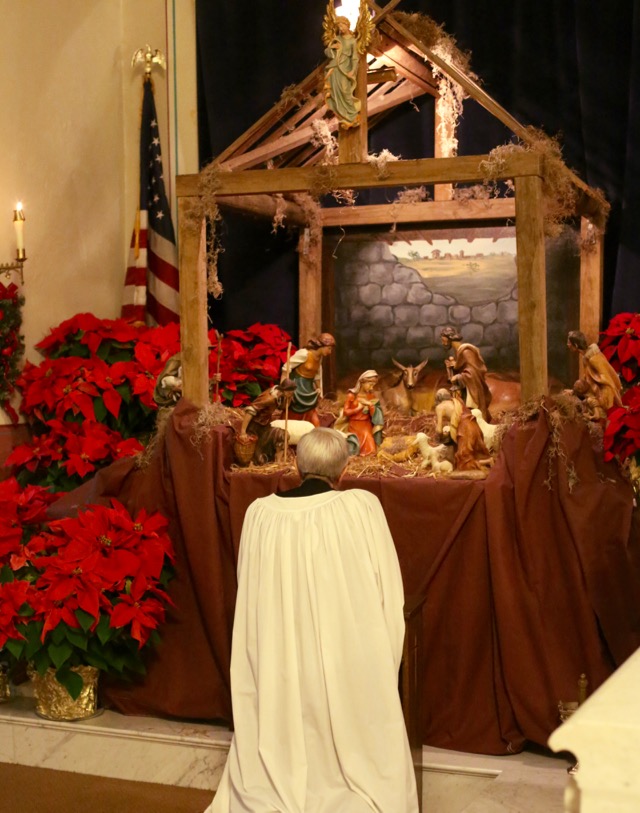
Praying the rosary before the creche led by Fr. Cipolla.
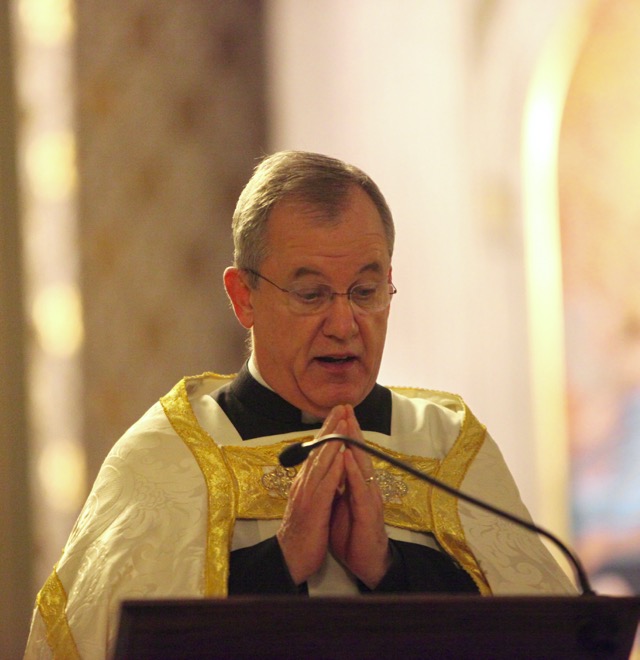
Fr. Jeffrey Keyes chanted the proclamation of the birth of Christ.
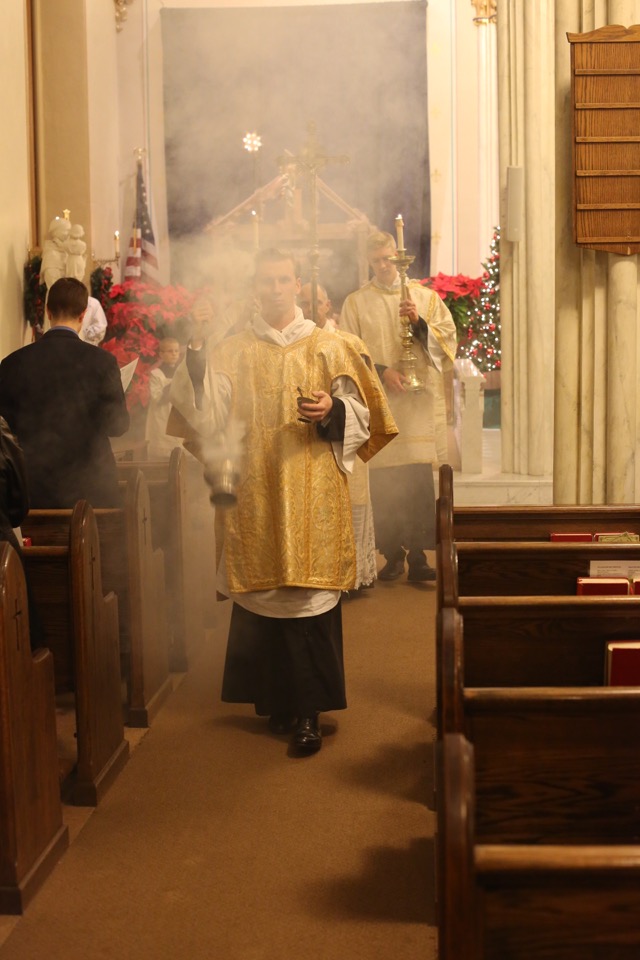
(Above and Below) The procession with the image of the Christ Child.
(Above and below) Mr. David Hughes led the assembled musical forces. For a description of the music performed on this night see our post HERE.
21
Dec
From last year’s midnight Mass
If you haven’t been to Christmas Solemn Midnight Mass at St. Mary’s Church, Norwalk, this might be the time to start going. Plans are in the works for the St. Mary Schola Cantorum to sing Mozart’s Mass in C Major (K. 258, “Piccolomini”). The choir, under the direction of David Hughes will be joined by a string orchestra. Elizabeth Weaver will sing the Laudate Dominum from Mozart’s Vesperae solennes de confessore, K. 339.
There will also be a Solemn Mass for Christmas Day at 9:30 am featuring Victoria’s Missa O Magnum Mysterium.
There is plenty of parking in the church lot behind the church and in a large bank lot across the street.
Here is a full schedule:
Christmas Eve:
11 pm Rosary by the creche
11:20 pm Orchestral Prelude: Christmas Concerto (Concerto grosso in G minor, Op. 6, No. 8) (Arcangelo Corelli, 1683-1713)
11:30 pm Christmas Carols
Carol: What Child Is This (Greensleves)
Carol: O Holy Night (Cantique de Noël)
Carol: O Little Town of Bethlehem (St. Louis)
Carol: God Rest Ye Merry, Gentlemen
Carol: Tu scendi dalle stelle (St. Alfonso Maria de’ Liguori, 1696-1787)
Carol: Lo, How a Rose E’er Blooming (Es is ein’ Ros’ entsprungen)
Carol: De Virgine Maria (Carl Rütti, b.1949)
Carol: Silent Night (Stille Nacht)
Prelude: Desseins éternels (from La Nativité du Seigneur) (Olivier Messiaen, 1908-1992)
The Solemn Proclamation of Christmas
Hymn at the Procession: Adeste Fideles (John Francis Wade, arr. David Willcocks, 1919-2015)
Hymn at the Procession: Hark! The Herald Angels Sing (Mendelssohn, arr. Willcocks)
12:00 Solemn Midnight Mass
Mass in C Major (K. 258, “Piccolomini”) (Wolfgang Amadeus Mozart, 1756-1791)
Gregorian Mass of Christmas Midnight: Dominus dixit
Motet at the Offertory: Laudate Dominum (from Vesperae solennes de confessore, K. 339) (Mozart)
Motet at the Communion: Verbum caro factum est (John Sheppard, c.1515-1558)
Postlude: In dulci jubilo (BWV 729) Johann Sebastian Bach, 1685-1750)
Postlude: Fugue in A Major (BWV 536/2) (Bach)
Christmas Day, 9:30 am, Solemn Mass
Prelude: Puer natus in Bethlehem (BWV 603) (Johann Sebastian Bach, 1685-1750)
Hymn at the Procession: O Come, All Ye Faithful (Adeste Fideles, arr. David Willcocks, 1919-2015)
Missa O magnum mysterium (Tomás Luis de Victoria, 1548-1611)
Gregorian Mass of Christmas Day: Puer natus est
Gradual: Viderunt omnes (Pérotin, fl. c. 1200)
Motet at the Offertory: Verbum caro factum est (John Sheppard, c.1515-1558)
Motet at the Communion: O magnum mysterium (Victoria)
Postlude: In dulci jubilo (BWV 729) Johann Sebastian Bach, 1685-1750)
Postlude: Fugue in A Major (BWV 536/2) (Bach)
20
Dec
The Coup at Catholic University
(Ignatius Press, 2015)
By Peter M. Mitchell
Catholic University of America (“CUA”) is probably known to most of us as a certain educational institution in Washington for which the American Church still dares to take a scandalous annual collection nationwide each year. A kind critic might describe CUA as “wildly inconsistent;” a crueler one as “third-rate.” Like the nearby Basilica of the Immaculate Conception, it is a monument to American Catholic failure: an inspired initiative that fell woefully short in the execution. Yet, at one period in the late 1960’s, Catholic University became the focal point of conflict and change in the Church in America: a key stage of the transition from the Church of Spellman to that of the 1976 Call to Action conference. Fr. Peter Mitchell tells the story of these events from the initial “dissent” of Charles Curran to the complete capitulation of the board of the University and the seizure of effective control of the University by the progressive “dissenters”. All in the space of less than three years!
Fr. Mitchell takes us inside the action. We become privy to the consultations, discussions and private communications of the bishops and of the other main actors. A story that had been known to some of us “from the outside” – from such works as Msgr. George Kelly’s The Battle for the American Church – is now set forth in full detail. And strangely enough, it’s an interesting even gripping read. For the conflicts of the Conciliar Church that became manifest then have not been resolved at all – indeed they are more pressing than ever.
The blurb on the back of the book claims that it “suggests” the crisis of the 1960’s stems from the legalism and authoritarianism of the 1950’s. Now in fact The Coup at Catholic University does not spell out “root causes” that openly, preferring to let any such conclusions emerge from the narrative of the facts. But what it does reveal about the hierarchy of the Roman Catholic Church is devastating. For the administrators and bureaucrats who the Vatican had selected to be the “Fathers of the Faith” were hopelessly out of their depth when called to teach, make hard decisions and take stands unpopular with secular society.
This book tells an incredible story of epic episcopal failings. It starts with the initial confrontation of the board of directors of CUA (made up of bishops) with Fr. Charles Curran over his support of contraception – among his other disagreements with Catholic moral teaching. Yet Cardinal Krol – the leader of the Catholic University board – came up with the devious solution of simply not renewing Curran’s teaching contract without giving publicly any reasons. It was a scenario subsequently played out endlessly in the Church’s handling of clerical child abuse: problems would be swept under the rug in the hopes of avoiding “scandal.”
Of course in the Curran case this approach backfired, allowing Fr. Curran to pose as a martyr of academic freedom, rallying the media and the University to his side. The result was complete victory for Curran: the board abjectly reversed its decision. Subsequently, when members of the faculty dissented from Humanae Vitae, the board ended up by delegating its authority to a faculty committee – which naturally upheld the position of the dissenters in all respects. The board then accepted this conclusion – in effect, surrendering total control of the University to the dissenters.
This saga, however, is not just of historical interest. The recent experiences at the Vatican Synod on the family have given these events a whole new relevance. Of course the protagonist of recent events is not a young theology professor but an old Bishop of Rome – but the resemblances, as depicted in the media, are remarkable. For Curran was described as “humble … who drove an old car without a muffler.” (p. 64) He was supposed to be “easygoing, approachable, “ “concerned with the living God rather than stereotypes.”(p. 60) And there are more substantive parallels. According to Cardinal Krol:
He (Charles Curran) says he is not advocating in practice a norm “different from the prevailing norm.” He says as a confessor and guide he must uphold the present teaching of the Church. But before he completes this section, he states: “There are times when contraception might be necessary for an individual couple. I have counseled couples along these lines.”… Throughout the book Father Curran artfully jumps from one to a[nother]contrary position. (p. 35)
Caardinal Krol found this position to be “some form of situationism.” (p.35) But how different is it from the current statements of the German episcopate and of the recent Roman synod of bishops? And how different is the conduct of that synod of bishops from that of the CUA board in the late 1960’s?
The rebellion over Curran was initially fought under the banner of “academic freedom.” Yet the same “dissenters” – one Curran had been reinstated – moved successfully to force out of CUA those who had supported the CUA board of directors – with the concurrence of said board. We know from the student riots of that era – and the reenactment of these events in the last few months at Yale, Princeton and elsewhere by alleged “victims” of “racial insensitivity” – that “academic freedom” is the last thing these protestors want, then and now. Rather, what had happened in 1967-69 was the imposition of an outside ideology. This was indeed perceived by a minority at the time. Msgr. Eugene Kevane (a CUA dean) commented on a pro-dissenter “faculty working paper”:
This “obscure phrasing,” he said, made it possible to introduce a “secularized ideology . . . so that our Catholic University would actually lose the freedom to be itself.” . . . the American tradition of religious liberty recognized the right of a University to be committed to a particular religious identity as part of its exercise of freedom. To attempt to deny that identity in the name of an intolerant secularism was, said Kevane, inherently un-American. (p. 115)
(Msgr. Kevane was subsequently forced out.)
Finally, lurking in the background of all this was the Vatican of Pope Paul VI. Undoubtedly a factor in the reluctance of the CUA board to confront Fr. Curran squarely on the issue of contraception was the fact that Paul VI had convened a committee to study the issue – to which Fr. Curran adroitly alluded in defending of his actions. And when “dissent“ at CUA became general after Humane Vitae, Paul VI’s representative intervened with the board – in favor of the dissenters against papal authority.
Cardinal Garrone, prefect of the Sacred Congregation for Çatholic Education, wrote to Krol, urging him to prevail upon O’Boyle to avoid any further interference in the administration of CUA . . . Garrone’s letter indicated a clear desire on the part of the Holy See that the volatile situation on campus would calm down and that a certain stability and order would prevail at CUA and more generally within the Church in the entire United States. (pp. 240-41)
Thus, the cowardice of the CUA board finally received confirmation at the very highest level of authority.
The results of the battle at CUA, lost by the hierarchy almost without a fight, were catastrophic. So-called “dissent” achieved institutionalized dominance at Catholic higher education throughout the United States. Many years later, sanctions indeed were imposed upon Fr. Charles Curran – but by then it was far too little, too late. Predictably, the full adoption of American “academic freedom” by CUA and its “liberation” from the authority of its board of bishops have not at all raised the intellectual standing of this institution over the decades since 1969 – quite the contrary! Representative of many other institutes of Catholic higher eduction in the United States, CUA had abandoned its mission as a Catholic institution without attaining in return any secular distinction.
(All page references are to The Coup at Catholic University)