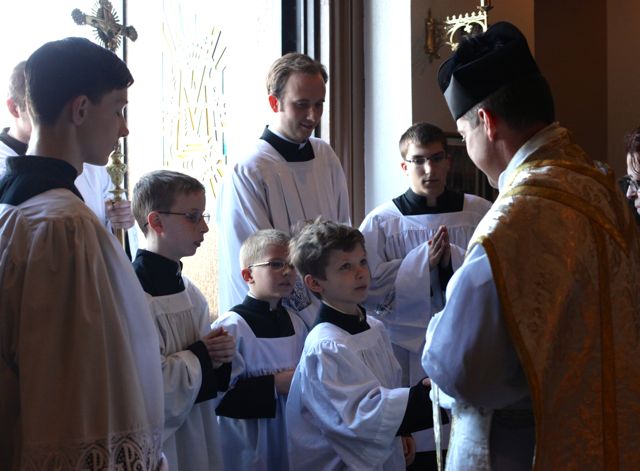
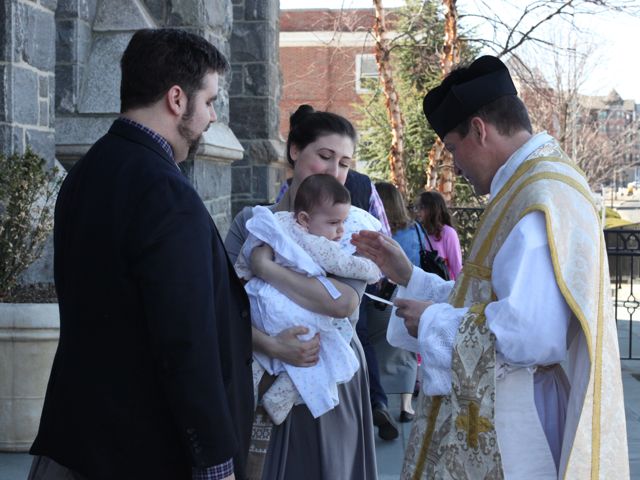
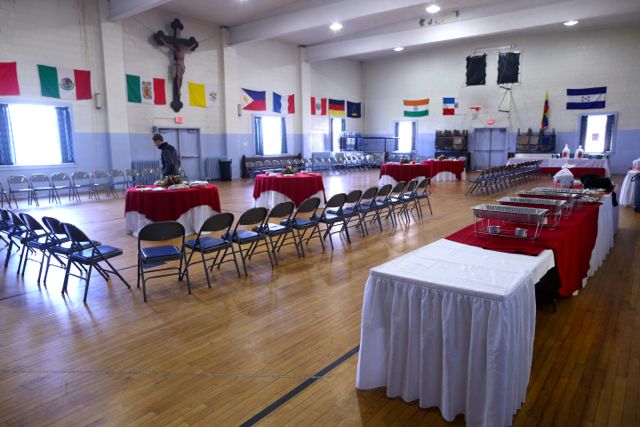
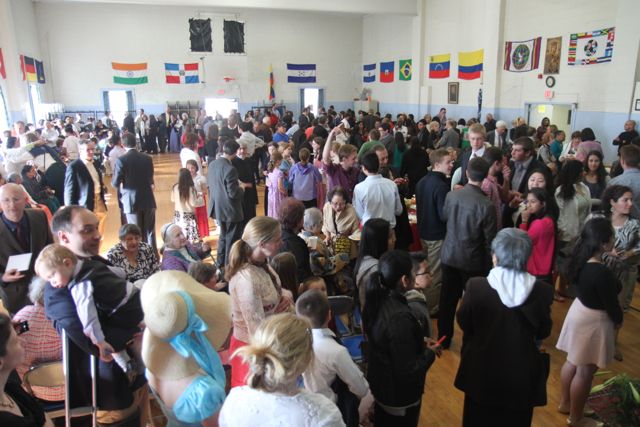
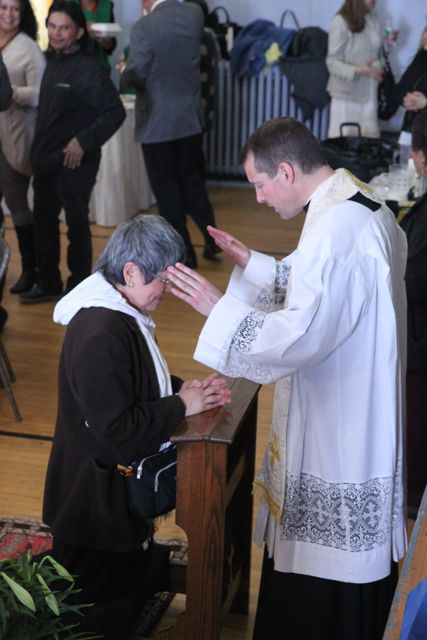
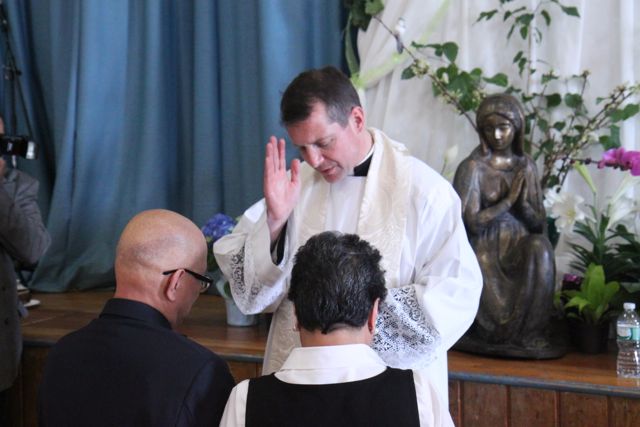
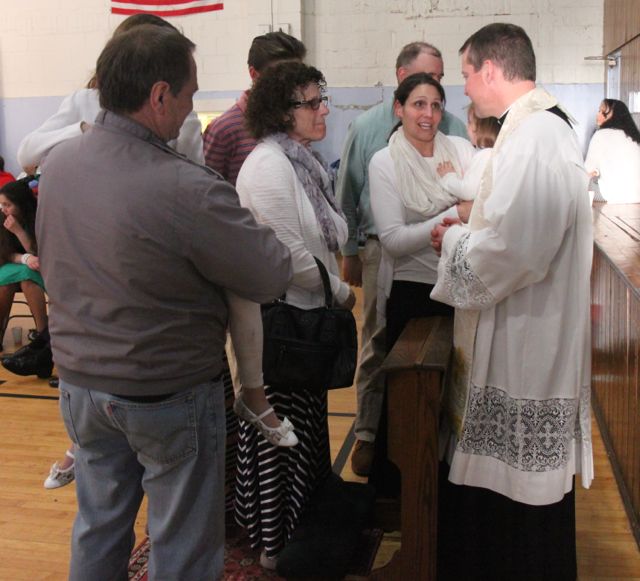
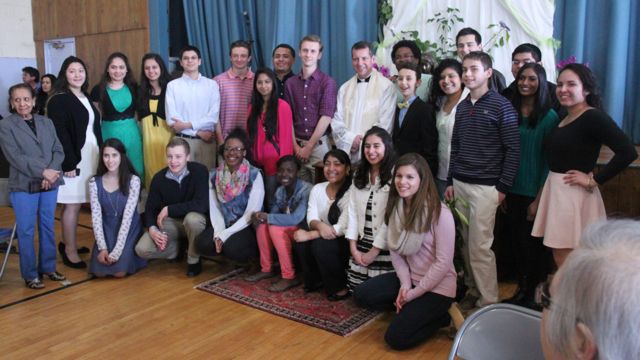
Tonight Council 46 of the Knights of Columbus and the Saint Ann Club of Norwalk honored the altar servers in the Catholic parishes of Norwalk, CT at a dinner and award ceremony. As you can see, a large group showed up from St. Mary’s Norwalk.
21
Apr
Tonight Council 46 of the Knights of Columbus and the Saint Ann Club of Norwalk honored the altar servers in the Catholic parishes of Norwalk, CT at a dinner and award ceremony. As you can see, a large group showed up from St. Mary’s Norwalk.
21
Apr
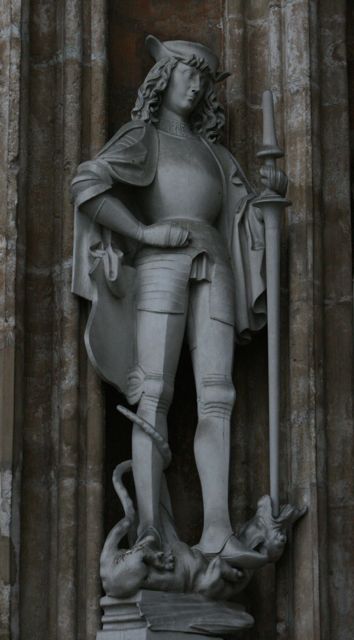
Statue of St. George in Ulm Cathedral, Germany
This coming Thursday, April 23rd, the 6 pm Traditional Mass Holy Innocents Church in Manhattan will be a sung mass for the Feast of St. George. Many Knights of the Constantinian Order of St. George will be in attendance. Msgr. Joseph Ambrosio will be the celebrant of this sung mass and he will bring a relic of St. George for veneration at the end.
20
Apr
There will another Vigil Rally for Peace for the Christians of the Middle East and the World on Friday, April 24 at Holy Innocents In Manhattan.
Traditional Latin Mass at 6 pm followed by a candlelit procession to Herald Square and Time Square at 7:30pm.
All are invited to bring their rosaries, icons, religious items and pictures to process with.
19
Apr
Easter III Saint Mary’s, Norwalk 2015
Fr. Richard Cipolla
The resurrection appearances of the risen Christ all have a deep sense of mystery about them: the appearance to the apostles in the Upper Room on Easter afternoon and then again this time with Thomas present; the appearance on the road to Emmaus—and they knew him in the breaking of bread; the appearance of Jesus on the seashore to the apostles who were in their boats fishing but catching nothing. Sometimes they recognize him, other times not. There seems to be something holding them back from recognizing him because the possibility of his being alive is not part of their horizon, not at all to be expected despite what Jesus told them. But in the end they always do recognize him as he calls to them. For me the most dramatic encounter is that of the risen Lord with Mary Magdalene. Fra Angelico’s painting of this scene speaks deeply to me. She who loved Jesus so much for what he had done for her, he who had rescued her, she who knew him because of her love for him: she does not recognize him. She assumes he is the gardener who takes care of the area around the tombs. They have a conversation. No recognition. And then Jesus says to her: Mary. He calls her by name, and she recognizes him. It is Jesus who calls Mary Magdalene to faith, faith in his resurrection, faith in Him as the life of the world. And she, like the others is surprised by joy, not expecting it and so not seeing it, but finally accepting it: surprised by joy.
It may be foolish of me to compare this encounter between our Lord and Mary Magdalene and my encounter with Bishop Caggiano when he told me he was appointing me as pastor of St. Mary’s church. But foolish as it may be, there was something there that partook of that mystery and surprise that accompanied the resurrection appearances. This was not part of my horizon, not part of my understanding of possibility, not something I thought about wanting in any sense. My seven years here with Fr. Markey as pastor were wonderful in the sense that I saw a parish transformed by the reality of liturgical renewal grounded in the Tradition of the Church. I supported vigorously every move that Fr. Markey made in the direction of the Tradition. And I rejoiced that this bore such wonderful fruit in the whole parish and could be seen in pastoral ministry as well. And the icing on the cake, so to speak, was the renovation of the church, or rather, the transformation of the church that bespeaks the beauty of God and that provides a fitting and holy place for the offering of the Holy Sacrifice of the Mass.
So when the bishop asked me if I would take on the role of pastor here, there was a nanosecond of pause: being a married priest and the effect this would have on my wife and on my home, my age—although the rumors of my being 102 are exaggerated–, my difficult years as a priest in this diocese because of my love of the Tradition of the Church, my lack of experience in the matters of running a parish—this flashed through my head in that fraction of a second, and I said yes with great joy: the joy of the Cross and the joy of Easter, all at once.
This past week has been busy and somewhat daunting. A priest friend of mine asked me on Thursday how everything was going. I said; well, the church is still standing and no one has yelled at me so I think it’s fine. And I am surrounded by such dedicated and faithful men and women who love Christ and his Church and therefore are already helping me to grow into my new role. The great number of parishoners that came out for Fr. Markey’s reception on the day of his leaving is not only a testament to their love for him as a priest, it is also a witness to the depth and the strength of this community of faith that is St. Mary’s church. This parish is unique. That word can be used positively and negatively. There are those Catholics who see this uniqueness in a negative way, claiming that how we celebrate Mass here, with the priest and the people facing God together not in opposition, whether in English, Spanish or Latin, is a throwback to the bad old days before the Council, and that our insistence on preaching the whole of Church teaching including what is unpopular to today’s culture turns people off. Well, they are wrong, and you are the proof of this. We are doing here what the Church asks us to do, and we do so with great style, with great beauty, with great devotion, with great zeal and most of all with great love. And we will continue on this path, the path of goodness, truth and beauty.
Nothing essential will change in this parish. But things also will not stay the same. There will be changes, not essential, but still changes. For change is the sign of life, the sign of growth. To advance on the path we have chosen and worked hard on, there must be change. Bishop Caggiano asked me what I would do as pastor. I told him that I certainly would not change the liturgical practice of this church and in fact want to bring it even further down that glorious path. But I told him that I hoped to do two things among others. The first is this: to end the isolation of this parish church. Now what do I mean by this? In some ways, because of our uniqueness, we have tended to isolate ourselves, taking the attitude that what we do here is wonderful and we don’t care what everybody else is doing in other parishes in this diocese. I want St. Mary’s to take on a leadership role in this diocese, especially in helping to bring other parishes to appreciate and understand the intrinsic role of Tradition in liturgy. And to do so the clergy must be willing to get out there, so to speak. And our laity must do the same. The best way to help others know and come to love Catholic Tradition and Catholic teaching is to let them see the joy that it brings you. What we have here is not rigidity, it is not legalism, it is not a deadly uniformity, it is not vying to see who can be the most traditional in outward appearance and practice: it is none of these things. It is the joy of knowing the blessing we have here in this parish church and wanting to share that with others.
The second thing I told the bishop is this: that the two busiest rooms in the rectory will be the kitchen and the dining room. Our Lord did much of his ministry eating with people, all sorts of people. That will be a good part of my ministry as pastor: getting to know you as my parishoners in the context of good food and where possible good wine. But that is also how I will get to know my fellow priests. That is how I will get to know guests who are just coming through or those who want to understand what we are doing here at St. Mary’s and why it is so wonderful. When things settle down I will announce a time that I will be available in the rectory for people to just come and chat. But it must work both ways. It is you who must also do what has to be done to get to know me. Some have already invited me to come to your house for dinner. I hope there are many more. Or just invite me for coffee. Whatever. Because it is important for me to be with you in your home, for there is where you are most yourself, there is your center, there is where the joys and sorrows you experience within your family that make you unique and not just a name on the parish rolls.
There is much to do in this parish church to make it what it is called to be in Jesus Christ. I wake up quite early now, and I lie there and think and plan and hope, and I thank God for all of his blessings, and now especially for the blessing of being the pastor of this wonderful parish, of being YOUR pastor. I need your prayers, I need your support, I need your love in Christ. And I promise you, with the prayers of the Blessed Virgin Mary whose name graces this church, to give you my very best.
19
Apr
In Muchich, the statue of the famous 16th century composer Orlando di Lasso. He was a native of what is today Belgium, but lived and worked almost 40 years until his death in 1594 in Munich. Since 2009 his statue has served as a constantly renewed shrine to Michael Jackson.
17
Apr
Charlotte Dobbs, soprano
David Hughes, piano
music of Karg-Elert, Copland, and Hughes
Copland: Twelve Songs of Emily Dickinson
Hughes: Song Cycle on Poems of Gerard Manley Hopkins (premiere performance)
Sunday, 17 May 2015, 4:00 P.M. at St. Mary Church, Norwalk, CT
General Admission: $15 / Students: $10
A festive reception will follow the recital.
Praised in Opera Now for her “angelic lyric soprano voice”, Charlotte Dobbs brings luminous sound and incisive musicianship to a broad repertoire that encompasses Bach, Mozart, and the bel canto masters, as well as the second Viennese school and contemporary composers.
Charlotte made her New York Philarmonic debut in a new song cycle by the Swiss composer Michael Jarrell, as well as debuts with the Philadelphia Orchestra in a concert of works of Mozart and the Alabama Symphony Orchestra in Handel’s Messiah. She joined the Los Angeles Chamber Orchestra for Bach’s Magnficat under Jeffrey Kahane. She also was featured in recital at Caramoor, Collage New Music in Boston, and with the Claring Chamber Players for Faure’s La Bonne Chanson.
On the operatic stage, Charlotte made her debut with New York City Opera in VOX, a concert performance of new operas, as well as covering Governess in their production of The Turn of the Screw. Charlotte made her European debut in as Corinna in Il viaggio a Reims at the Rossini Opera Festival in Pesaro, and returned to Italy to sing Rosina in Il barbiere di Siviglia under the auspices of the Fondazione Pergolesi Spontini and Teatro Aligheri in the theaters of Jesi, Fermo, and Ravenna. She also made her debut in 2009 with the Chicago Opera Theater, singing Servilia in La clemenza di Tito with Jane Glover in a new production of Christopher Alden. Under the baton of Lorin Maazel, she appeared as Governess in the Chateauville Foundation’s production of The Turn of the Screw. Other recent operatic credits include Amina in La Sonnambula, Donna Elvira in Don Giovanni, the title role in Tchaikovsky’s Iolanta, Nuria in Ainadamar, and Countess in Le nozze di Figaro with the Curtis Opera Theater, as well as the title role in Iphigenie en Aulide, Elettra in Idomeneo, and Juno in La Calisto at Juilliard. Charlotte also joined renowned theater group The Civilians for their production Paris Commune at Arts Emerson and the Brooklyn Academy of Music.
She appeared recently with Music of the Baroque in Chicago, in a concert performance of Dido and Aeneas and other works of Purcell, as well as several recital appearances at Caramoor. She also recently made her debut with the Colorado Symphony Orchestra, singing Beethoven’s Ninth Symphony under the baton of Jeffrey Kahane. She appeared in recital with Mitsuko Uchida at the Marlboro Music Festival, performing Schoenberg’s Book of the Hanging Gardens. Also at Marlboro, she gave her first performance of Schoenberg’s Second String Quartet, which was reprised with the Saratoga Chamber Players. She has been featured in three programs with the New York Festival of Song, most recently “The Sweetest Path” at Caramoor and Merkin Hall. Miss Dobbs made her Kimmel Center and Carnegie Hall debuts in Nielsen’s Third Symphony with the Curtis Symphony Orchestra under the baton of Alan Gilbert.
Born in Massachusetts, she has received an M.M. from both Juilliard and Curtis and a B.A. from Yale, where she majored in English and Music.
15
Apr
Solemn Mass for Low Sunday (Mercy Sunday) at Holy Name of Jesus Roman Catholic Church.
Fr. James Massa, celebrant. Thanks to Arrys Ortanez for the photos.
13
Apr
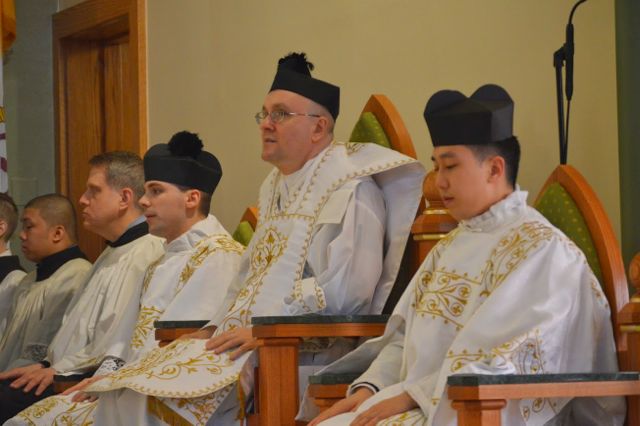
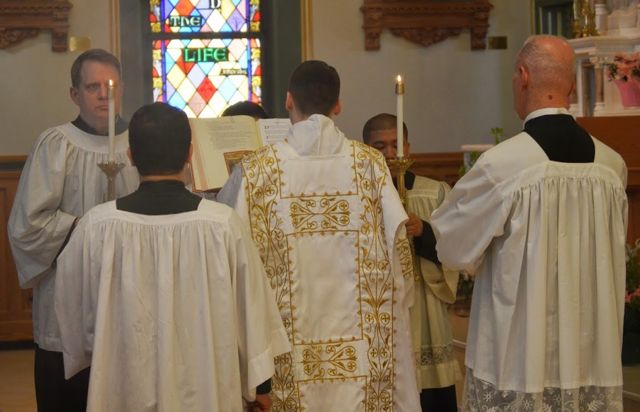
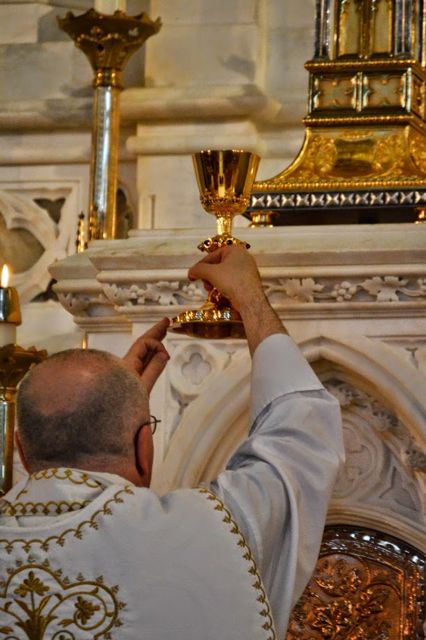
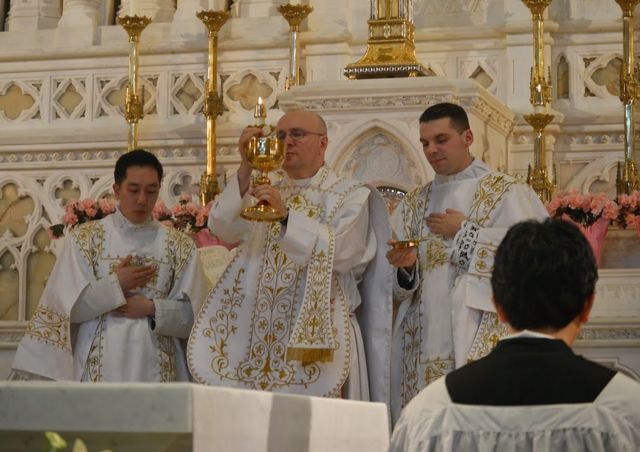
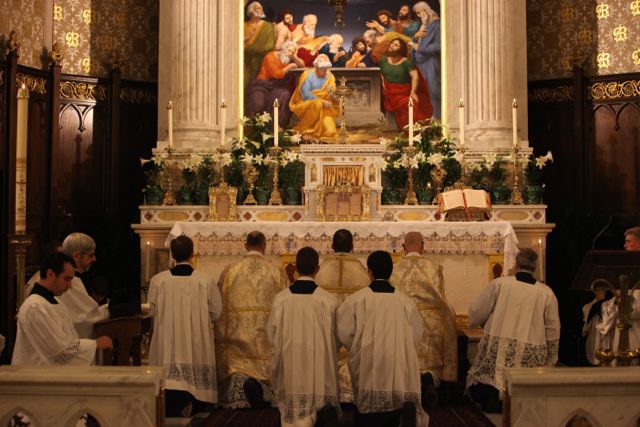
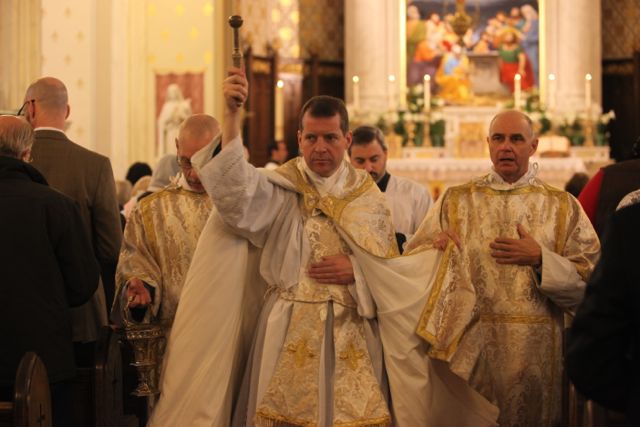
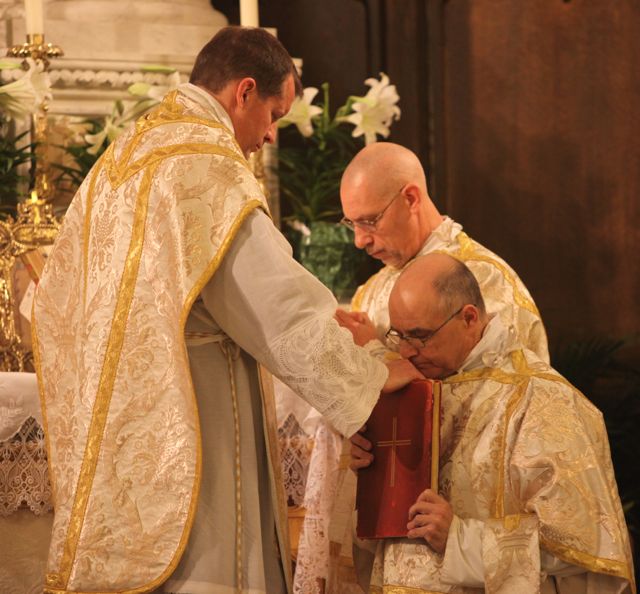
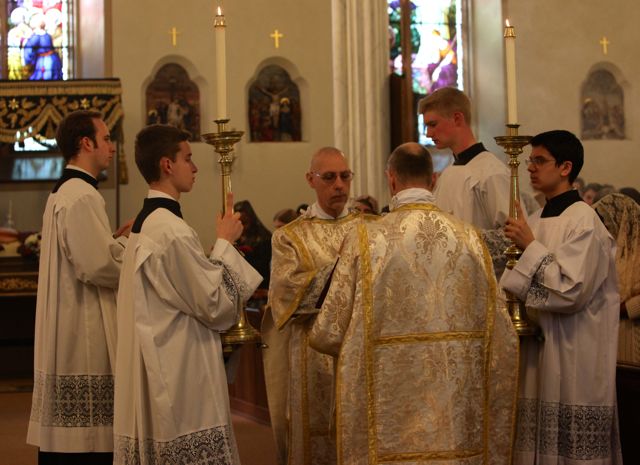
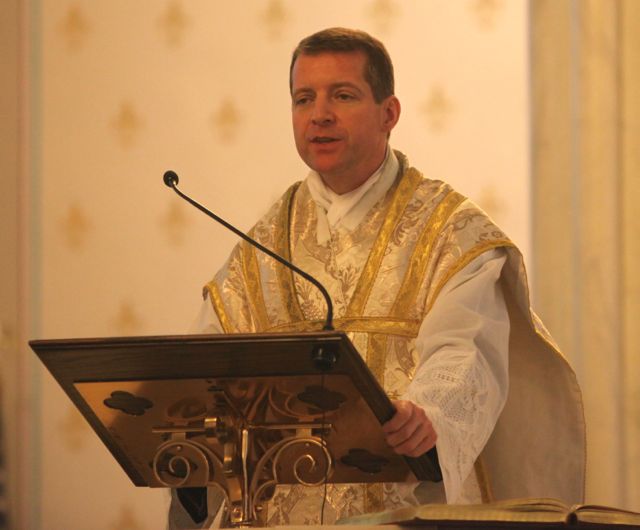
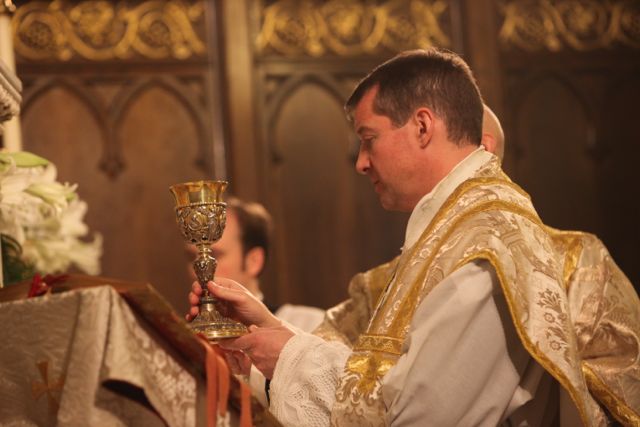
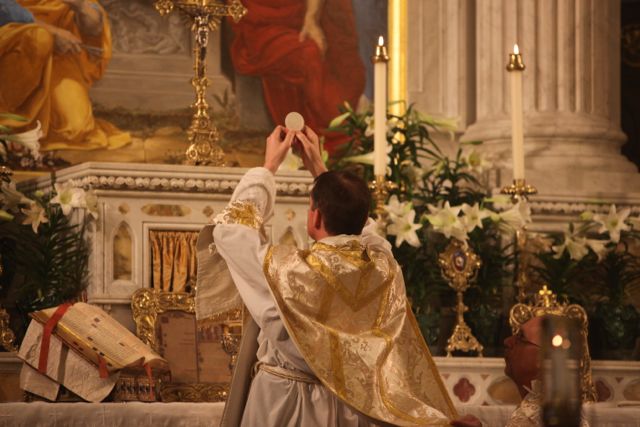
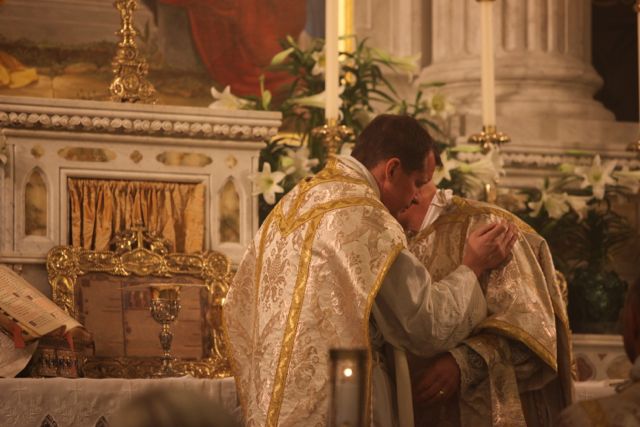
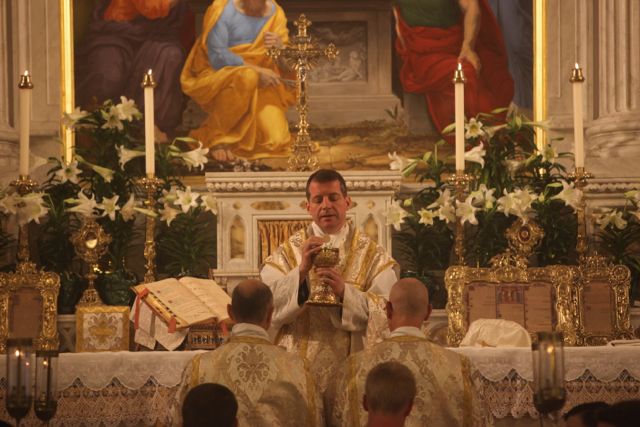
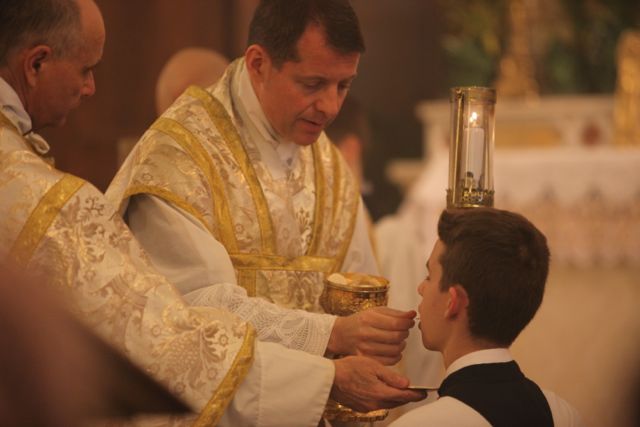
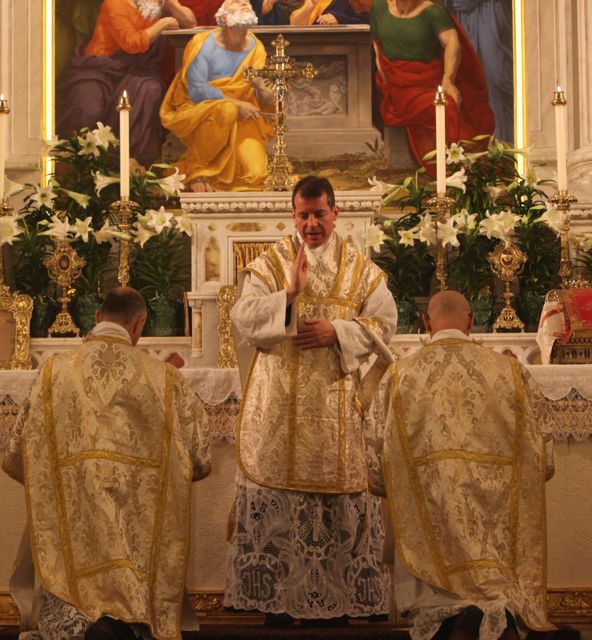
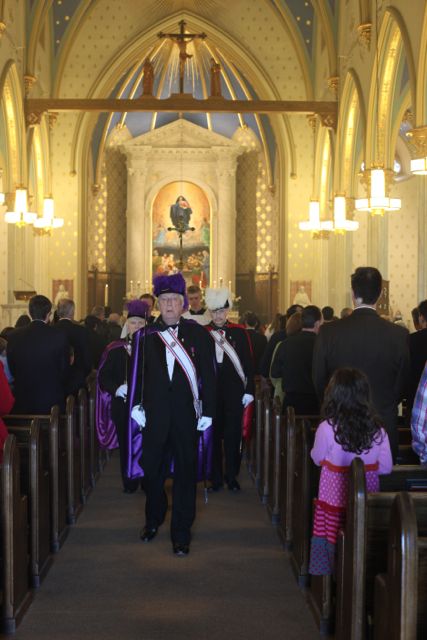
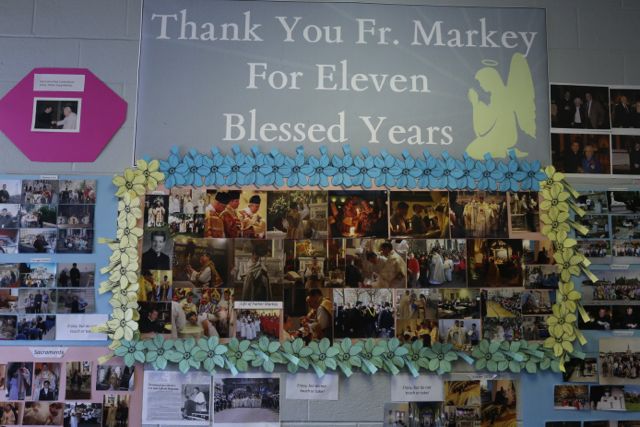
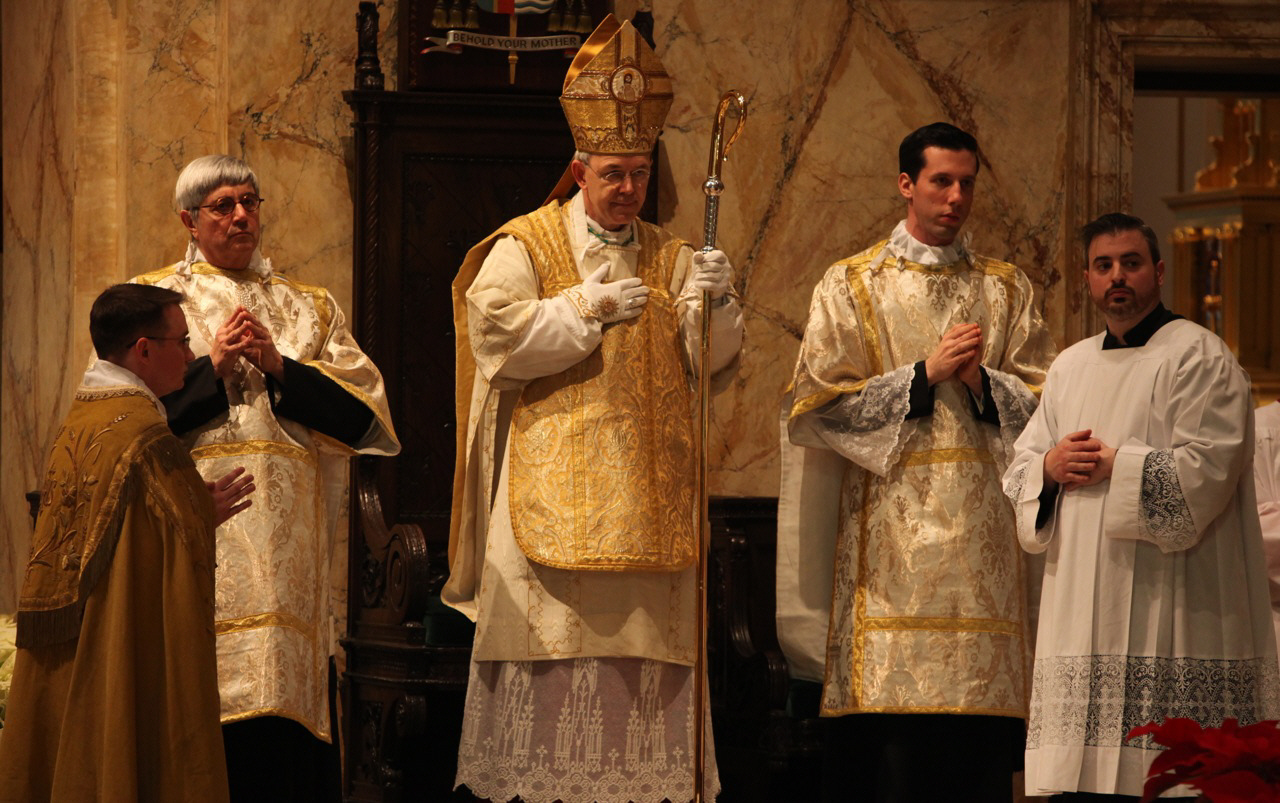
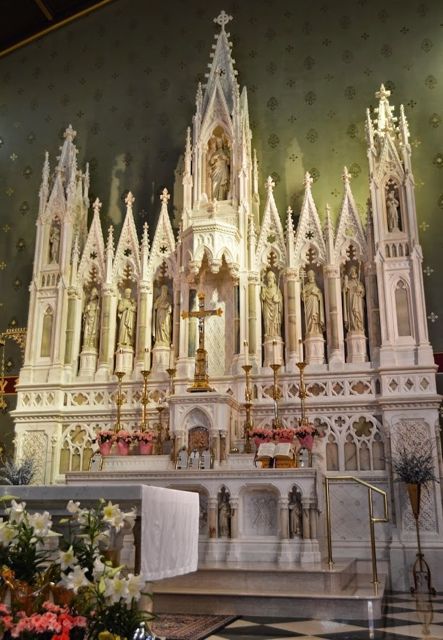
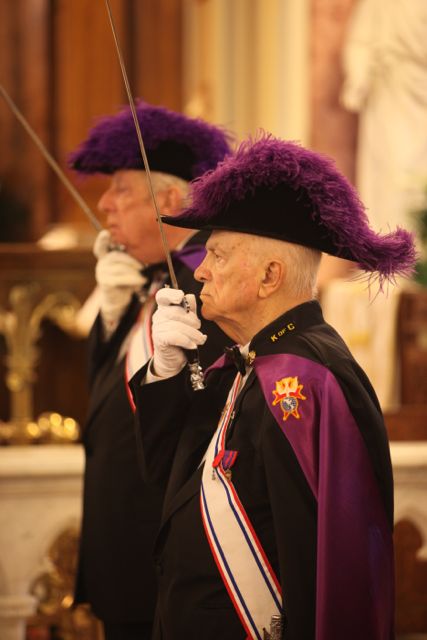
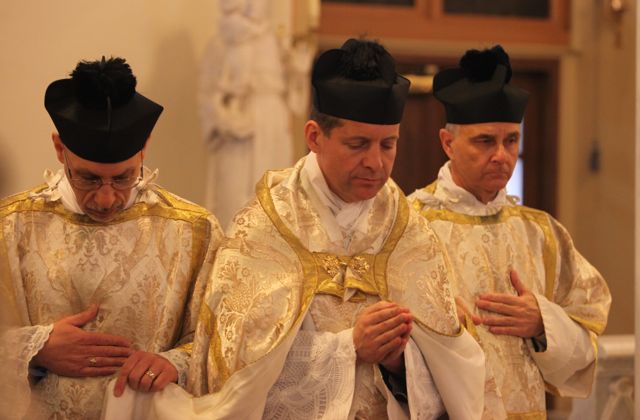
Yesterday Father Markey said his final Masses as pastor of St. Mary Church, Norwalk. He is stepping down to study for an advanced degree in philosophy. Our pictures show his final 9:30 Solemn High Mass with the Knights of Columbus in attendance. Stephen Genovese was deacon and Bill Riccio, subdeacon.
In the afternoon, parishioners flocked to a reception in the church hall to say good-bye to Father Markey and receive his blessing. The line snaked around the hall.
12
Apr
The following sermon was preached today by Msgr. Ignacio Barreiro
Divine Mercy and the Truth
Of all the wondrous things that can be proclaimed about God, His greatest attribute is His inexhaustible mercy. As His Church, the faithful must be instruments of mercy and unceasingly proclaim God’s rich mercy, and a good place to begin is with the great gift that the Lord has given us on Divine Mercy Sunday, a feast observed on the Sunday in the Octave of Easter.
Today’s Sunday’s Gospel reveals how Christ established the Sacrament of Penance after he had risen from the dead. He breathed the Holy Spirit on his Apostles and said to them, “Receive the Holy Spirit. Whose sins you forgive are forgiven them, and whose sins you retain are retained.” (John 20:22-23) Here we have the scriptural grounds of the institution of the sacrament of reconciliation, one of the greatest gifts that Lord has given us.
The first manifestation of God’s mercy was calling us, His creatures, into being by His Word. God did not create because He lacked anything. He did not create us because He needed us. He created us out of His superabundant love so that we could share with us His infinite happiness forever on Earth and in Heaven.
But even when His creatures turned away from Him, God sent His only-begotten Son who is equal in his divinity, taking on our human nature in the womb of the Blessed Virgin Mary and offering himself on the Cross as a redemptive sacrifice to atone for all the accumulated sins in the history of humanity.
There is a wrong tendency to think that the God of the Old Testament is a “God of wrath” whereas the God of the New Testament is a “God of mercy.” As a matter of fact that is part and parcel of the heresy of Marcion in the second century. In fact, the God of the New Testament and the God of the Old Testament are one and the same. The Savior foretold in the Old Testament is fully revealed in the New. Even in the Book of Genesis, we see God’s justice is tempered by his mercy. The punishment of Adam and Eve is mitigated by the promise of a Savior. God says to Satan “I will put enmity between you and the woman, and between your offspring and hers; They will strike at your head, while you strike at their heel. (Gen. 3:15) In Catholic tradition this is called the “protoevangelium” or the “first gospel” because it is a prophetic foreshadowing of the Savior who is to come.
Moses sings this truth in his canticle of mercy: “In your mercy you led the people you redeemed; in your strength you guided them to your holy dwelling.” (Exodus 15:13). The Prophet Jeremiah assures us that the Lord’s mercy will always be available to us, but at the same time we must prepare ourselves to receive His mercy. “The favors of the Lord are not exhausted, his mercies are not spent; they are renewed each morning, so great is his faithfulness.” (Lamentations 3:22-23)
Jesus Christ is the promised Messiah and Savior, is the fullest manifestation God’s mercy to the world. With compassion for those burdened by sin, Christ also labors for those suffering under the weight of pain, sickness, injustice, loneliness, ignorance, or any other of the bitter human conditions.
While Christ’s sacrifice was sufficient to take away every sin that had ever been or would ever be committed in the whole world, in order for Christ’s work of redemption to be effective for us, we must repent of our sins, believe in Him, be baptized, and remain part of His people by obeying His commandments just as Saint John the Evangelist points out: “For the love of God is this, that we keep his commandments. And his commandments are not burdensome.” (1 John 5:3)
The Lord gives a “new hope” to all He rescues from sin and to all who suffer in times of distress. It’s this redemptive mercy of Christ that St. John proclaims with great depth of emotion as we have heard in the epistle. “For whoever is begotten by God conquers the world. And the victory that conquers the world is our faith. Who (indeed) is the victor over the world but the one who believes that Jesus is the Son of God?”
This new hope of mercy is very much needed in the world as Sister Faustina Kowalska reveals in her diary about Jesus’ appearance to her in Poland in the 1930s. Jesus requested the first Sunday after Easter to be recognized as the Feast of Divine Mercy, a request officially fulfilled later by Saint Pope Saint John Paul II, whose great devotion to the Divine Mercy inspired him to write the encyclical Dives in Misericordia in 1980. The document provides a deeply theological examination of the role of mercy: God’s mercy and human mercy, affirming that God’s merciful love is stronger than all the evil there is in the world. The Pope declares that the Church “professes and proclaims mercy – the most stupendous attribute of the Creator and of the Redeemer – when she brings people close to the sources of the Savior’s mercy.”
This theme continues today through Pope Francis, who petitioned Christ on Good Friday to teach us that God never forgets any of His children, and He never tires of forgiving and embracing us with His infinite mercy. The pontiff further emphasized that we should never tire of asking forgiveness, and that we should believe that God’s mercy has no limits.
There is time of mercy and there is time of justice. God now comes as the King of Mercy, but at the Last Judgment He will come down to earth as the King of Justice. The King of Mercy, through love, sends necessary graces for the sinner to repent, who then amends his life and fulfills necessary reparation after this life-changing conversion. Accepting the Lord’s graces through repentance brings about great peace through the mercy of God.
It is, therefore, important to remind everyone that the Lord will forgive and show his loving mercy to all who repent. He is ready to forgive even abortionists — if they repent. He is ready to forgive the woman who killed her child in the womb — if she repents. He is ready to forgive all who sin against God’s plans for life and family — if they repent. The Lord will send His healing graces to all who repent, canceling their guilt and offering his merciful love. It is good to remember Pope Saint John Paul II’s words about this:
I would now like to say a special word to women who have had an abortion. The Church is aware of the many factors which may have influenced your decision, and she does not doubt that in many cases it was a painful and even shattering decision. The wound in your heart may not yet have healed. Certainly what happened was and remains terribly wrong. But do not give in to discouragement and do not lose hope. Try rather to understand what happened and face it honestly. If you have not already done so, give yourselves over with humility and trust to repentance. The Father of mercies is ready to give you his forgiveness and his peace in the Sacrament of Reconciliation. To the same Father and his mercy you can with sure hope entrust your child. (Evangelium Vitae, #99)
We must beware of the tendency in our times to think that God’s mercy and truth about the moral demands of the Gospel are somehow in opposition to one another. Recently Cardinal Paul Joseph Cordes stated that, “A responsible shepherd cannot be guided by a blurred ‘mercy.’”
It should be evident that the mercy of Christ has to be presented in accordance with his Revelation and the doctrine that Church has defined under the guidance of the Holy Spirit. It is not truly merciful, for example, to state that that the doctrine of the indissolubility of marriage is to be preserved, but to propose at the same time a pastoral approach that would allow the persons in that situation to receive the Eucharist without amending their lives accordingly.
Cardinal Mauro Piacenza, the Major Penitentiary of the Catholic Church, recently stated, “In Christianity, mercy and truth are co-inherent, inseparable, so much so as to be not properly distinguishable…A mercy without truth is not Christian, and at the same time truth without mercy is not Christian.”
Thereby the most compassionate and merciful thing to do, as members of the Church, is to present the truth in love. We have to be instruments of God’s mercy: Help people to know God’s truth, love and mercy through words and actions. Pray that they will believe in the Gospel, repent of their sins, turn with trust to the Lord, and be forgiven of their sins and be saved. Remember, Our Lord Jesus Christ began His mission of mercy by saying, “This is the time of fulfillment. The kingdom of God is at hand. Repent, and believe in the Gospel.” (Mark 1:15)
So today through the intercession of Our Blessed Virgin Mary and St. Faustina let us ask for the grace of truly believing in God’s mercy and that to receive the grace of a total repentance from our sins.
May the Lord bless you and keep you.
11
Apr
On Sunday, April 12th a special presentation of the movie The War of the Vendée will be shown at St. Anthony of Padua Oratory in West Orange after the 11:00 a.m. High Mass. A potluck luncheon will take place with beverages provided. There will also be special guests Msgr. Michael Schmitz, Vicar General & Provincial of the Institute of Christ the King, and Canon Talarico, Substitute for Provincial of the Institute of Christ the King.
The 80 minute, PG-Rated film tells the moving story of the religious genocide perpetrated against the faithful Catholic population in the Vendée region of Western France in the years following the French Revolution. Featuring a wonderful cast of over 250 young Catholics, beautiful cinematography, and a sweeping orchestral score, the story is a violent and brutal one, but is told here with a careful sense of traditional Catholic reserve, and is perfectly safe for the entire family to watch – without a single trace of innuendo or vulgarity. Winner of ‘Best Film for Young Audiences’ at the 2012 Mirabile Dictu International Catholic Film Festival at the Vatican, and broadcast world-wide on EWTN, this unique film has sold over 10,000 copies to date. Written and directed by Connecticut resident, Jim Morlino – (who attends the Traditional Latin Mass in Sleepy Hollow, NY, with his wife and six children), The War of the Vendée has been screened by hundreds of Catholic parishes throughout the world. The director and his family will be there to introduce the film, and host a short Q & A session afterward. DVDs of the film, and other DVDs from Navis Pictures will be available for purchase at the screening.