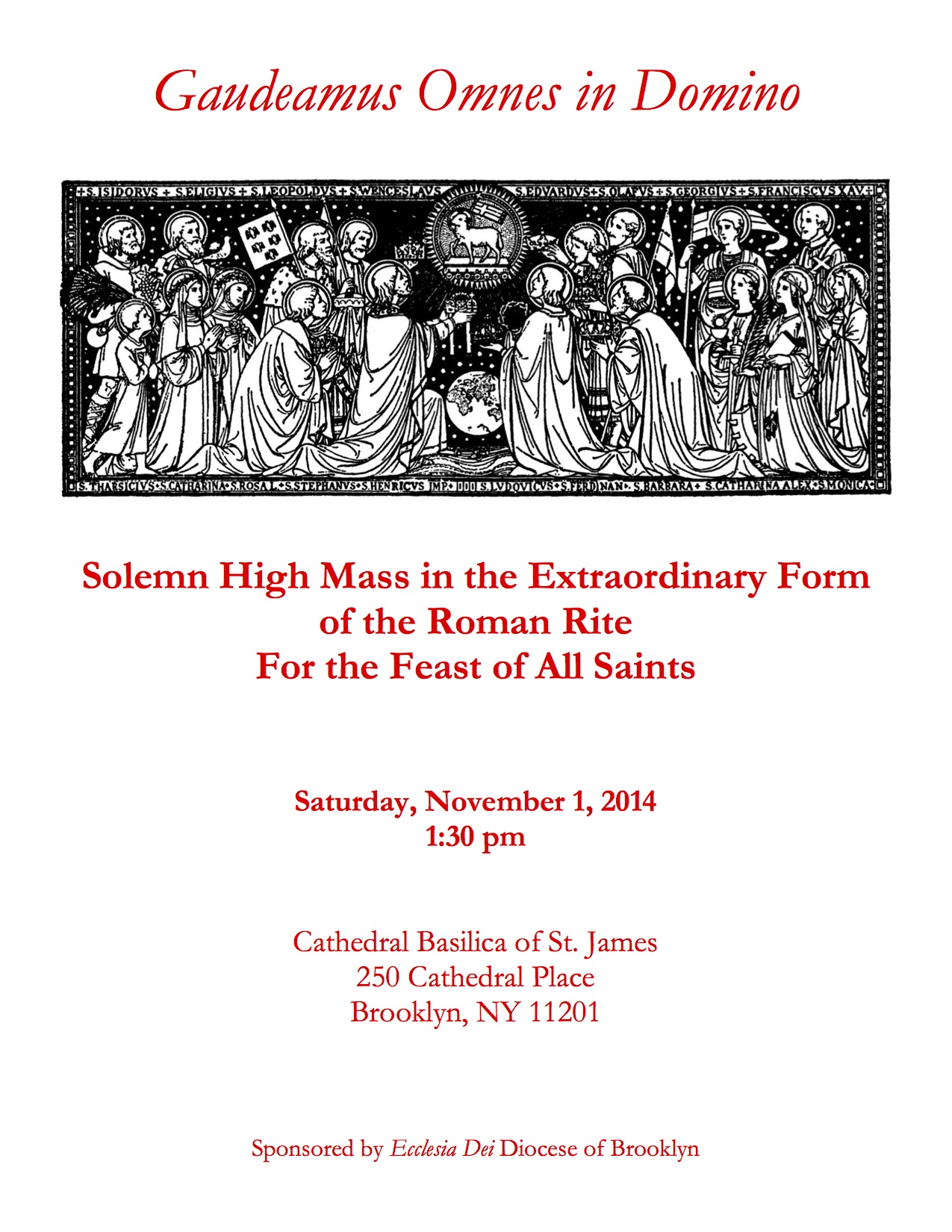
At St. Mary Church in Greenwich, CT, on Friday, October 17th at 7:30 in the evening there will be a Solemn High Mass Votive Mass in honor of Pope St. Pius X commemorating the centenary his death.
Published in Masses | no comment
Mr. Arrys Ortanez reports:
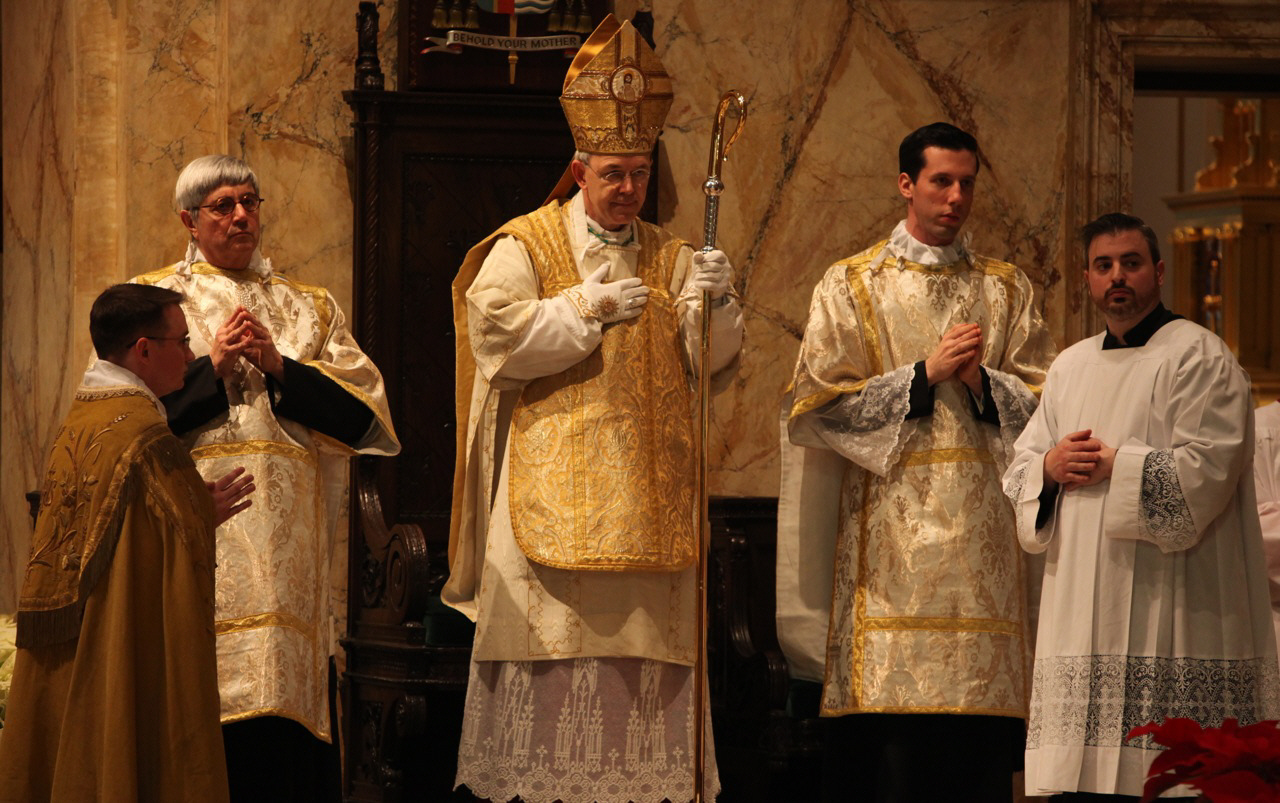
“The Rite of Confirmation in the “traditional” form (EF) was celebrated by the Bishop of the Diocese of Brooklyn and Queens, His Excellency, The Most Rev. Bishop Nicholas DiMarzio, at the chapel in St. John’s Cemetery in Queens, NY. Mass in the Extraordinary Form of the Roman Rite (Latin Mass) preceded the Confirmation Rite. Fr. James Massa, Moderator of the Curia for the Diocese of Brooklyn and Queens was present in Choir and assisted at the Confirmations. Also assisting His Excellency, were Frs. Daniel Champoli and Joseph Wilson, who said Mass, both also priests of the Diocese of Brooklyn and Queens. The Ceremony was amazing and moving. 26 young people were confirmed by His Excellency.” 1)
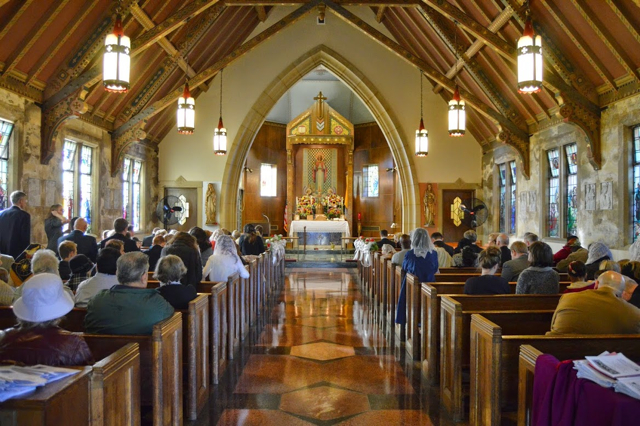
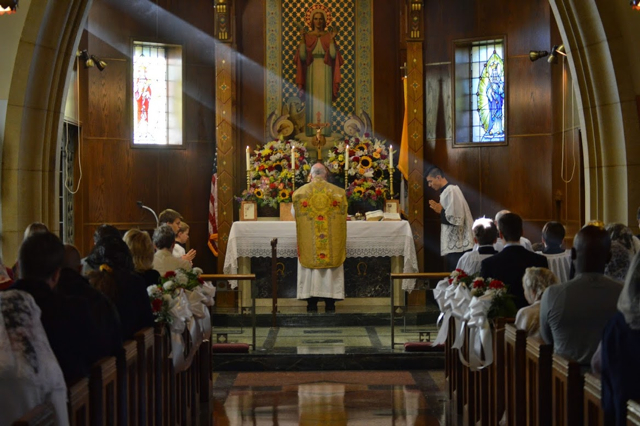
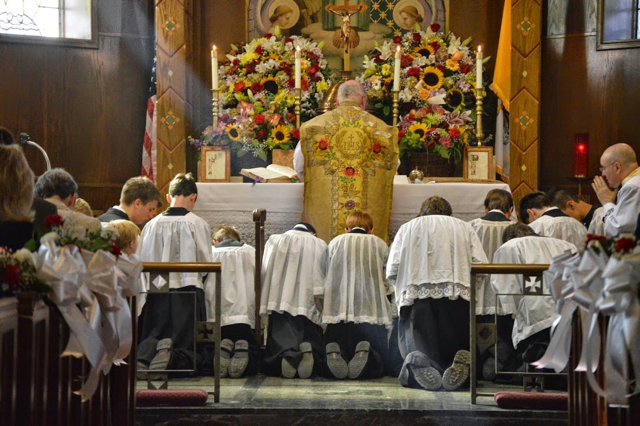
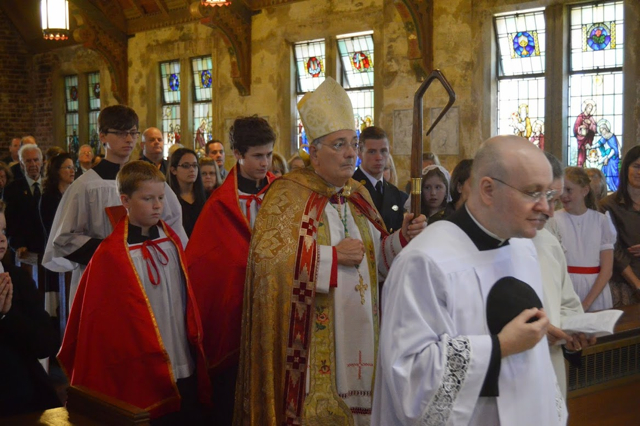
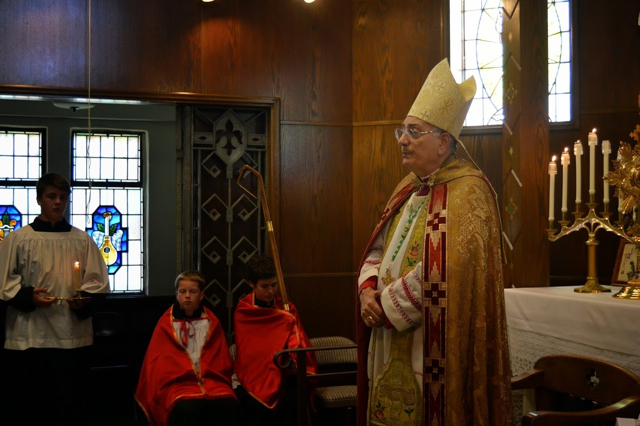
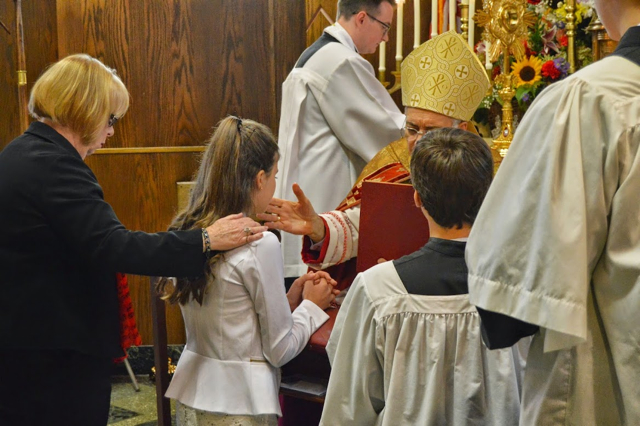
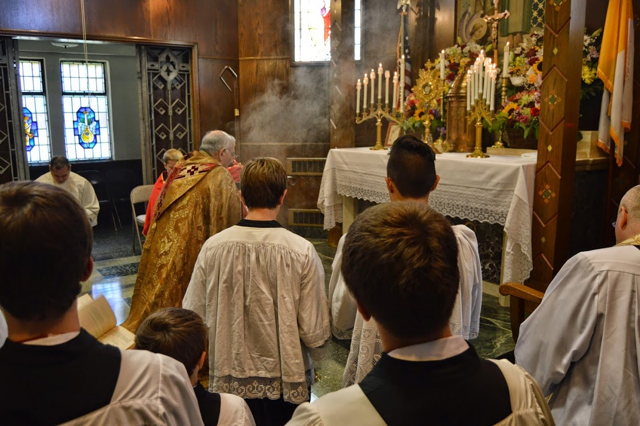
(All Photographs also curtesy of Mr.Arrys Ortanez.)
1) I would ask our Brooklyn correspondents if this style “The Diocese of Brooklyn and Queens” is in unofficial use? The diocesan website still uses the traditional “Diocese of Brooklyn” – SC.
Published in Masses | 2 comments
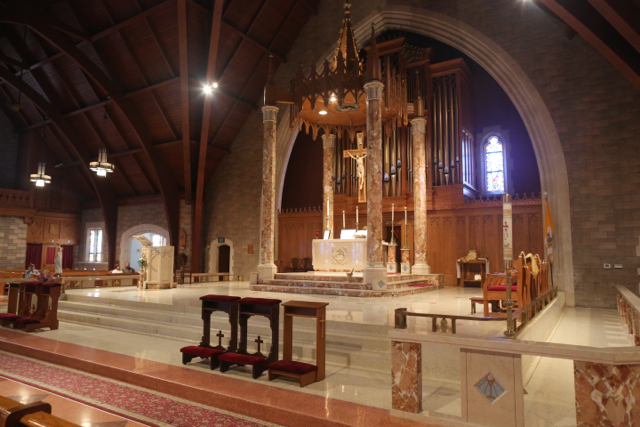
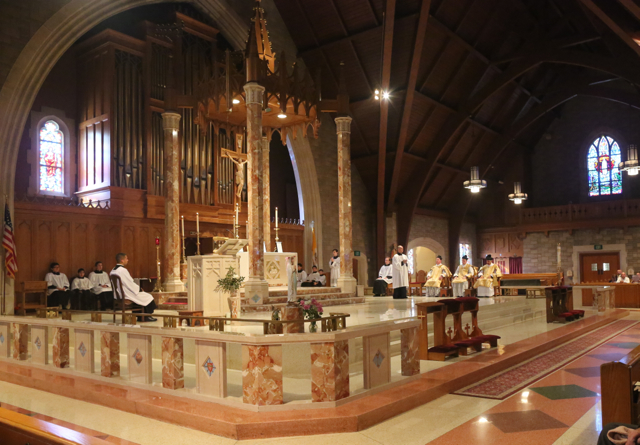
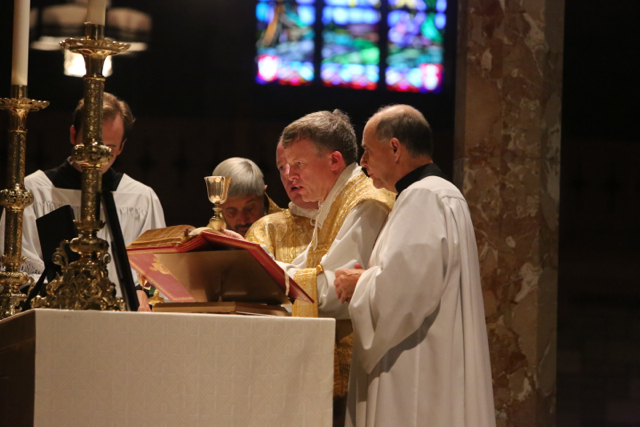
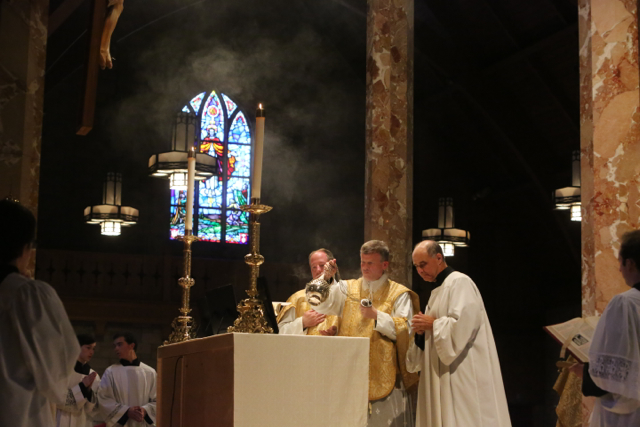
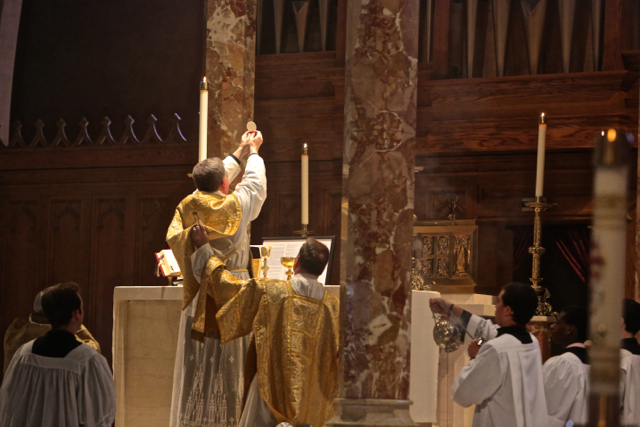
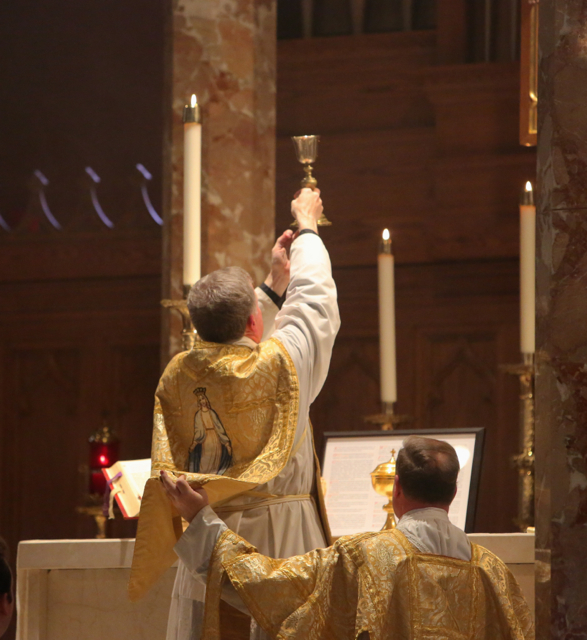
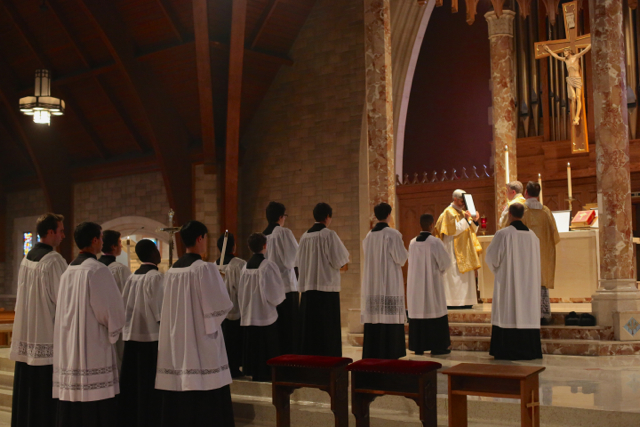
At St. Theresa’s parish in Trumbull, Connecticut – the second Traditional Mass in just a few months. Fr. Brian Gannon, the pastor of st. Theresa’s was the celebrant; Fr. Shawn Cutler, parochial vicar at St. Theresa, was the deacon. Fr. Richard Cipolla, parochial vicar of St. Mary’s Norwalk, was the subdeacon. Mr. William Riccio was the Master of Ceremonies.
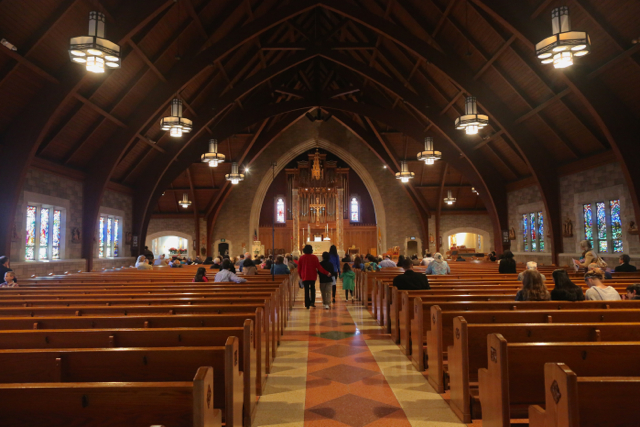
(above) St. Theresa’s is a 1961 structure of grand dimensions. It is one of the last great churches built before the fall – and much more successful than sister churches of that era. Mucb of the “pre-conciliar sanctuary survives. There is wood, there is stone and there is marble.The stained glass windows are not bad at all either!
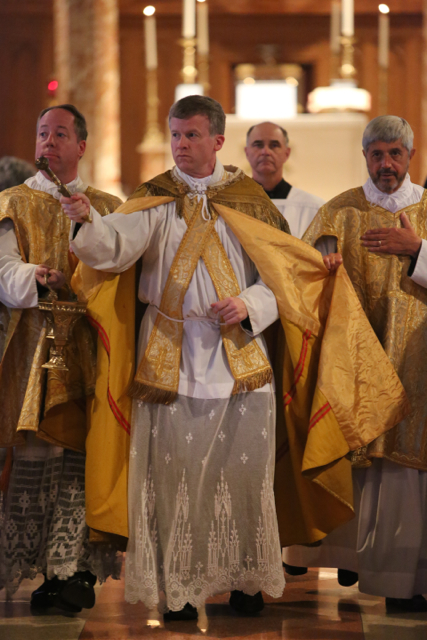
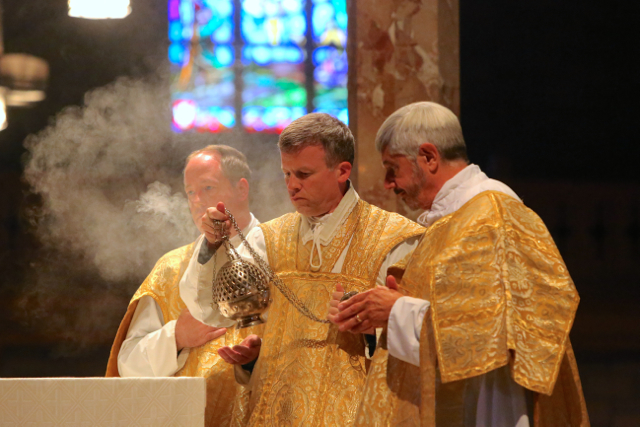
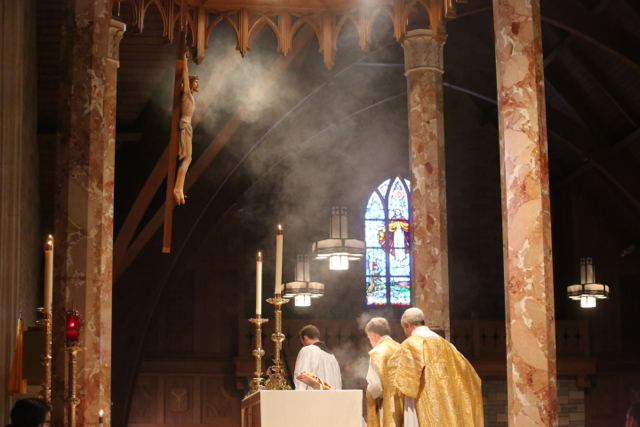
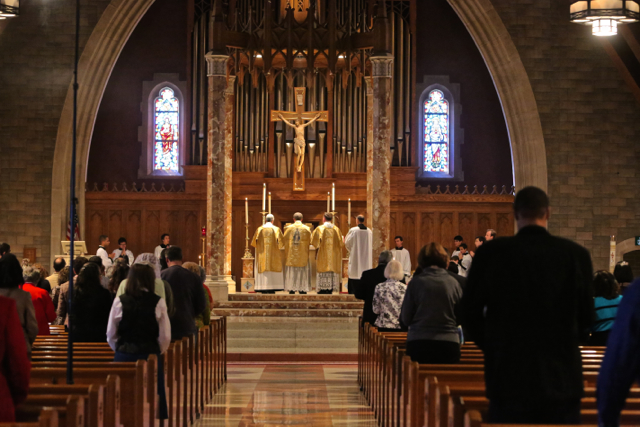
The mass was for the Feast of Our Lady of the Rosary but the collect of the XVII Sunday after Pentecost was also read:
“Da, quaesumus, Domine, populo tuo diabolica vitare contagia……” How appropriate for these times!
A large congregation attended this liturgy.
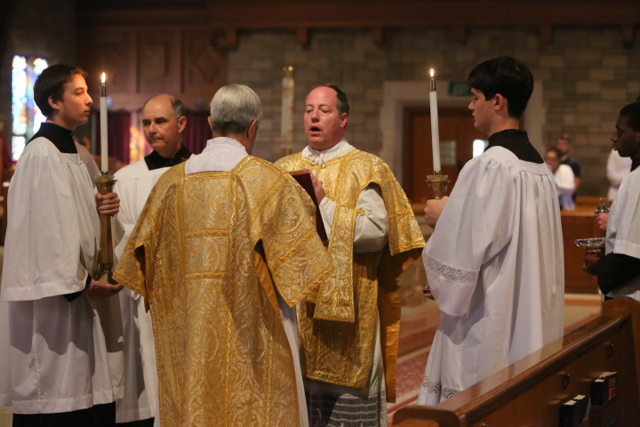
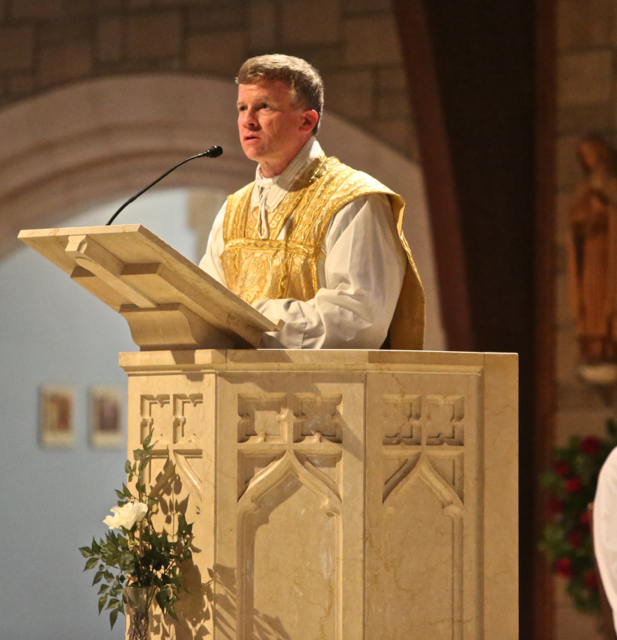
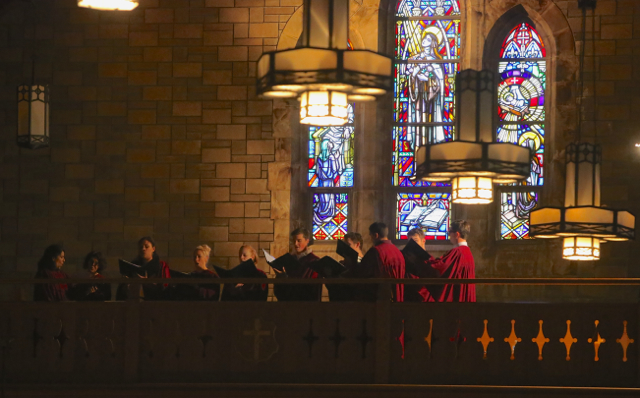
Carolina Flores was choirmistress; Samuel Schmitt was the organist. The music included the “Missa de Beata Virgine” of Cristobal Morales and motets by Guerrero, Saint-Saens and Hassler. The gradual was a setting by William Byrd.

5
Oct
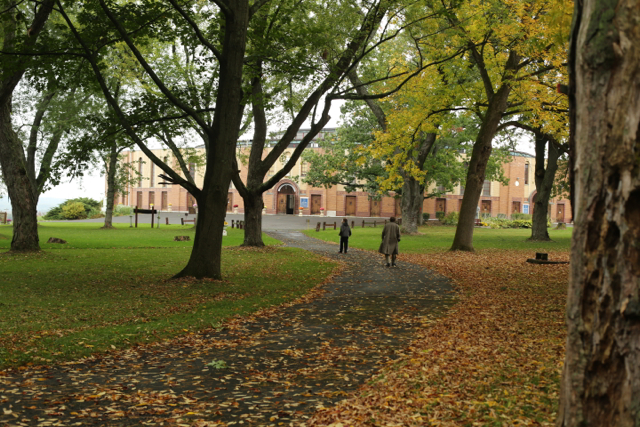
I had the opportunity yesterday of returning to the “Shrine of Our Lady of Martyrs” in Auriesville, New York. Unlike all my recent experiences of the shrine, no pilgrimage or other event was occupying my attention. And the weather, in contrast to the glorious fall days both before and after that Saturday, was more typical of Upper New York State this time of year: overcast, chilly, and raining off and on into the evening. But this sombre and silent ambience had its own advantages. The weather and the stillness created a more reflective and prayerful mood. Without the distraction of crowds, we had the opportunity of exploring the grounds and the shrine buildings at our leisure. The main “guide” to the shrine today is a 1963 coloring book still reprinted and sold at the shrine book store.
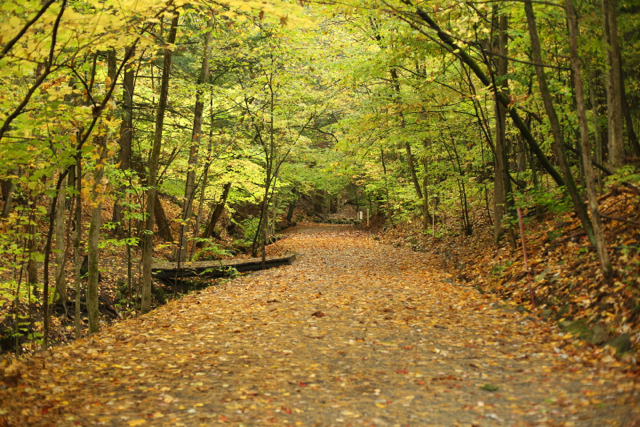
Towards the Ravine – the most sacred part of the shrine. This is where St Rene Goupil was buried.
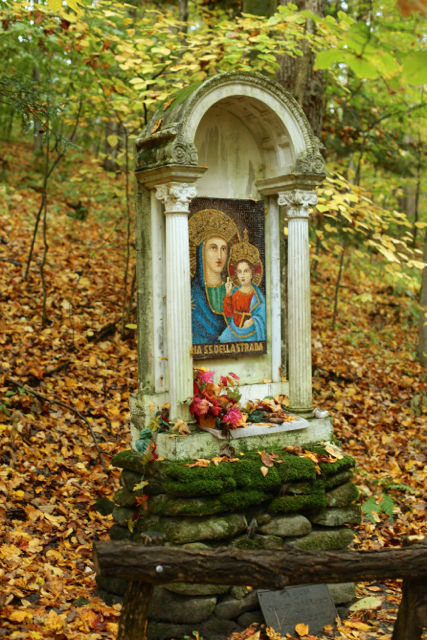
On the way – the Madonna della Strada.
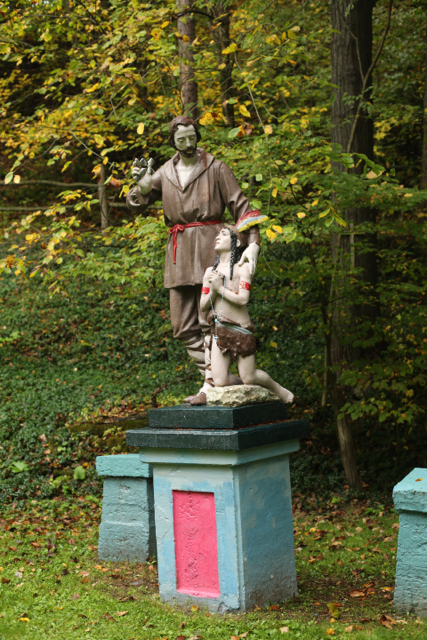
The statue of Rene Goupil in the Ravine: A hushed stillness seems always to prevail here.

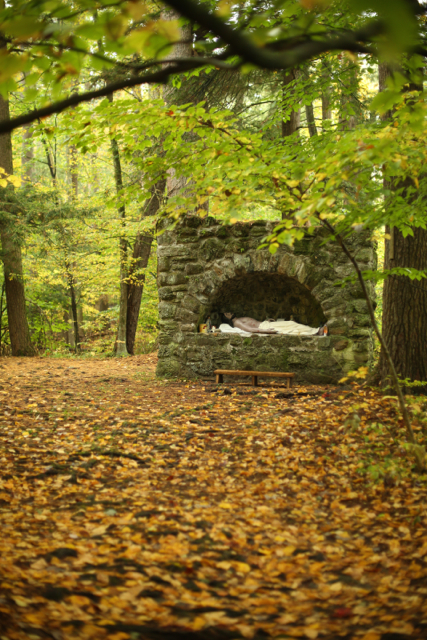
(Above) This shrine of the entombed Christ is said to be where St. Isaac Jogues buried St. Rene.
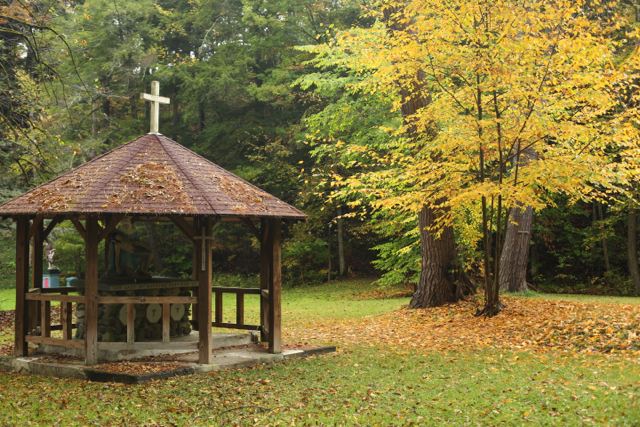
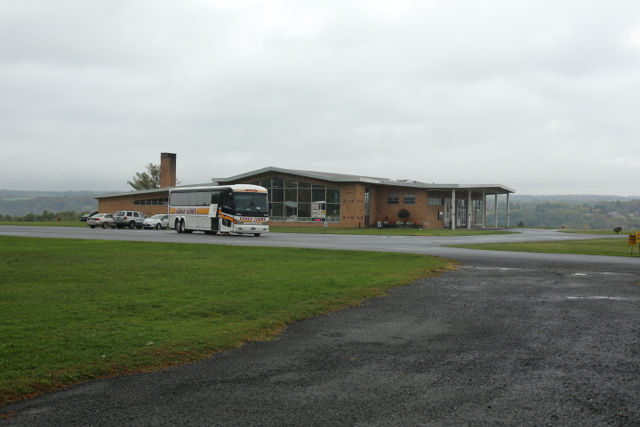
(Above) Mute testimony to the lack of pilgrims nowadays to the shrine. Only one tour bus from a school was visible that morning – besides a few other vehicles. The shrine has faced increased financial difficulty in recent years.
“(A)ttendance dropped by more than 50 percent during the shrine’s 2013 season. Collections brought in less than $100,000.” 1)
The Jesuit retreat house and about 90 acres of land were sold to the Buddhists a few years ago (the shrine grounds had over 600 acres). By 2013 the dilapidated state of the buildings was so dire that closing was talked of. The shrine launched a $1,000,000 fundraising drive which, I believe, has reached about half its goal. Repairs are already underway starting just now on the main shrine structure- the “coliseum.” The shrine management believes the threat of immediate closure has passed. They have even extended an invitation to Pope Francis to come to Auriesville on his 2015 American visit (Wishful thinking? But after all the shrine is administered by the Jesuits and see the altar below.) 2)
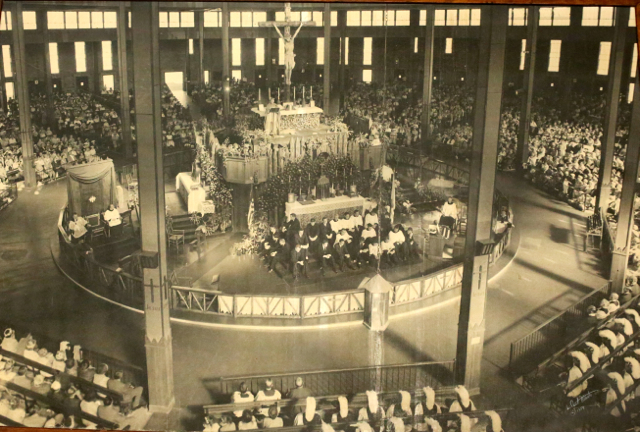
(above) Cardinal Cushing preaching in 1959 to a “full house” – the “Coliseum” can seat over 6000.
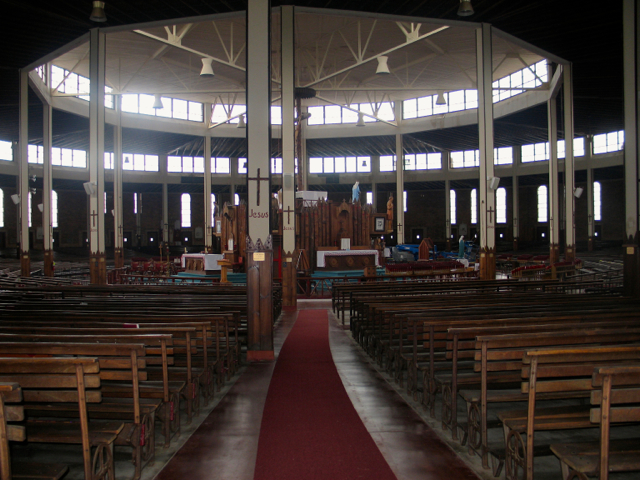
The coliseum today
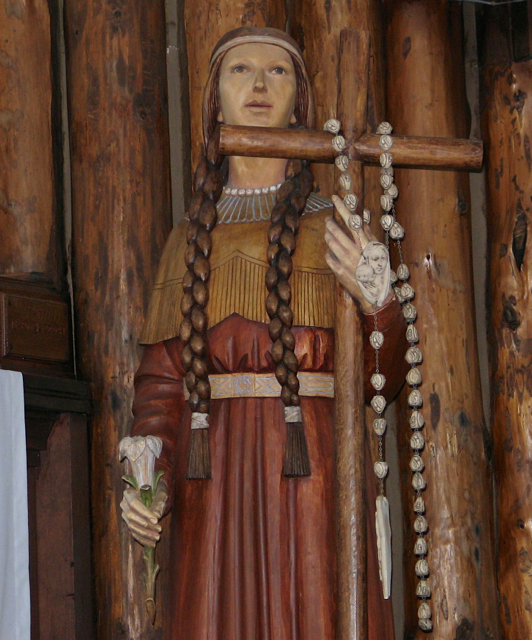
The centrally located sanctuary includes statues of the martyrs – Jogues, Lalande and Goupil – as well as of Kateri Tekakwitha who was born here in 1656 and grew up here and in nearby Fonda.
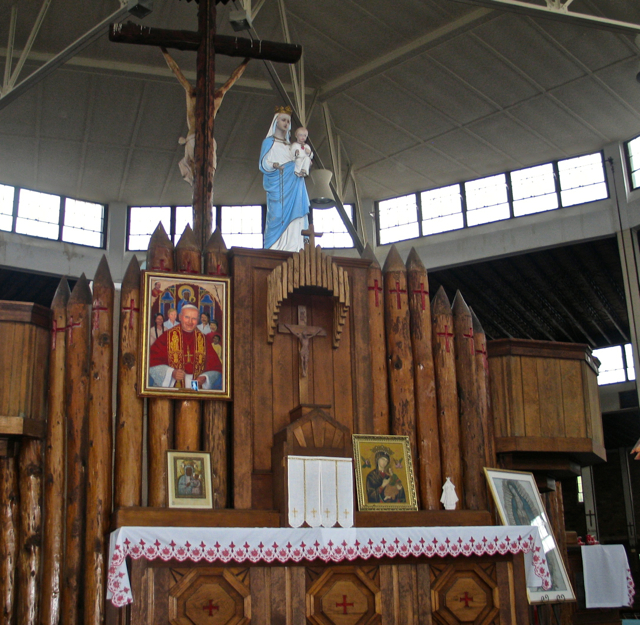
Recently some of the altars seem to have “repurposed” as displays for images and devotions. Most notably, images of John XXIII and John Paul II are now prominently on view.
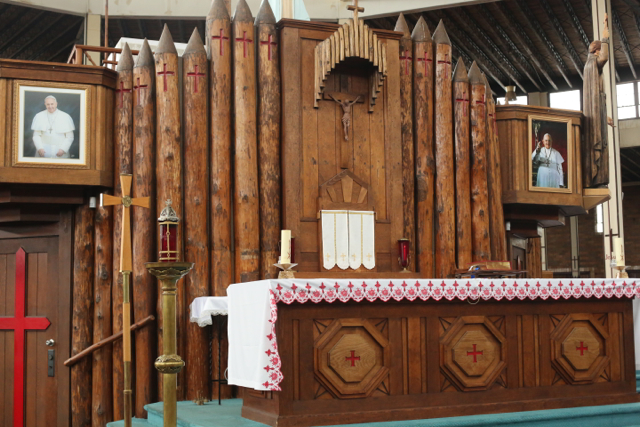
The “Santo Subito” of John Paul II was nothing – Pope Francis has already been raised to the altars here!
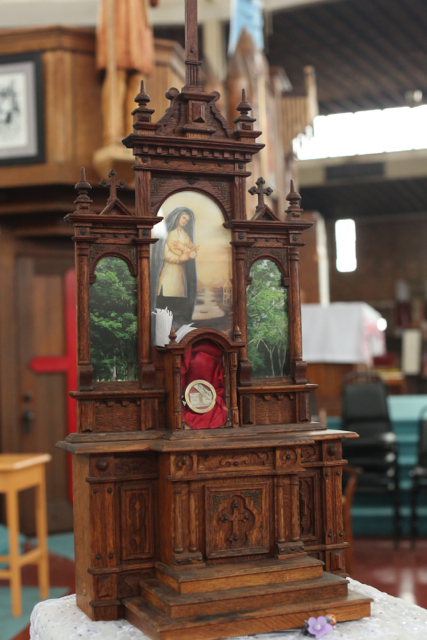
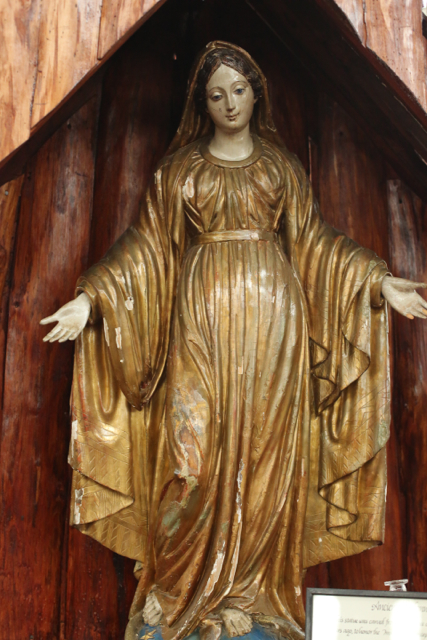
Reliquaries and items associated with the saints are on view. (Above) A reliquary of Kateri Tekakwitha. (Below) A statue from a roadside shrine near the Jesuit novitiate in Rouen, France where three of the North American Martyrs studied: Sts Isaac Jogues, Jean de Brebeuf and Antoine Daniel. They may well have prayed before this Madonna.
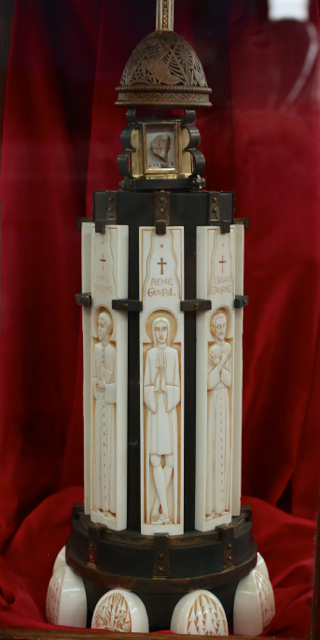
The reliquary of the martyrs of Auriesville. It was fashioned by Fernand Py, an artist of the Catholic “other modern” (M. Alderman).
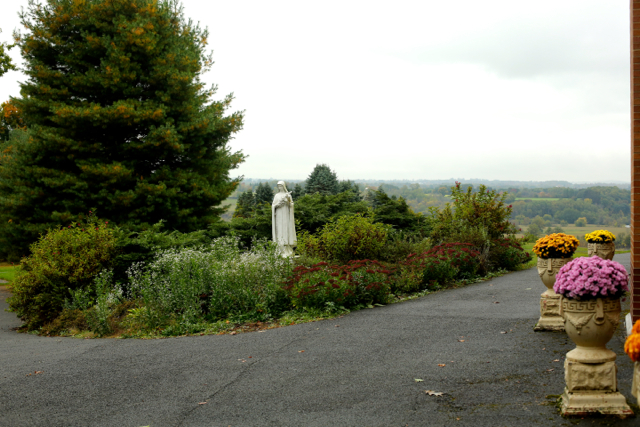
Statues abound on the grounds of the shrine of saints and devotions familiar and not-so-familiar. (Above) St. Theresa. (Below) The “Madonna della Libera.”
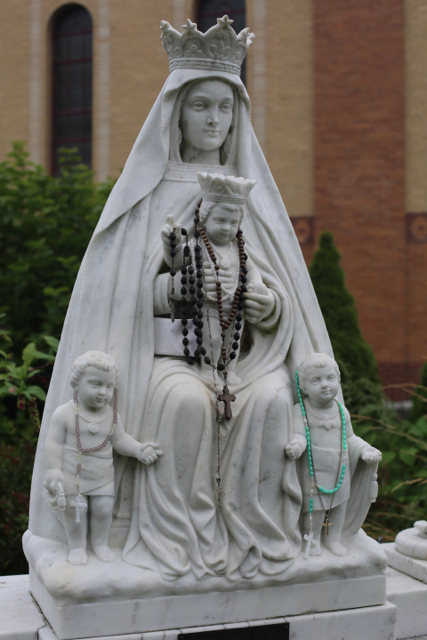

This sacred site has been attracting Traditional Catholics for many years now. For how many other places are there in the United States so closely linked with the foundation of Christianity in this region – and with martyrdom and the saints? To wander the grounds of the shrine is to discover a veritable encyclopedia of Traditional Catholic devotion – regardless of the current state of liturgical practice here. The “Pilgrimage for the Restoration” is now in its 19th year. The FSSPSX had been organizing a pilgrimage for just as long. We regret to say, however, that under its current management the shrine is not welcoming to traditionalists. (The same is true of the shrine to Kateri Tekakwitha in Fonda, but that is under different (Franciscan) direction.). The concluding mass for the “Pilgrimage of the Restoration” no longer takes place in the coliseum. As for the FSSPX pilgrimage, which now is substantially larger than the “Pilgrimage for the Restoration”, they had (always?) been excluded from the coliseum. In the last few years, however, they have been barred from the rest of shrine grounds as well. This year they were told they could not even park their cars at the shrine parting lot – creating quite an uproar, for at the head of the FSSPX pilgrimage was one Msgr Bernard Fellay….3)
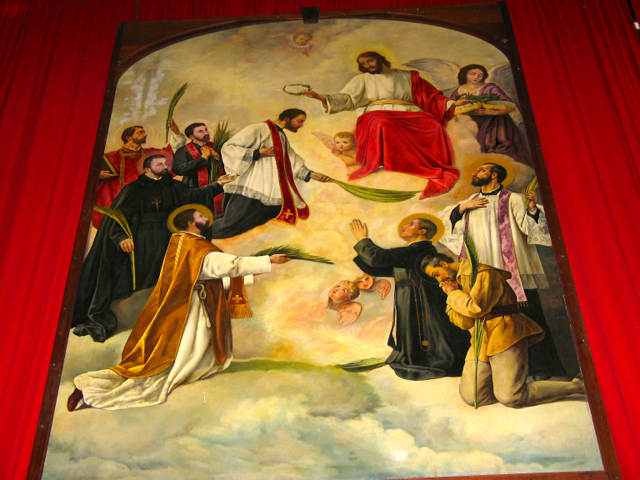
An altarpiece of the North American Martyrs (from where?) on a wall of the coliseum.
To visit the shrine of the North American Martyrs is a journey well worth making. One need not travel to all kinds of pilgrimage sites all over Europe when such a holy place is on our own backyard. And despite the symptoms of the decline of the Church so evident at this shrine, we can only rejoice that such a precious heritage of earliest days of Catholicism in our land still is with us. The spirit of the martyrs still teaches us how to confront our own seemingly insurmountable difficulties.
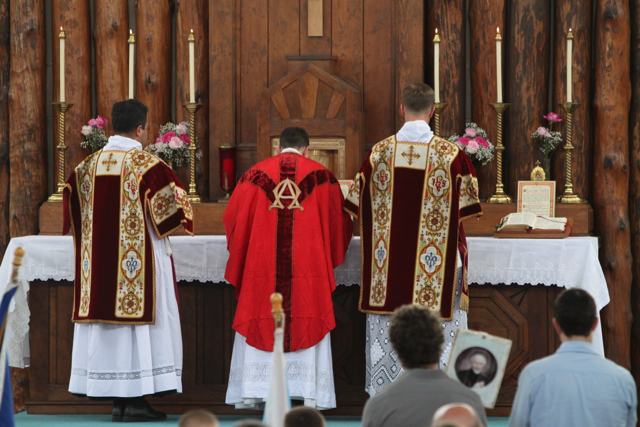
(above) A thing now of the past? – Solemn High Mass at the Shrine in 2010.
The shrine WEBSITE.
1) “Auriesville Shrine tries to save Itself,” The Evangelist, 4/3/14 http://www.evangelist.org/main.asp?SectionID=3&SubSectionID=28&ArticleID=24493
2) Minor, Kerry, “Work Underway at the Shrine”,Leader Herald, 9/19/14 (at http://www.martyrshrine.org/?p=559
#) “Rome will hear of This,” SSPX.org, 6/13/14 http://sspx.org/en/news-events/news/auriesville-injustice-rome-will-hear-4213
Published in Events, Photos | 2 comments
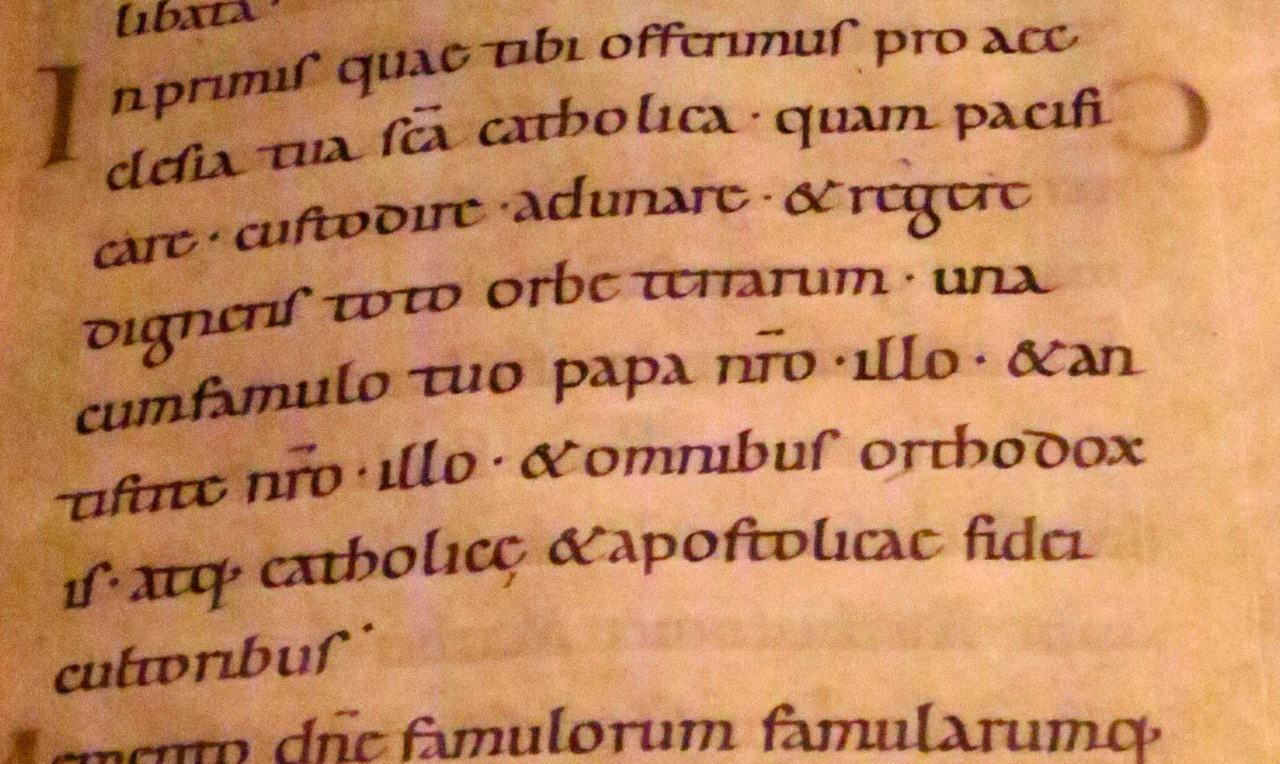
Last Sunday was the last day of an exhibition of items on loan from the Bodleian Library of Oxford. Despite a daft title and organizing principle (“Marks of Genius”) it was an extraordinary collection – which, almost despite the will of the organizers of the exhibition, testified to the role of the Church and Christianity in the creation of England and of Europe. On exhibit was the earliest copy of St. Benedict’s Rule, written around 700 AD in England. From Aachen around the year 800 AD came a splendid Carolingian binding on a manuscript of the same period.Then, there was the first book in the English Language, a translation of St. Gregory the Great’s Regula Pastoralis from later in the 9th century. A translation, moreover, that was perhaps made personally by another “Great,” King Alfred. St. Margaret of Scotland’s personal illustrated Gospel book (circa 1050 AD) was also on display. There followed a series of medieval and Renaissance illuminated manuscripts leading to the early printed books. And this long “Catholic age” came to a truly thundering close with Albrecht Dürer’s illustrations of the Apocalypse.
Now all the exhibits – including scientific works, the creations of secular authors and the illustrated products of the Islamic cultures – conveyed an overpowering impression of the great reverence shown to the physical book itself, whether written or printed. It is evidenced by the beautifully written manuscripts, the careful printing, the magnificent illustrations and the costly bindings – all the greatest possible contrast to today’s “virtual” culture of the written word – where the “book” or text disappears at the click of a mouse…
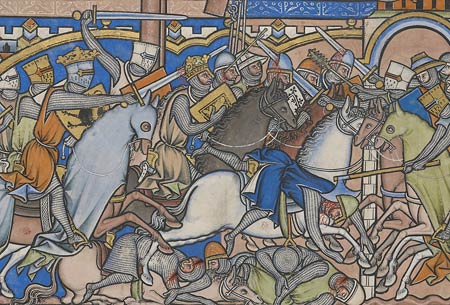
The Crusader Bible – from the Pierpont Morgan Library.
For those of you who missed the above exhibition, another good one is on the way to the Pierpont Morgan: one of the most important Crusader illuminated manuscripts. This is the Morgan’s description:
“The spectacular Crusader Bible is one of the greatest illuminated manuscripts in the world, renowned as much for its unrivalled and boldly colored illustrations as it is for its fascinating history. The work brings Old Testament stories alive in bright images replete with medieval castles, towns, and battling knights in armor, all set in thirteenth-century France. Before the manuscript is rebound visitors will have the opportunity to view over forty of its miniatures, the work of six anonymous artists who were the artistic geniuses of their day. They will also learn about the manuscript’s incredible journey from France to Italy, Poland, Persia, Egypt, England, and finally, New York.”
Published in Events | no comment
Churches of New York
Holy Roman Empire
Website Highlights
Archives
[powr-hit-counter label="2775648"]