A new twist for youth masses.
The pilgrimage does not appear to have been a hit – there seem to be as many celebrants and photographers as “youth” present.
(Thanks to le Forum Catholique)
26
Jul
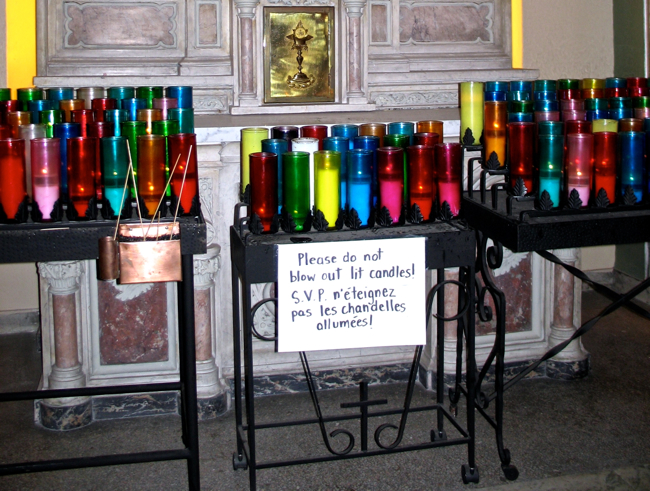
Church in Nova Scotia, 2005
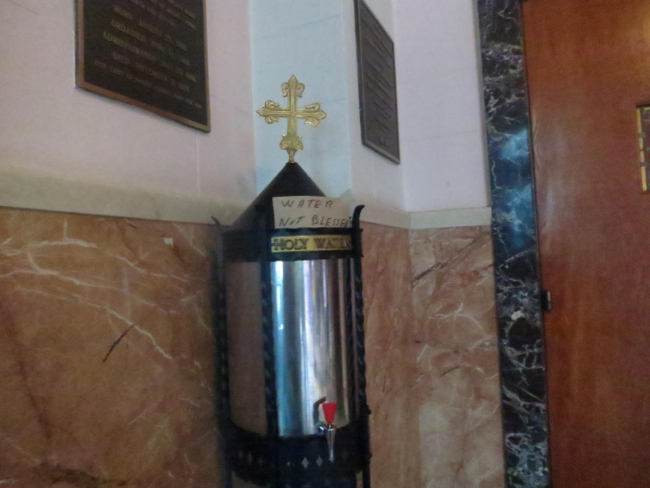
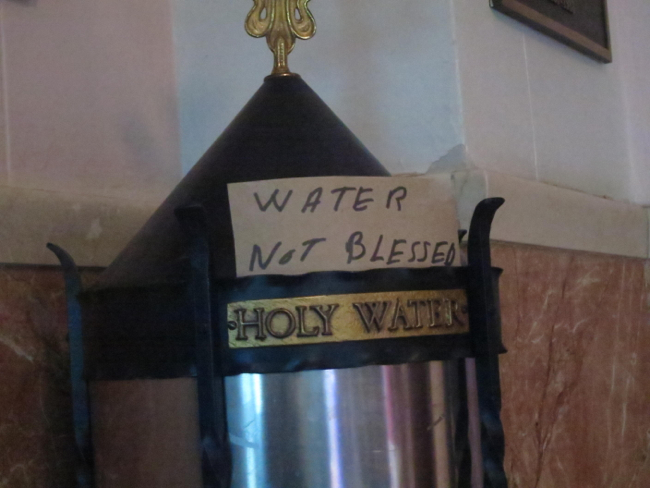
(above and Below) Our Lady of Mount Carmel, Newark, 2013
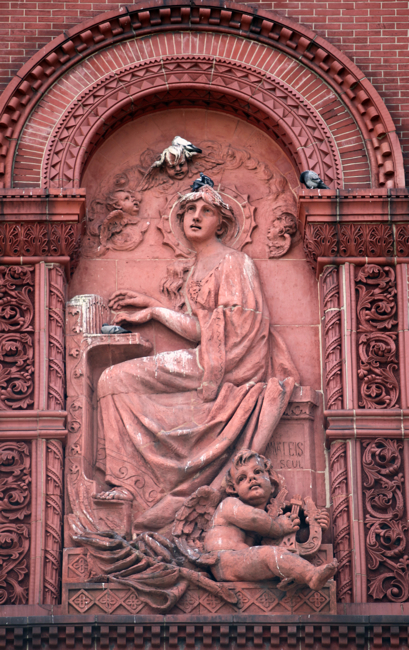
St Cecelia – and feathered friends.
St. Cecilia
112 – 120 East 106th Street
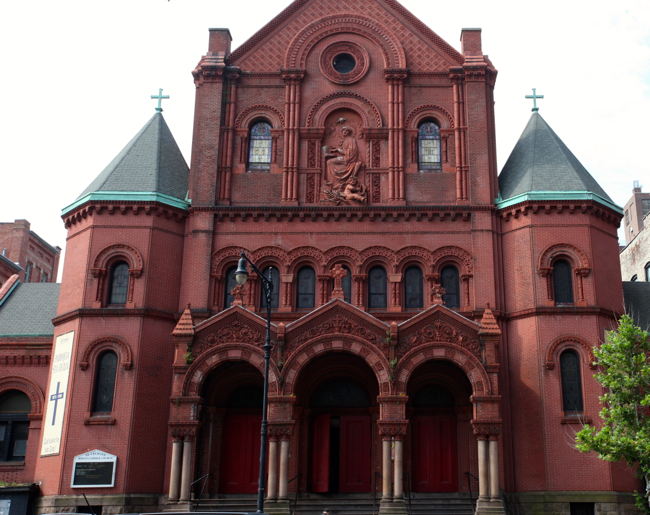
It is a strange and wondrous vision: a vast red brick complex rises amid the colorless, nondescript and frequently decrepit high- and low-rise streetscape of Spanish Harlem, broken only here and there by a row, somehow intact, of old townhouses. The distinctive buildings of this impressive complex – so rare in Manhattan – extend over most of a city block. Only one corner is free – and is occupied by a public school, oddly complementary is scale and style. For this is the church of St Cecilia – the Roman martyr and patroness of church music.
This parish was organized in 1873, carved out of the parish of St. Paul to the north. The gestation, however, seems to have been unusually long. For years the parish had to make do with its first modest wood church on East 105th street (this building was later transported to another site for use as the original church of the new Our Lady of the Rosary parish!) In 1881 the present site of St. Cecilia’s was acquired and a ”lower church” begun. But things only moved into high gear with appointment of Fr. Michael Phelan as rector in 1884. Fr. Phelan was one of those dynamic priests so frequently encountered in that era – the driving forces behind the creation of so many great parishes in that age of expansion. He supervised the construction of the upper church and indeed served himself as the general contractor the church, thus saving his parish a small fortune. The church was finished in 1887. 1)
The architect was Napoleon LeBrun (1821-1901) – along with Renwick and Keely one of the leading lights of the Archdiocese’s age of high Victorian gothic (1850 to 1890). LeBrun’s other creations include most of old St Ann’s (his own parish; destroyed in 2004 by the Archdiocese); the Gothic jewel of St John the Baptist on West 31st Street (originally German) and St. Mary the Virgin (Episcopal). And there were numerous prestigious secular commissions as well (such as firehouses!). 2) Despite the impression one might gain from the above, LeBrun’s stylistic repertoire was by no means limited to the gothic. St Cecilia’s, in a style that can be categorized as “Romanesque revival,” is the best example of that.
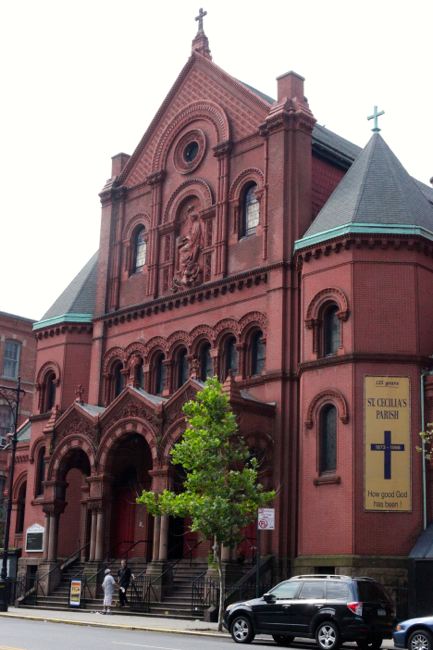
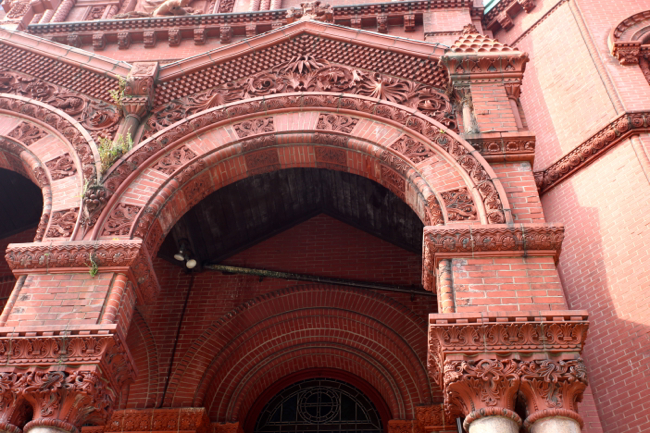
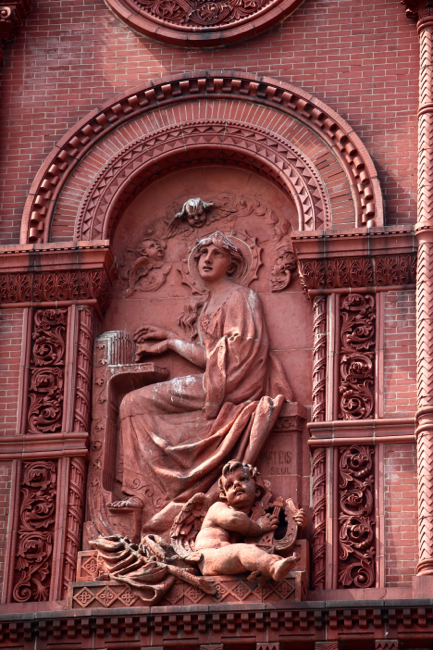
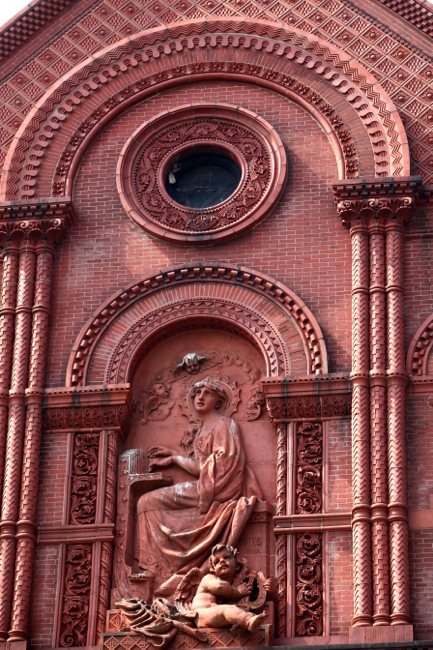
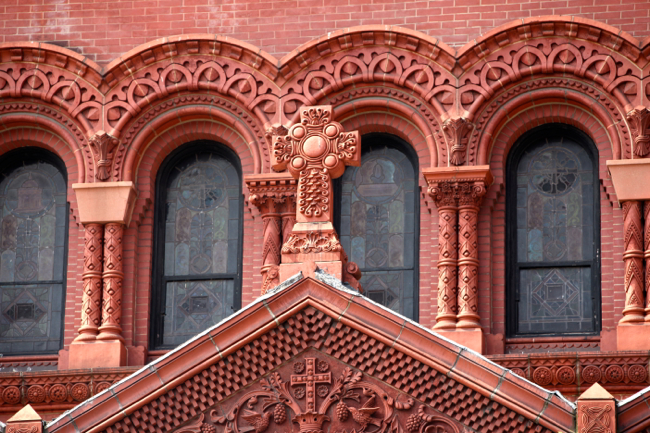
The church’s red brick façade is a truly amazing creation: a portico with three bays juts out over the entrance to the church. Above this towers a façade entirely covered with intricate, bizarre terracotta ornamentation, culminating in the great image of St Cecilia. Nowadays the crevices and projecting surfaces resulting from the elaborate patterns create a welcome home for plants and pigeons. Only a handful of New York churches, such as St Patrick’s cathedral, Blessed Sacrament, All Saints or St Vincent Ferrer, can rival the imposing exterior of this out-of–the-way parish!
On each side of the façade stands a stout tower. A glance to the side reveals that the rest of the exterior of the church, largely invisible from the street, is finished only in plain brick and wood. Like so many New York churches, ornamentation is limited to the one great façade emerging from the streetscape tightly enclosing the church.
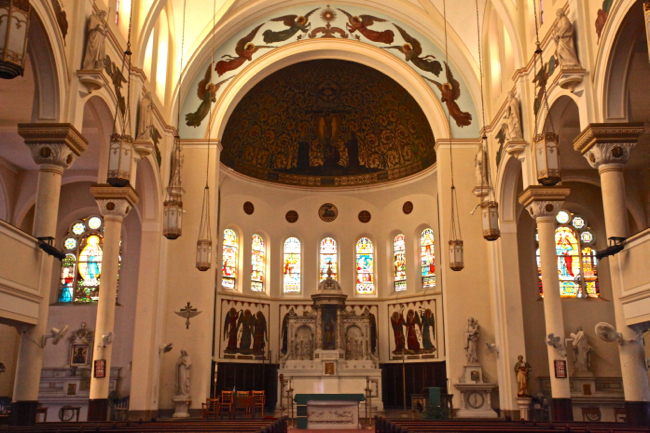
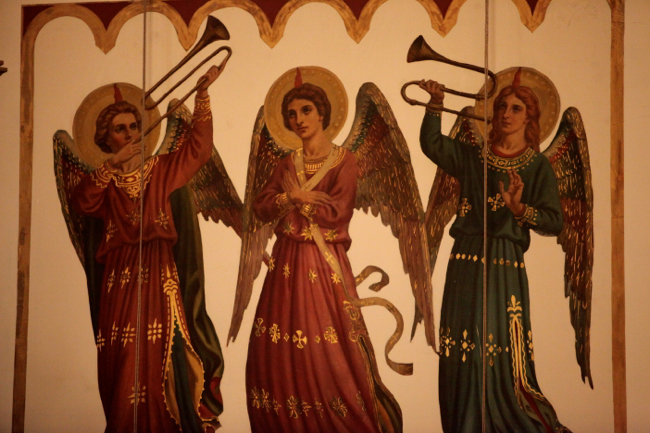
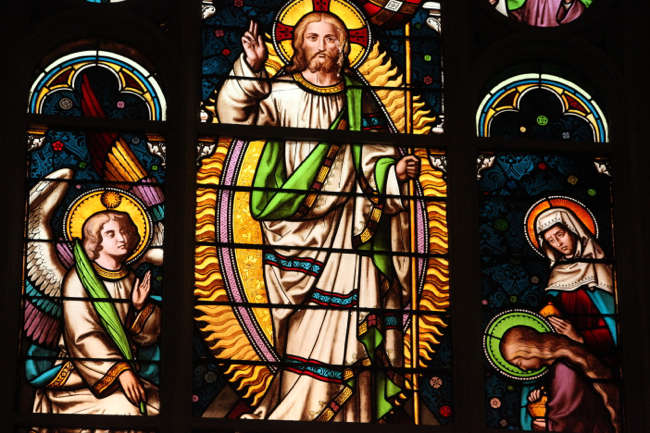
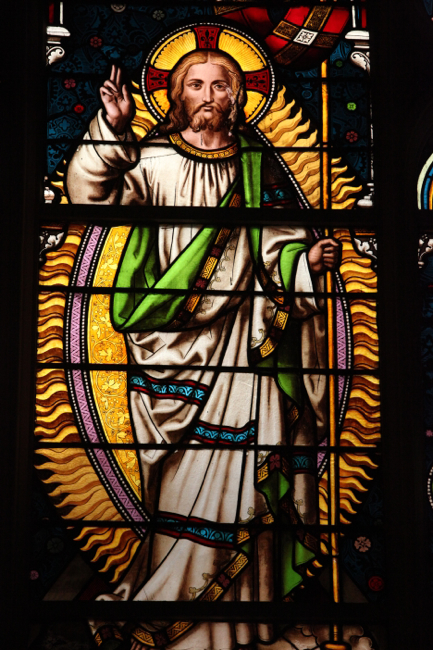
But a step inside, however, reveals that there is much more to St Cecilia’s than just a splendid exterior. The interior is light and harmonious, like LeBrun’s church of St John. There are galleries on three sides, including a two-tiered organ loft like St Anthony of Padua. Stained glass, paintings and altars exhibit a high level of workmanship. Statues and votive lights complete the very Catholic interior. Unfortunately, the “spirit of the Council” has intervened rather drastically in the sanctuary – just look at the high altar that has been sawed off from its reredos.
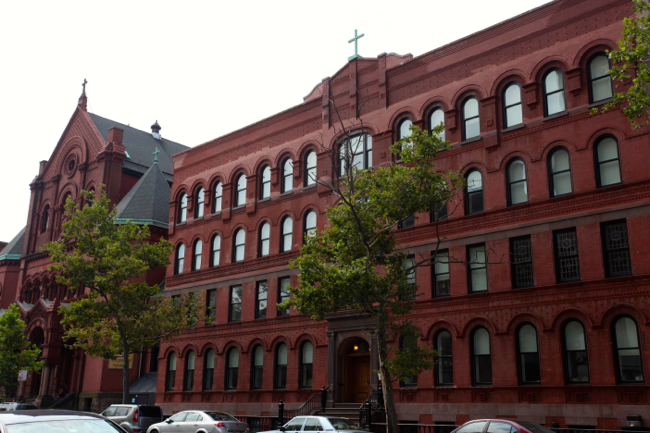
The spirituality and apostolic activity of St Cecilia’s in the 19th century were also much more than skin deep. Like most parishes of that age, St Cecilia’s fostered a whole series of charitable and educational apostolates. In addition to the parochial school, were no less than two chapels for two different Catholic schools: a kindergarten/nursery school and the Regina Angelorum home for working girls.. The legacy of Regina Angelorum and its sisters’ convent is the vast red brick edifice to the west of the church built in 1907. Nowadays both convent and home are combined into one building that houses the “Cristo Rey” school. 3)
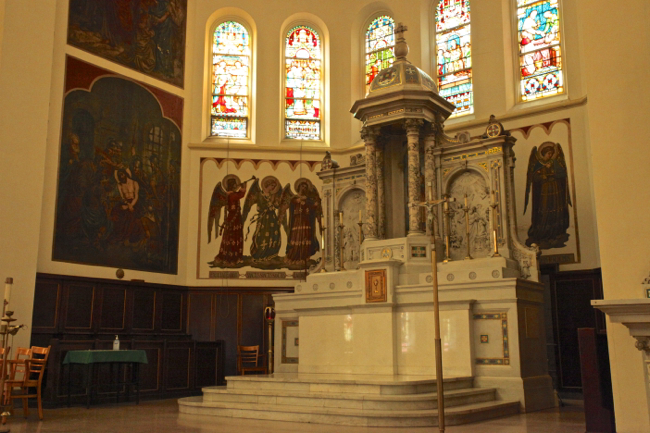
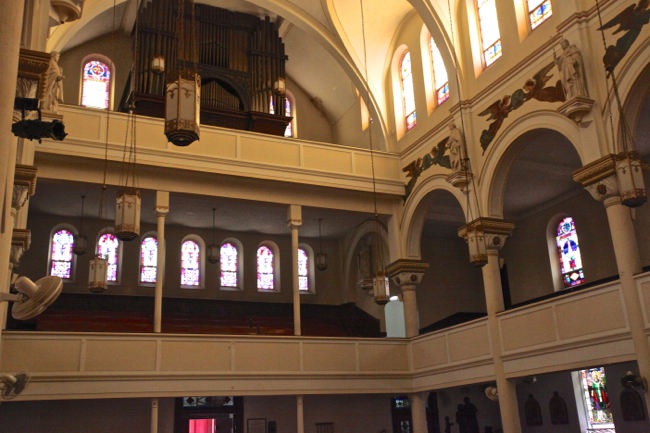
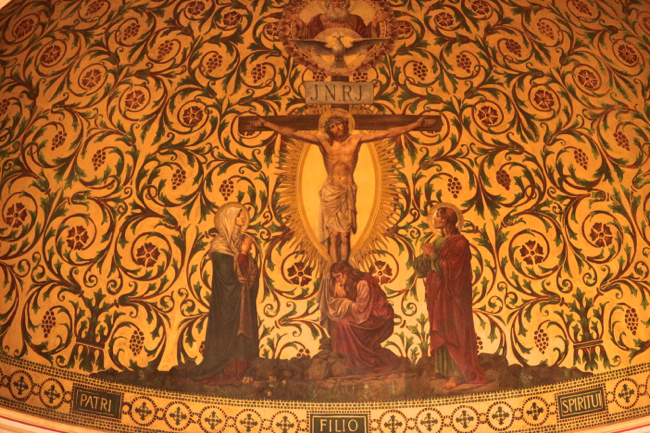
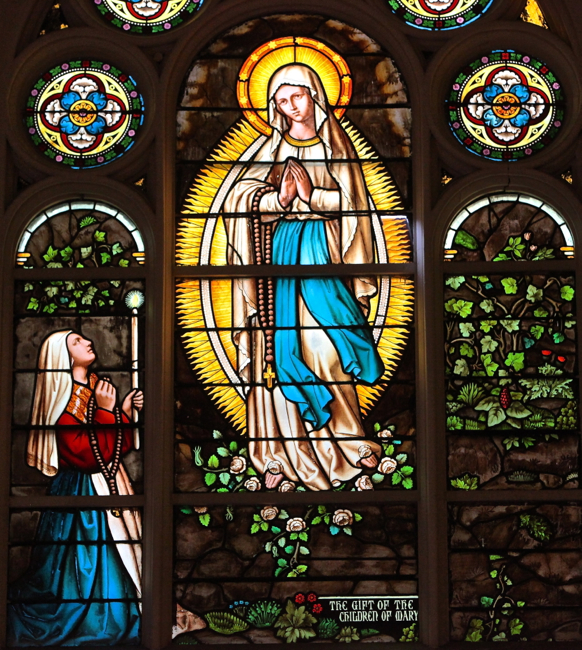
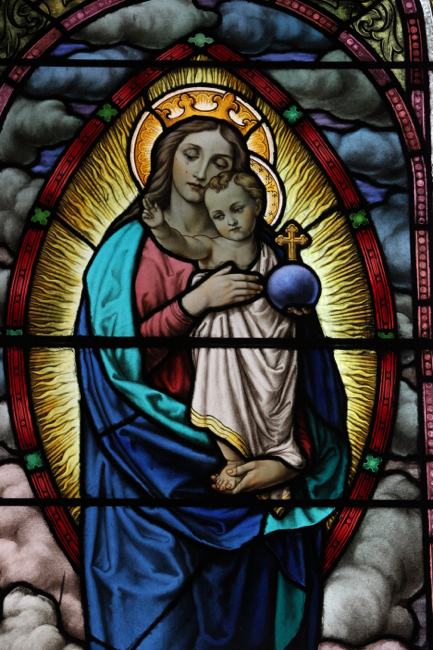
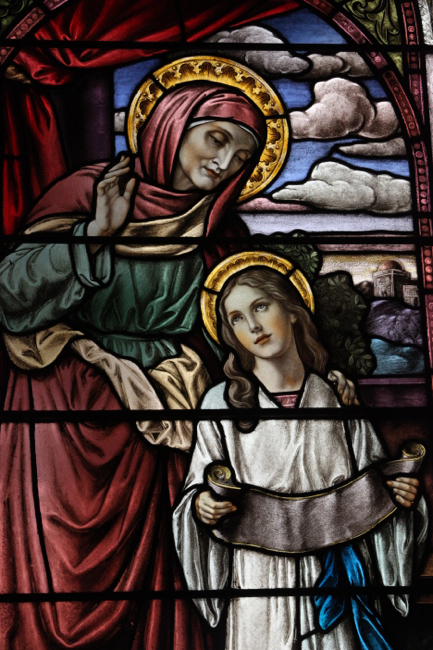
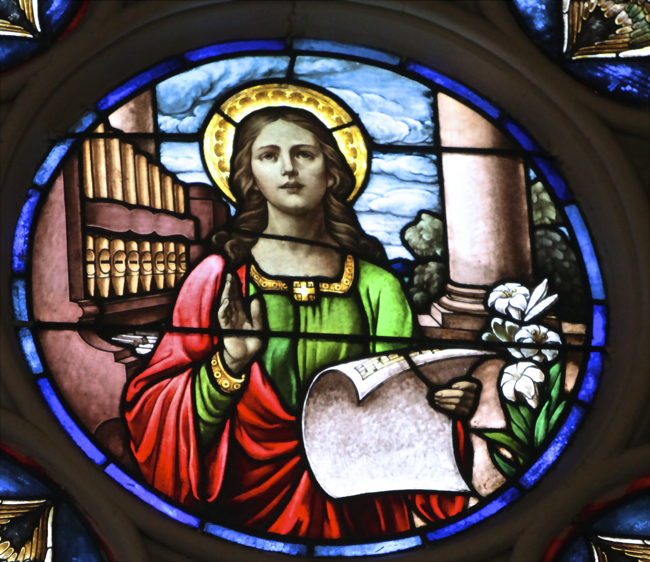
After the First World War the gradual transformation of East Harlem into a purely Hispanic area began. St. Cecelia’s parish ceased to be Irish, then became Puerto Rican and now serves many nationalities. The parish was handed over, first, to the Redemptorists and since 2009 the “Apostles of Jesus.” 4) What continues to impress us is the architectural legacy of the founding parishioners and priests. For the attention – grabbing, landmarked exterior of St Cecilia’s is just not external pomp and empty rhetoric that contradicts the true mission of the Church. It is the outward sign of a living community that has continued to serve the poor and working class here for some 150 years.
1) Shea, John Gilmary, The Catholic Churches of New York City at 236 -237 (Lawrence G. Goulding & Co., New York, 1878); The Catholic Church in the United States of America, Vol. 3 at 321 (The Catholic Editing Company, New York, 1914).
2) http://en.wikipedia.org/wiki/Napoleon_LeBrun
3)http://en.wikipedia.org/wiki/St._Cecilia%27s_Church_and_Convent_(New_York_City) ; http://www.nycago.org/Organs/NYC/html/StCeciliaRC.html
4) http://www.saint-cecilia-parish.org/index.php/History/hview/the_first_one_hundered_years_1873-1973/ (From the informative parish website)

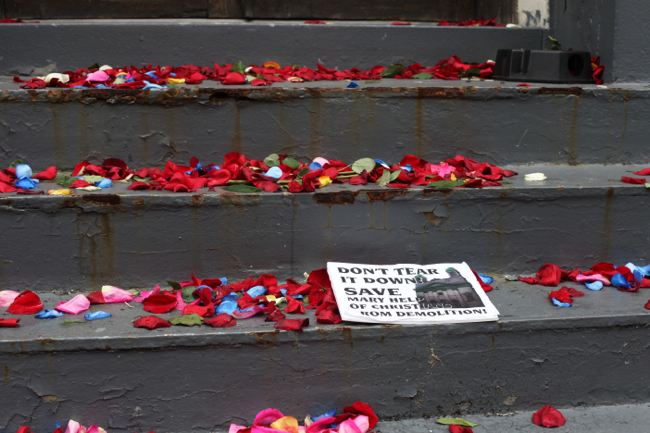
Last year yet another parish celebrated its last mass: Mary Help of Christians. 1) Now this was a small, originally Italian ethnic parish erected in 1908. It was in the care of the Salesians. The present church was built in 1918. The architect, Nicholas Serracino, was a prolific builder of churches in a baroque, beaux-arts idiom around 1910 – 20. His grand masterpiece is St Jean’s; his other commissions were for parishes with significantly less money. Since the 1930’s much of his work has disappeared (e.g., St. Clare’s (demolished in 1930’s); Sacred Hearts of Jesus and Mary (demolished 2007)). At Mary Help of Christians he created a miniature version of a grand baroque façade – staying within the constraints of the obviously extremely limited resources of this parish.
The parish may have been modest. Yet around its church arose an entire complex of buildings, most notably an impressive school. As time went on, this Italian parish became almost entirely Hispanic. The church and rectory grew noticeably dilapidated. The Council definitely left its mark on the interior. Yet the parish and school of Mary Help of Christians – as the parish dedication suggests – remained a beacon of hope in a very tough times of a forgotten neighborhood.
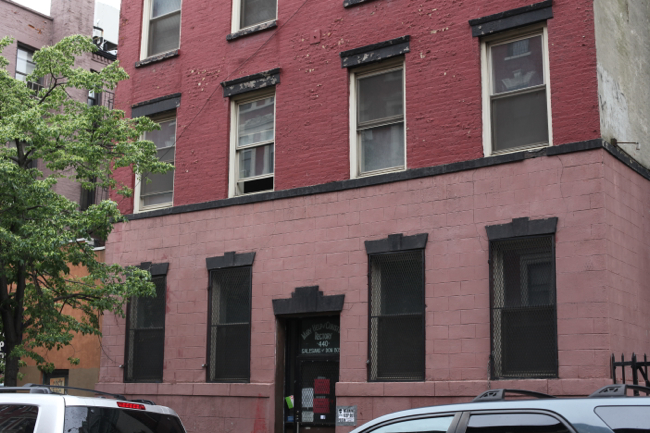
The rectory.
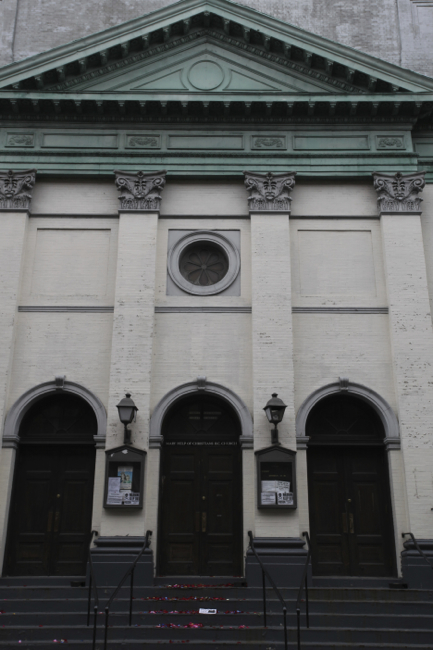
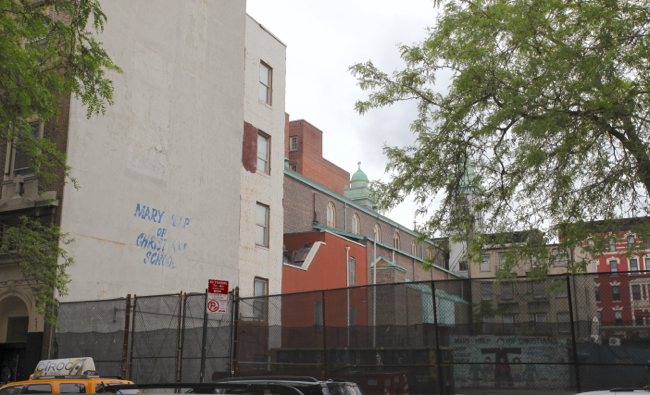
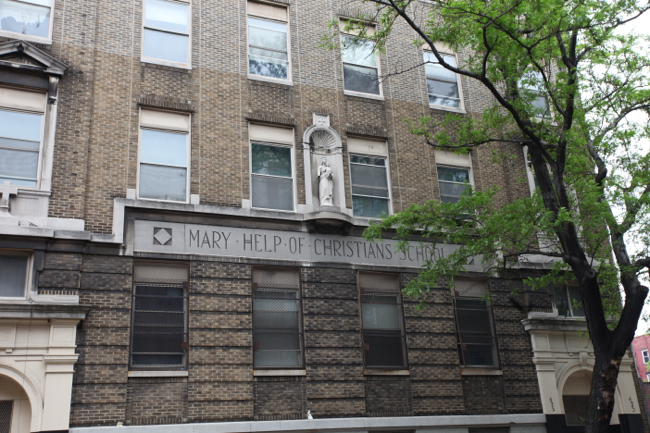
In 2007 the Archdiocese determined to close the parish. More clearly than elsewhere, a leading motive of all this “making all things new” activity has been spotlighted here: the large and valuable parish grounds have been sold to a developer for $41 million. A petition to demolish the church and the other strucures has been filed. 2) Luxury condominium units are to be erected on this site. So here the Archdiocese “cashes in” on the “widow’s mite” of past generations that financed the building of these churches of the poor. Other relics of New York’s Catholic identity and history are also on the block: Our Lady of Vilna (for $13 million – it was a flourishing parish as late as the 1980’s); St Vincent de Paul (a 140 year old building). 3) The air rights to St Patrick’s Cathedral are also up for grabs. 4) Yet all this deal-doing only serves to defer for a little while longer the day of reckoning for the Archdiocese.
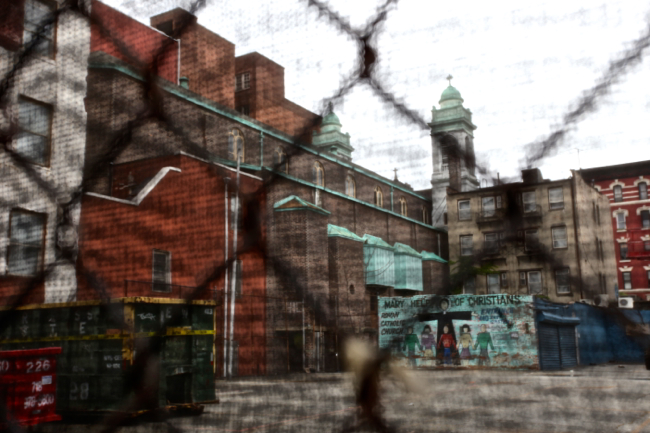
The schoolyard – this is all valuable stuff nowadays.
Just as at St. Thomas, Our Lady of Vilna, St. Ann’s, St Vincent de Paul and St Brigid a devoted group of parishioners is making a last stand for their parish. They assert the rights of past generations buried in an ancient cemetery at this site. 5) Will they succeed in blocking these Archdiocesan deals? It is not promising – but yet in one of the above cases the parishioners succeeded in fending off the destruction of their parish (admittedly at the cost of shutting down another)! 6)
1) http://eastvillage.thelocal.nytimes.com/2012/09/10/slideshow-last-mass-at-mary-help-of-christians-church/ (a beautiful slideshow showing the last mass at this church – and also revealing the interior)
2) http://evgrieve.com/2013/04/permits-filed-to-demolish-mary-help-of.html
3) http://www.nypost.com/p/news/local/manhattan/ny_losing_all_its_old_churches_1PLSdD92TpfrkUYfbDVLqK
4) http://www.nydailynews.com/new-york/archdiocese-new-york-sell-lucrative-air-rights-properties-including-st-patrick-cathedral-article-1.1159272
5) http://gvshp.org/blog/2013/05/23/more-evidence-of-historic-cemetery-under-endangered-church/
6) This site summarizes developments regarding Mary Help of Christians: http://ny.curbed.com/tags/mary-help-of-christians
21
Jul
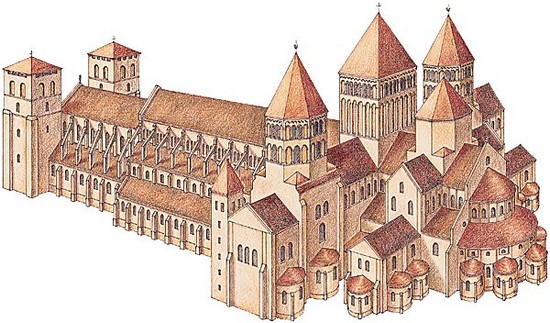
The famous Abbey of Cluny – once the largest church in the West.
We are grateful that a reader at Le Forum Catholique has compiled materials on St Hugh of Cluny HERE -in French, of course!
And, as we previously may have mentioned, the parish with the name of our patron in Philadelphia is closing in the ongoing meltdown there
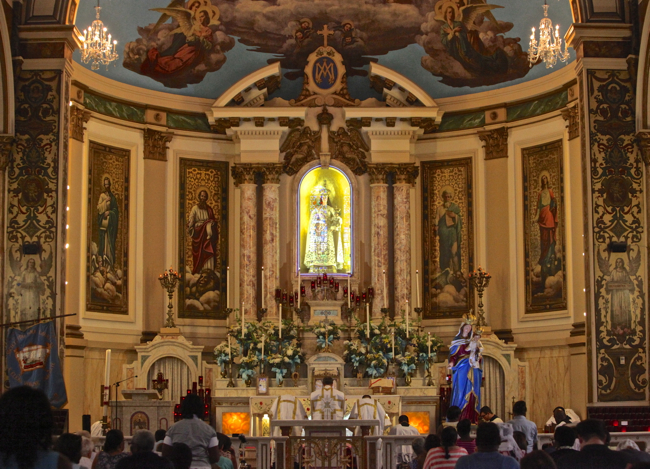
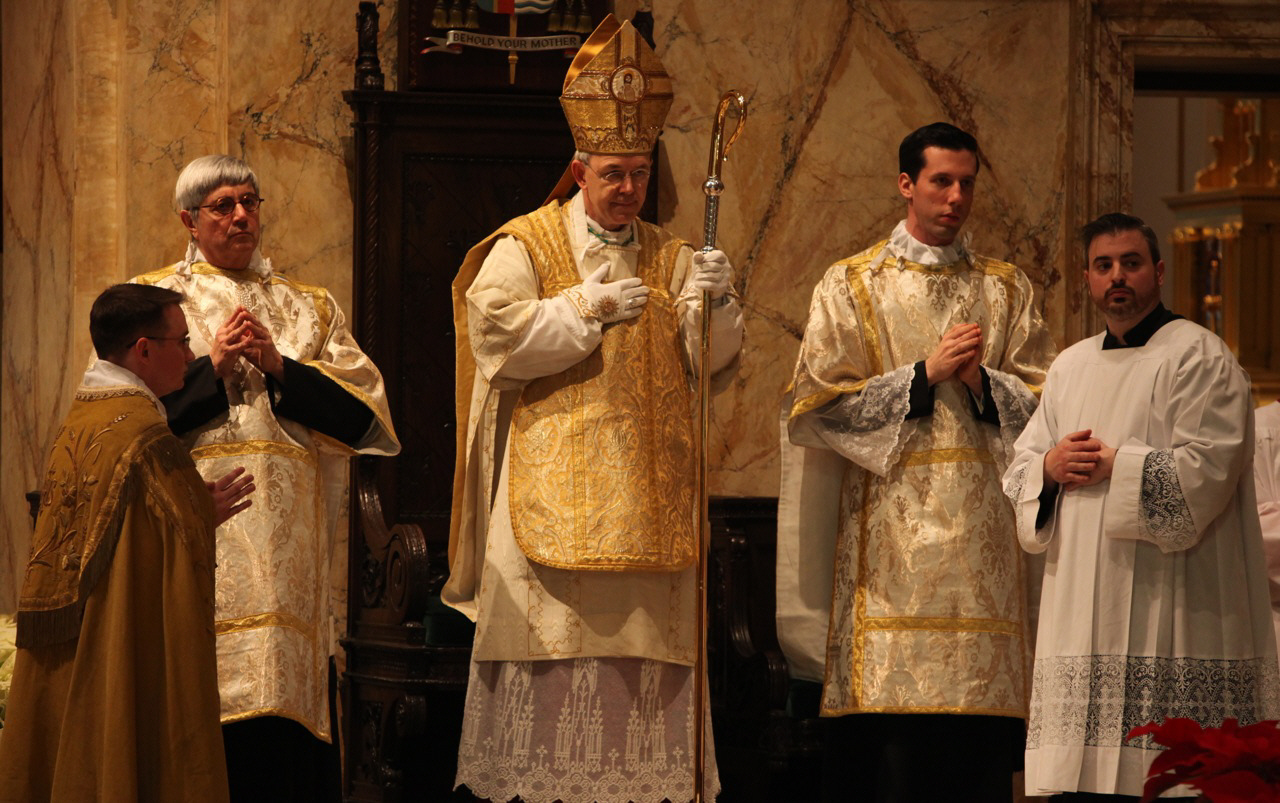
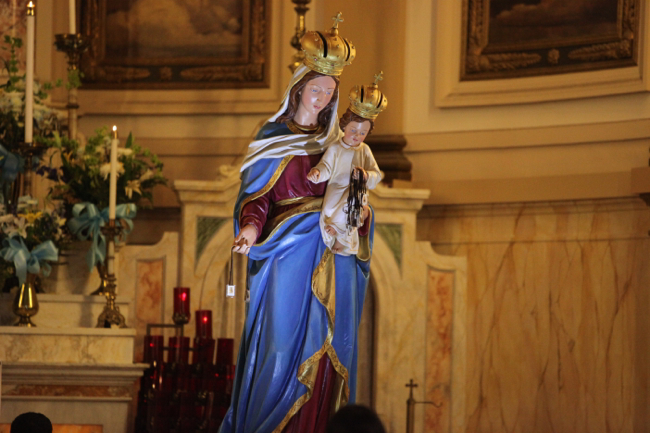
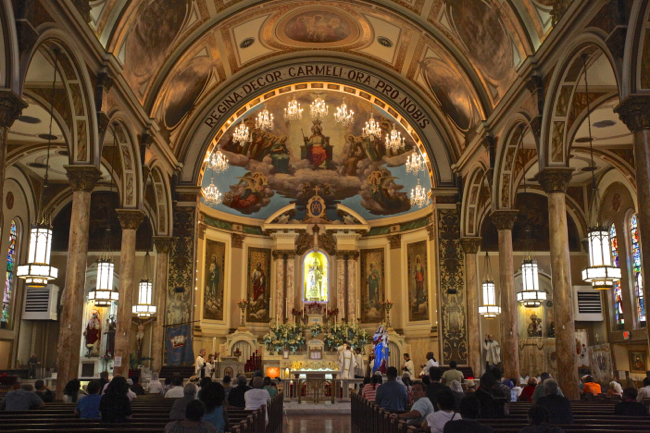
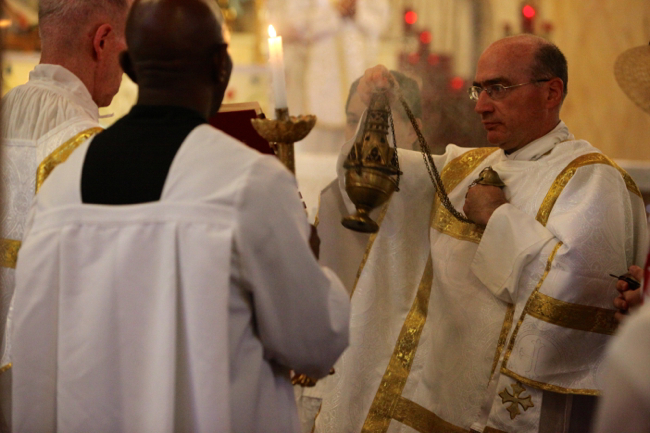
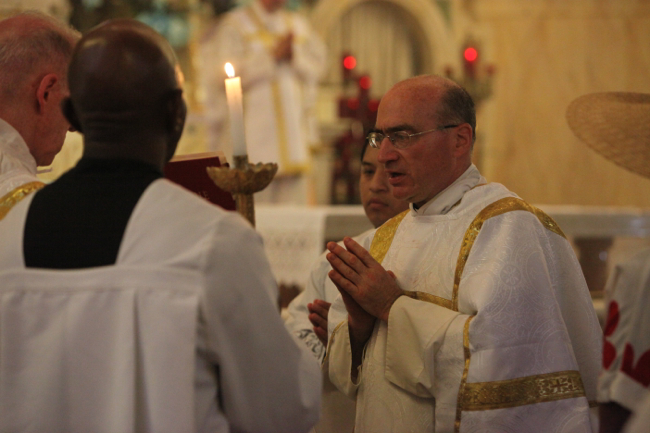
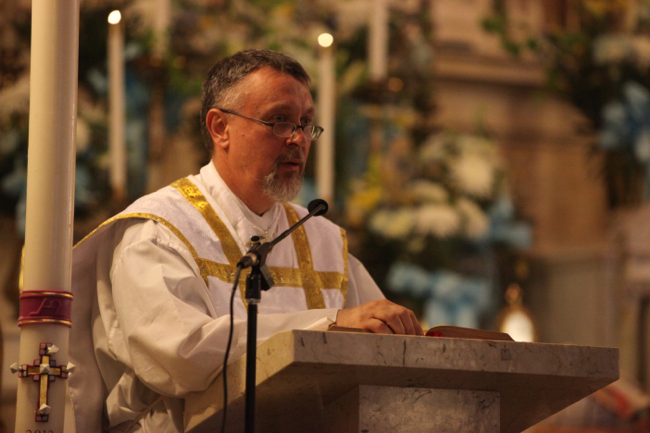
Concluding this week’s liturgies in honor of Our Lady of Mount Carmel was this Solemn High mass celebrated this morning at Our Lady of Mount Carmel shrine in New York.

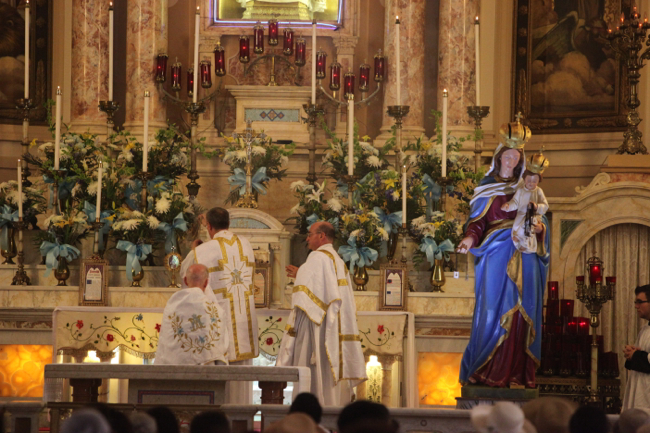
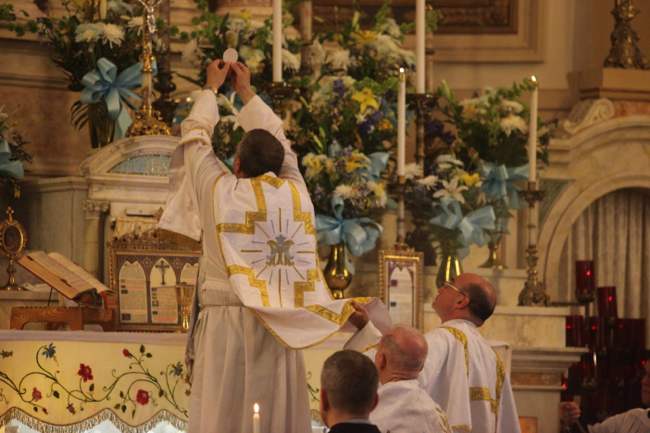
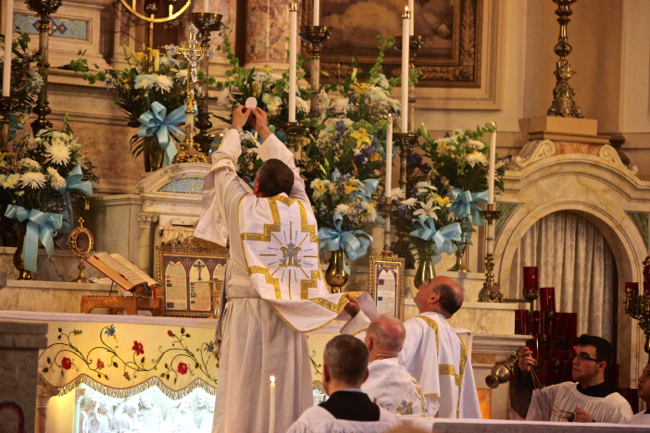
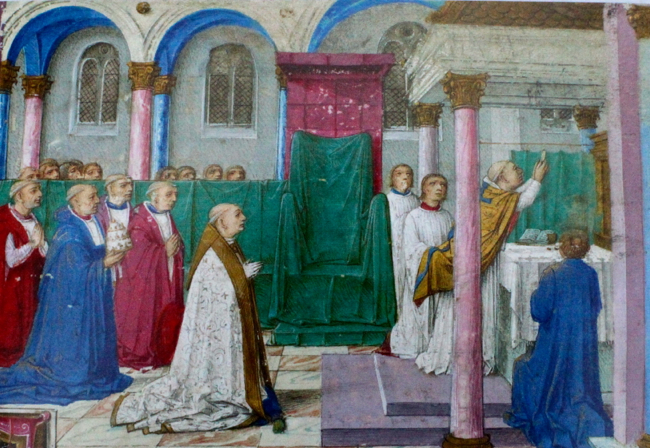
The Master of the Della Rovere Missals – Mass with a Pope in attendance (The Morgan Library)
Illuminating Faith: The Eucharist in Medieval Life and Art
Morgan Library and Museum
(Until September 2)
The Morgan library has unlocked many of the masterpieces from its store of illuminated manuscripts to tell for us the story of Eucharist: its origin in the New Testament, its role in liturgy and Christian piety and the growing development of Eucharistic devotions. Through a survey of a vast number of beautiful illustrations we learn the meaning of the Eucharist in theology and explore the vast number of Eucharistic symbols. Indeed the story begins before the New Testament, as many of the Old Testament parallels are depicted and explained.
My wife observed how much of the knowledge patiently set forth in the explanatory materials to this exhibition would have been known up to the end of the 1960’s by the average Catholic grammar school pupil. Only a minority of the images deal with esoteric subjects or strictly medieval practices. In that regard, the visitor unacquainted with medieval life and humor may be scandalized by some of the strange and even blasphemous images found in a few of these manuscripts…
The exhibition devotes much space to the practices surrounding the feast of Corpus Christi. For here we see that medieval Eucharistic devotion did not simply foster an individualistic piety – however laudable that certainly is – but developed into a feast that in so many locations is the greatest public manifestation of collective Catholic identity. Originating north of the Alps and gradually spreading, by the 1540’s it was celebrated in Rome with the almost endless papal procession shown on a manuscript in the exhibit.
The explanatory materials are ample and their tone is objective and straightforward. This is what was believed – and to some extent, the exhibition (Roger S. Wieck is the curator) takes care to point out, is believed still. There are only a few ”zingers” directed at the Church, such as where persecution of Jews is described as a “repercussion” of medieval Eucharistic piety – without any further qualification. (I can think of many more immediate causes such as fear of the Black death in 1348).
Now Holland Cotter in The New York Times (July 5, 2013) has written an extensive review of this exhibition. Building on elements of the descriptions accompanying the displays, he has refashioned the show into a tale of clerical oppression. The “consecrated bread” was “potent stuff” increasingly kept in the custody of the clergy, which had “come to be defined as a specialized professional class set apart from the larger community.” “The mass was performed by the priest standing with his back to the congregation…” “As if to compensate for lack of tangible access ( of the laity to communion), though, the host began to assume a growing visual presence…” It’s a story we have heard so many times from post-conciliar Catholic clergy. Eamon Duffy in several of his works (The Stripping of the Altars; Marking the Hours) has offered a major corrective to the views of the Times and, to some extent, of the exhibition. But at least The Times has devoted a long report to this excellent exhibition; as one might expect, its resonance in the Catholic world outside of a few individuals has been null.
All in all, this exhibition is highly recommended, although the price of admission to the Morgan nowadays certainly ain’t cheap. But for your money you can wander among the great rooms of the library and several distinguished exhibits often virtually alone – what a blessing in New York! For to appreciate works such as these illuminated manuscripts concentration and quiet study are required – the approach found in the blockbuster shows at the Met won’t work here….
In addition to The New York Times review, see the blog Ad Imaginem Dei for a detailed image by image review – in 6 installments!
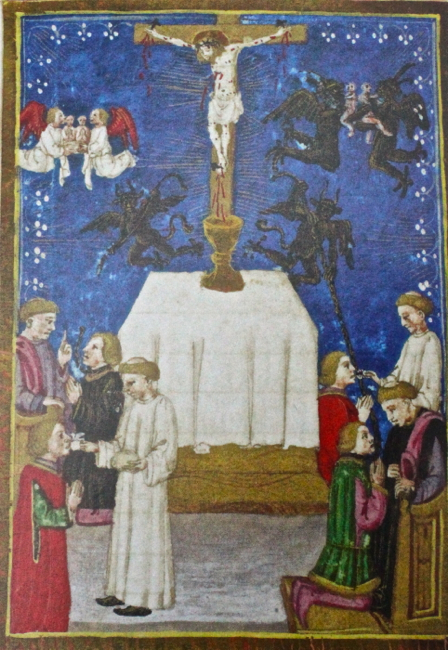
Good and Bad communion (The Morgan Library).