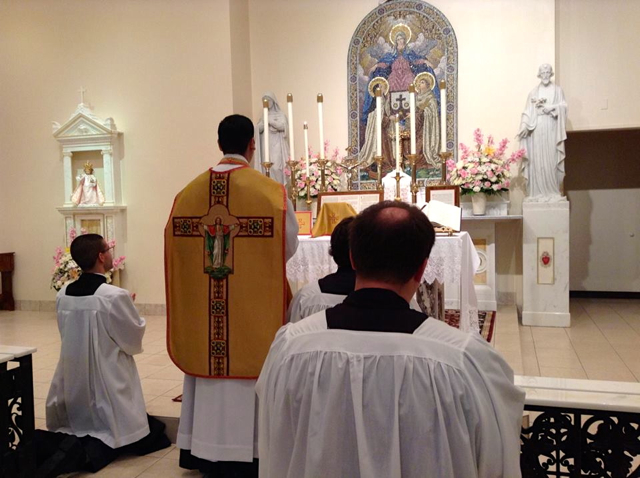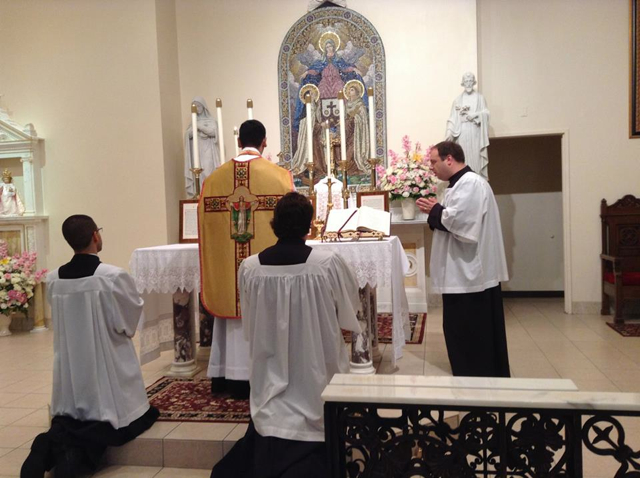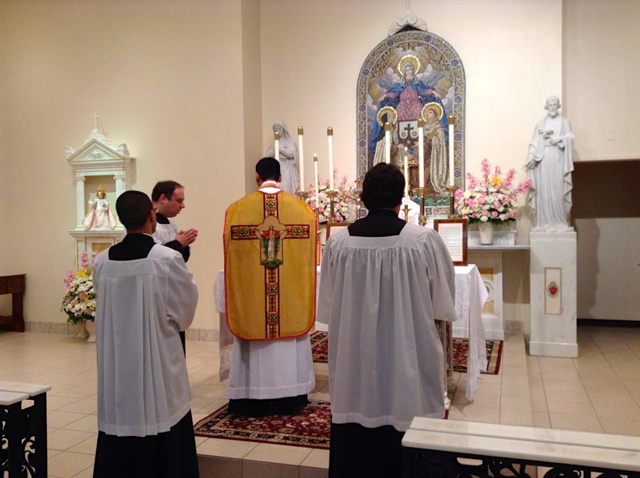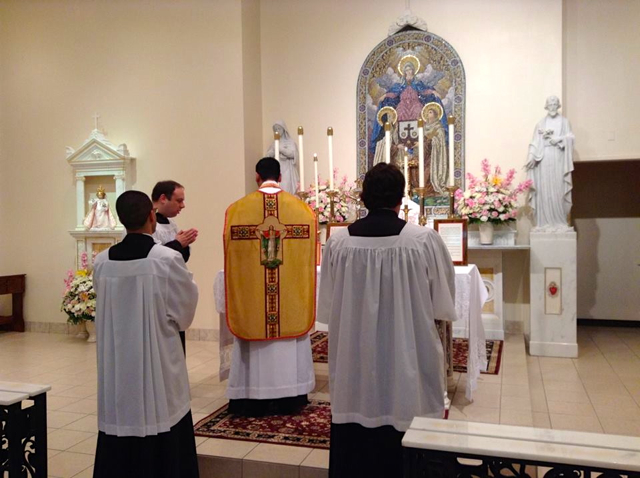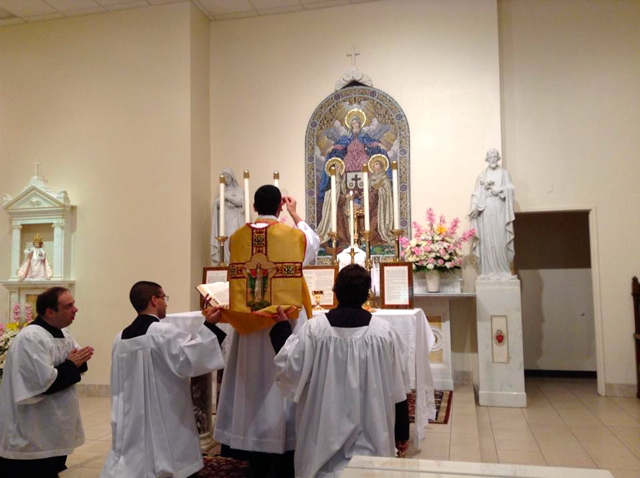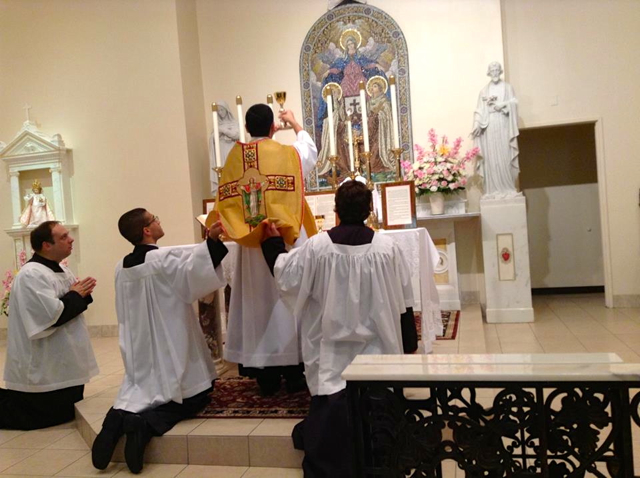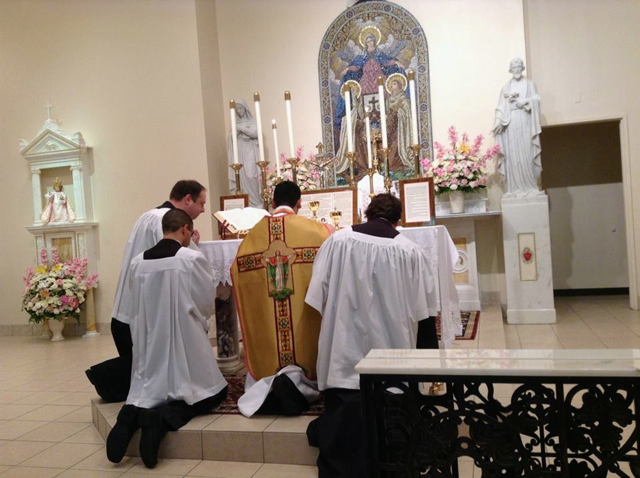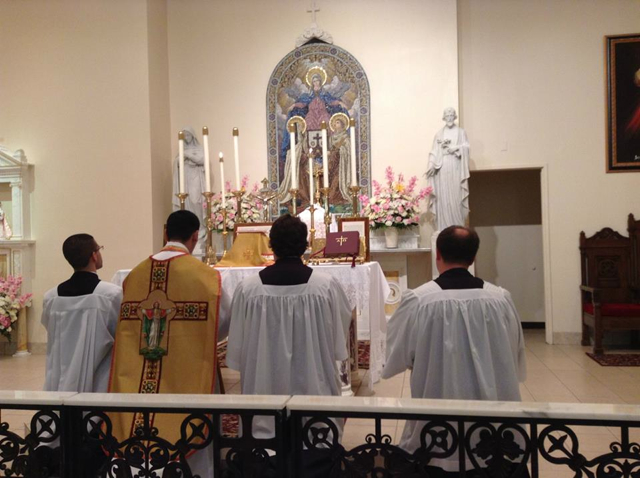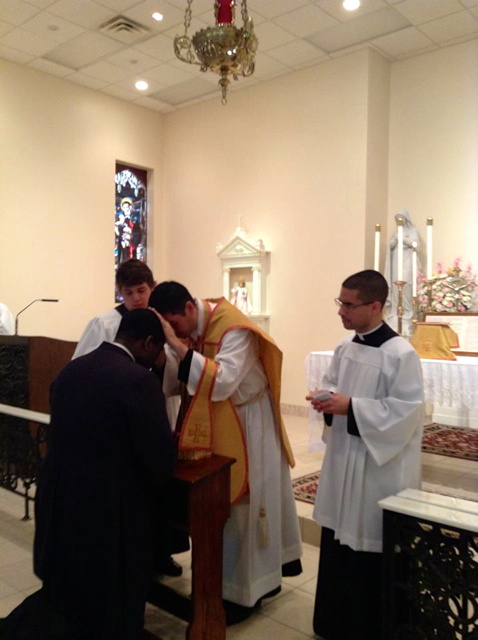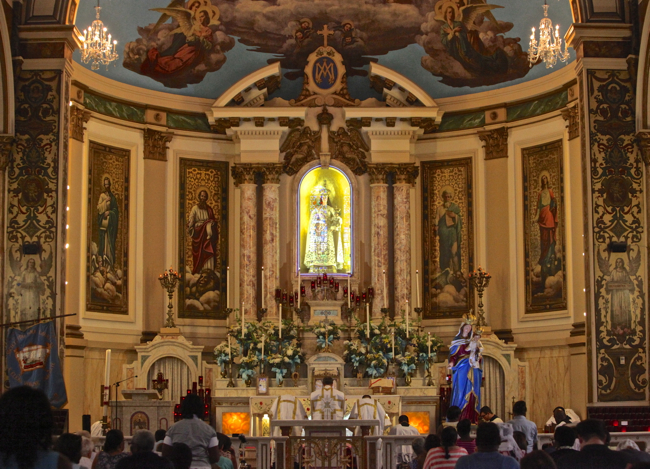
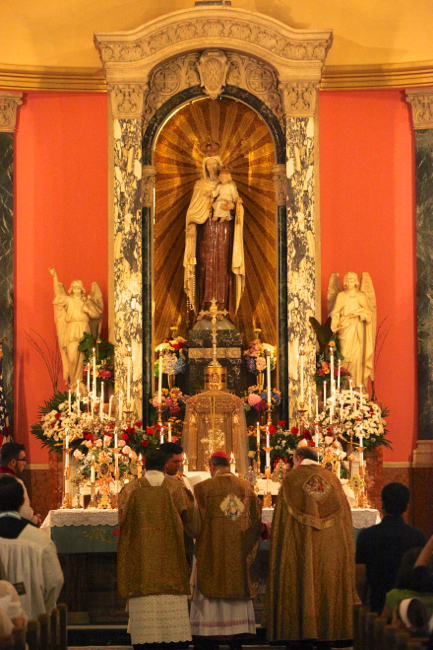
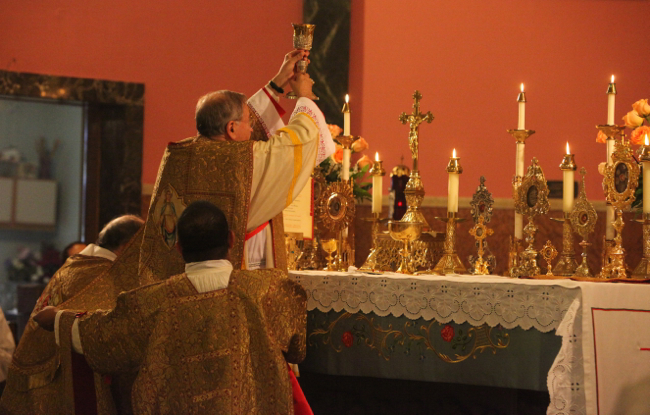
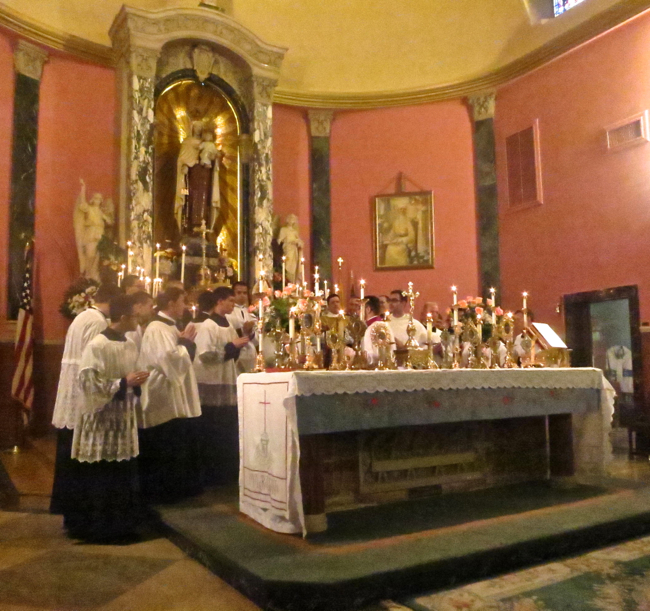
Concluding this week’s liturgies in honor of Our Lady of Mount Carmel was this Solemn High mass celebrated this morning at Our Lady of Mount Carmel shrine in New York.
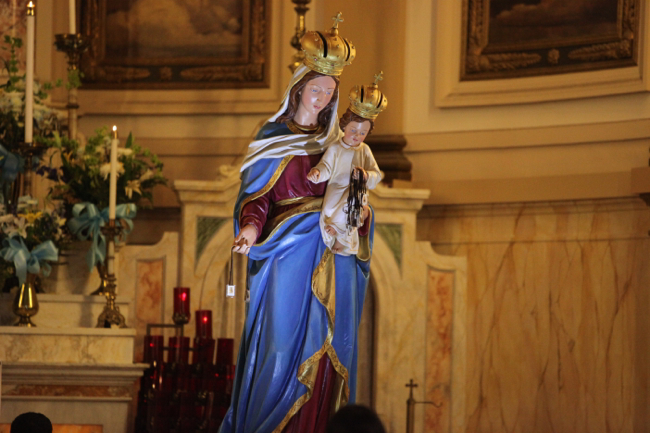
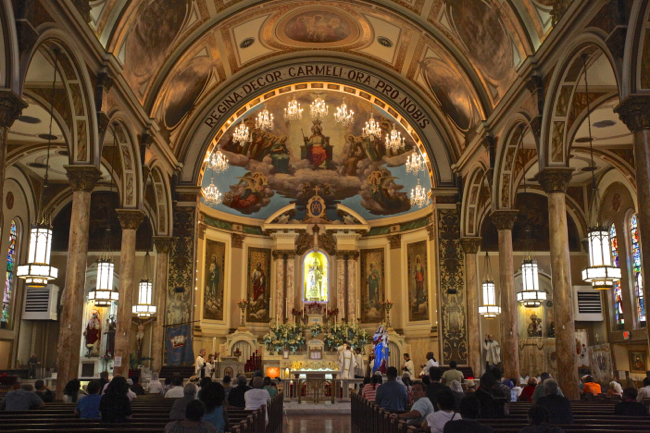

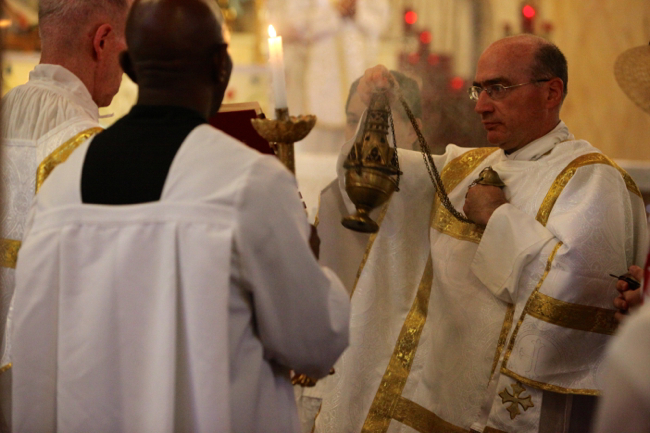
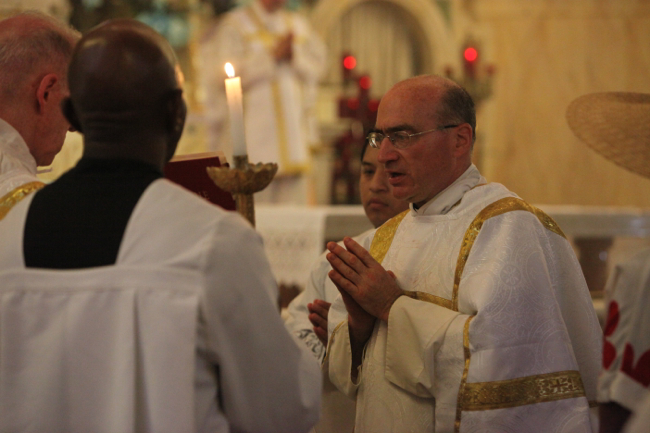
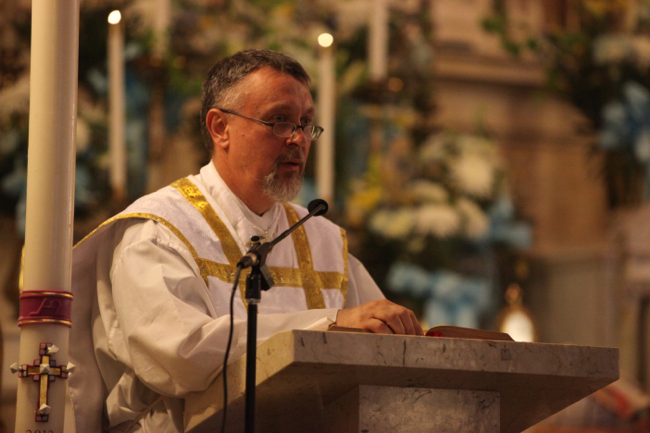
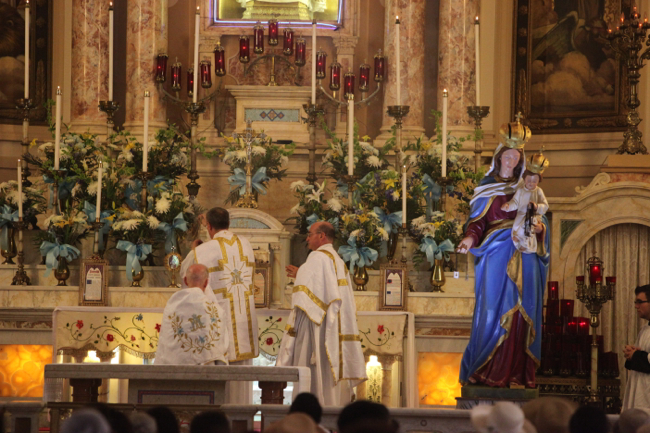
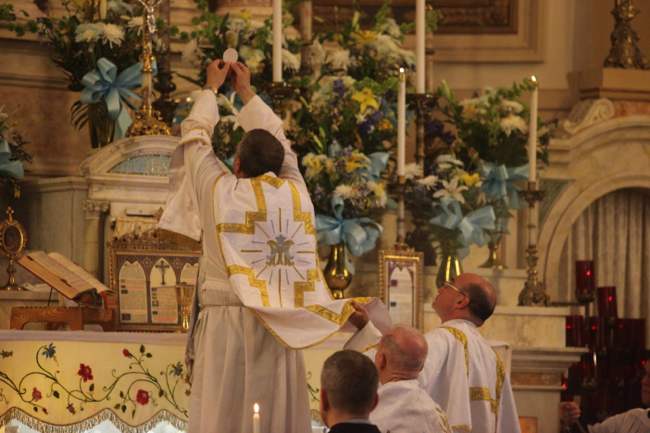
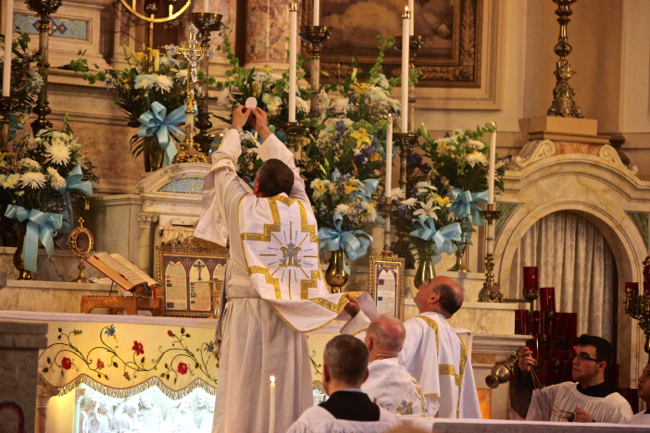
Concluding this week’s liturgies in honor of Our Lady of Mount Carmel was this Solemn High mass celebrated this morning at Our Lady of Mount Carmel shrine in New York.
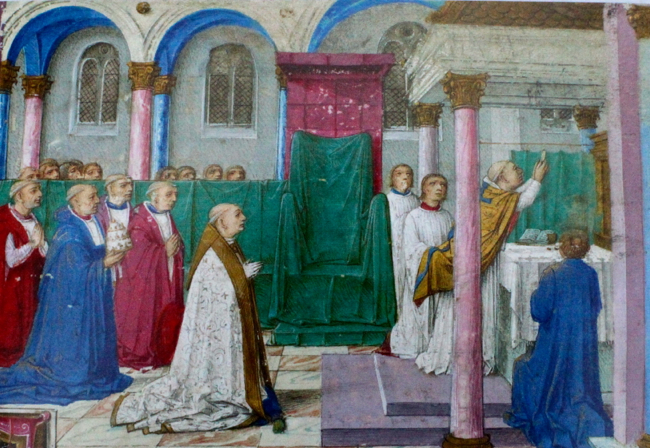
The Master of the Della Rovere Missals – Mass with a Pope in attendance (The Morgan Library)
Illuminating Faith: The Eucharist in Medieval Life and Art
Morgan Library and Museum
(Until September 2)
The Morgan library has unlocked many of the masterpieces from its store of illuminated manuscripts to tell for us the story of Eucharist: its origin in the New Testament, its role in liturgy and Christian piety and the growing development of Eucharistic devotions. Through a survey of a vast number of beautiful illustrations we learn the meaning of the Eucharist in theology and explore the vast number of Eucharistic symbols. Indeed the story begins before the New Testament, as many of the Old Testament parallels are depicted and explained.
My wife observed how much of the knowledge patiently set forth in the explanatory materials to this exhibition would have been known up to the end of the 1960’s by the average Catholic grammar school pupil. Only a minority of the images deal with esoteric subjects or strictly medieval practices. In that regard, the visitor unacquainted with medieval life and humor may be scandalized by some of the strange and even blasphemous images found in a few of these manuscripts…
The exhibition devotes much space to the practices surrounding the feast of Corpus Christi. For here we see that medieval Eucharistic devotion did not simply foster an individualistic piety – however laudable that certainly is – but developed into a feast that in so many locations is the greatest public manifestation of collective Catholic identity. Originating north of the Alps and gradually spreading, by the 1540’s it was celebrated in Rome with the almost endless papal procession shown on a manuscript in the exhibit.
The explanatory materials are ample and their tone is objective and straightforward. This is what was believed – and to some extent, the exhibition (Roger S. Wieck is the curator) takes care to point out, is believed still. There are only a few ”zingers” directed at the Church, such as where persecution of Jews is described as a “repercussion” of medieval Eucharistic piety – without any further qualification. (I can think of many more immediate causes such as fear of the Black death in 1348).
Now Holland Cotter in The New York Times (July 5, 2013) has written an extensive review of this exhibition. Building on elements of the descriptions accompanying the displays, he has refashioned the show into a tale of clerical oppression. The “consecrated bread” was “potent stuff” increasingly kept in the custody of the clergy, which had “come to be defined as a specialized professional class set apart from the larger community.” “The mass was performed by the priest standing with his back to the congregation…” “As if to compensate for lack of tangible access ( of the laity to communion), though, the host began to assume a growing visual presence…” It’s a story we have heard so many times from post-conciliar Catholic clergy. Eamon Duffy in several of his works (The Stripping of the Altars; Marking the Hours) has offered a major corrective to the views of the Times and, to some extent, of the exhibition. But at least The Times has devoted a long report to this excellent exhibition; as one might expect, its resonance in the Catholic world outside of a few individuals has been null.
All in all, this exhibition is highly recommended, although the price of admission to the Morgan nowadays certainly ain’t cheap. But for your money you can wander among the great rooms of the library and several distinguished exhibits often virtually alone – what a blessing in New York! For to appreciate works such as these illuminated manuscripts concentration and quiet study are required – the approach found in the blockbuster shows at the Met won’t work here….
In addition to The New York Times review, see the blog Ad Imaginem Dei for a detailed image by image review – in 6 installments!
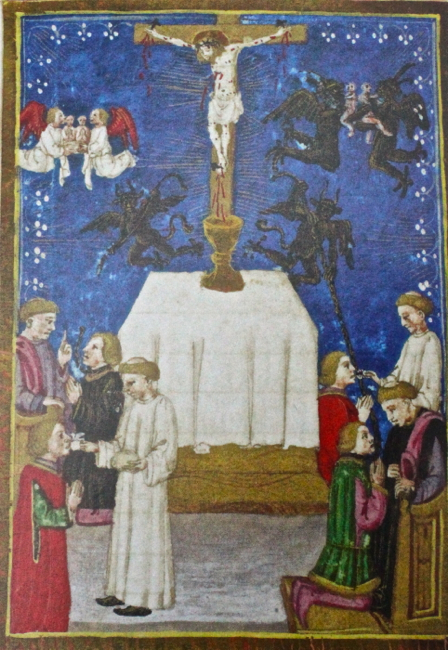
Good and Bad communion (The Morgan Library).
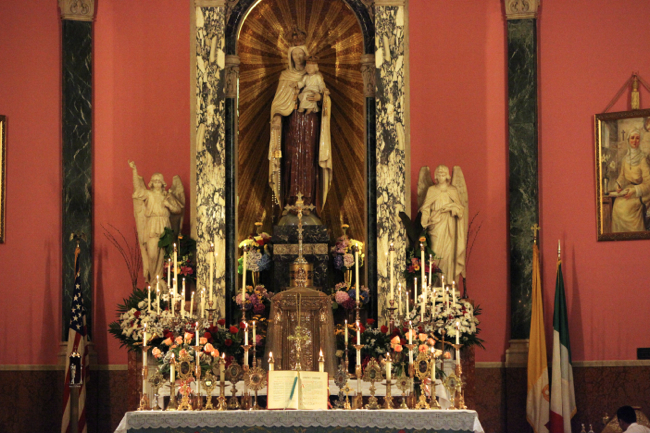
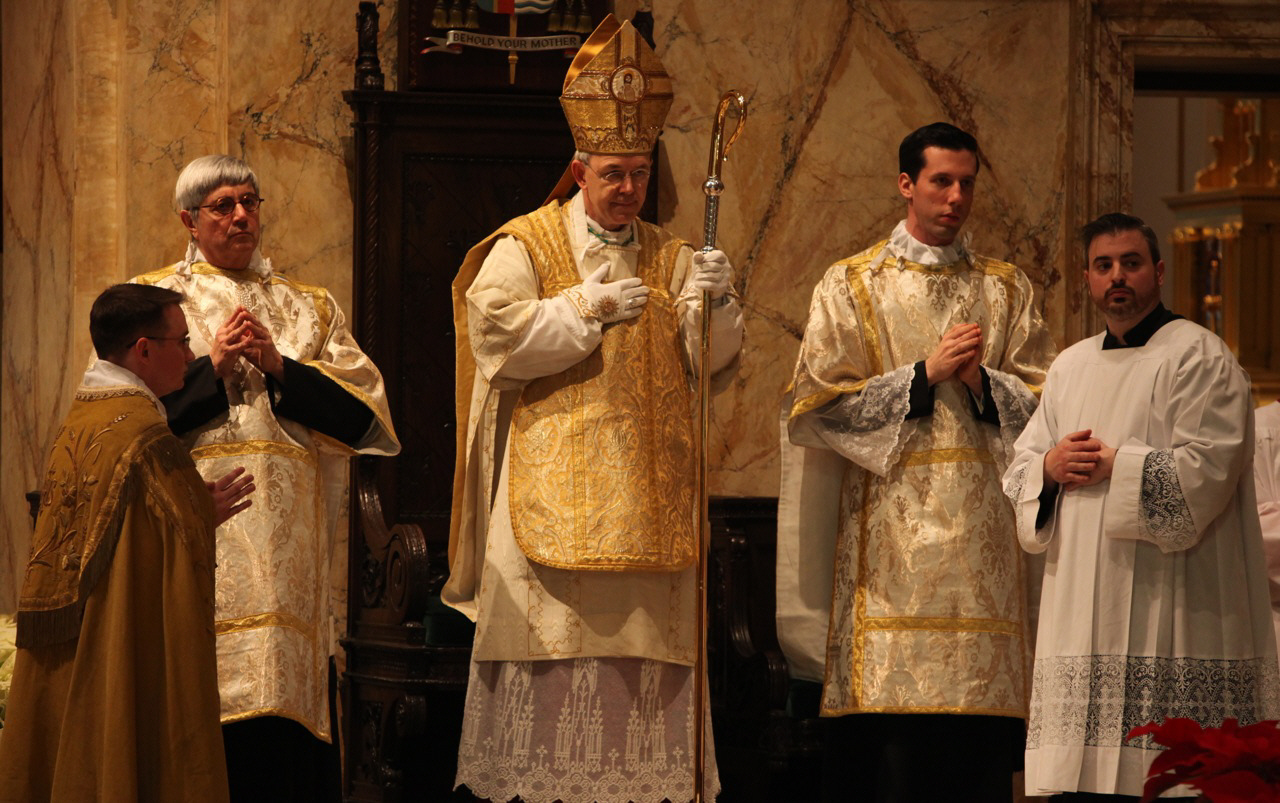
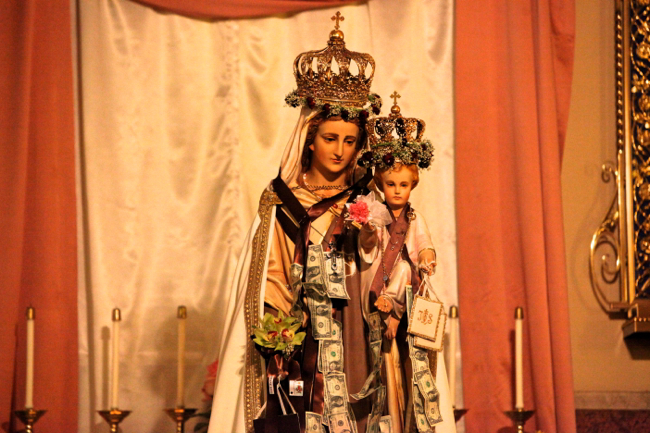
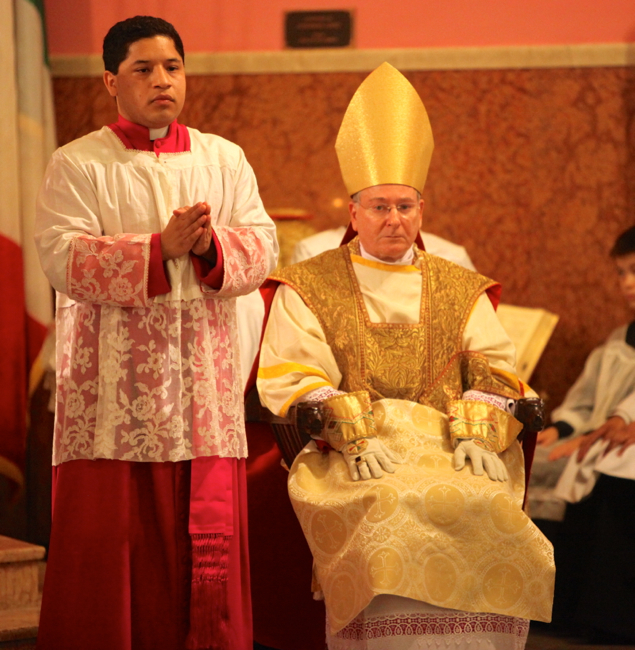
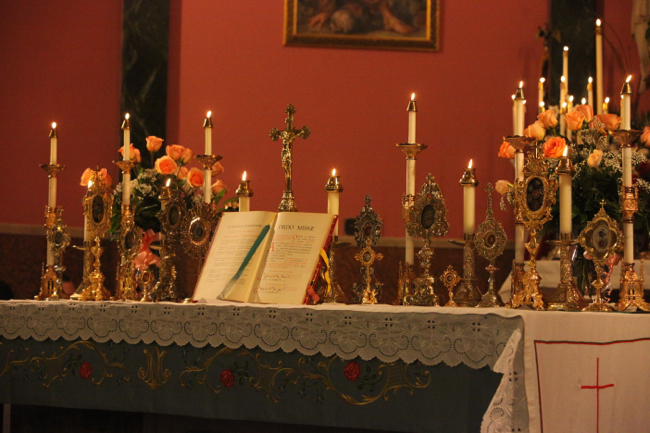
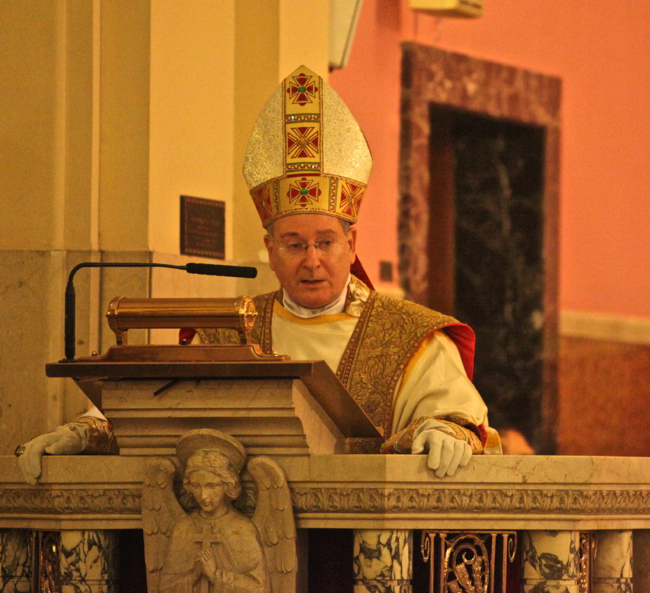
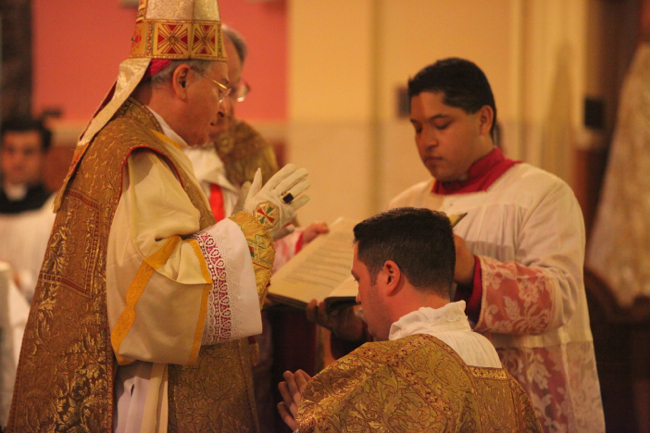
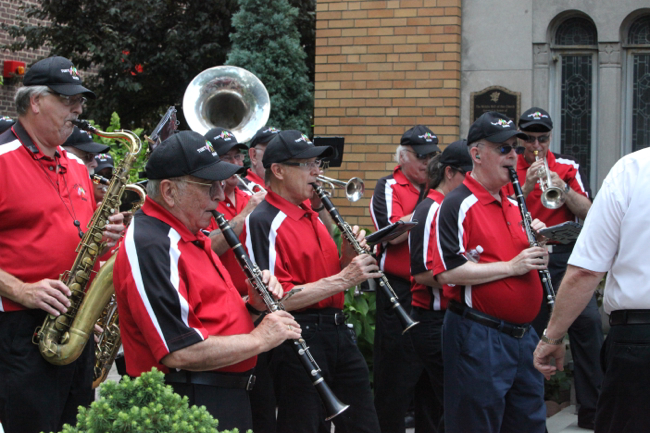
Some photographs of the Pontifical Mass at the faldstool celebrated today by His Excellency, Arthur Serratelli, Bishop of Paterson, New Jersey at the church of Our Lady of Mount Carmel, Newark New Jersey. Msgr. Joseph Ambrosio, the pastor of the church was assistant priest, Deacon Trevor Fernandes was the deacon, and Damian Zablocki was subdeacon. Many other clergy were in attendance. A procession through the streets of the neighborhood, preceded by an Italian band, followed. The service concluded with Benediction.
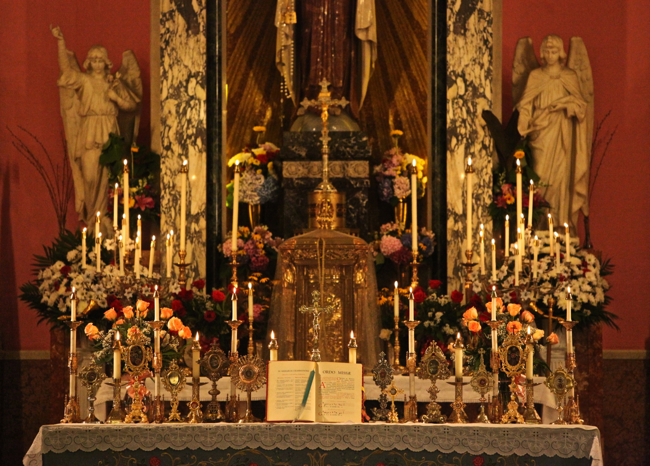
In his homily Bishop Serratelli spoke of the beauty of Mt Carmel – the only biblical appellation of Our Lady – and how it exemplified the beauty of the Blessed Mother. The Blessed Mother, in turn leads us to follow Christ and thus we ourselves become beautiful in God’s eyes. Several of the Italian hymns sung at the service also refer to the beauty of the Virgin Mary – perhaps this an Italian insight? Certainly the altar, the vestments and the music reflected this sense of the beautiful. And such beauty is not “aestheticism” but is a manifestation of truth.
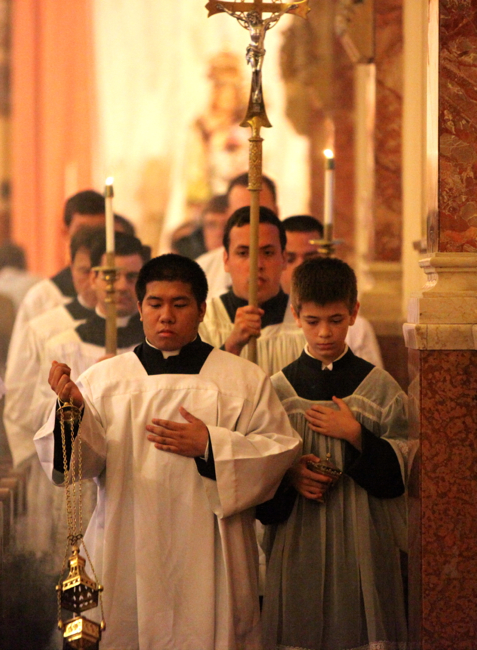
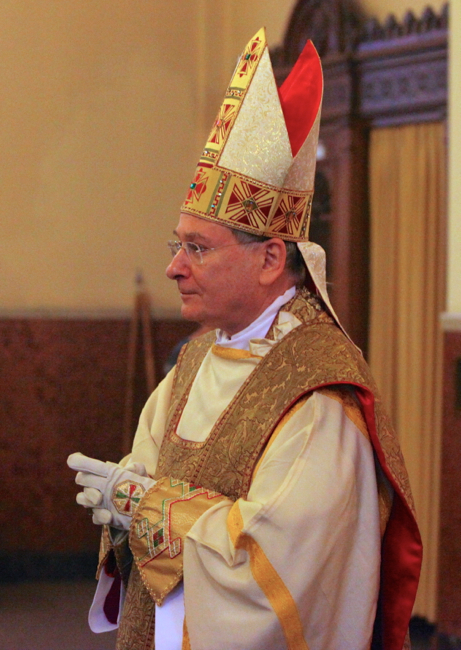
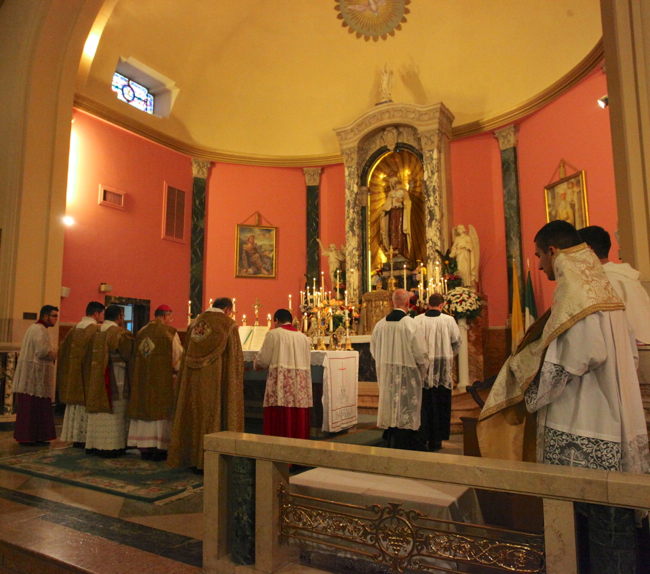
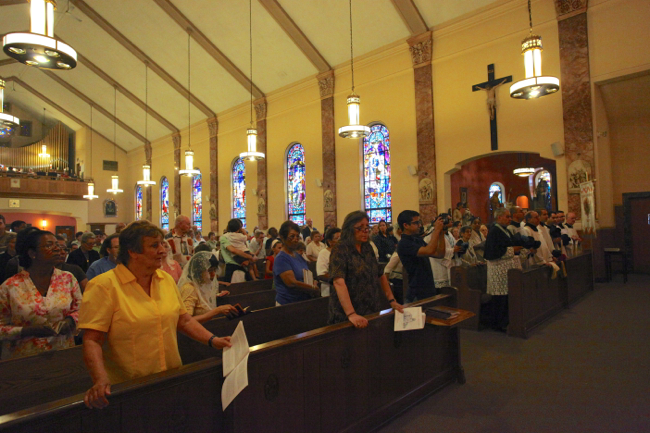
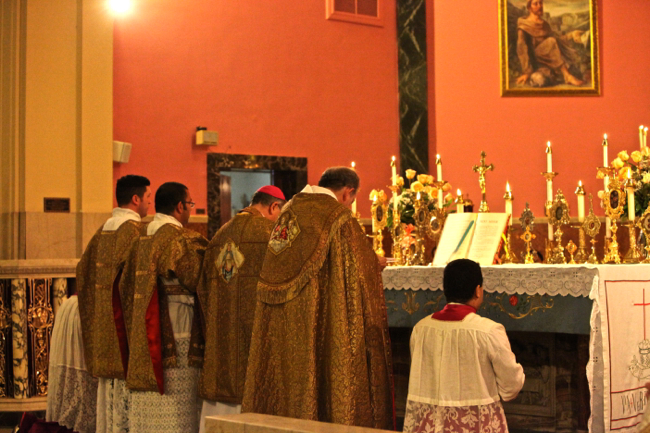
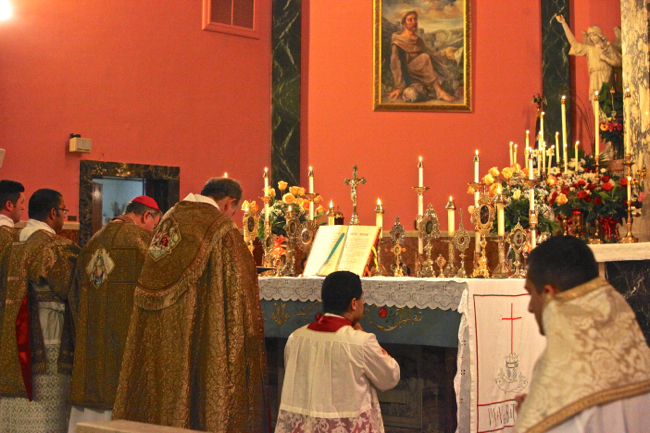
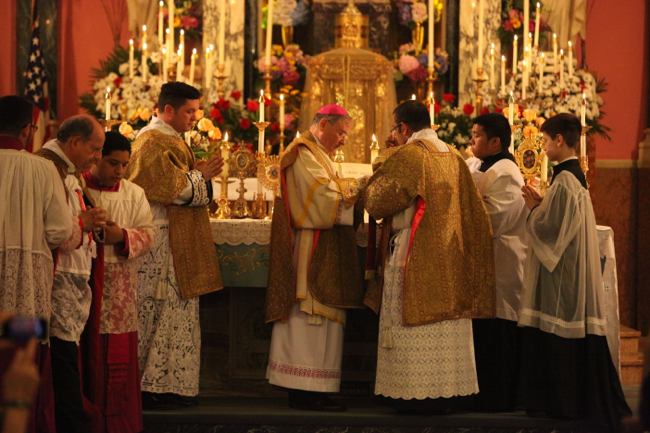
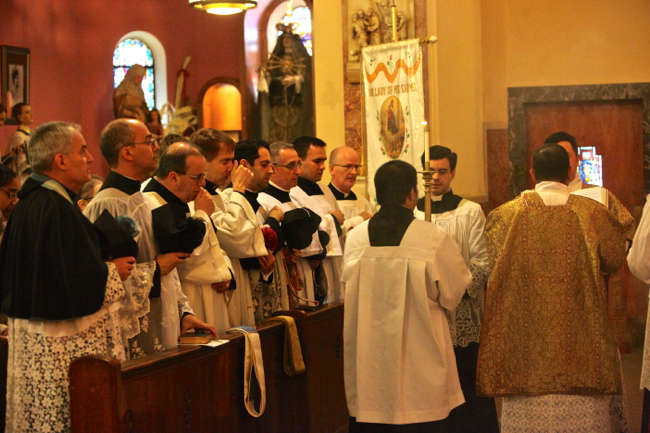
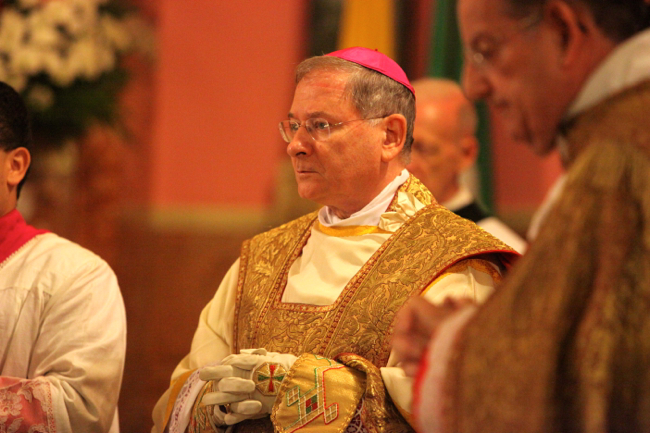
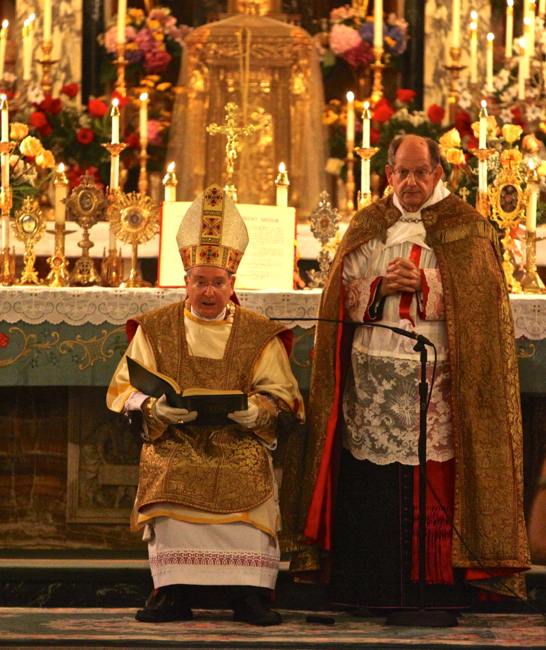
(above and below) The “Call to the Order of Deacon” of Damian Zablocki by Bishop Serratelli. Damian Zablocki – the subdeacon in this liturgy – is a seminarian in the diocese of Paterson and the Bishop requested to do the official Call to the Order of Deacon at this Mass.
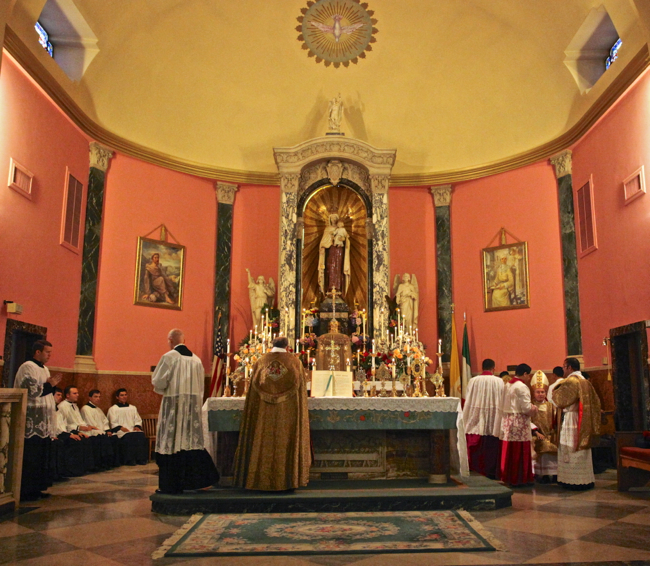
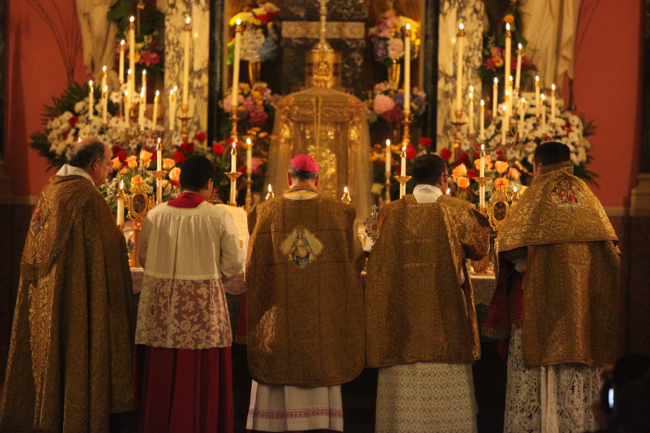
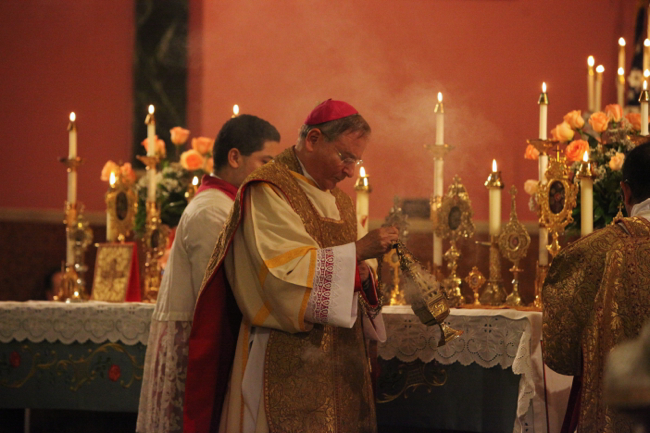
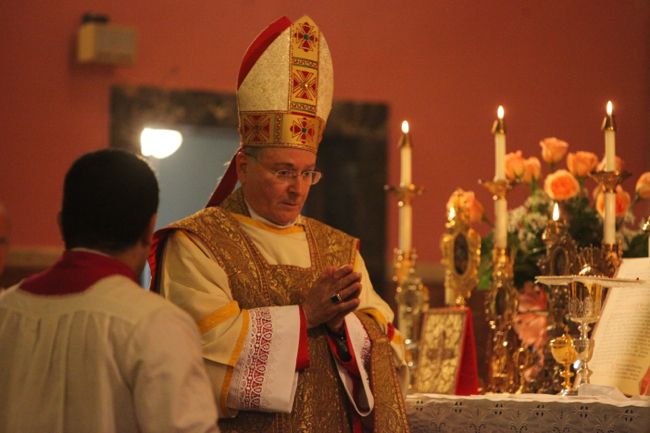
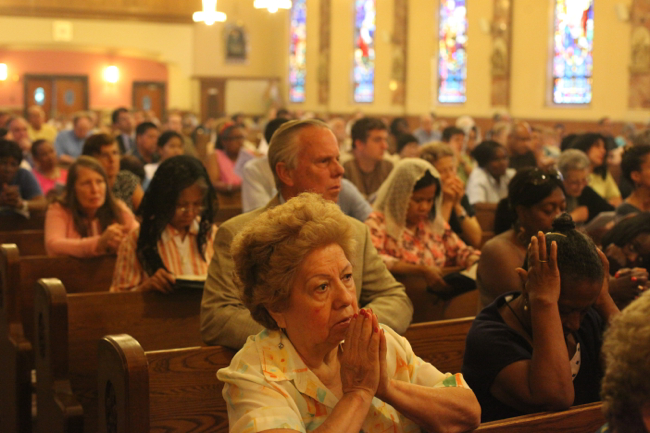
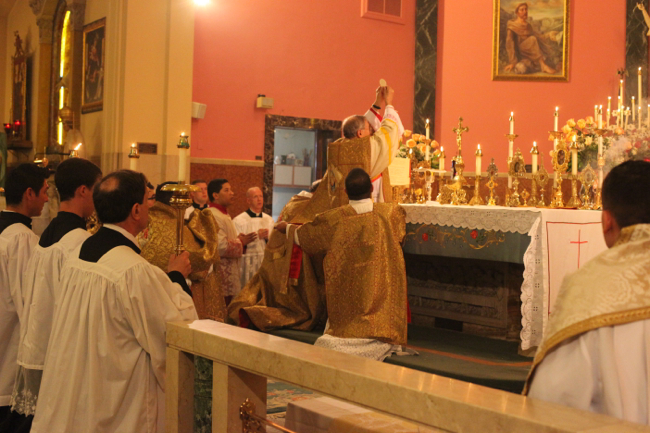
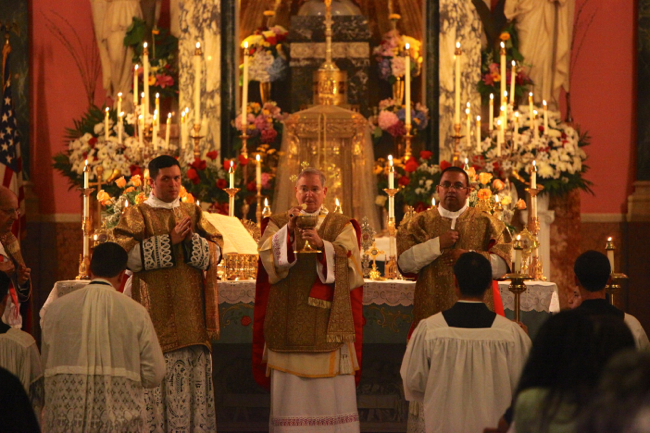
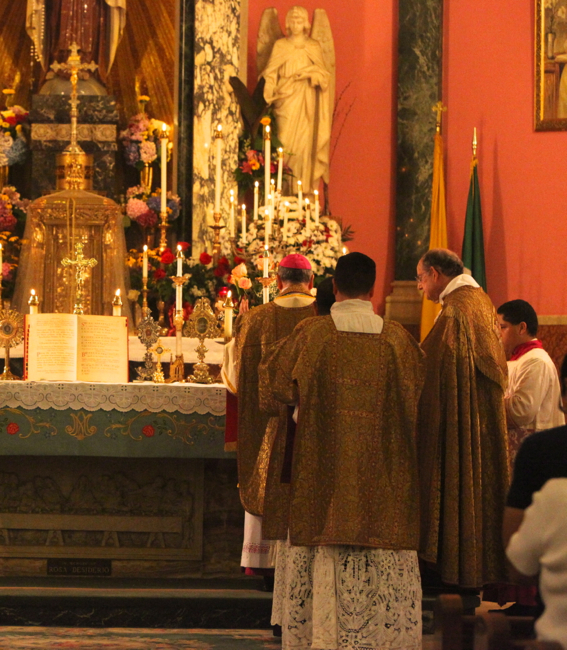
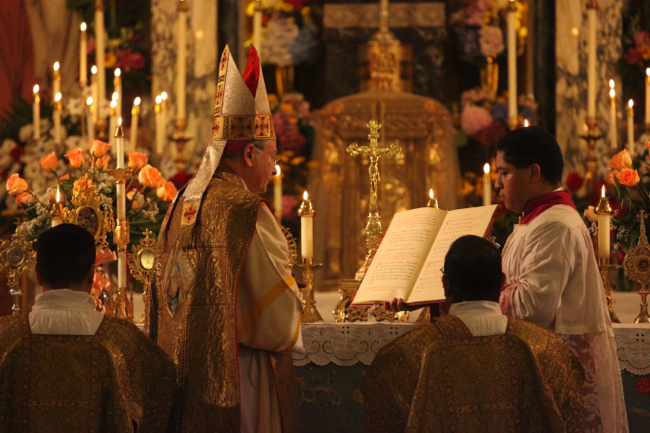
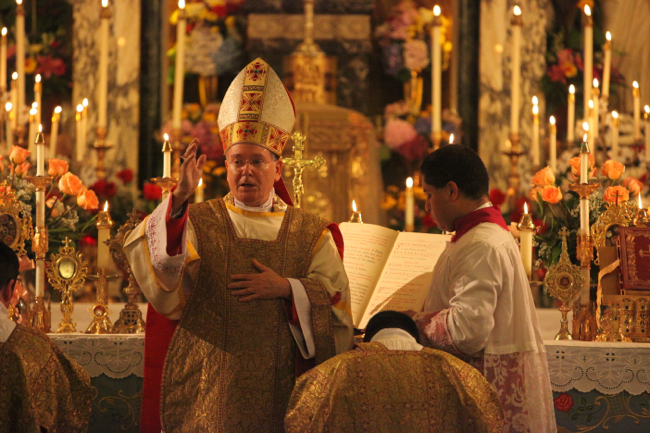
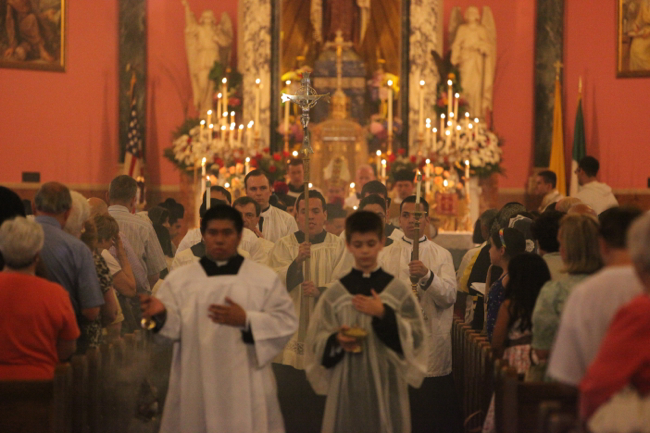
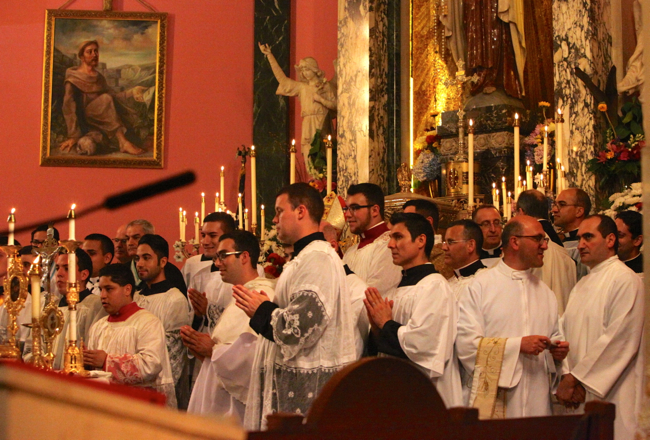
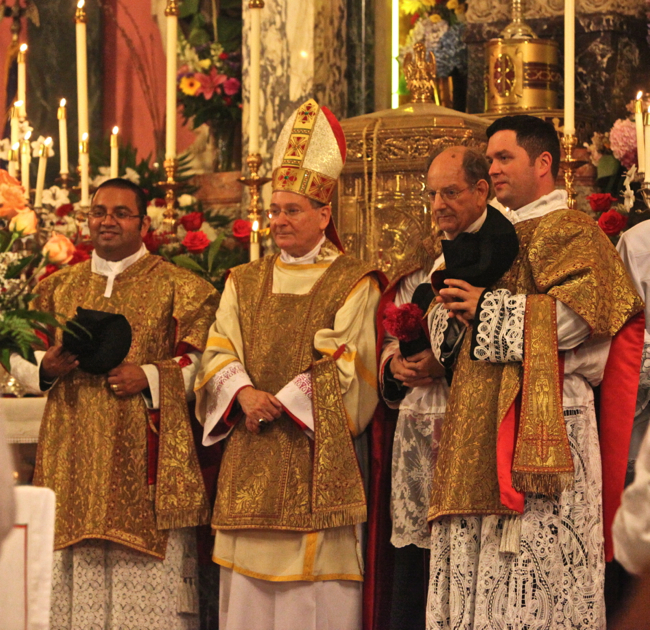
Once again the “photo op” of the clergy involved in this mass.
For additional photos -including some of the vesting of the bishop – see HERE.
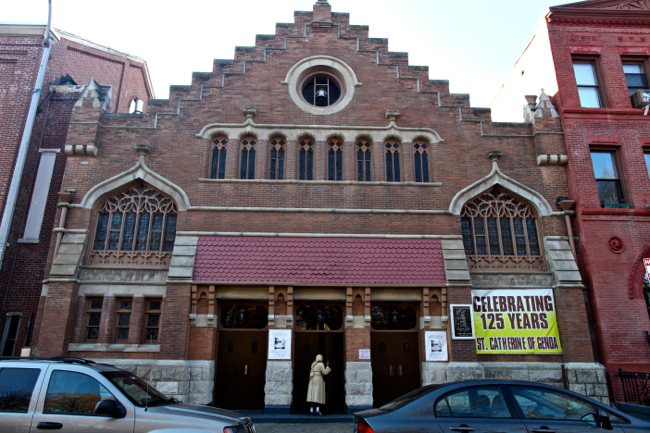
St. Catherine of Genoa
506 West 153rd Street
Just a year earlier than his fairy-tale masterpiece of Our Lady of Good Counsel on East 90th Street (built 1890-92), architect Thomas Poole had built a second, very similar Catholic church on the West Side – but much further north. St Catherine of Genoa church offers us a unique insight into the architect’s creative development.
The parish of St Catherine (originally “Catharine”) of Genoa was what was then the far north of the city in 1887. The church was commenced and completed in 1889. It was one of a number of churches of various denominations that sprang up around the cemetery of Trinity Church – above all Goodhue’s Anglican church of the Intercession. It was a modest parish from the beginning with a modest church. It is claimed that the existing church building was intended to be temporary only – but in fact was never replaced.
The façade of St Catherine of Genoa is quite similar to its cross town sister, but less elaborate, smaller in scale and built of red brick instead of stone. It is a mixture of Flemish secular architecture and Late Gothic elements such as the windows. Curiously, the church looks out over the undeveloped grounds of the cemetery – just as Our Lady of Good Counsel presided over low-lying commercial buildings until the 1970’s.
If St Catherine of Genoa’s façade is modest, the interior is downright plain. In contrast to the unorthodox blueprint of Our Lady of Good Counsel, Poole’s St Catherine of Genoa has a much more traditional layout. In form it is just a simple rectangular space oriented towards the south. The architecture strikes a more original note in the fine ceiling with its elaborate beams.
We doubt the decorative scheme was very elaborate even in the early decades. And whatever did exist has mostly fallen victim to a thorough post – Conciliar house cleaning. But every church of that era, however humble, had at least one striking feature. In the case of St Catherine it is the series of skylights: unique stained glass windows narrating the life of St Catherine of Genoa. It is a creative solution to the problem of tightly adjoining buildings, which so often in New York plunge magnificent stained glass windows into eternal darkness.

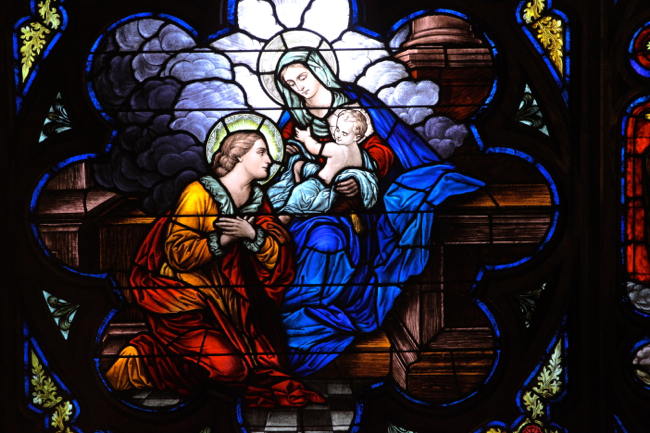
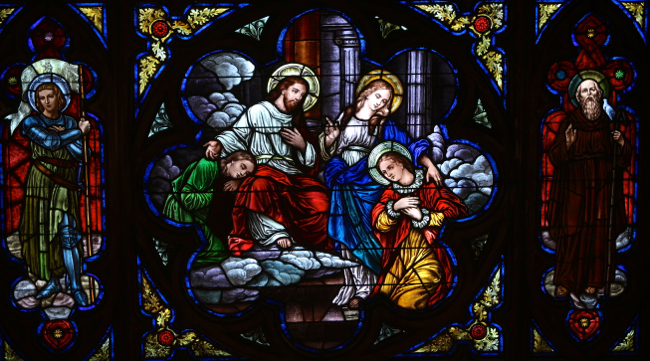
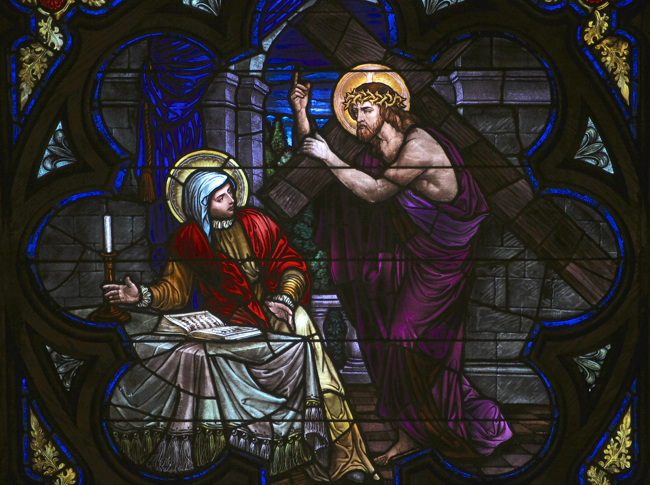
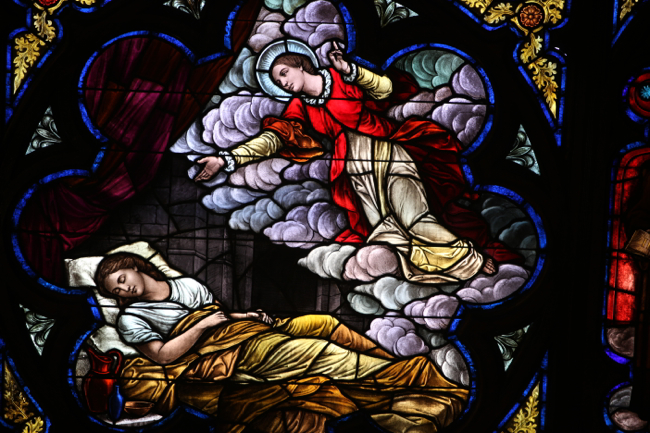
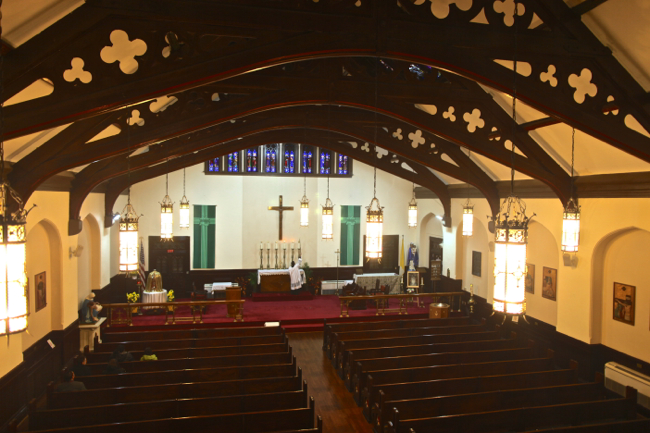
St Catherine of Genoa was always a small parish – and not very well off. As time went on, the original Irish population left. This part of New York became overwhelmingly “Hispanic” after the Second World War. The parish now serves a wide variety of nationalities. The parochial school was closed a few years ago and the parish itself seemed to be on the Archdiocesan hit list. However, there may have been second thoughts about that. So for the time being St. Catherine of Genoa continues its humble service of over 125 years. That service has included hosting the Traditional mass in 2012 – for the first time since the 1960’s.
Our Lady of Good Counsel
230 East 90th Street
By 1890 the Catholic population of New York continued to explode. The relentless march of the city– East Side, West Side – northward on Manhattan Island continued as well. For the new developments more parishes were needed and ever more magnificent churches. It was the golden age of the Catholic parish, of Catholic Church architecture and indeed of the Archdiocese of New York as a whole.
Archbishop Corrigan organized Our Lady of Good Counsel parish in 1886 for the Yorkville area; construction of the lower church began in that year. At the time the immediate neighborhood of the future parish church was open fields. The church would rise on a difficult site – uneven but commanding a magnificent view. In 1890 work on the upper church began; the church was dedicated in 1892. The architect was Thomas Poole, a Catholic convert who hailed from Liverpool. He played a significant yet neglected role in this golden age of Catholic Church architecture both as a builder of churches active throughout the New York area and as a writer.
The church we encounter today is mainly attributable, first, as is so often the case, to the efforts of one extraordinary pastor, the first rector Father William J. O’Kelly. He died in 1901 shortly after the consecration of the church. And second to the innumerable sacrifices by the members of a not at all well -to -do parish. The dedication to Our Lady of Good Counsel derives from a miraculous image found in the village of Gennazano near Rome.
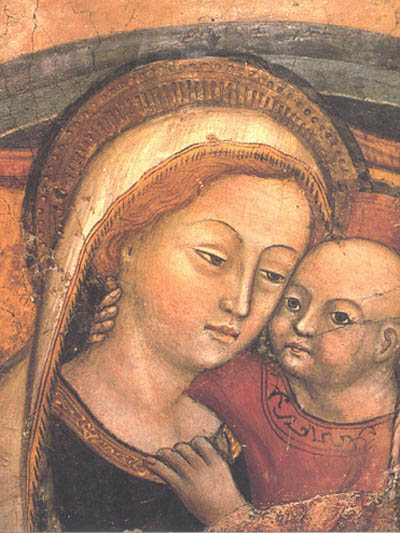
The Original Image of Our Lady of Good Counsel.
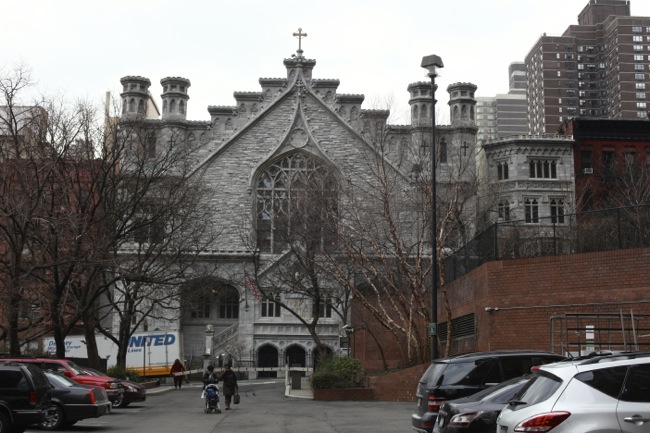
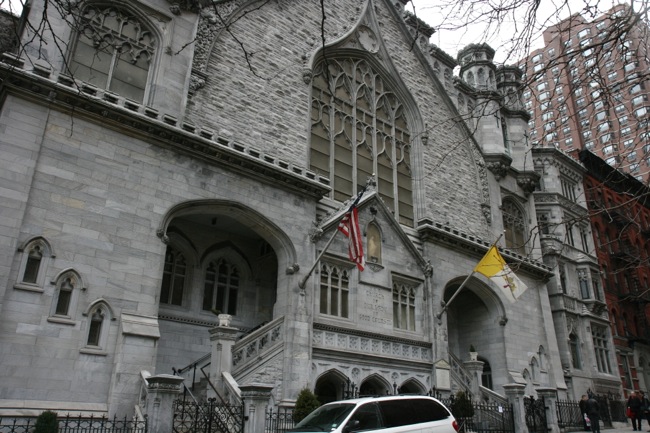
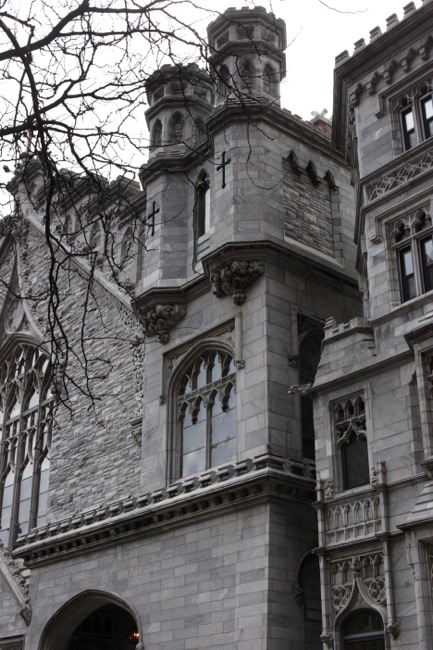
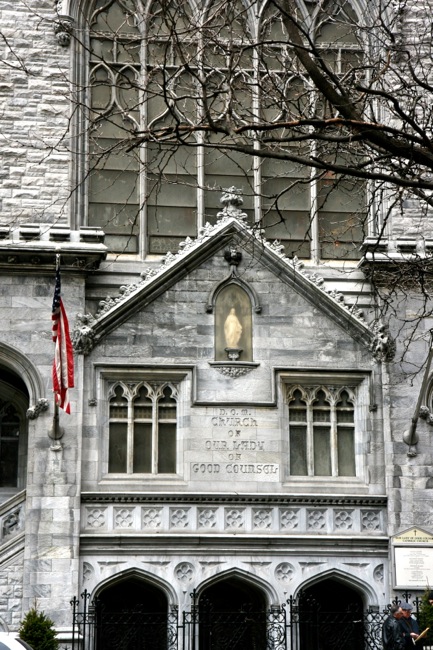
The church faces north. Nowadays it confronts the huge apartment (now condominium) complex of the Ruppert towers. But originally there were open fields, and eventually the low buildings of the Ruppert brewery, producers up till 1965 of the late lamented Knickerbocker beer. An “old timer” at the parish pointed out to me long ago that Our Lady of Good Counsel in the pre- Ruppert Towers days enjoyed an outstanding location; travelers southbound on both the Third and Second Avenue els had a grand view of this church’s facade. The elaborate, light gray stone façade at first makes a rather fortress-like and forbidding impression with its crenellations and massive Tudor gothic towers. A rectory in the same style is attached. But on second glance, the elaborate windows and staircases intrigue the visitor, who can also admire the clever disposition of the church on a sharply sloped street.
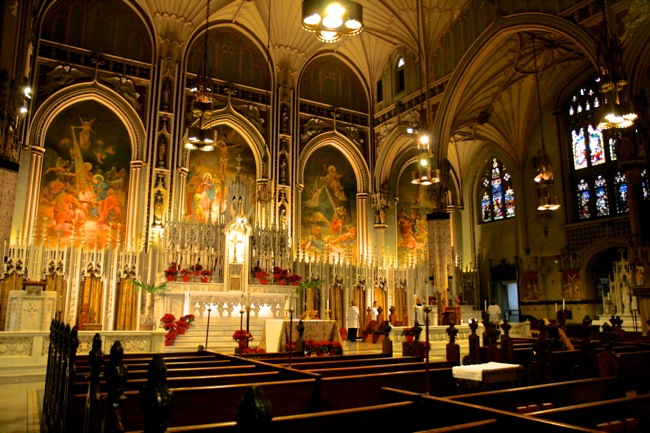
The contrast with the lush interior could not be greater. For Our Lady of Good Counsel is perhaps the most exuberant and fantastic late Victorian interior in the city. Most impressive is the elaborate fan vaulting. The inspiration is clearly English perpendicular gothic of Henry VII’s lady chapel at Westminster Abbey or of King’s College chapel, Cambridge. The church has side aisles and galleries – but, unusually for a Catholic church, the sanctuary is set against one of the long sides of the interior. This layout, which in Protestant meeting houses deliberately serves to deemphasize the importance of the (no longer existent) sanctuary, is in this church counterbalanced by the fantastic elaboration of the main altar. The relatively small dimensions of this church allow the furnishing and decoration to extend all over the interior – carved altars, stained glass windows, paintings, even the beautiful wood of the pews contribute to the overall impression.
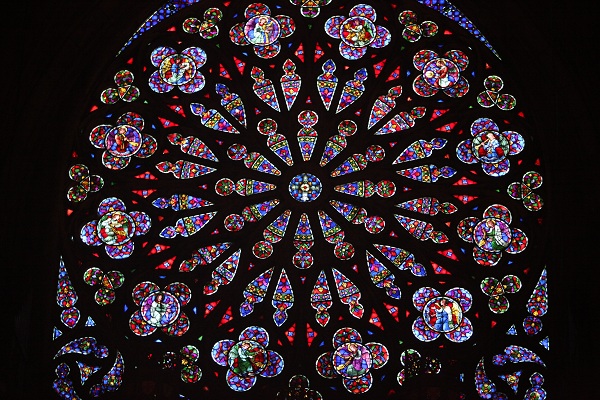
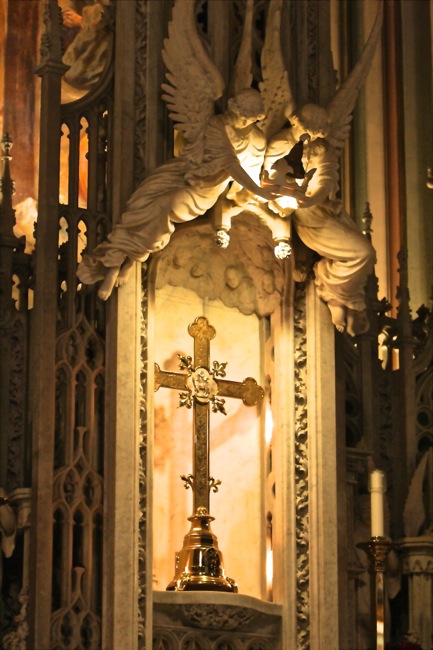
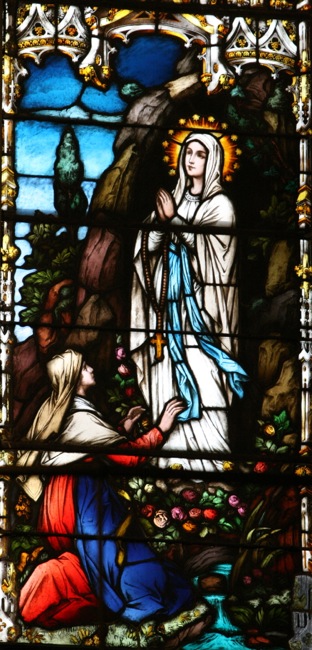
The decoration of the interior draws on disparate sources and styles. Italians carved the altars. The main painter, Rossi, was also Italian and well regarded in his day. The magnificent windows of the firm of Mayer in Munich are some of the finest and best preserved in the city – especially the spectacular large north window dedicated to the apparitions of and devotions to the Blessed Mother. Now German stained glass, frescoes and white marble altars were the key components of the décor of many other Victorian churches – one thinks of St Stephen’s or Holy Innocents! Yet one senses here a new effort – as compared to these earlier churches – to integrate all these elements and styles in a single work of art. The interior of Our Lady of Good Counsel, despite all its richness and intricacy, makes an amazingly harmonious artistic statement. We also sense a growing desire of the parishes of that time to create original architecture – to try to more sharply distinguish themselves from each other.
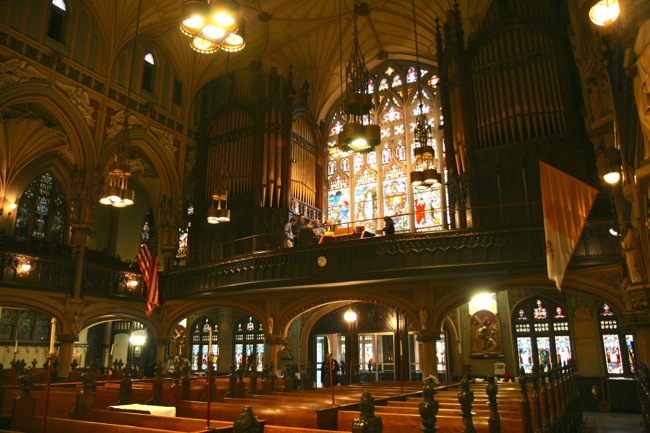
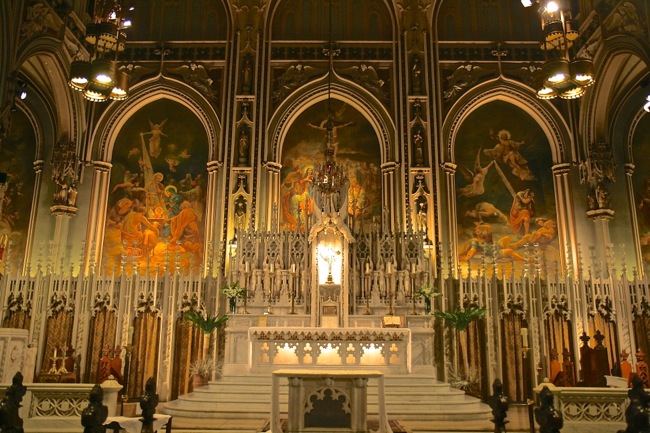
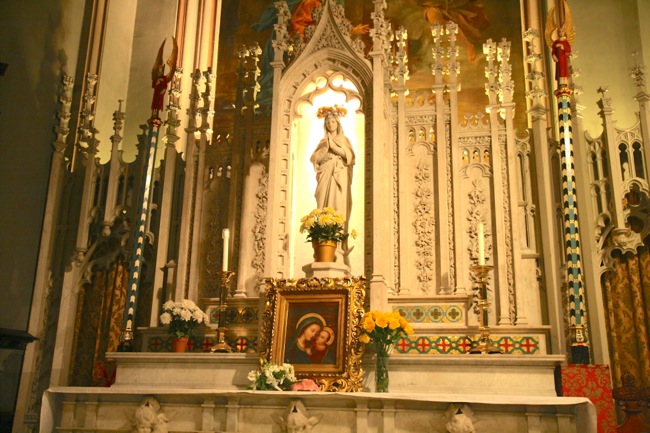
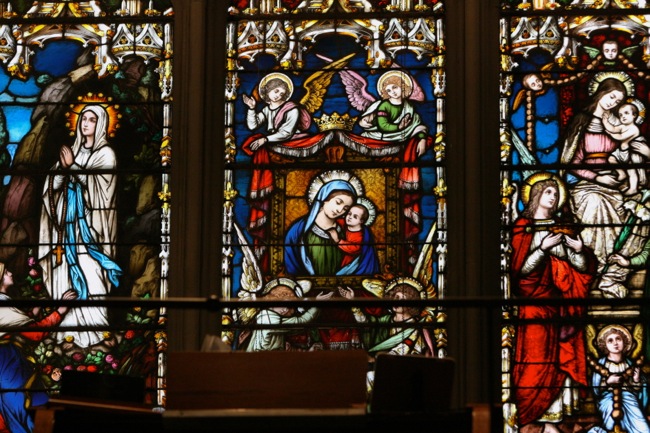
The great window of Our Lady – with the image of Our Lady of Good Counsel in the center.
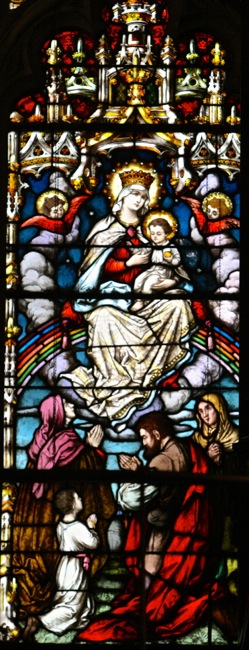
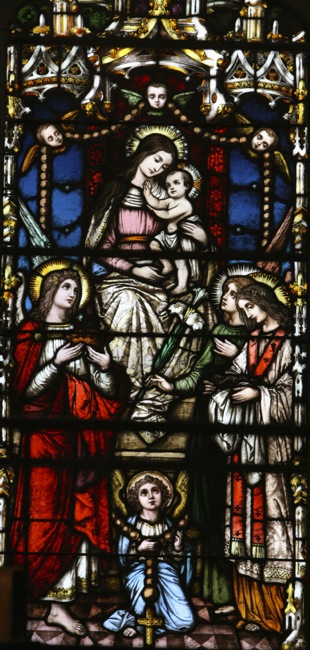
Above, Our Lady of the Rosary. Below, Our Lady of Lourdes (a virtually identical window by Mayer is in St. Stephen’s church).
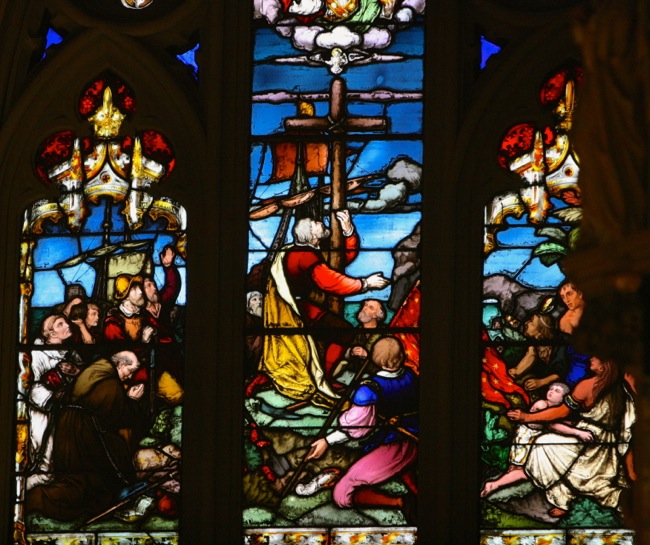
Christopher Columbus.
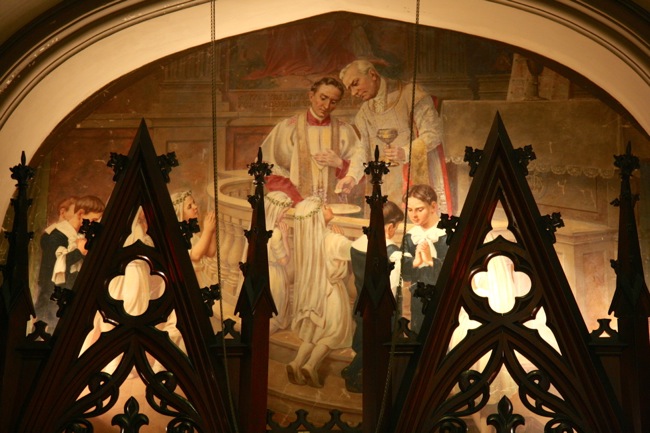
This painting with the inscription “Suffer the little children to come unto me…” undoubtedly commemorates the reduction in the age of receiving first communion promulgated by Pope Pius X in 1910. We would point out to certain pontificators on matters ecclesiastical that no houseling cloth is on the altar rail.
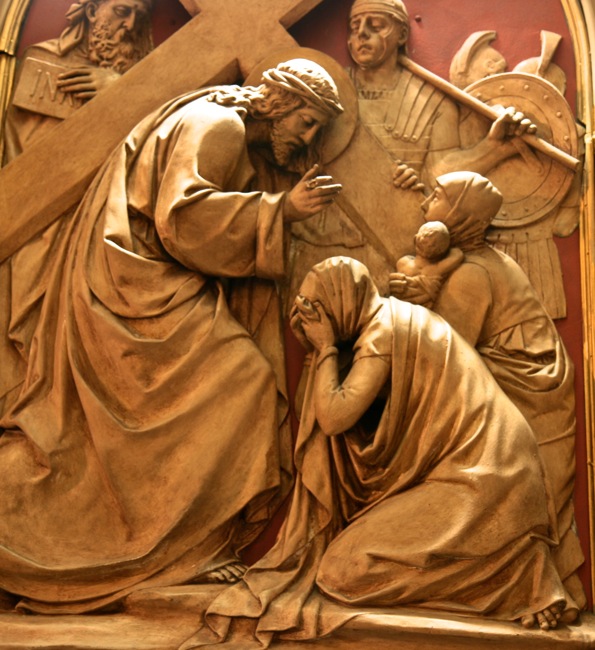
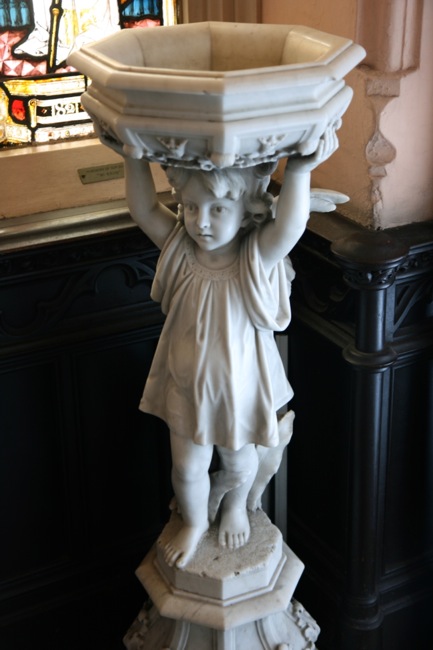
This Yorkville parish soldiered on through the years. The neighborhood began to shift after the 1960’s from a solid middle and working class district to a more upscale and transient environment – the transition from the Ruppert Brewery to the Ruppert Towers. Most fortunately, the liturgical changes of the Council did not involve here the wholesale destruction of the interior of the church – particularly the sanctuary. In 2005 – just in time for its 100th anniversary – the parochial school of Our Lady of Good Counsel was closed by the Archdiocese. Yet in 2012 the NYC Department of Education signed a 15-year lease on the location of the former parochial school in order to handle the great and growing demand for school space in the district. Just recently there have been restorations to the basement and organ.
We would hope that Our Lady of Good Counsel, with the advantage of its unique sanctuary and history, would continue to maintain and develop the presence of Catholicism in Yorkville. I have read that this church is in much demand for weddings – as well it should be! There is no more enchanting location in New York. Father Groeschel’s Friars of the Renewal have also been active here. And now and then, since Summorum Pontificum, the Traditional Mass has returned as well to these magnificent surroundings, which were after all created to enable its celebration with all the requisite beauty.
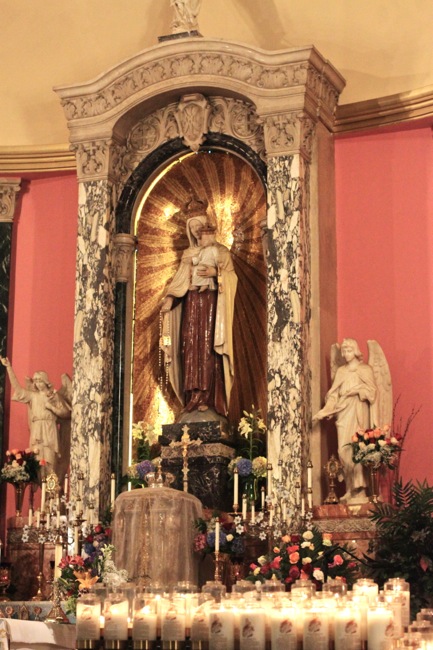
Our Lady of Mount Carmel Church, Newark NJ.
The Feast of Our Lady of Mount Carmel, for whatever reason, seems to have evolved into an important “Traditionalist” celebration in this vicinity. Our readers in the New York metroppolitan area will be able to participate in a number of major liturgical events.
Connecticut:
Solemn High Mass for the Feast of Our Lady of Mt. Carmel
Tuesday, July 16th at 7:30 PM
Church of Saint Gabriel
914 Newfield Avenue
Stamford CT
Litany of the Blessed Virgin Mary and Procession to the Lady Altar following Mass
Investiture in the Brown Scapular
Refreshments in the Parish Meeting Room
Solemn High Mass for the Feast of Our Lady of Mount Carmel
Blessing and Imposition of the Brown Scapular
Tuesday, July 16th, 7:00 pm
St Mary Church, Norwalk, CT
New Jersey:
Pontifical Mass at the faldstool by His Excellency, Arthur Serratelli, Bishop of Paterson, New Jersey
Tuesday, July 16 at 12 noon.
Our Lady of Mount Carmel Church
259 Oliver Street
Newark, NJ
07105
The music at Mass will include the Messe Solennelle by Louis Vierne (1870-1937), the renowned blind composer who, during most of his career, was principal organist of Notre Dame Cathedral in Paris, as well as motets by Franz Schubert and Tomas Luis da Victoria and traditional Italian hymns in honor of the Blessed Virgin Mary.
New York:
The Shrine Church of Our Lady of Mount Carmel in East Harlem, New York
Monday, July 15, 2013, at 7:30pm
Traditional Vespers and Benediction. After traditional Vespers (at 9pm) there will be a traditional candlelight procession followed by a public recitation of the Rosary in several languages (Spanish, Italian, Latin, French, and English) and of the Litany of Our Lady.
Then, for the first time in a very long time, the midnight Mass will be a traditional Solemn High Mass celebrated by the new pastor, Fr. Marian Wierzchowski, S.A.C.
Saturday, July 20, at 11 a.m. Solemn High Traditional Latin Mass. Second annual pilgrimage of faithful attached to the Extraordinary Form of the Latin Rite.
The Rosary, Litany of Loreto and Solemn Benediction will follow at 3:30 p.m.
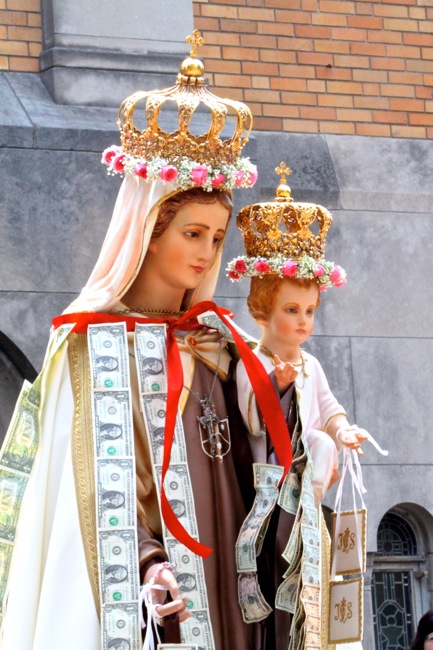
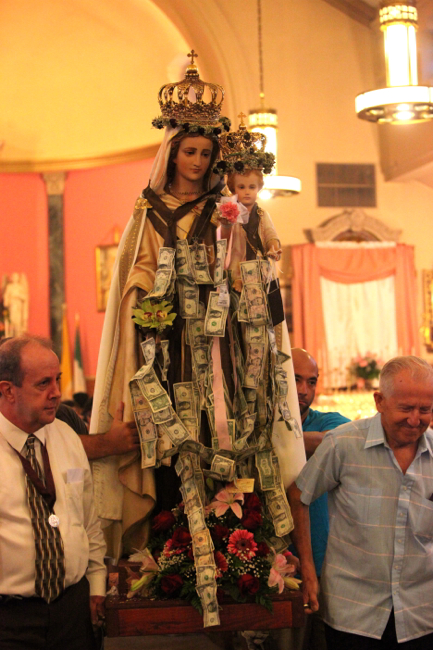
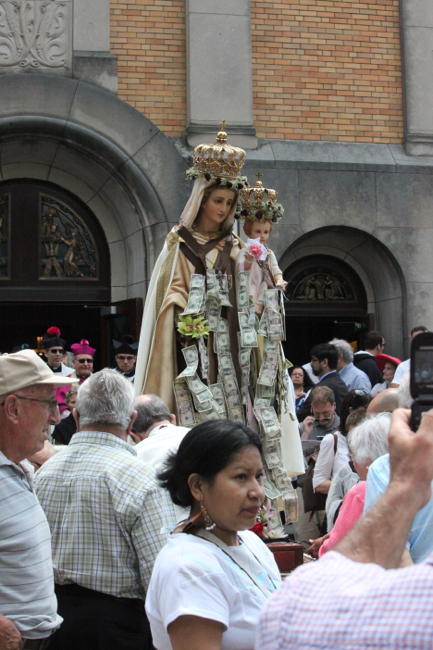
(Above and below) The procession at the church of Our Lady of Mount Carmel, Newark, 2012
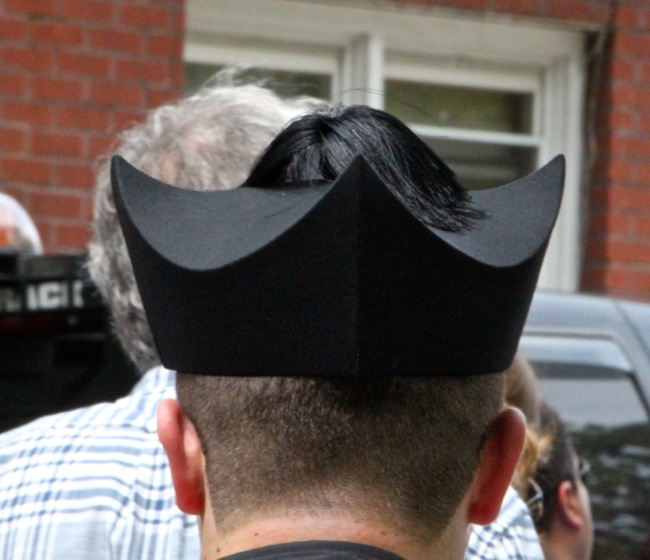
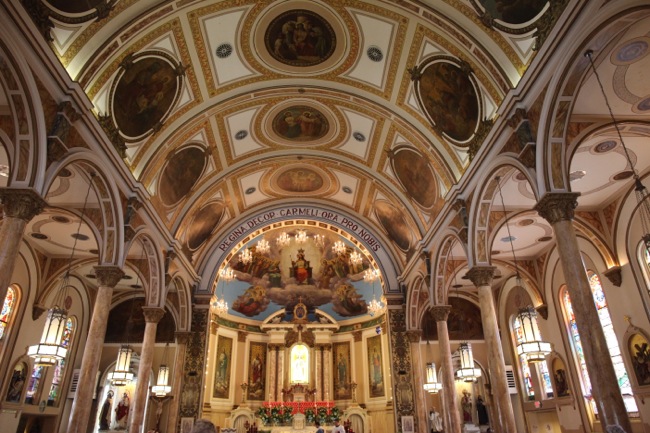
(Above and below) Procession and Traditional Mass at Our Lady of Mount Carmel, New York (East Harlem), 2012.
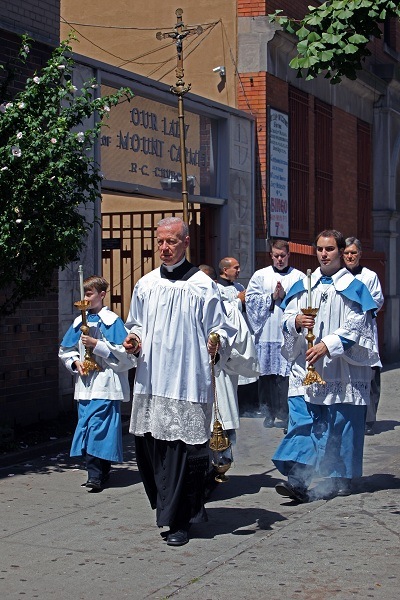
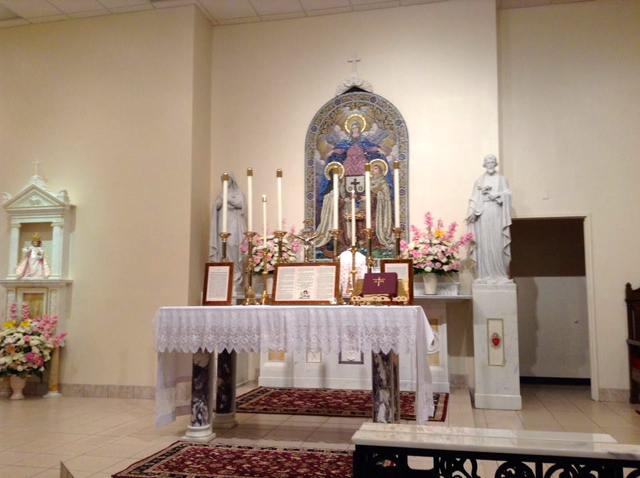
On the Solemnity of Saints Peter and Paul, The Reverend Raymond Flores was ordained a priest for the Diocese of Brooklyn. The following Friday, Father Flores celebrated his First Traditional Latin Mass at the Brooklyn Carmelite Monastery. The Low Mass was the Votive Mass of the Sacred Heart of Jesus on First Fridays. It was attended by the local faithful as well as the cloistered Carmelite sisters, who sang during the entrance, offertory, communion and recessional. Following the Mass Father Flores offered his first priestly blessings.
Thanks to Teddy Barboza for information. Photographs by Arrys Ortanez.