Our Lady of Akita.
We join with the Japanese people in prayer at this tragic moment.
15
Mar
Our Lady of Akita.
We join with the Japanese people in prayer at this tragic moment.
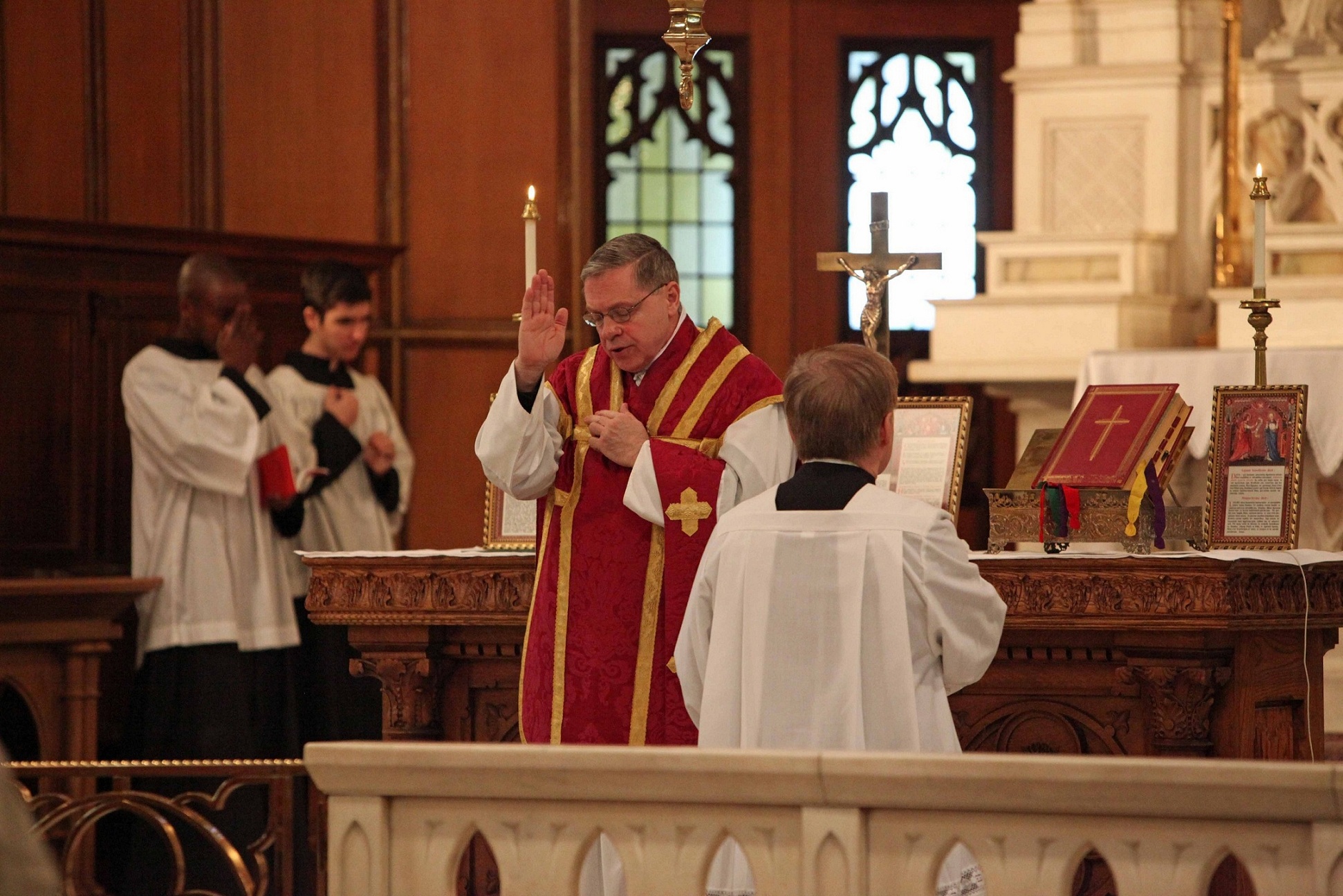
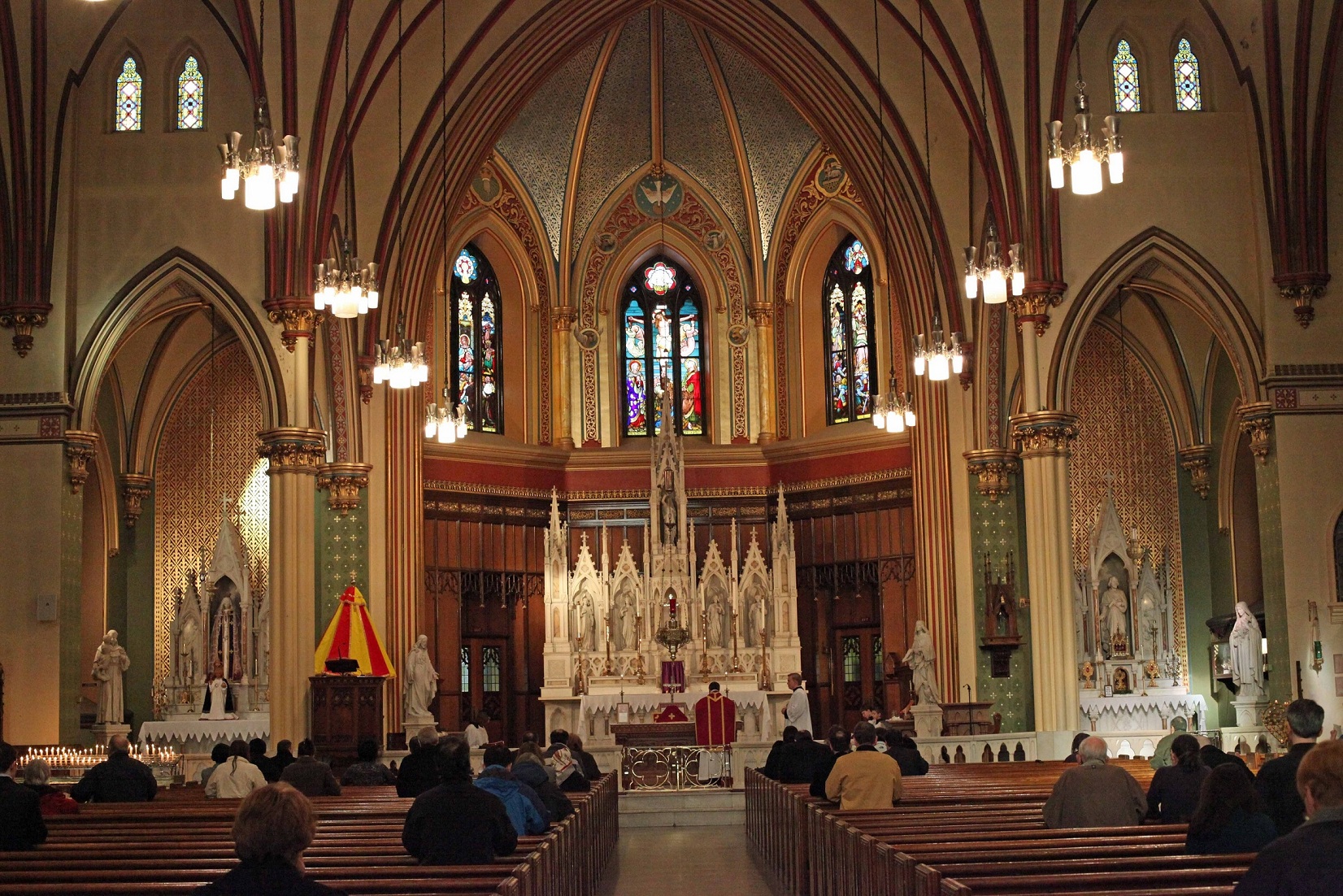
Today Msgr Stephen DiGiovanni celebrated the first Traditional low mass at 8:30 at St. John’s, Stamford. In his sermon, Msgr. DiGiovanni mentioned that it the first time he himself had celebrated the “Tridentine” mass. Now the reason this mass was celebrated at the “Novus Ordo” altar was Monsignor’s bad knee which prevents him from kneeling; he hopes in a few weeks to move the mass to the splendid main altar. Msgr. DiGiovanni also noted that this was the mass of the builders of St. John’s. Obviously this parish has recently made a great effort to magnificently restore the original paint of the sanctuary of this church.
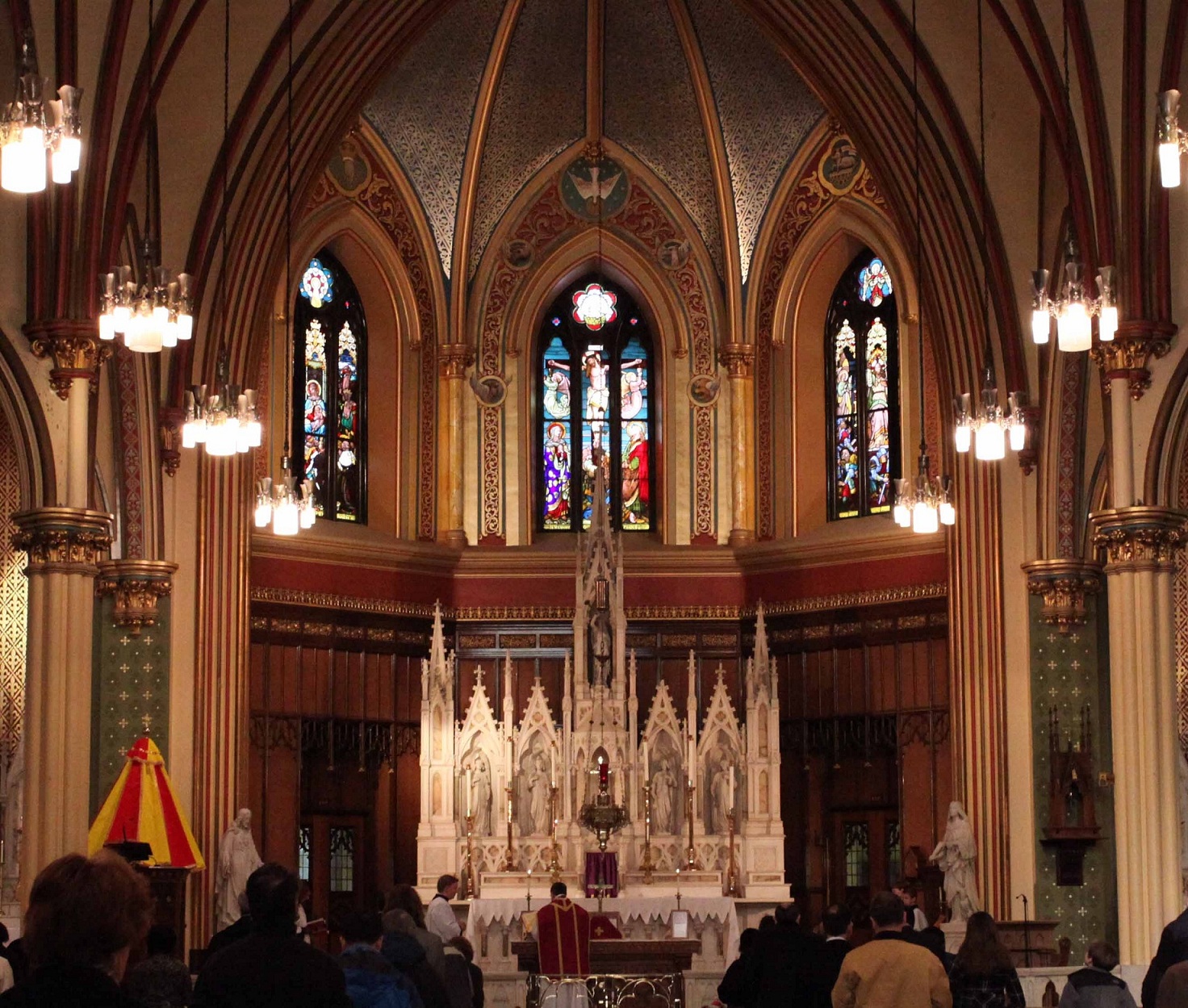

The magnificent restoration of the orginal colors and patterns of the sanctuary. Pugin would be proud.


St. Agnes
143 East 43rd Street
New York, New York 10017
In the world of “orthodox Catholicism” two schools of thought have long contended. “Traditionalism” has always attracted the most attention and controversy: the return to the immemorial tradition of the church including the pre–Vatican Council liturgy and the traditional understanding of morality and theology. The alternative, less known to the non-Catholic world but generally enjoying – at least verbally- more support from the official church, today goes by the name of the “Reform of the Reform.” It accepts absolutely the changes of the Vatican council and the new liturgy. In contrast to the practice of mainstream Catholicism, however, it asserts that these new elements can and should be integrated with cultural heritage of the past. Can this succeed?
In the shadows of Grand Central Station and the Chrysler building lies the Catholic parish of St. Agnes. A classic “commuter church,” most of its geographic population had vanished ages ago. Until fairly recently, it boasted a high school. A once very active soup kitchen has also been displaced. Starting in the 1980’s a group of priests stationed at St. Agnes presided over by Msgr. Eugen Clark established this parish as the center in New York of orthodox Catholicism and of Catholic mission. The “Novus Ordo” mass was celebrated with more care and adherence to tradition. Later, St Agnes was one of the first New York churches to open its doors to the Traditional liturgy after the 1980’s Indults. This “Extraordinary Form” is celebrated at St Agnes every Sunday even today. To support its liturgical aims the parish developed and maintains today an excellent musical program. A very well-stocked bookstore can be found here as well. Constantly busy, as are all such commuter churches, St. Agnes welcomes each day a never ending stream of visitors for mass, confession or prayer. But the current structure is not the original.
Old St. Agnes was a typical New York Victorian Gothic church, much like Holy Innocents, St. Bernard’s or St. Stephen’s. The church was completed in 1877. The plot offered little floor space, giving the church a squarish layout somewhat unusual for the gothic style. The high ceilings and splendid stained glass compensated for these restrictions and imparted an atmosphere of spaciousness. St. Agnes used to boast fine white marble altars typical of the period of its construction. St. Agnes’s claims to fame included the residence there of the late Archbishop Fulton Sheen and the fact that Eamon de Valera, the future president of Ireland, was baptized in this church (proudly commemorated on the old baptismal font!)
Regrettably, by the 1980’s the fabric of St. Agnes had fallen on hard times indeed. Painted a uniform battleship gray, the dismal, dilapidated interior had been crammed over the years with the worst art conceivable. The visitor was confronted with an age- darkened and grossly disproportionate copy of Da Vinci’s last supper suspended over the main altar, a ludicrous 1950’s style mosaic of the Virgin and Child, and finally, a marble copy of the infant Heracles strangling a snake as a memorial to aborted children. Compared to all this, the usual array of plaster saints – including, of course, St. Lucy with her eyes on a tray – was welcome aesthetic relief. To complete the dismal picture, the interiors of the church and the structures surrounding it (other than the rectory) seemed permanently coated in grime. Your discomfort was not just visual: the old church – and even more so the adjacent current and former school buildings – exuded an unpleasant smell.
In 1992 St. Agnes was severely damaged by fire. Now a unique opportunity presented itself to Msgr. Clark. For it was the first chance in over 20 years to erect a new Catholic church on the island of Manhattan. We can only be grateful that at that time the universal assumption was still to rebuild the church – in the 1990’s the decay of the Archdiocese was not as advanced as today. Nowadays the site would simply be sold to developers. The option to rebuild on the original plans was rejected – if it was ever seriously considered. Nor would the 1966 example of Epiphany parish be followed; no modernist monstrosity would arise on the ashes of a destroyed predecessor. Rather, this parish would demonstrate to the city and the Archdiocese the reconciliation of Council and Tradition. In line with developments in liturgy, art and ecclesiastical rhetoric, a monument to the “Reform of the Reform” would be erected. St. Agnes would prove that the ”modern church” could successfully employ the language of traditional – and specifically classical – art and architecture. The new structure was finished in 1998.
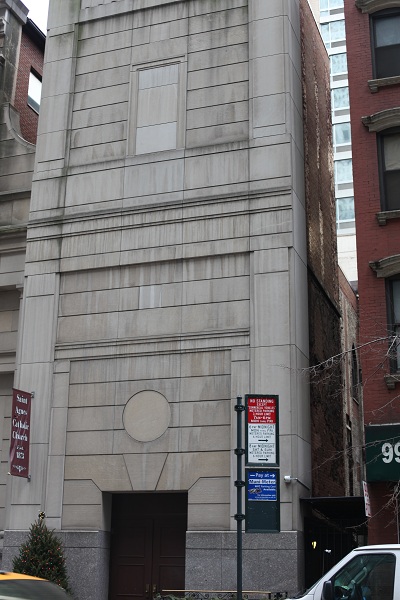
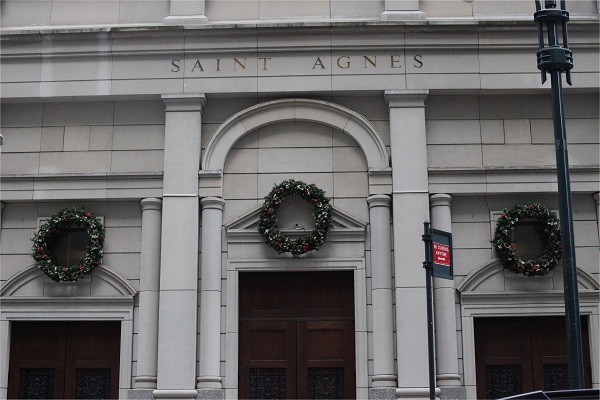
From outside, the new St. Agnes presents a quasi-classical appearance with two towers. Closer inspection revelas that the “classical” facade is in fact applied to the brick towers from the older church. The surface of the façade is also largely “stencilled”, but this is OK – there is some precedent for this in Europe ( e.g., Munich). Less forgivable are the crude arches and half columns.

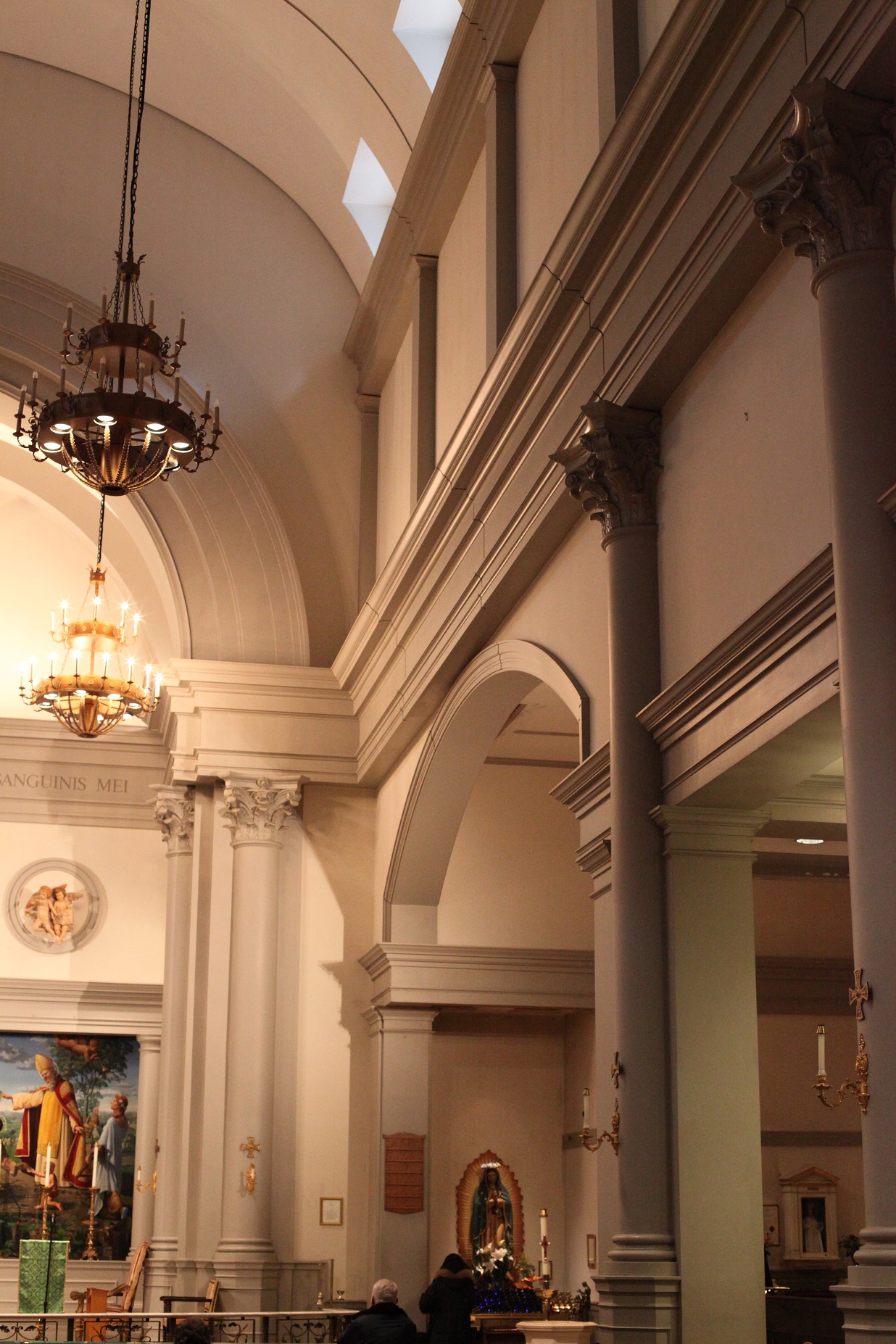
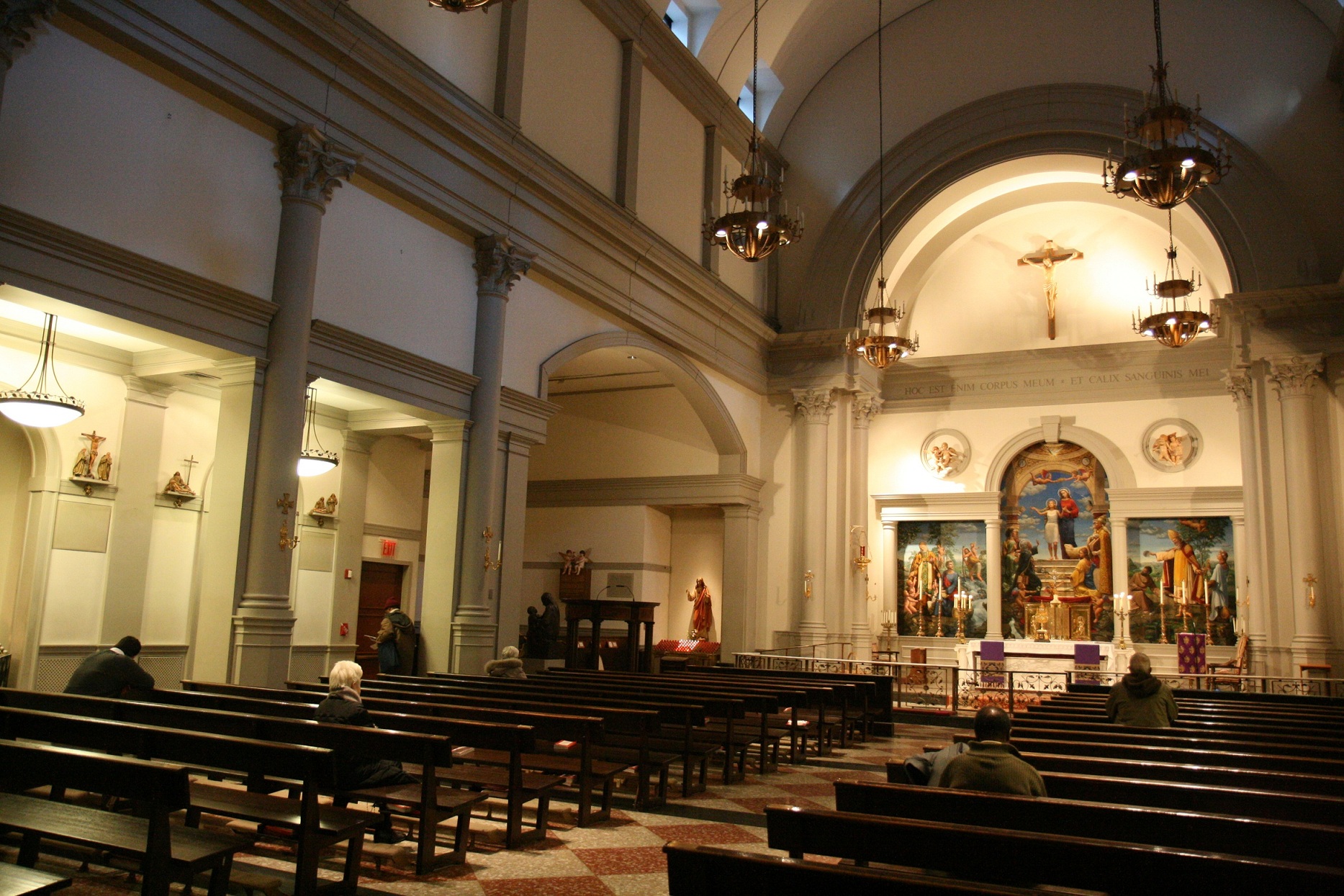
Inside, we have a somewhat cramped longish space with a barrel vault. No windows are visible. The interior seems vaguely inspired by works of the Florentine renaissance. The articulation of the interior includes elements of the classical architectural vocabulary: columns or half-columns, capitals, entablatures. On either side of the sanctuary a shallow “transept” opens up. The sanctuary itself is nearly on the same level as the nave and ends in a flat windowless wall. It is, however, surrounded by a communion rail – a major “restoration” in 1998!
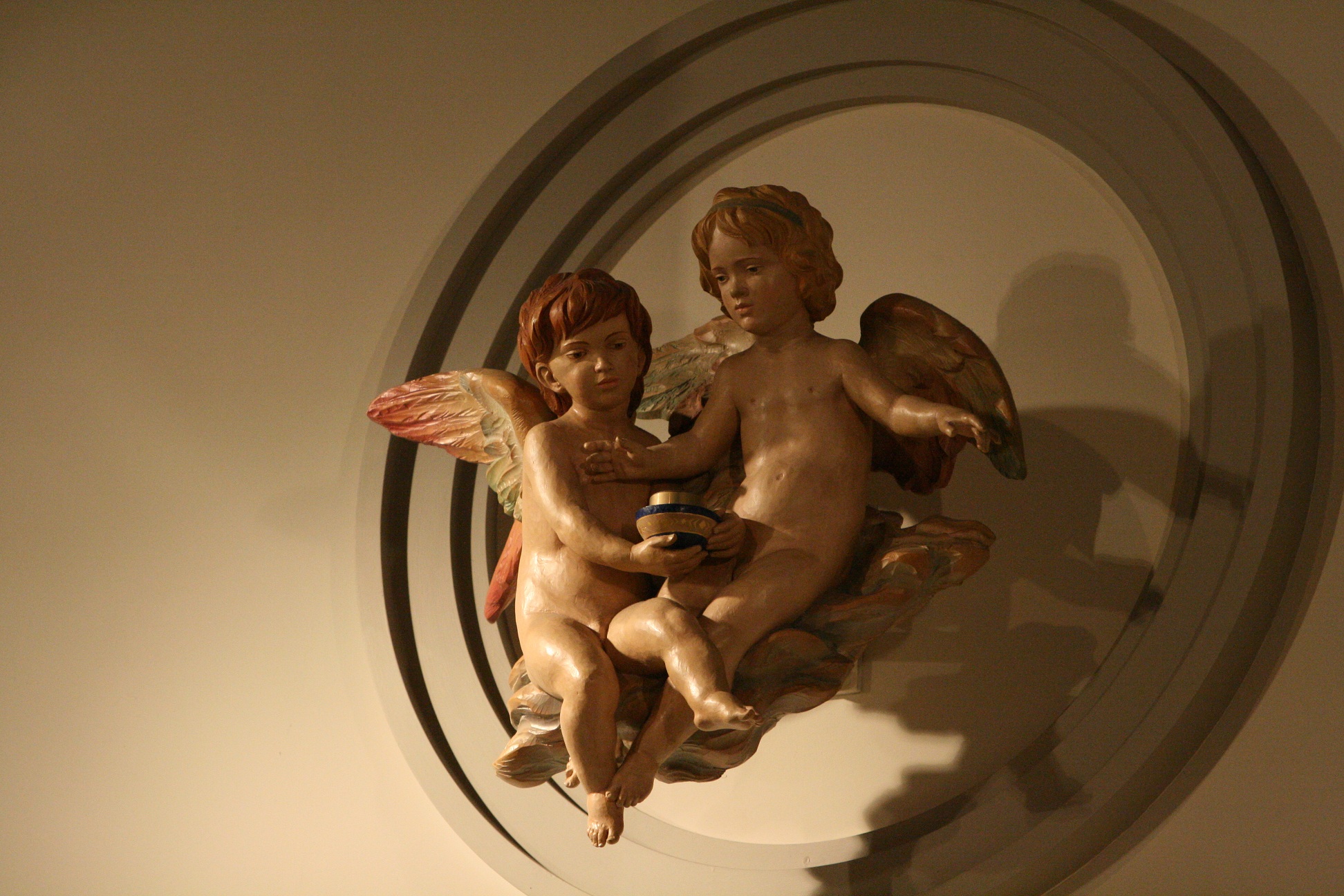
We cannot say that this architecture is successful. The elements of classical architecture seem disproportionate to the small space. The impression is one of confinement and dullness. The drab color scheme of white and gray heightens the drab appearance. But if the architecture itself reveals limitations, the decoration and furnishings are far worse. Low side chapels are filled with statuary seemingly purchased from the catalogue of a purveyor of third-rate devotional art. There are several copies of Baroque paintings. A faintly ludicrous leitmotiv of small sculptured cherubs recurs all over the church. And then there is the apse painting combining the art of the comic book with that of the 15th century Italian renaissance. The painting does add a welcome note of color to the interior. But then there is the centerpiece with the voluptuous figures of St. Agnes and the Virgin Mary – one senses the influence of Wonder Woman. St Agnes herself wears an unusual and highly inappropriate short skirt. Is this an attempt to “Americanize’ the saint?
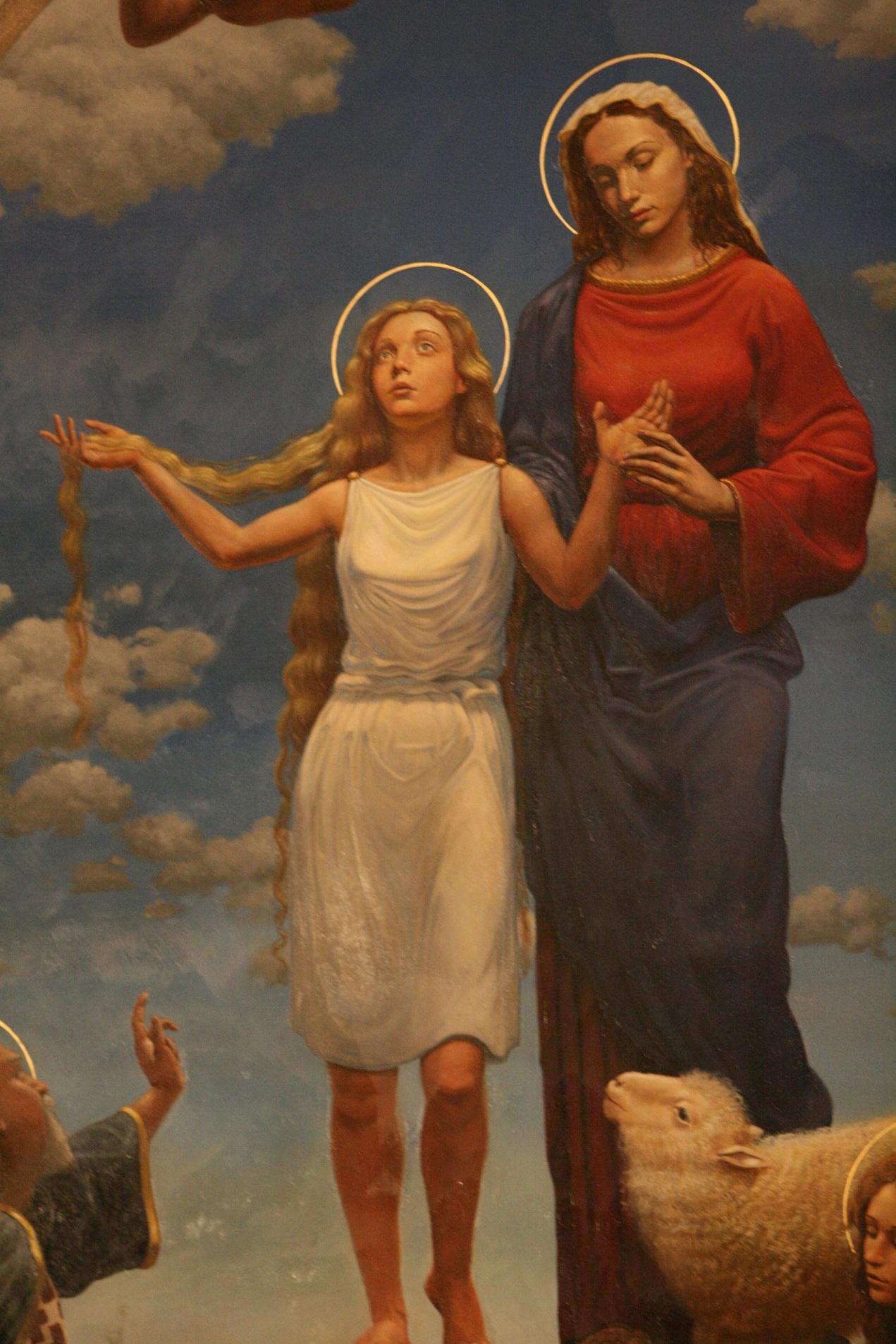
We cannot dispute the good faith of this endeavor. But this courageous attempt to reuse the vocabulary of classicism – as an ideology – without clearly understanding its rules has manifestly failed. Indeed, this new church strangely reiterates some of the worst features of the old: the bad copies of renaissance paintings, the cherubs, and the gray paint. Compared to the new St. Agnes, its 19th century predecessor was Chartres Cathedral. To appreciate how far St Agnes falls short of a true classical style, the visitor has only to compare this church with the light, airy St. Francis De Sales on East 96thStreet, an ordinary parish church also erected in a classical beaux arts style but 100 years earlier.
But beyond issues of artistic competence in an idiom that had fallen totally out of use, there is perhaps a more fundamental intellectual flaw. For can the “language” of Catholic traditional art indeed express the modernistic, non-traditional and ever changing nature of the new liturgy? To point out just one example, by setting up a communion rail, the builders of the new St. Agnes intended to memorialize the return of the traditional mode of receiving communion – kneeling and on the tongue – to the Novus Ordo liturgy. Yet, not too many years after the completion of this church, the US bishops tried to mandate receiving communion standing as obligatory in the Novus Ordo. Thus, developments in the Novus Ordo have always continued to run ahead of the would-be defenders of the status quo. Thus, the architecture of St. Agnes remains not an example for the future but a solitary statement of a limited ideological movement.
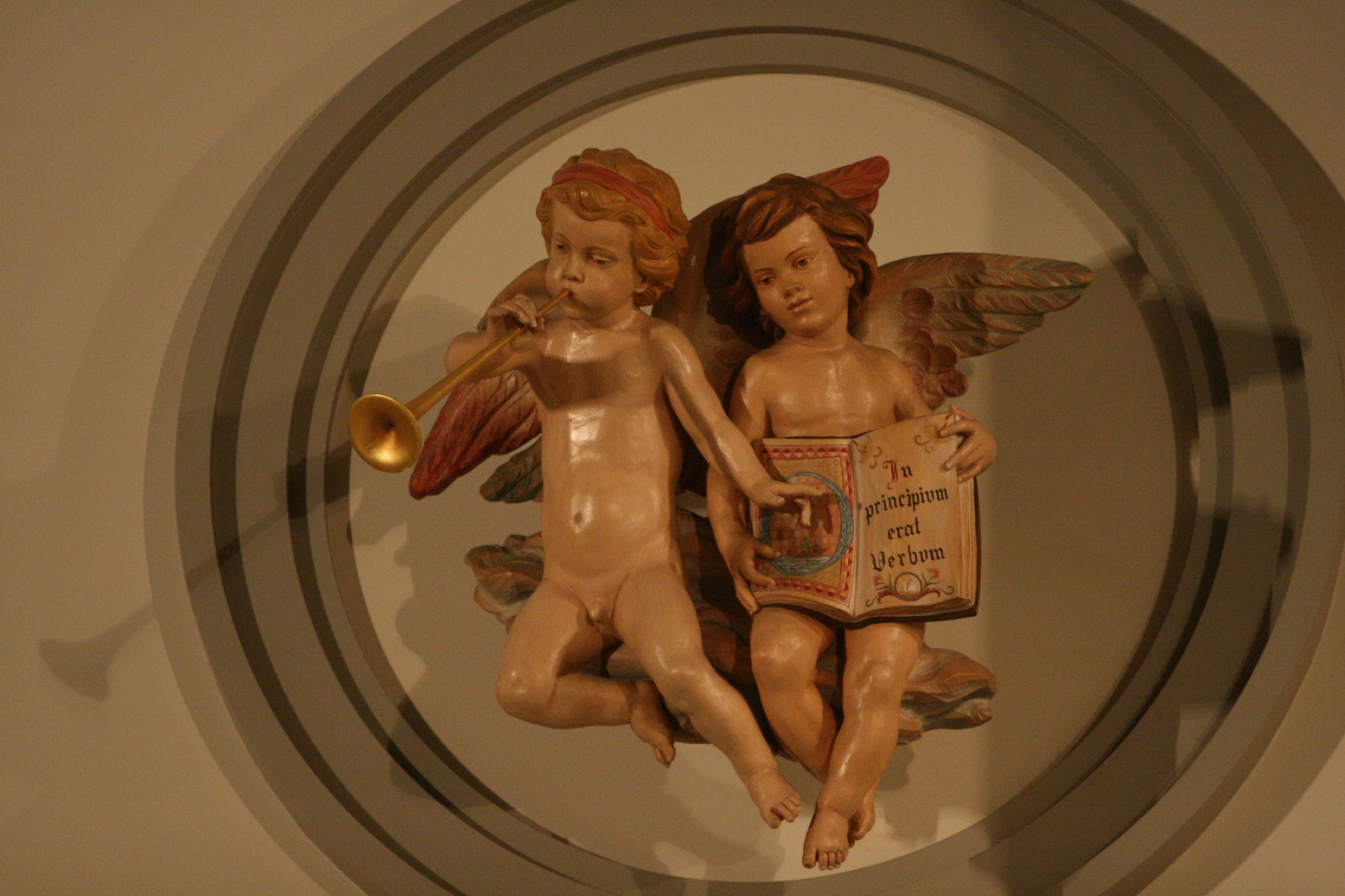
Grammar?

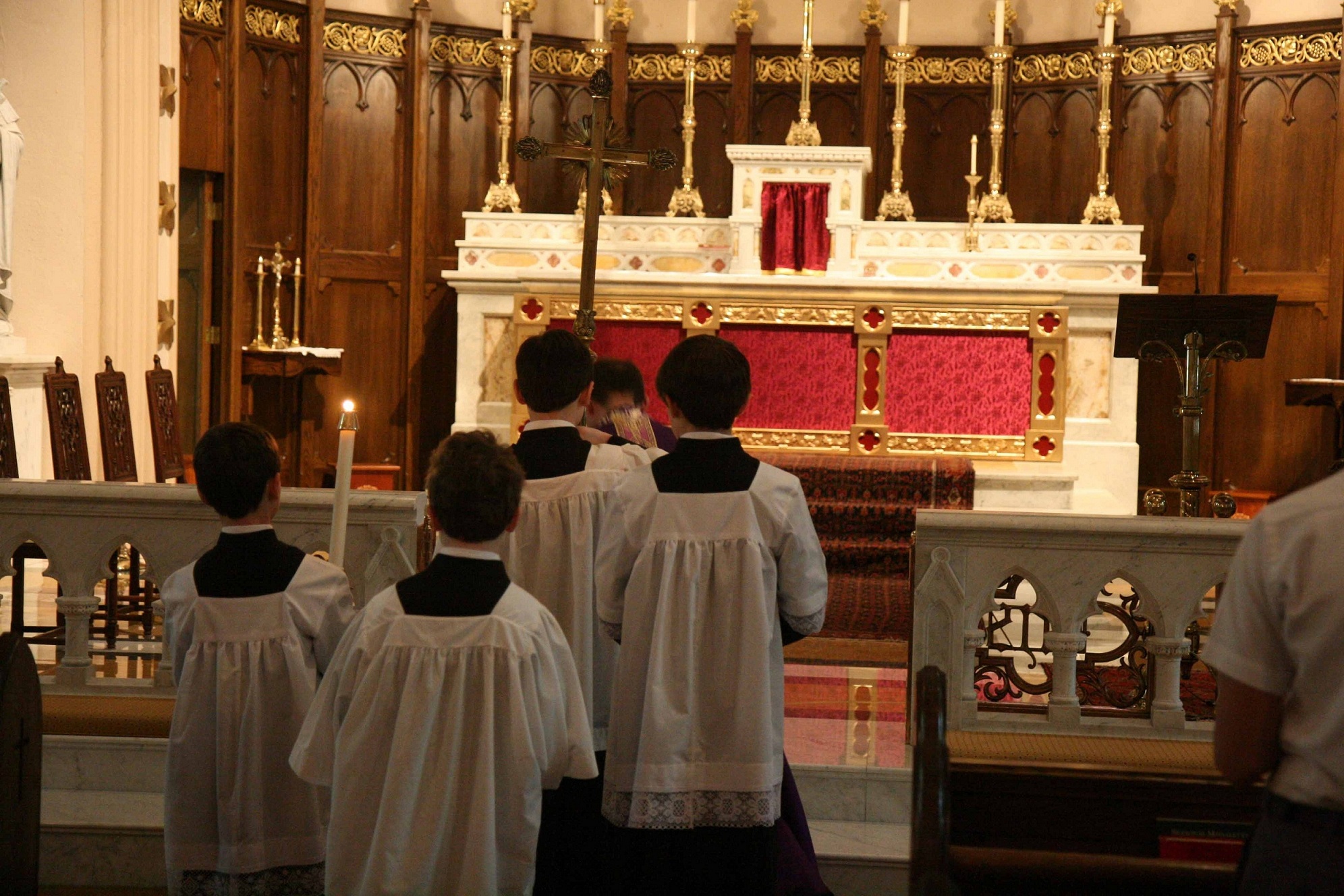
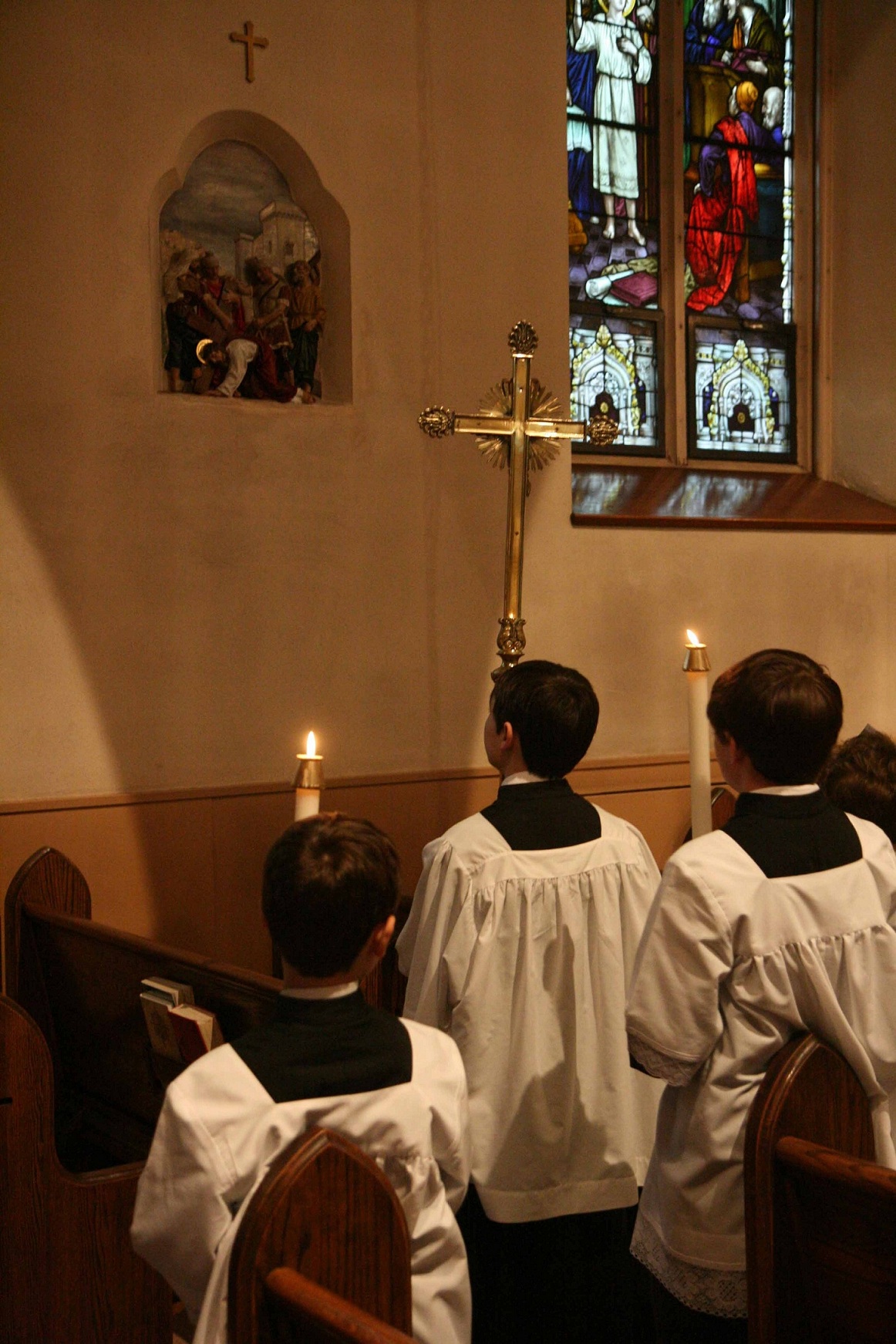
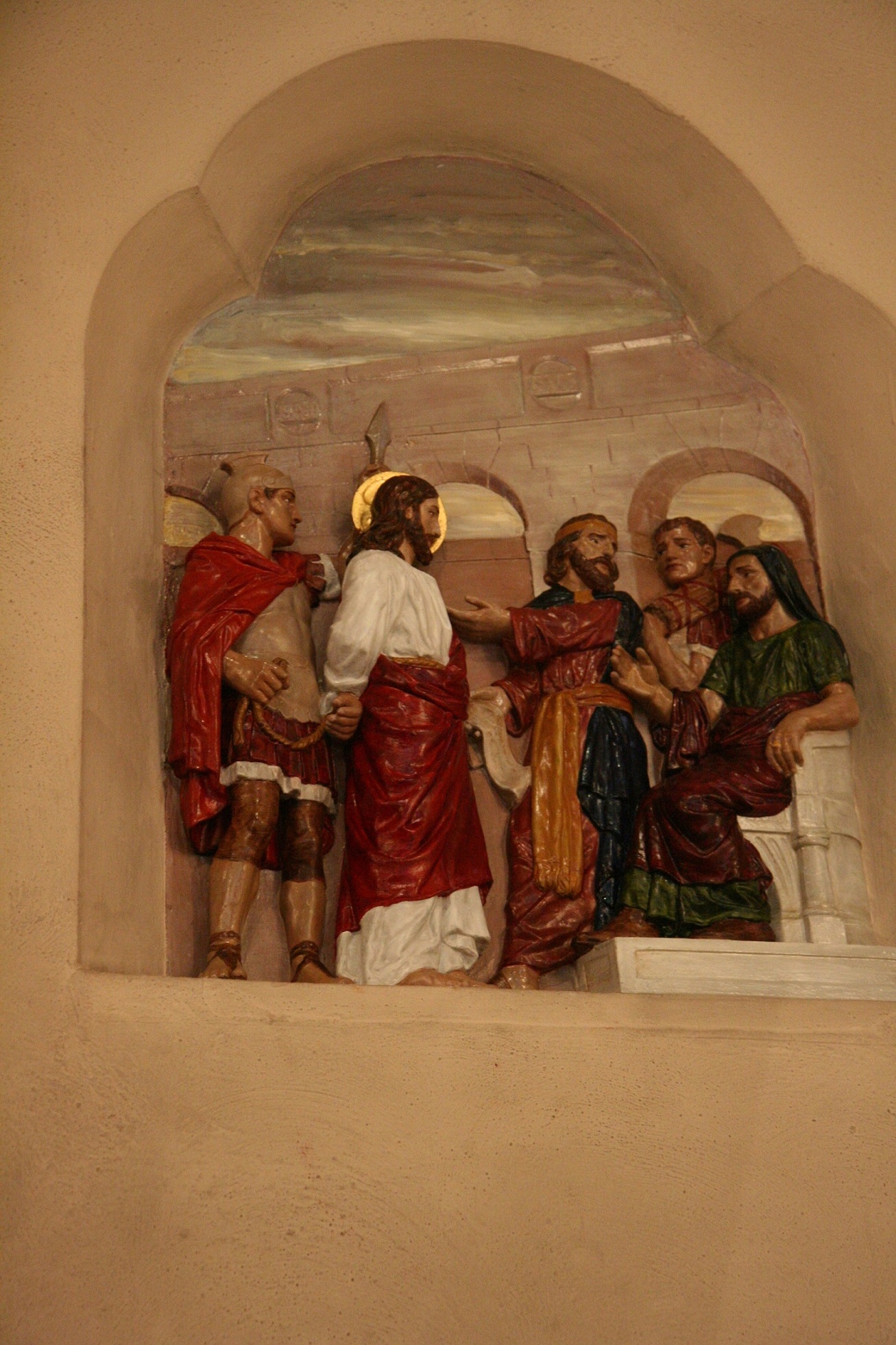
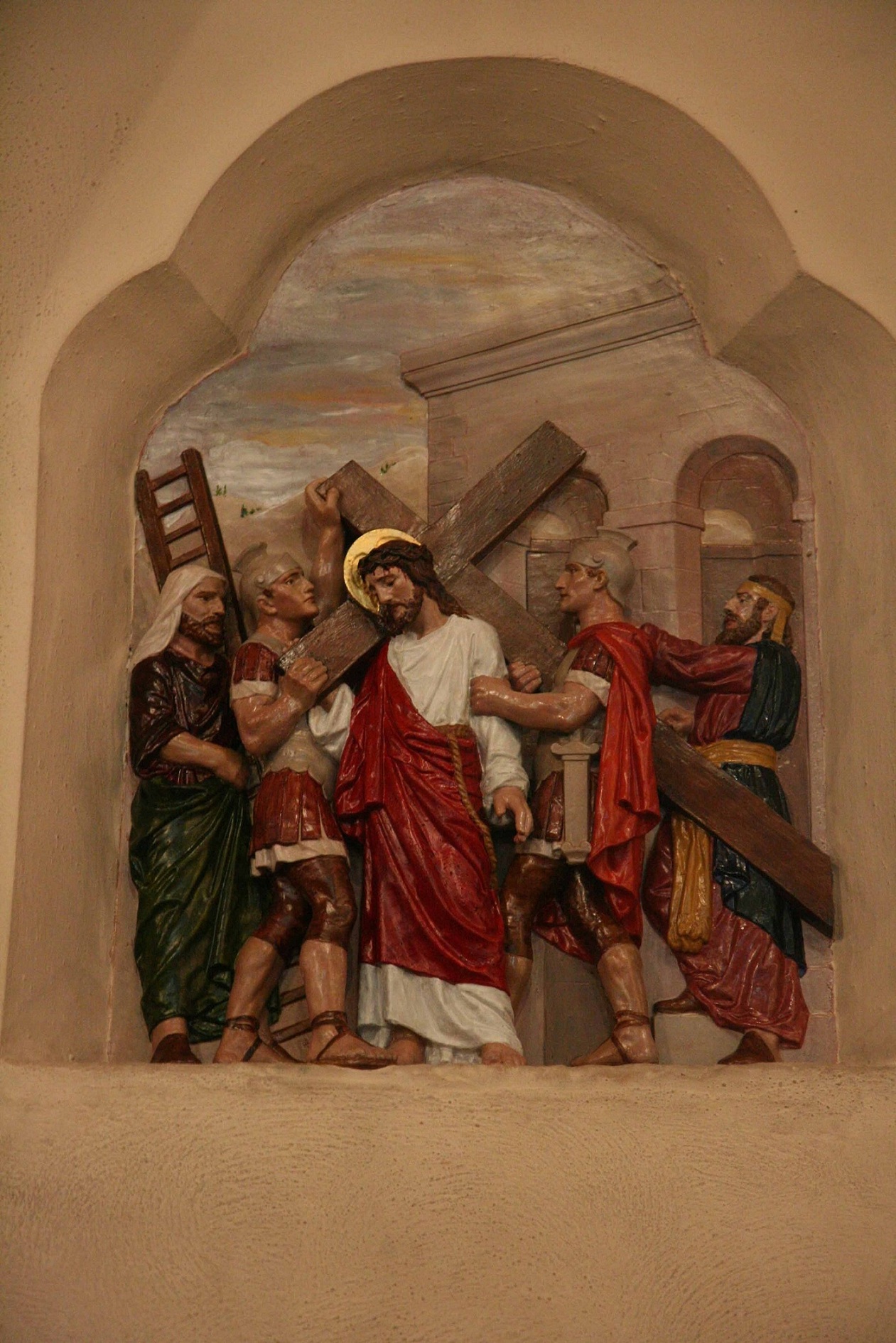
During Fridays in Lent, the Stations of the Cross will be prayed at 8:45 am, 5 pm, and 7 pm (Spanish). Our photo depicts yesterday’s Stations at 8:45 am, shown here with altar boys from Anchor Academy. The meditations for the Stations are drawn from St. John Newman. All of the prays are recited in Latin. The Stations of the Cross at St. Mary’s, which had been white-washed, were recently repainted by parishioner Margo Skidd.
Simultaneously from 9 am until 7 pm on Fridays throughout Lent, St. Mary’s will have Adoration of the Blessed Sacrament downstairs in the St. Patrick Chapel. Father Markey may decide to continue adoration on every Friday throughout the year, if it goes well.
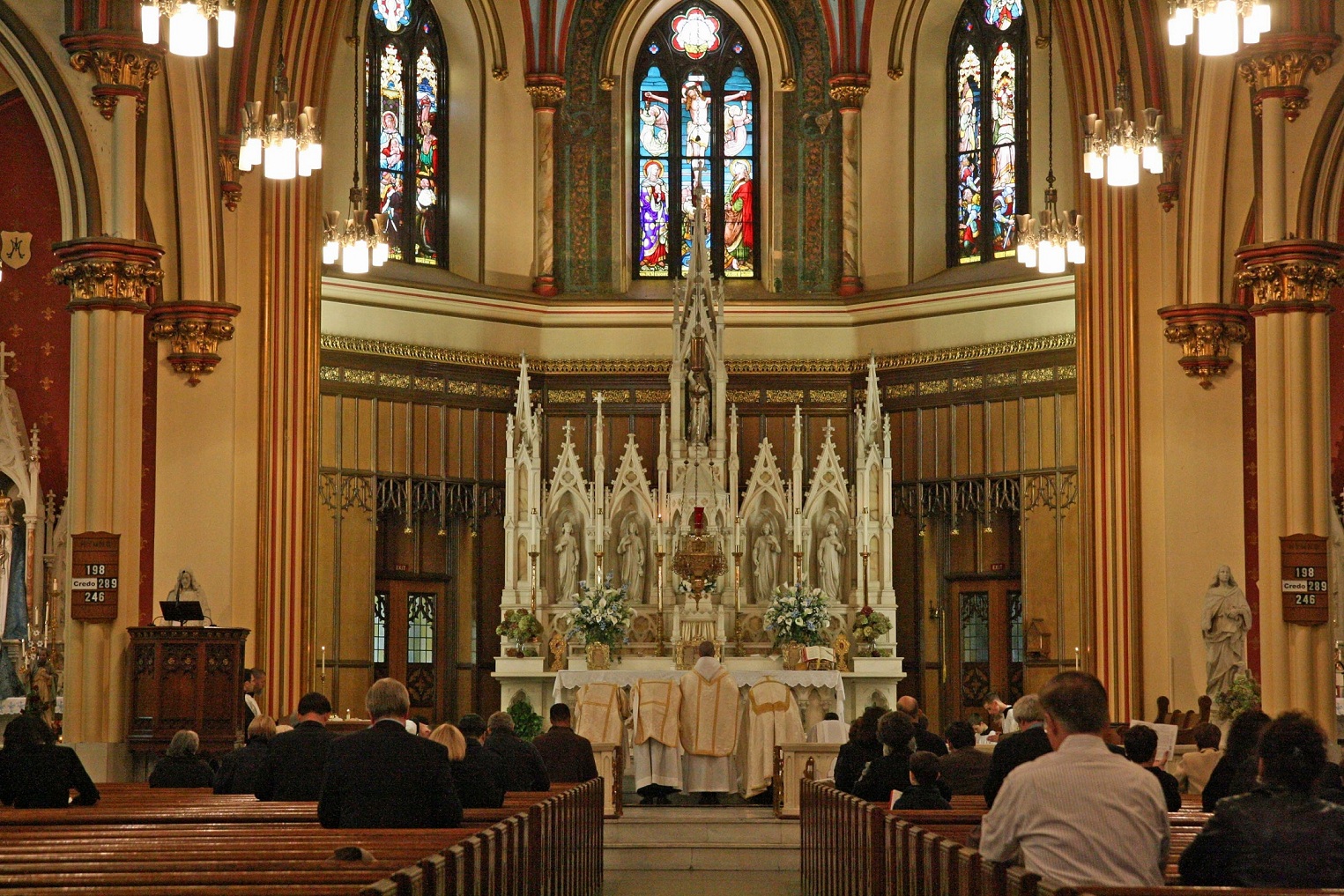
Beginning this coming Sunday, March 13, the Basilica of St. John the Evangelist in Stamford, CT will offer a weekly Mass in the Extraordinary Form at 8:30 am. This will be a low Mass. This is a welcome development for parishioners at St. John’s and for Catholics in the Stamford area. We hope that many of our readers will support this Mass.