There will be Solemn Mass and Benediction for the Feast of the Most Precious Blood of Our Lord on Thursday, July 1st at 6 PM, at the Church of the Holy Innocents,Manhattan (37th Street between Broadway and 7th Avenue).

Fr. Greg Markey, Pastor of St. Mary Church, Norwalk, CT wrote the following column for the parish bulletin and the parish website http://www.stmarynorwalk.net/
Msgr. Klaus Gamber (1919–1987) was a German liturgist who enthusiastically supported the liturgical reform of the Second Vatican Council, Sacrosanctum Concilium, but then later became one of the chief critics of how it was implemented. Then-Cardinal Ratzinger called Gamber, “the one scholar who, among the army of pseudo-liturgists, truly represents the liturgical thinking at the center of the Church.”
Many priests and faithful are under the impression that Vatican II called for an end to offering Holy Mass towards the tabernacle, ad orientem, and for the priest to now face the people, versum populum. However, no such statement can be found in the Council documents. Gamber saw this new altar arrangement as an aberration in the organic development of the liturgy, and one of his major contributions before his death was to examine whether there was any historical foundation for this new development.
In his book, The Reform of the Roman Liturgy (Cardinal Ratzinger wrote the introduction to the book), Gamber explains that scholars have shown that, “…the custom of praying in the direction of sunrise is an ancient one, practiced by Jews and pagans alike. The custom was adopted early on by the Christians. For example, to face East in prayer was a common practice for Tertullian, as early as 197. In his Apologeticum he speaks about Christians ‘praying in the direction of the rising sun’. The sun served as a symbol for the Lord having ascended to heaven and of His return from there” (see Acts 1:11).
Furthermore Gamber states: “We can say and convincingly demonstrate that neither in the Eastern nor the Western Church was there ever a celebration versum populum – rather, there was only the practice of turning towards the East while praying. Martin Luther was the first person to demand that the priest at the altar face the people.”
Some today negatively explain the ad orientem position as the “the priest with his back to the people”. However, the real symbolism here is the priest leading the people in the worship of God, offering to the Father the Perfect Sacrifice, the immolated Lamb, on behalf of the people.
What’s more, rather than being a circle closed in on itself, the ad orientem position represents an opening with an active and forward movement. As Gamber wrote, “Facing the East was to indicate the direction and destination of this procession: the lost paradise to be found in the East (Genesis 2:8). The celebrant and his assistants formed the vanguard of the procession to the East…When we expect the arrival of an important person, the group of waiting people will form into the shape of a semi-circle to receive the expected person into their midst.” Is this not what we are doing at Holy Mass? The priest leading us towards heaven as we await the arrival of the Lamb?
While offering the Mass versum populum is almost the universal practice in the Ordinary Form, both positions, ad orientem and versum populum, are permitted by the law of the Church. The Congregation for Divine Worship stated on April 10, 2000: “Both positions are in accord with liturgical law; both are to be considered correct…a priest’s choice of position to offer Holy Mass, whether facing the apse or facing the people may never be used to call into question his adherence to Catholic Doctrine.” Furthermore, later that year, on September 25, 2000, the Congregation for Divine Worship rejected the position that there is a general obligation in the Ordinary Form of the Mass for the priest to offer the Sacrifice of the Mass versum populum.
Inspired by Gamber’s research, Cardinal Ratzinger has promoted the value of once again offering Mass ad orientem. In 2000 Cardinal Ratzinger wrote: “A common turning to the east during the Eucharist Prayer remains essential. This is not a case of something accidental, but of what is essential. Looking at the priest has no importance. What matters is looking together at the Lord. It is not now a question of dialogue but of common worship, of setting off toward the One who is to come. What corresponds with the reality of what is happening is not the closed circle, but the common movement forward, expressed in a common direction for prayer.”
Now as the Holy Father, Pope Benedict XVI has begun to offer the Holy Sacrifice of the Mass in the Ordinary Form ad orientem at times. Evidently he sees our current atmosphere as the proper time to reorient ourselves with this common practice of our 2000 year history: “Historical research has made the controversy less partisan, and among the faithful there is an increasing sense of the problems inherent in an arrangement that hardly shows the liturgy to be open to the things that are above and to the world to come.”
Some claim that Msgr. Klaus Gamber writings are the inspiration to Pope Benedict XVI’s liturgical reform. Surely the Holy Father was moved when after Msgr. Gamber died in 1987, the then-Cardinal Ratzinger wrote, “The death of this eminent man and priest should spur us on; his work should give us a new impetus.”
Inspired by these writings and the example of the Holy Father, it is my hope to introduce the ad orientem altar position in the Ordinary Form in certain Masses. Please pray for the Holy Father, that he would lead us in an authentic liturgical renewal, as he often writes, in “continuity” with the Traditions that we have receive from the saints who have gone before us.
Published in Essays | no comment
Archbishop Francois Gayot, Archbishop emeritus of Cap-Haitien, Haiti, celebrated a magnificent solemn Pontifical Mass for the feast of the Sacred Heart yesterday, June 11th, at St Jean Baptiste Church in Manhattan. The Confraternity of the Sacred Heart, which sponsored the mass as well as a conference today, did its usual very professional job regarding ceremony, vestments and music. The musicians, under the the direction of Kyler Brown, seemed particularly happy in the organ music and in the more recent pieces such as Lauridsen’s Ubi Caritas. The congregation was not quite as large as last year; the announcement of the mass came out rather late.
It is entirely appropriate that a Haitian archbishop comes to New York to lead a Traditional liturgy and, in effect, participate in the process of rechristianizing this region. An US evangelist notoriously has claimed the recent Haitian earthquake as being God’s judgement on Haiti for 18th century voodoo: what then will be the fate of New York, from which a poisonous stream in economics, entertainment, fashion, advertising and journalism pours out over the whole world? Local Catholics, both clergy and laity seem to stand by, stupefied. By helping to return Catholics to the roots of their faith, Archbishop Gayot has made a not insignificent contribution to eventually reawakening the Church from its paralysis.


The “cappa magna” worn in proecesssion to the sanctuary prior to the liturgy.


The entrance procession.


The set of vestments for the solemn liturgy are of unusual magnificence. Subject to correction, they appear to date from the year of the beatification of St Peter Julian Eymard (1925). He was the founder of the Blessed Sacrament Fathers who administer this church.


The epistle.


During the reading of the gospel.


Archbishop Gayot gave a succinct, memorable sermon – in French. He spoke of the immeasurable love of God, taking up a theme of the epistle. But he also praised Gregorian chant and how it so effectively conveys truth aside from whether the Latin is “understood.”


By popular demand, here are additional pictures of Sunday’s celebration of the feast of Corpus Christi – including more of the Solemn mass that preceded the procession. On that day St Mary’s had some prominent visitors: Fr. Uwe Michael Lang, Fr. John Zuhlsdorf and Mr. Mark Froeba of the Society of the Sacred Heart in New York.


Follow the horizon: the first chapters are far advanced before the Americans are scheduled to start.
Note: My report of the 2010 Chartres Pilgrimage begins at this link
It is the conclusion of a remarkable experience. The last day’s route generally leads through open countryside and for the first time the pilgrims can get a real sense of the numbers of marchers involved. Thousands more join for this final day. Later, pilgrims will participate in the final liturgy which lasts up to three hours either crammed into the cathedral or sitting in the direct sun outside it. Yet, at the end, despite all the pain and discomfort there is profound peace and joy. One more pilgrimage for Christendom has been completed. And, as someone remarks, the most amazing thing is that one longs to come back once more….

The start of the third day: this Estonian contingent marched with the Americans.


In the morning the pilgrim trail stretches far into the distance.


The route continues through quiet villages.


Some scenes at the final rest stop.


On the final day the route through open countryside affords unforgettable vistas.

Chartres Cathedral in sight!

The march to the cathedral.

The cathedral cannot hold all the pilgrims; a large portion (including the American chapter this year) must attend the mass in the square outside the cathedral via some not totally effective audio-visual equipment. and in 2010 that meant sitting for several hours in the blazing sun.


The entrance procession: the banners.


The entrance procession: the clergy.

The entrance procession: the episcopal blessing.


The recessional: the clergy.

The recessional: the celebrants.

The recessional: the statues.

The recessional: the scouts.
To see my all of my coverage of the pilgrimage start at this link.
Published in Chartres pIlgrimage | no comment
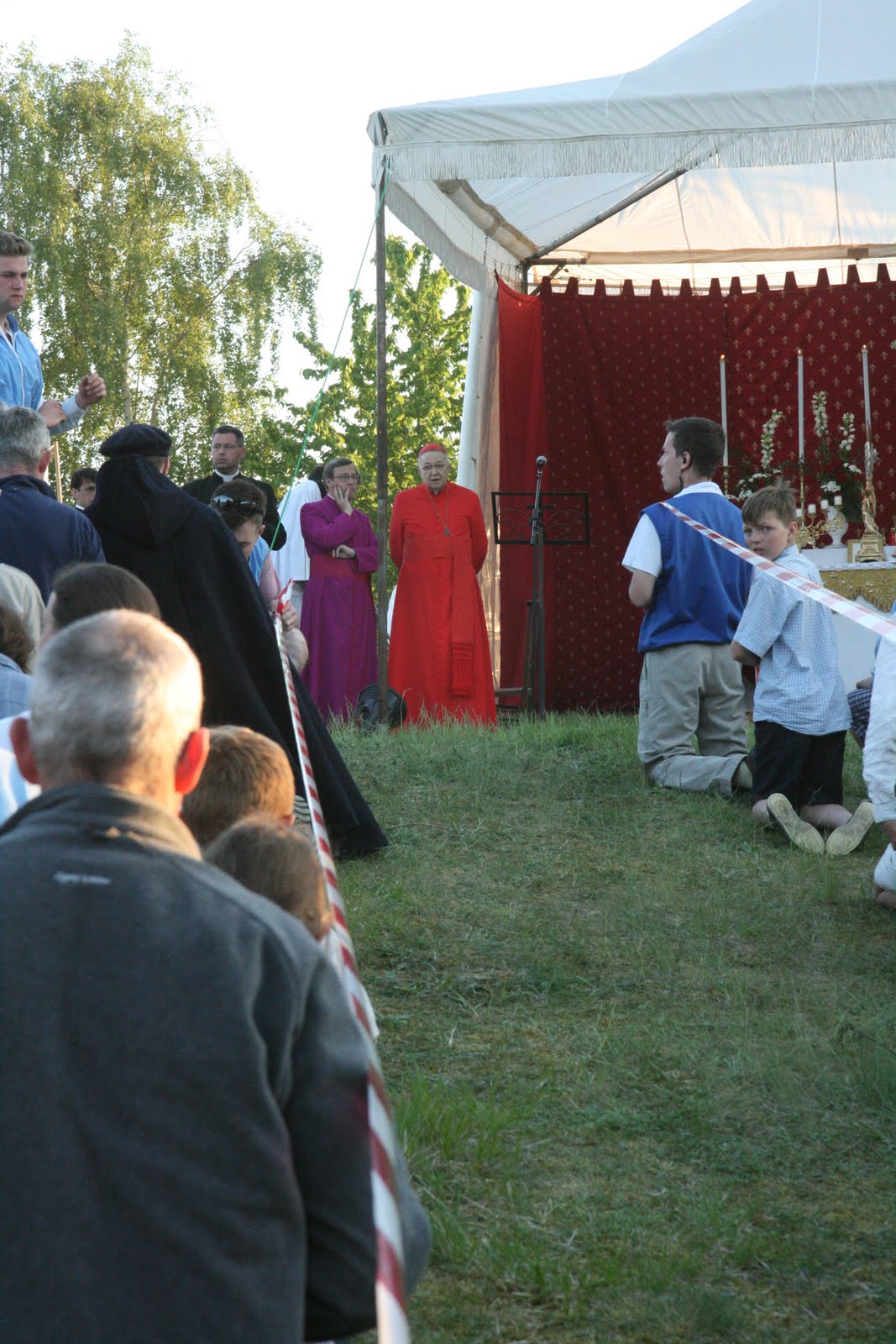
Cardinal Vingt-Trois and his staff survey the second day’s camp.
A major distinction between the Chartres pilgrimage today and its predecessors 15+ years ago is the increasingly close interaction with the local hierarchs. Whereas the ordinaries of both Paris and Chartres initially ignored the presence of 12,000+ pilgrims, there is now accommodation and even active participation. An unforgettable high point in this development was the presence in the camp at the end of the second day’s march of Cardinal Andre Vingt-Trois. As recently as February of this year the Cardinal was reported as leading the charge against Summorum Pontificum and its supporters in France. His presence at the pilgrimage would seem to indicate a revolutionary change of heart – or at least a major softening of attitudes. The archbishop was not only present – he met and blessed pilgrims individually and then led a service of Benediction. Hundreds of pilgrims, stiff and exhausted, knelt that evening on the steep slope below the altar throughout the lengthy service.
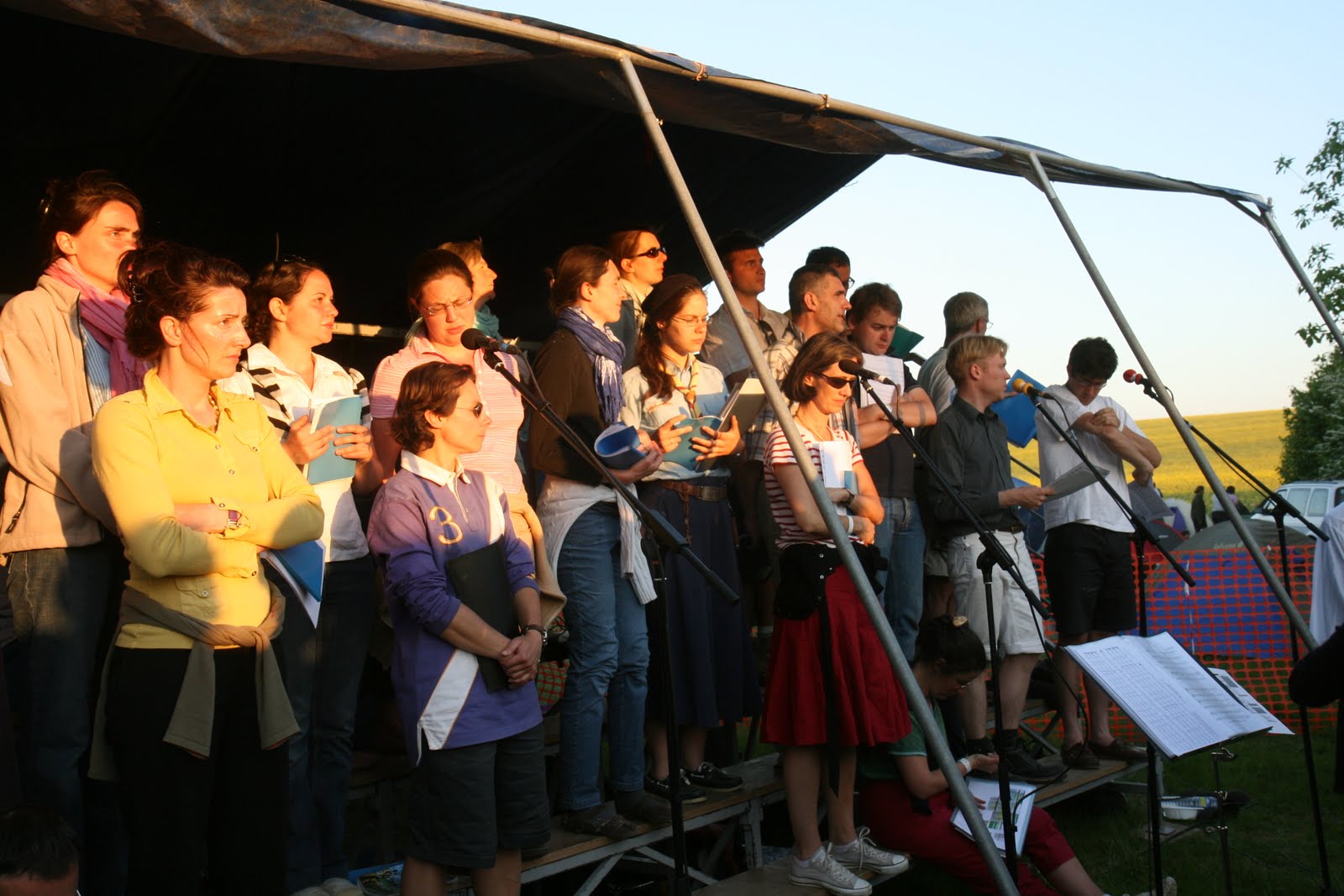
This is the schola/choir that sang at the services over the three day pilgrimage.
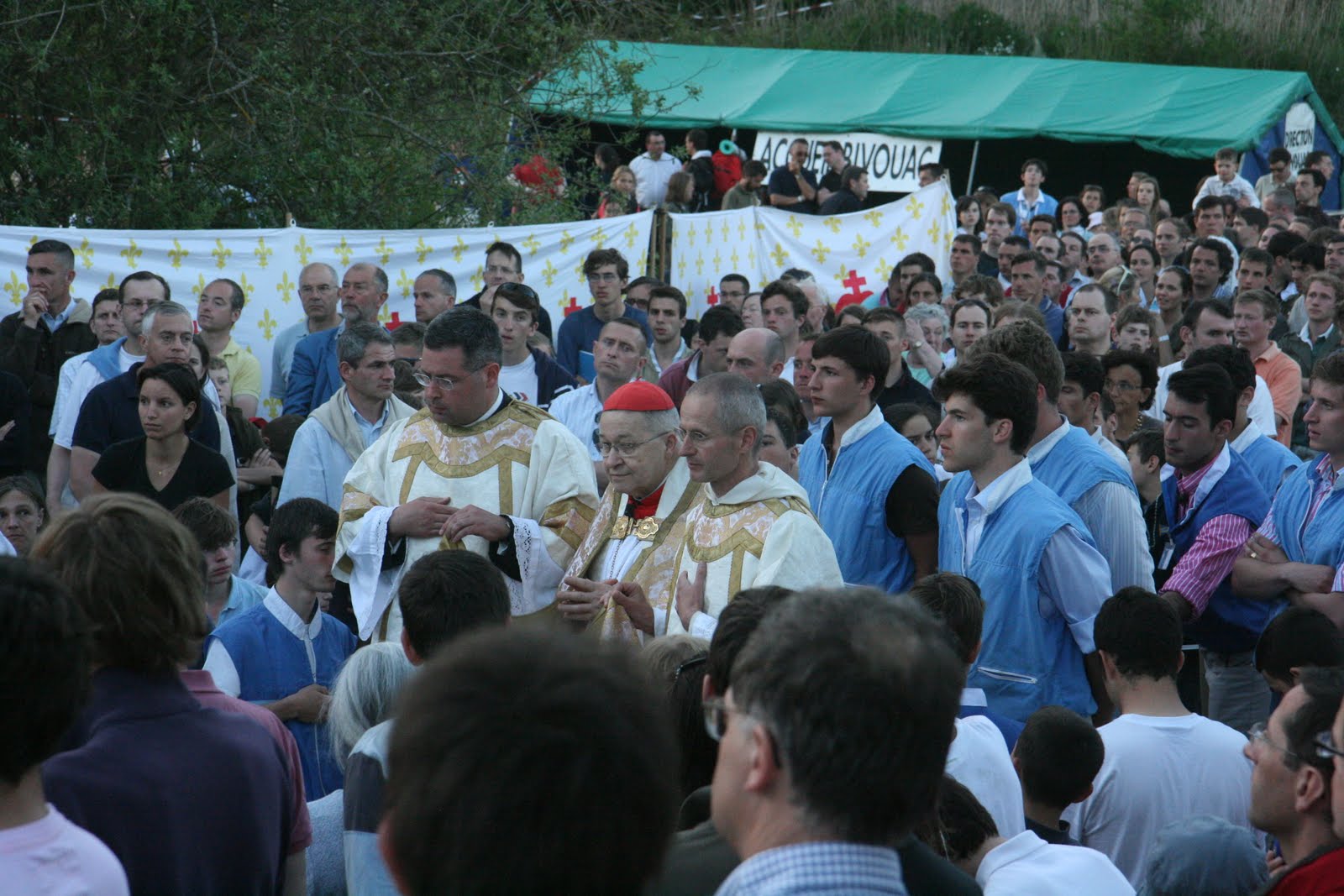
The procession to the altar for Benediction.

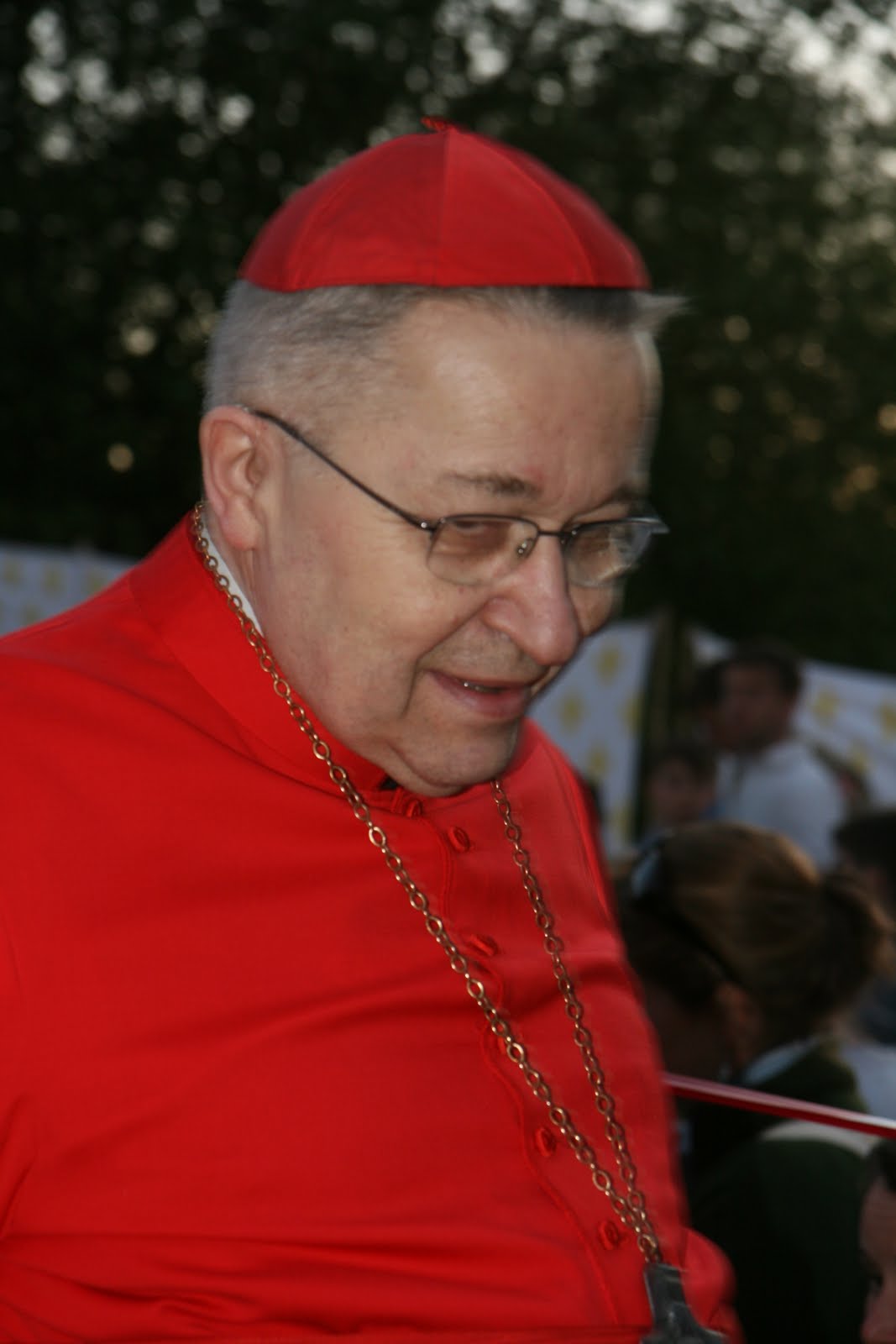
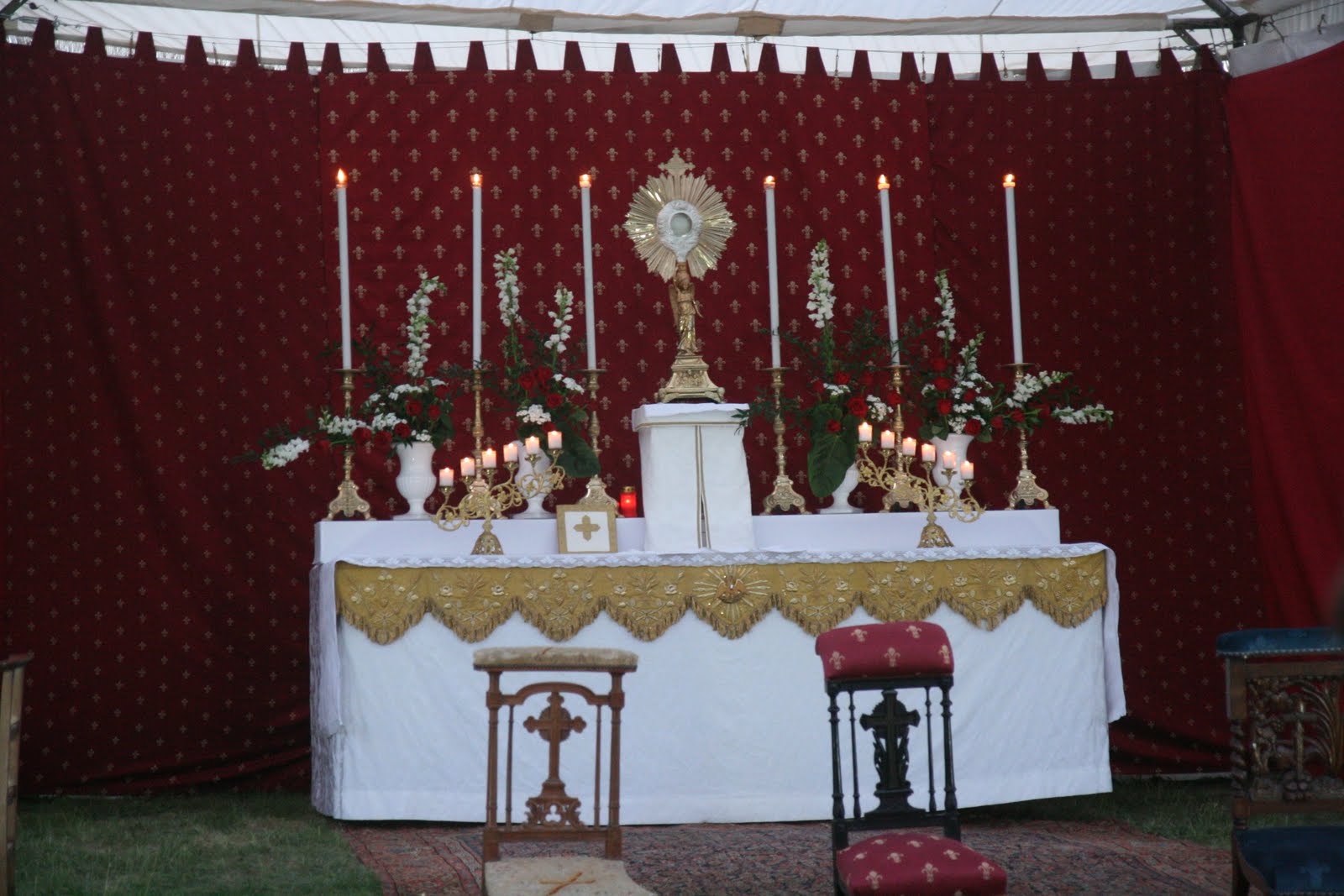
Exposition of the Blessed Sacrament – the candles flickering throughout the night….
Published in Chartres pIlgrimage | no comment
Churches of New York
Holy Roman Empire
Website Highlights
Archives
[powr-hit-counter label="2775648"]