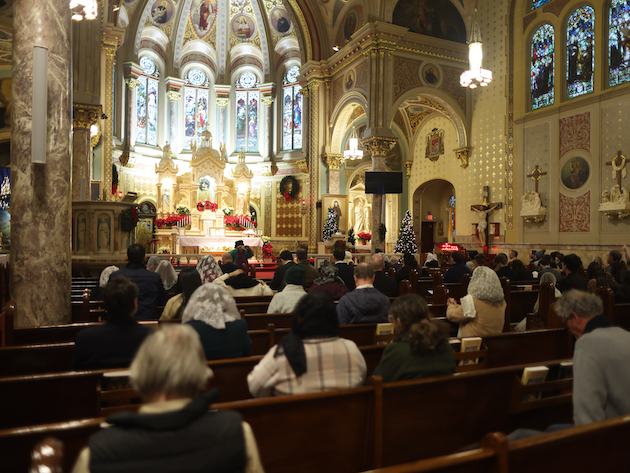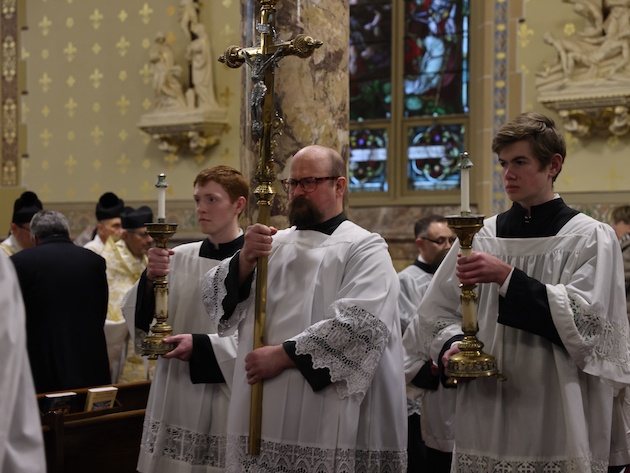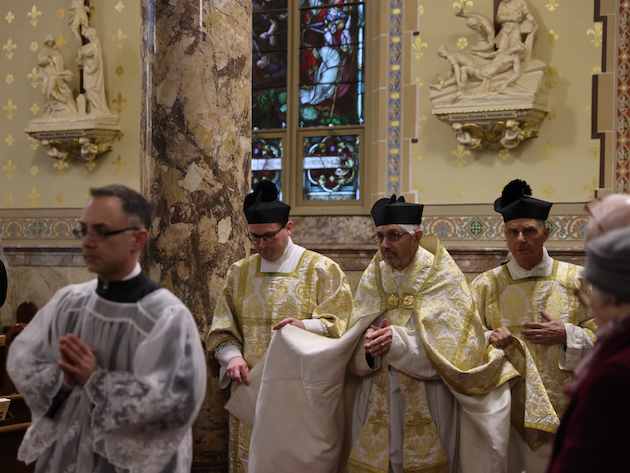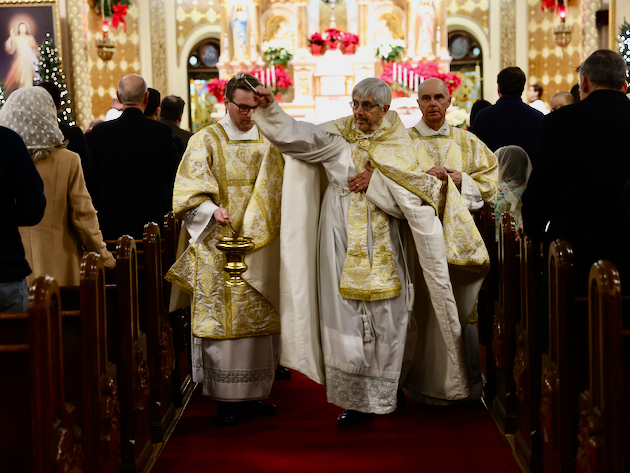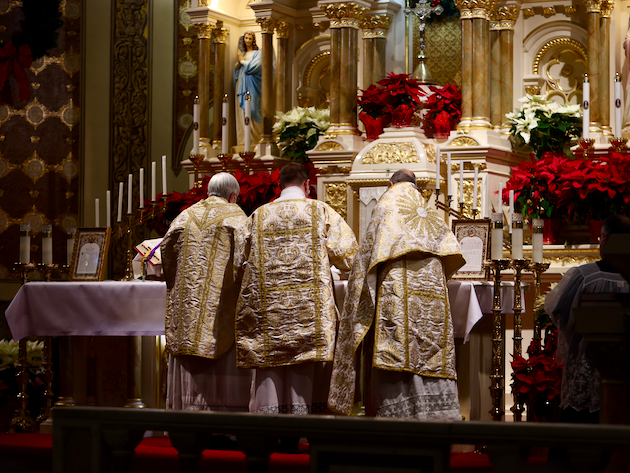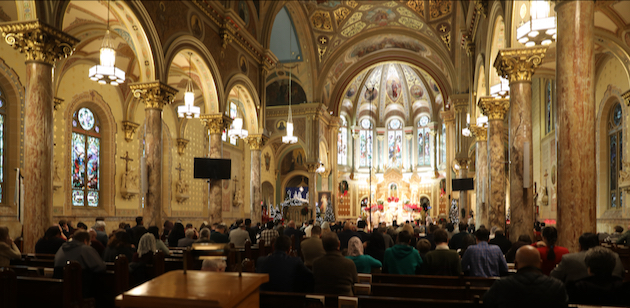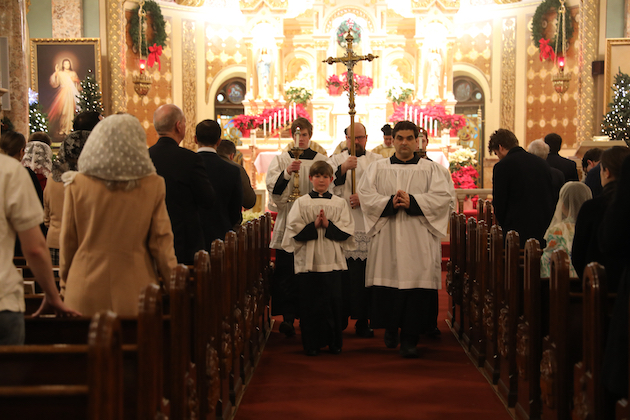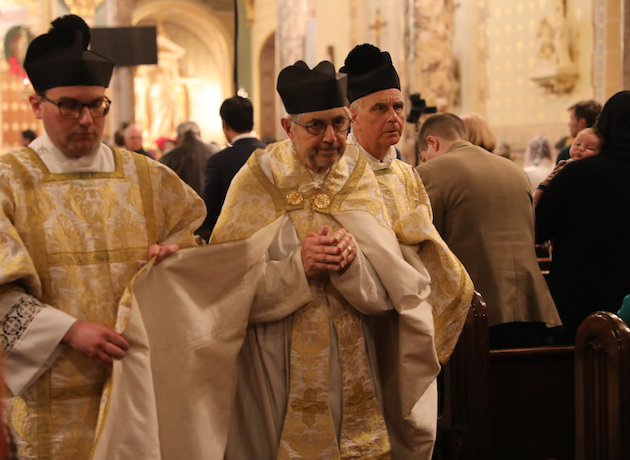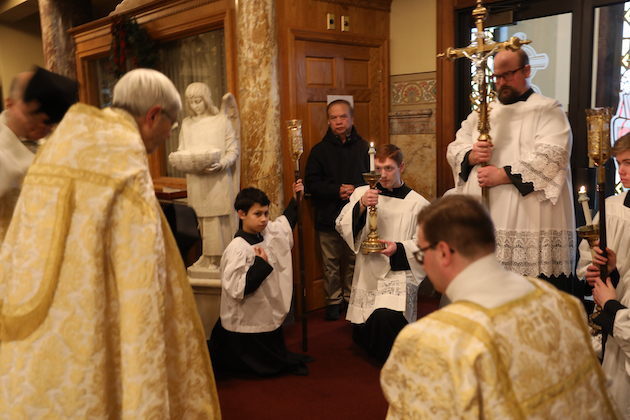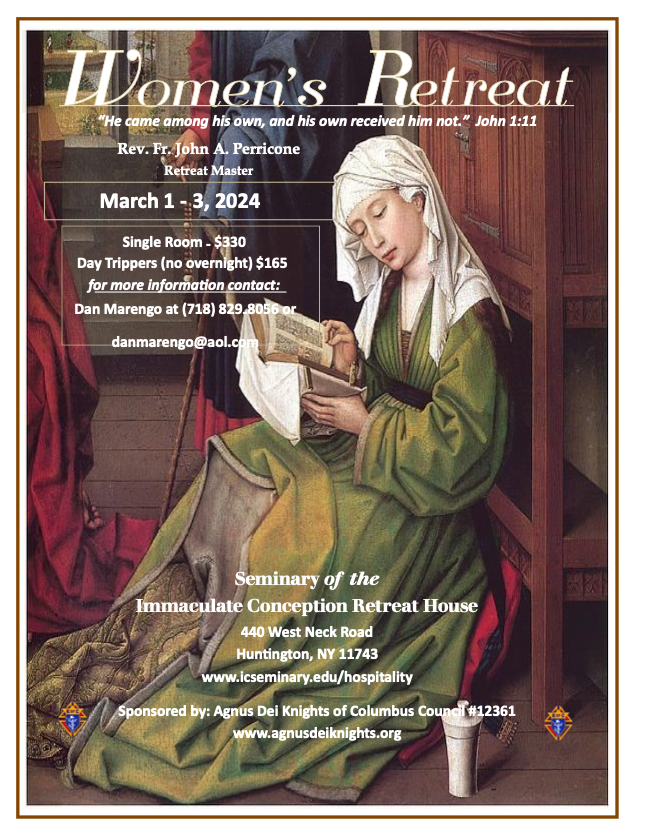
Our schedule of churches offering Traditional liturgies in Holy Week can be found at this link.
2
Apr

Our schedule of churches offering Traditional liturgies in Holy Week can be found at this link.
2
Apr
30
Mar

The following churches will offer Traditional liturgies during Holy Week. Please help us make this a complete list.
Connecticut
St. Mary Church, Norwalk, CT
For a schedule of the music for Holy Week go to the parish website.
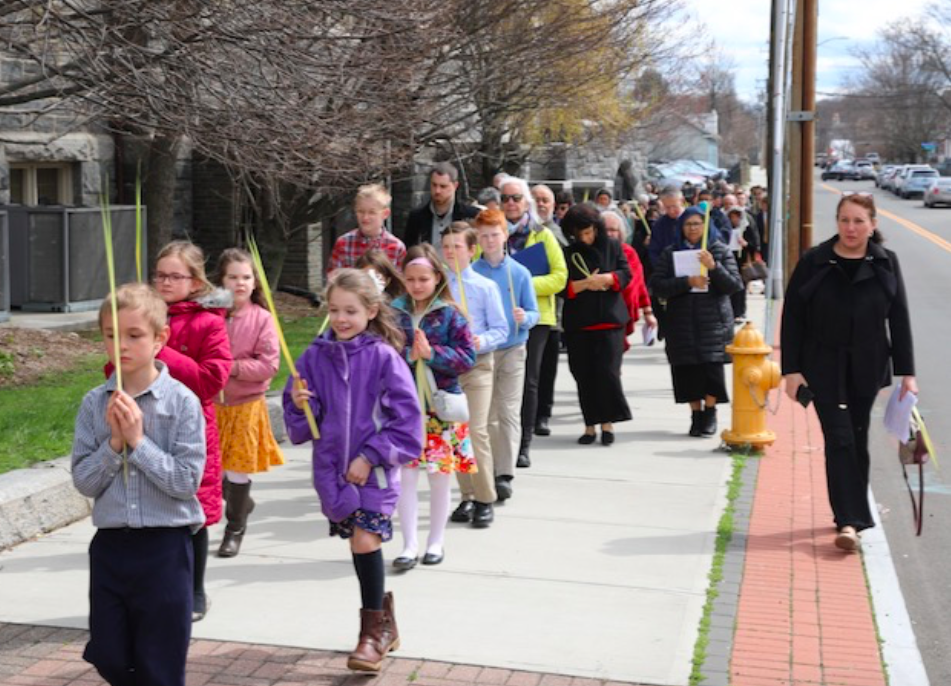
~ PALM SUNDAY ~ (April 2)
10:00 AM: Solemn Traditional Latin Mass (Procession of the Palms; St. Matthew’s Passion by Victoria).
~ HOLY MONDAY ~ (April 3)
6:00-8:00 PM: Confessions at St. Mary with Fr. F.J. Ringley.
~ HOLY TUESDAY ~ (April 4)
8:00 AM: Traditional Latin Mass.
11:30 am and 6:00-7:00 pm: Confessions at St. Mary.
~ SPY WEDNESDAY ~ (April 5)
8:00 AM: Traditional Latin Mass.
11:30 AM: Confessions at St. Mary.
7:00 PM: TENEBRAE of Maundy Thursday.
~ MAUNDY THURSDAY ~ (April 6)
7:00 PM: SOLEMN MASS in Cena Domini.
9:00 PM: Vespers and Stripping of the Altars.
9:30 PM: Vigil before the Blessed Sacrament (at the Altar of Repose in the lower chapel).
~ GOOD FRIDAY ~ (April 7)
11:00 AM: Stations of the Cross (Latin, English, and Spanish).
3:00 PM: The MASS of the PRESANCTIFIED (St. John’s Passion by Victoria; Worship of the Cross).
7:00 PM: Procession of the CRISTO MUERTO and Burial of the BODY of CHRIST.
~ HOLY SATURDAY ~ (April 8)
12:30 PM: Blessing of Easter Food (gym).
7:00 PM: The GREAT VIGIL of EASTER.
11:30 PM: Festive Reception.
~ EASTER SUNDAY ~ (April 9)
10:00 AM: Solemn Traditional Latin Mass.
Sacred Heart Oratory, Redding, CT
Palm Sunday, Missa Cantata with a procession, 12 pm
Maundy Thursday, Mass and translation of the Blessed Sacrament, 8 pm, watch at altar of repose until midnight.
Good Friday, Solemn Liturgy of the Passion, 3pm, Stations of the Cross, 7 pm
Holy Saturday, Paschal Vigil, 8 pm
Easter Sunday, 12 noon.
St. Marguerite Bourgeoys, Brookfield, CT
Palm Sunday, low Mass, 12:30 pm
Easter Sunday, low Mass, 2 pm
Sts. Cyril and Methodius, Bridgeport
PALM SUNDAY – April 2nd
8 a.m. Confessions
8:30 a.m. Low Mass (no palms), 9:45 a.m. Confessions
10:15 a.m. Blessing of Palms, Procession & Mass
6 p.m. Vespers & Benediction
MONDAY IN HOLY WEEK – April 3rd
7:15 a.m. Confessions
7:45 a.m. Low Mass
6 p.m. Confessions
TUESDAY IN HOLY WEEK – April 4th
7:15 a.m. Confessions
7:45 a.m. Low Mass
6 p.m. Confessions
SPY WEDNESDAY – April 5th
7:15 a.m. Confessions
7:45 a.m. Low Mass
7 p.m. Tenebræ, anticipated Matins & Lauds of Maundy Thursday
MAUNDY THURSDAY – April 6th
No confessions are scheduled before Mass today.
12 noon Mass of the Lord’s Supper followed by the procession of the Blessed Sacrament, vespers, stripping of the altar. Adoration at the altar of repose until 10 pm. 6 pm Mandatum (foot-washing ceremony in the church hall). 7 pm Tenebrae, anticipated Matins and Lauds of Good Friday.
GOOD FRIDAY – April 7th
11 a.m. Confessions (till 11:45)
12 noon Mass of the Presanctified followed by Vespers – Church open till 3 p.m. – GREAT SILENCE, 5:30 pm Confessions
6 p.m. Stations of the Cross
7 p.m. Tenebræ, anticipate Matins and Lauds of Holy Saturday
HOLY SATURDAY – April 8th
2 p.m. Confessions (till 2:30)
3 p.m. Easter Vigil followed by blessing of Easter baskets – Compline
(please place your baskets on the table by the Sacred
Heart statue BEFORE the Vigil begins)
EASTER SUNDAY – April 9th
8 a.m. Confessions
8:30 a.m. Low Mass followed by blessing of Easter eggs
9:45 a.m. Confessions
10:15 a.m. High Mass followed by blessing of Easter eggs
Children’s Easter Egg Hunt on the lawn after both Masses
6 p.m. Vespers & Benediction
OCTAVE OF EASTER
Daily Mass from Monday April 10th to Saturday April 15th
will be at 8 a.m., with confessions AFTER MASS. The
church will open at 7:45 a.m. each day this week.
St Stanislaus Church, New Haven
Palm Sunday, Missa Cantata with blessing of palms and procession, 2 pm, Fr. Peter Lenox, celebrant.
Good Friday, 11 am.
Easter Sunday, Missa Cantata, 2 pm.
St. Patrick Oratory, Waterbury
Palm Sunday, 8:30 low Mass (no palms), 10:30 Blessing of palms, procession and high Mass; 5:30 pm Organ recital followed by 6 pm vespers and benediction.
Monday and Tuesday of Holy Week: confessions at 7:30 am, Low Mass at 8 am
Spy Wednesday, 7:30 am confession; 8 am low Mass; 6 pm Tenebrae
Maundy Thursday, 11:00-11:45 am confessions; 12 noon High Mass of the Lord’s Supper followed by stripping of the altar; 6 pm, Tenebrae; adoration at the altar of repose until midnight
Good Friday, 11:00-11:45 am confessions, 12 noon Mass of the Presanctified; 3 pm Stations of the Cross followed by Great Silence; 6 pm Tenebrae
Holy Saturday, 11:00-11:30 am confessions; 12 noon, Easter Vigil followed by blessing of easter baskets
Easter Sunday, 8:30 am Low Mass, 10:30 am High Mass and Benediction, no vespers.
St. Augustine Church, North Branford, CT
Holy Tuesday, April 4, low Mass 6 pm
St. Martha Church, Enfield, CT
Palm Sunday, 11 am
Holy Thursday, 7:30 pm
Good Friday, 3:00 pm
Holy Saturday, Easter Vigil 7 pm
Easter Sunday, 11;30 am
New York
The Shrine and Parish Church of the Holy Innocents, New York
Holy Monday and Tuesday, 6 pm
Holy Wednesday, 6 pm Mass, 7:30 pm Office of Tenebrae
Maundy Thursday, 6 pm, Solemn Mass of the Lord’s Last Supper, all-night adoration of the Blessed Sacrament in the repository (the church will close at midnight for those not staying all night and reopen at 6 am on Good Friday)
Good Friday, Adoration of the Blessed Sacrament continues until 3 pm; 12 noon, 7 Last Words preached by Fr. James Miara; 3 pm Solemn Liturgy; 6 pm Stations of the Cross
Holy Saturday, Church opens at 9 am for veneration of the cross; 12 noon blessing of Easter food; 6 pm East Vigil Solemn Mass followed by a festive reception in the parish hall
Easter Sunday, 9 am Low Mass; 10:30 am Missa Cantata followed by a festive reception in the parish hall
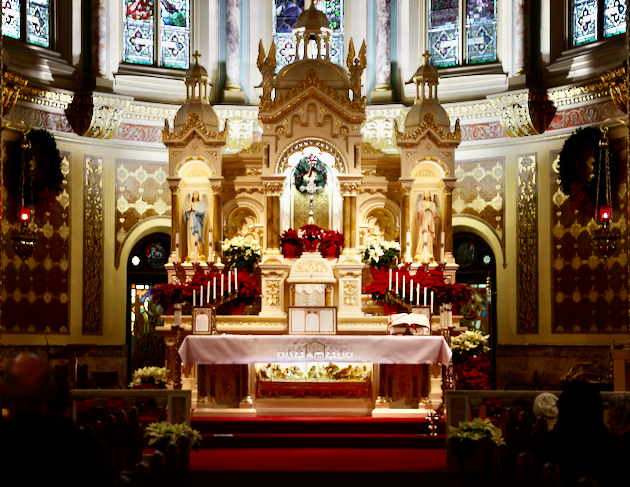
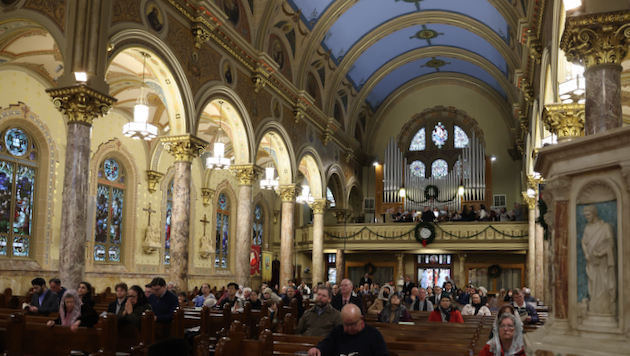
Our Lady of Mount Carmel Shrine, New York
Palm Sunday, April 2, 2023
10:15 AM Outdoor Blessing of Palms outdoors at the East 116th Street Entrance, Procession followed by Missa Cantata 1962 Missal inside the Church
4:30 PM Solemn Vespers, Rosary and Benediction
Holy Monday, April 3, 7 AM & 745 AM Low Masses, 3 PM Holy Rosary and Divine Mercy Chaplet, 1 PM to 3 PM Confessions, 4 PM to 9 PM Confessions
Holy Tuesday, April 4, 7 AM & 745 AM Low Masses 3 PM Holy Rosary and Divine Mercy Chaplet Confessions after Mass and Rosary
Spy Wednesday, April 5, 7 AM & 745 AM Low Masses 3 PM Holy Rosary and Divine Mercy Chaplet Confessions after Mass and Rosary
** The Sacred Triduum **
Maundy Thursday, April 6
9 AM Tenebrae 3 PM Holy Rosary and Divine Mercy Chaplet, 7:00 PM Mandatum & Solemn Mass of the Lord’s Supper pre 1955 Missal, 8:30 PM Procession to the Altar of Repose, Adoration at the Altar of Repose until Midnight
Good Friday, April 7, 9 AM Tenebrae, 12 Noon Annual East Harlem Good Friday Procession Starting Point: St Francis de Sales Church, 96th Street and Lexington Avenue, Procession goes north on 3rd Avenue from 96th Street to 117th Street, Ending Point: St Paul’s Church117th Street and Lexington Avenue, 3 PM “Mass”, Liturgy of the Presanctified Gifts, pre 1955 Missal, 7:30 PM Procession of Gesu Morte, Stations of the Cross and veneration of the Relic of the True Cross, Holy Name Society
Holy Saturday, April 8, 9 AM Tenebrae, 11 AM Święconka, Blessing of Easter Baskets, 3 PM Holy Rosary and Divine Mercy Chaplet, 6:30 pm Święconka, Blessing of Easter Baskets, 7:00 PM Easter Vigil and First Solemn Mass of Easter 1962 Missal, The Blessing of the Fire and Paschal Candle will begin Outdoors at the 115th Street Entrance
Easter Sunday, April 9
10:30 AM Missa Cantata 1962 Missal
4:30 PM Solemn Paschal Vespers, Rosary and Benediction
St. Michael Church, Staten Island
Easter Sunday, Missa Cantata, 5 pm
Low Sunday, April 16, Missa Cantata, 5 pm
Our Lady of Peace, Brooklyn
Palm Sunday, 9:20 pm
St. Josaphat Church, Bayside, Queens
Palm Sunday, 9:30 am
Holy Monday, Tuesday and Wednesday, 7 am
Holy Thursday, 7:00 pm, adoration at altar of repose until midnight
Good Friday, 3 pm
Holy Saturday, Easter vigil, 8:30 pm
Easter Sunday, 9:30 am
St. Rocco Church, Glen Cove, Long Island
Palm Sunday, 11:30 am, Low Mass with Music and Solemn Blessing of Palms
Easter Sunday, 11:30 am, Missa Cantata
St. Paul the Apostle, Yonkers
Palm Sunday and Easter Sunday, 1:30 pm
Annunciation Church, Crestwood, NY
Palm Sunday and Easter Sunday, 11:15 am
Immaculate Conception, Sleepy Hollow, NY
Palm Sunday, 4 pm Missa Cantata with blessing and distribution of palms
Easter Sunday, 2 pm, Missa Cantata
St. Patrick Church, Newburgh, NY
Palm Sunday, low Mass, 3 pm
Easter Sunday, Missa Cantata, 3 pm
St. Joseph Church, Middletown, NY
Palm Sunday, 10:15 am Missa Cantata, in chapel
Easter Sunday, 10:15 am
New Jersey
Our Lady of Sorrows, Jersey City
Sunday, April 2 – Palm Sunday – 8:45am Blessing of Palms and Triumphal
Procession, Passion of Our Lord according to Matthew. Berchem O Jesu Christe, Dubois Adoramus Te Christe.
Wednesday, April 5 – Tenebrae – 7:00pm Ancient Office of Darkness beginning the Triduum. Gregorian Chant, Polyphonic Motets of Victoria
and others. Allegri’s Miserere.
Thursday, April 6 – Holy Thursday – 7:00pm Sung Mass of the Lord’s Supper and Procession to the altar of repose. Stripping of the Altar. Vigil before the Altar of Repose until Midnight. Gregorian and Ambrosian Chant.
Durufle’s Ubi Caritas,
Friday, April 7 – Good Friday – 3:00pm Mass of the Presanctified Immediately after the liturgy, procession through the streets with Our Lady of Sorrows
Saturday, April 8 – Holy Saturday – 10:15pm, the Easter Vigil. Anerio-Palestrina, Missa Papae Marcelli with chamber orchestra; Erbach Dum
Transisset; Franck Dextera Domini.
Off-street parking is available in the lot across the street from the church.
Our Lady of Victories, Harrington Park, NJ
Palm Sunday and Easter Sunday, 8 am
St. Anthony of Padua Oratory, West Orange, NJ
Palm Sunday, April 2
7:30 am Low Mass – palms will be blessed prior to Mass
10:00 am High Mass – Preceded by blessing and distribution of palms, and procession.
(No 9 or 11 am Masses)
Maundy Thursday, April 6
6:00 pm Confessions
7:00 pm Solemn High Mass
8:30 pm Eucharistic adoration
Good Friday, April 7
12:00 pm Mass of the Presanctified
2:30 pm Stations of the Cross & Confessions
Holy Saturday, April 8
11:00 am Confessions
Noon Easter Vigil Mass (this Mass does NOT fulfill Sunday Mass)
Easter Sunday, April 9
7:30 am Low Mass
9:00 am Low Mass
11:00 am High Mass
Our Lady of Fatima Chapel, Paquannock, NJ
Palm Sunday
10:30 A.M. – Blessing of Palms – Chanting of the Passion – Solemn Mass
Holy Thursday
9:00 A.M. – Tenebrae
5:30 P.M. – Confessions
7:00 P.M. – Solemn Mass of Holy Thursday w/Adoration at the Altar of Repose until Midnight
Good Friday
8:00 A.M. – Tenebrae
1:00 P.M. – Confessions
2:00 P.M. – Stations of the Cross
3:00 P.M. – Good Friday Liturgy
Holy Saturday
9:00 A.M. – Tenebrae
Confessions: at usually scheduled time 12:30 – 1:30 P.M.
8:30 P.M. – Easter Vigil
Easter Sunday
7:00 a.m.; 9:00 a.m.; 11:00 a.m.; 1:30 p.m.
No 5pm Mass
Shrine Chapel of the Blessed Sacrament, Raritan, NJ
Palm Sunday, 10 am
Holy Thursday, 7 pm
Good Friday, 3 pm
Holy Saturday, Easter Vigil, 8 pm
Easter Sunday 10 am
St. John the Baptist, Allentown, NJ
Palm Sunday, Solemn Mass 12:30 pm
Holy Thursday, 7:30 pm followed by adoration at the altar of repose until midnight
Good Friday, 12 noon
Holy Saturday, 3:30 pm, Solemn Paschal Vigil
Easter Sunday, Solemn Mass 12:30 pm
St. Mary of the Mount Virgin Church, New Brunswick, NJ
Easter Tuesday, April 11, Missa Cantata 7pm, music of Rheinburger, Byrd, Lotti, Biery and Palestrina, veneration of the relics of the true cross, crown of thorns and holy sepulchre after Mass

(Above: art warehouse for the diocese of Erfurt. This art warehouse currently is the storage center for around 2,000 works of art of the diocese of Erfurt, Germany, which either don’t have a place anymore in their parishes or where the churches in which they were located have been deconsacrated (photo 11.29.2022 © epd-bild/Steve Bauerschmidt )
Since the year 2000, the number of churches deconsecrated or torn down in certain German dioceses has reached two or even three figures. Author Gabriele Höfling asks what is to be done with, as she puts it, “pews, tabernacle and Co.”? Of course, according to this article, the art of the 19th century no longer accords with modern tastes. The same, however, seems to be true of the “art of the Council” dating to the 1960’s and 1970’s (when Catholic art was still being produced in significant quantities).
In some cases the artworks can be moved to another building in the same parish or even to a “private church.” Martina Außermeier of the Archdiocese of Munich art office reports (“with pride”) that: “we were just able to furnish a newly constructed private neo-gathic chapel more or lesss completely with used litugical objects and church furnishings.” Other art can be “recycled,” given – often free of charge – to new churches that are still being built in Eastern Europe or Africa.
Yet sometimes more imagination is required. Wooden objects can be burned in the paschal fire. Others can be placed in a coffin as “grave goods” (like in early medieval times): “such as a lectionary for a deceased reader.” Others are “upcycled.” Deconsecrated stone altars have been made into beautiful gravestones or headstones. A baptismal font has been refashioned as a fountain in a cemetary. Although “reverential, ” this takes a lot of time and expense and is not generally feasible. It seems that the dump may be the fate of art that cannot find another home or use.
The German dioceses are developing a central database of sacred objects. At this time it largely contains links to the relevant diocesan offices.
SOURCE: Höfling, Gabriele, “Von Upcycling bis Grabbeigabe: Was mit altem Kircheninventar passiert,” katholisch.de ( 3/28/2023)
Compare the same situation and function in the New York Archdiocese: Catholic “relics”
26
Mar

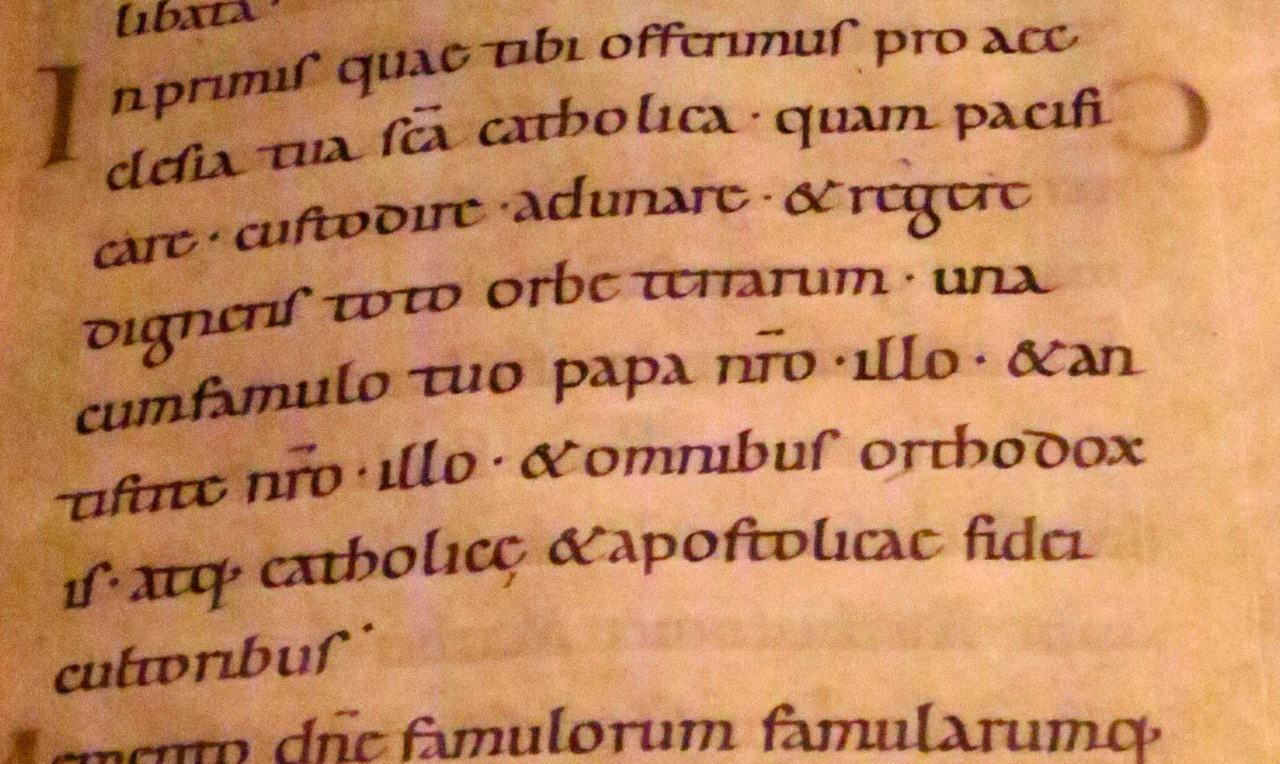
The Getty Museum has acquired the Irmengard Codex, a manuscript made for the 11th century noblewoman Irmengard of Nellenburg, a member of the House of Egisheim-Dagsburg in Germany.
The Irmengard Codex was created in Germany in the mid-11th century. A collection of readings for the Mass, the manuscript contains 15 full-page illuminations executed in the otherworldly pinks, blues, and lavenders that characterize painting of the so-called long Ottonian era.
Irmengard of Nellenburg, the codex’s patron, was a member of a powerful local ruling family, the House of Egisheim-Dagsburg. She was related to Pope Leo IX (1002-1054) and was the Ottonian Emperor Henry II’s niece (973-1024).
Based on the script, it is thought that the text of the Irmengard Codex was written around 1030-1050. The full-page miniatures were added shortly after 1053 at the order of Irmengard. The illumination program culminates in an extremely rare dedication image in which Irmengard presents her book in memory of her deceased husband Werner… .
“The Irmengard Codex represents the preeminent center of German illumination of the period, the Reichenau school, in which the powerful and theatrical figures underscore the stateliness of events they enact,” says Elizabeth Morrison, senior curator of manuscripts at the Getty Museum. 1)

Yet where did this book come from? From the Catholic University of Lille, France, which had owned it since 1881 and where it was known as the évangéliaire de Saint-Mihiel. You see, they needed to sell this treasure to finance various construction projects….2)
Sales of art by by Catholic institutions are an ever growing problem in Europe – and here – as religious communities diminish, money needs grow and any remaining reverence for the artistic and spiritual value of such objects evaporates. 3)
1, “Getty Acquires 11th Century Irmengard Codex,“ Fine Books & Collections (3/17/2023).
2. See Le Forum Catholique by “Vexilla Galliae,” (3/19/2023); Derogis, Paul, L’Institut “catholique” de Lille a vendu l’évangéliaire dit de Saint-Mihiel daté de 1040, Médias Presse-Info (3/19/2023)
3. Findeisen, Moritz, Kunstschätze in Gefahr? Von der kulturellen Verantwortung der Klöster, Katholisch.de (6/9/2022) ( A German momastery is threatening to sell manuscripts that had resided there since the 13th Century; “Of the 18,000 nuns living in Germany only 17 per cent are younger than 65.“)
26
Mar

From the Gospel of today – St. John v. 46 to 59:
“…Jesus autem abscondit se, et exivit de templo.”

The patronal feast day of Annunication Church in Crestwood, New York, was celebrated with a Solemn Mass this morning followed by Benediction of the Blessed Sacrament.


23
Mar
22
Mar
This Saturday, March 25, is the Feast of the Annunciation. Here is a list of some of the churches in the area that will offer a Traditional Mass.
Connecticut
St. Roch Church, Greenwich, Missa Cantata, 8am
Sacred Heart Oratory, Redding, CT, 40 Hours Devotion starting this evening (Thursday) with Mass at 6 pm continuing to Saturday, closing with a procession and Solemn Mass at 10 am. Festive reception follows at noon.
Sts. Cyril and Methodius, Bridgeport, 7:45 am
St. Patrick Oratory, Waterbury, Missa Cantata, 8 am
New York
Holy Innocents Church, Missa Cantata, 1 pm
Our Lady of Mount Carmel Shrine, New York, NY, 7:45 AM Low Mass, 9 AM Missa Cantata, 10 AM Covering of Crucifixes and Statues for Passiontide
Annunciation Church, Crestwood, NY, patronal feast, 11 am in the lower church.
St. Paul Church, Yonkers, NY, 12 noon.
New Jersey
Our Lady Of Sorrows, Jersey City, Missa Cantata, 11 am.
Shrine Chapel of the Blessed Sacrament, Raritan, 9:00 am Solemn Mass.


( Dr. John Lamont has kindly sent us the text of the lecture he gave on Thursday, March 16 in Greenwich, Connecticut)
The Significance of Pope Francis for the Church
By John Lamont
Jorge Maria Bergoglio was elected Pope in 2013, and is now 86. He is in poor health. Most of his pontificate is behind him, and we are in a position to draw some general conclusions about the nature and significance of the man and his tenure of the papal office.
One conclusion that can be drawn is that a dominating goal of Pope Francis’s pontificate has been the destruction of the work of his two predecessors. This work must be understood in the context of the Second Vatican Council (1962-65). During this council and its aftermath, every aspect of Catholic faith and practice was attacked by powerful forces within the Church. These attacks were described by their initiators as being the implementation of that council, and they were largely successful, producing a transformation of the Catholic Church, a deep crisis, and a catastrophic decline that began in the 1960s and continues unabated to the present day. Neither John Paul II nor Benedict XVI opposed these attacks on a broad front and as a whole. Instead, each of them concentrated on preserving and promoting a particular feature of Catholic teaching and tradition, hoping that their favoured element of tradition would provide the solution to the crisis in the Church.
John Paul II upheld and defended Catholic teaching on priestly celibacy, the impossibility of ordaining women to the priesthood, marriage, sexual morality, and the existence of moral absolutes. Benedict XVI’s initiative was to attempt to free the traditional Latin liturgy of the Church and make it accessible to all Catholics. Neither of these projects reversed the decline of the Church, but both of them had some success. Francis is ideologically committed to the total attack on Catholic faith and practice. He has accordingly made it his aim to defeat the counter-attacks of his two predecessors.
Pope Francis’s attack on the legacy of John Paul II was a major effort that involved calling a synod of the bishops of the Church. His strategy was to verbally affirm the indissolubility of marriage, but to insist that persons in a valid Catholic marriage who were civilly married to someone else could receive the Eucharist. The Catholic Church has always refused the Eucharist to such persons, on the ground that they were publicly living in an adulterous relationship. John Paul II had firmly upheld this refusal. The strategy was largely successful. Pope Francis understood that his doctrinal opponents were weak and afraid of a direct confrontation with him. A small number of Catholic scholars and ecclesiastics denounced him for attacking the faith, but no cardinals and almost no bishops put up any real opposition to his initiative. This initiative effectively denied the existence of marriage. It did not accept that one can cease to be married to one person and can then marry someone else, as is the case with Protestant and Jewish teaching and the civil law of marriage. Such a concept of dissoluble marriage at least stipulates that one has an exclusive relationship to a spouse when a marriage exists, and certain duties towards that person alone that follow from the relationship; and that this relationship must cease to exist, via divorce, before one can enter into another relationship of that sort with a different person. Pope Francis’s position, on the other hand, permits simply walking away from a marriage that continues to exist, and taking up with someone else. This empties the notion of marriage of content.
Pope Francis’s attack on the legacy of Benedict XVI has focused on the traditional Latin liturgy. Some historical background is needed to understand this attack. In the twentieth century, two movements concerned with the liturgy arose within the Roman Catholic Church. The first of these saw the traditional liturgy as a neglected treasure that needed to be better known and practiced by Catholics, both lay and clerical. According to this movement, unfortunate historical and intellectual developments had led Catholics to turn away from the liturgy as a source of salvation and sanctification. The influence of the Jesuits, whose approach to the spiritual life centred on individual prayer rather than the liturgy, was considered to be one of these developments. This thesis was advanced by the Benedictines Dom Lambert Beaudoin and Dom Maurice Festugière in the first half of the 20th century, and opposed by the Jesuits Jean-Jacques Navatel and Louis Peeters. The Benedictines argued for the priority of the public liturgy of the Church in the spiritual life, whereas the Jesuits argued for the priority of personal prayer. The Italian priest Romano Guardini took the Benedictine side, and his book The Spirit of the Liturgy was a formative influence on the young Joseph Ratzinger. The liturgy here was understood to be the traditional Latin liturgy that took its substantive form under Pope Gregory the Great (ca. 540-604). It included not only the ceremonies for the Mass, but the rites of the other sacraments, the Divine Office (the public prayer of the Church said by monks and priests), and the various blessings and other prayers reserved to the clergy. Substantial initiatives of this first liturgical movement were the publication of missals containing both the liturgy of the Mass in Latin and a facing page translation in the vernacular, and an effort to restore sung masses with Gregorian chant as the normal form of worship.
The second movement was concerned not with reviving the Latin liturgy, but with replacing it. The Latin liturgy of the Church was seen as obsolete and inadequate not just in its use of the Latin language, but in its theology, ceremony, music and architecture. In a sense this movement accepted the Jesuit idea of the primacy of personal prayer, and sought to implement it by changing the liturgy to suit the personal preferences of its adherents. This second movement had the goals of eliminating the use of Latin in Catholic worship, changing the dogmatic content of Catholic liturgy, and replacing traditional Catholic music, art, and architecture with modern forms. These goals were presented as necessary to make Catholic worship accessible and attractive to modern man, and as a means of attracting Protestants to the Church, but this presentation was largely a sales tactic. In fact the members of this movement hated the old Catholic liturgy and the dogmas it embodied, and sought their destruction as an end in itself.
The new Catholic liturgy introduced by Pope Paul VI in 1970 carried out the programme of this second movement. This liturgy was not a translation of the old Latin liturgy into vernacular languages, but a new production. Only 13% of the old prayers of the mass were preserved in a substantially
expanded liturgy. The composition of the new ritual was entrusted to mediocrities, whose lack of talent gave a free field of operation to their ideological zeal. References to divine punishment, hell, the devil, dependence on divine grace, salvation of the soul, reliance on the merits and intercessions of the saints, and the sacrificial character of the Mass were purged from prayers and Bible readings. Scriptural texts containing these unwelcome elements were bowdlerized or removed entirely (Psalms 57, 82, and 108, for example, have been excised). The traditional architecture and music of Catholic worship, one of the great cultural treasures of the human race, was rejected – in a process often involving vandalism and destruction – and replaced by modern design and pop music of the most banal and talentless kind.
The importance of this liturgical change has sometimes been acknowledged by sociologists, but is not generally realized. The destruction of Catholic worship was one of the most important and damaging events of the 20 th century. It abolished the religious culture of the Roman Catholic countries of Europe and Central and South America, and of the substantial Roman Catholic minorities in other countries. In Europe, the traditional Catholic culture was not replaced by a different religious culture that could be made to serve as the basis for a society, as happened when Islam replaced Christianity in the Middle East and North Africa. It was replaced by unbelief. In the first five years after the liturgical changes of Paul VI, a large percentage of priests, religious, and lay Catholics walked out of the Church. This decline has continued, slowing down at times but never ceasing. The Catholic Church in Western Europe is facing extinction. The formerly Catholic cultures of Europe, having lost their spiritual and cultural foundation, are threatened with the same fate. Even the secular and anti-clerical currents in European society have been mortally wounded by this change. Having lost their Catholic competition, they have no inducement to keep up their own intellectual and cultural standards, and have declined into imbecility.
Benedict XVI, then Cardinal Joseph Ratzinger, saw that this change was a disaster, and attacked it as an abuse of papal authority: “The pope is not an absolute monarch whose will is law; rather, he is the guardian of the authentic Tradition and, thereby, the premier guarantor of obedience. He cannot do as he likes, and he is thereby able to oppose those people who, for their part, want to do whatever comes into their head. His rule is not that of arbitrary power, but that of obedience in faith. That is why, with respect to the Liturgy, he has the task of a gardener, not that of a technician who builds new machines and throws the old ones on the junk-pile. … What happened after the Council was something else entirely: in the place of liturgy as the fruit of development came fabricated liturgy. We abandoned the organic, living process of growth and development over centuries, and replaced it, as in a manufacturing process, with a fabrication, a banal on-the-spot product.” 1)
After his election to the papacy, Benedict XVI acted on this conviction. He issued a decree, Summorum Pontificum, acknowledging the right of priests to celebrate the traditional Latin liturgy, and obliging bishops to provide this liturgy to lay groups who requested it. The decree produced or expanded traditionalist communities all over the world, whose congregations were characterized by large families, low average age, and doctrinal orthodoxy. Traditionalist communities also produced vocations to the priesthood and religious life out of all proportion to their numbers.
This was an extraordinary result. Anyone looking at the preservation of the Latin language inthe Catholic Church prior to 1965, when it quickly began to be abandoned, would have seen the civilizational connections of that language as an essential part of the case for using it. Latin was the language of civilization for Western Europe from the establishment of the Roman Empire up until the 13th century. The use of Latin in the Roman Catholic Church meant that the Catholic Church preserved that heritage of civilization. Keeping Latin meant not just keeping alive the Catholic theology and worship that was bound up with that heritage, but keeping alive the heritage itself, and extending it beyond Europe to people who would benefit from it.
This was a good argument prior to 1965, but by the time Benedict XVI restored the Latin mass, it had become obsolete. Cultural links to the Latin civilization of Europe had been largely obliterated. The traditional communities that sprung into being after his restoration were almost entirely composed of Catholics to whom the heritage of Latin literature, culture and history were unknown. In Europe and North America, the culture, if it can be called that, in which these communities were born was a complete negation of the cultural basis of the Latin mass. The success of these communities has few parallels in religious history. Africans and Native Americans had adopted the Latin liturgy with enthusiasm when exposed to it by missionaries in the 16th to the 19th centuries, but this adoption could be seen as benefiting from the prestige and power of the European states from which the missionaries had come. There is now no prestige attached to the Latin mass, which is still often celebrated in school gyms and the chapels attached to funeral homes. Its growth can only be reasonably explained by a purely religious power inherent in the traditional liturgy.
Pope Francis moved against the Latin mass in July 2021, after addressing the legacy of John Paul II. This was no doubt partly due to a prudent policy of dealing with one enemy at a time. He issued a decree, Traditionis Custodes, which imposed severe restrictions on the celebration of the Latin mass, that were designed to lead to its eventual extinction. Prior to issuing the decree, he sent a questionnaire to all the Roman Catholics bishops of the world inquiring about the use of the Latin Mass in their dioceses. Reliable leaks of the responses to the questionnaire indicate that the majority of the bishops reported favourably on the Latin mass and the communities attached to it, which would explain why these responses were not made public by the Vatican. In his public letter accompanying the decree, Francis announced that ‘the responses reveal a situation that preoccupies and saddens me, and persuades me of the need to intervene’; this need not be taken to be a lie, since he would consider a favourable attitude of the bishops towards the Latin mass to be extremely undesirable. In a typical maneouvre, he has used one of his creatures, Cardinal Arthur Roche, to enforce the programme of the destruction of the traditional liturgy set forth in Traditionis Custodes. Roche, a mediocrity who is nothing without Francis, is to attract the blame and opprobrium for doing his master’s will.
There is a sense in which Francis has failed in destroying the legacies of both John Paul II and Benedict XVI, and a sense in which he has succeeded. He has failed in suppressing belief in the religious and moral truths that John Paul II insisted on, and in suppressing the traditional Latin mass that Benedict XVI restored. He has succeeded in destroying the projects of harmonisation that accompanied both those legacies. John Paul II’s project was the harmonisation of the Second Vatican Council with the Catholic truths he chose to uphold, and Benedict XVI’s project was some sort of fusion of the traditional Latin mass and the Novus Ordo – with the former being dominant – rather than a simple scrapping of the ritual of Paul VI and a return to the old mass. Benedict XVI included both these projects of harmonisation under the term of ‘hermeneutic of reform’, which he opposed to the ‘hermeneutic of rupture’. The latter hermeuneutic was the understanding of the Second Vatican Council as a rejection of Catholicism, and the attack on the faith that implemented this understanding. The projects were the personal initiatives of these popes, who did not manage to impose them in a way that would survive after their pontificates. Pope Francis rejects both of them, and thanks to him they are now dead.
Pope Francis has not restricted himself to a reactive policy of destroying the work of his predecessors. He has taken positive steps to advance the programme of eradicating the faith. One of these steps is the adoption of a theme from that pontificate of John Paul II. John Paul II made a number of gestures and statements that could be seen as favouring the idea that all religions are paths to salvation. The best known is his interfaith meeting at Assisi in 1986, where Catholics, Buddhists, Hindus and an assortment of other religious believers all prayed, sacrificed or performed other rituals together. His kissing the Koran and praying together with Togolese animists are other examples. (Animism is the African ancestor of Haitian Voodoo, and furnished Voodoo with some of its gods; it is largely concerned with detecting and eliminating witches and placating malign spirits.) Implicit in these actions of John Paul II was the idea that all religions are ways to God, with Christianity being simply the best developed of these ways. Pope Francis has explicitly endorsed this idea and participated in a number of activities that embody it. These activities include presence at an idol-worshipping ceremony in the Vatican gardens and the signing in Abu Dhabi of a syncretistic document, the Declaration of Human Fraternity, together with the imam of Al-Azhar University in Cairo.
Pope Francis’s other positive initiative is a personal one. It is an attack on the legal and institutional structure of the Church. By ‘institutional structure’ is meant the actual personnel that compose the Church leadership, and the agreed practices and traditions outside of canon law itself that determine the way the Church is governed. These include administrative practices and the criteria and practice concerning the selection of men to fill ecclesiastical offices.
Francis does not follow canon law, and he prefers not to use it as an instrument to enforce his will. His policy on marriage and the Eucharist contradicts canon law, but he does not deal with this contradiction by changing the law; he leaves it on the books and ignores its existence. He has consistently shielded sexual abusers from ecclesiastical and civil authorities. Of course the usual practice in the Church is for bishops and religious superiors to protect sexual criminals and conceal their crimes. But the goal of this policy is to prevent these criminals being caught. Once they are caught, the policy is to say that no-one knew anything about them. Francis’s approach is different. He protects and even promotes such men after they have been caught as well as before. This can be seen in the cases of Fr. Julio Grassi, Fr. Mauro Inzoli, Fr. Marko Rupnik, and Bishop Gustavo Zanchetta. He seems to consider that having been caught for such acts gives a priest a title to respect.
When confronted with a task or a subject matter to be examined and pronounced upon, Francis generally does not make use of the responsible curial office. He uses other advisors, and often makes his bypassing of the responsible office obvious, in order to demonstrate its impotence and establish that his untrammelled will decides everything. He does not show loyalty to his subordinates, official or unofficial, and eventually turns on them after having made use of them. As far as possible he only appoints bishops and cardinals who agree with his agenda, and he has no standards of education or experience that his appointees must meet.
Francis’s policy, especially when it comes to appointments that carry real power with them, is to choose individuals who are compromised in some way; either by committing crimes, or by covering them up, or both. His approach to American appointments is worthy of note. Francis is a Latin American leftist and as such detests the United States. He detests the American Catholic Church in particular for its support of John Paul II’s role in the fall of communism in Eastern Europe. He appears to have made a special effort to appoint leaders of the American church who will cause the most possible discredit.
Francis’s approach to governance is a tried and tested one. It has been well described by one of its more talented practitioners:
If you really want to do something new, the good won’t help you with it. They are self-satisfied, lazy, they have their God and their own pig-headedness – you can’t do it with them. ‘Let me have men about me that are fat.’ An anointed king can say that, but not a leader that has made himself. Let me have men about me that are arrant knaves. The wicked, who have something on their consciences, are obliging, quick to hear threats, because they know how it’s done, and for booty. You can offer them things, because they will take them. Because they have no hesitations. You can hang them if they get out of step. Let me have men about me that are utter villains – provided that I have the power, absolute power over life and death. The sole and absolute leader, whom no-one can interfere with. What do you know of the possibilities in evil! Why do you write books and make philosophy when you only know about virtue and how to acquire it, whereas the world is fundamentally moved by something quite different? 2)
This policy was known in influential circles before his election to the papacy, and helped his rise to that office. Cardinal McCarrick before his disgrace boasted of how he helped to secure Bergoglio’s election. McCarrick had addressed the General Congregation before the conclave that elected Francis, and urged upon the assembled cardinals the desirability of choosing a Latin American pope. No influential cardinal supports a papal candidate without first informing himself about that candidate and about what the candidate has to offer him. McCarrick knew that Francis was his man and that he was Francis’s, because he knew that Francis’s method of government relied on men like himself.
What is the significance of Pope Francis? I think the answer to this question is suggested by Johann Chapoutot, the brilliant French scholar of Nazism. In 2018 Chapoutot and Christian Ingrao published a biography of Adolf Hitler that sought to understand Hitler’s significance. In a talk presenting the biography, Chapoutot gave this account of their thesis:
One of the most common explanations for Nazism, without explaining it in relation to one’s self, and in the end evacuating it of significance, is to say that Hitler was a madman and that all those Nazis were caught up in a sort of St. Vitus’s dance, morbid and macabre, that carried away Europe and their era in a whirlwind of suffering and horror. This is an explanation that does not explain. It is far too convenient; one can see how it provides psychological reassurance, but it is not accurate. Hitler poses a problem for us not because he is a madman, but because he is a monster. He is a monster. What is a monster? A monster is an individual that we find difficult to explain today – today, and for let us say perhaps two hundred years. A monster is a thing, a phenomenon, that several centuries ago had a meaning and made sense. Consider the etymology of ‘monster’; it comes from ‘monstrare’ in Latin, which means to indicate, to show, to give a sign of something, to be a sign of something. And in fact, in a world saturated with the divine, saturated with transcendence, saturated with magic perhaps, the monster, the one who is an extreme departure from normality, who is extreme by his evil acts for example, is the sign ofsomething; a sign of the anger of God, of the divine vengeance that is striking us. 3)
Chapoutot and Ingrao’s discussion of Hitler has merits and defects that do not concern us here. What does concern us is their explication of of the concept of a monster. This concept provides the interpretive key for an understanding of Francis and his papacy. Francis is a monster. He has been described and explained as a Peronist, a modernist heretic, a Jesuit who exhibits the worst failings that characterize members of that order. These descriptions are not wrong, but they do not get to the important truth about him. The extremity of his evil acts identifies him as outside the normal order of things, as a phenomenon that does not belong to the natural or supernatural structure of human life.
What is he a sign of? Francis, in his personality, actions, and beliefs, is a sign of the true nature of the transformation of the Church that occurred during and after the Second Vatican Council. The arrogance, hatred, criminality and love of destruction that he manifests so clearly were the motive forces for this transformation and its leaders. He is a sign of the failure and the fundamental dishonesty of the projects of ‘harmonization’ undertaken by Popes John Paul II and Benedict XVI. He is also a sign of the corruption of the Catholic priesthood and episcopate. With very few exceptions, Catholic priests and bishops have either supported his destructive acts or kept quiet about them. There have been other manifestations of this corruption. The offence of criminal sexual abuse is widespread among Catholic priests and religious. The persons who are best informed about these offences are other Catholic priests and bishops. The offenders are however absolutely never denounced by their fellow clerics. These offences are kept secret as far as possible by the criminals, but Pope Francis’s crimes are public knowledge. The silence of priests and bishops in the face of his crimes reveals their baseness and treachery in an unmistakable way.
When the topic of the sins of priests is raised, one often encounters this quotation from St. Anthony Mary Claret:
…. when His just indignation reaches its climax, He sends the last and most atrocious of His punishments by allowing unfaithful ministers, stained priests, scandalous shepherds to appear among men. Then it happens that the abominations of the people are the cause of the bad priests, and the bad priests are the greatest punishment with which God chastises the people.
This quotation is often used to support the fallacious inference that since God sends bad priests to punish a bad people, if priests are bad it is because the people have sinned. The responsibility for a corrupt priesthood is thus handily shifted from the priests to the laity. There is no evidence that this shifting is justified when it comes to Francis and the progressive, ‘conciliar’ cause that he champions. In 1960, the Catholic laity around the world were not notably corrupt, certainly not in comparison to many other historical epochs. Fr. Bryan Houghton asserts that the opposite was the case:
This issue was that the new reforms in general and of the liturgy in particular were based on the assumption that the Catholic laity were a set of ignorant fools. They practised out of tribal custom; their veneration of the Cross and the Mass was totem-worship; they were motivated by nothing more than the fear of hell; their piety was superstition and their loyalty, habit. But the most gratuitous insult of all was that most Catholics had a Sunday religion which in no way affected their weekly behaviour. This monstrous falsehood was—and still is—maintained by bishops and priests who, for the most part, have never been adult laymen. Every day the Catholic workman had to put up with the jeers of his colleagues, as the more educated with their sneers. Every night they took their religion to bed with them. … I am not in a position to judge other priests’ parishioners. I am, however, in a position to judge what were my own. No words are adequate for me to express my admiration for the conscious faith and piety of my flock, both in Slough and in Bury. This is where the trouble lay. The reforms were based on criticism; I was unwilling to take any action which might make me appear to criticise the wonderful people whom I was ordained to serve. I was perfectly conscious that I learned more about God from them than they were likely to learn from me. 4)
The significance of Pope Francis is that Catholic priests and bishops as a body have betrayed Our Lord and the Catholic faithful, and that they must repent, make atonement for their sins, and work to undo the harm they have done.