5
Mar
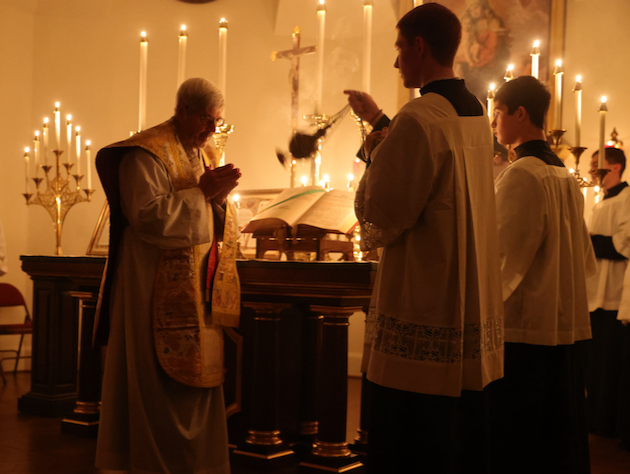
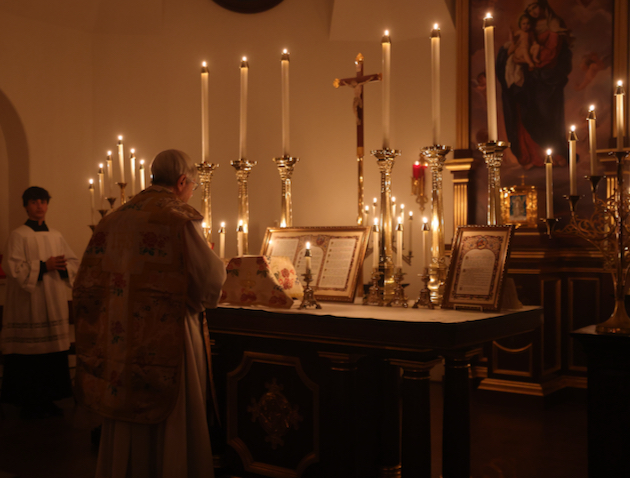
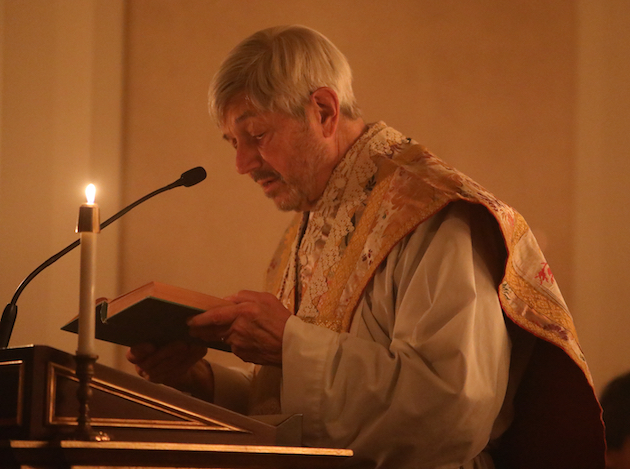
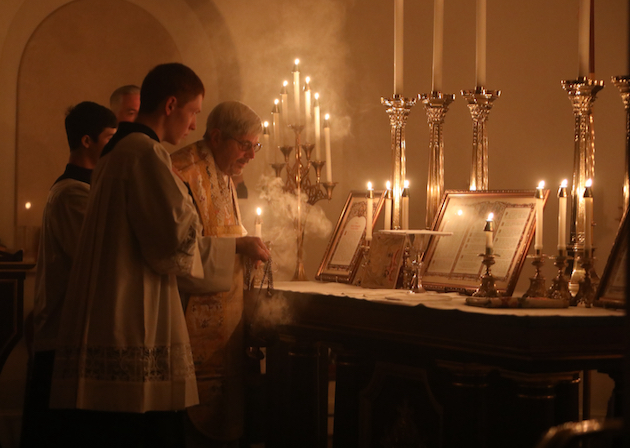
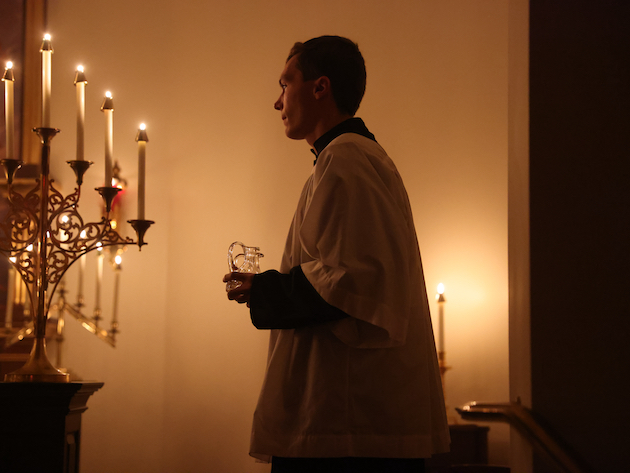
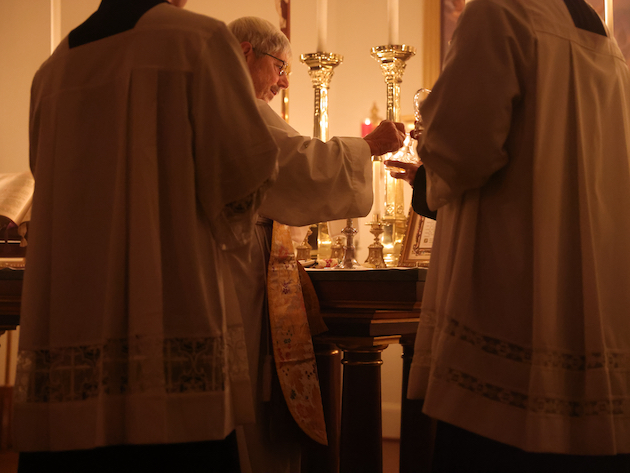
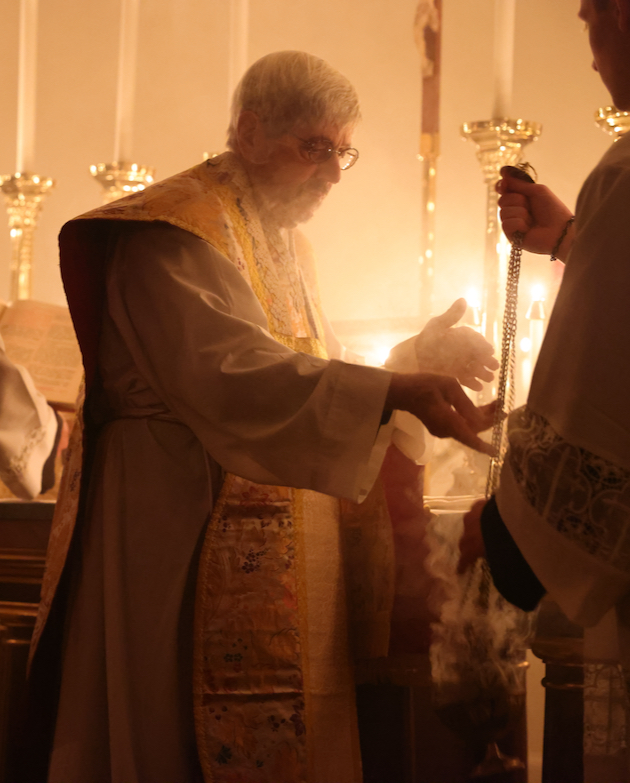
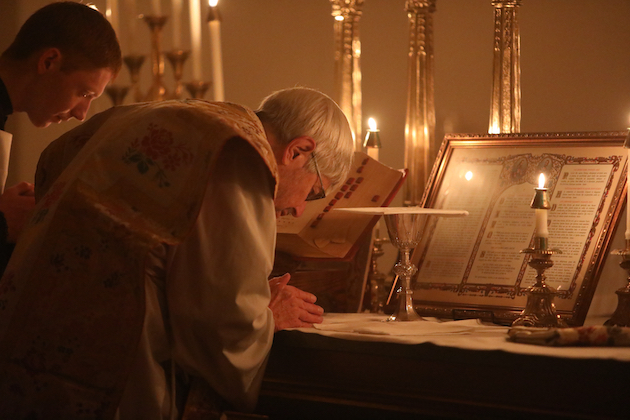
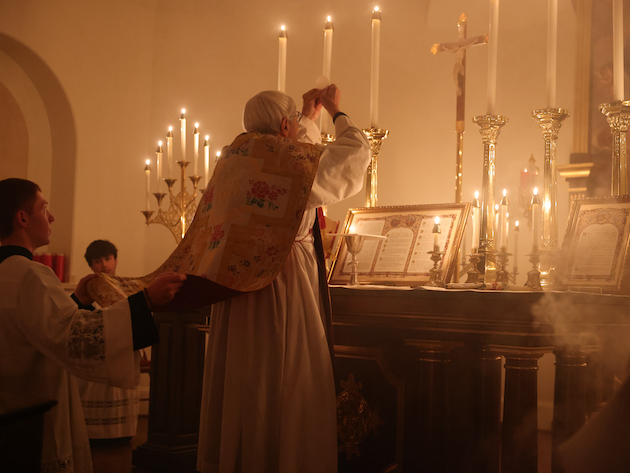
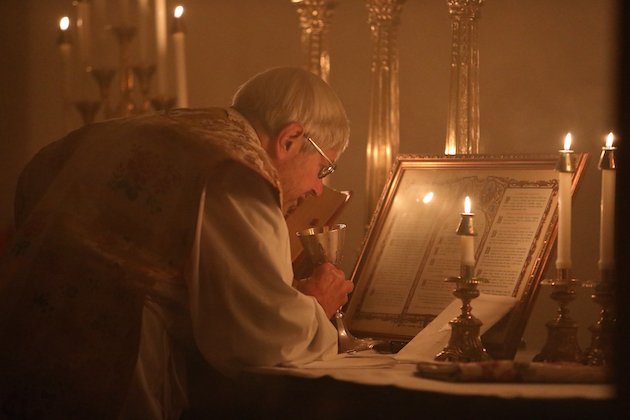
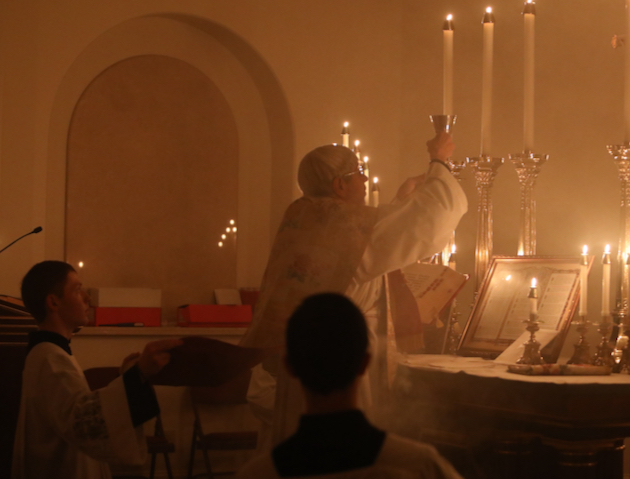
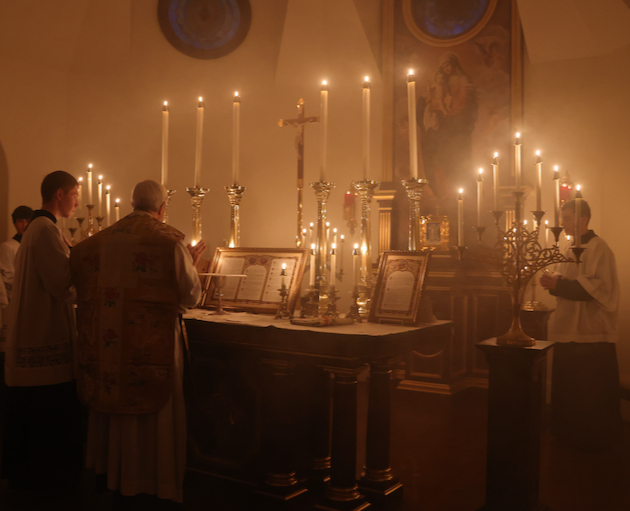
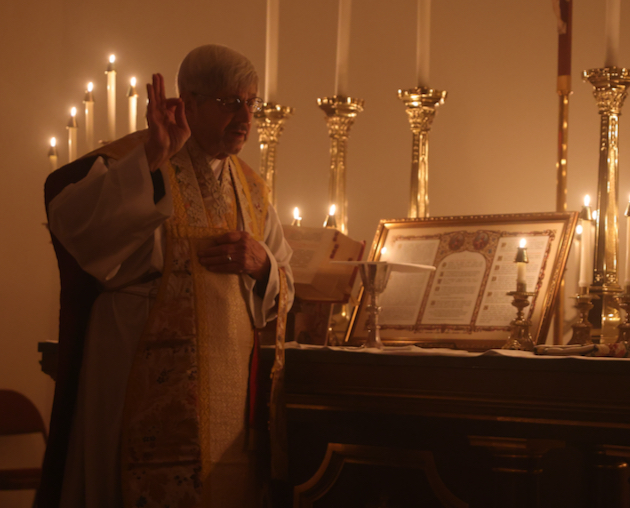
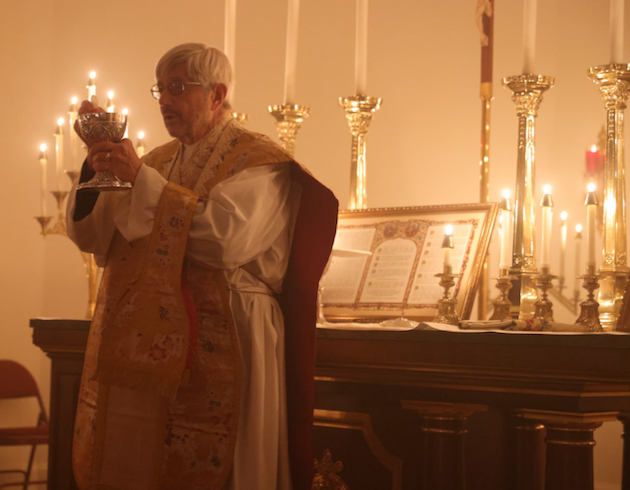
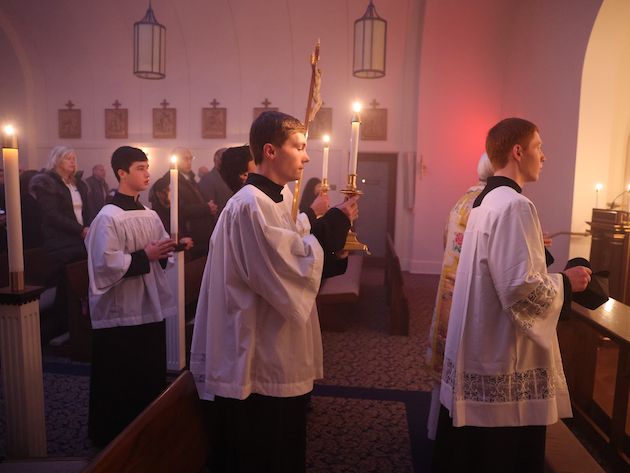
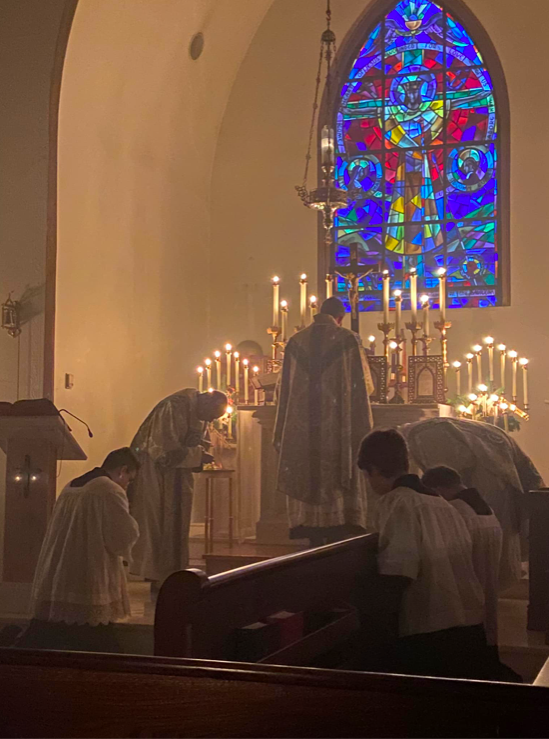
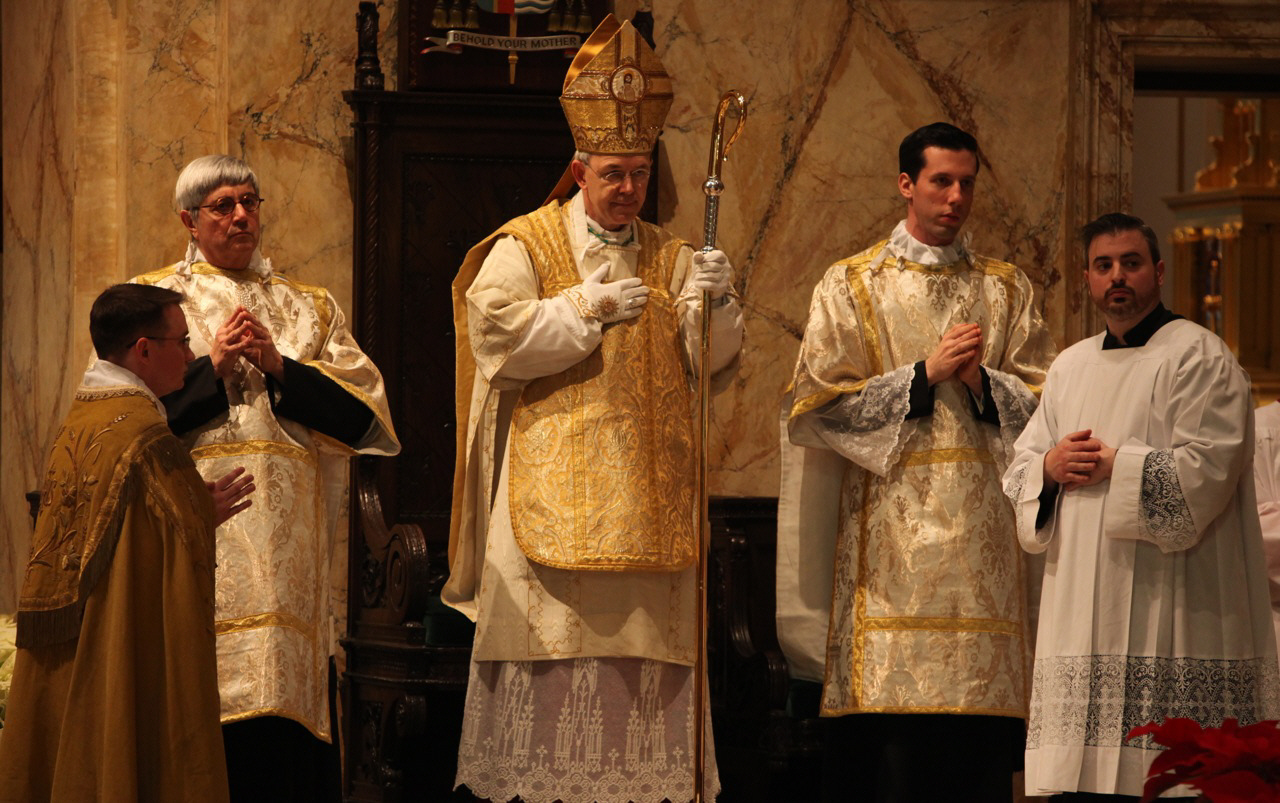
Our Lady of Sorrows, Jersey City Traditional Holy Week 2023
Sunday, April 2 – Palm Sunday – 8:45am Blessing of Palms and Triumphal Procession, Passion of Our Lord according to Matthew. Berchem O Jesu Christe, Dubois Adoramus Te Christe.
Wednesday, April 5 – Tenebrae – 7:00pm Ancient Office of Darkness beginning the Triduum. The name “Tenebrae” has been given this Office because it is celebrated in the hours of darkness. Gregorian Chant, Polyphonic Motets of Victoria and others. Allegri’s Miserere.
Thursday, April 6 – Holy Thursday – 7:00pm Sung Mass of the Lord’s Supper and Procession to the altar of repose. Stripping of the Altar. Vigil before the Altar of Repose until Midnight (a plenary indulgence is granted to anyone who spends one hour in prayer before the Altar of Repose). Gregorian and Ambrosian Chant. Durufle’s Ubi Caritas,
Friday, April 7 – Good Friday – 3:00pm Mass of the Presanctified. On this day, the anniversary of our Savior’s death, the Church gives her temples an appearance of desolation and clothes her ministers in the garb of mourning. Chanting of the Passion of Our Lord According to John, Solemn Petitions, Unveiling and Veneration of the Cross, Holy Communion. Monteverdi’s Adoramus Te, etc. Immediately after the liturgy, procession through the streets with Our Lady of Sorrows giving witness to the world of our redemption.
Saturday, April 8 – Holy Saturday – 10:15pm The lengthy rites of the Easter Vigil are some of the most symbolic of the entire liturgical year penetrating to the very roots of salvation, especially through the many allusions to the sacrament of baptism—made possible by Our Lord’s resurrection. Lighting of the Easter Fire, the Lumen Christi Procession, the Exsultet, the Prophecies, the blessing of the Water and Baptismal Font, the Profession of Faith, the Easter Alleluia and the Eucharistic Sacrifice. Anerio-Palestrina Missa Papae Marcelli with chamber orchestra; Erbach Dum Transisset; Franck Dextera Domini.
All liturgies will be in Latin and will follow the traditional ordo and rubrics. The Traditional Latin Mass, which can never be abrogated (SF), is celebrated every Sunday at 9:00 am at Our Lady of Sorrows. Off-street parking is available in the lot across the street from the church.
Rev. John Perricone, Priest; Simone Ferraresi, Music Director, Cantantes In Cordibus; Art Manabat, Assistant Director of Cantantes In Cordbus; Dr. Joseph Orchard, PhD, Director of the Men’s Schola; Harry Melendez, Anthony Ambrogio, Michael Wisniewski, and Eric Szwerc, MCs
28
Feb
The Guild of the Most Sacred Heart will celebrate its one year anniversary, by giving thanks with Quanrant’Ore or 40 Hours Devotion. You may sign up to Adore for an hour or two from March 23rd to March 25th. Go to https://www.signupgenius.com/go/10c0e48aaaf29a5f4ce9-quarant#/

28
Feb

Ritorno alle Sorgenti: Il mio Pellegrinaggio a Oriente nel Cuore dell’Ortodossia (A Return to the Sources: My Pilgrimage to the East in the Heart of Orthodoxy)
By Alessandro Gnocchi
Edizioni Monasterium, Cellio, 2023
The current state of the Church is presenting faithful Catholics with terrible and tragic choices. What can they do to preserve their liturgy, their morality and their Faith and pass them on to their children? One possibility that is increasingly relevant is the Eastern Orthodox Church. To what extent is Orthodoxy a viable alternative to the Roman Catholic Church?
Alessandro Gnocchi is an Italian writer and journalist. For years he worked together with Mario Palmaro tirelesssly defending Catholic tradition in all its aspects. With Palmaro, Gnocchi was one of the earliest and most perceptive critics of Pope Francis. Together, they predicted all too clearly what was about to befall the Catholic Church. Mario Palmaro died in 2014. Since then, I’ve heard little of his colleague in arms. But I now understand that in 2019 Alessandro Gnocchi joined the Russian Orthodox Church (he is now “Aleksandr,” at least when receiving communion). This year, he has published a short book telling of his experiences of Eastern Christianity.
Now in judging this book, we should not be swayed by contemporary political pressures. And the last thing I would want is to rekindle obsolete polemics between Catholicism and Orthodoxy. So, we should not be quick to denounce the author but try to understand what motivated his decision. After all, other Catholic apologists over the years have taken this step, most notably Rod Dreher.
I have some personal insight into the matter since, through much of the 1980s. I was a parishioner at Saint Michael’s Russian Catholic Chapel in New York. Subsequently, I got to know members of the Russian Orthodox community in the United States – especially one good friend who died in 2020.
What does Gnocchi find attractive in Orthodoxy?
We should start with the liturgy. For the Orthodox churches have preserved the ancient liturgies of the Church. They have (generally) resisted the temptation to compromise with the spirit of this age. For example, (though Gnocchi himself seems ambivalent about this point) we should remember that both the Greek Orthodox and Russian Orthodox churches have insisted on retaining liturgical languages that are not easy to understand for speakers of modern Greek or Russian.
Orthodoxy has retained the central role of monasticism and therefore of asceticism and mysticism. These are not just as the preserve of esoteric specialists but are incorporated into the life of the entire church. So, for the Orthodox the center of gravity of their religion is not the patriarchate of Constantinople or of Moscow but the monasteries of Mount Athos. And as Gnocchi points out, those monks who have received the grace for the task undertake the role of counselors or spiritual directors for the laity that have recourse to them. Thus, monasticism is integrated into the world of the Orthodox faithful.
Continuing in this line of thought, the Orthodox Church still treasures the theological and spiritual classics of patristic and medieval times. It celebrates the role of the great saints of the past. In contrast to the West, which generally restricts the sources of its theology to Vatican II and subsequent papal pronouncements, the Orthodox world draws on the Eastern fathers of the church, the Desert Fathers, the mystics of late antiquity and the Middle Ages as well as more modern contributions. These sources are all still living presences in the Orthodox faith.
Gnocchi also speaks of icons and the traditional art of the Eastern Church. In Eastern theology their role is far beyond that of a mere depiction or reminder of a sacred person or event. The icon creates a real presence of that person, of the sacred in the world of today. Therefore, the artist of icons, such as the famous Andrei Rublev, is ideally a holy man, a monk,
Gnocchi has some extravagant praise for the Orthodox monks and elders he has encountered on his “pilgrimage.” But even discounting these exaggerations, what he is really pointing out is that, for all his faults, the Eastern priest, the Eastern monk is still a man of God – he acts as a spiritual leader through the liturgy, through the other sacraments, through his spiritual counsel. The contrast with the Roman Catholic clergy, secularized, bureaucratic, self-regarding and self-promoting, could not be greater. And of course, there is no Pope in Orthodoxy. Gnocchi does not need to write much about patriarchs and bishops. These are not the center of the Orthodox faith.
So far it would seem that Orthodoxy is a most attractive alternative to what passes for Christianity in the Western Church. Yet, this is not the end of the story. As we shall see, I don’t think that Gnocchi makes a very compelling case for the Orthodox Church.
I will start with his style. In extravagant and exalted language, he sings the praises of Orthodoxy and attempts to convey abstruse points of theology. In other passages, particularly in the second half of the book, he turns strident and confrontational on topics like filioque and papal infallibility. Throughout there’s a constant use of Russian terminology. Gnocchi appears to be less a humble sinner or a seeker after truth but that most tiresome of individuals: the religious fanatic.
Now I have heard of this happening to Catholics who become Orthodox. As in Gnocchi’s book, they want to transform themselves into a Russian or Greek and break utterly with the West and their own past. Is this really a consequence of their own Roman Catholic heritage: the obsession with doctrinal terms, the agitated tone, a certain fixation on the clergy? I don’t think it’s just the fault of the converts, however. For the Eastern churches themselves, as I understand it, demand of the new convert complete repudiation of his past and of all his ancestors. I have heard that sometimes a convert has sent such a declaration to the members of his former community or parish – was not this very book written at the instigation of Gnocchi’s elder or “staretz”? (More of this later.)
Here we come to a critical point: the “Eastern” ideology that is forcefully advocated by Gnocchi. This holds that there exists a fundamental difference between Western and Eastern Christianity dating back at least to the 4th century and that the two Churches had evolved into different mutually exclusive worlds many years before the supposedly decisive break of 1054. Indeed, for Gnocchi the decisions of the hierarchies on mutual recognition – or not – play little or no role given this fundamental chasm between West and East. This self-understanding of Eastern Christianity as an unchanging, pure, isolated block descended from Apostolic times is the Orthodox equivalent of Western ultramontanism which tried to find the 19th century papacy in the 4th century and earlier.
This is, of course, historically preposterous. From the 4th century onward the popes of Rome, Western doctors and saints had influenced and interacted with the East just as the doctors, saints and councils of the Eastern Churches did the West. Indeed, Pope Gregory the Great is (probably erroneously ) considered as the author of the Orthodox service of the presanctified gifts. Greek and Eastern popes governed the Church for much of the 7th and 8th centuries. Between 730 and 840 (with one interruption) it was the Eastern Church, not the West, that was dominated by iconoclastic heretics. Neilos, a Greek monk (born in Italy!), recognized as a saint in both East and West. established around 1000 a monastery, Grottaferrata, not too far removed from Rome itself. And, even afterwards, contacts between the two churches were not at all entirely broken off – consider the career of El Greco in the 16th century in Spain, of all places.
Another alienating feature of Gnocchi’s spirituality is his relationship with his elder or staretz. This role of the staretz is personally unfamiliar to me. I had always understood it to involve the voluntary recourse by a layman, let’s say, to the staretz – a monk who makes available to him the spiritual insights gained in the contemplative life. But Gnocchi’s staretz seems to have assumed the controlling role that used to be ascribed to the Jesuits. By the way, it is totally untrue, as is asserted here, that this type of counseling is unknown in in the West. We might mention the anchoresses of medieval England, just as one example.
I hope the reader does not think that the tone of this book, now confrontational, now enthusiastic, at times ranting or overblown, is typical of the faithful of the Orthodox Church. Far from it. The born-and-bred Orthodox have a very relaxed attitude to their faith, as it is as natural to them as their own nationality. After all, the Orthodox Church still places the greatest weight on the role of the nation: Serbian, Greek, or Russian. The nation is the contemporary descendant of the governing function once performed by the Byzantine or Russian emperors. In certain branches of Orthodoxy like the OCA (the Orthodox Church of America) or the Greek Orthodox Archdiocese in America, the relationship with contemporary society becomes perhaps too cozy, resulting in problems like those afflicting the Roman Catholic Church.
And, in contrast to what Gnocchi presents, the attitude of the Orthodox, both laity and clergy, to the Western world is not at all unrelentingly hostile. Consider this passage from Gnocchi’s own book:
In the Orthodox Church the divine liturgy is the most perfect expression of the true faith. When Pope Benedict XVI “liberalized” the celebration of the ancient mass, Patriarch Alexei II commented, “it is a step in the right direction. For if we had touched the divine liturgy, we would never have been able to survive 70 years of state atheism.”
Given its spiritual treasures, I think the case for Orthodoxy can be made. Gnocchi in this book has regrettably not succeeded in doing that. I would think this divisive work would have exactly the opposite effect. That’s a shame. Because amid this darkening world, it is essential that all adherents of Christian Tradition rally in the defense of Christianity and the Truth.
27
Feb
UPDATE: I have provided some additional details based on a conversation with someone who participated in the bishop’s Zoom call.
We are informed that last week Bishop Frank Caggiano of the Bridgeport diocese held a Zoom conference with those who attend the Traditional Latin Mass at St. Marguerite Bourgeoys parish. The priest who celebrated that mass, Fr. Donald L. Kloster, has been removed from the diocese (Bishop Caggiano claims he left voluntarily). The traditionalist faithful and their Mass are also to be removed from the parish to a new location – in a school gymnasium in Danbury ( located relatively close to Brookfield).
I can find no record of these rather significant events on the parish website or bulletin, other than the disappearance, over two successive weeks in February, of (1) the name of Father Kloster from the parish staff; and (2) the Latin Mass from the list of services. I am also informed that atttendance at the Traditional Mass had increased from 4 or so in early 2021 (when it started) to, most recently, 100-150 each Sunday. Several vocations have emerged from this congregation. About 35 participated in the Zoom call (given the way it was publicized, that’s not surprising (see below)) – about 50 had attended Fr. Kloster’s farewell dinner.
We are informed that the bishop also expressed in some way his “concern” for those who attend three other diocesan Traditional Masses, notably, that at St. Mary (Norwalk). He stated he will be organizing a similar call with the parishioners of St Mary’s. His concluding words were “Please pray for the parishioners of St. Mary, Norwalk.”
(Below) This is the notice put in the pews for the Zoom call with Bishop Caggiano:

We are informed that the Traditional Mass at Holy Family church in Little Falls, New York (Diocese of Albany) has been terminated, effective immediately. No notice was given.
UPDATE:
The Catholic News Agency has now covered this story providing more details:
Effective immediately, parish churches in the diocese are prohibited from celebrating the Latin Mass in accordance with the “Missale Romanum” of 1962, according to a statement from the diocese.
“In light of the rescript, which the Vatican sent last week, the celebration of the Usus Antiquior [Traditional Latin Mass] is currently on hold in parish churches in the Albany Diocese,” the diocese noted in a statement provided to CNA. “As we explore various possibilities, the Usus Antiquior can continue at Our Lady of Martyrs Shrine in Auriesville, which is not a parish church in the diocese.”
(A Carmelite church in Albany is also not affected by this decree)
Holy Family Parish in Little Falls, which offered the Latin Mass at noon on Sundays and at 8 a.m. on Wednesdays, cannot celebrate the ancient form of the Mass for the time being. St. Ann’s Church in Fort Ann, which offered the Latin Mass on certain weekdays, was also informed it can no longer celebrate this form of the Mass.
Arnold, Tyler, “Albany Diocese limits Latin Masses following new guidance from the Vatican,” Catholic News Agency (2/27/2023)

The Fury of the Death Throes of the “Spirit” of Vatican II
by Father Richard Cipolla
It was always about the Liturgy. Bugnini and those who preceded him in the
twentieth century redefinition of the Liturgical Movement, away from a
rediscovery of the Traditional Liturgy to a drive to change and adapt the Liturgy to
the “needs of modern man”, always knew and understood this. The Documents of
the Second Vatican Council will meet the same fate as the great majority of the
Canons of past Ecumenical Councils—save the first seven— mostly forgotten,
except for what was part of the genuine unfolding of Catholic Tradition. No one
remembers the Canon from Lateran IV calling for provincial councils for the
purpose of reforming morals, nor the Canon that condemned the teaching of
Joachim of Fiore. What is remembered and therefore became a part of the
Tradition is the definition of the Real Presence of Christ in the Eucharist in terms
of “transubstantiation”. Even more recently, who remembers or refers to the
teaching of Vatican I on faith and reason, or its condemnation of rationalism? The
definition of Papal Infallibility is what is remembered in the living Tradition. In no
way does this reduce the central importance of the Ecumenical Councils in the
Tradition of Catholic Church. It merely reminds us that what is fundamentally
important in the decrees of these Councils in the development of dogma becomes
apparent in the voice of the Holy Spirit who is not encumbered by the limitations
of time, space and human frailty.
When one looks at and reads the Documents of Vatican II –there are no
Canons—one is constantly struck by the language that tries to include the voice of
the Tradition and openness to “the modern world”, or at least the world of the
1960s.
This is clearly seen in Sacrosanctum Concilium, the Document on the Liturgy.
There we read that the Latin language is to be preserved, but in those parts of the
Mass that include instruction of the faithful the vernacular may be used. Pride of
place is to be given to Gregorian chant as the music of the Mass. But other forms
of music, including contemporary compositions, may be used if it helps with
“active participation.” The fact is that both Latin and Gregorian chant disappeared
within a few years after the imposition of the Mass of St. Paul VI. Le trahison des
clercs used the cultural forces unleashed in the !960’s and the decades following to
not only reduce the Liturgy to a permanent replay of the Brady Bunch complete
with polyester and bad taste, but also invented what became known as the “Spirit”
of Vatican II, the actual documents of which Council were of little interest to those
imbued with this “Spirit”.
It is not as if that “Spirit” were not opposed by both clergy and lay men and
women. But for the most part, the laity that were so eloquently championed in a
real way by St. John Henry Newman a century before were all too happy, guided
by this “Spirit” to become chierichetti, little clergy, happy to have the honor of
being lectors, eucharistic ministers, and running CCD classes, instead of attending
to their vitally important role in their families and in the world in which they live
and worked.
The greatest accomplishment of those imbued with the “Spirit” of Vatican II was
the work of the Concilium set up by St Paul VI to do the work of the reform of the
Liturgy based on the admittedly sketchy hopes of Sacrosanctum Concilium. What
they produced was the product of a deep antipathy to the Traditional Roman Mass,
(rather an antipathy to the Tradition itself) and of a longing to embrace the world
around them that they identified as the future of mankind. One cannot and must
not deny the reality of the grace that Catholics have received while participating in
the Novus Ordo Mass these past six decades. The validity of that form of the Mass
is not in question. What is in question is the continuity of the Novus Ordo Mass
with the Roman Mass of Catholic Tradition. This author is one of many, who are
much more learned than I, who have shown clearly that there is a discontinuity of
content and form between the Novus Ordo rite and the Traditional Roman Mass.
The fact that 70% of Catholics no longer believe in the Real Presence of Christ in
the Eucharist and that in many if not most places in the Western world fewer than
20% of Catholics go to Mass is strong evidence that something went wrong after
the imposition of the Mass of St. Paul VI and still is wrong.
One of the most important hopes of the Concilium inventors of the Novus Ordo
Mass and those who invented the “Spirit” of Vatican II is that by this time no
Catholic would have heard of (except in history books) or experienced the power
and beauty of the Traditional Roman Mass in an actual celebration of that rite.
And they almost succeeded. Thanks to St. Pope John Paul II and Pope Benedict
XVI, and to the working of the Holy Spirit in his own time and manner, thousands
of Catholics, especially young Catholics both priests and lay, have discovered the
power and beauty of the Traditional Roman Mass.
The Motu Proprio, Traditionis Custodes, the following “Response to the Dubia”
and now the latest salvo just published by Cardinal Roche completely taking away
the bishops’ fundamental right as Pastors of their flock to regulate worship in their
diocese is the fury of a death throe. Boldly eliminating the power of Canon Law as
a potent spray-can deterent to get rid of roaches and other insects that infest the
holy house of the Church: this is an intensification of the Fury of the Death
Throes of the SPIRIT of Vatican II. And we have cause to await a further death
throe in Holy Week (irony) with yet another document that will not only proclaim
the death of the Traditional Roman Mass but also issue restrictions on how some
young priests celebrate the Novus Ordo in a way that this “Spirit” fears as redolent
of the Tradition.
But we must not fear this “Spirit”. For it will die with my generation, which is the
generation of the present Pope. The malodor of the “Spirit” will linger in puffs
throughout the world, from Rome to San Diego to parts of Europe. But the air will
clear.
And though the last lights off the black West went
Oh, morning, at the brown brink eastward, springs–
Because the Holy Ghost over the bent
World broods with warm breast and with ah! bright wings.
Gerard Manley Hopkins
22
Feb

Report: the Church of St, Benedict the Moor has been sold. See my full description of this former parish, with photos, HERE.
A historic Hell’s Kitchen church which was the first Black Catholic parish north of the Mason-Dixon has been sold for $16 million, putting the future use of the 1869 building into question. First established as an act of reparation by a priest, the former St. Benedict the Moor building played a part in African-American history for decades, marking a time when Hell’s Kitchen was home to a large Black population before the growth of Harlem.
As first reported by Bisnow New York, the deconsecrated church at 342 W53rd Street between 8th and 9th Avenue and former rectory and parish buildings at 338 W53rd Street have been sold to billionaire developer Walter Wang. Publicly available New York County Supreme Court records show that the Archdiocese of New York sold the empty buildings to Wang’s JMM Charitable Foundation, a 501(c)(3) based in Los Angeles, California. Wang is the Taiwanese-American CEO of JM Eagle, the world’s largest manufacturer of plastic and PVC piping, while his wife, Shirley Wang is the CEO of Plastpro, a fiberglass door maker.
(The parish was originally in the Village. )
St Benedict’s move to Hell’s Kitchen cost $30,000, which the New York Sun of the time credited to fundraising by the pastor, Irish-born Reverend John E Burke, who was to stay its parish priest for decades. In 1903, he traveled to Rome, meeting Pope Pius X. Pioneering Black newspaper The Colored American, of Washington D.C., reported: “Father Burke, of the Catholic church of St Benedict, the Moor, brings back from Rome a special benediction from the new Pope, Pius the Tenth, for all the colored people of this country.” Four years later he was made the director-general of all Black parishes in the US.
The church became a center of African-American intellectual life, with a library dedicated to Black literature, a drama group performing Shakespeare and a weekly debating society dedicated to economic advancement. It had a parochial school beside the church, and a convent whose nuns ran an orphanage in Rye, Westchester. A 1911 book called Half a Man, about Black New Yorkers, said: “Only in this Catholic church does one find white and black in almost equal numbers worshipping side by side.
Beling, Sarah, “Historic Hell’s Kitchen Church — Home to First Black Catholic Parish in North — Sold for $16 Million,” w42st.com, 14/1/2023

(Above) Cardinal O’Connor at St Benedict the Moor. It had been a primarily “Hispanic” parish for decades prior to this event.
22
Feb

As the KIng of Siam said.
(February 15, 2023 – Manhattan, NY) – The Office of the Superintendent of Schools of the Archdiocese of New York today announced 12 Catholic schools will cease operations at the end of the 2022-23 academic year. Four schools will merge into two. (The Announcement is HERE)
EV Grieve reports on the closing of Immaculate Conception School:
The school dates to 1864 (find a PDF with history here), part of the Immaculate Conception church when it was at 505 E. 14th St. The (original -SC) church, on the north side of 14th, was demolished in the 1940s to make way for Stuy Town.
The school’s current building was completed in 1945. Per Wikipedia:
In 1943 the parish took over the chapel and hospital buildings now known as Church of the Immaculate Conception and Clergy Houses, completed in 1896 to designs by Barney and Chapman and formerly owned by Grace Church. This existing facility was expanded with a four-story brick convent and parochial school at 415-419 E. 13th St. and 414-416 E. 14th St. … and completed in 1945.
(Immaculate Conception School) is the last Catholic grade school (serving students K-8) in the East Village. The archdiocese shut down St. Brigid School, founded in 1856, at the end of the 2018-2019 school year.
On Guardian Angel School:
Guardian Angel, nearly 123 years old and the last Catholic elementary School left in Chelsea, will shut down at the end of the current academic year as part of a new rounds of closures announced by the Archdiocese of New York last week.
“It feels like one of the cornerstones of Chelsea is going to be gone,” said Eddie Edmonds, 58 the oldest of five siblings who graduated from there.
Kelly, Keith J., “Guardian Angel, the Last Catholic Elementary School in Chelsea, to Close,” The Spirit, 19/2/2023
On Ascension School:
Parents of children at Ascension were stunned and disappointed that the 126 year old school will be no more. A school originally opened on West 107th in 1897, the same year that the largely working class German immigrants had built the Ascension Church. The opening of the churtch meant that Mass no longer had to be celebrated in the basement of the massive Lion Bre(w)ery, that once occupied six sity blocks in the neighborhood. In its heyday, the parish boasted 10,000 parishioners and the school that had 1,100 students with the boys taught by the Christian Brothers and the girls taught by the Sisters of Charity. At the end, it had less than 290 students. Still the end sent shock waves through the community.
Kay Bontempo, “Parents Stunned as 126-year-old Ascension School Slated to Close,” The Spirit, 17/2/2023
St. Paul and St. Ann Academy: