15
Nov
15
Nov
9
Nov
George Weigel actually providing support for the Traditionalist consensus on Pope Francis.
Yet the present pontificate has diverged from the Council’s teaching in several ways.
The Vatican’s current China policy contradicts the Council’s teaching that no rights or privileges are to be given governments in the appointment of bishops—a teaching now legally embodied in Canon 337.5. The Holy See’s adherence to the 2019 Abu Dhabi Declaration and its claim that the plurality of religions is an expression of God’s will does not sit easily with the Council’s proclamation of Jesus Christ as the one, unique redeemer of humanity: the Lord who is the center of history and the cosmos. One of Vatican II’s signal accomplishments was its strong affirmation of the authority to govern conferred by sacramental ordination to the episcopate; recent reforms of the Roman Curia, the deposition of bishops without due process, and curial diktats about the proper celebration of Mass (and even the content of parish bulletins!) undercut that authority. And the pontificate’s exceptionally narrow interpretation of the Council’s teaching on the liturgy has made the implementation of Vatican II even more contentious.
Weigel, George, “Three Pontificates and Vatican II,” First Things, (11/9/2022)
The “three pontificates” are apparently those of John XXIII, John Paul II and Benedict XVI (or John Paul II, Benedict XVI and Francis?). As in some of Weigel’s other recent writing (1), the pontificate of Paul VI disappears into the background – he is even claimed to have only begun to “authoritatively interpret” Vatican II in 1975!
In the 1975 apostolic exhortation Evangelii Nuntiandi (Announcing the Gospel), Pope Paul VI began the process of giving the Council-without-keys an authoritative interpretation.
7
Nov

On Friday, October 28 Pax Liturgica (Paix Liturgique) sponsored a short conference in connection with the pilgrimage. Famous paladins of Catholic Tradition spoke – as well as one or two faces new to me. I’d single out Aldo Maria Valli. who testified movingly on his late discovery of the Traditional liturgy and the transforming effect it had on his life. Peter Kwasniewski was his usual eloquent self, setting out the limits of papal authority. Finally, Christian Marquant, the founder of Paix Liturgique, concluded the conference with a colorful, impassioned apologia for Traditionalism.
In conclusion:
Pligrimages such as this are always a bit overwhelming. It takes some days of reflection to gain perspective. Clergy and laity from all over the world had assembled to give witness to their devotion to the Traditional liturgy. Despite the calumnies relentlessly hurled against them by the leadership of their own Church, they gathered in the center of the Catholic world in prayer and devotion, without controversy or rancor. Passersby now and then would join in the prayers. Of course all this will have no effect on the powers that be in the Vatican. But for the pilgrims themselves and for many others who viewed the events of these days, the story will be different.
7
Nov

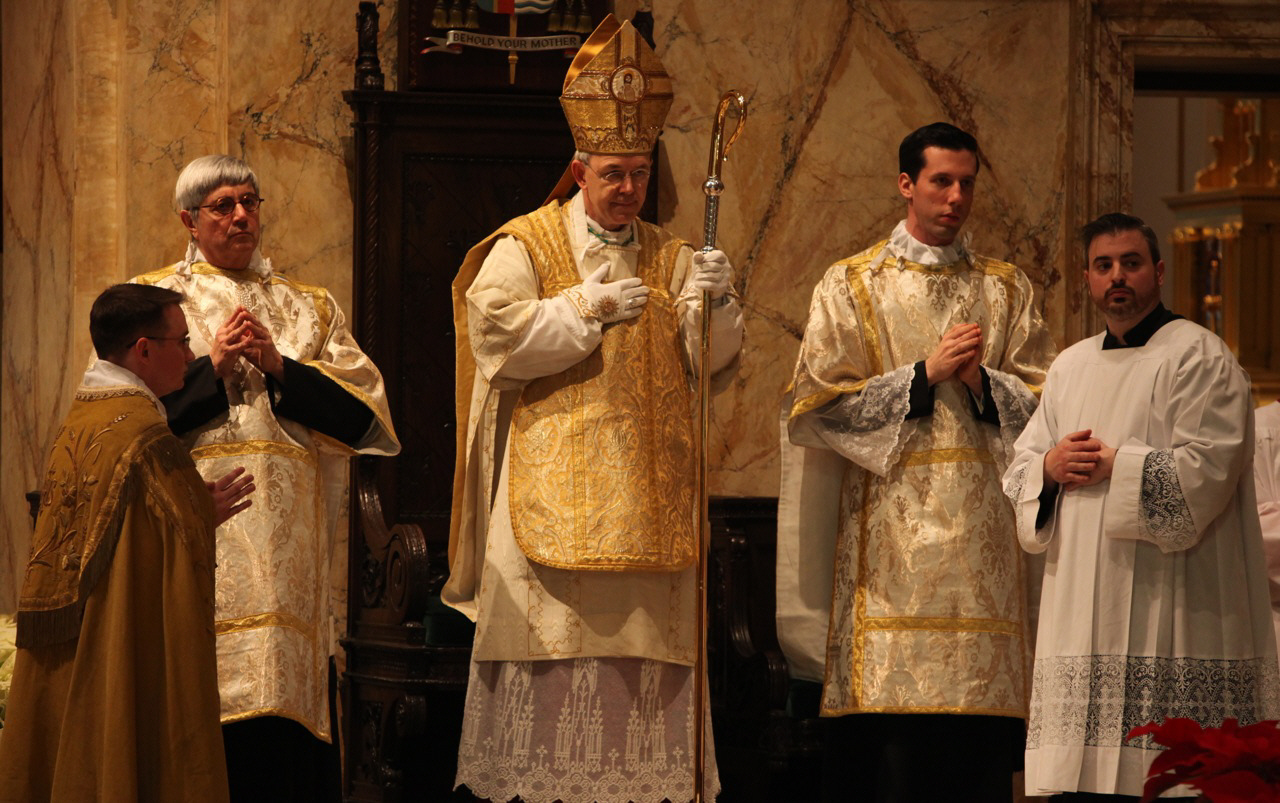
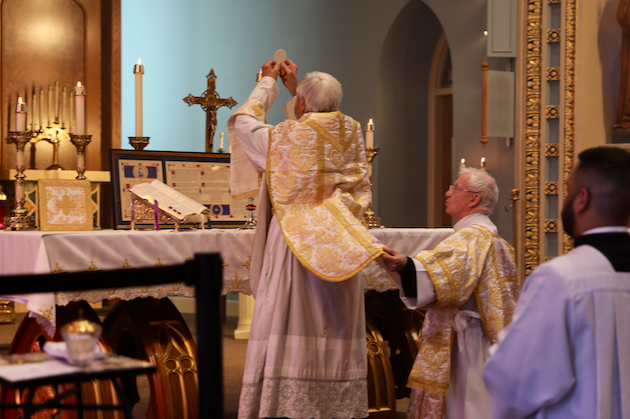
The “official program” of the Summorum Pontificum pilgrimage of 2022 concluded with a splendid Solemn Mass at the church of S.S. Trinita dei Pellegrini. The Priestly Fraternity of St. Peter, which administers this parish, also directed the ceremonies. The celebrant was Mgr. Patrick Descourtieux, of the Dicastery for the Doctrine of the Faith.


The church was filled to overflowing. Depending on his location, a pilgrim may have had a final opportunity for a penitential experience during this long liturgy.


After the Mass, a chance to meet and talk. I would suggest to the organizers to think of ways to provide more opportunities for socializing in the course of the next pilgrimage..

The Mass would be celebrated before Bernini’s Cathedra Petri. The celebrant was Msgr. Marco Agostini, a papal master of ceremonies. Msgr. Agostini wove a description of Bernini’s masterpiece into his sermon. The Mass was in honor of St Peter the Apostle. Vincenzo Di Betta and the ensemble “La Cantoria” also provided the music for this mass.

(Above and below) These photos give an idea of the number of clergy present in choir.


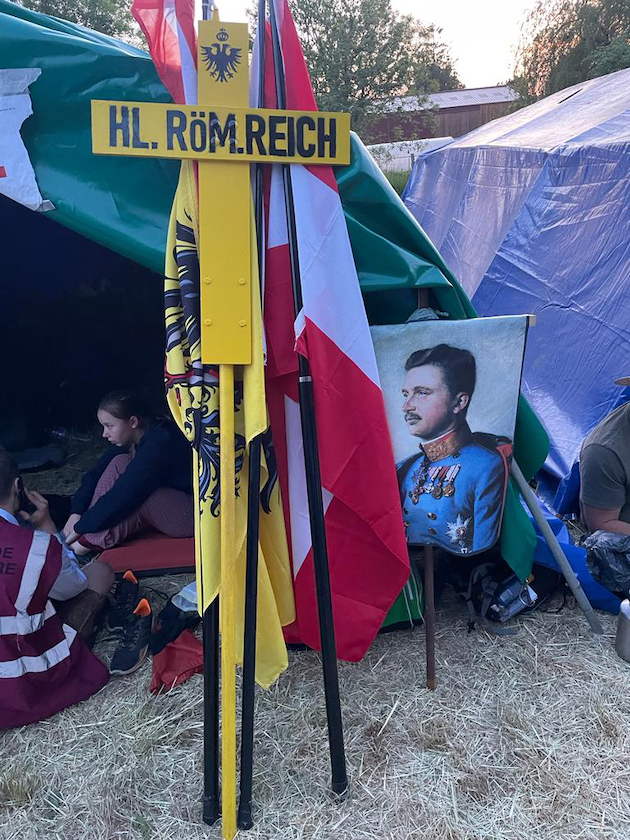
From Sts. Celso e Guiliano the procession of pilgrims set off for St Peter’s basilica. The flags represent the nations in which the Traditional Mass is celebrated. I have no statistics on the ethnicity of the pilgrims but I got the impression that Central Europe was well represented: Germany, Austria. Poland, etc. Despite their reputed prominence in the Traditionalist movement the number of Americans was limited – but among them were such stalwarts as John Rao and Peter Kwasniewski. Some have been talking about organizing an American chapter next year…

Across the Tiber towards the Castel St. Angelo – and from there to St. Peter’s. As you can see the weather this day was marvelous.


As the procession advanced, songs were sung – some of them familiar to me from the Chartres pilgrimage.


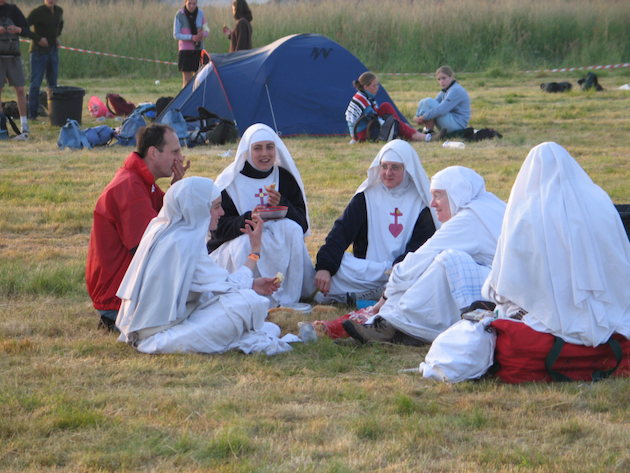
Pilgrims were of all ages.


Through Bernini’s colonnade, negotiating the metal detectors and then into St. Peter’s.