So reads the title of a Christmas Eve article in The New York Post:
Zito, Salena, “A New Generation of Catholics discovers Latin Mass 60 years after Vatican II,” The New York Post, 12/24/2022
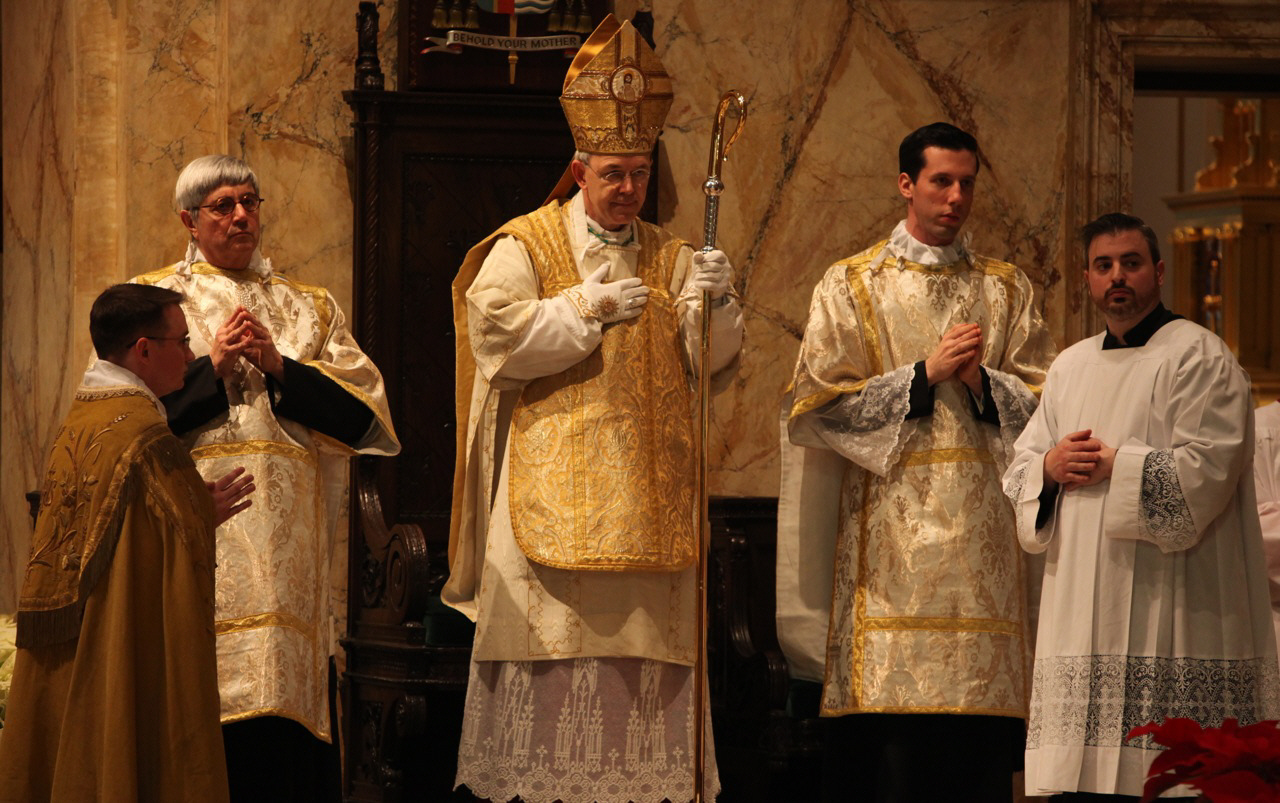
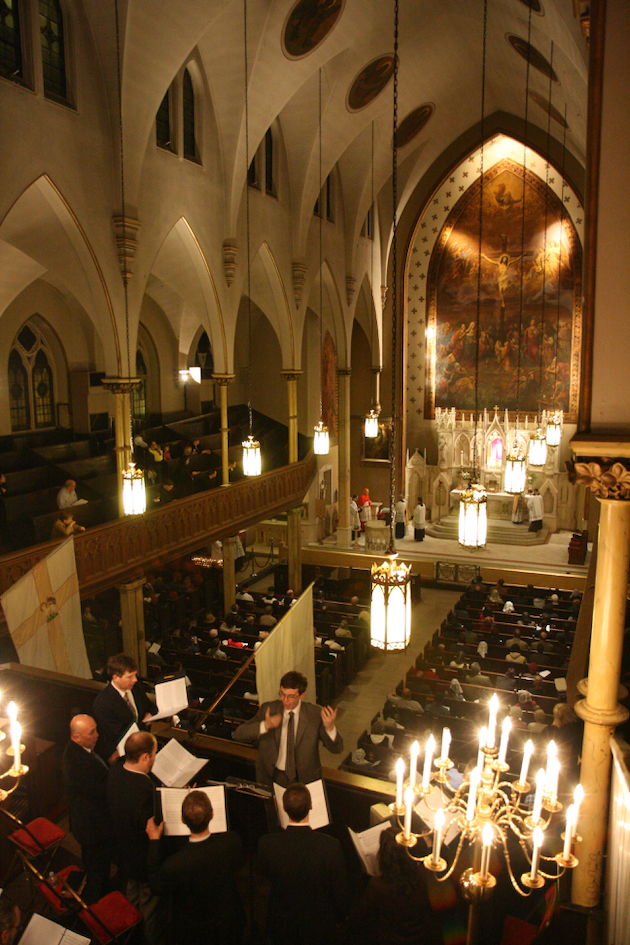
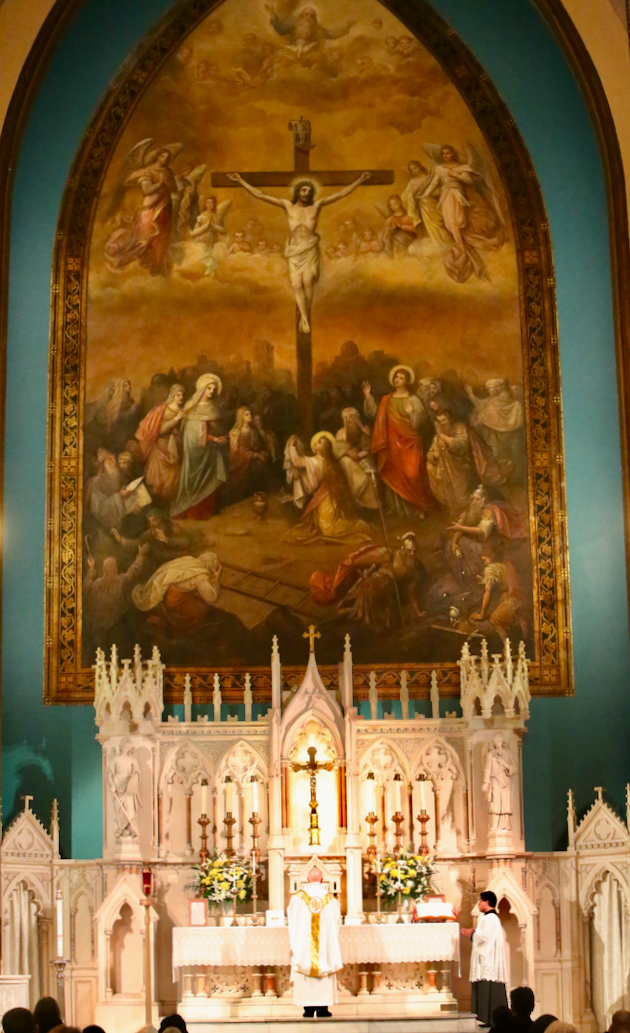
The article is highly favorable to what it calls (without articles) “Latin Mass.” We meet two young families who have recently committed to Catholic Traditionalism. They state that they were attracted to the Traditional Mass both for its beauty and intellectual content. They attend Mass in Pittsburgh but the article is illustrated by photos of Holy Innocents parish in New York City. The article mentions how Traditional Mass communities are often found in such old, elaborately beautiful churches built by the Catholic immigrant congregations.
We learn that attendance at Traditional Masses has actually increased since the pandemic – confirming our impressions and actual data.
But the traditional Latin Mass never completely vanished; today of the 17,000 Catholic parishes in the United States 592 of them perform the extraordinary form in Latin — including at least six in New York City and four (including Most Precious Blood) in Western Pennsylvania.
This robust growth isn’t just taking place in Pittsburgh—it’s happening nationwide. A recent survey by Crisis Magazine, an independent journal covering Catholicism and Catholic issues, revealed a marked increase in TLM attendance since the beginning of the pandemic.
The author of the article does try to give a fair description of the beauty and reverence of the Traditional Mass – although she seems obsessed with the position of the celebrant. Regrettably, the article also features some inexact descriptions, misunderstandings and outright errors:
The practice of Latin Mass, which was abolished some six decades ago by the Second Vatican Council, features a priest with his back turned away from the congregation. (Caption to a photograph)
Dating back to at least the 15th century, Latin Mass is rich, mysterious, strictly arranged and (as its name suggests) conducted entirely in Latin.
Rather than facing his congregants, for instance, the priest conducts the mass with his back to them. He’s facing the Eucharist—the symbolic body and blood [of] Christ himself and the central act of Christian worship.
Last year, the Argentine-born pontiff described Latin Mass as “divisive” and imposed new limits on the service, which had been partially reintroduced over the past three decades by both of his predecessors, Pope John Paul II and Pope Benedict XVI. In June of this year, Francis went even further, demanding the faithful stop exploiting Latin Mass for ideological reasons…( I doubt most people would consider Desiderio Desideravi to be really “going further” in an already fanatic campaign – one that was already showing first signs of exhaustion. Nor do I think it is appropriate to leave uncommented “exploiting…for ideological reasons” as if it were a statement of fact.)
These statements reflect reliance on articles of the mainstream media – hardly an informed source. But, despite this, let us be grateful for such a nice Christmas present from the Post!
25
Dec
To all our members, readers and friends!

We have heard much since early December about Marko Rupnik. All of what we know was either revealed by news media – especially online resources – or admitted under duress by the Catholic Church. More details trickle out every day. One emerging response of the establishment is that Rupnik’s misdeeds shouldn’t prevent us from appreciating his work and his spiritual counseling. As the Slovene bishops put it:
“We beg you, with this tragic realization in mind, to distinguish his unacceptable and reprehensible actions from his extraordinary spiritual and artistic accomplishments in mosaics and other areas,1)
Fr. Briscoe at Our Sunday Visitor adopts the party line:
But as for his art, we must recall the purpose of art in a sacred space. Art in our churches renders visible the invisible beauty of the sacred mysteries. Jacques Maritain says this, “In the signs it presents to our eyes something infinitely superior to all our human art is manifested, divine Truth itself, the treasure of light that was purchased for us by the blood of Christ.” If the reality manifested by a work of art is not the beauty of God made known in the sacraments, it does not belong in a church. But if it is, it does, regardless of the artist’s state of soul. 2)
Fr. Briscoe believes or assumes that Rupnik’s art does manifest a reality that is “the beauty of God in the sacraments.” Fr. Briscoe also talks at length about Renaissance artists, particularly Caravaggio – another line of defense. The comparison is preposterous. Caravaggio didn’t organize a quasi-religious community including “consecrated women.” Caravaggio didn’t hold himself out as a spiritual leader (Rupnik’s books are almost innumerable). Caravaggio was not presented by the Catholic hierarchy of the day as role model and made by them a significant spiritual presence in Rome and even given some participation in church government. Caravaggio didn’t hide his murders for decades (how could he – they were violent acts in violent age). It was Rupnik (and the Church) who chose to advertise his Centro Aletti as a kind of post- Vatican II monastery or modern-day Beuron movement – a fusion of the artistic and the spiritual. 3) But let us turn to Rupnik’s art – what exactly were his “accomplishments”?
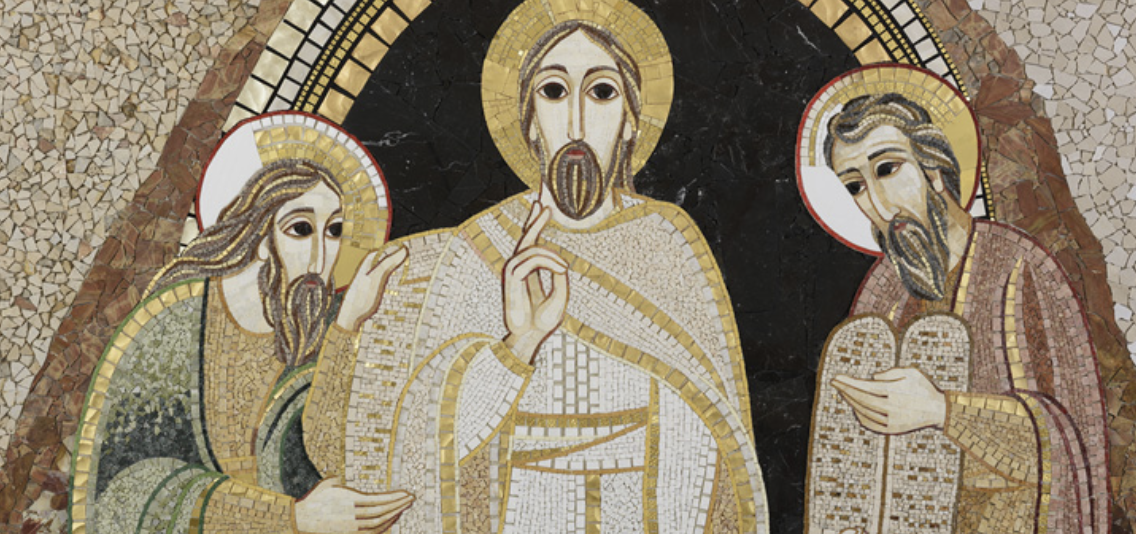
Objectively viewed, his work seems completely sub-artistic – a hybrid of pseudo-Byzantine and pseudo-modern. His cartoon-like images have as their most characteristic feature blank black eyes. I can only suggest as a point of comparison the art installed in Catholic Churches in the immediate pre-conciliar years. Or perhaps some of the simplistic images in modern Coptic Christian art. But these latter emanate from a Monophysite tradition that has a restrictive notion of the Incarnation and (consequently?)a limited pictorial heritage – and in any case they lack the distinctive “Marko eyes.”
But if Rupnik’s work is not truly art, what is it then? It’s remote from the unsuccessful attempts of the European churches – efforts associated more recently with Cardinal Ravasi – to somehow “Christianize” the styles and products of contemporary Western art. We have reviewed books critically analyzing this modern sacred art. 4) Likewise, Rupnik’s work is not popular kitsch. The Catholic “masses” (which includes the bulk of the clergy) remain content with manufactured reproductions in various formats of art from the 19th century and earlier – as well as with crude attempts at their imitation. 5)
For it is safe to say that Rupnik and his art were completely unknown in the states. True, there was critical commentary when his work appeared as logos for Vatican events. Yet he was not a popular presence. That is amazing because some of his major works are located here – especially in our backyard of Southern Connecticut. The patrons in Connecticut were the Knights of Columbus and Sacred Heart University (an extremely establishment-friendly institution of limited scholarly ambition). The Knights also financed the decoration of the John Paul II Center in Washington. 6) That is most appropriate, since it was John Paul II who in the 1990’s helped to launch the Rupnik phenomenon with the commission of mosaics for the Redemptoris Mater chapel in the Vatican. The cost of all these mosaics is in the millions of dollars.
From this list of patrons, we realize that Rupnik’s art is preeminently an official art – an art of the establishment. It is intended to achieve and synthesize various ideological goals. First, fulfilling the ambition of the Council, it definitively breaks with any Western Catholic art of the past. Second, it is reminiscent of the art of the Christian East – giving it an “ecumenical” aura. Third, its figurative nature renders it accessible to those not initiated into modern art (which would include the patrons mentioned above). Fourth, the alleged religious nature of Rupnik’s studio enabled the marketing of his art as a vehicle for dispensing spiritual values.
Rupnik’s art thus caters to the ruling establishment of the Church. In this sense its role is akin to that of Socialist Realism in the Soviet Union. Each has a political, not artistic, function. Like Socialist Realism, Rupnik’s art restates the dogmas of an ideology to the applause of patrons from an ignorant bureaucracy. Thus, it is really not art at all.
Such patronage is very lucrative indeed – the costs for building the Sacred Heart Univerity chapel were $17 miillion, I believe. It is tragic that the Church establishment over the years has wasted increasingly scarce resources on Rupnik’s art and similar products. It is infuriating that such projects continue to decided in isolation by bureaucrats and priests wihout the input of anyone with artistic judgment.
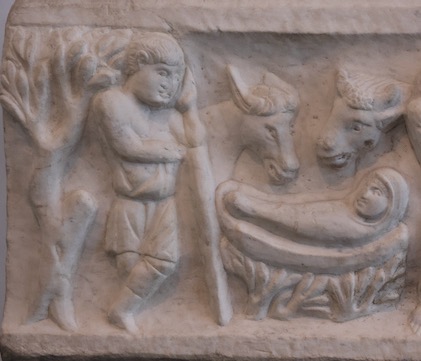
The following is a schedule of Traditional Masses for Christmas of churches in the area.
Connecticut
St. Mary Church, Norwalk, CT, Christmas Eve 11:30 pm Choral Prelude with Christmas Carols followed by 12:00 Solemn Midnight Mass (Latin); 10 am Christmas Day
Oratory of the Most Sacred Heart of Jesus, Georgetown CT: Missa Cantata Christmas Eve at Midnight; Missa Cantata Christmas Day at 12 Noon
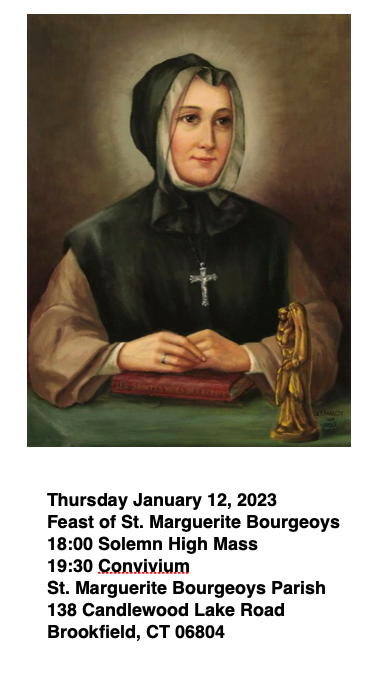
St. Marguerite Bourgeoys, Brookfield, CT, Midnight Low Mass; 7 am Daybreak Low Mass; 12:30 pm Missa Cantata
Sts. Cyril and Methodius Oratory, Bridgeport, Christmas Eve, Office of Prime with Christmas Matyrology at 8:30 am; 11:30 pm Christmas Carols followed by Midnight Mass; Christmas Day, Low Mass at 8:30 am, High Mass at 10:15 am
St. Stanislaus Church, New Haven at 2:00 pm.
St. Patrick Oratory, Waterbury, CT, Christmas Eve, 8 am Low Mass of the day; 11 pm confession available; 11:30 Christmas Carols followed by Midnight Mass; Christmas Day: 8:30 am Low Mass of Down; 10:30 High Mass of the Day and Benediction
St. Martha Church, Enfield, CT, Christmas Eve, 9 am low Mass; Sung Midnight Mass; Christmas Day, 9 am low Mass
St. Michael’s, Pawcatuck, CT, 11 AM
New York
Holy Innocents Church, New York, NY, Christmas Eve, 1 pm HighMass of the day; Solemn Midnight Mass; Christmas Day, 9 am Mass at Dawn; 10:30 Solemn Mass of the Day
Our Lady of Mount Carmel, New York, NY, Christmas Eve, Church opens at 10:45 pm for prayers and confession; 11 pm sacred music and carols followed by Solemn Midnight Mass; Christmas Day, 10:30 am
St. Vincent Ferrer, New York NY, Solemn Midnight Mass in the Dominican Rite, Mass in B flat Major, D. 324 by Franz Schubert, with orchestra
Our Lady of Refuge, The Bronx, Midnight Missa Cantata
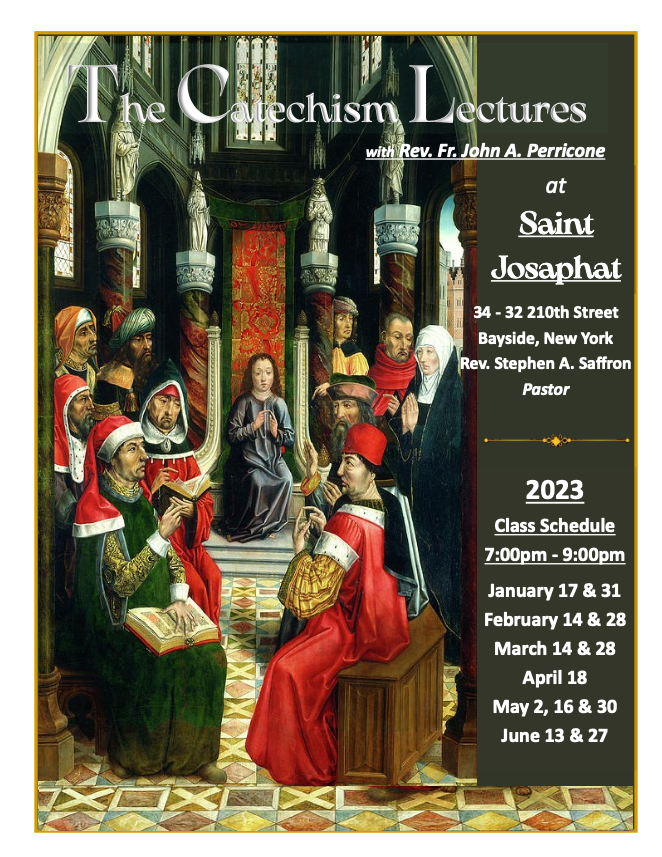
St. Josaphat, Bayside, Queens, Christmas Eve, Mass of the Day 7 am; 11 pm Christmas Carols followed by Midnight Mass; Christmas Day, 9:30 am
St. Rocco Church, Glen Cove, Long Island, Sung Midnight Mass; 11:30 am Missa Cantata.
St. Paul the Apostle, Yonkers, NY, Christmas Eve, 10 pm
Annunciation Church, Crestwood, NY, 11:15 am
Immaculate Conception, Sleepy Hollow, NY, High Mass 2 pm
St. Patrick Church, Newburgh, NY, 3 pm.
Holy Trinity, Poughkeepsie, NY, Christmas Eve, Missa Cantata 9 pm, Christmas Concert preceding; Christmas Day, low Mass 1:30 pm
St. Mary/ St. Andrew, Ellenville, NY, Sung Midnight Mass followed by a convivium; Christmas Day 11:30 am low Mass followed by a convivium.
Sacred Heart Church, Esopus, NY, Missa Cantata, 11 am
St. Joseph Church, Middletown, NY, Missa Cantata in the chapel, 10:15 am
New Jersey
Our Lady of Sorrows, Jersey City, Christmas Eve, 11:15 to 11:30 Confessions; 11:30 pm, Prelude of Season Sacred Music followed by Midnight Mass. Missa in G by Antonio Caldara (c. 1670-1736) sung by Cantantes in Cordibus Choir and Orchestra. No 9 am Mass on Christmas Day
Our Lady of Victories, Harrington Park, Nj, Christmas Eve 9 pm.
Our Lady of Mount Carmel, Newark, NJ, Sung Midnight Mass.
Our Lady of Fatima Chapel, Pequannock, NJ, Christmas Eve, 11 pm Christmas Carols followed by Midnight Mass; Christmas Day: 7 am Mass of Dawn; 9 am Mass of Dawn; 11 am Mass of Christmas Day; 1:30 pm Mass of Christmas Day; 5 pm No Mass.
St. Anthony of Padua Oratory, West Orange, NJ. Christmas Eve, 9:30 pm confessions, 10:30 pm Christmas Carols, 11 pm Solemn Midnight Mass; Christmas Day, 7:30 am Low Mass (second Mass of Christmas) 9 am Low Mass (second Mass of Christmas), 11 am Missa Cantata (third Mass of Christmas)
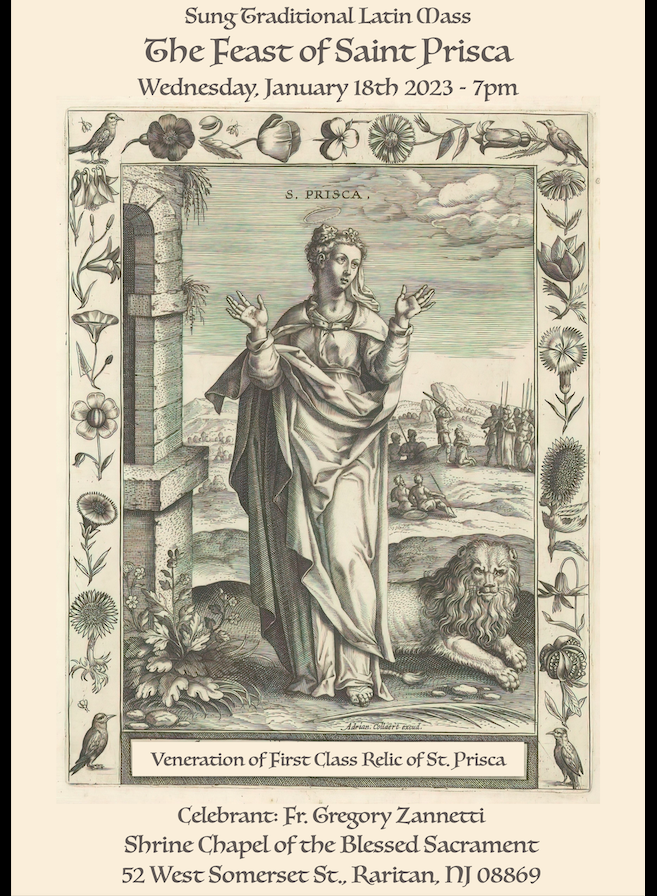
Shrine Church of the Blessed Sacrament, Raritan, NJ, Christmas Eve, 11:30 pm Christmas Carols followed by Midnight Mass, Christmas Day, Missa Cantata, 10 am
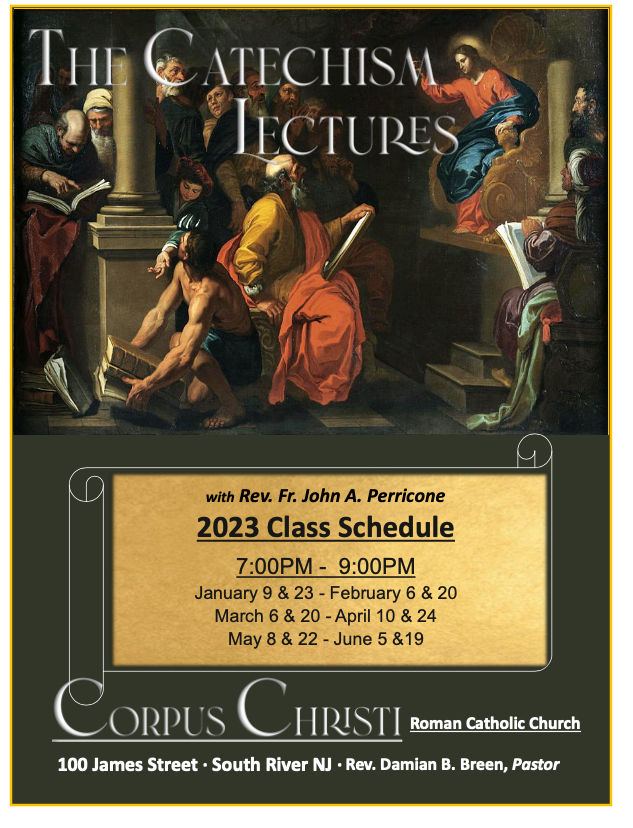
Corpus Christi Church, South River, NJ, Midnight Mass
Church of the Sacred Heart in Clifton NJ, Low Mass at 8am Christmas day
St. John the Baptist, Allentown,, NJ, Midnight Mass
Masses for the Octave of Christmas, Jan. 1
St Marguerite Bourgeoys, Brookfield, CT, 12:30 pm Missa Cantata
St. Josaphat, Bayside, Queens, 9:30 am
St. Rocco, Glen Cove, Long Island, 11:30 am Missa Cantata
Immaculate Conception, Sleepy Hollow, NY, Jan. 1, low Mass at 4 pm.
St Mary / St Andrew, Ellenville, NY, January 1 at Midnight (High Mass; Convivium following); 11:30 am
St Joseph’s Church, Middletown, NYJ, 10:15 a.m.
Sacred Heart Church, Esopus, NYJ, 11:30 a.m.
Holy Trinity Church, Poughkeepsie, NY, 1:30 p.m. (Missa cantata)
St Patrick’s Church, Newburgh, NYJ, 3:00 p.m.
Our Lady of Sorrows, Jersey City, 9 am
Our Lady of Fatima Chapel, Pequannock, NJ, 7 am, 9 am, 11 am, 1:30 pm , 5 pm
St. John the Baptist, Allentown, NJ, Jan. 1, 12:30 pm