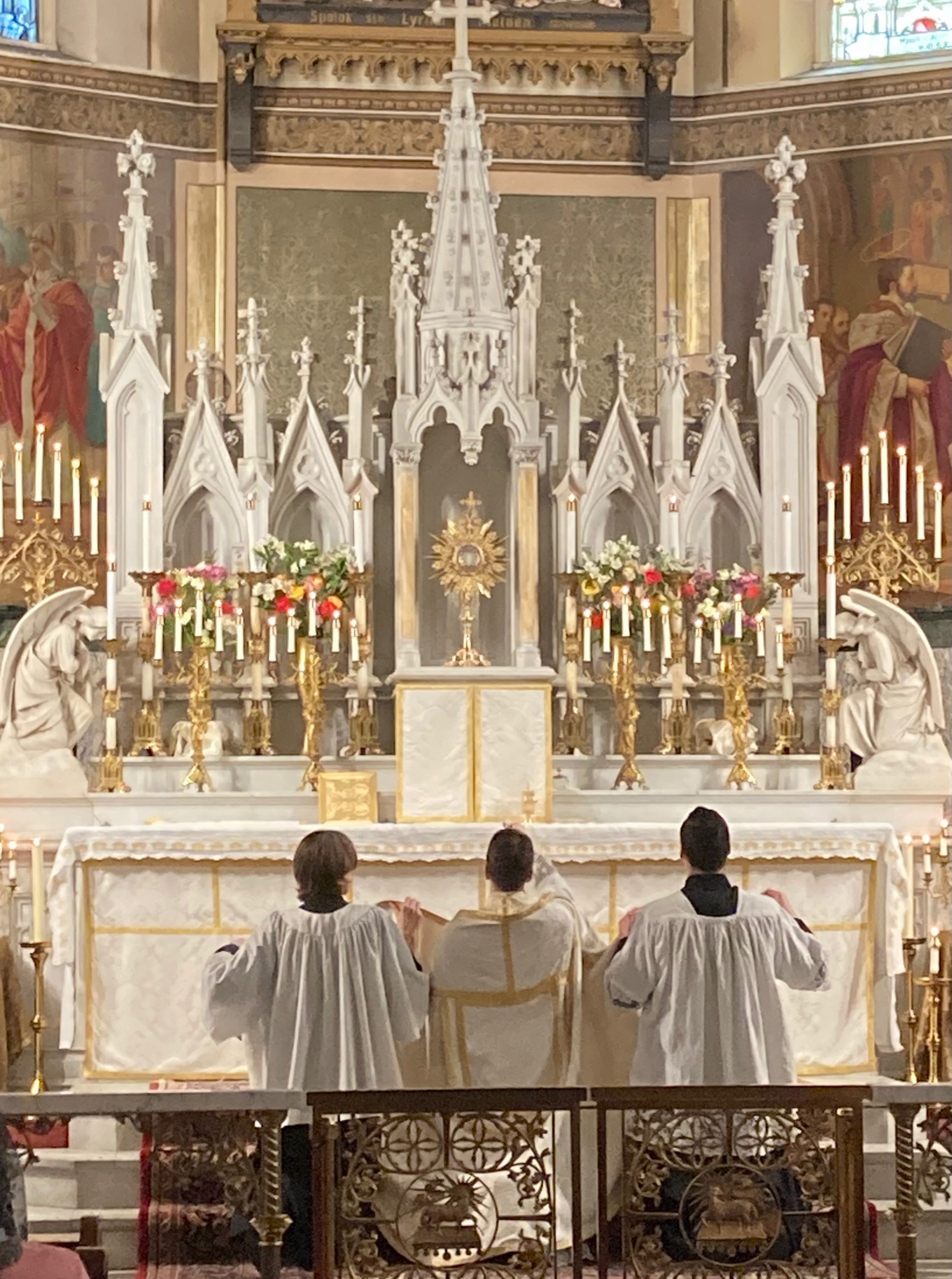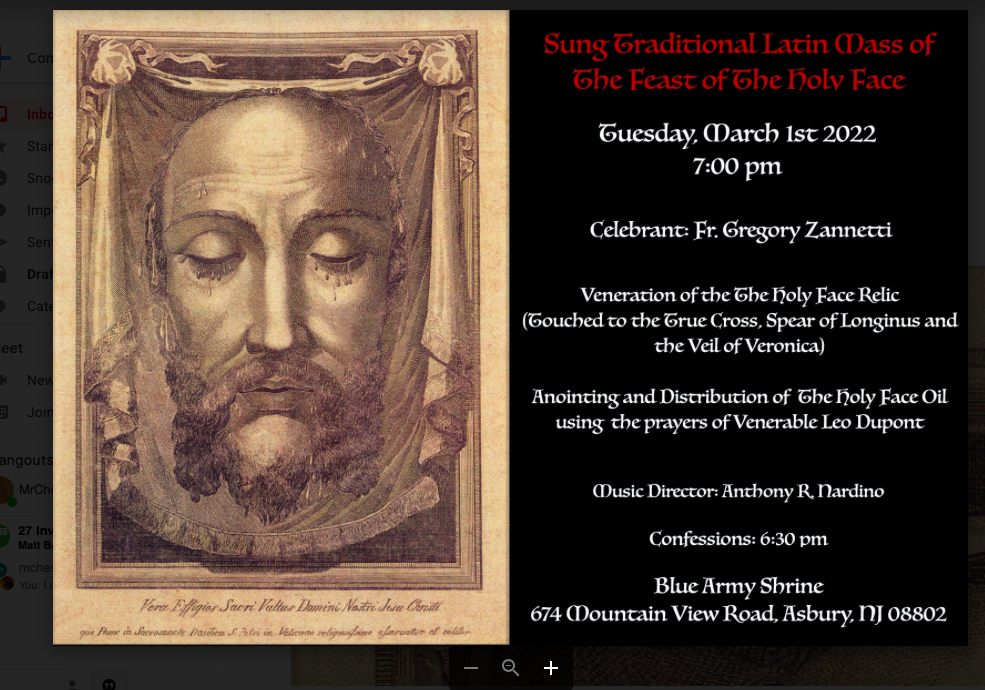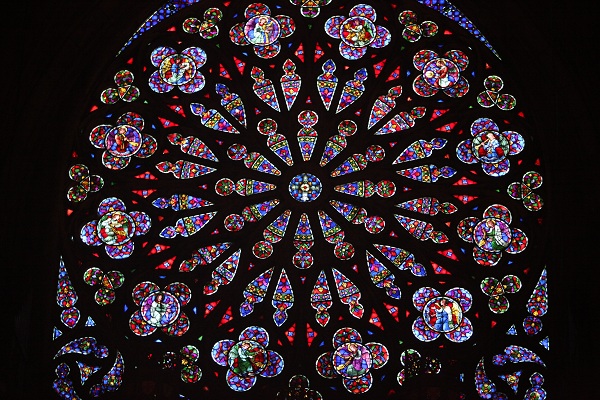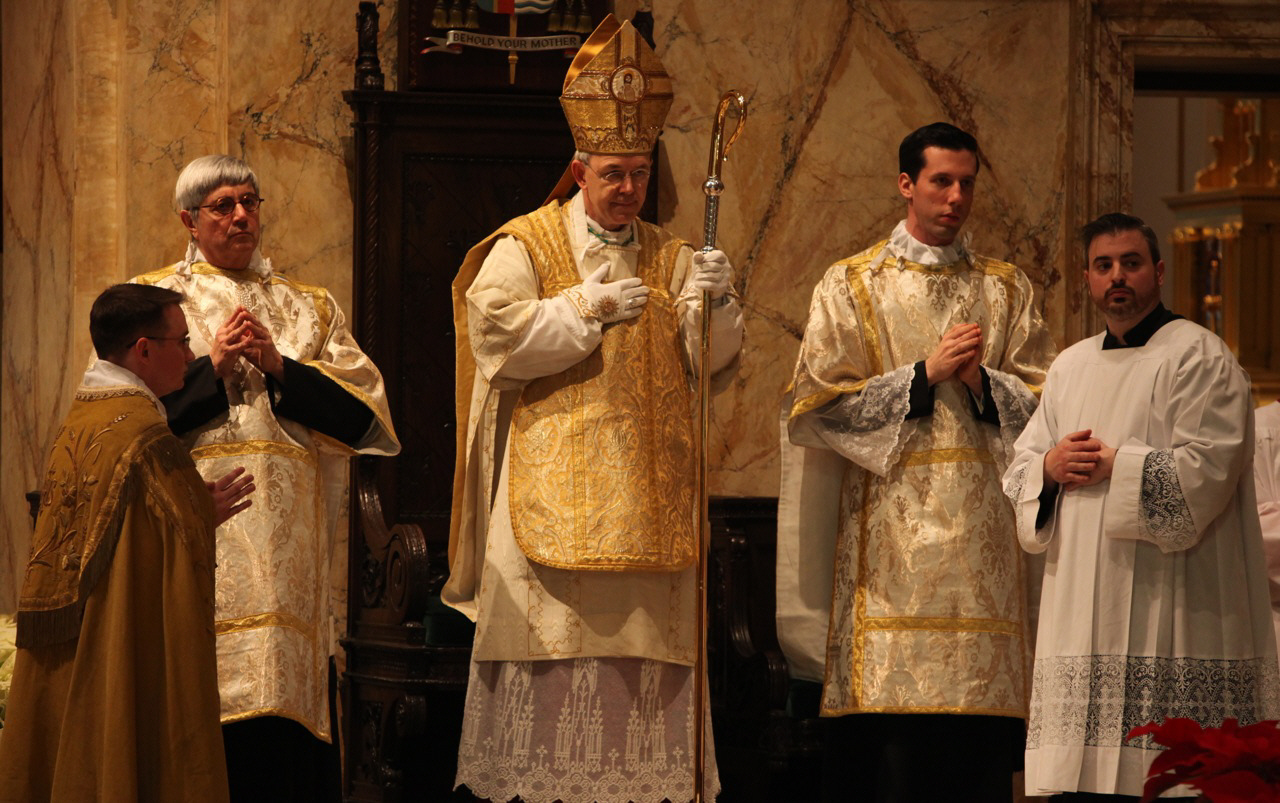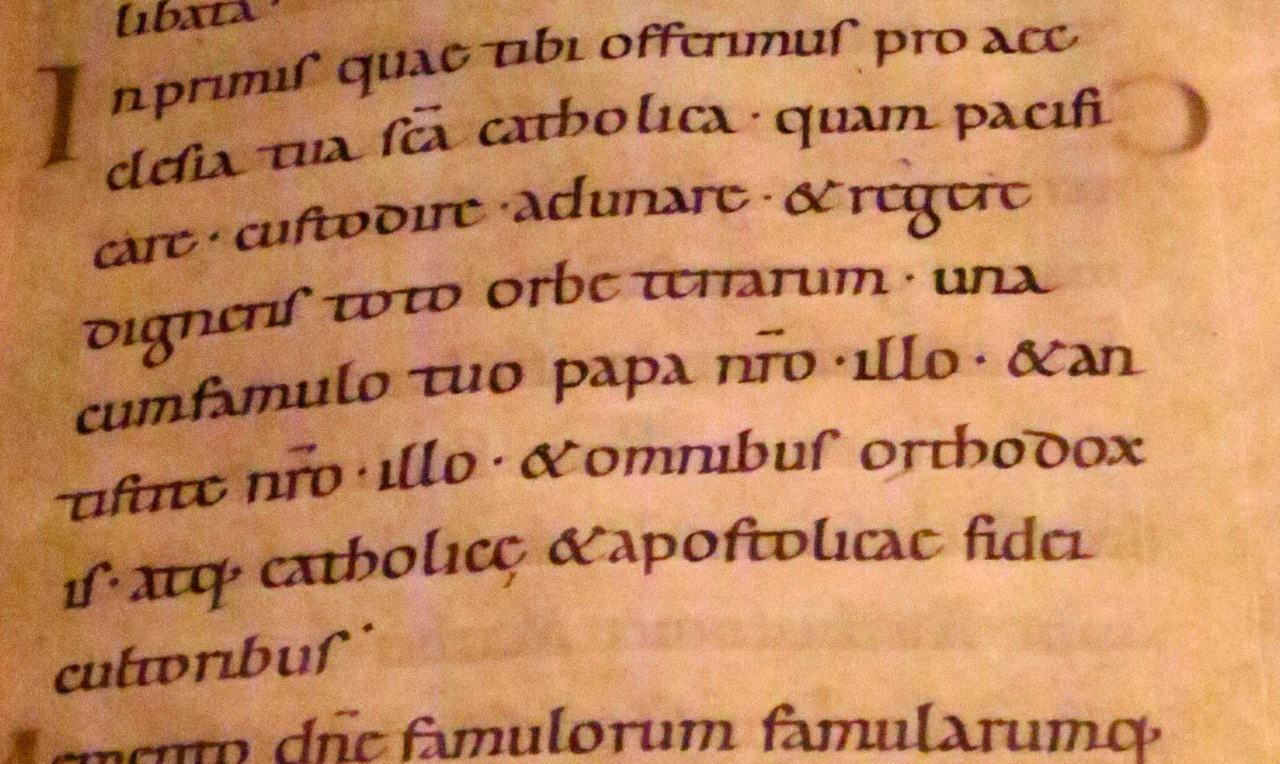
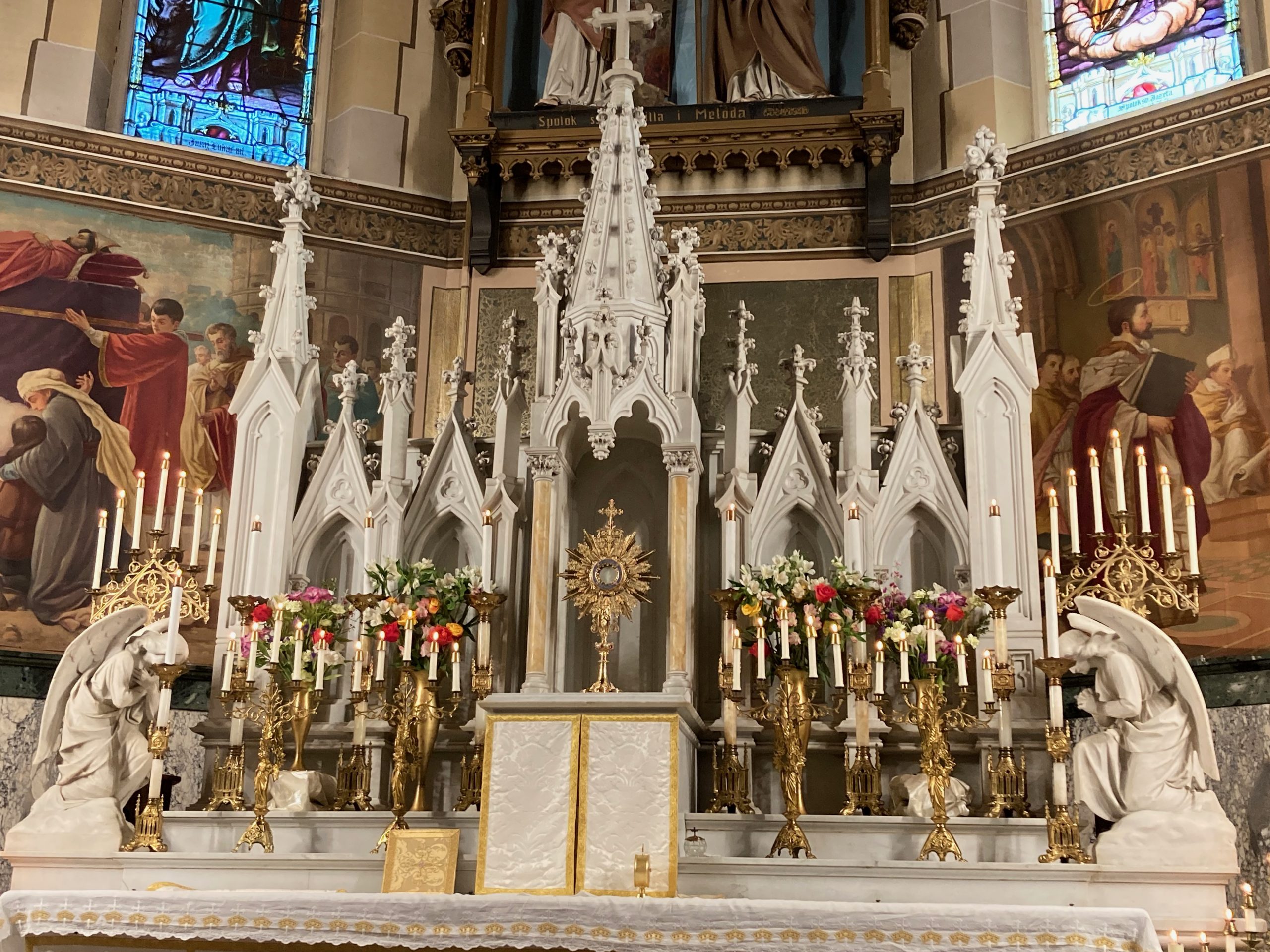
… yesterday evening at the parish/shrine of Our Lady of Mount Carmel, in East Harlem. (photos courtesy of Mr. Chris Falciano)


6
Oct
6
Oct


From the Parish Update of St Mary’s, New Haven:
A VERY IMPORTANT MESSAGE FROM OUR PASTOR
Dear parishioners,
As you all know, the Archdiocese of Hartford has been in a comprehensive process of pastoral planning going back for more than five years. As part of the first phase of that pastoral planning process, in June of 2017 St. Joseph Church was merged with St. Mary Church to create the present St. Mary Parish. The archdiocese is presently engaging in phase two of the pastoral planning process, which will merge multiple parishes in New Haven into a single municipal parish, centered on St. Mary Church. After discussions over the summer, the archdiocese has recently informed our Dominican Province that when this second phase is implemented, the pastoral care of this municipal parish will be entrusted entirely to the care of priests of the Archdiocese of Hartford—and thus a continuing presence of the Dominican friars in the pastoral ministry of St. Mary Parish or in residence at St. Mary Priory will no longer be possible. It is thus with great sadness I share with you that in January 2022, the pastoral care of St. Mary Parish will be turned over to the priest(s) named by the archbishop, and the Dominican friars will depart from St. Mary Priory. The Archdiocese has asked the Dominican Province to consider three new ministries in the Archdiocese as an alternative to St. Mary’s. As each of these would entail a radically new configuration of the Dominican life and mission in the Archdiocese, the Dominican Province has decided to evaluate these new offers at our next provincial chapter, which will take place in June of 2022. In the light of the above, our Dominican provincial, the Very Rev. Kenneth Letoile, O.P., will be preaching at all Masses this coming weekend. He will also be present at two parish meetings the following week (dates & times TBA) when there will be an opportunity for listening, questions and drawing on our faith to find a way forward in this difficult time. It has been a profound joy and a blessing for us to serve the people of St. Mary’s for 135 years. During the time between now and the transfer of pastoral leadership, we will work with the incoming priest(s) to effect as smooth a transition as possible. Please know that the prayers of the friars are with all of you as we face this upcoming transition together.
God bless,
Fr. John Paul Walker, O.P.
Pastor
And we have this from the 10/3/2021 parish bulletin of St Stanislas -New Haven, administered by Polish Vincentians:
Dear Parishioners, I must share sad news with you. As part of the ongoing process of reconfiguration in the Archdiocese of Hartford, Archbishop Blair has changed the status of our Parish as a free-standing Parish in New Haven as well as the status of the other parishes in New Haven as of January 1, 2022. There will be only one Parish in New Haven which will consist of the nine parishes which currently exist. At this time, we do not know any details concerning this process. When I find out more details concerning this process I will inform you.
(Rumor has it that the Vincentians now have been asked to leave, too.)
These are tragic events. St. Mary’s could in no way be described as “traditionalist” ( although a traditional Mass was celebrated there in 2008) Yet I have spoken to credible witnesses who have told me that the presence of the Dominicans and the musical life of this parish was of a great spiritual benefit to them. This is partcularly so for students, since the Catholic chaplaincy at Yale University has remained committed to a progressive agenda. As to St. Stanislas, it has been the home for years of the St Gregory Society, one of the pioneers of the recovery of Catholic liturgical Tradition and sacred music. What will their relationship with the new “landlord” be?
Really, it seems that this year the Vatican and the hierarchy of the Catholic Church have become explicitly suicidal. How does Archbishop Blair think this sudden, disruptive, top-down reorganization of all the parishes of New Haven will be received by the faithful? What is the benefit, in an Archdiocese with virtually no new vocations( 2 ordinations this year), of excluding the priests of an established religious order? If we look at the website of the Archdiocese of Hartford, we see endless lists of offices and committees, along with news of one parish closing after another. With, of course, the Neocathecumenal Way as the white knight. What is totally missing, of course, is any accountabilty for the lack of vocations and the radical drop in religious practice among Catholics – which create the crisis in the first place. For the “Council” (= the current constitution of the Church) and the management of Archbishop Blair and his predecessors are exempt from any honest analysis. As a consequence, in the near future New Haven will be repeated in many more places throughout the country.

The Society of St. Hugh of Cluny has reported on these two churches and liturgies celebrated there. For more photos of St. Stanislas see HERE. For more photos of St. Mary’s, see HERE.
5
Oct

The closing of St. Thomas the Apostle parish in 2003 set off one of the bitterest controversies (along with those surrounding Our Lady of Vilna and St. Ann’s) of Cardinal Egan’s campaign of parish reductions. For this Harlem parish, in addition to its historical significance, had one of the most magnificent churches of Manhattan, an incredible 1907 confection of eclectic gothic architecture and magnificent decoration – especially its stained glass. St Thomas the Apostle possessed one of the most complete decorative programs of Munich stained glass – of Mayer & Co. – in the New York area.
The architect of St Thomas the Apostle, Thomas Henry Poole (1860-1919), architect and author, was a key figure during the Golden Age of Catholic architecture in New York. An early church design for Manhattan, Holy Name of Jesus,( 1891-1900) is impressive but relatively restrained. From here he moved to the wild creativity of St. Cecilia, Brooklyn (1893) Our Lady of Good Counsel, Manhattan (1890-92; Poole’s own parish) and St. Thomas the Apostle, Harlem (1907). These “total art works” (Gesamtkunstwerke) deployed Gothic and non-Gothic forms in totally original ways, with lavish use of paintings, sculpture and stained glass in the interior. Our Lady of Good Counsel (which I described in the Wedding Palace Church) still gives today an idea of Poole’s accomplishments. 1)
As in most such struggles, despite the dedicated efforts of parishioners and conservationists, the Archdiocese had its way and the parish was closed in 2003. But the Archdiocese proved unable to demolish the buildings or develop the property. The church, stripped of its decorations, eventually (2014) was repurposed as a “community arts center” and venue for “events” – an admittedly ignoble end. Yet the new owner (“Harlem Parish”) restored the exterior and interior, preserving the architectural shell of St. Thomas church. We can be thankful for that! 2)

But what of the greatest glory of St. Thomas – its Munich stained glass? That too was preserved – at least in large part. But to view it, one has to travel far up the Hudson to Lagrangeville, in Dutchess county. In 2008, when the new parish church of Kateri Tekakwitha was built there, the pastor was able to acquire much of the stained glass of St Thomas the Apostle – and spoils of other closed New York churches.

For a more detailed reflection on the style of the church of St. Kateri Tekakwitha itself I refer to my prior post on the church St. Joseph of Somers, New York, a recent church in northern Westchester county which also incorporates old stained glass (from St. Ann in New York) and for which St. Kateri in many respects served as an architectural precedent. In regard to St. Kateri, we note the somewhat overwrought facade with its piling up of gables, doorways and towers. The bright interior also uneasily juxtaposes a centralizing plan with a minimalist “chancel” or sanctuary. Yet it’s clear that the parish and Archdiocese were striving here for something more than the brick or concrete modernistic boxes of the 1960’s and 70’s. 3)


But in St. Kateri the Mayer & Co glass – executed in its most characteristic, exuberant, neo-Rennaissance style – is on full display. As a general theme, the windows depict the miracles of Christ. The figures are more substantial than the doll-like images sometimes found in of the windows of other churches (including Poole’s own Our Lady of Good Counsel). And in the St. Thomas windows the glass makers take endless delight in narrative details and in the expressions of the saints (and sometimes sinners) they depict. As always in Munich stained glass, the colors are glorious. The dedications are missing.

The set of St. Thomas windows at St. Kateri is not complete. The pastor of St Kateri told me of a photograph of an Annunciation window which he has seen. St. Thomas also featured a grand facade window centered on an image of the Assumption or Immaculate Conception. Few or none of the panels of this window seem to have reached St. Kateri.


As is usual in such huge projects, the windows of St. Thomas seem to be a mix of images very commonly encountered in Catholic churches of the day (such as Christ welcoming the little children) and those that are more unusual and seem to be a specific commission. Such as Christ discoursing with the Samaritan woman at the well (above). Or the Visitation window (below) in which the Virgin holds a walking staff – I at least haven’t seen that elsewhere.


The artists of Mayer reused images over the years – given the sheer scale of this company’s output through the 1930’s, how could it be otherwise? Compare the visit of the Magi as depicted in a window from St. Thomas (above) with the same scene in a window (below) – of an earlier date, I believe – at Holy Innocents church in New York.


The unusual subject of the raising from the dead of the daughter of Jairus, as depicted in a window from St. Thomas (above). Below is the same scene in the Cathedral of Covington, Kentucky – executed at approximately the same time. If these windows were not indeed made by the same artist, then the same pattern books or drawings served as models.


The marriage feast at Cana: in a St. Thomas window (above) and at St. James cathedral, Brooklyn (below). In Brooklyn, the same basic composition is confined to one large pane. The execution of the latter is also more sophisticated and uniform in quality – the window from St. Thomas shows evidence of several different hands, and the left two panels are considerably cruder than that depicting Christ. But the pop-eyed expression in that window of the boy pouring water which is turning into wine is priceless. And then there is the pineapple ( a fruit from the New World!) on the table in the Brooklyn window.


Any one of these windows from St. Thomas merits close study. Only then can we appreciate the fine details such as, in this window of Candlemas, the rendering of the fabrics or the expression of the priest Simeon and the prophetess Anna. And then, stepping back, we can admire the harmonious overall composition.


The washing of the feet of Christ by St. Mary Magdalen. The circle of host and guests taking umbrage at her action forms a kind of unholy “Last Supper” – note their expressions.


(Above and below) Two of a series of angels now installed at St. Brigid church on Tompkins Square. These also are described as spoils from St. Thomas the Apostle – which gives an idea of the magnitude of the decoration that once was there. We should be grateful that much of the stained glass of the Harlem church has survived. But the loss of the original artistic unity of architecture and the decoration that was found at St. Thomas remains an incomparable tragedy.

5
Oct

A traditional Mass will be celebrated for the Feast of Our Lady of the Rosary this Thursday, October 7 at Our Lady of Sorrows in Jersey City at 5 pm.
4
Oct

by Father Richard Gennaro Cipolla.
Each age has its own distortion of God, what people imagine Him to be. This present age, at least in these United States among Catholics, is tempted to romanticize God, make Him warm and fuzzy, and in that way really neutralize His presence in one’s personal life. It is almost a Catholic way of secularizing God. God has become the product of the community, a predicatable pet—yes, still a powerful pet, someone beyond the sunset, but still in His box, and that box we keep him in is called the community. Those many passages in the Old Testament that speak of the wildness of God, of the unpredictability of God, of the God who is a jealous God, the God who is the judge of all, the God who displays wrath. Any of these attributes of God that we find unpleasant or threatening to our religious complacency and happiness are denied, and we say: Oh, that is not MY God!” Or, “We have out -grown that picture of God. All that stuff is the God of the Old Testament. The New Testament God is very different, much more likable, more lovable. Jesus’ God is quite different: a God of mercy, of compassion, of love.”
What nonsense! As if the God of the Old Testament is not a God of compassion, mercy and love who deals with his chosen People as a true Father; as if the God of Jesus is not the God who led his people out of slavery, as well the God who struck down those who dared to touch the sacred Ark! The time after the Second Vatican Council was marked by an iconoclasm not seen since the Protestant Reformation, when saints were carried out of churches and put into dumpsters, for these men and women who knew God intimately, who were seized by God as He is, no longer had a place in a protestantized Church of “Jesus and me and no one else.” The passion of the Saints, their erratic and strange behavior, their refusal to conform to the world, their refusal to be normal as the world defines that word, those men and women who are witnesses of what it means to be seized by the living God and to be transformed so radically that the world falls away as dross and the only desire one has is to love the God who burning love lives in one’s heart: these men and women are hard to take.
After that period of iconoclasm we decided that we could allow the saints back into our churches, but only after they have been tamed. And so we find ourselves with a St. Francis who decorates bird baths, a St. Francis who is emasculated and turned into some sort of cross between Johnny Appleseed and Mr. Rogers. What happened to the real man who threw himself into the thorn bushes to control his lust, who pummeled his body with fasting and physical penance, who went up onto that mountain and in prayer received the Stigmata, the wounds of Christ that bled and pained him for the rest of his life until his death, those wounds that are the mark of the God of infinite love? This St. Francis, the real man of the twelfth century, reminds us all too really of what happens when we not only take God seriously but also when we allow Him to live in us, when we give over our will to Him.
From Adrienne von Speyr:
I saw St. Francis at first in his old age, at prayer and sickly, of an indescribable cheerfulness and purity and humility. Everything in him, everything that constituted his life, all his difficulties, are now transfigured and have become translucent. And this happened through prayer. The things that occupy him no longer contain anything at all that is purely personal, not a trace of annoyance or injury or resentment for the unjust things inflicted on him. God alone is left, as well as perfect service in the indescribable happiness of one who serves and in uninterrupted contemplation.
Father Richard Gennaro Cipolla

External Solemnity of the Dedication of the Basilica of St. Michael the Archangel
From the Alleluia for the Feast of Saint Michael the Archangel:
Holy Archangel Michael, defend us in battle: that we may not perish in the dreadful judgment. Alleluia.
Michaelmass; just the sound of the word evokes images, thoughts, echoes. The first time I ever heard the term was when I arrived in Oxford as a student now many years ago and was told that in a few days the Michaelmas Term would begin. I was charmed and delighted to think that a university would name its terms in specifically Christian terms: Michaelmas, Hilary and Trinity, the three terms of the academic year. But this was part of the paradox of a place like Oxford where the cloud of secularism has penetrated the very stones of which the colleges are built and still the term Michaelmas is used, a term that evokes a time, a time when Catholic culture infused the life of a university. And there are Michaelmas daisies, something like our mums, flowers that herald the time of autumn, of falling leaves, but also of the fall towards winter, the time of quiet and cold, of remembering, of hoping, the time when the light fades fast, but also the time when the celebration of the true Light that came into the world is taken up with such fervor in a world that denies the Light. One could go on further about what Michaelmas meant in the time of Catholic culture. But this would not be good to do, for nostalgia is deadly to true religion.
We must remember, or rather call to remembrance, on this Solemnity, the feast of the warrior angel, “he who is like God”, he who leads the charge against the forces of evil, he, who with the heavenly host still fight that war, even if silently, silently at least from our point of view. This is the time to remember that there is a war—no, not the wars that constantly rage in the world and have no end. We live in the time of in -between, the time of the Church on earth, of the not -yet, of the incomplete, the time when the real effects of the Cross and Resurrection of Christ are transforming the creation bit by bit, inevitably, but whose consummation is not yet, not yet. And even if we do not see the angels waging this war in our behalf. we do see around us the signs of what this war is about. The war is against those real and powerful forces in the world that not only deny the truth of the living God but also militate against that truth in so many ways. This is surely a religious war but it is a spiritual war. It is not a matter of jihad. It is much more subtle and dangerous. For the forces of the religion of secularism, a secularism that tolerates religious faith only in a closed off individualistic way, does not so much as to deny the existence of God but rather to banish Him from the discourse of the world. These forces are determined to conquer, and if one looks with realistic eyes, they have won important cultural battles that have weakened the real presence of the Christian faith in today’s culture.
All this image of war. Can this be congruent with the religion of peace? Of course it can and it must. Jesus said: “ I did not come to bring peace but a sword.” Conflict is part of being a follower of Jesus Christ, part of what it means to be a Christian. To deny this is to deny the Gospel and Church history. Charles Williams, a strange literary figure, Anglican by persuasion, says something in his idiosyncratic history of the Church to the effect that when the dogma of infallibility of the Pope was defined in that famous thunderstorm in Rome in 1870 by Blessed Pio Nono: he says that the Church regained her manhood. A wonderful phrase: her manhood. For what we are talking about here is virtus, a Latin word that is often translated as “virtue” and thereby made harmless by the virus of moralism. But the root meaning of this word virtus is vir, the man as hero. On the feast of the Warrior Angel, the Prince of the heavenly host, we remember, or we should remember, that we are all called as Christians to show courage, which is the second meaning of virtus, we are all called to be men and women of virtue, which is the third meaning of virtus: all three meanings bound to each other, all necessary for the task of the evangelization of the world.
To be a Christian is not for wimps, is not for religious couch potatoes who confuse Christian faith with Brady Bunch Catholicism. No. What is called for today is manly men who are faithful husbands and fathers. What is called for today are manly men who are faithful priests who have the courage to make the Cross of Christ as the center of their lives. What is called for today are women who have the true virtus of Mary, the Mother of God, of St. Catherine of Siena, of St. Teresa of Avila, of St. Birgitta, of Mother Cabrini.
Oxford spires are beautiful. Daises are lovely. But they have little to do with the saint we celebrate at this Mass today, Saint Michael, the Archangel, who is fighting the battle against the prince of darkness on our behalf. And for this we are grateful and for this we sing his praises. But we must remember that it is we, you and I, who must also join this battle, a battle that will be won by the love of God for us shone in the Cross of Jesus Christ. And the first step is what we do here today. In this Mass we remember and commemorate and there is made present that event that is the sign of the sure outcome of the triumph of God: the battle that was fought on the Tree of Life. And every time Mass is offered we strike a blow in the words: Hoc est enim corpus meum. These words make the powers of the world tremble, for these words do what they say, are what they say, and by their transformative power advance the battle for goodness, truth and beauty every time they are said. For they make present from eternity in this our time the love of the infinite God who loved us so much that he gave his only begotten Son to die so that we may live.
St. Michael the Archangel, pray for us.
Father Richard Gennaro Cipolla
27
Sep
27
Sep
A Solemn Mass for the Feast of St. Michael will be celebrated on Wednesday, September 29th at 7:30 pm at Notre Dame Church, New Hyde Park, NY.