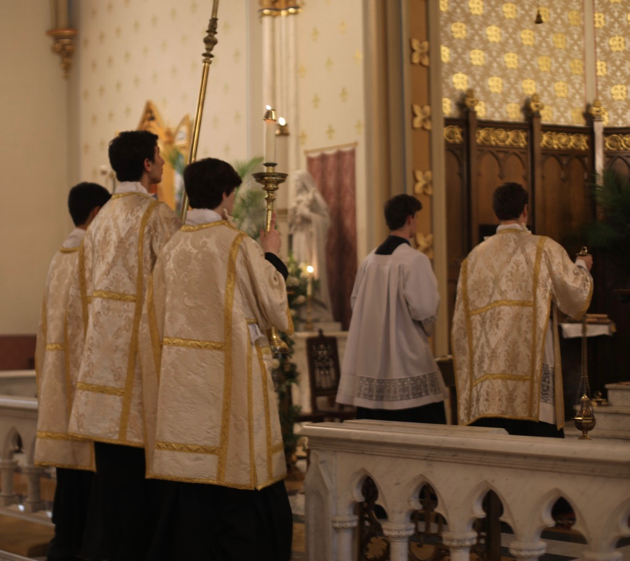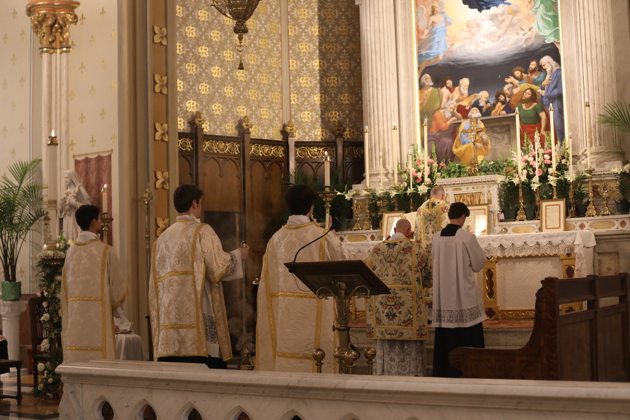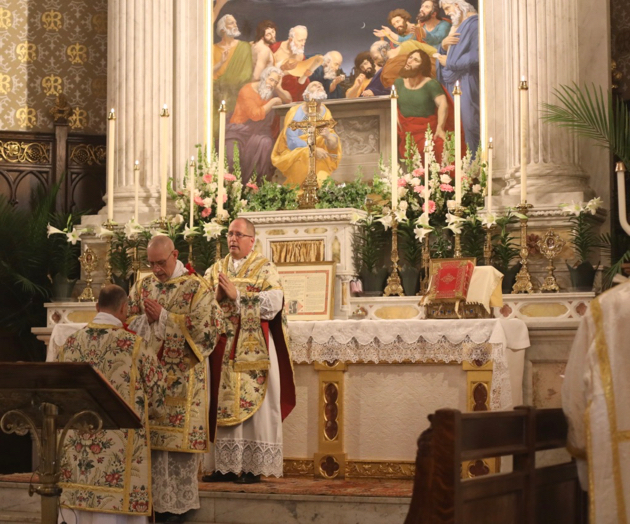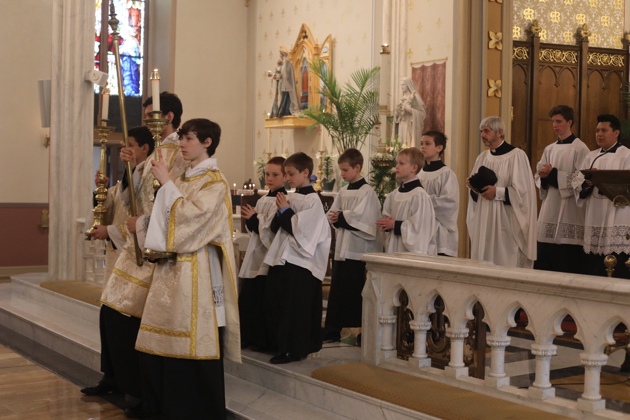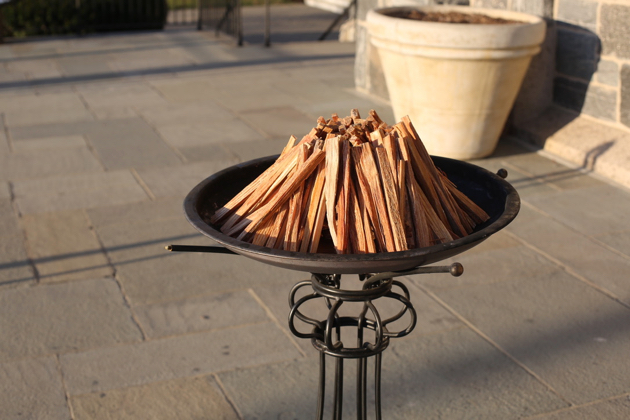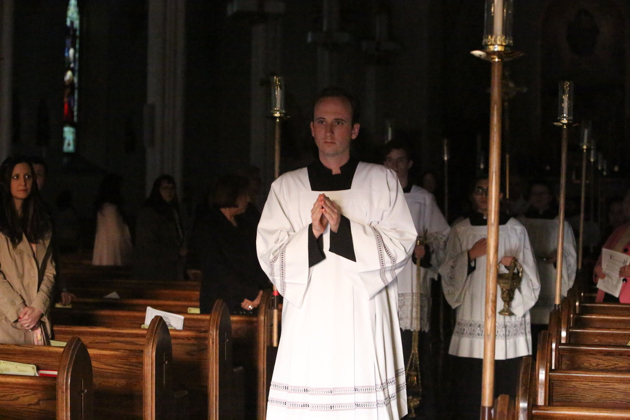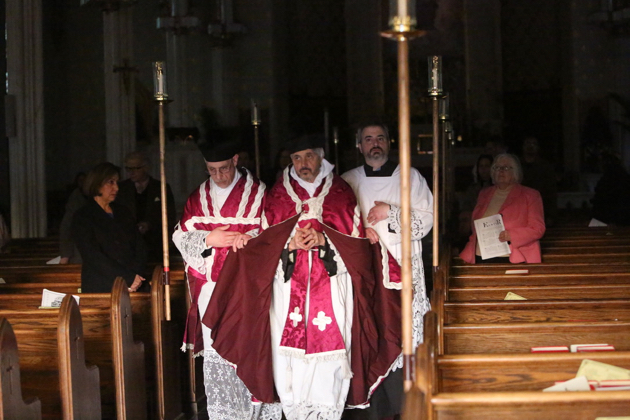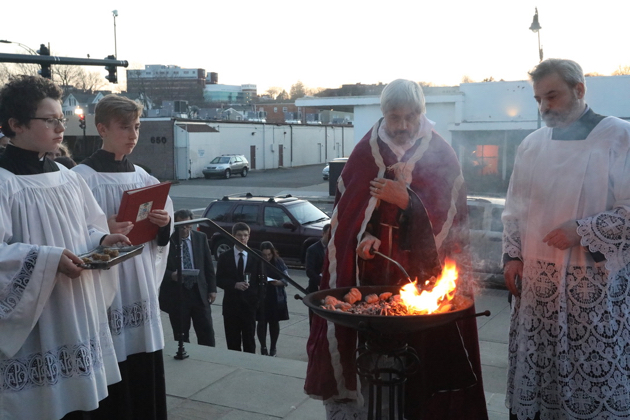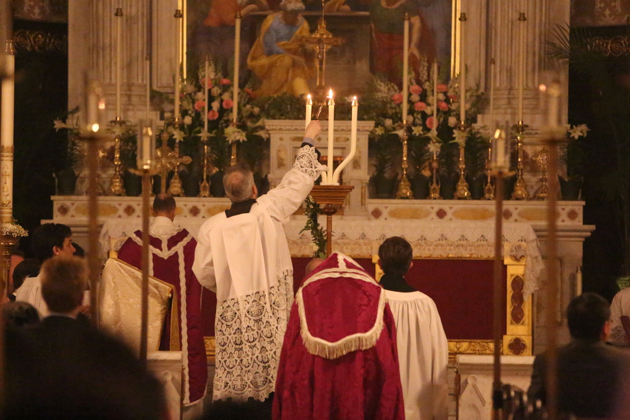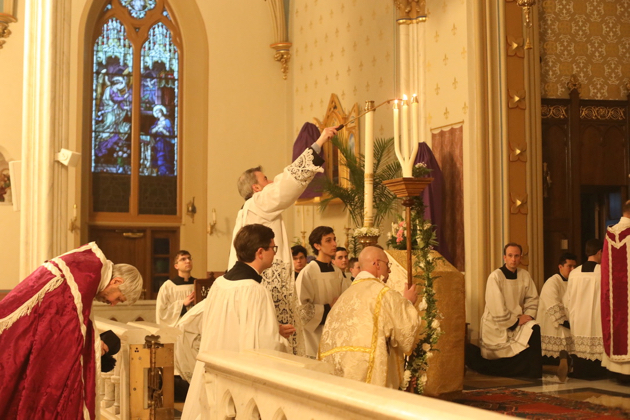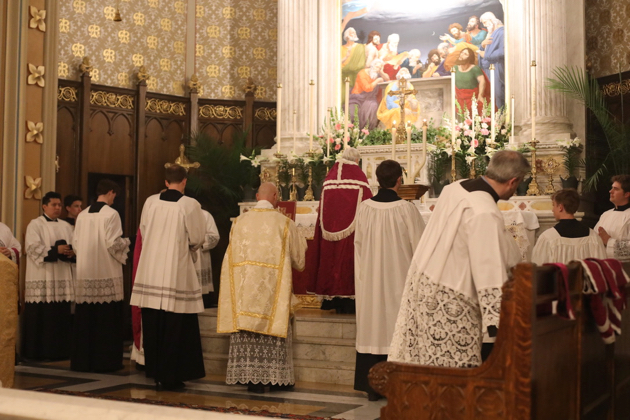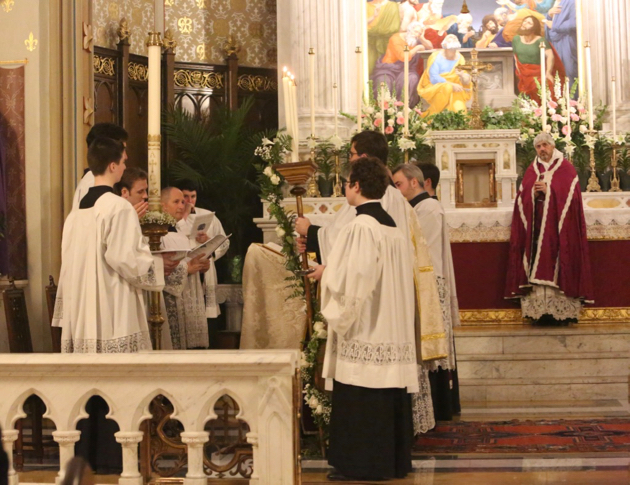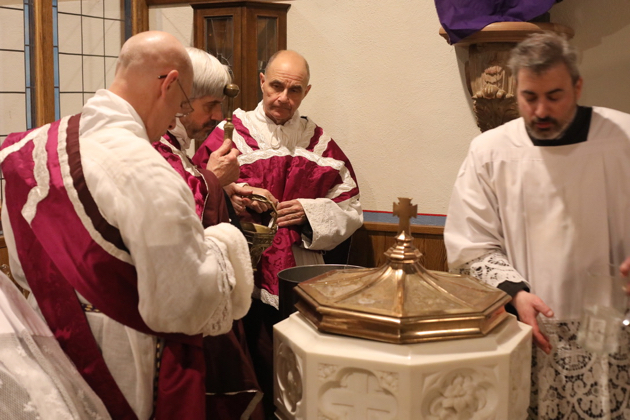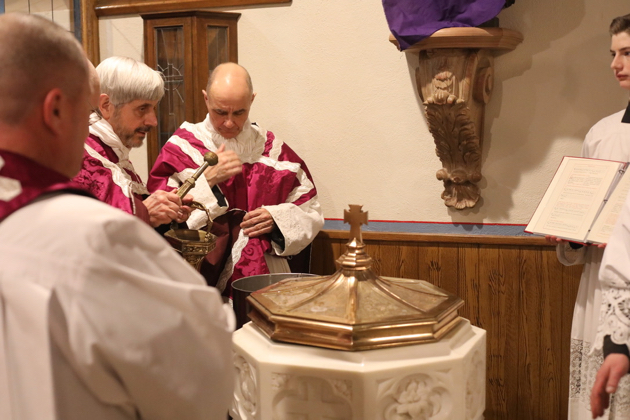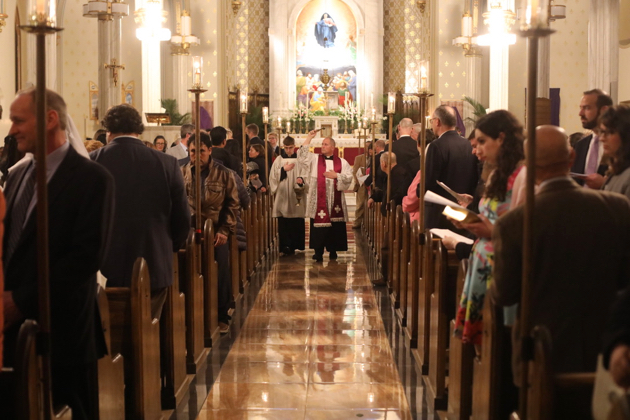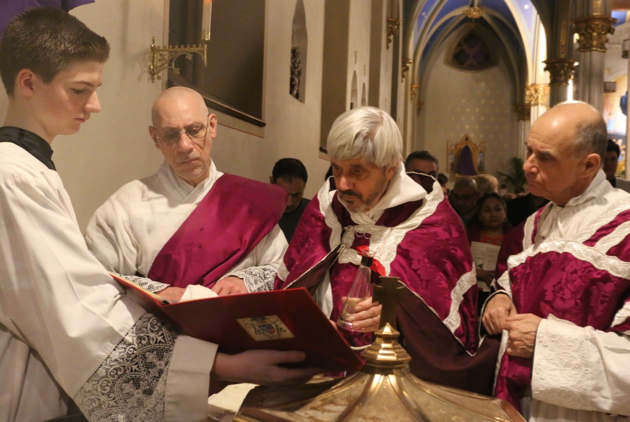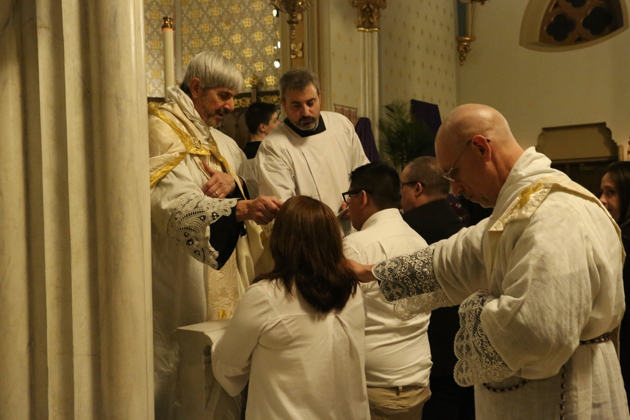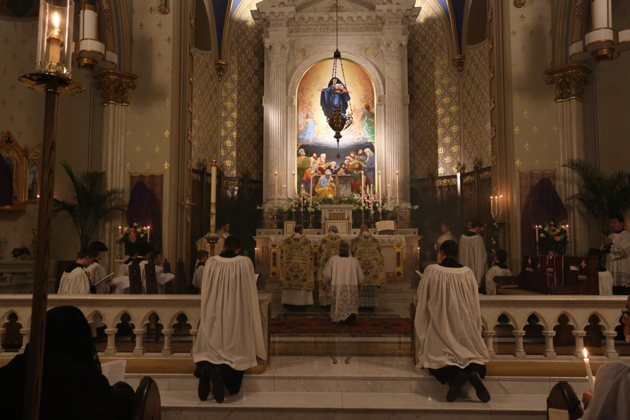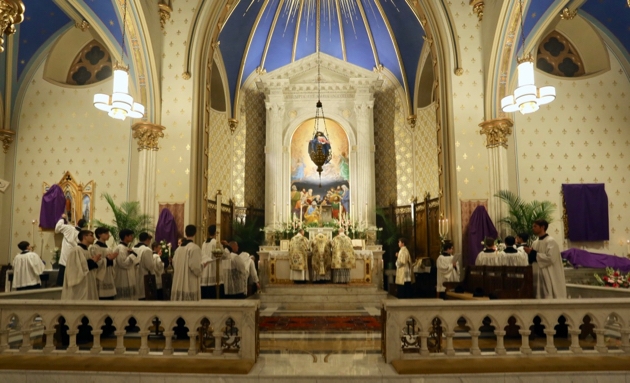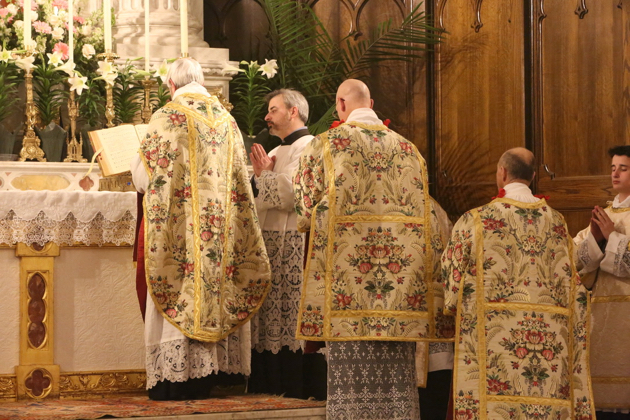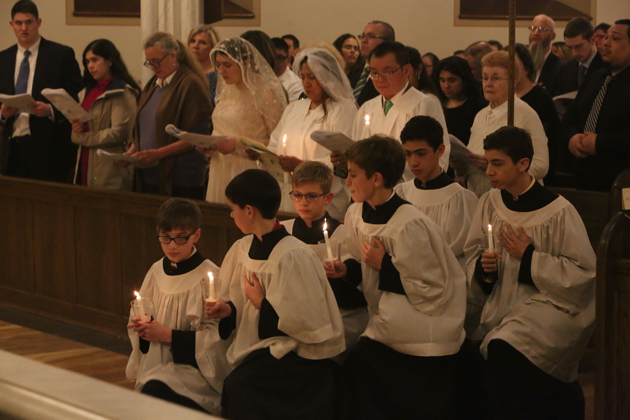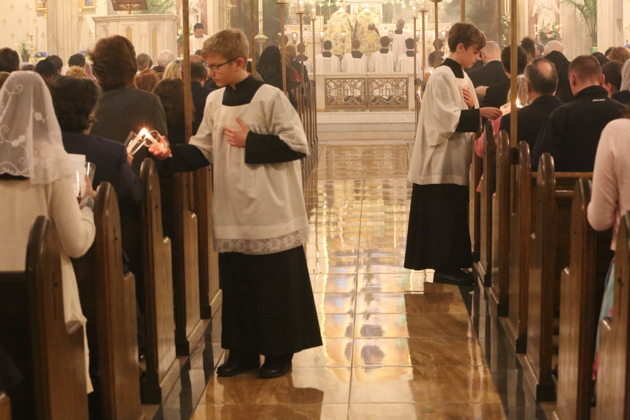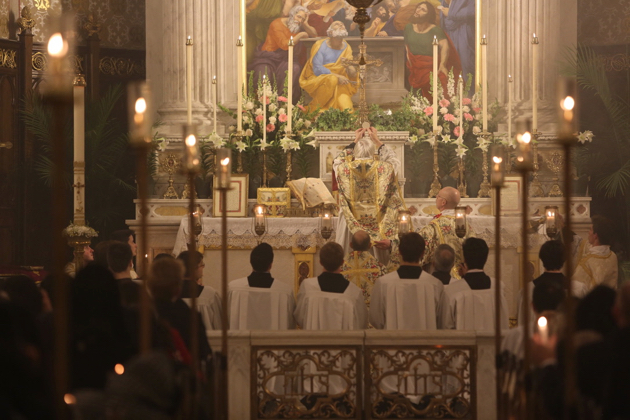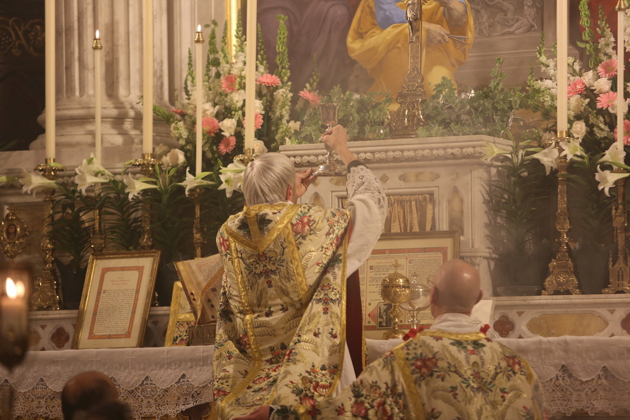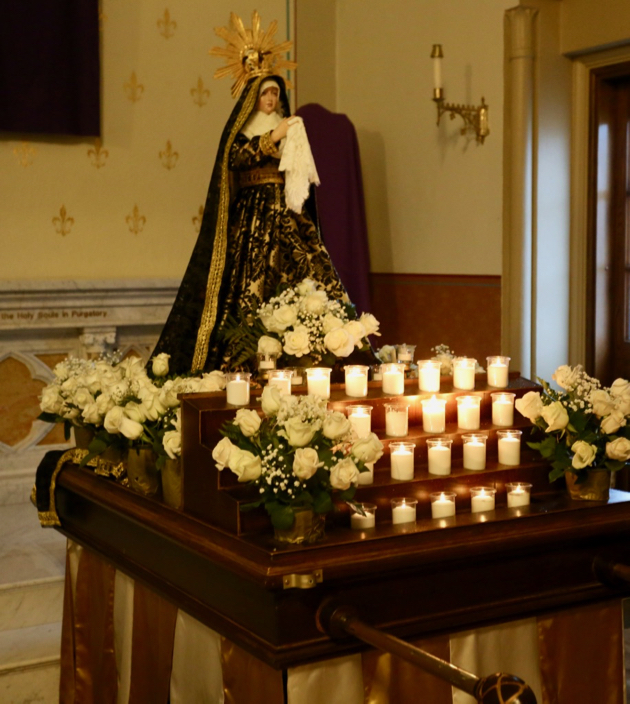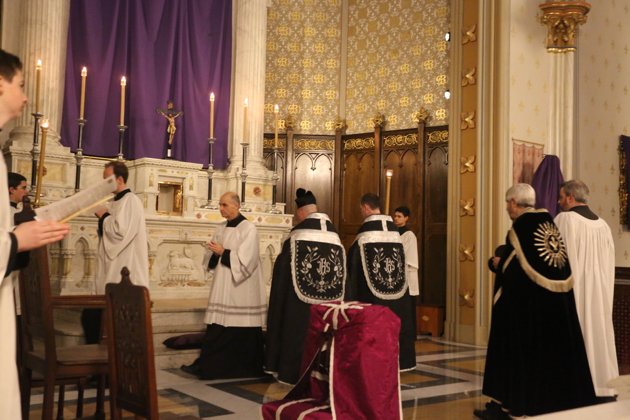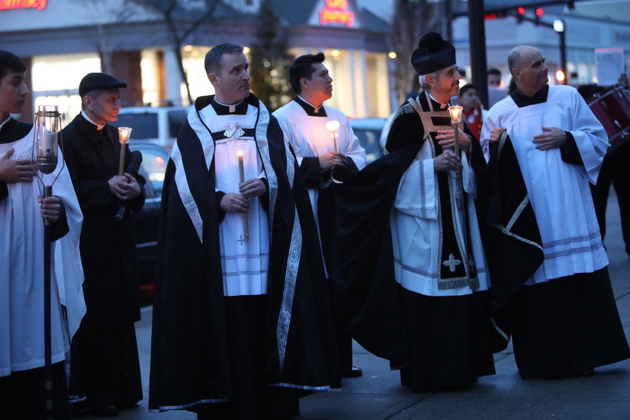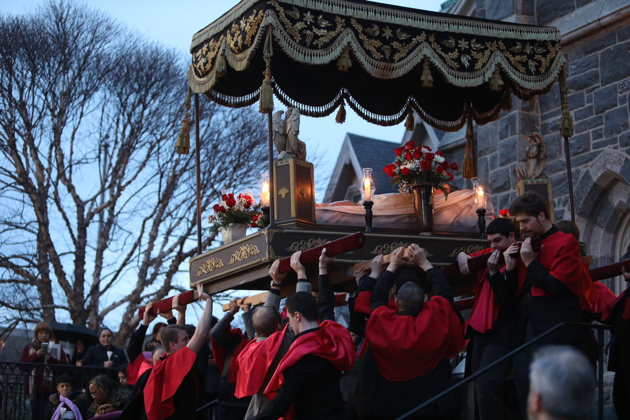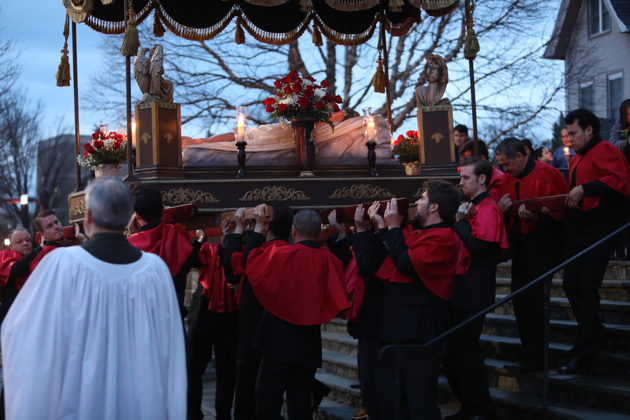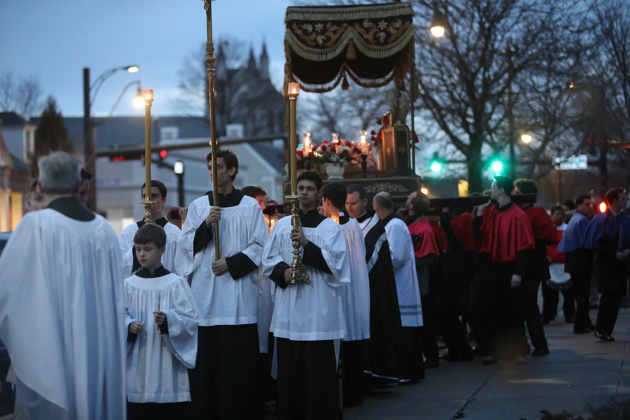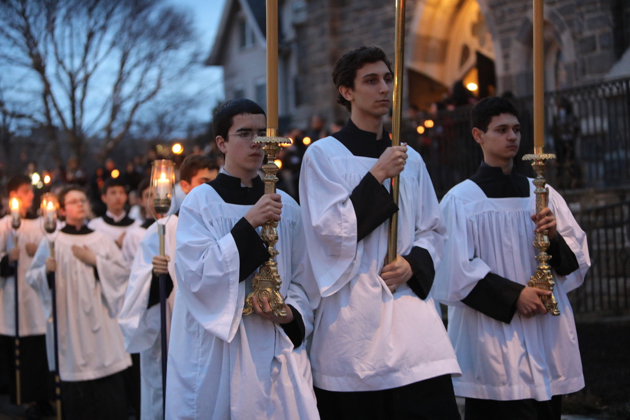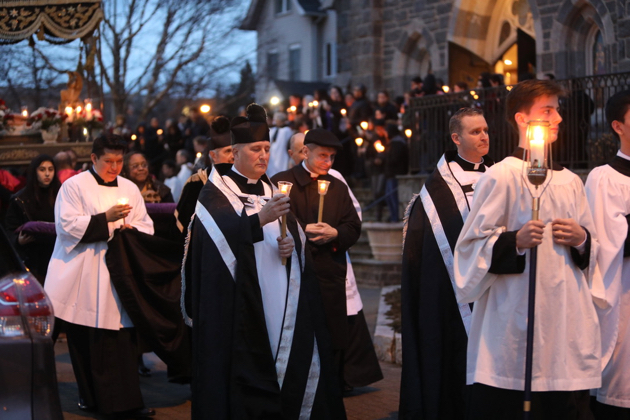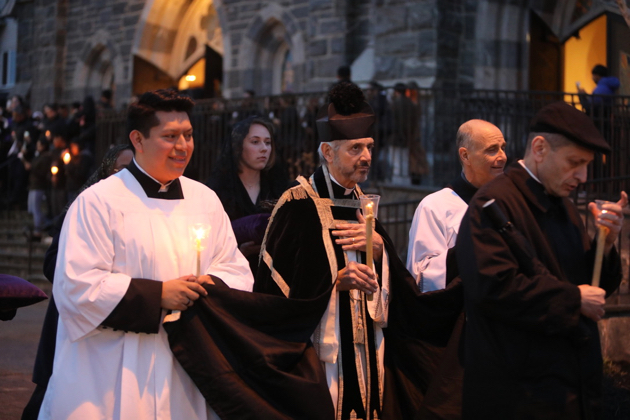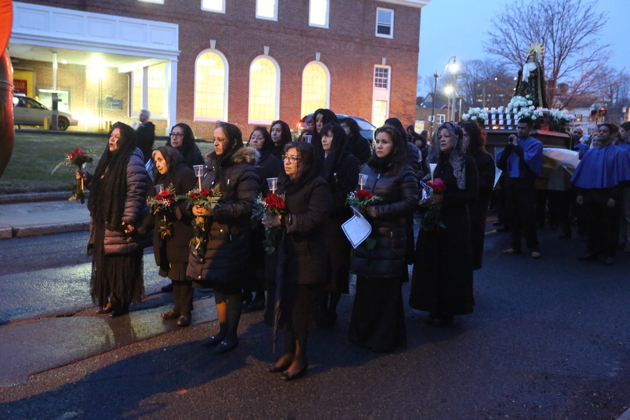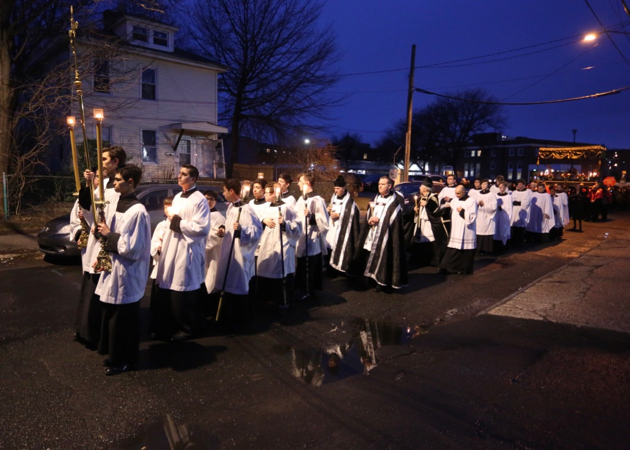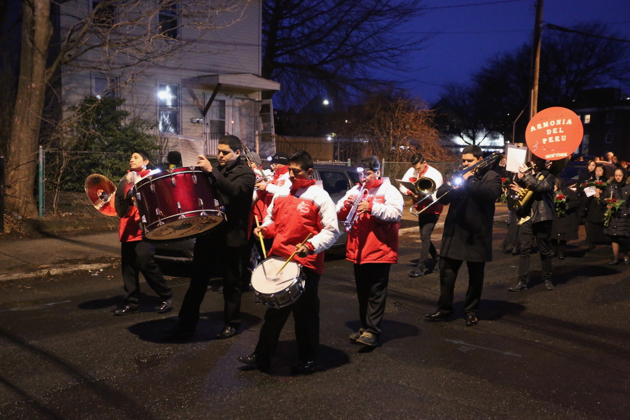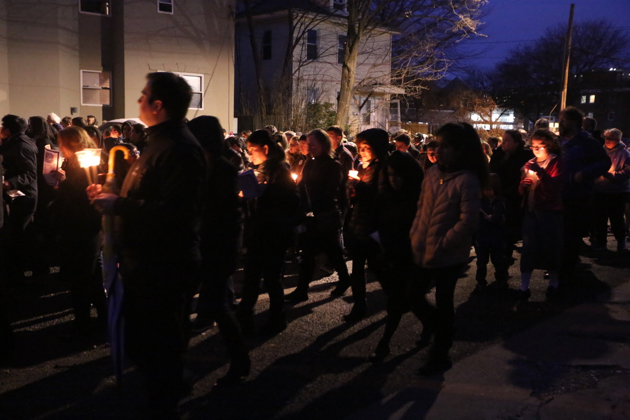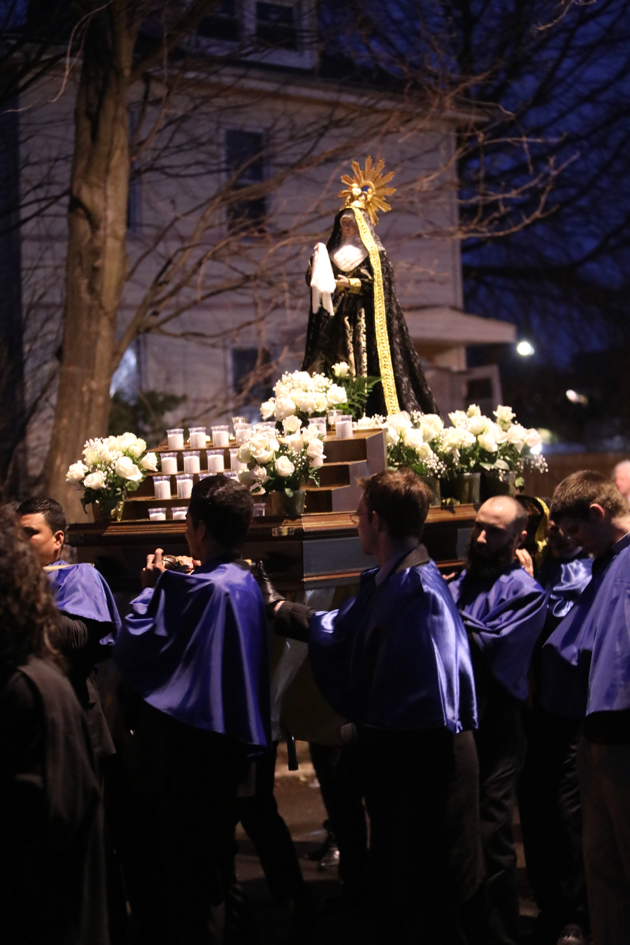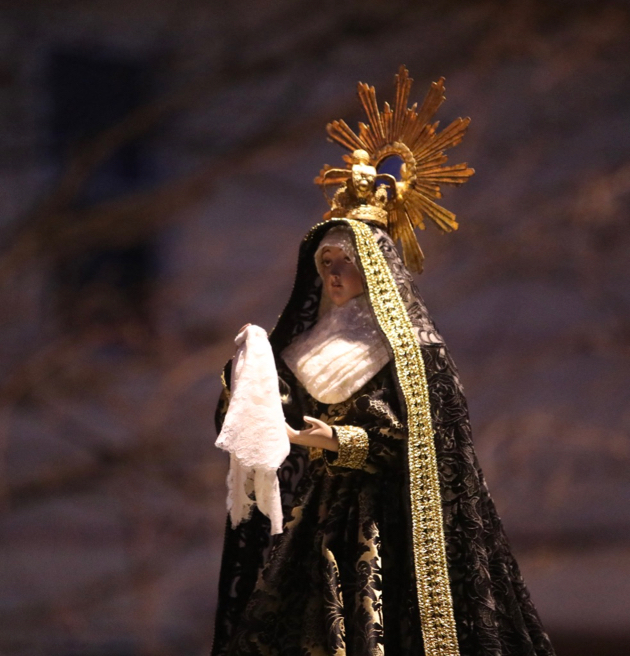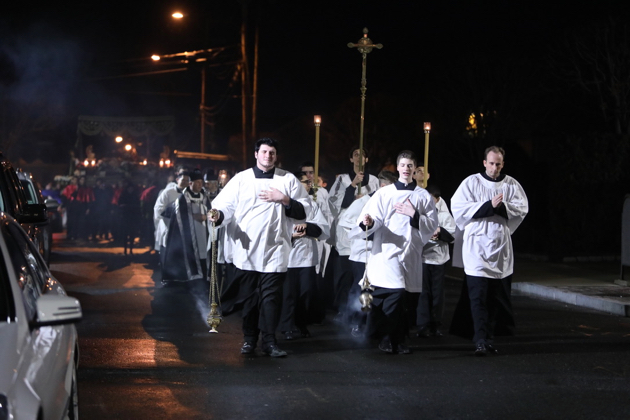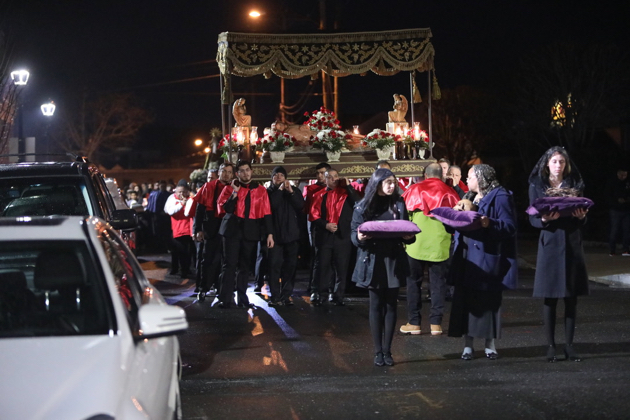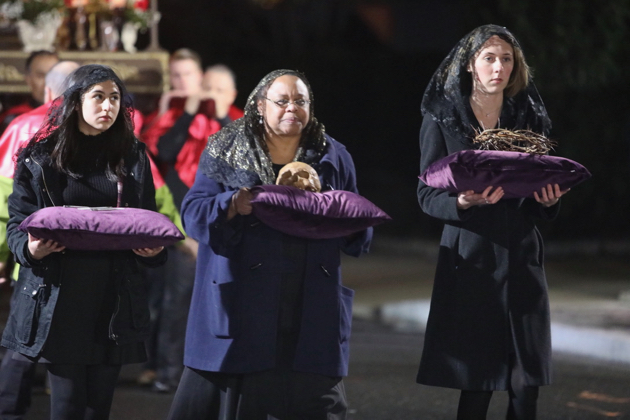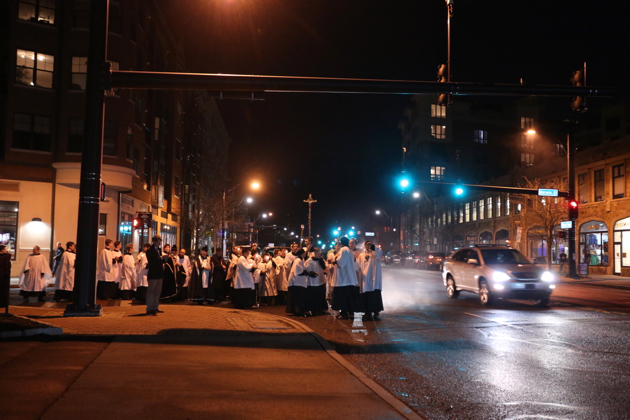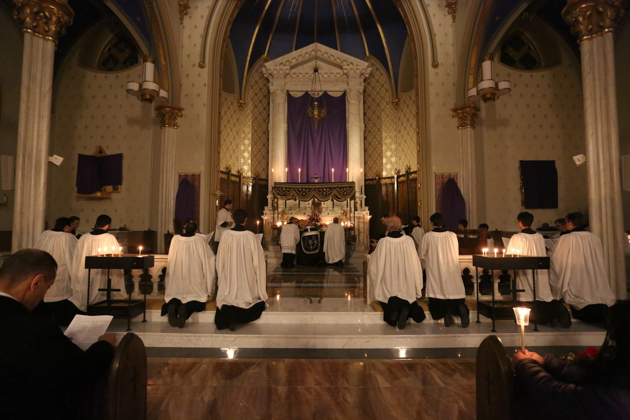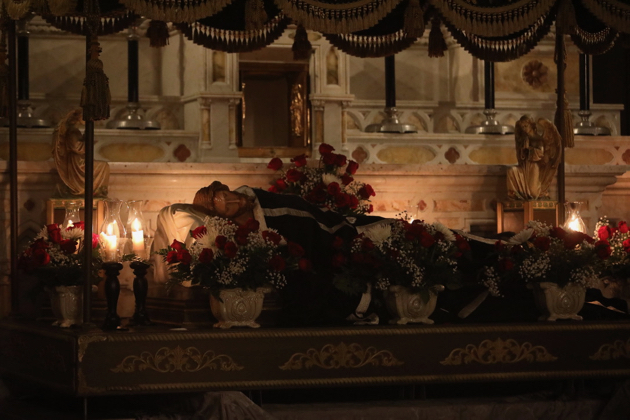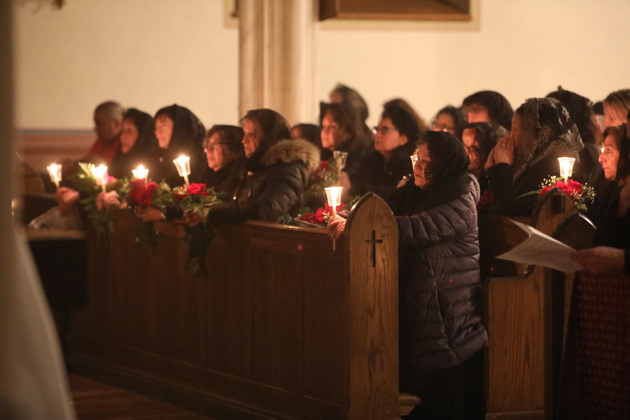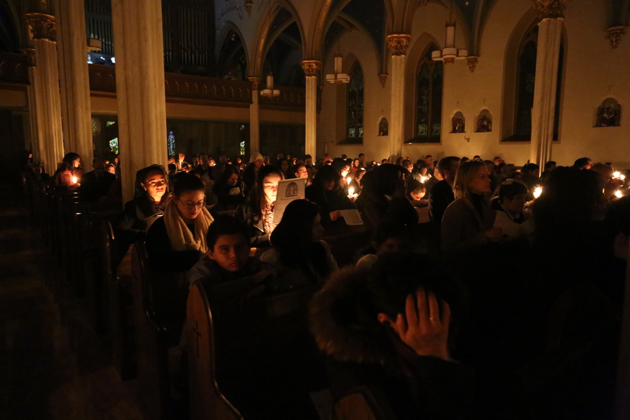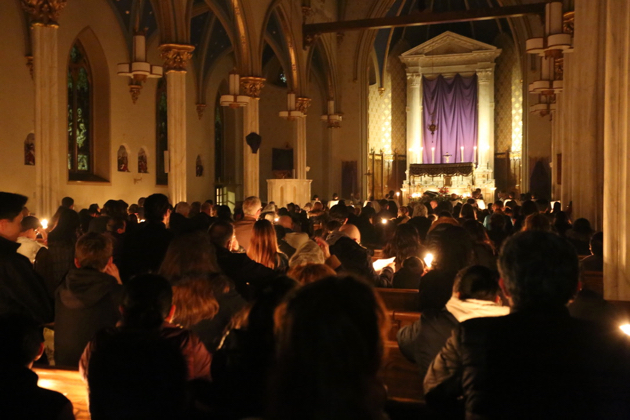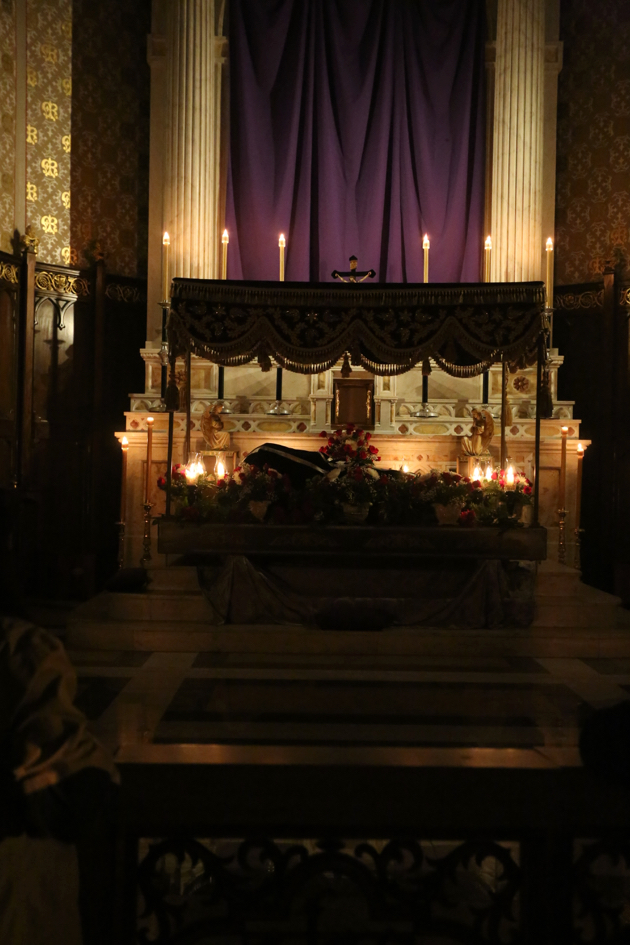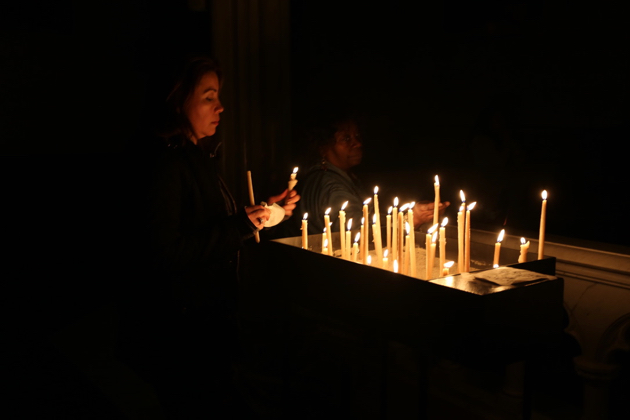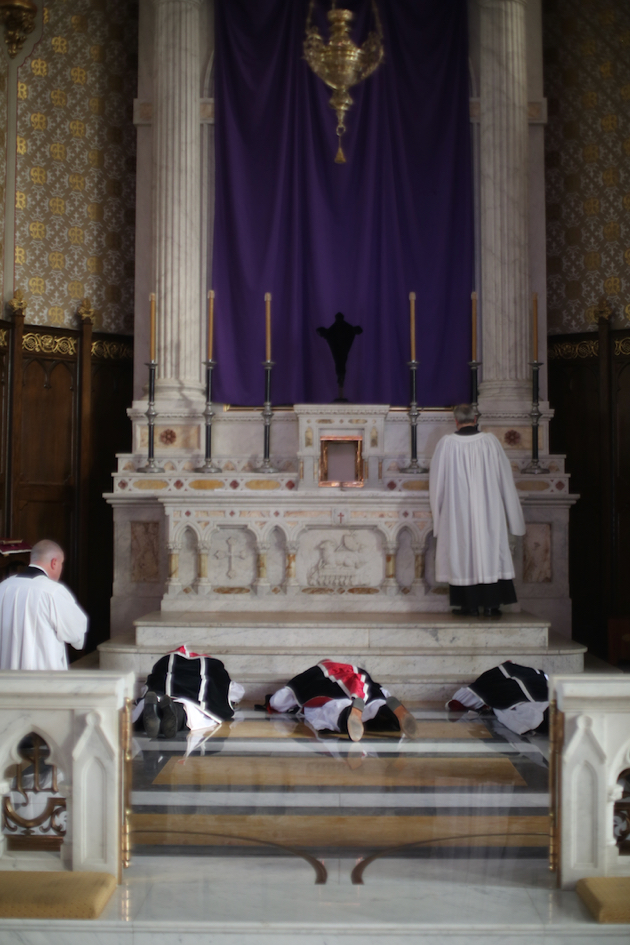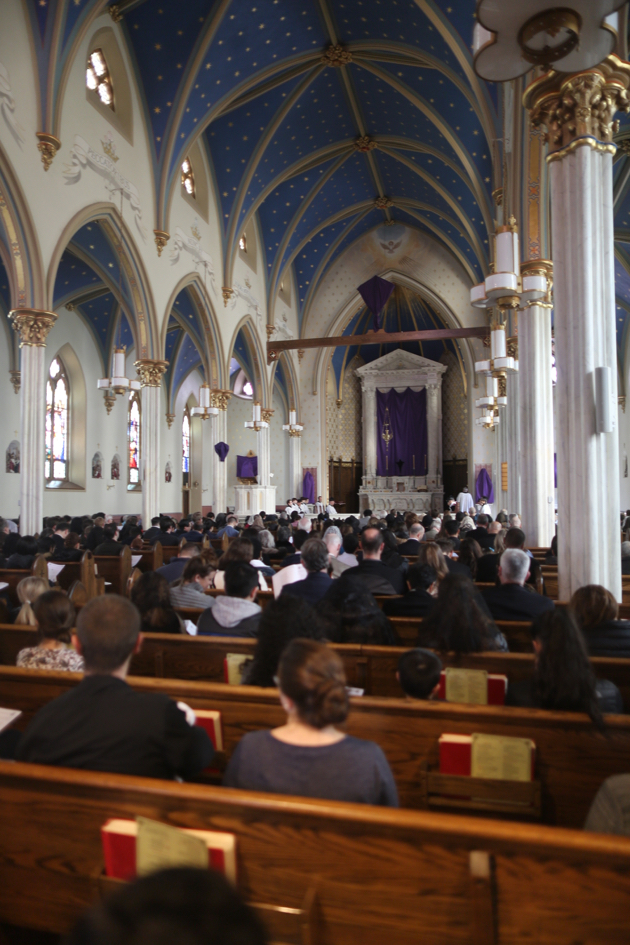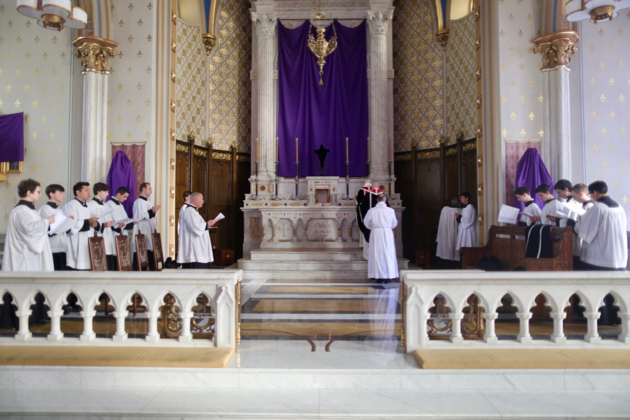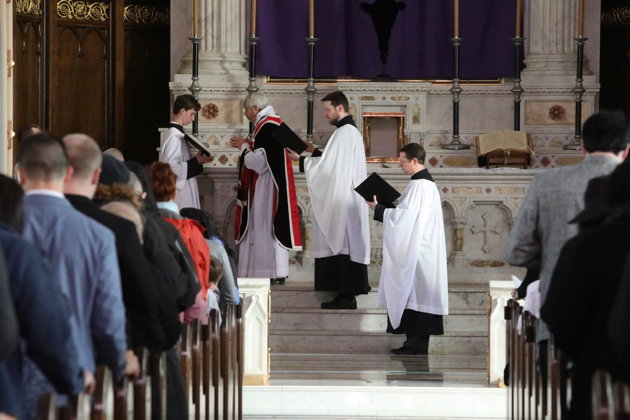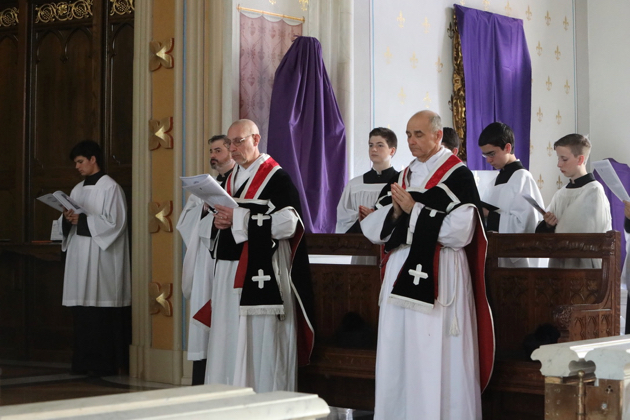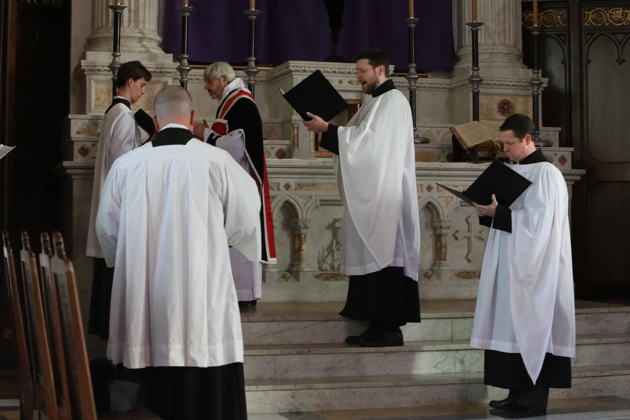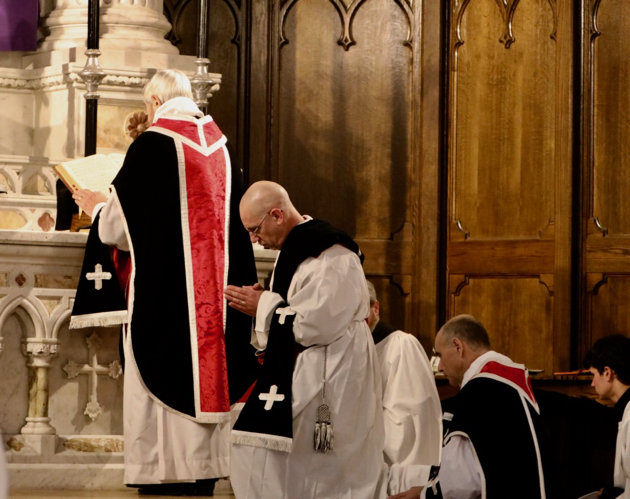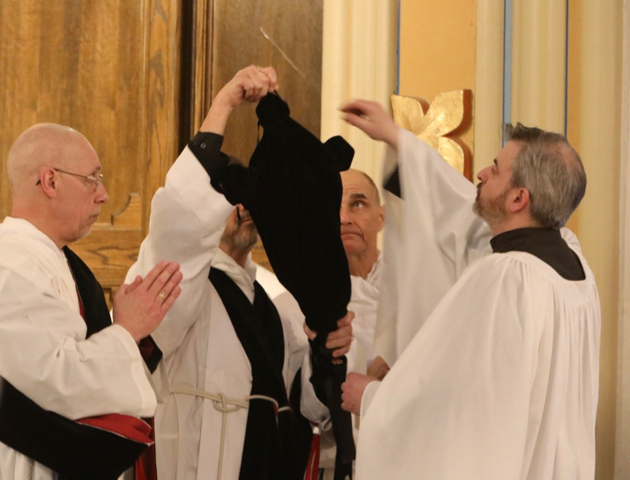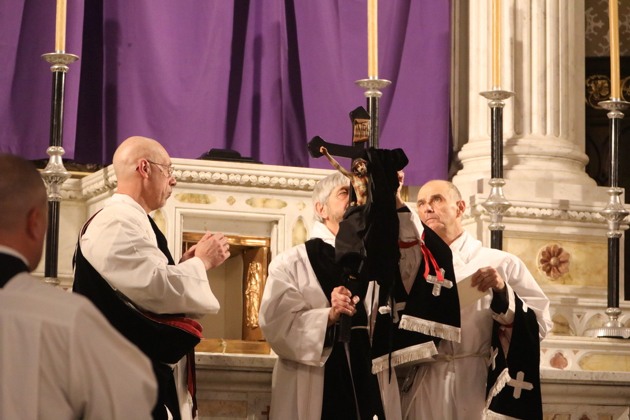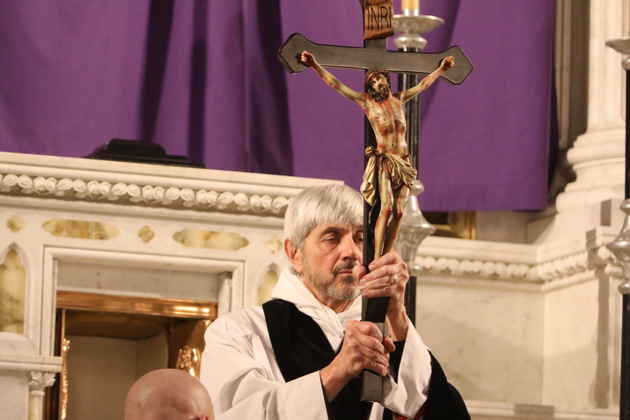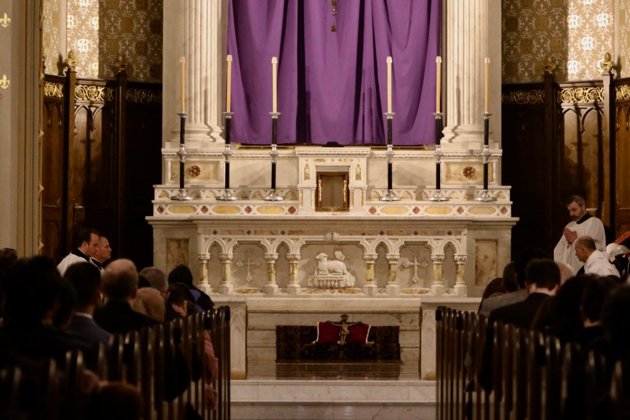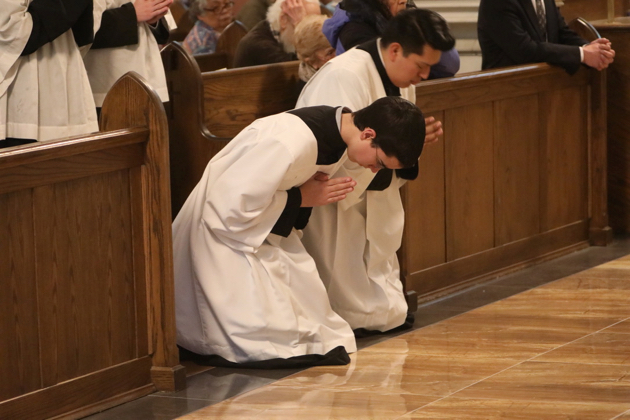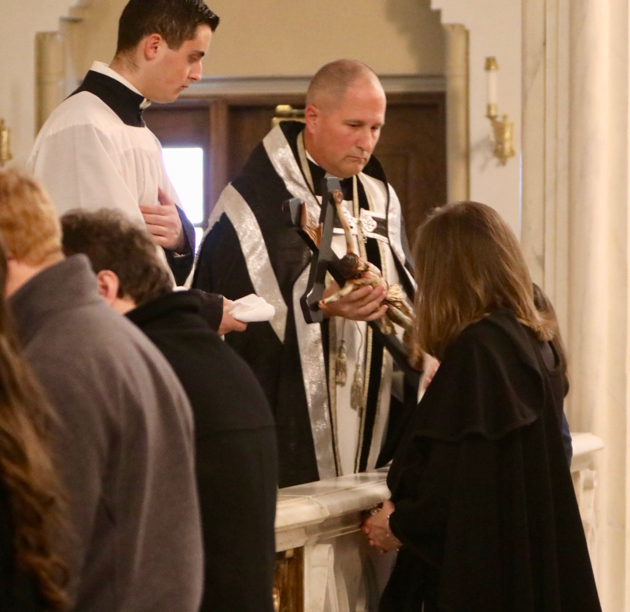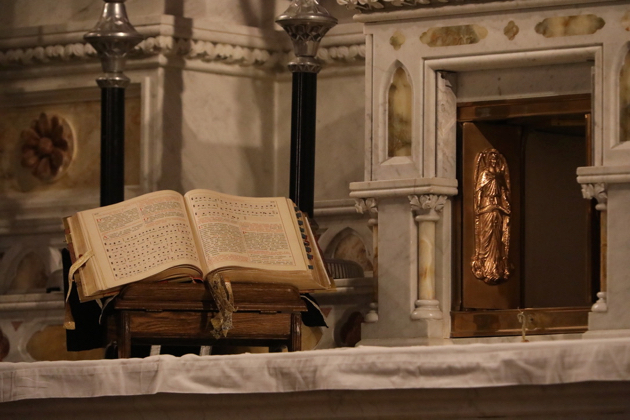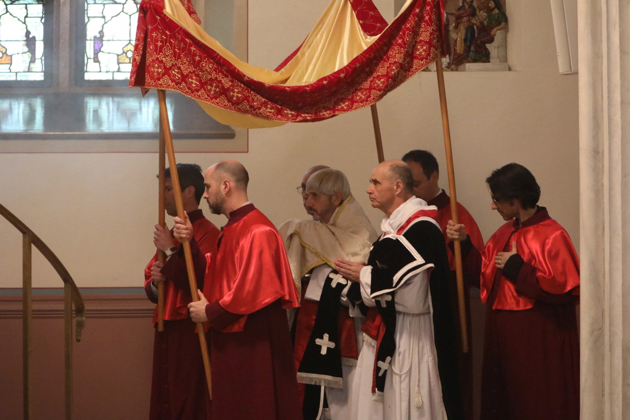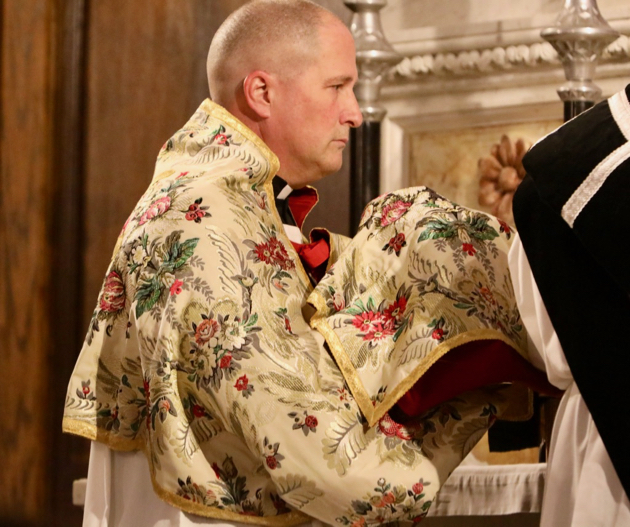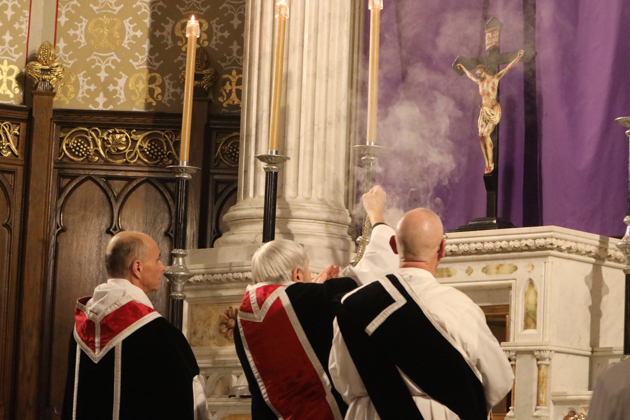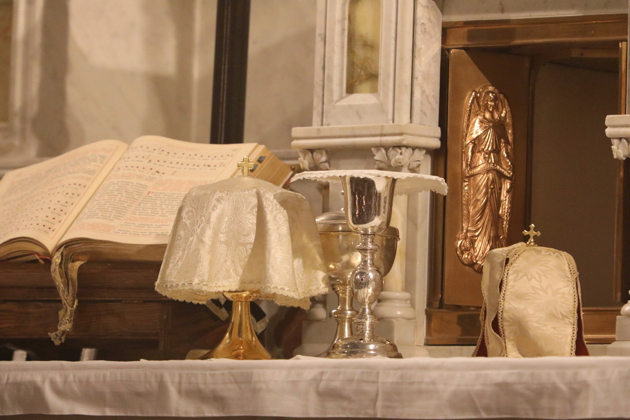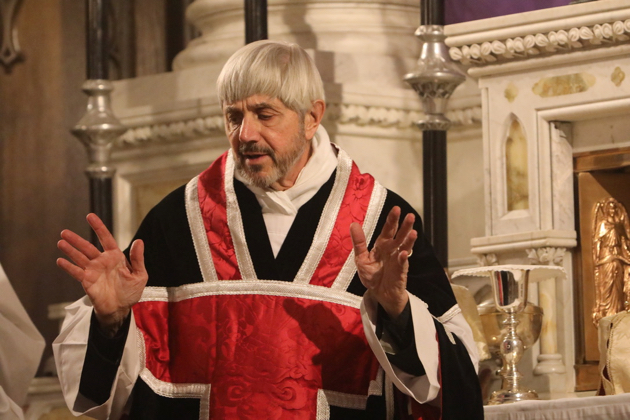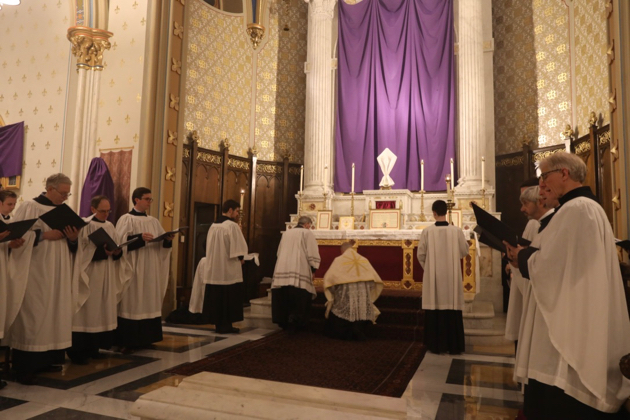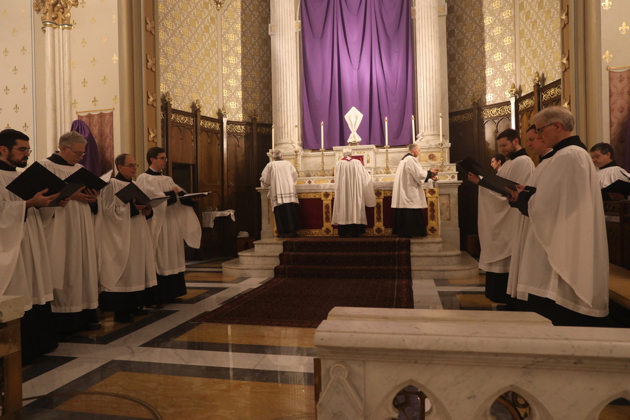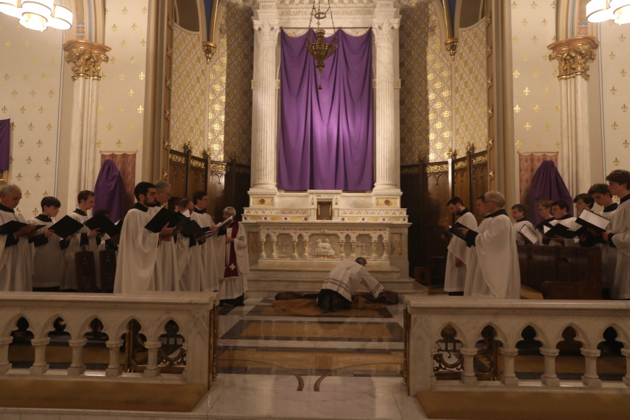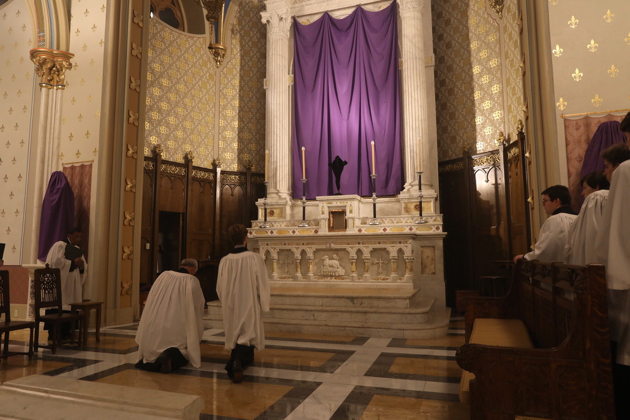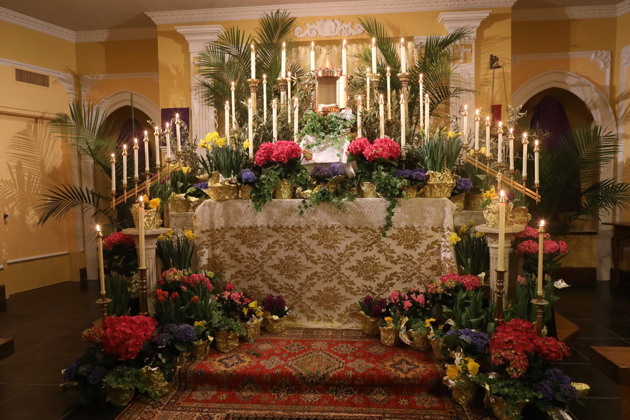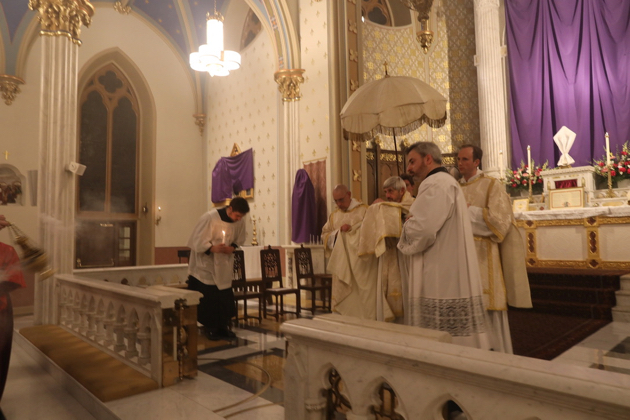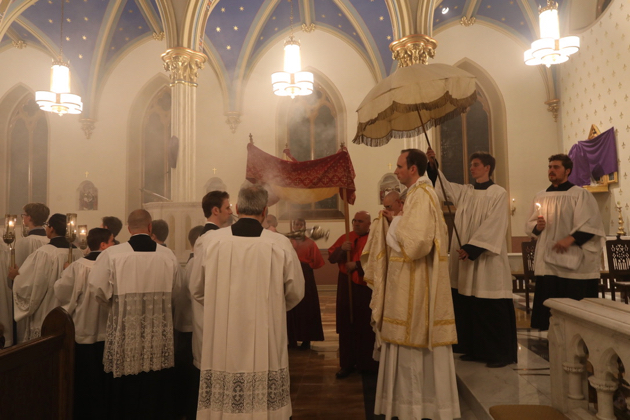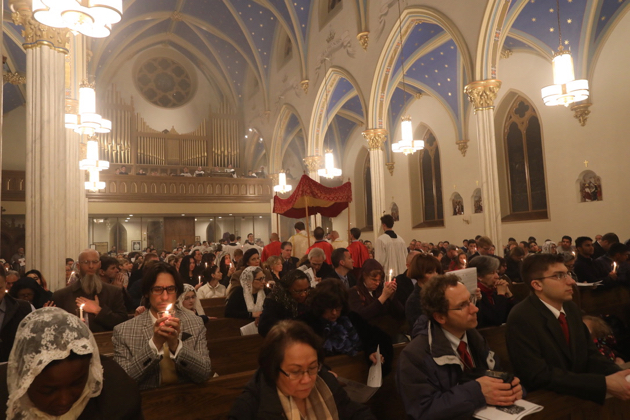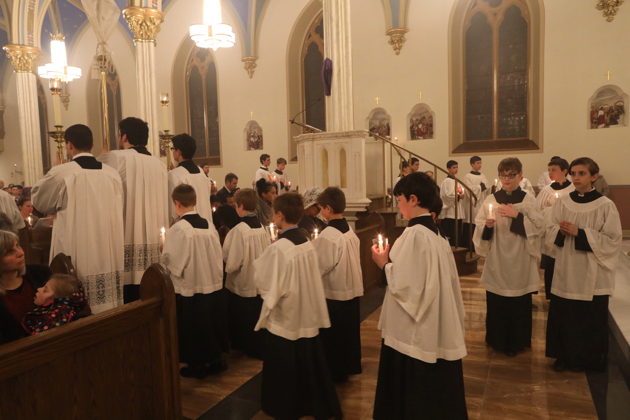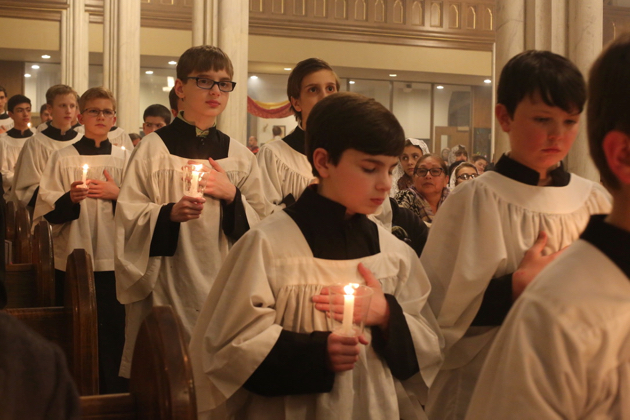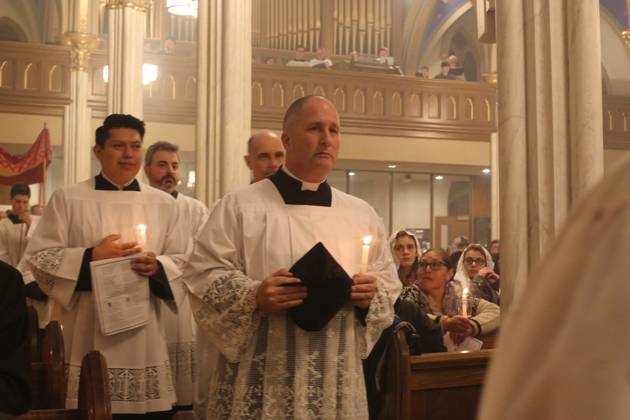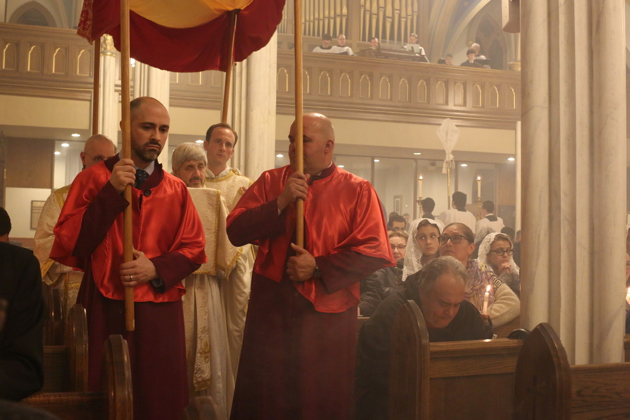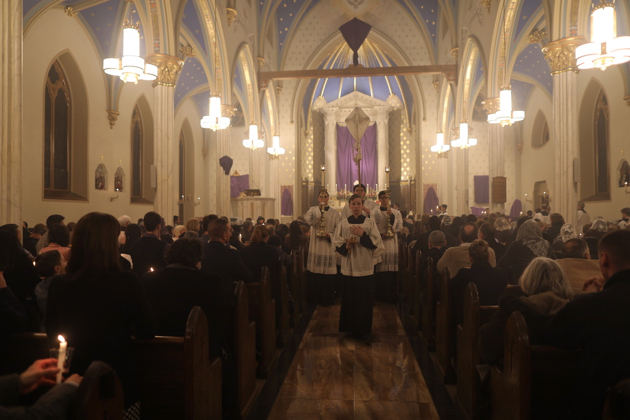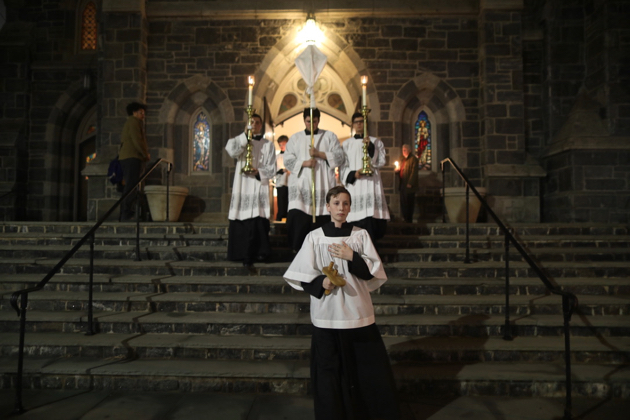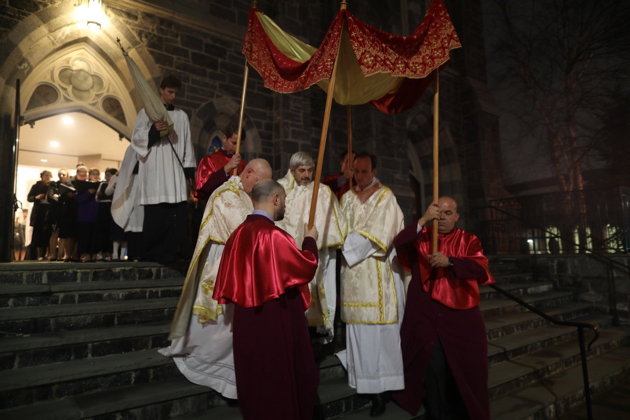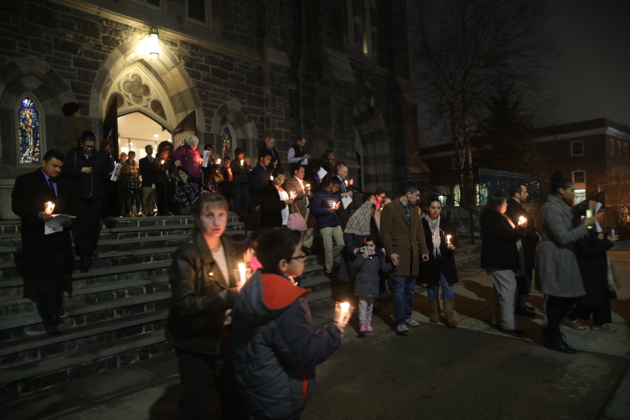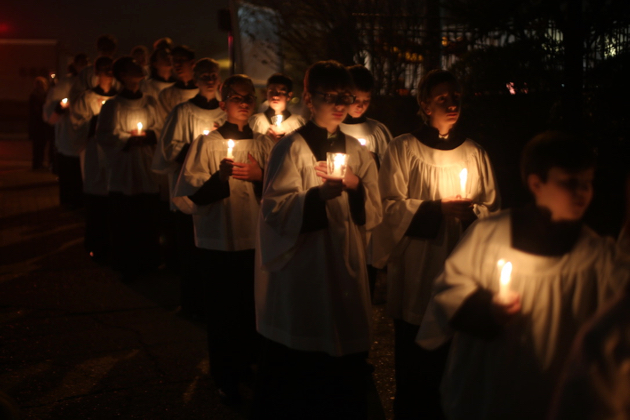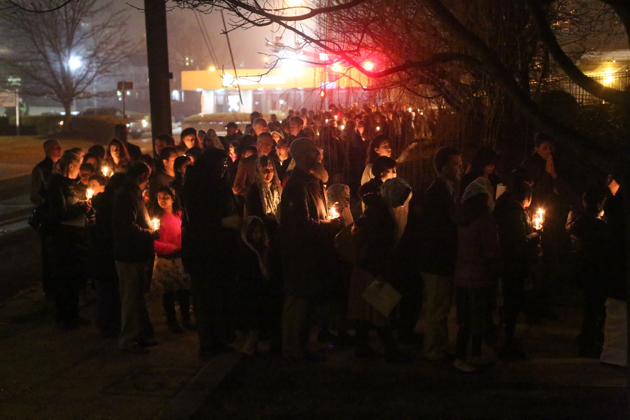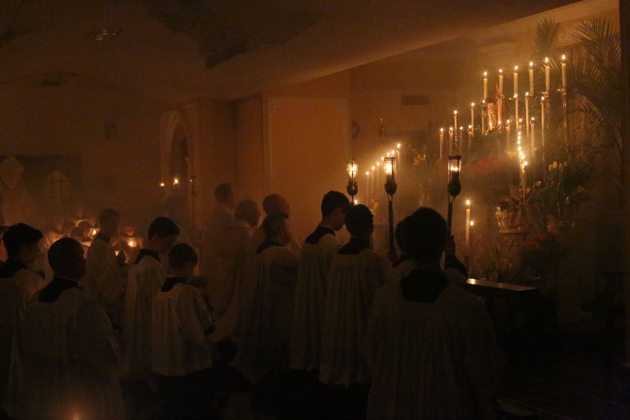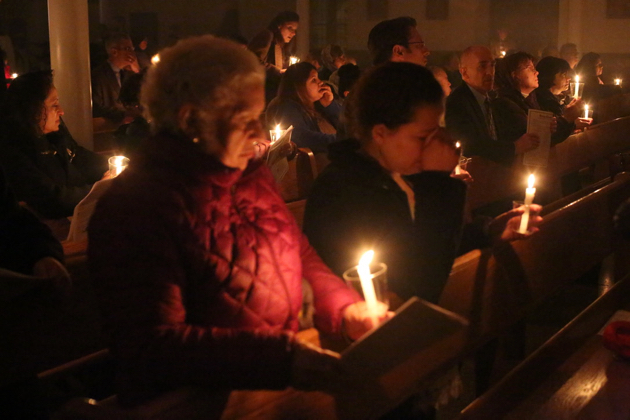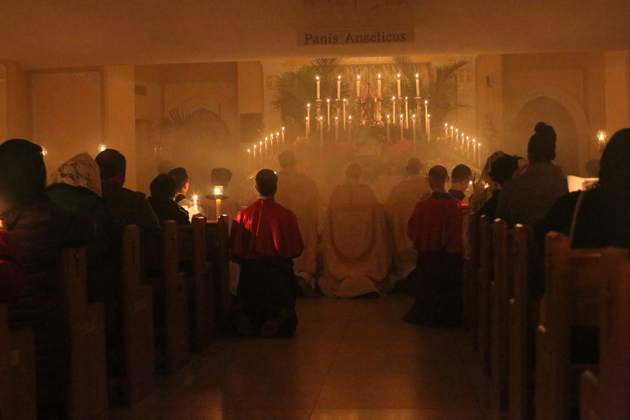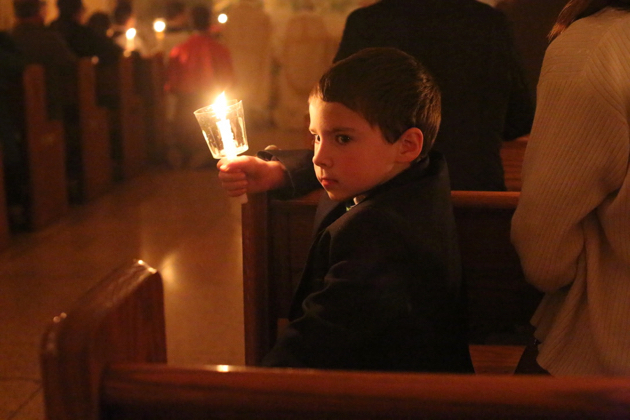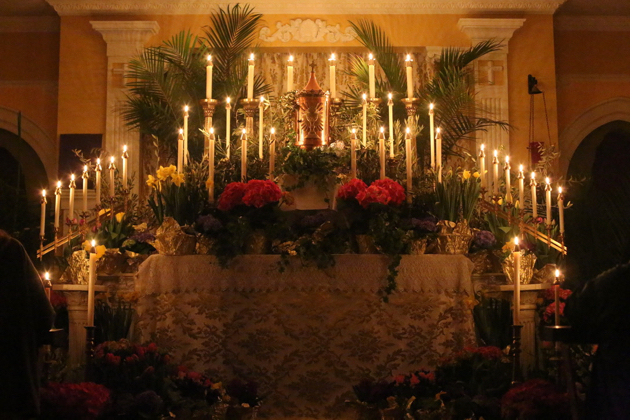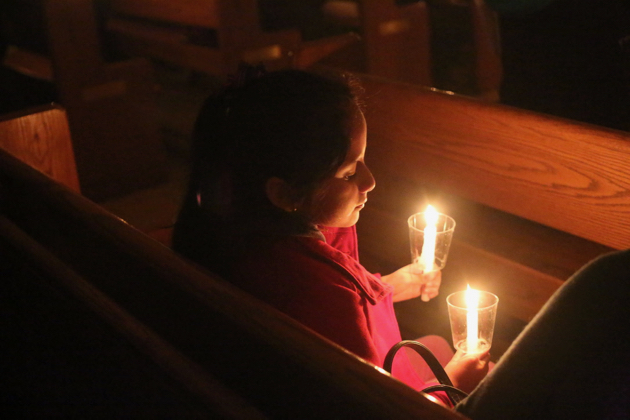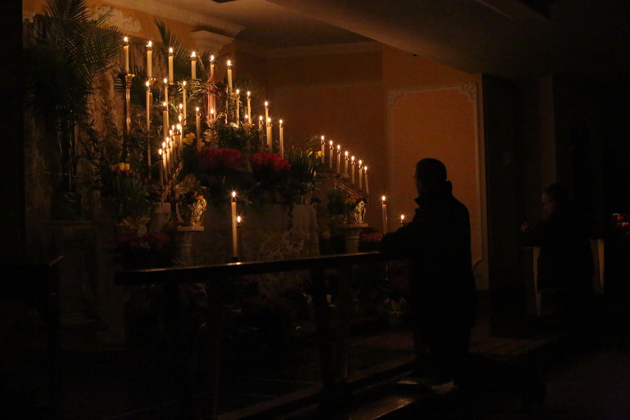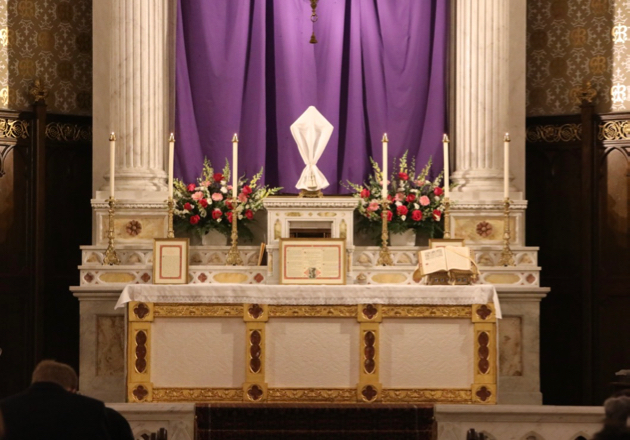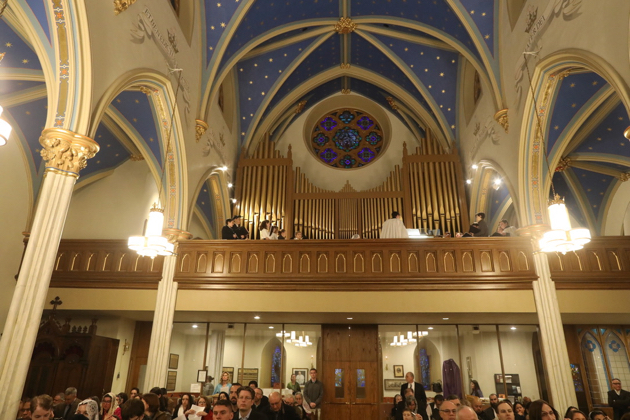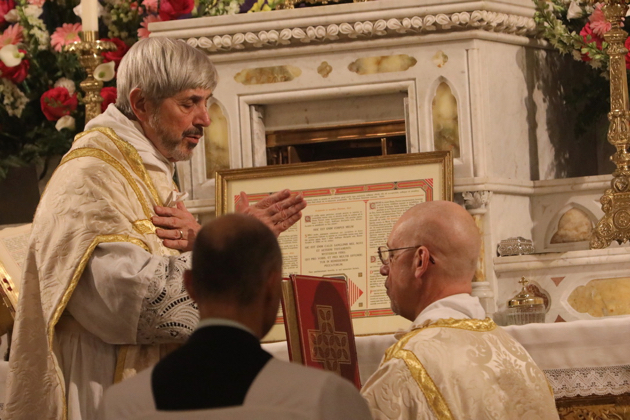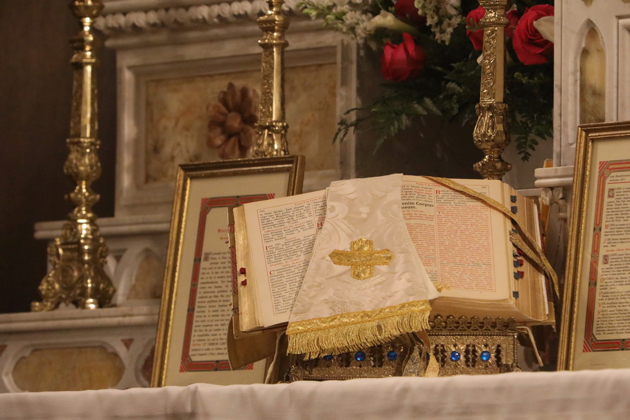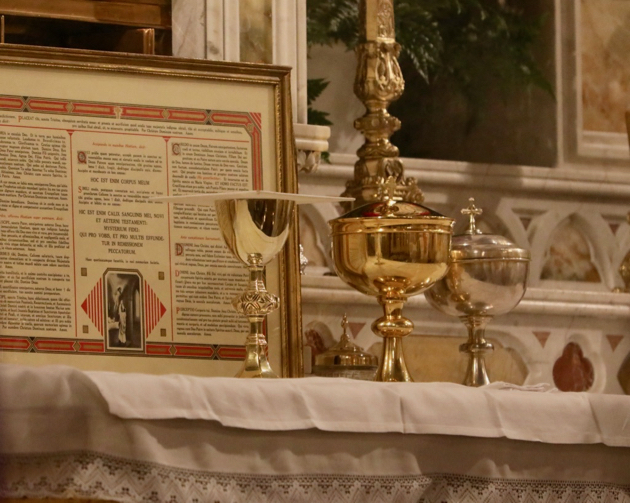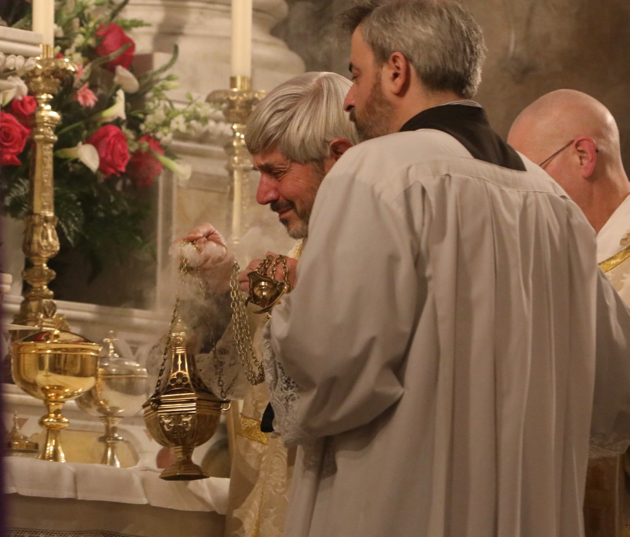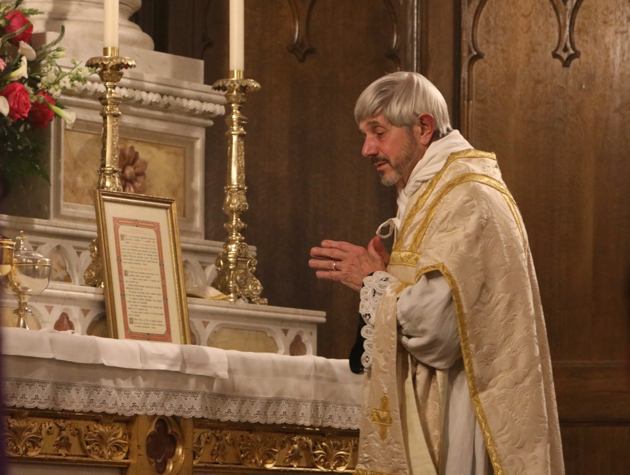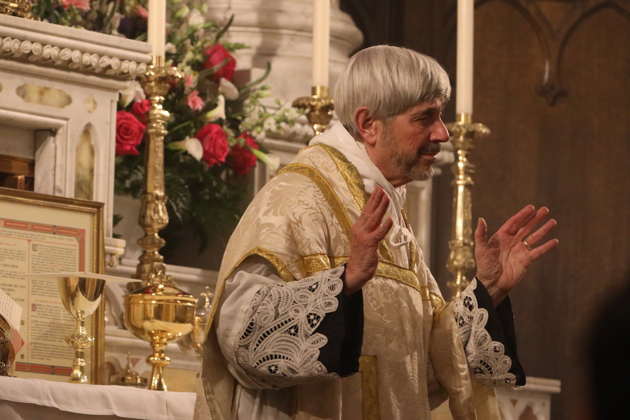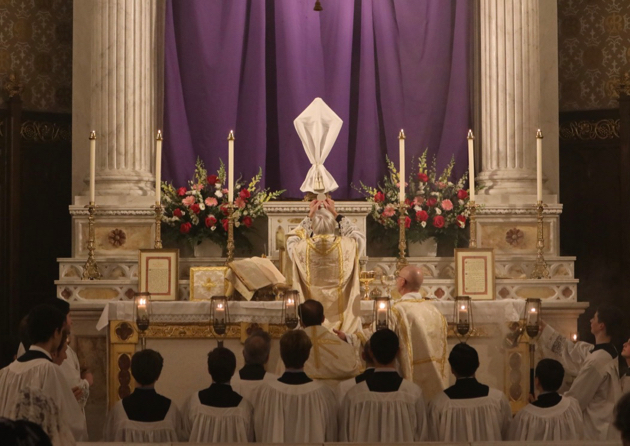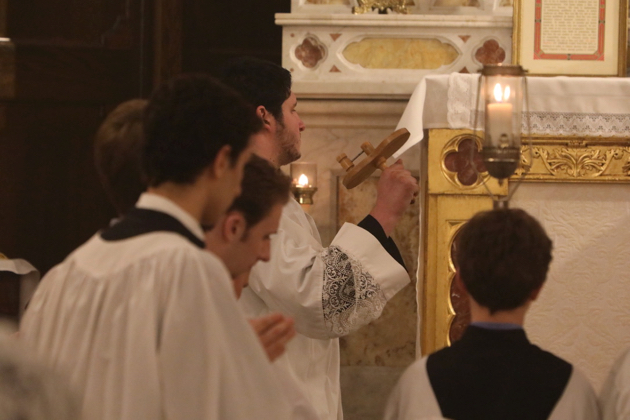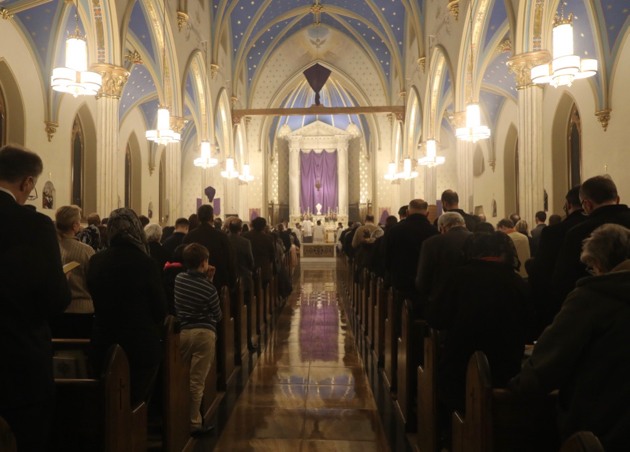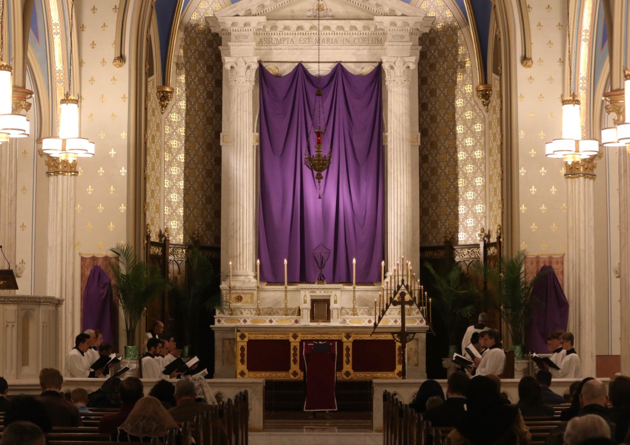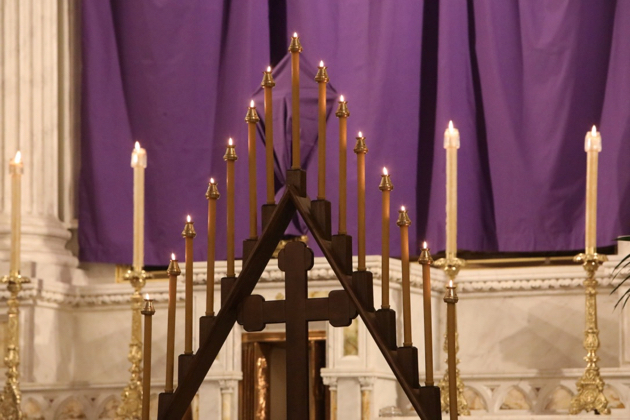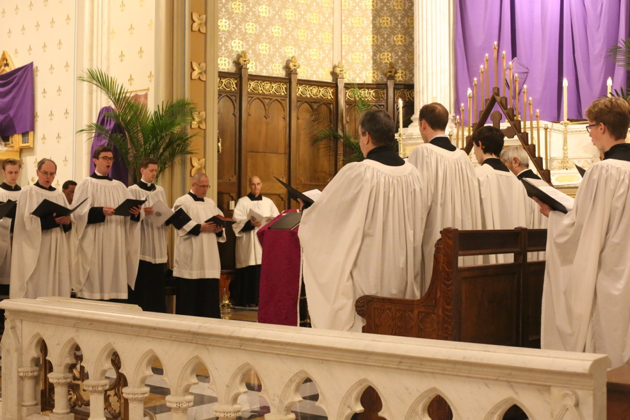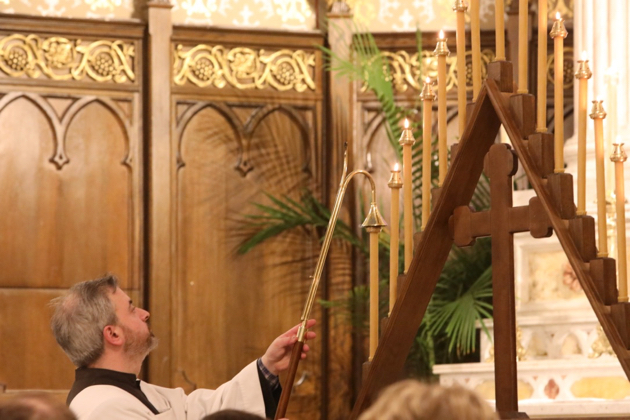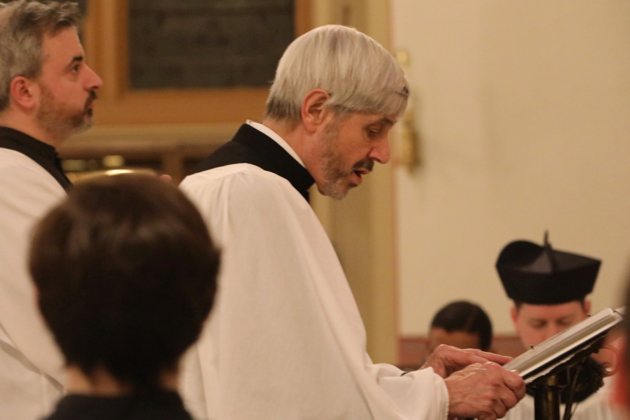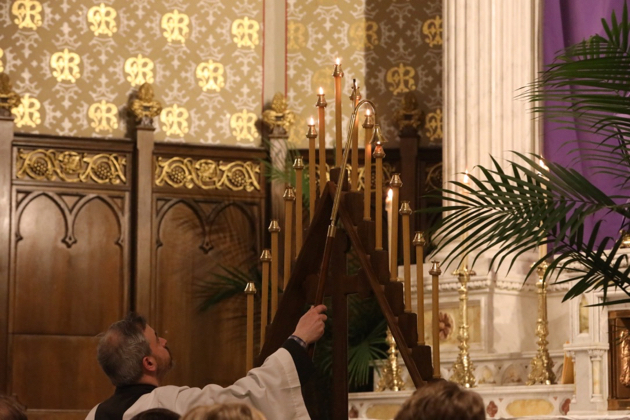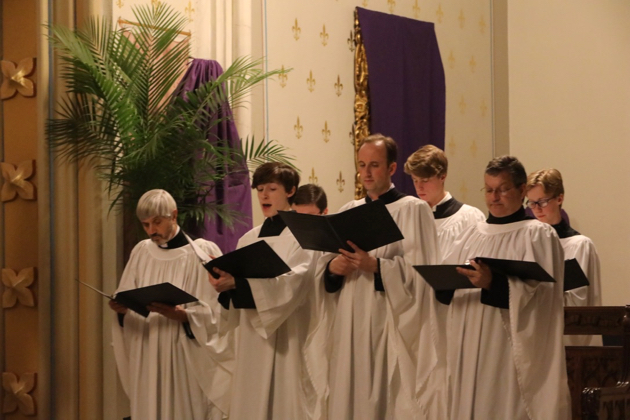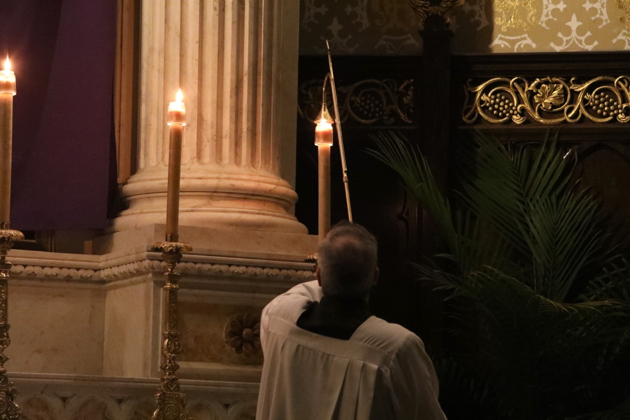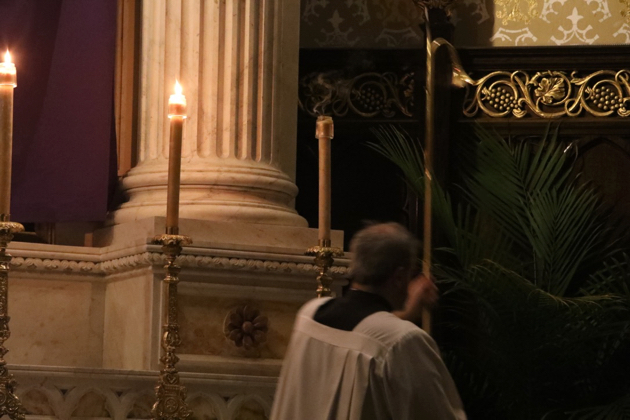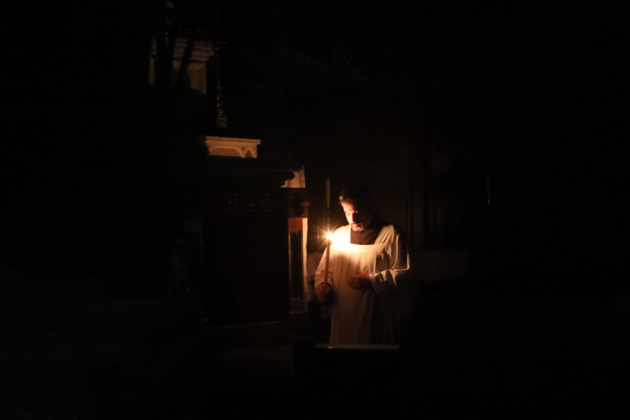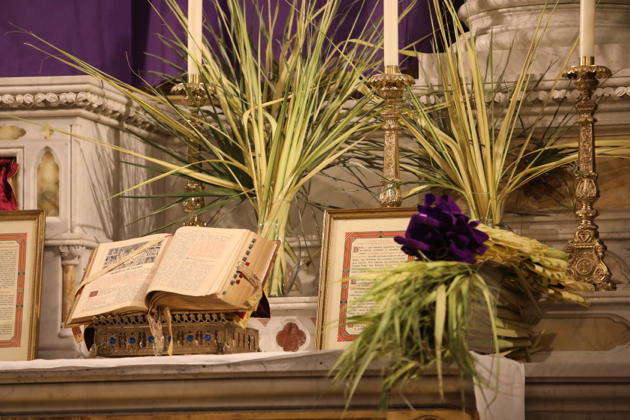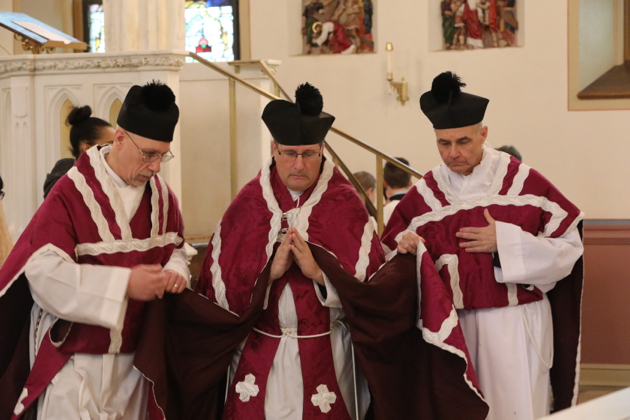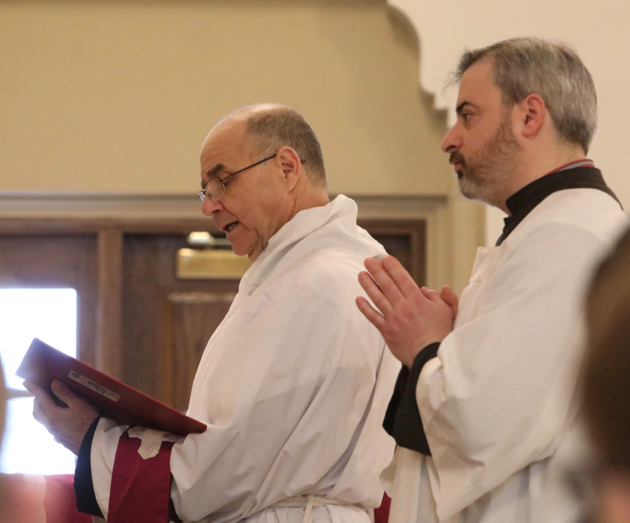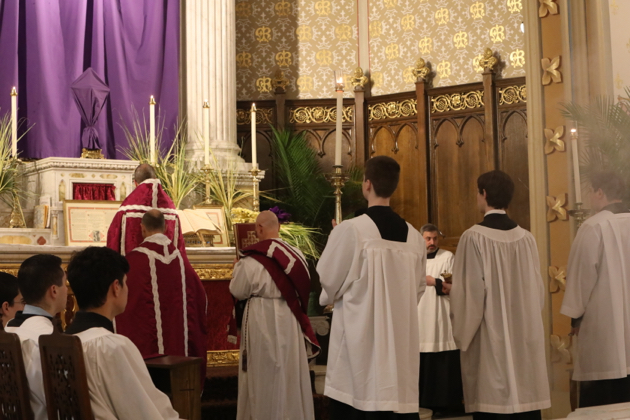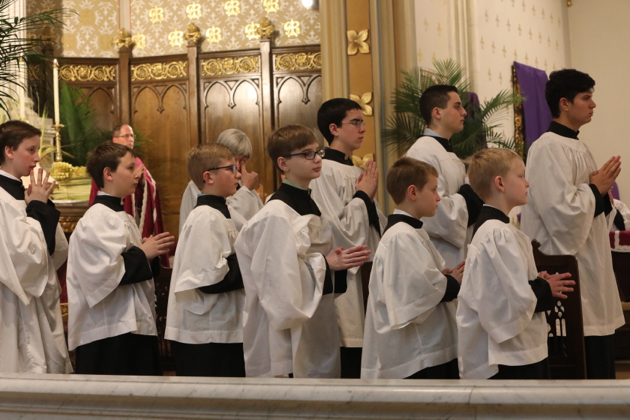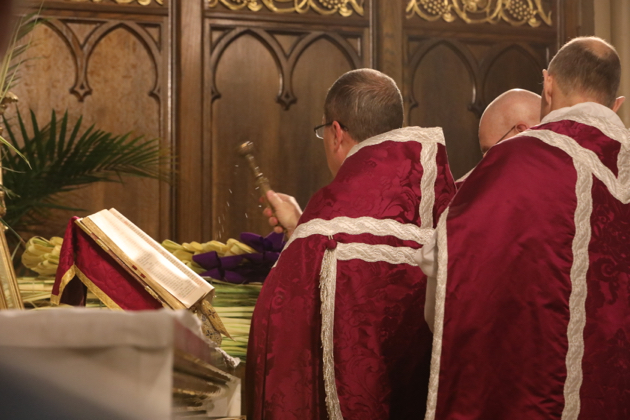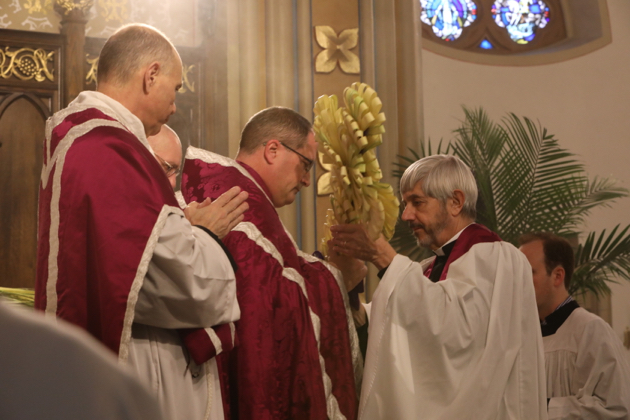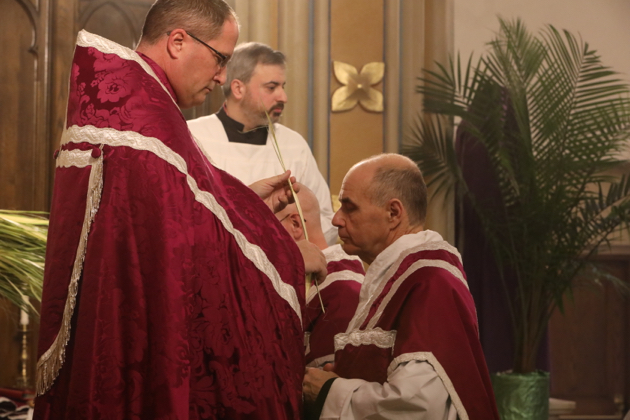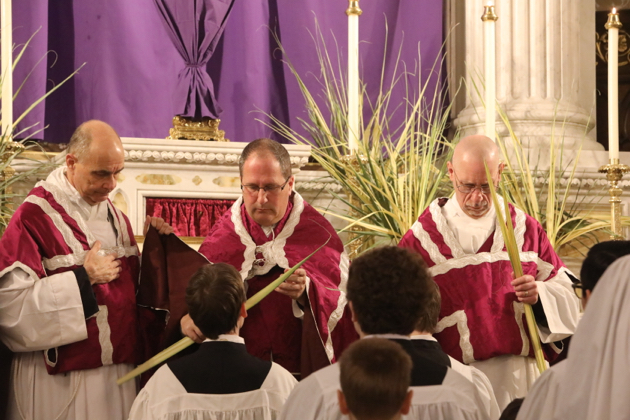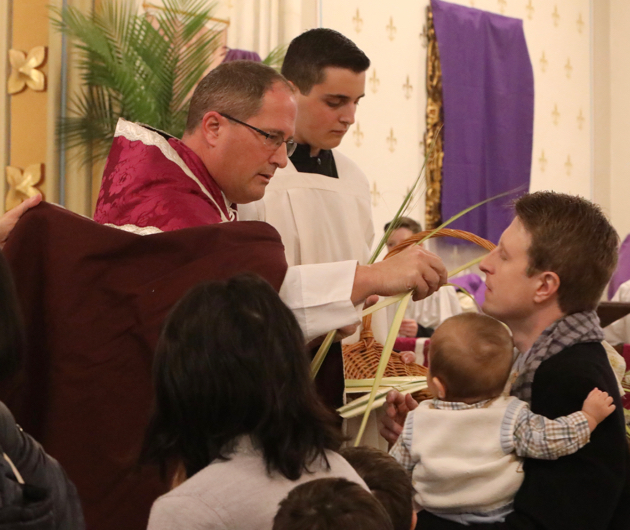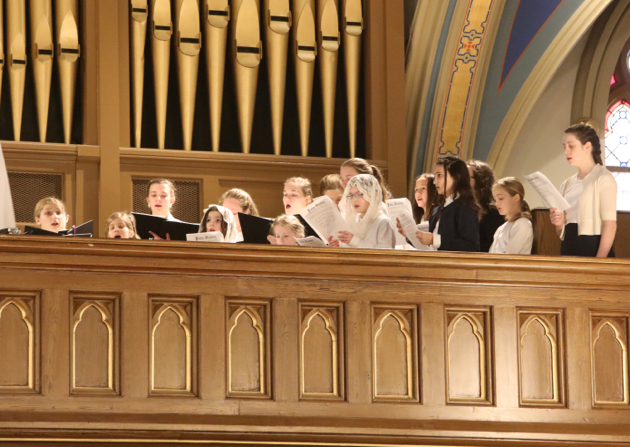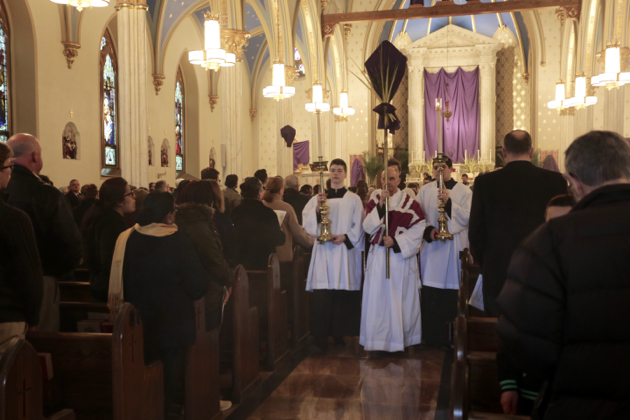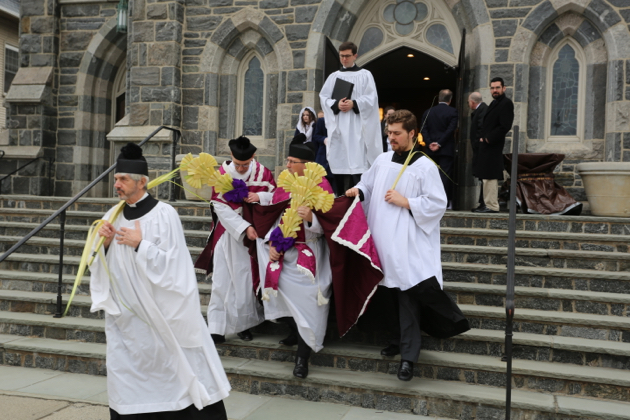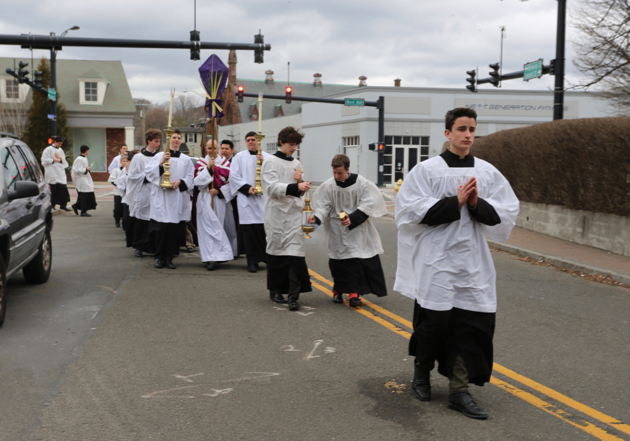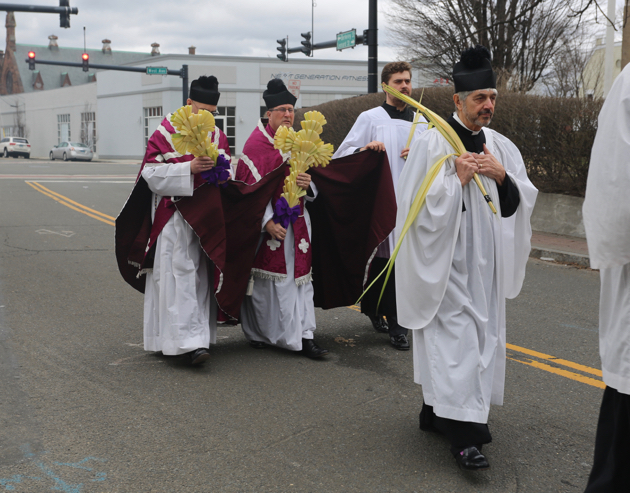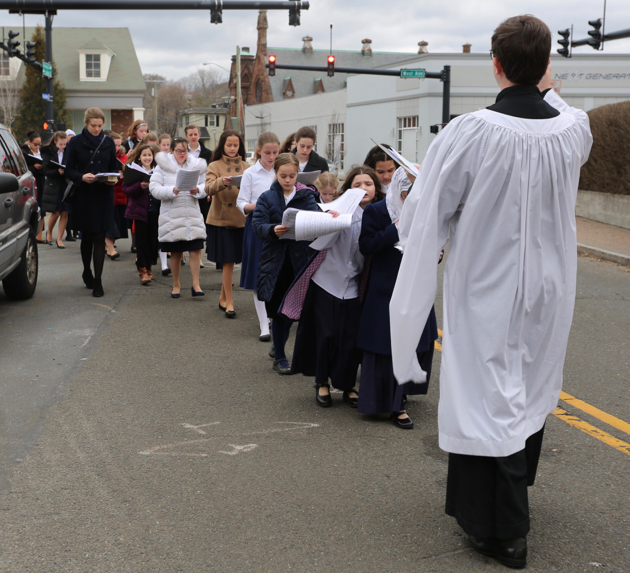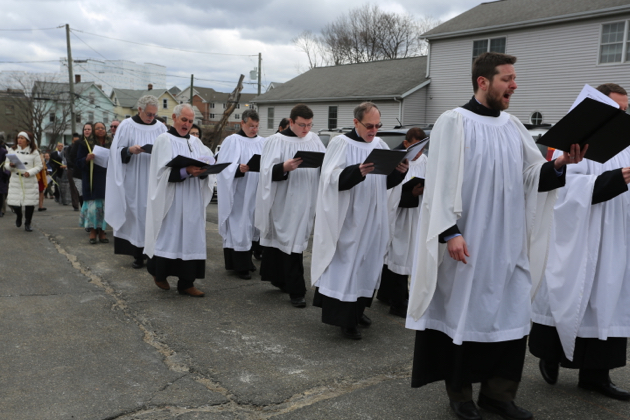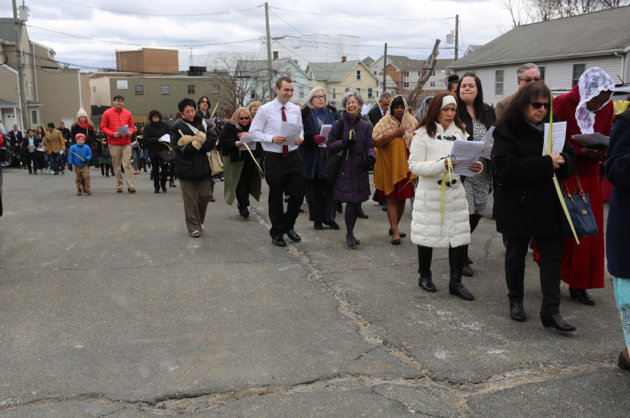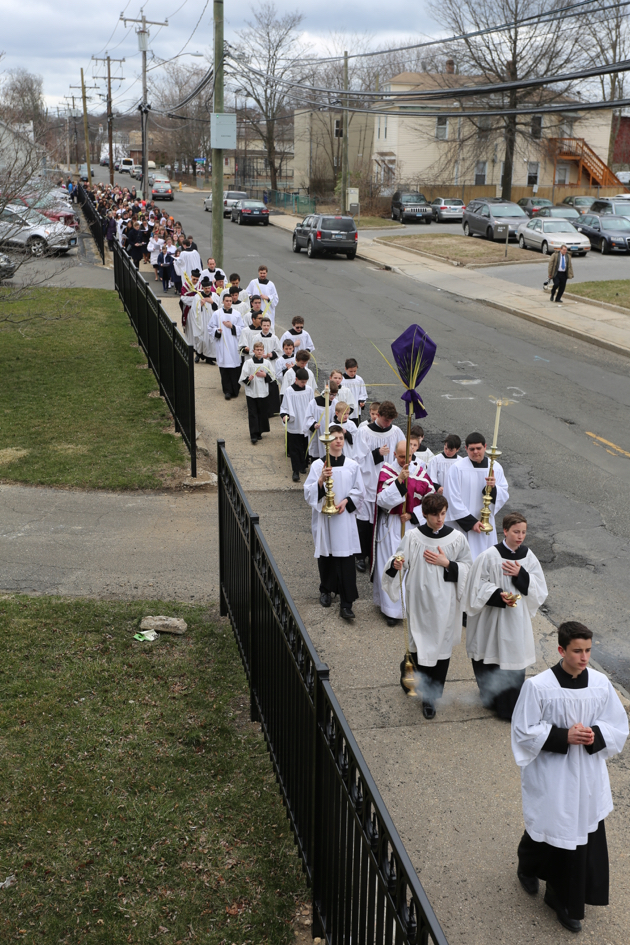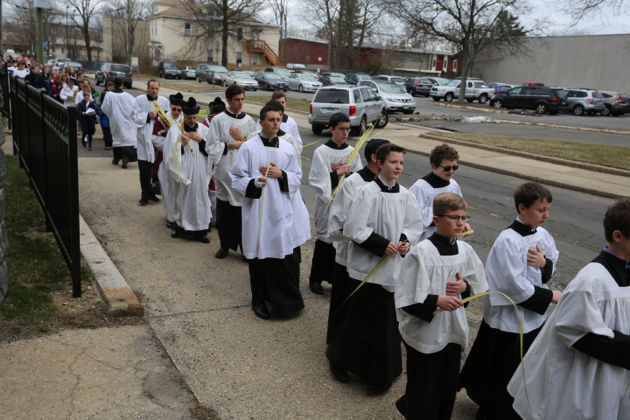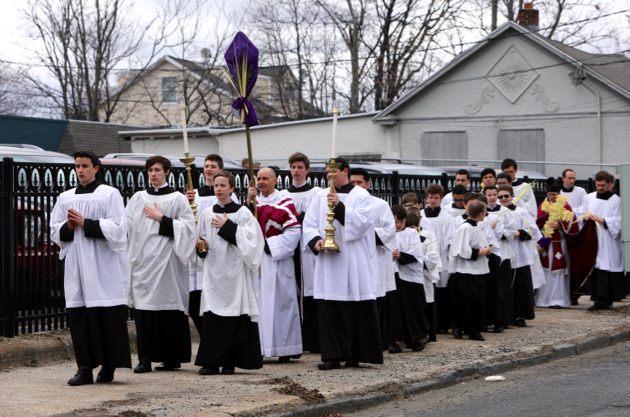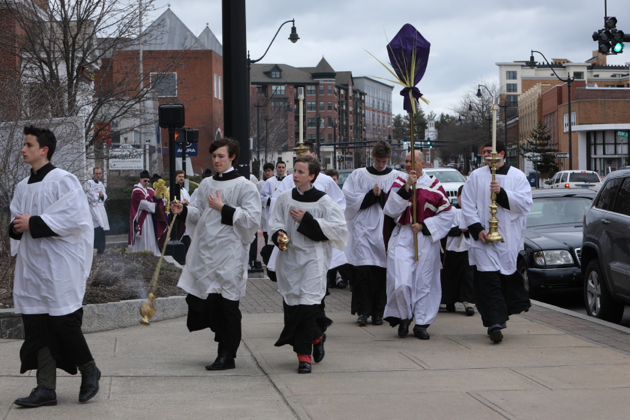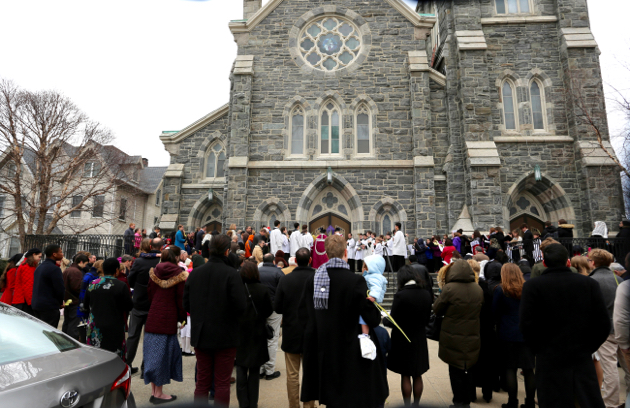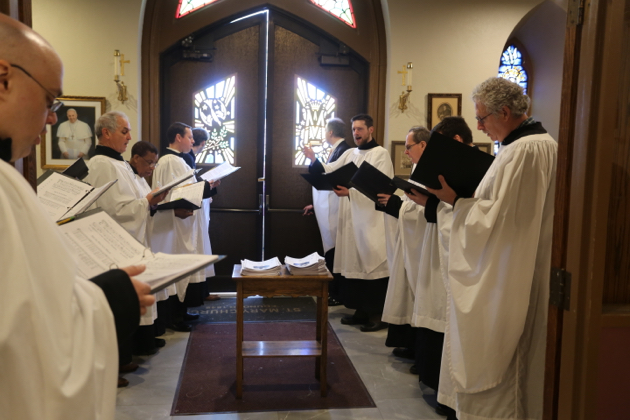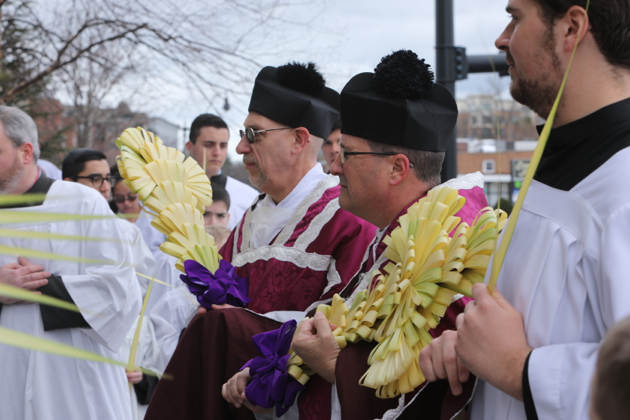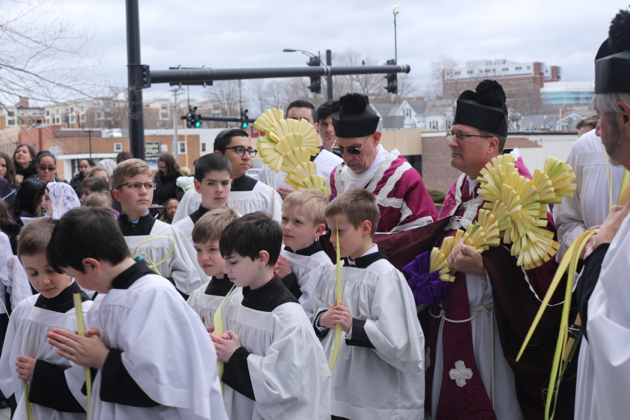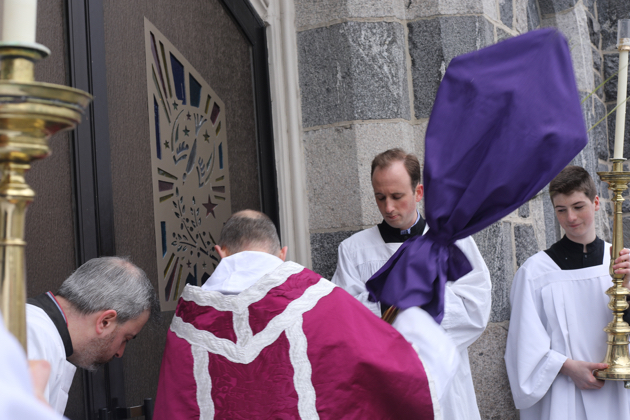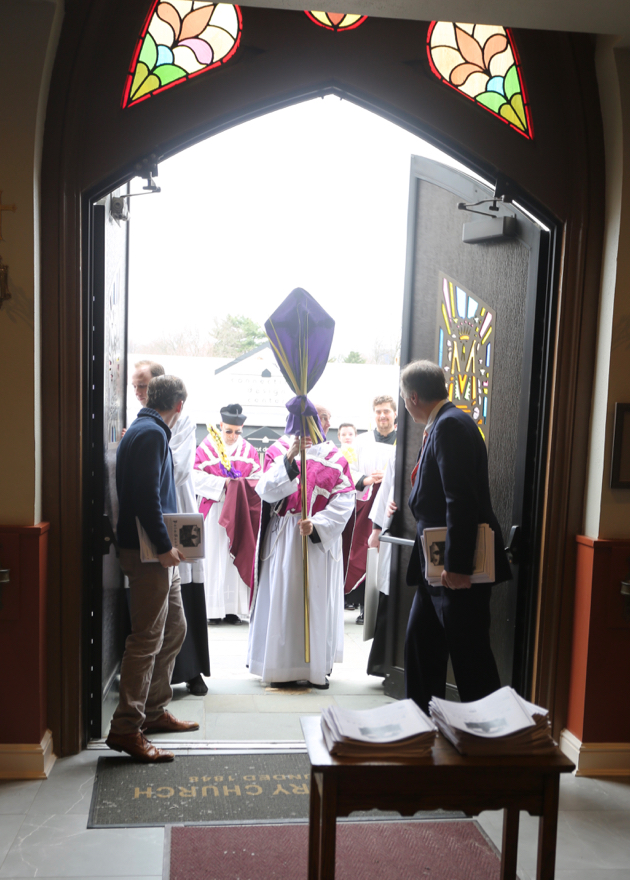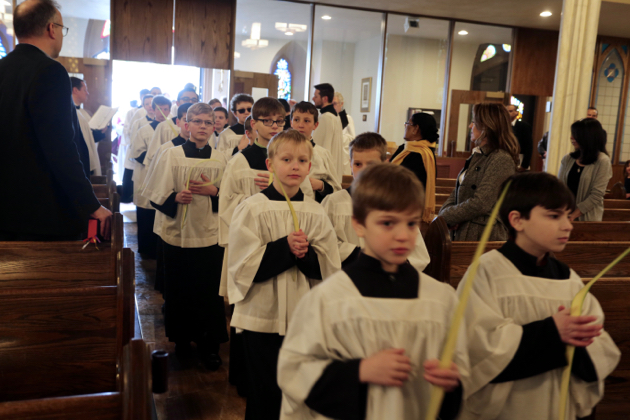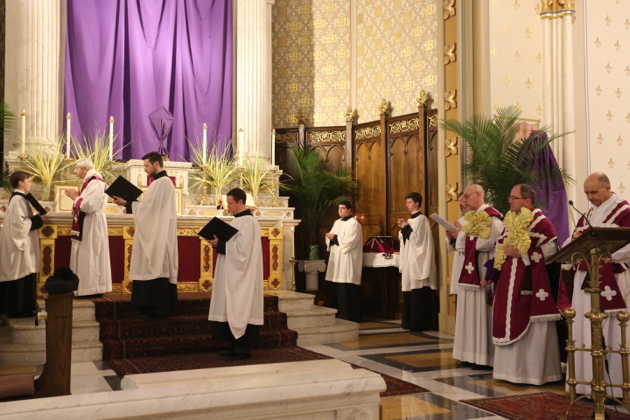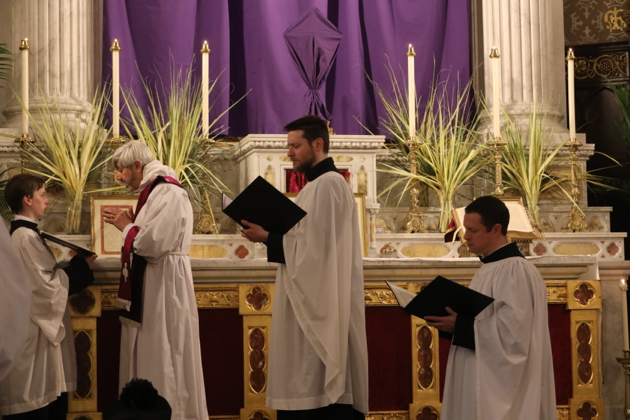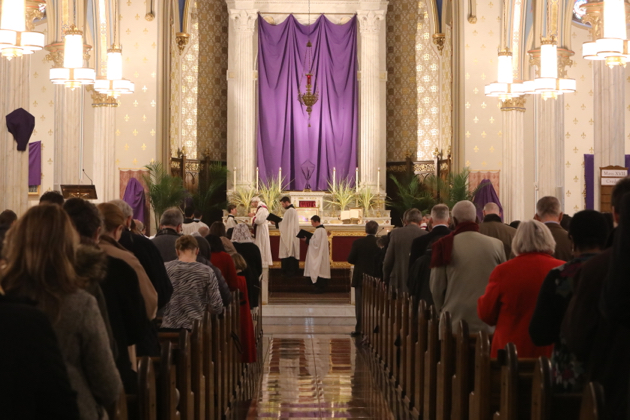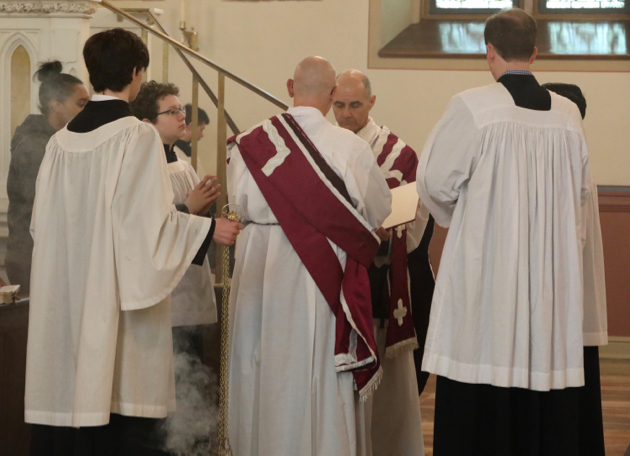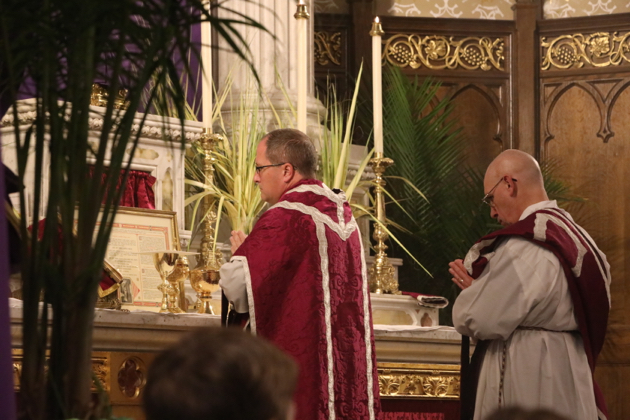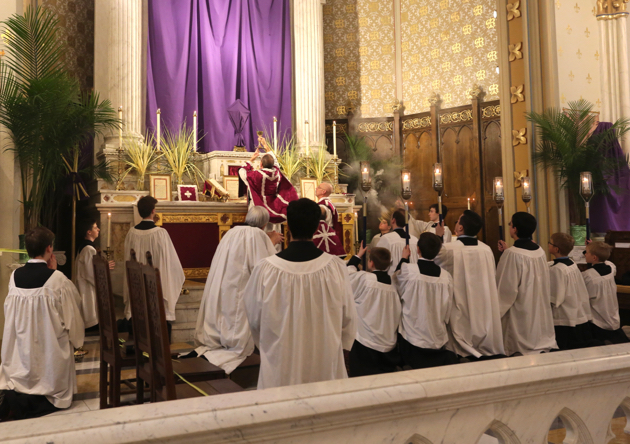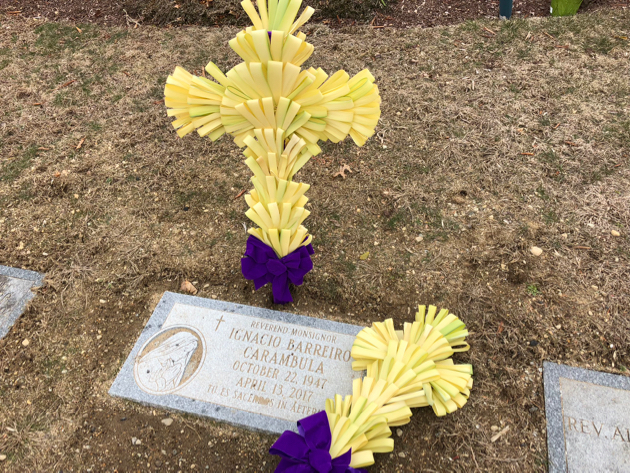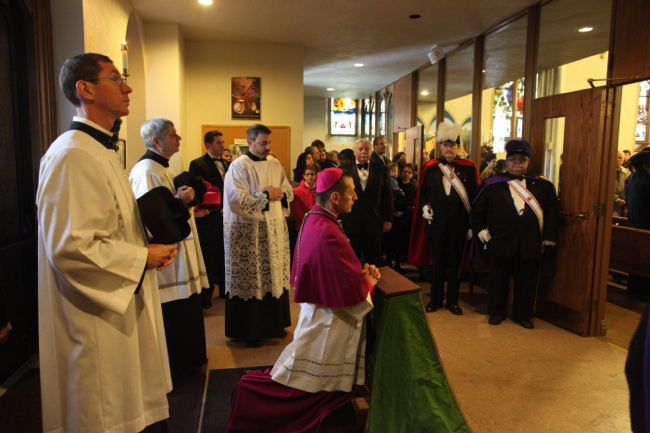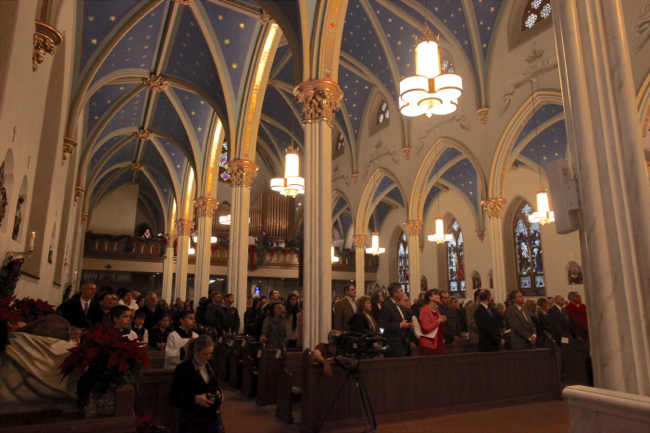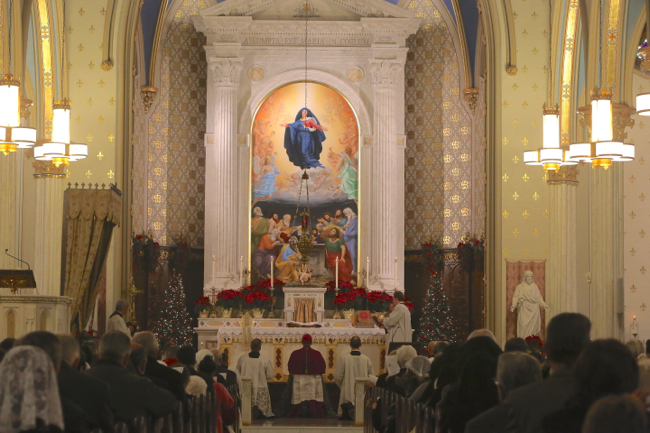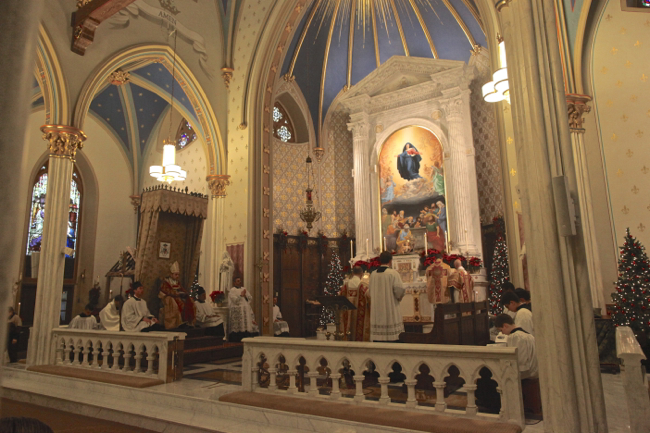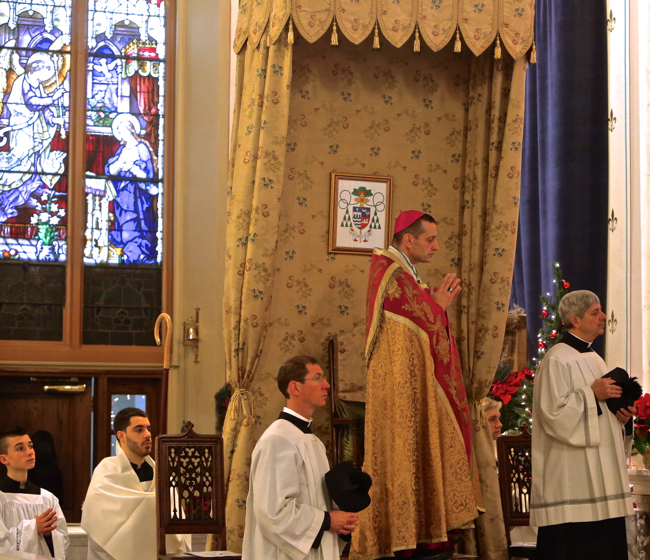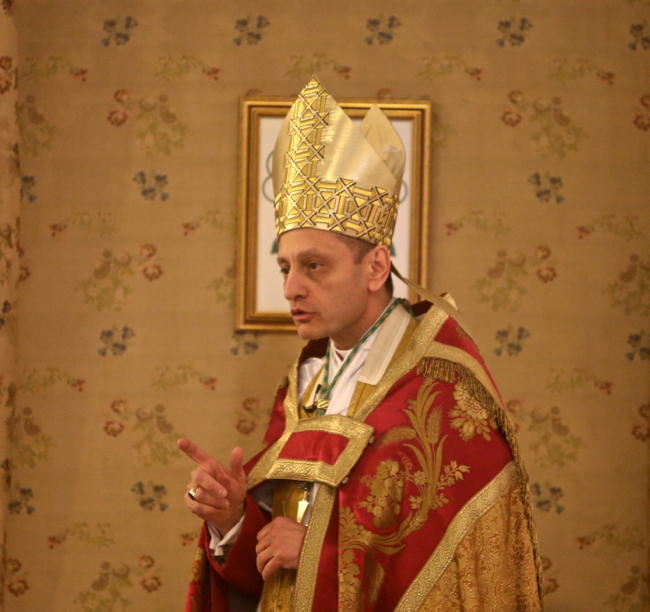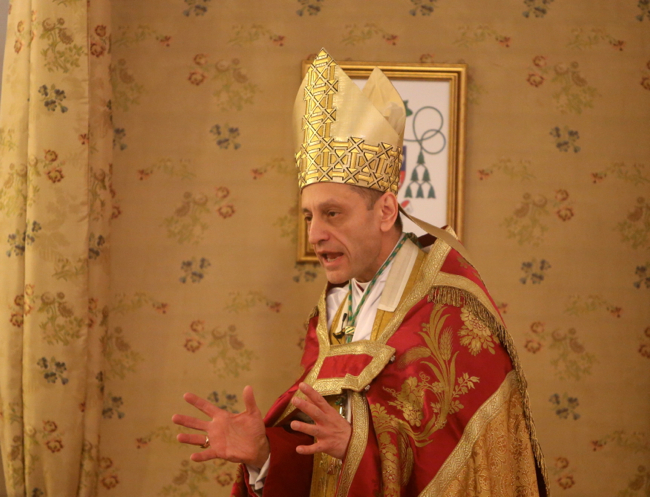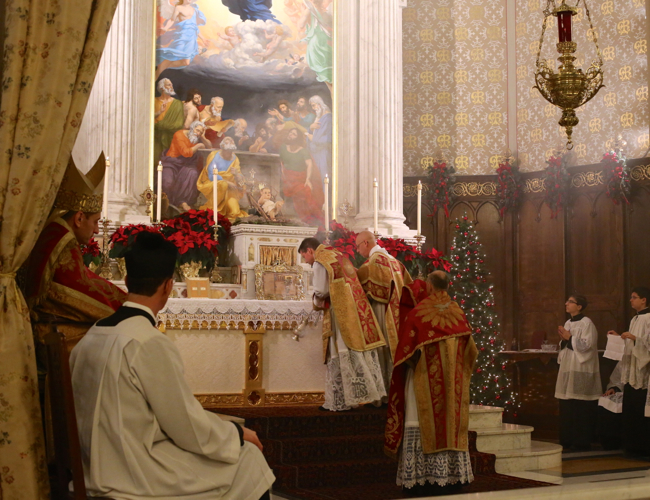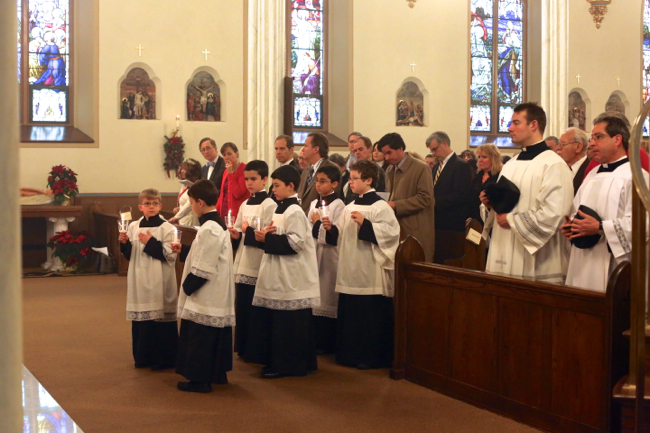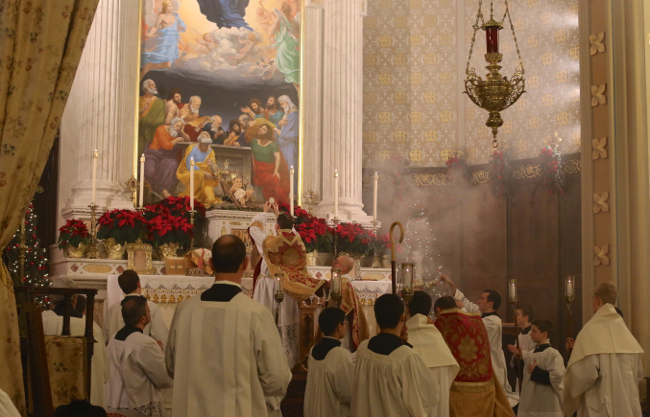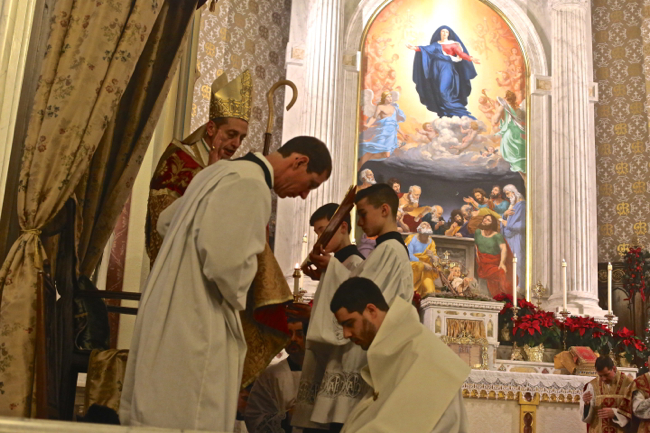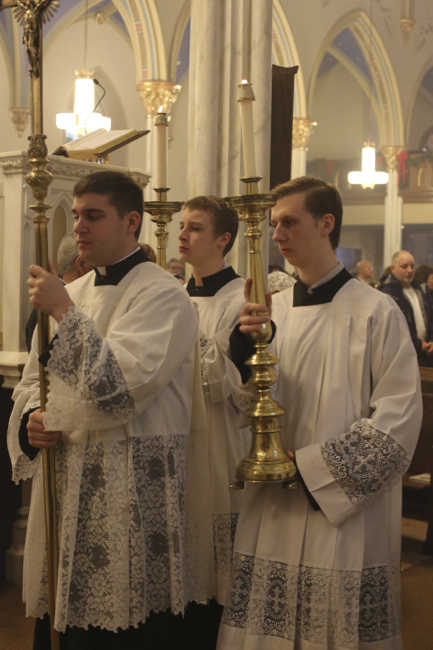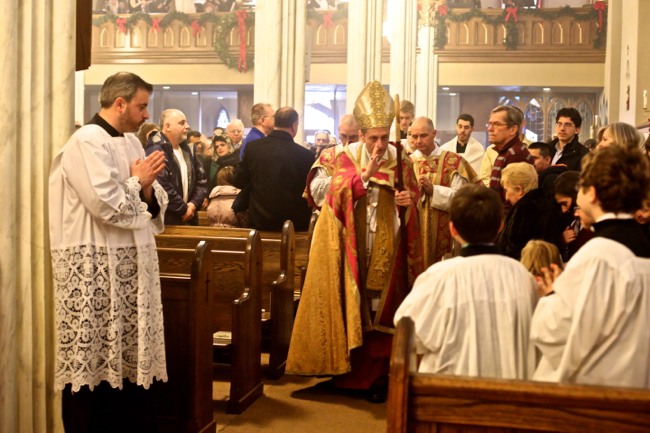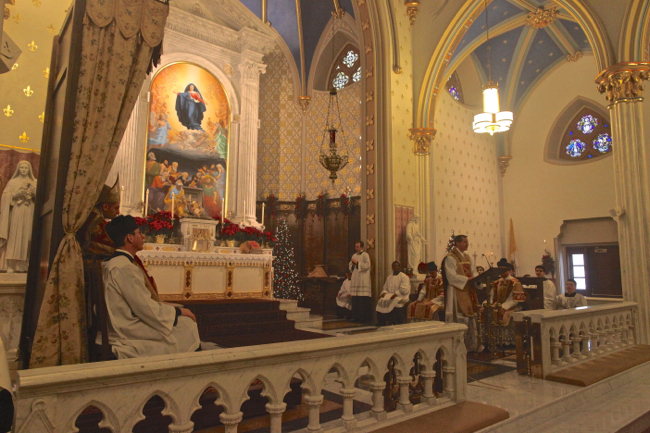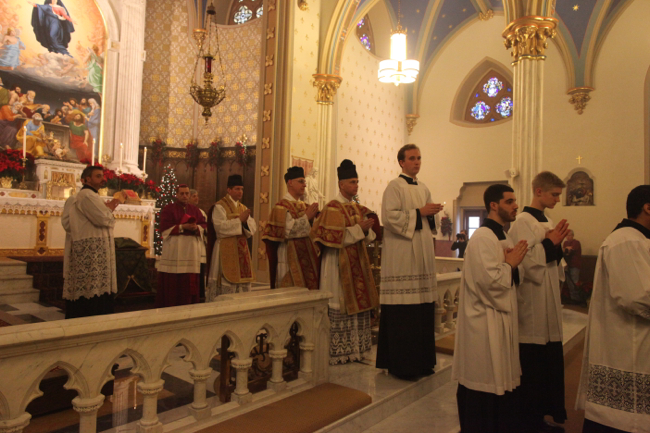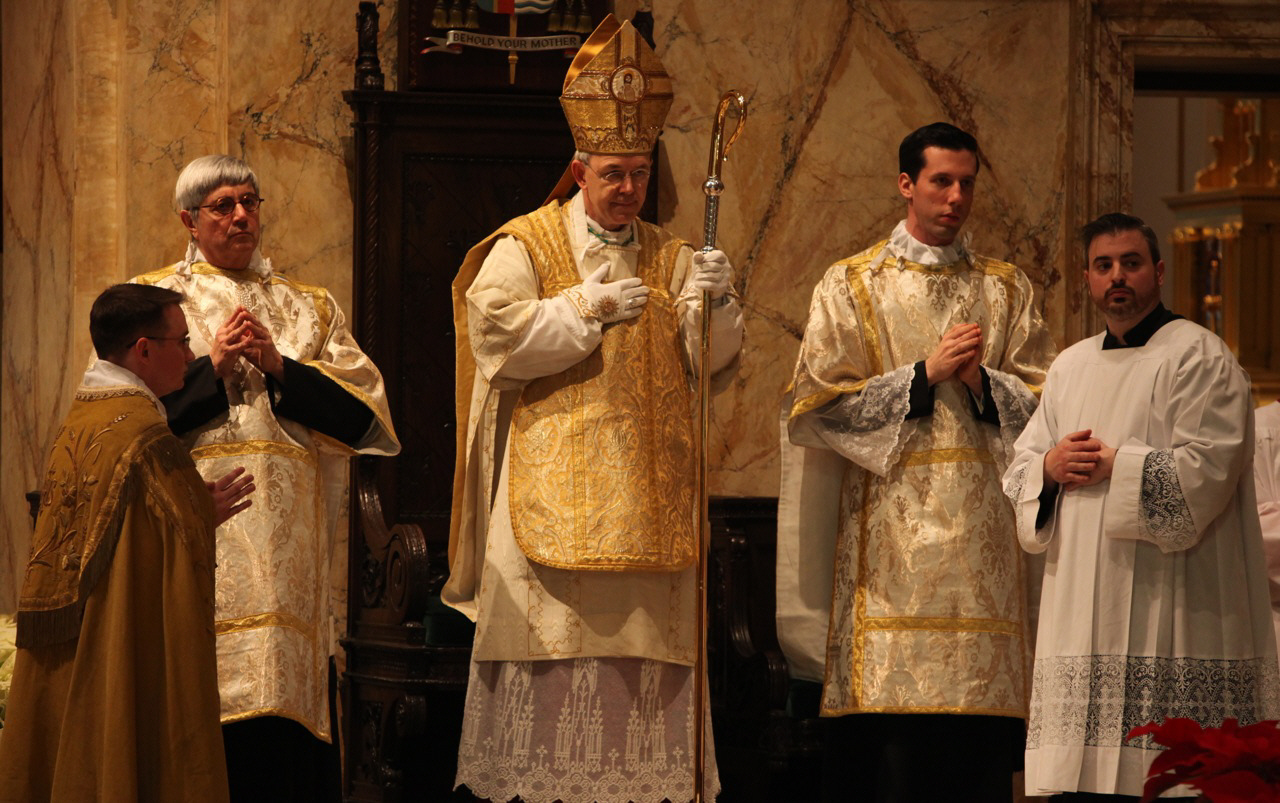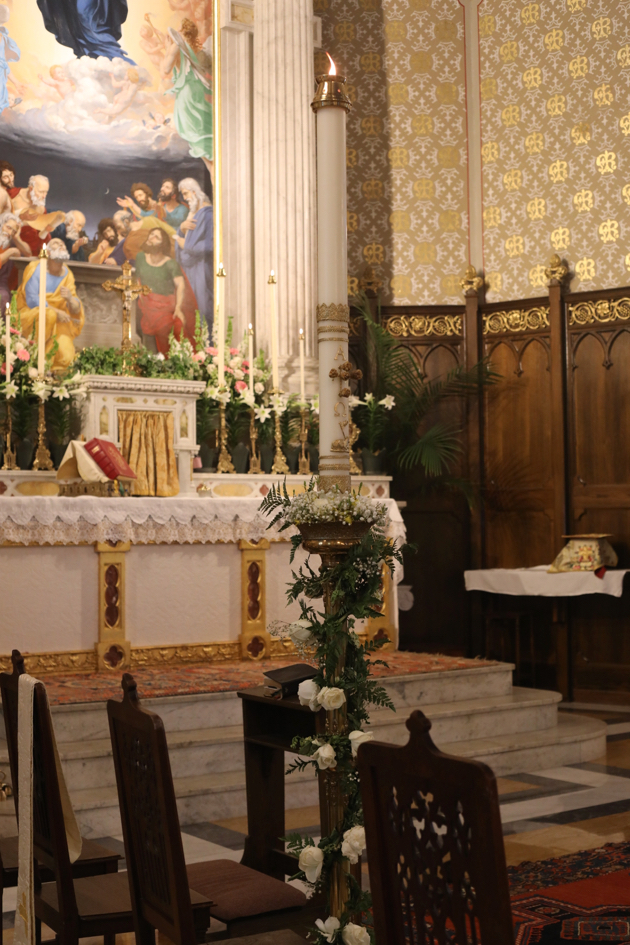
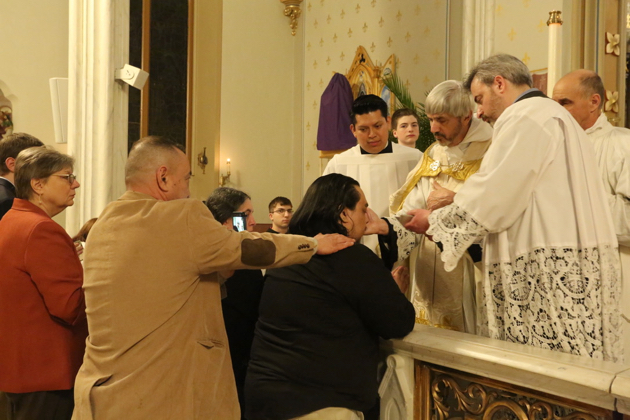
2011 Corpus Christi Mass, procession and Benediction at St. Mary parish, Norwalk, CT – with the participation of the massed musical resources of the parish.

The altars, reflecting a variety of customs and nationalities.

26 Jun
2011
22 May
2011
On Friday, May 20, David Hughes led the Student Schola of St. Mary’s parish, Norwalk, and the Schola of the Sisters of Life in a joint concert of sacred music. The venue was incomparable: St. Vincent Ferrer, the most magnificent Catholic church in Manhattan. The student schola has attained almost professional competence under Mr Hugh’s direction – and the sisters were splendid as well. The music (primarily plainsong and polyphony) illustrated the Church’s liturgical year. Thus, a direct link was established between the music and the Traditional liturgy. But this is the purpose of this schola. The Student Schola may be heard next on Thursday, JUne 2 at 5:30 PM at St. Mary’s Norwalk at the Solemn High Mass for Ascension Thursday.
This concert also served as a fund-raising event for the Student Schola. They have been invited to sing at World Youth Day and need to finance that trip. So far they have raised about half the sum needed. For more information on this trip and how to help see the Schola’s website.
16 May
2011
Continuing our coverage of Sunday’s “events”, the Catholic Artists Society sponsored its first Solemn High Mass for Artists at Our Saviour’s Church on Park Avenue in New York. A capacity congregation, very proficient in singing the responses, filled the church. But that seems to be the rule for Solemn Masses at this parish. David Hughes and the schola of St. Mary’s Norwalk provided the music – need we say that it was splendid? (Missa super Credidi Propter by Orlando di Lasso and works by Palestrina, Philips, Vaughan Williams, Bach and Messiaen)
Mr. Eddy Torribio was Master of Ceremonies.
The celebrant (and superlative preacher) was Fr. George Rutler. Father Michael Barone was the deacon and Fr. Joseph Koterski, SJ the subdeacon.
Kevin Collins, the leader of this evening’s exceedingly well organized proceedings, introduced the speaker, Fr. Koterski.
Fr. Koterski provided a much needed presentation on the Ignatian approach to the examination of conscience. The audience was enthusiastic.
As already noted, there always seems to be a full house for a Solemn mass at Our Saviour’s. But the Catholic Artists Society has succeeded in bringing most of them down to the lecture hall as well. It was heartening to see so many artists – and would-be artists – especially given the nonexistent Catholic presence in the arts in New York. Perhaps these artists have only been waiting for something like the Catholic Artists Society to come along to draw them all out of the woodwork. In any case, we will be hearing more from this Society in the near future…..
In attendance was artist Ken Woo, who painted all of the beautiful icons in this church. His Christ is in the apse (at top) and the angel on the arch over the sanctuary(above)
24 Apr
2011
The 9:30 Extraordinary Form Solemn Mass was no less beautiful than the Easter Vigil of the night before. The choir sang Claudio Monteverdi’s “Mass for Four Voices” accompanied by organ and trombone. On behalf of the Society of St. Hugh of Cluny, we wish you and your loved ones a blessed Eastertide.
Fr. Cipolla blesses the food for the coffee hour following the Mass.
24 Apr
2011
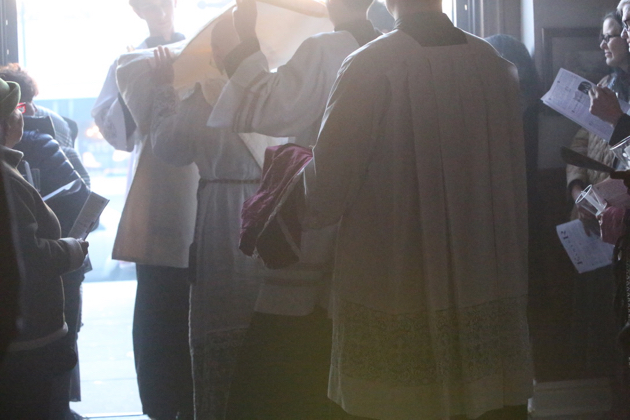
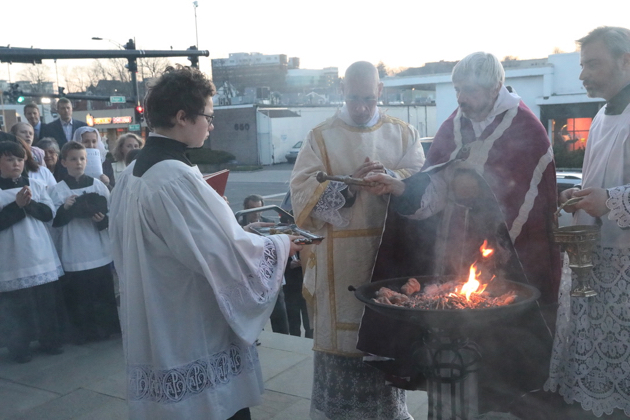
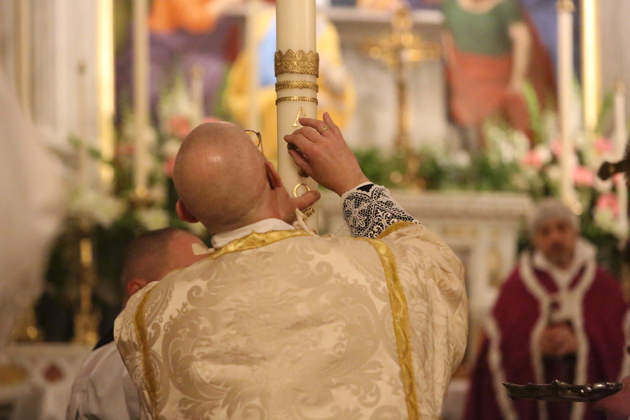
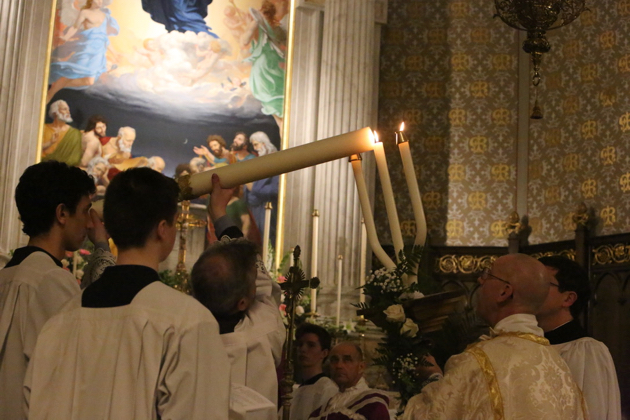
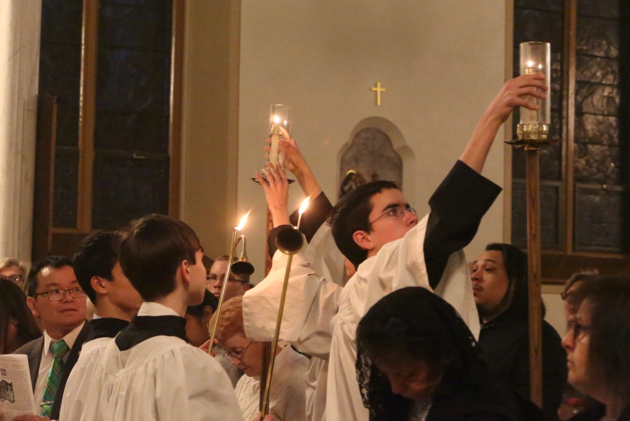
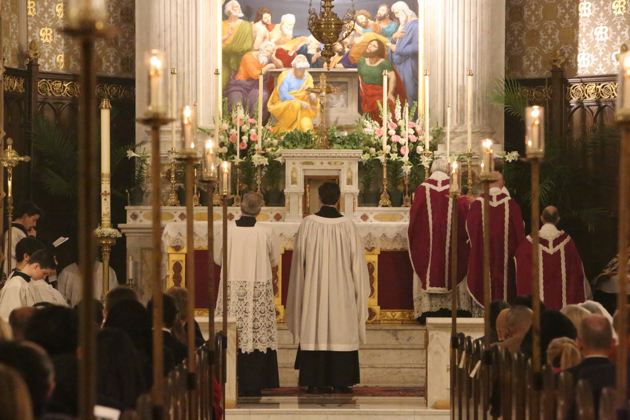
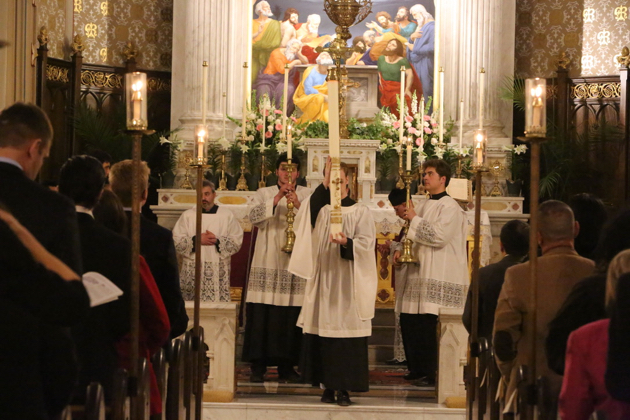
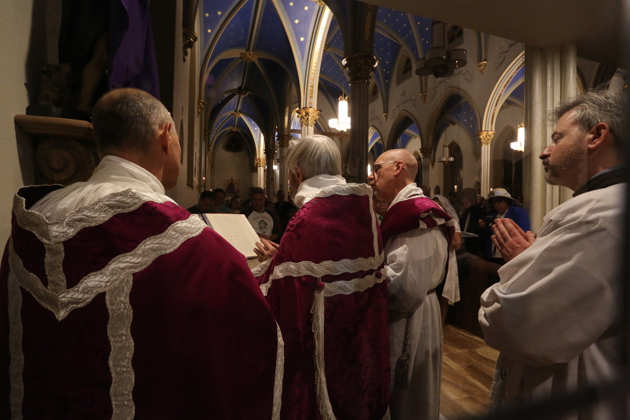
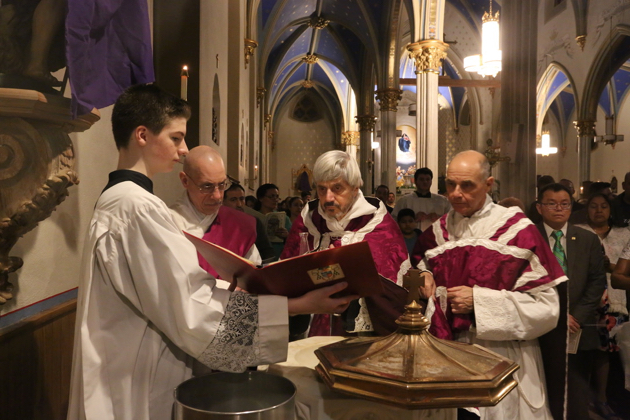
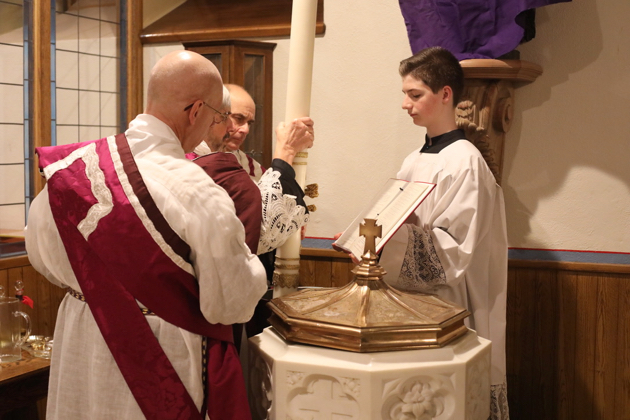
Holy Saturday vigil in the Traditional rite – a further step in the contemporary Catholic adventure of the recovery of the Sacred. For four and one-half hours this unique liturgy, celebrated in its completeness, unfolded from the blessing of the new fire to the concluding double alleluia. What better illustration could there be of the attractive, in the truest sense educative power of tradition even – or especially – in this most demanding of liturgies? How could the nature of baptism be more clearly communicated than in the gestures and rituals of this evening? And in the chanted prophecies from the creation in Genesis to the three children in the fiery furnace we do not just listen to read texts but physically feel the vastness of the ages through which the chosen people clung to God’s promises.
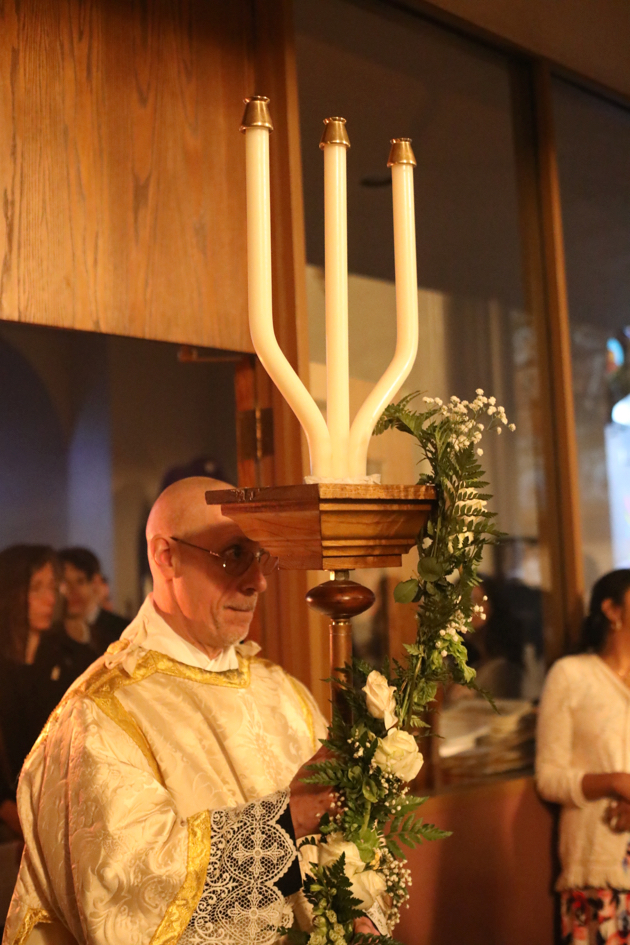
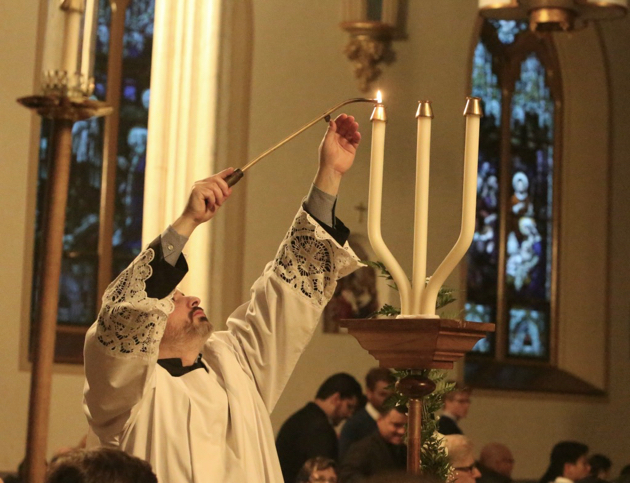
Insertion of the grains of incense into the Paschal Candle and the blessing of the Paschal Candle.

The chanting of the first Prophecy.

The chanting of the final Prophecy.
24 Apr
2011
23 Apr
2011
23 Apr
2011
Holy Thursday in the Traditional rite at St. Mary, Norwalk – need we mention that the church was standing room only? (Please click to enlarge).
The washing of the feet.
The mass.
The Procession through the church and then through the main doors to the chapel.
The stripping of the altar (including the removal of the altar frontal). The ceremony is accompanied by the chanting of the antiphon Diviserunt and Psalm XXI.
The altar of repose.
12 Apr
2011
Yesterday a large congregation of the faithful was present at St. Mary’s Church, Norwalk for the Solemn Requiem Mass for Robert James Monahan. Fr. Paul Check was the celebrant. As member of our society, Robert was an indefatigable supporter of the traditional Mass and of the ongoing restoration of the church of St. Mary’s. It was his wish to be buried according to the Extraordinary Form of the Roman Rite. However, I don’t think even Robert could have imagined the splendor with which his Requiem Mass was celebrated.
About twenty-five acolytes served the Mass, including many students from Anchor Academy, the independent Catholic school to which Robert was a major benefactor.
David Hughes conducted the choirs of St. Mary’s in the Requiem Mass of Tomas Luis de Victoria
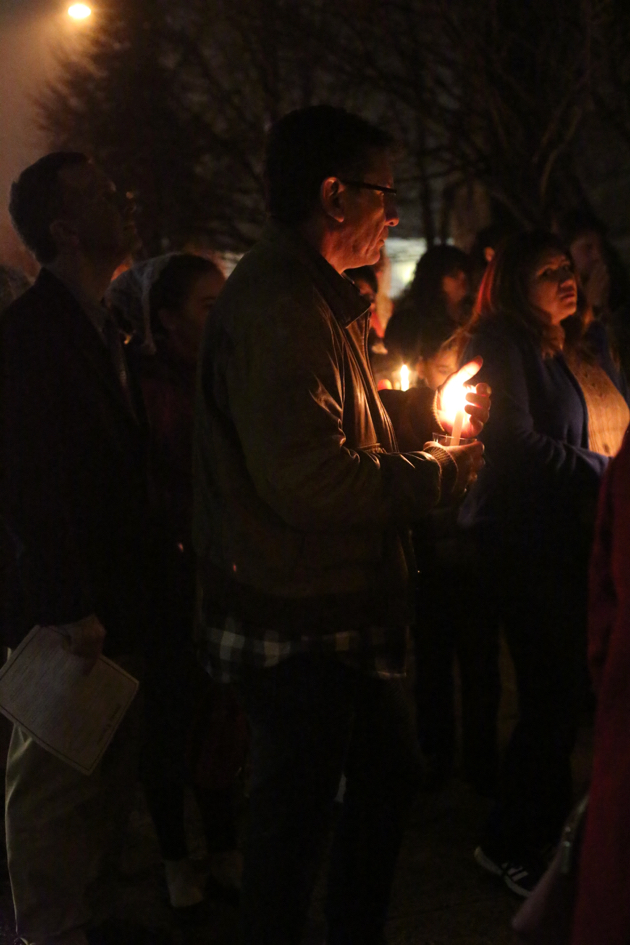
During the proclamation of the Gospel, the faithful hold lighted hand-candles, a symbol of Baptism.
Ecce Agnus Dei
Before the body is borne out of the church, Fr. Check circles the catafalque twice, first to sprinkle it with holy water, and then to incense it.
10 Apr
2011
The Church of Notre Dame
405 West 114th Street
Joris-Karl Huysmans tells us in Les Foules de Lourdes how the graces of Lourdes began to spill over and manifest themselves in satellite shrines having the same image and dispensing imported Lourdes water. Indeed, subsidiary sanctuaries in Belgium and even in Constantinople were the site of even more numerous cures than at Lourdes itself! A similar process began in New York with the importation of Lourdes water at the Redemptorist parish of Most Holy Redeemer. Miracles followed shortly thereafter. Soon half the parishes of New York displayed a Lourdes Grotto. But it was only in 1915 with the consecration of the Church of Notre Dame on West 114th Street that New York acquired its own replica of Lourdes.
This church, a great treasure of the Golden Age of Catholic church architecture, is one of the finest Beaux Arts spaces of New York City. Like St. Vincent Ferrer or Blessed Sacrament of the same era, this church and its furnishings – the windows, sculptures and metalwork- were conceived as a whole. Such architectural sophistication required substantial resources, and these were provided by a rich patron, Mrs Geraldyn Redmond. It was she who donated more than $350,00 of the original $500,000 cost to erect this church. The Church of Notre Dame was also intended to be a French national chapel – a satellite of the original French national church of St. Vincent de Paul on West 23rd street. Construction began in 1910. It is astonishing to read that, when Cardinal Farley dedicated the church on February 11, 1915, over 2,500 French Catholics were in attendance. 1) (By 2011 French Catholics have disappeared from the New York City landscape even more completely than their German and Czech counterparts.) In 1915 Notre Dame also became an independant parish. It was originally in the care of a French religious order, the Fathers of Mercy.
Work on the interior continued through the 1920′s. The ambitions of the architects, however, had outstripped the available funds. For their original conception was to crown the Church of Notre Dame with a spectacular raised baroque dome in the manner of the great models for this church: the achievements of the France of Louis XIV. This dome was never completed. Rather, 40 years later a flat dome was finished. 2) Thus the church of Notre Dame resembles more the Pantheon than its original model, the Invalides. The exterior is surrounded on three sides by three different facades employing classical columns and pilasters. That facing west is a free-standing colonnade or ambulatory providing direct access to the interior Lourdes shrine.

The interior is of great spaciousness, simplicity and grandeur – despite the restrained dimensions. The vast circular dome is suspended over a nearly square space. Chapels adorn each corner. As a unique touch, there rises behind the main altar a life-size duplicate of the Lourdes Grotto serving as a vast reredos! it seems almost surreal – yet the rough stone of the grotto blends pleasingly with the cut stone surfaces of the interior.
The metalwork – including the poor boxes! – is of the highest quality. It is matched by the windows and most of the sculptures. All would be perfect but for the usual unfortunate Conciliar “renovation” of the sanctuary (1988).
In the course of time, the original French parishioners disappeared. The Fathers of Mercy moved out in 1960 and the church of Notre Dame became an ordinary parish of the Archdiocese. In 2003, in an uncharacteristic stroke of genius, the Archdiocese entrusted this parish to Polish Dominicans and made iNotre Dame the site of the chaplaincy of Columbia University. 3) We do not know what these Dominicans are doing at Columbia but we have heard good things of their activity at other places. It is good that students have chance to experience the Catholic liturgy in such a magnificent setting. Lourdes water is still dispensed here. At the Church of Notre Dame, the Catholic students of Columbia can reconnect with their own glorious religious and artistic past – classical, Catholic and traditional. And maybe in the course of time more New York area Catholics will make the pilgrimage to their own special Lourdes shrine of Morningside Heights.
1) New York Times, February 12, 1915.
2) http://ndparish.org/Church_of_Notre_Dame/History.html
3) http://ndparish.org/Church_of_Notre_Dame/History.html