

3 Nov
2020


17 Oct
2020

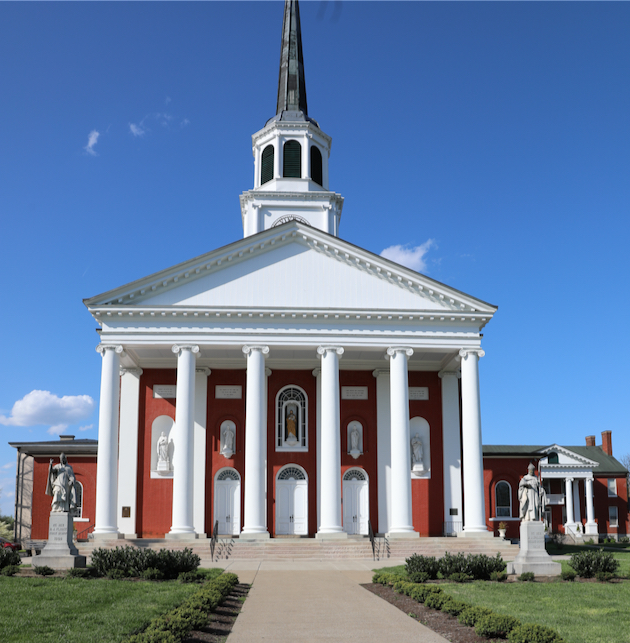
The “Italian Cathedral” – thus does the church of St Lucy in Newark, New Jersey, assert its claim to preeminence among Italian churches of the New York area. And with some justification! St Lucy’s may not quite attain the size and splendor of the “Polish cathedrals” of Chicago and elsewhere in the Midwest. Yet its architecture is impressive – unconstrained by the narrow lots of New York. And, in my view, its decoration exceeds in its extravagance and quality that of its Italian competitors – most notably, Our Lady of Pompeii in Greenwich Village, built and decorated about the same time. We had a chance to visit St. Lucy’s today on the weekend of the celebration of the festa of St. Gerard Majella – whose national shrine is found here.

(Above)The sober exterior of St Lucy’s, executed in a kind of Romanesque – Renaissance idiom. Construction started in 1925. The church presides today over a combination of plaza, parking lot and outdoor shrine offering the opportunity for all kinds of devotions. (Below) Peering over St Lucy’s parish complex are the towers of Newark’s grand Sacred Heart Cathedral (presumably the “Irish” Cathedral).


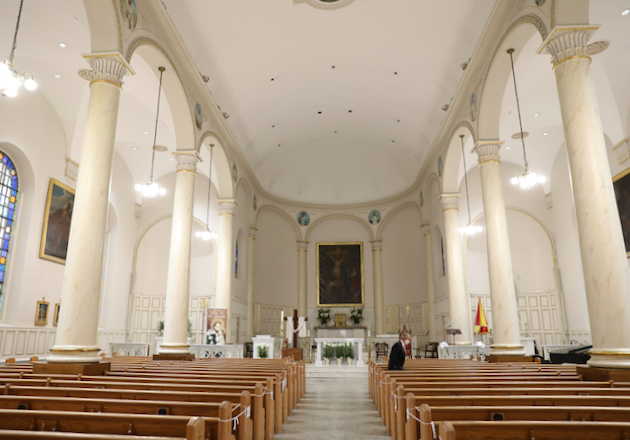
But it is the architecture and decoration of the interior that is the glory of this church. For here the local Italian community was able to achieve an amazing recreation of the 18th century Southern Italian Baroque. The parish is dedicated to St Lucy of Syracuse; the paintings and inscriptions emphasize strongly this Sicilian connection. But in fact people from many other Southern Italian villges, towns and regions participated in the life of this parish and in the construction of the church. (Below) The high altar.

The real heart of this decorative program, however, are the murals of Gonippo Raggi (1875-1959) who worked on the decoration of many other important Catholic churches – especially in New Jersey. Above all the paintings of the cupola and of the huge ceiling of the nave recall to the visitor not only Italy but, in their wild exuberance, even the visionary ceiling paintings of the German baroque.

(Above) The cupola.(Below) The apse mural, complete with the Syracuse cathedral on the left and Mount Etna on the right.


(Above) Detail of the apse.

(Above and below) Details of the martyrdom of St Lucy on the celing of the nave.

(Below) From the same mural.

Today, perhaps, St Lucy’s is best known as the shrine of St Gerard Majella. In contrast to the deserted shrines of most Manhattan churches, devotion to St Gerard is very much alive and well. I hear many come from all over the country to participate in the festa. This year was, obviously and unfortunately, a great exception.
St. Gerard Majella is most often invoked as an intercessor for a safe childbirth. At one time St Lucy’s had 20,000 parishioners, and in one year there were over 1,000 baptisms. So his assistance was very much in demand!

The statue of St. Gerard is adorned by the faithful not merely with strips with dollar bills attached – that happens in every other Italian church festival – but with whole coats covered with greenbacks. At least on this weekend, the stream of visitors never let up. The quantity of (real) candles to be found everywhere in the church is amazing. A notice is provided, however, that candles will be extinguished in the evening but relit in the morning.
(Below) The miraculous safe delivery of a child, depicted here, started the devotion to St. Gerard as a patron saint of expectant mothers.


After the murals, what catches the vistor’s attention are the innumerable, mostly large-scale statues around the church. It seems like every saint and every Marian devotion of Southern Italy is represented here. And the Hispanic peoples subsequently have added their own devotional images to this collection.


St Lucy’s is still kept in beautiful condition. Almost all the Italian population of what once was Newark’s “Little Italy, ” however, had left the immediate neighborhood long ago. The final straw was a series of disastrous urban renewal projects, which had the same results here as everywhere else – Chicago, St Louis, Bridgeport etc.. Most of the old Catholic ethnic neighborhoods of these cities, like those of Newark, were destroyed long ago . But St Lucy’s old parishioners and their descendants have been more dedicated than most in maintaining their old parish, its devotions and its church.
7 Oct
2020

On this October 7 let us reflect on today’s Feast of Our Lady of Victory (or Our Lady of the Rosary). We know that the spread of this feast throughout the Catholic world is owed first of all to the great victory of the Christian allies (mainly Spanish and Italian) over the Ottoman naval forces on this date. And afterwards Our Lady was invoked under this title in other conflicts with the enemies of Christendom; for example, after the victory of the forces of the Holy Roman Empire led by Prince Eugene over the Turks at Peterwardein in 1716 this feast was extended to the whole Church. The present bishop of Rome in his new encyclical has recently reminded us of his view that there can never be a just war; the sense of the Church – and for that matter, her doctrine – took a very different position regarding war up to the last Council. The following images illustrate that.

In the Bavarian town of Ingolstadt is one of the most extraordinary creations of the brothers Egid Quirin and Cosmas Damian Asam, 18th century German masters of the baroque. The church of Maria de Victoria was built and decorated between 1732 and 1736 as a oratory for the Marian congregation of the former University of Ingolstadt (a Jesuit university situated in the Electorate of Bavaria and the alma mater of Baron Frankenstein). The simple hall is rendered extraordinary by the immense ceiling fresco as well as by further decorations and furnishings added in the decades after completion of the church – and in some cases even in the 19th century.
The magnificent painting of Cosmas Damian Asam shows the Incarnation set amid symbols of the continents of the earth as they were then understood. The fresco abounds in unusual tricks of perspective.


(Above and below) In this church can be found the Lepanto Monstrance of 1708, claimed to be the most valuable in the world. Created by the Augsburg goldsmith Johannes Zeckl, it depicts the naval battle of Lepanto as exemplified by a Christian ship overpowering a foundering Turkish vessel.


Near the monstrance is a cross carried by Tilly, the commander of the Catholic League army in the Thirty Years’ War, who died from battle wounds in Ingolstadt. To complete the picture we should add that the town of Ingolstadt itself was a key military stronghold of Bavaria for many years into the 19th century. A “Museum of the Bavarian Army” is located here.

Closer to home – if on a considerably lower artistic level – is the huge apse painting in Our Lady of Pompeii in Greenwich Village (the dedication to Our Lady of Pompeii is a variant of that of the Our Lady of the Rosary). In the section shown above is a reference to the battle of Lepanto, as is in the text surrounding the back of the sanctuary. This painting is actually a recreation of the original, which had beeen destroyed after the Second Vatican Council.

Indeed, Our Lady of Victory continued to be invoked once more later in the Twentieth century: here is the downtown New York church of Our Lady of Victory erected in 1947 by Cardinal Spellman. It has this dedication:
This Holy Shrine is dedicated to Our Lady of Victory in Thanksgiving for Victory won by our Valiant dead, our soldier’s blood, our Country’s tears, shed to defend men’s rights and win back men’s hearts to God.
Although we may wonder about the dedication’s concluding sentiments regarding a war fought mainly against and with formerly Christian, secular states, there is sincere sorrow for the dead and wounded and gratitude for the nation having prevailed in the struggle.
For more on the church of St. Maria de Victoria, its art and its meaning see Hofmann, Siegfried, Die Kirche Maria de Victoria. (with contributions by Kurt Scheurer)
5 Oct
2020

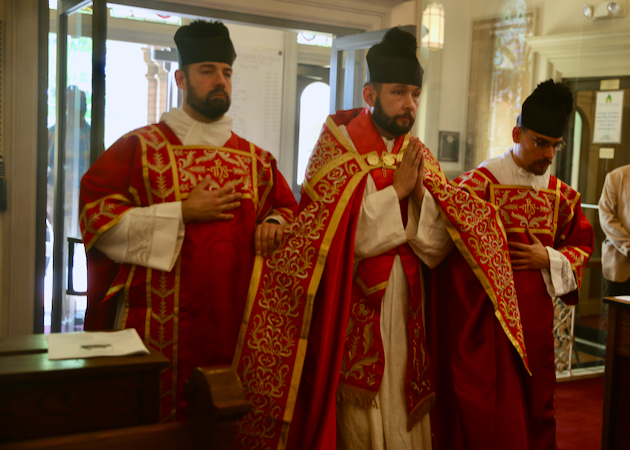
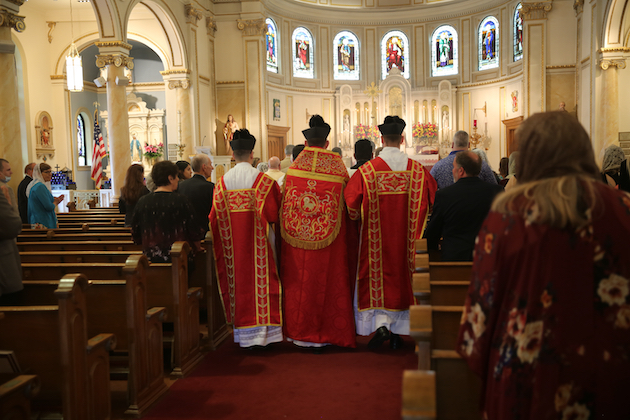
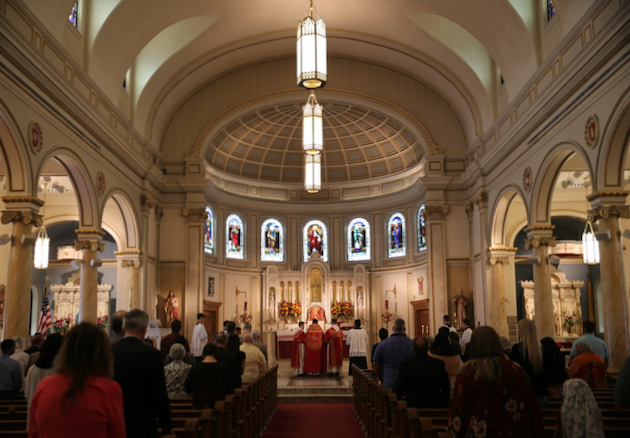
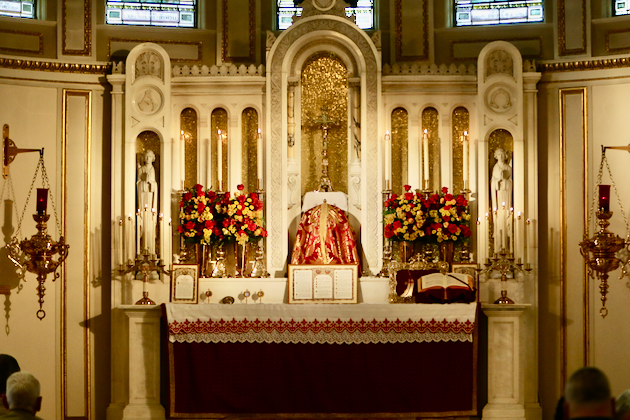
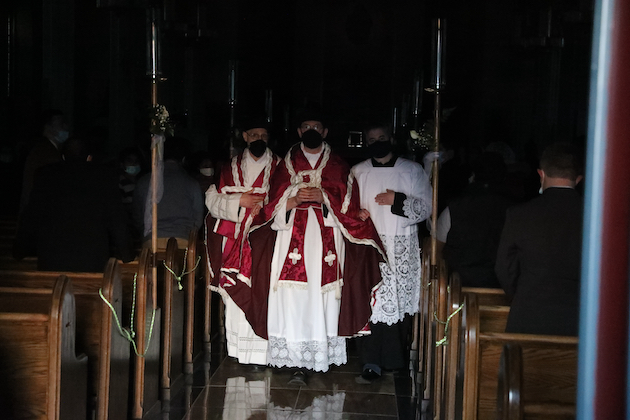
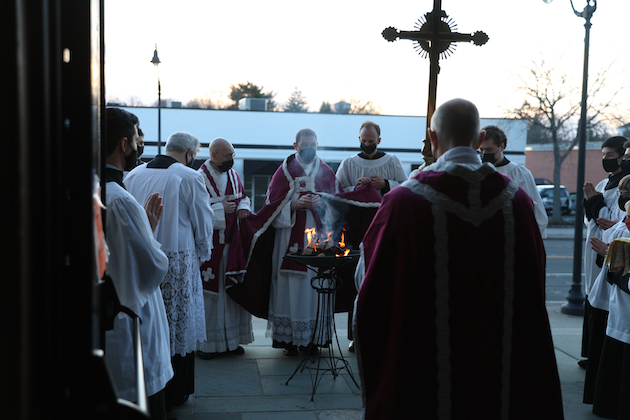
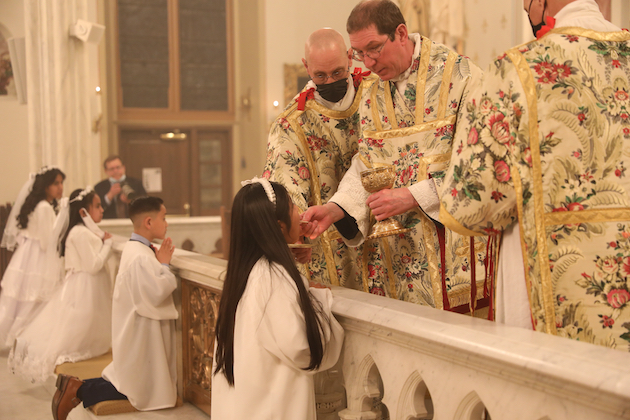
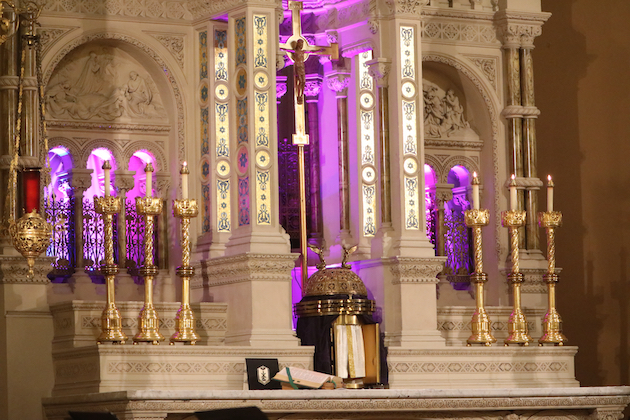
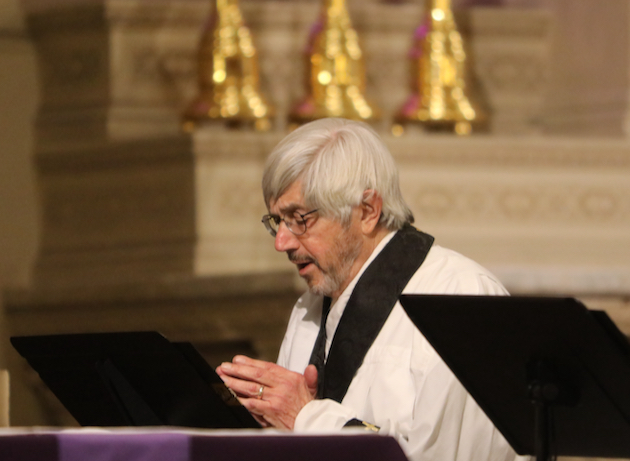
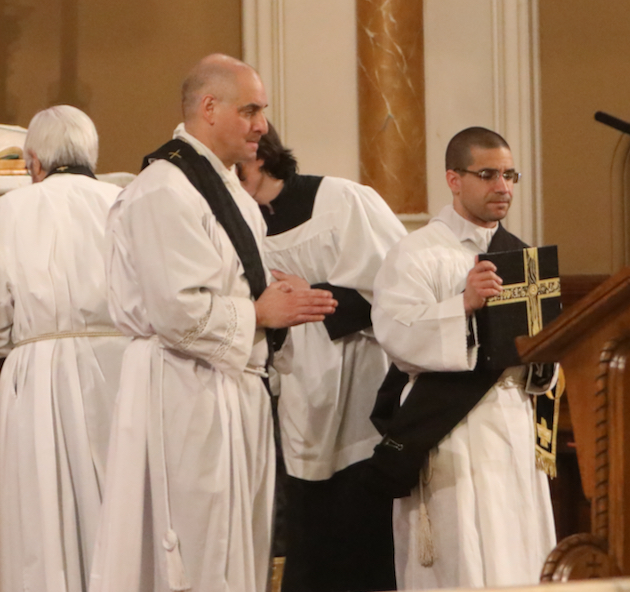
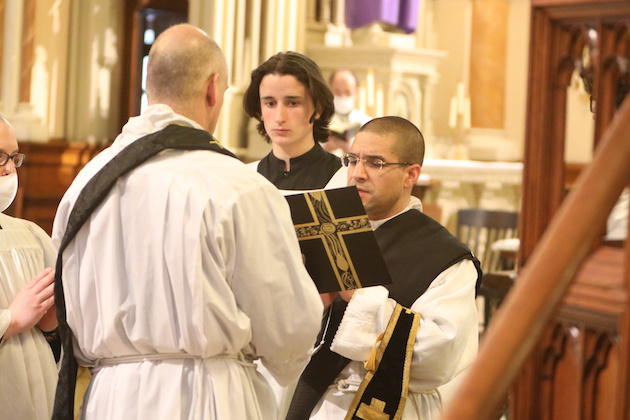
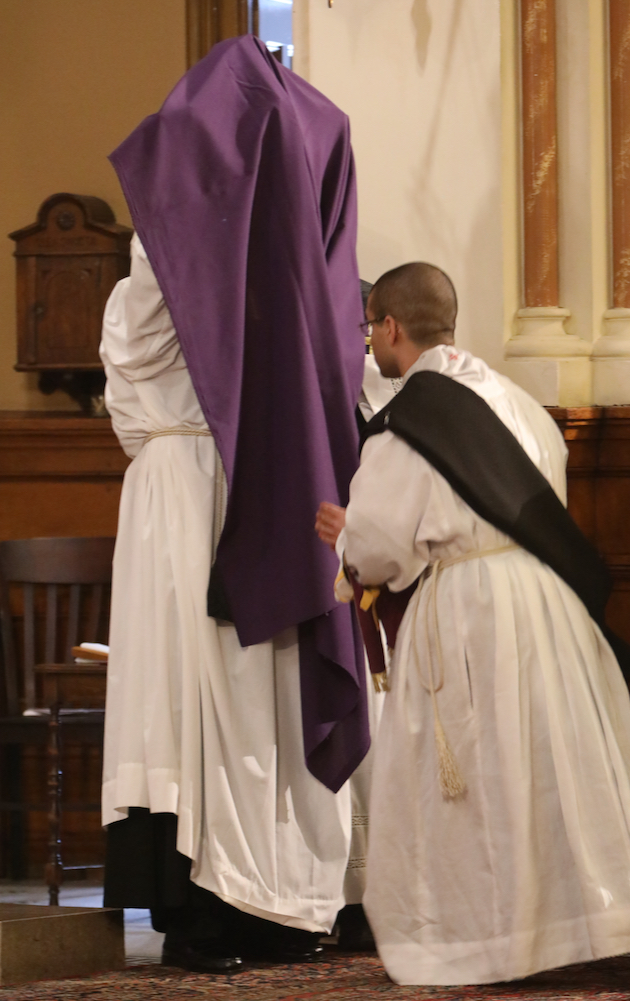
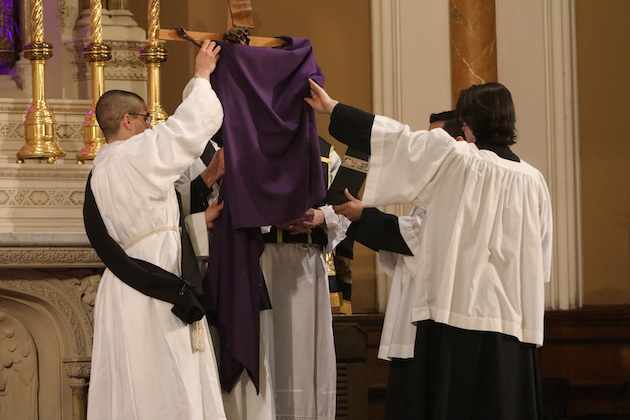
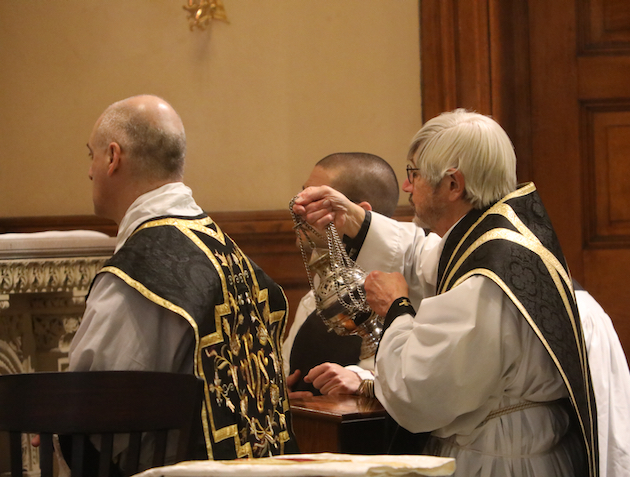
On Sunday evening, October 4, a Missa cantata was celebrated at St. Cecilia church in the Williamsburg/Greenpoint neighborhood of Brooklyn. The celebrant was Fr. Tom Vassolati; the music director was Justin Fields. Paul Schumann served as MC.

Traditional Masses have been celebrated here since well before 2011 when a magnificent solemn High Mass took place. St. Cecilia’s now has a regularly scheduled Traditional Mass at 7:00 PM on Sundays.


St. Cecilia is a typical grandly dimensioned old Brooklyn church. Since 2011 it has been a member of mutli-church cluster called “Divine Mercy parish.” Real estate devlopment has so far bypassed this church and the many buildings connected with the former parish of St. Cecilia.


(Above and below) St Cecilia’s is notewrthy for the abundant carved decoration, both on the interior and exterior.


As in may old parihes, numerous statues and fine metalwork can also be found throughout the church.


5 Oct
2020

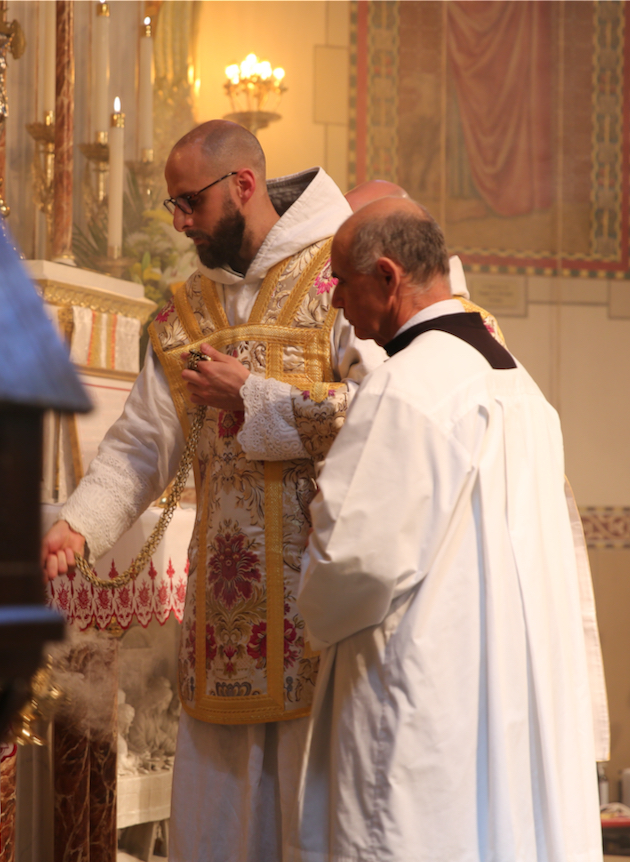
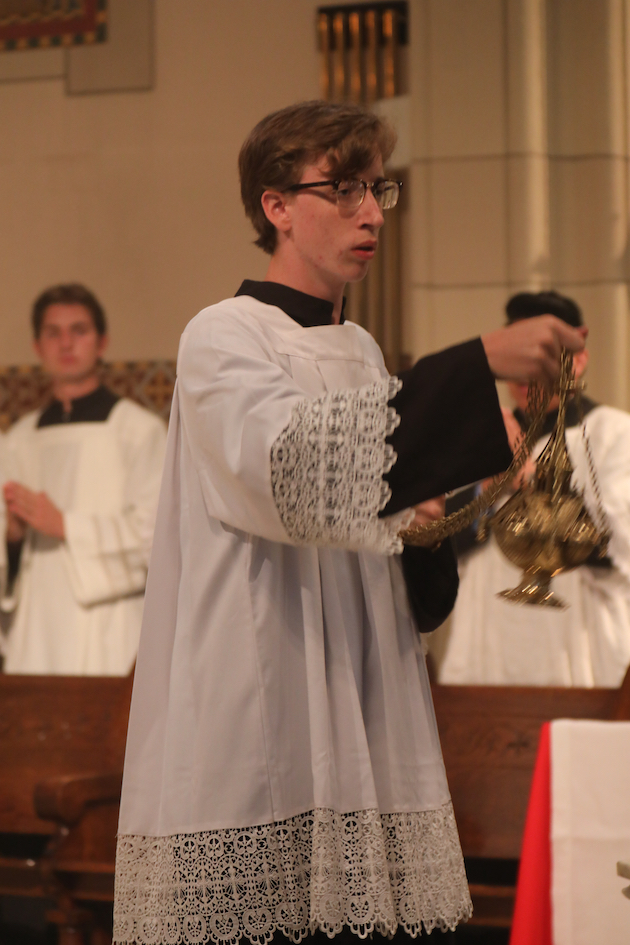
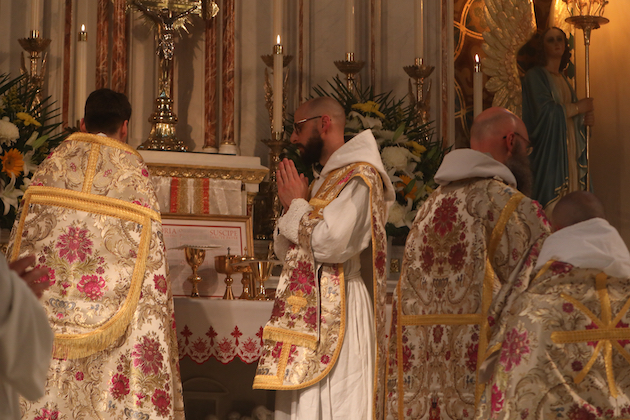
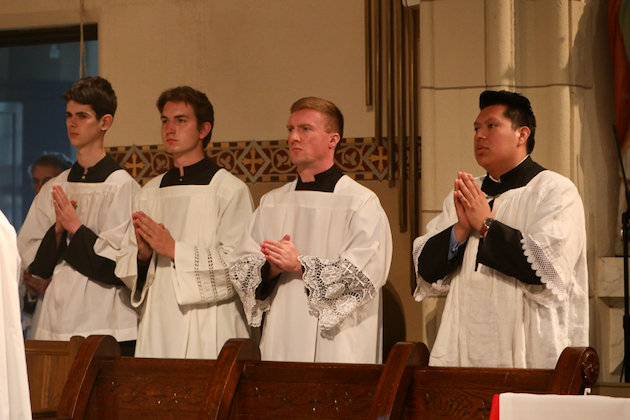
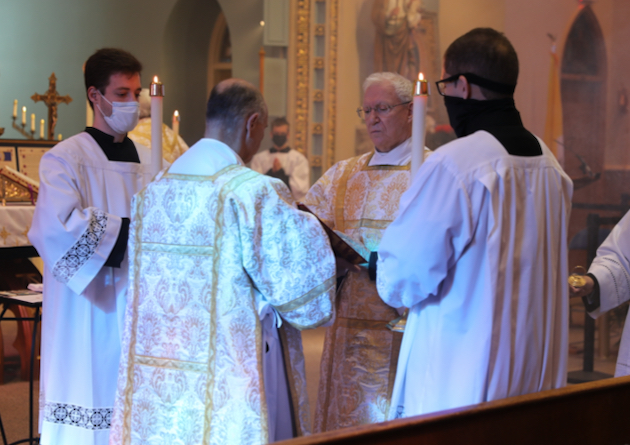
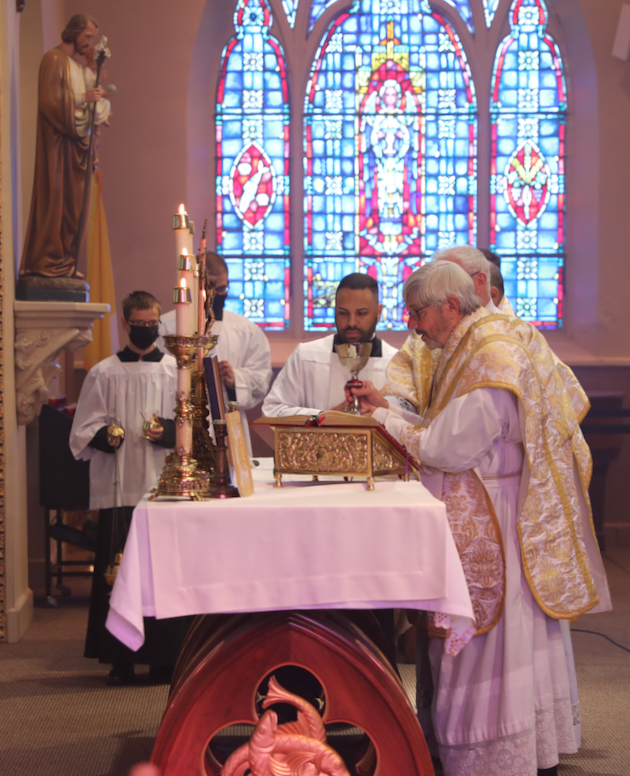
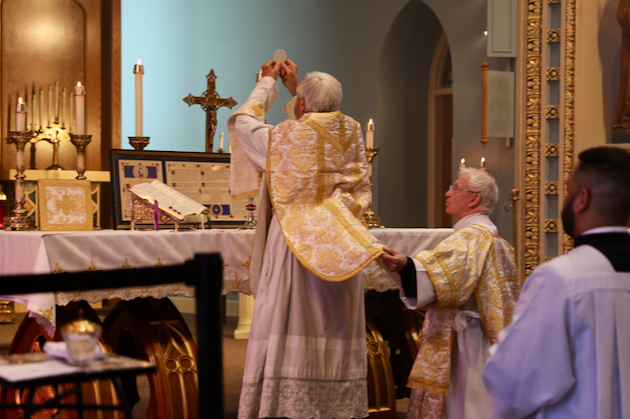
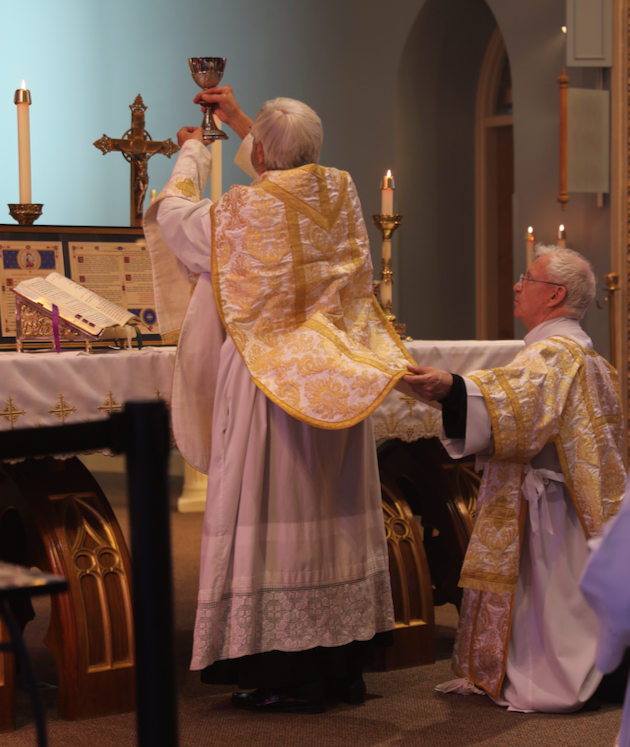
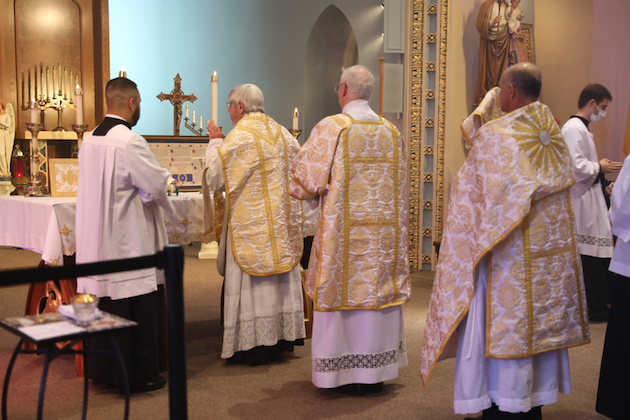
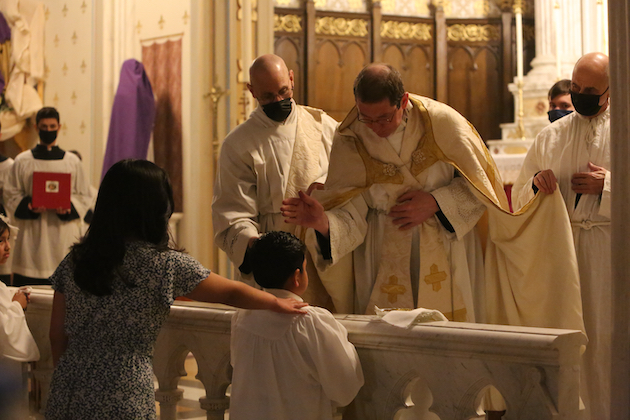
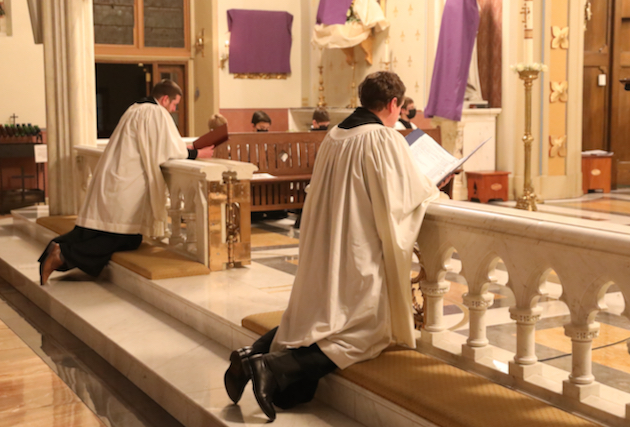
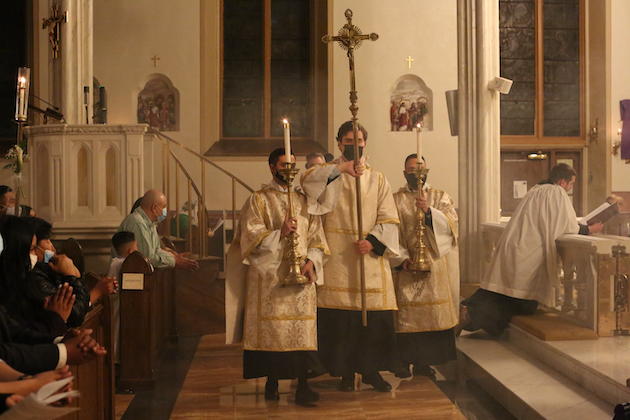
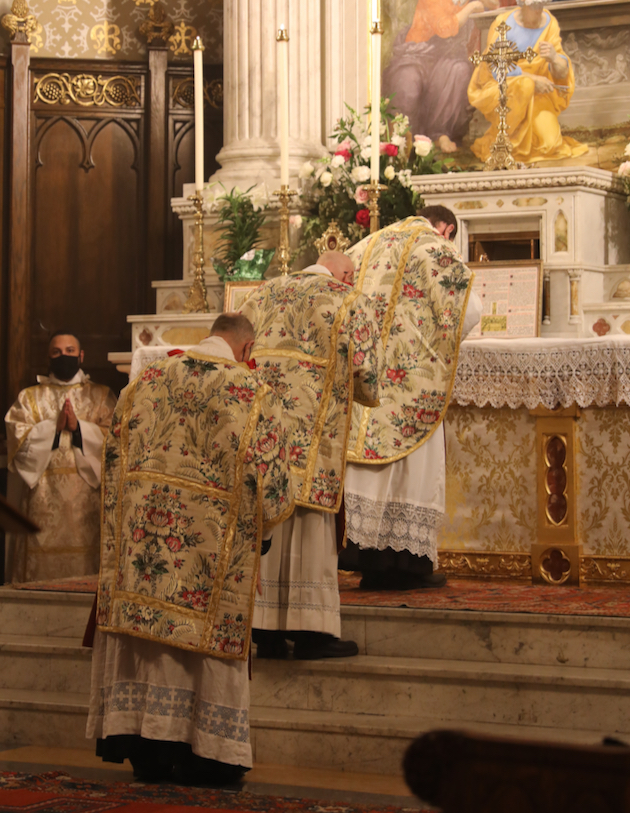
It is with great sadness that we report the death of Msgr. Joseph Ambrosio on October 4. Pastor of Our Lady of Mount Carmel Church in Newark, he was an ardent friend of the traditional Mass.
Here is a notice written by Eddy Toribo, with his kind permission:
It was with extreme sadness that we learned of the passing of the Rev. Monsignor Joseph Ambrosio on the morning of Sunday, October 4th, 2020 — an inimitable Monsignor if there ever was one.
There were so many qualities that made him an excellent person, a great friend, a faithful Christian, and an exemplary Priest. It can be safely said that, in these days of liturgical chaos, no one outdid him in his zealous dedication for the beauty of the House of God and that it was a great joy to serve Mass when he was the Celebrant. Not only did he try to rescue liturgical items from closed churches in order to put them to good liturgical use in his own church, but he washed, starched, pressed, and repaired the sacred linens himself, as he believed it was his duty to take care of the Sanctuary and the Tabernacle of which he was made the custodian.
Everyone who ever visited his church and attended his Masses will testify that he always wanted the best for the Liturgy: vestments, music, sacred vessels, Relics, ceremonies, all types of liturgical items, etc. Additionally, he very graciously donated many of these things to other communities that did not have what was needed for the reverent and beautiful celebration of the Liturgy.A truly humble priest, he would most often refer to himself simply as “Fr. Ambrosio,” despite his title of Monsignor as a Chaplain to His Holiness. He would also frequently pray the beautiful Litany of Humility, which he seems to have known from memory and of which he would frequently remind people whenever certain things did not go as planned: “these things make us humble,” he would say. In addition to his humility, he knew how to provide undeniably generous hospitality: servers, parishioners, priests, Bishops, and Cardinals were witnesses of his great level of generosity whenever they would visit his rectory.
In particular, he was well-known for his famous invitations to dinner, which made everybody realize what an excellent cook he was, and he always made sure to provide full entertainment, since he would also sing and play the piano, as well as tell unforgettable stories in a way that he alone knew how – no one ever experienced a dull evening in Msgr. Ambrosio’s rectory! Ite ad Joseph had a different meaning in Newark, N.J.His love for the Liturgy became much stronger when he began to celebrate the traditional Liturgy of the Roman Church, so much so that he eventually had all the Masses at Mt. Carmel celebrated ad orientem. He would also graciously accept invitations to celebrate the Old Mass in many different places and in particular in New York City at the Church of the Holy Innocents.
Many of the parishioners and servers there grew to love and admire him. He frequently said that he loved going to Holy Innocents to celebrate the Old Mass, which for many years he did on his days off (Fridays), and several times he was heard saying: “Whenever I go to Holy Innocents, I feel young.” Once he said this at a dinner table full of servers, priests, and a couple of Bishops.His passing from this world certainly leaves a tremendous void because people like the good old Monsignor are impossible to replace. May he rest in the eternal Peace of Christ.
Súscipe, Dómine, servum tuum in locum sperándæ sibi salvatiónis a misericórdia tua. Amen.
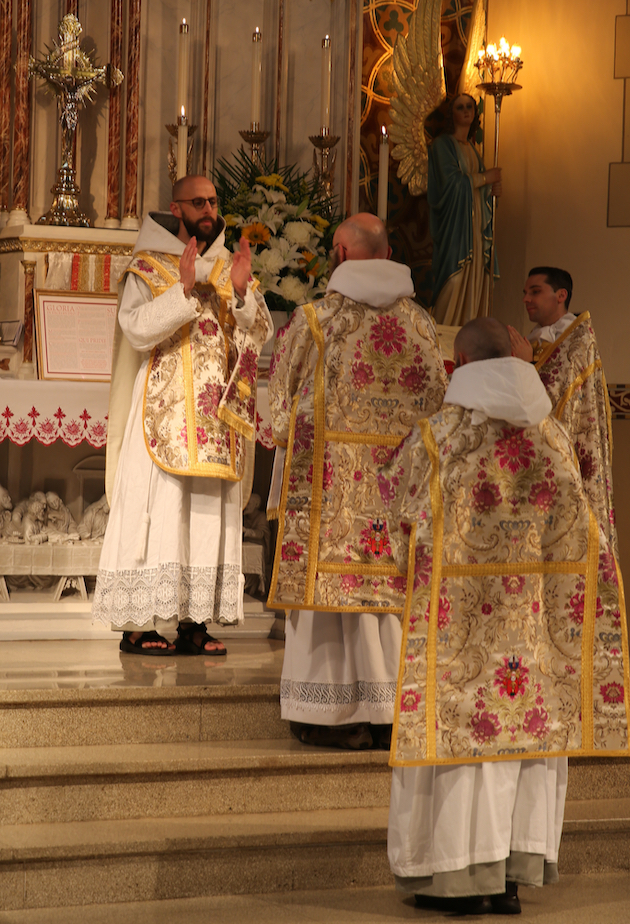
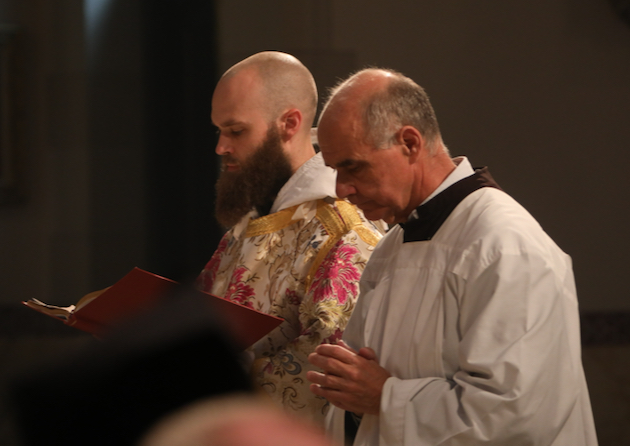
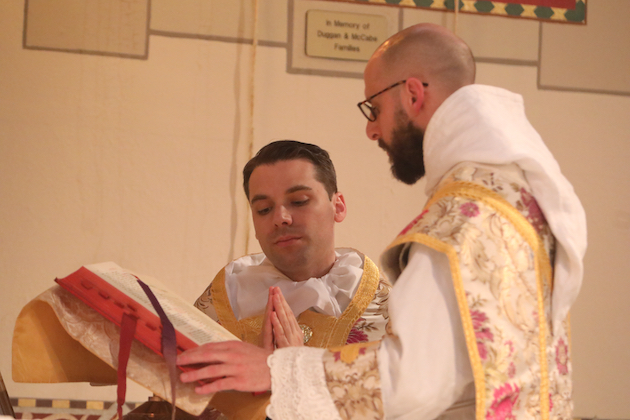
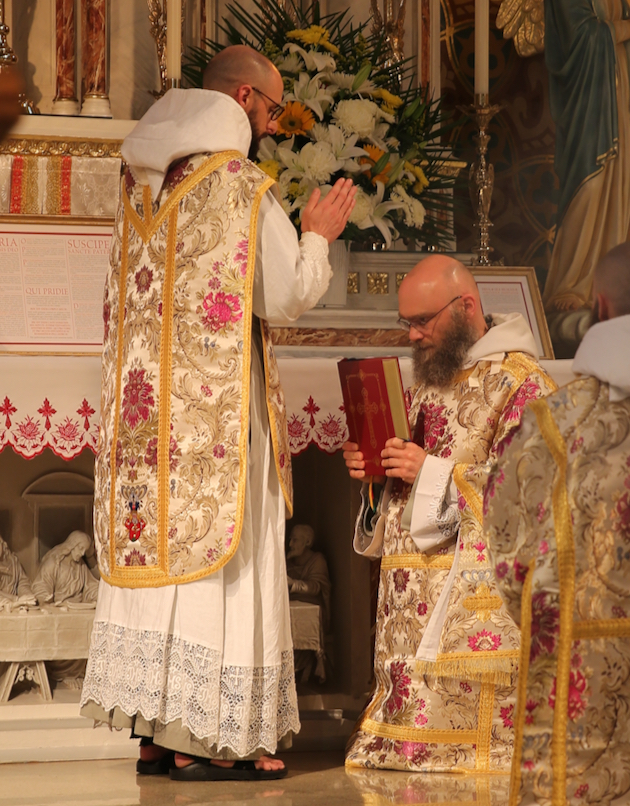
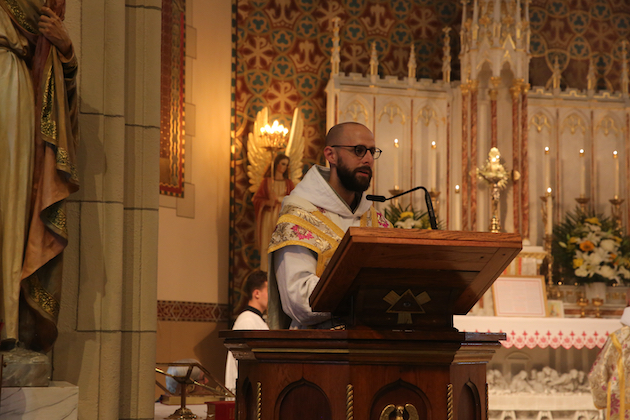
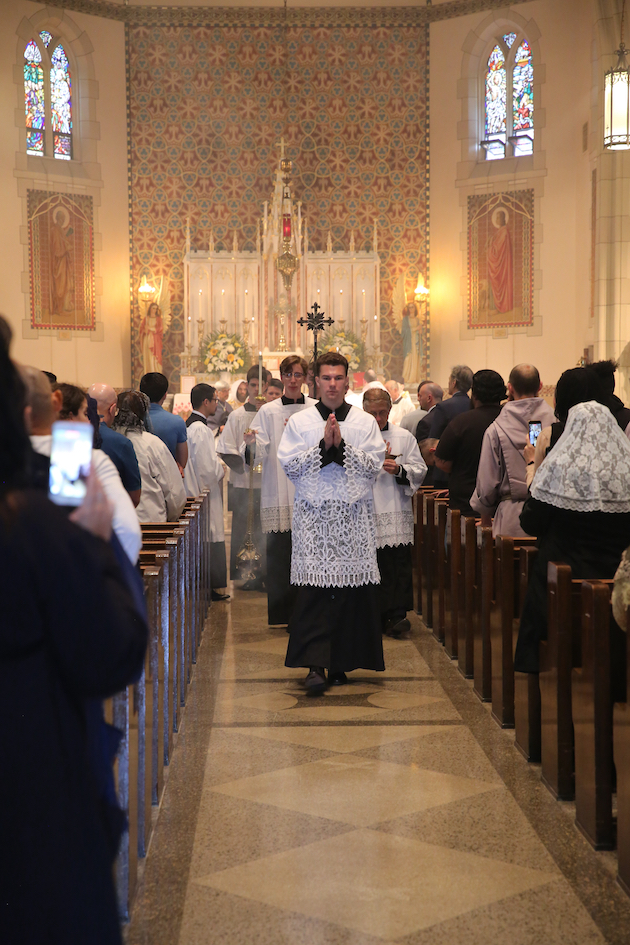
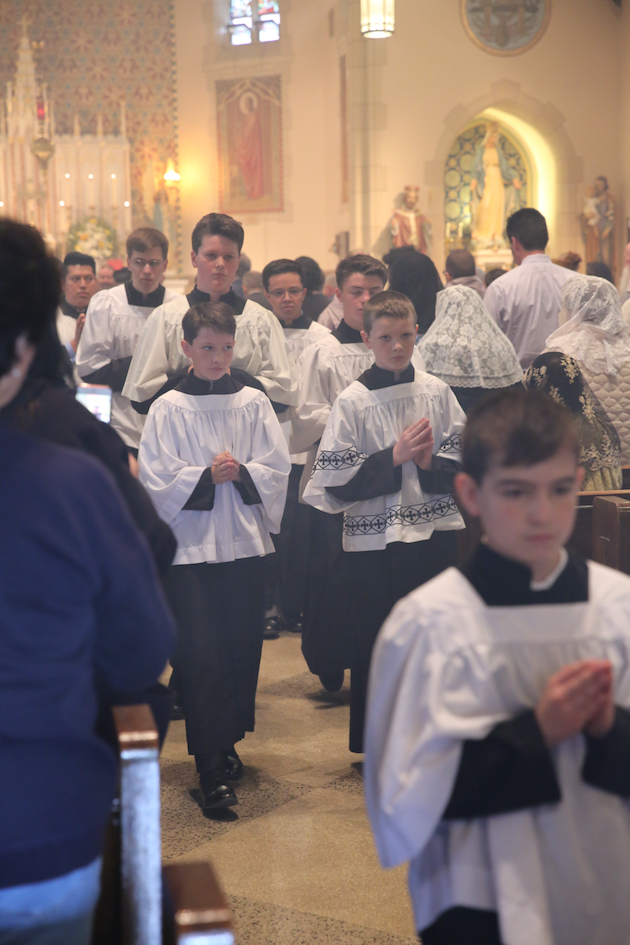
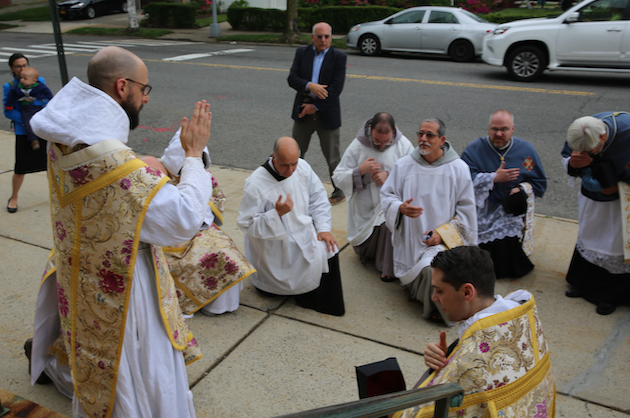
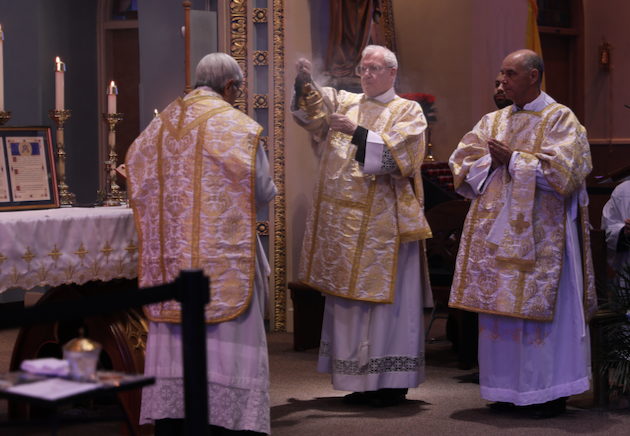
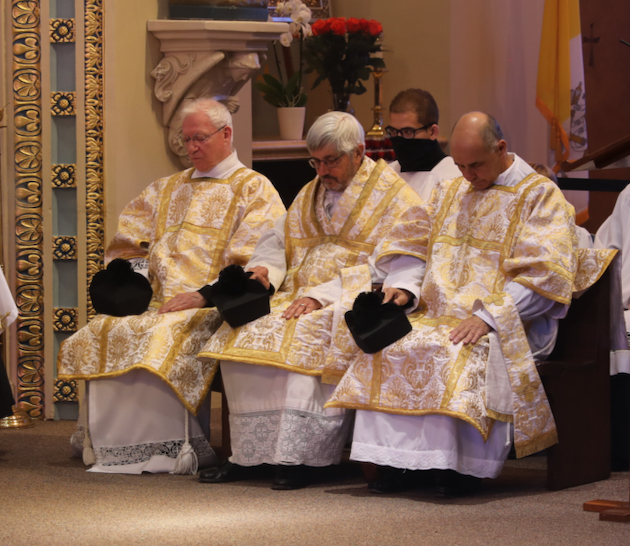
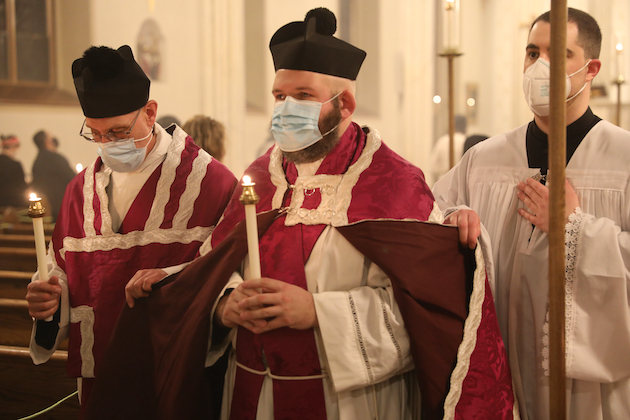
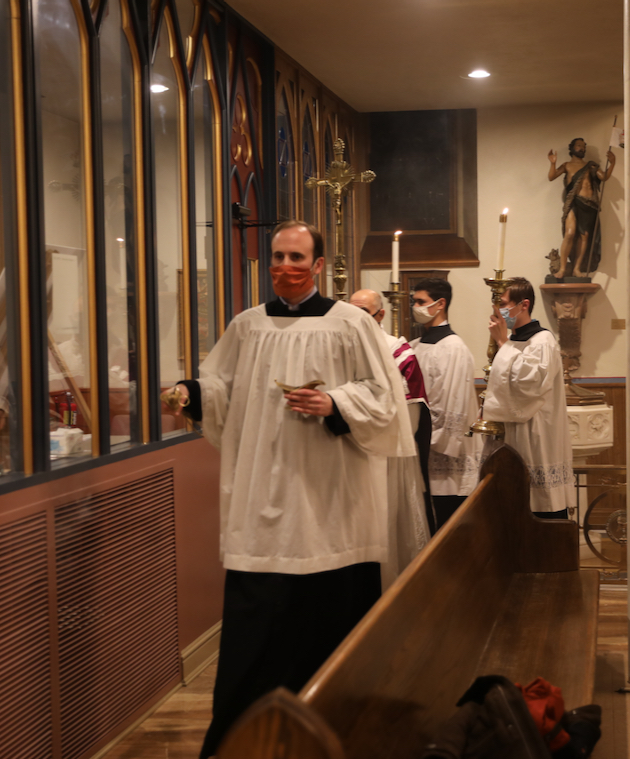
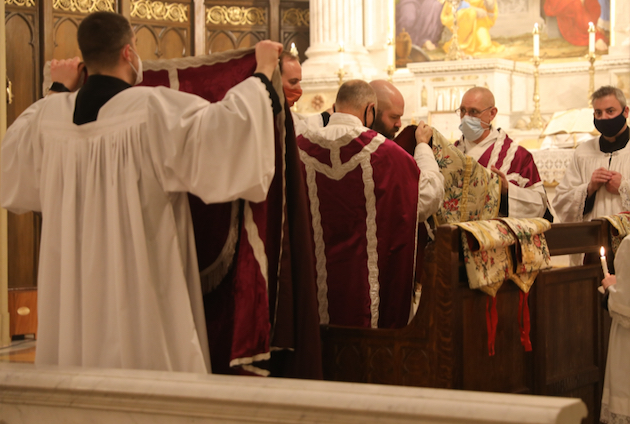
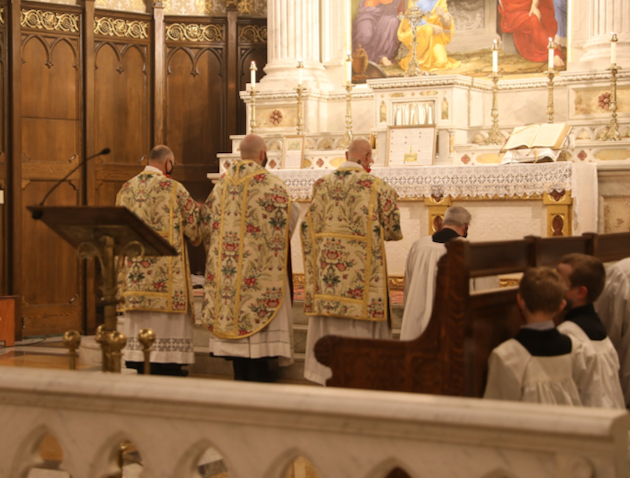
What follows is small selection of the many Traditional Masses thoughout the greater New York area at which Fr. Ambrosio participated: as celebrant, as assistant priest or in choir.


29 Aug
2020

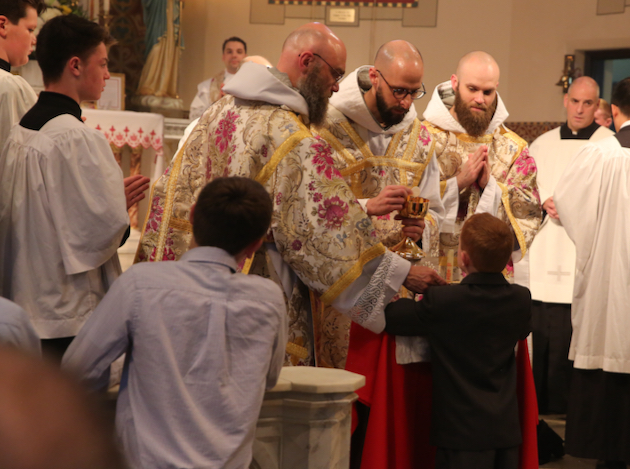
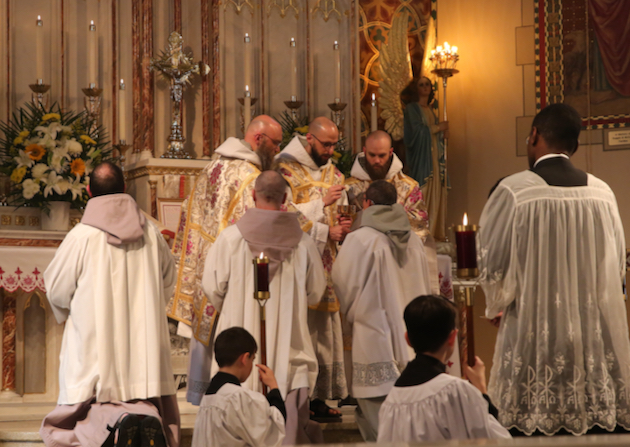
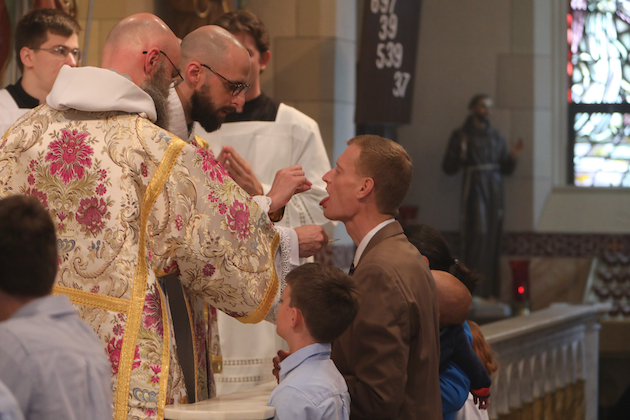
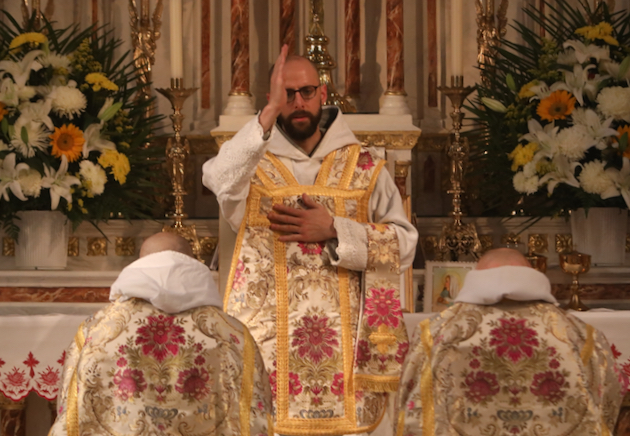
This morning Fr. Michael Novajosky celebrated at Missa Cantata for the Feast of the Beheading of St. John the Baptist at St. Augustine Cathedral in Bridgeport, CT.


14 Aug
2020


7 Mar
2020
In Stamford, Connecticut today, at the basilica of St John the Evangelist.( Msgr.Stephen DiGiovanni, pastor). Nicholas Botkins directed the music. This Mass was sponsored by the Cardinal Kung Foundation (http://www.cardinalkungfoundation.org).
The Mass commemorated the 20th anniversary of the death of Cardinal Ignatius Kung Pin-mei.
18 Feb
2020
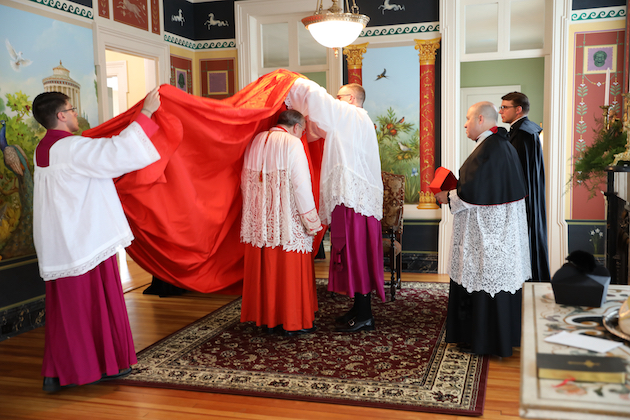
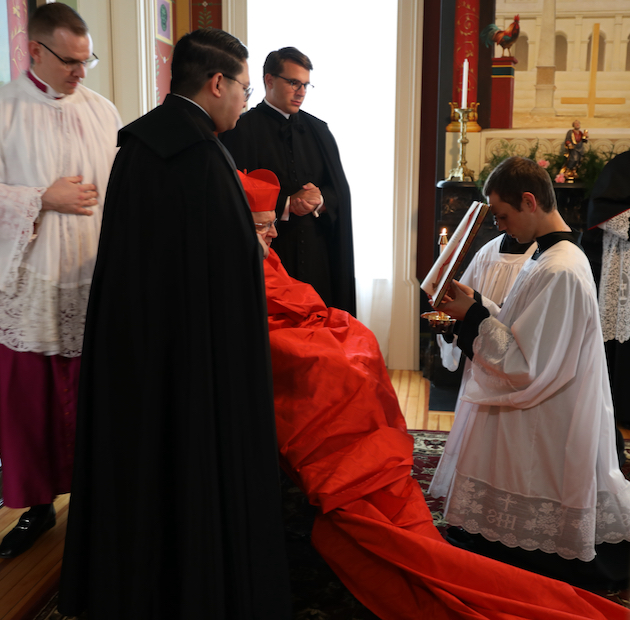
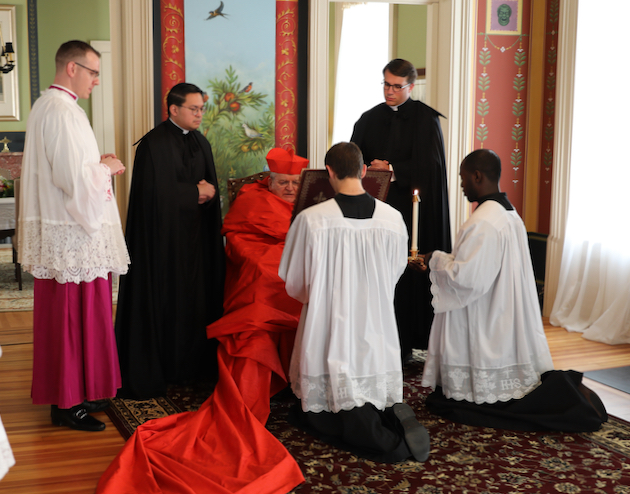
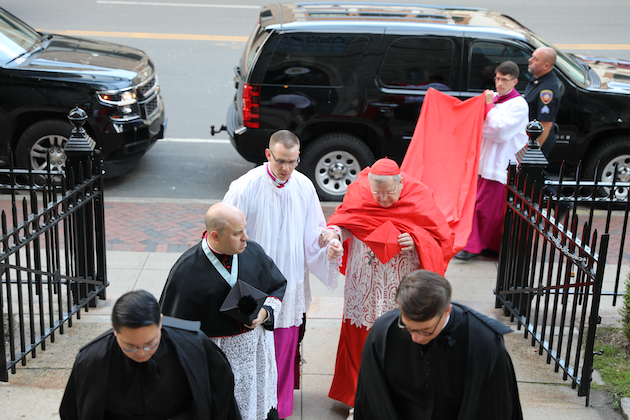
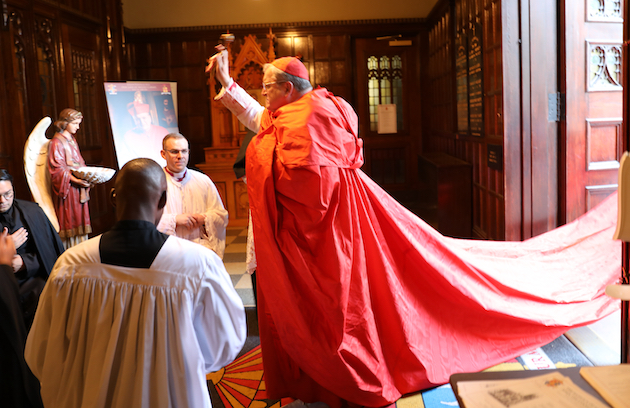
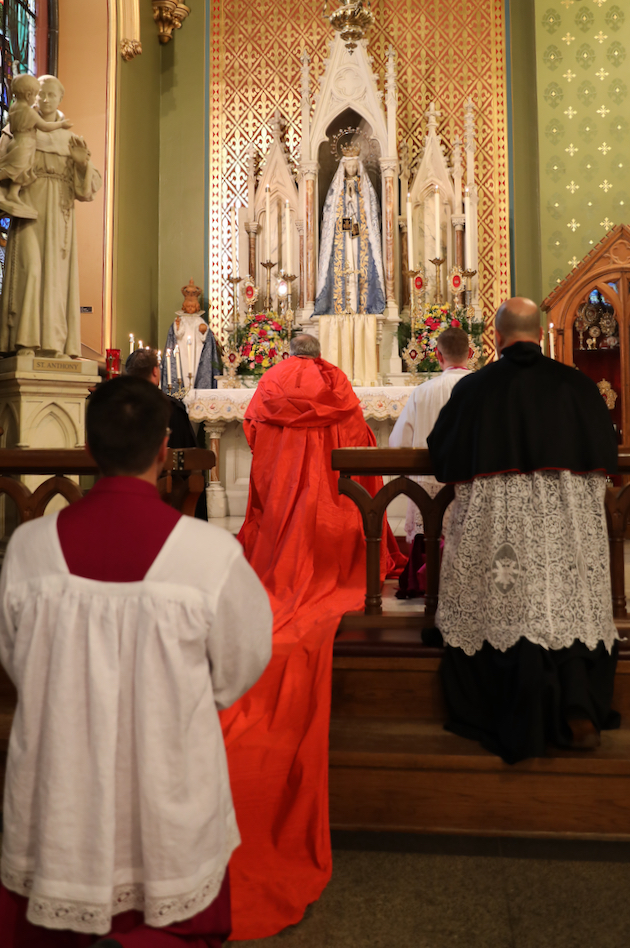
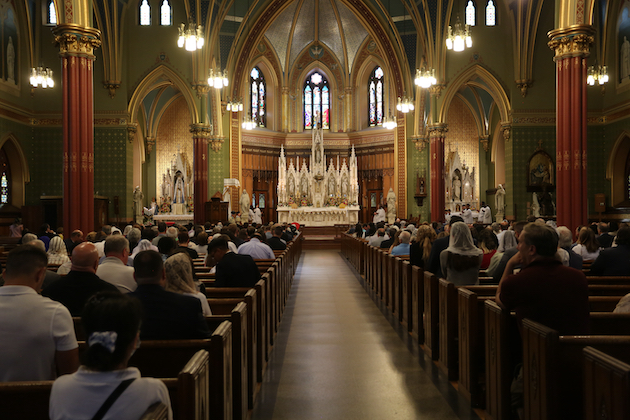
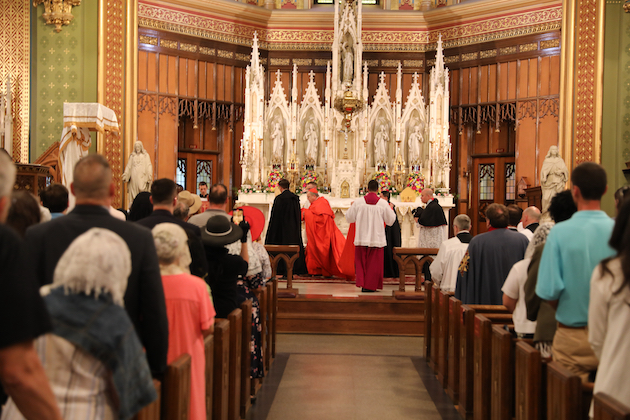
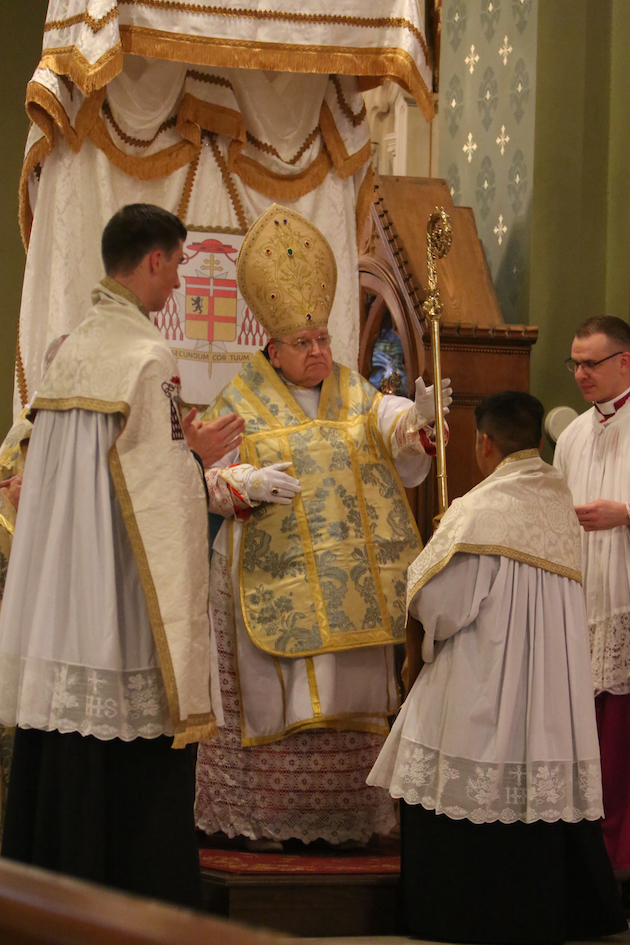
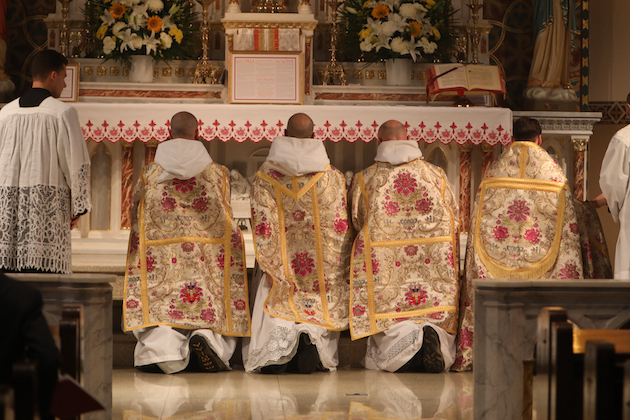
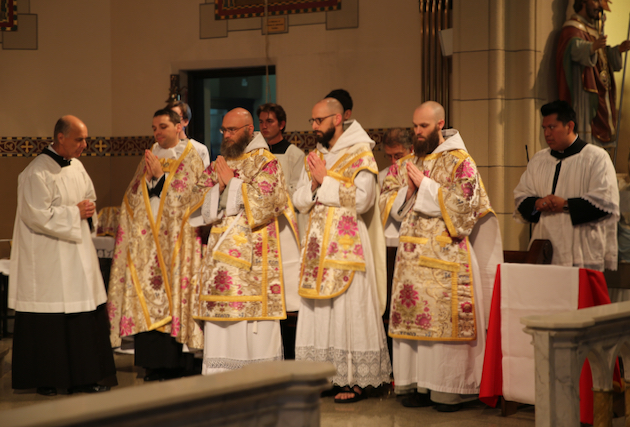
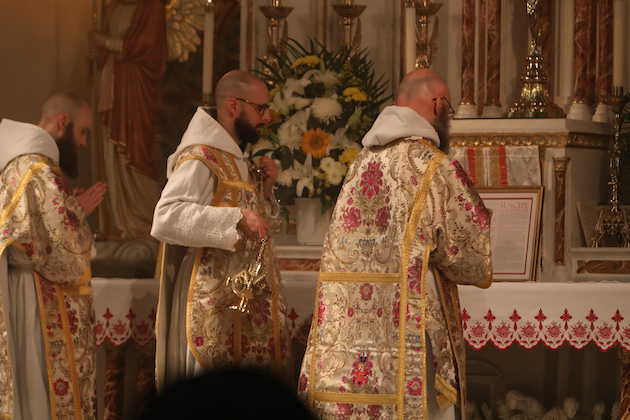
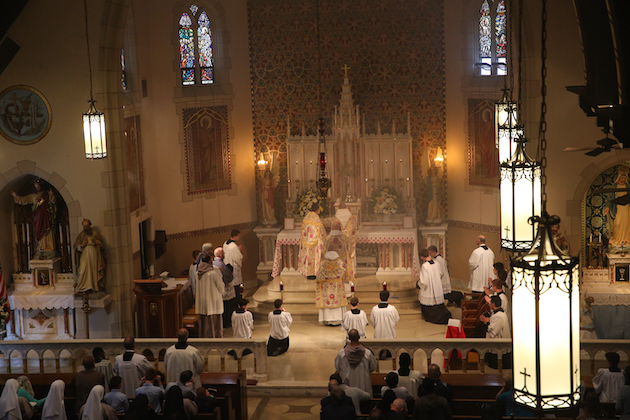
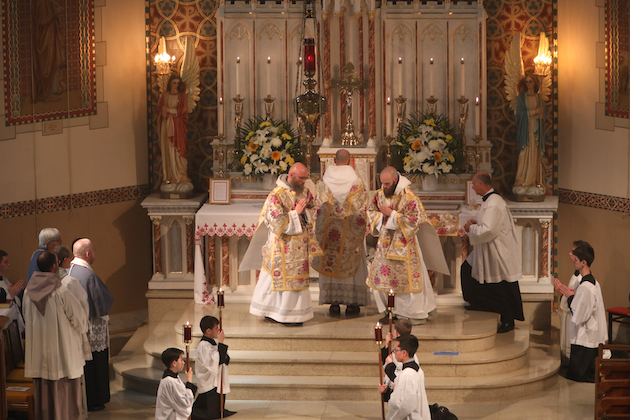
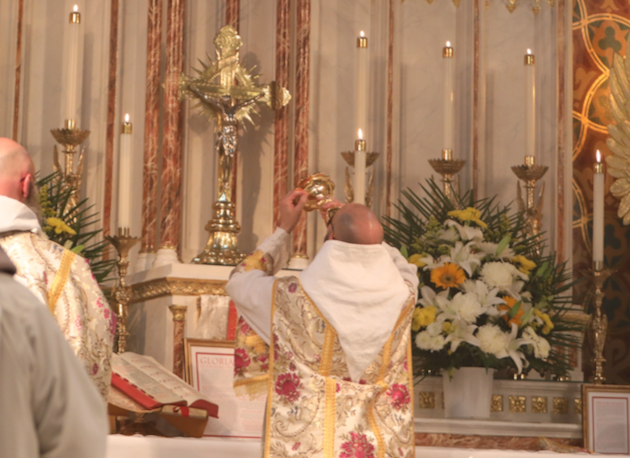
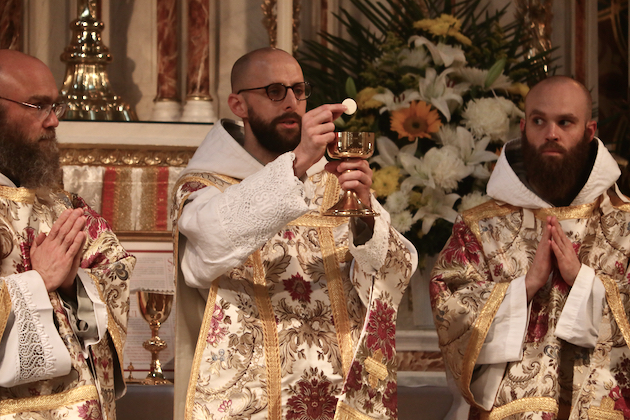
The third annual Lepanto Conference was held in New York City this past Saturday February 15. The event opened with a Solemn Pontifical Mass from the Throne, at St. Vincent Ferrer Church with is Eminence Joseph Cardinal Zen, Bishop Emeritus of Hong Kong, as celebrant.
Father Robert Pasley of the Diocese of Camden served as assisting priest. Father Michael Novajosky of the Diocese of Bridgeport served as deacon. Father Rufus Kenny of the Archdiocese of New York served as subdeacon. Father Richard Cipolla of the Diocese of Bridgeport was the homilist. William Riccio, Steven Quatela and John Pia were the masters of ceremony. The Schola Cantorum and Brass Ensemble of St. Vincent Ferrer were directed by James Wetzel.
Preparations for the Mass:
Cardinal Zen awaits the start of Mass.
Priests hear confessions before Mass while a long line forms for confessions.
The NYPD Holy Name Society rehearses before Mass.
Members of chivalric orders assemble.
An honor guard processes to meet the Cardinal at the West Porch.
At the West Porch the Cardinal kisses a crucifix and blesses the people with holy water.
The Cardinal processes to the Rosary Altar where he offers prayers before the Blessed Sacrament.
The Cardinal repairs to the Friars’ Chapel where he vests for Mass.
Ministers vest for Mass in the Sacristy.
Our photos of the Mass continue in Part II
1 Dec
2019

This Thursday, at 6:00 PM, the Society of St Hugh of Cluny will be sponsoring a Solemn High Mass at the church of the Most Holy Redeemer on East 3rd Street in New York. A reception will follow. Music will include the St Nicholas Mass by Haydn. It will also be an opportunity for you to acquaint (or reacquaint) yourself with one of the grandest Catholic churches in Manhattan.


Most Holy Redeemer was the New York home of the Redemptorist order from the 1840’s to this year. The present church was built in the early 1850’s and its size aroused the wonder of contemporaries. It was one of the two churches that served the German population of the city, at that time centered in what later would be called called the East Village. The other church, the nearby archdiocesan parish of St. Nicholas – was razed in 1960 under Cardinal Spellman – only the rectory survives. The exterior and interior of the Most Holy Redeemer, however, obviously reflect extensive subsequent renovations.

Most Holy Redeemer enjoyed great prominence in the 19th century. But after 1900 the city’s German population started to migrate north, to Yorkville. By 1940 this parish was already experiencing challenges.

In this year the Redemptorists left. There was no publicity, no mention in Catholic New York, for the end of a 180-year apostolate. Of the former proprietors all that remains, presumably, are the many deceased Redemptorists buried in this church. The parish is now in Archdiocesan administration.

Most Holy Redeemer’s interior is a stark contrast to the (current) exterior. It is an incredible decorative display of marble, stained glass, paintings sculptures and mosaics. Despite some damage from the elements and ghastly renovations, much remains in relatively good condition.


(Above) Most Holy Redeemer also displays objects, decidedly less successful artistically than the rest of the decor of this church, inherited from the nearby shuttered parish of the Nativity. Most Holy Redeemer is also the successor to that ancient parish – housed after 1970 in perhaps the most undistinguished Catholic church building on the island of Manhattan. A dispute is continuing regarding the use of the Nativity parish site.


(Above and below) Special mention must be made of two of the chapels. Cardinal Spellman in 1966 designated Most Holy Redeemer church as the “pilgrimage shrine” of Our Lady of Perpetual Help. A magnificent chapel surrounds this miraculous image – a special devotion of the Redemptorist order. Regrettably, as readers of our series on New York churches will know, such devotions appear to attract little interest from the laity nowadays. – and don’t save their churches from closure.


(Above) The second spectacular chapel contains over 100 relics – including the entire body of the martyr St. Datian – brought to this church amid scenes of indescribable rejoicing in the 1892. HIs wax effigy lies beneath the altar.


After 1945, Most Holy Redeemer seems to have dropped out of the consciousness of most New York Catholics. Unlike the otherwise similar Jesuit parish of St Francis Xavier, it had no high school still capable of attracting interest beyond its immediate neighborhood. Its parochial school kept going, with diminishing numbers, until 1985. One well known New York priest can still remember nuns – still German! A graduate in 1972 was Ursula Burns, until recently CEO of Xerox. In more recent years the parish has served mainly a “Hispanic” congregation.
So a visit to Most Holy Redeemer is like a journey to the past of Catholic New York. I hope, though, that the Solemn Mass we are sponsoring this Thursday will be the start of a new beginning. There are only three or four other churches in Manhattan that can rival Most Holy Redeemer as a splendid setting for the Traditional Mass. We also hope that Catholics will become more aware of this downtown treasure and join in assisting the clergy and congregation in the recovery of this venerable parish We hope you can make ti!