7
Jul
20
Jun
We have just had news that Raymond Cardinal Burke has agreed to be the patron of the 14th annual Summorum Pontificum Traditional Mass Pilgrimage to Rome, which will take place from October 24-26. More information about the pilgrimage: https://en.summorum-pontificum.org
6
Jun

The Feast of Corpus Christi is Thursday, June 19. The following churches will have Traditional Masses
Connecticut
St. Mary Church, Norwalk, 12:10 pm Low Mass
Immaculate Conception High School Chapel, Danbury, 6 pm Solemn Mass followed by procession and Benediction.
Sts. Cyril and Methodius, Bridgeport: 6 pm Solemn Mass and Eucharistic procession with Benediction at an outside altar.
St. Patrick Oratory, Waterbury, 6pm High Mass & Eucharistic Procession to bring the Real Presence of Jesus in the Most Blessed Sacrament to the neighborhood surrounding our parish. Please note that there will be no 8am Low Mass that day. Following the procession, join us for a light reception in the church hall.
New York
Holy Innocents Church, New York, NY, 6 pm Missa Cantata followed by outdoor procession with triple Benediction. (On the seven days following the Feast of Corpus Christi, a 2nd class votive Mass of the Blessed Sacrament may be celebrated (when the Liturgical Calendar permits) followed by a Eucharistic procession. This option will be done beginning on Friday, June 20 until Thursday June 26 (with the exception of Monday, June 23 which is the Vigil of St. John the Baptist and Tuesday, June 24 which is the Feast of St. John the Baptist, which outrank the 2nd Class Votive Mass) at the 6:00 p.m. Mass, which will be offered Coram Sanctissimo).
Our Lady of Mount Carmel, New York, NY, 5:00 PM Set up of Outdoor Altars, 6:00 PM Confessions, 7:00 PM Corpus Christi Mass, 8:00 PM Outdoor Eucharistic Procession with Benediction at Outdoor Altars
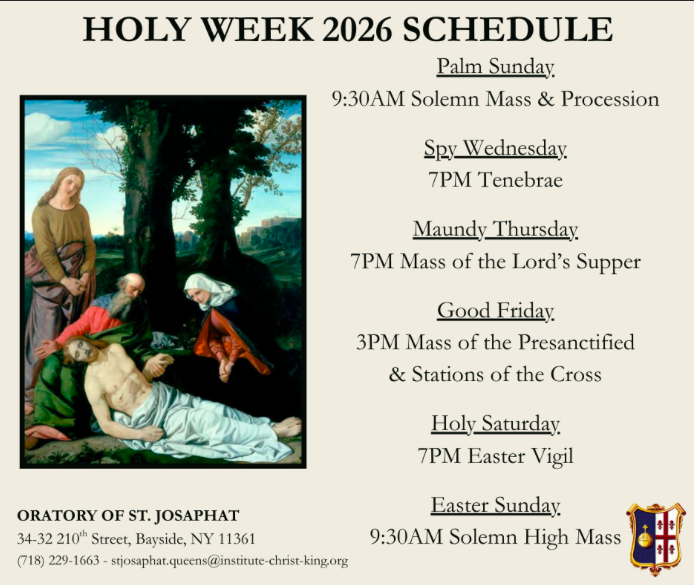
St. Josaphat Church, Bayside, Queens, 7 pm Mass followed by procession
St. Margaret of Cortona, Riverdale, Bronx, 6 pm Solemn Mass followed by Eucharistic procession
St. Paul the Apostle, Yonkers, 12 noon
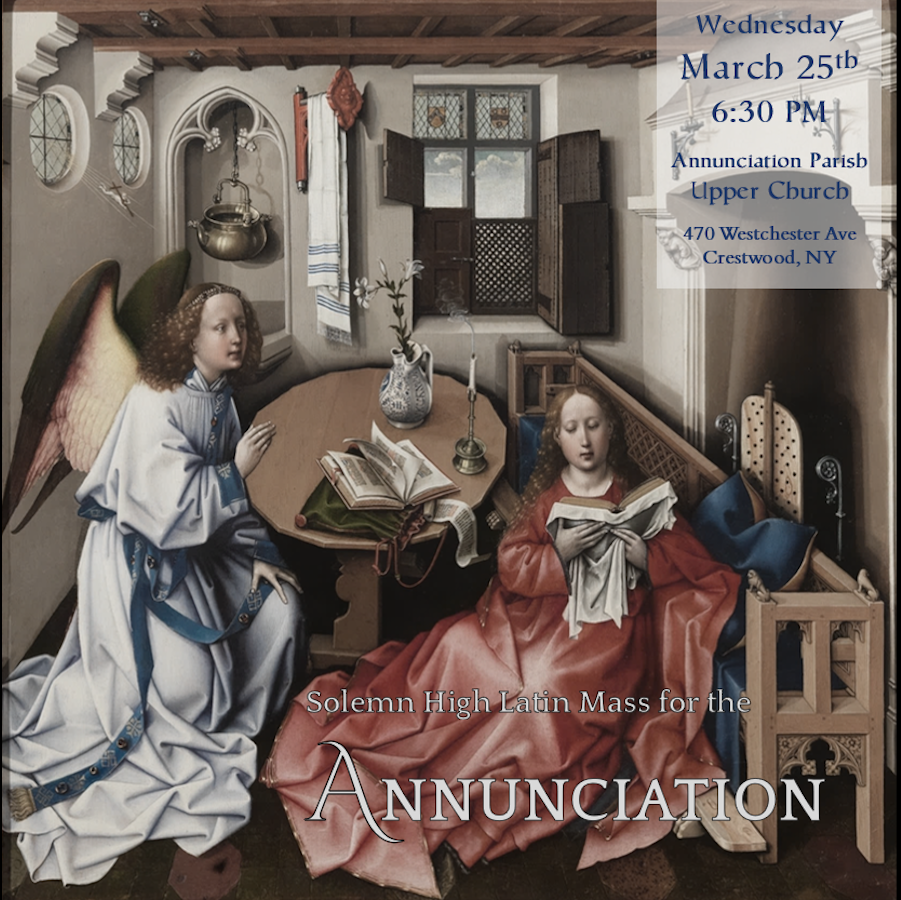
Annunciation Church, Crestwood, NY, 7pm Mass & Procession Thur. June 19th.
Sacred Heart Church, Esopus, 11:30 am
New Jersey
Our Lady of Sorrows, Jersey City, 7 pm Mass followed by a procession
Our Lady of Fatima, Pequannock, 9 am, 7 pm
St Anthony of Padua, West Orange, 9 am Low Mass; 7 pm High Mass followed by a procession
St. John the Baptist, Allentown, 7 pm Solemn Mass followed by an outdoor procession and start of 40 hours adoration of Our Lord continuing through the night until Saturday closing with a 1 pm Mass
Connecticut
St. Mary Church, Norwalk, 10 am Solemn Mass
Georgetown Oratory of the Sacred Heart, Redding, CT, 12 noon followed by procession
New York
Holy Innocents Church, New York, NY, 9 AM; 10:30 AM High Mass followed by Eucharistic Procession in the church and Benediction
Our Lady of Peace, Carroll Street Brooklyn, 9:15 am, Missa Cantata with Procession to follow
St. Josaphat Church, Bayside, Queens, 9:30 am
St. Paul the Apostle, Yonkers, 2:30 pm
Immaculate Conception Church, Sleepy Hollow, 4 pm Missa Cantata followed by a procession and a convivium.
New Jersey
Our Lady of Fatima, Pequannock, 7 am, 9 am, 11 am Mass followed by a procession, 1:30 pm, 5 pm
Shrine Chapel of the Blessed Sacrament, Raritan, 11 am Mass followed by a procession, Benediction and picnic
30
May
A large fire destroyed a historic church that was beloved by the community – St. John the Baptist Church in Maria Stein(!). It was one of a number of Catholic churches in that region of Ohio which were built by German immigrants.
Steeple collapses after fire rips through historic Catholic church (WHIO -TV 7, 5/29/2025; with many photos)
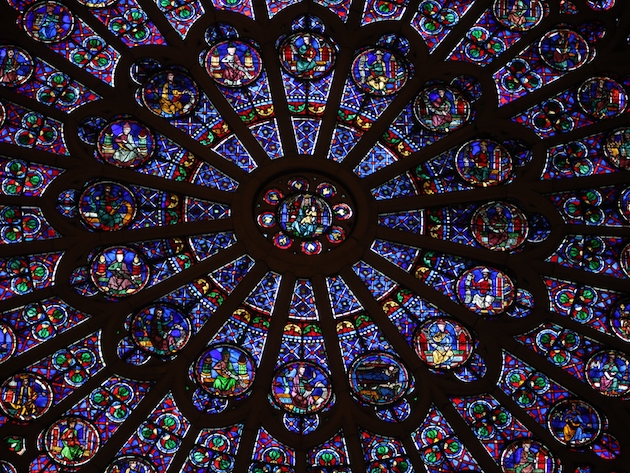
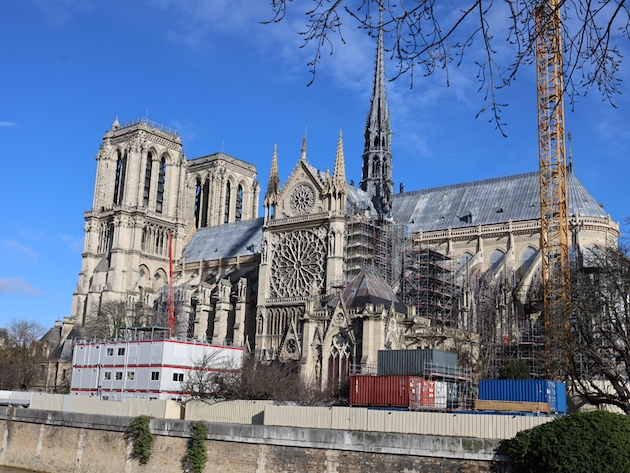
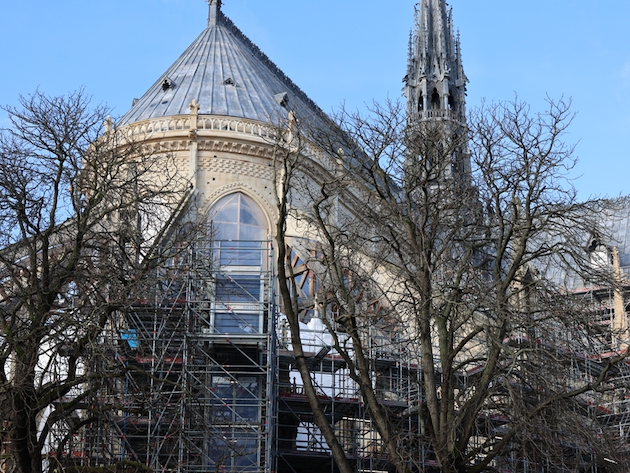
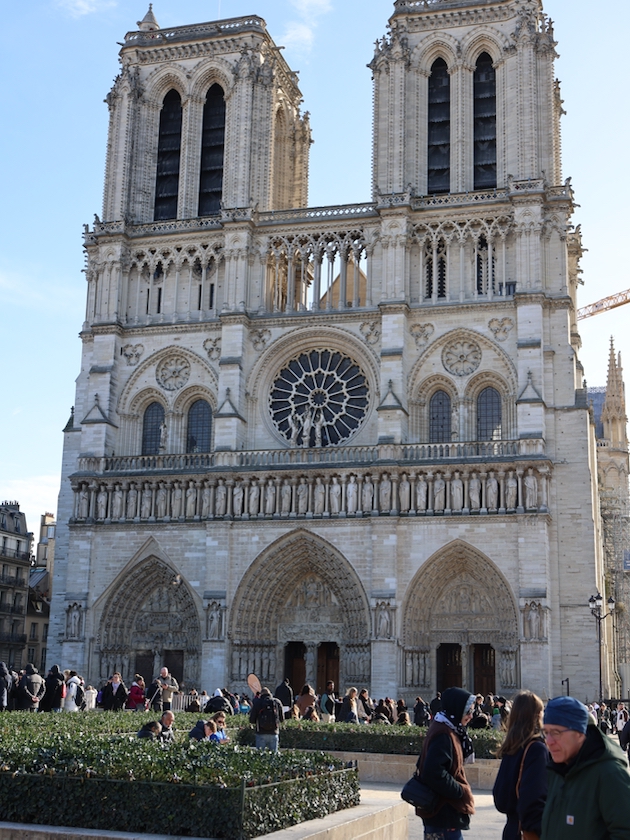
Is this not as potent a symbol of the Catholic Church today as was the 2019 fire in Notre Dame cathedral in Paris? Particularly when the Catholic clerical, liturgical establishment is mustering its forces in and outside the United States for a decisive battle with both Traditionalism and “reform of the reform.”
Coincidentally Charles Coulombe has just published in Crisis an acccount of the crack-up of traditional American culture taking as its starting point the burning of historic Nottoway plantation in Louisiana.
Coulombe, Charles, “The Burning of Nottoway and the New Pope: American Identity and the Future of Catholicism,” Crisis Magazine (5/30/2025)
For the destruction of this magnificent 1859 mansion was greeted with indifference by most people, with equivocation by local poltical and cultural leaders and even with satisfaction by others. For to them this house was a symbol of an evil American past.
Mr. Coulombe thinks the end of our inherited Protestant American society and culture may open the door to a new Catholic revival. But how is a Church also at war with its own culture, history and beliefs going to accomplish this? For the Church of the Council is not an alternative, but the mirror image of Western, secular society – which it tries so hard to emulate. That is the ultimate origin of the liturgical war recently launched by the hierarchy in the Charlotte diocese. The burning of St. John the Baptist church in Ohio is a most telling sign – an “ideogram” (Ezra Pound!) – of Catholic disarray.
26
May
26
May
Fons et Culmen Sacred Liturgy Summit gathers together Catholics who love Christ, the Church, and the Church’s sacred liturgical tradition for
Fons et Culmen
At the heart of the Summit is the solemn pontifical celebration of the sacred liturgy, both Mass (Novus Ordo) and Vespers .
The conference liturgies feature a special emphasis on excellence in ars celebrandi, superb preaching, beautiful sacred music rendered from the Church’s treasury throughout the ages by a professional choir, and the opportunity to sing Vespers in common.
Clergy attendees, supported by letters of good standing, are welcome and encouraged to assist at conference liturgies.
Lectures
Featuring lectures from prominent prelates, clergy, and laity from around the world, the talks of the Summit will offer timely insight into the nature of the sacred liturgy, its ars celebrandi, liturgical formation, the sacred liturgical arts (music, art, and architecture), and the role of the sacred liturgy in the lives of the Church’s clergy and faithful.
Speakers and celebrants include: Robert Cardinal Sarah, Archbishop Salvatore Cordileone, Dom Benedict Nivakoff, Dr. Jennifer Donelson Nowicka, Dr. Michael Foley, and DIno Marcantonio
Fellowship
Designed to foster conversation amongst attendees and speakers, the Summit schedule features time for shared meals and conversational fora.
The fora, moderated by conference hosts, will engage participants, prelates and clergy in attendance, and Summit speakers in discussion about the practicalities of the promotion of the sacred liturgy and liturgical formation in their parishes and schools.
For further information and to register: link
26
May
Thursday, May 29 -Ascension of the Lord, Holy Day of Obligation
6:00 PM – Sung Holy Mass (1962)
Saturday, May 31- Queenship of the Blessed Virgin Mary
8:30 AM – Sung Holy Mass (1962)
Friday, June 6 – First Friday
8:30 AM – Holy Mass (1962)
9:00 AM – 8:00 PM – Adoration of the Blessed Sacrament7:00 PM – Sung Holy Mass (1962) Coram Sanctissimo (in the presence of the exposed Sacrament) concluding with the Litany of the Most Sacred Heart and Benediction
26
May
Latin Mass Group
The first meeting for the discussion group on the Latin Mass will take place this Wednesday, May 28 at 7:30 PM in Pryor-Hubbard Hall at the Georgetown Oratory of the Sacred Heart in Redding, CT. Fr. Novajosky will offer a brief presentation on what he hopes to accomplish and will share thoughts and some proposals. He will ask those in attendance for ideas on topics. While the preference is for the meetings to be done in person, there will also be a zoom meeting option for those who are unable to come to the oratory campus. Here is a link to set up for the Zoom meeting: Link
25
May

St Joan of Arc. A past victim of episcopal malfeasance(Bishop Pierre Cauchon of Beauvais ). Later, the decision of Cauchon’s court was overturned and much later Joan was canonized.
What have we learned about Pope Leo so far – at this very early stage of his papacy? What have his initial actions – or his inaction – revealed about the potential direction of his pontificate? Let us remember that many of the steps being taken at this moment were agreed and decided before the election of Leo. Their disclosure at this time is nevertheless significant.
As to his appointments, on May 25 we read:
The Holy Father has appointed His Eminence Cardinal Robert Sarah, prefect emeritus of the Congregation for Divine Worship and the Discipline of the Sacraments, as his special envoy to preside over the liturgical celebrations to be held on 25 and 26 July 2025 at the Shrine of Sainte-Anne-d’Auray, diocese of Vannes, France….1)
A ceremonial position, yes – but a mark of a certain favor. Much more important, however, was this announcement on May 22:
Pope Leo XIV has appointed Sister Tiziana Merletti, former Superior General of the Franciscan Sisters of the Poor, as Secretary of the Dicastery for Institutes of Consecrated Life and Societies of Apostolic Life. 2)
There she joins Sister Simona Brambilla in the leadership of the dicastery. I think that at the very minimum this appointment is a vote for the status quo. Let us remember that the “status quo” in this dicastery means that conservative or traditionalist orders (from the Franciscan Friars of the Immaculate to the FSSP)are subject to visitations or even takeovers while the progressive and mainstream religious orders and institutes continue on their disastrous downward course in numbers and activities without the slightest interference from Rome. In that regard, I note that, as of 2023, Sister Merletti’s order (which she led 2004-2013) has a total of 106 members. I cannot find information on prior years. 3) The (at least nominal) prefect of the Dicastery, Sr. Simona Brambilla, led her order, the Missionary Sisters of the Consolata, between 2011 and 2023. In 2008 they numbered 762 in 128 centers, in 2022, they had 532 members in 73 centers. 4)
As to Traditionalism, we must start our review with the “interregnum” – with the critical illness of Pope Francis. Since then, we have received news of new traditionalist apostolates and initiatives. At least one prelate has made a public statement in favor of at least toning down Traditionis Custodes. The Pentecost pilgrimage to Chartres has achieved yet another record in participation – subscription is now closed except for children.
However, all these favorable signs have been offset by other official, specific measures of the Catholic hierarchy and the Vatican:
The drastic restrictions imposed on the celebration of the TLM in the Detroit Archdiocese( announced 4/16/2025);
The expulsion of the institute of Christ the King from Oakland(effective 4/20/2025);
The procedural roadblocks imposed on the Chartres pilgrimage ( issued 5/6/2025, only weeks before the pilgrimage is scheduled to begin);
The expulsion of the FSSP from Valence in France(announced 5/15/2025);
The restrictions on (almost the abolition of) the TLM in the Charlotte diocese( announced 5/23/2025; effective 7/8/2025).
Now Cardinal Roche explicitly participated in drafting the measures against the Chartres pilgrimage; I would be very surprised if other actions listed above (particularly those in Detroit and Charlotte)did not involve at least the relevant nuncio and perhaps the Vatican as well.
The form of these decrees is as important as the substance. The message is conveyed in curt, authoritarian, bureaucratic language. The texts, when they do refer to the traditionalists, seems to me to be outright sarcastic or contemptuous. The nebulous, verbose, emotional passages often found in official Catholic documents are not to be found here. Likewise, there is no “dialogue,” ”accompaniment,” “tenderness,” or “mercy.” These allegedly sacrosanct principles fall by the wayside when dealing when someone perceived as an actual enemy.
The earlier actions seem to me like opportunistic moves on the part of the establishment to take advantage of the last days of the rule of Francis or to create a fait accompli in advance of whatever new regime might come. The later actions, after the election of Leo – particularly that in Charlotte – seem more like a demonstration of strength, even a challenge, to the new pope. For I think those in the Vatican and locally involved in such decisions expect that the pope will take no action against them.
For even assuming Pope Leo disagrees in part or totally with the anti-traditionalist campaign of Francis (which is not at all clear!) these actions put him in a difficult spot. For if it is his intent to disengage from the Bergoglian course, I would assume he would want to do so only gradually. Now, however, he will have to overrule bishops or one of his own officials in the earliest days of his papacy. This would bring down on his head the wrath of the dominant progressive forces in the Church and the secular media which stand behind them. But by doing nothing on these matters he will be giving the progressives carte blanche to do whatever they want. Their agenda, let us remember, is by no means limited to exterminating traditionalism. There is the unfinished grand project of the synodal path in Germany and elsewhere (married priests, women priests and elimination of the remaining restraints of Catholic sexual morality). A less obvious conflict between progressives (and the Vatican) and Opus Dei continues in Spain and elsewhere. Bishops in the United States and Italy call for the abolition of kneeling when receiving communion – repudiating a decades-old compromise.
So, for the time being at least, the Church’s war of annihilation against traditionalism – and really against the totality of its own heritage – continues. Whether this conflict can be sustained long-term is another matter. Will the acolytes of Francis be able to persevere in the war against the traditionalists, absent the fanatic will of their late master? Financial and personnel realities will likely soon catch up with the Vatican and the local churches. I can’t exclude the possibility that even more unsavory details of Francis and his entourage will emerge, putting the establishment under pressure. Whatever may happen, it is regrettably unlikely that peace will return to the Catholic Church anytime soon.
25
May
This coming Thursday, May 29 is the Feast of the Ascension of Our Lord, a holy day of obligation. The following churches will offer Traditional Masses. If you know of a Mass that is not on our schedule, please let us know so that we can add it.
Connecticut
St. Mary Church, Norwalk, 8 am Low Mass; 7 pm High Mass
Georgetown Oratory of the Most Sacred Heart of Jesus, Redding, 6 pm Missa Cantata. There will also be a Missa Cantata for the Vigil of the Ascension at 6 pm on Wednesday, followed by chanted Vespers.
Sts. Cyril and Methodius Oratory, Bridgeport, 7:45 am Low Mass; 6 pm High Mass
St. Patrick Oratory, Waterbury, Low Mass 8 am; HIgh Mass 6 pm, preceded by Benediction
St. Martha Church, Enfield, 7 pm
New York
Holy Innocents Church, Manhattan, 8 am, 6 pm
Our Lady of Mt Carmel, Manhattan, 7am and 7:45am Low Masses, 9:30 to 12 Noon Eucharistic Adoration, 6:00 PM Confessions, 7:00 PM Missa Cantata
St. Josaphat Church, Queens, Missa Cantata 7 pm
St. Rocco Church, Glenn Cove, Long Island, Missa Cantata 7pm
St. Matthew Church, Dix Hills, Long Island, 10:30 am
St. Paul the Apostle, Yonkers, 12 noon.
Annunciation Church, Crestwood, 7 pm Missa Cantata
Immaculate Conception, Sleepy Hollow, Low Mass, 7 pm
Sacred Heart, Esopus, 11:30 am
St. Mary and St. Andrew, Ellenville, 7 pm
Holy Trinity, Poughkeepsie, 7 pm
New Jersey
Our Lady of Sorrows, Jersey City, 7 pm Missa Cantata
Our Lady of Fatima, Pequannock, 7 am, 9 am, 12 noon, 7 pm
St Anthony of Padua, West Orange, 9 am Low Mass; 7 pm High Mass
Corpus Christi Church, South River, Missa Cantata, 7 pm
Shrine Chapel of the Blessed Sacrament, Raritan, 7 pm
St. John the Baptist, Allentown, 7 pm Solemn Mass