24
Sep
23
Sep
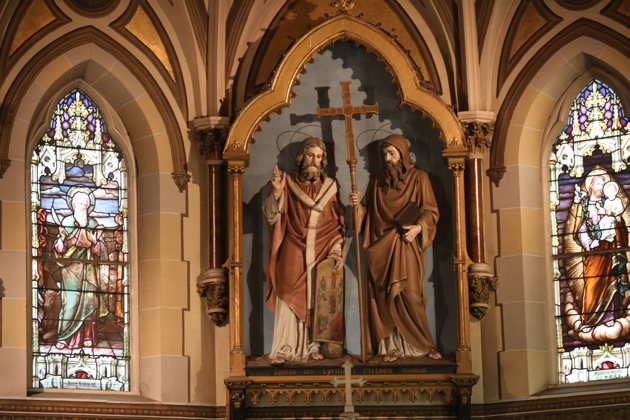
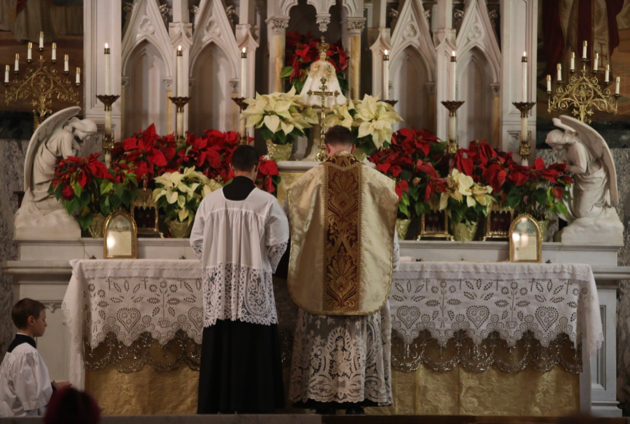
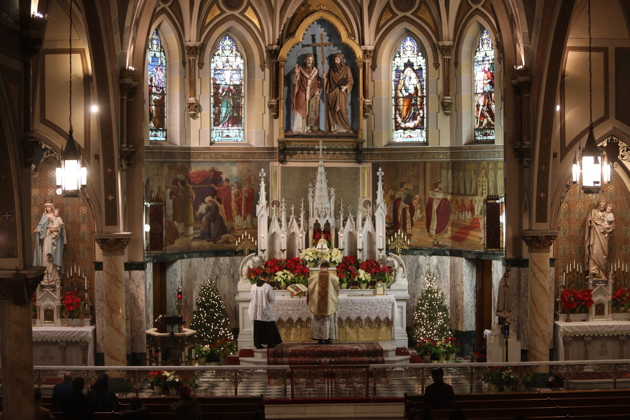
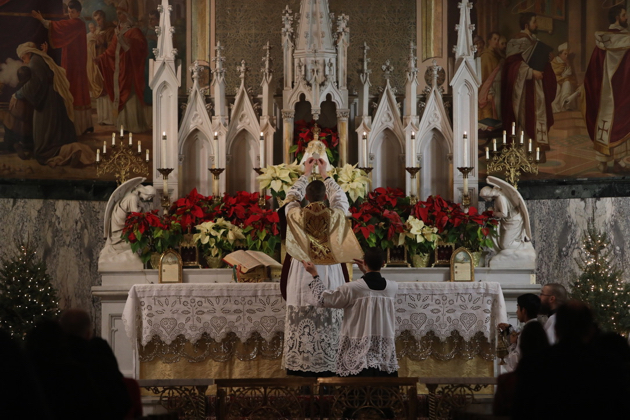
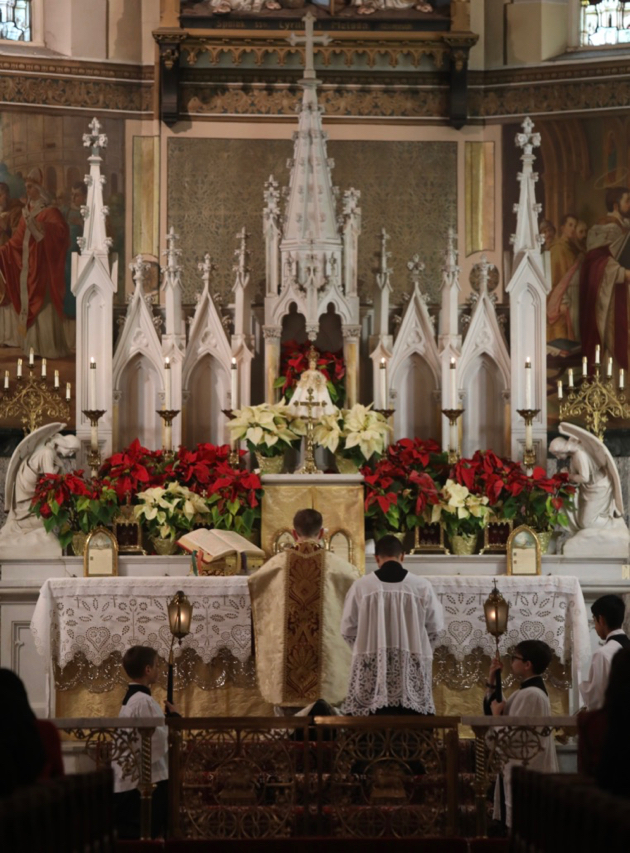
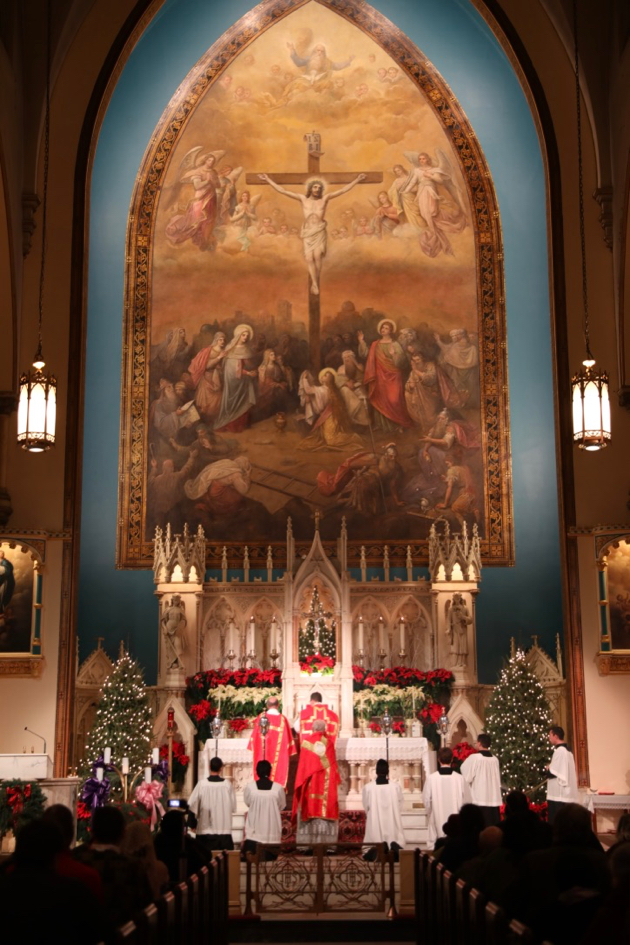
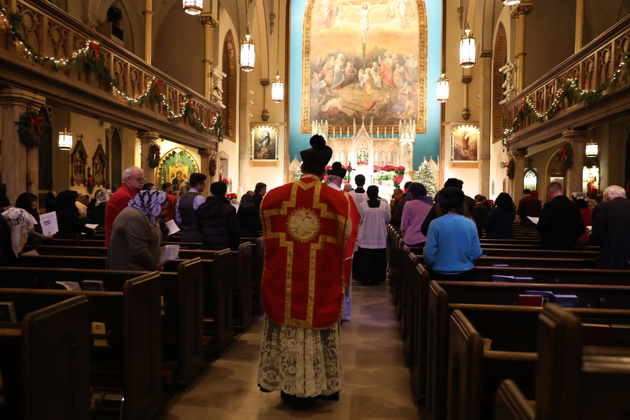
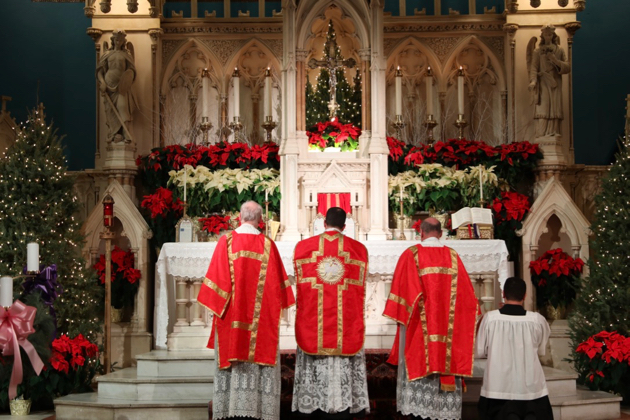
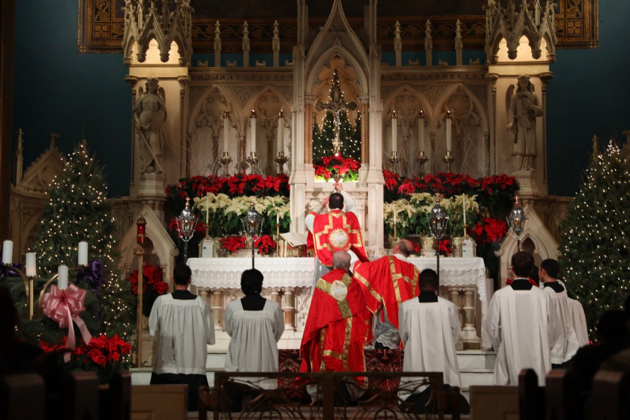
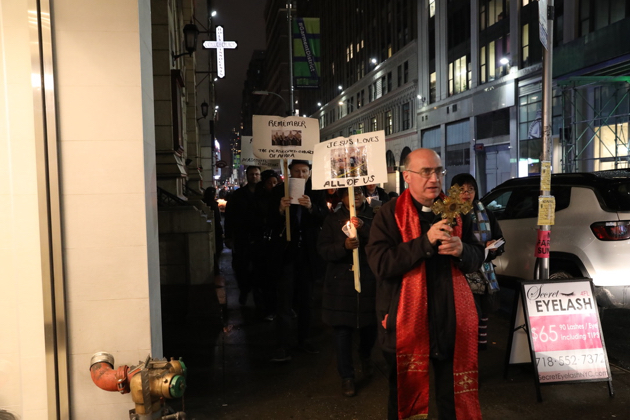
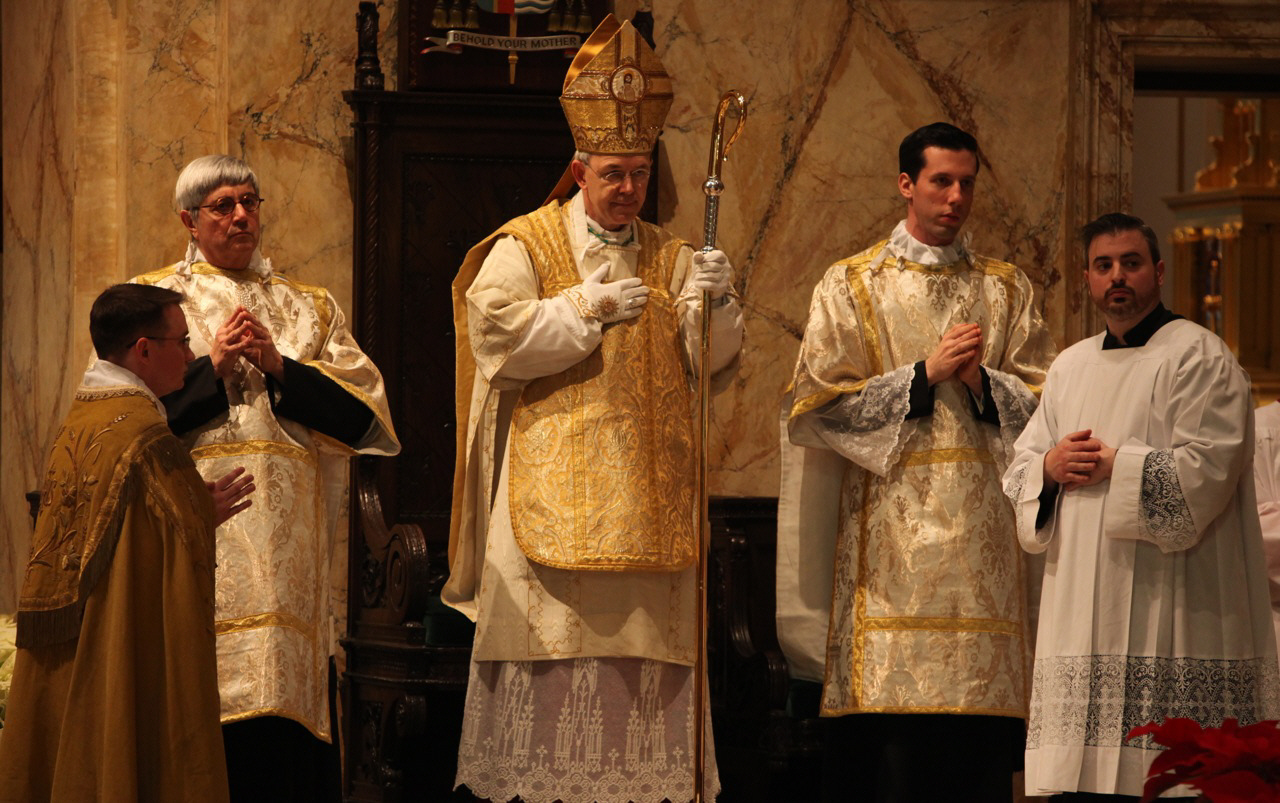
St Dominic’s Parish,in Brick, New Jersey, offered at Solemn Mass for the Feast of Exaltation of the Holy Cross on September 14. This was the parish’s first Mass in the traditional rite since the implementation of the Novus Ordo, celebrated by the newly installed pastor, Fr Brian Woodrow, who is the liaison for the Extraordinary Form in the Diocese of Trenton. Servers and musicians came to help from St John the Baptist Parish in Allentown, New Jersey.
The Mass was attended by a larger number of people than expected, around 325-350 in all. The liturgy concluded with the hymn “Lift High the Cross” sung by all with great fervor, and was followed by a dinner convivium in the parish hall.
Future Traditional Latin Masses at St Dominic’s are currently being planned for particular feasts throughout the liturgical year.
These photos and text appeared in New Liturgical Movement.
18
Sep

Sermon for the Feast of the Seven Sorrows of the Blessed Virgin Mary
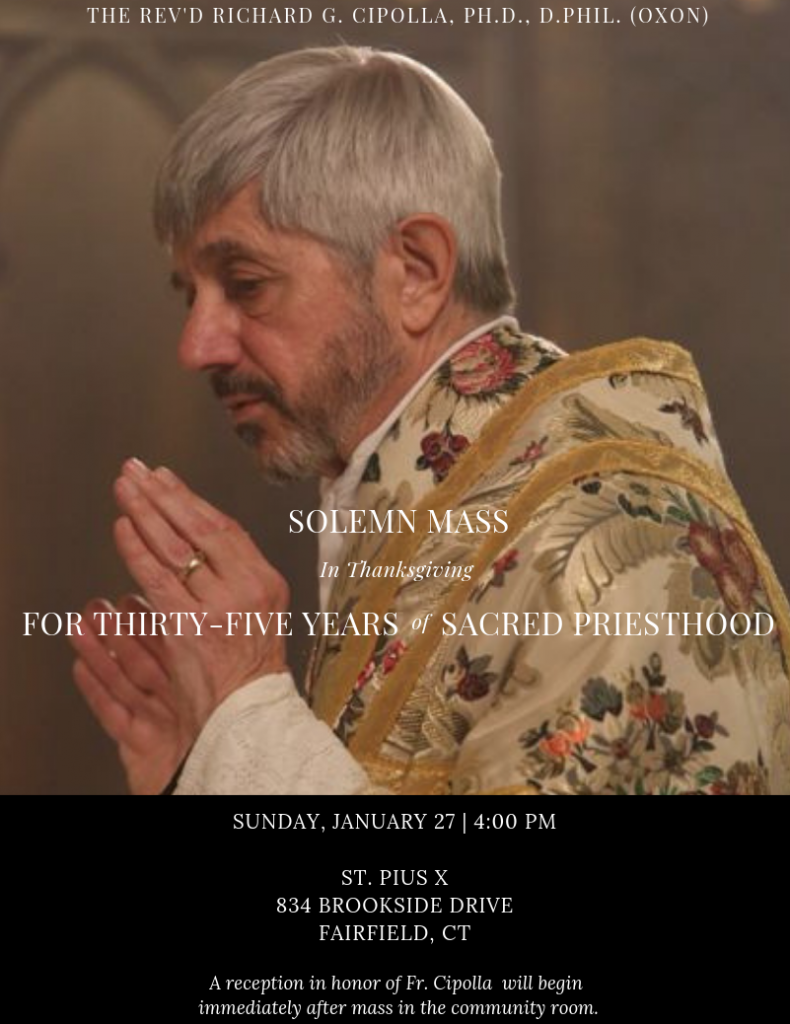
Given by Fr. Richard Cipolla on Sept. 15, 2018 at Church of the Most Precious Blood, New York
But standing by the cross of Jesus were his mother, and his mother’s sister, Mary the wife of Cleopas, and Mary Magdalene. When Jesus saw his mother, and the disciple whom he loved standing near, he said to his mother, “Woman, behold, your son!”
Then he said to the disciple, “Behold, your mother!” And from that hour the disciple took her to his own home. (John 19:25-27)
And a sword will pierce through your own soul also. (Luke 2:35)
She stood there and looked. She thought that she knew and understood what was the day of her fulfillment. She remembered that night, Joseph anxious that there was no room at any inn, her own knowledge that the time had come to give birth to her Son, not the best time, in the small city of Bethlehem crowded with people responding to the census directive from the Emperor. But she felt what was happening deep in her body and she knew that the time had come that was the time of fulfillment, fulfilling what the angel had told her just nine months ago. She remembered the birth, the absence of pain and instead a rush of joy. She remembered the smell of the animals, Joseph arranging clean straw in the manger, the baby’s cry, how she held him in the cold of the night. All this came welling out of her memory as she stood there transfixed, transfixed by her act of seeing her Son dying on a cross. She could not take her eyes off him for one second, and she knew now so deeply that it was not the birth that was her fulfillment. It was standing here at the foot of the Cross that was the fulfillment of her destiny, the fulfillment of her God given role announced to her by the angel. She was not alone, for her Son’s beloved disciple stood with her, when all the others had fled. But he seemed to be looking down, as if he could not bear to see the One he loved dying this painful and shameful death.
She stood there as a mulier fortis, a woman in the line of Sarah and Rebekah and Deborah and Esther and Judith and the mother of the Maccabees. She stood there and allowed her heart to be pierced, remembering that evening in the Temple when Simeon said to her: A sword shall pierce your soul. And so she stood there and it felt as if her heart were being pierced by a sharp sword, the same sword that pierced the side and heart of her Son. And in that moment she understood what she was born for, what she had lived for, as her Immaculate Heart wracked with pain and sorrow was joined to the Sacred Heart of her Son, as blood and water poured out from his side: the joining of the love of man to the love of God.
People often ask why this feast is celebrated in white vestments and not black or even violet. It is because of the joy that Mary experienced at that moment at the foot of the Cross that broke her heart. There seems to be a paradox in what I just said, but that apparent paradox is shattered by the incomprehensible love of God in Jesus Christ. That is why this feast is celebrated in joy after the joy of the Feast of the Exaltation of the Holy Cross. This joy cannot be understood outside of the Church of believers. The world will never understand this joy whose depth is in suffering. But more and more, so many Catholics cannot comprehend this joy rooted in suffering that is in the end redemption, for their religious sensibilities have been dulled by a half a century of bathing in the tepid waters of sentimentality and intellectual vapidity, especially in their experience of the worship of God in the Mass.
But there are signs that the laity may be willing to come out of this tepid bath and are open to a cold shower that will brace them to reawaken their faith in the virile Jesus Christ who is their champion and Lord and to give them the courage to be men and women of strong and real faith that understands the relationship between joy and suffering, a relationship of love.
The events of the past several weeks have certainly caught the attention of both the Catholic faithful and the secular media. There were those who thought and declared that the clergy scandals brought forth at the turn of the last century were over and done with and let’s move on. That that was not the case and wishful thinking on the part of prelatial clergy is now absolutely clear. The terrible immorality of the clergy was not confined to a few whose infamous deeds vis a vis sexual molestation of children, mostly boys, were discovered 20 years ago. What is happening now is that the collapse of the noxious smoke screen that protected these child molesters may be about to happen. The smoke machine run by the bishops and the Roman curia is about to be short-circuited. Or so we hope. I wish I could say that the short circuit will be caused by the outraged laity. But it does not seem so. The genuine piety of the laity towards the Church is admirable and comes from their faith. But some bishops have relied on this for many years to get on with the status quo, not only with respect to covering up the terrible sexual scandals of the priests involving sexual predation of little boys but also with respect to the network within the Church that allows this covering up to happen.
It would seem obvious so far that the bishops cannot address and solve the moral problems that beset their own brethren. There is too much moral compromise already. When the chosen people of God in the Old Testament strayed from their faith and allegiance to the one true God and went hankering after the false gods of the people surrounding them, the true God used the pagan peoples surrounding the Jews, the Amalekites, the Hittites, the Jebusites, the Philistines, and ultimately the Babylonians who carried off the chosen people into exile: God used the pagans surrounding his people to not only punish them for their abandonment of their God but also to try them in the fire to bring them back to Him. The Amalekites and Jebusites and Hittites and Philistines and King Nebuchadnezzar are long gone. But it may be that God will use the secular powers of the government to chastise and purify his Church in our time. The Hittites today may very well be the Attorneys General of the United States, many of whom are not Catholic, some of whom are anti-Catholic. This gives us great pause and so it should. But what do Masses of Reparation and services of repentance called for the by bishops mean without moral accountability? Can the bishops think that such pious gestures—and I do not in any way discount the reality and graces of these Masses and prayers—can solve the deep and underlying problem of the moral corruption in the Church? No. It seems that those in the Church who can hold these bishops accountable are unable and unwilling to do that job. There is a lack of virility grounded in truth within the priests and bishops of the Church.
How do our clergy measure up to the virility of SS Perpetua and Felicity? Or the virility of St. Birgitta? Or the virility of St Catherine of Siena? Or the virility of the countless wives through the centuries who have with great sacrifice of themselves done what had to be done to raise their children as Catholics often with little help from their husbands? Or the ultimate virility of the Blessed Virgin Mary who stood at the Cross and did not flinch and allowed her heart to be pierced with the suffering of God? Men who are virile leaders of their people stand with them and lead them facing the same way as those they are leading to the Lord, and not facing their people in the manner of Father Feel Good who evacuates the seriousness of the Mass itself, that seriousness that is the Cross of Jesus Christ.
This feast of the Seven Sorrows of the Blessed Virgin Mary, the feast of Our Lady of Sorrows, should fill us great joy as we celebrate this Mass in the Traditional Roman Rite, as we all face that eternal East from whence shall come Him who will judge the living and the dead and whose kingdom will have no end. Maranatha . Come quickly, Lord Jesus.
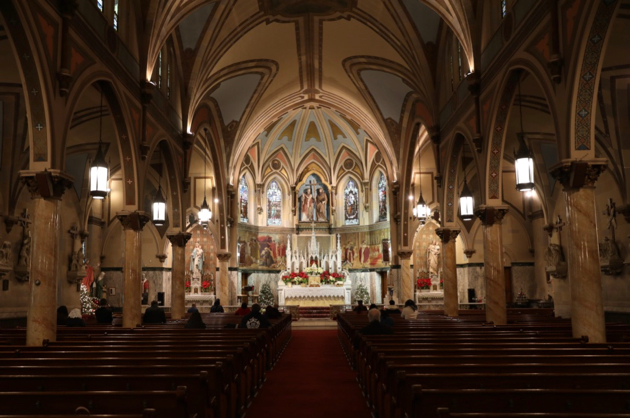
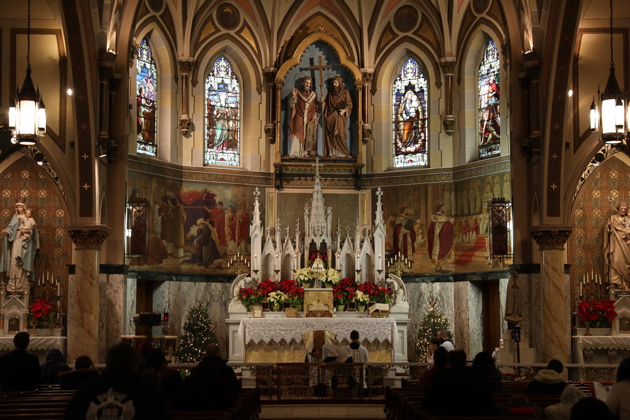
The show must go on! – that seemed the watchword yesterday at the church of the Most Precious Blood Manhattan. Despite a seemingly endless series of challenges and glitches before, during and after the Mass, the Society’s Missa Cantata for the Feast of Our Lady of Sorrows was celebrated with appropriate dignity (Fr.Richard Cipolla, celebrant) and with splendid music (the latter courtesy of Charles Weaver and associates). Our special thanks also to Fr. Christopher Salvatori who assisted and to Edwin Gonzales who stepped in as MC. This all took place before the largest congregation we have ever had the pleasure to greet at our Masses at Most Precious Blood. It’s an important sign for that church which very much remains on the Archdiocesan “endangered species” list. And it is heartening to see so many people in attendance for so many different reasons: the celebrate the feast, to see Fr Cipolla again, to hear the music or just because they wandered in from the San Gennaro Festival and stayed. Afterwards some of us – including many much younger than I who had assisted at the mass – gathered for a meal and companionship. It was a festive end to the day.
Fr Cipolla’s sermon can be found HERE
The reliquary of San Gennaro.
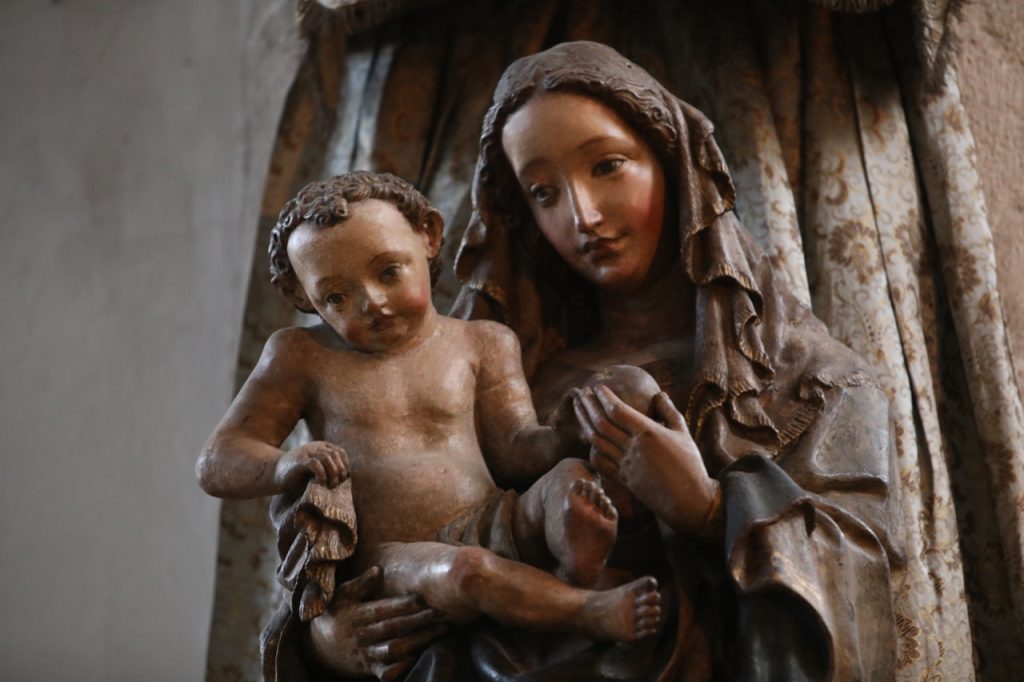
An image of the Madonna del Soccorso a Sciacca, on loan to the church. (Someone has found a good place to present a petition to Her Son.)
15
Sep
Yesterday evening, the Academy of Sacred Drama performed a delightful oratio from the 17th century “Il Nascimento di Mose” (The Birth of Moses) by Vincenzio de Grandis. At least two of the performers were well known at St. Mary’s, Elizabeth and Charles Weaver, members of the St. Mary’s Schola Cantorum.
St. Theresa Church in Trumbull, CT will celebrate its patronal feast day with a Mass in the Extraordinary Form, Sunday, September 30 at 2:30 pm.
We call to your attention a special concert of early music to be performed this Friday and Saturday night by the Academy of Sacred Drama.
de Grandis’s Il Nascimento di Mose (The Birth of Moses)
Fri, Sept 14 7:15 PM at St. Mary’s, Norwalk, CT
Sat, Sept 15 7:15 PM at Calvary Church, NYC
The Academy of Sacred Drama is a New York based ensemble dedicated to reviving the forgotten cultural treasure of sacred dramatic music. Il Nascimento di Mose (The Birth of Moses) is an oratorio composed in 1682, receiving its modern American premiere at these concerts.
If you live in Connecticut, this is an opportunity to hear this premier New York ensemble close by and free of charge, at St. Mary’s in Norwalk.
For more information about both concerts: Academy of Sacred Drama and our post
See our review of their spring concert: Guiditta by Antonio Draghi, performed at Corpus Christi Church, New York, pictured below.
13
Sep
Saint Agnes Church in New York will offer a Traditional Latin Mass in honor of Saint Michael the Archanagel on Saturday, September 29th at 10:30am.
12
Sep
Don’t forget: Saturday, September 15 at 11 AM a mass will be celebrated for the feast of Our Lady of Sorrows at the Church of the Most Precious Blood on 113 Baxter Street in New York’s Little Italy. A time for reflection amid the San Gennaro festival – accompanied by rare Italian and 18th century Mexican orchestral music!
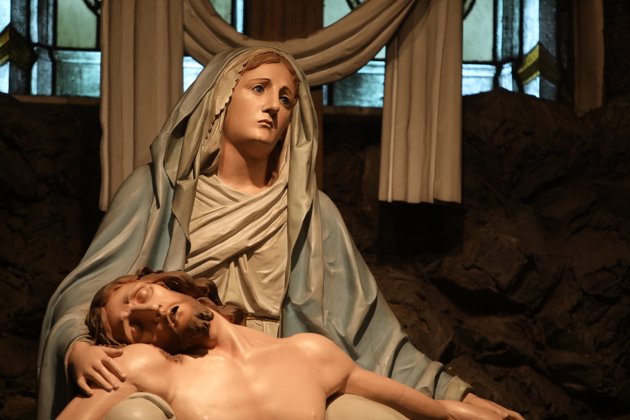
(Above and below) Images from the church of Our Lady of Sorrows on the lower East Side – including ceiling paintings which were in place by 1878.