11
Jul
6
Jul
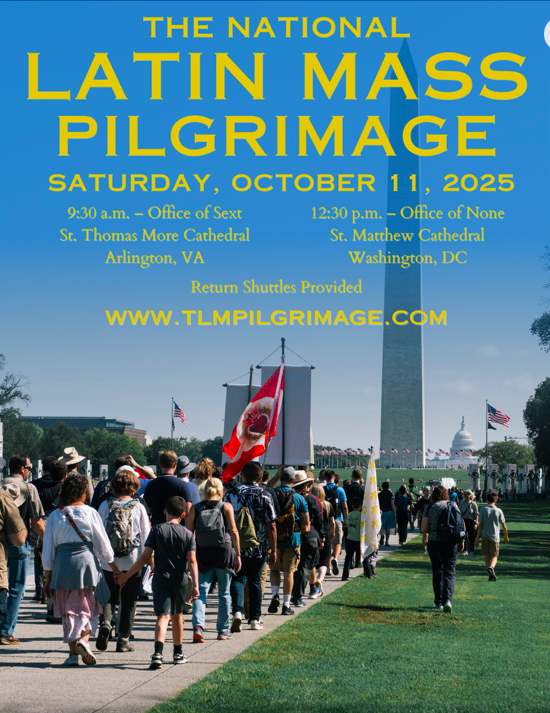
This news from Fr. Figueroa concerning the Traditional Mass at Annunciation Church in Crestwood, NY:
Please do not forget that our TLM will now be offered at 2pm starting this Sunday, July 7th. This time change will be permanent for the foreseeable future.
Please mark your calendars for Tuesday, July 16th, the Feast of Our Lady of Mt Carmel. We are planning to honor Our Lady with a Solemn High Mass in the Upper Church at 7pm.
9
Jun

Unresolved Tensions in Papal-Episcopal Relations: Essays Occasioned by the Deposition of Bishop Joseph Strickland
Peter A. Kwasniewski, Editor
(Os Justi Studies in Catholic Tradition 13)
Os Justi Press, Lincoln, 2024
Nowadays books defending Catholic tradition in all its aspects are appearing almost as frequently as publications celebrating Pope Francis and the Catholic progressives. It’s an amazing feat, given the disparity in resources. For the massive Vatican publicity apparatus, mainstream Catholic institutions and sympathetic secular media are the pillars of the pro-papal, pro-progressive media onslaught. Traditionalists, in contrast, have to rely on small independent publishing houses. We owe much of the new traditionalist publishing wave to Dr. Peter Kwasniewski, both as author and editor. He is of course the editor of Unresolved Tensions.
Despite its somewhat awkward title, Unresolved Tensions gives us a needed theological and legal framework for understanding the deposition last year of Bishop Joseph Strickland of Tyler. It resembles Dr. Kwasniewski’s previous anthology Ultramontanism and Tradition – mainly collecting and preserving writings that previously appeared online. Unresolved Tensions, however, focuses on just one aspect of the governance of the Church. You probably will not be surprised to learn that most of the contributors to Unresolved Tensions do not agree with the pope’s arbitrary, unfettered authority to remove bishops without cause. But this collection is also open to other opinions.
At the heart of the book is an exchange between Jose Ureta and Dr. John Lamont on the nature of episcopal jurisdiction (as opposed to membership in the episcopal order). Is the bishop’s jurisdiction intrinsic to (or inherent in) his consecration as bishop or is it follow from papal delegation? If the bishop’s jurisdiction is inseparable from his membership in the episcopal order, it follows that the pope does not have unlimited authority to deprive the bishop of it.
Mr. Ureta restates the case for unlimited papal authority over episcopal jurisdiction, an opinion which dates back well before the consolidation of the Ultramontane regime in the 19th century. Yet, he also wants to absolve this position from any responsibility for the abuses we see at the present day. In my opinion, John Lamont gives a more coherent and precise account of the debate between the “moderate” (restricted) and “strong” (unlimited) positions on the scope of papal power over episcopal jurisdiction. Lamont argues that the moderate position – even if in the minority in recent times – is not only supportable but is best suited for the universal nature of the Church. Lamont’s position also has the merit of according better with historical reality.
Joseph Shaw, in his remarkable foreword to Unresolved Tensions, describes the pathetic situation of a member of today’s Catholic hierarchy. Regardless of the theories of Vatican II which supposedly restored episcopal rights, the bishop today finds himself totally controlled by the pope, media pressure and his fellow bishops. His scope for independent action is drastically circumscribed. So that, when a pope arrives, like Francis, who is both unafraid of exercising absolute papal authority, and works in closest alliance with the secular media, episcopal resistance is understandably feeble to nonexistent.
Philip Campbell’s insightful essay asks in what sense can the pope be said to stand above canon law? He points out that papal exemption from the coercive power of canon law does not at all mean that the pope can violate canon law at will. Those who argue otherwise are undermining the foundations of law. This also accords, I would add, with secular historical precedent. Some of the most authoritarian rulers have been the greatest creators of law: the later Roman Emperors climaxing with Justinian, Pope Innocent III, the long succession of English monarchs in the Middle Ages, and of course, Napoleon. Under all these undoubtedly absolute sovereigns, the rule of law made rapid progress.
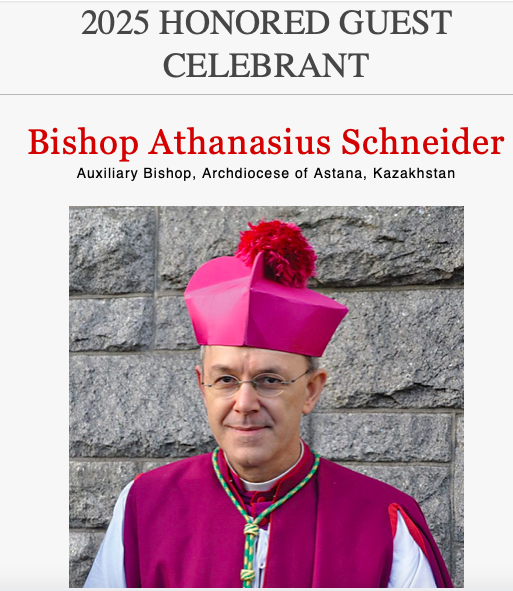
Unresolved Tensions includes many other riches. Cardinal Gerhard Müller and Bishop Athanasius Schneider eloquently defend Bishop Strickland. The introductory essay on the scope and limits of papal authority by a “Friar of the Order of Preachers,” provides a comprehensive theological foundation for the rest of the book. Fr. Gerald E Murray describes the rules of canon law as they apply to Strickland’s case. He argues that the deposition of Bishop Strickland violated all canon law requirements of due process. Stefano Fontana writes of the radically new historical situation that Francis has created with his action against Strickland and appointment to the Vatican of Victor Manuel Fernandez. Finally, in an appendix Dr. Kwasniewski adds several essays of his own that have already been published in other anthologies as well as key texts cited by Ureta and Lamont.
I doubt that Unresolved Tensions will have any immediate influence on the conduct of the “institutional” Church. After all, only a minority of the contributors to this book currently hold official positions in either the clergy or academia of the Catholic Church. Bishop Strickland did accept his dismissal. Most bishops will also accept – if at times only silently – anything the pope orders.
I fear that those holding teaching positions in Catholic universities and seminaries will also ignore this book, regardless of its virtues. Progressives have adopted a utilitarian, positivistic approach to Francis’s uncontrolled exercises of papal authority – if one of his actions furthers their agenda they will approve, regardless of any previous advocacy of “collegiality” or “synodality.” Those outside the progressive realm will probably try to ignore these issues, and continue to recite authorities without any attempt to relate the texts to these events. But as Stefano Fontana eloquently states, in the current situation, conscientious objection will have to be active instead of passive. (This has already started after Fiducia Supplicans.) But Unresolved Tensions stands as a helpful resource, reminding us of rules of theology, law and morality which the Vatican routinely violates. And it will, hopefully, serve as a road map in a future recovery.
News from the Catholic Sacred Music Project at Princeton:
I want to invite you all to two events later this month:
Saturday, June 15 11am-3:30pm at the Princeton Theological Seminary Chapel
Come and meet Sir James MacMillan, Dr. Margarita Mooney Clayton, Paul Jernberg, Dr. Timothy McDonnell, and hear eight new compositions setting the antiphons of the Mass of Corpus Christi as well as a modern premiere of a forgotten metrical chant setting of the Sequence of Corpus Christi Lauda Sion!
More information and RSVP here.
6
Jun

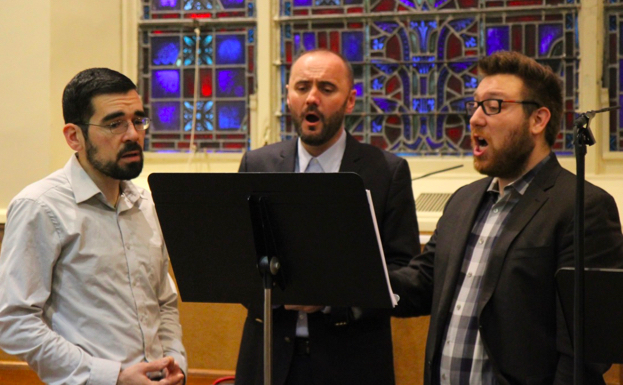
…at the Hispanic Society of America in New York on June 13. Part 3 of a series: Path of Miracles by Joby Talbot
A concert-length masterwork for choir, tracing the steps of Spain’s most enduring pilgrimage, the Camino de Santiago.
Joby Talbot’s Path of Miracles may be the first true choral masterwork of the 21st century. Talbot, whose dramatic compositions include well-known film scores and luscious ballets, composed the piece in 2005 for the British ensemble Tenebrae, a group similar to Skylark both in size and vocal virtuosity. The piece takes the listener on a mesmerizing vocal journey across the ancient Camino de Santiago, the pilgrimage to Santiago de Compostela in Northwest Spain. With its four varied and theatrical movements named for important cities along the pilgrim’s path, and its moving libretto by poet Robert Dickinson, Path of Miracles has been called “little short of a musical miracle in itself.”
The Hispanic Society of America. (West 155th Street, New York)
6
Jun
For Spanish speakers, a very nice recent article by Maricarmen Godoy about the current state of the Traditional Mass:
Misa Tradicional en latín atrae más
Even with a couple of minor mistakes, it eloquently attests to the continued and growing popularity of the Latin Mass.

Sermon for Trinity Sunday 26 May 2024
Fortieth Anniversary of Ordination to the Sacred Priesthood
From St Paul’s Epistle to the Romans:
“And this hope will not leave us disappointed, because the love of God has been
poured out in our hearts through the Holy Spirit who has been given to us.”
But it seems that something has happened that has never happened before: though we
know not just when or how or where.
Men have left GOD not for other gods, they say, but for no god: and this has never
happened before.
That men both deny gods and worship gods, professing first Reason,
And then Money, and Power, and what they call Life, or Race, or Dialectic.
It is this passage from T.S. Eliot’s “Choruses from the Rock” that describes the
current situation of man in this present age. And Eliot is correct: this has never
happened before. Human history is characterized by the awareness of the sacred,
however that awareness has taken form. It has always been a given. But something
has happened in this time: men have left God not for other gods but for no god. But,
the answer swiftly comes: “All the polls show that the great majority of Americans
say that they are religious”. The liberal press is fond of trumpeting the rise of
professed atheism, but most people would describe themselves as religious in some
way. But because people say that they in some sense believe in God, does not mean
that for all practical purposes this belief is not in fact a form of atheism, for if you go
on to question them about this god and their relationship to this god, you discover–
and this is true about many religious people who even attend church– that this god
is a mental, subjective construct who plays no role in their lives. For this is a god
who has to fit into the post- modern way of looking at things. And what is this way
of looking at things?
First of all, we measure worth, the ultimate measure and worth of man, by the
notion of success, and this success has to be IN something, and something that can
be seen. We can deny that this is how we see things, but it is true. It is part of the
very air we breathe. And this is something new—oh, not that new—but new in the
sense that this way of looking at the worth of man replaced the older one that held
up the saint as the measure and destiny of man. For most of Western history people
looked to the saint as the measure of what it means to be a human being, as what
marked his possibilities. We, however, look to success in worldly endeavors as the
mark of man, sometimes even suggesting that the one who does “great deeds’ on
earth will go on to do even greater things in heaven. The Divo, the self made man,
the man who is successful in whatever field, the Divo—or to be more inclusive—the
Diva—has replaced the saints. And again, let us not fool ourselves about our
complicity in all of this. What is the content of our hope for our children? How
many of us deeply and consciously hope not for their success and freedom from
want but rather that they become like St. Paul or St. Perpetua or St. Thomas More?
Do we not rather hope for their success, leaving to them not a legacy of faith but
rather enough money so they can be comfortable? And in the process almost ensure
that they will never become saints. Those who looked to sanctity built cathedrals;
we build portfolios.
When the Divo replaces the saint, then God is not so much denied as pushed to a
place outside of the world, for it is in the world that we define our worth and our
destiny in terms of ourselves. We turn to nature to make sense of where our
creative energies come from, what enables us to be successful in whatever we do. It
is the “natural”, then, that in its own way becomes a god, but a god to be explored by
physical science, by psychology, by sociology, where scientific breakthroughs elicit
our admiration, where instincts and drives define what is natural and therefore
good. All human acts that are defined as natural, that is, instinctual, and feel good
are defined as good. Ethics is then turned on its head as abortion and euthanasia, as
well as random sex, become rights for the good of the individual. Human sexuality
itself is denied as being too exclusive and is replaced by the term gender. In those
years of my teaching career when I was blessed to teach AP Latin, part of the
syllabus were the poems of Catullus and Ovid, two masters not only of poetry but of
the exuberance of human sexuality. I imparted this knowledge to these very fine
students: nouns have gender. People have sex. And it is no wonder that in this
situation the Christian God who is a God who says yes or no, who prunes human
instinct, who can even contradict the impetus of nature, a God who demands
obedience to the moral law, and all in the name of love: this God must be banished.
And the banishment of God is nothing other than the banishment of, the deliberate
forgetting of sin—immemor peccatorum. But what else can we expect from the Divo
who is his own measure?
But the Divo is not content with glorifying instinct and feeling and naturalism. He
knows, because he is intelligent, that there is something wrong with nature, that
there is still famine and disease, there is still war, there is still suffering, there is still
death. And so the Divo uses his reason and sees that he can uncover the laws of
nature, that he can perform experiments that give him insight into how nature
works, and he then imagines that he can carry this all the way: that he can
manipulate nature, change it, and bend it according to his will and his will is his own
personal happiness, which may or may not coincide with the happiness of his
neighbor. He sees himself as the true master of his life, of his own destiny, able to
perform genetic manipulation to ensure perfection, able to clone this perfection to
eliminate all imperfection in human nature: the Divo as dominus, the Divo as lord,
the Divo as he who needs no God, the Divo who protests that he is religious., that he
believes in a god, but his very life, whose very context in which he chooses to live
that life, is a life lived in isolation, where relationships become painful
impossibilities, the Divo who so marginalizes God that even if He existed it would
not matter.
This is the situation in which this Trinity Sunday must be celebrated. One is
tempted to say nothing or say something about a shamrock or say something about
peace and love and call it a day, a day on which it becomes more and more difficult
to say anything at all. For to speak of the Christian God to a world that has banished
him for all practical purposes is to run the risk of unintelligibility, or, as is more
common, the risk of incurring the wrath of the Divi and the Dive who are made
uncomfortable by the presence of the living God who cannot be banished to a
mythical heaven, for this God is the God who loved the world so much—loved, had a
relationship with –that he gave his only-begotten Son to die on the cross to forgive
our sins, who rose again on the third day to triumph over death and who has poured
his Love into our hearts in the Person of the Holy Spirit who has been given to us.
What sense can this make to the Divo asks the one in despair at the situation of the
contemporary world? The answer is and always has been: Yes, it makes absolute
sense. For no one but the true God can resonate with what is real. And that is what
this age is searching for—yes, even the Divo searches–, and if post-modern man has
turned away from the light of reality and has chosen to live in the darkness of a
disneyfied and closed -in -on- itself world, the hole in his heart is still there: the
ache, the longing, the thirst. This is part of who we are. And it is the light of the
ineffable Trinity, the God who is Father, Son, and Holy Spirit, not as some abstruse
doctrine, but the God who is experienced as the Creator who gives being, the God of
Abraham, Isaac, and Jacob. the Author of all life, the Father who reaches out of his
infinity to the other, reaches out in love. The God who is Son, who is experienced as
God with us, the God who does not stand apart and aloof but who enters, becomes
part of our human history, the God who takes his flesh, our flesh, from the Virgin
Mary, –et incarnatus est–the God who is born in a manger, the God who plumbs the
very depths of human suffering, the God who is spat upon and mocked, the God who
is stripped, the God who endures pro nobis the shame of the Cross, whose death rips
through the universe, exposing the father of lies who can no longer hide in the
darkness, the God who is with us at the time when the Divo knows he is alone, in
the hour of death, when the horrible reality of sin threatens me with absolute death,
extinction, blackness, He is with us, embracing us, hiding us in his wounds, the
wounds of life. Christ is with us at this Mass, not in some abstract way but in a real
way, no mere symbol –Hoc est enim corpus meum–his beauty shining forth in the
beauty of the of this Mass, where heaven and earth meet and once again Beauty
gives himself to save the world.
The God with us who is the Holy Spirit, whose existence is a fact in this world, and
that fact is the Church, the God who is not confined by any space or place but who
breathes where He wills, but who in-forms the Church, the place where sins are
forgiven, where the Food of Life is eaten and drunk, the place where God is seen to
act in human history, where the fullness of truth subsists and where that truth can
be put into human words and where that truth can be understood, where that truth
can be heard with the ears and accepted by the mind and heart that recognizes that
truth and leaps for joy, a joy that alone can penetrate the armor not only of the Divo,
but of you and me, a joy that melts the heart so that in its molten form, freed from
the crystal lattice of sin, it can love in that freedom that is that perfect freedom, the
freedom of God who is l’amor che move ‘l sole e l’altre stelle, the Love who moves
the sun and the stars.
Father Richard Gennaro Cipolla
31
May

It was under the Hohenstaufen emperors – primarily Frederick I, Henry VI and Frederick II – that the Holy Roman Empire achieved its greatest power and influence. Frederick I (1152-1190) battled in Italy to preserve imperial rights and died on the Third Crusade in Asia. Henry VI (1190 – 1197) may have been the most powerful and successful emperor. His marriage in 1186 to Constanza (Constance), the sole heiress of the crown of Sicily, united the empire with perhaps the wealthiest Kingdom in Europe: Sicily. It was the worst nightmare for the now surrounded papacy. Frederick II (1198-1250), the son of Henry and Constanza, dazzled Europe with his many accomplishments – in his day he was known as stupor mundi (wonder of the world). He warred for decades again the popes. Yet this war to the death with the papacy eventually fatally weakened the central power of the empire.
The Holy Roman Empire revolved around Germany from 962 to 1806. Yet, as a result of Henry VI’s marriage to Constance, the period after 1190 through much of the 13th century forms an exception. In this era Italy emerged as the new center of the empire. Frederick II ruled mainly from Sicily and Naples even though the kingdom of Sicily, as oppposed to Northern Italy, previously had never been considered part of the empire at all. Certainly the most enthusiastic partisans of the empire in the 13th century – the Ghibillines and similar parties – were now found south of the Alps. It took the papacy decades of war to eliminate the last of the Hohenstaufen (Manfred, Conradin) from the Italian peninsula.
This history is why today we stand in wonder before the magnificent porphyry sarcophagi of Henry VI and Fredrick II in a side chapel of the cathedral of far-off Palermo. These are perhaps the most magnificent tombs of Holy Roman emperors, carved in the same rare stone we also can still see in late Roman imperial sarcophagi especially in the Vatican museums but also in Constantinople. Thus, continuity was established with the Roman empirs prior to the coronation of Charlemagne in 800.


Yet it is fitting that these emperors rest here, so far from their ancestral home or even Northern Italy. For, after the accomplishments of Frederick I, it seemed that Henry VI was at last achieving the promise of the empire to restore the unity of Christendom. Within his own domains, the German princes and the Italian city states suspended their opposition to the expansion of Imperial authority. Even the papacy adopted an accomodating policy. Within Europe, England, Denmark, Hungary and others accepted Henry’s overlordship. And the union with the Kingdom of Sicily opened up unheard-of vistas of a truly worldwide realm. Henry forced the Byzantine emperor to pay tribute, his authority was acknowledged by the Armenian kingdom and the kingdom of Jerusalem. Henry in 11197 was assembing a mainly German army for a crusade in the East. But then he died, leaving an infant son (the future Frederick II). The laboriously constructed structures and relationships of his vast realm collapsed. The stability of the Holy Roman Empire depended far too much on the personality of the ruler. After Henry’s death, some 20 years of succession disputes followed in what, after all, always remained an elective monarchy. It was in this period that the papacy, under Innocent III reached the apogee of its power over Christendom.
Frederick II could only be crowned emperor in 1220. He had, if anything, even more exraordinary “charismatic” and intellectual gifts than his father or grandfather. Fantastic hopes and expectations surrounded him. Yet by the time Fredrick was able to exercise undisputed rule, the papacy, the Italian city states and the German princes – not to mention the kingdom of France – had all gained dramatically in power and influence. The result was an endless struggle with the popes and their allies – primarily in Italy – and the decline of the central power of the emperor. The body of Frederick II still reposes in the capital of the kingdom of Sicily, where he spent most of the later years of his life.