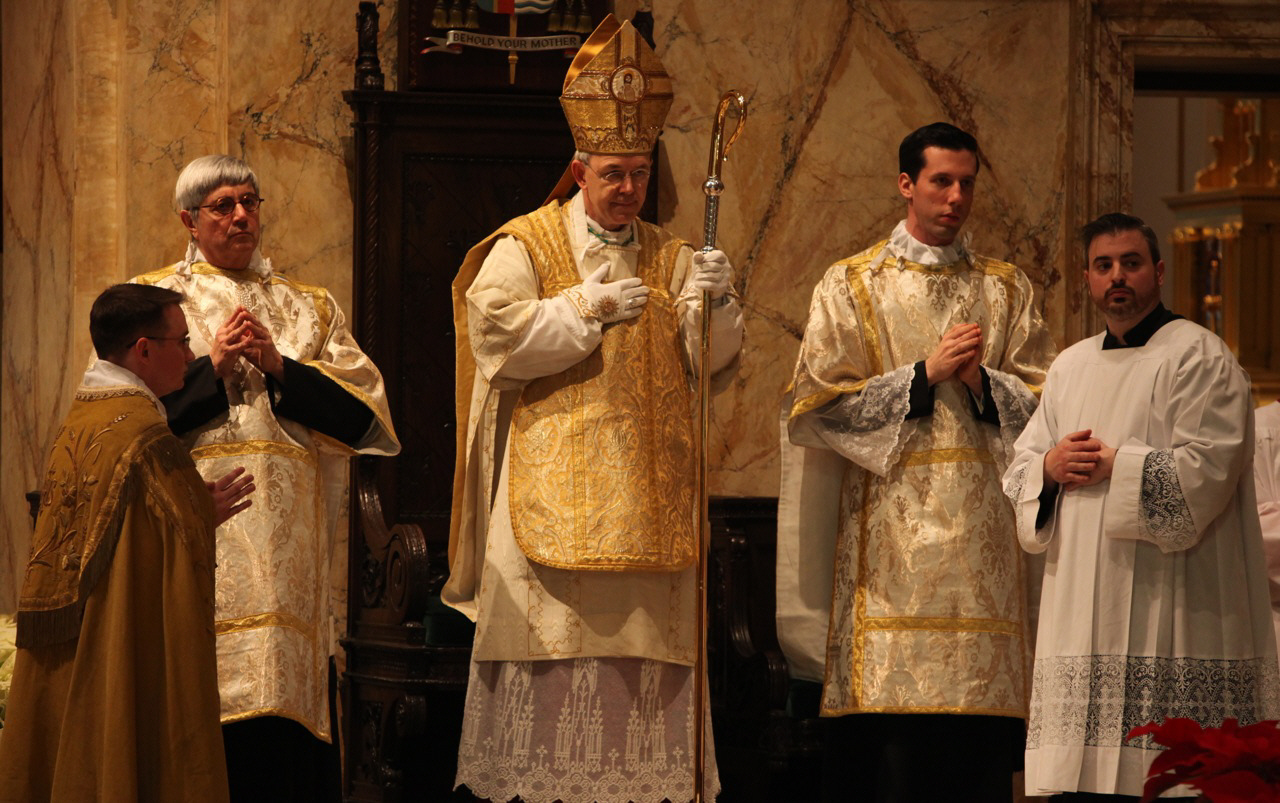
Beautiful Solemn Requiem Mass was offered yesterday evening at St. Mary’s Norwalk for All Souls Day. A combined youth and adult choir sang settings from Faure’s Requiem.


The following is a schedule of churches offering Traditional Requiem Masses for All Souls Day on Monday, November 3. (In the Traditional calendar, All Souls Day is transferred to Nov. 3 when Nov. 2 falls on a Sunday)

Connecticut
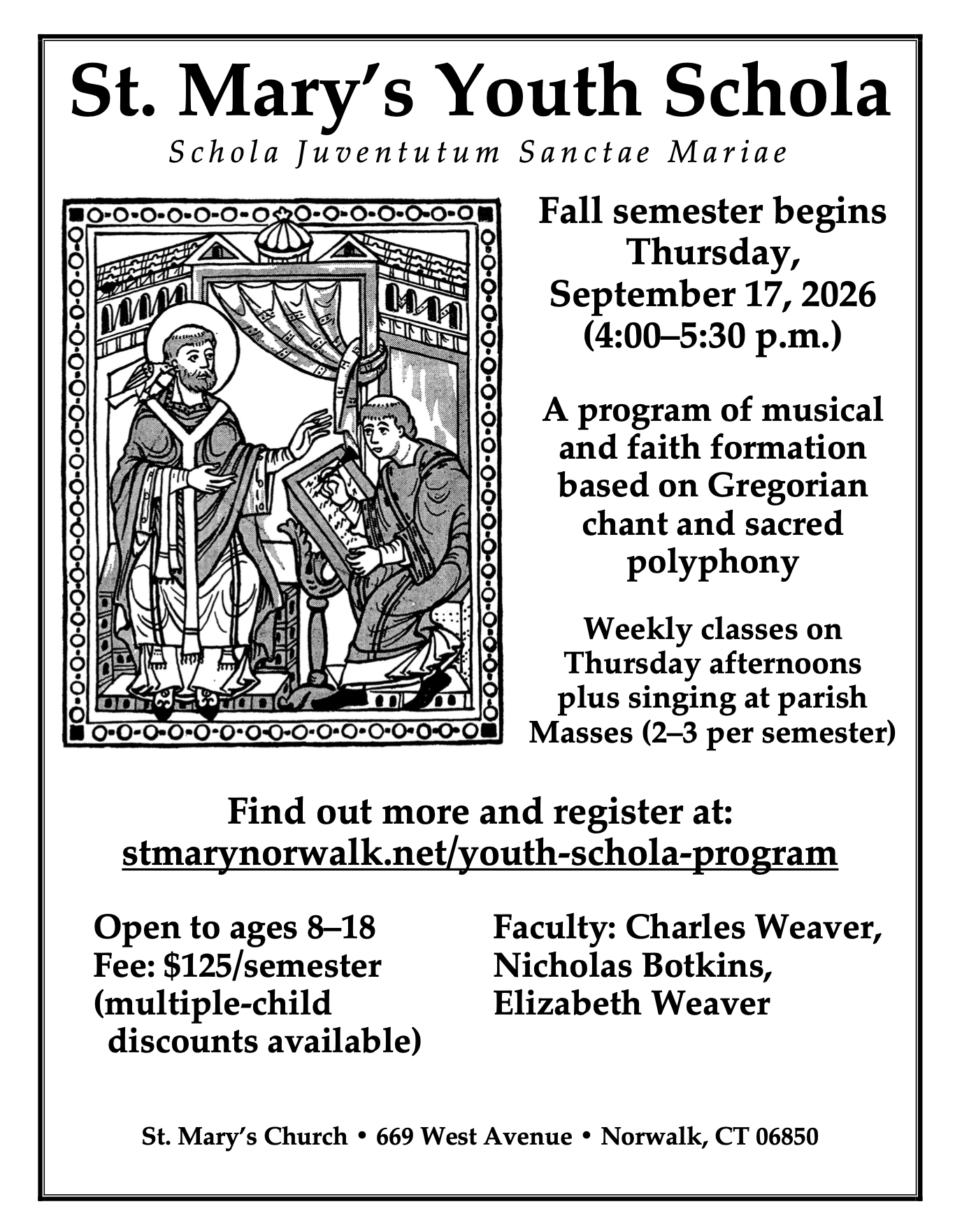
St. Mary Church, Norwalk, 7 pm Solemn Mass. St. Mary’s Schola Cantorum will be joined by the St. Mary’s Youth Schola to perform several movements of the Requiem by Gabriel Fauré.
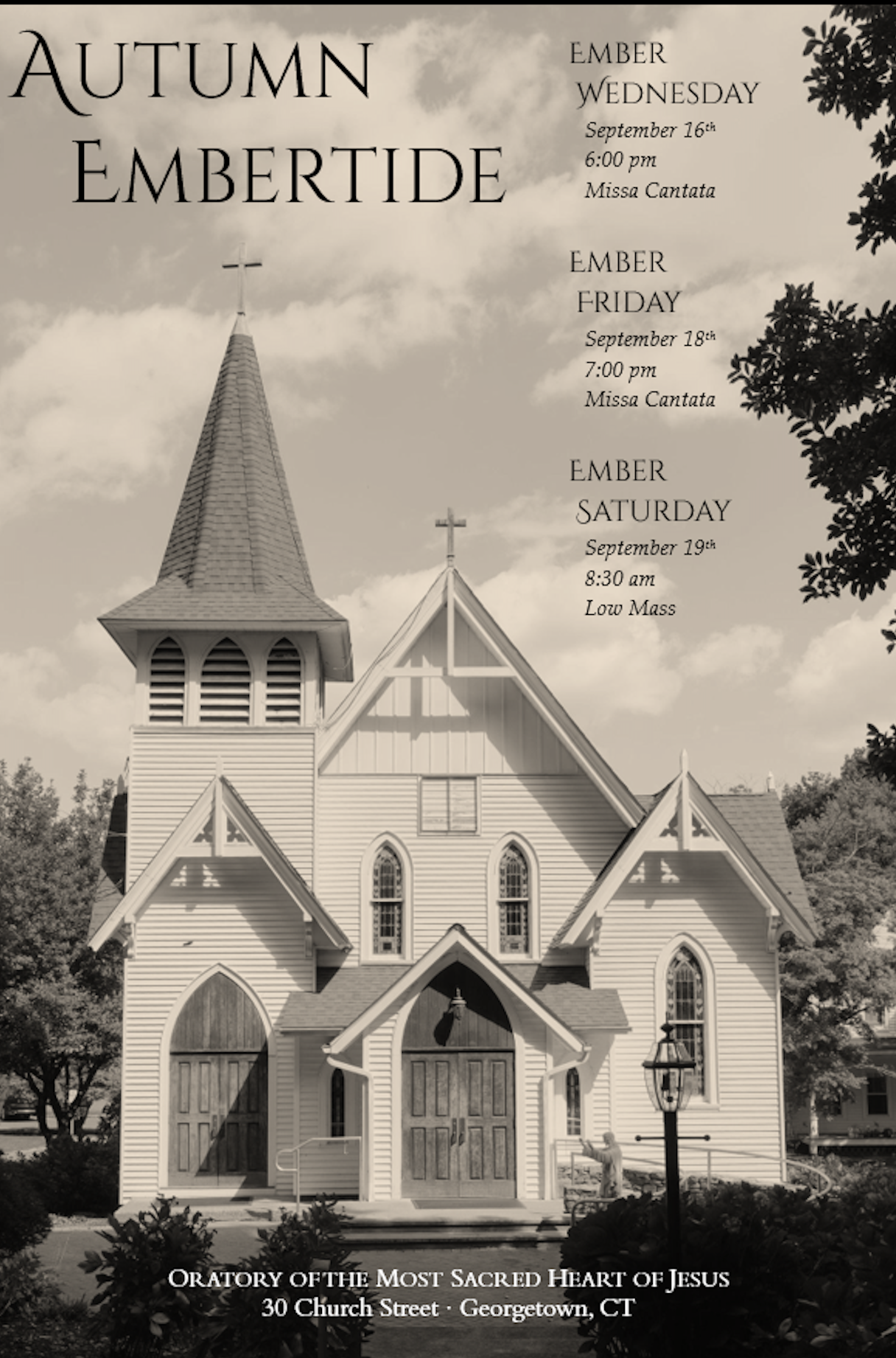
Georgetown Oratory, Redding, 7 pm Missa Cantata
St. Pius X, Fairfield, 7 pm in chapel
Sts. Cyril and Methodius Oratory, Bridgeport, 7:45 am and 8:30 am Requiem Low Masses; 6 pm Solemn Requiem Mass and Absolution
St. Patrick Oratory, Waterbury, 6 pm
New York
Holy Innocents, New York, NY, 7:30 am and 8 am Low Masses, 6 pm High Mass with absolution
Our Lady of Mt Carmel, Harlem, 7 pm
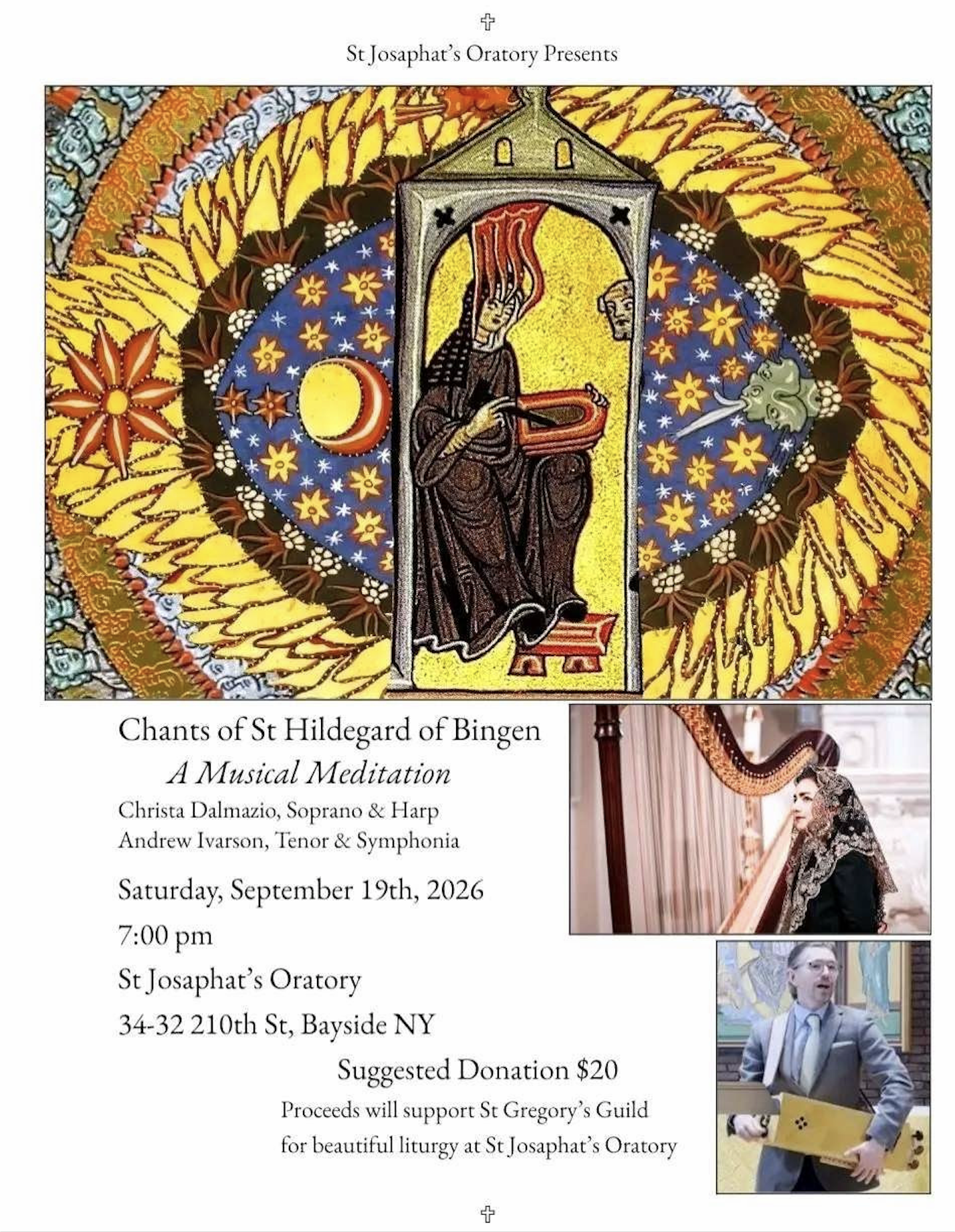
St. Josaphat, Bayside, Queens, 7 am Low Mass, 7 pm Sung Requiem
Immaculate Conception, Sleepy Hollow, 7 pm Low Mass
Holy Trinity, Poughkeepsie, 7 pm, Sung Requiem
New Jersey
Our Lady of Sorrows, Jersey City, 7 pm
St. Anthony of Padua, West Orange, 7:30 am, 9 am, 7 pm High Requiem Mass
Shrine Chapel of the Blessed Sacrament, Raritan, 7 pm
St. John the Baptist, Allentown, 7 pm, Solemn Requiem. The Mozart Requiem will be performed
1
Nov
1
Nov

The 14th Pilgrimage Summorum Pontificum concluded with several Masses on Sunday. Besed on our experiences last year (even though we had seats!), we didn’t dare attend the Mass formally concluding the pilgrimage at Santissima Trinita. Fortunately, there was an earlier Mass celebrated by priests of the institute of Christ the King, Sovereign Priest, at the church of San Giovanni dei Fiorentini. It was still standing room only.


Thus, the pilgrimage Summorum Pontificum concluded.
31
Oct

What did these three days in Rome have to say to us?
The organizers rightly spoke of a “miracle.” For the participation in the pilgrimage exceeded all expectations. Indeed, especially for the laity, that has been a sustained trend for the last five years. If we turn back to 2021, for example, we see a substantial but much more limited pilgrim community. Since then, the number of participants has kept growing. And the increased participation in this year’s pilgrimage as well as the prominence of the patron (Cardinal Burke) and the other spiritual leaders brought about an amazing echo in the secular and even the mainstream Catholic media. This, when prior pilgrimages had been studiously ignored for years.
We could attribute this success to several factors. First, the ongoing persecution of traditionalists by the Roman Catholic Church, first under Pope Francis and now under Pope Leo, has motivated traditionalists to stand up and show their colors. Let’s keep in mind that the traditionalists who come to Rome do so at their own expense and their own initiative. It’s a contrast to the massive organizational effort of the institutional Church at the Vatican and diocesan levels that is required to bring the various groups of the official Church to Rome for the Jubilee and the other official events of this year. The same could be said for the Church’s investment in the Lisbon 2024 World Youth Day.
Second, this increased self-awareness on the part of traditionalists, laity and clergy, was reflected not just in the numbers who attended but in the firmness of their convictions. For example, at Saint Peter’s, Cardinal Muller in 2024 and Cardinal Burke this year preached clearly and unambivalently in favor of Catholic Tradition and the Traditional Mass. The Traditional Mass was described not as the subjective possession of a few, but as a treasure of the whole Church that should be available to all. It was a remarkable advance over, for example, the more nebulous and non-controversial homily in St. Peter’s pronounced at the pilgrimage’s 2021 Mass. And what are we to say of Cardinal Simoni’s exorcism?
As always, it’s inspiring to see Catholics from so many countries assemble for this pilgrimage. One enthusiastic reporter wrote of “pilgrims from 115 countries” under “115 flags.” Well…. Male and female religious from all kinds of orders and congregations were also well represented. During the three days of the pilgrimage we met many friends and acquaintances of ours from the States and from Europe as well – people involved in the Catholic scene at every level.
The procession to the Vatican on Saturday unfolded in a calm and orderly manner. The mood was serene and joyful as the pilgrimage began with the recitation on the rosary. The pilgrims took the usual delays in entering into St. Peter’s in stride. The seemingly never-ending queue of pilgrims had an overwhelming effect even in the vast spaces of St. Peter’s! As always, the ceremonies and music of the three days of the pilgrimage were executed beautifully and seemingly effortlessly. The (ex-) Ecclesia Dei institutes – the Institute of Christ the King, Sovereign Priest, the Priestly Fraternity of St Peter and the Institute of the Good Shepherd – played a key role here.
The solemn mass in Saint Peter’s was of course only made possible by Pope Leo’s decision to reverse the policy of his predecessor. What this may portend for the Traditional Mass nobody knows. Pope Leo has maintained a studied silence regarding the entire Summorum Pontificum pilgrimage. And up till now the general persecution of Traditionis Custodes continues unabated. Nevertheless, at a minimum, the impression left by this year’s Summorum Pontificum pilgrimage will make it more difficult for the Vatican to simply ignore Catholic Traditionalists and continue on its course of repression.
Yet I think it would be a mistake for participants in this pilgrimage to start to focus on its depiction in the media, or to idly speculate on any influence it might exert on the Pope and the Vatican. That is to fall into the same trap as the progressives or the managers of the Catholic establishment. The purpose of the Summorum Pontificum pilgrimage has always been spiritual. As the Summorum Pontificum pilgrimage site puts it:
Each year, from 2012 onward, the representatives of the People “Summorum Pontificum” bring together in Rome faithful, priests and religious from all over the world. Their aim is that of being part of the new evangelization at the rhythm of the extraordinary form of the Roman rite – i.e. the Latin and Gregorian Mass,…
During the three-day pilgrimage, its participants have the opportunity of witnessing the eternal youth of the traditional liturgy.
I appreciate the achievement of the organizers of this year’s pilgrimage. I do, however, have a critical comment. The large attendance this year exacerbated problems that were already present five years ago. The Pantheon was unavailable for the opening Vespers this year, apparently because a conflicting event was scheduled. The substituted basilica of San Lorenzo in Lucina was grossly inadequate for the number of pilgrims. On Saturday, the eucharistic adoration that used to start the procession had already been given up in the last pilgrimage – the ICRSS church of Santi Celso and Juliano is closed for repairs and in any case could not have even remotely handled the numbers this year. In St. Peter’s itself there was insufficient room, either sitting or standing, for all the pilgrims. On Sunday, relief had been provided by the celebration of a second Mass by the Institute of Christ the King in the capacious church of San Giovanni dei Fiorentini – but even here it was standing room only. Accounts of the concluding Mass at Santissima Trinità that I heard confirm that the overcrowding I had already experienced last year had only increased. It is unfortunate that at that Mass, as well as at St. Peter’s and at San Lorenzo in Lucina, pilgrims had to be turned away or remain on the street.
The size of this year’s gathering did take everyone by surprise. Nevertheless, if this pilgrimage continues at the level of this year or even grows further, more attention needs to be paid to these logistical issues. It was mentioned in a conversation that not everyone gets a seat – or even can enter – at the Mass that concludes the pilgrimage to Chartres cathedral. True enough – but the organizers of that event plan around this fact by restricting admission to the cathedral to participating groups on a rotating basis and explaining the situation to the pilgrims in advance.
Of course, the underlying cause of the problem is not the work of the organizers, but the disdain shown to the traditionalist movement by the Vatican and the diocese of Rome. It is they that restrict the pilgrimage to limited number of churches. And undoubtedly there are political risks in moving pilgrimage events to churches under unfamiliar management. It said, however, that relations with Roman authorities currently are good – so perhaps something can be accomplished to alleviate the situation.
31
Oct

(Above) LIke the rest of the Pilgrimage Summorum Pontificum, the conference was well atttended.
The conference took place on Friday, October 24th. What follows is a selection of the presentations.

(Above) Cardinal Sarah (here in conversation with Prof. John Rao) attended the morning session. (Photo courstesy of John Rao)

Rubén Peretó Rivas, Director of the International Center for Liturgical Studies, intoduced the conference. He talked of the “difficult” last twelve years, but that signs of hope are present. The Pope states he is open to listening. And the Traditional Mass has continued to grow – not merely as a whim, ideology or aesthetic choice. Attachment to the Traditional Mass now arises from experience of the new Mass, not ignorance of it.
The conference featured speakers who have found the Faith through the Traditional Mass – just in the last several years. Listening to their conversion stories, I was struck by the total lack of religion that so frequently prevails today – even (or especially) in historically Catholic cultures like Spain and Brazil.

(Above) Eduardo McGregor of Madrid, Spain spoke of his conversion. He came of a completely non-Christian background. The start of his journey as a child was his sudden realization that he would return to nothingness. He debated within himself how the universe could be infinite. Through hearing and reading fairy tales and stories he absorbed early on elements of tradition and morality. Later, as a student, he studied philosophy. Through the influence of professors – who themselves were not Christian – he was directed to traditional philosophy. His circle of friends engaged in lengthy philopshical discussions. ( SC – I thought to myself: how amazing! They still do that in Spain?}. McGregor found himself constantly arguing the Catholic position, almost against his will.(his friends called him “Torquemada!”). Later he dicovered the Mass, and then the traditional Mass. The traditional Mass is the “narrow gate.” He began to feel there were too many coincidences in this spiritual journey to be explained away as such. 20 months after discovering the TLM he was baptized and confirmed. For McGregor, the Traditional Mass is necessary for the recovery of the West.

Pietra Bertolazzi of São Paulo, Brazil spoke of her journey from New Age to Traditionalism. She had come from a home imbued with “spiritism.” She moved later to New Age, before realizing this was all a religion of the self. She started to turn to prayer and various other spiritual tendencies, Catholic and non-Catholic. She began to defend the Church and studied the Desert Fathers. She came into contact with Catholic Charismatics – but, she asked herself, why not just be a Prostestant? She met Opus Dei representatives, but found them permeated with feminism and a strange spirit of activism, moreover, they were always hiding their own faith. Of critical importance was the solid Catholic school her daughter attends – for now she herself was no lomger just an isolated seeker but had become part of a like-minded community. Finally she turned to the traditional Mass and to the Virgin. For Bertolazzi found in love for Mary the antidote to feminism and the prevalent disorder in the world. The Mother of God is the examplar of what the true vocation of woman should be.

(above) Christian Marquant gave his typically impassioned presentation on the revelation of the questionnaires allegedly supporting Traditionis Custodes. These survey results in fact to a great extent confirmed the success and acceptance of the traditional Mass after Summorum Pontificum – above all in areas where the traditional Mass was actually present. A special “guest star” was Diane Montagna, who had first published this documentation (below).


Korantin Denis of France described the development of the pilgrimage Feiz e Breizh in Brittany. Pilgrimages are an increasingly popular and important element of the Traditionalist movement (as this year’s Rome pilgrimage would shortly confirm!). Feiz e Breizh is traditionalist but also committed to the Breton culture and language. Thus its scope is both universal and local.

Fr. João Silveira of LIsbon, Portugal spoke of the Church and of the traditional Mass in Asia – a region with which it is not typically associated.
Our thanks to Paix Liturgique for organizing this conference!
30
Oct
All Saints Day is celebrated on Saturday, November 1. All Souls Day, in the Traditional calendar, has been transferred to Monday November 3. The following churches in the area will offer Traditional Masses.
Connecticut
St. Mary Church, Norwalk, 9 am
St. Mary Church, Greenwich, 8 am Missa Cantata followed by First Saturday devotions
Georgetown Oratory, Redding, 8:30 am Missa Cantata followed by First Saturday devotions
Sts. Cyril and Methodius Oratory, Bridgeport, 8:30 am Low Mass; 10:15 am High Mass
St. Patrick Oratory, Waterbury, 8 am, 10:30 am. Following 10:30am Mass, join us for a parish social downstairs in the church hall. Children are encouraged to dress up as their favorite saint. Please bring a dish to share.
New York
Holy Innocents Church, New York, NY 10:30 am High Mass; 1 pm Low Mass followed by Saturday devotions.
Our Lady of Mount Carmel, Harlem, 9 am
St. Margaret of Cortona, Riverside Bronx, 12 noon
St. Josaphat Church, Bayside, Queens, 9:30 am
St. Rocco Church, Glen Cove, 10 am
St. Paul the Apostle, Yonkers, 12 noon
Annunciation Church, Crestwood, 2 pm Missa Cantata
Immaculate Conception, Sleepy Hollow, 12:30 pm
New Jersey
Our Lady of Sorrows, Jersey City, 11 am
Our Lady of Fatima, Pequannock, 7 am, 9 am, 11 am
St. Anthony of Padua, West Orange, 9 am, 11 am
Corpus Christi Church, South River, NJ · 12:00 PM
Shrine Chapel of the Blessed Sacrament, Raritan, 8 am
St.John the Baptist, Allentown, 11 am Solemn Mass
Connecticut
St. Mary Church, Norwalk, 7 pm Solemn Mass. St. Mary’s Schola Cantorum will be joined by the St. Mary’s Youth Schola to perform several movements of the Requiem by Gabriel Fauré.
Georgetown Oratory, Redding, 7 pm Missa Cantata
St. Pius X, Fairfield, 7 pm in chapel
Sts. Cyril and Methodius Oratory, Bridgeport, 7:45 am and 8:30 am Requiem Low Masses; 6 pm Solemn Requiem Mass and Absolution
St. Patrick Oratory, Waterbury, 6 pm
New York
Holy Innocents, New York, NY, 7:30 am and 8 am Low Masses, 6 pm High Mass with absolution
Our Lady of Mt Carmel, Harlem, 7 pm
St. Josaphat, Bayside, Queens, 7 am Low Mass, 7 pm Sung Requiem
Immaculate Conception, Sleepy Hollow, 7 pm Low Mass
Holy Trinity, Poughkeepsie, 7 pm, Sung Requiem
New Jersey
Our Lady of Sorrows, Jersey City, 7 pm
St. Anthony of Padua, West Orange, 7:30 am, 9 am, 7 pm High Requiem Mass
Shrine Chapel of the Blessed Sacrament, Raritan, 7 pm
St. John the Baptist, Allentown, 7 pm, Solemn Requiem. The Mozart Requiem will be performed
29
Oct
Continued from Part 1

So the Traditional Mass was celebrated once more in St. Peter’s Basilica.1) Saturday’s Mass resonated throughout the secular media. Even representatives of the establishment European Catholic media were mildly positive (except for a theologian in Germany, enraged by the “premodern” symbolism he saw). it was a great accomplishment, indeed – not just for the organizers and sacred ministers, but for all those who for a few days (not 28 years like Cardinal Simonii) endured a little discomfort in support of Catholic Tradition.


(Above and below) The kiss of peace.


(Above) Cardinal Ernest Simoni of Albania suffered torture and imprisonment for 28 years. He now pronounced an exorcism in St. Peter’s, including reciting the prayer to St. Michael.


(Above) Cardinal Burke greets Cardinal Brandmüller.

29
Oct

The culmination of the pilgrimage was the celebration of a Solemn Pontifical Mass before the throne of St. Peter. The Mass was a votive mass of the Virgin Mary. The celebrant was Cardinal Raymond Leo Burke.

Between 3,000 and 5,000 pilgrims – according to various estimates I have heard – assembled before the altar. Many would hardly be able to see the ceremony – let alone have a seat.


“But He said, Rather, blessed are they who hear the word of God and keep it.”


In keeping with the votive Mass being celebrated, Cardinal Burke preached on the role of the Virgin Mary in the Church and of the need to cultivate Marian piety such as the first Saturday devotions. He emphasized the centrality of the message of Our Lady at Fatima, at a time when the world seems to be slipping ever more rapidly into moral and spritual chaos. Cardinal Burke’s sermon was delivered in Italian. Yet when he came to speak of the Traditional Mass, Cardinal Burke repeated his words in French, Spanish and English. The Mass being celebrated today, he stated, has over the centuries inspired so many saints, even to martyrdom. Moreover, Cardinal Burke pointed out that this year is the 18th anniversary of the promulgation of Summorum Pontificum, which greatly liberated the celebration of the Traditional Mass. The benefits of Pope Benedict’s motu proprio have been manifest. This is true not just for those already familiar with the Traditional Mass, for whom Summorum Pontificum has helped to deepen their faith. Thanks to Summorum Pontificum, many others have now become acquainted for the first time with Catholic Tradition and its summit, the Traditional Mass. Thus, the Traditonal Mass is a blessing for the whole Church.
Continue to Part 2