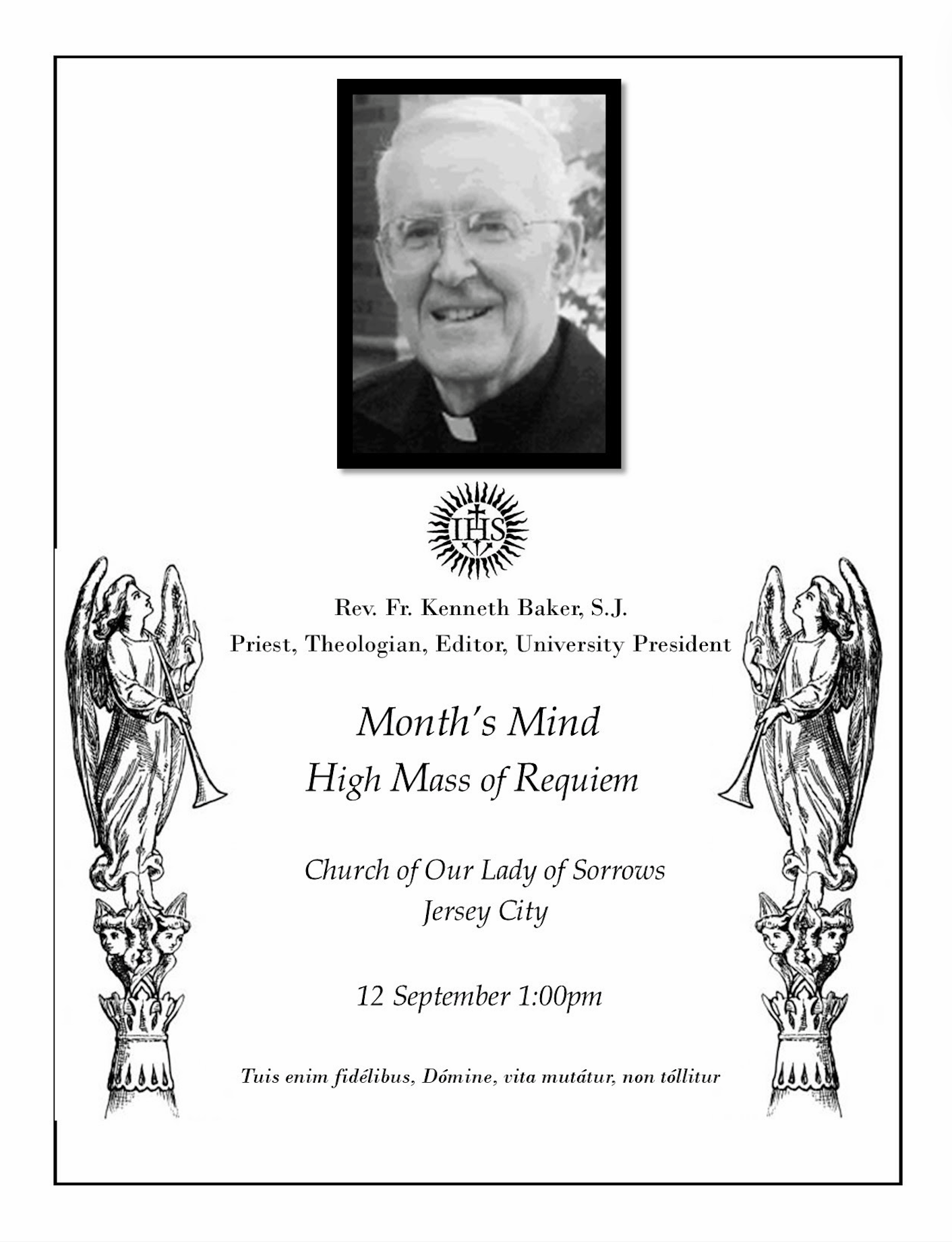
Regina Pacis Academy’s opening Mass of the academic year will be in honor of the Nativity of the Blessed Virgin Mary on September 8 at 9:00 am. at St. Mary’s Church, Norwalk, CT. Everyone is welcome to attend.
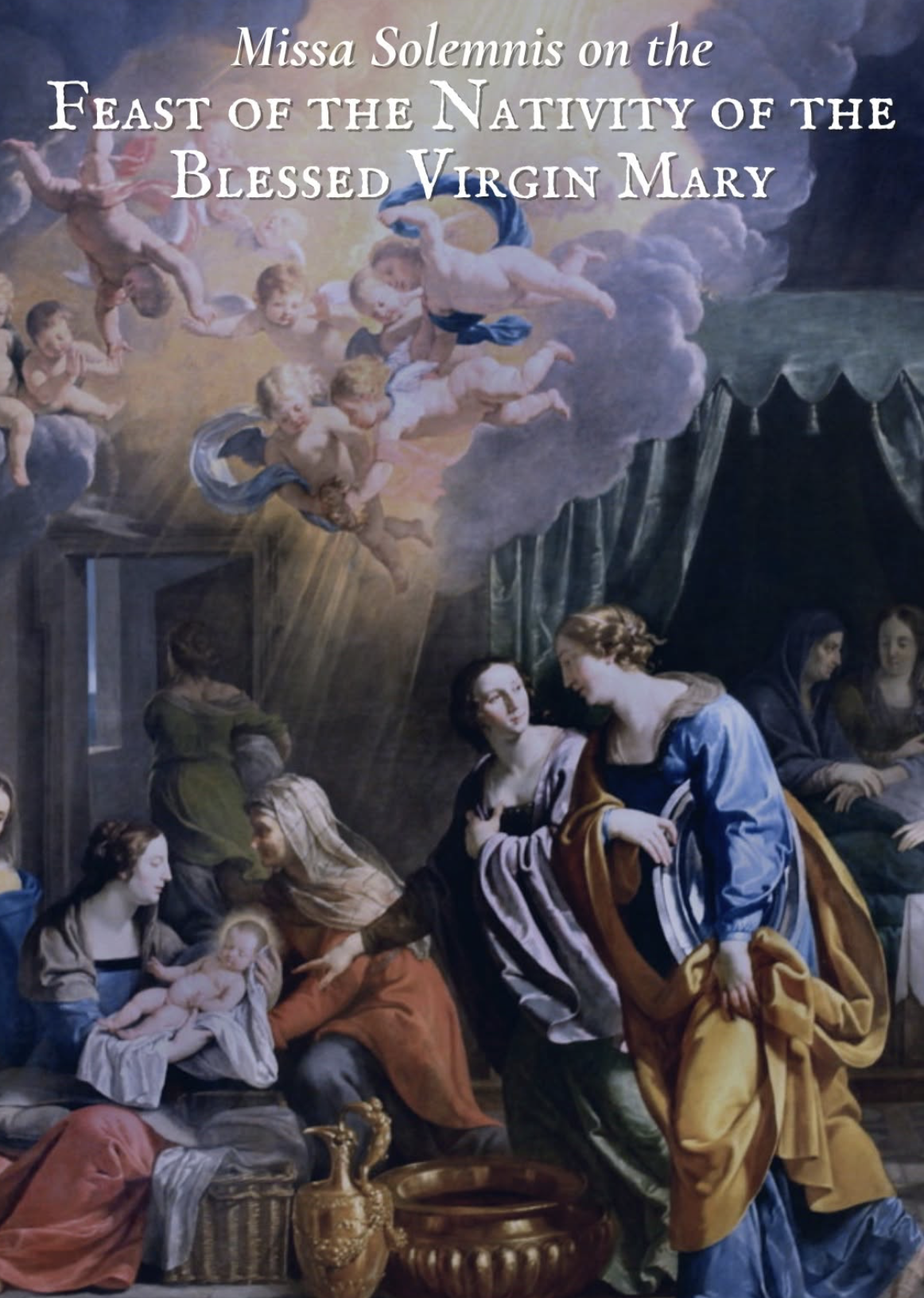
Regina Pacis Academy’s opening Mass of the academic year will be in honor of the Nativity of the Blessed Virgin Mary on September 8 at 9:00 am. at St. Mary’s Church, Norwalk, CT. Everyone is welcome to attend.
At St. Josaphat Oratory in Bayside, Queens:
| Praised be Jesus Christ! On Friday, Sept. 11th: we pray for the victims of 9/11; we offer reparation for this horrendous mass murder, which wounded so deeply the Sacred Heart of Jesus and the maternal Heart of Mary. Schedule: 7am & 7pm: Holy Mass with sermon 6pm: Holy Hour of Eucharistic Adoration & holy Rosary – Remember the numbers… 2,977 were killed that day; 9,677 more have since died from illness caused by the toxic dust at Ground Zero. – RIP |
St. Patrick’s Oratory in Waterbury, CT will offer a Requiem Mass for the souls who died on 9/11/2001.
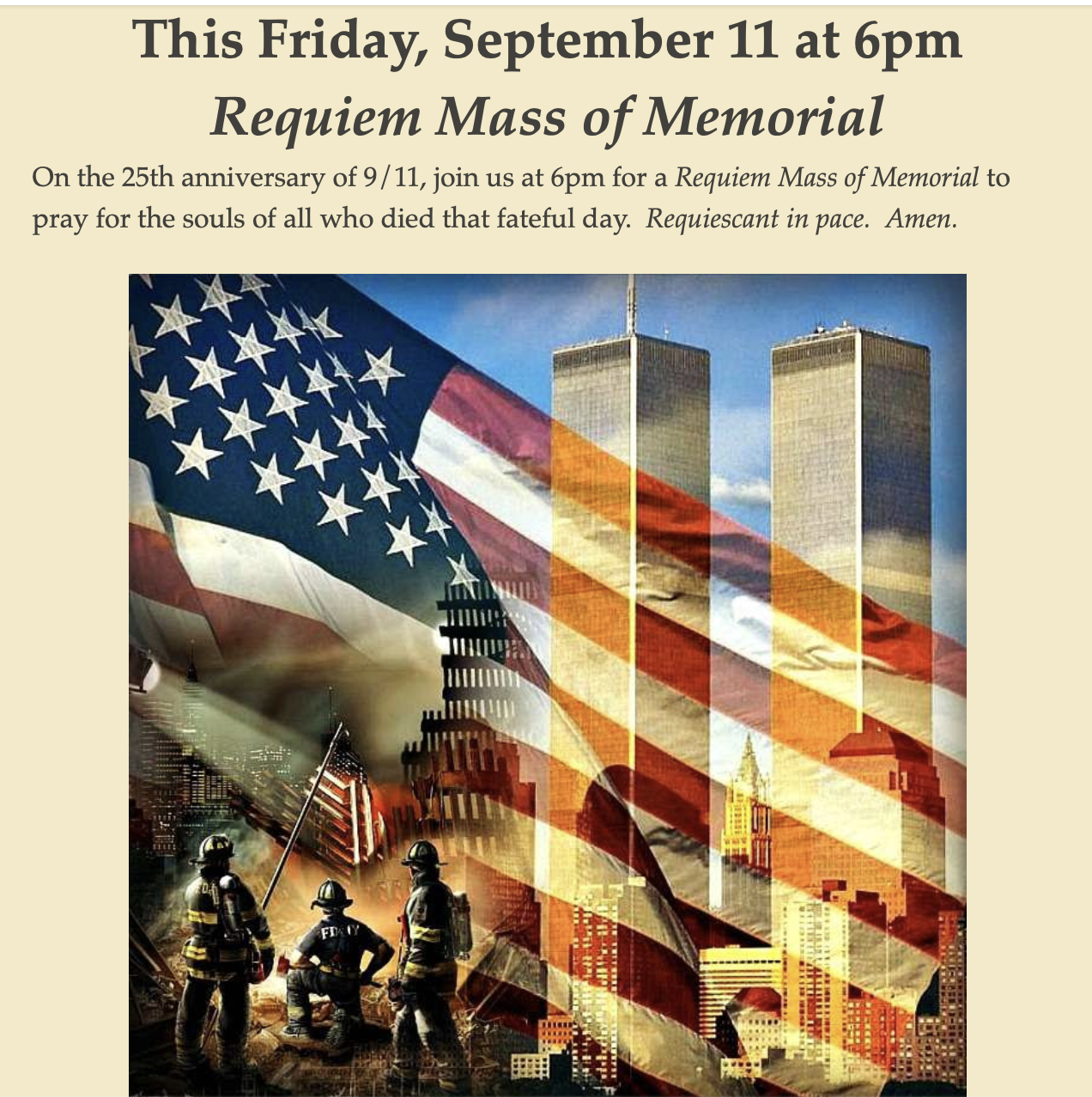
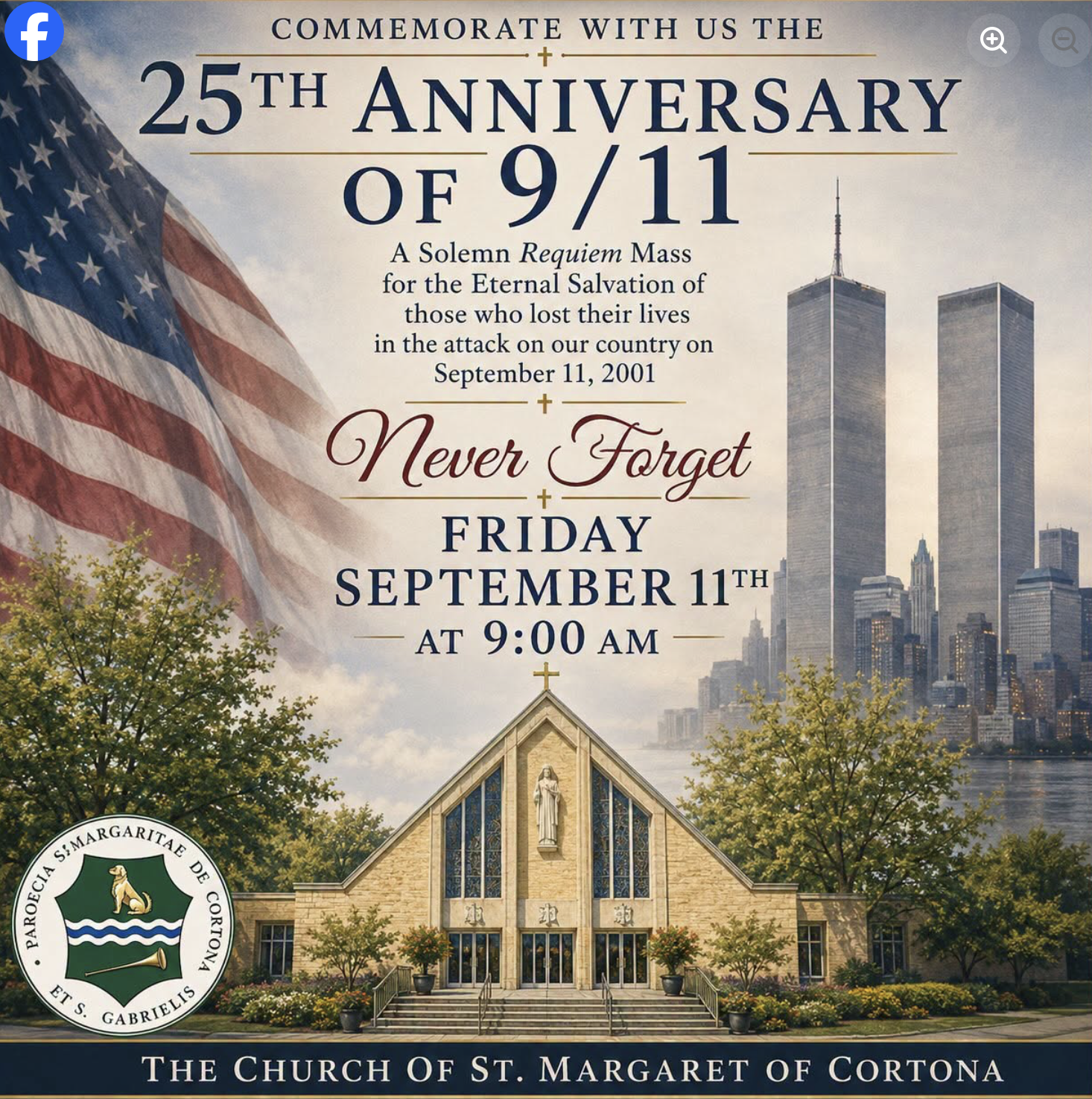
St. Margaret of Cortona in Riverdale, the Bronx:
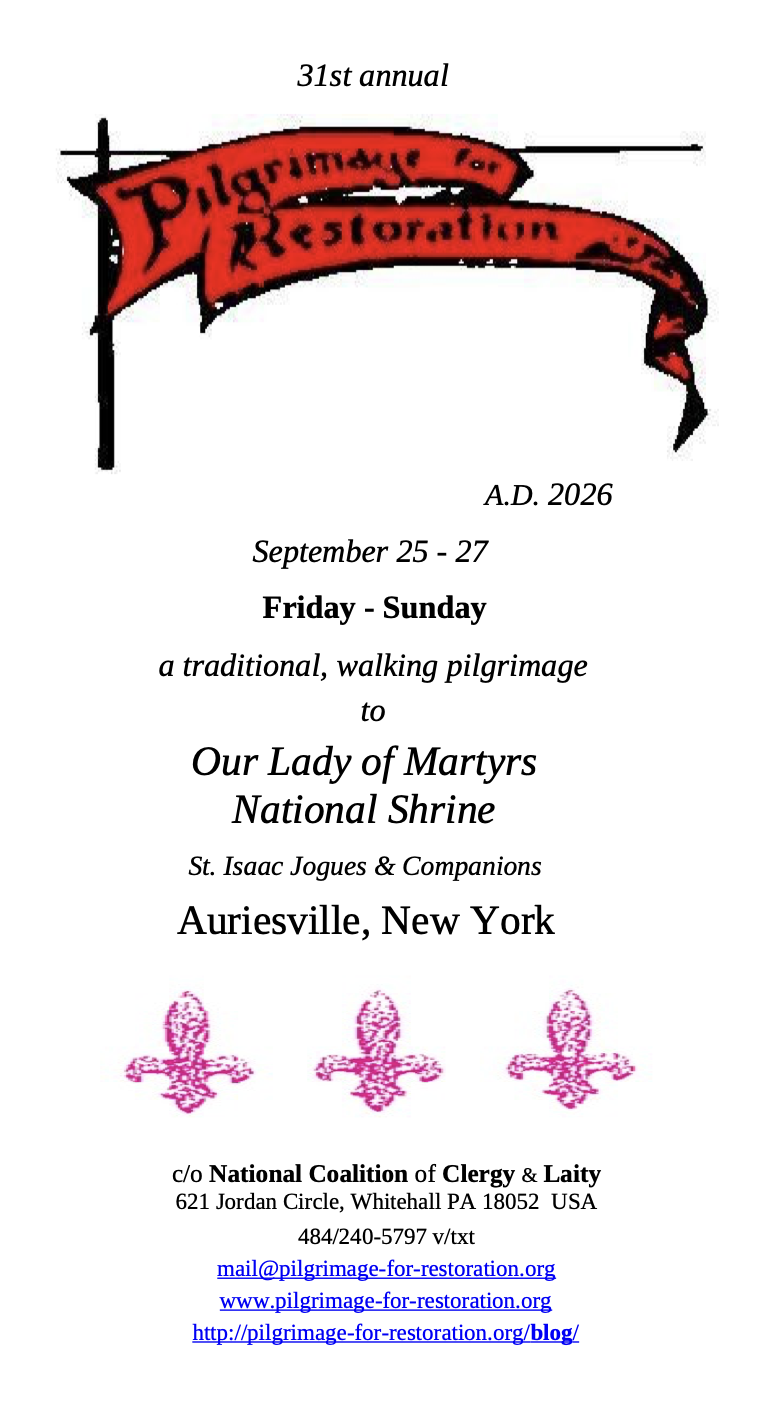
Friday – Sunday September 25-27
The pilgrimage, now in its 31st year, is a journey of the faithful to Our Lady’s Shrine of the Martyrs in upstate New York, at Auriesville. Here, Jesuit Father Isaac Jogues and Companions were martyred, beginning with lay-brother René Goupîl in 1642, and later layman John de LaLande and Jogues himself in 1646.
Since 1996, pilgrims walk near and along the paths the saints followed as captives of the Iroquois. Their journey was hundreds of miles over 28 days under torture. Our journey, modeled on the ancient annual Pentecost pilgrimages to Notre-Dame de Chartres, France, is 61 miles over 3 days and, though penitential, is full of joy. Our purpose is to honor Christ Our King publicly, to pray for the restoration of His Reign in the family and civil society, and to make reparation for sins committed against the Immaculate Heart of Mary.
For more information and to register: link
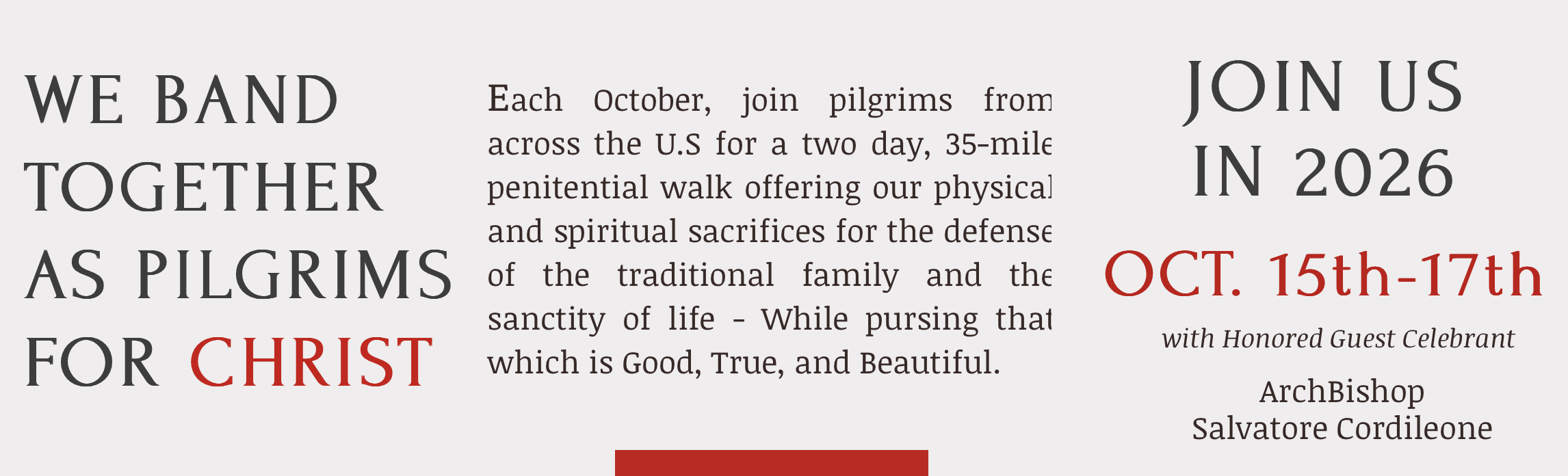
The annual Three Hearts Pilgrimage guides thousands of participants through a rigorous terrain for 35 miles over 2 days to their destination – the Benedictine monastery Clear Creek Abbey. The 2023 sacrificial walk of reparation had over 2000 pilgrims from 43 states walk a 2-day journey that culminated in a Pontifical High Mass offered by His Eminence Raymond Leo Cardinal Burke at this abbey, which serves as a reminder of how the Benedictine Order with its Rule and way of life spread Christianity throughout Medieval Western Europe, changing the trajectory of civilization.
for more information and to register: https://www.threeheartspilgrimage.org
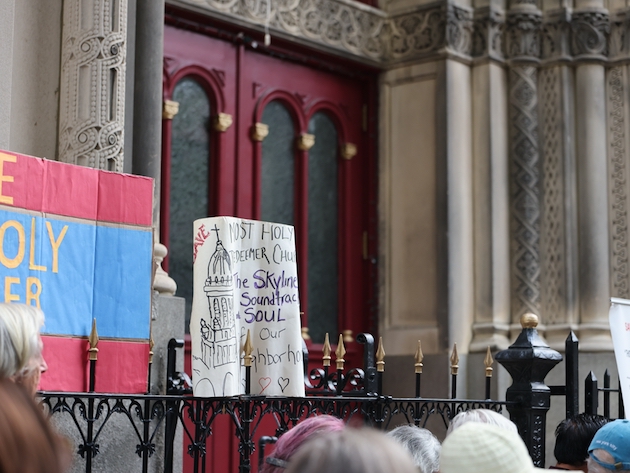
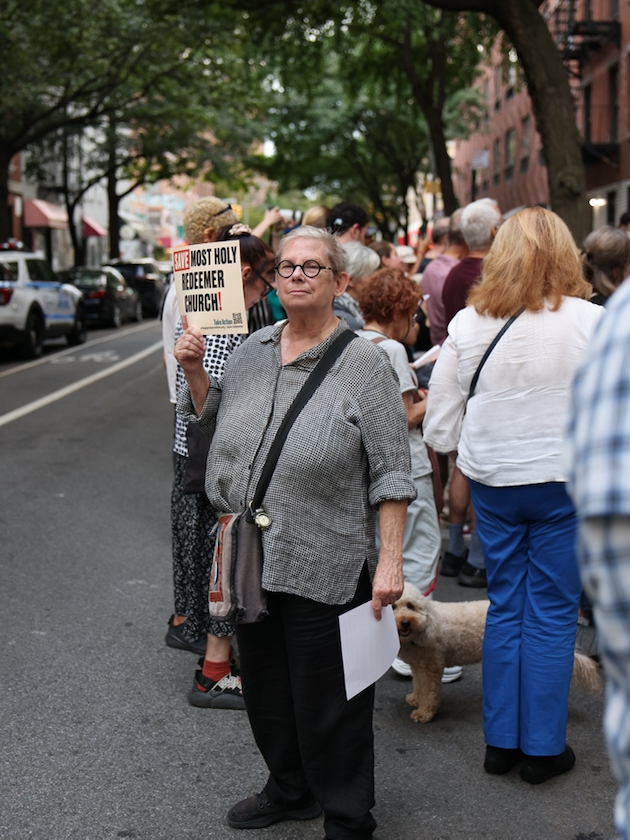
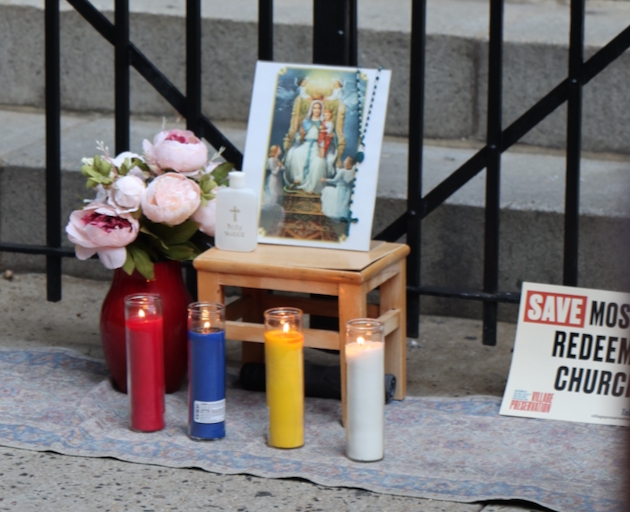
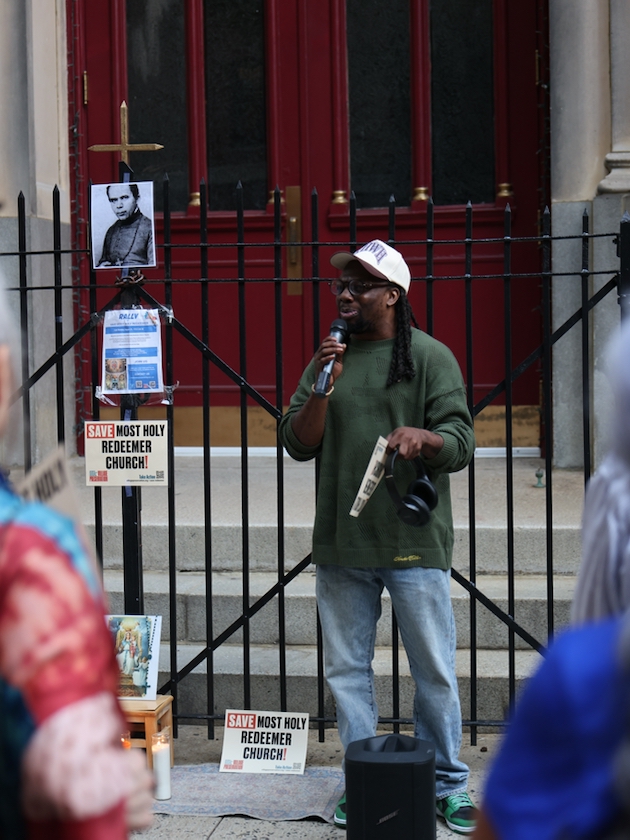
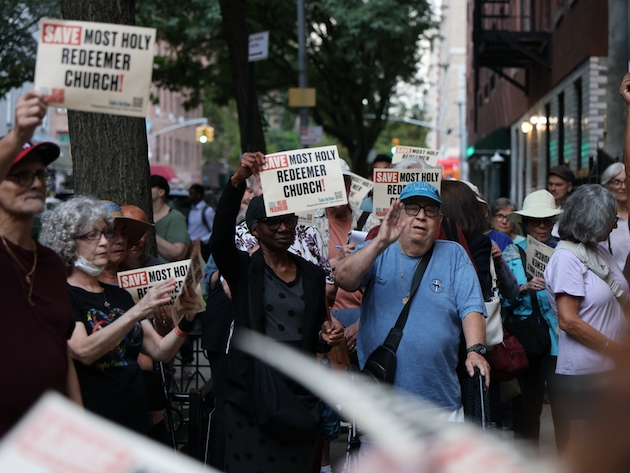
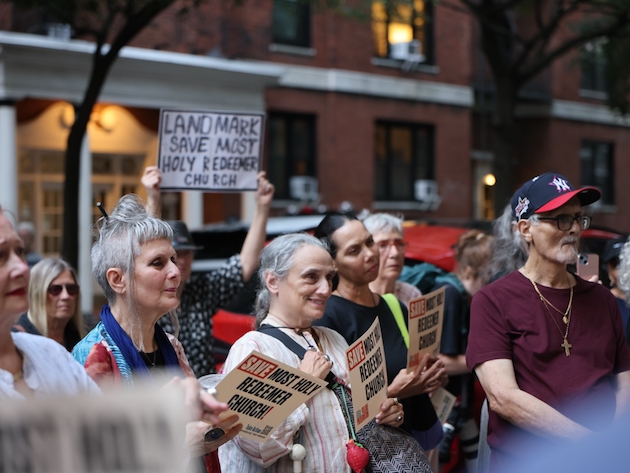
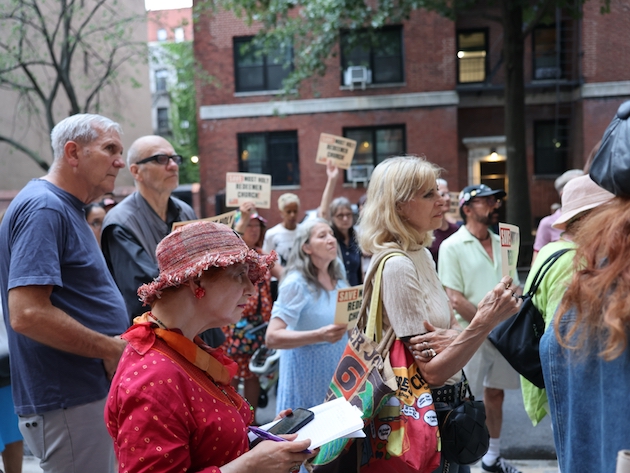
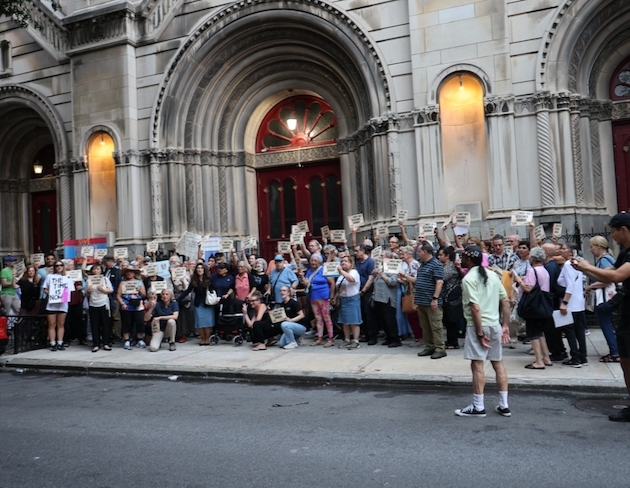
A rally on Monday, August 31, on East 3rd Street to protest the continued closing of Most Holy Redeemer church, to demand its reopening and to support its designation as a landmark. The crowd was addressed by local politicians and activists, both Catholic and non-Catholic. Those who showed up seemed to be overwhelmingly from the immediate neighborhood of the church. There were familiar faces – I was greeted warmly by members of this parish who I had not seen in years. It is tragic that this “marginalized” and definitely not well-off community has been deprived of their parish church by the Archdiocese without any explanation. For some of them, this is the second or third parish they have lost.(For just one example, in this very vicinity Nativity parish was an earlier casualty, folded into Most Holy Redeemer). As is usual in such events, both in New York and elsewhere, Catholic clergy were conspicuous by their absence.
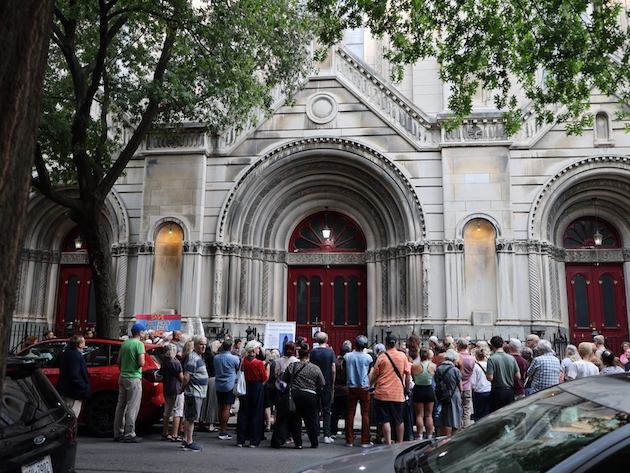
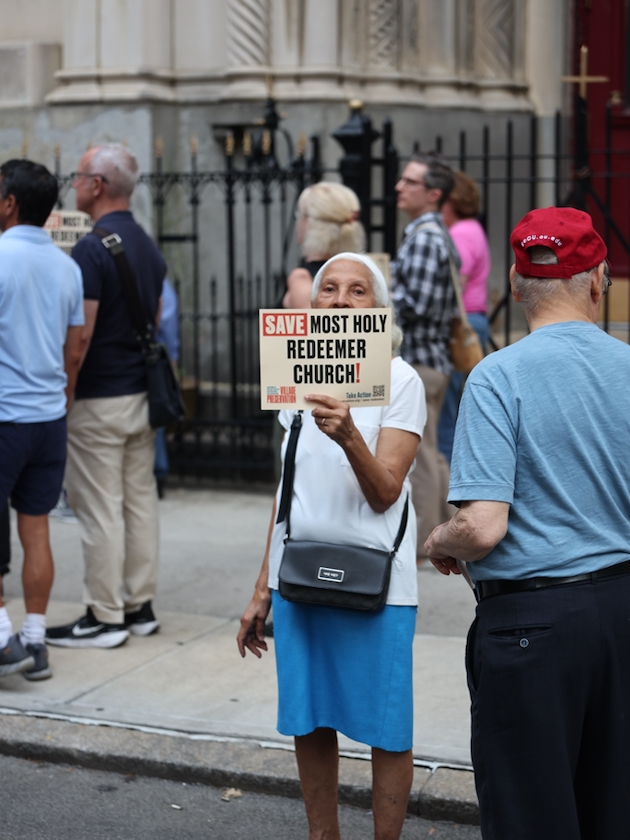
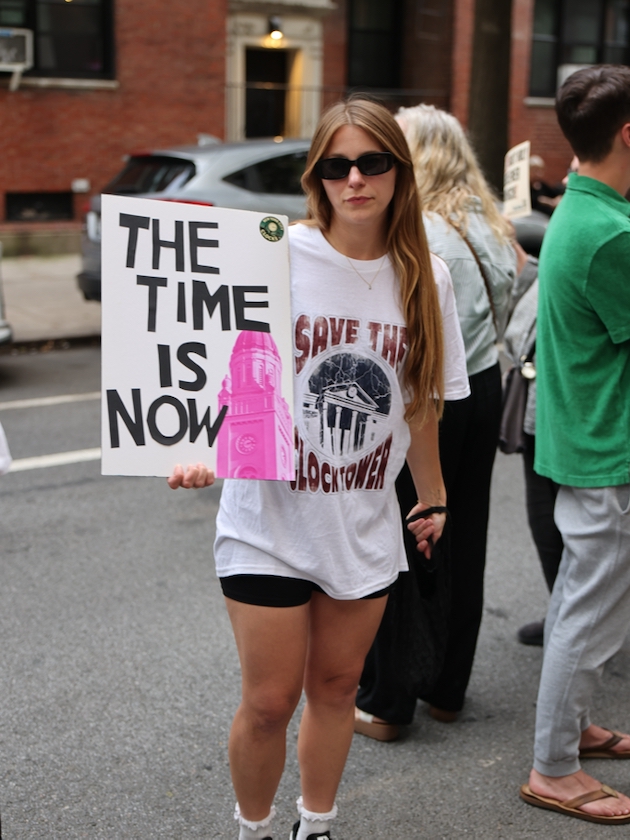
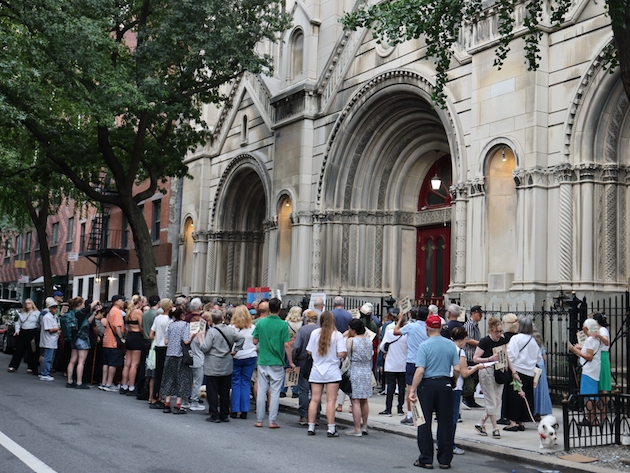
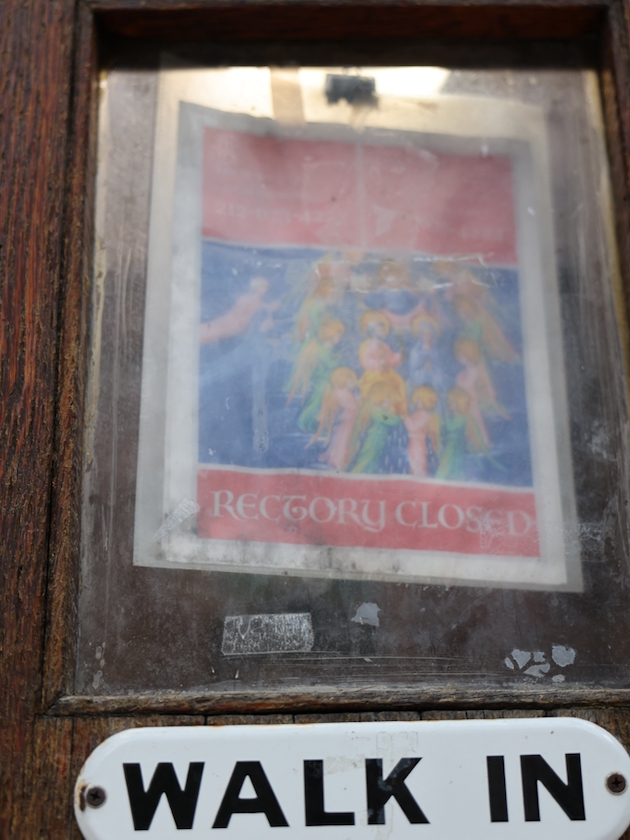
(Above) Some mixed messages visible in front of the old parish office.
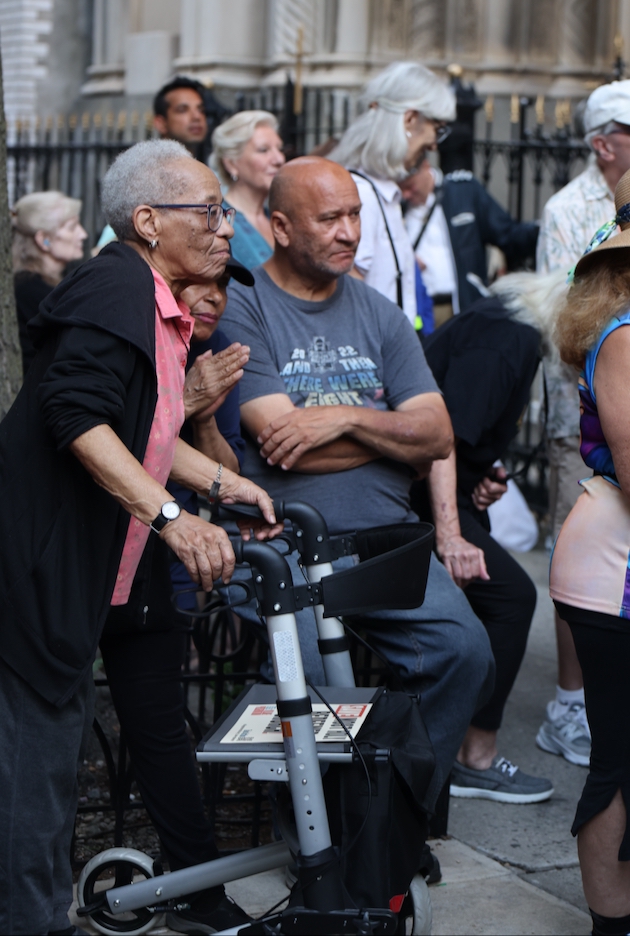
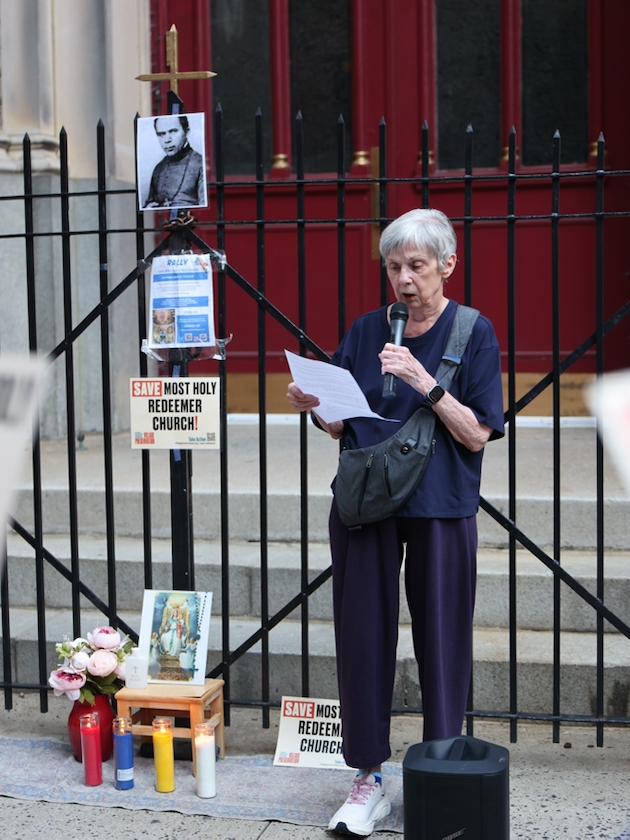
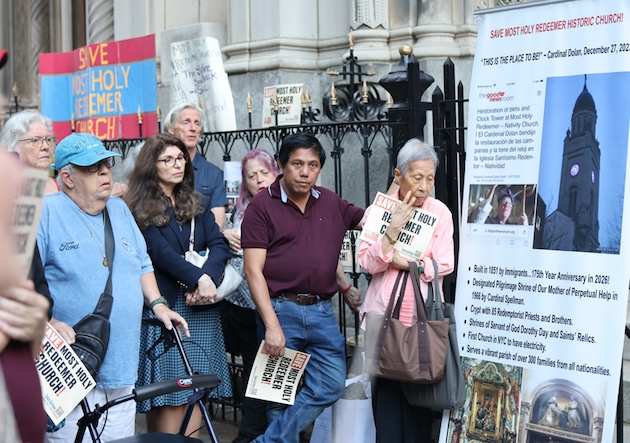
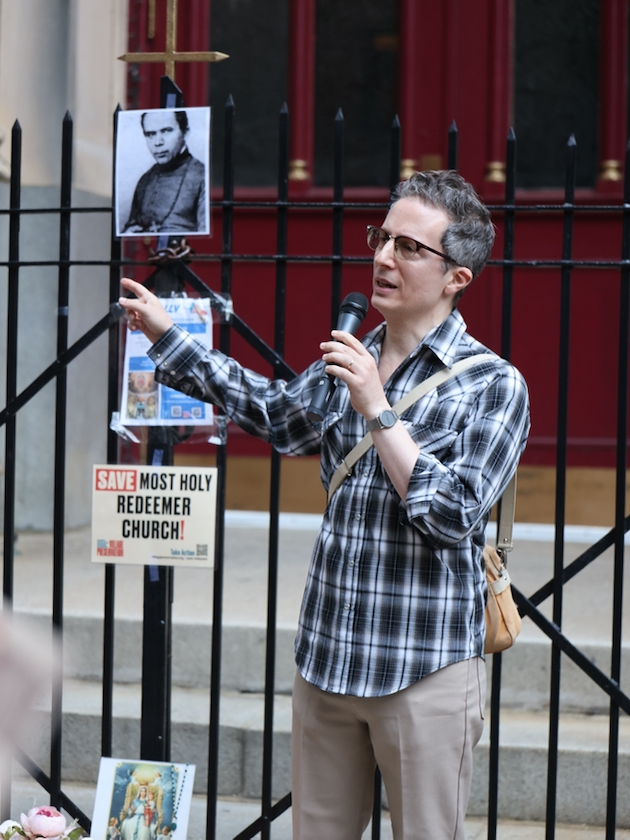
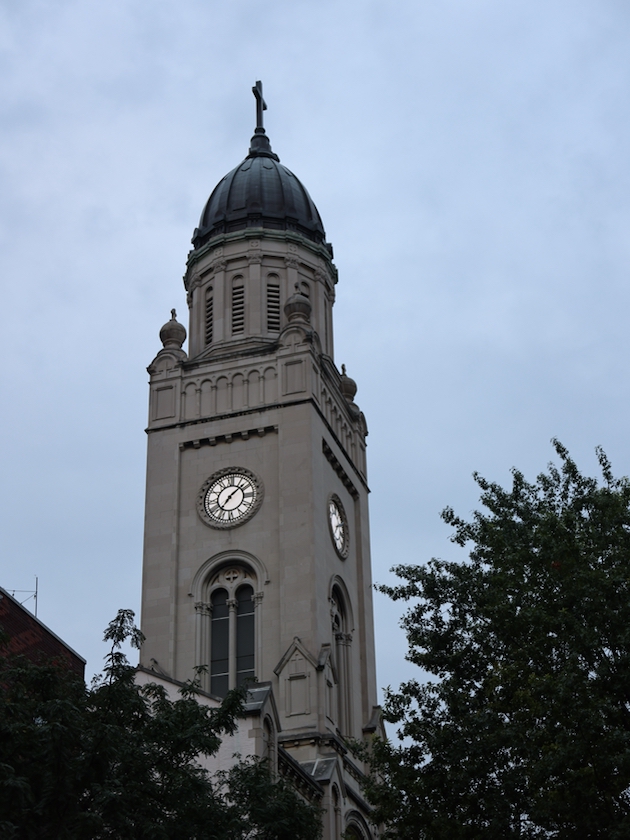
In December 2023, on the Fourth Sunday of Advent, Cardinal Dolan came to bless the restored, illuminated clock tower and bells of Most Holy Redeemer church.
“When they see their beloved parish, my God, it goes back to 1851, it’s still alive and still confident,” Dolan said. “When we illuminate the clock and repair the tower and ring out the bells with Christmas coming up, this is the place to be.” Rodriguez, Ashley, Most Holy Redeemer Church bell tower shines anew, lighting Up Alphabet City after decades of darkness, fox5ny.com (12/24/2023)
For the repair of the tower, clock and bells symbolized the restoration of the parish and attracted favorable attention in the secular media. But perhaps in retrospect this episcopal visit was not for the best. For in short order, in 2024 the pastor was tranferred out to “bigger and better things”and in 2025 the parish was closed. See: “Bohemians, the Traditional Mass and Most Holy Redeeemer Church,” The Society of St. Hugh of Cluny (8/29/2024)
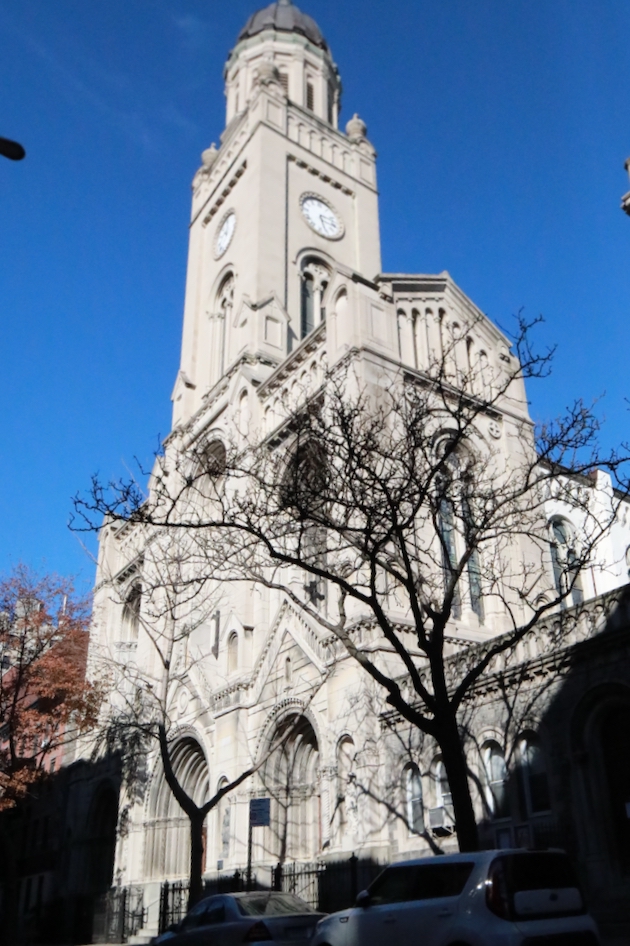
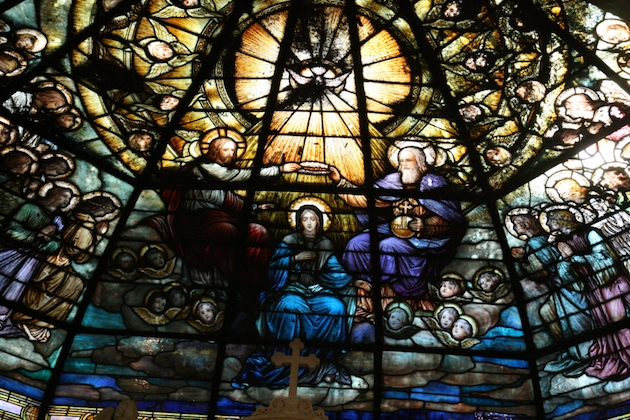
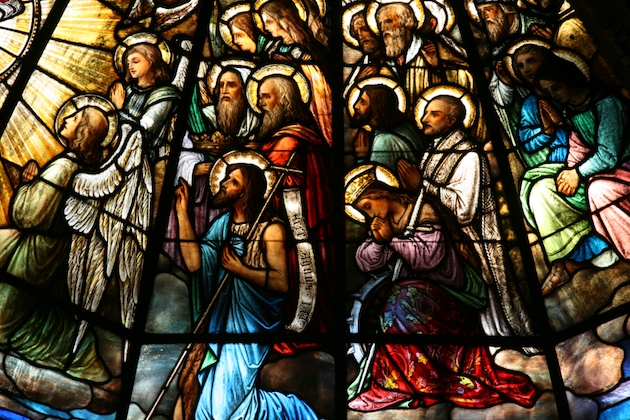
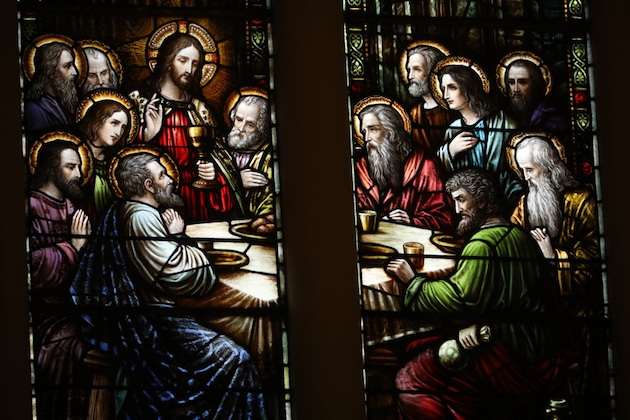
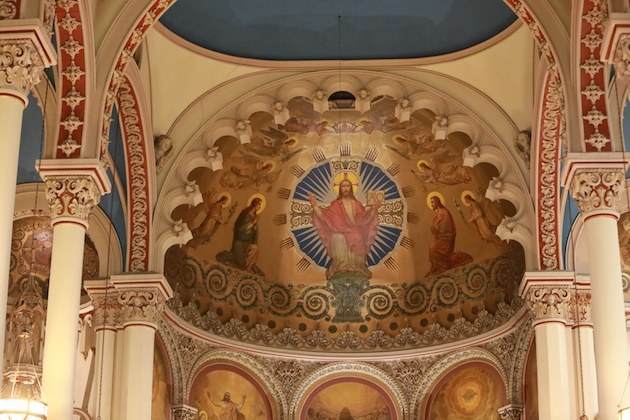
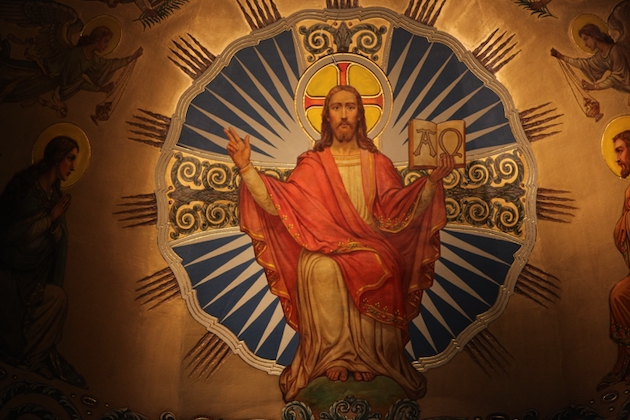
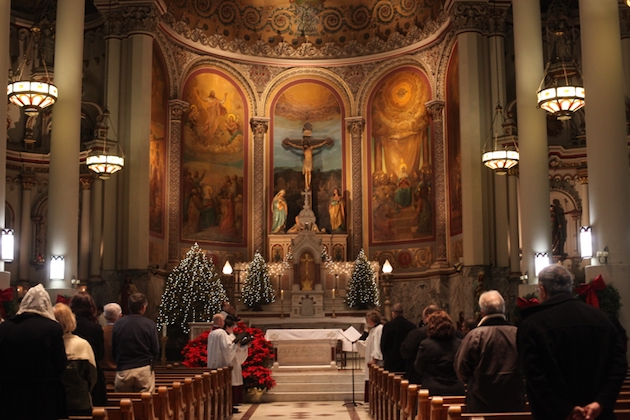
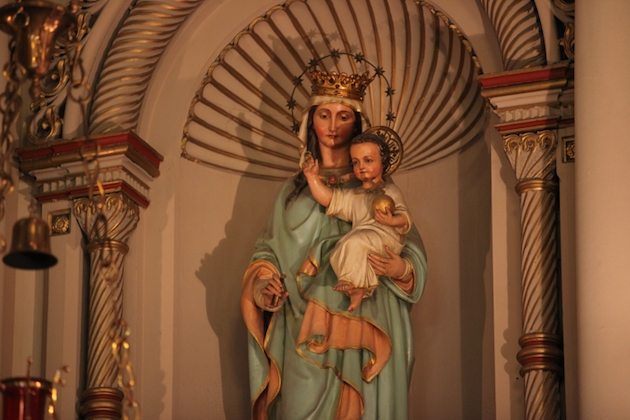
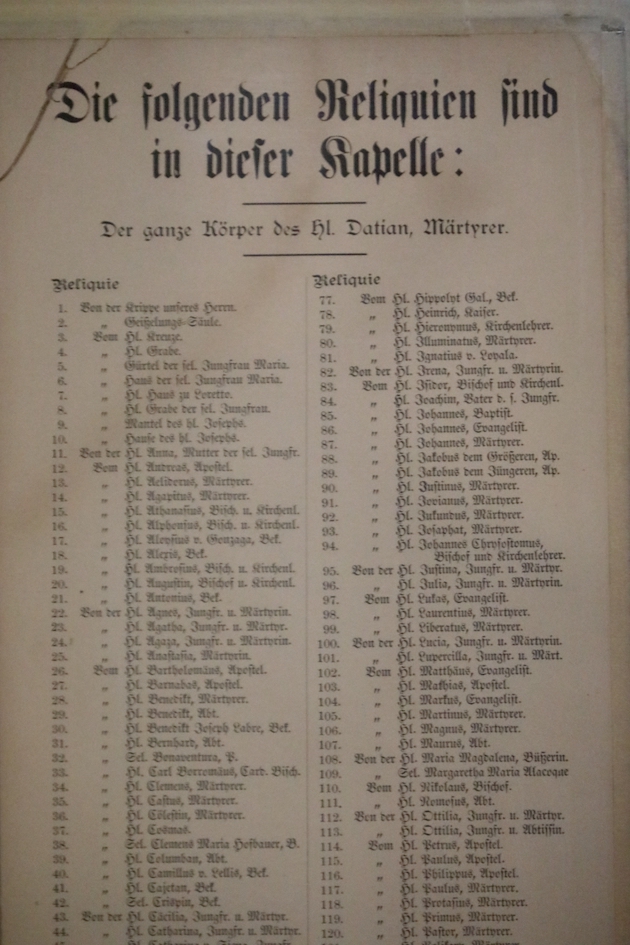
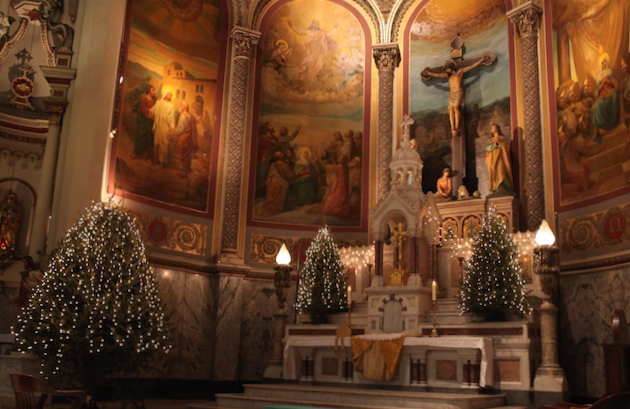
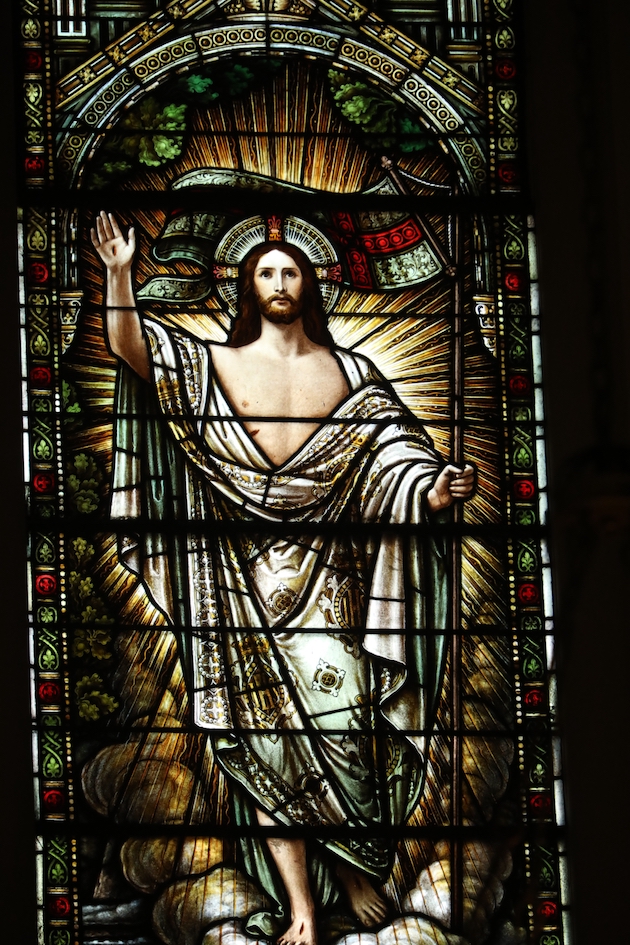
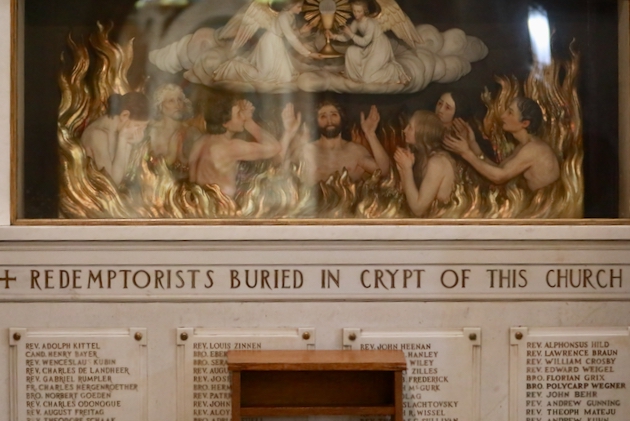
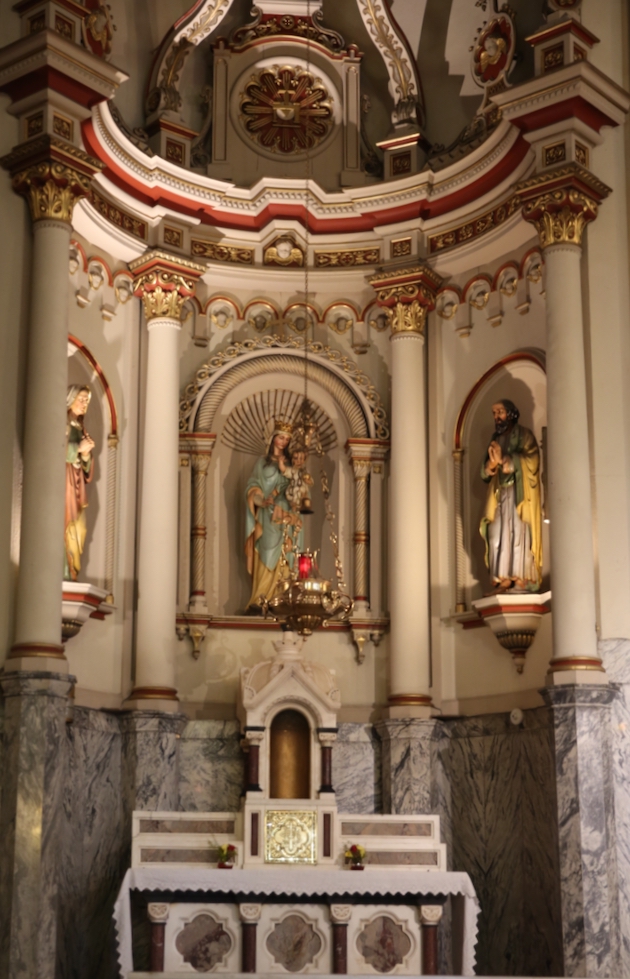
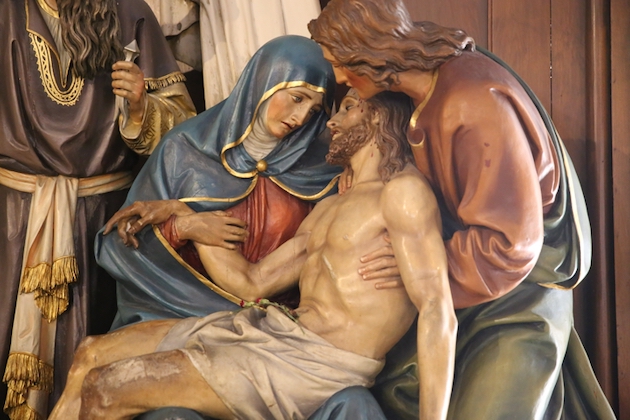
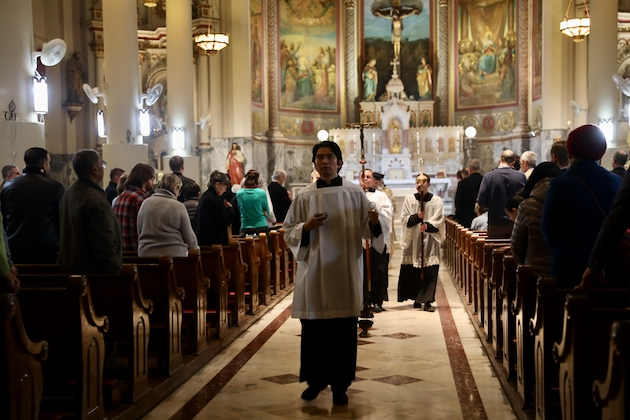
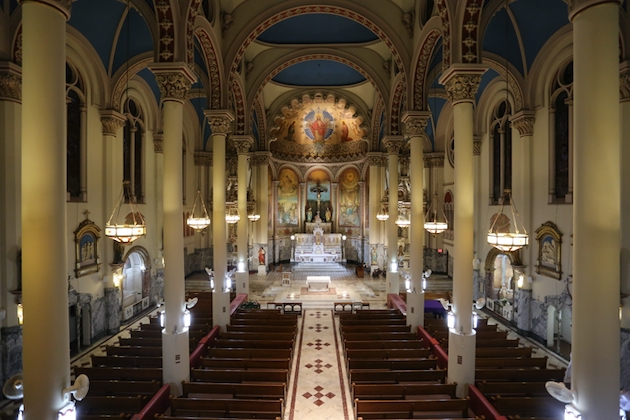
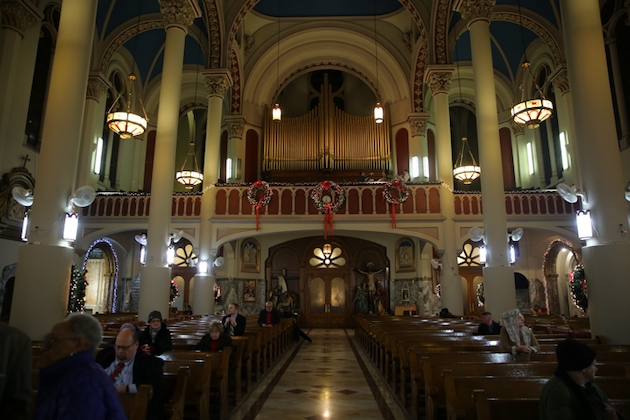
Some pictures of Most Holy Redeemer Church on East 3rd Street, New York, taken over the course of two decades. Since August of last year, the Archdiocese has locked this magnificent church. As of today its fate is unknown.
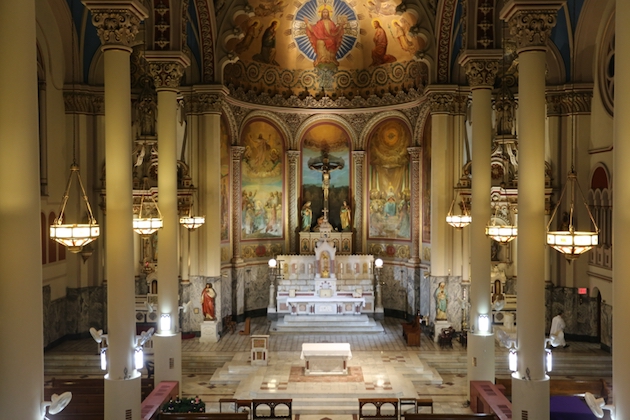
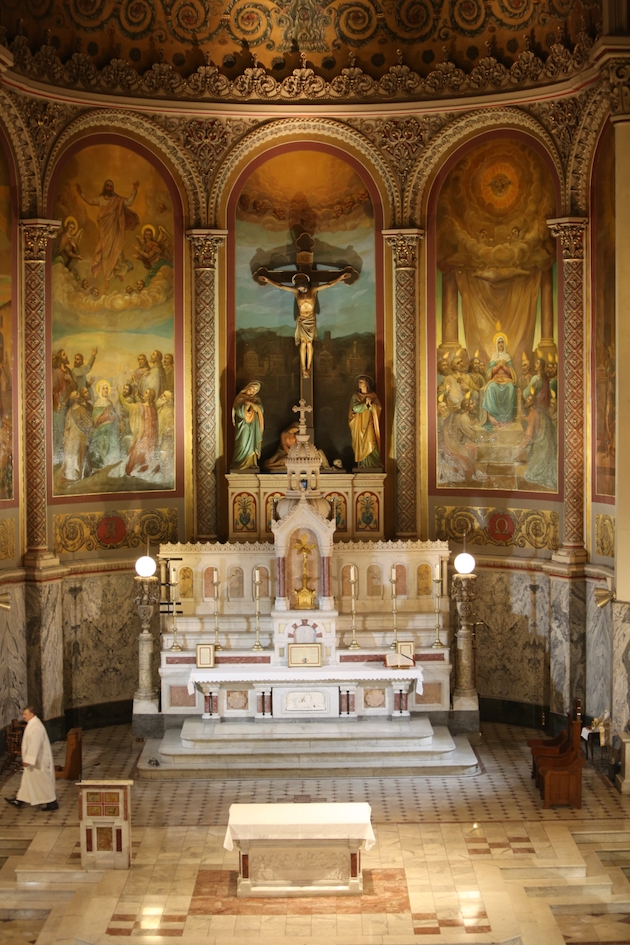
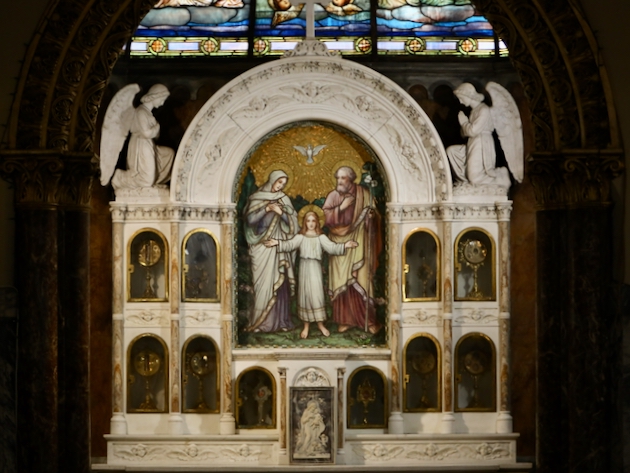
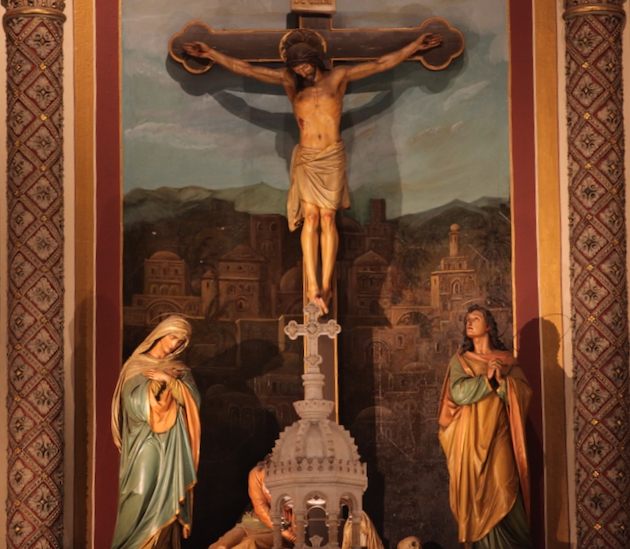
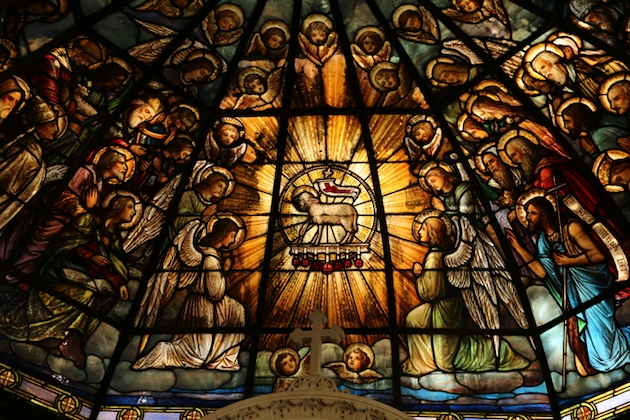
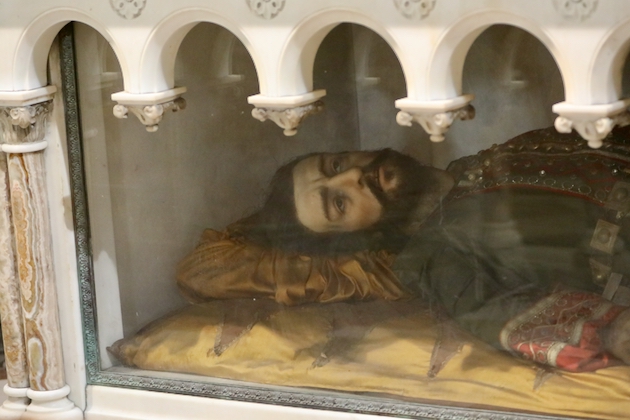
(Above and below): The chapel of relics with the “entire body” of St. Datian.
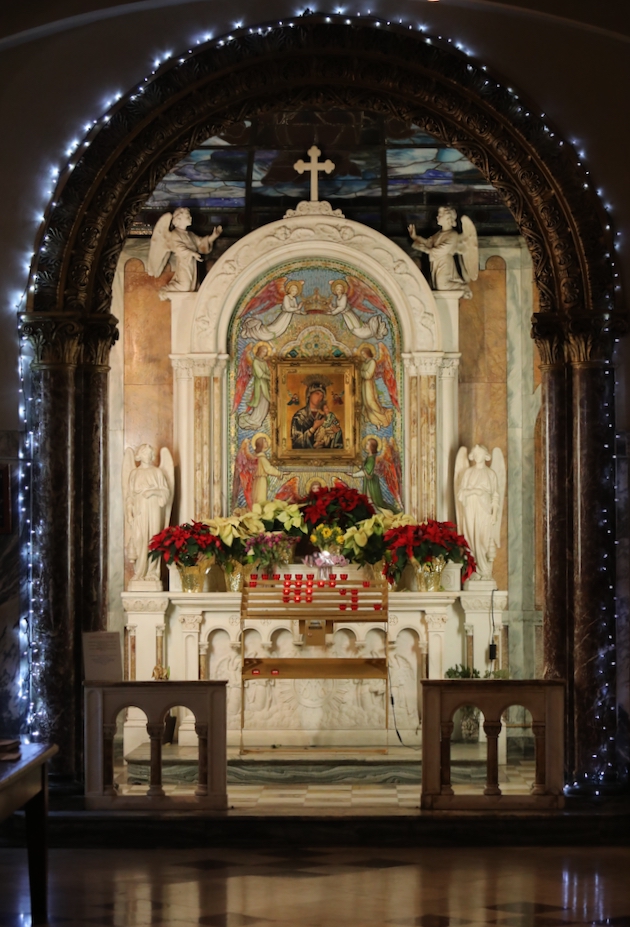
(Above) The New York shrine of Our Lady of Perpetual Help.
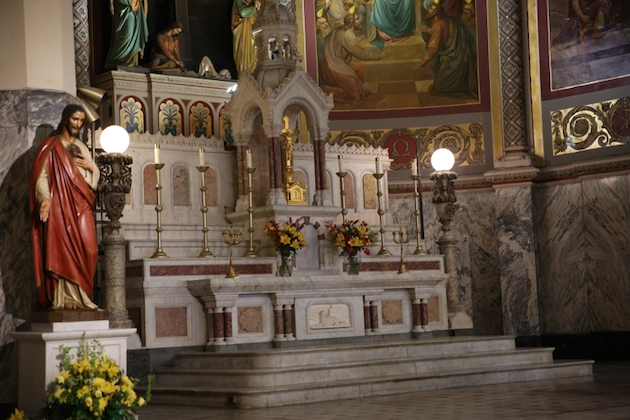
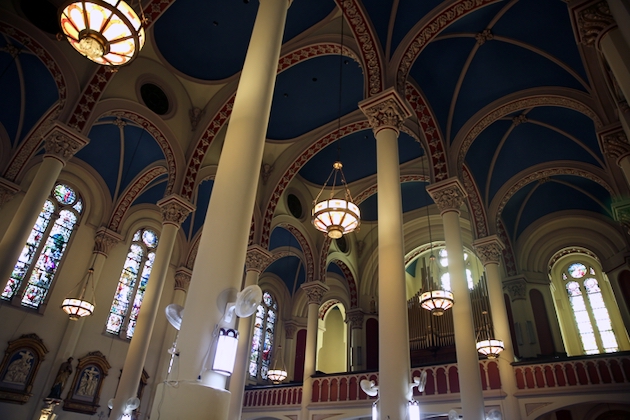
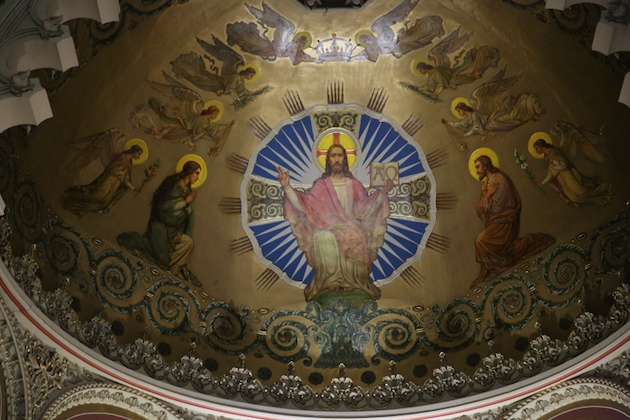
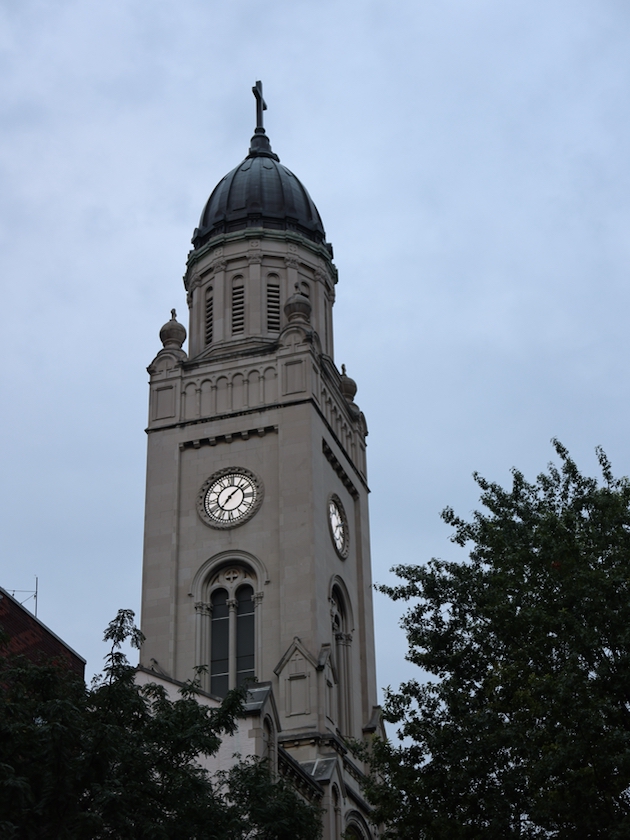
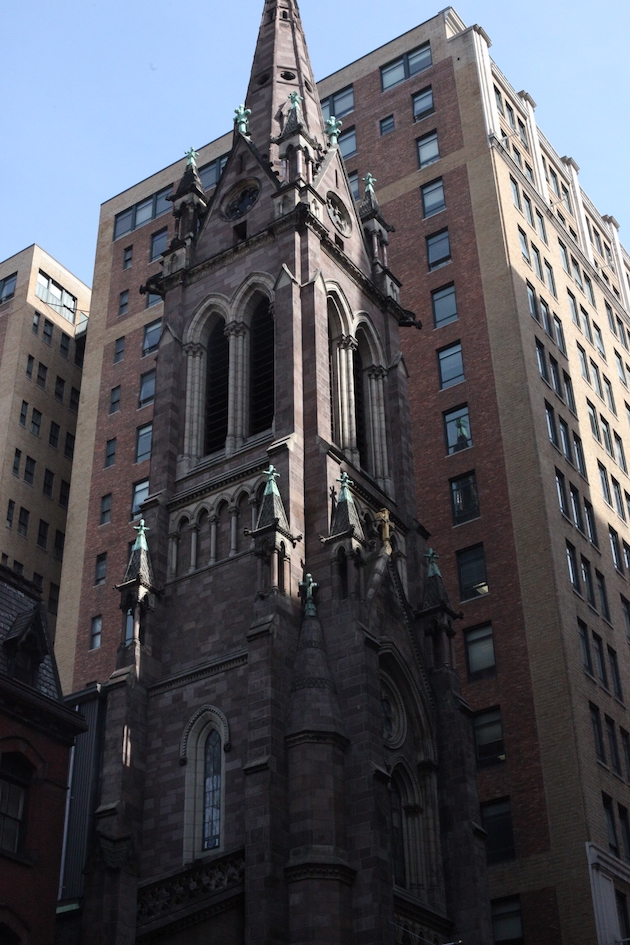
(Above) The tower of the church of St. John the Baptist.
Thanks to an attentive reader, we recently learned that the Capuchin order had left Midtown Manhattan, effective June 30, 2026, after 174 years. Their original mission at St. John the Baptist church had been expanded in 2013/15 to take over Holy Cross church on 42nd St. Like many aspects of Making all Things New this merger didn’t make obvious sense: there are two other parishes located in between the parish’s two “worship spaces.” As could be foreseen, the experiment did not last long.
On its website the order has posted a not very encouraging statement from the “Provincial Minister” explaining the reasoning for the Capuchins’ departure:
There are many factors that went into our decision to withdraw from your parish, none of which might adequately satisfy your disappointment. One of the most evident challenges we face as a Church is the shortage of priestly and religious vocations, especially in northeastern part of the United States. This challenge has given us opportunities as Capuchins to reflect upon and renew our way of life that will inspire young men to live the Gospel in the spirit of St. Francis as a Capuchin. However, it has also demanded that we make difficult choices in the ministerial commitments we have as a Province.
Farewells are never easy, especially when the reasons don’t seem fair. We have left several parish communities over the last decades, and none have made this any easier, not only for the parishioners, but also for the friars who served so diligently those communities.
…
Despite this challenge, I hope you will hear my sending-forth encouragement for you all: please don’t let our departure diminish your faith in Jesus Christ.
The Provincial Minister could not attend the “Farewell Mass” (the “Mass of Thanksgiving for the Capuchin Franciscans”)at St. John the Baptist. 1)
Regarding the move:
On June 30, 2026, a history came to an end. A history which began on June 28, 1840, when Rev. Zacharaia Kunz, OSF celebrated the first Mass at the Roman Catholic Church of St. John. A history which entrusted the church to the ministry of the Capuchin Province of Hungary in 1852 and subsequently in 1870 to the American Capuchin Order. A history which survived two fires, too many wars, economic upheavals, financial instability .
Parishioners at St. John’s were privileged to have been brought into the Franciscan family of noted saints and ordinary friars. Over the years they have worshipped and interacted with some of the most extraordinary friars of the province , each in his own unique way, touching both parishioners and the many commuters who seek solace at St. John’s. The parish record books, some written in German script, bear testimony to all those connected to this special church. 2)
The parish is now under direct Archdiocesan administration. One immediate consequence of the change in management has been a reduction in the number of masses at Holy Cross church:
Please note that beginning September 7, there will no longer be a 12:15pm Mass on Mondays, and no Masses on Tuesdays at Holy Cross. 3)
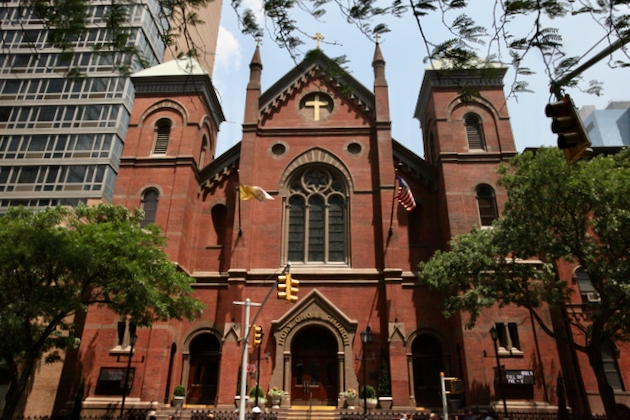
(Above) Holy Cross church (2011).
We do not know whether the exit of the Capuchins is a prelude to the closing and sale of one or both churches. Consider the effects of the abandonment in 2019 of Most Holy Redeemer church (East 3rd Street) by the Redemptorists. And despite its architectural merit- and the presence of the shrine to Padre Pio – the church of St John the Baptist has been rumored for years now to be a likely candidate for closing. It is a tregedy – for generations churches like St. John’s which had long ago lost their resident populations sustained themselves by the many commuters who stopped by for devotions or the sacraments. But the need Catholics once felt for these “commuter churches” in the city has dimished as the general practice of the faith has declined.
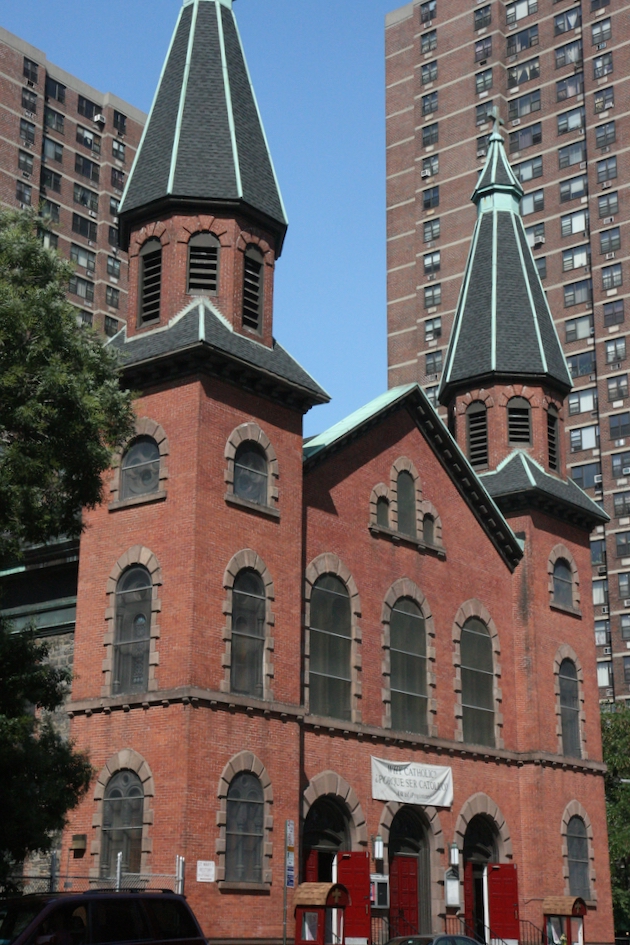
(Above) St. Mary’s, Grand St. (Photo 2009).
The Capuchins, however, retain a foothold in the city at their parish of Our Lady of Sorrows on Stanton St. on the Lower East Side. Indeed, in 2024 they even expanded their presence by assuming responsibility for the nearby historic – by New York standards – parish of Saint Mary on Grand St. How secure Is, however, the continued existence of these two poor churches – given the dire financial situation of the Archdiocese – and the declining numbers of Capuchins? Neighborhood activists have tried to assure preservation of the more ancient of the two churches by obtaining on 4/7/2026 the landmarking of St. Mary’s by the NYC Landmarks Preservation Commission – a struggle now in progress for Most Holy Redeemer church.
For our most recent post on St. John the Baptist church, see: https://sthughofcluny.org/2025/09/the-fate-of-the-churches-around-penn-station-ii.html The Society of St. Hugh of Cluny (9/26/2025); for St. Mary’s see: “The Churches of New York XXIV: In the Beginning,” The Society of St. Hugh of Cluny(4/26/2012)
(All accessed 8/27/2026)
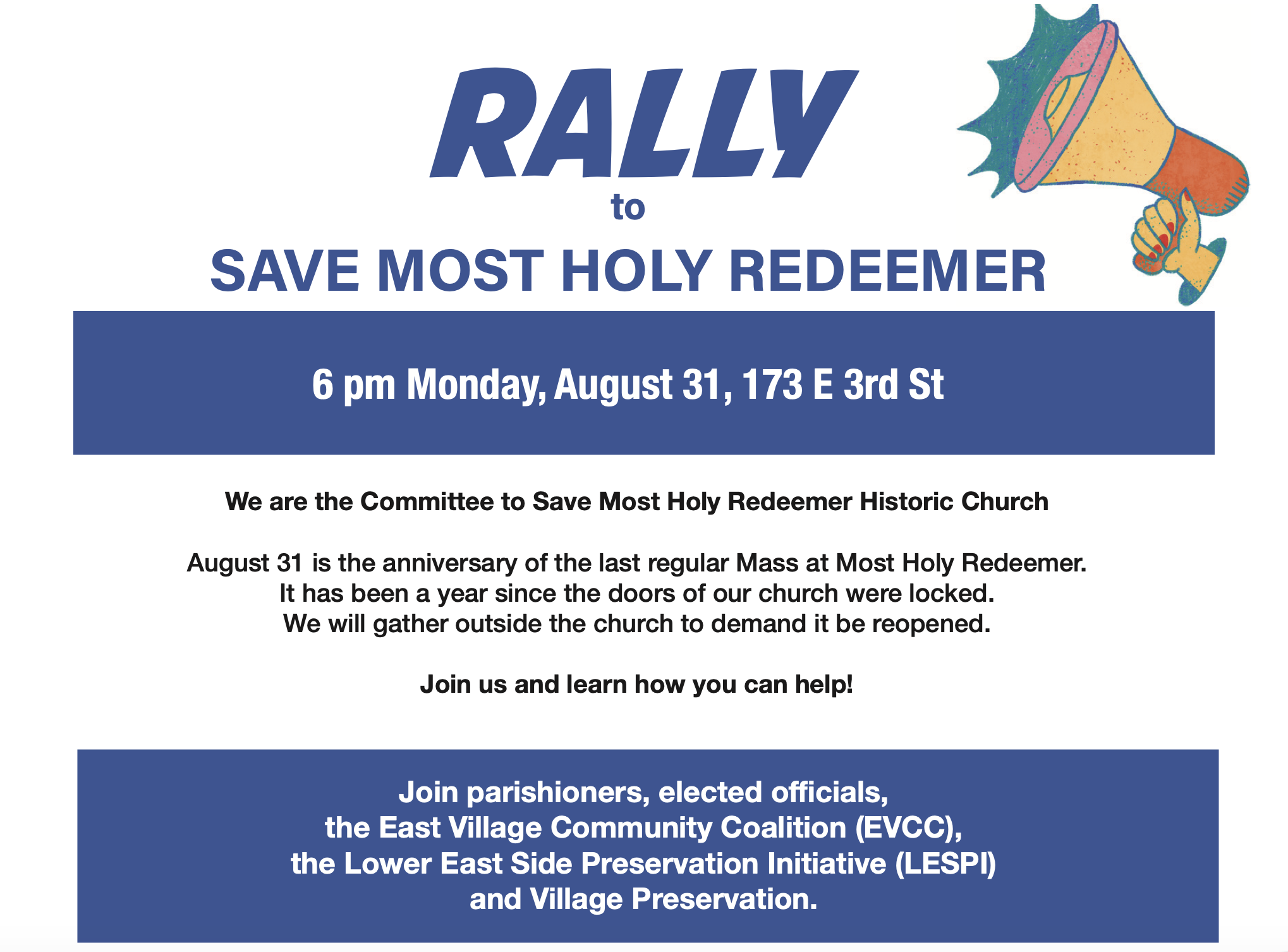
| Join Village Preservation, parishioners, and fellow East Village and preservation organizations for a rally on Monday, August 31 at 6 pm in front of the Most Holy Redeemer Church at 173 East 3rd Street (east of Avenue A). The church was closed to parishioners one year ago. The rally is being organized to call for the historic church to be preserved and reopened. The archdiocese has made several moves indicating they intend to permanently shut down the church, which would likely lead to its sale and demolition. A petition has been filed with the New York City Landmarks Preservation Committee to landmark the structure. |
We have been following this issue on this blog. For more information about the closure of Most Holy Redeemer Church see our post.