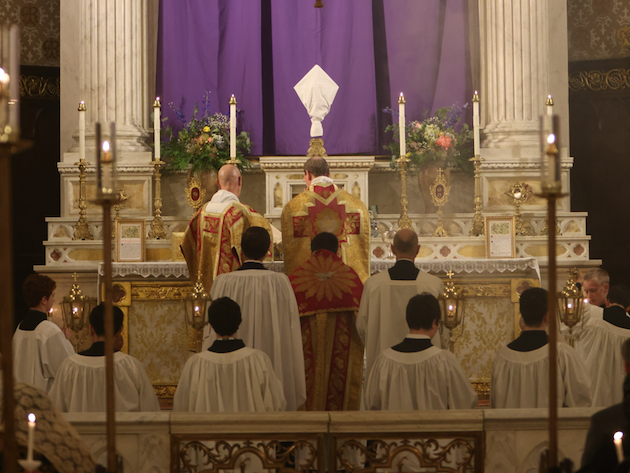


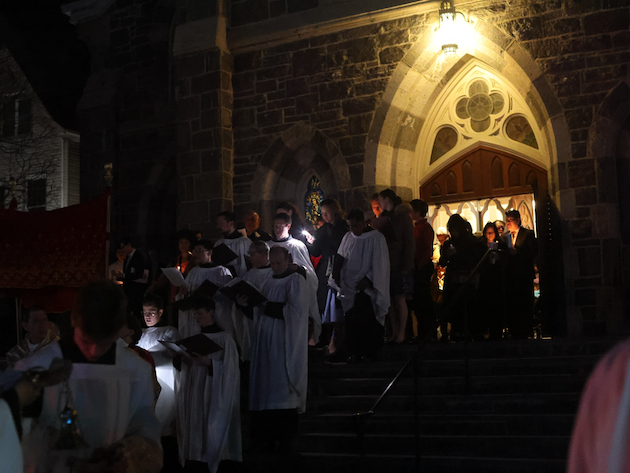


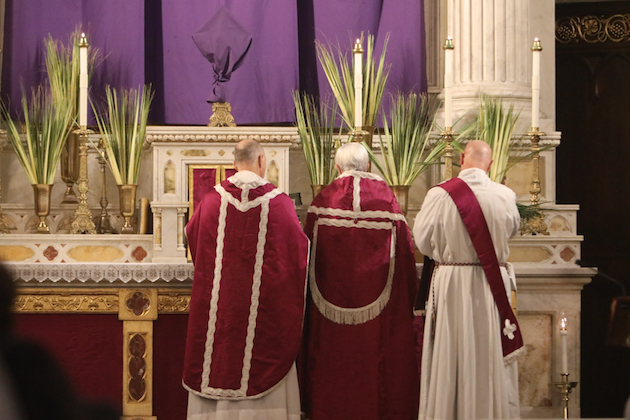


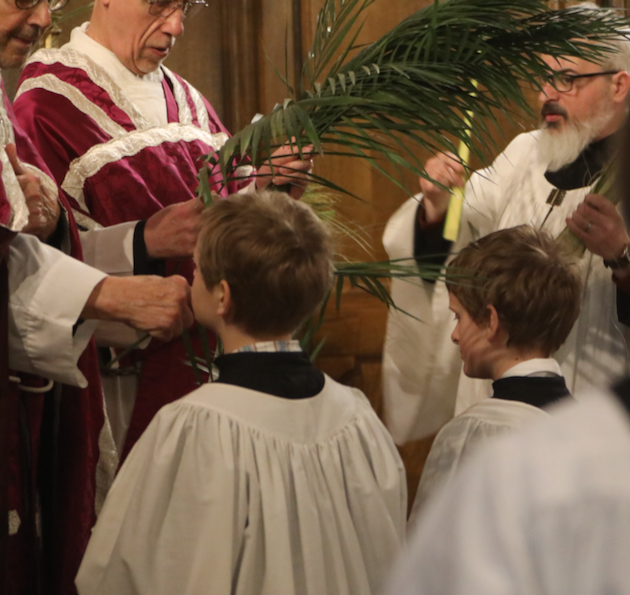


We have compiled a schedule of Traditional Masses and liturgies for Holy Week and Easter. Please go to this link.

The following churches will offer traditional liturgies during Holy Week. Please let us know about churches that are not on this list.

Connecticut
St. Mary Church, Norwalk, 10 am, Solemn Mass, Procession of Palms, St. Matthew’s Passion by Victoria
Georgetown Oratory of the Sacred Heart, Redding, 12 noon
Chapel of Immaculate Conception High School, 73 Southern Blvd, Danbury, 12:30 pm, with blessing of palms
Sts. Cyril and Methodius Oratory, Bridgeport, 8:30 am Low Mass (no blessing of palms), 10:15 am blessing of palms, procession, Solemn Mass
St. Patrick Oratory, Waterbury, 8:30 am Low Mass; 10:30 am High Mass
St. Martha Church, Enfield, 11 am
New York
Holy Innocents, New York, NY, 10:30 am
Our Lady of Mount Carmel, New York, NY, 10:00 AM Blessing of Palms, Outdoor Procession and Missa Cantata, note earlier time! The Blessing will take place at the 116th Street Entrance
St. Cecilia Church, Brooklyn, 2 pm
Our Lady of Peace Church, Brooklyn, 9:15 pm
St. Josaphat Church, Bayside, Queens, 9:30 am Solmen Mass
St. Rocco Church, Glen Cove, Long Island,, 11:30 am, Low Mass with blessing of palms
St. Paul the Apostle, Yonkers, 1:30 pm
Annunciation Church, Crestwood, 2 pm
Immaculate Conception, Sleepy Hollow, Missa Cantata 4 pm
St. Patrick Church, Newburgh, 3 pm
St. Joseph Church, Middletown, Missa Cantata 10:15 am
St. Mary and St. Andrew Church, Ellenville, 11:30 am
Saced Heart Church, Esopus, 10 am
Holy Trinity, Poughkeepsie, 1 pm
New Jersey
Our Lady of Sorrows, Jersey City, 8:30 am
Our Lady of Victories, Harrington Park, 8 am
Our Lady of Fatima, Pequannock, 7 am; 9 am; 10:30 am Solemn Mass; 1:30 pm; 5 pm
St. Anthony of Padua Oratory, West Orange, 7:30 am Low Mass; 9 am Low Mass; 11 am High Mass
Chapel of the Blessed Sacrament, Raritan, 10:30 am Palm Sunday Mass with blessing of palm and church procession
St. John Church, Allentown, 12:30 pm
St. Catherine Church, Middletown, 9 am
St. Gianna Beretta Molla Parish, Northfield, 12 noon
St. Dominic Church, Brick, 12 noon
Connecticut
St. Pius X Church, Fairfield, 7 pm, Fr. Richard Cipolla celebrant
Georgetown Oratory of the Sacred Heart, Redding, 6pm
Sts. Cyril and Methodius Oratory, Bridgeport, 7:15 Confessions; 7:45 am Mass
St. Patrick Oratory, Waterbury, 6 pm Low Mass
New York
Holy Innocents, New York, NY, 6 pm
Our Lady of Mount Carmel, New York, NY, 7 am and 7:45 am Low Masses
St. Josaphat Church, Bayside, Queens, 7 am low Mass
St. Paul the Apostle, Yonkers, 12 noon
Holy Trinity, Poughkeepsie, 7 pm
New Jersey
St. Anthony of Padua Oratory, West Orange, 9 am
Connecticut
St. Mary Church, Norwalk, 11:30 am Confessions, 12:10 Low Mass
Georgetown Oratory of the Sacred Heart, Redding, 6pm
Sts. Cyril and Methodius Oratory, Bridgeport, 7:15 Confessions; 7:45 am Mass
St. Patrick Oratory, Waterbury, 8 am Low Mass
New York
Holy Innocents, New York, NY, 6 pm
Our Lady of Mount Carmel, New York, NY, 7 am and 7:45 am Low Masses
St. Josaphat Church, Bayside, Queens, 7 am low Mass
New Jersey
St. Anthony of Padua Oratory, West Orange, 9 am
Connecticut
St. Mary Church, Norwalk, 11:30 am Confessions, 12:10 pm Low Mass, 7 pm Tenebrae of Maundy Thursday
Georgetown Oratory of the Sacred Heart, Redding, 6pm
Sts. Cyril and Methodius Oratory, Bridgeport, 7:15 Confessions; 7:45 am Mass, 7 pm Tenebrae
St. Patrick Oratory, Waterbury, 11 am Confessions; 12 pm Low Mass; 6 pm Office of Tenebrae
New York
Holy Innocents, New York, NY, 6 pm Mass; 7 pm Office of Tenebrae
Our Lady of Mount Carmel, New York, NY, 7 am and 7:45 am Low Masses
St. Josaphat Church, Bayside, Queens, 7 am Low Mass; 7 pm Tenebrae with music by four Italian composers
St. Patrick Church, Glen Cove, Long Island, 7 pm Low Mass
St.Paul the Apostle, Yonkers, 12 noon.
Saced Heart Church, Esopus, 11:30 am
New Jersey
Our Lady of Sorrows, Jersey City, Tenebrae 7 pm
St. Anthony of Padua Oratory, West Orange, 9 am
Corpus Christi Church, South River, 5 pm Confessions; 6:15 Latin Mass; 7:30 pm Tenebrae
St. John the Baptist, Allentown, 7 pm Tenebrae

Connecticut
St. Mary Church, Norwalk, 7 pm Solemn Mass in Cena Domini; 9 pm Vespers and Stripping of the Altars; 9:30 pm Vigil before the Blessed Sacrament in lower church
Georgetown Oratory of the Sacred Heart, Redding, Mass of the Lord’s Supper at 5pm with adoration at the altar of repose in the crypt until midnight
Sts. Cyril and Methodius Oratory, Bridgeport, 11 am- 11:45 am Confessions; 12 noon Solemn Mass of the Lord’s Supper, followed by Procession of Blessed Sacrament, Vespers and stripping of altars, Mandatum (in church hall); 7 pm Tenebrae; the church will remain open for Adoration at the Altar of Repose until 10 pm
St. Patrick Oratory, Waterbury, 4 pm Confessions; 6 pm High Mass of Lord’s Supper
New York
Holy Innocents, New York, NY, 6 pm Solemn Mass of the Lord’s Supper; All-night adoration of the Most Bless Sacrament at the repository (the church will close at midnight for the not staying all night and reopen at 6 am on Good Friday)
Our Lady of Mount Carmel, New York, NY, 9 am Tenebrae, Matins and Lauds, 6 pm Confessions, 7 pm High Mass of the Lord’s Supper; Adoration at Altar of Repose until midnight
St. Josaphat Church, Bayside, Queens, 7 pm Solemn Mass
New Jersey
Our Lady of Sorrows, Jersey City, 8 pm
Our Lady of Fatima, Pequannock, 9 am Tenebrae; 5:30 pm Confessions; 7 pm Solemn Mass with adoration at altar of repose until midnight
St. Anthony of Padua Oratory, West Orange, 6 pm Confessions; 7 pm Solemn Mass followed by procession to altar of repose, stripping of the altars; adoration until midnight
Chapel of the Blessed Sacrament, Raritan, 7 pm
St. John Church, Allentown, 8 pm followed by adoration at altar of repose until midnight

Connecticut
St. Mary Church, Norwalk, 11 am Stations of the Cross in Latin, English and Spanish; 3 pm Mass of the Presanctified; 7 pm Procession of the Cristo Muerto and Burial of the Body of Christ
Georgetown Oratory of the Sacred Heart, Redding, 3 pm, Mass of the Presanctified
Sts. Cyril and Methodius Oratory, Bridgeport, 11-11:45 am Conessions; 12 noon Mass of the Presanctified, followed by the Burial of the Lord; 6 pm Stations of the Cross; 7 pm Tenebrae
St. Patrick Oratory, Waterbury, 10 am Confessions; 12 pm Stations of the Cross; 1 pm High Mass of the Presanctified
New York
Holy Innocents, New York, NY, 12 noon, 7 Last Words preached by Fr. Peter Stravinskas; 3 pm Solemn afternoon liturgical service in the Traditional Latin Rite; 6 pm Stations of the Cross
Our Lady of Mount Carmel, New York, NY, 9 am Tenebrae, Matins and Lauds; 12 noon, East Harlem Good Friday Procession, Start at St Francis de Sales Church on 96th Street and Lexington Avenue. Procession goes north on 3rd Avenue from 96th Street to 117th Street. 1:00 PM Conclusion at St Paul Holy Rosary Church on 117th Street and Lexington Avenue. 3:00 PM Solemn Liturgy of the Presanctified Gifts. 7:30 PM Outdoor Procession with the Cristo Entierro, Stations of the Cross, Veneration of the Relic of the True Cross
St. Josaphat Church, Bayside, Queens, 3 pm solemn liturgy and procession
New Jersey
Our Lady of Sorrows, Jersey City, 3 pm
Our Lady of Fatima, Pequannock, 8 am Tenebrae; 1 pm Confessions; 2 pm Stations of the Cross; 3 pm Good Friday Liturgy
St. Anthony of Padua Oratory, West Orange, 1 pm Confessions; 3 pm HIgh Mass of the Pre-Sanctified
Chapel of the Blessed Sacrament, Raritan, 3 pm
St. John Church, Allentown, 12 noon Traditional Latin Good Friday Liturgy

Connecticut
St. Mary Church, Norwalk, 12:30 pm blessing of the Easter food (gym); 7 pm Great Vigil of Easter; 11:30 pm Festive Easter Reception
Sts. Cyril and Methodius Oratory, Bridgeport, 8-8:45 am Confessions; 3 pm Easter Vigil, followed by the blession fo the Easter baskets and Compline; reception in the church hall
St. Patrick Oratory, Waterbury, 10 am Confessions; 12 pm Easter Vigil High Mass
New York
Holy Innocents, New York, NY, 6 pm Easter Vigil
Our Lady of Mount Carmel, New York, NY, 9 am Tenebrae, Matins and Lauds; 10:30 am blessing of Easter baskets; 6 pm Confessions; 7 pm Easter Vigil, blessing of the fire will take place at the 115th Street entrance.
St. Josaphat Church, Bayside, Queens, 12:30 pm, Solemn Easter Vigil
New Jersey
Our Lady of Sorrows, Jersey City, Easter Vigil 10:30 pm
Our Lady of Fatima, Pequannock, 9 am Tenebrae; 8:30 pm Easter Vigil
St. Anthony of Padua Oratory, West Orange, 12 noon Easter Vigil
Chapel of the Blessed Sacrament, Raritan, Easter Vigil 8 pm
St. John Church, Allentown, Traditional Latin Holy Saturday Liturgy

Connecticut
St. Mary Church, Norwalk, 10 am Solemn Mass
Georgetown Oratory of the Sacred Heart, Redding, 7 am Low Mass; 12 noon Missa Cantata.
Chapel of Immaculate Conception High School, 73 Southern Blvd, Danbury, 12:30 pm.
Sts. Cyril and Methodius Oratory, Bridgeport, 8:30 am Low Mass; 10:15 Solemn Mass (both Masses fllowed by blession of Easter eggs and chrildren’s Easter egg hunt, blessing of Easter lamb after Solemn Mass only); 6 pm Solemn Vespers and Benediction
St. Patrick Oratory, Waterbury, 8:30 am Low Mass; 10:30 am High Mass
St. Martha Church, Enfield, 10:30 am
New York
Holy Innocents, New York, NY, 10:30 High Mass
Our Lady of Mount Carmel, New York, NY, 10:30 am Missa Cantata; 4:30 pm Solemn Vespers, Rosary and Benedicton
Our Lady of Peace Church, Brooklyn, 9:30 am
St. Cecilia Church, Brooklyn, 2 pm
St. Josaphat Church, Bayside, Queens, 7:30 am Resurrection procession; 9:30 am Solemn Mass featuring Mozart’s Spatzenmesse with strings and brass
St. Michael Church, 211 Harbor Rd, Staten Island, Missa Cantata, 5 pm
St. Rocco Church, Glen Cove, Long Island, 11:30 am Missa Cantata
St. Paul the Apostle, Yonkers, 1:30 pm
Annunciation Church, Crestwood, 2 pm
Immaculate Conception, Sleepy Hollow, Missa Cantata, 2 pm (not 4 pm)
St. Patrick Church, Newburgh, 3 pm
St. Mary and St. Andrew Church, Ellenville, 11:30 am
Saced Heart Church, Esopus, 10 am
Holy Trinity, Poughkeepsie, 1 pm
New Jersey
Our Lady of Victories, Harrington Park, 8 am
Our Lady of Fatima, Pequannock, 7 am; 9 am; 10:30 am; 1:30 pm
St. Anthony of Padua Oratory, West Orange, 7:30 am and 9 am Low Masses; 11 am High Mass
Chapel of the Blessed Sacrament, Raritan, 10:30 am
St. John Church, Allentown, 12:30 pm Solemn Mass
St. Catherine Church, Middletown, 9:30 am
St. Gianna Beretta Molla Parish, Northfield, 12 noon
St. Dominic Church, Brick, 12 noon


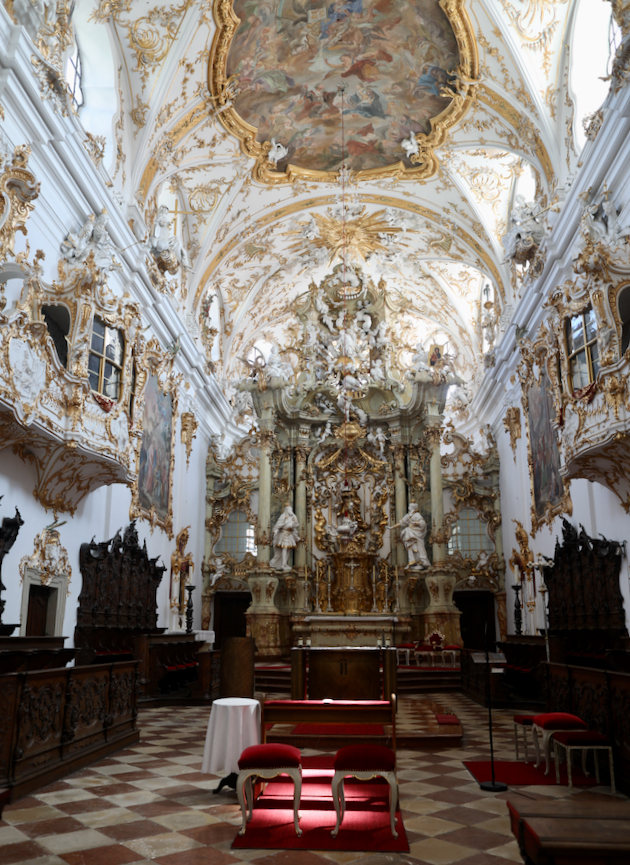
Few places are so suggestive of the legacy of the Holy Roman Empire as Regensburg. Today a provincial Bavarian town, this city for centuries played a major role in German and European affairs. Now what is characteristic of the art of Regensburg are the traces of the course of history one finds everywhere, but especially in certain of the main churches. Just as in Rome itself, Regensburg’s older churches embody a succession of styles from the early Middle Ages, or even Roman times, to the late baroque. We have previously looked at the former abbey of St. Emmeram.1) Let’s consider another monument to the city’s age of glory: the “Alte Kapelle” (the “Ancient (or Old) Chapel”) – or, more formally, the “Collegiate Church (Stift) of Our Lady at the Old Chapel in Regensburg.”
Like St. Emmeram, the Alte Kapelle claims a heritage from pre-Carolingian times – supposedly it was the palace Chapel of the Dukes of Bavaria and the first Christian church built on the lands of that tribe. What is certain, however, is that the emperor Louis the German (ruling from 826 or 843 to 876) specifically founded a collegiate church attached to his palace using ancient Roman materials. Indeed, the ninth century was a period of great significance for Regensburg. Louis the German ruled from here; the emperor Arnulf is buried in the city. After a period of troubles, the city recovered its glory under the sainted Imperial couple Henry II and Kunigunda (ruled 1002 – 1024). They reestablished and rebuilt the Alte Kapelle in its current form.
Regensburg flourished through the 13th century – among other things, a stone bridge was built that set the pattern for many others, notably that of Prague. Regensburg became a free imperial city. However, by the 15th century the city had been surpassed within the empire both as a commercial and political center. The Reformation also inflicted wounds. The city itself became Protestant. But, in a situation characteristic of the later Holy Roman Empire, much of the city’s territory remained in the hands of Catholic institutions: the cathedral, various monasteries and the collegiate churches(like the Alte Kapelle). And all was surrounded by the domains of the much more significant Duchy, and later Electorate, of Bavaria. Nevertheless, Regensburg retained some lingering significance as an imperial center. For example, Don Juan of Austria was born here following a visit of the emperor Charles V…
Later the “perpetual imperial diet” (Immerwährender Reichstag) was established in Regensburg between 1663 and 1806 (the end of the Empire). The perpetual Imperial diet was a kind of parliament of the ambassadors of the German states. It was in connection with his duties as commissioner of the diet that in 1748 the prince of Thurn and Taxis moved to Regensburg, where his descendants reside even to the present day.
The imperial legacy of Regensburg concludes with the inglorious figure of Carl Theodor von Dalberg (1744-1817). He was a prelate very much to the taste of the late 18th century: a suave presence in the salons, archchancellor of the Empire, a possessor of multiple benefices: Regensburg, Mainz, Worms, Constance. Later he became one of the leading toadies of Napoleon and the last bishop of Germany to rule over a secular state. And he ended his days, stripped of all his secular possessions, as the bishop of Regensburg in 1817.

(Above) This photo shows the exterior of the Alte Kapelle as it appeared around 1980. From left to right we see the high 15th century Gothic choir, then the nave dating to 1000-1020 and finally the tower rebuilt in the 12th/13th centuries. And all is surrounded by walls and windows that have been redone in the forms of the 18th century.

The exterior does not prepare us for the dazzling white and gold interior. Alongside the Wieskirche and the Asamkirche it is one of the most spectacular late baroque/rococo spaces in Bavaria. Unlike these, however, the Alte Kapelle is not a “work of all the arts,” uniting decoration and architecture. Rather, the lavish new decor was applied to a much more ancient church.

The double-headed eagle of the Holy Roman Empire bearing the coat of arms of Bavaria – a reference to Emperer Henry II who refounded the collegiate church. He had been the duke of Bavaria prior to his coronation as king of Germany, and later Roman emperor.

(Above and below) The bulk of this immense decorative project was accomplished after 1750. The Alte Kapelle unites for almost the last time representatives of the disciplines so often encountered in late baroque interiors in Bavaria : a stucco specialist from Wessobrunn (Anton Landes), painters from Augsburg ( Christoph Thomas Scheffler and Gottfried Bernard Götz) and a local sculptor (Simon Sorg).

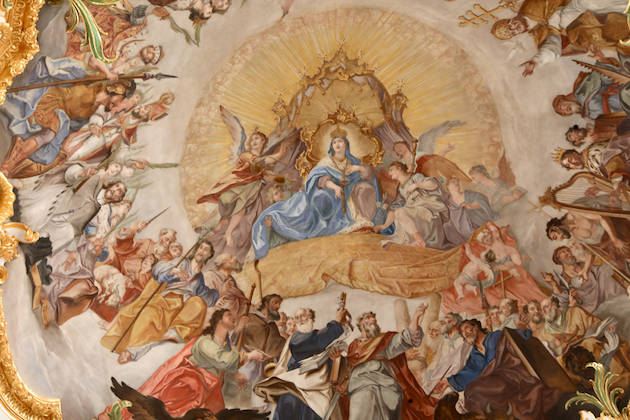
The Virgin Mary revered by the saints – painting by Christoph Thomas Scheffler.

(Above and below) Focal point of the church is the main altar with the tabernacle and statue of the Virgin. On either side are Saints Henry and Kunigunda, the imperial refounders of the Alte Kapelle. Much of their work still remains under the 18th century decoration.


In keeping with the dedication of the church proclaimed on the reredos, the Holy Spirit and God the Father hover above the Virgin and the Christ Child.

The stucco work by Anton Landes is overwhelming in its richness and complexity. It is no wonder that the Alte Kapelle lately seems to have found a niche as a wedding venue.

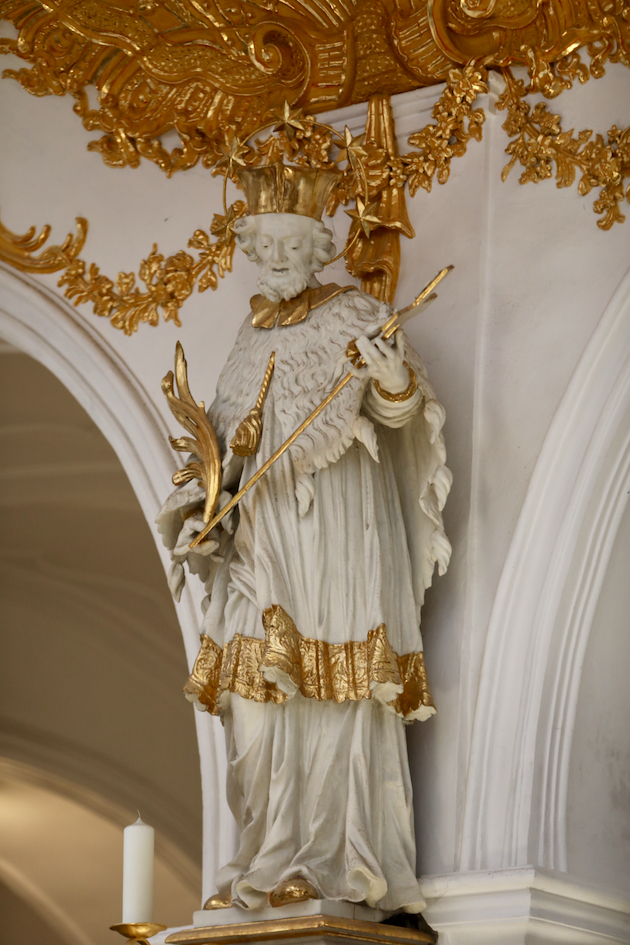
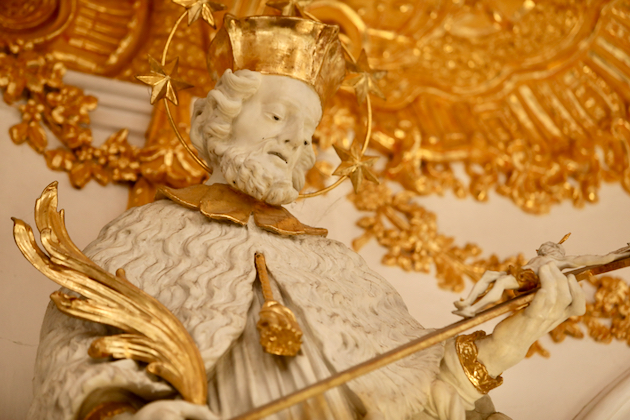
(Above and below) St. John Nepomuk (Nepomucene) was frequently encountered both in and outside of churches throught the Catholic regions of the Holy Roman Empire.
See generally Betz, Karl-Heinz. Die Stiftskirche unserer Lieben Frau zur Alten Kapelle in Regensburg, (4th Edition, 1979, Verlag Schnell & Steiner, Munich/Zurich )