
Published in Masses | no comment

Our series on the Summorum Pontificum Pilgrimage in Rome, 2022, starts here.
On Friday, October 28 Pax Liturgica (Paix Liturgique) sponsored a short conference in connection with the pilgrimage. Famous paladins of Catholic Tradition spoke – as well as one or two faces new to me. I’d single out Aldo Maria Valli. who testified movingly on his late discovery of the Traditional liturgy and the transforming effect it had on his life. Peter Kwasniewski was his usual eloquent self, setting out the limits of papal authority. Finally, Christian Marquant, the founder of Paix Liturgique, concluded the conference with a colorful, impassioned apologia for Traditionalism.
In conclusion:
Pligrimages such as this are always a bit overwhelming. It takes some days of reflection to gain perspective. Clergy and laity from all over the world had assembled to give witness to their devotion to the Traditional liturgy. Despite the calumnies relentlessly hurled against them by the leadership of their own Church, they gathered in the center of the Catholic world in prayer and devotion, without controversy or rancor. Passersby now and then would join in the prayers. Of course all this will have no effect on the powers that be in the Vatican. But for the pilgrims themselves and for many others who viewed the events of these days, the story will be different.
Published in Pilgrimage Summorum Pontificum 2022 | no comment

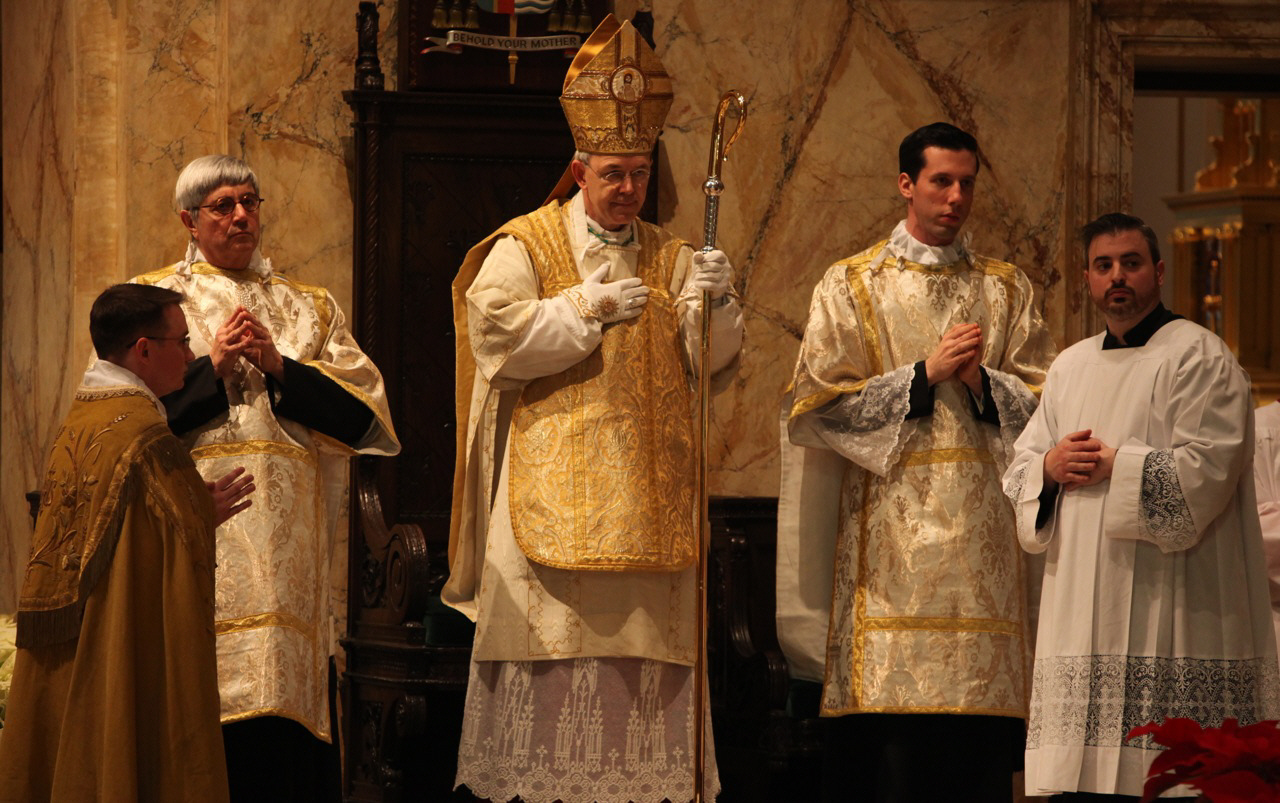
The “official program” of the Summorum Pontificum pilgrimage of 2022 concluded with a splendid Solemn Mass at the church of S.S. Trinita dei Pellegrini. The Priestly Fraternity of St. Peter, which administers this parish, also directed the ceremonies. The celebrant was Mgr. Patrick Descourtieux, of the Dicastery for the Doctrine of the Faith.


The church was filled to overflowing. Depending on his location, a pilgrim may have had a final opportunity for a penitential experience during this long liturgy.


After the Mass, a chance to meet and talk. I would suggest to the organizers to think of ways to provide more opportunities for socializing in the course of the next pilgrimage..
Published in Pilgrimage Summorum Pontificum 2022 | no comment

The Mass would be celebrated before Bernini’s Cathedra Petri. The celebrant was Msgr. Marco Agostini, a papal master of ceremonies. Msgr. Agostini wove a description of Bernini’s masterpiece into his sermon. The Mass was in honor of St Peter the Apostle. Vincenzo Di Betta and the ensemble “La Cantoria” also provided the music for this mass.

(Above and below) These photos give an idea of the number of clergy present in choir.


Published in Pilgrimage Summorum Pontificum 2022 | no comment

From Sts. Celso e Guiliano the procession of pilgrims set off for St Peter’s basilica. The flags represent the nations in which the Traditional Mass is celebrated. I have no statistics on the ethnicity of the pilgrims but I got the impression that Central Europe was well represented: Germany, Austria. Poland, etc. Despite their reputed prominence in the Traditionalist movement the number of Americans was limited – but among them were such stalwarts as John Rao and Peter Kwasniewski. Some have been talking about organizing an American chapter next year…

Across the Tiber towards the Castel St. Angelo – and from there to St. Peter’s. As you can see the weather this day was marvelous.


As the procession advanced, songs were sung – some of them familiar to me from the Chartres pilgrimage.


Pilgrims were of all ages.


Through Bernini’s colonnade, negotiating the metal detectors and then into St. Peter’s.

Published in Pilgrimage Summorum Pontificum 2022 | no comment

The pilgrimage proper commenced Saturday morning with recitation of the Rosary, eucharistic adoration and benediction at the church of the Institute of Christ the King in Rome. The Institute was responsible for the ceremonies. Not many pilgrims could be accommodated in this rather small church!


Continue to Part III
Published in Pilgrimage Summorum Pontificum 2022 | no comment
My acquaintanceship with the pilgrimage Summorum Pontificum or, as it was called this year, Ad Petri Sedem (1), is not of long standing; this is only the second I have attended. Of course, it is remarkable that, given Pope Francis’s war against traditionalism, this pilgrimage is occurring at all. Not only is it still taking place, but it is growing. Participation was substantially higher than last year. The church where the procession to St Peter’s began on Saturday morning (Santi Celso e Giuliano of the Institute of Christ the King) and that in which the pilgrimage ended on Sunday (S.S. Trinita dei Pelligrini of the Fraternity of St. Peter) were both completely overwhelmed by the crowds of worshippers. There was obviously room to spare at St. Peter’s and the Pantheon; but most or all of the seating set up in these churchs for the pilgrims was occupied. A couple of social events associated with the pilgrimage were also swamped by the mass of guests. For next year the organizers need to explore alternative venues for certain of the religious services and other events of the pilgrimage – in the past other churches have been used. Whether that is possible in today’s environment remains to be seen.
Compared to last year the number of clergy and religious present was also dramatically greater. Indeed this impressive gathering of clergy was also a problem: because of the restrictions imposed by Francis on the celebration of private masses in St. Peter’s – and perhaps elsewhere in Rome – the organization of the pilgrimage advised priests to reserve time at the side altars of the two churches mentioned above.
Of course, that Cardinal Zuppi presided at the opening vespers at the Pantheon was remarked upon; it sent at least one ally of Pope Francis into a rage. But other than that, the liturgies of the pilgrimage were solemn masses celebrated by priests. That is how it should be – in my opinion, traditionalists had placed too much emphasis in recent years on pontifical celebrations that were in part intended to convey the (false) impression of harmony between the hierarchy and the traditionalist movement The liturgies of this pilgrimage, reverend but restrained, fit better the mood of today and the actual position of traditionalism in the Church. It’s also better that the celebrants commence their liturgical duties without introductions or fanfare – that was mostly the case on this pilgrimage. The restrained sermons focused on themes of general spirituality and, as far as I could make out, did not directly address the Traditional Mass. Nor were there effusions of praise for the ecclesiastical authorities.
The organization of the pilgrimage was in other respects exemplary – aside from the previously noted overcrowding (the price of success!). Do I need to add that the music, vestments and the conduct of the ceremonies were once again of the highest order?
The spirit of the pilgrims was calm, subdued but resolute – no excitement, agitation or confrontational attitudes. This quiet confidence in the face of all the trials of the last year and a half was inspiring. For hadn’t the diocese of Rome issued drastically restrictive rules for the celebration of the Traditional liturgy immediately after the conclusion of last year’s pilgrimage? (Some of these subsequently seem not to have been enforced.) Yet the pilgrims returned this year in even greater force. The lasting impression of this year’s pilgrimage was not of what anyone said or did, but that we pilgrims were gathered in Rome from all over the world. The message is clear: Traditionalists are not going away.


(Above) It quickly became almost impossible to find a seat)


- Both terms have been used in the past.
Continue to Part II
Published in Pilgrimage Summorum Pontificum 2022 | no comment
Churches of New York
Holy Roman Empire
Website Highlights
Archives
[powr-hit-counter label="2775648"]